


1. Introduction
Lower limb exoskeletons are heterogeneous devices that differ based on their application and costs. Their scope is to enhance/restore mobility, and on these grounds, they have been mainly deployed in rehabilitation [Reference Shi, Zhang, Zhang and Ding1, Reference de la Tejera, Bustamante-Bello, Ramirez-Mendoza and Izquierdo-Reyes2] or as walking assistive devices outside the clinical settings. Other applications have been military [Reference Yu, Han and Cho3] or human augmentation [Reference Kazerooni4].
Despite the recent advances of soft robotic solutions [Reference Vidal, Morales, Torres, d. J. Sorcia Vázquez, Rojas, Mendoza and Cerda5], the field of lower limb exoskeletons for medical applications is still strongly dominated by rigid exoskeletons driven by electromagnetic actuators composed by electrical motors, gearboxes, and cylinders. Currently, a large variety of designs of lower limb exoskeletons for gait rehabilitation or assistance have been proposed both in the literature and on the market. However, there is an overall lack of detailed information and description of the actuation systems equipped on these devices (e.g., motor type and performance, characteristics of the transmission). Indeed, commercial exoskeleton datasheets do often not contain details about the mechanical characteristics of the actuation unit. In addition, this information is also generally overlooked in the academic literature and by previous reviews. This variety and lack of information result in two major drawbacks: i) it does not allow a complete reproducibility of the proposed devices by other research groups and ii) it prevents the identification of standards and commonalities between different designs, leading to heterogeneous solutions and difficulty of comparison.
For this reason, this review focuses on the design of the actuation systems of rigid exoskeletons equipped with electromechanical/electromagnetic actuation and the description of their characteristics. Indeed, the inclusion of additional exoskeletal systems (e.g., cable-driven exosuits) would have lead to the inclusion of mechanical components and transmission technologies with critically different requirements and characteristics, limiting the thoroughness of the comparison. Thus, we decided to include in this study only rigid exoskeletons for lower limb to have a more homogeneous analysis focused on the most used and diffused category of exoskeletons. The aim is twofold (i) review the overall quality of the description of the actuation unit as reported in the various papers, highlighting the shortcomings and providing guidelines for the reporting to allow the full reproducibility of the exoskeleton’s actuation units and (ii) provide a quantitative comparison of the actuation technologies and their parameters to identify standards and common characteristics among a variety of different lower limb exoskeletons.
2. Related work
Previous reviews focused on actuation methodologies of lower limb powered exoskeletons. The work published by Wang et al. [Reference Wang, Zhang, Liu, Liu, Han, Wang, Ferreira, Dong and Zhang6] reported an overview of rehabilitation exoskeletons based on ergonomic design, actuation, perception, control, and validation. In particular, it describes the different types of actuation systems, highlighting the operating principles and the main advantages and disadvantages in their application, quoting some existing robots, but without reporting technical details. In the review by Plaza et al. [Reference Plaza, Hernandez, Puyuelo, Garces and Garcia7], the aim was to describe the state of the art in the field of commercial medical exoskeletons, analyzing their properties, with respect to their clinical application. The authors reported only general characteristics of the systems, the walking speed, and the joints peak torque of 13 different exoskeletons. Mathew et al. [Reference Mathew, Thomas, Navaneeth, Sulaiman, Amudhan and Sudheer8] analyzed the technological advancements in signal sensing, actuation, control, and training methods in exoskeletons for rehabilitation, including those for lower and upper limbs. In particular, they highlighted the critical issues in designing the actuation unit using different technologies, generally describing only the type of the actuation solution and suggesting future trends in this field. Hussain et al. [Reference Hussain, Goecke and Mohammadian9] focused on materials, actuation, and manufacturing in lower limb exoskeleton and provided a qualitative description of different actuation methods adopted by various commercial robots. Tiboni et al. [Reference Tiboni, Borboni, Vérité, Bregoli and Amici10] proposed a wide study on the world of exoskeletons investigating methods and solutions for exoskeleton design, actuation, and sensors. They conducted a statistical analysis to study the distribution of different solutions concerning the device purpose, body part to which the device is dedicated, operation mode, and design methods. In particular, the type of actuation and sensing are analyzed in detail, highlighting the main statistical trends in their development, but no technical details on the solutions are provided. The more complete technical review on lower limb exoskeletons’ actuation is represented by the work of Sanchez-Villamañan et al. [Reference d. C. Sanchez-Villamañan, Gonzalez-Vargas, Torricelli, Moreno and Pons11]. In their work, they reviewed 52 lower limb wearable exoskeletons. They collected data into standardized data sheets on actuation, structure, and interface attachment components. The aspects of the different solutions were highlighted creating a set of data sheets that contain the technical characteristics of the reviewed devices. However, their work focused only on exoskeletons equipped with compliant actuators, discarding all the works adopting traditional actuation solutions (e.g., DC motor with harmonic drives) that represent the majority of the exoskeletons currently present in the literature and on the market. The current review differs from these works as we aim at providing guidelines and reporting a checklist to allow reproducibility of the actuation unit of rigid lower limb exoskeletons. In addition, we completed an in-depth revision on the specific technical parameters of each component (i.e., motor, transmission) in existing systems to find trends that can be useful to build an initial standardization [Reference Torricelli, Gonzalez-Vargas, Veneman, Mombaur, Tsagarakis, Del-Ama, Gil-Agudo, Moreno and Pons12].
3. Materials and methods
3.1. Inclusion criteria
Inclusion criteria were as follows: (i) peer-reviewed papers, (ii) in English language, regarding (iii) rigid bilateral lower limb exoskeletons, (iv) simultaneously powered at hips and knees joints, and (v) equipped with electromechanical/electromagnetic actuation systems. Exclusion criteria were virtual models and simulations. Articles, conference papers, and book chapters were considered eligible, whereas reviews and conference abstracts were excluded. Patent descriptions were also excluded because they do not report technical details of the components aiming, instead, at protecting designs or solutions. Exoskeletons for military and industrial applications were also excluded from this study.
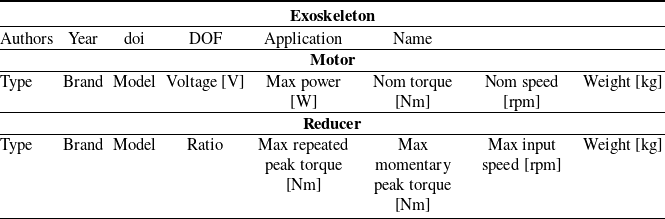
Data extraction form used for the technical parameters collection.
3.2. Articles selection
(a) PRISMA flow of the articles selection process. (b) Bar chart displaying the number of papers included in the study, (b) distribution over the years of the papers included in the study.
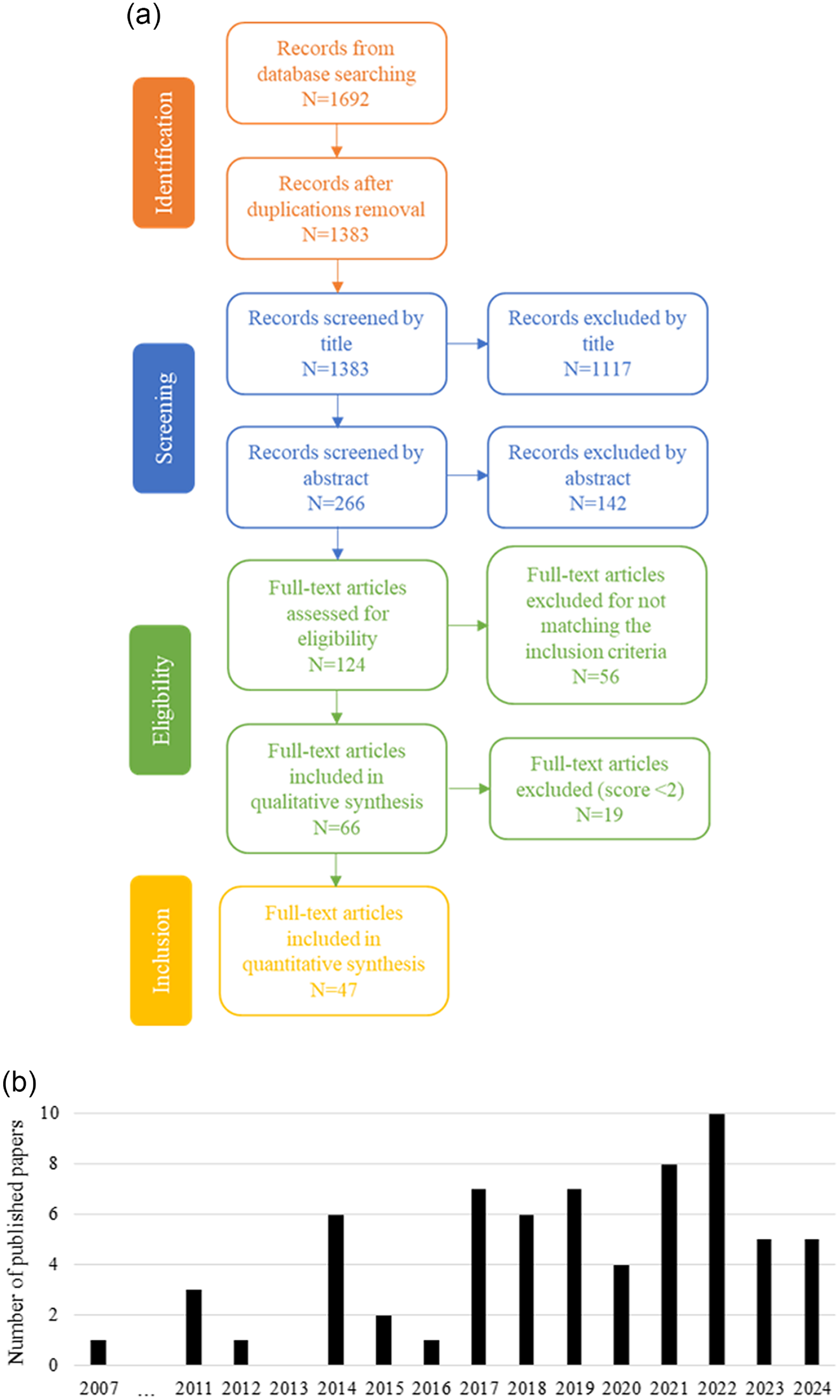
The following databases were used: Scopus and PubMed. The search string was modeled using the AND and OR Boolean operators, which correspond respectively to the algebraic intersection and union, as follows: exoskeleton AND ( ( lower AND limb ) OR walk* ) AND ( active OR powered ) AND ( motor OR actuator OR adapter OR design ). The search string and databases used in the study were chosen with help from an expert researcher and agreed among the authors. Figure 1(a) reports the Preferred Reporting Items for Systematic Review and Meta-Analysis extension for Scoping Reviews [Reference Tricco, Lillie, Zarin, O’Brien, Colquhoun, Levac, Moher, Peters, Horsley, Weeks, Hempel, Akl, Chang, McGowan, Stewart, Hartling, Aldcroft, Wilson, Garritty, Lewin, Godfrey, Macdonald, Langlois, Soares-Weiser, Moriarty, Clifford, Tunçalp and Straus13] flow chart. A total of 1692 papers published until January 2025 were identified. Duplicates were excluded utilizing the Zotero software: 1383 articles remained for title screening. Subsequently, based on title screening, the papers out of topic or inclusion criteria were excluded. A total of 266 articles underwent abstract screening. Hundred and twenty-four papers remained for full-text analysis. During both title and abstract screening, if a paper did not meet the agreement of all the investigators about the inclusion/exclusion criteria, it was moved to the next stage. One investigator (FB) carried out the process, and the papers were cross-checked by two experienced reviewers (ST, NP). A fourth evaluator (EM) reviewed the papers in case of discrepancies with other evaluators.
3.3. Data extraction process
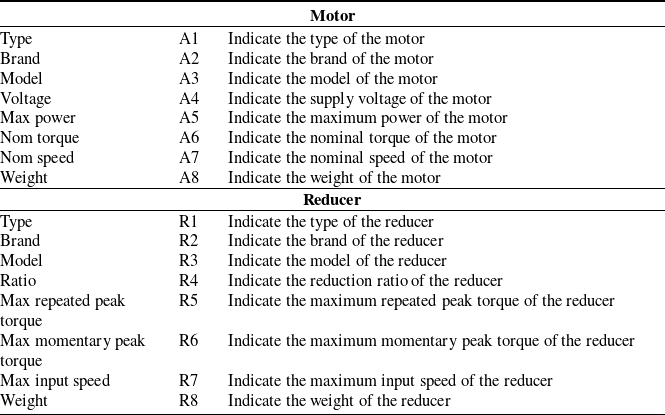
A data extraction process was applied for each article that met the inclusion criteria (N= 66). The distribution over the years of the papers included in this study is reported in Figure 1(b). A standardized form was developed to extract data from the selected papers, reported in Table I. The extraction form contained the following data: 1) authors and year of publication, 2) the digital object identifier (DOI) number of the publication, 3) degrees of freedom defined as the number of actuated joints, and 4) exoskeleton’s application (e.g., rehabilitative or assistive) and name if present. If the application was not explicitly mentioned or easily identifiable from the article, we classified the device as “prototype”. In addition, specific technical characteristics of the actuation system were extracted for each exoskeleton joint (i.e., hip and knee). In particular, the following parameters were taken into consideration, separated by system component:
-
• Motor: type, brand, model, voltage, maximum power, nominal torque, maximum speed, weight;
-
• Reducer: type, brand, model, reduction ratio, maximum repeated peak torque, maximum momentary peak torque, maximum input speed, maximum average input speed, and weight.
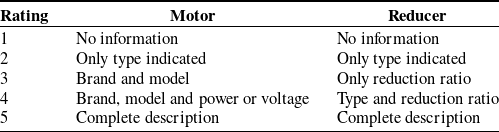
Rating scales used for the quality assessment of exoskeleton’s actuation.
To extract the technical data of each component, the following process was used. First, the values explicitly reported in the papers were transcribed. If these values were not provided, further online searches were conducted. In particular, if the article provided sufficient details to unequivocally determine the specific motors and reducers, the mechanical characteristics of interest were obtained from the catalog of the producers. To unequivocally identify the motor from the catalogs, the minimum information necessary to be indicated in the article are the brand, the model, the voltage, and the wattage. When not provided, a standard voltage value of 24 V for motor control was hypothesized [Reference Andrade and Bonato14–Reference Christensen, Rafique and Bai19]. Instead for the reducers, the brand, the model, and the reduction ratio are necessary. In case an information is missing and not identifiable from the catalogs, the information is marked as “not defined” (i.e., “N/D”). Not having the internal structure of the reducers, being commercial products, we included the characteristics available common to all the reducers. Another technical parameter to investigate should be the size of the components. However, volume is a difficult information to find as it is not explicitly indicated in the catalogs. It should be calculated from the external dimensions of the components, but too few values for making any comparison were available. Moreover, the overall external dimensions depend not only on the size of each component but also on the geometry of the assembly. This makes the comparison between the exoskeletons impossible.
3.4. Quality assessment
A quality assessment was conducted for each article to investigate the quality of the articles on reporting the technical description of the actuation units based on the data extracted in the previous stage. The quality assessment was designed according to the approach used in previously published systematical and/or meta-analysis review [Reference Storm, Cesareo, Reni and Biffi20, Reference Rubega, Di Marco, Zampini, Formaggio, Menegatti, Bonato, Masiero and Felice21] and customized to our needs and application. Thus, two ad hoc rating scales were arranged, one for the motor description and one for the reducer description as reported in Table II. The rating was initially performed by two investigators (FB, ST) independently. Then, a cross-check by a third investigator (NP) was performed for the articles for which there were discrepancies between the ratings of the two investigators. The rating was defined based on the presence or absence in the article of the motor and reducer information collected in the data extraction form. The rating scores were set from 1 up to 5. A score of 1 indicates the lack of actuation description or the absence of any technical parameters for the motor and/or reducer. If only the motor type is mentioned (e.g., Brushed or Brushless DC motor), a score of 2 was assigned to the article. If the article provides the brand and the model of the motor used, thus allowing a search of the average motor characteristics from the producer catalog, the article was assessed with a quality score of 3. If also the power or the driving voltage of the motor is specified, the article is rated as 4 since this information allows us to extract the exact motor characteristics from the catalogs. For the reducer, the score of 2 and 3 indicates that the article reports either the reducer type (e.g., harmonic drive or planetary gearbox) only or the reduction ratio only. If both type and reduction ratio are reported, the article is rated as 4. A score of 5 in the two scales indicates that the article fully describes the technical characteristics of both the motor and the reducer without the need for an additional search in the catalogs. Only studies rated 4 or 5 can be considered reproducible.
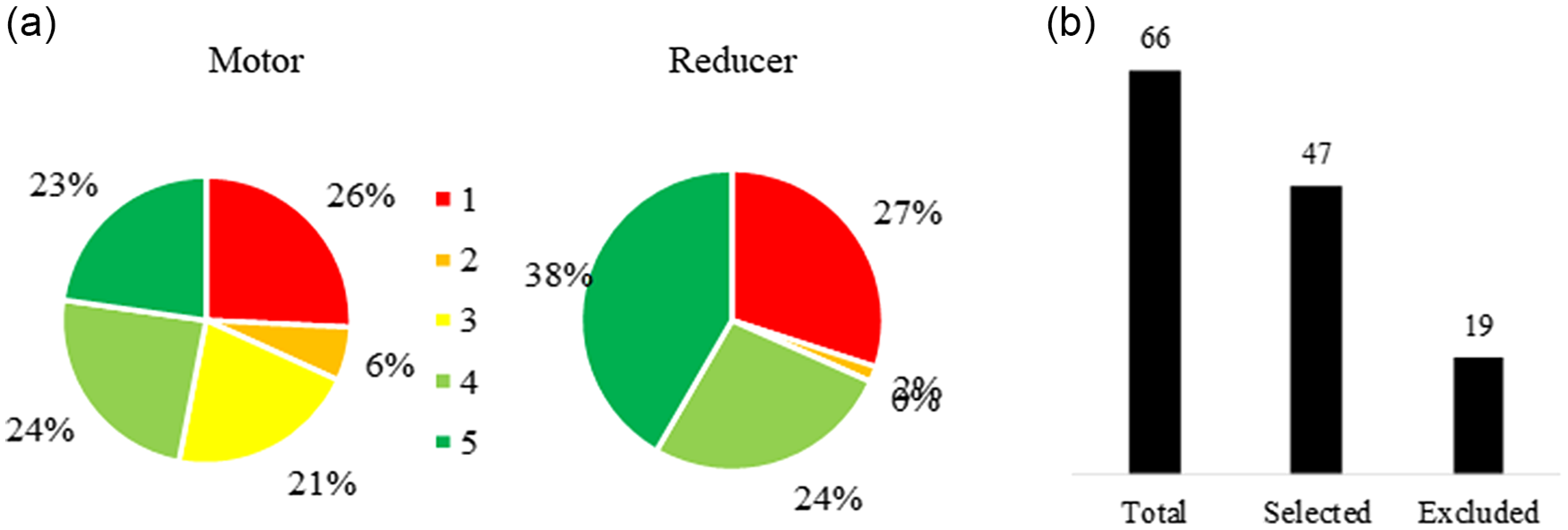
(a) Results of parameters description rating for motors on the left and reducers on the right. Scores are from 1 up to 5 where 1 indicates that no information about the component is provided and 5 represents a complete description. (b) Paper selection: a total of 66 articles met the inclusion criteria. Only the papers that obtained a score $\ge 3$
up to 5 in at least one proposed rating scale on motors and reducers were selected for the following quantitative analysis (N = 47). The remaining 19 articles whose scoring was
$\ge 3$
up to 5 in at least one proposed rating scale on motors and reducers were selected for the following quantitative analysis (N = 47). The remaining 19 articles whose scoring was $\le 2$
in both rating scales were excluded from the subsequent analysis.
$\le 2$
in both rating scales were excluded from the subsequent analysis.
4. Results
4.1. Qualitative analysis
Of the 124 papers selected for full-text analysis, 56 did not meet the inclusion criteria. Figure 2(a) shows the distribution of scores associated to the papers included in full-text qualitative analysis (N= 66) (Figure 2b). Of note, 21 (32%) of the considered full papers do not provide sufficient information on the motor and 19 (29%) on the reducer. In particular, regarding motor description, 17 papers (26%) do not provide any detail (rating score 1) and 4 of them (6%) provide information only on the type (rating score 2). Moreover, 18 of them (28%) do not provide any information on the reduction system (rating score 1) and 1 of them (2%) indicate only the type. Only 15 (23%) and 25 (38%) out of 66 reviewed papers provided full details about the motor and reducer, respectively.
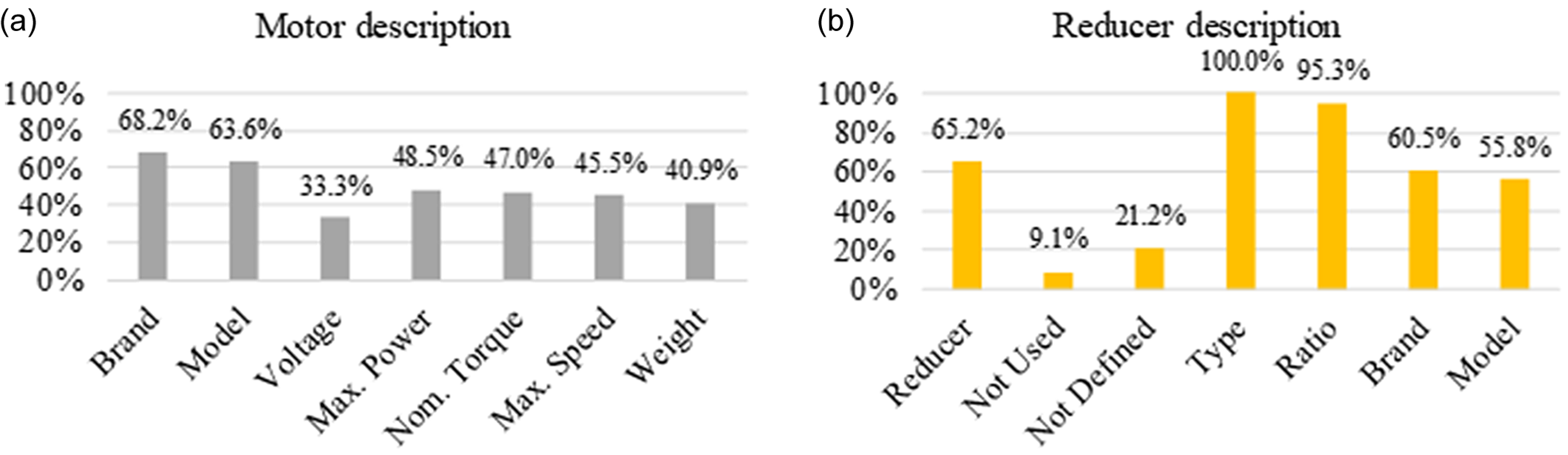
Percentage of reviewed papers sufficiently reporting the technical parameters on fundamental characteristics of (a) motors and (b) reducers. A parameter was considered as sufficiently reported if explicitly indicated by the authors or if it can be unequivocally extracted from external sources, i.e., catalogs.
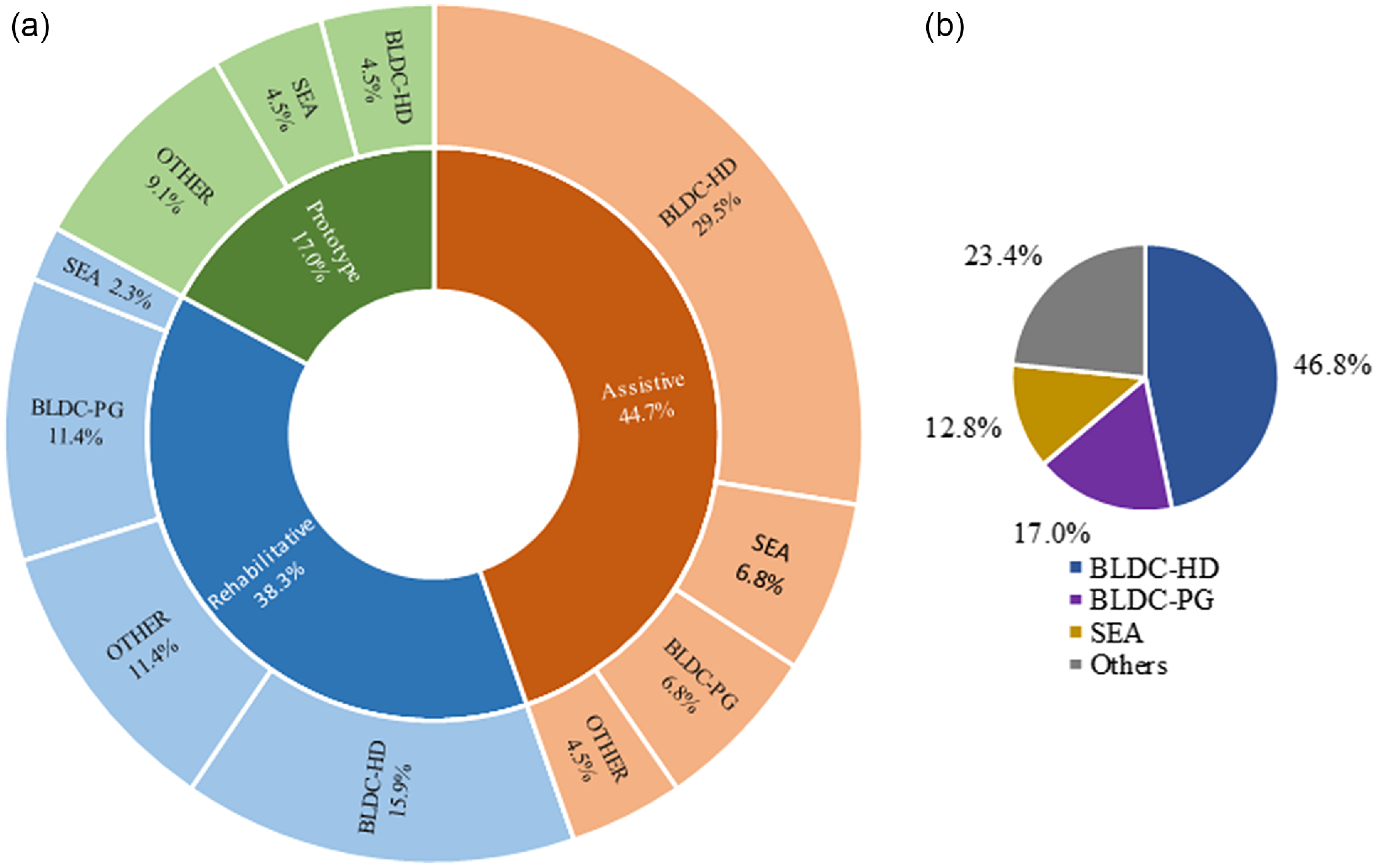
(a) The distribution of exoskeletons’ applications is reported in the inner circles. Exoskeletons with no specified use are defined as “Prototype”. For each application, the percentage of actuation unit solutions is reported. The main three types are brushless DC motor in combination with a harmonic drive (BLDC-HD), brushless DC motor coupled with a planetary gearbox (BLDC-PG), and serial elastic actuator (SEA). Combinations of different solutions or personalized designs are indicated as “Other”. (b) Global distribution of type of actuation unit among all the analyzed exoskeletons.
To provide a clearer picture on the completeness of the technical information reported in the literature, Figure 3 shows the percentage of papers reporting each of the information and parameters considered in the data form, for both motors (Figure 3a) and reducers (Figure 3b). Overall, 68.2% of the papers (N= 45) declared at least the brand of the motor, while 63.6% (N= 42) indicated also the model. However, only 33.3% (N= 22) indicated the supply voltage and 48.5% (N= 32) the power of the motor. The lack of these information hampered the search for other parameters not expressly indicated in the paper from external sources such as catalogs. It was thus possible to identify the nominal torque, maximum speed, and weight values in less than 50% of the reviewed articles. For what concerns the reducers, 69.7% of the exoskeletons (N= 46) use a reducer for both hip and knee joints, and all of these (46 out of 46) indicate the type. The 95.7% of papers declared the reduction ratio, and the 58.7% indicated also the brand of the reducer. However, only the 54.3% provided also the model. Exceptions are represented by 6 exoskeletons (9.1%) that do not use any reducer in their actuation system and 14 (21.2%) do not provide any information on the reducer equipped on the exoskeleton.
Based on this qualitative assessment, we decided that those papers providing insufficient information (rating score $\le 2$
) on both motor and reducer of the actuated exoskeleton joints were excluded from the subsequent analysis, maintaining only the papers that obtained a score
$\le 2$
) on both motor and reducer of the actuated exoskeleton joints were excluded from the subsequent analysis, maintaining only the papers that obtained a score $\ge 3$
up to 5 in at least one proposed rating scale on motors and reducer description.
$\ge 3$
up to 5 in at least one proposed rating scale on motors and reducer description.
4.2. Quantitative analysis
The following quantitative analysis considers only the 46 papers that provide sufficient information on either the motor or the reducer, as selected in the qualitative analysis. In Figure 4(a), the classification of the actuation systems divided by the exoskeleton’s application is shown. Assistive application is the most frequent (N= 21, 44.7%), followed by rehabilitative ones (N= 18, 38.3%). Exoskeletons with no specified use are defined as “Prototype” (N= 8, 17.0%). Actuation units present different solutions. Assistive robots are mainly characterized by the use of a brushless DC Motor in combination with a harmonic drive (BLDC-HD), while rehabilitative ones and prototypes have a more homogeneous distribution among the technologies. Globally, the BLDC-HD solution is the most adopted (N = 22, 46.8%) as shown in Figure 4(b). The reason for this prevalence is likely its back-drivability, allowing movement even if the motors are powered off [Reference Christensen, Rafique and Bai19] and reducing errors due to backlash. On the other hand, 17.0% of the papers (N= 8) used a brushless DC motor coupled with a planetary gearbox (BLDC-PG) and 12.8% (N= 6) adopted a serial elastic actuator (SEA) system for force transmission. SEA is composed by an electric motor in combination with compliant elements to reduce shocks during gait phases, often associated with a reducer, allowing a more biofidelic behavior of the joints. Moreover, there are other particular systems that are a combination of the previous ones or a personalized design for a specific application. In detail, only CUHK-EXO by Bing et al. [Reference Chen, Zhong, Ma, Guan, Qin, Chan, Law, Qin and Liao22] and the exoskeleton by Ghezal et al. [Reference Ghezal, Guiatni, Boussioud and Renane23] adopted brushed DC motors for their actuation units. The first one is in combination with a planetary gearbox, and the second is part of a SEA system. Furthermore, MLLRE exoskeleton by Guo et al. [Reference Guo, Yu and Yin24] was composed by a body weight support and a four-bar linkage moved by an AC servo motor. In the exoskeletons presented in Liu et al. [Reference Liu, Leonhardt, Ngo and Misgeld25] and Bergmann et al. [Reference Bergmann, Lück, Voss, Buschermöhle, Liu, Leonhardt and Ngo26], a variable stiffness actuator (VSA) was used. VSA is an independent-setup, consisting of a double-actuation system that can perform the joint torque/position and stiffness control task independently [Reference Liu, Leonhardt and Misgeld27]. A windshield wiper motor, composed by an electric motor attached to a worm gear, which transmits the force to a rod, was used in [Reference Taza-Aquino and Huamanchahua28]. I-EXO [Reference Wang, Wu, Dong and Gao29] and WSE [Reference Önen, Botsalı, Kalyoncu, Tınkır, Yılmaz and Şahin30] exoskeletons adopted a brushless DC motor and a servomotor, respectively, without mentioning the presence of a reducer. The exoskeleton designed by Fang et al. [Reference Fang, Hou, Wu, Wang, Osawa and Tanaka31] adopted a stepper motor for the leg motion. Other works used compliant elements in combination with the motor which have the purpose of absorbing impacts and shocks on the joints [Reference Brackx, Geeroms, Vantilt, Grosu, Junius, Cuypers, Vanderborght and Lefeber32–Reference Penzlin, Bergmann, Li, Ji, Leonhardt and Ngo34]. These different solutions will be indicated as “Others” in the following analysis.
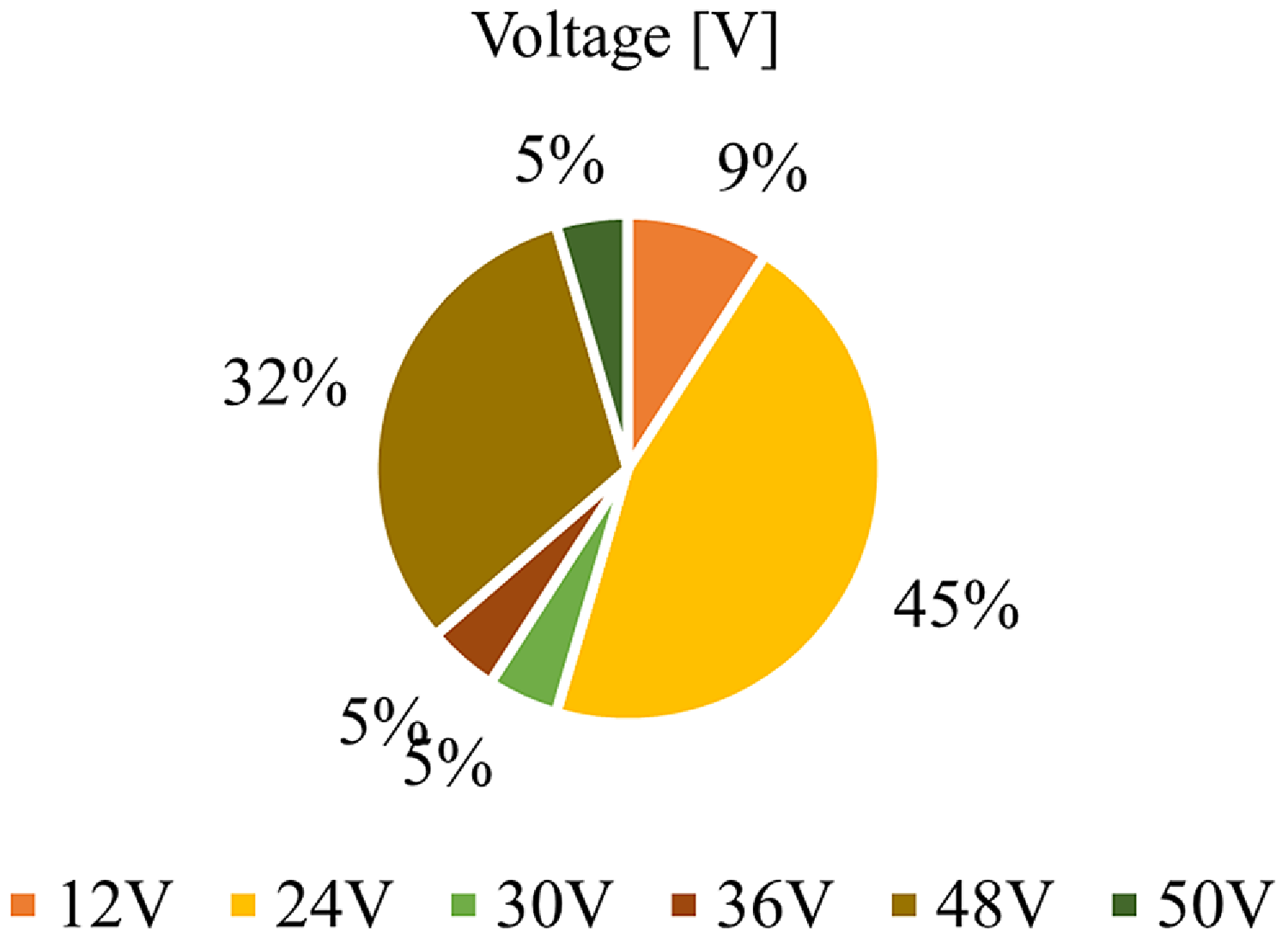
Percentage distribution of motors’ power supply voltage reported in the articles. Only values expressly provided by authors are included.
4.3. Actuation characteristics
In the following sections, the parameters of the different exoskeletons’ actuation technology are reported and analyzed.
4.3.1. Motors
Figure 5 shows the distribution of motor supply voltage values used in the reviewed articles that expressly indicate this information. As expected, the widely used solution involved a voltage of 24 V.
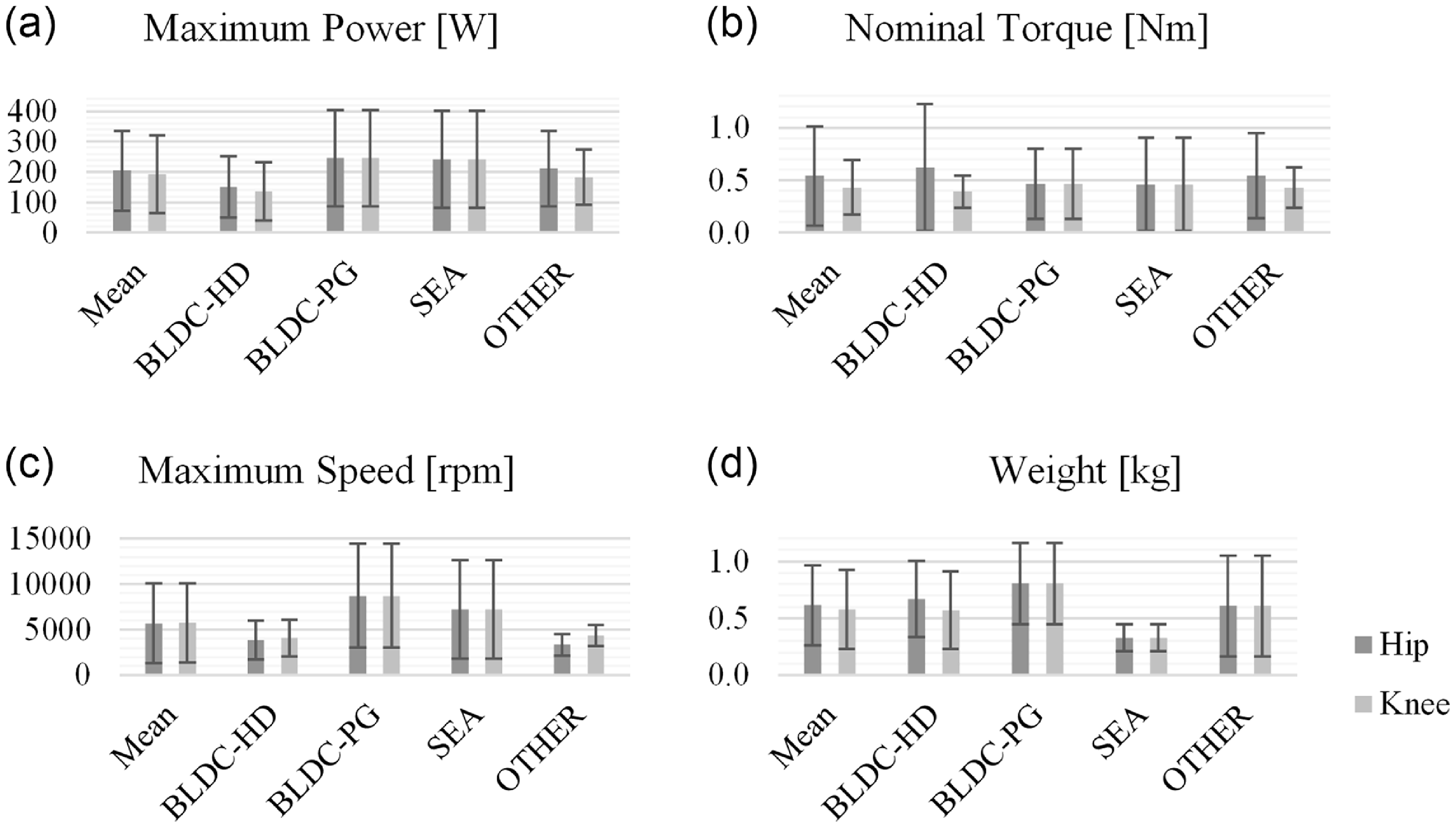
In Figure 6, the values of maximum power, nominal torque, maximum speed, and weight of the motors are reported with the corresponding standard deviations. For each parameter, the overall mean and the averages of the three most used actuation types (brushless DC motor coupled with harmonic drive – BLDC-HD, brushless DC motor coupled with planetary gearbox – BLDC-PG, serial elastic actuator – SEA) were calculated. It can be seen that the solutions combining the planetary gearbox adopt motors with greater power and speed than the solutions that couple a harmonic drive and SEA. The same trend can be found in the motor weight, with SEA solutions adopting lighter motors with lower torque and higher speed.
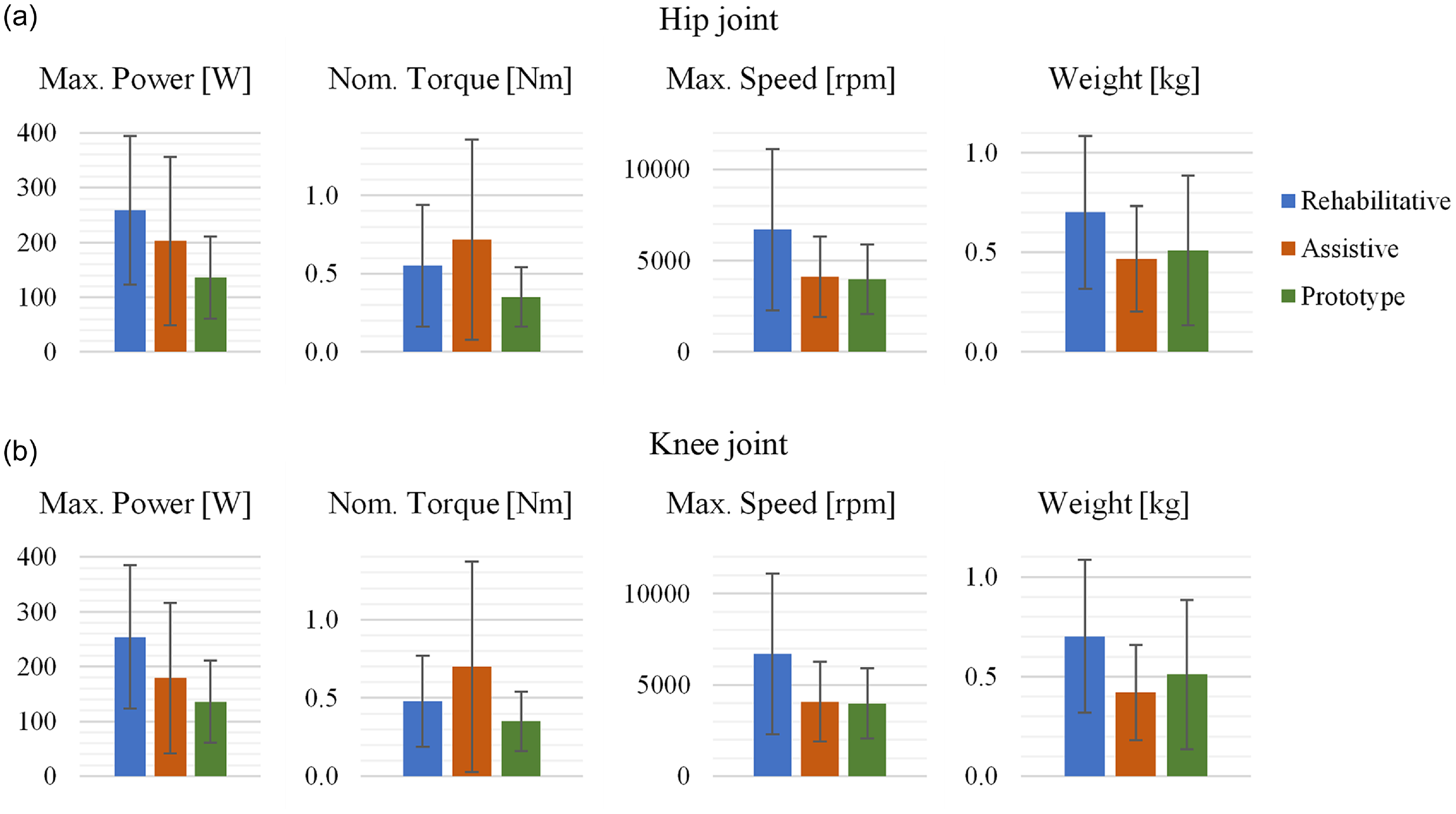
We analyzed the motor parameters based on the applications of the exoskeletons, as shown in Figure 7 reporting values both for the hip and knee joints’ actuation. Overall, we can notice that rehabilitative devices adopt more powerful and heavy motors on average than the other applications.
Technical parameters of motors are reported for hip (dark gray) and knee (light gray) joints. In detail, (a) maximum power, (b) nominal torque, (c) maximum speed, and (d) weight of the electrical motor. For each parameter, the overall mean among all the systems and the averages of systems divided by their actuation unit type are reported. The considered actuation types are: brushless DC motor with a harmonic drive (BLDC-HD), brushless DC motor with a planetary gearbox (BLDC-PG), serial elastic actuator (SEA), and personalized designs (OTHER).
Average values of the motor’s parameters for the hip and knee joints based on exoskeletons’ application.
4.3.2. Reducers
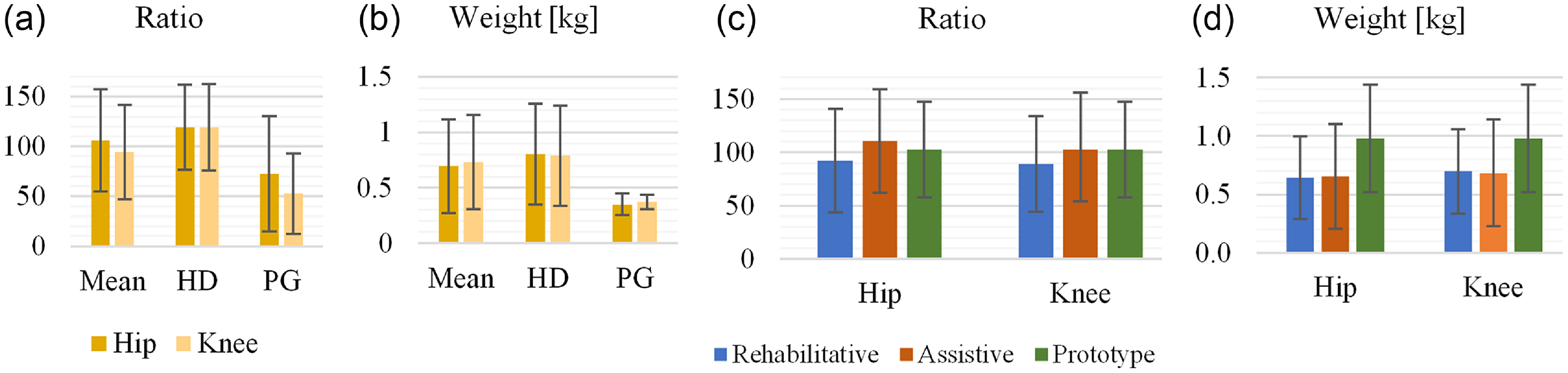
In Figure 8(a), we report the values of the reduction ratio of the reducers for the hip and knee joints with the corresponding standard deviations. Figure 8(b) reports the values of weight. For each parameter, the overall average values and the means of the two most used solutions (harmonic drive and planetary gearbox) were calculated. In systems that use a harmonic drive, the reduction ratio is almost double compared to applications with planetary reducers. However, the average weight of the analyzed planetary gearboxes is half compared to that of the harmonic drives (Figure 8b). Moreover, as Figure 8(c) shows, exoskeletons for assistive application on average adopt a greater reduction ratio than the rehabilitative ones, even if the average reducer weight is almost the same (Figure 8d).
(a) Reduction ratio and (b) weight of reducers are reported. The overall mean among all the systems adopting a reducer and the averages of systems adopting harmonic drive (HD) and planetary gearbox (PG), both for hip and knee joints, are indicated. (c) The average values of hip and knee joints reduction ratio and (d) reducer weight based on exoskeletons’ application are reported.
4.3.3. Global actuation unit
Observing the total weight of the joint actuation shown in Figure 9, composed by the weight of the motor and of the reducer, it is important to notice that the solutions with planetary gearbox are almost 50% lighter than the solutions using a harmonic drive.
Joint actuation total weight composed by the sum of the motor and the reducer is reported, for hip and knee joints. Only systems reporting the weights of both motor and reducer are included (N = 14) and the overall mean among all the systems and the averages of systems adopting harmonic drive (BLDC-HD) and planetary gearbox (BLDC-PG) were calculated.
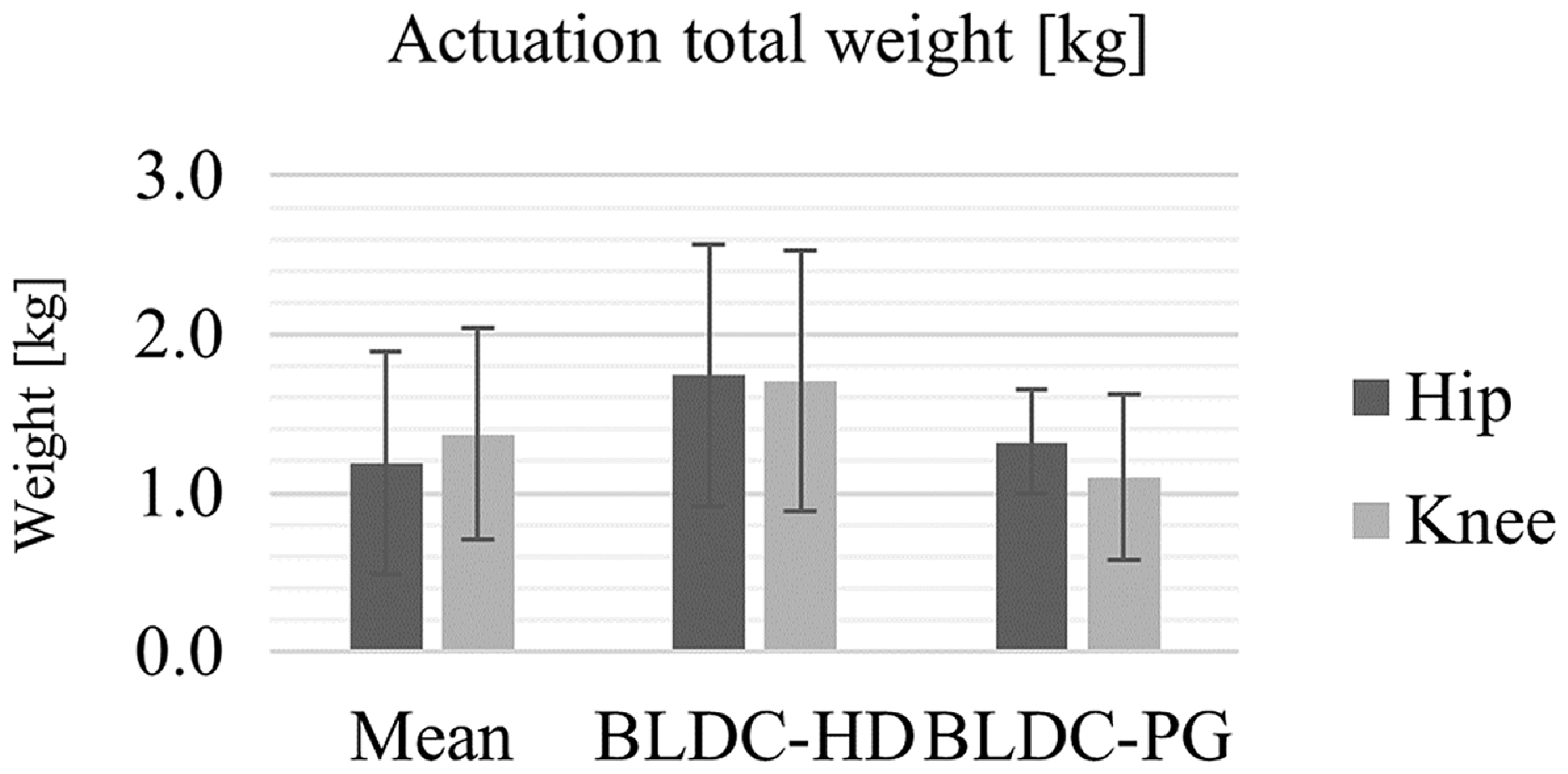
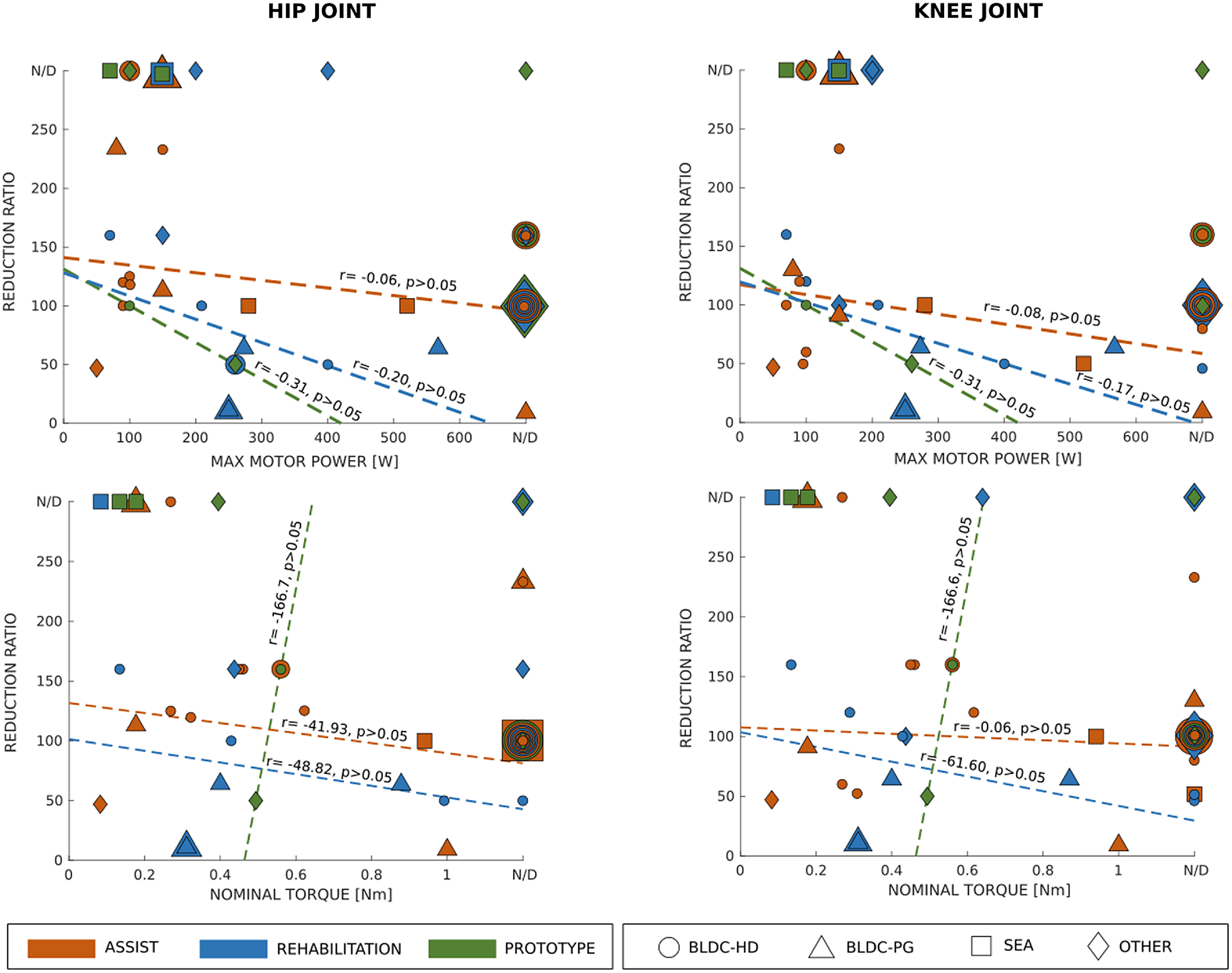
Figure 10 shows the values of the maximum power and the nominal torque of the motor and the reduction ratio of each exoskeleton. The graphs report the types of the actuation system, represented with different symbols, and the application of the exoskeleton, depicted with different colors. As previously reported, we could not include all exoskeletons due to missing details of motors, reducers, or both. The missing values were therefore indicated with N/D. All systems that use SEA (indicated with squares) do not use reducers, except two systems that use custom SEA in combination with a harmonic drive [Reference Yildirim, Kansizoglu, Emre, Derman, Coruk, Soliman, Sendur and Ugurlu35, Reference Meijneke, van Oort, Sluiter, van Asseldonk, Tagliamonte, Tamburella, Pisotta, Masciullo, Arquilla, Molinari, Wu, Dzeladini, Ijspeert and van der Kooij36]. We performed a linear regression between the extracted values to analyze if there is a relationship between the power of the motors used and the reduction ratio chosen. The dotted lines indicate the linear regressions for each exoskeleton group divided according to their application. Overall, we identified a negative trend in the regression lines in all the conditions, except for the ”prototype” group in the reduction ratio vs. nominal torque analysis. This indicates that on average there is a trade-off between the motors’ power and the ratio of the transmission – i.e., exoskeletons equipped with more powerful motors employ reducers with lower reduction ratios. This feature is more marked in rehabilitative exoskeletons, although without a statistical significance ( $p\gt 0.05$
). In particular, exoskeletons that use a brushless DC motor and a harmonic drive tend to use motors with lower power and nominal torque coupled with higher reduction ratios, compared to solutions adopting planetary reducers, as shown also in Figure 6(a) and Figure 8(a).
$p\gt 0.05$
). In particular, exoskeletons that use a brushless DC motor and a harmonic drive tend to use motors with lower power and nominal torque coupled with higher reduction ratios, compared to solutions adopting planetary reducers, as shown also in Figure 6(a) and Figure 8(a).
The relationships between the reduction ratio and the motor size are reported for bot hip and knee joints, considering respectively the maximum motor power (top) and the nominal torque (bottom). The exoskeleton applications are indicated with different colors, and the types of the actuation system are indicated with different symbols. The dotted lines indicate the linear regressions for the exoskeletons grouped by their application. Values that are not reported in the manuscript nor identifiable from cataloges are marked as N/D.
5. Discussion
5.1. Actuation technologies
Accurate selection and sizing of actuation are crucial steps in designing exoskeletons to achieve lightweight and transparent systems. In this review, we define “actuation” as the subsystem responsible for generating mechanical power at the joint level of the exoskeleton. Therefore, the following discussion will encompass considerations related to motor characteristics and transmission design solutions, contextualized according to the identified exoskeleton application. First of all, it is possible to observe that there is an important heterogeneity in many parameters. This variability can be explained by the fact that the solutions adopted by the authors are often very different because there are big differences also in the structure of the exoskeleton. This changes the requirements between one device and another and involves the use of components, although of the same type, very different from each other. Analyzing these data, we wanted to study whether there were trends associated with the various types of components used.
Our review demonstrates that brushless DC motors are the most used electric actuators. Only CUHK-EXO by Bing et al. [Reference Chen, Zhong, Ma, Guan, Qin, Chan, Law, Qin and Liao22] and the exoskeleton by Ghezal et al. [Reference Ghezal, Guiatni, Boussioud and Renane23] adopted brushed DC motors for their actuation units. Specifically, brushless motors in combination with a harmonic drive represent the most used solution. Indeed, despite the relatively low cost with respect to brushless motors, brushed DC solutions are being progressively abandoned due to their higher rotor inertia, higher friction, higher electromagnetic noise, and lower power-to-weight ratio [Reference Dorrell, Hsieh and Knight37, Reference Qiao, Liu, Shi, Wang, Ma and Lim38]. The use of harmonic drive allows for higher reduction ratios than the solution with planetary reducers. Consequently, the motor can have lower torque and minor powers. The reduced weight of a smaller motor is compensated by the increased weight of the harmonic reducer (Figure 9). On the other hand, using a lower-powered motor allows for the adoption of a smaller battery pack while maintaining the same usage duration.
The use of SEA is a more recent solution and allows for more biofidelic behavior of the joints in the contact instants. They require the presence of compliant elements in series with the motors, but involve a more complex design and often custom-made torsional springs [Reference Yildirim, Kansizoglu, Emre, Derman, Coruk, Soliman, Sendur and Ugurlu35, Reference Meijneke, van Oort, Sluiter, van Asseldonk, Tagliamonte, Tamburella, Pisotta, Masciullo, Arquilla, Molinari, Wu, Dzeladini, Ijspeert and van der Kooij36]. This aspect could be problematic in the commercialization phase of the exoskeleton, as the use of non-standard components could lead to an important increase of the exoskeleton cost [Reference Ferrati, Bortoletto, Menegatti and Pagello39]. On average, exoskeletons for rehabilitation use adopt more powerful motors and, in general, a greater variety of solutions than those for assistive use. This might be explained in light of the severity and variety of mobility disorders of people with disabilities undergoing physical rehabilitation (e.g., stroke [Reference Murray, Ha, Hartigan and Goldfarb40], cerebral palsy [Reference Lerner, Damiano and Bulea41], spinal cord injury [Reference White, Hayes and White42], orthopedic post-surgery patients [Reference Wan, Xu, Bai and Yin43]), and the necessity to accommodate different types of motor training [Reference Shi, Zhang, Zhang and Ding1]. On the other hand, users of assistive systems are usually people with residual walking capabilities, such as elderly people [Reference Brackx, Geeroms, Vantilt, Grosu, Junius, Cuypers, Vanderborght and Lefeber32], who therefore require only partial support during the activities of daily living. The trend in exoskeleton’s applications is to inversely relate the maximum power of the motor to the reduction ratio of the reducer, when present, usually in favor of low-power motors coupled with higher reduction ratio $\ge 100$
(Figure 10). In fact, assistive devices are used mainly outside clinical environments and therefore have requirements of portability, weight and cost. The BLDC-HD system is the best at meeting these requirements. As a result, given the increased application on the market, research is more focused on rehabilitation devices, while assistive exoskeletons rely on implementation on a more robust and stable technology. Research focuses more on wearability and human–machine interface. However, there are some exceptions such as the Symbitron [Reference Meijneke, van Oort, Sluiter, van Asseldonk, Tagliamonte, Tamburella, Pisotta, Masciullo, Arquilla, Molinari, Wu, Dzeladini, Ijspeert and van der Kooij36], an assistive exoskeleton that moves on inclined surfaces (e.g., slopes and stairs). Therefore, it adopts more powerful actuation units (520W brushless DC motor plus a harmonic drive with ratio 100 for the hip and 50 for the knee and a set of torsional springs). Another system, the LOPES exoskeleton for rehabilitation use has a support structure and adopts SEA with a combination of cable-driven actuation with high-power servomotors, 567W, coupled with planetary gearboxes of 64 ratio [Reference Veneman, Kruidhof, Hekman, Ekkelenkamp, Van Asseldonk and Van Der Kooij44]. In general, from the results obtained in this study, it is possible to observe that, despite the trends highlighted, there are different technologies for the actuation of rigid exoskeletons for lower limbs. This is also demonstrated by the high heterogeneity in many parameters, as resulted from the standard deviation calculation. This variability can be explained by the fact that the solutions adopted by the authors are often very different, due to the variety of mobility disorders and disabilities of users. This leads to big differences also in the structure of the exoskeletons. In our opinion, it is important to define a standardization and indications of reporting technical details, to support the development of these systems in the coming years. In view of the increasingly widespread use of these technologies, extending it to everyday life and outdoor environments, it is essential to improve the autonomy and transportability of systems, as well as increasing performance and reliability. Therefore, we believe that there will be three main directions in research. First, reducing weight and external dimensions can allow a less demanding and more natural use of the system. This is a key aspect to improve performances and rehabilitation and assistive results and increase the versatility of systems. Surely having smaller motors will help to reduce the weight and adopting reducers with high reduction ratio as harmonic drives or other technologically advanced reducers will also allow them to contain the external dimensions. This trend will also lead to the application of smaller and more powerful batteries that can increase the autonomy of the use of the exoskeletons, which is the second most critical development. It is important to improve this characteristic to guarantee a sufficient usage time, especially in outdoor environments. The third research direction will improve ergonomics and user comfort and in this field the use of SEA is emerging in recent years. It guarantees greater comfort for the user especially during the contact phase. One future development should be to optimize the design of components to simplify the construction and lower the costs, allowing a wider application.
$\ge 100$
(Figure 10). In fact, assistive devices are used mainly outside clinical environments and therefore have requirements of portability, weight and cost. The BLDC-HD system is the best at meeting these requirements. As a result, given the increased application on the market, research is more focused on rehabilitation devices, while assistive exoskeletons rely on implementation on a more robust and stable technology. Research focuses more on wearability and human–machine interface. However, there are some exceptions such as the Symbitron [Reference Meijneke, van Oort, Sluiter, van Asseldonk, Tagliamonte, Tamburella, Pisotta, Masciullo, Arquilla, Molinari, Wu, Dzeladini, Ijspeert and van der Kooij36], an assistive exoskeleton that moves on inclined surfaces (e.g., slopes and stairs). Therefore, it adopts more powerful actuation units (520W brushless DC motor plus a harmonic drive with ratio 100 for the hip and 50 for the knee and a set of torsional springs). Another system, the LOPES exoskeleton for rehabilitation use has a support structure and adopts SEA with a combination of cable-driven actuation with high-power servomotors, 567W, coupled with planetary gearboxes of 64 ratio [Reference Veneman, Kruidhof, Hekman, Ekkelenkamp, Van Asseldonk and Van Der Kooij44]. In general, from the results obtained in this study, it is possible to observe that, despite the trends highlighted, there are different technologies for the actuation of rigid exoskeletons for lower limbs. This is also demonstrated by the high heterogeneity in many parameters, as resulted from the standard deviation calculation. This variability can be explained by the fact that the solutions adopted by the authors are often very different, due to the variety of mobility disorders and disabilities of users. This leads to big differences also in the structure of the exoskeletons. In our opinion, it is important to define a standardization and indications of reporting technical details, to support the development of these systems in the coming years. In view of the increasingly widespread use of these technologies, extending it to everyday life and outdoor environments, it is essential to improve the autonomy and transportability of systems, as well as increasing performance and reliability. Therefore, we believe that there will be three main directions in research. First, reducing weight and external dimensions can allow a less demanding and more natural use of the system. This is a key aspect to improve performances and rehabilitation and assistive results and increase the versatility of systems. Surely having smaller motors will help to reduce the weight and adopting reducers with high reduction ratio as harmonic drives or other technologically advanced reducers will also allow them to contain the external dimensions. This trend will also lead to the application of smaller and more powerful batteries that can increase the autonomy of the use of the exoskeletons, which is the second most critical development. It is important to improve this characteristic to guarantee a sufficient usage time, especially in outdoor environments. The third research direction will improve ergonomics and user comfort and in this field the use of SEA is emerging in recent years. It guarantees greater comfort for the user especially during the contact phase. One future development should be to optimize the design of components to simplify the construction and lower the costs, allowing a wider application.
Checklist of the fundamental set of technical details to report in the actuation unit description.
5.2. Quality of actuation description
Another objective of this review was to define if the parameters and characteristics of the actuation units of the exoskeletons’ joints are sufficiently described to allow the reproducibility of the system. The aim, being this a scoping review, was not to provide a complete technical analysis of all the exoskeleton systems, for which we refer to [Reference Tiboni, Borboni, Vérité, Bregoli and Amici10, Reference d. C. Sanchez-Villamañan, Gonzalez-Vargas, Torricelli, Moreno and Pons11]. It was mainly to identify pitfalls in the mechanical description of the exoskeleton’s actuation units and propose a potential standardization for the reporting [Reference Torricelli, Gonzalez-Vargas, Veneman, Mombaur, Tsagarakis, Del-Ama, Gil-Agudo, Moreno and Pons12]. In particular, herein we focused on papers describing exoskeletons equipped with electromagnetic/electromechanical actuation, excluding other types of common actuation systems in lower limb exoskeleton (e.g., pneumatic or hydraulic actuation). We took this decision for two main reasons: first, to allow a more homogeneous definition and clearer comparison of the most relevant parameters describing the actuation unit; second, electromechanical actuations represent the most widely used solutions for exoskeletons [Reference Tiboni, Borboni, Vérité, Bregoli and Amici10] as they provide enough power for the full actuation of the user’s lower limbs while having higher benefits in terms of weight and dimensions compared to the other solutions [Reference Agarwal and Deshpande45, Reference Maciejasz, Eschweiler, Gerlach-Hahn, Jansen-Troy and Leonhardt46].
Overall, we observed a lack of technical information across the reviewed literature. Only 47% of included papers report sufficient information and technical data of the motors used for the actuation systems. Indeed, 32% do not provide any technical detail beyond the type of component used and the remaining provide partial but insufficient data. Reducers are better described than motors due to their minor complexity and variety. However, 30% of reviewed works do not provide any description also of reducers. The technical description of actuation is tendentially overlooked. Indeed, most of the works focused more on the aspects of sensing and control [Reference Banchadit, Temram, Sukwan, Owatchaiyapong and Suthakorn47–Reference Wu, Dzeladini, Brug, Tamburella, Tagliamonte, Van Asseldonk, Van Der Kooij and Ijspeert53], or on the gait pattern generation [Reference Yan, Li, Long, Ren and Wu54] without entering in the details of the exoskeleton technical characteristics. Others focus on specific aspects of the system, e.g., the human–exoskeleton interface [Reference Levesque, Pardoel, Lovrenovic and Doumit55] or the experimental evaluation of the system on the end-users [Reference Farris, Quintero and Goldfarb56]. Another category includes works reporting on uncommon solutions with complex construction demands, which focus on the description of the structure design and the mechanisms while neglecting details of the actuation unit [Reference Hasan and Dhingra57–Reference Zhu, Yang, Jin, Zang and Zhao61]. Specifically, information that are often missing are the selected voltage supply for running the exoskeleton and the power of the motor. Even if the brand and the model are provided, the lack of these details prevents the identification of the motor and the parameters of interest (e.g., weight, nominal and peak torque, and maximum speed) from the catalogs. Nevertheless, the analysis of the papers providing the voltage supply (N = 21) revealed a clear trend toward the usage of 24 V power supply, supporting our initial choice of assuming a 24 V supply whenever not stated.
In view of the above results, we aim at providing a checklist of the minimum fundamental set of technical details to be provided to ensure reproducibility for lower limb powered exoskeletons, reported in Table III. It has to be combined with the data extraction form used in this review and reported in Table I. In addition, a full list of the papers included in the review is provided as Supplementary Material to simplify the comparison between newly developed systems and the state of the art. If a commercial motor from a specific producer is used, only the first data in the list must be provided. In particular, providing type, brand, model, supply voltage, and wattage allows to obtain the other values from external sources (i.e., catalogs). On the other hand, if the system is equipped with a custom-made motor, it is necessary to indicate at least power supply voltage, maximum power, nominal torque, peak torque, nominal speed, and weight. In this way, it is possible to search for an equivalent commercial motor or develop a custom-made one with the same mechanical characteristics as those used in the exoskeleton that is reproduced. Similarly, for commercial reducers, it is necessary to report the type, brand, model, and transmission ratio to obtain the other values from external sources. Otherwise, the parameters description of custom-made reducers must be provided, indicating the reduction ratio, transmissible nominal torque, transmissible peak torque, maximum input speed, and weight. When writing papers regarding the exoskeleton actuation system, it would be important to follow the guidelines reported in this checklist and at the same time fill in the data extraction form to ensure to provide all the information necessary for the reproducibility of the actuation units.
6. Conclusions
This review was systematically conducted by applying the PRISMA statements to collect all the papers regarding rigid bilateral lower limbs exoskeleton, powered simultaneously at hip and knee joints, equipped with electromechanical/electromagnetic actuation system. The first aim was to focus on the design of the actuation systems and the quality of the description of their characteristics to ensure reproducibility. Subsequently, a quantitative comparison of the reported actuation technologies was conducted to identify standards and common characteristics among different lower limb exoskeletons. An overall lack of detailed information and description of the actuation systems resulted. Despite this lack of technical details, we observed trends in the technical characteristics of the actuation units’ components, such as a trade-off with motor power and reduction ratio according to the exoskeleton application. These information can be used to build a more complete and organic standardization. The guidelines and checklists proposed in this review are an initial contribution in this direction.
Author contributions
FB, ST, NP, and ADF conceived and designed the study. FB conducted data gathering. ST performed statistical analyses. FB and ST wrote the article. EM, NP, and ADF supervised the work and reviewed the article.
Financial support
The work was supported by Italian Minister for Education (MUR), under REACT-EU PON “Ricerca e Innovazione.” This paper was developed within the project funded by Next Generation EU– “Age-It–Ageing well in an ageing society” project (PE0000015), National Recovery and Resilience Plan (NRRP)–PE8–Mission 4, C2, Intervention 1.3”. The views and opinions expressed are only those of the authors and do not necessarily reflect those of the European Union or the European Commission. Neither the European Union nor the European Commission can be held responsible for them.
Competing interests
No conflicts of interest exist.
Ethical approval
Not applicable.
Supplementary material
The supplementary material for this article can be found at https://doi.org/10.1017/S0263574725000220.


 Open access

