


In addition to consuming foods and beverages belonging to the core food groups(Reference Smith, Kellet and Schmerlaib1), many people periodically adopt diets in which they accentuate or reduce the consumption of certain types of foods. These diets vary according to prevailing fashions including low-carbohydrate(Reference Foster, Wyatt and Hill2), high-protein (Atkins)(Reference St Jeor, Howard and Prewitt3), low-fat(Reference Meckling, O'Sullivan and Saari4), vegetarian and vegan(Reference Jenkins, Kendall and Marchie5, Reference Phillips6), gluten-free(Reference Case7) and lactose-free(Reference Bloom and Sherman8) diets, among others. Some of these diets appear to be more commonly used, especially by women(Reference Henderson, Gregory and Swan9). According to the Australian National Nutrition Survey 1995(Reference McLennan and Podger10), approximately 36 % of those over 19 years of age used different types of diets. However, until now, few studies have examined the patterns of use of these diets in a given time period. Therefore, the first aim of the present study was to examine the patterns of use of these diets.
While it is apparent that weight control and the enhancement of health and well-being are among the motivations for the use of many types of diets(Reference Curioni and Lourenco11, Reference Sacks, Svetkey and Vollmer12), there is little evidence about their likely antecedents including the presence of disease or medical conditions such as diabetes(13), excess body weight(Reference Newby, Muller and Hallfrisch14), ethical values (e.g. associated with vegetarianism)(Reference Lea and Worsley15), religious affiliations(Reference Sabaté16) or age and socio-economic status(Reference Wardle and Steptoe17). Therefore, our second aim was to examine the associations of different patterns of diet use with likely antecedents.
In order to hypothesise possible relationships, we searched the literature for studies of diet use. In the main, we found few studies, most of which merely showed demographic associations (e.g. age and sex). So we looked more broadly at the general food consumption literature.
Sex differences in dietary behaviours have been reported in many studies(Reference Wardle, Steptoe and Nillapun18, Reference Liebman, Cameron and Carson19). More specifically, McLennan & Podger(Reference McLennan and Podger10) showed that women were more likely to report being on a diet than men (42 v. 29 %). Age(Reference Westenhoefer and Elmadfa20, Reference Drewnowski and Shultz21) and educational levels(Reference Worsley, Blache and Ball22) also appear to influence food choice, while religious affiliation and cultural background have sometimes been reported to be significant determinants of dietary behaviours(Reference Glanz and Kolonel23, Reference Naeem24). Although it appears that demographic variables do have an impact on food choice, there is little evidence about their possible impact on the use of diets apart from the greater use of weight-reduction and vegetarian diets by women(Reference McLennan and Podger10).
Health status may also influence the use of diets. For example, in the Australian National Health Survey 2004–5, over 90 % of those with diabetes or high sugar levels reported that they had taken some action (i.e. changed their eating habits) for the condition in the previous 2 weeks(13). Therefore, it can be hypothesised that people with these medical conditions may adopt low-sugar, low-fat or low-salt diets.
Smoking and drinking alcohol appear to be related to people's food consumption(Reference Padrao, Lunet and Santos25). For example, smokers may be less likely to consume vegetables and dairy products than non-smokers(Reference Osler, Tjonneland and Suntum26, Reference Wilson, Smith and Speizer27). Alcohol consumption has been associated with satiating and protein-rich diets(Reference Gex-Fabry, Raymond and Jeanneret28), and in a sample of French women, drinkers consumed more animal-derived foods than did non-drinkers(Reference Kesse, Clavel-Chapelon and Slimani29). Thus, we hypothesised that people who smoke or drink alcohol may be less likely to adopt recommended healthy diets.
Finally, body weight may be associated with food choice as thinness is seen as the desirable body shape for both women and men in Western cultures(Reference Shepherd and Dennison30). Therefore, we expected that people (especially women) who were overweight (BMI 25–30 kg/m2) or obese (BMI >30 kg/m2) would be more likely to use slimming diets than people with healthy weights.
The opportunity to examine the study aims and expectations was provided in the form of the Baby Boomers Survey of a random sample of middle-aged Australians. It was hypothesised that complex patterns of diet use may be explained by a number of respondents' background characteristics, as described earlier. Latent class analysis (LCA) identifies homogeneous and mutually exclusive groups that exist within a heterogeneous population. LCA has been applied in many domains including psychology(Reference Lanza, Flaherty, Collins, Schinka and Velicer31), education(Reference Aitkin, Anderson and Hinde32), sociology(Reference Dewilde33) and public health(Reference Barnett, Gauvin and Craig34). In the present study, the underlying structure of the set of use of diets can be examined via a series of LCA models to identify the best description of the number of groups of participants with different uses of diets.
Method
Background characteristics
Sociodemographic information was collected, which included age, sex, educational levels, religious affiliation and country of birth. Separate analyses were carried out across sex. Education, religious affiliation and country of birth were recoded into binary variables, and the corresponding reference categories were non-tertiary education, having no religious affiliation and Australian/European, respectively. In addition, information on health status and health behaviours was also included in the analyses using specific measures of experience of long-term illness, BMI, and smoking and alcohol consumption. Of these covariates, long-term illness, smoking and drinking alcohol were dichotomised, and the respective reference categories were absence of long-term illness and no consumption of cigarettes and alcohol, respectively. A continuous BMI variable (i.e. BMI = weight (kg)/height (m)2) was calculated based on the height and weight reported by the participants and used in the analysis.
Procedure
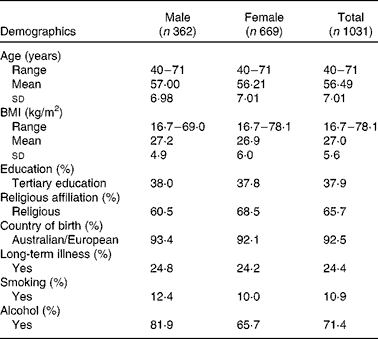
Following the procedures recommended by Dillman(Reference Dillman35), a survey questionnaire was mailed to a random sample drawn from the Electoral Rolls from Victoria, Australia. The present study was conducted according to the guidelines laid down in the Declaration of Helsinki, and all procedures involving human subjects were approved by the Deakin University Human Research Ethics Committee. Written informed consent was obtained from all participants. A total of 2975 people aged over 40 years were invited to participate. In brief, a preparatory letter was sent, followed a week later by the questionnaire plus an explanatory letter; 2 weeks later, a reminder postcard and 2 weeks thereafter, a replacement questionnaire. A total of 1031 completed questionnaires were returned, indicating a response rate of 35 %. Table 1 provides an outline of the participants' demographic characteristics and health background.
(Mean values, standard deviations and ranges or percentages)
Questionnaire
As part of a broad food shopping survey, a checklist of thirteen diets (Table 2) followed by the participants in the past 3 months was administered. These thirteen diets emerged from our initial qualitative study regarding the food and health needs of ageing baby boomers(Reference Hunter, Wang and Worsley36). The checklist used dichotomous response scales, with ‘1’ representing that no diet was used and ‘2’ indicating that a particular diet was followed. The question that the respondents were required to answer was: in the past 3 months, have you followed any of the following diets?
(Numbers and percentages)
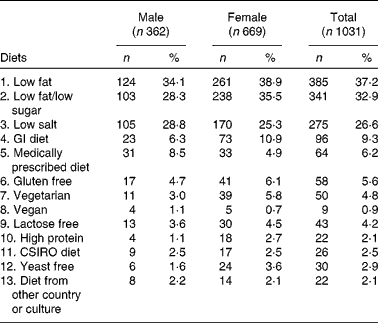
GI, glycaemic index; CSIRO, Commonwealth Scientific and Industrial Research Organisation.
Analytical procedure
While factor analysis provides a framework for mapping items onto continuous latent variables, LCA accommodates an analogous framework for measuring categorical latent variables(Reference Lanza, Collins and Lemmon37). LCA allocates a sample population into mutually exclusive and exhaustive subgroups(Reference Goodman38). In the present study, the response patterns of the thirteen dietary questions were subjected to LCA to identify the number of classes to which the respondents may belong. LCA was carried out with Mplus version 5.2 (Muthén & Muthén, Los Angeles, CA, USA)(Reference Muthén and Muthén39) for males and females separately because of the known sex differences in dietary behaviours. A robust maximum-likelihood estimation method was used to adjust the standard errors of the present analyses.
The performance of two, three and four latent class models was assessed. Of these three competing latent class models, the selection of the best-fitting model was subject to several statistical fit indices as well as theoretical considerations. The literature has shown that the Bayesian information criterion (BIC)(Reference Schwarz40) and the Akaike information criterion(Reference Akaike41) are commonly used for LCA assessment(Reference Lanza, Collins and Lemmon37). However, the BIC performs better than the Akaike information criterion(Reference Yang42). In addition, the sample-size-adjusted BIC (aBIC)(Reference Sclove43) has demonstrated notable success in determining the number of classes from competing LCA models(Reference Yang44). The goodness-of-fit indices used in the present study to evaluate the fit of the model to the data were the log-likelihood test statistic, the BIC and the aBIC, where lower values of the BIC and aBIC, and higher values of the log-likelihood test statistic suggest a better model fit. While not generally used for deciding the number of classes, a further index, entropy, is reported as a measure of the quality of the classification of cases into classes. An entropy value close to 1 indicates good classification.
Furthermore, the inclusion of predictors of class membership in the latent class model is referred to as LCA with covariates(Reference Lanza, Collins and Lemmon37). In the present analysis, once the most suitable latent class structure of use of diets had been determined, regression analysis was performed to compare the latent classes with participants' background characteristics including age, levels of education, religious affiliation, country of birth, long-term illness, smoking and drinking alcohol, and BMI. All of these factors are known as possible factors that induce population heterogeneity on the responses of diets followed by the respondents. The multinomial logistic regression coefficients for each of the classes were then estimated and compared with the reference class.
Results
Table 2 presents prevalence estimates for the use of thirteen diets included in LCA. The prevalence of these use of diets ranged from 1 % (vegan and high-protein diets) to 34 % (low-fat diet) for men and from 1 % (vegan diet) to 39 % (low-fat diet) for women, reflecting a wide range of dietary characteristics captured within the analyses.
Latent class results
To identify the appropriate number of classes, a two-class model was initially fit to the data and successively compared with models that specified an increasing number of latent classes. In selecting the optimal model solution, a set of statistics including the log likelihood, BIC, aBIC and entropy was examined. Table 3 shows the model fit statistics derived from LCA for the two- to four-latent class models for men and women when the thirteen use of diets and covariates were included in the model.
Criterion to assess model fit for sex-specific latent class analysis models with covariates
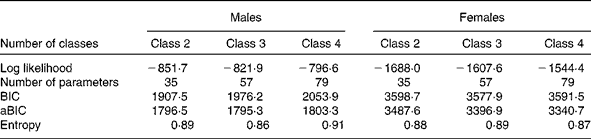
BIC, Bayesian information criterion; aBIC, adjusted BIC.
An examination of Table 3 might infer a four-class solution based on the higher log-likelihood statistics for both sexes, the smallest aBIC for females and the highest entropy for males, while a two-class model solution was implied by the lower BIC for males. However, a three-class model was suggested by the smallest values of the aBIC for males and BIC for females, as well as by the highest entropy for females. Since the aBIC is known to be the best likelihood-based indicator of model fit for latent class models(Reference Henson, Reise and Kim45), a three-class solution was deemed the most appropriate for the male sample. Based on the trivial difference in the aBIC between the three- and four-class solutions for the female sample, together with the smallest BIC and the highest entropy, as well as the interpretability of the classes and class sizes (e.g. one of the classes comprised only 2·4 % of women if a four-class solution was taken), a three-class model was considered the most appropriate solution for the female sample.
The response probabilities for each of the thirteen use of diets are presented for each of the latent classes in Table 4. These probabilities can be used to characterise the three latent classes.
Latent class analysis models with covariates across sex*

Class 1, diet use; class 2, selected diet use; class 3, non-diet use; GI, glycaemic index; CSIRO, Commonwealth Scientific and Industrial Research Organisation.
* Probability of latent class membership and item response probabilities within each of the three classes.
The three distinct latent classes identified for men and women are as follows:
Class 1 – diet use. This class reported the highest probabilities of endorsing particular diets across all thirteen diets from 0·06 (yeast-free diet) to 1·00 (low-fat and low-fat/low-sugar diets) for men (Table 4, second column) and from 0·07 (vegan diet) to 0·58 (gluten-free diet) for women (Table 4, fifth column). The class represented 9 and 11 % of men and women, respectively, and was the smallest of any of the three male and female classes.
Class 2 – selected diet use. This class included most diets recommended by the national healthy eating guidelines(46). For example, low-fat, low-fat/low-sugar, low-salt and glycaemic-index (GI) diets were reported with the probabilities of 0·85, 0·63, 0·69 and 0·08 (Table 4, third column) for men and 0·96, 0·86, 0·65 and 0·22 for women (Table 4, sixth column). The probabilities on the remaining diets were low: from 0 (vegetarian, vegan, high-protein and cultural diets) to 0·15 (medically prescribed diet) for men and from 0 (vegan) to 0·07 (medically prescribed diet) for women. This class constituted 28 and 34 % of men and women, respectively, and was the second largest group for both sexes.
Class 3 – non-diet use. These respondents had the lowest probabilities on the use of the whole set of thirteen use of diets, ranging from 0 (GI diet, lactose-free, high-protein, yeast-free and cultural diets) to 0·04 (low-fat and low-fat/low-sugar diets) for men and from 0 (gluten-free, vegan, lactose-free, yeast-free and cultural diets) to 0·06 (low-fat/low-sugar diet) for women. This class comprised 63 and 55 % of men and women, respectively, and was the largest of the three male and female classes.
The classes exhibit some dissimilarity between the sexes. Noticeably, women's dietary profiles for class 2 and class 1 intersected at the point of the GI diet, which indicates that women classified as members of class 2 were more likely to use low-fat (0·96 v. 0·53), low-fat/low-sugar (0·86 v. 0·42) and low-salt (0·65 v. 0·37) diets than women in class 1. However, men classified as members of class 2 were less likely to use low-fat (0·85 v. 1·00), low-fat/low-sugar (0·63 v. 1·00) and low-salt (0·69 v. 0·92) diets than men in class 1.
Multinomial logistic regression analyses were conducted on the male and female samples. Class 1 (diet use) and class 2 (selected diet use) were compared with class 3 (non-diet use – as the reference group) in order to interpret the associations between the class membership and the covariate (age, education, religious affiliation, country of birth, long-term illness, BMI, smoking and drinking alcohol). The estimated log odds coefficients and the corresponding log odds CI were then converted into OR and their corresponding 95 % CI (Table 5).
(Odds ratios and 95 % confidence intervals)

Class 1, diet use; class 2, selected diet use; class 3, non-diet use.
Values were significantly different for the multinomial logistic latent class regression weights: *P < 0·05; **P < 0·01.
† Country of birth refers to Asian origin v. Western.
Associations between class membership and covariates among men. These results suggest that for men with religious affiliations, the odds of being in class 1 v. class 3 were nearly five times higher than that for non-religious men. For men born in an Asian country, the odds of being in class 1 v. class 3 were twelve times higher than that for men born in Australian or other European countries. For men with long-term illness, the odds of being in class 1 v. class 3 were almost ten times higher than that for men without long-term illness. Furthermore, as men's BMI increased, the odds of being in class 1 v. class 3 decreased (i.e. men with a higher BMI were 23 % less likely to be in the diet use group than men with a lower BMI). When comparing class 2 with class 3, men with long-term illness were three times more likely to be in class 2 than in class 3 compared with men without long-term illness.
Associations between class membership and covariates among women. For women with long-term illness, the odds of being in class 1 compared with class 3 were nearly two times higher than that for women without long-term illness. For religious women, the odds of being in class 1 v. class 3 were nearly two times higher than that for non-religious women. In addition, for women smokers, the odds of being in class 1 rather than in class 3 were lower than for women who were non-smokers (i.e. women who were smokers were 68 % less likely to be in the diet use group). When comparing class 2 with class 3, for women with long-term illness, the odds of being in class 2 v. class 3 were almost six times higher than that for women without long-term illness. Finally, for women born in Asian countries, the odds of being in class 2 v. class 3 were nearly four times higher than that for women born in Australian or other European countries.
The associations between class membership and the covariates also yielded some similarities and differences by sex. While long-term illness and religious affiliation had similar associations with the class membership for both sexes, country of birth was related to males in the diet use group and females in the selected diet use group. Moreover, BMI was linked to males in the diet use group, and smoking was associated with females in the diet use group.
In summary, three types of diet uses were identified for men and women. The majority of participants of both sexes were classified into the non-diet use group, followed by the selected diet use group, and the smallest proportion of respondents belonged to the diet use group. Furthermore, the respondents' class membership was associated with their background characteristics, health status and health behaviours, though these differed for men and women.
Discussion
LCA is one type of cluster analysis, which is used when the attributes are categorical. While the attributes of objects are continuous, cluster analysis is referred to as latent profile analysis(Reference Vermunt, Magidson, Hagenaars and McCutcheon47). There is also cluster analysis of mixed-mode data where some attributes are continuous while others are categorical(Reference Everitt48). In the present study, LCA was used to analyse categorised diet use.
LCA allows division of a heterogeneous group into several homogeneous subgroups through evaluating and minimising associations among responses across multiple variables(Reference Keel, Fichter and Quadflieg49).
Although the application of LCA to dietary data is scarce, based on its wide applications across a range of disciplines, LCA would seem an optimal choice of analysis because it is capable of determining the number and composition of groups in which participants are aggregated on the basis of their use of diets.
The majority of the participants constituted the non-diet use group (63 % of men v. 55 % of women) and overall were less likely to use diets, irrespective of sex. Men and women showed different trends of diet use especially for the diet use and selected diet use groups. The membership of these groups varied by religious affiliation, country of birth, long-term illness and smoking habits.
Members of the diet use group had a greater likelihood of using diets, while those in the non-diet use group followed almost no diets. However, the selected diet use groups were more likely to use diets recommended by the dietary guidelines(46), such as low-fat, low-fat/low-sugar, low-salt and GI diets, and were less likely to use other types of diets. Therefore, the diet use and selected diet use groups were more likely to use low-fat, low-fat/low-sugar, low-salt and GI diets, while the selected diet use and non-diet use groups were less likely to use medically prescribed, gluten-free, vegetarian, vegan, lactose-free, high-protein, Commonwealth Scientific and Industrial Research Organisation, yeast-free or ethnic diets.
Men in the diet use group were more likely to use low-fat, low-fat/low-sugar, low-salt, GI and medically prescribed diets but were less likely to use gluten-, lactose- and yeast-free diets than women in the corresponding group. According to the Australian Bureau of Statistics(50), more men suffer from certain types of health conditions than women. For example, 68 % of men were overweight or obese compared with 55 % of women; 54 % of men v. 46 % of women reported heart, stroke and vascular diseases in 2007–8. Therefore, these diets (e.g. low-fat, low-fat/low-sugar and low-salt, GI and medically prescribed diets) may have been prescribed by their health practitioners (or other advisors such as family members). The higher prevalence of gluten, lactose and yeast intolerance among women(Reference Gomez, Selvaggio and Pizarro51–Reference Krause, Kaltbeitzer and Erckenbrecht53) may explain the greater use of gluten-, lactose- and yeast-free diets by women. Women in the selected diet use group were more likely to report the use of low-fat, low-fat/low-sugar and GI diets than men in the corresponding group, which is consistent with reports of women's higher health and dietary consciousness(Reference Fagerli and Wandel54).
The present findings support the hypothesis that the use of diets varies by individuals' religious affiliation. Although there was no evidence that respondents with religious affiliations followed religious dietary prescriptions in the present study, it provides some support for Sabaté's(Reference Sabaté16) view that religious dietary practices are characterised by distinct dietary habits, in that men and women with religious affiliations were more likely to be members of the diet use group. They are also consistent with findings that the overall nutrient intake profile of individuals who adhered to religious dietary recommendations was healthier than that of the general population(Reference Sarri, Linardakis and Bervanaki55).
The hypothesis that the use of diets differs by people's country of birth was supported. Men who were born in Asian countries were more likely to be in the diet use group and women who were born in Asian countries were more likely to be in the selected diet use group when compared with those in the non-diet use group. Kumanyika(Reference Kumanyika56) considered people's country of birth as a source of racial/ethnic diversity among other factors such as cultural practices and beliefs and ancestry that influence the use of diets. Moreover, Shatenstein & Ghadirian(Reference Shatenstein and Ghadirian57) and Naeem(Reference Naeem24) underscored the importance of cultural background as the determinant of food choice.
Respondents who reported having long-term illness were more likely to be in the diet use group or selected diet use group than those in the non-diet use group. This is consistent with the findings of the Australian National Health Survey(13), which showed that the majority of people with diabetes reported changes in their eating patterns. Moreover, it has been shown that after the diagnosis of diabetes, patients reduced consumption of foods and beverages rich in fat and sugar(Reference Niewind, Friele and Kandon58).
Men who reported a higher body weight were less likely to be in the diet use group than those in the non-diet use group. Literature examining body weight and actual use of diets is scarce. The Australian Bureau of Statistics(59) has shown that the use of reduced or skimmed fat milk was higher among obese/overweight women than their male peers (overweight: 59 % women v. 44 % men; obese: 52 % women v. 40 % men), which is consistent with the present findings. However, the present study did not show that women's use of diets varied by their BMI. This may be because women are more conscious than men about their diets irrespective of their body weight(Reference Serdula, Mokdad and Williamson60) and so, BMI was not related to their use of diets.
Smoking was associated with women's but not men's use of diets. Female smokers were less likely to be in the diet use group than those in the non-diet use group, which is consistent with a number of studies. For example, Dallongeville et al. (Reference Dallongeville, Marécaux and Fruchart61) demonstrated that the dietary habits of smokers are characterised by higher intakes of energy, total fat, saturated fat, cholesterol and alcohol and by lower intakes of antioxidant vitamins and fibre, compared with non-smokers. Moreover, Margetts et al. (Reference Margetts, Thompson and Speller62) reported that smokers were the least likely to have made any changes to their diets. Therefore, our hypothesis that the use of diets is related to smoking habits is supported by the findings from the women's sample.
The present study estimated diet use heterogeneity among middle-aged Australian men and women. It demonstrated the relationships between dietary latent class memberships and religious affiliation, country of birth, healthy status, BMI and smoking. However, while the findings suggest that both religious affiliation and country of birth had associations with diet use, it should be noted that most of those with religious affiliations may not follow religious practices most of the time, and most of the participants (93 %) were born in Australia/Europe, which induces bias in the results. Future research needs to replicate these findings based on a less-skewed sample population.
In addition, three possible predictors, namely age, education and alcohol consumption, were unrelated to diet use. Age was presumed to be related to dietary behaviours because people make different food choices as they get older(Reference Drewnowski and Shultz21). Education has been shown to be related to food choice(Reference Fraser, Welch and Luben63). The higher the level of education, the higher the level of awareness of food choice. Alcohol was reported to be linked to dietary behaviours(Reference Kesse, Clavel-Chapelon and Slimani29). However, the relationships between alcohol consumption and use of diets were not detected in the present study. Future studies need to examine these possible predictors.
The response rate of 35 % is fairly typical of population surveys today. For example, it is similar to that of the Australian Diabetes, Obesity and Lifestyle study, which had a response rate of 37 %(Reference Dunstan, Zimmet and Welborn64). Apart from over-representation of tertiary and postgraduate educated people, the sample was similar to the demographic distributions in the Australian census(65). Nevertheless, the findings do need to be interpreted with caution.
The present study used respondents' self-reported use of diets; these are generalised, crude, estimations, which depend on the participants' interpretation of the items. For instance, some people might avoid foods rich in fat but may not consider themselves to be on a diet. Future research is required to establish the relationships between the reported use of diets and more in-depth assessments of dietary behaviours such as use of dietary diaries, multiple daily records or FFQ. More importantly, the present cross-sectional design limited our ability to provide causal conclusions. Longitudinal studies are needed to confirm the relationships identified here.
The majority of the respondents (63 % of men and 55 % of women) were in the non-diet use group, and a smaller proportion (28 % of men and 34 % of women) was in the selected diet use group. The smallest diet use group comprising 9 % of men and 11 % of women who were affected by various food intolerance and medical conditions suggests that diets are essential to this group of people. However, given that the use of diets associated with the selected diet use group is more inclined to healthy eating guidelines, health education needs to focus on those ‘healthy’ men and women in the more prevalent non-diet use group. As a significant number of middle-aged Australians still source their energy from the intake of higher amounts of saturated fat and sugar(66), in order to acquire a healthy later life, healthy eating (e.g. low-fat, low-sugar, low-salt and high-fibre diets) should be promoted among this age group in the population.
Acknowledgements
The authors would like to thank the Australian Research Council (grant no. LP 0560363), Deakin University, Sodexho Seniors Australia and Sanitarium Health Food Company, who provided funding and support for the study. The authors declare that they have no competing interests. W. C. W. performed the data analyses and the writing of the manuscript. A. W. provided advice on the survey design, acquisition of the data and the valuable comments on the manuscript. E. G. C. assisted with statistical analyses and commented on the manuscript. W. H. accomplished the survey design and data collection and provided useful comments on the manuscript.



