Hostname: page-component-68c7f8b79f-8spss Total loading time: 0 Render date: 2026-01-19T09:20:34.983Z Has data issue: false hasContentIssue false

Molecular diagnostics for cutaneous leishmaniasis: progress towards fulfilling the WHO target product profile

Published online by Cambridge University Press:  26 December 2025

Jan Jarzabek
Affiliation:
Department of Biosciences, Durham University, Durham, UK Department of Chemistry, Durham University, Durham, UK
Paul William Denny*
Affiliation:
Department of Biosciences, Durham University, Durham, UK Department of Chemistry, Durham University, Durham, UK
*
Corresponding author: Paul William Denny; E-mail: p.w.denny@durham.ac.uk

Abstract

Recently, the WHO published a Target Product Profile for a diagnostic test for cutaneous leishmaniasis (CL) and a Roadmap to 2030 for Neglected Tropical Diseases. The documents highlight that existing diagnostic tools for CL are insufficient, whilst setting clear goals for improved sensitivity and reduced cost. The need for species typing in diagnostics is also becoming more pressing with the emergence of drug-resistance, especially of Leishmania tropica. Serological tests are unable to do this, while techniques that can, like PCR, require complex and expensive machinery. Isothermal assays like LAMP offer a promising solution, but more work also remains, as few species-specific LAMP assays have been developed thus far and CL in Ethiopia is particularly neglected. Additionally, since the COVID-19 pandemic, many cheap isothermal diagnostic devices have been produced, which have yet to be tested in the diagnosis of CL. Finally, artificial intelligence presents another avenue for rapid diagnosis by image analysis. In this comprehensive review, we examine the opportunities and challenges inherent to diagnostic development for CL, a priority undertaking that still faces many developmental hurdles.

Information

Type
Review Article
Creative Commons
Creative Common License - CCCreative Common License - BY
This is an Open Access article, distributed under the terms of the Creative Commons Attribution licence (http://creativecommons.org/licenses/by/4.0), which permits unrestricted re-use, distribution and reproduction, provided the original article is properly cited.
Copyright
© The Author(s), 2025. Published by Cambridge University Press.

Introduction

Leishmaniasis is one of 25 neglected tropical diseases (NTDs) characterised by their impact on 100’s of millions of the global poor and a chronic lack of attention and investment (World Health Organisation, Reference Ntuli2021). Caused by the protist Leishmania spp., the disease has three primary clinical presentations: cutaneous (CL), mucocutaneous (MCL) and visceral (VL) (Georgiadou et al. Reference Georgiadou, Makaritsis and Dalekos2015). CL involves lesions on the skin and accounts for the majority of cases (Aronson et al. Reference Aronson, Herwaldt, Libman, Pearson, Lopez-Velez, Weina, Carvalho, Ephros, Jeronimo and Magill2016). MCL features infection of the mucous membranes of the respiratory tract, while VL is an infection of the internal organs such as the liver and spleen (Aronson et al. Reference Aronson, Herwaldt, Libman, Pearson, Lopez-Velez, Weina, Carvalho, Ephros, Jeronimo and Magill2016). Currently, 49% countries reporting to the WHO are considered endemic for leishmaniasis, 45% for CL specifically (Jain et al. Reference Jain, Madjou and Agua2024b).

The most recent WHO figures (2023) report 272 000 cases of CL, with the vast majority (81%) occurring in the Eastern Mediterranean Region (Figure 1) (Jain et al. Reference Jain, Madjou and Agua2024b). This is a slight reduction from the peak of 281 000 cases in 2019; however, there has been an upward trend since 2014 (Jain et al. Reference Jain, Madjou and Agua2024b). At the same time, VL case numbers fell from 31 000 to 12 000 (Jain et al. Reference Jain, Madjou and Agua2024b). Another study reported a 95% reduction in VL incidence globally from 1990 to 2021 (Zhang et al. Reference Zhang, Yang, Sun, Li, Yang, Wang and Deng2025c). This positive trend is due to public health interventions focused on VL, most notably the joint eradication programme in India, Bangladesh and Nepal (Thakur et al. Reference Thakur, Joshi and Kaur2020; Jain et al. Reference Jain, Madjou and Agua2024b). In fact, VL is one of eight NTDs which have been eliminated in at least one country, in this case Bangladesh (Hietanen et al. Reference Hietanen, Pfavayi and Mutapi2025). Unfortunately, CL remains neglected – a recent review found that the total burden of CL across North Africa and the Middle East had not changed from 1990 to 2021 (EL Banna et al. Reference EL Banna, Braun, Baker, Peacker, Ma, Kibbi and Chen2025). It has also been suggested that, due to the shortage of diagnostic tools, CL case numbers are underreported and could be as high as one million per annum (de Vries and Schallig, Reference de Vries and Schallig2022).

Figure 1. The Eastern Mediterranean Region (EMR), as defined by the WHO, comprising Afghanistan, Bahrain, Djibouti, Egypt, Iran, Iraq, Jordan, Kuwait, Lebanon, Libya, Morocco, Oman, Pakistan, Palestine, Qatar, Saudi Arabia, Somalia, Sudan, Syria, Tunisia, UAE, and Yemen.

The WHO NTD Road Map to 2030 identifies diagnostics as an area in CL research where critical action is required, with a need to improve the sensitivity and affordability and a goal of 85% of cases being detected in every endemic country by 2030 (World Health Organisation, Reference Ntuli2021). A recent report concluded that these goals had not yet been met (Donadeu et al. Reference Donadeu, Gyorkos, Horstick, Lammie, Mwingira, Omondi, Pritchard, Tappero, Chan, Welsche, Agua, Madjou, Mbabazi, Warusavithana and Torres-Vitolas2025). Indeed, based on the latest figures from the WHO, only 27% of cases are being reported (Jain et al. Reference Jain, Madjou and Agua2024b). Challenges in CL diagnosis which may account for this failure include the relative lack of resources and medical infrastructure, political instability and the presence of multiple endemic species (Akhoundi et al. Reference Akhoundi, Downing, Votýpka, Kuhls, Lukeš, Cannet, Ravel, Marty, Delaunay, Kasbari, Granouillac, Gradoni and Sereno2017; de Vries and Schallig, Reference de Vries and Schallig2022). Additionally, CL lesions can be misdiagnosed as a number of communicable and non-communicable diseases such as cutaneous tuberculosis, psoriasis, purulent dermatitis and pyoderma gangrenosum due to similarities in appearance (Di Altobrando et al. Reference Di Altobrando, Misciali, Raone, Attard and Gaspari2021; Sikorska et al. Reference Sikorska, Gesing, Olszański, Roszko-Wysokińska, Szostakowska and Van Damme-Ostapowicz2022; Karaja et al. Reference Karaja, Halloum, Karaja, Daher Alhussen, hadiQatza, Mansour and Almasri2024; Shrestha et al. Reference Shrestha, Mishra, Mishra, Shrestha and Shrestha2024). To address these challenges, a target product profile (TPP) by the Foundation for Innovative Diagnostics, in collaboration with the Drugs for Neglected Diseases initiative and the WHO outlines the desired characteristics for a CL diagnostic test (Cruz et al. Reference Cruz, Albertini, Barbeitas, Arana, Picado, Ruiz-Postigo and Ndung’u2019). The TPP lists criteria such as specificity (95–100%), sensitivity ( > 90%) and ease of use, both with respect to performing the test and in sample collection and preparation. The TPP also lists the need for species-level discrimination and the ability to withstand diverse and extreme storage conditions such as heat, humidity and the lack of a cold chain. Finally, the document suggests a cost per test of $1–5, with a testing device costing ≤ $2000. The goals of the TPP overlap with the WHO-coined acronym REASSURED which is a general guideline for a successful diagnostic test: Real-time connectivity, Ease of specimen collection, Affordable, Sensitive, Specific, User-friendly, Rapid and robust, Equipment-free and Deliverable to end-users (Otoo and Schlappi, Reference Otoo and Schlappi2022).

In this review, we discuss the shortcomings of existing CL diagnostics, as well as recent developments which may enable the development of a diagnostic tool matching the benchmarks in the WHO TPP by the 2030 deadline.

Aetiology and pathogenesis of CL

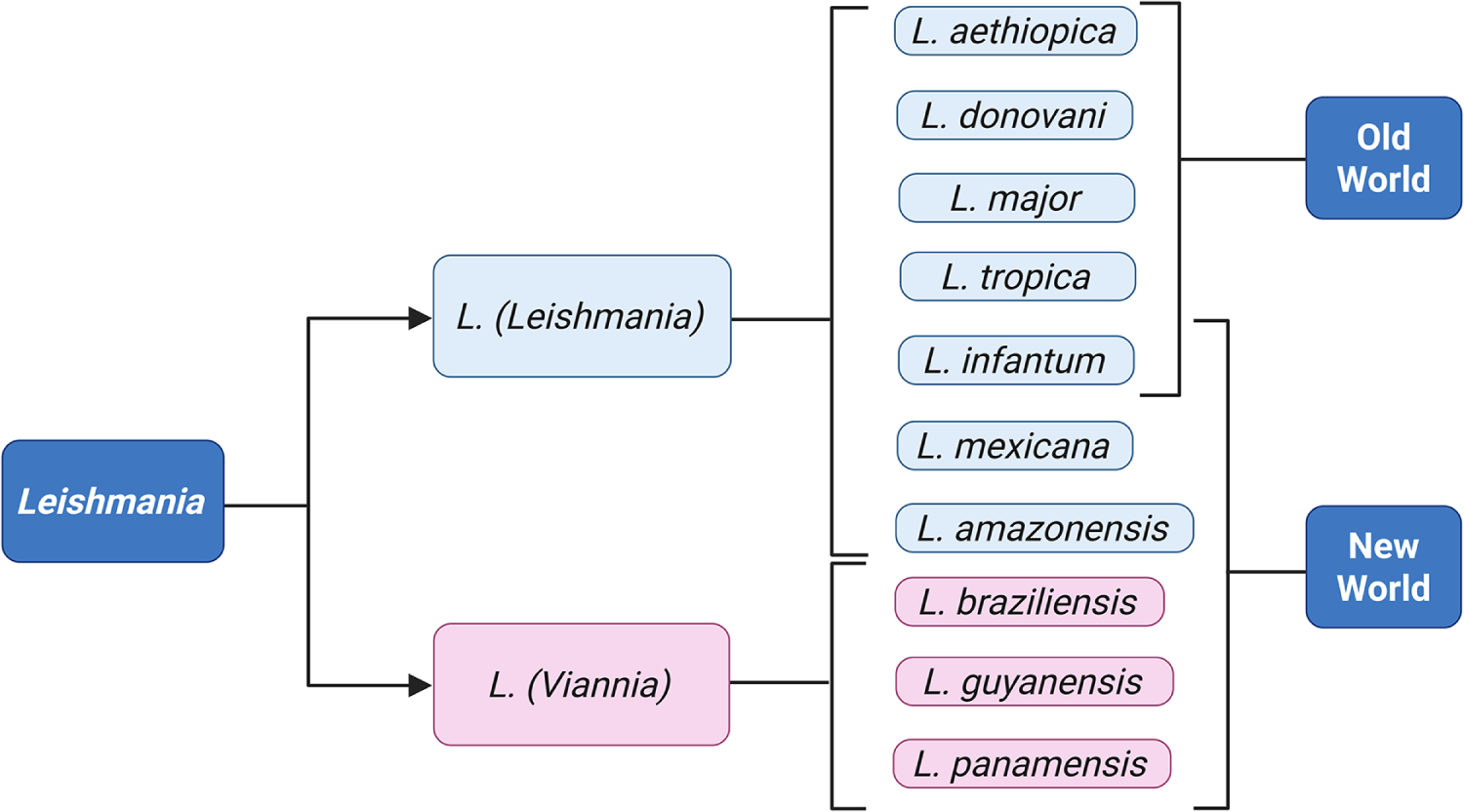
Human leishmaniasis is caused by 20 different species of Leishmania (Akhoundi et al. Reference Akhoundi, Kuhls, Cannet, Votýpka, Marty, Delaunay and Sereno2016); the most common disease-causing ones are summarised in Figure 2. Old World CL is caused by species of the Leishmania (Leishmania) subgenus, namely Leishmania major, Leishmania tropica, Leishmania aethiopica and less frequently, Leishmania infantum and Leishmania donovani (Akhoundi et al. Reference Akhoundi, Kuhls, Cannet, Votýpka, Marty, Delaunay and Sereno2016; Gurel et al. Reference Gurel, Tekin and Uzun2020). New World CL and MCL are caused by L. (Viannia) species such as Leishmania braziliensis, Leishmania guyanensis and Leishmania panamensis, although L. (Leishmania) species such as L. infantum, L. mexicana and Leishmania amazonensis are also endemic in the region (Akhoundi et al. Reference Akhoundi, Kuhls, Cannet, Votýpka, Marty, Delaunay and Sereno2016; Gurel et al. Reference Gurel, Tekin and Uzun2020).

Figure 2. The most common Leishmania species causing disease in humans. Generated using BioRender.
The disease is transmitted to the mammalian host via a bite from the insect sandfly vector (Akhoundi et al. Reference Akhoundi, Kuhls, Cannet, Votýpka, Marty, Delaunay and Sereno2016). The simplest clinical presentation is localised CL: individual self-healing lesions at the site of infection (Aronson et al. Reference Aronson, Herwaldt, Libman, Pearson, Lopez-Velez, Weina, Carvalho, Ephros, Jeronimo and Magill2016). Leishmania major infections typically follow this pattern, with lesions usually healing after 2–6 months (Auwera G and Dujardin, Reference Auwera G and Dujardin2015). In contrast, L. tropica lesions typically take 6–15 months to heal (Aronson et al. Reference Aronson, Herwaldt, Libman, Pearson, Lopez-Velez, Weina, Carvalho, Ephros, Jeronimo and Magill2016). Leishmania major CL was first distinguished by its ‘wet rural’ lesions, as opposed to the ‘dry urban’ lesions caused by L. tropica (Akhoundi et al. Reference Akhoundi, Kuhls, Cannet, Votýpka, Marty, Delaunay and Sereno2016).

Leishmania tropica is traditionally considered anthroponotic (human to vector to human transmission), as opposed to most other Leishmania infections which are zoonotic (animal to vector to human transmission) (Gurel et al. Reference Gurel, Tekin and Uzun2020; Reimão et al. Reference Reimão, Coser, Lee and Coelho2020). This urban, anthroponotic transmission pattern makes L. tropica a great threat in times of large population displacement, such as during the Syrian civil war or the recent regime change in Afghanistan (Kim et al. Reference Kim, Zieneldien, Ma and Cohen2025; Rahimi et al. Reference Rahimi, Ghatee, Habib, Farooqi, Ritmeijer, Hussain, Beg and Taylor2025). L. tropica is also considered more genetically diverse than L. major (Schwenkenbecher et al. Reference Schwenkenbecher, Wirth, Schnur, Jaffe, Schallig, Al-Jawabreh, Hamarsheh, Azmi, Pratlong and Schönian2006; Pratlong et al. Reference Pratlong, Dereure, Ravel, Lami, Balard, Serres, Lanotte, Rioux and Dedet2009; Iantorno et al. Reference Iantorno, Durrant, Khan, Sanders, Beverley, Warren, Berriman, Sacks, Cotton and Grigg2017).

Leishmania aethiopica is a CL-causing species found exclusively in Ethiopia and neighbouring countries (Blaizot et al. Reference Blaizot, Pasquier, Kone, Duvignaud and Demar2024). Ethiopia is 1 of the 10 most affected countries for CL, with an estimated 20 000 to 50 000 cases annually (Taye et al. Reference Taye, Melkamu, Tajebe, Ibarra-Meneses, Adane, Atnafu, Adem, Adane, Kassa, Asres, van Griensven, van Henten and Pareyn2024). Although there is some discrepancy in recent studies about the level of genetic diversity, it was indicated that L. aethiopica is more diverse than expected given its limited range (Hadermann et al. Reference Hadermann, Heeren, Maes, Dujardin, Domagalska and Van den Broeck2023; Yizengaw et al. Reference Yizengaw, Takele, Franssen, Gashaw, Yimer, Adem, Nibret, Yismaw, Cruz Cervera, Ejigu, Tamiru, Munshea, Müller, Weller, Cotton and Kropf2024). This diversity may account for the poor performance of commercial diagnostic tests reported in Ethiopia (Van Henten et al. Reference Van Henten, Fikre, Melkamu, Dessie, Mekonnen, Kassa, Bogale, Mohammed, Cnops, Vogt, Pareyn and Van Griensven2022; Taye et al. Reference Taye, Melkamu, Tajebe, Ibarra-Meneses, Adane, Atnafu, Adem, Adane, Kassa, Asres, van Griensven, van Henten and Pareyn2024).

As mentioned above, L. infantum and L. donovani can cause CL despite being primarily viscerotropic (Akhoundi et al. Reference Akhoundi, Kuhls, Cannet, Votýpka, Marty, Delaunay and Sereno2016). L. donovani can also cause post-kala-azar dermal leishmaniasis (PKDL) where, a visceral disease is followed by dermal symptoms (Reimão et al. Reference Reimão, Coser, Lee and Coelho2020). These atypical disease forms are a challenge to VL elimination efforts as they create an additional reservoir of L. donovani (Jain et al. Reference Jain, Sangma, Parida, Negi, Negi, Matlashewski and Lypaczewski2024a; Bhattarai et al. Reference Bhattarai, Rai, Uranw, Khadka, Khanal, Dahal, Pradhan, Dhakal, Monsieurs, de Gooyer, Cloots, Hasker and Van der Auwera2025). Other complex forms of CL include leishmaniasis recidivans caused by L. tropica and diffuse CL (DCL) and MCL caused by L. aethiopica (Krayter et al. Reference Krayter, Bumb, Azmi, Wuttke, Malik, Schnur, Salotra and Schönian2014, Reference Krayter, Schnur and Schönian2015; Aronson et al. Reference Aronson, Herwaldt, Libman, Pearson, Lopez-Velez, Weina, Carvalho, Ephros, Jeronimo and Magill2016; Atnafu et al. Reference Atnafu, Chanyalew, Yimam, Zeleke, Negussie, Girma, Melaku and Chanyalew2024). A recent study in Ethiopia found a lack of consensus in how different physicians classify DCL and MCL (van Henten et al. Reference van Henten, Diro, Tesfaye, Tilahun Zewdu, van Griensven and Enbiale2025). This also poses a challenge as systemic treatment is recommended for these atypical CL forms, as opposed to localised CL.

New World CL species such as L. amazonensis, L. braziliensis, L. guyanensis and L. panamensis also present a complex picture as they can cause both CL and MCL, while only Leishmania mexicana causes CL exclusively (Mann et al. Reference Mann, Frasca, Scherrer, Henao-Martínez, Newman, Ramanan and Suarez2021). L. infantum, often named Leishmania chagasi in the American context, also causes New World CL and VL but not MCL (de Vries and Schallig, Reference de Vries and Schallig2022).

Whilst self-healing lesions can be left untreated, incorrect diagnosis and treatment can result in scarring and disfigurement, as well as opportunistic secondary infections (Akuffo et al. Reference Akuffo, Sanchez, Amanor, Amedior, Kotey, Anto, Azurago, Ablordey, Owusu-Antwi, Beshah, Amoako, Phillips, Wilson, Asiedu, Ruiz-Postigo, Moreno and Mokni2023; Aminizadeh et al. Reference Aminizadeh, Mohammadi-Ghalehbin, Mohebali, Hajjaran, Zarei, Heidari, Akhondi, Alizadeh and Aghaei2024; Jaimes et al. Reference Jaimes, Patiño, Herrera, Cruz, Pérez, Correa-Cárdenas, Muñoz and Ramírez2024; Al-Alousy and Al-Nasiri, Reference Al-Alousy and Al-Nasiri2025). There are no universally efficacious treatments for CL as some Leishmania species in certain geographical settings show drug resistance (Aronson et al. Reference Aronson, Herwaldt, Libman, Pearson, Lopez-Velez, Weina, Carvalho, Ephros, Jeronimo and Magill2016). For example, antimonial resistance in L. aethiopica and L. tropica infections has been reported in Ethiopia, Iran and Pakistan (Kämink et al. Reference Kämink, Masih, Ali, Ullah, Khan, Ashraf, Pylypenko, Grobusch, Fernhout, Boer and Ritmeijer2021; Solomon et al. Reference Solomon, Greenberger, Milner, Pavlotzky, Barzilai, Schwartz, Hadayer and Baum2022; Zewdu et al. Reference Zewdu, Tessema, Zerga, van Henten and Lambert2022). Drug resistance has also been reported in L. mexicana and L. braziliensis (Ahmed et al. Reference Ahmed, Curtis, Tur-Gracia, Olatunji, Carter and Williams2020; Gonzalez-Garcia et al. Reference Gonzalez-Garcia, Rodríguez-Guzmán, Vargas-León, Aponte, Bonilla-Valbuena, Matiz-González, Clavijo-Vanegas, Duarte-Olaya, Aguilar-Buitrago, Urrea, Duitama and Echeverry2025; Ko et al. Reference Ko, Fowler, Scott and Uslan2025; Moreno-Rodríguez et al. Reference Moreno-Rodríguez, Campo-Colín, Domínguez-Díaz, Posadas-Jiménez, Matadamas-Martínez and Yépez-Mulia2025).

For the reasons described above, species identification is crucial to the effective treatment and control of CL. Unfortunately, due to the costly and time-consuming nature of species typing, data on the prevalence of individual CL Leishmania species remains limited and sporadic (Figure 3). A study in the Khyber Pakhtunkhwa province in Northern Pakistan found that 90% of CL cases were caused by L. tropica, despite the initial clinical examination finding that 73% of the lesions were dry (presumed L. tropica) and 27% were wet (presumed L. major) (Ullah et al. Reference Ullah, Khan, Niaz, Al-Garadi, Nasreen, Swelum and Said2024). This indicated that a majority of the 118 patients who had wet lesions were actually infected with L. tropica, which is an atypical presentation and demonstrates that clinical symptoms alone are insufficient for accurate diagnosis. A nationwide study found that 79% of CL cases were L. tropica, 15% were L. infantum and 6% were L. major, confirming that L. tropica is the main driver of CL in Pakistan (Naz et al. Reference Naz, Nalcaci, Hayat, Toz, Minhas, Waseem and Ozbel2024). In neighbouring Afghanistan L. tropica has historically accounted for the majority of cases, although more recent data on this is not available (Rahimi et al. Reference Rahimi, Ghatee, Habib, Farooqi, Ritmeijer, Hussain, Beg and Taylor2025). In Israel, Mauritania and Niger, the situation is reversed, with 84–100% of cases caused by L. major (Avni et al. Reference Avni, Solomon, Strauss, Sagi, Temper, Michael-Gayego, Meningher, Avitan-Hersh, Szwarcwort-Cohen, Moran-Gilad, Ollech and Schwartz2024; Blaizot et al. Reference Blaizot, Lamine, Saout, Issa, Laminou, Duvignaud, Demar and Doutchi2025; El Moctar et al. Reference El Moctar, Ouldabdallahi Moukah, Koné, Saout, Demar, Fofana, Cheikh Mohamed Vadel, Kébé, Thera, Blaizot and Ould Mohamed Salem Boukhary2025). In Iran the dominant species can be L. major or L. tropica, depending on the region (Zeinali et al. Reference Zeinali, Mohebali, Shirzadi, Hassanpour, Behkar, Gouya, Samiee and Malekafzali2023; Hayatolgheib-Moghadam et al. Reference Hayatolgheib-Moghadam, Pourzandkhanooki, Hadighi, Geraili, Alipour, Namrodi, Rampisheh and Badirzadeh2025; Marvi-Moghadam et al. Reference Marvi-Moghadam, Mohebali, Rassi, Zahraei-Ramazani, Oshaghi, Jafari, Fatemi, Arandian, Abdoli, Shareghi, Ghanei, Jalali-Zand, Veysi, Ramazanpoor, Aminian, Salehi, Khamesipour and Akhavan2025). In Morocco 52% of cases were caused by L. tropica, 39% L. major and 9% L. infantum (Baghad et al. Reference Baghad, Mouhsine, Chekairi, Amine, Saik, Lemkhayar, Lemrani, Soussi Abdallaoui, Chiheb and Riyad2025). Recent studies in Ethiopia found L. aethiopica in 96% to 100% of samples (Amare et al. Reference Amare, Mekonnen, Kassa, Addisu, Kendie, Tegegne, Abera, Tadesse, Getahun, Wondmagegn, Merdekios, Asres, van Griensven, Van der Auwera, van Henten and Pareyn2023; Tesfaye et al. Reference Tesfaye, Gebressilassie, Mekonnen, Zeynudin and Yewhalaw2025). Interestingly, a study of a recent CL outbreak in the conflict-stricken Somali region of Ethiopia, reported 100% of samples as L. tropica (Abera et al. Reference Abera, Tadesse, Beyene, Geleta, Belachew, Djirata, Kinde, Difabachew, Bishaw, Hassen, Gire, Bore, Berhe, Habtetsion, Tugga, Eyelachew, Sefer, Choukri, Coppens, Tadese, Haile, Bekele, Kebede, van der Auwera, Seife, Abte, Tollera, Hailu, Dujardin, van Griensven, Wolday, Embiale, Pareyn and Tasew2025). However, this finding should be treated with a note of caution as only 18 of the 1050 patients in the study were sampled for species typing. Nevertheless, in 99% of all 1050 patients the lesions examined were wet, unlike the typically dry lesions caused by L. tropica or L. aethiopica. The outbreak was also characterised by an unusually high number of lesions per patient, with 90% of patients having seven or more lesions.

Figure 3. Countries where OWCL species prevalence was reported in the years 2023–2025.

Equivalent data for New World CL is also sparse. A study in Roraima state in Brazil found L. braziliensis in 32% of samples, L. amazonensis in 17% of samples and L. panamensis in 13% of samples (de Almeida et al. Reference de Almeida, de Souza, Fuzari, Joya, Valdivia, Bartholomeu and Brazil2021). A further 6 species were found in 14% of samples and in 24% of samples the species could not be identified. A study in Colombia found L. panamensis in 77% of samples, L. guyanensis in 19% of samples and L. braziliensis in 4% of samples (Hoyos et al. Reference Hoyos, Rosales-Chilama, León, González and Gómez2022). In a study in Bolivia, 50% of CL samples were identified as L. braziliensis and 50% as subpopulation called L. braziliensis outlier (Torrico et al. Reference Torrico, Fernández-Arévalo, Ballart, Solano, Rojas, Ariza, Tebar, Lozano, Abras, Gascón, Picado, Muñoz, Torrico and Gállego2022). Finally, a study in Panama found L. panamensis in 59% of samples and L. guyanensis in 41% of samples, although not all results could be confirmed after further testing (Reina et al. Reference Reina, Mewa, Calzada and Saldaña2022).

Traditional diagnostic methods

As discussed, CL lesions can be visually classified as wet or dry, with additional criteria such as nodular, popular, plaque or ulcerated (Naz et al. Reference Naz, Nalcaci, Hayat, Toz, Minhas, Waseem and Ozbel2024; Ullah et al. Reference Ullah, Khan, Niaz, Al-Garadi, Nasreen, Swelum and Said2024). As mentioned, these characteristics correlate with the infecting species, but not reliably enough for accurate diagnosis (Naz et al. Reference Naz, Nalcaci, Hayat, Toz, Minhas, Waseem and Ozbel2024; Ullah et al. Reference Ullah, Khan, Niaz, Al-Garadi, Nasreen, Swelum and Said2024). CL can be confirmed by microscopic examination of a direct smear from the lesion (de Vries and Schallig, Reference de Vries and Schallig2022). A Giemsa stain allows the Leishmania amastigote forms (the mammalian stage) to be identified, however is not species specific, requires technical expertise and has limited sensitivity (50–70%) (Aronson et al. Reference Aronson, Herwaldt, Libman, Pearson, Lopez-Velez, Weina, Carvalho, Ephros, Jeronimo and Magill2016; Reimão et al. Reference Reimão, Coser, Lee and Coelho2020; de Vries and Schallig, Reference de Vries and Schallig2022). Parasite isolation by culture can improve sensitivity and allows further analytical tests such as PCR, but it prolongs the diagnosis time, is highly technical and liable to contamination (Reimão et al. Reference Reimão, Coser, Lee and Coelho2020).

Patient sampling methods include scraping, brushing, swabbing and aspiration (Reimão et al. Reference Reimão, Coser, Lee and Coelho2020). The choice of technique is influenced by cosmetic significance and patient comfort (Aronson et al. Reference Aronson, Herwaldt, Libman, Pearson, Lopez-Velez, Weina, Carvalho, Ephros, Jeronimo and Magill2016). A recent study compared methods for cutaneous lesions – skin slit, dental broach, tape dis and microbiopsy (van Henten et al. Reference van Henten, Kassa, Fikre, Melkamu, Mekonnen, Dessie, Mulaw, Bogale, Engidaw, Yeshanew, Cnops, Vogt, Moons, van Griensven and Pareyn2024). The skin slit had the highest self-reported pain score with a median of 6/10 compared to dental broach (4/10) and tape disc and microbiopsy (both 1/10). Tape disc and microbiopsy had poorer sensitivity (69–83%), compared to the dental broach (96%) and skin slit (95%). Another study comparing lancet scraping, filter paper imprints and microbiopsy samples for kDNA-PCR found that lancet scraping was the most sensitive method (99%) compared to filter paper imprints (95–96%) and microbiopsy (93–94%) (De Los Santos et al. Reference De Los Santos, Loyola, Perez-Velez, Santos, Ramírez and Valdivia2024).

Serological and immunological tests

Serological and immunological tests like the Leishmanin Skin Test have been in use for almost 100 years (Dey et al. Reference Dey, Alshaweesh, Singh, Lypaczewski, Karmakar, Klenow, Paulini, Kaviraj, Kamhawi, Valenzuela, Singh, Hamano, Satoskar, Gannavaram, Nakhasi and Matlashewski2023). The direct agglutination test (DAT), a later development where killed Leishmania promastigotes are mixed with patient blood or serum, was found to have 95% sensitivity and 95% specificity for VL in a recent meta-analysis (Roberts et al. Reference Roberts, Keddie, Rattanavong, Gomez, Bradley, Keogh, Bärenbold, Falconer, Mens, Hopkins and Ashley2023). Commercial ELISA tests for VL are also available. A recent study compared NovaLisa (Novatec), Bordier (Bordier Affinity), Ridascreen (R-Biopharm) and Vircell (Vircell) (Lévêque et al. Reference Lévêque, Battery, Delaunay, Lmimouni, Aoun, L’ollivier, Bastien, Mary, Pomares, Fillaux and Lachaud2020). The tests showed 81–94% sensitivity and 96–100% specificity, although they take 2.5–3.5 hours to perform. The four commercial ELISAs also performed poorly on samples from immunocompromised patients, with 15–42% false negative results. A separate study reported 96% sensitivity and 81% specificity for NovaLisa (Rune Stensvold et al. Reference Rune Stensvold, Vang Høst, Belkessa and Vedel Nielsen2019).

Despite the promising performance with VL samples, these kinds of tests are not recommended for CL as the infection does not produce a strong humoral response (de Vries and Schallig, Reference de Vries and Schallig2022). Additionally, serological tests do not distinguish past and active infection, and cross-reactivity has been shown with Chagas Disease, caused by the closely related Trypanosoma cruzi, but also with leprosy, tuberculosis, typhoid fever and malaria (Aronson et al. Reference Aronson, Herwaldt, Libman, Pearson, Lopez-Velez, Weina, Carvalho, Ephros, Jeronimo and Magill2016). Despite this, a meta-analysis of patents for Leishmania diagnostics in the years 2010–2022 found that 63 of the patents were based on immunological methods whereas only 33 were based on molecular methods (de Avelar et al. Reference de Avelar, Santos and Fusaro Faioli2023). Among those 33, only six were tested against L. tropica and none against L. aethiopica respectively.

PCR-based methods

PCR is an established laboratory technique for amplifying a specific DNA sequence with end-point or real-time detection (qPCR) (Auwera G and Dujardin, Reference Auwera G and Dujardin2015). Downstream analyses, such as restriction fragment length polymorphism (RFLP) or nested PCR can improve specificity and sensitivity (Akhoundi et al. Reference Akhoundi, Downing, Votýpka, Kuhls, Lukeš, Cannet, Ravel, Marty, Delaunay, Kasbari, Granouillac, Gradoni and Sereno2017). Both approaches have been used for species identification in Leishmania spp. (Ashraf et al. Reference Ashraf, Qadeer, Bukhari, Zeb, Rasool, Salma, Shaukat, Shahzad and Osmani2025; Mohammadi Manesh et al. Reference Mohammadi Manesh, Mousavi, Mousavi, Zolfaghari, Zarei, Sharifi, Zarrinfar, Hejazi, Ataei, Mohebali and Mirhendi2025). Melting curve analyses can also be used in this way, as the melting temperature of double-stranded DNA is sequence-specific. The technique has been used to differentiate PCR products from L. major, L. tropica and L. donovani (Azam et al. Reference Azam, Singh, Gupta, Mayank, Kathuria, Sharma, Ramesh and Singh2024).

Diagnosis of leishmaniasis by PCR-based approaches has already been reviewed extensively (Auwera G and Dujardin, Reference Auwera G and Dujardin2015; Akhoundi et al. Reference Akhoundi, Downing, Votýpka, Kuhls, Lukeš, Cannet, Ravel, Marty, Delaunay, Kasbari, Granouillac, Gradoni and Sereno2017; Reimão et al. Reference Reimão, Coser, Lee and Coelho2020; Thakur et al. Reference Thakur, Joshi and Kaur2020; Nharwal et al. Reference Nharwal, Beg, Sehgal, Singh, Tiwari, Selvapandiyan and Chouhan2025). One of the most common targets is the ribosomal gene array, particularly the 18S subunit gene and the intergenic spacer ITS1 (Boulal et al. Reference Boulal, Remadi, Grigoraki, Vontas and Bendjoudi2025; Mughal et al. Reference Mughal, Khan, Lan, Abbas, Imran, Abbas, Mehmood and Ali2025). The kDNA minicircle, a DNA fragment of approximately 800bp found in the kinetoplast has also been used (Roozbehani et al. Reference Roozbehani, Tasbihi, Keyvani, Mosavizadeh, Hasanpour and Askari2025). The kinetoplast is a DNA-containing structure in the mitochondria that is unique to the Kinetoplastida, such as Leishmania and Trypanosoma spp. and has long been favoured as a PCR target due to its very high copy number reaching as many as 10 000 copies (Noyes et al. Reference Noyes, Reyburn, Bailey and Smith1998). The kinetoplast also comprises larger fragments called maxicircles containing the cytochrome b gene, which is another target (Mughal et al. Reference Mughal, Khan, Lan, Abbas, Imran, Abbas, Mehmood and Ali2025). Recently, cytochrome c oxidase I, also located on the maxicircle, has been identified as a new alternative (Mata-Somarribas et al. Reference Mata-Somarribas, Cardoso Das Graças, de Oliveira Pereira, Boité, Cantanhêde, Braga Filgueira, Fallas, Quirós-Rojas, Morelli, Melim Ferreira and Cupolillo2024). Others include cysteine protease B (cpb), glycoprotein GP63, heat-shock protein 70 (hsp70) and 7SL-RNA (Chaouch et al. Reference Chaouch, Fathallah-Mili, Driss, Lahmadi, Ayari, Guizani, Ben Said and BenAbderrazak2013; Hosseini-Safa et al. Reference Hosseini-Safa, Mohebali, Hajjaran, Akhoundi, Zarei, Arzamani and Davari2018; Azam et al. Reference Azam, Singh, Gupta, Mayank, Kathuria, Sharma, Ramesh and Singh2024).

A recent meta-analysis covering the years 2011–2022 found a pooled sensitivity of 91% and pooled specificity of 98% for qPCR (Rihs et al. Reference Rihs, Vilela, Dos Santos, de Souza Filho, Caldas, Leite and Mol2025b). An update by the same authors found that sensitivity and specificity of a qPCR approach against VL was 90% and 99.6% overall, but 86% and 100% when non-invasive sampling was used (Rihs et al. Reference Rihs, Vilela, Dos Santos, Caldas, Leite and Mol2025a). The authors cite urine samples as a non-invasive alternative to blood and bone marrow samples which are typically used in the diagnosis of VL. For CL, the sensitivity and specificity were 87% and 87% when invasive sampling was used, but only 70% and 96% using non-invasive sampling. Urine samples and lesion swabs, imprints and aspirates were classified as non-invasive methods as opposed to lesion biopsies, scrapings and smears.

The authors note that for VL samples the sensitivities reported in the original papers were often calculated using serological tests as the reference (Touria et al. Reference Touria, Kheira, Nori, Assia, Amel and Fadi2018; Iatta et al. Reference Iatta, Mendoza-Roldan, Latrofa, Cascio, Brianti, Pombi, Gabrielli and Otranto2021; Pereira et al. Reference Pereira, Ferreira-Silva, Ratkevicius, Gómez-Hérnandez, De Vito, Tanaka, Rodrigues Júnior and Moraes-Souza2021). For CL samples, because of the weaker humoral response the reference techniques used were microscopy, immunohistochemistry or a second molecular test such as conventional PCR (Vink et al. Reference Vink, Nahzat, Rahimi, Buhler, Ahmadi, Nader, Zazai, Yousufzai, van Loenen, Schallig, Picado and Cruz2018; Chaouch et al. Reference Chaouch, Aoun, Othman, Abid, Sghaier, Bouratbine and Abderrazak2019; Silgado et al. Reference Silgado, Armas, Sánchez-Montalvá, Goterris, Ubals, Temprana-Salvador, Aparicio, Chicharro, Serre-Delcor, Ferrer, Molina, García-Patos, Pumarola and Sulleiro2021). Therefore, while the gene targets are often the same, comparisons in sensitivity between VL and CL diagnostic assays should be made with caution due to these discrepancies.

Despite the promising results of various PCR-based assays in the laboratory, their deployment in the field is hampered by the requirement for expensive laboratory facilities and trained technical staff (Thakur et al. Reference Thakur, Joshi and Kaur2020). Furthermore, the reduced sensitivity to CL compared to VL, particularly when non-invasive sampling is used, is a notable drawback.

In an attempt to overcome the technical barrier, miniature PCR devices have been developed. Palm PCR, a miniature battery-powered PCR incubator, was able to detect L. tropica, L. infantum and L. major with a limit of detection of 40 pg, 4 pg and 0.4 pg, respectively (Bel Hadj Ali et al. Reference Bel Hadj Ali, Saadi-Ben Aoun, Hammami, Rhouma, Chakroun and Guizani2023). The authors created a duplex assay which could distinguish L. major, L. tropica and L. infantum and by coupling the PCR reaction to a lateral flow test (LFT) the results could be visualised in under 30 minutes. One drawback of the study was the lack of clinical samples tested. An alternative device, the miniPCR thermocycler, has been used to detect L. panamensis (Castellanos-Gonzalez et al. Reference Castellanos-Gonzalez, Cossio, Jojoa, Moen and Travi2023). The authors used the Prismo Mirage smartphone app to quantify the fluorescent signal obtained with the miniPCR transilluminator. Amplification by miniPCR had equal sensitivity (100%) to a reference qPCR assay when tested on samples from Colombia and Peru, although the time to amplification was not recorded. The miniPCR has also been used in combination with an LFT against VL samples from Ethiopia (Hagos et al. Reference Hagos, Kiros, Abdulkader, Schallig and Wolday2024). The test showed 96% sensitivity and 99% specificity relative to qPCR, giving results in just over an hour. The same assay was tested on VL samples from Spain and East Africa (van Dijk et al. Reference van Dijk, Hagos, Huggins, Carrillo, Ajala, Chicharro, Kiptanui, Solana, Abner, Wolday and Schallig2024). In Spain, miniPCR had 96% sensitivity and 97% specificity, while in East Africa it had 88% sensitivity and 100% specificity when compared to nested PCR.

A few commercial PCR kits have been developed for the diagnosis of leishmaniasis; a recent study compared STAT-NAT (Sentinel), Real-TM (Sacace) and VIASURE (CerTest) (Arnau et al. Reference Arnau, Abras, Ballart, Fernández-Arévalo, Torrico, Tebar, Llovet, Gállego and Muñoz2023). Whilst Real-TM requires −20oC storage, STAT-NAT and VIASURE both allow storage at room temperature. When tested against a range of species, VIASURE and Real-TM detected both Old World and New World species, while STAT-NAT could only detect Old World species and was therefore excluded from further analysis. When tested against clinical samples, VIASURE had 82% sensitivity and 100% specificity compared to Real-TM.

Another interesting development has been adaptive PCR, where fluorescently labelled L-DNA probes are used to model primer annealing efficiency, which allows the PCR conditions to be adjusted in real time and the amplification rate to be increased accordingly. A recent study using this technique was able to achieve 20 cycles of amplification in under 15 minutes due to the reduced cycle duration (Spurlock et al. Reference Spurlock, Alfaro, Gabella, Chugh, Pask, Baudenbacher and Haselton2025). An alternative method is microfluidic qPCR, such as that developed by GeneSoC, which was shown to be able to achieve 50 cycles in 15 minutes (Mizushina et al. Reference Mizushina, Imai, Ohama, Sato, Tanaka, Omachi, Takeuchi, Nakayama, Akeda and Maeda2025). These findings, which have not been applied to Leishmania yet, could enable the development of a cheap and rapid PCR test for leishmaniasis for use in the field.

Isothermal amplification

Loop-mediated Isothermal Amplification (LAMP) was developed in 2000 (Notomi et al. Reference Notomi, Okayama, Masubuchi, Yonekawa, Watanabe, Amino and Hase2000) and uses a thermostable Bst Polymerase with strand displacement activity. This, together with the use of a second outer pair of primers, facilitates strand separation without the high temperature melting step used in PCR and allows the whole reaction to take place at the same temperature (isothermal). A subsequent adaptation incorporating a third primer pair increases the amplification speed (Nagamine et al. Reference Nagamine, Hase and Notomi2002). Various approaches for monitoring the LAMP reaction, such as colorimetric or fluorescent dyes and turbidity caused by the byproduct pyrophosphate, are available (Figure 4) (Poirier et al. Reference Poirier, Riaño Moreno, Takaindisa, Carpenter, Mehat, Haddon, Rohaim, Williams, Burkhart, Conlon, Wilson, McClumpha, Stedman, Cordoni, Branavan, Tharmakulasingam, Chaudhry, Locker, Fernando, Balachandran, Bullen, Collins, Rimer, Horton, Munir and La Ragione2023; Jin et al. Reference Jin, Ding, Zhou, Chen, Wang and Li2024; Quero et al. Reference Quero, Aidelberg, Vielfaure, de Kermadec, Cazaux, Pandi, Pascual-Garrigos, Arce, Sakyi, Gaudenz, Federici, Molloy and Lindner2025). The assay can also be coupled with LFTs for ease of detection (Sanmoung et al. Reference Sanmoung, Sawangjaroen, Jitueakul, Buncherd, Tun, Thanapongpichat and Imwong2023). LAMP-LFT has not been used in the diagnosis of leishmaniasis, but similar approaches combining LFTs with PCR and RPA (Recombinase Polymerase Amplification, an alternative isothermal technique) have been reported (Cossio et al. Reference Cossio, Jojoa, Castro, Castillo, Osorio, Shelite, Saravia, Melby and Travi2021; Hagos et al. Reference Hagos, Kiros, Abdulkader, Schallig and Wolday2024; Nawattanapaibool et al. Reference Nawattanapaibool, Ruang-Areerate, Piyaraj, Leelayoova, Mungthin and Siripattanapipong2024; van Dijk et al. Reference van Dijk, Hagos, Huggins, Carrillo, Ajala, Chicharro, Kiptanui, Solana, Abner, Wolday and Schallig2024).

Figure 4. A visual summary of common approaches and devices used for the detection of LAMP amplification. Generated using BioRender.

The simultaneous use of three primer pairs provides a high degree of specificity. Indeed, LAMP assays have been used to detect point mutations conferring drug resistance (Sanmoung et al. Reference Sanmoung, Sawangjaroen, Jitueakul, Buncherd, Tun, Thanapongpichat and Imwong2023). Specificity can be further improved by detection with molecular beacons. A molecular beacon is a fluorophore in a quenched form, either as dsDNA or hairpin ssDNA. The fluorophore is released from the quencher when the beacon binds a specific sequence on the LAMP amplicon (Xue et al. Reference Xue, Cao, Wang, Fei, Xiong and Yang2024). This approach allows multiplexing as different fluorophores can be used with each beacon (Sherrill-Mix et al. Reference Sherrill-Mix, Hwang, Roche, Glascock, Weiss, Li, Haddad, Deraska, Monahan, Kromer, Graham-Wooten, Taylor, Abella, Ganguly, Collman, Van Duyne and Bushman2021). The technique has not been applied to Leishmania spp., but it has been tested with Trypanosoma brucei and Schistosoma mansoni (Wan et al. Reference Wan, Chen, Gao, Dong, Wong, Jia, Mak, Deng and Martins2017; Crego-Vicente et al. Reference Crego-Vicente, Fernández-Soto, García-Bernalt Diego, Febrer-Sendra and Muro2023).

An alternative approach for increasing specificity is integration with CRISPR/Cas9 (Liang et al. Reference Liang, Xie, Lv, He, Zheng, Cong, Elsheikha and Zhu2024). Briefly, the Cas endonuclease becomes activated by binding a target sequence on the LAMP amplicon with the help of a guide RNA and, subsequently, cleaves a short reporter DNA fragment to release the fluorophore from its quencher. The specific combination of LAMP and CRISPR has not been applied to leishmaniasis yet, although other studies have combined CRISPR with PCR and with RPA (Dueñas et al. Reference Dueñas, Nakamoto, Cabrera-Sosa, Huaihua, Cruz, Arévalo, Milón and Adaui2022; Yang et al. Reference Yang, Bi and Mo2024). CRISPR-assisted LAMP has also been used to diagnose toxoplasmosis, demonstrating its feasibility in parasitic infections (Liang et al. Reference Liang, Xie, Lv, He, Zheng, Cong, Elsheikha and Zhu2024).

In summary, the high sensitivity and specificity due to the use of three primer pairs, the rapid amplification time and the simple technical requirement of an isothermal heat source, make LAMP a very promising technique for a low-cost, species-specific, field diagnostic, such as that required for CL. Multiple LAMP assays for the diagnosis of leishmaniasis have been published and reviewed previously (Auwera G and Dujardin, Reference Auwera G and Dujardin2015; Akhoundi et al. Reference Akhoundi, Downing, Votýpka, Kuhls, Lukeš, Cannet, Ravel, Marty, Delaunay, Kasbari, Granouillac, Gradoni and Sereno2017; Nzelu et al. Reference Nzelu, Kato and Peters2019; Reimão et al. Reference Reimão, Coser, Lee and Coelho2020; Thakur et al. Reference Thakur, Joshi and Kaur2020; de Vries and Schallig, Reference de Vries and Schallig2022; Nharwal et al. Reference Nharwal, Beg, Sehgal, Singh, Tiwari, Selvapandiyan and Chouhan2025). The gene targets used are typically the same as those for PCR as they share the same characteristics, namely interspecies variation and high copy number.

The most recent novel assay targeting hsp70 achieved 100 fg sensitivity (Soares et al. Reference Soares, de Faria and de Avelar2024). This is a useful benchmark as it is the approximate amount of DNA in a single Leishmania parasite cell (Soares et al. Reference Soares, de Faria and de Avelar2024). The study found no cross-reactivity to T. cruzi and T. brucei, which had been observed with other LAMP assays for Leishmania spp. However, the reaction time of 60 minutes is a major drawback. Furthermore, the test is not species specific and the study focused on New World Leishmania spp. such as L. braziliensis, and whilst it includes some Old World species like L. major and L. infantum, it does not include L. tropica and L. aethiopica.

Diagnostic assays for leishmaniasis often focus on species for which effective diagnostic tests are already available, like L. donovani and L. infantum, while species which cause a substantial part of the CL burden like L. tropica and L. aethiopica remain overlooked. These choices are undoubtedly informed by existing knowledge of endemic species in the regions where researchers are based, but this is by no means fixed in stone. Recent years have shown that Leishmania species can be rapidly introduced into non-endemic countries, either by human migration or by animal reservoirs (Azami-Conesa et al. Reference Azami-Conesa, Matas Méndez, Pérez-Moreno, Carrión, Alunda, Mateo Barrientos and Gómez-Muñoz2024; Kim et al. Reference Kim, Zieneldien, Ma and Cohen2025).

To date, only three studies have designed LAMP primers to discriminate Leishmania at the species level. The first used primers targeting the kDNA minicircle of L. donovani with a limit of detection of 1 fg and no cross-reactivity against L. infantum, L. major or L. tropica (Verma et al. Reference Verma, Avishek, Sharma, Negi, Ramesh and Salotra2013). A further study used primers targeting CPB to distinguish L. major and L. tropica with a limit of detection of 20 fg and 200 fg, respectively (Chaouch et al. Reference Chaouch, Aoun, Othman, Abid, Sghaier, Bouratbine and Abderrazak2019). Most recently, one study used primers targeting kDNA minicircle of L. tropica with a limit of detection of 1 fg and no cross-reactivity for L. major or L. infantum (Taslimi et al. Reference Taslimi, Habibzadeh, Goyonlo, Akbarzadeh, Azarpour, Gharibzadeh, Shokouhy, Persson, Harandi, Mizbani and Rafati2023). All of these assays demonstrated detection levels of two cell equivalents or less.

RPA is an alternative isothermal technique which requires lower temperatures (37oC–42oC) than LAMP (Wu et al. Reference Wu, Biyani, Hirose and Takamura2023). However, the technique requires a recombinase and a single-strand DNA-binding protein in addition to the DNA polymerase which may be a challenge with respect to developing a lyophilisation protocol. Nevertheless, some recent studies have successfully used RPA to detect Leishmania spp. (Danthanarayana et al. Reference Danthanarayana, Nandy, Kourentzi, Vu, Shelite, Travi, Brgoch and Willson2023; Ghosh et al. Reference Ghosh, Chowdhury, Faisal, Khan, Hossain, Rahat, Chowdhury, Mithila, Kamal, Maruf, Nath, Kobialka, Ceruti, Cameron, Duthie, Wahed and Mondal2023; Roy et al. Reference Roy, Ceruti, Kobialka, Roy, Sarkar, Abd El Wahed and Chatterjee2023; Wu et al. Reference Wu, Biyani, Hirose and Takamura2023; Bel Hadj Ali et al. Reference Bel Hadj Ali, Saadi-Ben Aoun, Khammeri, Souguir, Harigua-Souiai, Chouaieb, Chakroun, Lemrani, Kallel, Kallel, Haddad, El Dbouni, Coler, Reed, Fathallah-Mili and Guizani2024; Kobialka et al. Reference Kobialka, Ceruti, Roy, Roy, Chowdhury, Ghosh, Hossain, Weidmann, Graf, Bueno Alvarez, Moreno, Truyen, Mondal, Chatterjee and Abd El Wahed2024; Wiggins et al. Reference Wiggins, Peng, Bushnell, Tobin, MacLeod, Du, Tobin and Dollery2024).

Sequencing-based approaches

Targeted and whole-genome DNA sequencing (WGS) has promising uses in diagnostics. Species typing of a CL infection by targeted sequencing using the Oxford Nanopore MinION platform has been reported and the technique can show evidence of mixed or hybrid infection (Imai et al. Reference Imai, Tarumoto, Amo, Takahashi, Sakamoto, Kosaka, Kato, Mikita, Sakai, Murakami, Suzuki, Maesaki and Maeda2018; Maia de Souza et al. Reference Maia de Souza, Ruedas Martins, Moyses Franco, Tuon, de Oliveira Junior, Maia da Silva, Imamura and Amato2022; Patiño et al. Reference Patiño, Ballesteros, Muñoz, Jaimes, Castillo-Castañeda, Madigan, Paniz-Mondolfi and Ramírez2023; Jaimes et al. Reference Jaimes, Patiño, Herrera, Cruz, Pérez, Correa-Cárdenas, Muñoz and Ramírez2024). The platform has likewise been used in the detection and genetic typing of other protozoan parasites such as Trypanosoma, Toxoplasma and Plasmodium spp. (Cruz-Saavedra et al. Reference Cruz-Saavedra, Ospina, Patiño, Villar, Sáenz Pérez, Cantillo-Barraza, Jaimes-Dueñez, Ballesteros, Cáceres, Vallejo and Ramírez2024; Huggins et al. Reference Huggins, Colella, Young and Traub2024; Koutsogiannis and Denny, Reference Koutsogiannis and Denny2024). While targeted sequencing can provide an indication of mixed or hybrid infection, WGS is required to distinguish between the two, as true hybrids are marked by genome-wide changes in somy and allele frequencies (Lypaczewski et al. Reference Lypaczewski, Thakur, Jain, Kumari, Paulini, Matlashewski and Jain2022; Van den Broeck et al. Reference Van den Broeck, Heeren, Maes, Sanders, Cotton, Cupolillo, Alvarez, Garcia, Tasia, Marneffe, Dujardin and Van der2023). Monitoring the emergence of hybrids is crucial as these can produce atypical forms of disease (Lypaczewski et al. Reference Lypaczewski, Thakur, Jain, Kumari, Paulini, Matlashewski and Jain2022; Bruno et al. Reference Bruno, Castelli, Li, Reale, Carra, Vitale, Scibetta, Calzolari, Varani, Ortalli, Franceschini, Gennari, Rugna and Späth2024).

WGS can also be used for surveillance, as was shown with L. donovani isolates in Nepal (Monsieurs et al. Reference Monsieurs, Cloots, Uranw, Banjara, Ghimire, Burza, Hasker, Dujardin and Domagalska2024). In the context of the current VL elimination program in Nepal, this can be used to distinguish VL cases caused by strains introduced from external sources from cases caused by endemic strains. Finally, generating new genome assemblies can provide more data on sequences and copy numbers for diagnostic targets such as hsp70, 18S and GP63 (Alonso et al. Reference Alonso, Rastrojo, López-Pérez, Requena and Aguado2016; Bussotti et al. Reference Bussotti, Gouzelou, Boité, Kherachi, Harrat, Eddaikra, Mottram, Antoniou, Christodoulou, Bali, Guerfali, Laouini, Mukhtar, Dumetz, Dujardin, Smirlis, Lechat, Pescher, Hamouchi, Lemrani, Chicharro, Llanes-Acevedo, Botana, Cruz, Moreno, Jeddi, Aoun, Bouratbine, Cupolillo and Späth2018).

Point-of-care and rapid diagnostic tests

Immunochromatographic LFTs (ICT) are widely used in the detection of VL and include IT LEISH (Bio-Rad), TruQuick (Meridian) and Kalazar Detect (InBios). In two recent studies on VL samples from Brazil and the Mediterranean, the sensitivity of these tests was 85–96% while specificity was 96–99% (Freire et al. Reference Freire, Machado de Assis, Oliveira, Moreira de Avelar, Siqueira, Barral, Rabello and Cota2019; Lévêque et al. Reference Lévêque, Battery, Delaunay, Lmimouni, Aoun, L’ollivier, Bastien, Mary, Pomares, Fillaux and Lachaud2020). However, the sensitivity with samples from immunocompromised patients was poorer, dropping to as little as 47%.

An alternative ICT specific for CL is CL Detect (InBios), targeting the peroxidoxin antigen. A recent meta-analysis of studies testing CL Detect found 68% pooled sensitivity and 94% pooled specificity (Gebremeskele et al. Reference Gebremeskele, Adane, Adem and Tajebe2023). The authors noted that the lack of consistency in the reference diagnostic used explained some of the discrepancies. Studies where microscopy was used as the reference reported higher sensitivity (83%) than those which included the more sensitive PCR as reference (48%). One of the studies reviewed compared different sampling methods. Sampling by dental broach had 64% sensitivity and 92% specificity, while lancet scraping had 83% sensitivity and 78% specificity (Grogl et al. Reference Grogl, Joya, Saenz, Quispe, Rosales, Santos, De Los Santos, Donovan, Ransom, Ramos and Cuentas2023). One study already discussed above also compared skin slit, dental broach, microbiopsy and tape disc (van Henten et al. Reference van Henten, Kassa, Fikre, Melkamu, Mekonnen, Dessie, Mulaw, Bogale, Engidaw, Yeshanew, Cnops, Vogt, Moons, van Griensven and Pareyn2024). Skin slit and dental broach performed similarly (95–96% sensitivity), tape disc and microbiopsy samples were considerably poorer (69–83% sensitivity). Notably, when skin slit PCR was used as the reference, the other three sampling methods had very low specificity (27–73%) compared to when a composite reference was used (85–100%). As multiple authors have noted that the sensitivity and specificity of a test can be distorted depending on which technique is used as a reference, more effort is needed in future studies to ensure consistency (Van Henten et al. Reference Van Henten, Fikre, Melkamu, Dessie, Mekonnen, Kassa, Bogale, Mohammed, Cnops, Vogt, Pareyn and Van Griensven2022; Gebremeskele et al. Reference Gebremeskele, Adane, Adem and Tajebe2023). While the TPP targets for sensitivity and specificity are expressed relative to microscopy, PCR is a more sensitive technique; the ideal approach is to use both as a composite reference, making it easier to compare between studies.

Loopamp is a LAMP-based test kit developed by Eiken Chemical, a spin-out company created by the authors of the LAMP technique (Feddema et al. Reference Feddema, Fernald, Keijser, Kieboom and van de Burgwal2024). This multiplex assay, with genus-specific primers targeting both the 18S rRNA gene and the kDNA minicircle, is lyophilised, allowing storage at room temperature. A recent meta-analysis found Loopamp had a pooled sensitivity of 96% for VL and 93% for CL, and 99% and 87% specificity, respectively (Taye et al. Reference Taye, Gebrie, Bogale, Getu and Churiso2025). This makes Loopamp the best-performing diagnostic test for CL to date and highlights the potential of LAMP as the most optimal technique for fulfilling the requirements of the TPP (Table 1). Also promisingly, sensitivity and specificity were 96% and 99% when crude Boil&Spin DNA extraction was used, compared to 97% and 99% with the commercial Qiagen extraction kit. As this was tested in VL samples only, caution is needed. Additionally, as there is a variety of sampling methods for CL lesions, with no consensus on which one is most effective, much work remains to be done in this area.

Table 1. The performance of various diagnostic tests for leishmaniasis as calculated by recent meta-analyses, compared to the WHO target product profile

Other improvements are also needed. Loopamp showed only 48% sensitivity on CL samples in Ethiopia (Taye et al. Reference Taye, Melkamu, Tajebe, Ibarra-Meneses, Adane, Atnafu, Adem, Adane, Kassa, Asres, van Griensven, van Henten and Pareyn2024). One drawback of that study was that tape discs were used for sample collection which have been shown elsewhere to be less sensitive than other sampling methods (van Henten et al. Reference van Henten, Kassa, Fikre, Melkamu, Mekonnen, Dessie, Mulaw, Bogale, Engidaw, Yeshanew, Cnops, Vogt, Moons, van Griensven and Pareyn2024). CL Detect also had its poorest result in Ethiopia, showing 23–31% sensitivity (Van Henten et al. Reference Van Henten, Fikre, Melkamu, Dessie, Mekonnen, Kassa, Bogale, Mohammed, Cnops, Vogt, Pareyn and Van Griensven2022). This indicates a broader problem with the genetic diversity of L. aethiopica being unaccounted for when these tests are being designed. Furthermore, there are no published trials of Loopamp in Pakistan and Syria, which have borne a large part of the CL burden in recent years. Testing clinical samples from a wide range of geographical locations is crucial. A recent study on diagnostic PCR assays for soil-transmitted helminth infections demonstrated that global genetic differences in primer binding sites can have a detrimental impact on assay sensitivity as these assays are often based on reference strains of the pathogen (Papaiakovou et al. Reference Papaiakovou, Waeschenbach, Ajibola, Ajjampur, Anderson, Bailey, Benjamin-Chung, Cambra-Pellejà, Caro, Chaima, Cimino, Cools, Cossa, Dunn, Galagan, Gandasegui, Grau-Pujol, Houlder, Ibikounlé, Jenkins, Kalua, Kjetland, Krolewiecki, Levecke, Luty, MacDonald, Mandomando, Manuel, Martínez-Valladares, Mejia, Mekonnen, Messa, Mpairwe, Muchisse, Muñoz, Mwinzi, Novela, Odiere, Sacoor, Walson, Williams, Witek-mcmanus, Littlewood, Cantacessi and Doyle2025).

Finally, despite the apparent efficacy of Loopamp outside of Ethiopia, it is only a genus-specific test. At the time of writing, there is no species-specific RDT for Leishmania spp. This feeds into a vicious cycle: because species typing in Leishmania spp. is time-consuming and requires laboratory facilities and trained staff, data on individual species prevalence is sparse, which hinders the development of future diagnostic tests. A handful of promising species-specific isothermal NAATs have been published, but further work needs to be done validating these across a variety of strains and diverse clinical samples and new assays need to be designed to cover species and geographical foci that have been previously overlooked.

Isothermal amplification devices

The earliest specialised device for isothermal amplification was the Genie I (Optigene), first used in a study in 2010 (Tomlinson et al. Reference Tomlinson, Dickinson and Boonham2010). The miniaturised real-time fluorimeter was in its third iteration (the Genie III) by the time it was trialled in the COVID-19 pandemic (Fowler et al. Reference Fowler, Armson, Gonzales, Wise, Howson, Vincent-Mistiaen, Fouch, Maltby, Grippon, Munro, Jones, Holmes, Tillyer, Elwell, Sowood, de Peyer, Dixon, Hatcher, Patrick, Laxman, Walsh, Andreou, Morant, Clark, Moore, Houghton, Cortes and Kidd2021). Although prices for the Genie are not publicly available, they can be found through secondary retailers as costing $10 000–$21 000. This is cheaper than traditional real-time PCR thermocyclers, but the price still exceeds the $2000 TPP target price (Cruz et al. Reference Cruz, Albertini, Barbeitas, Arana, Picado, Ruiz-Postigo and Ndung’u2019). More recently, Eiken Chemical have developed the LF-160, an isothermal incubator with a UV transilluminator for qualitative visual detection, costing $2000 (Sohn et al. Reference Sohn, Puri, Nguyen, Van’t Hoog, Nguyen, Nliwasa and Nabeta2019).

Most trials of Loopamp used the LF-160 (Mukhtar et al. Reference Mukhtar, Ali, Boshara, Albertini, Monnerat, Bessell, Mori, Kubota, Ndung’u and Cruz2018; Hagos et al. Reference Hagos, Kiros, Abdulkader, Arefaine, Nigus, Schallig and Wolday2021; Hossain et al. Reference Hossain, Picado, Owen, Ghosh, Chowdhury, Maruf, Khan, Rashid, Nath, Baker, Ghosh, Adams, Duthie, Hossain, Basher, Nath, Aktar, Cruz and Mondal2021). Only one study tested Loopamp in three different devices – the LF-160, the Genie III and ESE-Quant (Qiagen) (Ibarra-Meneses et al. Reference Ibarra-Meneses, Cruz, Chicharro, Sánchez, Biéler, Broger, Moreno and Carrillo2018). All three devices showed the same sensitivity, although amplification in the Genie III was much faster and matched the amplification times of the qPCR assay more closely than ESE-Quant. As the LF-160 incubator does not have a real-time function there was no equivalent data to compare.

The development of isothermal diagnostic devices accelerated with the COVID-19 pandemic and many of these have been reviewed elsewhere (Das et al. Reference Das, Lin and Chuang2022; Narasimhan et al. Reference Narasimhan, Kim, Lee, Kang, Siddique, Park, Wang, Choo, Kim and Kumar2023). A selection of devices published since is summarised in the Supplementary Information. Most studies use fluorescent detection (54%), followed by colorimetric (20%) and electrochemical (19%) (Figure 5). Most devices were designed for PCR strips (14%) or individual PCR tubes (24%) (Figure 6). Microfluidic chips were the next most common format, being used in 29% of studies. Microfluidic devices are a promising development in diagnostics but they need to be custom-made for each application, while PCR tubes have a cheap, simple and uniform design, which provides versatility and is an advantage where low cost and ease of use are the priority.

Figure 5. Detection methods (A) and sample formats (B) used in new isothermal diagnostic devices.

Figure 6. Classes of pathogens tested in new isothermal diagnostic devices.

Only 20 (34%) of the studies listed a manufacturing cost for their device; of those, 13 (22%) were cheaper than the mini-PCR thermocycler, which costs $600 (Castellanos-Gonzalez et al. Reference Castellanos-Gonzalez, Cossio, Jojoa, Moen and Travi2023). Crucially, all but one of the devices with a listed cost met the TPP target of $2000 or less.

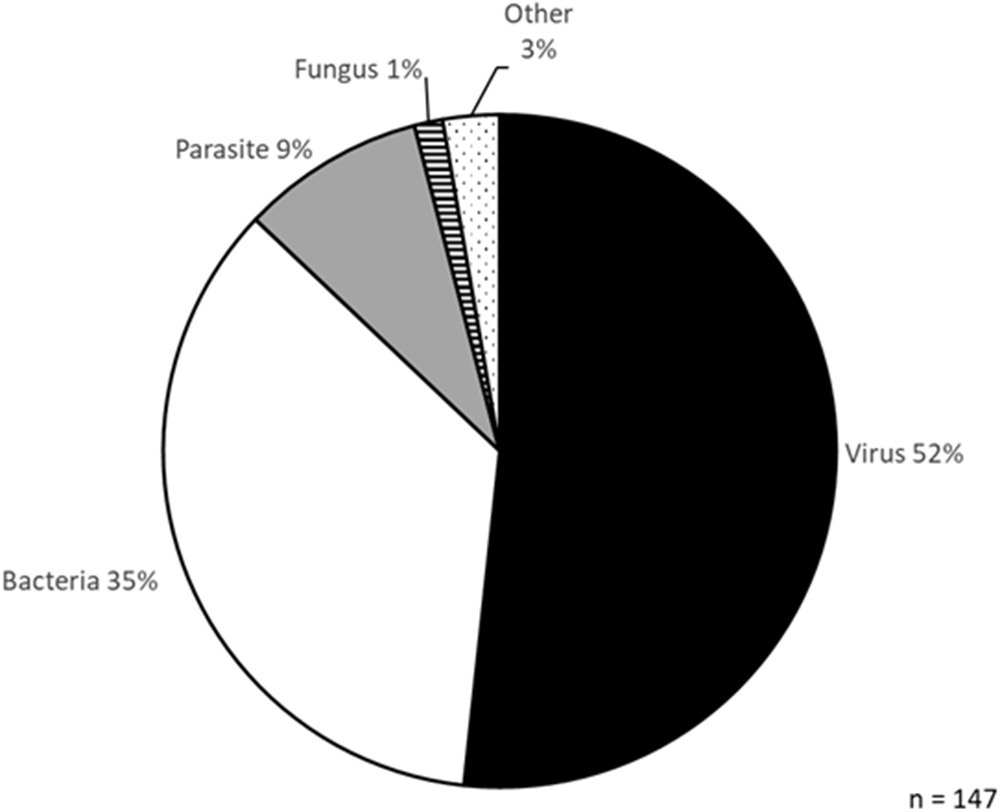
Notably, the listed devices were tested on a range of different species, primarily viruses (52%) and bacteria (35%), with parasites accounting for only 9% (Figure 6). Pathogens causing NTDs accounted for 5% of the species tested. Only two studies focused on Leishmania spp. specifically. The first used fluorometric LAMP to detect 0.1 pg of L. donovani DNA (Puri et al. Reference Puri, Brar, Mittal, Madan, Srinivasan, Rawat, Moulik, Chatterjee, Gorthi, Muthuswami and Madhubala2021). The other study used electrochemical sensing coupled to RPA, detecting 10 copies/µl (<1 pg) of L. braziliensis DNA (Wu et al. Reference Wu, Biyani, Hirose and Takamura2023). Therefore, more work needs to be done testing these new devices in the diagnosis of CL and other NTDs where they are desperately needed.

Artificial intelligence

More recently, machine learning has also been tested for visual classification of CL lesions. Promisingly, studies in Brazil, Cameroon, and Colombia showed 93–96% accuracy, although a study in Libya showed only 70% accuracy (Arce-Lopera et al. Reference Arce-Lopera, Diaz-Cely and Quintero2021; Steyve et al. Reference Steyve, Steve, Ghislain, Ndjakomo and Pierre2022; Mohamed Noureldeen et al. Reference Mohamed Noureldeen, Salem Masoud and Abulqasim Almakhzoom2023; Leal et al. Reference Leal, Barroso, Trindade, Miranda and Gurgel-Gonçalves2024). Whether this is due to species-specific differences in lesion appearance, differences in skin tone, or other discrepancies in the experimental approach is currently unknown. Notably, only the Brazilian study took the causative species used in the training set into account, which the authors identified as L. braziliensis, L. amazonensis and L. guyanensis (Leal et al. Reference Leal, Barroso, Trindade, Miranda and Gurgel-Gonçalves2024). Therefore, more work remains to make sure that these approaches have high accuracy in a range of different endemic settings. In a different approach, a study in Iran tested three different algorithms and found that they could distinguish CL lesions which were responsive or non-responsive to treatment with 56–77% accuracy (Bamorovat et al. Reference Bamorovat, Sharifi, Tahmouresi, Agha Kuchak Afshari and Rashedi2025). AI has also been used to visually diagnose other cutaneous NTDs – Buruli ulcer, leprosy, scabies, mycetoma and yaws (Yotsu et al. Reference Yotsu, Ding, Hamm and Blanton2023). Buruli ulcer and scabies were correctly diagnosed with 88% sensitivity and yaws was correctly diagnosed with 79% sensitivity. However, specificity was very poor. Mycetoma was misdiagnosed as Buruli ulcer in 41% of cases, leprosy was misdiagnosed as scabies in 64% of cases and scabies was misdiagnosed as yaws in 14% of cases. Leprosy and mycetoma were correctly diagnosed in only 13% and 0% of cases, respectively.

AI has also been deployed in the detection of Leishmania spp. parasites by microscopy, with 73% to 99% accuracy (Abdelmula et al. Reference Abdelmula, Mirzaei, Güler and Süer2024; Contreras-Ramírez et al. Reference Contreras-Ramírez, Sora-Cardenas, Colorado-Salamanca, Ovalle-Bracho and Suárez2024; Kumar et al. Reference Kumar, Garg, Moudgil, Singh, Woźniak, Shafi and Ijaz2024; Sadeghi et al. Reference Sadeghi, Sadeghi, Fakhar, Zakariaei, Sadeghi and Bastani2024; Tekle et al. Reference Tekle, Dese, Girma, Adissu, Krishnamoorthy and Kwa2024; Gadri et al. Reference Gadri, Bounab, Benazi and Zerouak2025). This represents a rapid improvement as a study from 2022 found 60% accuracy for infected macrophages (Zare et al. Reference Zare, Akbarialiabad, Parsaei, Asgari, Alinejad, Bahreini, Hosseini, Ghofrani-Jahromi, Shahriarirad, Amirmoezzi, Shahriarirad, Zeighami and Abdollahifard2022). Although this approach promises to substantially reduce workload and minimise human error, it does not eliminate many of the previously discussed shortcomings of microscopy-based diagnostic techniques. In fact, only one of the studies cited used a smartphone camera to capture the images from the microscope, while the others used high resolution digital cameras (Gadri et al. Reference Gadri, Bounab, Benazi and Zerouak2025). Promisingly, the use of a smartphone camera did not compromise accuracy, which was 97%. Nevertheless, other issues such as the need for microscopy facilities and technical expertise in preparing the sample limit the applicability and relevance of these developments in a point-of-care setting.

Telemedicine

The use of mobile apps and telemedicine to augment CL diagnosis is another emerging field. A recent review on the use of telemedicine in NTDs found that it increases the capacity of the healthcare system to track the disease (Salvador et al. Reference Salvador, Wakimoto, Duarte, Lapão, Silveira and Valete2025b). One of the case studies was an app developed in Colombia for the use of patients and healthcare professionals. The app made it easier to follow-up on patients’ disease progression, allowed the collection of data in the form of lesion photographs and reporting of adverse events and made patients more likely to adhere to treatment (Cossio et al. Reference Cossio, Bautista-Gomez, Alexander, Del Castillo, Del Mar Castro, Castaño-Grajales, Gutiérrez-Poloche, Zuluaga, Vargas-Bernal, Navarro and Saravia2023). Another study in Brazil found a high rate of patient satisfaction in using telemedicine for a CL consultation, with one of the advantages listed as saving money on travel costs (Salvador et al. Reference Salvador, Oliveira, Pimentel, Lyra, Hasslocher-Moreno, Holanda, Varela, Silveira and Valete2025a). The impact of the WHO’s own SkinNTDs app was recently studied in Cameroon (Moungui et al. Reference Moungui, Tonkoung Iyawa, Nana-Djeunga, Ruiz-Postigo and Carrion2025). The app scored highly on user satisfaction (3.3/4.5), quality of information (3.6/5) and impact on knowledge and diagnosis (3.9/5), although 57% of participants had limited experience with skin NTDs and reported encountering less than one case per month. In a comparable study conducted in Ghana and Kenya, where only 22% of participants reported encountering less than one skin NTD case per month, the app scored 3.8/5 on user satisfaction, 4/5 on quality of information and 4.5/5 on impact (Frej et al. Reference Frej, Cano, Ruiz-Postigo, Macharia, Phillips, Amoako and Carrion2022). While these reports are encouraging with regard to skin NTDs generally, it would be useful to see equivalent data in countries which are more affected by CL in particular. Another useful tool is Lesionia, an example of Digital Systems for Data Management, which allows clinicians and healthcare workers in different countries to log and record epidemiological data on CL (Harigua-Souiai et al. Reference Harigua-Souiai, Salem, Hariga, Saadi, Souguir, Chouaieb, Adedokun, Mkada, Moussa, Fathallah-Mili, Lemrani, Haddad, Oduola, Souiai, Ali and Guizani2025).

The AI tools discussed above can be integrated with a telemedicine app to allow for a rapid triage step which can then lead to a referral for further testing. The use of AI image analysis tools in this way is already recommended by the WHO in the diagnosis of tuberculosis (World Health Organization, 2022). Remote diagnosis of CL by a mobile app was also successfully used on a small scale in Nepal during the COVID-19 pandemic (Parajuli and Prajapati, Reference Parajuli and Prajapati2023).

Conclusions

A number of advances have been made in recent years that bring the goals of the TPP closer to being realised. Most of the ingredients for a good diagnostic test for CL already exist, albeit scattered across different disciplines and research areas. The serological CL Detect RDT has achieved 93% specificity over various studies, but its sensitivity of 68% is far below the 95% target in the TPP (Gebremeskele et al. Reference Gebremeskele, Adane, Adem and Tajebe2023). The isothermal Loopamp RDT improved on this substantially, with 93% sensitivity and 87% specificity (Taye et al. Reference Taye, Gebrie, Bogale, Getu and Churiso2025). This is also an improvement on qPCR which was found to have 87% sensitivity and 87% specificity (Rihs et al. Reference Rihs, Vilela, Dos Santos, Caldas, Leite and Mol2025a). However, both RDTs performed very poorly on samples from Ethiopia, which highlights the country as being particularly neglected in terms of readily available diagnostic tools (Van Henten et al. Reference Van Henten, Fikre, Melkamu, Dessie, Mekonnen, Kassa, Bogale, Mohammed, Cnops, Vogt, Pareyn and Van Griensven2022; Taye et al. Reference Taye, Melkamu, Tajebe, Ibarra-Meneses, Adane, Atnafu, Adem, Adane, Kassa, Asres, van Griensven, van Henten and Pareyn2024).

The performance of the Loopamp test on crude VL samples indicates that a similar approach could be applied to CL samples, which would simplify sample preparation as outlined in the TPP. Additionally, a number of isothermal amplification devices matching the $2000 price target have now been developed. These could easily be integrated with a telemedicine app that uses AI-based visual lesion analysis as a triage step. This could have a dual effect of improving specificity by ruling out other lesion-causing dermatoses, but also meeting the goal of real-time connectivity, also listed in the TPP. Finally, the test result and lesion photograph could be logged together into a global database, to be regularly updated with patient information about the duration of the disease and responsiveness to treatments. In order to complete the process within the timeframe of the 2030 Roadmap, a focused and concerted effort remains to bring all of these elements together into a well-validated and coherent diagnostic algorithm.

Supplementary material

The supplementary material for this article can be found at https://doi.org/10.1017/S0031182025101467.

Acknowledgements

We would like to thank Dr Zisis Koutsogiannis (University of Edinburgh) and Professor Sammer Yousuf (International Center for Chemistry and Biological Sciences, University of Karachi) for helpful discussions and practical support. ChatGTP (OpenAI) was utilised to guide the structure of the review article, using the query ‘cutaneous leishmaniasis diagnostics review plan’. Neither this nor other AI tools were utilised in the writing of the article.

Author contributions

P.W.D. conceived the review and secured the funding; J.J. wrote the manuscript; P.W.D. and J.J. edited the manuscript.

Financial support

This work was supported by a MRC Impact Acceleration Award (MR/X502947/1; PWD); a studentship to JJ from the EPSRC Molecular Sciences for Medicine Doctoral Training Partnership (EP/S022791/1; PWD); the UKRI - Global Challenges Research Fund, ‘A Global Network for Neglected Tropical Diseases’ (MR/ P027989/1; PWD); The funders had no role in the decision to publish, or preparation of the manuscript.

Competing interests

The authors declare no competing interests.

Ethical approval

Not applicable.

References

Abdelmula, AM, Mirzaei, O, Güler, E and Süer, K (2024) Assessment of deep learning models for cutaneous Leishmania parasite diagnosis using microscopic images. Diagnostics 14(1), 12. https://doi.org/10.3390/diagnostics14010012Google Scholar
Abera, A, Tadesse, H, Beyene, D, Geleta, D, Belachew, M, Djirata, EA, Kinde, S, Difabachew, H, Bishaw, T, Hassen, MA, Gire, A, Bore, TM, Berhe, BM, Habtetsion, M, Tugga, ZO, Eyelachew, E, Sefer, WB, Choukri, K, Coppens, J, Tadese, G, Haile, K, Bekele, H, Kebede, Z, van der Auwera, G, Seife, F, Abte, M, Tollera, G, Hailu, M, Dujardin, J-C, van Griensven, J, Wolday, D, Embiale, W, Pareyn, M and Tasew, G (2025) Outbreak of cutaneous leishmaniasis amongst militia members in a non-endemic district under conflict in the lowlands of Somali Region caused by Leishmania tropica, Eastern Ethiopia. PLOS Neglected Tropical Diseases 19(7), e0013246. https://doi.org/10.1371/journal.pntd.0013246Google Scholar
Ahmed, B, Raut, B, Pauley, A, Davidson, JL, Yang, S and Verma, MS (2025) Development of a portable paper-based biosensor for the identification of genetically modified corn (Zea mays) and soybean (Glycine max). Biosensors and Bioelectronics 287. https://doi.org/10.1016/j.bios.2025.117690Google Scholar
Ahmed, H, Curtis, CR, Tur-Gracia, S, Olatunji, TO, Carter, KC and Williams, RAM (2020) Drug combinations as effective anti-leishmanials against drug resistant: Leishmania mexicana. RSC Medicinal Chemistry 11(8), 905912. https://doi.org/10.1039/d0md00101eGoogle Scholar
Akhoundi, M, Downing, T, Votýpka, J, Kuhls, K, Lukeš, J, Cannet, A, Ravel, C, Marty, P, Delaunay, P, Kasbari, M, Granouillac, B, Gradoni, L and Sereno, D (2017) Leishmania infections: Molecular targets and diagnosis. Molecular Aspects of Medicine 57, 129. https://doi.org/10.1016/j.mam.2016.11.012Google Scholar
Akhoundi, M, Kuhls, K, Cannet, A, Votýpka, J, Marty, P, Delaunay, P and Sereno, D (2016) A historical overview of the classification, evolution, and dispersion of leishmania parasites and sandflies. PLoS Neglected Tropical Diseases 10(3), e0004349. https://doi.org/10.1371/journal.pntd.0004349Google Scholar
Akuffo, RA, Sanchez, C, Amanor, I, Amedior, JS, Kotey, NK, Anto, F, Azurago, T, Ablordey, A, Owusu-Antwi, F, Beshah, A, Amoako, YA, Phillips, RO, Wilson, M, Asiedu, K, Ruiz-Postigo, JA, Moreno, J and Mokni, M (2023) Endemic infectious cutaneous ulcers syndrome in the Oti Region of Ghana: Study of cutaneous leishmaniasis, yaws and Haemophilus ducreyi cutaneous ulcers. PLoS ONE 18(9), e0292034. https://doi.org/10.1371/journal.pone.0292034Google Scholar
Al-Alousy, NW and Al-Nasiri, FS (2025) Bacterial infections associated with cutaneous leishmaniasis in Salah Al-Din province, Iraq. Microbial Pathogenesis 198, 107144. https://doi.org/10.1016/j.micpath.2024.107144Google Scholar
Alonso, G, Rastrojo, A, López-Pérez, S, Requena, JM and Aguado, B (2016) Resequencing and assembly of seven complex loci to improve the Leishmania major (Friedlin strain) reference genome. Parasites and Vectors 9(1), 74. https://doi.org/10.1186/s13071-016-1329-4Google Scholar
Amare, GA, Mekonnen, GG, Kassa, M, Addisu, A, Kendie, DA, Tegegne, B, Abera, A, Tadesse, D, Getahun, S, Wondmagegn, YM, Merdekios, B, Asres, MS, van Griensven, J, Van der Auwera, G, van Henten, S and Pareyn, M (2023) First report of cutaneous leishmaniasis caused by Leishmania donovani in Ethiopia. Parasites and Vectors 16(1), 457. https://doi.org/10.1186/s13071-023-06057-9Google Scholar
Aminizadeh, S, Mohammadi-Ghalehbin, B, Mohebali, M, Hajjaran, H, Zarei, Z, Heidari, Z, Akhondi, B, Alizadeh, Z and Aghaei, J (2024) Emergence of coinfection with visceral Leishmania infantum in COVID-19 patients: A case‒control field study in an endemic area of visceral leishmaniasis in Iran. BMC Infectious Diseases 24(1), 1480. https://doi.org/10.1186/s12879-024-10363-7Google Scholar
Arce-Lopera, CA, Diaz-Cely, J and Quintero, L (2021) Presumptive diagnosis of cutaneous Leishmaniasis. Frontiers in Health Informatics 10, 75. https://doi.org/10.30699/fhi.v10i1.278Google Scholar
Arnau, A, Abras, A, Ballart, C, Fernández-Arévalo, A, Torrico, MC, Tebar, S, Llovet, T, Gállego, M and Muñoz, C (2023) Evaluation of the diagnostic sensitivity of the VIASURE Leishmania real-time PCR detection kit prototype for the diagnosis of cutaneous and Visceral Leishmaniasis. Transboundary and Emerging Diseases 2023, 18. https://doi.org/10.1155/2023/1172087Google Scholar
Aronson, N, Herwaldt, BL, Libman, M, Pearson, R, Lopez-Velez, R, Weina, P, Carvalho, EM, Ephros, M, Jeronimo, S and Magill, A (2016) Diagnosis and treatment of Leishmaniasis: clinical practice guidelines by the Infectious Diseases Society of America (IDSA) and the American Society of Tropical Medicine and Hygiene (ASTMH). Clinical Infectious Diseases 63(12), E202E264. https://doi.org/10.1093/cid/ciw670Google Scholar
Ashraf, A, Qadeer, S, Bukhari, UA, Zeb, I, Rasool, A, Salma, U, Shaukat, H, Shahzad, R and Osmani, AR (2025) Molecular profiling and risk factors assessment of cutaneous leishmaniasis in an expanding endemic focus of Punjab, Pakistan. Parasitology Research 124(11), 126. https://doi.org/10.1007/s00436-025-08581-2Google Scholar
Atnafu, A, Chanyalew, Z, Yimam, S, Zeleke, M, Negussie, S, Girma, S, Melaku, A and Chanyalew, M (2024) Histopathological patterns of cutaneous and mucocutaneous Leishmaniasis due to L. aethiopica. Dermatology Research and Practice 2024(1), 5267606. https://doi.org/10.1155/drp/5267606Google Scholar
Auwera G, VD and Dujardin, J-C (2015) Species Typing in Dermal Leishmaniasis. Clinical Microbiology Reviews 28(2), 265294. https://doi.org/10.1128/CMR.00104-14Google Scholar
Avni, D, Solomon, M, Strauss, M, Sagi, O, Temper, V, Michael-Gayego, A, Meningher, T, Avitan-Hersh, E, Szwarcwort-Cohen, M, Moran-Gilad, J, Ollech, A and Schwartz, E (2024) The epidemiology of PCR-confirmed cutaneous Leishmaniasis in Israel: a nationwide study. Microorganisms 12(10), 1950. https://doi.org/10.3390/microorganisms12101950Google Scholar
Azam, M, Singh, S, Gupta, R, Mayank, M, Kathuria, S, Sharma, S, Ramesh, V and Singh, R (2024) Assessment of high-resolution melting curve analysis for Leishmania spp. detection in different clinical manifestations of Leishmaniasis in India. Pathogens 13(9), 759. https://doi.org/10.3390/pathogens13090759Google Scholar
Azami-Conesa, I, Matas Méndez, P, Pérez-Moreno, P, Carrión, J, Alunda, JM, Mateo Barrientos, M and Gómez-Muñoz, MT (2024) Wildlife as a sentinel for pathogen introduction in nonendemic areas: first detection of Leishmania tropica in Wildlife in Spain. Transboundary and Emerging Diseases 2024, 8259712. https://doi.org/10.1155/2024/8259712Google Scholar
Bachmann, I, Behrmann, O, Klingenberg-Ernst, M, Rupnik, M, Hufert, FT, Dame, G and Weidmann, M (2024) Rapid isothermal detection of pathogenic clostridioides difficile using recombinase polymerase amplification. Analytical Chemistry 96(8), 32673275. https://doi.org/10.1021/acs.analchem.3c02985Google Scholar
Baghad, B, Mouhsine, Z, Chekairi, FZ, Amine, B, Saik, EII, Lemkhayar, K, Lemrani, M, Soussi Abdallaoui, M, Chiheb, S and Riyad, M (2025) New epidemio-clinical insights into cutaneous leishmaniasis caused by Leishmania infantum in Casablanca, Morocco. Infectious Diseases Now 55(6), 105111. https://doi.org/10.1016/j.idnow.2025.105111Google Scholar
Bamorovat, M, Sharifi, I, Tahmouresi, A, Agha Kuchak Afshari, S and Rashedi, E (2025) Unlocking responsive and unresponsive signatures: a transfer learning approach for automated classification in cutaneous Leishmaniasis lesions. Transboundary and Emerging Diseases 2025(1), 5018632. https://doi.org/10.1155/tbed/5018632Google Scholar
Bel Hadj Ali, I, Saadi-Ben Aoun, Y, Hammami, Z, Rhouma, O, Chakroun, AS and Guizani, I (2023) Handheld ultra-fast duplex polymerase chain reaction assays and lateral flow detection and identification of leishmania parasites for cutaneous leishmaniases diagnosis. Pathogens 12(11), 1292. https://doi.org/10.3390/pathogens12111292Google Scholar
Bel Hadj Ali, I, Saadi-Ben Aoun, Y, Khammeri, I, Souguir, H, Harigua-Souiai, E, Chouaieb, H, Chakroun, AS, Lemrani, M, Kallel, A, Kallel, K, Haddad, N, El Dbouni, O, Coler, RN, Reed, SG, Fathallah-Mili, A and Guizani, I (2024) Recombinase-based amplification coupled with lateral flow chromatography for the specific and sensitive detection and identification of Leishmania major in cutaneous leishmaniasis patients. Frontiers in Microbiology 15, 1514684. https://doi.org/10.3389/fmicb.2024.1514684Google Scholar
Bhattarai, NR, Rai, K, Uranw, S, Khadka, DK, Khanal, B, Dahal, G, Pradhan, S, Dhakal, S, Monsieurs, P, de Gooyer, T, Cloots, K, Hasker, E and Van der Auwera, G (2025) Can cutaneous Leishmaniasis provoke a resurgence of kala-azar in the Indian subcontinent? BMC Infectious Diseases 25(1), 281. https://doi.org/10.1186/s12879-025-10664-5Google Scholar
Birtek, MT, Atçeken, N and Tasoglu, S (2025) Programmable 3DP microfluidic bio-reaction system: automated LAMP-on-a-Chip. Lab on a Chip 25(21), 5506–23. https://doi.org/10.1039/d5lc00003c.Google Scholar
Blaizot, R, Lamine, MM, Saout, M, Issa, K, Laminou, IM, Duvignaud, A, Demar, M and Doutchi, M (2025) Molecular detection of Leishmania major human infections in the Zinder area, Niger. BMC Infectious Diseases 25(1), 871. https://doi.org/10.1186/s12879-025-11229-2Google Scholar
Blaizot, R, Pasquier, G, Kone, AK, Duvignaud, A and Demar, M (2024) Cutaneous leishmaniasis in sub-Saharan Africa: A systematic review of Leishmania species, vectors and reservoirs. Parasites and Vectors 17(1), 318. https://doi.org/10.1186/s13071-024-06381-8Google Scholar
Botha, JC, Zafilaza, K, Soulie, C, Yin, N, Spyer, M, Balaska, S, Chatziioannidou, S, Tsiakalou, V, Papadakis, G, Skoura, L, Zafiropoulos, A, Sourvinos, G, Vandenberg, O, Marcelin, A-G, Gizeli, E and Nastouli, E (2024) Evaluation of a near-patient SARS-CoV-2 novel rapid diagnostic platform. Microbiology Spectrum 12(12), e0067224. https://doi.org/10.1128/spectrum.00672-24Google Scholar
Boulal, B, Remadi, L, Grigoraki, L, Vontas, J and Bendjoudi, D (2025) Cutaneous Leishmaniasis in southeastern algeria: clinical, parasitological diagnosis and molecular identification. Acta Parasitologica 70(6), 234. https://doi.org/10.1007/s11686-025-01178-wGoogle Scholar
Bruno, F, Castelli, G, Li, B, Reale, S, Carra, E, Vitale, F, Scibetta, S, Calzolari, M, Varani, S, Ortalli, M, Franceschini, E, Gennari, W, Rugna, G and Späth, GF (2024) Genomic and epidemiological evidence for the emergence of a L. infantum/L. donovani hybrid with unusual epidemiology in northern Italy. MBio 15(7), e0099524. https://doi.org/10.1128/mbio.00995-24Google Scholar
Bussotti, G, Gouzelou, E, Boité, MC, Kherachi, I, Harrat, Z, Eddaikra, N, Mottram, JC, Antoniou, M, Christodoulou, V, Bali, A, Guerfali, FZ, Laouini, D, Mukhtar, M, Dumetz, F, Dujardin, JC, Smirlis, D, Lechat, P, Pescher, P, Hamouchi, AE, Lemrani, M, Chicharro, C, Llanes-Acevedo, IP, Botana, L, Cruz, I, Moreno, J, Jeddi, F, Aoun, K, Bouratbine, A, Cupolillo, E and Späth, GF (2018) Leishmania genome dynamics during environmental adaptation reveal strain-specific differences in gene copy number variation, karyotype instability, and telomeric amplification. MBio 9(6), 10128. https://doi.org/10.1128/mBio.01399-18Google Scholar
Camargo, BD, Cassaboni Stracke, M, Soligo Sanchuki, HB, de Oliveira, VK, Ancelmo, HC, Mozaner Bordin, D, Klerynton Marchini, F, Ribeiro Viana, E and Blanes, L (2024) Low-cost arduino reverse transcriptase loop-mediated isothermal amplification (RT-LAMP) for sensitive nucleic acid detection. Biosensors 14(3), 128. https://doi.org/10.3390/bios14030128Google Scholar
Castellanos, LR, Chaffee, R, Kumar, H, Mezgebo, BK, Kassau, P, Peirano, G, Pitout, JDD, Kim, K and Pillai, DR (2024) A novel machine-learning aided platform for rapid detection of urine ESBLs and carbapenemases: URECA-LAMP. Journal of Clinical Microbiology 62(11), e0086924. https://doi.org/10.1128/jcm.00869-24Google Scholar
Castellanos-Gonzalez, A, Cossio, A, Jojoa, J, Moen, S and Travi, BL (2023) MiniPCR as a portable equipment for the molecular diagnosis of American cutaneous leishmaniasis. Acta Tropica 243, 106926. https://doi.org/10.1016/j.actatropica.2023.106926Google Scholar
Cavuto, ML, Malpartida-Cardenas, K, Pennisi, I, Pond, MJ, Mirza, S, Moser, N, Comer, M, Stokes, I, Eke, L, Lant, S, Szostak-Lipowicz, KM, Miglietta, L, Stringer, OW, Mantikas, KT, Sumner, RP, Bolt, F, Sriskandan, S, Holmes, A, Georgiou, P, Ulaeto, DO, Maluquer de Motes, C and Rodriguez-Manzano, J (2025) Portable molecular diagnostic platform for rapid point-of-care detection of mpox and other diseases. Nature Communications 16(1), 13. https://doi.org/10.1038/s41467-025-57647-3Google Scholar
Chaouch, M, Aoun, K, Othman, SB, Abid, MB, Sghaier, IB, Bouratbine, A and Abderrazak, SB (2019) Development and assessment of leishmania major and leishmania tropica specific loop-mediated isothermal amplification assays for the diagnosis of cutaneous leishmaniasis in Tunisia. American Journal of Tropical Medicine and Hygiene 101(1), 101107. https://doi.org/10.4269/ajtmh.19-0097Google Scholar
Chaouch, M, Fathallah-Mili, A, Driss, M, Lahmadi, R, Ayari, C, Guizani, I, Ben Said, M and BenAbderrazak, S (2013) Identification of Tunisian Leishmania spp. by PCR amplification of cysteine proteinase B (cpb) genes and phylogenetic analysis. Acta Tropica 125(3), 357365. https://doi.org/10.1016/j.actatropica.2012.11.012Google Scholar
Contreras-Ramírez, M, Sora-Cardenas, J, Colorado-Salamanca, C, Ovalle-Bracho, C and Suárez, DR (2024) Enhanced detection of leishmania parasites in microscopic images using machine learning models. Sensors 24(24), 8180. https://doi.org/10.3390/s24248180Google Scholar
Cossio, A, Bautista-Gomez, MM, Alexander, N, Del Castillo, AM, Del Mar Castro, M, Castaño-Grajales, PY, Gutiérrez-Poloche, YH, Zuluaga, LS, Vargas-Bernal, L, Navarro, A and Saravia, NG (2023) mHealth monitoring of treatment of cutaneous Leishmaniasis patients: a community-based implementation study. American Journal of Tropical Medicine and Hygiene 109(4), 778790. https://doi.org/10.4269/ajtmh.22-0805Google Scholar
Cossio, A, Jojoa, J, Castro, MDM, Castillo, RM, Osorio, L, Shelite, TR, Saravia, NG, Melby, PC and Travi, BL (2021) Diagnostic performance of a recombinant polymerase amplification test—lateral flow (Rpa-lf) for cutaneous leishmaniasis in an endemic setting of Colombia. PLoS Neglected Tropical Diseases 15(4), e0009291. https://doi.org/10.1371/journal.pntd.0009291Google Scholar
Crego-Vicente, B, Fernández-Soto, P, García-Bernalt Diego, J, Febrer-Sendra, B and Muro, A (2023) Development of a duplex LAMP assay with probe-based readout for simultaneous real-time detection of schistosoma mansoni and Strongyloides spp. -A laboratory approach to point-of-care. International Journal of Molecular Sciences 24(1), 893. https://doi.org/10.3390/ijms24010893Google Scholar
Cruz, I, Albertini, A, Barbeitas, M, Arana, B, Picado, A, Ruiz-Postigo, JA and Ndung’u, JM (2019) Target Product Profile for a point-of-care diagnostic test for dermal leishmaniases. Parasite Epidemiology and Control 5, e00103. https://doi.org/10.1016/j.parepi.2019.e00103Google Scholar
Cruz-Saavedra, L, Ospina, C, Patiño, LH, Villar, JC, Sáenz Pérez, LD, Cantillo-Barraza, O, Jaimes-Dueñez, J, Ballesteros, N, Cáceres, T, Vallejo, G and Ramírez, JD (2024) Enhancing trypanosomatid identification and genotyping with oxford nanopore sequencing: development and validation of an 18S rRNA amplicon-based method. Journal of Molecular Diagnostics 26(5), 323336. https://doi.org/10.1016/j.jmoldx.2024.01.012Google Scholar
Cui, J, Tian, A, Wang, H, Yu, Y, Hao, J, Wang, L, Shi, C and Ma, C (2025a) Hydrogel loop-mediated isothermal amplification for ultra-fast diagnosis of Helicobacter pylori in stool samples without nucleic acid extraction. Analytica Chimica Acta 1333, 343384. https://doi.org/10.1016/j.aca.2024.343384Google Scholar
Cui, S, Wang, K, Yang, Y, Lv, X and Li, X (2025b) An integrated and paper-based microfluidic system employing LAMP-CRISPR and equipped with a portable device for simultaneous detection of pathogens. Analytical and Bioanalytical Chemistry 417(4), 785797. https://doi.org/10.1007/s00216-024-05693-zGoogle Scholar
Dai, F, Zhang, T, Pang, F, Jiao, T, Wang, K, Zhang, Z, Wang, N, Xie, Z, Zhang, Y, Wang, Z, Chen, Z, Yu, M, Wei, H and Song, J (2025) A compact, palm-sized isothermal fluorescent diagnostic intelligent IoT device for personal health monitoring and beyond via one-tube/one-step LAMP-CRISPR assay. Biosensors and Bioelectronics 270, 116945. https://doi.org/10.1016/j.bios.2024.116945Google Scholar
Danthanarayana, AN, Nandy, S, Kourentzi, K, Vu, B, Shelite, TR, Travi, BL, Brgoch, J and Willson, RC (2023) Smartphone-readable RPA-LFA for the highsensitivity detection of Leishmania kDNA using nanophosphor reporters. PLoS Neglected Tropical Diseases 17(7), e0011436. https://doi.org/10.1371/journal.pntd.0011436Google Scholar
Das, D, Lin, CW and Chuang, HS (2022) LAMP-Based Point-of-Care Biosensors for Rapid Pathogen Detection. Biosensors 12(12), 1068. https://doi.org/10.3390/bios12121068Google Scholar
de Almeida, JV, de Souza, CF, Fuzari, AA, Joya, CA, Valdivia, HO, Bartholomeu, DC and Brazil, RP (2021) Diagnosis and identification of Leishmania species in patients with cutaneous leishmaniasis in the state of Roraima, Brazil’s Amazon Region. Parasites and Vectors 14(1), 32. https://doi.org/10.1186/s13071-020-04539-8Google Scholar
de Avelar, DM, Santos, CC and Fusaro Faioli, A (2023) Developments in Leishmaniasis diagnosis: A patent landscape from 2010 to 2022. PLOS Global Public Health 3(11), e0002557. https://doi.org/10.1371/journal.pgph.0002557Google Scholar
de Lima, LF, Estrela, PFN, Faustino, LC, Souza, JV, Justino de Assunção, C, Gerôncio, ETS, Fonseca de Lima, L, Luiz Cardoso Bailão, EF, de Araujo, WR, Paixão, TRLC and Duarte, GRM (2025) 3D-printed electrochemical loop-mediated isothermal amplification (E-LAMP): A miniaturized and portable platform to detect methicillin-resistant Staphylococcus aureus (MRSA). Analytica Chimica Acta 1372, 19. https://doi.org/10.1016/j.aca.2025.344455Google Scholar
De Los Santos, MB, Loyola, S, Perez-Velez, ES, Santos, RDP, Ramírez, IM and Valdivia, HO (2024) Sampling is decisive to determination of Leishmania (Viannia) species. PLoS Neglected Tropical Diseases 18(4), e0012113. https://doi.org/10.1371/journal.pntd.0012113Google Scholar
de Vries, HJC and Schallig, HD (2022) Cutaneous Leishmaniasis: a 2022 updated narrative review into diagnosis and management developments. American Journal of Clinical Dermatology. Adis 23(6), 823840. https://doi.org/10.1007/s40257-022-00726-8Google Scholar
Dey, R, Alshaweesh, J, Singh, KP, Lypaczewski, P, Karmakar, S, Klenow, L, Paulini, K, Kaviraj, S, Kamhawi, S, Valenzuela, JG, Singh, S, Hamano, S, Satoskar, AR, Gannavaram, S, Nakhasi, HL and Matlashewski, G (2023) Production of leishmanin skin test antigen from Leishmania donovani for future reintroduction in the field. Nature Communications 14(1), 7028. https://doi.org/10.1038/s41467-023-42732-2Google Scholar
Di Altobrando, A, Misciali, C, Raone, B, Attard, L and Gaspari, V (2021) Case report: Cutaneous leishmaniasis misdiagnosed as pyoderma gangrenosum. American Journal of Tropical Medicine and Hygiene 104(2), 640642. https://doi.org/10.4269/ajtmh.20-0735Google Scholar
Donadeu, M, Gyorkos, TW, Horstick, O, Lammie, P, Mwingira, UJ, Omondi, WP, Pritchard, JM, Tappero, J, Chan, YYL, Welsche, S, Agua, JFV, Madjou, S, Mbabazi, PS, Warusavithana, S and Torres-Vitolas, CA (2025) Tracking progress along the WHO Neglected tropical diseases road map to 2030: A guide to the Gap Assessment Tool (GAT) and results from the 2023-2024 assessment. PLoS Neglected Tropical Diseases 19(7), e0013194. https://doi.org/10.1371/journal.pntd.0013194Google Scholar
Dong, H, Mo, J, Yu, Y, Xie, W, Zheng, J and Jia, C (2023) A portable system for economical nucleic acid amplification testing. Frontiers in Bioengineering and Biotechnology 11, 1214624. https://doi.org/10.3389/fbioe.2023.1214624Google Scholar
Dong, M, Kshirsagar, A, Politza, AJ and Guan, W (2024a) High fidelity machine-learning-assisted false positive discrimination in loop-mediated isothermal amplification using nanopore-based sizing and counting. ACS Nano 18(9), 71707179. https://doi.org/10.1021/acsnano.3c12053Google Scholar
Dong, T, Qin, L, Wang, Z, Fan, C, Shen, C, Feng, P, Kong, Q, Ke, B, Ying, B and Li, F (2024b) Point-of-care diagnosis of tuberculosis using a portable nucleic acid test with distance-based readout. Analytical Chemistry 96(51), 2020420212. https://doi.org/10.1021/acs.analchem.4c04180Google Scholar
Dueñas, E, Nakamoto, JA, Cabrera-Sosa, L, Huaihua, P, Cruz, M, Arévalo, J, Milón, P and Adaui, V (2022) Novel CRISPR-based detection of Leishmania species. Frontiers in Microbiology 13, 958693. https://doi.org/10.3389/fmicb.2022.958693Google Scholar
EL Banna, G, Braun, N, Baker, NM, Peacker, BL, Ma, KSK, Kibbi, AG and Chen, ST (2025) The burden of skin and subcutaneous diseases in North Africa and the Middle East (NAME) from 1990 to 2021. International Journal of Dermatology 64(12):2274–82. https://doi.org/10.1111/ijd.17953Google Scholar
El Moctar, A, Ouldabdallahi Moukah, M, Koné, AK, Saout, M, Demar, M, Fofana, MD, Cheikh Mohamed Vadel, TK, Kébé, M, Thera, MA, Blaizot, R and Ould Mohamed Salem Boukhary, A (2025) Ongoing presence of Leishmania major cutaneous leishmaniasis in Mauritania, 2016–2024. BMC Infectious Diseases 25(1), 596. https://doi.org/10.1186/s12879-025-10716-wGoogle Scholar
Feddema, JJ, Fernald, KDS, Keijser, BJF, Kieboom, J and van de Burgwal, LHM (2024) Commercial opportunity or addressing unmet needs—Loop-Mediated Isothermal Amplification (LAMP) as the future of rapid diagnostic testing? Diagnostics 14(17), 1845. https://doi.org/10.3390/diagnostics14171845Google Scholar
Fowler, VL, Armson, B, Gonzales, JL, Wise, EL, Howson, ELA, Vincent-Mistiaen, Z, Fouch, S, Maltby, CJ, Grippon, S, Munro, S, Jones, L, Holmes, T, Tillyer, C, Elwell, J, Sowood, A, de Peyer, O, Dixon, S, Hatcher, T, Patrick, H, Laxman, S, Walsh, C, Andreou, M, Morant, N, Clark, D, Moore, N, Houghton, R, Cortes, NJ and Kidd, SP (2021) A highly effective reverse-transcription loop-mediated isothermal amplification (RT-LAMP) assay for the rapid detection of SARS-CoV-2 infection. Journal of Infection 82(1), 117125. https://doi.org/10.1016/j.jinf.2020.10.039Google Scholar
Freire, ML, Machado de Assis, T, Oliveira, E, Moreira de Avelar, D, Siqueira, IC, Barral, A, Rabello, A and Cota, G (2019) Performance of serological tests available in Brazil for the diagnosis of human visceral leishmaniasis. PLoS Neglected Tropical Diseases 13(7), e0007484. https://doi.org/10.1371/journal.pntd.0007484Google Scholar
Frej, A, Cano, M, Ruiz-Postigo, JA, Macharia, P, Phillips, RO, Amoako, YA and Carrion, C (2022) Assessing the quality of the world health organization’s skin NTDs App as a training tool in Ghana and Kenya: Protocol for a cross-sectional study. JMIR Research Protocols 11(12), e39393. https://doi.org/10.2196/39393Google Scholar
Gadri, S, Bounab, S, Benazi, N and Zerouak, F (2025) A new diagnostic method and tool for cutaneous leishmaniasis based on artificial intelligence techniques. Computers in Biology and Medicine 192, 110313. https://doi.org/10.1016/j.compbiomed.2025.110313Google Scholar
Ge, H, Feng, J, Huang, L, Luo, Z, Ling, H, Ma, L, Wang, M, Chen, H and Ren, L (2025) Development of a highly sensitive, high-throughput and automated CRISPR-based device for the contamination-free pathogen detection. Biosensors and Bioelectronics 278, 117323. https://doi.org/10.1016/j.bios.2025.117323Google Scholar
Gebremeskele, BT, Adane, G, Adem, M and Tajebe, F (2023) Diagnostic performance of CL Detect rapid-immunochromatographic test for cutaneous leishmaniasis: A systematic review and meta-analysis. Systematic Reviews 12(1), 240. https://doi.org/10.1186/s13643-023-02422-yGoogle Scholar
Georgiadou, SP, Makaritsis, KP and Dalekos, GN (2015) Leishmaniasis revisited: current aspects on epidemiology, diagnosis and treatment. Journal of Translational Internal Medicine 3(2), 4350. https://doi.org/10.1515/jtim-2015-0002Google Scholar
Ghosh, P, Chowdhury, R, Faisal, K, Khan, MAA, Hossain, F, Rahat, MA, Chowdhury, MAA, Mithila, NT, Kamal, M, Maruf, S, Nath, R, Kobialka, RM, Ceruti, A, Cameron, M, Duthie, MS, Wahed, AAE and Mondal, D (2023) Evaluation of a point-of-need molecular diagnostic tool coupled with rapid DNA extraction methods for Visceral Leishmaniasis. Diagnostics 13(24), 3639. https://doi.org/10.3390/diagnostics13243639Google Scholar
Gonzalez-Garcia, LN, Rodríguez-Guzmán, AM, Vargas-León, CM, Aponte, S, Bonilla-Valbuena, LA, Matiz-González, JM, Clavijo-Vanegas, AM, Duarte-Olaya, GA, Aguilar-Buitrago, C, Urrea, DA, Duitama, J and Echeverry, MC (2025) Genomic characterization of Leishmania (V.) braziliensis associated with antimony therapeutic failure and variable in vitro tolerance to amphotericin B. Scientific Reports 15(1), 12973. https://doi.org/10.1038/s41598-025-96849-zGoogle Scholar
Grogl, M, Joya, CA, Saenz, M, Quispe, A, Rosales, LA, Santos, RDP, De Los Santos, MB, Donovan, N, Ransom, JH, Ramos, A and Cuentas, EL (2023) Evaluation of a diagnostic device, CL Detect rapid test for the diagnosis of new world cutaneous leishmaniasis in Peru. PLoS Neglected Tropical Diseases 17(3), e0011054. https://doi.org/10.1371/journal.pntd.0011054Google Scholar
Gurel, MS, Tekin, B and Uzun, S (2020) Cutaneous leishmaniasis: A great imitator. Clinics in Dermatology 38(2), 140151. https://doi.org/10.1016/j.clindermatol.2019.10.008Google Scholar
Hadermann, A, Heeren, S, Maes, I, Dujardin, JC, Domagalska, MA and Van den Broeck, F (2023) Genome diversity of Leishmania aethiopica. Frontiers in Cellular & Infection Microbiology 13, 1147998. https://doi.org/10.3389/fcimb.2023.1147998Google Scholar
Hagos, DG, Kiros, YK, Abdulkader, M, Arefaine, ZG, Nigus, E, Schallig, HHDF and Wolday, D (2021) Utility of the loop-mediated isothermal amplification assay for the diagnosis of visceral leishmaniasis from blood samples in Ethiopia. American Journal of Tropical Medicine and Hygiene 105(4), 10501055. https://doi.org/10.4269/ajtmh.21-0334Google Scholar
Hagos, DG, Kiros, YK, Abdulkader, M, Schallig, HDFH and Wolday, D (2024) Comparison of the diagnostic performances of five different tests in diagnosing Visceral Leishmaniasis in an endemic region of Ethiopia. Diagnostics 14(2), 163. https://doi.org/10.3390/diagnostics14020163Google Scholar
Harigua-Souiai, E, Salem, YB, Hariga, M, Saadi, Y, Souguir, H, Chouaieb, H, Adedokun, O, Mkada, I, Moussa, Z, Fathallah-Mili, A, Lemrani, M, Haddad, N, Oduola, A, Souiai, O, Ali, IBH and Guizani, I (2025) Lesionia: a digital data management system to enhance collaborative management of epidemiological and clinical data of cutaneous leishmaniases patients. BMC Research Notes 18(1), 160. https://doi.org/10.1186/s13104-025-07208-0Google Scholar
Hayatolgheib-Moghadam, S, Pourzandkhanooki, M, Hadighi, R, Geraili, A, Alipour, M, Namrodi, J, Rampisheh, Z and Badirzadeh, A (2025) Epidemiological investigation and diagnostic comparison of cutaneous leishmaniasis in Kalaleh city, Iran: a parasitological and molecular approach. Journal of Parasitic Diseases 49(2), 351358. https://doi.org/10.1007/s12639-024-01753-4Google Scholar
Heiniger, EK, Jiang, KP, Kumar, S and Yager, P (2025) A low-cost point-of-care device for the simultaneous detection of two sexually transmitted bacterial pathogens in vaginal swab samples. The Analyst 150(19), 44144426. https://doi.org/10.1039/D5AN00496AGoogle Scholar
Hietanen, H, Pfavayi, LT and Mutapi, F (2025) Unlocking the blueprint to eliminating neglected tropical diseases: a review of efforts in 50 countries that have eliminated at least 1 NTD. PLoS Neglected Tropical Diseases 19(9):e0013424. https://doi.org/10.1371/journal.pntd.0013424Google Scholar
Ho, M, Sathishkumar, N, Sklavounos, AA, Sun, J, Yang, I, Nichols, KP and Wheeler, AR (2023) Digital microfluidics with distance-based detection - a new approach for nucleic acid diagnostics. Lab on a Chip 24(1), 6373. https://doi.org/10.1039/d3lc00683bGoogle Scholar
Hossain, F, Picado, A, Owen, SI, Ghosh, P, Chowdhury, R, Maruf, S, Khan, MAA, Rashid, MU, Nath, R, Baker, J, Ghosh, D, Adams, ER, Duthie, MS, Hossain, MS, Basher, A, Nath, P, Aktar, F, Cruz, I and Mondal, D (2021) Evaluation of LoopampTM Leishmania detection kit and Leishmania Antigen ELISA for post-elimination detection and management of Visceral Leishmaniasis in Bangladesh. Frontiers in Cellular & Infection Microbiology 11, 670759. https://doi.org/10.3389/fcimb.2021.670759Google Scholar
Hosseini-Safa, A, Mohebali, M, Hajjaran, H, Akhoundi, B, Zarei, Z, Arzamani, K and Davari, A (2018) High resolution melting analysis as an accurate method for identifying Leishmania infantum in canine serum samples. Journal of Vector Borne Diseases 55(4), 315. https://doi.org/10.4103/0972-9062.256568Google Scholar
Hoyos, J, Rosales-Chilama, M, León, C, González, C and Gómez, MA (2022) Sequencing of hsp70 for discernment of species from the Leishmania (Viannia) guyanensis complex from endemic areas in Colombia. Parasites and Vectors 15(1), 406. https://doi.org/10.1186/s13071-022-05438-wGoogle Scholar
Hu, F, Zhang, Y, Yang, Y, Peng, L, Cui, S, Ma, Q, Wang, F and Wang, X (2025) A rapid and ultrasensitive RPA-assisted CRISPR–Cas12a/Cas13a nucleic acid diagnostic platform with a smartphone-based portable device. Biosensors and Bioelectronics 280, 117428. https://doi.org/10.1016/j.bios.2025.117428Google Scholar
Huggins, LG, Colella, V, Young, ND and Traub, RJ (2024) Metabarcoding using nanopore long-read sequencing for the unbiased characterization of apicomplexan haemoparasites. Molecular Ecology Resources 24(2), e13878. https://doi.org/10.1111/1755-0998.13878Google Scholar
Iantorno, SA, Durrant, C, Khan, A, Sanders, MJ, Beverley, SM, Warren, WC, Berriman, M, Sacks, DL, Cotton, JA and Grigg, ME (2017) Gene expression in Leishmania is regulated predominantly by gene dosage. MBio 8(5), 10128. https://doi.org/10.1128/mBio.01393-17Google Scholar
Iatta, R, Mendoza-Roldan, JA, Latrofa, MS, Cascio, A, Brianti, E, Pombi, M, Gabrielli, S and Otranto, D (2021) Leishmania tarentolae and leishmania infantum in humans, dogs and cats in the pelagie archipelago, southern Italy. PLoS Neglected Tropical Diseases 15(9), e0009817. https://doi.org/10.1371/journal.pntd.0009817Google Scholar
Ibarra-Meneses, AV, Cruz, I, Chicharro, C, Sánchez, C, Biéler, S, Broger, T, Moreno, J and Carrillo, E (2018) Evaluation of fluorimetry and direct visualization to interpret results of a loop-mediated isothermal amplification kit to detect Leishmania DNA. Parasites and Vectors 11(1), 250. https://doi.org/10.1186/s13071-018-2836-2Google Scholar
Imai, K, Tarumoto, N, Amo, K, Takahashi, M, Sakamoto, N, Kosaka, A, Kato, Y, Mikita, K, Sakai, J, Murakami, T, Suzuki, Y, Maesaki, S and Maeda, T (2018) Non-invasive diagnosis of cutaneous leishmaniasis by the direct boil loop-mediated isothermal amplification method and MinIONTM nanopore sequencing. Parasitology International 67(1), 3437. https://doi.org/10.1016/j.parint.2017.03.001Google Scholar
Jaimes, J, Patiño, LH, Herrera, G, Cruz, C, Pérez, J, Correa-Cárdenas, CA, Muñoz, M and Ramírez, JD (2024) Prokaryotic and eukaryotic skin microbiota modifications triggered by Leishmania infection in localized Cutaneous Leishmaniasis. PLoS Neglected Tropical Diseases 18(3), e0012029. https://doi.org/10.1371/journal.pntd.0012029Google Scholar
Jain, M, Sangma, DA, Parida, L, Negi, R, Negi, A, Matlashewski, G and Lypaczewski, P (2024a) Atypical cutaneous leishmaniasis: a new challenge to VL elimination in South-East Asia. Frontiers in Cellular & Infection Microbiology 14, 1454002. https://doi.org/10.3389/fcimb.2024.1454002Google Scholar
Jain, S, Madjou, S and Agua, JFV (2024b) Global leishmaniasis surveillance updates 2023: 3 years of the NTD road map. Weekly Epidemiological Record 17. https://iris.paho.org/ (accessed 10 June 2025)Google Scholar
Jiang, H, Zhu, X, Jiao, J, Yan, C, Liu, K, Chen, W and Qin, P (2025) CRISPR/dCas9-based hotspot self-assembling SERS biosensor integrated with a smartphone for simultaneous, ultrasensitive and robust detection of multiple pathogens. Biosensors and Bioelectronics 270, 116974. https://doi.org/10.1016/j.bios.2024.116974Google Scholar
Jin, M, Ding, J, Zhou, Y, Chen, J, Wang, Y and Li, Z (2024) StratoLAMP: label-free, multiplex digital loop-mediated isothermal amplification based on visual stratification of precipitate. Proceedings of the National Academy of Sciences of the United States of America 121(2), e2314030121. https://doi.org/10.1073/pnas.2314030121Google Scholar
Jin, N, Yang, F, Zhang, X, Li, Y and Lin, J (2025) Sensitive detection of multiplex bacteria based on finger driven microfluidics and recombinase aided amplification. Biosensors and Bioelectronics 287, 117750. https://doi.org/10.1016/j.bios.2025.117750Google Scholar
Kämink, S, Masih, B, Ali, N, Ullah, A, Khan, SJ, Ashraf, S, Pylypenko, T, Grobusch, MP, Fernhout, J, Boer, MD and Ritmeijer, K (2021) Effectiveness of miltefosine in cutaneous leishmaniasis caused by leishmania tropica in Pakistan after antimonial treatment failure or contraindications to first line therapy—a retrospective analysis. PLoS Neglected Tropical Diseases 15(1), 114. https://doi.org/10.1371/journal.pntd.0008988Google Scholar
Karaja, S, Halloum, M, Karaja, S, Daher Alhussen, A, hadiQatza, A, Mansour, S and Almasri, AA (2024) Cutaneous leishmaniasis mimicking psoriasis: a case report. Clinical Case Reports 12(8), e9299. https://doi.org/10.1002/ccr3.9299Google Scholar
Khedhiri, M, Chaouch, M, Ayouni, K, Chouikha, A, Gdoura, M, Touzi, H, Hogga, N, Benkahla, A, Fares, W and Triki, H (2024) Development and evaluation of an easy to use real-time reverse-transcription loop-mediated isothermal amplification assay for clinical diagnosis of West Nile virus. Journal of Clinical Virology 170, 105633. https://doi.org/10.1016/j.jcv.2023.105633Google Scholar
Kim, HE, Schuck, A, Park, H, Chung, DR, Kang, M and Kim, YS (2024) Dual-mode graphene field-effect transistor biosensor with isothermal nucleic acid amplification. Biosensors 14(2), 91. https://doi.org/10.3390/bios14020091Google Scholar
Kim, J, Zieneldien, T, Ma, S and Cohen, BA (2025) Cutaneous Leishmaniasis in the context of global travel, migration, refugee populations, and humanitarian crises. Clinics and Practice 15(4), 77. https://doi.org/10.3390/clinpract15040077Google Scholar
Ko, MY, Fowler, E, Scott, A and Uslan, DZ (2025) Miltefosine failure and amphotericin B success in the treatment of a case of cutaneous Leishmania Braziliensis in a recent traveler in Belize and Guatemala. Case Reports in Infectious Diseases 2025(1), 6644758. https://doi.org/10.1155/crdi/6644758Google Scholar
Kobialka, RM, Ceruti, A, Roy, M, Roy, S, Chowdhury, R, Ghosh, P, Hossain, F, Weidmann, M, Graf, E, Bueno Alvarez, J, Moreno, J, Truyen, U, Mondal, D, Chatterjee, M and Abd El Wahed, A (2024) Portable smartphone-based molecular test for rapid detection of Leishmania spp. Infection 52(4), 13151324. https://doi.org/10.1007/s15010-024-02179-zGoogle Scholar
Koutsogiannis, Z and Denny, PW (2024) Rapid genotyping of Toxoplasma gondii isolates via Nanopore-based multi-locus sequencing. AMB Express 14(1), 68. https://doi.org/10.1186/s13568-024-01728-xGoogle Scholar
Krayter, L, Bumb, RA, Azmi, K, Wuttke, J, Malik, MD, Schnur, LF, Salotra, P and Schönian, G (2014) Multilocus microsatellite typing reveals a genetic relationship but, also, genetic differences between Indian strains of Leishmania tropica causing cutaneous leishmaniasis and those causing visceral leishmaniasis. Parasites and Vectors 7(1), 123. https://doi.org/10.1186/1756-3305-7-123Google Scholar
Krayter, L, Schnur, LF and Schönian, G (2015) The genetic relationship between leishmania aethiopica and leishmania tropica revealed by comparing microsatellite profiles. PLoS ONE 10(7), e0131227. https://doi.org/10.1371/journal.pone.0131227Google Scholar
Kshirsagar, A, DeRosa, D, Politza, AJ, Liu, T, Dong, M and Guan, W (2025) Point-of-need one-pot multiplexed RT-LAMP test for detecting three common respiratory viruses in saliva. Biosensors and Bioelectronics 288, 113. https://doi.org/10.1016/j.bios.2025.117836Google Scholar
Kumar, N, Kumari, M, Chander, D, Dogra, S, Chaubey, A, Chakraborty, S and Arun, RK (2025) Portable, quantitative, real-time isothermal nucleic acid amplification test using microfluidic device-coupled UV-LED photodiode detector. Biosensors and Bioelectronics 274, 117194. https://doi.org/10.1016/j.bios.2025.117194Google Scholar
Kumar, Y, Garg, P, Moudgil, MR, Singh, R, Woźniak, M, Shafi, J and Ijaz, MF (2024) Enhancing parasitic organism detection in microscopy images through deep learning and fine-tuned optimizer. Scientific Reports 14(1), 5753. https://doi.org/10.1038/s41598-024-56323-8Google Scholar
Kundrod, KA, Barra, M, Wilkinson, A, Smith, CA, Natoli, ME, Chang, MM, Coole, JB, Santhanaraj, A, Lorenzoni, C, Mavume, C, Atif, H, Montealegre, JR, Scheurer, ME, Castle, PE, Schmeler, KM and Richards-Kortum, RR (2023) An integrated isothermal nucleic acid amplification test to detect HPV16 and HPV18 DNA in resource-limited settings. Science Translational Medicine 15(701), eabn4768. https://doi.org/10.1126/scitranslmed.abn4768Google Scholar
Leal, JFDC, Barroso, DH, Trindade, NS, Miranda, VLD and Gurgel-Gonçalves, R (2024) Automated identification of cutaneous leishmaniasis lesions using deep-learning-based artificial intelligence. Biomedicines 12(1), 12. https://doi.org/10.3390/biomedicines12010012Google Scholar
Lee, YC, Bu, Y, Ni, S, Liu, Y, Hu, A and Yobas, L (2025) A compact sample-to-answer system for rapid MRSA detection in serum based on reagent-free electrophoretic purification of nucleic acids and colorimetric LAMP. Lab on a Chip 25(19), 50195029. https://doi.org/10.1039/D5LC00152HGoogle Scholar
Lévêque, MF, Battery, E, Delaunay, P, Lmimouni, BE, Aoun, K, L’ollivier, C, Bastien, P, Mary, C, Pomares, C, Fillaux, J and Lachaud, L (2020) Evaluation of six commercial kits for the serological diagnosis of Mediterranean visceral leishmaniasis. PLoS Neglected Tropical Diseases 14(3), e0008139. https://doi.org/10.1371/journal.pntd.0008139Google Scholar
Li, H, Nie, Y, Wu, Y, Cao, Y, Liu, W, Zhao, R, Feng, X and Hao, R (2025) Portable microfluidic-LAMP assay for rapid on-site detection of eight highly pathogenic viruses. Analytica Chimica Acta 1365, 344236. https://doi.org/10.1016/j.aca.2025.344236Google Scholar
Liang, Y, Xie, SC, Lv, YH, He, YH, Zheng, XN, Cong, W, Elsheikha, HM and Zhu, XQ (2024) A novel single-tube LAMP-CRISPR/Cas12b method for rapid and visual detection of zoonotic Toxoplasma gondii in the environment. Infectious Diseases of Poverty 13(1), 94. https://doi.org/10.1186/s40249-024-01266-5Google Scholar
Liao, Y, Liu, Y, Feng, Y, Zhen, D and He, F (2024) Rapid detection of broad-spectrum pathogenic bacteria based on highly sensitive proton response of the nucleic acid amplification SPQC platform. Analytical Chemistry 96(17), 67566763. https://doi.org/10.1021/acs.analchem.4c00437Google Scholar
Lin, L, Xue, Y, Tan, L, Jiang, C, Liu, M, Li, X, Qiu, J, Zhang, H, Zhou, J and Shu, B (2025a) Micro-scale thermofluidics enable autonomous and scalable CRISPR diagnostics for sexually transmitted infections screening. Biosensors and Bioelectronics 285, 117591. https://doi.org/10.1016/j.bios.2025.117591Google Scholar
Lin, Q, Gou, H, Qu, X, Jia, K, Deng, Y, Li, D, Cai, Q, Liang, Y, Xu, X, Li, Y, Lin, J, Li, L, Jiang, Y, Du, S, Deng, L, Yan, B, Liu, R, Li, C, Zhang, J and Liao, M (2025b) A smart single-loop-mediated isothermal amplification facilitates flexible SNP probe design for on-site rapid differentiation of SARS-CoV-2 Omicron variants. Advanced Science 12(26), 2502708. https://doi.org/10.1002/advs.202502708Google Scholar
Lypaczewski, P, Thakur, L, Jain, A, Kumari, S, Paulini, K, Matlashewski, G and Jain, M (2022) An intraspecies Leishmania donovani hybrid from the Indian subcontinent is associated with an atypical phenotype of cutaneous disease. IScience 25(2), 113. https://doi.org/10.1016/j.isci.2022.103802Google Scholar
Maia de Souza, R, Ruedas Martins, RC, Moyses Franco, LA, Tuon, FF, de Oliveira Junior, IG, Maia da Silva, CA, Imamura, R and Amato, VS (2022) Identification of Leishmania species by next generation sequencing of hsp70 gene. Molecular and Cellular Probes 61, 101791. https://doi.org/10.1016/j.mcp.2022.101791Google Scholar
Malpartida-Cardenas, K, Moser, N, Ansah, F, Pennisi, I, Ahu Prah, D, Amoah, LE, Awandare, G, Hafalla, JCR, Cunnington, A, Baum, J, Rodriguez-Manzano, J and Georgiou, P (2023) Sensitive detection of asymptomatic and symptomatic malaria with seven novel parasite-specific LAMP assays and translation for use at point-of-care. Microbiology Spectrum 11(3), e0522222. https://doi.org/10.1128/spectrum.05222-22Google Scholar
Mann, S, Frasca, K, Scherrer, S, Henao-Martínez, AF, Newman, S, Ramanan, P and Suarez, JA (2021) A review of Leishmaniasis: current knowledge and future directions. Current Tropical Medicine Reports 8(2), 121132. https://doi.org/10.1007/s40475-021-00232-7Google Scholar
Marvi-Moghadam, N, Mohebali, M, Rassi, Y, Zahraei-Ramazani, AR, Oshaghi, MA, Jafari, R, Fatemi, M, Arandian, MH, Abdoli, H, Shareghi, N, Ghanei, M, Jalali-Zand, N, Veysi, A, Ramazanpoor, J, Aminian, K, Salehi, A, Khamesipour, A and Akhavan, AA (2025) Leishmania spp infection in patients and great gerbils (Rhombomys opimus) in a high-risk focus of zoonotic Cutaneous Leishmaniasis in Central Iran: a microscopic and molecular survey. Journal of Arthropod-Borne Diseases 18(3), 253263. https://doi.org/10.18502/jad.v18i3.18576Google Scholar
Mata-Somarribas, C, Cardoso Das Graças, G, de Oliveira Pereira, LR, Boité, MC, Cantanhêde, LM, Braga Filgueira, CP, Fallas, A, Quirós-Rojas, L, Morelli, KA, Melim Ferreira, GE and Cupolillo, E (2024) Applying a cytochrome c oxidase I barcode for Leishmania species typing. PLoS ONE 19(12), e0309277. https://doi.org/10.1371/journal.pone.0309277Google Scholar
Miyajima, A, Nishimura, F, Natsuhara, D, Kiba, Y, Okamoto, S, Nagai, M, Yamamuro, T, Kitamura, M and Shibata, T (2025) Parallel dilution microfluidic device for enabling logarithmic concentration generation in molecular diagnostics. Lab on a Chip 25(13), 32423253. https://doi.org/10.1039/d5lc00356cGoogle Scholar
Mizushina, H, Imai, K, Ohama, Y, Sato, A, Tanaka, M, Omachi, R, Takeuchi, K, Nakayama, SI, Akeda, Y and Maeda, T (2025) Evaluation of the GeneSoC rapid quantitative PCR system for Treponema pallidum detection. Journal of Infection and Chemotherapy 31(8), 102765. https://doi.org/10.1016/j.jiac.2025.102765Google Scholar
Mohamed Noureldeen, A, Salem Masoud, K and Abulqasim Almakhzoom, O (2023) Deep learning model for Cutaneous leishmaniasis detection and classification using Yolov5. African Journal of Advanced Pure and Applied Sciences (AJAPAS). 2(2), 270280. https://doi.org/10.65418/ajapas.v2i2.382Google Scholar
Mohammadi Manesh, R, Mousavi, S, Mousavi, P, Zolfaghari, A, Zarei, Z, Sharifi, I, Zarrinfar, H, Hejazi, SH, Ataei, B, Mohebali, M and Mirhendi, H (2025) Detection and identification of Leishmania major, Leishmania tropica, and Leishmania infantum in clinical samples based on size polymorphism of partially amplified ribosomal DNA. The American Journal of Tropical Medicine and Hygiene 113(6), 12201225. https://doi.org/10.4269/ajtmh.24-0843Google Scholar
Monsieurs, P, Cloots, K, Uranw, S, Banjara, MR, Ghimire, P, Burza, S, Hasker, E, Dujardin, JC and Domagalska, MA (2024) Source tracing of Leishmania donovani in emerging foci of visceral Leishmaniasis, Western Nepal. Emerging Infectious Diseases 30(3), 611613. https://doi.org/10.3201/eid3003.231160Google Scholar
Moreno-Rodríguez, A, Campo-Colín, ASMD, Domínguez-Díaz, LR, Posadas-Jiménez, AL, Matadamas-Martínez, F and Yépez-Mulia, L (2025) Molecular identification and drug susceptibility of Leishmania spp. clinical isolates collected from two regions of Oaxaca, Mexico. Microorganisms 13(2), 220. https://doi.org/10.3390/microorganisms13020220Google Scholar
Moser, N, Yu, LS, Rodriguez Manzano, J, Malpartida-Cardenas, K, Au, A, Arkell, P, Cicatiello, C, Moniri, A, Miglietta, L, Wang, WH, Wang, SF, Holmes, A, Chen, YH and Georgiou, P (2022) Quantitative detection of dengue serotypes using a smartphone-connected handheld lab-on-chip platform. Frontiers in Bioengineering and Biotechnology 10, 892853. https://doi.org/10.3389/fbioe.2022.892853Google Scholar
Moungui, HC, Tonkoung Iyawa, P, Nana-Djeunga, H, Ruiz-Postigo, JA and Carrion, C (2025) Usability and quality evaluation of the World Health Organization SkinNTDs app among frontline health workers in Cameroon: a mixed methods study. PLoS Neglected Tropical Diseases 19(9), e0013461. https://doi.org/10.1371/journal.pntd.0013461Google Scholar
Mughal, MAS, Khan, MK, Lan, H, Abbas, RZ, Imran, M, Abbas, Z, Mehmood, MS and Ali, S (2025) Decoding Leishmania in equines: a comparative analysis of molecular targets. Molecular and Biochemical Parasitology 264, 111699. https://doi.org/10.1016/j.molbiopara.2025.111699Google Scholar
Mukhtar, M, Ali, SS, Boshara, SA, Albertini, A, Monnerat, S, Bessell, P, Mori, Y, Kubota, Y, Ndung’u, JM and Cruz, I (2018) Sensitive and less invasive confirmatory diagnosis of visceral leishmaniasis in Sudan using loop-mediated isothermal amplification (LAMP). PLoS Neglected Tropical Diseases 12(2), e0006264. https://doi.org/10.1371/journal.pntd.0006264Google Scholar
Nagamine, K, Hase, T and Notomi, T (2002) Accelerated reaction by loop-mediated isothermal amplification using loop primers. Molecular and Cellular Probes 16(3), 223229. https://doi.org/10.1006/mcpr.2002.0415Google Scholar
Narasimhan, V, Kim, H, Lee, SH, Kang, H, Siddique, RH, Park, H, Wang, YM, Choo, H, Kim, Y and Kumar, S (2023) Nucleic acid amplification-based technologies (NAAT)—Toward accessible, autonomous, and mobile diagnostics. Advanced Materials Technologies 8(20), 2300230. https://doi.org/10.1002/admt.202300230Google Scholar
Nawattanapaibool, N, Ruang-Areerate, T, Piyaraj, P, Leelayoova, S, Mungthin, M and Siripattanapipong, S (2024) Development of nucleic acid lateral flow immunoassay for duplex detection of Leishmania martiniquensis and Leishmania orientalis in asymptomatic patients with HIV. PLoS ONE 19(8), e0307601. https://doi.org/10.1371/journal.pone.0307601Google Scholar
Naz, S, Nalcaci, M, Hayat, O, Toz, S, Minhas, A, Waseem, S and Ozbel, Y (2024) Genetic diversity and epidemiological insights into cutaneous leishmaniasis in Pakistan: a comprehensive study on clinical manifestations and molecular characterization of Leishmania species. Parasitology Research 123(9), 320. https://doi.org/10.1007/s00436-024-08344-5Google Scholar
Nharwal, L, Beg, MA, Sehgal, D, Singh, OP, Tiwari, A, Selvapandiyan, A and Chouhan, G (2025) Emerging trends and Innovative strategies for the diagnosis of Leishmaniasis: a quantum leap from classical to modern era. Acta Tropica 270, 107820. https://doi.org/10.1016/j.actatropica.2025.107820Google Scholar
Notomi, T, Okayama, H, Masubuchi, H, Yonekawa, T, Watanabe, K, Amino, N and Hase, T (2000) Loop-mediated isothermal amplification of DNA. Nucleic Acids Research 28(12), 17. https://doi.org/10.1093/nar/28.12.e63Google Scholar
Noyes, HA, Reyburn, H, Bailey, JW and Smith, D (1998) A Nested-PCR-based schizodeme method for identifying Leishmania kinetoplast minicircle classes directly from clinical samples and its application to the study of the epidemiology of Leishmania tropica in Pakistan. Journal of Clinical Microbiology 36(10). https://doi.org/10.1128/jcm.36.10.2877-2881.1998Google Scholar
Nzelu, CO, Kato, H and Peters, NC (2019) Loop-mediated isothermal amplification (LAMP): an advanced molecular point-of-care technique for the detection of Leishmania infection. PLoS Neglected Tropical Diseases 13(11), e0007698. https://doi.org/10.1371/journal.pntd.0007698.Google Scholar
Otoo, JA and Schlappi, TS (2022) REASSURED multiplex diagnostics: a critical review and forecast. Biosensors 12, 124. https://doi.org/10.3390/bios12020124Google Scholar
Pan, CY, Kijamnajsuk, P and Chen, JJ (2024) Portable loop-mediated isothermal amplification device with spectrometric detection for rapid pathogen identification. Analytical Biochemistry 694. https://doi.org/10.1016/j.ab.2024.115615Google Scholar
Pang, F, Zhang, T, Dai, F, Wang, K, Jiao, T, Zhang, Z, Zhang, L, Liu, M, Hu, P and Song, J (2024) A handheld isothermal fluorescence detector for duplex visualization of aquatic pathogens via enhanced one-pot LAMP-PfAgo assay. Biosensors and Bioelectronics 254, 116187. https://doi.org/10.1016/j.bios.2024.116187Google Scholar
Papadakis, G, Pantazis, AK, Fikas, N, Chatziioannidou, S, Tsiakalou, V, Michaelidou, K, Pogka, V, Megariti, M, Vardaki, M, Giarentis, K, Heaney, J, Nastouli, E, Karamitros, T, Mentis, A, Zafiropoulos, A, Sourvinos, G, Agelaki, S and Gizeli, E (2022) Portable real-time colorimetric LAMP-device for rapid quantitative detection of nucleic acids in crude samples. Scientific Reports 12(1), 3775. https://doi.org/10.1038/s41598-022-06632-7Google Scholar
Papaiakovou, M, Waeschenbach, A, Ajibola, O, Ajjampur, SS, Anderson, RM, Bailey, R, Benjamin-Chung, J, Cambra-Pellejà, M, Caro, NR, Chaima, D, Cimino, RO, Cools, P, Cossa, A, Dunn, J, Galagan, S, Gandasegui, J, Grau-Pujol, B, Houlder, EL, Ibikounlé, M, Jenkins, TP, Kalua, K, Kjetland, EF, Krolewiecki, AJ, Levecke, B, Luty, AJ, MacDonald, AS, Mandomando, I, Manuel, M, Martínez-Valladares, M, Mejia, R, Mekonnen, Z, Messa, A, Mpairwe, H, Muchisse, O, Muñoz, J, Mwinzi, P, Novela, V, Odiere, MR, Sacoor, C, Walson, JL, Williams, SA, Witek-mcmanus, S, Littlewood, DTJ, Cantacessi, C and Doyle, SR (2025) Global diversity of soil-transmitted helminths reveals population-biased genetic variation that impacts diagnostic targets. Nature Communications 16(1), 6374. https://doi.org/10.1038/s41467-025-61687-0Google Scholar
Parajuli, N and Prajapati, B (2023) Use of mobile tele-dermatology in managing cutaneous leishmaniasis from a remote district of Nepal during the COVID 19 pandemic: A case series. Tropical Doctor 53(1), 158160. https://doi.org/10.1177/00494755221136910Google Scholar
Patiño, LH, Ballesteros, N, Muñoz, M, Jaimes, J, Castillo-Castañeda, AC, Madigan, R, Paniz-Mondolfi, A and Ramírez, JD (2023) Validation of Oxford nanopore sequencing for improved New World Leishmania species identification via analysis of 70-kDA heat shock protein. Parasites and Vectors 16(1), 458. https://doi.org/10.1186/s13071-023-06073-9Google Scholar
Pereira, LQ, Ferreira-Silva, MM, Ratkevicius, CMA, Gómez-Hérnandez, C, De Vito, FB, Tanaka, SCSV, Rodrigues Júnior, V and Moraes-Souza, H (2021) Identification of Leishmania infantum in blood donors from endemic regions for visceral leishmaniasis. Parasitology 148(1), 110114. https://doi.org/10.1017/S0031182020001936Google Scholar
Poirier, AC, Riaño Moreno, RD, Takaindisa, L, Carpenter, J, Mehat, JW, Haddon, A, Rohaim, MA, Williams, C, Burkhart, P, Conlon, C, Wilson, M, McClumpha, M, Stedman, A, Cordoni, G, Branavan, M, Tharmakulasingam, M, Chaudhry, NS, Locker, N, Fernando, A, Balachandran, W, Bullen, M, Collins, N, Rimer, D, Horton, DL, Munir, M and La Ragione, RM (2023) VIDIIA Hunter diagnostic platform: a low-cost, smartphone connected, artificial intelligence-assisted COVID-19 rapid diagnostics approved for medical use in the UK. Frontiers in Molecular Biosciences 10, 1144001. https://doi.org/10.3389/fmolb.2023.1144001Google Scholar
Pratlong, F, Dereure, J, Ravel, C, Lami, P, Balard, Y, Serres, G, Lanotte, G, Rioux, JA and Dedet, JP (2009) Geographical distribution and epidemiological features of Old World cutaneous leishmaniasis foci, based on the isoenzyme analysis of 1048 strains. Tropical Medicine and International Health 14(9), 10711085. https://doi.org/10.1111/j.1365-3156.2009.02336.xGoogle Scholar
Priya, K, Kapoor, A and Ramya, M (2025) A paper-based loop-mediated isothermal amplification assay coupled with a portable heating device for point-of-care detection of syphilis in low-resource settings. Analytical Methods 17, 7420–30. https://doi.org/10.1039/D5AY00749FGoogle Scholar
Puri, M, Brar, HK, Mittal, N, Madan, E, Srinivasan, R, Rawat, K, Moulik, S, Chatterjee, M, Gorthi, SS, Muthuswami, R and Madhubala, R (2021) Rapid diagnosis of Leishmania infection with a portable loop-mediated isothermal amplification device. Journal of Biosciences 46(4), 92. https://doi.org/10.1007/s12038-021-00211-0Google Scholar
Quero, FJ, Aidelberg, G, Vielfaure, H, de Kermadec, YH, Cazaux, S, Pandi, A, Pascual-Garrigos, A, Arce, A, Sakyi, S, Gaudenz, U, Federici, F, Molloy, JC and Lindner, AB (2025) qByte: An open-source isothermal fluorimeter for democratizing analysis of nucleic acids, proteins and cells. PLOS Biology 23(5), e3003199. https://doi.org/10.1371/journal.pbio.3003199Google Scholar
Rahimi, BA, Ghatee, MA, Habib, MN, Farooqi, K, Ritmeijer, K, Hussain, HS, Beg, MA and Taylor, WR (2025) Cutaneous leishmaniasis in Afghanistan. Transactions of the Royal Society of Tropical Medicine and Hygiene 77(29), 246. https://doi.org/10.1093/trstmh/traf028Google Scholar
Reimão, JQ, Coser, EM, Lee, MR and Coelho, AC (2020) Laboratory diagnosis of cutaneous and visceral leishmaniasis: current and future methods. Microorganisms 8(11), 130. https://doi.org/10.3390/microorganisms8111632Google Scholar
Reina, AM, Mewa, JC, Calzada, JE and Saldaña, A (2022) Characterization of Leishmania spp. causing cutaneous lesions with a negative parasitological diagnosis in Panama. Tropical Medicine and Infectious Disease 7(10), 282. https://doi.org/10.3390/tropicalmed7100282Google Scholar
Rihs, JB, Vilela, MT, Dos Santos, JSC, Caldas, S, Leite, RS and Mol, MPG (2025a) Exploring real-time PCR techniques for diagnosing leishmaniasis: Key insights from a systematic review. Parasitology Research 124(5), 54. https://doi.org/10.1007/s00436-025-08503-2Google Scholar
Rihs, JB, Vilela, MT, Dos Santos, JSC, de Souza Filho, JA, Caldas, S, Leite, RS and Mol, MPG (2025b) February 1) qPCR as a tool for the diagnosis of visceral and cutaneous Leishmaniasis: a systematic review and meta-analysis. Acta Parasitologica 70(1), 16. https://doi.org/10.1007/s11686-024-00942-8.Google Scholar
Rioboó-Legaspi, P, González-López, A, Beltrán-Sánchez, JF, Cima-Cabal, MD, García-Suárez, MM, Sánchez, AJG, Fernández-Otero, T, Haro, JG, Costa-Rama, E and Fernández-Abedul, MT (2024) Phenol red as electrochemical indicator for highly sensitive quantification of SARS-CoV-2 by loop-mediated isothermal amplification detection. Talanta 266, 124963. https://doi.org/10.1016/j.talanta.2023.124963Google Scholar
Roberts, T, Keddie, SH, Rattanavong, S, Gomez, SR, Bradley, J, Keogh, RH, Bärenbold, O, Falconer, J, Mens, PF, Hopkins, H and Ashley, EA (2023) Accuracy of the direct agglutination test for diagnosis of visceral leishmaniasis: A systematic review and meta-analysis. BMC Infectious Diseases 23(1), 782. https://doi.org/10.1186/s12879-023-08772-1Google Scholar
Rodriguez-Manzano, J, Malpartida-Cardenas, K, Moser, N, Pennisi, I, Cavuto, M, Miglietta, L, Moniri, A, Penn, R, Satta, G, Randell, P, Davies, F, Bolt, F, Barclay, W, Holmes, A and Georgiou, P (2021) Handheld point-of-care system for rapid detection of SARS-CoV-2 extracted RNA in under 20 min. ACS Central Science 7(2), 307317. https://doi.org/10.1021/acscentsci.0c01288Google Scholar
Roozbehani, M, Tasbihi, M, Keyvani, H, Mosavizadeh, L, Hasanpour, H and Askari, Z (2025) Exploring the potential of Taq Man quantitative PCR for the simulated diagnosis of cutaneous and visceral leishmaniasis in clinical samples in Iran. Journal of Parasitic Diseases 1-1. https://doi.org/10.1007/s12639-025-01806-2Google Scholar
Roy, M, Ceruti, A, Kobialka, RM, Roy, S, Sarkar, D, Abd El Wahed, A and Chatterjee, M (2023) Evaluation of Recombinase Polymerase Amplification assay for monitoring parasite load in patients with kala-azar and post kala-azar dermal leishmaniasis. PLoS Neglected Tropical Diseases 17(4), e0011231. https://doi.org/10.1371/journal.pntd.0011231Google Scholar
Rune Stensvold, C, Vang Høst, A, Belkessa, S and Vedel Nielsen, H (2019) Evaluation of the NovaLisaTM leishmania infantum IgG ELISA in a reference diagnostic laboratory in a non-endemic country. Antibodies 8(1), 20. https://doi.org/10.3390/antib8010020Google Scholar
Ruszova, E, Vanek, D, Stühmer, W, Khaznadar, Z and Subhashini, N (2024) The utilization of the SaLux19-based loop-mediated isothermal amplification (LAMP) assay for the rapid and sensitive identification of minute amounts of a biological specimen. Life 14(5), 579. https://doi.org/10.3390/life14050579Google Scholar
Sadeghi, A, Sadeghi, M, Fakhar, M, Zakariaei, Z, Sadeghi, M and Bastani, R (2024) A deep learning-based model for detecting Leishmania amastigotes in microscopic slides: A new approach to telemedicine. BMC Infectious Diseases 24(1), 551. https://doi.org/10.1186/s12879-024-09428-4Google Scholar
Saengsawang, N, Ruang-areerate, P, Kaeothaisong, N, Leelayoova, S, Mungthin, M, Juntanawiwat, P, Hanyanunt, P, Potisuwan, P, Kesakomol, P, Butsararattanagomen, P, Wichaiwong, P, Dungchai, W and Ruang-areerate, T (2023) Validation of quantitative loop-mediated isothermal amplification assay using a fluorescent distance-based paper device for detection of Escherichia coli in urine. Scientific Reports 13(1), 18781. https://doi.org/10.1038/s41598-023-46001-6Google Scholar
Salvador, FGF, Oliveira, LFA, Pimentel, MIF, Lyra, MR, Hasslocher-Moreno, AM, Holanda, MT, Varela, MC, Silveira, H and Valete, CM (2025a) Telemedicine in the clinical care of Chagas disease and American cutaneous leishmaniasis: Pilot study in a public referral hospital in Brazil. Frontiers in Public Health 13, 1616368. https://doi.org/10.3389/fpubh.2025.1616368Google Scholar
Salvador, FGF, Wakimoto, MD, Duarte, CCJ, Lapão, LV, Silveira, H and Valete, CM (2025b) Telemedicine in the Clinical Care of Neglected Tropical Diseases: A Scoping Review. PLOS Neglected Tropical Diseases 19, e0012431. https://doi.org/10.1371/journal.pntd.0012431Google Scholar
Sanmoung, W, Sawangjaroen, N, Jitueakul, S, Buncherd, H, Tun, AW, Thanapongpichat, S and Imwong, M (2023) Application of loop-mediated isothermal amplification combined with lateral flow assay visualization of Plasmodium falciparum kelch 13 C580Y mutation for artemisinin resistance detection in clinical samples. Acta Tropica 246, 106998. https://doi.org/10.1016/j.actatropica.2023.106998Google Scholar
Schwenkenbecher, JM, Wirth, T, Schnur, LF, Jaffe, CL, Schallig, H, Al-Jawabreh, A, Hamarsheh, O, Azmi, K, Pratlong, F and Schönian, G (2006) Microsatellite analysis reveals genetic structure of Leishmania tropica. International Journal for Parasitology 36(2), 237246. https://doi.org/10.1016/j.ijpara.2005.09.010Google Scholar
Shah, KG, Roller, M, Kumar, S, Bennett, S, Heiniger, E, Looney, K, Buser, J, Bishop, JD and Yager, P (2023) Disposable platform for bacterial lysis and nucleic acid amplification based on a single USB-powered printed circuit board. PLoS ONE 18(4), e0284424. https://doi.org/10.1371/journal.pone.0284424Google Scholar
Sharma, S, Caputi, M and Asghar, W (2024) Development of a diagnostic microfluidic chip for SARS-CoV-2 detection in saliva and nasopharyngeal samples. Viruses 16(8), 1190. https://doi.org/10.3390/v16081190Google Scholar
Sherrill-Mix, S, Hwang, Y, Roche, AM, Glascock, A, Weiss, SR, Li, Y, Haddad, L, Deraska, P, Monahan, C, Kromer, A, Graham-Wooten, J, Taylor, LJ, Abella, BS, Ganguly, A, Collman, RG, Van Duyne, GD and Bushman, FD (2021) Detection of SARS-CoV-2 RNA using RT-LAMP and molecular beacons. Genome Biology 22(1), 169. https://doi.org/10.1186/s13059-021-02387-yGoogle Scholar
Shi, L, Pang, Z, Yu, J, Zhu, J, Xie, X, Xie, S, Gu, L, Hu, W, Xu, H, Li, L, Tao, J and Wang, M (2025) Development of a portable multi-step microfluidic device for point-of-care nucleic acid diagnostics. Analytica Chimica Acta 1336, 343518. https://doi.org/10.1016/j.aca.2024.343518Google Scholar
Shrestha, A, Mishra, A, Mishra, A, Shrestha, R and Shrestha, R (2024) Uncommon presentation of cutaneous leishmaniasis: Late-onset facial involvement after a decade - a rare case report. Oxford Medical Case Reports 2024(1), omad141. https://doi.org/10.1093/omcr/omad141Google Scholar
Sikorska, K, Gesing, M, Olszański, R, Roszko-Wysokińska, A, Szostakowska, B and Van Damme-Ostapowicz, K (2022) Misdiagnosis and inappropriate treatment of cutaneous leishmaniasis: A case report. Tropical Diseases, Travel Medicine and Vaccines 8(1), 18. https://doi.org/10.1186/s40794-022-00175-5Google Scholar
Silgado, A, Armas, M, Sánchez-Montalvá, A, Goterris, L, Ubals, M, Temprana-Salvador, J, Aparicio, G, Chicharro, C, Serre-Delcor, N, Ferrer, B, Molina, I, García-Patos, V, Pumarola, T and Sulleiro, E (2021) Changes in the microbiological diagnosis and epidemiology of cutaneous leishmaniasis in real-time pcr era: A six-year experience in a referral center in barcelona. PLoS Neglected Tropical Diseases 15(11), e0009884. https://doi.org/10.1371/journal.pntd.0009884Google Scholar
Soares, ARC, de Faria, VCS and de Avelar, DM (2024) Development and accuracy evaluation of a new loop-mediated isothermal amplification assay targeting the HSP70 gene for the diagnosis of cutaneous leishmaniasis. PLoS ONE 19(8), e0306967. https://doi.org/10.1371/journal.pone.0306967Google Scholar
Sohn, H, Puri, L, Nguyen, NAT, Van’t Hoog, AH, Nguyen, VAT, Nliwasa, M and Nabeta, P (2019) Cost and affordability analysis of TB-LAMP and Xpert MTB/RIF assays as routine diagnostic tests in peripheral laboratories in Malawi and Vietnam. Journal of Global Health Science 1(1), e22. https://doi.org/10.35500/jghs.2019.1.e22Google Scholar
Solomon, M, Greenberger, S, Milner, M, Pavlotzky, F, Barzilai, A, Schwartz, E, Hadayer, N and Baum, S (2022) Efficacy of systemic treatment for leishmania tropica cutaneous Leishmaniasis. Acta Dermato-Venereologica 102, 2079. https://doi.org/10.2340/actadv.v102.2079Google Scholar
Song, M, Hong, SG and Lee, LP (2023) Multiplexed ultrasensitive sample-to-answer RT-LAMP chip for the identification of SARS-CoV-2 and influenza viruses. Advanced Materials 35(10), 2207138. https://doi.org/10.1002/adma.202207138Google Scholar
Spurlock, N, Alfaro, R, Gabella, WE, Chugh, K, Pask, ME, Baudenbacher, F and Haselton, FR (2025) Achievement of 15-Minute Adaptive PCR Benchmark with 1370 nm Laser Heating. Biosensors 15(4), 258. https://doi.org/10.3390/bios15040258Google Scholar
Steyve, N, Steve, P, Ghislain, M, Ndjakomo, S and Pierre, E (2022) Optimized real-time diagnosis of neglected tropical diseases by automatic recognition of skin lesions. Informatics in Medicine Unlocked 33, 101078. https://doi.org/10.1016/j.imu.2022.101078Google Scholar
Taslimi, Y, Habibzadeh, S, Goyonlo, VM, Akbarzadeh, A, Azarpour, Z, Gharibzadeh, S, Shokouhy, M, Persson, J, Harandi, AM, Mizbani, A and Rafati, S (2023) Tape-disc-loop-mediated isothermal amplification (TD-LAMP) method as noninvasive approach for diagnosis of cutaneous leishmaniasis caused by L. tropica. Heliyon 9(11), e21397. https://doi.org/10.1016/j.heliyon.2023.e21397Google Scholar
Taye, B, Gebrie, H, Bogale, A, Getu, E and Churiso, G (2025) A novel pan-Leishmania loop-mediated isothermal amplification (Loopamp) assay for diagnosis of cutaneous and visceral leishmaniasis: A systematic review and meta-analysis. BMC Infectious Diseases 25(1), 718. https://doi.org/10.1186/s12879-025-11091-2Google Scholar
Taye, B, Melkamu, R, Tajebe, F, Ibarra-Meneses, AV, Adane, D, Atnafu, S, Adem, M, Adane, G, Kassa, M, Asres, MS, van Griensven, J, van Henten, S and Pareyn, M (2024) Evaluation of Loopamp Leishmania detection kit for the diagnosis of cutaneous leishmaniasis in Ethiopia. Parasites and Vectors 17(1), 431. https://doi.org/10.1186/s13071-024-06475-3Google Scholar
Tekle, E, Dese, K, Girma, S, Adissu, W, Krishnamoorthy, J and Kwa, T (2024) DeepLeish: A deep learning based support system for the detection of Leishmaniasis parasite from Giemsa-stained microscope images. BMC Medical Imaging 24(1), 152. https://doi.org/10.1186/s12880-024-01333-1Google Scholar
Tesfaye, M, Gebressilassie, A, Mekonnen, Z, Zeynudin, A and Yewhalaw, D (2025) Molecular epidemiology, distribution, and determinants of cutaneous leishmaniasis in Northeast Ethiopia. Scientific Reports 15(1), 25682. https://doi.org/10.1038/s41598-025-02107-7Google Scholar
Thakur, S, Joshi, J and Kaur, S (2020) Leishmaniasis diagnosis: An update on the use of parasitological, immunological and molecular methods. Journal of Parasitic Diseases 44(2), 253272. https://doi.org/10.1007/s12639-020-01212-wGoogle Scholar
Thorapalli Muralidharan, S, Hanze, M, Ainla, A, Möller, B, Hamedi, MM and Toldrà, A (2025) Lab-on-PCB with integrated DNA amplification and electroanalytical detection for point-of-care diagnostics. Scientific Reports 15(1), 32418. https://doi.org/10.1038/s41598-025-12364-1Google Scholar
Tomlinson, JA, Dickinson, MJ and Boonham, N (2010) Detection of Botrytis cinerea by loop-mediated isothermal amplification. Letters in Applied Microbiology 51(6), 650657. https://doi.org/10.1111/j.1472-765X.2010.02949.xGoogle Scholar
Torrico, MC, Fernández-Arévalo, A, Ballart, C, Solano, M, Rojas, E, Ariza, E, Tebar, S, Lozano, D, Abras, A, Gascón, J, Picado, A, Muñoz, C, Torrico, F and Gállego, M (2022) Tegumentary leishmaniasis by Leishmania braziliensis complex in Cochabamba, Bolivia including the presence of L. braziliensis outlier: Tegumentary leishmaniasis in Cochabamba, Bolivia. Transboundary and Emerging Diseases 69(4), 22422255. https://doi.org/10.1111/tbed.14228Google Scholar
Touria, HS, Kheira, S, Nori, M, Assia, B, Amel, L and Fadi, B (2018) Epidemiology of infantile visceral Leishmaniasis in Western Algerian and the convenience of serum for the disease diagnosis by PCR and Immunochromatography. International Journal of Molecular and Cellular Medicine 7(1), 3243. https://doi.org/10.22088/IJMCM.BUMS.7.1.32Google Scholar
Trinh, KTL, Park, SY, Lee, H and Lee, NY (2025) A LEGO®-inspired pipette-free approach for a fully-integrated molecular diagnostic kit isothermally operated at near body temperature for the detection of antibacterial resistance. The Analyst 150(19), 42744284. https://doi.org/10.1039/D5AN00628GGoogle Scholar
Ullah, W, Khan, A, Niaz, S, Al-Garadi, MA, Nasreen, N, Swelum, AA and Said, MB (2024) Epidemiological survey, molecular profiling and phylogenetic analysis of cutaneous leishmaniasis in Khyber Pakhtunkhwa, Pakistan. Transactions of the Royal Society of Tropical Medicine and Hygiene 118(4), 273286. https://doi.org/10.1093/trstmh/trad086Google Scholar
Van den Broeck, F, Heeren, S, Maes, I, Sanders, M, Cotton, JA, Cupolillo, E, Alvarez, E, Garcia, L, Tasia, M, Marneffe, A, Dujardin, JC and Van der, AG (2023) Genome Analysis of Triploid Hybrid Leishmania Parasite from the Neotropics. Emerging Infectious Diseases 29(5), 10761078. https://doi.org/10.3201/eid2905.221456Google Scholar
van Dijk, NJ, Hagos, DG, Huggins, DM, Carrillo, E, Ajala, S, Chicharro, C, Kiptanui, D, Solana, JC, Abner, E, Wolday, D and Schallig, HDFH (2024) Simplified molecular diagnosis of visceral leishmaniasis: laboratory evaluation of miniature direct-on-blood PCR nucleic acid lateral flow immunoassay. PLoS Neglected Tropical Diseases 18(5), e0011637. https://doi.org/10.1371/journal.pntd.0011637Google Scholar
van Henten, S, Diro, E, Tesfaye, AB, Tilahun Zewdu, F, van Griensven, J and Enbiale, W (2025) Ambiguities in cutaneous leishmaniasis classification and the need for consensus: experience from Ethiopia. PLOS Neglected Tropical Diseases 19(8), e0013458. https://doi.org/10.1371/journal.pntd.0013458Google Scholar
Van Henten, S, Fikre, H, Melkamu, R, Dessie, D, Mekonnen, T, Kassa, M, Bogale, T, Mohammed, R, Cnops, L, Vogt, F, Pareyn, M and Van Griensven, J (2022) Evaluation of the CL detect rapid test in Ethiopian patients suspected for Cutaneous Leishmaniasis. PLoS Neglected Tropical Diseases 16(1), e0010143. https://doi.org/10.1371/JOURNAL.PNTD.0010143Google Scholar
van Henten, S, Kassa, M, Fikre, H, Melkamu, R, Mekonnen, T, Dessie, D, Mulaw, T, Bogale, T, Engidaw, A, Yeshanew, A, Cnops, L, Vogt, F, Moons, KGM, van Griensven, J and Pareyn, M (2024) Evaluation of less invasive sampling tools for the diagnosis of cutaneous Leishmaniasis. Open Forum Infectious Diseases 11(4), ofae113. https://doi.org/10.1093/ofid/ofae113Google Scholar
Verma, S, Avishek, K, Sharma, V, Negi, NS, Ramesh, V and Salotra, P (2013) Application of loop-mediated isothermal amplification assay for the sensitive and rapid diagnosis of visceral leishmaniasis and post-kala-azar dermal leishmaniasis. Diagnostic Microbiology and Infectious Disease 75(4), 390395. https://doi.org/10.1016/j.diagmicrobio.2013.01.011Google Scholar
Vink, MMT, Nahzat, SM, Rahimi, H, Buhler, C, Ahmadi, BA, Nader, M, Zazai, FR, Yousufzai, AS, van Loenen, M, Schallig, HDFH, Picado, A and Cruz, I (2018) Evaluation of point-of-care tests for cutaneous leishmaniasis diagnosis in Kabul, Afghanistan. EBioMedicine 37, 453460. https://doi.org/10.1016/j.ebiom.2018.10.063Google Scholar
Wan, L, Chen, T, Gao, J, Dong, C, Wong, AHH, Jia, Y, Mak, PI, Deng, CX and Martins, RP (2017) A digital microfluidic system for loop-mediated isothermal amplification and sequence specific pathogen detection. Scientific Reports 7(1), 14586. https://doi.org/10.1038/s41598-017-14698-xGoogle Scholar
Wang, F, Hu, F, Zhang, Y, Li, X, Ma, Q, Wang, X and Peng, N (2024) A novel high-throughput sample-in-result-out device for the rapid detection of viral nucleic acids. Biosensors 14(11), 549. https://doi.org/10.3390/bios14110549Google Scholar
Wiggins, TJ, Peng, R, Bushnell, RV, Tobin, JK, MacLeod, DA, Du, K, Tobin, GJ and Dollery, SJ (2024) Instrument-free point-of-care diagnostic for Leishmania Parasites. Diagnostics 14(23), 2744. https://doi.org/10.3390/diagnostics14232744Google Scholar
Ntuli, Malecela Mwelecele, World Health Organisation (2021) Ending the neglect to attain the Sustainable Development Goals: A road map for neglected tropical diseases 2021–2030. Geneva, Switzerland: World Health Organization. https://www.who.int/publications/i/item/9789240010352 (accessed 19 August 2025).Google Scholar
World Health Organisation (2022) Module 2: Screening WHO Operational Handbook on Tuberculosis Systematic Screening for Tuberculosis Disease. Geneva, Switzerland: World Health Organization. 124, (accessed 19 August 2025).Google Scholar
Wormald, BW, Moser, N, deSouza, NM, Mantikas, KT, Malpartida-Cardenas, K, Pennisi, I, Ind, TEJ, Vroobel, K, Kalofonou, M, Rodriguez-Manzano, J and Georgiou, P (2022) Lab-on-chip assay of tumour markers and human papilloma virus for cervical cancer detection at the point-of-care. Scientific Reports 12(1), 8750. https://doi.org/10.1038/s41598-022-12557-yGoogle Scholar
Wu, W, Biyani, M, Hirose, D and Takamura, Y (2023) Rapid and highly sensitive detection of leishmania by combining recombinase polymerase amplification and solution-processed oxide thin-film transistor technology. Biosensors 13(8), 765. https://doi.org/10.3390/bios13080765Google Scholar
Xiao, B, Zhou, T, Wang, N, Zhang, J, Sun, X, Chen, J, Huang, F, Wang, J, Li, N and Chen, A (2024) Toothpick DNA extraction combined with handheld LAMP microfluidic platform for simple and rapid meat authentication. Food Chemistry 460, 140659. https://doi.org/10.1016/j.foodchem.2024.140659Google Scholar
Xue, H, Cao, M, Wang, S, Fei, Y, Xiong, X and Yang, Y (2024) Visual and rapid detection of escolar (Lepidocybium flavobrunneum) using loop mediated isothermal amplification in conjunction with a specific molecular beacon probe. Food Chemistry 432, 137262. https://doi.org/10.1016/j.foodchem.2023.137262Google Scholar
Yang, K, Bi, M and Mo, X (2024) CRISPR/Cas12a, combined with recombinase polymerase amplification (RPA) reaction for visual detection of Leishmania species. Microchemical Journal 207, 112283. https://doi.org/10.1016/j.microc.2024.112283Google Scholar
Yang, T, Xue, L, Luo, Z, Lin, J, Zhang, X, Xiao, F, Liu, Y, Li, D and Lin, X (2025a) Sensitivity-enhanced hydrogel digital RT-LAMP with in situ enrichment and interfacial reaction for norovirus quantification in food and water. Journal of Hazardous Materials 488, 137325. https://doi.org/10.1016/j.jhazmat.2025.137325Google Scholar
Yang, T, Zhang, X, Yan, Y, Liu, Y, Lin, X and Li, W (2025b) Artificial intelligence-driven quantification of antibiotic-resistant Bacteria in food by color-encoded multiplex hydrogel digital LAMP. Food Chemistry 468, 142304. https://doi.org/10.1016/j.foodchem.2024.142304Google Scholar
Yizengaw, E, Takele, Y, Franssen, S, Gashaw, B, Yimer, M, Adem, E, Nibret, E, Yismaw, G, Cruz Cervera, E, Ejigu, K, Tamiru, D, Munshea, A, Müller, I, Weller, R, Cotton, JA and Kropf, P (2024) Investigation of parasite genetic variation and systemic immune responses in patients presenting with different clinical presentations of cutaneous leishmaniasis caused by Leishmania aethiopica. Infectious Diseases of Poverty 13(1), 76. https://doi.org/10.1186/s40249-024-01244-xGoogle Scholar
Yotsu, RR, Ding, Z, Hamm, J and Blanton, RE (2023) Deep learning for AI-based diagnosis of skin-related neglected tropical diseases: A pilot study. PLoS Neglected Tropical Diseases 17(8), e0011230. https://doi.org/10.1371/journal.pntd.0011230Google Scholar
Yu, L-S, Rodriguez-Manzano, J, Moser, N, Moniri, A, Malpartida-Cardenas, K, Miscourides, N, Sewell, T, Kochina, T, Brackin, A, Rhodes, J, Holmes, AH, Fisher, MC and Georgiou, P (2020) Rapid detection of azole-resistant aspergillus fumigatus in clinical and environmental isolates by use of a lab-on-a-chip diagnostic system. Journal of Clinical Microbiology 58(11), 10-128. https://doi.org/10.1128/JCM.00843-20Google Scholar
Zare, M, Akbarialiabad, H, Parsaei, H, Asgari, Q, Alinejad, A, Bahreini, MS, Hosseini, SH, Ghofrani-Jahromi, M, Shahriarirad, R, Amirmoezzi, Y, Shahriarirad, S, Zeighami, A and Abdollahifard, G (2022) A machine learning-based system for detecting leishmaniasis in microscopic images. BMC Infectious Diseases 22(1), 48. https://doi.org/10.1186/s12879-022-07029-7Google Scholar
Zeinali, M, Mohebali, M, Shirzadi, MR, Hassanpour, G, Behkar, A, Gouya, MM, Samiee, SM and Malekafzali, H (2023) Integration and evaluation of cutaneous leishmaniasis laboratory diagnosis in the primary. Eastern Mediterranean Health Journal 29(10), 810818. https://doi.org/10.26719/emhj.23.105Google Scholar
Zeng, M, Wang, X, Tan, Z, Guo, W, Deng, Y, Li, S, Nie, L, He, N and Chen, Z (2025a) A novel rapid detection method for mycobacterium tuberculosis based on scattering-light turbidity using loop-mediated isothermal amplification. Biosensors 15(3), 162. https://doi.org/10.3390/bios15030162Google Scholar
Zeng, W, Li, B, Chen, Y, Lin, B, Gu, X, Liu, P and Zhang, Y (2025b) A finger-actuated microfluidic system for point-of-care detection of SARS-CoV-2 and Influenza A. Analytical Chemistry 97(34), 1846918478. https://doi.org/10.1021/acs.analchem.5c01644Google Scholar
Zewdu, FT, Tessema, AM, Zerga, AA, van Henten, S and Lambert, SM (2022) Effectiveness of intralesional sodium stibogluconate for the treatment of localized cutaneous leishmaniasis at Boru Meda general hospital, Amhara, Ethiopia: pragmatic trial. PLoS Neglected Tropical Diseases 16(9), e0010578. https://doi.org/10.1371/JOURNAL.PNTD.0010578Google Scholar
Zhang, J, Li, T, Zhou, P, Zhu, L, Lin, X and Su, B (2025a) Hydrogel-based electrochemical LAMP sensor for rapid, contamination-free and ultrasensitive point-of-care detection of Vibrio parahaemolyticus. Chemical Communications 61(42), 76607663. https://doi.org/10.1039/d5cc01526jGoogle Scholar
Zhang, J, Xu, L, Sheng, Z, Zheng, J, Chen, W, Hu, Q and Shen, F (2024) Combination-lock SlipChip integrating nucleic acid sample preparation and isothermal LAMP Amplification for the detection of SARS-CoV-2. ACS Sensors 9(2), 646653. https://doi.org/10.1021/acssensors.3c01727Google Scholar
Zhang, R, Dai, D, Cao, Y, Huang, Y, Wang, K, Zou, G, Liu, C, Luo, Z and Yi, C (2025b) A portable smartphone-based electrochemiluminescence device integrated with bipolar electrode detection chip for multi-target respiratory pathogen detection. Biosensors and Bioelectronics 288, 117783. https://doi.org/10.1016/j.bios.2025.117783Google Scholar
Zhang, SX, Yang, GB, Sun, JY, Li, YJ, Yang, J, Wang, JC and Deng, Y (2025c) Global, regional, and national burden of Visceral leishmaniasis, 1990–2021: Findings from the global burden of disease study 2021. Parasites and Vectors 18(1), 157. https://doi.org/10.1186/s13071-025-06796-xGoogle Scholar
Zhao, S, Zhang, Y, Wang, Y, Ren, Z, Wei, P, Zhang, T, Peng, R, Zhou, H and Hu, F (2025) Sample-to-answer nucleic acid detection using a fully integrated microdevice for nucleic acid extraction and smartphone-based droplet digital RPA/CRISPR. Biosensors and Bioelectronics 289, 117886. https://doi.org/10.1016/j.bios.2025.117886Google Scholar
Zou, Y, Mason, MG and Botella, JR (2023) A low-cost, portable, dual-function readout device for amplification-based point-of-need diagnostics. Applied and Environmental Microbiology 89(12), e0090223. https://doi.org/10.1128/aem.00902-23Google Scholar
Figure 0

Figure 1. The Eastern Mediterranean Region (EMR), as defined by the WHO, comprising Afghanistan, Bahrain, Djibouti, Egypt, Iran, Iraq, Jordan, Kuwait, Lebanon, Libya, Morocco, Oman, Pakistan, Palestine, Qatar, Saudi Arabia, Somalia, Sudan, Syria, Tunisia, UAE, and Yemen.

Figure 1

Figure 2. The most common Leishmania species causing disease in humans. Generated using BioRender.

Figure 2

Figure 3. Countries where OWCL species prevalence was reported in the years 2023–2025.

Figure 3

Figure 4. A visual summary of common approaches and devices used for the detection of LAMP amplification. Generated using BioRender.

Figure 4

Table 1. The performance of various diagnostic tests for leishmaniasis as calculated by recent meta-analyses, compared to the WHO target product profile

Figure 5

Figure 5. Detection methods (A) and sample formats (B) used in new isothermal diagnostic devices.

Figure 6

Figure 6. Classes of pathogens tested in new isothermal diagnostic devices.

Supplementary material: File

Jarzabek and Denny supplementary material

Jarzabek and Denny supplementary material
Download Jarzabek and Denny supplementary material(File)
File 151.4 KB