


The consumption of fruit and vegetables in Australia and elsewhere is increasingly promoted as healthful(Reference Pollard, Lewis and Binns1–4). Fruit and vegetables are seen as good sources of vitamins, minerals and fibre and a valuable component of a balanced, nutritious diet(Reference Alinia, Hels and Tetens3). Promotions and campaigns aimed at increasing the consumption of fruit and vegetables are seen as important steps in counteracting the chronic disease epidemic, with poor nutrition a major risk factor for conditions such as diabetes, cancer and heart disease(Reference Giskes, Van Lenthe and Kamphuis5). With the alarming rise in the obesity prevalence rates, increased emphasis has also been placed upon healthy weight and the relationship between fruit and vegetable intake and BMI(Reference Alinia, Hels and Tetens3).
Behaviours associated with good nutrition are related to levels of consumer trust(Reference Siegrist, Stampfli and Kastenholz6, Reference Coveney7). Many theoretical models posit that the prerequisites required for behaviour change include an acknowledgement by the individual of the problem, issue or risk(Reference Wiedemann, Lippke and Reuter8, Reference Baranowski, Cullen and Nicklas9). That is to say, to believe in, or act upon, health promotion messages individuals need to be aware of either levels of risk or levels of trust related to the desired behaviour change(Reference Earle and Siegrist10–Reference Bleich, Blendon and Adams12). One of the main levels of trust in terms of trust in food is in the overall safety and quality of the food supplied(Reference Siegrist, Cousin and Kastenholz13, Reference Willett14). This covers consumer trust in producers, the suppliers, the packaging and the content. Another prerequisite for trust is that the health promotion message/campaign is correct and from reputable organisations(Reference Coombes15). A level of trust in the credibility of the message and in the organisation promoting the message is required before individuals contemplate changing their behaviour appropriately(Reference Bleich, Blendon and Adams12, Reference McComas16, Reference Frewer and Miles17); as Hansen et al.(Reference Hansen, Holm and Frewer18) suggested, if people do not ‘trust the messenger, they will not trust the message’ (p. 15). Studies from Europe suggest that trust in the media, farmers, politicians and the food industry has diminished in the face of well-publicised food scares, with consumers more likely to trust information about healthy eating received from medical practitioners and consumer groups than information received through the media(Reference Kjaernes, Harvey and Ward19, Reference Vilella-Vila and Costa-Font20). Adolescents, in contrast, are more likely to trust information about healthy eating received from family members, teachers or the medical profession, but also place little credence in information received through the media(Reference Coulson21). One Australian study has also identified diminishing trust in the motives of organisations such as the Heart Foundation(Reference Coveney7). Therefore knowing more about consumer trust in the food system, and in expert advice, can provide better ways to improve and tailor communication about health and food(Reference Kreuter and Wray22, Reference Eyles and Mhurchu23).
The broad aim of the present study was to examine the relationship between consumption of fruits and vegetables and consumer trust related to a number of aspects of the food supply in order to better understand the characteristics of groups in the population who are not eating sufficient amounts of fruit and vegetables.
Methods
The Food and Trust study, a collaboration between Flinders University of South Australia and the South Australian Health Department, was funded by the Australian Research Council (ARC) under the ARC Discovery scheme. In the study a survey of randomly selected Australian adults was undertaken to identify the nature and level of consumer trust in the Australian food supply. Factors that influence food trust in different socio-economic groups in the Australian population were examined in the survey, as were key theoretical claims about the relationship between food and trust. The hypothesis tested with the research was that trust in the messages being produced will not be present if, first, there is no trust in society in a broad sense and, second, no sense that regulatory values such as food safety requirements and the monitoring of food standards are important endeavours. Previous publications have highlighted qualitative findings from these early components of the study(Reference Henderson, Coveney and Ward24–Reference Holmberg, Coveney and Henderson27). Moreover the study also provided a unique opportunity to assess fruit and vegetable consumption against a broad range of variables associated with trust. The present paper reports on this component of the analysis, looking particularly at these aspects in regard to fruit and vegetable consumption.
Participants in the survey were randomly selected from the Australian Electronic White Pages (EWP) and a simple random sample was employed. All households in Australia with a telephone connected and the telephone number listed in the Australian EWP were eligible for selection in the sample. An approach letter, on Flinders University of South Australia letterhead, was sent to all selected households detailing the purpose of the study and notifying the households they would receive a telephone call. Along with the letter there was also an information sheet containing the purpose and benefits of the research, the format of the survey, and how more detail could be obtained. Within each contacted household a random person (the person, aged 18 years or over, who was last to have a birthday) was selected. Prior to the main survey, a pilot study of fifty-two randomly selected households was conducted to test question formats and question sequence, and to assess survey procedures. The questionnaire was amended on the basis of the information obtained.
Data collection was undertaken by the contracted agency from October to December 2009 and professional interviewers conducted the interviews. Interviews were conducted using computer-assisted telephone interview methodology which allows immediate entry of data from the interviewer's questionnaire screen to the computer database. There was no replacement for non-contactable persons. A minimum of ten call-backs were made to telephone numbers selected to interview household members and different times of the day or evening were scheduled for each call-back. If the person could not be interviewed immediately they were re-scheduled for interview at a time suitable to them. Replacement interviews for persons who could not be contacted or interviewed were not permitted. Ten per cent of each interviewer's work was randomly selected for validation by the supervisor. On average, interviews took 14·5 min to complete.
The overall sample response rate was 41·2 %. Initially a sample of 4100 was drawn. Sample loss of 1408 occurred due to non-connected numbers (n 1060), non-residential numbers (n 135), ineligible households (n 139) and fax/modem connections (n 74). The data were weighted by age and sex to reflect the structure of the Australian population 18 years and over using the Australian Bureau of Statistics 2007 Estimated Residential Population. Weighting was used to correct for areas of disproportion within the sample with respect to the population of interest. The weights reflect unequal sample inclusion probabilities and compensate for differential non-response.
Demographic questions asked included age, sex, household size, marital status, work status, country of birth, highest education level obtained, housing status and annual household income. The two questions relating to fruit and vegetable consumption were the standard questions used in Australia (‘How many serves of vegetables/fruit do you usually eat each day?’). Respondents were deemed to not be eating the recommended number if they reported less than five servings of vegetables or two servings of fruits daily. Other relevant questions included in the analysis assessed how often food prices were considered before health and nutritional qualities and how much of the household shopping was undertaken by the respondent.
Eight questions were asked about safety and quality concerns when purchasing food and recoded into an ‘overall level of importance of safety and quality’ variable. These included the importance of knowing staff personally, of knowing if the food is labelled with full product information, that the food producer or shop/retailer maintains control of hygiene, of knowing where the food originates, and of knowing that local hygiene inspectors visit the premises regularly. The response categories of ‘unimportant’, ‘matters a bit’ and ‘don't know’ were coded as 0 while ‘important’ responses were coded as 1. The total responses were summed (range 0 to 8) and entered into analyses as a continuous variable.
The second recoded variable related to the ‘importance of who monitors the safety and quality of food’ and included six questions about food scientists, consumer organisations such as the Heart Foundation/Choice, press, radio and television, and different levels of government (local, state, federal) and were scaled into an ‘importance of monitoring organisations’ variable. ‘Very important’ responses were coded as 1, while ‘quite important’, ‘not important’ or ‘don't know’ categories were coded as 0. The total responses were summed (range 0 to 6) and entered into analyses as a continuous variable.
The third scaled score related to overall trust in groups with twelve individual questions asking about the ‘overall trust in groups’ such as immediate family, neighbours, regular doctor, doctors in general, hospitals (private and public), legal system, banks and different levels of government. ‘Trust them completely’ were coded as 1, while ‘trust them most of the time’, ‘do not trust them very much’, ‘do not trust them at all’ and ‘don't know’ were coded as 0. The total responses were summed (range 0 to 12) and entered into analyses as a continuous variable.
The fourth scaled score was a ‘level of trust of organisations following a food scandal’ concerning chicken production in Australia and included four questions on trust of supermarket chains, farmers, politicians and press, television and radio. ‘Complete trust’ and ‘have some trust’ were coded as 1, while ‘have some distrust’, ‘completely distrust’ and ‘don't know’ were coded as 0. The total responses were summed (range 0 to 12) and entered into analyses as a continuous variable.
Respondents were also asked four questions about how much they ‘trusted people/organisations’ and covered press, television and radio, politicians, supermarket chains, farmers and politicians in general. ‘Complete trust’ was coded as 1, while ‘some trust’, ‘some distrust’, ‘complete distrust’ and ‘don't know’ were coded as 0. The total responses were summed (range 0 to 4) and entered into analyses as a continuous variable.
Three analyses were undertaken. First, associations between those not eating the recommended number of fruit servings per day, compared with those eating the recommended number of servings, and the sociodemographic, trust-related and other variables were determined using univariate analyses. Here, χ 2 tests were undertaken to compare differences. A multivariate logistic regression model was subsequently developed, including all variables with a P value < 0·25 at the univariate level(Reference Hosmer and Lemeshow28), in order to ascertain independently associated factors. The second set of analyses followed the same procedure but assessed vegetable servings with the range of sociodemographic and trust-related variables. The third analysis compared those eating less than the recommended number of fruit and vegetable (combined) servings against those eating the recommended number of servings using the same procedure.
Data were analysed using the statistical software packages SPSS for Windows version 17·0 (SPSS Inc., Chicago, IL, USA) and STATA version 10 (StataCorp., College Station, TX, USA). The research was carried out according to the Ethical Guidelines for Social and Behavioural Research B (January 2008) produced by the Social and Behavioural Research Ethics Committee of Flinders University of South Australia.
Results
Overall 49·3 % of the sample was male and the mean age was 45·12 (sd 17·63) years. Overall 54·8 % (95 % CI 51·2, 58·3) were eating the recommended number of fruit servings and 10·7 % (95 % CI 8·8, 12·9) were eating the recommended number of vegetable servings each day. In total, 7·7 % (95 % CI 6·3, 9·5) were eating the recommended daily servings of both fruit and vegetables.
Tables 1 and 2 detail the univariate relationship between inadequate fruit consumption and the range of demographic variables, related food variables and the scaled trust variables, with significant differences highlighted. Table 3 details the final multivariate model (Hosmer–Lemeshow χ 2 = 9·77, P = 0·2815) with four demographic and one food-related variables included in the final model that best jointly predicts a person who has inadequate fruit consumption. Tables 4 and 5 highlight the univariate analysis assessing the range of variables against inadequate vegetable consumption. Table 6 details the multivariate model (Hosmer–Lemeshow χ 2 = 13·50, P = 0·0959) with no demographic variables but four food- and/or trust-related variables included in the final model that best jointly predicts a person who has inadequate vegetable consumption. In the final model comparing combined inadequate fruit and vegetable consumption, two demographic and one food-related question proved significant in the final model (Tables 7–9; Hosmer–Lemeshow χ 2 = 14·63, P = 0·0667).
Univariate analysis of demographic variables associated with eating less than the recommended servings of fruit per day among a random sample of the adult Australian population, 2009

*Not stated category not reported.
Univariate analysis of related food variables and scaled trust variables associated with eating less than the recommended servings of fruit per day among a random sample of the adult Australian population, 2009
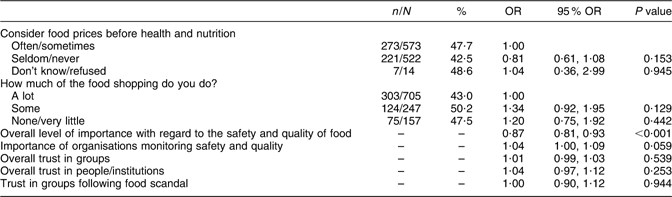
Multivariate analysis of variables associated with respondents consuming less than the recommended servings of fruit per day among a random sample of the adult Australian population, 2009

*Not stated category not reported.
Univariate analysis of demographic variables associated with eating less than the recommended servings of vegetables per day among a random sample of the adult Australian population, 2009

*Not stated category not reported.
Univariate analysis of related food variables and scaled trust variables associated with eating less than the recommended servings of vegetables per day among a random sample of the adult Australian population, 2009

*Not stated category not reported.
Multivariate analysis of variables associated with respondents consuming less than the recommended servings of vegetables per day among a random sample of the adult Australian population, 2009

Univariate analysis of demographic variables associated with eating less than the recommended servings of fruit and vegetables per day among a random sample of the adult Australian population, 2009

*Not stated category not reported.
Univariate analysis of related food variables and scaled trust variables associated with eating less than the recommended servings of fruit and vegetables per day among a random sample of the adult Australian population, 2009

*Not stated category not reported.
Multivariate analysis of variables associated with respondents consuming less than the recommended servings of fruit and vegetables per day among a random sample of the adult Australian population, 2009

*Not stated category not reported.
Discussion
The present results show that broad levels of trust in the community, and in the importance of monitoring food standards, have, in varying degrees, relationships with the consumption of the recommended servings of either fruit or vegetables. Our multivariate modelling indicated that persons who did not eat the recommended number of servings of fruit per day were more likely to be male, aged 35 to 44 years, employed full time or retired, have a low level of education and be less likely to consider the safety and quality of food as important. In terms of vegetable consumption, people who ate less than the recommended number of servings per day were more likely to do the food shopping only ‘some of the time’ and have a high level of trust in groups of people such as immediate family, neighbours, doctors, banks and different levels of government. They were also less likely to consider the safety and quality of food as important or to trust organisations/institutions such as the press, radio and television, politicians and farmers. Interestingly, when the multivariate modelling was undertaken on the combined fruit and vegetable consumption, those who did not eat the recommended servings of fruit and vegetables were more likely to be male and aged 18 to 34 years, and they were also less likely to consider the safety and quality of food as important.
The prevalence of fruit and vegetable consumption in the present study was in line with other Australian research(Reference Pollard, Daly and Binns29–31). Australian and international studies have shown lower consumption of both fruit and vegetables for males compared with females(Reference Schatzer, Rust and Elmadfa32–34), although other studies have shown, as found in our study, that men eat less fruit but not necessarily less vegetables than women(Reference Magarey, McKean and Daniles35, Reference Satheannoppakao, Aekplakorn and Pradipasen36). In terms of education level, many of the studies assessing socio-economic differences associated with fruit and vegetable consumption have shown that the lower educated consume both less fruit and less vegetables(Reference Satheannoppakao, Aekplakorn and Pradipasen36–Reference Riediger and Moghadasian39), although the variable assessing education in our study was significant only in the final fruit consumption model. Somewhat surprisingly, many variables that have been shown to have a relationship with fruit and vegetable consumption did not reach significance in any of our multivariate models. This included household income, where other research has consistently shown that people on lower incomes eat less fruit and vegetables(Reference Lallukka, Pitaniemi and Rahkonen38–Reference Giskes, Turrell and Patterson40). The lack of significance in our study could be the result of a smaller number of income categories although another Australian study has also reported a lack of association between fruit and vegetable consumption and household income(Reference Pollard, Daly and Binns29).
The fact that men who work full time are less likely to eat fruit has also been reported, with the subjective interpretation that eating fruit at a morning tea break, for example, especially in more male-dominated professions, is not seen as ‘cool’(Reference Dumbrell and Mathai41). In terms of health promotion campaigns targeted at specific groups, this could be one area worth exploring. The decrease in fruit consumption of older retired males has also been previously reported(Reference Riediger and Moghadasian39, Reference Appleton, McGill and Woodside42) and again could be a group worthy of specific targeting. Retirement has been shown to result in weight gain, especially in those who had active jobs formerly(Reference Nooyens, Visscher and Schuit43).
The overriding finding of the present analyses was the significance of the variable assessing the level of importance of safety and quality issues, with the odds ratio of this variable significantly decreased in all three models. This means that when buying food, assessing the importance of producers or the shop/retailer, the control of hygiene, knowing the staff personally, knowing the origin of the food, the regularity of local hygiene inspectors, Australian authorities enforcing strict hygienic standards, knowing the shop from previous experience and the food being labelled with full product information were deemed unimportant. These aspects cover the fruit and vegetable supply chain from production to the handling and marketing of the products. It has previously been shown that ‘food safety and quality are among the main consumer concerns’(Reference Kuhar and Juvancic44), but for each of our models showing the lack of fruit and/or vegetable intake, safety and quality were unimportant and highlights an obvious target area. The inclusion of this variable in all three models could conceivably perhaps indicate a complacency or acceptance of the place of food production, possibly highlighting a lack of interest in food overall or a lack of reflexivity or control. While one of the variables that may have measured an interest in food (how much food shopping undertaken by the responders) was significant only in the vegetable model, the other variable (consideration of food prices before health and nutritional aspects) was not significant in either of the multivariate models. Alternatively, this seeming lack of interest in food could be, as argued by Lupton, the result of the geographical diversity of Australia that allows a wide range of food production and a focus on exporting food rather than importing perhaps suspect, fresh food products(Reference Lupton45). Also important in the psyche of Australians is the lack of any major food scare such as those seen in other regions/countries specifically Europe, the UK and China(Reference Van Wezemael, Verbeke and Kugler46). The absence of major food crises in Australia perhaps encourages a lack of importance of safety and quality concerns especially for this group that do not heed current nutritional recommendations.
Included in the final model for people eating less than the recommended servings of vegetables were two somewhat contradictory variables. First, an increase in trust in groups (such as family, neighbours, hospitals, governments, banks) was found. Second, a decrease in trust in people/organisations such as press, radio and television, supermarket chains, farmers and politicians in general was found. If these latter organisations could be deemed ‘scientific experts’ other studies have also reported an overall high level of distrust in scientific experts, government sources and the food industry, although research has also shown that this level of distrust of the ‘scientific experts’ is more common among men(Reference Bleich, Blendon and Adams12, Reference Frewer and Miles17). The lack of trust in government has also been reported(Reference Frewer and Miles17). Previous findings have also reported women and those with higher education levels have more trust in scientific experts(Reference Bleich, Blendon and Adams12). While neither of these continuous variables was related to trust of food per se, it is interesting that those who do not eat enough vegetables have a significantly higher level of trust of the broad community spectrum of society (from family to the medical system to broad levels of government) indicating, perhaps, a willingness to accept these bodies as authoritarian. This finding may also be explained by the fact that respondents may not have been familiar with all of the listed organisations and therefore unsure of whether they trusted them.
Increasing fruit and vegetable consumption relies on many things including a liking of fruit and vegetables(Reference Appleton, McGill and Neville47), cost, supply, access and availability(Reference Caldwell, Kobayashi and DuBow48), taste(Reference Schatzer, Rust and Elmadfa32), current recommendations(Reference Appleton, McGill and Neville47, Reference Kristjansdottir, Bourdeaudhuij and Klepp49), and willingness to change and time pressures(Reference Welch, McNaughton and Hunter50). Although many campaigns focus on both fruit and vegetables as one(Reference Pollard, Lewis and Binns1, Reference Catford51), the present analysis has shown that fruit and vegetables have different factors involved in predicting their consumption. Of the five scores, only one – importance of safety and quality – was reproduced in the alternative multivariate models, although similarities did exist at the univariate level. This again highlights the need for different target messages aimed at increasing fruit and vegetables separately.
We acknowledge several weaknesses in the present cross-sectional study. The self-report nature of the data collection could result in socially desirable responses or problems with recall. The response rate of nearly 41 % is acceptable for this type of survey but the potential for survey non-response bias is acknowledged. Response rates are declining in surveys based on all forms of interviewing(Reference Groves52, Reference Curtin, Presser and Singer53) as people have become more active in protecting their privacy. The growth of telemarketing has disillusioned the community and diminished the success of legitimate social science research by means of telephone-based surveys. Other weaknesses of the study are the lack of validation of the derived scores and the fact that these data elements were collected with a range of other variables that were not included in the analysis. This exclusion of these other variables did not allow for consideration of potential confounders. In addition, the use of dichotomised fruit and vegetable variables based on the recommended intake could be seen as a weakness of the analysis. State and national targets in Australia for increasing fruit and vegetable intake, together with major social marketing campaigns, are based on increasing the actual number of servings rather than the mean number of servings and hence the reason for our dichotomisation of the variables. Notwithstanding these weaknesses, the strength of the study includes the random nature of the sample and the large number and variety of the associated variables.
The present study attempted to incorporate a range of trust-related variables and demographic and socio-economic indicators to help profile those who eat less than the recommended daily servings of fruit and vegetables. In the endeavour to change behaviours, especially in regard to increasing fruit and vegetable consumption, research into a broad range of determinants associated with the behaviours should be coupled with a deeper understanding of the process associated with changing the behaviours(Reference Noar and Zimmerman54). Understanding the complexity of these relationships is challenging but the present research has attempted to highlight some unique findings that may assist in this endeavour. As argued by Willett(Reference Willett14), eating in our Western modern society is an act of trust – trust that those producing the food either directly via farmers or via production methods are ‘providing us with healthy foodstuffs’. While trust is on the causal pathway for behaviour change(Reference Bleich, Blendon and Adams12), knowledge and attitudes about aspects associated with safety and quality of food are, as highlighted by our research, also of importance.
Acknowledgements
This work was supported by an Australian Research Council Discovery grant. The authors have no conflict of interest. A.W.T. participated in the design and co-ordination of the study, gained the funding and drafted the manuscript. J.C. and P.R.W. conceived the design of the study, gained the funding, participated in the co-ordination of the study and were involved in the drafting of the manuscript. J.H. and S.B.M. participated in the design and co-ordination of the study and were involved in the drafting of the manuscript. R.P. participated in the co-ordination of the study, undertook statistical analyses and was involved in the drafting of the manuscript. T.K.G. undertook statistical analyses and was involved in the drafting of the manuscript. The authors acknowledge the dedication and professionalism of the interviewers of Harrison Health Research.



