




1. Introduction
It is commonly thought that up to 80% of a product’s environmental impact is locked in during the early phases of the design process (Yang and Song Reference Yang and Song2006; Waage Reference Waage2007; McAloone and Bey Reference McAloone and Bey2009; Vinodh and Rathod Reference Vinodh and Rathod2010; Ahmad et al. Reference Ahmad, Wong, Tseng and Wong2018), highlighting the importance and urgency of injecting sustainable design thinking into early-stage design. However, designers – referring to engineers, product managers, industrial designers, and other decision-makers – face challenges in incorporating sustainability principles into their design work due to knowledge and experience gaps (Le Pochat et al. Reference Le Pochat, Bertoluci and Froelich2007; Damen et al. Reference Damen, Wang, Matejka and Toh2022). One of the most common sustainable design tools is life cycle assessment (LCA), a technique that measures the environmental impact of a product, service, or system. This technique produces detailed documents on a product’s environmental impact that can serve as decision-making guides for a product, but designers face challenges using these documents due to barriers like technical complexity and lack of time (Le Pochat et al. 2007). Designers are highly interested in greater access to sustainability information (Damen et al. Reference Damen, Wang, Matejka and Toh2022), and data-rich LCA reports can be helpful in a variety of applications if properly understood, including product design, marketing, quantifying key environmental impacts, and setting sustainability policies (ISO 2006).
As AI-inspired and data-driven tools become increasingly present in designer workflows, there is an opportunity to leverage these practices to support the challenges of sustainable design. Though a wealth of sustainability data, including LCA reports, currently exists, designers are not always properly equipped to navigate and leverage this data. AI tools can quickly and efficiently navigate large datasets, present relevant information, interact with subject area novices, and much more. However, designers must grapple with issues like output uncertainty and varying levels of complexity when interacting with AI systems as they continue to evolve (Yang et al. Reference Yang, Steinfeld, Ros’e and Zimmerman2020; Xu et al. Reference Xu, Dainoff, Ge and Gao2023). The effectiveness of adopting AI tools relies heavily on a designer’s mental model of these tools (Bansal et al. Reference Bansal, Nushi, Kamar, Lasecki, Weld and Horvitz2019), or their understanding of how they work (Norman Reference Norman1983, Reference Norman1995), and previous study has shown that designers can develop accurate mental models when using AI tools themselves (Rao, Kwon, and Goucher-Lambert Reference Rao, Kwon and Goucher-Lambert2022). To this end, this article seeks to understand how designers can begin to start thinking about the same issues that life cycle experts consider when engaging with the design process. By utilizing AI-inspired tools, future study looks to facilitate the integration of environmental considerations into the design process, thereby empowering designers to think about the same issues as experts and subsequently leverage this information.
This article supports the knowledge transfer of sustainable design principles by examining existing life cycle experts’ (referred to as experts) practices with designers to understand conceptual areas of importance when using life cycle information. This study aims to enhance the accessibility of sustainable design information for average designers. While LCA has been studied extensively as a method in itself, there has been little work investigating how existing LCA reports may be leveraged as data sources for the design process. As corporate reporting regulations increase and more sustainability reports are generated (Moutik et al. Reference Moutik, Summerscales, Graham-Jones and Pemberton2023), it is crucial to investigate how these pools of data can inform the design of future products.
This study addresses two primary research questions:
-
• RQ1. How do life cycle experts approach the interpretation of information from LCA documents to inform the design process?
-
• RQ2. How can expert strategies be shared to support designers in identifying design-relevant information from LCA documents?
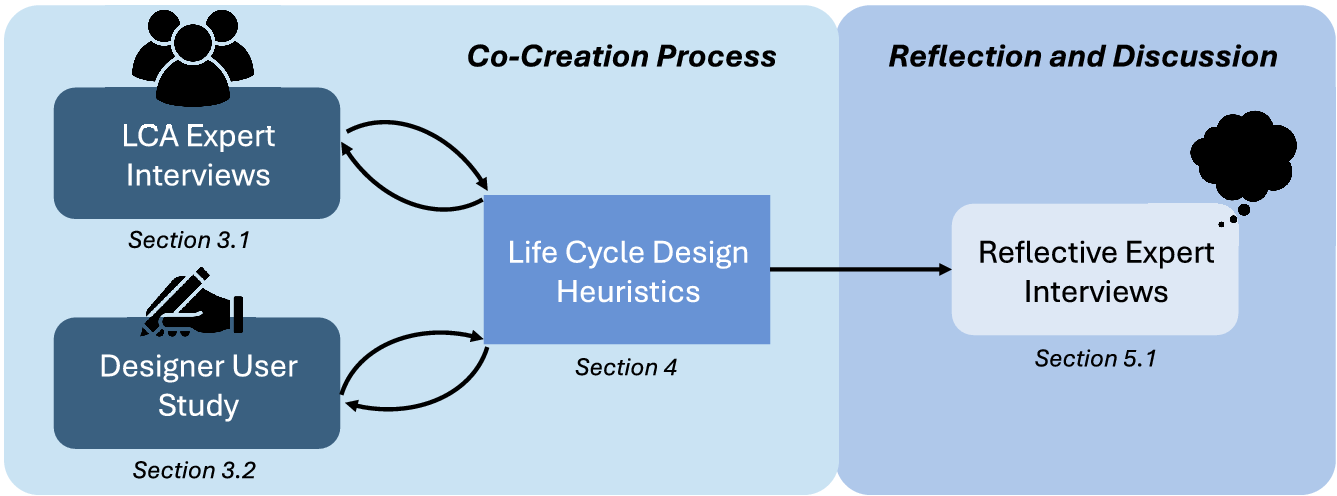
To address these questions, this study aims to understand how experts navigate, extract, and interpret LCA documents for sustainable product design and subsequently test how these practices could work for designers interacting with LCA documents independently. Toward the first aim, semi-structured interviews were conducted with LCA experts, identifying both existing practices and challenges faced when navigating LCA documents. Then toward the second aim, themes from the interviews were used to generate a set of life cycle design heuristics for effectively navigating LCA documents as a non-expert. The heuristics were then tested in a controlled study involving designers, where participants annotated an LCA report according to the provided heuristics. A follow-up reflective study was held with interviews to gain a deeper understanding of the insights gathered. The heuristics proposed in this article seek to both (1) create a mental model for designers to easily navigate a report and (2) support future AI-inspired design tools that serve to quickly extract and share relevant life cycle information with designers. An overview of this study can be seen in Figure 1.
Conceptual overview. On the left, the primary co-creative process is shown, highlighting the integration of knowledge from both experts and designers into the proposed life cycle design heuristics. The right shows the follow-up reflective interviews conducted with experts, contained in the discussion.
This article makes three contributions:
First, it identifies key strategies for effectively communicating life cycle information to designers, presented as life cycle design heuristics.
Second, it describes a set of existing practices from LCA experts that provide practical guidance for integrating LCA principles into the design process.
Finally, it reveals opportunities to co-create life cycle design heuristics that are accessible to non-experts.
2. Related work
This section reviews related works on LCA, LCA in the design process, and knowledge transfer. This study uses expert-to-novice knowledge transfer principles to support future designers and AI design tools in navigating sustainability reports.
2.1. Life cycle assessment
Life cycle assessment (LCA) and life cycle thinking are some of the most commonly taught and employed strategies in eco-design (Guinée et al. Reference Guinée, Heijungs, Huppes, Zamagni, Masoni, Buonamici, Ekvall and Rydberg2011; Faludi and Gilbert Reference Faludi and Gilbert2019). LCA processes create reports following ISO 14040 guidelines, which delineate four key phases: goal and scope definition, life cycle inventory analysis, life cycle impact assessment, and life cycle interpretation (ISO 2006). A great deal of variability may exist between LCA reports given the stakeholders creating the report exert a lot of influence over the report’s contents, including boundaries, level of detail, report structure, data sources, intended use, and more (Miettinen and Hämäläinen Reference Miettinen and Hämäläinen1997; Koj, Wulf, and Zapp Reference Koj, Wulf and Zapp2019). Thus, challenges arise in using and comparing LCA reports, though there have been frameworks developed to standardize the process of reviewing an LCA. For example, Zumsteg, Cooper, and Noon (Reference Zumsteg, Cooper and Noon2012) proposed a standardized technique for conducting systematic reviews of LCAs, which helps summarize and report the main high-level findings of various related LCAs. Many challenges exist in the creation of LCA documents, including data sourcing, transparency, scaling, and uncertainty (Hetherington et al. Reference Hetherington, Borrion, Griffiths and McManus2014). Even simplified LCA processes require a level of expert knowledge around life cycle information and where to make simplifications (Saade et al. Reference Saade, Gomes, da Silva, Ugaya, Lasvaux, Passer and Habert2019). Efforts to include LCA as a design method during early-stage design have proved promising but largely underexplored (Faludi Reference Faludi2014). Despite the number of challenges that surround this process, LCA remains the ‘best framework for assessing the potential environmental impacts of products currently available’ (EU 2003).
Once reports are generated from the LCA process, interpreting the output itself poses many challenges considering the highly technical, complex, and lengthy nature of the reports (Heiskanen Reference Heiskanen2000; Otto, Mueller, and Kimura Reference Otto, Mueller and Kimura2003). Previous study has proposed addressing this using various visualization techniques for improved communication methods (Sala and Andreasson Reference Sala and Andreasson2018; Tensa et al. Reference Tensa, Wang, Harris, Faludi and DuPont2021), though implementing these techniques is not yet widely used. This poses a significant problem for certain populations who may find the information in LCA reports to be useful, but who need help to navigate the document properly. These groups can include product designers, marketing departments, and policymakers. Importantly, making the data contained in LCA and similar sustainability reports accessible to a wider audience, including the various stakeholders listed above, can help overcome many barriers to circular product design faced by businesses and policymakers (Pryshlakivsky and Searcy Reference Pryshlakivsky and Searcy2021; Wang, Burke, and Zhang Reference Wang, Burke and Zhang2022).
2.2. LCA in the design process
The typical product design process contains six stages (planning, concept development, system-level design, detailed design, testing and refinement, and production) (Ulrich and Eppinger Reference Ulrich and Eppinger2016), though the literature remains conflicted on exactly which stage is most important to consider environmental sustainability (Chiu and Chu Reference Chiu and Chu2012; Delaney et al. Reference Delaney, Liu, Zhu, Xu and Dai2022). LCA is often applied as an evaluative tool after a product has been designed and manufactured, often employed in design tasks to assess whether an intervention has successfully improved a product’s environmental impact. While it is valued for its capacity to quantify this impact, it frequently faces criticism in balancing between high complexity and excessive simplification when streamlined (Faludi, Yiu, and Agogino Reference Faludi, Yiu and Agogino2020b) as a design method.
Existing life cycle design tools (i.e., ECODESIGN PILOT, EcoFaire) look to address this by creating platforms that integrate LCA and design. However, they present an array of challenges for designers, including a minimum amount of environmental expertise required, resource constraints at small and medium enterprises (Le Pochat et al. 2007), or lack of analytical depth (Hernandez Dalmau Reference Hernandez Dalmau2015). Suppipat et al. showed that students also faced a variety of challenges in using these tools, from training needs to tool complexity (Suppipat, Teachavorasinskun, & Hu Reference Suppipat, Teachavorasinskun and Hu2021), further highlighting the need for new ways to approach these issues. Marconi and Favi implemented eco-design training initiatives within companies, using extended lectures and assignments to demonstrate that thorough education can significantly advance sustainability objectives when adequate time is allocated (Marconi & Favi Reference Marconi and Favi2020).
While the literature reflects extensive use of LCA as a method used to evaluate designs, little work examines how the output of these LCA processes can be used a source for informing or inspiring future product (re-)designs. With the abundance of existing data and sustainability tools, there is a need to strategically extract relevant information to support data-driven sustainable product development (Montecchi & Becattini Reference Montecchi and Becattini2020; Reich et al. Reference Reich, Ayan, Alaerts and Van Acker2023). This project builds on existing work and seeks to empower designers and future tools in using LCA reports as a design-centric data source.
2.3. Knowledge transfer in engineering design
Knowledge transfer is a critical success factor in engineering design and can take many forms, but is primarily characterized through discussions or face-to-face conversation, trainings, and formalized documents (Mougin et al. Reference Mougin, Boujut, Pourroy and Poussier2015), making LCA reports a viable candidate for knowledge transfer and data-driven design. Expert to novice knowledge transfer has been found to occur in three stages: information seeking, contextual information sharing, and knowledge creation (Deken et al. Reference Deken, Kleinsmann, Aurisicchio, Lauche and Bracewell2012). Ahmed and Wallace observed interactions between subject area experts and novices, and characterized novices’ knowledge needs into 11 categories, including obtaining information, terminology, tradeoffs, what issues to consider, and how to calculate (Ahmed and Wallace Reference Ahmed and Wallace2004). This framework of novices’ knowledge needs is used to build a set of heuristics for designers later in this article. This article presents designers as LCA novices given they often lack formal sustainability training or experience. Developing new sustainability frameworks can incorporate designers’ knowledge needs to efficiently share information with designers and empower them to navigate sustainability reports and integrate findings into their work.
This article specifically looks to investigate knowledge transfer between domain experts and novices. Novices, by definition, have less specialized knowledge than domain experts and thus require structured support when entering a new domain (Sonnentag Reference Sonnentag2000). Experts store knowledge differently than novices – they store and access information in larger ‘chunks’ than novices (Cross Reference Cross2004; Petre Reference Petre2004) and therefore can recognize fundamental principles of a problem, whereas novices tend to focus on surface-level issues. Prioritization and navigation of the design process are facilitated by the principles developed by experts (Lawson Reference Lawson2004; Lawson Reference Lawson2006), and thus a core feature of this study is an attempt to extract and formalize the principles that LCA experts use in their routine work. In doing so, the heuristics present an attempt to emulate the experiential knowledge that experts bring to the table, which can be considered one of the most important distinguishing factors between experts and novices (Deken et al. Reference Deken, Kleinsmann, Aurisicchio, Lauche and Bracewell2012). Previous study has explored embedding tacit knowledge into searchable knowledge graphs (Wang et al. Reference Wang, Goridkov, Rao, Cui, Grandi and Goucher-Lambert2023), potentially aiding less-experienced designers in shaping sustainability during early-stage design decisions using computational support.
3. Research methodology
To address the research questions, a mixed-methods approach was taken. This study follows a traditional human-centered design methodology workflow, where challenges are identified, a solution (heuristics) is developed to address this challenge, and the solution is tested with the target population. The study was approved by the authors’ Institutional Review Board (IRB).
3.1. Expert interview study
First, a semi-structured interview process was conducted with LCA practitioners (n = 7). LCA practitioners worked across a variety of consumer product areas and had experience working with life cycle and product designers. During the interviews, participants were asked about integrating sustainable design practices with LCA data and the main challenges encountered. Then, themes from these interviews were qualitatively analyzed and compiled into a set of heuristics.
3.1.1. Participant information
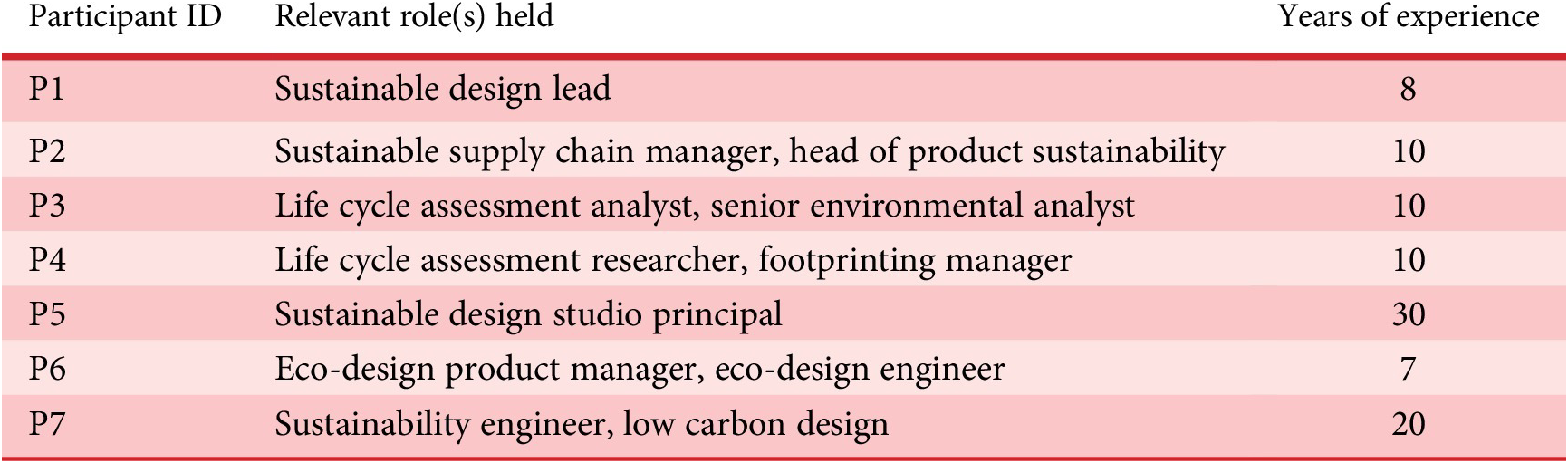
Seven industry professionals with experience as Life Cycle or Sustainability Experts, referred to as experts hereafter, were interviewed. For data reliability and validity, a purposive sampling approach was used (Saunders, Lewis, and Thornhill Reference Saunders, Lewis and Thornhill2009; Merriam and Tisdell Reference Merriam and Tisdell2015), which supports the identification and selection of individuals who are knowledgeable about a specific topic where limited resources exist (Patton Reference Patton2014). LinkedIn was used for recruitment, identifying practitioners with keywords including “life cycle assessment product design” and “lca engineering design.” Selection criteria included that participants must have worked at consumer product companies and been involved in improving the sustainability of designs at their respective companies. Notably, experts had experience with life cycle topics as well as experience interfacing with product designers on these topics. Many experts had previously worked as product designers themselves and thus had perspectives from both an expert and non-expert lens. Experts had a range of 6–20 years of experience in relevant roles (Table 1) and were primarily US-based.
Overview of experts’ experience working in an LCA or sustainable design role
3.1.2. Protocol development
Interview questions were developed to explore experts’ experiences incorporating sustainable design practices into their products, leveraging data from LCA documents, and the primary challenges faced during these processes. The interview protocol was developed iteratively between the research team and sustainable design practitioners. Three versions of the script were prototyped across two sessions with practitioners. Feedback from these sessions shaped the final protocol for data collection.
Interviews were semi-structured and began by introducing the research questions and key information, helping build rapport and establish context. Basic information regarding participants’ work experience and background was collected before moving on to high-level sustainable design questions (e.g., challenges in making design decisions). Then, participants were asked more specific questions about their information retrieval strategies. Questions were purposefully open-ended to encourage additional information to be shared, and follow-up questions were occasionally used to encourage elaboration (Adams Reference Adams2015).
3.1.3. Data collection
All interviews were conducted by the authors remotely on Zoom and lasted between 40 min to 1 h, as 1 h is the reasonable maximum length for a semi-structured interview to minimize interviewer and participant fatigue (Adams Reference Adams2015). Interviews were conducted between October 2022 and March 2023. Participants were informed that their data would be kept anonymous and consented to interviews being recorded. Interviews were then recorded and transcripts were generated for coding.
Experts were asked about their experiences incorporating sustainable design practices into their products, leveraging data from LCA documents, and the primary challenges faced during these processes. A full list of interview questions can be found in the Appendix.
3.1.4. Data analysis
Interview transcripts were coded using Dovetail.com, a qualitative coding platform that allows for collaborative transcription analysis and coding interpretation of interviews. A reflexive thematic analysis process was used, following Braun and Clarke’s iterative process (Braun et al. Reference Braun, Clarke, Hayfield, Davey and Jenkinson2023). This process includes six stages: (1) Familiarization with the data; (2) Coding initial features; (3) Initial theme generation, or clustering of the codes; (4) Reviewing and developing themes; (5) Refining, defining, and naming themes; and (6) Producing the report. First, two researchers with previous experience in engineering design research independently familiarised themselves with the transcripts and then performed a round of initial inductive coding. Duplicate codes were consolidated and a set of initial codes (100) were generated. Third, a set of initial themes (11) were generated by grouping similar codes. Fourth, these themes were revisited and broad patterns were identified. Fifth, themes were grouped into high-level topic areas (5).
3.2. Controlled study with designers
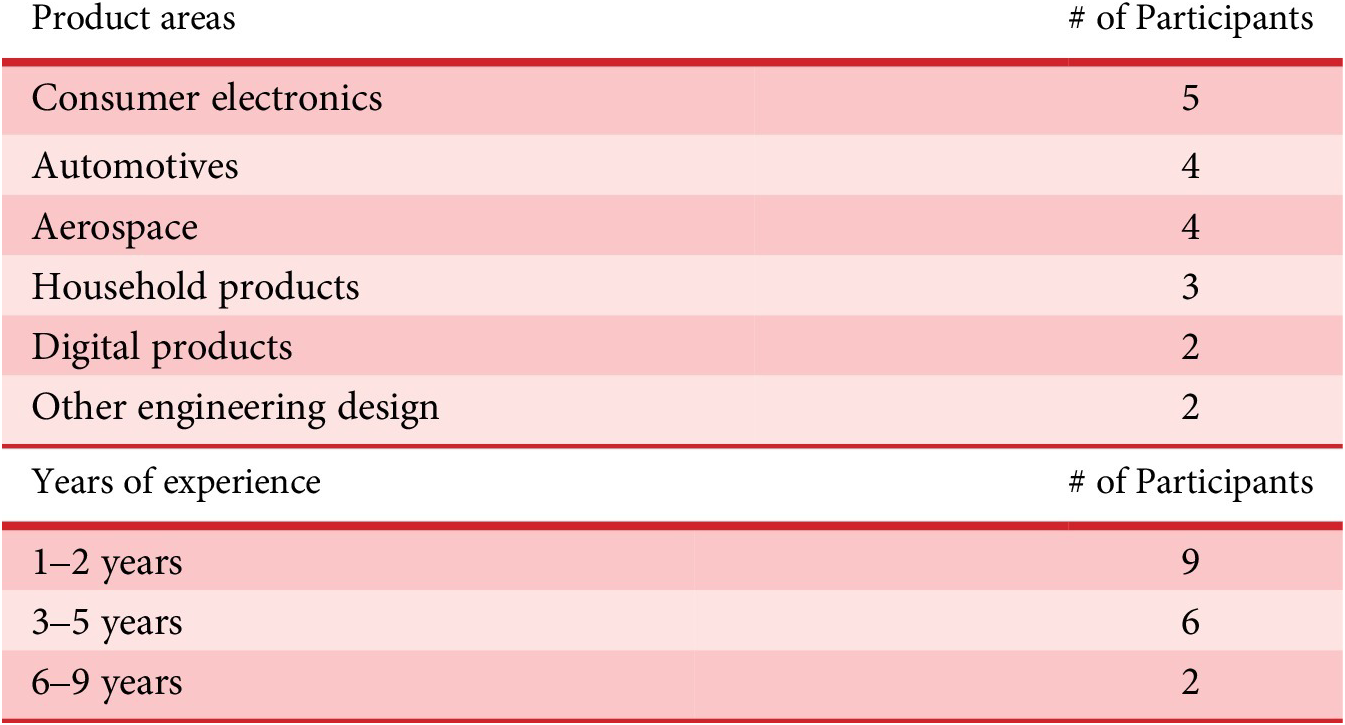
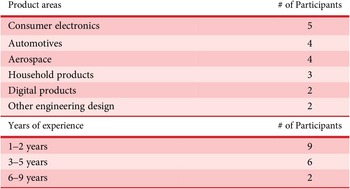
Participants (n = 17) were recruited through university mailing lists to complete the controlled study. These participants all self-identified as designers but were novices in terms of sustainability assessment, particularly with regard to LCA, representing the target audience for the proposed heuristics. This study targets typical product designers lacking formal sustainability training, offering a resource that lowers the barrier to entry. Participants (9 men, 7 women, 1 gender withheld) were graduate students with previous industry experience and had a range of 1–9 years working in a variety of design roles (Table 2).
Overview of participants’ experience working as product or industrial designers. Note that some designers have experience in multiple fields
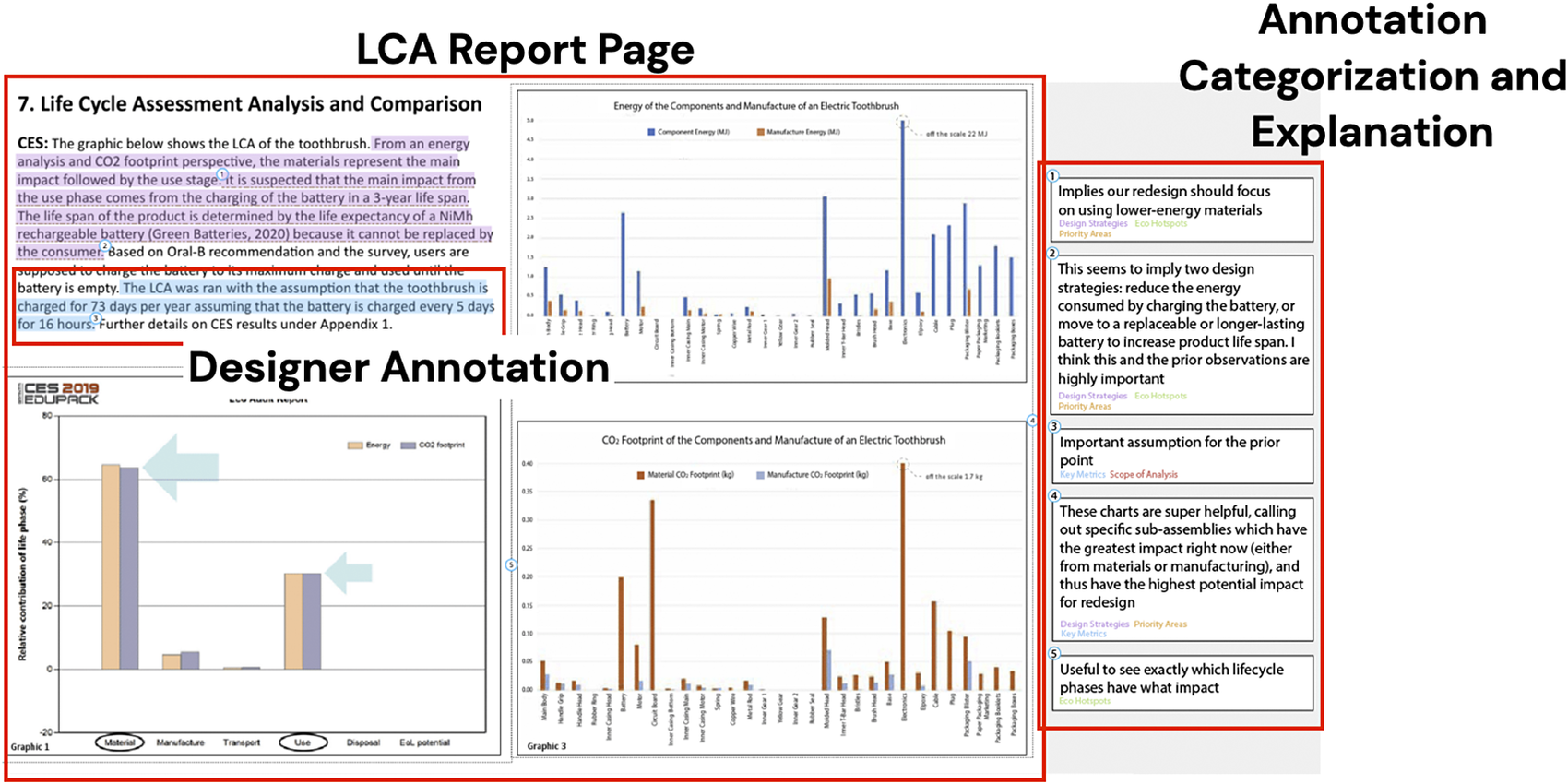
This study was intended to test the design heuristics developed during the expert interviews. Participants were provided with the information in Table 5 and an Oral-B electric toothbrush LCA report (Suarez Reference Suarezn.d.). Though the provided report is not third-party certified, it offers a detailed example of the LCA process and relevant environmental data to aid in the evaluation of the design heuristics. Experts confirmed this report is in line with documents typically shared to communicate LCA findings. The annotate.com platform was used for the user interface, which enables collaborative annotations and categorization on a document. The electric toothbrush was chosen for this study because it is a common household item, avoiding the need for domain-specific knowledge. Additionally, the length of the LCA report (8 pages) would not be overwhelming to subject-area novices.
Participants were tasked with annotating an LCA document to highlight relevant design information. Participants could highlight text or images and tag each annotation with a relevant category (Table 5) as well as an explanation for the given annotation. Participants were given the following prompt to begin the task:
In this task, you are a designer at a company tasked with improving the environmental impact of their electric toothbrush. In order to do so, you are given the attached sustainability report to gather knowledge about existing related products. In this task, you are asked to annotate a sustainability report to highlight relevant design information and strategies. Sustainability experts have identified that the categories below are very important for sustainable design. Please annotate this document according to the following set of directions.
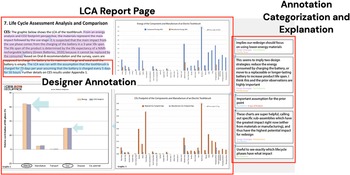
Participants were able to mark information as “other” to allow them to indicate information they found interesting outside of the experts’ lens. An example of the interface containing an annotated page can be seen in Figure 2. A post-task survey was distributed using Qualtrics to collect demographic information and gain insights into participants’ experiences.
Annotation interface used by participants. A page of the provided electric toothbrush LCA report is labeled on the left. On the right are participants’ annotations, with each note corresponding to a numbered section on the left, and tagged with a relevant category from the provided heuristics. Individual annotations are highlighted, as labeled above.
3.3. Reflective expert interviews
Reflective expert interview questions were designed to collect feedback on the life cycle design heuristics. These interviews combined open-ended, semi-structured questions with an interactive rating activity.
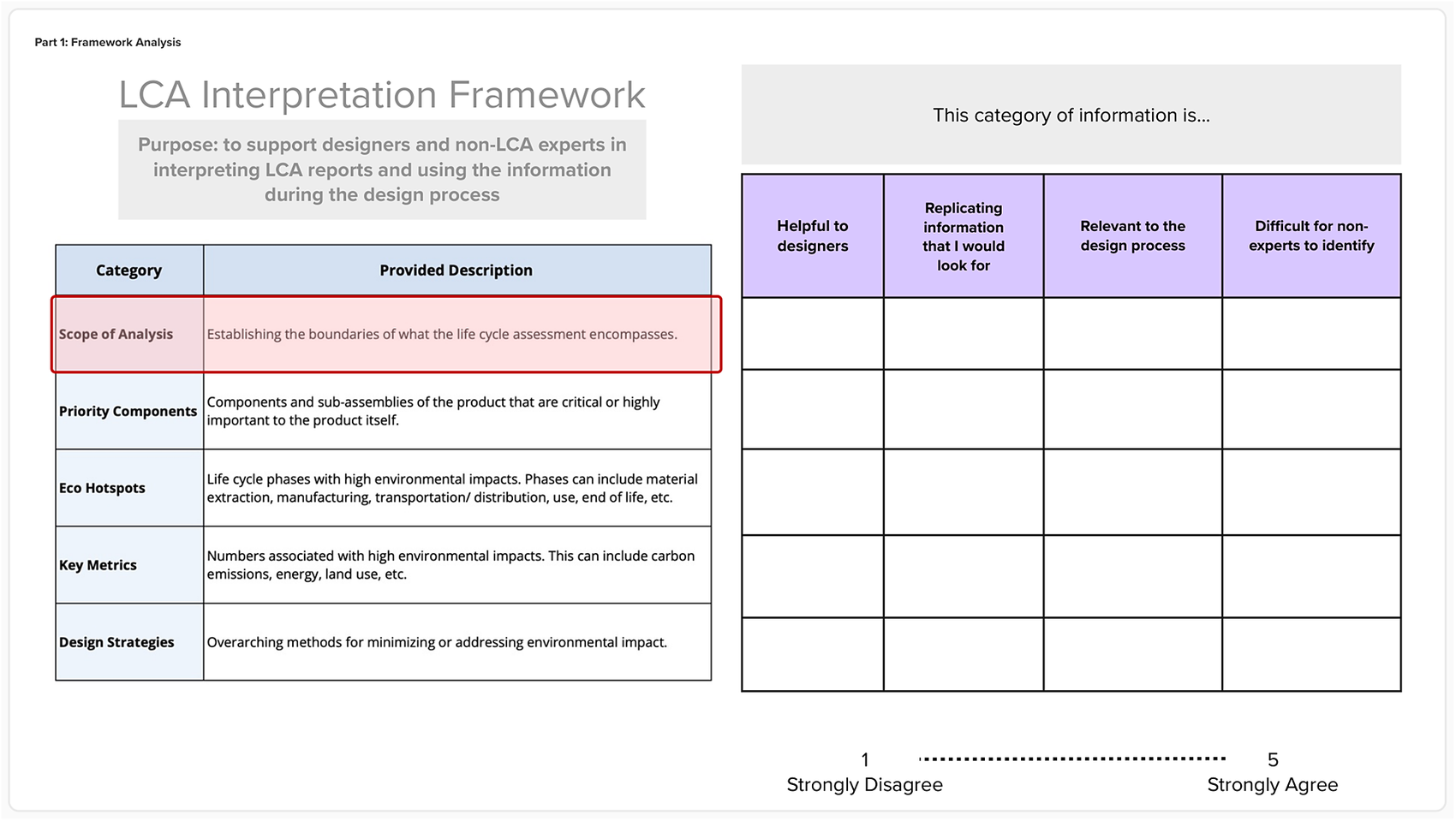
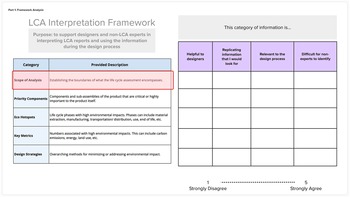
The primary goals of these interviews were (1) to gather feedback on the proposed heuristics and (2) to compare designers’ challenges when using the heuristics with actual expert practices. Experts were guided through the heuristics using an interactive online whiteboard (Mural.com) (Figure 3). Feedback was gathered on whether heuristics were considered helpful for designers, replicating expert practices, relevant to the design process, and difficult for designers. Experts also reviewed challenges faced by designers during the annotation task and discussed potential solutions.
Screenshot from the interactive portion of reflective interviews, where experts were walked through a breakdown of the life cycle design heuristics and asked for feedback. *Note that the label “LCA Interpretation Framework” stems from a prior name for the heuristics.
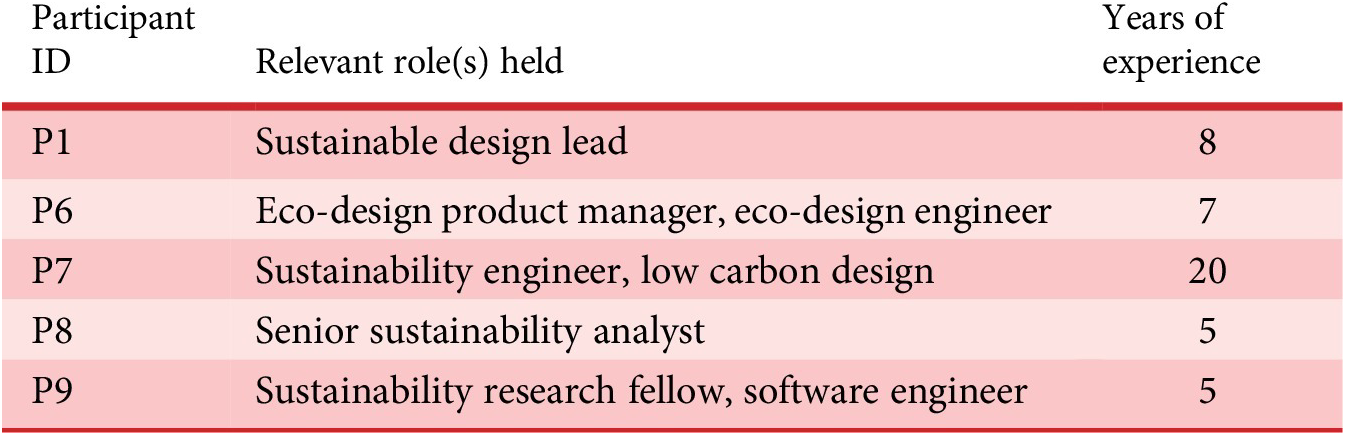
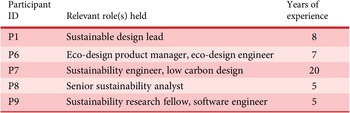
Recruitment followed the same criteria and outreach methods as the initial interviews, resulting in five reflective expert interviews. Three experts participated in both phases, totaling 12 interview sessions across nine LCA experts over the entire study. Participant information for the reflective interview follow-up can be found in Table 3. All interviews, conducted remotely via Zoom in January 2024, lasted between 40 min and 1 h. Zoom transcripts were deductively coded in MAXQDA specifically to capture targeted feedback of the heuristics. Coding within each category was directed at three focus areas: challenges, strengths, and new insights.
Overview of experts’ experience working in an LCA or sustainable design role
4. Results
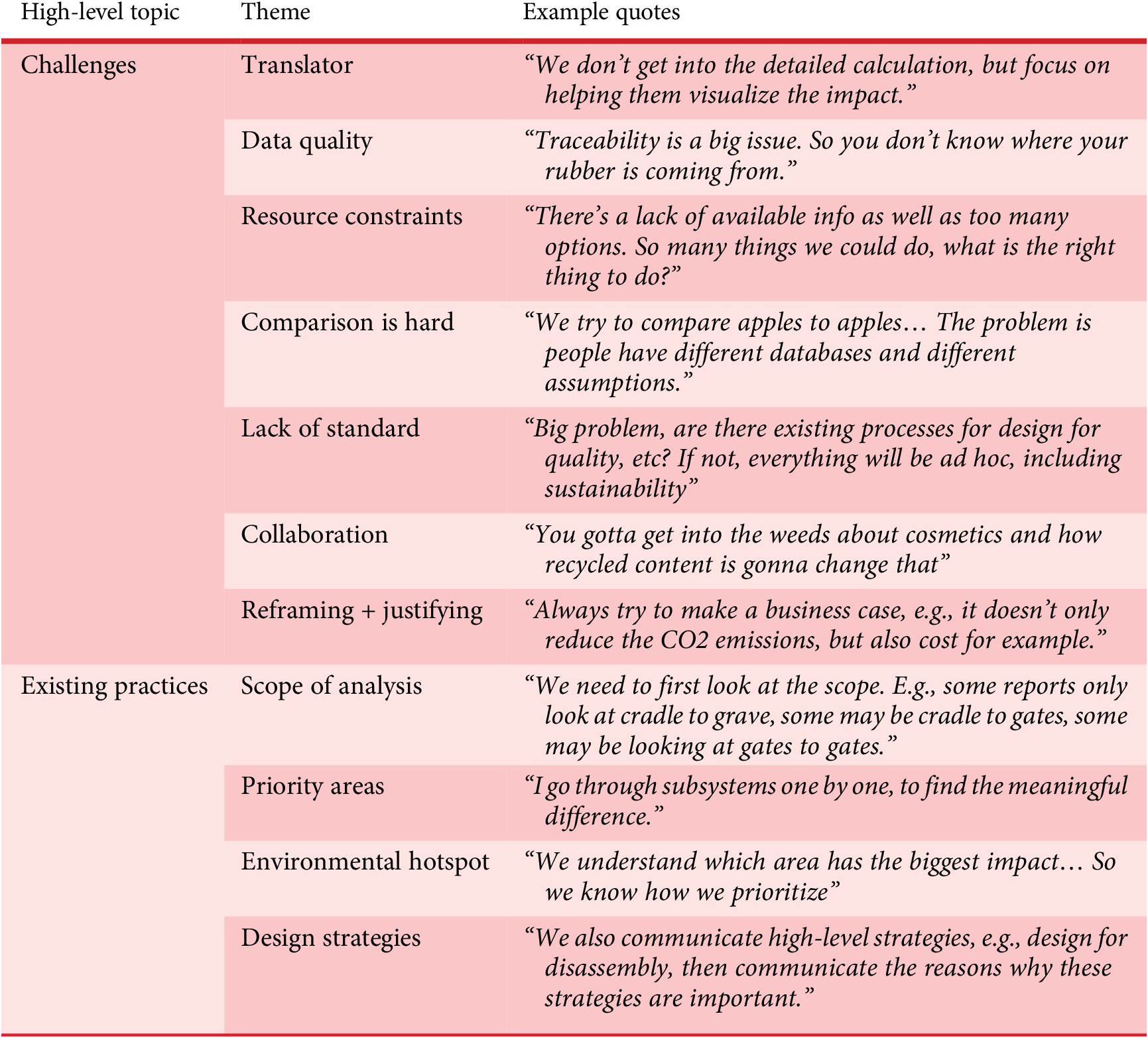
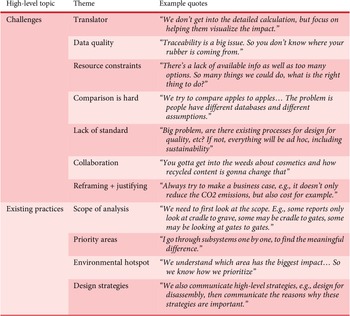
Thematic analysis of the semi-structured interviews surfaced two primary topic areas: expert challenges and existing practices when leveraging life cycle knowledge. A summary of these findings can be found in Table 4. Section 4.1 explores prominent themes from the challenges topic, highlighting current issues as LCA experts interface with designers. Section 4.2 examines how themes from the existing practices topic can be converted into life cycle design heuristics for designers to use and replicate expert practices. A user study with designers was conducted to evaluate their ability to navigate LCA documents using these life cycle design heuristics.
Overview of themes from semi-structured interviews with seven LCA experts on how they use LCA knowledge to support designers
4.1. Expert challenges
4.1.1. Experts play a large role in translating sustainability information
Experts often act as “translators” between LCA documents and the designers they interact with: “We do a lot of translation. [We] help get people to a bar of something they can understand. We do a lot of pre-analysis. ‘This is better in this category. Here’s how you could make a decision.’ So many LCA tools ask how much plastic you’re using and feed into the tool. But product designers look at things in terms of components” (P1). Five of the experts highlighted the importance of effective communication with all stakeholders for conveying crucial sustainability priorities within a company or product. Experts described a variety of techniques used during this translation process, including visualizing relative CO2 impact, simplifying language around sustainability goals, and simply presenting data to increase awareness. Experts can also provide focused support for designers depending on a team’s needs, with one expert describing this process: “Some designers focus on aesthetics, or some designers only focus on function. We walk through [a product] with designers and propose sustainable strategies that can be applied. We help them understand how things affect each design scenario, and we need to understand what designers want to achieve” (P3). In the design field, Efeoğlu and Møller have identified similar challenges around simplifying methods and terminologies when introducing the concept of design thinking to novices and non-designers (Efeoğlu and Møller Reference Efeoğlu and Møller2023), highlighting how existing design practices can be modified to accommodate newcomers to the field. Given design teams’ needs can range in data needed, stage of implementation, level of detail, and more, this study seeks to support this challenge by empowering designers to retrieve, interpret, and use this data themselves.
4.1.2. It is impossible to directly compare information from LCA documents
A primary challenge in leveraging LCA documents during sustainable design is the lack of standardization between reports (Koj et al. Reference Koj, Wulf and Zapp2019). During interviews, experts elaborated on this issue, detailing the different data sources, scopes, and methods that are used when conducting LCAs, making it “very difficult to compare apples to apples” (P2). This creates a conceptual barrier for designers when reading these documents, as the literature shows that subject-area novices need concrete knowledge when entering a new domain (Hinds, Patterson, and Pfeffer Reference Hinds, Patterson and Pfeffer2001). Five experts reported using relative comparisons within one report for extracting key metrics, which requires a baseline of knowledge that has been developed from experience. One expert describes their strategy for these quick comparisons as finding the percent difference between product impacts and drawing out comparisons in the relative (P1). Though these quick comparisons may not be directly relevant or possible for designers to achieve independently, these heuristics serve towards eventually creating an automated framework that can efficiently extract key information from LCA reports and present them to designers or experts alike, ultimately helping bring transparency and providing quick reference points or baselines.
4.1.3. Data transparency and quality remain key obstacles in interpreting LCA reports
Identifying data sources and any databases or software used to conduct the LCA being analyzed is a highly important strategy for maintaining data transparency and determining the quality of a report. Many of the challenges of interpreting an LCA report can stem from understanding the assumptions and data being used to inform the analysis. Quality differences between primary and secondary data can cause large discrepancies in analyses, with one participant highlighting that “primary data [has] a rigor that I feel is not always easy to communicate” (P6). A large element of judging a report (and its underlying quality) comes from experts’ intuition, with little agreement and no established metrics for assessing data quality in LCA reports (Edelen and Ingwersen Reference Edelen and Ingwersen2018). However, by explicitly identifying the tools and databases used to create an LCA, comparisons can begin to be made between products and reports, and a level of transparency is achieved. Identifying data sources of a report can help address doubts designers may have, a challenge one expert highlighted when designers “tend to question the assumptions behind key metrics, and it can evolve into ‘do I believe the data or not’” (P8). Additionally, an element of distrust may be present for designers who read LCA documentation from other companies, given the lack of clarity around methodology.
4.2. Existing practices: life cycle design heuristics
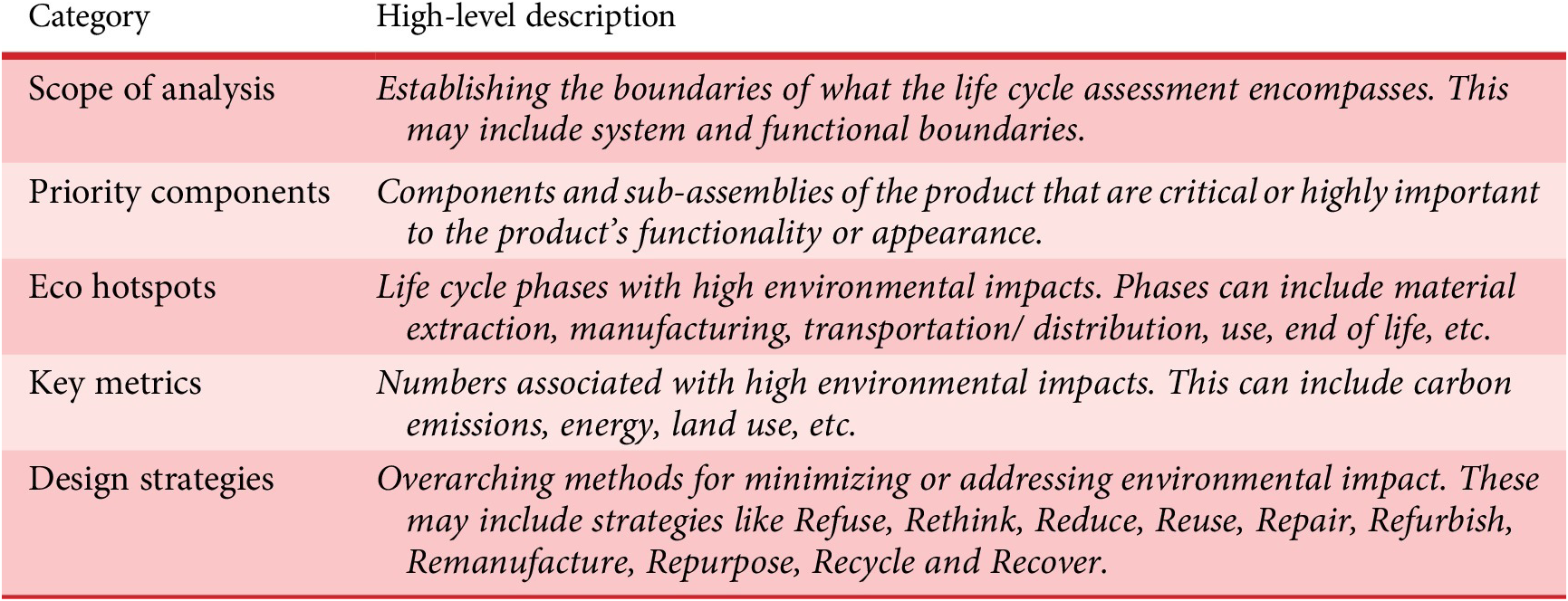
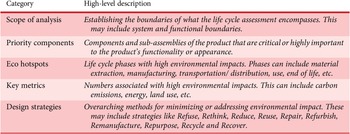
To formalize the principles experts use to navigate these documents, the existing practice themes were distilled into life-cycle-driven design heuristics (Table 5), offering strategies for designers to acquire knowledge from LCA reports during the design process. Section 5 discusses their practical applications.
Life cycle design heuristics, based on interview data. These categories are designed to be provided to designers as an accessible guide to recreating expert knowledge transfer from these documents
Heuristics were created by mapping interview themes with categories that the literature identifies as novices’ knowledge needs when learning from experts: (1) obtaining information; (2) typical value; (3) terminology; (4) trade-offs; (5) how does it work; (6) why; (7) what issues to consider; (8) when to consider issues; (9) how to calculate; (10) design process; and (11) company process (Ahmed and Wallace Reference Ahmed and Wallace2004). Three of these knowledge needs do not correspond to a particular heuristic, but instead are relevant to the larger process being proposed. Specifically, (1) obtaining information, refers to novices needing guidance from experienced designers on how to acquire necessary details. The life cycle design heuristics as a whole are intended to address this need by highlighting information of high relevance within a report. Next, (3) terminology is not covered by a heuristic, but can be addressed by pairing these heuristics with large language models that translate domain-specific terms for designers. Finally, (10) design process, involves understanding the information needed at various stages, such as initial specifications for new designs. This study is positioned to help designers who are already knowledgeable in this process but aim to leverage this information in their product (re-)design.
4.2.1. Identify the scope of the analysis conducted
Six of the seven experts highlighted the major role that understanding the scope being analyzed within an LCA report plays in contextualizing these documents. Experts conveyed that the scope of a document can encompass various features, including assumed product lifespans (cradle-to-cradle, cradle-to-gate, etc.), materials’ sourcing databases, and specific use cases or product assumptions. For example, one expert outlined that understanding that one analysis considers a 3-year product lifespan versus another analysis using a significantly shorter lifespan is crucial for interpreting the presented environmental impacts. Experts highlighted that this was often one of the first steps taken when reading these documents, to help situate the information that is being presented and understand the analysis and takeaways that can be extracted.
The scope of analysis category looks for information that establishes the boundaries of what the life cycle assessment encompasses. This includes system boundaries, like whether a report is looking at the life cycle from cradle-to-cradle, cradle-to-gate, etc., as well as functional boundaries, analogical to a functional unit, which identifies the functionality of the product, service, or process as a quantified unit facilitating comparison across similar studies International Organization for Standardization (2006a, 2006b). Identifying the scope of a report supports a novice’s knowledge needs (Ahmed and Wallace Reference Ahmed and Wallace2004) by providing context on (9) how to calculate relevant comparisons using information like functional units, inventory databases, or even product lifespan, which may facilitate comparisons to products with similar characteristics.
4.2.2. Break the LCA down into priority components
Three experts shared that breaking down a product into its various subsystems and components is a fundamental step taken when reading an LCA document. One expert began their description of parsing through an LCA with “I’ll go through the subsystems one by one to make meaningful differences” noting the need to understand where boundaries appear within products. This enables experts to gain a better understanding of the product and analyze it for high-impact changes. By aligning design goals such as reducing emissions, meeting specific standards, or minimizing environmental impact with actionable impact areas within a product itself, experts can provide a concrete understanding of design changes to designers. To support designers in approaching LCA documents in a way that is both intuitive and similar to expert practices, priority components were included as a heuristic.
The priority components category guides the user to look for components and sub-assemblies of the product that are critical or highly important to the product’s functionality or appearance. To enhance a reader’s understanding of a product, it is helpful to break it down into important components, thereby improving clarity on functionality, similar to the purposes of product teardowns (Lefever and Wood Reference Lefever and Wood1996; Samuelson and Scotchmer Reference Samuelson and Scotchmer2001; Raja and Fernandes Reference Raja and Fernandes2007). This is especially useful when considering how to improve a product’s environmental impact, where process-oriented interventions (considering a single life cycle stage at a time) are easier to implement than product-oriented design interventions (Keoleian Reference Keoleian1993). Additionally, knowing a product’s architecture has been identified as an important factor that connects design and environmental decision-making (Chiu and Chu Reference Chiu and Chu2012). Thus, by guiding a designer to break a report down by components, they can follow a process that is both typical to the design process and also aids their understanding of the product itself, meeting an additional knowledge gap faced by domain novices, (5) understanding how something works (Ahmed and Wallace Reference Ahmed and Wallace2004).
4.2.3. Recognize where environmental hotspots appear
All experts agreed that identifying carbon emissions hotspots and other key environmental metrics is essential when sharing LCA information with designers. Experts use these insights to help raise awareness of product areas needing attention, similar to existing tools that identify problems rather than solve them directly (Ritzén Reference Ritzén2000). To address this, eco hotspots were included as a heuristic to pinpoint life cycle phases with high impacts, guiding targeted design changes. Experts noted this essential element of educating the designers they interact with: “Everyone in the engineering team should understand top five drivers of [high environmental impact] in the same way that they understand the top five drivers costs” (P7). Identifying eco hotspots helps designers spot trends and areas for improvement, equipping them to address existing issues and anticipate potential challenges in the product’s life cycle.
The eco hotspots category guides the user to identify life cycle phases with high environmental impacts. Phases can include material extraction, manufacturing, transportation/distribution, use, end of life, and so forth. Identifying when high impacts are occurring in the life cycle can allow designers to focus the design process in a more directed manner. Identifying these eco hotspots supports a designer’s knowledge needs (Ahmed and Wallace Reference Ahmed and Wallace2004) by providing context on both (7) what issues are going to be important to consider and (8) when to consider particular issues, pointing designers to which life cycle areas need to be prioritized to efficiently address a product’s environmental impact. Then, these insights can translate to more specific Design for X guidelines (i.e., design for manufacturing, design for repairability, etc.) that designers can focus on.
4.2.4. Track key metrics linked with eco hotspots
Key metrics highlight the numerical values of the environmental impacts and show a quantitative measure of values that could be adjusted. Experts stressed the importance of grounding their insights in real data: “If we’re setting targets for engineering and product design, maybe it’s based on information and data, or else they’re just a guess… We spend a lot of time understanding our current products. Let’s see what’s the impact of our current products. And why is that impact the way it is? If we start there and say, here’s our footprint right now, we can do these 20 things on the next [product version], we can have this amount of change. If you base it on data, this establishes credibility, which is hard for sustainability” (P7). Identifying these metrics within an LCA helps designers learn from other products and find improvement areas in their designs. Key metrics are related to eco hotspots, diving deeper into the numbers that are causing phases where high impacts are occurring and attempting to support challenges that arise around identifying driving factors of high emissions. By breaking down the heuristics into eco hotspots and key metrics, the process becomes more actionable, thus forcing an explicit decomposition approach for designers, which is typically adopted by experts when approaching a problem (Ho Reference Ho2001; Liikkanen and Perttula Reference Liikkanen and Perttula2009). These metrics also offer designers relative benchmarks or rules of thumb for future development conversations.
The key metrics category guides the user to identify numbers associated with high environmental impacts. This can include carbon emissions, energy, land use, and so forth. Key metrics highlight the numerical values of these impacts and show a quantitative measure of values that could be adjusted. Identifying key metrics helps situate what (2) typical environmental impact values might be for a certain product area, as well as quantitatively highlight some of the (4) trade-offs present in a product, both areas that support novices’ knowledge needs (Ahmed and Wallace Reference Ahmed and Wallace2004). Experts note that when working with designers, they almost exclusively use carbon emissions as a metric for discussing product improvements.
4.2.5. Propose design strategies for implementation
All experts emphasized that proposing relevant design strategies and best practices is a key approach for communicating with designers to enhance sustainability, beyond merely identifying high-impact areas. These strategies can vary widely, from specific material recommendations to promoting modular design and more. An essential part of the expert-designer interaction is to identify high-impact areas with potential for novel design changes. This often leads to discussions around circularity and end-of-life strategies in experts’ experiences, with dialogues that often unearth new ways to approach designing a product through a sustainable lens. Given its central role in expert communication, design strategies were included as a heuristic in this framework.
The design strategies category guides the user to identify overarching methods for minimizing or addressing environmental impact. These may include strategies like Refuse, Rethink, Reduce, Reuse, Repair, Refurbish, Remanufacture, Repurpose, Recycle and Recover. Apart from sharing where high-impact areas appear, one of the main methods mentioned by all experts to support their designs is proposing design strategies and best practices that increase sustainability. The 9R framework of circular economy (CE) is included in the category definition as a concise but comprehensive example of various CE strategies that may appear (or may improve future versions of) a product (van Buren et al. Reference Van Buren, Demmers, Van der Heijden and Witlox2016; Kirchherr, Reike, and Hekkert Reference Kirchherr, Reike and Hekkert2017; Potting et al. Reference Potting, Hekkert, Worrell and Hanemaaijer2017). It is also critical that experts share (6) why these strategies are important to implement to encourage serious adoption, echoing knowledge transfer themes proposed by (Ahmed and Wallace Reference Ahmed and Wallace2004). This category not only surfaces design strategies but also helps highlight the connections between design decisions and environmental impacts.
4.3. Designer user study
These curated life cycle design heuristics were presented to designers in a controlled need-finding study, to understand if and how designers can navigate LCA documents in a guided fashion.
The 17 participants generated a total of 538 annotations during the task. Table 6 contains the distribution of annotations per category. Note that participants were allowed to tag a single annotation with more than one category, so totals are higher than the overall number of annotations. 74% of the annotations highlighted about 20 words, indicating participants were seeking specific details or identifying short phrases/sentences within the document.
Number of participant annotations per category

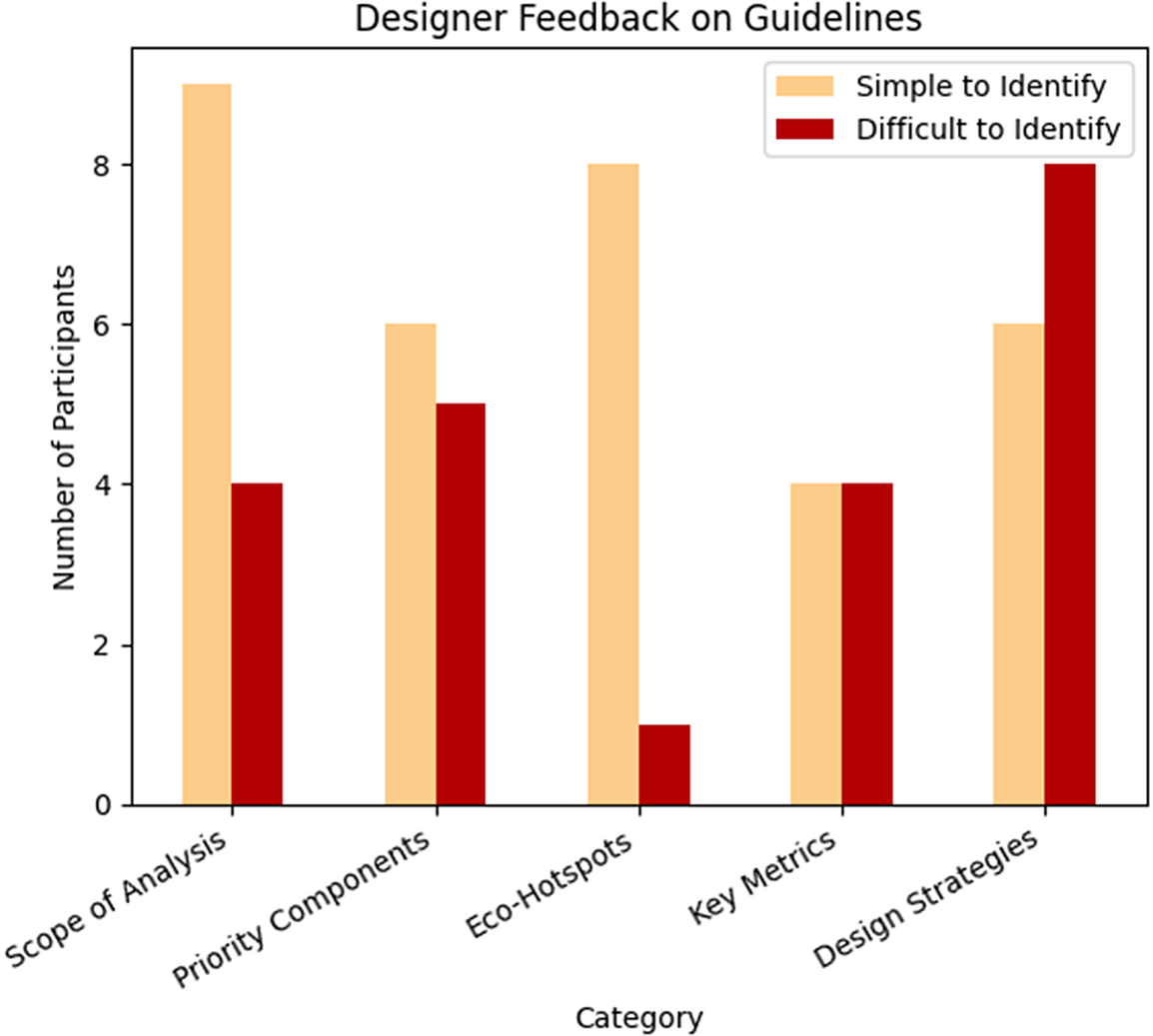
During the post-task survey, participants were asked to indicate which heuristics they perceived as simple to identify information for and which heuristics they perceived as difficult to identify information for. The resulting feedback can be seen in Figure 4. Note that participants could identify multiple categories as easy or difficult. Scope of analysis and eco-hotspots were most ranked as simple, indicating areas of designer confidence. The other three categories faced more mixed reviews, highlighting areas where descriptions could be edited or additional support may be needed. All but two participants indicated the heuristics helped guide them through the document, with one stating that they “would like to make similar categories for myself in the future when annotating documents” (D9).
Participants were asked to indicate which categories were simple versus difficult to identify.
4.3.1. Strengths exhibited by designers when identifying life cycle knowledge
As rated in the post-task survey, over half of the participants indicated that identifying the scope of analysis was simple, explaining that it was “the most straightforward” (D17) due to clear labeling. This aligns with the annotations created by participants themselves – scope of analysis was the only category where over 75% of participants identified the same piece of information. Given that outlining the scope of a report is one of the core elements of an LCA report, this data should explicitly appear in all reports and provide readers with clear “statements about how and the study was done and assumptions made or omitted” (D4). This indicates that designers were able to independently identify the context of the document they were reading.
Additionally, almost half of the participants indicated eco hotspots as simple to identify, explaining that it was clear “the different ways the product can cause harm to the environment during different phases of the product life cycle” (D11). Almost half of the participants identified the key life cycle phases of the electric toothbrush (materials production and disposal details), though they were not asked to probe deeply into the causes of these impacts, which may be explored in future work. This aligns with expert accounts, who anticipate this content is relatively straightforward to find, but more difficult to dig deeper into. With the support of life cycle design heuristics, designers can identify different areas of the life cycle that may need focus, though additional support could be provided in educating designers on the life cycle stages to attain higher consensus here.
4.3.2. Challenges faced by designers when identifying life cycle knowledge
Participants highlighted a variety of challenges during the need-finding study, bringing light to areas where increased support is needed. Overall, future study should facilitate designer access to life cycle information with added context around explaining numerical metrics, while supplementing insights with additional relevant design strategies.
Key metrics are often buried in charts which can be difficult to understand. Participants surfaced challenges in understanding charts and figures during both the post-task survey and annotation explanations, though they could often recognize these were areas of importance. Designers voiced that they “didn’t fully understand the meaning of the graphs” (D15) and that key metrics were “buried in the charts which were hard to read” (D3). Additionally, one participant indicated that they were not sure how they would “change a design based on [the presented] numbers” (D9), concurring with the experts interviewed who stated that design decisions can be made without knowing these specific numbers. This feedback is supported by the literature around novice knowledge needs, specifically the support needed for clarifying terminology and considering typical values of a measure (Ahmed and Wallace Reference Ahmed and Wallace2004). To add context and strengthen understanding around these figures, further tools should provide background or additional data to elucidate the key takeaways from provided charts and enable designers to use this data in their own work.
It is difficult to decide how to prioritize the relevance of a product’s components. It was noted by both experts and designers that there are challenges when deciding which elements in the report were most important, especially when addressing the category priority components. One expert stated: “When the word priority comes in, people struggle to identify what is a priority because it’s subjective” (P1). Similarly, a designer noted in the post-task survey: “[priority components] required some judgment on my part to decide what could be considered ‘important’ to the product/strategy” (P17). During the annotation task, the most annotated text that was tagged under priority components was marked by 50% of participants (LCA text: The LCA will consider these components: handle, head, charger, replaceable heads, and packaging), though these encompass the entire product and do not indicate any component focus. Though this problem was encountered in the task, practical applications of these heuristics anticipate designers using data from LCA reports of products they are familiar with, which may lend intuition into which product elements attention should be directed toward.
Design strategies can be hard to identify in a report. Participant feedback on identifying design strategies was mixed. There was relatively high consensus when identifying design strategies, the most-annotated text that was tagged under design strategies was marked by 70% of the participants. Notably, this LCA contained an eco-design-specific analysis of the product, which not all LCA reports may contain. However, participant ratings showed almost half of the participants delineated this category as difficult to identify, while 35% described this category as simple to identify. Those who found the category more straightforward noted that the report contained a specific section on various eco-design strategies. On the other hand, those who found the category difficult described the category as vague and “ambiguous because we don’t know which strategy will eventually be adopted to reduce the environmental impact without reducing the efficiency of the product” (P12). The feedback indicates that the category was too abstract for many designers to use, which was one reason the definition of the category was ultimately expanded in the final version of the heuristics. Specifically, the definition now includes a reference to the 9R framework, which holds specific, yet high-level sustainable design strategies (note: the first version of the heuristics used the simpler description of “Overarching methods for minimizing or addressing environmental impact”). Finally, participants noted the higher level of complexity associated with this category: “Some strategies were good at lowering environmental factors but then would increase cost or have a downside elsewhere” (D4). Participants recognize the tradeoffs associated with many potential eco-design strategies, providing a space to begin these conversations in design teams and ground decisions on real product data.
5. Discussion
An inductive research process was combined with an annotation user study to co-create a set of life cycle design heuristics informed by both experts and designers. In this section, a follow-up reflective interview study is conducted with LCA professionals to gather feedback and integrate expert knowledge back into the co-creation process. Examples are also provided to demonstrate how these heuristics can be applied in practice.
5.1. Reflective expert interviews
A second round of expert interviews was conducted as a reflective exercise to gather feedback on and refine the created heuristics, integrating expert insights back into the co-creation process.
5.1.1. Reflective interview feedback
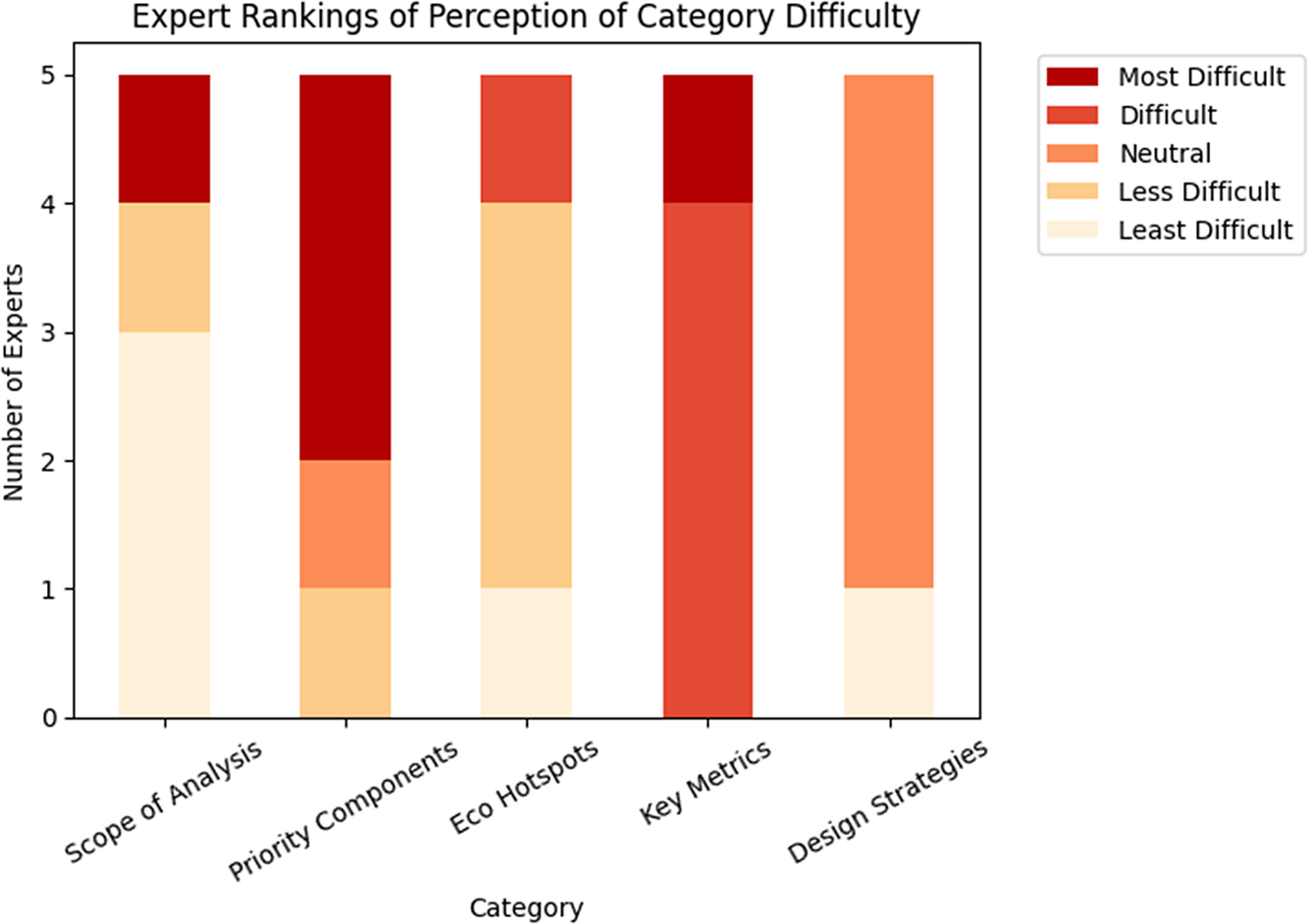
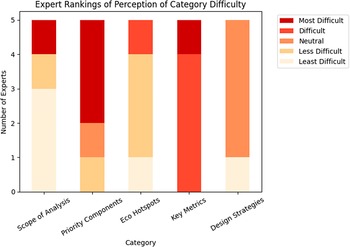
During these interviews, experts were asked to rank the heuristics on (1) how difficult they perceive it would be for designers to find that type of information and (2) how much time they predict would be needed to explain the information within a given category. These criteria were chosen given the goal of this study is to provide quick and accessible life cycle information to designers. Results can be seen in Figure 5. Notably, categories like priority components and key metrics stand out as needing increased levels of attention and support, where experts saw themselves bringing in external sources of data to supplement design support when needed. This aligns with designer feedback during the annotation task and indicates areas where data-driven support tools can be augmented.
Ranking which heuristics experts expect designers to have the most difficulty identifying.
5.1.2. Scope of analysis
Four of five experts agreed that identifying this information would be helpful for designers in navigating these reports, with one expert stating that this would “help them set the stage for what is necessary or what the priorities in terms of sustainability need” (P1). The one expert who rated this category of information as less helpful for designers noted that this is high-level knowledge that is not immediately actionable during the design process. However, identifying the analysis boundaries is intended to “explain what is included” (P8) in the report and to explicitly create a context for designers who may otherwise have no frame of reference for these documents. Four experts indicated that identifying information within this category would be the most straightforward of all heuristics, considering the straightforward nature of this information and that reports typically outline these characteristics explicitly.
5.1.3. Priority components
Four of five experts agreed that identifying this information would be helpful for designers in navigating these reports, with many stating that identifying sub-components of products “are things that designers are doing already, probably in a different format” (P1). Not only is this highly relevant to how designers already approach problems, but navigating a report by priority components helps enable smoother communication between stakeholders: “the communication gets easy. [It becomes] focused, directed to high priority items, and also points to where it makes financial sense to go after those high priority items” (P6). Notably, experts shared that despite its high importance, this category would be one of the most difficult for designers to identify. This was due to a variety of reasons, including that “when the word priority comes in, people struggle to identify what is a priority because it’s subjective” (P1) and that certain reports may not contain the level of granularity desired for analysis, especially if reading an external-facing report from another company (P7). Supporting this category of information with external data from sources like bill of materials (BOMs) may improve the ease of identifying this type of knowledge.
5.1.4. Eco hotspots
Feedback showed all experts found this category helpful for designers, though to varying degrees. Experts agreed that this is where many reports shine, and that “identifying the areas where impact is done is probably the second largest impact thing you can do as a designer to mitigate your largest culprit of impact. So, [for example] maybe it just means changing your manufacturing location to shorten your distribution network” (P1). It was noted that while this information may be relatively straightforward to identify within the report, it may be more difficult to dig deeper into the why of the high impacts in a given life cycle phase: “I think it’s sometimes a little broad to be helpfuli… like, if I’m told that materials are the most impactful area, then I gotta go ask a bunch of questions to figure out where it actually is coming from” (P8). These heuristics hope to serve as a starting point for designers interested in engaging with these reports, and future study looks to understand and formalize interaction flows as experts probe deeper into reports to unearth low-level causes of high environmental impacts.
5.1.5. Key metrics
Feedback on this category showed mixed opinions: identifying key metrics can highlight the “low-hanging fruit” of components or phases to focus on. However, multiple experts noted that knowing these values is not necessary to the design process and that a designer “can do everything that [they] can do to make something sustainable without knowing this number” (P1). In a similar vein, it was noted that quantitative metrics like this are often “overcomplicated” by LCA reports, which may simply confuse designers. Though it is recognized that knowing the exact numeric values associated with impacts like high carbon emissions may not be absolutely necessary during the design process, it is kept as one of the heuristics for use in future automated knowledge extraction applications, where AI tools can quickly identify these metrics and contextualize them for designers.
5.1.6. Design strategies
This category was rated as helpful for designers, given the ultimate goal of many designers is to identify and implement actionable ways to improve future designs. Challenges in this category may arise in two areas however: (1) design strategies of a product may not be present within a report itself and (2) design strategies may not be “as actionable as you want, but it’ll point you in the right direction” (P7). In cases where these design strategies may not be explicitly present in a report, external data sources may supplement these reports, whether through direct examples or eco-design frameworks. Delaney and Liu identify 25 environmental factors that are implemented by sustainable design professionals across various stages of the design process, which could provide a concrete way to provide design-stage-specific design strategies when missing from reports (Delaney et al. Reference Delaney, Liu, Zhu, Xu and Dai2022). Overall, offering clear guidelines to designers (and future tools) for identifying relevant strategies in these reports opens up the opportunity to understand how the data within these reports can be linked to both past and future design decisions.
5.2. Using the heuristics in practice
The heuristics developed from expert interviews can provide designers with mental models for engaging with LCA documents and facilitate automated knowledge extraction through computational tools. The information contained in these reports can ultimately support redesigning existing products or gathering inspiration from similar products, especially in data-driven contexts.
To the authors’ knowledge, this is one of the first studies investigating the use of LCA reports as a data source for the design process. Because early-stage design lacks well-defined product parameters, conducting a full LCA is often impractical. Previous study has investigated using a machine-learning-based approach to connect LCA metrics to product attributes (Wisthoff et al. Reference Wisthoff, Ferrero, Huynh and DuPont2016). While that work focused on quantifying the connection between a product and its environmental impact, the heuristics presented in this study focus on how designers can interpret and apply existing life cycle information to the design process. This approach supports several goals outlined for future sustainable design methods and tools (Faludi et al. Reference Faludi, Hoffenson, Kwok, Saidani, Hallstedt, Telenko and Martinez2020a), including accessibility for non-experts, data-driven approaches, integration with existing workflows, task-specific focus, and cost-effectiveness.
5.2.1. Providing designers with a mental model of how to approach these documents
Mental models are representations of how individuals make sense of systems they interact with (Norman Reference Norman1983, Reference Norman1995). Previous study has shown the importance of shifting mental models within design to embrace sustainable practices and fundamentally shift how designers consider and incorporate these principles into their work (Vanasupa et al. Reference Vanasupa, Burton, Stolk, Zimmerman, Leifer and Anastas2010; Adams et al. Reference Adams, Kelley, Applegate, McNichol and Russell2018; Moore, Agogino, and Goucher-Lambert Reference Moore, Agogino and Goucher-Lambert2023). This was a recurring theme during the initial interviews, where experts repeatedly stressed the need to prioritize sustainability within the design process: “If you don’t put a priority on sustainability then it gets pushed down the list. This needs to be emphasized to designers” (P1). The heuristics proposed in this study seek to enable this prioritization of sustainability by making existing data more accessible. There is currently a lack of frameworks or tools for enabling designers to read and understand life cycle reports, making the task highly overwhelming for designers. One expert described this gap: “We don’t have any framework to consider this [process] at this moment. If you don’t have any intention to [implement life cycle thinking], especially from the traditional industrial design, and product design education, there’s no topics on this” (P9). Without formal sustainable design training, implementing life cycle principles proves difficult, leaving many to avoid doing so altogether.
The life cycle design heuristics support designers by outlining topic areas that they may expect to find within reports and consequently providing a structured way to both think about and navigate key insights contained in LCA reports. This represents a starting point in making life cycle data accessible to help educate and empower designers in their daily work. By merging key life cycle principles with established expert-to-novice knowledge transfer needs, these heuristics contribute to shaping and reinforcing designers’ mental models of data-driven sustainable design.
5.2.2. Enabling automatic knowledge extraction of LCA documents
The heuristics and findings from this article may serve to support future AI-assisted tools that automatically extract relevant information from LCA reports and share them with designers (or any interested stakeholders). Specifically, natural language processing (NLP) techniques and large language models (LLMs) are well-suited to the task of document interpretation. These heuristics could be used to build a chatbot similar to ClimateQ&A, a tool designed to distill expert-level knowledge into easily digestible insights about climate science (Luccioni, Baylor, and Duchene Reference Luccioni, Baylor and Duchene2020). This tool integrates a ChatGPT API with data scraped from Intergovernmental Panel on Climate Change (IPCC) reports to make climate science more accessible to everyone, and a similar tool could be greatly beneficial to decision-makers who can benefit from LCA report data. Given the similar motivation of this work, using this infrastructure could quickly provide this information in a user-friendly interface. The ability to quickly probe a report and compare amongst multiple reports may provide a route for facilitating the extraction of key life cycle insights for experts and non-experts alike. Prior study has explored how different sustainability-centric LLM prompting techniques may elicit relevant information from sustainability reports (Goridkov, Wang, and Goucher-Lambert Reference Goridkov, Wang and Goucher-Lambert2024), creating a framework for interacting with this information through the power of LLMs.
This also addresses a challenge that arose during expert interviews: there is a need to simplify or translate jargon from these documents. Large language models may have the capability to translate the domain-specific language used in LCA documents, providing a unique and powerful solution to addressing this major concern. These models can help provide context around terminology that may be specific to LCA, sustainable design, circular economy, or any other relevant, specific topics that appear within these reports (Kirchherr et al. Reference Kirchherr, Reike and Hekkert2017; de Oliveira et al. Reference de Oliveira, Lopes Silva, Puglieri and Saavedra2021). This could allow for deeper integration of life cycle topics into the design process, facilitating the use of additional life cycle indicators that are commonly calculated during an LCA. Implementing the findings from this study with automated computational tools can provide a structured way for future tools to support designers and present key findings in a user-friendly and intuitive manner. The life cycle design heuristics create high-level search topics for any language models that analyze input LCA and sustainability reports, and future study may examine what interactive information search flows arise when designers use these tools. Overall, using these heuristics as a conceptual framework for a sustainability database offers promising new ways for building scalable and accessible knowledge structures.
6. Future study and limitations
This study created a set of LCA-based life cycle design heuristics and built a foundation for a scalable, searchable system that can provide sustainable design principles to designers. Despite the limited number of experts interviewed, the data gathered was rich as it was sourced from highly trained experts who are limited in number but very experienced. A key limitation of the user study was that designers only had access to the proposed heuristics, potentially shaping their approach. Future research should compare this framework against more general design guidelines to better assess its unique impact. Another limitation in LCA interpretation remains, given an expert’s role in identifying the accuracy and validity of an LCA report. Though the heuristics do not replicate the intuition of an LCA expert, they can streamline report examination and comparison for experts and non-experts alike.
This study could be expanded in many ways, including using other sustainability documents, like product passports (Reich et al. Reference Reich, Ayan, Alaerts and Van Acker2023), EPDs, or additional LCA reports, to ensure findings hold across fields and report styles. In particular, EPDs, which were created as a communication vehicle for products’ environmental performances (ISO 2010; Del Borghi Reference Del Borghi2013), hold great promise for supporting data-driven sustainable design thanks to their product category rules, which connect and standardize reports in particular areas. Additionally, implementing the heuristics across a variety of LCA reports can help provide quick comparisons between reports, offering a method for normalizing products (Gabriel et al. Reference Gabriel, Rodŕıguez, Gaha, Mio and Favi2023) and informing design decision-making (Zhang et al. Reference Zhang, Hähnlein, Mei, Englhardt, Patel, Schulz and Iyer2024).
Though the “design strategies” category in the presented heuristics uses the 9R framework as an introductory example of eco-design strategies, these heuristics could be customized and augmented with alternative eco-design principles (EDPs), drawing upon research that correlates specific EDPs with market success in different product categories (Maccioni, Borgianni, and Pigosso Reference Maccioni, Borgianni and Pigosso2019). These heuristics may be particularly valuable in redesigning existing products or drawing inspiration from similar products in data-driven contexts. Prior study suggests that designers often abstract lessons from existing products to enhance their own designs (Eckert, Stacey, and Clarkson Reference Eckert, Stacey and Clarkson2000), reinforcing the role of these heuristics in early-stage ideation and innovation. Exploring how designers integrate these heuristics into their workflows will provide further insights into their effectiveness. Making rich sustainability documents accessible to designers will support a future of data-driven sustainable design processes.
7. Conclusion
While life cycle assessment (LCA) reports are a key form of sustainability documentation, their technical structure and terminology make them difficult for designers to use effectively without expert support. This study used a mixed-methods approach to bridge this gap, beginning with interviews of LCA practitioners (n = 7) who regularly collaborate with designers. These experts described their role as translators: conducting pre-analysis, engaging stakeholders, and tailoring sustainability strategies to designers’ needs. Insights from these interviews informed the development of five life cycle design heuristics intended to support non-expert extraction of relevant information from LCA documents.
To explore the heuristics’ practical use, a controlled study with designers (n = 17) was conducted. Participants annotated LCA reports using the heuristics and were able to identify meaningful content, especially regarding the scope of analysis and environmental hotspots. However, interpreting quantitative metrics, such as carbon emissions, remained a challenge. A follow-up reflective interview study with experts (n = 5) rated these heuristics as valuable for designers, with certain areas, such as eco hotspots and design strategies, requiring additional exploration within the document.
These findings highlight the need for future tools to contextualize technical data and strengthen support around metric interpretation and strategy application. The heuristics developed here offer not only a mental model for designers approaching LCA documents but also a conceptual foundation for AI-assisted tools that automate the extraction of design-relevant insights. These tools could enhance the usability of LCA data for both experts and non-experts, ultimately promoting more informed and sustainable product redesign. This study marks a step toward democratizing access to sustainability knowledge in design practice.
Acknowledgments
This study is based on preliminary research presented at the 2023 International Conference on Engineering Design (Goridkov et al. Reference Goridkov, Ye, Wang and Goucher-Lambert2023). The authors would like to thank the LCA practitioners for their time and insights.
Financial support
This material is based upon work supported by the National Science Foundation Graduate Research Fellowship Program under grant no. 2146752. Any opinions, findings, and conclusions or recommendations expressed in this material are those of the authors and do not necessarily reflect the views of the National Science Foundation.
Appendix
Initial Interview Questions
-
1. Can you describe your background, role, and responsibility?
-
2. When in the design process do your life cycle knowledge come in?
-
3. How do you identify the high-level priority areas on sustainability for your product?
-
4. What are your main challenges when you make design decisions on sustainability?
-
5. Imagine you work at a transportation company. If you were given this LCA as a reference for your designs, how would you use it or navigate it?
-
(a) How would you look for information?
-
(b) What kind of information is useful to you?
-
(c) Why is this information useful to you?
-
(d) Is this useful to you if you do not work at a scooter company? (i.e., if you worked at an electric car company instead)
-
-
6. Where do you find relevant sources of information to help make sustainable design decisions?
-
7. What’s your strategy to extract information from those sources?
-
8. How did you determine if information is relevant to your product?
-
9. Who do you transfer your sustainability knowledge to? And how?
-
10. What documents do you share with the designer?
-
11. How would you improve the process?
Reflective Interview Questions
-
1. (If previously interviewed) Can you please give a brief overview of your roles within the LCA and sustainability fields, including how long you have worked in them?
-
2. (If not interviewed previously) Can you describe your background, role, and responsibility within the LCA and sustainability fields?
-
3. (If not interviewed previously) When in the design process do your life cycle knowledge come in?
-
4. Whiteboard activity Please rate each area on the Likert scale below for the following: helpful for designers, replicating what I (as an expert) would do, difficult for designers, and relevant to the design process.
-
5. Whiteboard activity Rank the categories by which ones are hardest for designers to understand. (I.e., typically require additional explanation) Why?
-
6. Whiteboard activity Rank the categories by the time you would spend explaining them to designers. Why?
-
7. At a high level, is there any content that you would add/delete/modify to this framework?
-
8. Are there other relevant aspects of an LCA Report that we did not cover?
-
9. Whiteboard activity Does this [designer feedback displayed] reporting match your experience in daily work?
-
10. If faced with the challenges [presented by designers], what steps do you take to solve them?
-
11. What additional data is needed to supplement these reports?
-
12. Where do you see the opportunities for using AI tools in this space?




 Open access

