Poor diet is a key risk factor for a range of health problems including excess weight and related disorders such as type 2 diabetes and CVD( 1 ). High intakes of fast food and sugar-sweetened beverages (SSB) are major contributors to poor dietary quality among young people( Reference Northstone, Smith and Cribb 2 , Reference Lachat, Nago and Verstraeten 3 ), with a recent study using data from thirty-six countries reporting that 51·3 % of adolescents consume fast food at least once per week( Reference Braithwaite, Stewart and Hancox 4 ). Fast food is characterized by large portion sizes and high energy, salt, sugar and saturated fat contents, and is often consumed with SSB( Reference Bowman, Gortmaker and Ebbeling 5 ). SSB are responsible for the largest proportion of refined sugar intake in 11–18-year-olds( 6 ) and, similar to fast food, contribute to weight gain( Reference Tedstone, Targett and Allen 7 ). As a critical transition period during which unhealthy diets may become established and track into adulthood( Reference Craigie, Lake and Kelly 8 , Reference Mikkila, Rasanen and Raitakari 9 ), adolescence provides a window of opportunity for intervention.
In addition to personal and social characteristics( Reference Mazarello Paes, Hesketh and O’Malley 10 ), the food environment, which is commonly characterized as the ‘number, type, location, and accessibility of food outlets such as grocery stores, convenience stores, fast food restaurants, and full-service restaurants’( Reference Glanz 11 ), has emerged as a key contributor to dietary behaviour( Reference Engler-Stringer, Le and Gerrard 12 – Reference Black, Moon and Baird 14 ) and excess weight( Reference Fitzpatrick, Datta and Henderson 15 , Reference Williams, Scarborough and Matthews 16 ). The food environment may influence dietary behaviours through structural differences in availability and access to components of healthy and less healthy diets. In one study, adolescents were more likely to self-purchase from fast-food restaurants or convenience stores when they lived or attended school in neighbourhoods characterized by a high density of such stores( Reference He, Tucker and Gilliland 17 ). Food retailers may also provide visual and olfactory cues provoking the desire to purchase and eat certain foods( Reference Shier, Nicosia and Datar 18 – Reference Wansink 21 ), a mechanism which may be even stronger when energy-dense foods are promoted since young people tend to have a general preference for such foods( Reference Drewnowski 22 ). A high concentration of similar food retailers may also be indicative of a more price-competitive market, thereby decreasing the cost of certain foods compared with others. This may be important for adolescents, who tend to be price-sensitive given their restricted financial means and who are less likely than adults to weigh the nutritional implications of their poor dietary choices against price considerations( Reference Khan, Powell and Wada 23 ). The dominant category of food establishments in a given environment may also reflect local market demand for particular food types and relate to the normalization of certain dietary behaviours( Reference Clary, Matthews and Kestens 24 ).
In the light of these hypothesized mechanisms, policy makers see the potential in intervening in the food environment to improve diet and reduce obesity( Reference Sallis and Glanz 25 ). This is despite equivocal evidence for an association between the food environment and young people’s dietary behaviours( Reference Engler-Stringer, Le and Gerrard 12 , Reference Caspi, Sorensen and Subramanian 13 ). While some studies have found that the density of fast-food restaurants or convenience stores around the home was positively associated with young people’s purchase( Reference He, Tucker and Gilliland 17 ) and intake of fast food( Reference Timperio, Ball and Roberts 26 – Reference Longacre, Drake and MacKenzie 28 ) or SSB( Reference Jennings, Welch and Jones 29 – Reference Davis and Carpenter 31 ), others have not( Reference He, Tucker and Gilliland 17 , Reference Shier, Nicosia and Datar 18 , Reference Van Hulst, Barnett and Gauvin 32 ). In one study that investigated proximity rather than density, Skidmore et al. found that living further away from a fast-food restaurant or convenience store was associated with less frequent consumption of sugary drinks( Reference Skidmore, Welch and van Sluijs 33 ). Studies of fast-food retailer availability in the school neighbourhood have tended to report null associations with fast-food( Reference Timperio, Ball and Roberts 26 , Reference Van Hulst, Barnett and Gauvin 32 , Reference Svastisalee, Pagh Pedersen and Schipperijn 34 , Reference Buck, Bornhorst and Pohlabeln 35 ) and SSB intake( Reference Laska, Hearst and Forsyth 30 , Reference Van Hulst, Barnett and Gauvin 32 , Reference An and Sturm 36 , Reference van der Horst, Timperio and Crawford 37 ), although school density and proximity to fast-food restaurants have been found to positively relate to fast-food intake and SSB consumption( Reference Davis and Carpenter 31 , Reference Cutumisu, Traore and Paquette 38 ).
Previous research on adolescents has focused primarily on the effect of the food environment in the home neighbourhood and to a lesser extent the school neighbourhood( Reference Engler-Stringer, Le and Gerrard 12 ). Young people spend most of their time either at home or in school, making these two settings central to their daily lives and activity spaces. Despite this, studies have rarely quantified the effect of exposure to both settings considered together( Reference Timperio, Ball and Roberts 26 , Reference Van Hulst, Barnett and Gauvin 32 , Reference An and Sturm 36 , Reference Barrett, Crozier and Lewis 39 ), hampering exploration of the cumulative impact of multiple environmental exposures occurring across the day that may affect diet. A second limitation is an almost exclusive focus on environmental exposures based upon the presence of specific types of food retailers in a given area (i.e. absolute availability) and less consideration of measures of relative availability, where exposure is defined as the number of specific types of food retailers expressed as a proportion of all food establishments in an area or as the ratio of healthy to unhealthy food outlets( Reference Engler-Stringer, Le and Gerrard 12 , Reference Williams, Scarborough and Matthews 16 ). Unlike absolute measures, relative measures characterize an individual’s simultaneous exposure to a wide array of food retailers from which to purchase food( Reference Clary, Matthews and Kestens 24 ). Relative measures thus account for the co-location of healthy and unhealthy food outlets, providing an indication of local food retail diversity, and have been found to predict dietary behaviours more consistently in adults( Reference Clary, Lewis and Flint 40 – Reference Mason, Bentley and Kavanagh 42 ).
In the present paper we explore the associations between the home and school neighbourhood food environments, considered separately and together, and high consumption of fast food and SSB using both absolute and relative exposure measures. We hypothesized that: (i) a high availability of fast-food restaurants and convenience stores in the home and school neighbourhoods considered separately would be associated with a higher consumption of fast food and SSB; (ii) the availability of fast-food restaurants and convenience stores in the home and school neighbourhoods considered together would be more strongly associated with fast food and SSB consumption than availability in each setting taken separately; and (iii) associations with relative measures would be stronger than with absolute measures.
Methods
Data collection
Data came from wave 3 (n 3089) of the Olympic Regeneration in East London (ORiEL) Study, a prospective cohort study of adolescents and their parents which evaluated the health impacts of urban regeneration following the London 2012 Olympic Games( Reference Smith, Clark and Fahy 43 ). Adolescent participants were recruited from twenty-five randomly selected secondary schools in four boroughs of East London, UK: Tower Hamlets, Hackney, Barking and Dagenham, and Newham. Year 9 students (aged 13–15 years) completed a self-administered paper-based questionnaire in class time under researcher supervision. Data collection ran from January to July 2014. Full details on study recruitment and data collection are described elsewhere( Reference Smith, Clark and Fahy 43 ).
Measures
Fast-food and sugar-sweetened beverage intakes
Weekly frequency of fast-food intake was based on two questions adapted from earlier studies( Reference Timperio, Ball and Roberts 26 , Reference Wardle, Sutton and Jarvis 44 , Reference Pereira, Kartashov and Ebbeling 45 ): (i) ‘How often do you eat takeaways or fast food at home?’ and (ii) ‘How often do you eat takeaways or fast food away from home?’. Examples of typical sources of fast food were given (Pizza Hut, Burger King, Subway, McDonald’s, Perfect Fried Chicken). These questions were found to have good internal reliability in a sample of young adults( Reference Pereira, Kartashov and Ebbeling 45 ). Five response options were available: ‘never or rarely’, ‘less than one day a week’, ‘2 to 3 days a week’, ‘4 to 6 days a week’ and ‘every day’. Responses to each question were dichotomized as fast food consumed ≥2–3 d/week and <2–3 d/week( Reference Wansink 21 , Reference Cutumisu, Traore and Paquette 38 , Reference Pereira, Kartashov and Ebbeling 45 ). We also analysed fast-food intake regardless of where it was consumed by comparing participants who ate fast food ≥2–3 d/week at home or away with less frequent consumers. SSB intake was assessed with the question ‘How often do you drink fizzy drinks?’ with five possible responses: ‘never’, ‘rarely’, ‘at least once a week’, ‘once a day’ and ‘more than once per day’. SSB intake was dichotomized as ≥1 time/d and <1 time/d( Reference Van Hulst, Barnett and Gauvin 32 ). Fast food and SSB outcomes were analysed separately.
Availability of fast-food restaurants and convenience stores
Data on food businesses (full name, address and category of food retailer) were extracted from local authority registers of the four study and adjacent boroughs for the same time period as the individual-level data were collected. In the UK, all food businesses are obliged by the Food Standards Agency to register with their local environmental health authority 28 d prior to opening and to inform the authority of any status changes or closures( Reference Lake, Burgoine and Greenhalgh 46 ). Food establishments were classified using the following fifteen mutually exclusive categories: chain supermarkets; independent supermarkets; discount retailers; ethnic-specific supermarkets; affiliated franchise stores (e.g. Spar, CostCutter); convenience stores Type A (mini-markets selling fresh fruits and vegetables); convenience stores Type B (newsagent, tobacconist or confectioner); meat and fish shops; fruit and vegetable shops; other specialist food stores; bakeries; full-service restaurants; chain fast-food restaurants, independent fast-food restaurants; and coffee shops and sandwich bars. Food retailers that were not assigned a retailer type in the register were incorporated in the existing classification using store name and visual appearance in Google Street View. Fast-food restaurants encompassed independent or multi-premises restaurant businesses offering foods and drinks in a self-service manner to eat in, or by collection or delivery to take away; while convenience stores were defined as small stores selling a limited range of foods. In a validation study, food services data which included fast-food restaurants showed high positive predictive value (PPV=0·96; 95 % CI 0·94, 0·98) when compared with contemporary street photography from Google and Bing search engines (D Lewis and S Cummins, unpublished results).
Residential, school and food business addresses were geocoded using a Python script which matched reported addresses with authoritative address location data provided by the Ordnance Survey Address Layer 2 database( 47 ). Home and school locations were used as anchors to create 800 m pedestrian road network buffers. A distance of 800 m corresponds approximately to a 10 min walk and has previously been used to study environmental correlates of young people’s dietary behaviours( Reference Timperio, Ball and Roberts 26 , Reference Laska, Hearst and Forsyth 30 ). For each buffer, we computed the number of (i) chain and independent fast-food restaurants, (ii) convenience stores (both types as described above) and (iii) all fifteen types of food establishments combined. For the combined buffer, the numbers for the home and school buffers were summed but avoided double counting within any spatial overlap. Using these metrics, absolute availability measures were computed as the number of (i) fast-food restaurants or (ii) convenience stores in each buffer. Relative availability measures were defined as the proportion of all food establishments that were fast-food restaurants (i/iii) or convenience stores (ii/iii)( Reference Mason, Bentley and Kavanagh 42 , Reference Bridle-Fitzpatrick 48 ). Availability measures were treated as continuous variables to allow comparison with other studies( Reference Lamb and White 49 ).
Covariates
Individual-level covariates considered for inclusion in the models were based on previously published work in the field and included age (continuous), sex (male/female), ethnicity (White UK/Black/South Asian/Other) and having free school meals (yes/no). Residential neighbourhood disadvantage was considered a potential confounder and operationalized as the 2015 relative income deprivation index categorized into quintiles based on the London distribution for the lower super output area in which the home address was located. Residential neighbourhood disadvantage was not found to be associated with exposures and outcomes in bivariate analyses, so was excluded from subsequent analyses.
Analyses
Out of 3089 participants, between 17·5 and 18·5 % had missing data on one or more of the dietary outcomes, 14·0 % did not have residential exposure measures, 2·3 % were missing free school meals information and 0·9 % had missing data for ethnicity. Missingness patterns were assessed and missing data were imputed under a ‘missing at random’ assumption using the multivariate imputation using chained equations method( Reference Carpenter and Kenward 50 ). The imputation model included all variables from the final models along with the auxiliary variables BMI Z-score (continuous) and time lived in the neighbourhood (more v. less than 1 year). A burn-in period of twenty iterations was specified and a total of thirty imputed data sets were produced after 600 iterations. Diagnostic checks were performed by comparing the distributions of observed and imputed values and examining trace plots for chain convergence( 51 ).
We used generalized linear models with Poisson distribution and log link function to perform the regression of fast-food intake v. fast-food restaurant availability measures, and of SSB intake v. convenience store availability measures. Poisson regression with robust standard errors was preferred over logistic regression since it provides unbiased estimates of the adjusted relative risk when outcomes are highly prevalent (>10 %)( Reference McNutt, Wu and Xue 52 ). Individual-level models were fitted since school-level clustering was found to be minimal (intraclass coefficients ranging from 0·01 to 0·05). Crude and adjusted relative risks (RR) and 95 % confidence intervals were estimated comparing high with low consumers of fast food or SSB. Analyses were performed using the statistical software package Stata version 15 (2017) on the complete imputed data set (without deleting imputed outcomes) as recommended when estimating relative risks( Reference Sullivan, Lee and Ryan 53 ).
Results
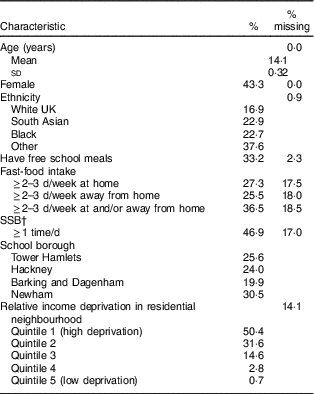
Table 1 provides means and 95 % CI for participants’ individual-level characteristics based on the imputed data sets. Girls comprised 43·3 % of the imputed samples, which were 16·8 % White UK, 22·9 % South Asian and 22·3 % Black. A third (33·3 %) of participants received free school meals. About a quarter of the sample consumed fast food ≥2–3 d/week at home (27·3 %) or away (25·7 %), while 36·7 % frequently consumed fast food at and/or away from home. Nearly half (47·0 %) of participants reported drinking SSB ≥1 time/d (Table 1).
Individual-level characteristics for 3089 adolescents aged 13–15 years from the Olympic Regeneration in East London (ORiEL) Study, January–July 2014Footnote *

SSB, sugar-sweetened beverage.
* Descriptive statistics are for the imputed data sets.
† SSB intake approximated with intake of fizzy drinks.
Food environment characteristics for the imputed data sets are presented in Table 2. There were on average 11·5, 10·0 and 19·6 fast-food restaurants in home, school and combined neighbourhoods, respectively. Expressed as a proportion, fast-food restaurants represented between 21 and 25 % of all food establishments. There were on average 11·1, 11·6 and 20·6 convenience stores in participants’ home, school and combined neighbourhoods, which accounted for 28 to 31 % of all food establishments in these settings (Table 2).
Food environment characteristics for 3089 adolescents aged 13–15 years from the Olympic Regeneration in East London (ORiEL) Study, January–July 2014Footnote *

* Descriptive statistics are for the imputed data sets.
† Absolute availability is the number of fast-food restaurants or convenience stores in a given buffer.
‡ Relative availability is the proportion of all food establishments that are fast-food restaurants or convenience stores in a given buffer.
Results from regression models for the association between the absolute availability of fast-food restaurants and convenience stores in the home, school, and combined home and school neighbourhoods and fast-food or SSB intake are presented in Table 3. For all outcomes, estimates from both unadjusted and fully adjusted models controlling for age, sex, ethnicity and free school meals approximated the null value.
Risk ratios (RR) and 95 % CI for the association between absolute measures of the food environment and high fast-food or sugar-sweetened beverage (SSB) intake among 3089 adolescents aged 13–15 years from the Olympic Regeneration in East London (ORiEL) Study, January–July 2014

Statistically significant estimates (P<0·05) are indicated in bold.
* Models are adjusted for age (continuous), sex (female/male), ethnicity (White/Black/South Asian/Other) and free school meals (yes/no).
† Reference category is <2–3 d/week.
‡ Reference category is <1 time/d.
Table 4 shows results for the association between relative measures of the food environment in each setting and high intake of fast food or SSB. Associations between exposure to fast-food restaurants in the home and combined home and school neighbourhoods and high fast-food intake were in the expected, positive direction, but none of the fully adjusted models reached statistical significance. The proportion of fast-food restaurants around school was inversely associated with fast-food intake, albeit non-significantly so. An increased proportion of convenience stores in all three settings was associated with higher SSB intake, with results reaching statistical significance for the home neighbourhood (RR=1·45; 95 % CI 1·08, 1·96) and the combined home and school neighbourhoods (RR=1·69; 95 % CI 1·11, 2·57).
Risk ratios (RR) and 95 % CI for the association between relative measures of the food environment and high fast-food or sugar-sweetened beverage (SSB) intake among 3089 adolescents aged 13–15 years from the Olympic Regeneration in East London (ORiEL) Study, January–July 2014

Statistically significant estimates (P<0·05) are indicated in bold.
* Models are adjusted for age (continuous), sex (female/male), ethnicity (White/Black/South Asian/Other), and free school meals (yes/no).
† Reference category is <2–3 d/week.
‡ Reference category is <1 time/d.
Sensitivity analyses
We ran several sensitivity analyses to test model robustness. Results of analyses of food environment measures computed for buffers of 400 and 600 m did not differ qualitatively from those presented here, save for the relative availability of convenience stores around home which was not significantly associated with SSB intake, while the school neighbourhood availability was (RR=1·30; 95 % CI 1·13, 1·50 and RR=1·36; 95 % CI 1·13, 1·64 for the 400 and 600 m buffer, respectively). In analysing the unhealthiest definitions of dietary behaviours (i.e. eating fast food ≥4 times/week and drinking SSB >1 time/d), we found results to be robust across model specifications for absolute availability measures and both outcomes, and for relative exposure to fast-food restaurants and fast-food intake. Contrary to results for consuming SSB ≥1 time/d (bottom row of Table 4), the relative availability of convenience stores was not associated with consuming SSB >1 time/d (data not shown). When assessing exposure to convenience stores in addition to fast-food restaurants, where young people may also consume SSB, we found similar results to those presented here, with RR=1·41 (95 % CI 1·10, 1·79) and RR=1·44 (95 % CI 1·05, 1·99) for the home neighbourhood and the combined home and school neighbourhoods, respectively (data not shown).
Discussion
In the present study we assessed associations between the home and school neighbourhood food environments, separately and combined, and fast-food and SSB consumption in adolescents. Our study fills a gap in the literature on young people’s dietary behaviours, especially as they relate to the cumulative exposure to fast-food restaurants and convenience stores in the home and school neighbourhoods combined( Reference Engler-Stringer, Le and Gerrard 12 ). It also provides evidence specific to a high-density urban context (London, UK) which is of importance since findings from different cities may not be directly comparable because of differences in urban density, form, planning and legislation( Reference Huang, Lu and Sellers 54 ).
We found no evidence of an association between the absolute availability of fast-food restaurants or convenience stores and fast-food or SSB intake, findings which add to the weight of evidence suggesting no effect for the home( Reference Shier, Nicosia and Datar 18 , Reference Van Hulst, Barnett and Gauvin 32 , Reference An and Sturm 36 ) and school( Reference Timperio, Ball and Roberts 26 , Reference Laska, Hearst and Forsyth 30 , Reference Van Hulst, Barnett and Gauvin 32 , Reference Svastisalee, Pagh Pedersen and Schipperijn 34 – Reference van der Horst, Timperio and Crawford 37 ) neighbourhoods on these dietary outcomes. The null associations found for absolute availability measures in our sample could possibly be explained by the relatively low heterogeneity in the food environment exposures. Indeed, few participants had no fast-food restaurant or convenience store in any given setting (Appendix 2), hampering the differentiation of those not exposed at all to these types of food establishments from those with some exposure, which might have been informative.
Our study is one of a handful to have employed relative measures of exposure to assess food environment diversity in relation to young people’s dietary behaviours( Reference Engler-Stringer, Le and Gerrard 12 ). Researchers have recommended the exploration of both absolute and relative availability measures, with the latter seemingly providing more consistent positive associations between the local food environment and diet( Reference Clary, Lewis and Flint 40 – Reference Mason, Bentley and Kavanagh 42 ). One suggested argument in favour of relative rather than absolute availability measures is that they better reflect the overall environment within which food-related choices are made. As suggested by Clary et al., individuals consciously and unconsciously weigh the various options available to them (and that they are aware of) and as such final decisions are not based solely on the knowledge of one single category of food outlet being present, but rather also involve consideration of potential alternatives( Reference Clary, Matthews and Kestens 24 ). Exposure to a disproportionate share of stores selling certain types of food (recently coined ‘food swamps’) may relate to intake through mechanisms involving a cumulative increase in exposure to point-of-sale marketing and environmental cues stimulating the desire to consume the advertised foods( Reference Bridle-Fitzpatrick 48 ). A high relative availability of food stores may also be indicative of higher competition between establishments and thus more enticing promotions and lower prices, as well as social normalization of intake( Reference Clary, Matthews and Kestens 24 ). As expected, we found that the more saturated the home or the combined home and school neighbourhoods were with fast-food restaurants or convenience stores, the higher the risk of consuming fast food and SSB frequently, although results reached statistical significance only for SSB intake. These results add to the small body of work concerning relative measures of the food environment, with previous studies reporting both null( Reference Van Hulst, Barnett and Gauvin 32 ) and positive( Reference Babey, Wolstein and Diamant 55 ) associations between the residential or school neighbourhood food environment and fast-food and SSB intakes in young people.
In accordance with our hypothesis, the relative availability of fast-food restaurants or convenience stores in the combined home and school neighbourhoods was more strongly associated with fast food consumed away from home and at home and/or away, as well as with SSB, than the home and school food environments considered separately. Although confidence intervals overlapped, these findings provide some support to Burgoine et al. who found in British adults that the cumulative exposure to fast-food restaurants in residential and work neighbourhoods was more strongly associated with daily fast-food intake than each distinct setting( Reference Burgoine, Forouhi and Griffin 56 ). Repeat encounters with a similar type of food establishment across the day and over time may cumulatively impact individuals’ knowledge of the options available to them and render some of these more enticing or seemingly more accessible than others( Reference Clary, Matthews and Kestens 24 ).
The lack of statistically significant associations between most availability measures and food behaviours may also be explained by the fact that the food environment as measured in our study is only one dimension of food outlet access and use; aspects of proximity, affordability, accommodation (e.g. store opening hours) and sociocultural acceptability may also be important( Reference Penchansky and Thomas 57 ). Cowburn et al., for instance, reported that despite having the opportunity to purchase food on the journey between home and school, children did not necessarily do so because they did not have enough money or time( Reference Cowburn, Matthews and Doherty 58 ). It should thus be kept in mind that there is inter-individual variability in how people interact with the food environment( Reference Clary, Matthews and Kestens 24 , Reference Paquet, Dubé and Gauvin 59 ) and that the purchase of food from a given outlet ultimately arises from a complex interaction between adolescents’ circumstances at a specific time and the environment( Reference Clary, Matthews and Kestens 24 ).
Unmeasured individual, peer, family, school and community-level factors, such as personal taste, preferences, sense of mastery and foods available within schools, as well as parenting style and parents’ own food intake could also mediate or moderate the relationship between the food environment and food behaviours( Reference van der Horst, Timperio and Crawford 37 ). In our study uncontrolled confounding by these factors may have masked true associations, while untested effect modification may potentially conceal significant subgroup effects. For example, restrictions on leaving school grounds at lunch time and the use of non-active commuting modes such as the car or bus might have limited the extent to which adolescents could actually access the food outlets surrounding their school. While we could not verify the former hypothesis for lack of data on school policies, we did not find that mode of transportation to school moderated the associations reported here. We also observed inequalities in some food behaviours and some exposure measures by ethnicity and free school meal status, two potential moderators of the food environment–food behaviour relationship, but interactions were not significant in this sample (data not shown). Alternatively, the null associations we found may be masking heterogeneity in relationships across space, as found in the adult sample of the ORiEL Study( Reference Clary, Lewis and Flint 40 ) and elsewhere( Reference Fraser, Clarke and Cade 27 ). Further exploring spatial heterogeneity in how the food environment relates to younger people’s eating behaviours is a sound avenue for future research.
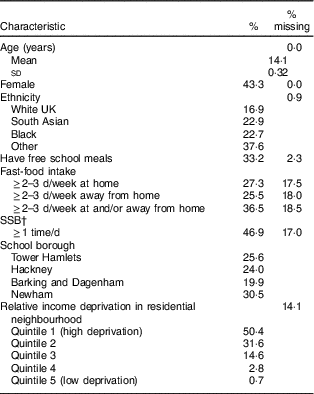
Strengths of our study include that home, school and food retail locations were geocoded with high precision (to the address level), thereby reducing spatial error( Reference Chaix, Merlo and Evans 60 ). Food environment data were drawn from official council registers collected for regulatory purposes, thus providing high levels of validity in comparison to data from commercial sources( Reference Cummins and Macintyre 61 ). Since measures of association are prone to vary depending on the shape and size of the geographical unit studied( Reference Fotheringham and Wong 62 ), we tested model robustness when food environment measures were aggregated within 400 and 600 m road network buffers and found results to be relatively consistent with those presented here. Given policy makers’ interest in intervening in the food environment, especially around schools, it seems important to assess associations for different threshold distances. Limitations include that the study area mainly comprised disadvantaged neighbourhoods (see Appendix 1) and that fast-food outlets and convenience stores were ubiquitous in places (see Appendix 2), which may have reduced the amount of heterogeneity in individual and food environment measures, reducing the likelihood of uncovering significant associations. We also were unable to account for children’s exposure to food outlets on their commute between home and school, an exposure which has been found to relate to unhealthy food purchases in one study( Reference Sadler, Clark and Wilk 19 ), but not in two others( Reference Timperio, Ball and Roberts 26 , Reference Laska, Hearst and Forsyth 30 ). Investigating the food environment along pupils’ commuting routes nevertheless remains a relevant avenue for research, although this should be done with caution since children have been found to often vary the routes they travel between home and school( Reference Stewart, Schipperijn and Snizek 63 , Reference Harrison, Burgoine and Corder 64 ). Limitations related to food behaviour measures should also be mentioned. We utilized adolescent self-reported dietary intake which, although common in food behaviour studies of young people, can lead to measurement error compared with gold-standard approaches of dietary assessment. Furthermore, the specific question used to assess fast-food intake, although borrowed from the Health and Behaviours in Teenagers Study (HABITS) and other studies( Reference Timperio, Ball and Roberts 26 , Reference Wardle, Sutton and Jarvis 44 , Reference Pereira, Kartashov and Ebbeling 45 ) and validated in young people( Reference Pereira, Kartashov and Ebbeling 45 ), was not validated in the ORiEL sample. It is thus possible that participants misreported their fast-food intake, for instance by under-reporting fast food purchased from independent restaurants, since the question provided examples of chain fast-food outlets only. In that case, true fast-food intake would be underestimated. However, we do not expect such response bias to have been differential between high and low consumers, thus our results would be conservative estimates of true associations. Finally, our measure of SSB intake included only fizzy drinks, which might have underestimated true intake since adolescents also consume other types of sugary beverages such as fruit juices, cordials and energy drinks.
In the present study of adolescents from East London, UK, we found limited evidence for an association between the food environment around home and school and fast-food or SSB intake. Where positive associations were observed these were for relative rather than absolute measures of exposure, as seen with the proportion of convenience stores around home and in the combined home and school neighbourhoods being associated with increased SSB consumption. Modifying the local food retail system through increasing diversity in food retailing and reducing the proportion of unhealthy food outlets within the local food environment may be more promising than a simple focus on individual food establishments. Better conceptualization and operationalization of adolescents’ dietary behaviours in terms of when, how and what they purchase and consume, and where they do so, is also a worthwhile avenue for future research.
Acknowledgements
Acknowledgements: The authors would like to thank Nicolas Berger for his invaluable support in the missing data imputation phase, as well as Amanda Fahy, Vanathi Tharmaratnam, Danielle House and Claire Thompson for contributing to the data collection. Financial support: M.S. holds a postdoctoral fellowship from the Canadian Institutes of Health Research (grant number 201311MFE-321141-159944). D.L. holds a postdoctoral skills development fellowship from the UK Medical Research Council (grant number MR/N014588/1). The ORiEL Study was funded by the UK National Institute for Health Research (grant number 09/3005/09). The funders of the study had no role in study design, data collection, data analysis, data interpretation or writing of the paper. Conflict of interest: None. Authorship: M.S. formulated the research question, conducted the analyses and wrote the manuscript. D.L. computed the environmental measures and provided feedback on the analyses and all drafts of the manuscript. N.R.S., C.C. and S.C. provided feedback on the analyses and all drafts of the manuscript. All authors agreed to the final version of the manuscript. Ethics of human subject participation: This study was conducted according to the guidelines laid down in the Declaration of Helsinki, and all procedures involving human subjects were approved by the Queen Mary University of London Research Ethics Committee (QMREC2011/40), the Association of Directors of Children’s Services (RGE110927) and the London Boroughs Research Governance Framework (CERGF113). Headteachers gave written consent for the study to take place within their school, parents gave passive informed consent for their child to participate, and adolescent participants gave written informed assent.
Appendix 1
Appendix 2
Food environment characteristics and percentage missing for the Olympic Regeneration in East London (ORiEL) sampleFootnote *