




1. Introduction
The United Nations Department of Economic and Social Affairs (UNDESA), in its latest analysis of global migration trends, estimates that, by 2024, there were 304 million international migrants worldwide, a figure which has doubled since 1990 (United Nations, 2024). UNDESA reports that one in six international migrants, a rising proportion of the global total, have experienced forced displacement across international borders as refugees, asylum seekers, and others in need of protection; data from the United Nations High Commissioner for Refugees also indicate that, by the end of 2024, approximately 50 million of the world’s 123 million forcibly displaced people were living beyond the borders of their own countries (United Nations, 2024; United Nations High Commissioner for Refugees, 2025). Crossing borders often means entering a new linguistic environment, with the learning of societally dominant target languages (TLs) identified as a key aspect of social inclusion and, on a policy level, an indicator of integration.
The need for research on this issue has been demonstrated by Beacco et al. (Reference Beacco, Krumm, Little and Thalgott2017) in their volume of studies emerging from the Council of Europe’s Linguistic Integration of Adult Migrants (LIAM) project. Since 2006, the LIAM project has investigated policy and practice across Council of Europe member states regarding approaches to language education with adult migrants. The collection of research edited by Beacco et al. (Reference Beacco, Krumm, Little and Thalgott2017) comprised over 50 chapters reporting studies set primarily in European countries, with additional input from North America. It examined seven thematic areas: language and integration policy, linguistic repertoires, pedagogical practices, language testing and assessment, language in the workplace, specific learning needs among adult migrants, and the role of educators and researchers within this context. This research has informed the subsequent work of the LIAM project which has involved the production of resources including toolkits for language support for adult refugees and migrants (Council of Europe, 2017, 2024), a survey conducted in 2018 with the Association of Language Testers in Europe (ALTE) focusing on assessment requirements (Rocca et al., Reference Rocca, Carlsen and Deygers2020), and the development of the Literacy and Second Language Learning for the Linguistic Integration of Adult Migrants (LASLLIAM) initiative (Minuz et al., Reference Minuz, Kurvers, Schramm, Rocca and Naeb2022). Published at a time of rising political tension in relation to migration in European and other high-income countries, Beacco et al. (Reference Beacco, Krumm, Little and Thalgott2017) presented valuable findings on existing challenges and models of good practice in TL teaching and assessment. As noted by Levine and Mallows (Reference Levine and Mallows2021), along with contemporary publications such as the volume on migration and language edited by Canagarajah (Reference Canagarajah2017), research from the LIAM project has thus contributed to scholarship in this increasingly significant field. Taking Beacco et al. (Reference Beacco, Krumm, Little and Thalgott2017) as a starting point, this article will review recent research into language education with adult migrants through a critical examination of empirical studies published in prominent academic journals in the fields of applied linguistics and education between 2017 and 2024.
From the outset, it is important to acknowledge the multiple factors impacting cross-border movement, the risk of othering inherent in categorising people by migration status, and the politicisation of terminology in relation to migration. In keeping with previous research (Beacco et al., Reference Beacco, Krumm, Little and Thalgott2017; Levine & Mallows, Reference Levine and Mallows2021), the term ‘migrant’ will be used in a sense that reflects a broad definition of ‘international migrant’ as an individual who has changed their country of usual residence (International Organisation for Migration, 2019). This review will focus on movement that is potentially long-term rather than on temporary sojourns, e.g., for seasonal work or the pursuit of a programme of study. Diversity among ‘adult migrant’ learners must also be recognised, with attention paid to specific groups within this cohort, for instance, people who have experienced forced displacement. Similar to Beacco et al. (Reference Beacco, Krumm, Little and Thalgott2017), this article will focus on research conducted in high-income countries, predominantly in Europe but also in North America and, additionally, Oceania. However, it must be emphasised that migration is a worldwide phenomenon and the role of language in situations of mobility and displacement beyond this geographical remit, particularly in countries of the Global South, requires further investigation (Canagarajah, Reference Canagarajah2017).
2. The research context
To frame the analysis of studies included in this review, this section takes stock of key issues raised in edited volumes, research syntheses, conceptual articles, project reports, and other recent literature regarding language education with adult migrants. As outlined above, within the context of the LIAM project, Beacco et al. (Reference Beacco, Krumm, Little and Thalgott2017) identified significant areas of enquiry in relation to approaches to TL learning and teaching, the migration policy and language education nexus, and support for educators working in this field. Similar issues have emerged in the collection of studies edited by Levine and Mallows (Reference Levine and Mallows2021) on language learning among adult migrants in Europe. However, the research reported by Levine and Mallows (Reference Levine and Mallows2021) is more reflective of García’s problematisation of the ‘linguistic integration of migrants’ in her contribution to the LIAM volume (García, Reference García, Beacco, Krumm, Little and Thalgott2017, p. 12). This shift aligns with calls for critical multilingual and decolonial approaches to language teaching (García, Reference García, Beacco, Krumm, Little and Thalgott2017; García et al., Reference García, Flores, Seltzer, Wei, Otheguy and Rosa2021) and transformative translanguaging pedagogy for inclusion and social justice (Wei, Reference Wei2024). Such theoretical perspectives are also evident in participatory approaches to language education with adult migrants (Chick, Reference Chick2025; Cooke et al., Reference Cooke, Rampton, Winstanley, Bryers, Belecova, Blackman, Griffiths, Jadallah, Jowett, Malakouti and Whitehouse2023), which resonate with the concept of linguistic citizenship (Rampton et al., Reference Rampton, Cooke, Bryers, Winstanley, Leung, Tomei and Holmes2024).
In addition, research has highlighted diverse learning needs among adult migrants, notably the literacy-related challenges faced by learners with limited or no previous education (Beacco et al., Reference Beacco, Krumm, Little and Thalgott2017; Levine & Mallows, Reference Levine and Mallows2021). Peyton and Young-Scholten (Reference Peyton and Young-Scholten2020) provide important insights into Literacy Education and Second Language Learning for Adults (LESLLA), while the Council of Europe’s LASLLIAM project has also explored literacy development and TL learning (Minuz et al., Reference Minuz, Kurvers, Schramm, Rocca and Naeb2022). Research syntheses further indicate the need for consideration of multilingualism within multimodal and multiliterate approaches to teaching (Ávila-López & Rubio-Alcalá, Reference Ávila-López and Rubio-Alcalá2023) and for awareness of affective literacy (Toscano-Fuentes et al., Reference Toscano-Fuentes, Fernández-Corbacho and Fonseca-Mora2024) and digital literacy (Guichon, Reference Guichon2024) in language education with adult migrants.
The intersectionality of factors which may impact TL learning, including gender, race, socio-economic background, health and disability, previous educational experience, and migration status, must also be investigated. For instance, the complexity of language learning in contexts of forced displacement is apparent in an edited volume by Monsen and Bordal Steien (Reference Monsen and Bordal Steien2022), which focuses on adult refugees resettled in Norway. The value of trauma-informed approaches to language teaching, particularly but not exclusively with learners who have experienced forced displacement, has also been emphasised (Capstick, Reference Capstick2020; Dunn, Reference Dunn2025). Given the inequalities and liminality faced by many adult migrants, there is thus an ongoing need for ethical, justice-oriented research in this field (Simpson & Chick, Reference Simpson, Chick, Costa, Rabie-ahmed and Cinaglia2024).
This is reflected in studies which interrogate the implications of migration policy for TL teaching. Cooke and Peutrell (Reference Cooke and Peutrell2019) have explored language education and the ‘brokering’ of citizenship in the UK through a collection of research which exposes the dissonance between policy and adult migrants’ multilingual lives. The role of TL testing in determining access to residency or citizenship has also been scrutinised by ALTE’s special interest group on Language Assessment for Migration and Integration, which conducted the survey of assessment requirements across Council of Europe member states in 2018 (Rocca et al., Reference Rocca, Carlsen and Deygers2020). Drawing on this work, Carlsen and Rocca (Reference Carlsen and Rocca2021) have demonstrated how the misuse of TL tests as gatekeeping tools threatens test-takers’ human and democratic rights. This links to calls for critical language testing which recognise multilingualism and multimodality and are cognisant of test consequences in contexts of migration (Shohamy, Reference Shohamy2022). However, the need for more empirical studies into critical approaches to language testing and for ‘methodological reflexivity’ in research into the assessment of adult migrants has been underlined by Schildt and Deygers (Reference Schildt and Deygers2024) in their systematic review on this issue.
Disparities in approaches to TL educational provision for adult migrants, both between and within countries, are also revealed in policy reviews such as those by Fejes and Dahlstedt (Reference Fejes and Dahlstedt2017) in Sweden and Bouttell (Reference Bouttell2023) in Scotland and England. Such studies further problematise the conceptualisation of ‘integration’ and ‘inclusion’ in neoliberal migration policies and how this can result in deficit approaches which focus primarily on migrants’ employability. The prevalence of policies which prioritise the economic insertion of adult migrants into the workforce, typically in low-skilled positions, contrasts with the potential of collaborative approaches such as those identified in the Language for Work initiative, a project supported by the Council of Europe through the European Centre for Modern Languages (Beacco et al., Reference Beacco, Krumm, Little and Thalgott2017; European Centre for Modern Languages, 2018). Challenges to monolingual ideologies in national policies have also been raised, notably by Simpson and Pöyhönen (Reference Simpson and Pöyhönen2024) in their volume of research into adult migrants’ learning of minoritised TLs in multilingual societies across Europe.
Building on such research, this review of recent empirical studies therefore seeks to respond to the following questions:
1. What approaches are adopted towards language teaching with adult migrants, considering learners’ diverse needs and contexts of learning?
2. In what ways may policy impact language education with adult migrants?
3. How can the reviewed studies inform future research in this field?
3. Research methods
Considering a critical review as an extensive examination of research to evaluate its quality (Grant & Booth, Reference Grant and Booth2009), a detailed analysis of literature was conducted in response to the research questions. While not intended as a systematic review, the methodology involved systematic approaches to searching and selection, followed by a critical synthesis of the chosen studies to contribute to the development of scholarship (Booth et al., Reference Booth, Sutton and Papaioannou2016; West & Martin, Reference West and Martin2024).
3.1. Literature search and selection
To examine a representative range of studies, a comprehensive search was conducted across four academic databases: Linguistics and Language Behaviour Abstracts, ERIC, Web of Science, and Scopus. Following Mao et al. (Reference Mao, Lee and Li2024), a further search was then carried out across Google Scholar and the websites of leading academic publishers: Cambridge Core, De Gruyter, Elsevier, Oxford Academic, Sage, Springer, Taylor & Francis, and Wiley. In addition, the LESLLA research database and other bibliographies were checked to avoid the omission of relevant articles. Search terms included: migrant* OR refugee* OR asylum seeker* OR immigrant* AND adult*, AND language learning OR second language learning OR language acquisition, AND language teach* OR language educat* OR language instruct* OR language assess* OR language policy, with efforts made to cover the wide range of terms used in reference to adult migrants and educators. As shown in Figure 1, these searches yielded a total of 1,038 studies, which were imported to Covidence, a web-based tool for research reviews. This resulted in the removal of 105 duplicates and the screening of the abstracts of the remaining 933 studies. Of these, 116 studies progressed for full-text review, which resulted in the selection of 40 studies for in-depth analysis.
Search and selection process.

Figure 1 Long description
The flowchart outlines the study selection process across three main stages: Identification, Screening and Included. In the Identification stage, studies are gathered from databases and other sources, totaling 1038 studies. This includes 972 studies from databases and 66 from other sources. Duplicates are removed, totaling 105. In the Screening stage, 933 studies are screened, with 817 excluded. 116 studies are sought for retrieval, with none not retrieved. 116 studies are assessed for eligibility, with 76 excluded. In the Included stage, 40 studies are included in the review.
The 40 selected studies were determined through the application of the following inclusion criteria, all of which had to be fulfilled: (i) the study had to focus on language education with adult migrants, either in formal or informal learning contexts, (ii) it had to be located in the EU/European Economic Area (EEA), Switzerland or the UK, or in the USA, Canada, Australia, or New Zealand, (iii) it had to involve adult migrants (generally classified as aged 18 years or over) and/or teachers or other educational stakeholders working with them, (iv) it had to report the findings of empirical research in relation to teaching approaches and/or the impact of policy on language education with adult migrants, and (v) it had to be published between 2017 and 2024 in a highly ranked peer-reviewed journal within the fields of applied linguistics or education. Studies which did not meet all of the above eligibility criteria were excluded from this review.
3.2. Data extraction and analysis
To analyse the 40 selected studies, key data were extracted and stored on an Excel spreadsheet (see Table 1 for a summarised example). Extracted data included: identifying information for each study (author/s, title, publication date, and journal), the study location (country/region), TL(s) being learned, participants involved, and the educational context within which the study was conducted. Data were also extracted in relation to the research questions, conceptual underpinnings, research design, data sources, and methods of analysis. The key findings of each study and their implications for research and practice were noted. Each study was coded according to its main area(s) of focus, with themes developed from these codes to enable a response to the research questions.
Data extraction process

Table 1 Long description
The table summarizes one qualitative study on target language learning and integration to demonstrate how the selected studies were analysed. This study by Amireault, published in 2020, reports research conducted in Quebec, Canada, focusing on French. Participants were 15 Chinese adult migrants enrolled in a French as a second language course. The conceptual focus is language and identity, examining how learners perceive integration and identity redefinition. Data came from semi-structured interviews analyzed using thematic content analysis. Key findings indicate that French is perceived as a key factor in integration, language learning intersects with challenges such as professional recognition, and participants describe developing hybrid cultural identities. Implications include aligning French courses with professional goals and creating more opportunities for social interaction in French; results reflect one small, interview-based study and may not generalize broadly.
The studies selected for this review were conducted in 19 different countries. Three studies involved data collection in more than one country, while several sub-state level studies were also included. In all, these studies concerned aspects of learning, teaching, and assessment across 16 TLs and related to adult migrants from a wide range of linguistic and cultural backgrounds. As shown in Table 2, some studies focused on more than one TL. However, in others, adult migrant participants may also have been learning multiple TLs in multilingual environments.
Target languages and countries represented
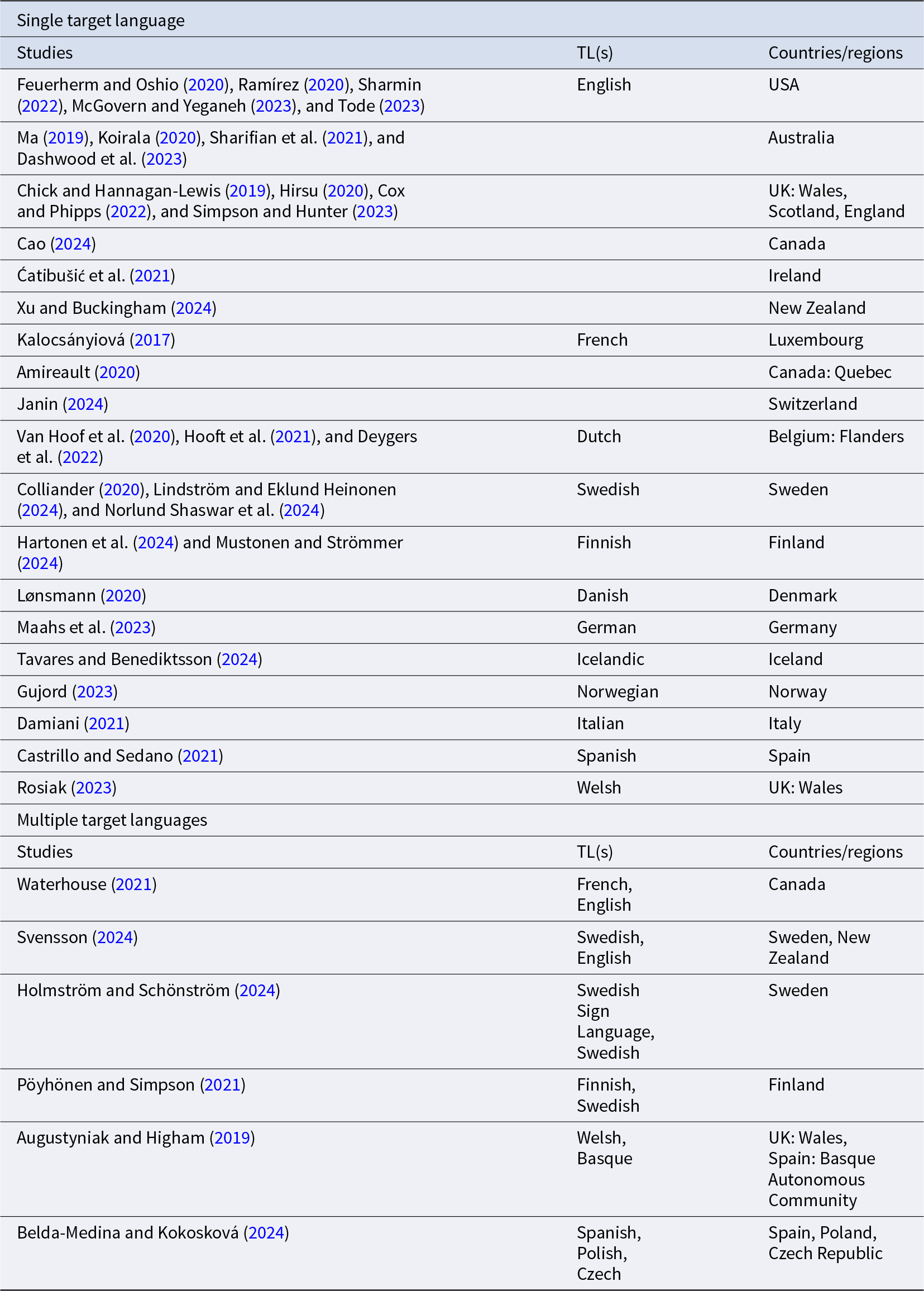
Table 2 Long description
The table lists research studies by target language or languages and the countries or regions where they were conducted. For single target languages, English appears most often, with studies from the USA, Australia, and the UK (Wales, Scotland, and England), plus one from Canada. Other single-language groupings are smaller and mostly European: French (Luxembourg, Quebec in Canada, Switzerland), Dutch (Flanders in Belgium), Swedish (Sweden), Finnish (Finland), and one-country entries for Danish, German, Icelandic, Norwegian, Italian, Spanish, and Welsh (Wales). The multiple-target-language section includes bilingual or multilingual combinations such as French and English in Canada, Swedish and English spanning Sweden and New Zealand, Swedish Sign Language with Swedish in Sweden, Finnish with Swedish in Finland, Welsh with Basque across Wales and Spain’s Basque region, and Spanish with Polish and Czech across Spain, Poland, and the Czech Republic. Overall, the distribution is concentrated in Anglophone contexts for English and otherwise spread across specific European and Nordic settings. Country labels sometimes specify subnational regions (for example, Quebec, Flanders, and Wales), so comparisons depend on how regions are defined in the cited studies.
3.3. Scope and limitations
Despite the thorough approach to study selection and analysis, it must be acknowledged that an evaluation of literature conducted by a single reviewer involves an inevitable element of subjectivity. While not a systematic review, which requires team engagement, additional reviewers may have reduced the risk of bias. Furthermore, as the purpose of this article was to offer a broad overview of recent research into language education with adult migrants, it was limited in the extent to which it could focus on specific aspects of this wide-ranging field. Another limitation was that the papers selected for the review were all published in English, despite the fact that peer-reviewed articles in any language were included in the search and screening process. While this may be partly due to the volume of research on this topic across larger Anglophone countries and may have been influenced by the use of English search terms, it also reflects the dominance of English in leading international journals. To ensure the representation of different countries and TLs, a maximum of five studies focusing on English language learning per country was permitted. It should be noted, however, that some of the Canadian and UK-based studies concern the learning of French and Welsh, respectively.
Restricting study selection to journals in the fields of applied linguistics and education, while it enabled a disciplinary focus, could also be viewed as a limitation. Research on language education with adult migrants appears in publications within migration studies, behavioural sciences, and other disciplines; for instance, articles by Fortier (Reference Fortier2018) in Sociology, Morrice et al. (Reference Morrice, Tip, Collyer and Brown2021) in the Journal of Refugee Studies, and Tomren and Opaas (Reference Tomren and Opaas2024) in the European Journal of Psychotraumatology. Therefore, while this review focuses on studies selected from 30 publications relating directly to applied linguistics and education (as shown in Table 3), it is important to be aware of the potential for interdisciplinary collaboration on this issue.
Journals represented
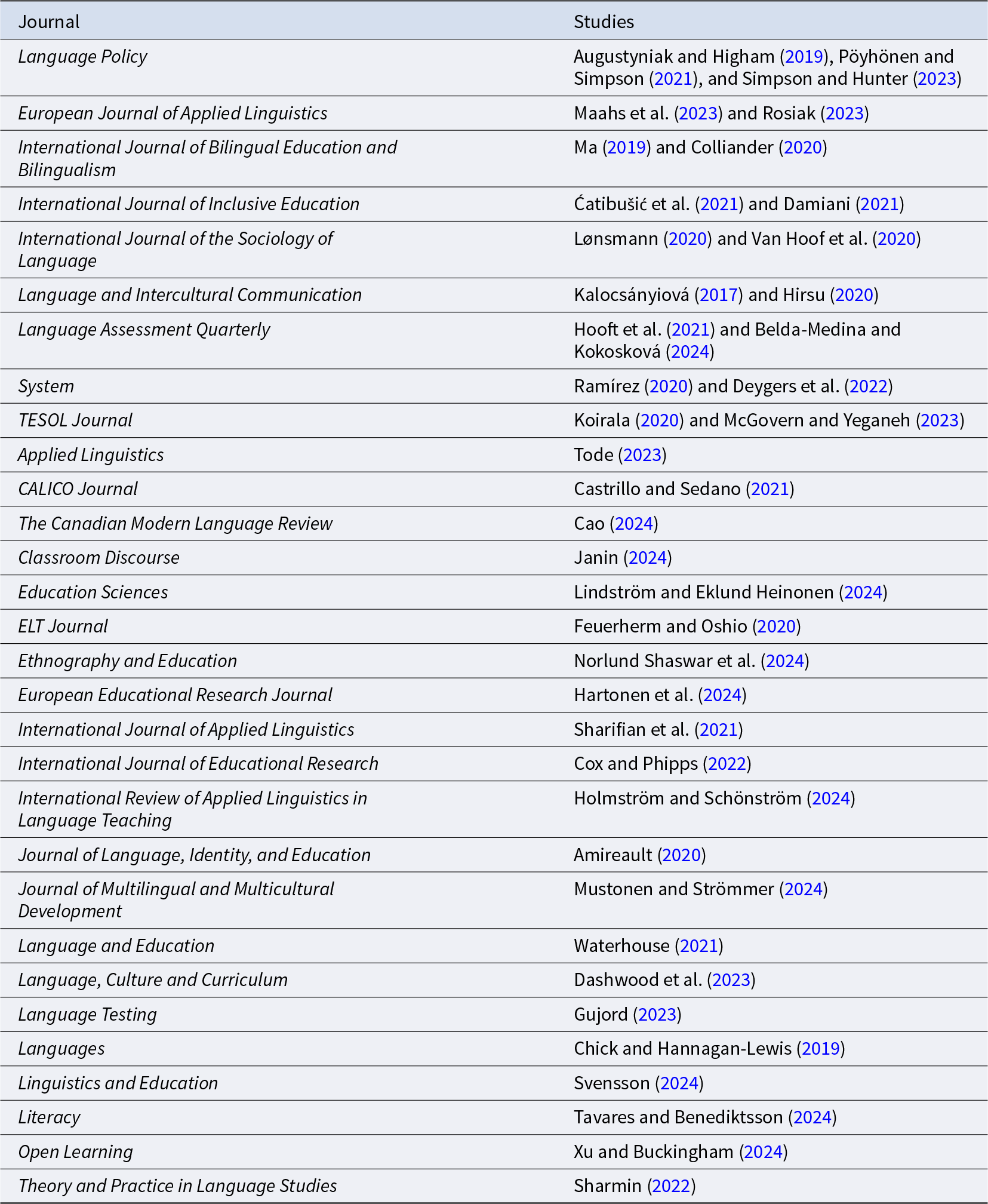
Table 3 Long description
The table lists academic journals and the specific studies from each journal included in the dataset. Language Policy has three studies, the highest count. Eight journals have two studies each: European Journal of Applied Linguistics; International Journal of Bilingual Education and Bilingualism; International Journal of Inclusive Education; International Journal of the Sociology of Language; Language and Intercultural Communication; Language Assessment Quarterly; System; and TESOL Journal. All remaining journals are represented by a single study, including Applied Linguistics, ELT Journal, Language Testing, and others. Overall, the distribution is concentrated in a small set of journals with two studies, while most journals contribute only one study. The table reports representation only and does not indicate study quality, methods, or relative importance.
As this review sought to provide comprehensive and credible insights into multiple aspects of language education with adult migrants, it focused on articles published in highly ranked peer-reviewed journals. The journals included were all ranked as being within Quartile 1 according to their SCImago Journal Rank indicator for 2024. However, while this may offer a rough indication of potential research impact with regard to the academic journals represented in this review, it does not serve as an appraisal of the quality of the selected articles.
Limiting study selection to highly ranked journals may also result in the exclusion of valuable research in publications that are less internationally prominent. This may have led to the omission of work published in journals which are more recently established, have a more regional focus, are published in languages other than English, or are more practitioner-oriented, e.g., the NATECLA Language Issues journal in the UK. Furthermore, as Rose et al. (Reference Rose, McKinley and Galloway2021) caution, relying solely on peer-reviewed journal articles risks the neglect of important work in book chapters and other sources, including grey literature. Edited volumes referred to in Section 2, such as Cooke and Peutrell (Reference Cooke and Peutrell2019), Peyton and Young-Scholten (Reference Peyton and Young-Scholten2020), Levine and Mallows (Reference Levine and Mallows2021), and Monsen and Bordal Steien (Reference Monsen and Bordal Steien2022), as well as Mishan (Reference Mishan2019) and chapters on adult education in Warriner (Reference Warriner2021), contribute significantly to the field. Council of Europe publications on language assessment and literacy (e.g., Minuz et al., Reference Minuz, Kurvers, Schramm, Rocca and Naeb2022; Rocca et al., Reference Rocca, Carlsen and Deygers2020), reports included in the Working Papers in Urban Language and Literacies series, and the range of sources (e.g., theses, conference proceedings) available on the LESLLA research database, also add to scholarship on language education in migration contexts.
4. Approaches to language teaching with adult migrants
In response to the first research question, this section examines approaches to TL teaching. It focuses on 21 of the selected studies, primarily those involving classroom-based research but also those investigating learner identity and the individual learning experience. Analysis of these studies identified key themes in relation to (i) multilingual repertoires in the classroom, (ii) literacy development and recognition of multiliteracies, (iii) digital learning, (iv) arts-based approaches, and (v) responding to learner diversity. The emphasis in this section is on learner needs and pedagogical approaches, in both formal and informal educational contexts, rather than on the acquisition of specific aspects of TL competence. In both this and the following section, the adult migrants who participated in the selected studies are of various nationalities unless otherwise stated, while relevant information regarding participants’ migration status is included if mentioned in the studies.
4.1. Multilingual repertoires in the classroom
Recognition of multilingualism and the inclusion of adult migrants’ linguistic repertoires in the classroom is evident in studies such as the linguistic ethnography conducted by Kalocsányiová (Reference Kalocsányiová2017) in a French course for beginners, equivalent to level A1 of the Common European Framework of Reference (CEFR), within a volunteer-run initiative for refugees in Luxembourg. This year-long study, based on recorded classroom interactions and multilingual interviews with three learners and two teachers, involved discourse analysis informed by interactional sociolinguistics. It demonstrated how multilingual practices enabled meaning-making through the TL (French), learners’ L1 (Arabic), and elements of additional languages. While the study’s pedagogical implications that multilingual approaches can enhance metalinguistic reflection and thus benefit TL learning are valuable, the possible influence of its community-based context in a multilingual city could be further explored. Also, the focus on reified practices, identified in this study as ‘translanguaging, translation and receptive multilingualism’ (p. 477), contrasts with more holistic theories in relation to translanguaging, which foreground learners’ multilingual identities, rather than merely the concept of linguistic repertoires as resources for learning.
In a more formal educational context, Ma (Reference Ma2019) reports on L1 use in TL learning in a qualitative study involving 17 older Chinese migrants (most aged 60 years or over) and their English–Chinese bilingual teacher. This research was set in a beginner-level course within the state-funded Adult Migrant English Program (AMEP) in Australia. Discourse analysis of 10 hours of recorded classroom interactions showed how L1 was used by learners, notably for asking and responding to questions. It was also used by the teacher, particularly for eliciting answers, explaining meaning and providing feedback. L1 use was thus found to enable engagement which may not have been possible through the TL alone. This study emphasised the importance of L1 in TL teaching, particularly with older learners, and the value of bilingual teachers. However, these findings also indicate the need for further exploration of multilingual practices with more linguistically and culturally diverse groups of learners.
Contexts of linguistic diversity have been investigated by Cox and Phipps (Reference Cox and Phipps2022) and Norlund Shaswar et al. (Reference Norlund Shaswar, Ljung Egeland, Rosén and Wedin2024) in studies which illustrate the ethicality of multilingual approaches. Through critical participatory action research into a language learning initiative for refugee women arriving in Scotland via family reunion, Cox and Phipps (Reference Cox and Phipps2022) probed how translanguaging can promote social justice. Drawing on ecological approaches guided by the concepts of investment and decolonising multilingualism, further informed by a feminist ethics of care that emphasises trust and mutuality, this study focused on four women from different linguistic backgrounds. Thematic analysis of a data bricolage collected over 5 months, including multilingual interviews and observations of learning sessions, found enhanced learner investment and the development of TL comprehension and accuracy through this initiative. The multilingual learning sessions supported ‘co-learning and co-languaging’ (p. 10), demonstrating that teachers’ previous knowledge of learners’ L1 is not a requirement for the implementation of translanguaging pedagogies. Like Kalocsányiová (Reference Kalocsányiová2017), this was a small-scale study; however, it makes a strong case for the funding of programmes of this nature based on translanguaging and ‘linguistic hospitality’ (p. 10).
Norlund Shaswar et al. (Reference Norlund Shaswar, Ljung Egeland, Rosén and Wedin2024) adopt a similar theoretical stance in their investigation of translanguaging pedagogy in the context of TL and literacy support for adult migrants in Sweden, provided through the state-run Swedish for Immigrants (SFI) programme. Conceptually informed by translanguaging as a critical pedagogy that can promote social justice within an ethics of care framework, this study examined ethical dilemmas identified in educators’ perceptions and practices regarding multilingualism in the classroom. Part of a larger linguistic ethnography involving action research, this study focused on five teachers at an SFI school which did not have multilingual teaching assistants and was based on 38 hours of classroom observations as well as interviews and focus groups with the teachers. Its findings revealed a lack of language policy at the institutional level, which resulted in the prevalence of a Swedish-only approach despite evidence of some translanguaging by individual teachers. Similar to Cox and Phipps (Reference Cox and Phipps2022), this study emphasised the need for critical and caring pedagogies based on ‘plurality, trust, respect and solidarity’ (p. 383) within which translanguaging means more than simply recognition of learners’ linguistic repertoires as a resource for TL learning. It therefore argued for institutional policies which promote multilingual approaches within formal educational programmes.
4.2. Literacy development and recognition of multiliteracies
Literacy was another prominent issue across the selected studies, many of which concerned adult migrants with little or no previous experience of formal education. Before looking at teaching approaches, the intersectional challenges which adult migrants may face in relation to literacy and TL learning should be considered. Some of these are evident in research conducted by Svensson (Reference Svensson2024) into perspectives on language and literacy education among refugee-background women who were also LESLLA learners. Adopting a Bakhtinian dialogical framework, informed by the concept of investment, this qualitative study involved individual and group interviews with 14 women, 10 of whom were resettled in New Zealand and 4 in Sweden (conducted through English and Swedish, with interpreters as required). Despite their individual investment in TL learning, these participants identified challenges regarding literacy development due to a lack of previous formal education, curriculum content, and factors relating to family responsibilities and access to courses. While this study did not examine classroom practices, it nonetheless points to the need for appropriate literacy instruction of sufficient duration, aligned with learners’ identities and incorporating practical, gender-sensitive supports, e.g., childcare.
Awareness of learners’ range of literacy practices is emphasised by Lindström and Eklund Heinonen (Reference Lindström and Eklund Heinonen2024) in their document analysis of summaries of initial assessment interviews for five adult migrants entering the SFI programme in Sweden. These assessment interviews, conducted through learners’ L1s, included questions on previous literacy experience as well as literacy-related tasks. Theoretically guided by New Literacy Studies, the interview summaries were analysed using Luke and Freebody’s ‘Four Resource Model’ (Luke & Freebody, Reference Luke and Freebody1999). This revealed a diversity of individual literacy practices across various languages and domains, including through the use of digital tools, and challenged deficit perceptions of learners with limited formal education. The study indicated the value of L1 literacy assessment, which is not conducted in all countries, and the need for learner-centred supports for literacy development. However, the authors point out that further research is required into how knowledge of learners’ multilingual and multiliterate practices can inform TL teaching.
Classroom-based studies such as Ramírez (Reference Ramírez2020) and Sharmin (Reference Sharmin2022), which both focus on the teaching of English as a second language (ESL) with adult migrants in the USA, provide some insights into this issue. Ramírez (Reference Ramírez2020) investigated the application of ‘culturally and linguistically relevant pedagogy’ (CLRP), theoretically informed by a combination of culturally relevant pedagogy, critical pedagogy, and Reading to Learn (R2L) approaches to literacy (Rose & Martin, Reference Rose and Martin2012), in developing a bilingual R2L programme. Data for this qualitative study involving eight Latina mothers included classroom observations and samples of written work in Spanish and English, analysed with respect to R2L cycles. The study found that this assets-based, family-oriented programme enabled learners to draw on their full linguistic repertoires in writing activities and supported the development of critical literacy. However, research into CLRP in more linguistically diverse settings would be useful.
Sharmin (Reference Sharmin2022) also considered critical approaches to literacy in an ethnographic study informed by critical race theory and the concept of investment, involving action research with five women from Brazil and Venezuela. Multimodal narratives (written and spoken word, images and video) were produced by learners over a 10-week period, and recorded reflections on these stories were analysed using multimodal critical discourse analysis. The study found that these multimodal narratives, which focused on participants’ everyday experiences of using English, enabled learners to discuss ways of negotiating racism and linguicism. While aspects of the pedagogical approach could be explored further, e.g., the role of learners’ L1s and the use of digital tools in narrative creation, this study showed how recognition of multiliteracies can promote social justice through classroom activities which interrogate raciolinguistic prejudices and affirm learners’ multilingual identities.
Multimodal approaches to literacy development were also examined by Tode (Reference Tode2023) in a LESLLA classroom in the USA. Conceptually guided by chronotopic identity work, this qualitative case study focused on a woman in her 60s from Sierra Leone, who had no formal education, and was based on discourse analysis of video-recorded classroom interactions over a 3-month period. The study showed how, in basic decoding activities, the use of playful language, gesture, laughter, and dramatic effect enabled this learner to construct her ‘agentive identity’ (p. 715), pointing to how this may also benefit learner well-being. Although it focused on a single learner, a strength of this study was its in-depth multimodal analysis and how this provided evidence of social practices supporting LESLLA learning, challenging primarily cognitive perspectives on adult literacy education.
Janin (Reference Janin2024) also examined multimodal approaches to TL learning in a study involving eight adult migrants attending a beginner-level French course in Switzerland. This qualitative study was based on multimodal conversation analysis of video recordings of classroom interactions over a 4-month period. Investigating vocabulary explanation sequences, it was found that learners initiated depictive gestures to represent words and to explain more abstract vocabulary in peer interactions. While it focused specifically on vocabulary explanations, this study has wider implications for the promotion of collaborative learning using multimodal resources for the negotiation of meaning, a phenomenon also noted by Cox and Phipps (Reference Cox and Phipps2022). Like Tode (Reference Tode2023), this research further points to the value of detailed interactional analysis of TL learning, particularly in the context of literacy development.
4.3. Digital learning
Multimodality and multiliteracies are also highly relevant in approaches to digital learning with adult migrants. This has been demonstrated in research by Castrillo and Sedano (Reference Castrillo and Sedano2021) and Damiani (Reference Damiani2021) emerging from Erasmus+ projects which developed online TL learning programmes. Damiani (Reference Damiani2021) examined the design and implementation of an online platform for learning Italian, guided by culturally responsive pedagogy and informed by focus groups with refugees and volunteer tutors in Italy. The resulting TL programme focused on the development of basic digital, intercultural, and employment-related skills. This mixed-methods study, which investigated the trialling of this programme with 90 refugees and asylum seekers and 30 educators, was based on learning analytics on the online platform, small talk interviews with learners, and programme observation. It found the platform to be accessible and its resources appropriate. However, engagement proved more challenging for learners with lower levels of literacy and was affected by the liminality of learners’ personal situations in the asylum system. Support for blended learning and greater awareness of learners’ multilingual repertoires in any enhancement of this programme was thus recommended.
Castrillo and Sedano (Reference Castrillo and Sedano2021) analysed the development of two MOOCs (massive open online courses), each 6 weeks’ long, providing instruction in basic- and intermediate-level Spanish for adult migrants, including refugees, in Spain. This design-based research was guided by principles associated with Maker Culture and was developed through collaboration between universities, NGOs, refugee support groups, volunteers, and adult migrants. A mixed-methods evaluative study, it was based on initial and final questionnaires in relation to the programme, involving 798 and 1,231 adult migrants, respectively, as well as questionnaires and interviews with the teaching team, observations from piloting, and MOOC learning analytics. Learners responded positively to the MOOC and demonstrated a high level of engagement and course completion. They reported improvements in TL reading, listening, and oral skills, and found the support offered by the project’s volunteer facilitators to be beneficial. The study concluded that collaboratively developed MOOCs can promote TL learning and social inclusion. However, as Damiani (Reference Damiani2021) noted, learners may be reluctant to share negative views of instructional courses. In addition, samples of TL use in online programmes could be further analysed alongside participants’ perceptions of digital learning environments.
The impact of the COVID-19 pandemic on education also emerged as a catalyst for digital learning. In a study involving five older Chinese migrants (aged 60 years and over), two bilingual teachers and a school manager, Xu and Buckingham (Reference Xu and Buckingham2024) investigated an English for speakers of other languages (ESOL) literacy programme in New Zealand, which moved online due to the pandemic. This qualitative case study, conducted largely through learners’ L1, was based on thematic analysis of interviews and learner diaries. It was found that collaborative, culturally sensitive decision-making, the provision of L1 and visual support, curriculum flexibility, and the use of accessible digital resources with an awareness of the ‘socio-affective needs’ of learners (p. 31) were key factors in the development of an online learning community. An analysis of learning strategies indicated that memory, cognitive, and metacognitive strategies were most widely used by learners, although this aspect of the study could have been further explored. The need for teacher education in relation to online teaching and blended learning, especially with older learners, was also emphasised.
4.4. Arts-based approaches
Several of the selected studies investigated the role of the arts in TL teaching. Waterhouse (Reference Waterhouse2021) conducted research into the use of arts-based pedagogy in two TL contexts: an ESL course provided by the Canadian government’s Language Instruction for Newcomers to Canada programme in Ontario, and a state-funded French as a second language (FSL) course in Quebec. Informed by Deleuzian–Guattarian affect theory, this study involved three ESL teachers, three FSL teachers, and their adult migrant classes. It adopted a research assemblage methodology, including interviews with teachers, recorded lessons, fieldnotes, and teaching resources, analysed through sociomaterial rhizoanalysis. This study focused on lessons based on a graphic book illustrating a migrant narrative, which prompted writing and visual art activities that enabled creative and emotional expression. It demonstrated the potential of ‘affective language pedagogy’ (p. 282) despite challenges with regard to making space for arts-based activities in formal TL programmes, given their policy orientation towards employability and the pressure to meet assessment requirements.
Affective approaches to TL learning involving drama were also investigated by McGovern and Yeganeh (Reference McGovern and Yeganeh2023) and Tavares and Benediktsson (Reference Tavares and Benediktsson2024). In an ethnographic case study with adult migrants on an ESL programme in a nonprofit language school in the USA, McGovern and Yeganeh (Reference McGovern and Yeganeh2023) reported on the collaborative creation of a performance on the theme of ‘home’. Informed by positioning theory and the conceptualisation of learner identity, this study involved 16 learners with low intermediate to intermediate levels of English language proficiency, and 5 practitioners (teachers and arts facilitators). Data included transcripts of meetings, learners’ work from ESL classes associated with the drama project, fieldnotes on rehearsals, a video of the performance, audience feedback, and other materials, which were analysed through reflexive thematic analysis. The study found that the co-creation of the drama fostered trust and that learners’ voices were valued through multilingual storytelling. It also emphasised the need for ‘ethical representation’ (p. 8) in performative pedagogy to avoid the risk of re-traumatisation and further marginalisation. This recognition of the role of critical reflection in arts-based approaches with adult migrants is important if such pedagogical innovation is to be genuinely inclusive and oriented towards social justice.
Adopting a multiliteracies perspective, aware of the multimodality of drama, Tavares and Benediktsson (Reference Tavares and Benediktsson2024) focused on a ‘drama club’ project for refugees from Ukraine in Iceland. This case study involved group interviews with five Ukrainian participants, one of whom was a drama instructor, and was analysed using thematic analysis. It demonstrated how the drama club could foster TL learning and socio-emotional bonding through the performance of short Icelandic plays. Drama provided opportunities for noticing new vocabulary within the playscripts and for the use of emotion and playful language, which could reduce inhibition, as noted by Tode (Reference Tode2023). It was found that this multimodal approach not only enhanced learners’ TL acquisition but could also support identity development, resilience, and well-being, highlighting the transformative potential of ‘critical-creative’ pedagogies (p. 247).
4.5. Learner diversity and identity development
Diversity among adult migrant learners, evident in the studies reviewed above, was probed further in research which focused more specifically on identity and intersectionality in TL learning. Amireault (Reference Amireault2020) investigated identity redefinition in the context of migration among 15 Chinese adult migrants with an intermediate level of French attending an FSL course in a university-based language school in Quebec. This multi-case study was based on semi-structured interviews (in French), analysed using thematic content analysis. While participants perceived French as an ‘integration vector’ (p. 370), they noted other barriers to inclusion, e.g., recognition of professional qualifications. Some also expressed the view that their identity had become more hybrid since their arrival in Quebec. This study recommended aligning FSL course content with learners’ professional goals and including a cultural dimension with awareness of colloquial French, as well as the provision of more opportunities for social interaction with Francophones. However, conducting the interviews through participants’ L1s may have enabled deeper exploration of these issues.
Culturally appropriate approaches to learner autonomy were examined by Koirala (Reference Koirala2020) through ethnographic research in two ESL classes, beginner and intermediate level, within the AMEP in Australia. The study was based on 72 hours of recorded classroom observations and semi-structured interviews with eight Bhutanese refugees (conducted through Nepali) and two teachers. It found differences in perceptions of teaching between the teachers, who sought to develop autonomy in the classroom, and the Bhutanese participants, who anticipated more teacher control of the learning environment. A ‘negotiated’ approach to autonomy (p. 12), incorporating awareness of learners’ previous educational experiences and cultural expectations, was therefore recommended. While the study raised the issue of the possible impact of trauma on TL learning, particularly in contexts of forced displacement, this could have been probed further in the data analysis.
The potential impact of traumatic stress on language education with people who have experienced forced displacement was also recognised by Sharifian et al. (Reference Sharifian, Sadeghpour, Barton, Barry, Barton and Yilmaz2021) in their investigation of gender and barriers to TL learning among 23 Afghan women resettled in Australia who were attending AMEP courses. Data were collected through interviews and focus groups (through Farsi/Dari) and analysed using thematic qualitative content analysis. Pedagogical barriers were found to relate to curriculum content and lack of cultural awareness among non-Afghan teachers, in contrast to participants’ positive impressions of Afghan TL teachers. Sociocultural barriers were identified with respect to cultural perceptions regarding family responsibilities and the role of women, while ‘inner and personal barriers’ (p. 74) were associated with motivation, self-esteem, and age, and appeared to be affected by participants’ level of L1 literacy. Like Svensson (Reference Svensson2024), this study recommended the development of relevant TL curricula for adult refugees, teacher education on cultural responsiveness and literacy development, and childcare provision to enable women’s participation in TL courses. Although this study drew attention to ‘psycho-emotional’ factors affecting language learning (p. 74), it would have been enhanced by further consideration of how these issues may relate to trauma and the implications of this for TL teaching.
Ideologies regarding gender and sexuality were examined by Cao (Reference Cao2024) in an ethnographic case study focusing on a queer migrant woman from Japan who was learning English in Canada. Informed by theoretical perspectives on social identity, ideology, and agency, this study was based on semi-structured interviews, observation, and reflective journals, analysed through a nexus analysis framework involving critical discourse analysis. It examined the participants’ experiences of TL learning in both a formal ESL course and a community-based English conversation class. The research found that the latter, more informal, learning context enabled the participant to attain her TL learning goals and to contest raciolinguistic and cis-heteronormative ideologies in a supportive environment. While this study was limited in its focus on a single participant, it makes a strong argument for an ‘allyship-centered approach’ (p. 201) to TL education as a means of supporting the well-being of marginalised migrant learners.
Intersecting needs were also investigated by Holmström and Schönström (Reference Holmström and Schönström2024) in relation to deaf migrants acquiring Swedish Sign Language and developing print literacy in Swedish. This study was part of a wider ethnographic research project involving 45 hours of video-recorded classroom observations with 48 deaf migrants and 17 educators, and interviews (through Swedish Sign Language) with 43 of these learners and 14 teachers, analysed using multimodal interaction analysis. Informed by concepts and strategies regarding pathways to print literacy for deaf learners, it focused on the experiences of emergent readers. Thirteen of the deaf migrant participants had no previous formal education, and some were emergent signers. The study revealed the difficulties of literacy development in Swedish, particularly for deaf migrants with limited education and little prior exposure to sign languages. Examining patterns of classroom activity, e.g., writing techniques and vocabulary training, it illustrated the dual challenge of learning both the target sign language and the target written language and recommended additional literacy support for deaf migrants. By identifying specific needs among deaf migrants, this study sheds light on the importance of sign language learning and challenges ableist norms in TL education.
Overall, the findings of the 21 studies analysed in response to the first research question have significant implications for TL educational practice with adult migrants. They demonstrate, across a wide range of contexts of learning, the value of multilingual and multimodal approaches to TL teaching which recognise and respect learners’ diverse identities. These findings further highlight the positive role of collaborative, culturally and linguistically responsive approaches to TL learning and literacy development and the affordances and challenges associated with digital learning. In addition, they indicate the potential of affective literacies and trauma-informed approaches to learning within critical multilingual pedagogies as ways of responding to raciolinguistic injustice and promoting individual and collective well-being.
5. The impact of policy on language education with adult migrants
To address the second research question, this section focuses on evidence from the remaining 19 selected studies regarding how policy across different national and regional contexts may impact language education with adult migrants. It looks at key issues in relation to (i) educational provision and programme design, (ii) language and economic integration, (iii) language assessment, (iv) learning minority languages, and (v) the role of educators.
5.1. Provision and programme design
Simpson and Hunter (Reference Simpson and Hunter2023) investigated the lack of policy on ESOL for adult migrants in the UK, at both nationwide and England-specific levels, in contrast to regional policies developed in Scotland and Wales. This study involved a comprehensive review of educational initiatives and policy documents on ESOL in the UK, particularly in the period since 2010. This was followed by semi-structured interviews with 20 stakeholders, including participants from ESOL providers, local authorities, and integration services, which were analysed through thematic analysis. It revealed the fragmented and poorly funded nature of ESOL provision in England and a lack of coordination at local and national levels, despite positive but often precarious work by grassroots ‘rhizomatic’ initiatives (p. 173). This research recommended that ESOL should come under the UK's national education policy rather than being situated within migration and integration policy. Drawing on detailed documentary evidence and stakeholders’ experiences, this study makes a strong case for a national ESOL policy in the UK and stresses the need to ensure equitable, well-resourced TL provision, critically questioning state perceptions of language education with respect to adult migrants.
Chick and Hannagan-Lewis (Reference Chick and Hannagan-Lewis2019) explored barriers to education, employment, and language learning for resettled refugees in Wales, critiquing the concept of ‘integration’ while acknowledging the role of TL learning in facilitating social connection. This research involved 58 Syrian resettled refugees and 26 stakeholders working in integration, education, and employment services. A mixed-methods multilingual case study, it comprised a survey followed by focus groups with the Syrian participants and interviews with the other stakeholders, with the resulting qualitative data analysed through thematic analysis. The study highlighted challenges such as varying allocation of ESOL hours, pressure on ESOL providers due to limited funding (including for childcare and transport), and little support for literacy development. It also found positive combinations of formal learning and informal TL support and called for a ‘more flexible suite of ESOL provision’ (p. 17) guided by participatory pedagogy, with a greater focus on ESOL in teacher education. This research criticised the ‘two-tier’ (p. 3) nature of integration policy in the UK, where additional support provided through state-managed resettlement schemes is not available to people in the asylum system, a policy trend noted by Simpson and Hunter (Reference Simpson and Hunter2023).
Also within the context of a refugee resettlement programme, Ćatibušić et al. (Reference Ćatibušić, Gallagher and Karazi2021) investigated language learning needs among 26 Syrians resettled in Ireland, most of whom had attended state-funded ESOL classes. This qualitative study, based on thematic analysis of semi-structured interviews (through Arabic), found that language was a barrier to social inclusion and employment. Perceived lack of TL progress was attributed by participants to literacy-related issues, age, and difficulties in accessing classes. Like Chick and Hannagan-Lewis (Reference Chick and Hannagan-Lewis2019) and Sharifian et al. (Reference Sharifian, Sadeghpour, Barton, Barry, Barton and Yilmaz2021), the study identified access to childcare as a challenge for women, while other obstacles to engagement in TL learning included health problems and ESOL course location. Its findings highlighted the value of multilingual approaches, e.g., a volunteer-led English class run by an Arabic-speaking teacher, and the use of bilingual digital resources. This research pointed to the need for literacy support and trauma-informed pedagogy and called for a coherent national policy on ESOL in Ireland. Systemic disparities were also apparent as more intensive ESOL support was offered to people arriving under this state-sponsored resettlement programme than was available to other adult migrants, similar to inequities in provision reported in the UK (Chick & Hannagan-Lewis, Reference Chick and Hannagan-Lewis2019; Simpson & Hunter, Reference Simpson and Hunter2023).
Programme evaluation studies provide further insights into how policy-related factors may enable or inhibit adult migrants’ engagement with language education. In Finland, Hartonen et al. (Reference Hartonen, Pöllänen, Karlsson and Väisänen2024) investigated engagement in the KOTO (Kotoutuminen taidolla ja taiteella) project, a voluntary initiative involving asylum seekers and university students and staff, designed to teach Finnish through arts and skills. This mixed-methods study was based on multilingual structured interviews with 181 asylum seekers, with pattern coding of the qualitative data and subsequent statistical analysis. The findings showed that 60% of participants engaged in the project, 97% of whom found it meaningful. Among the 40% who did not engage, barriers were identified in relation to: institutional factors, particularly the liminality of the asylum system; psychological distress, notably due to migration status and separation from family; other personal reasons, e.g., childcare and health issues; and classroom-related factors including language difficulties. While a less structured interview format may have provided further insights, these findings indicate that precarious migration status, especially in the case of people seeking asylum, can impact engagement in TL learning programmes, as noted by Damiani (Reference Damiani2021).
Hirsu (Reference Hirsu2020) reports on the evaluation of a peer-led integration and English language learning programme involving 110 adult migrants and 61 peer educators, developed by an NGO in alignment with aims expressed in the ‘New Scots’ integration policy and the contemporary Scottish strategy on ESOL provision. Informed by theories of dialogic interaction, response-ability, and translanguaging, this mixed-methods multilingual research drew on a range of data, including observations, questionnaires, learner feedback, interviews, focus groups, and mapping activities, analysed using critical moment analysis. Like Cox and Phipps (Reference Cox and Phipps2022), this study emphasised the value of ‘translanguaging spaces’ (p. 156), which were a feature of the multilingual sessions in this programme. Its findings further demonstrated how peer-led initiatives can support TL learning and promote social justice through a critical understanding of intercultural citizenship. They also show how more inclusive policies can enable equitable practices.
Looking at the initial stages of TL programme design, Feuerherm and Oshio (Reference Feuerherm and Oshio2020) adopted a collaborative approach to needs analysis through mixed-methods community-based participatory action research (CBPAR) with adult migrants in an urban area in the USA. This study involved an asset mapping event with representatives from local organisations, followed by 7 multilingual focus groups and a survey with 111 adult migrants. Findings derived from statistical analysis of quantitative data and semantic categorisation of qualitative data informed the establishment of a free community-based ESOL programme and contributed to the development of additional ESOL supports for women, community college courses in English for academic purposes, an ESOL asset map, and a health literacy programme. The study demonstrated the role of CBPAR as an inclusive means of needs analysis; it also emphasised the value of collaboration in programme design between adult migrants and other stakeholders, as illustrated by, e.g., Castrillo and Sedano (Reference Castrillo and Sedano2021) and Damiani (Reference Damiani2021).
5.2. Language and economic integration
The impact of neoliberal integration policies, which focus on employability, on TL courses for adult migrants was also reflected in several of the studies. Lønsmann (Reference Lønsmann2020) investigated a programme combining Danish classes with ‘language internships’ in work settings for adult refugees in Denmark in a critical ethnographic study informed by positioning theory. This research adopted positioning analysis incorporating a discourse analytical examination of interviews (through Danish and/or English) with 13 refugees, 2 case workers, and 2 company consultants, as well as observation and recording of classroom interactions over a 5-month period. Despite their deficit positioning by the institutional stakeholders, the refugee participants felt that language internships in low-skilled positions did not provide adequate opportunities for TL use, nor did they reflect their qualifications and previous careers. The study found that this programme led to ‘decapitalisation’ (p. 66) and advocated that TL support for access to employment should focus on learners’ individual skills and experience as well as their linguistic needs. It also called for greater awareness of additional barriers to inclusion in the labour market, such as discrimination and health problems.
Similarly, Van Hoof et al. (Reference Van Hoof, Nyssen and Kanobana2020) investigated Dutch language provision for adult migrants in Flanders, Belgium, where access to citizenship and social services is dependent on proof of TL competence. This qualitative study concerned a 5-week ‘superintensive’ Dutch course (120 hours) to enable learners to reach CEFR level A2, as required within an official ‘Integration through work’ programme designed to ensure the rapid insertion of migrants into the labour market. Applying a discourse analytical approach, informed by critical sociolinguistics, this ethnographic study included data from policy documents and 39 hours of observed classroom interactions, involving nine learners, two teachers, and a counsellor, as well as semi-structured interviews with employment programme managers. It was found that the superintensive course prioritised surveillance of attendance and speed of delivery but tended to result in poor outcomes and appeared to direct learners into precarious, low-skilled employment rather than supporting them to continue their TL learning.
In contrast, Mustonen and Strömmer (Reference Mustonen and Strömmer2024) report on a more inclusive approach in their investigation of translanguaging trajectories among adult migrants on a nursing course through Finnish. This ethnographic study, underpinned by the concepts of translanguaging and language architecture, involved classroom observations, fieldnotes, photographs, multilingual interviews, and informal discussions, adopting a ‘small stories’ approach using narrative positioning analysis. Focusing on two participants within a larger project, the study identified translanguaging practices including the use of L1s in classroom interaction, the sourcing of L1 materials, and the valuing of L1s on work placement. The research findings demonstrated how translanguaging enabled learners to draw on their multilingual repertoires and their knowledge as healthcare professionals, and how it also enhanced their TL development. Although it centred on just two individuals, this study has significant implications given the need for recognition of adult migrants’ prior learning and experience, issues raised by, e.g., Amireault (Reference Amireault2020), Lønsmann (Reference Lønsmann2020), and Van Hoof et al. (Reference Van Hoof, Nyssen and Kanobana2020).
5.3. Language assessment
The use of TL proficiency requirements for gatekeeping purposes within migration and integration policy (Van Hoof et al., Reference Van Hoof, Nyssen and Kanobana2020) has been further problematised by Deygers et al. (Reference Deygers, Vanbuel and Knoch2022) in relation to language testing. Drawing on educational effectiveness research, particularly its conceptualisation of ‘equity as inclusion’, they investigated TL assessment of adult migrants in Flanders, Belgium. This study examined a compulsory CEFR level A2 Dutch test for non-EU migrants, delivered across three instructional tracks: extended (LESLLA), standard, and accelerated (highly educated). Assessment outcomes for 1,056 test-takers were quantitatively analysed through logistic multilevel regression and many-facet Rasch analysis to compare performance on the writing test component. Results for the standard and accelerated tracks were significantly higher than for the extended track, and additional course time for the extended track did not mitigate this inequity. Subsequent analysis of syntactic and lexical complexity, accuracy, and fluency in writing tasks completed by 385 test-takers also indicated a performance gap between the accelerated track and the other two tracks. This comprehensive cross-sectional study poses serious questions regarding equity in the use of standardised TL writing tests with learners who have limited literacy and suggests that multilingual approaches to instruction and portfolio-based assessment may be more beneficial in LESLLA contexts.
Similar concerns have been raised by Gujord (Reference Gujord2023), who explored the influence of background variables on TL test outcomes among adult migrants in Norway based on the written component of an official Norwegian language test for immigrants at CEFR level A2. Considering critical perspectives on language testing and the potential impact of identity and social background on test outcomes, this study used logistic regression analysis to examine the relation between variables, including L1, age, gender, prior education, length of residence, and duration of TL instruction, and the test results obtained by 10,155 adult migrants. Having a Germanic L1 positively influenced test outcomes, with knowledge of English also an advantage. Younger test-takers achieved better results, while other significant factors included a European background, extent of previous education, female gender, and prolonged residence in Norway. Notably, the duration of formal TL instruction appeared to have a negative effect on test outcomes, despite the provision of additional hours for LESLLA learners, suggesting that more appropriate programmes are required to support literacy development. However, the data collection predated compulsory TL testing and its linkage to citizenship and permanent residency in Norway, so replication of this study with deeper probing of possible background variables would be useful.
More equitable approaches to testing have also been investigated, for instance, in a study by Hooft et al. (Reference Hooft, Schiepers and Vandommele2021) regarding a multilingual literacy test for asylum seekers in Belgium. This test involved diagnostic screening comprising a quick scan (with oral, visual, and multilingual support) to identify those considered fully illiterate, followed by sub-screening of the remainder through an adaptive multiple-choice test. The assessment was administered to 351 asylum seekers in 6 asylum centres, with technical support provided as rudimentary digital skills were required. Rasch analyses applied to the test results showed that the assessment could validly detect low functional literacy skills. It was found that over 50% of participants did not have sufficient literacy skills for basic societal participation, while the results for approximately 10% of participants indicated illiteracy. Additional challenges were evident for adult migrants from a non-Latin script background when learning a TL (Dutch) which uses the Latin alphabet. This research, one of a number of studies from a special issue of Language Assessment Quarterly on testing with LESLLA learners, further underlines the importance of multilingual approaches to literacy assessment and the need for awareness of L1 literacy skills and practices in TL education (Lindström & Eklund Heinonen, Reference Lindström and Eklund Heinonen2024).
5.4. Learning minority languages
The implications of policy with regard to adult migrants’ learning of minoritised languages are also evident in research such as the ethnographic study conducted by Augustyniak and Higham (Reference Augustyniak and Higham2019) into language and belonging among adult migrants in Wales and the Basque Autonomous Community (BAC). Informed by a dynamic conceptualisation of migrant new speakers, this study involved discourse analysis of policy documents and thematic analysis of semi-structured interviews with 40 adult migrants, teachers, and government officials in Wales, and individual and group interviews with 63 adult migrants in the BAC, as well as participant observation of Welsh and Basque language courses. In both Wales and the BAC, minoritised languages were viewed by migrant participants as sources of cultural and symbolic capital, means of communication, and economic and social assets. The study recommended greater recognition of multilingualism in state and sub-state policies and the inclusion of migrants’ perspectives and languages in policy development in contexts of official bilingualism.
The learning of Welsh was also explored by Rosiak (Reference Rosiak2023) among Polish migrants in Wales, considering language attitudes and ideologies and their impact on motivation to learn minority languages. This case study, part of a larger ethnographic project, involved interviews (in Polish) with 39 Polish migrants who had participated in Welsh for Adults classes or had learned Welsh informally, analysed using content-based thematic analysis. Socialising and integration were identified as key sources of motivation to learn Welsh, while the dominance of English and its perceived advantage regarding employment were viewed as disincentives. This study contrasted ideologies of utility with ideologies of authenticity, the latter derived from positive attitudes towards the Welsh-speaking community. Although the research drew significantly on the L2 Motivational Self System model (Dörnyei, Reference Dörnyei, Dörnyei and Ushioda2009), it acknowledged that multilingually oriented theories of motivation may offer more relevant perspectives on minority language learning.
Insights into the individual experience of learning TLs in multilingual societies are provided by Pöyhönen and Simpson (Reference Pöyhönen and Simpson2021), who report on a linguistic ethnography focusing on an Iraqi asylum seeker in a Swedish-dominant area of Finland. This study, part of a larger research project, was based on multilingual data, including fieldnotes from observed classes, conversations, workplace observation, and examples of writing and digital messaging. Examining the ‘sociolinguistics of displacement’ with respect to ‘new speakers in bilingual minority settings’ (p. 263), it documented how the participant first attended obligatory Finnish lessons, then decided to learn Swedish, and also used English in addition to his L1, Arabic. The study investigated the participant’s instructed learning and self-study of Swedish and his multilingual communication, looking at how this enabled him to establish a successful tailoring business. It highlighted how this individual’s multilingual agency reflected superdiversity at a local level and how emic perspectives can inform language policy in multilingual societies. The study also drew attention to the liminality of life in the asylum system and the ethical responsibility to demonstrate ‘active solidarity’ in socially engaged research in contexts of forced displacement, emphasising the need for ‘linguistic hospitality’ (p. 281) as advocated by Cox and Phipps (Reference Cox and Phipps2022).
5.5. The role of educators
The issue of training for TL educators working with adult migrants was noted across many of the studies. Several focused on attitudes and perspectives among educators, in both formal contexts of education and more informal settings. The need for awareness and education on multilingual practices was shown by Maahs et al. (Reference Maahs, DeCapua and Triulzi2023). Theoretically guided by the concept of pedagogical translanguaging, this study investigated teachers’ perspectives on multilingualism in the TL classroom. It involved interviews with 11 teachers working with adult migrants with limited or interrupted formal education in a variety of settings, and was analysed using structured qualitative content analysis. While the teachers reported spontaneous translanguaging in their classes and acknowledged multilingual approaches as a practical aid, some demonstrated ideological resistance associated with ‘pedagogical monolingualism’ (p. 92) and expressed concerns regarding translanguaging with learners from mixed linguistic backgrounds. These findings reflect the ethical dilemmas articulated by teachers in the study by Norlund Shaswar et al. (Reference Norlund Shaswar, Ljung Egeland, Rosén and Wedin2024). Although the research by Maahs et al. (Reference Maahs, DeCapua and Triulzi2023) was methodologically more limited, it indicates the need for teacher training in pedagogical translanguaging as an asset-based approach to TL teaching, aligning with practices advocated by, e.g., Ramírez (Reference Ramírez2020), Cox and Phipps (Reference Cox and Phipps2022), and Norlund Shaswar et al. (Reference Norlund Shaswar, Ljung Egeland, Rosén and Wedin2024).
Teacher identity was investigated by Colliander (Reference Colliander2020), focusing specifically on bilingual teachers from migrant backgrounds working in LESLLA contexts with adult migrants on the SFI programme in Sweden. Informed by situated learning theory and concepts in relation to capital, this study was based on interviews with seven bilingual teachers, analysed through thematic analysis. It showed how participants constructed their identity as teachers with multilingual and multicultural capital and emphasised their identification as qualified teachers, noting how they sometimes struggled for valorisation within school communities of practice. Like Ma (Reference Ma2019) and Xu and Buckingham (Reference Xu and Buckingham2024), this study highlighted the importance of these teachers’ multilingual competences; it also stressed the need to challenge native speaker bias in education systems.
The role of language educators in informal learning environments was investigated by Dashwood et al. (Reference Dashwood, Son and Park2023) in their study of social connectedness within a community-based language and cultural support programme for migrant parents learning English in Australia. Guided by the concept of dialogic pedagogy, this case study was based on interviews with nine volunteer tutors involved in this programme, analysed using reflexive thematic analysis. Its findings showed how social interaction enabled the development of connections among volunteer tutors and learners, and how the programme promoted inclusion through this bonding. The learner-centred, empathetic approach evident in this initiative could thus inform TL teaching with adult migrants in both formal and informal contexts. While, like Maahs et al. (Reference Maahs, DeCapua and Triulzi2023) and Colliander (Reference Colliander2020), this was a small-scale interview-based study with a limited number of participants, it nonetheless points to the need for training and support for volunteer tutors and other educators working in this field.
Regarding the development of training programmes, Belda-Medina and Kokosková (Reference Belda-Medina and Kokosková2024) investigated knowledge and attitudes towards TL testing for adult migrants among pre-service language teachers in Spain, Poland, and the Czech Republic. In total, 395 pre-service teachers participated in this mixed-methods study, which involved a test on migration trends and TL assessment policies, a pre-/post-survey based on the Language Accreditation for Migrants Attitudes Scale, and an intervention module comprising reports, videos, and personal testimonies from adult migrants. Participants responded to this intervention module through written reflections, analysed by thematic coding. The research findings indicated that, initially, participants had limited knowledge of migration trends and language assessment policies, but after the module, they exhibited greater understanding and empathy. While this study was limited to pre-service teachers who may teach adult migrants in the future, it illustrates the need for training on intercultural and inclusive approaches to TL education and aligns with calls for coordinated support for teachers (e.g., Simpson & Hunter, Reference Simpson and Hunter2023). This research also demonstrates that collaboration with adult migrants in the design of training programmes can enhance teacher education.
To summarise, the 19 studies reviewed in response to the second research question show how policy decisions in relation to migration and integration impact the provision of language courses for adult migrants and influence practices within these programmes. Their findings regarding the role of language assessment in determining access to residency or citizenship and the emphasis on employability within TL courses emerge as matters of particular concern. The need for guidance and training for educators working with adult migrants is also highlighted. Some of the studies report on collaborative programme design and multilingual learning in both formal and informal settings, including the acquisition of minoritised languages. These issues should be reflected in policy development to ensure inclusive language support which recognises adult migrants’ diverse identities and learning needs.
6. Implications for research
The previous two sections have analysed the studies selected for this critical review, probing the insights they offer into approaches to language teaching with adult migrants and examining implications for policy across their various educational contexts. This section addresses the third research question by considering aspects of the research design and methods adopted across the 40 reviewed articles. In addition, it discusses how these studies may inform future research into language education with adult migrants and identifies issues requiring further investigation.
6.1. Conceptual focus
While not all of the reviewed studies articulated an explicit theoretical framework, critical poststructuralist perspectives on TL education appeared to guide much of this research. Many studies were underpinned by concepts in relation to translanguaging, identity, and positioning, exploring issues such as agency, investment, capital, and language ideologies, often influenced by theories regarding, e.g., culturally responsive, affective, and critical pedagogy. Sociocultural approaches were also apparent, for instance, in studies informed by collaborative design thinking, New Literacy Studies, and socially oriented perspectives on learner autonomy and motivation. This tendency towards a critical sociolinguistic stance, advocated by García (Reference García, Beacco, Krumm, Little and Thalgott2017) and evident in subsequent publications such as Levine and Mallows (Reference Levine and Mallows2021), reflects a growing emphasis on multilingualism and awareness of social justice in applied linguistics and its relevance to language education in contexts of migration. In addition, several studies had a combined theoretical and methodological focus, e.g., Janin (Reference Janin2024) drew on multimodal conversation analysis as a research framework.
6.2. Participants and settings
Diversity among participants was another feature of the selected studies; for instance, adult migrants from over 75 nationalities participated in Castrillo and Sedano’s research (Carlsen & Rocca, Reference Carlsen and Rocca2021). Some studies focused on people who had experienced forced displacement and noted the liminality of life within asylum systems (e.g., Hartonen et al., Reference Hartonen, Pöllänen, Karlsson and Väisänen2024; Pöyhönen & Simpson, Reference Pöyhönen and Simpson2021), the possible impact of trauma on language learning (Koirala, Reference Koirala2020; Sharifian et al., Reference Sharifian, Sadeghpour, Barton, Barry, Barton and Yilmaz2021), and how TL educational provision may be dependent on migration status (e.g., Ćatibušić et al., Reference Ćatibušić, Gallagher and Karazi2021; Chick & Hannagan-Lewis, Reference Chick and Hannagan-Lewis2019). Intersecting factors were further explored in relation to gender, sexuality, and language learning (e.g., Cao, Reference Cao2024; Svensson, Reference Svensson2024), while Holmström and Schönström (Reference Holmström and Schönström2024) highlighted the challenges faced by deaf migrants, and the need for awareness of course accessibility and health issues affecting learners was also raised (e.g., Lønsmann, Reference Lønsmann2020). In addition, there was considerable variation in the educational contexts represented, reflecting policy differences regarding the provision of TL support for adult migrants across the countries covered in this analysis. Twenty-five of the studies concerned formal educational contexts, typically state-provided TL courses. In nine of the studies, the setting was more community-based, e.g., peer education programmes or volunteer-run classes, while the remaining studies were informed by participants’ experiences of both formal and informal learning contexts. Disparity among assessment policies was also evident, as shown by Belda-Medina and Kokosková (Reference Belda-Medina and Kokosková2024) in their summary of the varying TL proficiency requirements across many of the countries represented in this review.
6.3. Research methods
Various methodologies were applied in the 40 selected studies. The majority, 30 studies, adopted a qualitative research design, with 3 quantitative studies, and 7 mixed-methods studies. This tendency towards qualitative research may have influenced the number of participants involved; 16 studies had less than 10 participants, while 10 studies (mostly quantitative or mixed methods) had 100 or more participants. Twenty-five of the studies had a longitudinal dimension, with some reporting on aspects of larger research projects. Fifteen of the studies adopted an ethnographic approach, nine were case studies, and four involved action research. Pedagogical interventions featured in several studies, e.g., in relation to multilingual and multimodal approaches to literacy development (Ramírez, Reference Ramírez2020; Sharmin, Reference Sharmin2022), and teacher education (Belda-Medina & Kokosková, Reference Belda-Medina and Kokosková2024).
An overview of the main data sources and methods of analysis across the selected studies is provided in Table 4. Interviews, the most common research instrument, were used in 28 of the studies, with focus groups mentioned in 6 studies, generally alongside individual interviews. In ten studies, interviews (and/or focus groups) were the main method of data collection, suggesting that a wider range of research instruments could be employed for greater methodological insight. Observation, typically of classroom-based activities, featured in 21 of the studies, with the value of video recording for in-depth investigation of multimodal classroom interactions demonstrated by, e.g., Tode (Reference Tode2023) and Janin (Reference Janin2024). Additional instruments used included questionnaires, reflective tools such as learner diaries, language assessments, policy documents, fieldnotes, and artefacts, e.g., samples of work. The main methods of qualitative data analysis involved thematic analysis (15 studies) and discourse analysis (8 studies). Other qualitative approaches included conversation analysis, narrative analysis, rhizoanalysis, and critical moment analysis. Statistical analysis in the quantitative and mixed-methods studies included correlation and, in studies concerning language assessment, logistic regression, and Rasch analysis. However, in some cases, the analytical methods could have been further explained, e.g., the application of grounded theory to data analysis (Rosiak, Reference Rosiak2023) and approaches to mixed-methods analysis (Damiani, Reference Damiani2021).
Methodological features of the selected studies
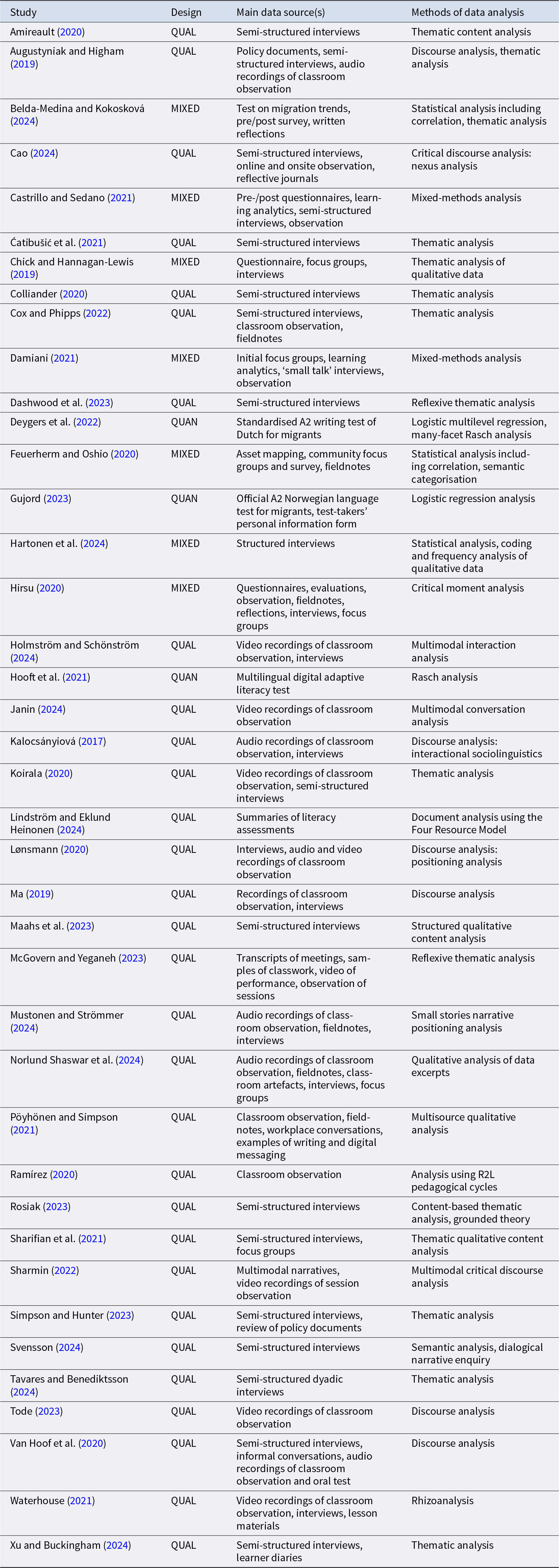
Table 4 Long description
The table lists individual studies and summarizes each study’s design type, primary data sources, and analysis methods. Qualitative designs dominate, most often drawing on semi-structured interviews and classroom observations (audio or video), typically analyzed with thematic analysis or discourse-oriented approaches such as critical discourse, interactional sociolinguistics, positioning, and multimodal analyses. Mixed-methods studies combine surveys or questionnaires with interviews, observations, learning analytics, or community data, and pair statistical techniques (including correlation) with qualitative coding or thematic work. Quantitative studies are fewer and rely on standardized language or literacy tests and administrative forms, analyzed with regression models or Rasch-based measurement. Across the table, thematic analysis appears in many variants (reflexive, content-based, structured), indicating a common analytic backbone despite differing labels. Because the table reports methods rather than outcomes, it supports comparison of methodological patterns but does not indicate which approaches produced stronger findings.
6.4. Future research directions
The studies examined in this review, as well as having important implications for policy and practice, provide pathways for future research into language education with adult migrants. Firstly, these studies not only demonstrate the value of multilingual, participatory approaches to TL teaching, but they also highlight the need for a similar stance regarding research. This review draws attention to ethical issues such as language choice in data collection, e.g., some of the reviewed studies involved interviews conducted through the TL despite acknowledgement that including participants’ L1s would have been more appropriate (Amireault, Reference Amireault2020). Multilingual approaches informed by an ethics of care not only have the capacity to enhance language pedagogy (Cox & Phipps, Reference Cox and Phipps2022; Norlund Shaswar et al., Reference Norlund Shaswar, Ljung Egeland, Rosén and Wedin2024) but also can promote more inclusive research by establishing trust and reaching people whose voices may otherwise be unheard. In terms of research design, the use of approaches such as participatory action research (Cox & Phipps, Reference Cox and Phipps2022; Feuerherm & Oshio, Reference Feuerherm and Oshio2020) aligns with the ethical argument for ‘a critical participatory approach towards research … oriented towards the promotion of social justice’ (Simpson & Chick, Reference Simpson, Chick, Costa, Rabie-ahmed and Cinaglia2024, p. 137). Likewise, from an ethical standpoint, the engagement of researchers from migrant backgrounds should also be supported and equitably acknowledged.
Secondly, and contingent on ethical responsibility, this review points to methodologies which may offer detailed insights into aspects of language education with adult migrants. It underlines the significance of longitudinal studies and how careful observation and rigorous probing of the multifaceted phenomenon of TL learning among adult migrants, e.g., through discourse or conversational analysis (Janin, Reference Janin2024; Tode, Reference Tode2023), can provide important evidence to guide classroom practice. Such research can thus inform TL teaching, for instance, in the development of literacy support for adult migrants with little or no previous experience of formal education. This review also shows how ethnographic research has been effectively applied, e.g., to investigate the impact of neoliberal integration policies on language education and access to employment (Lønsmann, Reference Lønsmann2020; Van Hoof et al., Reference Van Hoof, Nyssen and Kanobana2020) and to propose alternative approaches which recognise multilingual repertoires and prior learning (Mustonen & Strömmer, Reference Mustonen and Strömmer2024). Extensive quantitative research can also play a prominent role in exposing inequities in TL testing (Deygers et al., Reference Deygers, Vanbuel and Knoch2022) and making an evidence-based case for inclusive forms of assessment (Hooft et al., Reference Hooft, Schiepers and Vandommele2021), hence the need for further empirical studies on these issues (Schildt & Deygers, Reference Schildt and Deygers2024). Acknowledging the important contribution of mixed-methods studies (e.g., Castrillo & Sedano, Reference Castrillo and Sedano2021), this review therefore highlights the potential for ethical combinations of in-depth qualitative and robust quantitative research into language education with adult migrants.
Thirdly, the empirical studies analysed in this article illustrate how research in this field must respond to wider societal challenges. Ongoing investigation in relation to digital learning is essential (Xu & Buckingham, Reference Xu and Buckingham2024), considering current technological developments, e.g., regarding artificial intelligence, and to what extent these may offer new affordances for learning or exacerbate inequalities, areas of enquiry examined in a recent special issue of ReCALL (Bradley et al., Reference Bradley, Guichon and Kukulska-Hulme2025). Recognising the psychosocial dimension of TL learning, innovative research is required into emotion and affect in language education with adult migrants, e.g., exploring arts-based approaches to teaching with an awareness of representational ethics (McGovern & Yeganeh, Reference McGovern and Yeganeh2023). This review recommends additional research into how trauma may impact TL acquisition (Koirala, Reference Koirala2020; Sharifian et al., Reference Sharifian, Sadeghpour, Barton, Barry, Barton and Yilmaz2021) and how language learning environments may foster belonging and well-being (Dashwood et al., Reference Dashwood, Son and Park2023; Tavares & Benediktsson, Reference Tavares and Benediktsson2024), particularly given the increasing number of forcibly displaced people in the world today (United Nations, 2024; United Nations High Commissioner for Refugees, 2025). It also calls for more comparative research, within and across states, into how migration status and liminality may influence access to and engagement with TL educational programmes (e.g., Chick & Hannagan-Lewis, Reference Chick and Hannagan-Lewis2019; Hartonen et al., Reference Hartonen, Pöllänen, Karlsson and Väisänen2024).
Fourthly, further research is required to interrogate and inform policy development (Simpson & Hunter, Reference Simpson and Hunter2023) and to respond to raciolinguistic injustice (Sharmin, Reference Sharmin2022). This is particularly important considering current moves towards more exclusionary migration policies in many of the countries represented in this article. Additional studies examining strategies to promote minority language learning in multilingual societies are likewise necessary (Augustyniak & Higham, Reference Augustyniak and Higham2019; Pöyhönen & Simpson, Reference Pöyhönen and Simpson2021). Research into teacher education must continue, particularly in relation to fostering critical awareness and empathy in training programmes for TL teaching with adult migrants (Belda-Medina & Kokosková, Reference Belda-Medina and Kokosková2024), e.g., through the investigation of initiatives promoting participatory pedagogy (Chick, Reference Chick2025). In this regard, studies involving the implementation of critical multilingual and culturally responsive pedagogies (Ramírez, Reference Ramírez2020) can guide teacher education. The multilingual identities of educators from migrant backgrounds and their approaches to TL teaching should also be explored across various countries and educational settings (Colliander, Reference Colliander2020; Ma, Reference Ma2019).
Fifthly, acknowledging the limited scope of this review, a synthesis of research on language education with adult migrants based on studies conducted in countries beyond the remit of this article, particularly those in the Global South, is essential. In addition, despite the restriction of this review to publications in applied linguistics and education, further interdisciplinary approaches to research are recommended to develop a more holistic understanding of this field.
7. Conclusion
This review critically analysed 40 empirical studies on language education with adult migrants in a range of high-income countries, published between 2017 and 2024. The reviewed studies offer valuable insights for research and practice; they also demonstrate how this issue requires ongoing attention and why it should be a policy priority given its implications for social justice. The development of inclusive and equitable policies with adequate funding for TL educational programmes, which respond to individual needs among this diverse cohort of multilingual learners, is therefore necessary. Furthermore, appropriate support and training must be provided for all educators working in this sector. Finally, as evident from the studies analysed in this review, language education with adult migrants must be contextualised within a wider societal understanding of cultural and linguistic diversity, which supports lifelong learning and critical intercultural citizenship.
Competing interests
The author declares no competing interests.
Author contribution
B.Ć. is the sole author of this article.
Bronagh Ćatibušić is an Assistant Professor in Applied Linguistics (TESOL) in the School of Linguistic, Speech and Communication Sciences, Trinity College Dublin. Her research and publications focus on language learning and teaching in contexts of migration, intercultural education, and inclusive approaches to linguistic and cultural diversity. She has extensive experience in research, teaching, and engagement with refugee and migrant communities in Ireland and, through the University of Sanctuary initiative in Trinity College Dublin, she coordinates a programme of language and intercultural support for people who have experienced forced displacement.
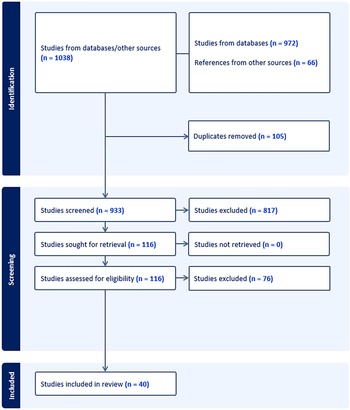
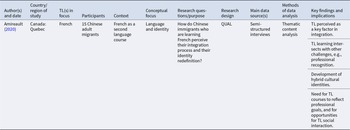
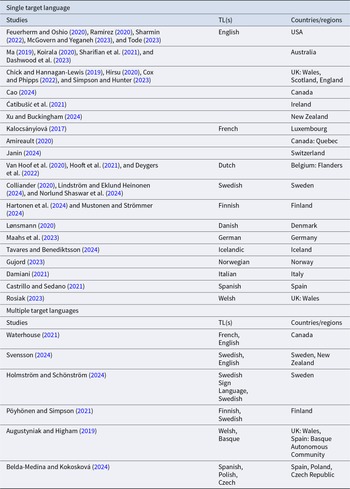
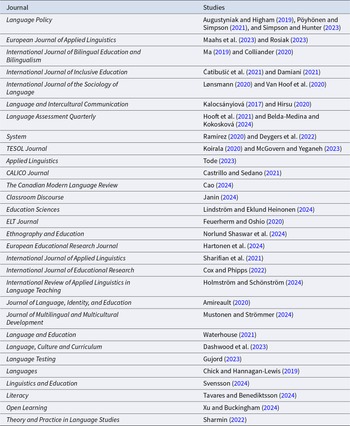
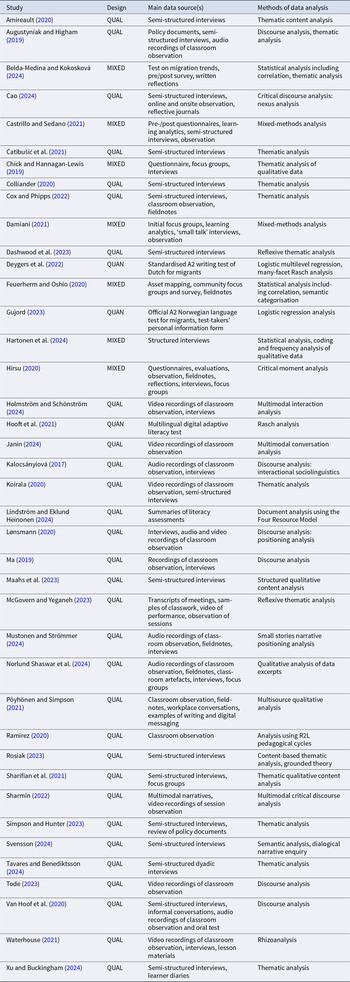

 Open access

