





Introduction
Ancient China is widely recognized as a highly developed agricultural society. While increasingly efficient agricultural practices and technologies supported substantial growth in productivity and population, the lack of adequate sanitation infrastructure likely created conditions conducive to the transmission and persistence of parasitic infections. Investigating these dynamics provides crucial insight into the long-term health consequences of agricultural innovations and urban development. The Song dynasty (960–1279 CE) represents a key period for examining the relationship between agricultural innovations and parasitic infections, as it experienced unprecedented increases in agricultural productivity alongside rapid population growth and urbanization. While these developments are well documented in economic and technological histories, their implications for public health remain underexplored. Therefore, this study aims to examine the dynamics between agricultural intensification and disease ecology during the Song dynasty. By integrating archaeoparasitological evidence with historical texts, it investigates how agricultural practices, particularly the widespread use of night soil (human excrement) as fertilizer, contributed to parasite transmission in this period.
The Song dynasty, traditionally divided into the Northern and Southern Song, saw major political, economic and sociocultural development, accompanied by significant advances in medical knowledge and practice. The Northern Song had a burgeoning economy organized around a state administrative civic system run from the capital Bianjing. The large growth of knowledge in Northern Song was largely driven by the invention of movable type printing, which enabled the mass publication and circulation of books (Needham, Reference Needham1985; Ebrey, Reference Ebrey2010). Following the Jingkang incident, the administrative centre moved to the south. Although the Southern Song period governed a smaller territory, it saw rapid economic growth and the invention of advanced techniques for rice production. Development centred around the Jiangnan region was fuelled by the influx of Northern migrants and the introduction of Champa rice. Never before had the heart of China’s economic and cultural activity revolved around Jiangnan (Hartwell, Reference Hartwell1982).
With the economic and agricultural development in Jiangnan came significant systematization of medical knowledge and the emergence of official state medical institutions, like 太医局 (Imperial Medical Bureau) and 翰林医官院 (Academy of Imperial Physicians). The medical advances were made possible by the organizational power of these administrative institutions combined with the increasing population size, urbanization, greater printing capabilities and advances in paddy-field agriculture. Major medical texts were produced, such as 太平圣惠方 (Peaceful Holy Benevolent Prescriptions), which documented existing medical knowledge about both the causes and the current clinical treatments for disease (Unschuld, Reference Unschuld1985), and included areas like internal medicine, gynaecology, paediatrics and surgical procedures. This documentation is still a primary source for historians of medicine and disease ecology, providing valuable information about the level of medical knowledge that existed during the Song dynasty, and how that knowledge was organized and applied by physicians. Of particular significance here is that these texts also recorded observations concerning parasitic infections with intestinal worms and the treatments available at the time. Despite having no developed theoretical framework to compare to modern parasitology, the Song physicians were nonetheless able to identify and treat some of the infections associated with parasitic organisms, using the classificatory systems and medical knowledge derived from past empirical observations.
Technological transformations, institutions and markets of night soil in the Song dynasty
While no fully developed theoretical framework for agronomy existed at this time, there was a wealth of agricultural knowledge that had steadily accumulated from the trials and observations of Song farmers over many generations. Their understanding of fertilizer use was sophisticated, with manures typically derived from the excreta of both domestic animals and humans, often mixed with additives like plant ash, weeds and other vegetable material, then composted to reduce odours before being applied to the soil. Texts like 齐民要术 (The Essential Skills for the People’s Welfare) give detailed descriptions of these fertilizer practices. For example, straw or other plant material served as bedding for cattle, where it was incorporated with manure through the trampling of the animals’ hooves to create a rich mulch. This process produced valuable material that could be collected and composted into a ‘compound fertilizer’ and attests to the advanced knowledge of manure management and composting techniques during the Northern Wei period (Zhao et al., Reference Zhao, Liu, Wang and Gu2020).
Fertilizer use in paddy fields up to the Tang dynasty was primarily based on natural waste products (e.g. animal waste, crop residues and decaying vegetation) or deliberately cultivated green manures (e.g. nitrogen-fixing legumes such as Vicia sativa) (You, Reference You1995). During the Song dynasty, fertilizers also included mineral additions like sulphur, stalactite powder and lime, as well as advanced composting techniques, such as 沤肥 (soaking manure in water), 火粪 (fire manure) and 饼肥 (oilcake fertilizer). The farmers also understood the importance of storing fertilizers to prevent nutrient loss and constructed sheds specifically for this purpose. Their approach to fertilizer use is described in 陈尃农书 (Chen Fu’s Agricultural Book), where the notion of rational use of fertilizer is highlighted (Chen, ca. 1149). His influential theory of soil fertility emphasizes the importance of continually recycling material to create perpetually renewed and strengthened land.
Collection and transportation of night soil in the Song dynasty
As knowledge of agricultural techniques like fertilizer use developed and was disseminated to farmers, the collection, storage and application of manures became a routine practice in rural regions, and one widely encouraged by the local communities – a normalization process that facilitated the institutionalization of manure collection. Cheng Mi’s 洛水集·富阳劝农 (The Luoshui Collection: Encouraging Agriculture in Fuyang) from the Southern Song period reminisces on the treatment of night soil and its value to agriculture:
每见衢、婺之人, 收蓄粪壤, 家家山积, 市井之间, 扫拾无遗。故土膏肥美, 稻根耐旱, 米粒精美。
I have often seen the people of Quzhou and Wuzhou collecting and storing night soil, with every household accumulating it in great mounds, and nothing left uncollected in the markets and streets. As a result, the soil is rich and fertile, rice roots withstand drought and the grains are fine and of excellent quality (Cheng, ca. 1212).
The Quzhou and Wuzhou farmers thus considered the routine practice of collecting and storing night soil to be crucial for supporting soil fertility and agricultural productivity. The manure replenished the agricultural land’s fertility, encouraging abundant, drought-tolerant and high-quality rice crops. Households collected enormous heaps of night soil, and any in the streets and markets was always picked up and used, leaving them perfectly clean. Moreover, the passage also reflects the high value the local communities placed on fertilizers and the importance they gave to minimizing wastage – everything was swept clean to be put back into the land in the constant cycle of regeneration.
The collection of night soil is also described in Wu Zimu’s 梦粱录 (Dreams of Liang). From Chapter 13 comes this passage:
杭城户口繁伙, 街巷小民之家, 多无坑厕, 只用马桶, 每日自有出粪人瀽去, 谓之‘倾脚头’, 各有主顾, 不敢侵夺, 或有侵夺, 粪主必与之争, 甚者经府大讼, 胜而后已。
Hangzhou city had a large and dense population, where the household of the streets and alleys typically lacked pit latrines and instead relied solely on chamber pots. Every day, designated night soil collectors – the qing jiaotou – would remove the waste, each having their own clientele and not daring to encroach upon others’ collections. When any encroachment occurred, the owners of the night soil would argue ferociously, occasionally the dispute escalating to official legal proceedings, which would only cease upon a ruling in their favour (Wu, Reference Wu1274).
The collected night soil would subsequently be transported away from the urban areas. Chapter 12 of 梦粱录 (Dreams of Liang) describes the night soil transportation as follows:
更有载垃圾、粪土之船, 成群搬运而去。
There was also a waste transport system consisting of boats running in groups that were dedicated to carrying away garbage and night soil (Wu, Reference Wu1274).
The high population density during the Song period resulted in severely cramped living conditions, making chamber pots the only practical means of excretion, as there was insufficient space for the widespread installation of pit latrines. As described above, collecting and transporting night soil away from the urban areas was a routine practice. A profession had been created whose members – the qing jiaotou – performed the nightly collection of city residents’ excreta, with each having a designated area to cover. The qing jiaotou’s operations were officially managed to prevent territorial violations and resulting disputes, a management system that marked the beginning of the Song period’s organization and marketization of night soil collections. Territorial disputes were settled by the local authorities, who formed one arm of the increasingly well-developed system of urban governance and institutionalization through which the market order was regulated and maintained. The creation of a dedicated profession for the systematic collection of night soil was thus an early stage of the institutionalization of public services and significantly improved city residents’ quality of life. The night soil, collected by the qing jiaotou as a valuable agricultural fertilizer, formed part of the cyclical exchange of materials between urban and rural areas, and the regularity of this exchange coupled with the institutionalization of the collections gave farmers a reliable source of plant nutrients, increased the stability of the food supply back to the city and sustained the growth of the urban population. With increasing regularization and governance came a growing awareness of the importance of a legal system that safeguarded market order and social stability. A legal consciousness thus developed during the Song period, where there was a common, shared understanding of the necessity of a rule-based market system. The system of urban waste collection exemplifies the emergence of urban administrative structures for overseeing market economies during the Song period and enabled the efficient allocation of resources between mutually dependent urban and rural communities.
Institutionalization of night soil management, taxation and the market economy indicators in the Song dynasty
The urban population and demand for organic agricultural fertilizers increased simultaneously during the Song and Yuan period, resulting in the regular exchange of fertilizers and food that developed into a commodified economic system that crossed regional boundaries. The qing jiaotou collected the city residents’ excreta and transported the fertilizer on night sail boats and cart barrels to the countryside, where it was regarded valuable. Furthermore, to safeguard the supply of fertilizer, families were mobilized to dig manure storage pits alongside building manure heaps using animal and human excreta collected from city streets, practices that gradually became embedded in the daily lives of both farmers and city residents. Pits were dug to collect waste kitchen scraps and water, and those constructed alongside homes stored fermented liquid manure, fallen leaves and ash. In agricultural fields, manure sheds were erected to collect and combine animal excreta with crop residues, producing an effective and stable organic fertilizer. As people’s awareness of the value of manure increased, industries dedicated to supplying fertilizers appeared in cities, such as 金汁业 (gold juice trade) and 墉业 (manure trade). By this stage, night soil had become integral to the agricultural market economy, further strengthening the material interdependence of the urban and rural communities. Agriculture and the rural communities depended on the flow of manure from the cities, and the urban population depended on the flow of food from the rural farmers, a material exchange that exemplifies the Song dynasty’s economic marketization and institutionalization of resource allocation (Du, Reference Du2017).
The night soil distribution systems show how both public sanitation and resource allocation became formally managed by urban planning administrations. Night soil was a valuable market commodity that linked the urban and rural Song economies through an interaction involving its large-scale collection, storage and delivery. The commodification of the fertilizer is evident during the Southern Song period, when it was incorporated into the Zhejiang taxation system. However, unlike regions such as Fujian, the Zhejiang taxation system was chaotic and corrupt. In 朱子语类 (Collected Sayings of Zhu Xi), Volume 111, Zhu Xi describes it as follows:
福建赋税犹易办, 浙中全是白撰, 横敛无度, 民甚不聊生, 丁钱至有三千五百者。人便由此多去计会中使, 作宫中名字以免税。向见辛幼安说, 粪船亦插德寿宫旗子。某初不信, 后提举浙东, 亲见如此。
The taxation system in Fujian remained relatively easy to manage, but in central Zhejiang it was entirely fabricated, with arbitrary levies and no limits, putting the people under severe hardship. Poll taxes could reach as high as 3500 in cash, with the result that many people resorted to obtaining official guild titles to evade taxes. I once heard Xin You’an say that even night soil boats bore the flags of the Deshou Palace. While incredulous at first, I later saw it in person when serving as the supervisor of eastern Zhejiang (Li, 1270/1986).
In central Zhejiang then, which today corresponds to the central and eastern regions, taxation was both heavy and often arbitrary and subjected the people to extreme hardship. Of particular significance in this extract is the confirmation of night soil’s economic worth and its crucial role in the agricultural recycling system. The extreme taxes – poll taxes as high as 3500 in cash – naturally encouraged tax evasion, with the night soil boats, for instance, sometimes even bearing the flags of the Deshou Palace to falsely proclaim imperial affiliation and consequent tax exemption (The Deshou Palace was the residence of the then retired emperor Gaozong and its special political status came with tax privileges). This example shows how common corruption was in the Southern Song taxation system, with politics heavily involved in private economic activities and private boat owners seeking all possible means to evade the inflated taxes. However, it also provides further affirmation of night soil’s significance in both the agricultural economy and institutionally managed urban governance. The many and various ramifications of night soil becoming a taxable commodity reflect how resource management, the enforcement of fiscal policy and social hierarchies were all intricately entangled during the urbanization of the Song period.
Institutionalized night soil fertilizer and parasitic infection risks in the Song dynasty
Chinese agriculture underwent a major transformation during the Song dynasty. Paddy field technology was widely established and resource recycling developed to an advanced degree through institutionalization, resulting in a system where night soil formed a vital component of large-scale agricultural fertilizer regimes – a material exchange between urban and rural areas that represented a complete socioenvironmental ecology, not merely a sophisticated recycling system. Documents from this time, such as 东京梦华录 (Dreams of Splendour of the Eastern Capital) and 梦溪笔谈 (The Dream Pool Essays), describe the transportation, trade and taxation of night soil and its integration into urban planning and the allocation of labour (Meng 1126/1981; Shen, 1088/1962). The growth in population was sustained by this institutional framework and the agricultural infrastructure it worked alongside – hydraulic engineering systems and paddy irrigation networks.
While the institutionalized structure provided organization and stability to agriculture and the recycling of night soil, it also lent that same stability to environmental conditions conducive to harmful pathogens and thus posed a risk to public health. The irrigation networks created many wet habitats where the eggs of intestinal parasites such as roundworms, whipworms, hookworms and pinworms could survive for extended periods. Transmission routes for infection could be faecal-oral (e.g. from ingestion of contaminated vegetables or water) or skin penetration (e.g. hookworms could penetrate farmers’ bare feet). The risk of infection for farmers was therefore highest during direct contact with faecal matter, paddy field irrigation, vegetable washing or periods when water management standards were lax (Zhou et al., Reference Zhou, Wang, Chen, Wu, Jiang, Chen, Zheng and Utzinger2005). Once humans are infected, parasite eggs are excreted in faeces as part of the life cycle. The use of inadequately composted human excreta as fertilizer, which may not be exposed to temperatures sufficient to kill parasite eggs, could then reintroduce these eggs into soil and water systems, sustaining transmission cycles. For livestock such as cattle and sheep, infection rates were elevated if night soil was applied particularly frequent, and when infected these animals could then serve as zoonotic reservoirs. Parasites like the Chinese liver fluke have complex life cycles and live in different environments at each stage, which increases the risk of exposure. Infection with the Chinese liver fluke is typically associated with the consumption of raw or undercooked freshwater fish.
The farmers’ working practices, the Jiangnan climate and the dense, frequently irrigated paddy fields together created persistent transmission chains in which pathogens circulated among humans, soil and water. Jiangnan is hot and humid, and the farmers tended to work partially immersed in water or with bare feet, creating conditions especially favourable to hookworms, schistosomes and amoebas. Furthermore, from the perspective of environmental history, the infection rates for chronic diseases such as schistosomiasis have been associated with periods when wetlands are being transformed into irrigated paddies (Elvin and Liu, Reference Elvin and Liu1998). As urbanization progressed during the Song period and night soil became a commercial commodity in the cities, the systems put in place to collect, store and distribute the soil created a hidden network of pathogen dissemination routes. The risk of infection along these routes also increased whenever sewage and storage management was insufficient. While these infection risks for the most part are undocumented in historical texts, careful cross-readings of Song period medical records and the available epidemiological data show an association between the rise in agricultural productivity and a cost to public health.
There is also a systematic relationship between social class and the health risks associated with night soil. Labourers responsible for the collection, transportation and application of the manure typically belonged to marginalized social groups who tended to live midway between urban and rural areas. These groups were in direct and daily contact with night soil and their roles in urban waste management and rural fertilizer exposed them to pathogen-high environments for extended periods. Furthermore, such groups often could not afford adequate protective clothing, highlighting how infection risks were not simply related to sanitation methods, but deeply enmeshed in the social structure. Labour hierarchies, social stigmatization and unequal healthcare all put certain social groups at increased risk of infection (Farmer, Reference Farmer1996; Singer, Reference Singer2009). The workers at greatest risk were therefore those living at the margins of production and were exposed to what medical sociologists and geographers of health would consider to be socially determined risk (Solar and Irwin, Reference Solar and Irwin2010). What connected agricultural production and urban waste management in the night soil system were the bodies and labour of particular social groups. Thus, the risk of infection was linked to institutional arrangement, specific spatial locations and particular social groups – vulnerability to infection was structurally unequal. The night soil system during the Song period is therefore not merely an example of a dramatic socio-agricultural transformation, but a key context within which to understand how social exclusion, the politics of infrastructure and spatially transmitted disease all interacted to affect human health.
Symptom descriptions of parasitic infections in ancient Chinese medical texts and archaeological records of ancient parasites
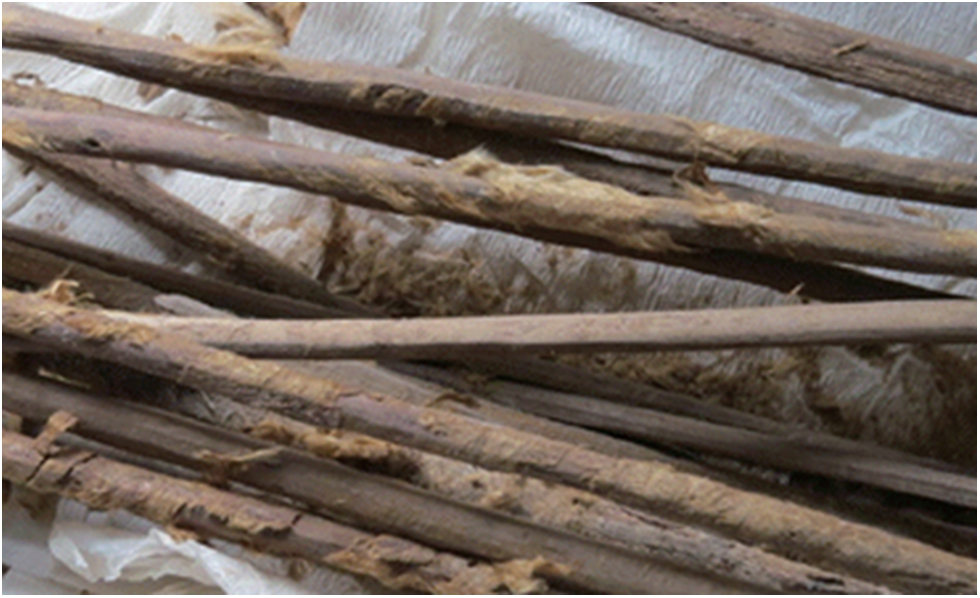
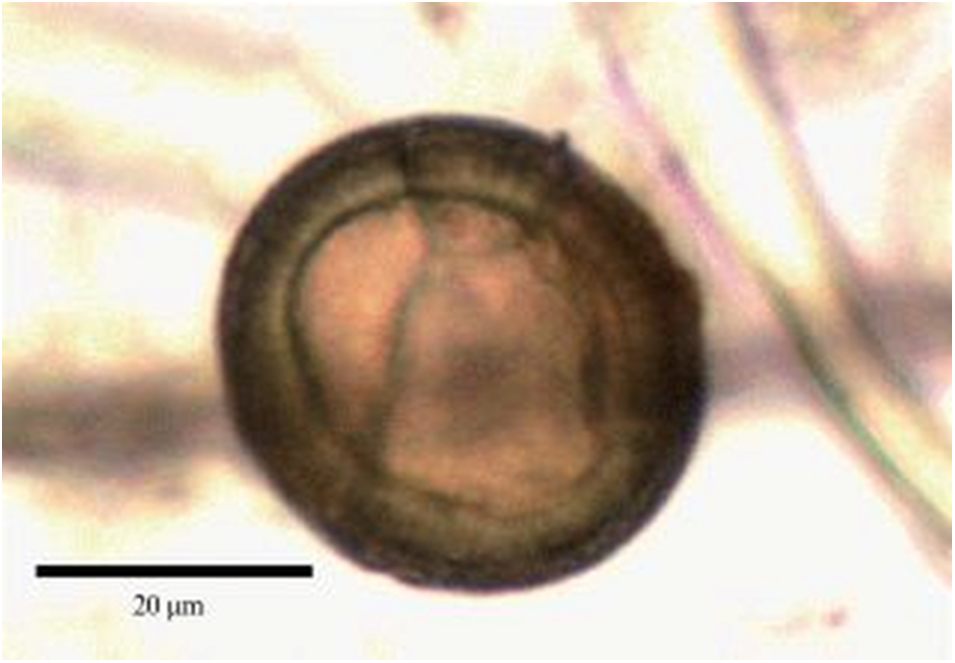
The archaeological data about parasitic infections in China is largely derived from mummies and burial samples, with parasite eggs found in intestines or pelvic soil. Clonorchis sinensis, which has been associated with freshwater fish consumption, together with Ascaris lumbricoides and Trichuris trichiura, is the most common species. Although the irrigation systems and agricultural techniques were advanced in ancient China, the findings suggest that subsistence strategies of the labourers and sanitary conditions created an environment where the risk of parasite infection was high (Yeh and Mitchell, Reference Yeh and Mitchell2016; Mitchell, Reference Mitchell2023). Key factors included the application of human excreta fertilizers, dietary habits like eating raw food, frequent irrigation and shared water resources. Yeh et al. (Reference Yeh, Mao, Wang, Qi and Mitchell2016) examined preserved wooden hygiene sticks and latrine soil dating back to the Han period at the Xuanquanzhi postal station site in Dunhuang, Gansu (see Figure 1). For the first time direct archaeological evidence was found of intestinal parasites such as Trichuris trichiura and Taenia spp (see Figure 2 and 3). alongside the Silk Road, which may have been ingested from undercooked meat or because of inadequate washing facilities.
Personal hygiene sticks from a latrine at Xuanquanzhi Relay Station at Dunhuang on the Silk Road, dating from 111 BCE–CE 109.

Whipworm egg (Trichuris trichiura) from the Xuanquanzhi latrine. Dimensions 53 × 27 μm. Black scale bar indicates 20 μm.

Taenia sp. tapeworm egg from the Xuanquanzhi latrine. It is most likely to be Taenia asiatica or Taenia solium and less likely to be Taenia saginata. Dimensions 36 × 32 μm. Black scale bar indicates 20 μm.

The archaeoparasitological data come from many different geographical locations and reveal infection patterns that reflect the diversity in cultures, agricultural methods, water management and lifestyle during different periods in China’s history (Mitchell, Reference Mitchell2023). Evidence of parasite infections from analyses of mummies, latrine sediments and burial soil can be used to reconstruct disease geography. The archaeological evidence shows that parasitic infections in ancient China varied widely both spatially and by type, with eggs from several parasite species discovered at sites across South China, including Guangzhou, Fuzhou and other locations in Fujian Province (see Table 1). This distribution pattern suggests that the region’s warm, humid climate combined with the paddy-field agricultural systems, helped sustain a high prevalence of parasitic disease. Some of the most common were Clonorchis sinensis and Fasciolopsis buski, making it likely that the consumption of freshwater foods and exposure to irrigation systems contaminated with faecal material, served as the main routes of transmission. However, even in the dry northwestern province of Gansu, C. sinensis eggs discovered in ancient latrine deposits at Dunhuang show that parasite infection was not restricted to humid areas. This anomalous finding may be linked to the movement of people and goods along the Silk Road.
Documented records of parasites found in ancient China

The archaeoparasitological data can provide an empirical basis from which to explore ancient medical texts and their accounts of people’s experiences of the parasitic diseases then known as worm diseases. They enabled historical patterns of human–parasite infections to be traced and confirm the reports in ancient medical texts. During the Song dynasty, major medical works such as 太平圣惠方 (Peaceful Holy Benevolent Prescriptions), 证类本草 (Classified Herbal Medicine) and 圣济总录 (Comprehensive Medical Records of Sagely Benevolence) were compiled. These texts consolidated existing medical knowledge and provide detailed descriptions of drugs, their effects on patients and the methods of treatment. Such information formed the basis for the standardization of traditional Chinese medicine that took place during the Song period, a period when clinical observation and syndrome differentiation was emphasized. It is also during the Song that specialist physicians were first referred to in the literature, which shows that medicine was in the process of professionalization (Gao, Reference Gao2006).
Following presents the evidence of medical knowledge regarding parasites from Song dynasty medical texts. Other similar evidence is presented in Table 2.
蛔虫五条须是小儿吐出者曝乾捣为末 腻粉一钱 石胆半钱上件药。都细研如粉。日二三度。旋取少许点之。 – 《太平圣惠方》卷第三十二
Sun-dry five huichong (roundworms), which must have been expelled by a child, and grind into powder. Add one qian Footnote 1 of nifen (lead powder, white lead, basic lead carbonate) and half a qian of shidan (stone gall, galla alum, usually referring to copper sulfate or alum minerals). Grind all the ingredients into a fine powder and use by applying a small amount to the affected area two or three times daily. – Peaceful Holy Benevolent Prescriptions, Scroll 32 (Wang, 1992).
凡人皆有九虫在腹内。值血气虚。则能侵蚀。而蛲虫发动。最能生疮。乃成疽癣 疥之属。 – 《太平圣惠方》卷第四十一
All humans have nine kinds of worms in their intestines, which can erode the body when blood and the body’s vital energy called qi become deficient. When any of these become active, but particularly naochong (pinworms), they are especially likely to produce sores, which may develop further into furuncles, ringworm, scabies, and similar conditions. – Peaceful Holy Benevolent Prescriptions, Scroll 41 (Wang, Reference Wang1992).
论曰寸白虫, 乃九虫之一种, 状似绢边葫芦子, 因髒气虚, 风寒湿冷, 伏于肠胃, 又好食生脍乾肉等, 所以变化滋多, 难于蠲治, 说者谓食牛肉, 饮白酒所致, 特一端尔, 亦未必皆缘此。 – 《圣济总录》卷第九十九 九虫门
Cunbaichong (tapeworm) is one of the nine types of worms and resembles a silk-edged gourd seed. Due to deficiencies of the visceral qi and influences of wind, cold, dampness, and chill, it lives in the intestines and stomach. It has an affinity for consuming raw fish, dried meat, and similar foods, which leads to diverse manifestations and makes it difficult to eradicate. Some say that its cause is the consumption of beef and drinking of white wine, but this is only one factor and does not necessarily apply in all cases. – Comprehensive Medical Records of Sagely Benevolence, Scroll 99, Chapter on Nine Worms (Zhao, 1125/2018).
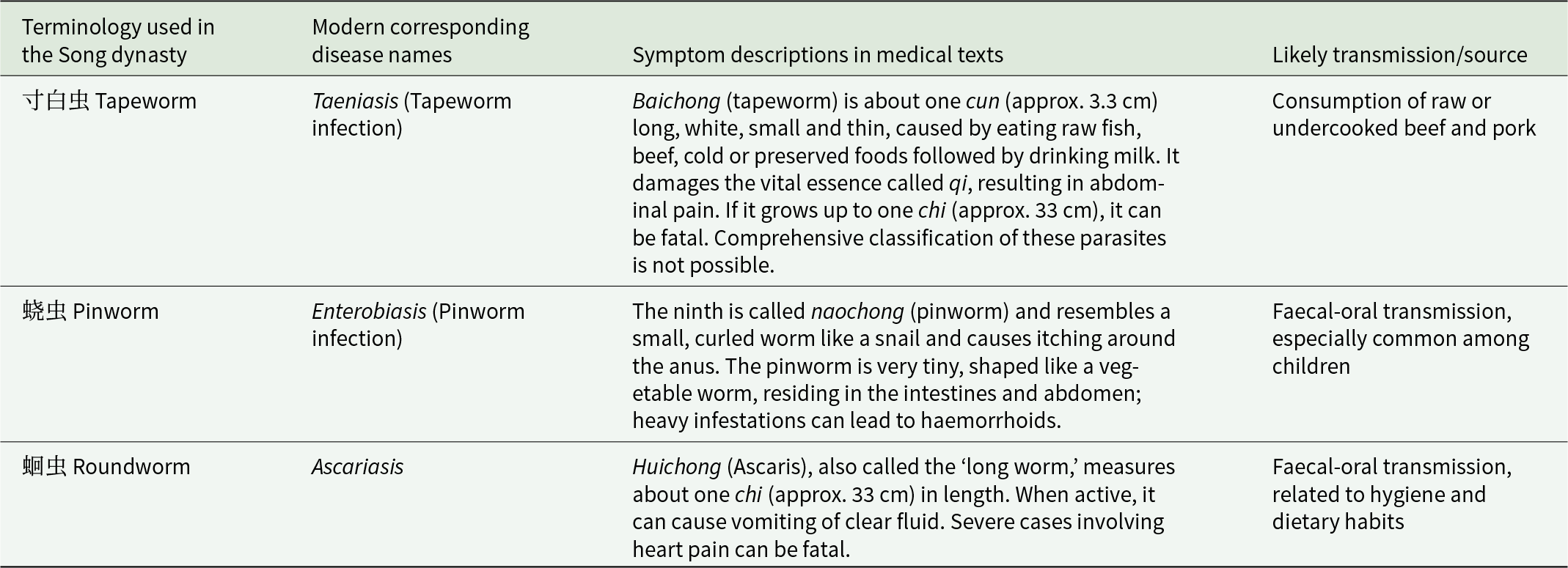
While modern terms such as ‘parasitic diseases’ do not appear in Song medical texts, the records contain many descriptions of clinical symptoms and treatment methods consistent with parasitic infections, as shown in Table 2. Through clinical observations, the Song physicians could characterize and classify distinct worm syndromes. Texts such as 证类本草 (Classified Herbal Medicine) also detail herbs that have since been shown to possess antiparasitic properties, including 苦楝皮 (Melia bark), 雷丸 (Laccocephalum mylittae), 榆白皮 (elm bark), 石榴皮 (pomegranate peel) and 使君子 (Rangoon creeper) (Chinese Association of Traditional Chinese Medicine, 2016). When read alongside archaeoparasitological findings, such medical records provide a richer context within which to understand how parasites affected public health during this period. The discussions of symptoms, causes and transmissions may lack modern biomedical nomenclature but still show a remarkably perceptive grasp of disease patterns. Archaeoparasitological findings, in turn, not only support the accuracy of historical descriptions but also show how fragile the ancient sanitation systems were and the distinct regional patterns of parasitic infections.
Common records related to parasitic worms in Song dynasty medical texts

Compilation based on 太平圣惠方 (Peaceful Holy Benevolent Prescriptions), 证类本草 (Classified Herbal Medicine), and 陈尃农书 (Chen Fu’s Agricultural Book).
One example is the description of 寸白虫 (tapeworm). According to one text, it is
about one cun (approx. 3.3 cm) long, white, small, and thin in shape, caused by eating raw fish, beef, cold or preserved foods followed by drinking milk. It damages the vital essence called qi, resulting in abdominal pain. If it grows up to one chi (approx. 33 cm), it can be fatal. Comprehensive classification of these parasites is not possible (see Table 2).
While the medical language in this account is not modern, it is still similar to modern descriptions of taeniasis. Taenia sp. eggs have been found in latrine and mummy samples from archaeological sites such as Xuanquanzhi in Gansu and Phoenix Hill in Hubei, proving that taeniasis was prevalent in Central China (see Table 1).
Similarly, Song medical records give descriptions of pinworms: ‘The ninth is called the pinworm, which resembles a small, curled worm like a snail and causes itching around the anus’ (see Table 2). This closely matches modern descriptions of Enterobius vermicularis, the eggs of which have been found in mummies from Changsha, Hunan. On the other hand, according to Song medical texts, 蛔虫 (roundworm) ‘measures about one chi (approx. 33 cm) in length. When active, it can cause vomiting of clear fluid. Severe cases involving heart pain can be fatal’ (see Table 2). This description closely corresponds to Ascaris lumbricoides, whose eggs have been found in archaeological sites across Henan, Hubei, Jiangsu, Guangdong and Fujian provinces, showing its widespread presence in ancient communities along the Yangtze River basin and southern China. As pinworm and roundworm infections are both transmitted via the faecal-oral route, the infection would probably have occurred because of poor sanitary hygiene. Moreover, the collection and transportation of night soil for the fertilizer of Song agricultural systems would have exposed workers to conditions where faecal-oral transmission was possible, resulting in these twoparasitic infections being frequently seen and recorded in the Song medical literature.
Direct archaeoparasitological evidence from the Song dynasty is limited. To date, parasitic infections, including Ascaris lumbricoides, Clonorchis sinensis and Trichuris trichiura, have only been reported in two Song dynasty mummies (see Table 1). However, this limited number does not imply that parasitic infections were insignificant during this period. Archaeoparasitology remains at a relatively early stage of development in China, and most existing evidence derives from autopsies of Ming dynasty mummies. Consequently, further archaeological investigation is required to examine the prevalence of parasitic infections in the Song dynasty. Given that archaeoparasitological evidence is well-established both before and after the Song dynasty, it is highly likely that parasitic infections were also widespread during this period. Moreover, the sophisticated understanding of parasitic worm infections evident in Song medical texts, particularly with regard to symptomatology and treatment, further suggests that such infections were common. However, the effectiveness of their treatments was limited by the medical theories and environmental conditions of the time. They lacked an understanding of their aetiologies sufficient to link the diseases to aspects of the environment, such as night soil contamination of water supplies or food. The ubiquitous use of night soil as fertilizer, which was highly valued as a nutrient recycler, created ideal conditions for parasites to spread. Poor sanitation and the lack of disinfection methods further increased transmission risks in the human communities.
A comprehensive picture of parasitic dietary practices, water resource utilization, transmission routes and infection risks in the Song dynasty
Descriptions of the daily lives of the people during the Song dynasty are characteristic of advanced urbanization. Anecdotal works such as 梦粱录 (Dreams of Liang) and 东京梦华录 (Dreams of Splendour of the Eastern Capital) provide rich descriptions of street food vendors, eateries, teahouses and taverns (Wu, Reference Wu1274; Meng, 1126/1981). However, while the descriptions show that urban life was flourishing and prosperous, they also reveal the common activities that would have exposed people to infections. A notable example is the traditional inclusion of raw fish and pickled aquatic products in the regional cuisine of Jiangnan. Modern studies of aquatic parasites such as Clonorchis sinensis have shown that regularly consuming raw freshwater fish can put people at risk of liver fluke infections.
The most entrenched, structural risk to public health came from the limited water management systems. 梦粱录 (Dreams of Liang) shows that Lin’an residents relied on water from wells and rivers, but the city’s sewage system was not sufficiently isolated from the drinking water supply (Wu, Reference Wu1274). Excrement harbouring parasite eggs often entered the supply from rainwater runoff or via drainage channels, a problem even more severe in suburban districts where night soil was frequently applied to the local land. Water contaminated with faecal matter could leak from drainage channels or runoff from the ground and into the groundwater layers, where it created a hidden waterborne infection source. In terms of transmission ecology, these risks were not the result of a single factor in isolation but arose from the following 3 cotemporal conditions:
(1) Dietary practices: The consumption of raw food and regional cuisine using raw or pickled produce (e.g. drunken crab, raw fish) allow foodborne parasites to persist.
(2) Poor water management: Drinking water supplies inadequately isolated from sewage systems allows aquatic environments to serve as major media for faecal-oral transmission.
(3) Night soil fertilizer practices: The widespread use of untreated human faeces as a fertilizer results in the continual contamination of soil and water with parasite eggs.
During the Song dynasty, agriculture depended heavily on night soil as the primary fertilizer and developed into an institutionalized network for resource recovery and recycling that intricately connected urban waste management with rural cultivation. Within this network, pathogens could circulate continuously through food, water and soil. As a result, the reproduction and spread of parasites was not simply a matter of personal hygiene but was structurally tied to the use of land, the fragile public health systems and the broader organization of resource distribution.
The constant circulation of night soil, grain and water between cities and rural communities facilitated the spread of disease risks within and across geographic areas. The night soil system improved the recycling of agricultural resources, but at the same time it shaped distinctive patterns of infection risk. Many layers of manual work were involved at each step of night soil distribution, from waste collection at urban latrines, to labour-intensive transport and final use in peri-urban rice fields. Those who moved or applied night soil were in direct contact with contaminated material for extended periods and so faced the highest risk of infection. At the same time, the inadequate separation between urban sewage and human waste meant that some market foods and household water supplies were easily contaminated, further expanding the routes for parasite transmission. Taken together, these factors show how the night soil system functioned not only as an agricultural technology that increased productivity but also as a social mechanism that redistributed health risks across different social groups.
Conclusion
This study sought to understand the complex relationships between agricultural innovations and parasitic diseases in China during the Song dynasty (960–1279 CE). Of particular interest was how such diseases were connected to the widespread use of human excreta or ‘night soil’ as an agricultural fertilizer. The major agricultural innovations of the period, including the introduction of Champa rice and double cropping systems, dramatically increased productivity but required intensive cultivation, placing pressure on resources and leading to significant increases in population density. Within this ecosystem, the collection, transportation and application of night soil became a key pathway in urban-rural resource recycling. However, while night soil fertilizer was crucial for supporting the fertility of the agricultural land, its frequent and untreated application likely led to the circulation and spread of intestinal parasites within the urban-rural ecosystem.
This study draws on classical agricultural and medical texts such as 太平圣惠方 (Peaceful Holy Benevolent Prescriptions), 证类本草 (Classified Materia Medica), 陈尃农书 (Chen Fu’s Agricultural Book) and 圣济总录 (Comprehensive Record of Sagely Beneficence) to reconstruct the disease environment during the Song period. Despite the Song physicians lacking a modern theory of parasitic infection, they had comprehensive knowledge of clinical manifestations and pharmacological treatments for parasitic disease. Together with archaeoparasitological findings, these sources suggest that intestinal parasites – including Ascaris lumbricoides, Trichuris trichiura, Clonorchis sinensis, Enterobius vermicularis and Taenia spp. – were likely to be prevalent during the Song dynasty, with regional variation shaped by dietary structures, agricultural practices and sanitation infrastructure. In conclusion, the night soil fertilizer system exemplifies the complex relationships between human health, disease distribution and social organization, and how these were deeply embedded in the agricultural and economic development of the Song era.
Author contributions
Hui-Yuan Yeh conceived the study and contributed to the research design. She wrote approximately two-thirds of the manuscript. Edward Kien Yee Yapp co-developed the research idea and contributed to one-third of the manuscript. Chen Chen and Anthea Yu Xuan Lee assisted with literature research, reference compilation and translation. Chen Chen also revised the manuscript.
Financial support
None.
Competing interests
None.
Ethical standards
Not applicable.



 Open access

