

In a bunker far under the ice on the Norwegian island of Svalbard, 12 degrees latitude north of the Arctic Circle, seeds descended from maize landraces collected in Colombia are catalogued as part of the effort to preserve the world’s agricultural genetic diversity and cultural patrimony. Here in the Svalbard Global Seed Vault, reserve seeds are filed in an abandoned coal mine for future breeding projects or in case of catastrophe. Nearly a million samples of seeds in the vault represent duplicates for over one-third of the genetic diversity contained in seed banks around the world.
The Svalbard Global Seed Vault opened in 2008 under a tripartite agreement between the Norwegian government, the Nordic Genetic Resource Center, and the Global Crop Diversity Trust, the latter a partnership between the United Nations Food and Agriculture Organization (FAO) and the Consultative Group on International Agricultural Research (CGIAR).Footnote 1 That year, the vault received its first batch of shipments of duplicate seeds from around the world, including Colombia, where CGIAR operates out of the International Center for Tropical Agriculture (CIAT), opened in 1967 outside the city of Palmira on the tropical floodplain of the Cauca River.Footnote 2
Within months in late 2017 and early 2018, both the Svalbard Global Seed Vault and CIAT celebrated anniversaries. Scientists, philanthropists, government officials, and journalists arrived at Svalbard airport in Longyearbyen, Norway on the arctic ice and at Alfonso Bonilla Aragón International airport in Palmira, Colombia in the tropical heat. They celebrated these institutions and their histories and looked forward to their continued roles in tackling some of the twenty-first century’s enduring issues, including food security, climate change, war, and natural disaster.Footnote 3 The stories these sites tell about themselves have changed since CIAT’s founding in 1967; however, one constant remains – their global orientation.
This chapter introduces CIAT in Palmira, Colombia, contextualizing its founding and historical evolution and juxtaposing its research agenda and purported accomplishments against the lived reality of late twentieth-century rural Colombians, particularly those in Valle del Cauca, the political department in which Palmira and CIAT are located. Although CIAT is a key node in a global network that spans from Palmira to Svalbard, the global history perspective presented at anniversary celebrations and in official publications, whatever its other merits, misses or minimizes the Colombian side of the story.Footnote 4
CIAT’s founding role in the establishment of CGIAR in 1971, and its continuing significance today, situates the site within the circulation of scientists, seeds, and funding in a global network of agricultural science. But in Colombia, the social, political, and economic landscape in which CIAT operates may be discerned in the speaker list for the celebrations of CIAT’s fiftieth anniversary in 2017: corporate executives, local and national politicians, a peace negotiator with the guerrilla, international aid workers, and land-grant academics. Their convergence in the agrarian history of the Cauca Valley binds the experiences of the Latin American Cold War and the multigenerational Colombian conflict to global processes of agricultural science, development, and capitalism.
In Palmira, CIAT’s history has played out against the backdrop of a landscape indelibly marked by a parallel history of agricultural corporatization and monoculture, particularly via the ascendency of a sugarcane agro-industrial complex that has, since 1959, organized under the auspices of the politically powerful Colombian Sugarcane Growers Association (ASOCAÑA). The refined sugar industry has many by-products – candy, alcohol, and biofuels, but also land concentration and the Colombian government’s commitment to private capital growth over land reform, environmental and public health issues related to nitrate leaching from chemical fertilizers and inputs including glyphosate herbicide, and societal consequences such as diabetes and obesity related to a steady rise in per capita refined sugar consumption. Collectively, these have played an important role in the country’s long-running and multidimensional armed conflict.Footnote 5 In fact, one of the first victims of a guerrilla insurgency kidnapping in Colombia occurred in 1965, when the Revolutionary Armed Forces of Colombia (FARC) symbolically targeted, kidnapped, and murdered Harold Eder, heir to the largest and oldest sugarcane corporation in the valley.Footnote 6 Throughout much of the second half of the twentieth century, parts of the Cauca Valley remained a landscape of conflict. But it was also a landscape of conflicting agricultures, or at least agricultural visions. This valley was and is home both to a sprawling sugarcane monoculture and to a world-renowned international research entity dedicated to the improvement of staple food crops, most notably beans, rice, cassava, and pasture grasses. What does the jarring realization that CIAT exists in a sea of corporate sugarcane suggest about the conflicted landscapes of global food production, scientific research, and CGIAR?Footnote 7 (See Figure 3.1.)
CIAT land at headquarters in Palmira leased to corporate sugarcane producers surrounds the gates to the research center (seen in the side mirror), July 2022.

In this chapter, I borrow the concept of deterritorialization from anthropology and political geography to suggest an important framework for writing the history of CGIAR centers from the ground up.Footnote 8 In these pages, I’m less interested in evaluating the global impact of CIAT, and even less in celebrating its successes or condemning its failures. Instead, my interests coalesce around the international center’s relationship to the landscape, people, and politics just outside its gates. I advocate for seeing research centers in place and evaluating science and knowledge production as actions that take place. Despite their global orientation and circulation, CGIAR centers still rely on local, place-specific environments for soil and water, on local people to drive shuttles and buses, tend to fields, serve food, and clean the bathrooms, and on local businesses and regional and national politics for coordination, agreements, infrastructure, and even funding, whether applied directly to the center’s operations or indirectly via the financing of roads, airports, and state-funded public university programs, to mention a few. Despite these ties, the beneficiaries of CIAT’s research seem to consistently live beyond the Cauca Valley. Viewed from the Cauca Valley, I argue that CIAT has adopted a placeless research agenda, that is, one not specific to a particular location or attuned to the nuances of local sociopolitical conditions. Instead, CIAT has offered scientific solutions for a placeless conceptualization of the global tropics, a phenomenon described in this volume for CGIAR more broadly, for example in Derek Byerlee and Greg Edmeades’ description (Chapter 9, this volume) of CIMMYT’s mega-environments in maize breeding, Prakash Kumar’s account (Chapter 2, this volume) of the imaginative definition of upland crop zones, and others.Footnote 9 Immediately outside CIAT’s gates, imagined solutions to the supposed challenges of the global tropics are minimally applicable amidst the reality of the sugarcane agro-industrial complex.
CIAT’s advocates undoubtedly feel that it is not their institution’s purpose to address local sociopolitical conditions. In this regard, CIAT scientists and their proponents adhere to a familiar myth, or, more generously, ideal, that views science as apolitical. Of course, CIAT, born of the hissing boilers and hot furnaces of the geopolitical Cold War, is nothing if not political.Footnote 10 As we shall see, CIAT leadership’s historical and internally contested decision not to address local conditions was a political choice in the slippery language of anti-politics.Footnote 11
At the same time, CIAT advocates are right to point out that the center did not create the inequalities of the Cauca Valley. The purpose here is not to blame CGIAR sites for creating or exacerbating rural inequalities. Rather, this chapter seeks to historicize CIAT in Cauca Valley soil and understand its creation and evolution as intertwined with, rather than separate from, the challenges of monoculture, land concentration, violence, and peace that preceded the center’s establishment in 1967 and continue to play out beyond its gates after its fiftieth birthday.
CIAT, like the fourteen other centers of the present CGIAR consortium, exists in a place.Footnote 12 The places where international research agendas come into contact with specific agricultural economies reveal the contradictions and conflicted landscapes of global agricultural systems. Situating CIAT in place, then, is not an act in defiance or condemnation of the research center, much less its scientific community. Perhaps this chapter may even offer CIAT scientists an introduction to the complicated place where they do their important work. More boldly, it offers an attempt to contribute to the evolving mission of CIAT itself, to “help policymakers, scientists, and farmers respond to some of the most pressing challenges of our time, including food insecurity and malnutrition, climate change, and environmental degradation.”Footnote 13 All of these profoundly affect the Cauca Valley in Colombia. If CIAT is to be a part of a sustainable peace in Colombia, then recognizing and reckoning with its history in place is an important start.
Local Precedents and Contexts for CIAT
CIAT is located along a highway that cuts across sugarcane fields for approximately thirty kilometers to connect the regional city of Palmira, Colombia (population approx. 300,000) with the large metropolis of Cali (approx. 2.2 million). Cali’s international airport, which regularly delivers the world’s scientific community to CIAT, is also located along this corridor just north of the research center. Coincidentally, this international airport (originally Palmaseca International airport) was inaugurated in 1971 in order for Cali to host the Pan-American Games, the same year that CIAT and the three other founding centers merged into the global consortium known as CGIAR. Cali’s growth and connection to the world offer important background for the establishment of CIAT.
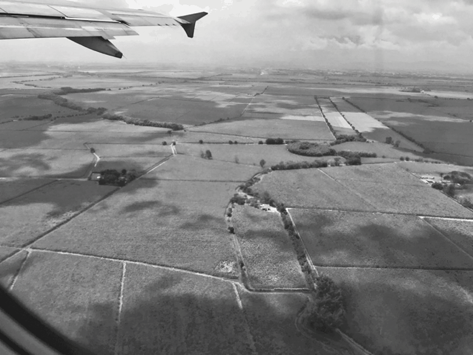
The Cauca Valley is located in southwestern Colombia, between two divergent ranges of the Andes Mountains (Figure 3.2). In the political department of Valle del Cauca, the Cauca River flows north past the Cali metropolitan area. A fertile alluvial plain stretches east of the river at approximately 1,000 meters elevation. This valley has been the subject of grandiose proclamations of paradise and future agricultural bounty since at least the early nineteenth century. In fact, the rise of an industrial sugarcane zone here in the twentieth century was due substantially to the site’s climate and geography – it is one of the few places on the planet that can support a year-round sugarcane harvest. Climatic advantages similarly contributed to the valley’s long-standing tradition of hosting agricultural research centers. The valley’s unique ability to produce two annual crops of maize attracted both Colombian and Caribbean agricultural scientists from the 1920s through the 1950s, eventually including Rockefeller Foundation scientists from the United States after 1948.
Monocultures of sugarcane viewed from the air dominate the fertile alluvial lands of the Cauca River valley around Palmira, Colombia, July 2022.
Despite the region’s long-advertised potential, industrial-scale agriculture took hold relatively recently. Before the 1930s, the Cauca Valley’s most desirable soils hosted a patchwork of sprawling cattle ranches owned by regional elites, much to the chagrin of would-be agriculturalists. In the nineteenth century, these ranches fed and clothed the gold-mining zones of the Pacific Coast to the west and Antioquia to the north. The abolition of slavery in the mid nineteenth century ushered in a period of social unrest in the valley as newly freed Afro-Colombians from the mining districts migrated to the towns and cities of the valley and joined with other people of color in the region in opposition to the large ranching estates, or latifundia. Racially charged conflict erupted in the 1850s over fencing and landowners’ enclosure of the commons, precipitating a series of national civil wars and an ongoing competition for the political allegiance of the popular classes.Footnote 14
At around the same time, a new cohort of would-be industrialists with ties to international import-export circles purchased land and began to settle in the valley. One of these newcomers, James “Santiago” Eder, began assembling what would become the valley’s first industrial-scale sugar operation with the opening of a steam roller mill imported from Scotland in 1900. That enterprise, Manuelita SA, remained a critical player in the expansion of the sugarcane industry throughout the twentieth century and is a major multinational player in the Cauca Valley today.
In the 1920s, the rural economy of the Cauca Valley pitted a traditional cattle-ranching elite against a growing industrialist class beginning to (slowly) coalesce its investments around sugar. Apart from both of these groups, a vast array of small- and medium-scale cultivators, some with land titles, others without, grew rice, cacao, plantains, sugarcane (milled in simple trapiches to produce unrefined sucrose, or panela), and coffee (in the foothills at the margins of the northern valley in particular). These rural valley residents included Afro-Colombians, as well as recently arrived colonists from Antioquia to the north, a group mythically associated with the expansion of a middle-class agricultural frontier in Colombia. With many groups and interests at odds in a relatively small but fertile valley, political energies focused around land tenure and space. The ranching elite and their political benefactors became the most common targets of charges of inefficiency and wasted space, particularly as Colombian cities such as Cali and Medellín grew and adopted heightened industrial ambitions and a need for robust food-producing hinterlands.
In this context, the departmental government funded a series of projects in the late 1920s aimed at quelling rural conflict and laying the infrastructure for future industrial growth and economies of scale.Footnote 15 In 1927, the department of Valle del Cauca and the national government joined forces to fund the Palmira Agricultural Experiment Station, one of three regional agricultural stations created to serve the country’s different geographies and corresponding crop regimes. In the 1930s, following the national electoral triumphs of the Liberal Party, with its populist and reformist agenda, the young Palmira station enhanced its emphases on the scientific improvement of a diverse palette of crops, including hybrid rice, maize, sugar, citrus, and even experimental projects such as Cannabis sativa, pursued to explore hemp as a possible domestic fiber for coffee sacks. The focus on diverse and multiscalar agriculture at Palmira complemented both regional and national moods. A series of agricultural schools and colleges were founded around Valle del Cauca at this time to educate the sons of campesinos, as well as a future generation of expert agronomists. The Palmira station partnered in these education programs and aggressively touted its extension efforts. Similarly, at the national level, the minister of agriculture advocated for protectionist tariffs on imported foodstuffs and offered fireside chats on the radio to speak directly to the country’s farmers. Taking cues from the agricultural bureaucracy of the US Department of Agriculture, as well as more climatically and culturally similar efforts in Mexico, Brazil, and Puerto Rico, actors at different levels within the Colombian state sought to foster a dynamic and self-sufficient agricultural sector.
Sugarcane was just one subject of many for researchers at Palmira in the 1930s. Initially, Colombian agronomists’ efforts to promote disease-resistant hybrid canes received a lukewarm reception from valley cultivators. Only the few industrial-scale firms had the capital to invest in a risk like adopting new varieties, such as the so-called POJ lines circulating from the Dutch-operated Proefstation Oost Java (POJ). However, a severe breakout of the sugarcane mosaic virus in the mid 1930s devastated Colombian growers. Many of the small- and medium-scale panela producers lost land and market share as the large entities, like Manuelita, invested further in disease-resistant hybrids and hired foreign breeders. The Colombian state likewise moved to intervene in the mosaic crisis, wresting full control of the Palmira Agricultural Experiment Station from the Department of Valle del Cauca and amping up experimentation with sugarcane cultivars in a collaborative effort with industrial producers and the US Department of Agriculture Sugarcane Research Center in Canal Point, Florida. A newly strong sugar sector thus grew out of the mosaic crisis with firm collaborative investments from Bogotá and Washington, DC. Manuelita, for its part, built a massive new factory with a refinery that inaugurated production in 1952. By mid century, Valle del Cauca’s agrarian populists and political boosters would have to look elsewhere to realize their dream of a bountiful and dynamic valley, at least one not exclusively reserved for sugarcane.
Violence and Development
As the industrial sugarcane sector grew stronger in the aftermath of the Colombian state’s interventions against the mosaic virus, some of the proponents of the old Palmira Agricultural Experiment Station and its extension mission reached out to foreign experts and funders to keep their programs going.Footnote 16 As World War II ended and the Cold War dawned, the US government responded, establishing Point Four projects and collaborations with Cauca Valley partners, including a series of exchanges run through Michigan State University. The Rockefeller Foundation also responded, launching the Colombian Agricultural Program (CAP) in 1950, the first international expansion of the pilot Mexican Agricultural Program, considered by many to be the institutional birth of the Green Revolution. CAP partnered with the Palmira station and used that site as a base for some of its critical projects, such as maize breeding. Maize landraces collected by Colombian agronomists based in Palmira and Medellín on behalf of the Rockefeller Foundation would contribute genes to new high-yielding varieties in Asia and eventually make their way to the Svalbard Global Seed Vault.Footnote 17 During the 1940s and 1950s, sugar production grew in the Cauca Valley, but so did foreign technical assistance as the Rockefeller Foundation and others took the reins of Colombian projects and centers originally established in the 1920s.
These bifurcating processes – sugarcane intensification and Cold War developmentalism – shared a place and time amidst great social and political turmoil. The period between 1946 and approximately 1958 is remembered in Colombia as La Violencia, or The Violence. This period of horror, especially acute in the Colombian countryside, is often attributed to partisan conflict between regional agents of the Liberal and Conservative political parties. However, as Mary Roldán and others have convincingly argued, the conflict had much deeper, locally situated motivations, not least a long history of unresolved grievances related to the control of land and water.Footnote 18 In the Cauca Valley, the rise of the Cauca Valley Corporation (CVC), a David Lillienthal-approved irrigation and electricity agency launched in 1954, further regulated and concentrated access to water, benefitting those with private property deeds and political connections. Members of the regional business elite, including the owners of sugar refineries, sat on CVC’s board of trustees.Footnote 19 CVC emerged in the exact years of La Violencia in the Cauca Valley.
Moments of heightened tension and danger loomed over the irrigated sugarcane fields of the Cauca Valley in the 1950s. One observer in the municipality of Florida, some thirty kilometers south of Palmira, wrote to the national minister of government in Bogotá and described a “chaotic state of ruin and death that is bathing the soul of the country in blood.” In the town of Corinto, just south of Florida in Cauca Department, murder occurred in town and country (“se mata en poblado y en despoblado”), when and how one pleased (“cuando se quiere y como se quiere”).Footnote 20 A subcommander in the Valle del Cauca unit of the Colombian military described the effects on land and property of this “undeclared civil war.” “Landowners abandon their properties, leaving them in the hands of unscrupulous usufructuaries or decide to sell them at a derisory price,” he reported after one Cauca Valley massacre.Footnote 21 In this way, violence and the fear of violence affected land value and land tenure by intensifying land concentration throughout the valley. Anthropologist Michael Taussig collected memories of La Violencia as a participant observer in the valley in the 1970s. Residents described to him large landowners who took advantage of the “frightful insecurity of those times” to drive down land prices, accelerating processes of smallholder disadvantage relative to an expanding number of large sugar corporations.Footnote 22 Some of the largest landowners employed pájaros (literally “birds,” slang for mercenaries) to protect landholdings and usurp new territory in the Cauca Valley, and CVC too resorted to armed protection as it expanded its irrigation projects.Footnote 23 Foreshadowing the rise of paramilitaries in Colombia at the end of the twentieth century, this mid-century militarization of private property and natural resources accelerated the process of industrializing and commercializing the landscape.
Some of the worst violence in the Cauca Valley, including the descriptions above, took place during what is sometimes referred to as the “Late Violence,” the period following the formation of the National Front political alliance in 1958, which theoretically ended the partisan aspect of the conflict. As Robert Karl has described, the bipartisan agreement that produced the National Front in Colombian politics set the stage for martial law and the further suppression of land grievances in the name of national reconciliation. Peasant self-protection units formed during La Violencia evolved in this post–Cuban Revolution period into offensive-minded guerrilla insurgencies.Footnote 24 In the Cauca Valley, the most famous of these, the FARC, kidnapped and murdered Harold Eder of the Manuelita sugar corporation in 1965. Other businessmen in the sugar sector would be targeted by guerrilla groups in the ensuing decades.Footnote 25
Access to land and water, pressure points in the Cauca Valley and largely unresolved since the abolition of slavery in the 1850s, became Cold War issues during the 1950s with the conjunction of CVC and its role in the expansion of the sugarcane industry, the developmentalism of the World Bank and Rockefeller Foundation projects, and La Violencia. CIAT would emerge out of this cauldron and, on the Colombian side, had roots in the land reforms of the high Cold War orchestrated under the National Front government of Liberal President Alberto Lleras Camargo (1958–62). Lleras Camargo had long championed interhemispheric diplomacy, having previously held the post, among others, of general secretary of the Organization of American States (OAS) (1950–54). The moderate agrarian reform of 1961 would keep Colombia close to the United States, positioning the country as a major partner in the anti-communist mission, ready to receive its first batch of Peace Corps Volunteers and Alliance for Progress aid, both Cold War projects of the Kennedy White House.
The 1961 effort was the second of two controversial land reforms passed by the Colombian government during the middle decades of the twentieth century, both under Liberal presidents and ostensibly designed to help small farmers. Among other things, an earlier 1936 land reform sought to ease tenure disputes and the grievances of squatters on uncultivated portions of latifundia (colonos) and farmers of vacant public lands (baldíos) by creating a series of land judges with jurisdiction to determine claims. This arrangement was quickly criticized by cultivators without titles and their political allies, decrying the bias and dealing between judges and large landowners.Footnote 26 President Lleras Camargo’s 1961 land reform would similarly produce significant backlash, as it came to be seen as co-opted by large landed interests and a growing agribusiness sector.
The 1961 reform created two new national institutes. The first, the Colombian Agricultural Institute (ICA), was designed by National Front architects to integrate agricultural research with education and extension. Then and now, ICA operated locally out of the old Palmira Agricultural Experiment Station, today just east of the CIAT grounds. From its inception, ICA partnered with the Colombian Institute for Agrarian Reform (INCORA), the land reform agency created out of the 1961 law and designed to modestly distribute title to public lands and colonization zones without redistributing or nationalizing private property. In addition to INCORA, ICA worked with the National University and the Colombian national airline Avianca, which transported soil samples from farmers to research centers such as the one at Palmira. Animal science formed a key component of ICA’s mission during the 1960s, especially dairy, along with crop improvement. Extension services also became a major emphasis of ICA, in particular providing information to “la familia campesina” regarding research and technology in order to raise living standards.Footnote 27 In this early phase, ICA operated six experiment sites (including Palmira) and five more subsidiary research stations across the country.
Recently, geographers and anthropologists have reflected upon the deterritorializing effects, if not outright strategies, of INCORA, the new land reform agency tied to ICA. As Juan Pablo Galvis described it, “land reform, as formulated in Colombia, was a deployment of state power that was instrumental in the historical production of marginal territories.”Footnote 28 By the end of the 1960s, over 96 percent of new titles granted through INCORA were for public lands and areas of recent colonization – “new settlement regions.” Many of these new settlement regions were in locations like Putumayo, an Amazonian department in southern Colombia, reflecting the Colombian state and international agencies’ consensus that food production would increase and social conflict (e.g., communist revolution) decrease by relocating small farmers to peripheral territories, away from sites of friction with expanding large landowners and agribusiness in the fertile valleys.Footnote 29 This arrangement also involved pressure by landowning elites for INCORA to focus on distributing untilled land rather than break up private property.Footnote 30 After 1961, for example, the Cauca Valley’s major landowners’ organizations, including the sugar industry’s ASOCAÑA, proposed the so-called Sugar Plan (Plan Azucarero) to INCORA, lobbying for the expansion of large-scale sugarcane cultivation in order to expand wage labor and the regional economy. INCORA could not agree to the plan outright but, in coordination with the semi-autonomous CVC, declared that land generated from that agency’s reclamation projects would be slated for sugarcane production. CVC also cut deals with large landowners, exempting them from INCORA’s caps on property size if they paid taxes or made investments to benefit CVC’s land reclamation projects. These arrangements stimulated a mutually beneficial cycle of using taxes and investments as an official exemption strategy from state regulations, wherein those taxes and investments were specifically tied to the expansion of sugar.Footnote 31
The internal dealings of large landowners, CVC, and INCORA dovetailed with the final phase of the Rockefeller Foundation’s CAP. With the blessing of the Rockefeller Foundation and in partnership with the Alliance for Progress, ICA and INCORA represented an alternative model to Soviet or Chinese collectivization or Cuban land expropriation, providing modest land reform (or, more accurately, resettlement) and the coordinated organization of agricultural development operations towards international and capitalist Cold War objectives.Footnote 32 One representative of the US Department of State justified the United States’ assistance to Colombia under the Alliance for Progress, declaring:
Present land tenure conditions appear to be the main deterrent to attainment of political stability in Colombia … without opportunities, accumulative discontent and frustration may well develop into a full-scale rebellion … Agrarian reform will help to promote social justice and preserve western culture … The social problems today in Colombia do not stop with the personal tragedy of the millions of “campesinos” involved. What happens to them now affects general hemispheric order and struggle to maintain free institutions everywhere. Cuba is not far away and the influence is being felt … The western world requires that what occurs in the Andes of South America must be different from what happened in the Sierra Maestra.Footnote 33
Land reform ushered in the first occasion that the Rockefeller, Ford, and Kellogg Foundations cooperated on a single project in Colombia, which would be repeated and codified with the establishment of CIAT later in the decade. As a package, ICA and INCORA became an early poster child for the Alliance for Progress and the Peace Corps. They received funding from USAID, the United Nations Special Fund, FAO, the World Bank, the Inter-American Development Bank, and others, reflecting a new era in cooperative international development logistics and funding channels. The University of Nebraska served as prime contractor for the Mid-American State Universities Association and thereby put twelve staff members in Colombia. Proponents hoped to grow this figure to thirty staff within the ICA–National University system in Colombia to be joined by other individuals from the foundations, USAID, and other partner organizations. ICA offered a central repository in which international agencies and sponsors could deposit funds to Colombian agriculture.
Much of this international funding centrally deposited to ICA and INCORA would be indirectly funneled to aid agribusiness. The Sugar Plan presented to INCORA, for example, identified the expansion of corporate sugar production as a strategy for luring foreign investment in the aftermath of the Cuban Revolution and the United States’ resultant loss of one of its major sources of sugar.Footnote 34 On another plain, at the individual and family level, young Colombian agronomists had to choose between government-run research centers or the private sector. Colombian agribusiness consistently outbid the government, luring many newly trained agronomists to their corporate payrolls. A growing cadre of Colombian agronomists and geneticists emerged from the expanded university systems, including the National University’s agricultural campus in Palmira and the Universidad del Valle in Cali, recipients of large sums of international funding. As Colombian agribusiness, including the sugarcane sector in the Cauca Valley, grew through the scientific achievements of this group, the government and its publicly oriented scientific stations struggled to keep up. More positions were filled by foreigners, and, not coincidentally, the research orientation of stations such as Palmira shifted towards an international Cold War agenda using science as a weapon against tropical poverty, population growth, and political volatility. The CAP Director’s Report of 1959 foreshadowed this emerging situation:
The lack of sufficient trained personnel remains the main bottleneck in the rapid advance of agricultural technology … the demand for agronomists by commercial companies and large farmers has increased in proportion to the rapid development of agriculture in Colombia. This demand by commercial concerns has caused salaries to be raised, and several of the well-trained agronomists have left Government employment to accept higher-paying positions elsewhere.
Exposing the program’s underlying support for the growth of private industry and commercial agriculture, the report concluded: “However, this is in general a healthy situation and reflects a rapidly developing agricultural economy.”Footnote 35
The work of entrepreneurs like Humberto Tenorio, who opened the first privately owned hybrid seed company in the Cauca Valley, reflected this broader shift towards privatization. In this vein, the Rockefeller Foundation pivoted to sponsoring exchanges between Colombian scientists and private industry. For example, a promising breeder named Eduardo Chavarriaga received a Rockefeller Foundation travel grant to go to the United States and work with the Pioneer Hi-Bred Seed Company in Iowa. A generation after Henry A. Wallace, founder of Pioneer Hi-Bred, visited Palmira, Chavarriaga’s studies in Iowa included developing models of seed distribution that might be applicable to the Cauca Valley.Footnote 36 “It is anticipated that the development and cooperation of private enterprise can substantially increase the effectiveness of corn improvement programs in general,” the Rockefeller Foundation reported in 1962.Footnote 37 Other agronomists in training followed the growing connections forged through the Rockefeller Foundation relationship, including future leaders of the valley sugarcane industry such as Roberto Holguín who, similarly, obtained advanced agronomy degrees from Iowa State University in this era.Footnote 38
During the 1960s, the Rockefeller Foundation partnered with ICA and its internationalist agenda for national agricultural research, education, and extension. While working to transfer project leadership to Colombians, the foundation turned its attention to more ambitious projects that would transform the sites of its host-country research programs into a global network of agricultural science. Such a network would detach program research from local contexts and contingencies and, as Norman Borlaug suggested, the “complications” of national politics, which, as we have seen, were considerable in rural Colombia. It would be coordinated and driven by a shared set of values to deliver science like interchangeable parts – specifically designed for broad geographic or climatic zones but otherwise transferable across national boundaries and cultural contexts.
CIAT and the Cold War
A 1966 report outlined the Rockefeller Foundation’s collaborative spirit and global perspective. This report was the work of Lewis Roberts, a veteran of both the Mexican and Colombian Agricultural Programs, and Lowell Hardin, an agricultural economist at Purdue University recently hired as a senior agricultural specialist with the Ford Foundation. Roberts and Hardin described two ways to increase global food production: to obtain higher yields from land already in use, or to bring new land into cultivation. An international tropical agriculture research institute would invest in the first method.Footnote 39 INCORA, through its policy of resettling untitled peasants in marginal territories, pursued the second.
Roberts and Hardin set the parameters for the organization of the international center which would complete the phasing out of the CAP.Footnote 40 The hot tropics, they thought, contributed little to global food production and struggled to keep pace with population growth. “Outside of Communist Asia and west Asia, most of the world’s diet-deficit subregions are in the tropical belt between the Tropics of Cancer and Capricorn,” they wrote.Footnote 41 Ignoring the long history of domestic agricultural science and inter-Latin American and Caribbean networks, the authors argued that such regions as the Cauca Valley had been largely bypassed by modern agricultural science, with only export crop technologies developed under the auspices of colonialism.Footnote 42 Export crops like rubber, sugar, bananas, cacao, tea, cotton, and spices, they thought, had received scientific attention, but not the staple food crops of the region, despite the Palmira Agricultural Experiment Station’s work with rice and maize since 1927.Footnote 43
Why did Roberts and Hardin present Palmira as their choice for this new international research center? They felt they needed to choose a location within the ecological zone of tropical agriculture, but one in which the climate would favor the maintenance of a germplasm collection. The Cauca Valley’s comparatively mild tropical heat and modest rainfall met this condition, and it further offered distinct microclimates nearby to simulate different environments. Colombia was important geopolitically, and Cali and Palmira were geographically central within the country’s transportation network, particularly as nearby Buenaventura continued its post–Panama Canal ascendency as the country’s top port. By the mid 1960s, the Cauca Valley had extensive connections to locations throughout Colombia and beyond via a growing system of railroads and highways, as well as plans to expand the international airport in time to host the 1971 Pan-American Games.
There was, of course, an institutional base already in place there as well, and the new site would be constructed adjacent to the National University’s agronomy school and the now ICA-operated experiment station. The Universidad del Valle was nearby, with its important work in agricultural economics, public health, and nutrition, funded by the Ford and Rockefeller Foundations.Footnote 44 In addition, the Cauca Valley offered something important to well-to-do international researchers: “attractive living conditions are available in Cali,” they noted. As in the past, Roberts and Hardin also praised the Colombian national and regional governments for their support in the form of promised land and a generally favorable attitude towards the proposed institute. The pair, biased by Roberts’ experience with the CAP, did not identify any alternative sites that matched Palmira’s advantages in these areas.Footnote 45 For Roberts and Hardin, the eyes of the Rockefeller and Ford Foundations, Palmira offered the right set of ingredients for their global development concoction.
The new institute at Palmira would be modeled on its forerunners, the International Rice Research Institute (IRRI, organized in 1960) in the Philippines and the International Maize and Wheat Improvement Center (CIMMYT, established in 1966) in Mexico. IRRI represented the Rockefeller and Ford Foundations’ first collaborative attempt to enhance the world’s tropical food supply through a coordinated scientific institution. As Gabriela Soto Laveaga describes in Chapter 4, this volume, CIMMYT then emerged from the Rockefeller Foundation’s Mexican Agricultural Program (MAP). The new Palmira site, CIAT, was thus strategically designed to capitalize on the work already being done on staple grains at its partner institutions.Footnote 46 Like CIAT in Palmira, the International Institute of Tropical Agriculture (IITA) was formed in 1967 in Nigeria. Together these four sites comprised the original CGIAR network, formalized in 1971 with support from the Rockefeller Foundation, the World Bank, FAO, and other international entities. As such, CIAT and its sibling sites in the Philippines, Mexico, and Nigeria represented the original coordinating institutions of the collaborative Green Revolution. The group’s clear Cold War mission could be discerned in the personnel responsible for its formation: Robert McNamara, serving as president of the World Bank, launched the Commission on International Development (the Pearson Commission) in 1968, which recommended the coordinated steps that led to the organization of CGIAR.
The Rockefeller Foundation’s CAP filtered its work, equipment, and personnel (“liquidating itself”) into two distinct creations that represented new directions in agricultural science conducted in the country.Footnote 47 One of these became CIAT, oriented towards international tropical agriculture and the intensification of staple crop production. The other was the Colombian government’s ICA and its land reform agency INCORA, pursuing domestic agricultural improvement and the expansion of cultivation into marginal territories.
The Rockefeller Foundation Board of Trustees appropriated $3 million to CIAT in April 1969 and began reassigning CAP staff. By then, eight foundation staff members from CAP had already pivoted to working in Cali and guiding CIAT even before its official opening in 1967. One of these, Ulysses Jerry Grant, director of the CAP maize-breeding effort before being reassigned to India, returned to the Cauca Valley to become the first director of the new international center. The Rockefeller Foundation also sold its staff residential retreat along the Magdalena River and transferred that sum to help finance CIAT.Footnote 48 After the 1970 closing of the foundation’s agriculture-centric Bogotá Field Office, more personnel and capacities were transferred to CIAT or to the remaining Cali Field Office, which coordinated with the new international center, CVC, and the regional universities.Footnote 49
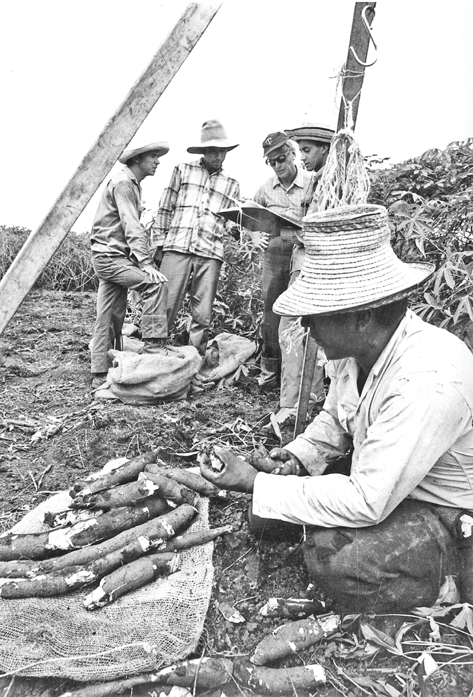
CIAT was designed to be a “catalyst” for economic and agricultural development in the global tropics. To these ends, the institute and its scientists collaborated with local and national institutions in Colombia and partner organizations around the world, including IRRI and CIMMYT in particular. In the growing network that would soon become CGIAR, CIAT focused on the humid tropics below 1,000 meters.Footnote 50 From the outset, an interdisciplinary team of geneticists, agricultural economists, and engineers cooperated with research stations in key tropical regions of Latin America to enhance those few staple crops “vitally important from the standpoint of nutrition,” including legumes, maize, rice, and animal products, as well as root crops, vegetables, and tropical fruitsFootnote 51 (Figure 3.3).
Tony Bellotti, entomologist in the CIAT cassava program (wearing the Twins baseball cap), works with Colombians in Palmira in this undated image. Special thanks to John Lynam for identifying Bellotti. Rockefeller Archive Center, Ford Foundation Photographs, Folder 510, Box 32, Series 1, CIAT 522.
By 1973, CIAT had settled on tropical agricultural research in six main lines: beef, hogs, cassava, beans, maize, and rice. Each of these were truly international in procedure and scope. The beef line, for example, studied cattle and pasturage on Colombia’s eastern plains and partnered with Texas A&M University in disease control. Its scientists served in consultations with Bolivia, Brazil, Colombia, Ecuador, Peru, Venezuela, and across the Caribbean. The rice line worked closely with IRRI in the Philippines and with producers in Central America and the Andean countries. The hog line, similarly, partnered with universities in Bolivia and Costa Rica. It also looked to integrate horizontally, partnering with the cassava and maize groups, for example, in the study of enhanced agricultural systems on small family farms.Footnote 52 The cassava line, for its part, worked closely with cassava researchers at IITA in Nigeria.
In 1975, CIAT employed approximately 150 scientists and related personnel from 13 countries. In addition to its research lines and regular international partnerships, the institute sent científicos for consultation work across Latin America.Footnote 53 By 1983, CIAT’s roster had swelled to 1,200 employees, including 92 scientists hailing from 24 countries.Footnote 54 In addition to consultations, CIAT regularly distributed pamphlets and publications around the world and administered international seminars and outreach programs on select technical topics.Footnote 55 The institute focused on “comparative advantage” to apply its research and consultations to the specialization of its partners and other CGIAR institutions.Footnote 56
Land tenure offered CIAT scientists and directors considerable conversation fodder from the outset. An ongoing debate within the institute centered on whether or not to embark on a rural development project in addition to crop science. Specifically, the institute considered “a major rural uplift program” in Valle del Cauca beyond the research center’s property. Director Jerry Grant described this concept as working with small farmers to help design improved farming systems for them, as well as improving educational, health, and other services. Proponents hoped to emulate the Puebla Project (Plan Puebla) in Mexico, initiated in 1967 and targeting the intensification of rainfed smallholder (minifundista) agriculture and fertilizer distribution through the formation of cooperatives and other cost-sharing mechanisms. Grant and his allies at CIAT imagined such a project for the Cauca Valley, partly in response to the frequent question hurled at them from every direction: “How are your results going to help the small farmer?” However, other leadership, including David Bell, vice president of the Ford Foundation, viewed this as a “diversion of talent” at such an early stage of research and development. Bell and others suggested attention to land tenure and questions of equity would be more appropriately addressed by ICA, perhaps with technical support from CIAT.Footnote 57 ICA and INCORA, in accord with the lobbying interests of large landowners, CVC, and agribusiness, specifically focused on resettling untitled cultivators in marginal or peripheral lands. David Bell and CIAT’s official position to defer to and provide technical support to ICA thus supported the deterritorializing move that helped declutter the Cauca Valley of peasant cultivators and redirect the burden of their long-standing political grievances away from the local expansion of agribusiness.
This debate continued several years into CIAT’s operations. In 1973, leadership again examined the relevance of their work to small farmers. They organized a meeting that October with forty representatives from not only CIAT but the Universidad del Valle, ICA, and several international organizations. They discussed how to integrate scientific research and technology into small-farm agricultural systems, and they evaluated the impact of new technologies on the well-being of independent farming families. CIAT likewise pursued a program targeting “sistemas para pequeño agricultores” – the Small Farm Systems program launched with the Ford Foundation in 1973. This program funded observatory field work by CIAT personnel in the distant Colombian Llanos and Caribbean coastal regions, as well as collaboration with IITA in Nigeria.Footnote 58 This approach accepted on principle that committed small farmers would be left to the peripheries, while others would provide ample wage labor for the complex of valley soils and CVC waters allocated to produce sugarcane. As if confirming this unfolding reality, CIAT studies revealed the comparatively high market share of Valle del Cauca’s large commercial farms in relation to those of neighboring departments such as Huila, Antioquia, and Nariño. CIAT’s own studies underscored the inequalities embedded in Valle del Cauca agriculture and the department’s intensifying concentration of credit and capital in large-scale operations. Nevertheless, and despite (or perhaps because of) these realities in its own backyard, its work in rural development and small-farmer systems concentrated on the global peasant and regions of Colombia far removed from Valle del Cauca. Seeing CIAT in the light of INCORA reveals the mirroring aspects of deterritorialization in Colombia. From this vantage, CIAT was never intended to help small farmers in the Cauca Valley. As INCORA facilitated the resettlement of small or untitled farmers in Amazonian Putumayo or the remote eastern plains of Casanare, CIAT offered the technical training and science for expanding cultivation into these hot lowland territories. Meanwhile, in the Cauca Valley, ASOCAÑA members increased their share of land and water.
Conclusions
On November 8–9, 2017, CIAT celebrated fifty years of its footprint in global agriculture.Footnote 59 A contingent of distinguished guests commemorated the moment in Palmira. Colombian President Juan Manuel Santos spoke, as did Minister of Finance Mauricio Cárdenas Santamaría. Other speakers included Governor of Valle del Cauca Dilian Francisca Toro Torres, Mayor of Palmira Jairo Ortega Samboní, and Juan Camilo Restrepo Salazar, head of the Colombian government’s peace negotiating team with the ELN (National Liberation Army) guerrilla group. The ambassador of France to Colombia joined the politicians assembled, as did leaders of FAO, the World Bank Group, and CGIAR. Officers and representatives of nongovernmental organizations (NGOs) such as the Wildlife Conservation Society and the Global Harvest Initiative assembled with corporate executives from the likes of DuPont Pioneer and professors from the usual assortment of land-grant universities and Ivy League institutions, including Columbia, Cornell, Michigan State, Minnesota, and Rutgers.
The attendees spoke triumphantly of “fifty years, fifty wins.”Footnote 60 Speakers and the conference program largely organized their remarks around contemporary investment-generating phrases, including “building a sustainable food future,” “the future of climate change research,” and “aligning public and private interest to scale up and deliver impact.”Footnote 61 The framing language may have changed with the times, but the institution’s global ambitions have remained. For five decades, scientists, academics, politicians, and corporate executives have converged upon CIAT from afar, pulled by the institution’s centripetal position in an orbit of tropical agricultural science. In turn, the research and technologies undertaken at CIAT have radiated out to the tropical world like a centrifugal force. Apply your buzzwords of choice, CIAT has made the Cauca Valley a critical node in a contemporary global food system.
In sharp contrast to the current rhetoric of small farmers and sustainable cultures presented by CIAT, but in overlapping timelines, the Cauca Valley sugar complex accumulated resources and technical advantage. Through its technical assistance to ICA and partnerships with INCORA in Cold War Colombia, CIAT has accepted, if not embraced, that status quo. As a package, land governance and CIAT crop research in Colombia function to aid in the accumulation of the best land and resources for agribusiness and remove those with land grievances to start anew on the margins and bring new territories under cultivation.
Even amidst the fiftieth anniversary celebrations of 2017, the apolitical ideal of the 1960s remained. The commemorative institutional history published that year, for example, described it this way: “One of the core characteristics of the international centers was that they were apolitical, and the Roberts–Hardin proposal had reaffirmed this by stressing that CIAT would not be involved in the land reform question. Rather CIAT would give particular consideration to improving productivity of small farmers.”Footnote 62 The language is key. CIAT was designed to focus on increasing the productivity of small farmers. But the institution’s built-in collaboration with ICA and INCORA determined the geography of where those small farmers sowed. ICA and INCORA were the mechanisms for bringing new land under cultivation, often at the margins of Colombian territory – in the eastern tropical savannah of the Llanos, in the acid soils of the southern rain forests of Amazonia – and often by relocating farmers without title away from the most fertile valleys where land tenure issues had long simmered. These valleys increasingly became the objects of international development projects and aid, including CVC, for example, which regulated water and pursued land reclamation projects in consultation with the ASOCAÑA businessmen on its board. The agro-industrial sugar complex grew in the Cauca Valley; CIAT did not cause the exacerbation of inequality outside its gates, but it was part of the mechanics of shifting territory in Colombia.
The history of rural conflict in Colombia is as ironic as it is tragic: many of these recipients of INCORA grants or CIAT technical assistance have witnessed firsthand the paralyzing war between guerrillas, paramilitaries, drug traffickers, and the Colombian army. CIAT’s stated objective to improve agrarian livelihoods around the tropical world has proven to be largely a mirage in its own Cauca Valley. More specifically, that objective was never intended for those in its own backyard. No wonder the “CIAT 50” pamphlet during the celebrations in Palmira featured a Southeast Asian family rather than a Cauca Valley one on its cover.Footnote 63


 Open access