


CVD, in particular heart attack and stroke, contributes to one-third of all global deaths and one-tenth of the total global burden of disease(Reference Yusuf, Reddy and Ounpuu1). It is the leading cause of death and disability in many developed countries and is increasing in developing countries(Reference Gazlano2, Reference Thom, Haase and Rosamond3). Diets rich in nuts with favourable fatty acid profiles and other bioactive substances have been shown to reduce cholesterol and thus lower the risk of CVD(Reference Bolling, McKay and Blumberg4–Reference Segura, Javierre and Lizarraga7). In New Zealand, as in many other countries, there is a recommendation to consume one serving (30–42·5 g) of nuts/d(8, 9). Several epidemiological studies and clinical trials have consistently demonstrated a cardioprotective and a cholesterol-lowering effect with this amount of nuts(Reference Griel and Kris-Etherton10–Reference Sabaté and Wien13). To achieve optimal health benefits, nuts must be consumed regularly and in sufficient quantity. Thus, it is important to determine whether the regular consumption of raw, unsalted nuts is a sustainable long-term behaviour.
In order to measure long-term compliance to a dietary guideline, it is important to measure both ‘liking’ and ‘desire to consume’. ‘Liking’ is the immediate experience or anticipation of pleasure derived from the orosensory stimulation of eating a food (e.g. ‘it tastes nice’), and ‘desire to consume’ is the intrinsic motivation to engage in eating a food, now or in the near future (e.g. ‘I want to consume the food’)(Reference Mela14, Reference Zandstra15). Prolonged exposure to a food may affect these two measures differently. For instance, when consuming a particular food for a prolonged period, liking may remain unchanged; however, the desire to consume the food may be lower. This scenario will then reduce the compliance to regular consumption of the food. For example, Liem & Zandstra(Reference Liem and Zandstra16) reported that the ‘desire to consume’ small-shaped snacks decreased significantly, whereas the liking remained unchanged after the daily consumption of the snacks for 3 weeks, which suggests that repeated daily consumption of snacks affects wanting rather than liking in these children.
Numerous studies have been carried out to investigate the effects of repeated exposure to foods on change in liking in adults. These studies have suggested that repeated exposure can induce change in liking, in either a neutral, positive or a negative direction, and several factors may influence this change. Zajonc(Reference Zajonc17) proposed the theory of ‘mere exposure’, whereby the liking of a food product is enhanced or reinforced with repeated exposure(Reference Luckow, Sheehan and Fitzgerald18, Reference Stein, Nagai and Nakagawa19). This is especially apparent when the initial liking for the food product is low(Reference Chung and Vickers20–Reference Zandstra, de Graaf and Mela23) and when the food product and stimuli are unfamiliar(Reference Bingham, Hurling and Stocks24–Reference Sulmont-Rossé, Chabanet and Issanchou28). In contrast, the liking of more familiar products or foods with good initial liking often remains constant(Reference Alper and Mattes29–Reference Le, Joosten and van der Bijl33) or declines(Reference Zandstra, Weegels and van Spronsen27, Reference Hetherington, Bell and Rolls34–Reference Zandstra, de Graaf and van Trijp38) with repeated consumption. Product boredom or monotony is used to describe the decline in acceptance over days or weeks with repeated exposure caused by loss of interest in specific attributes of the food product(Reference Moskowitz39, Reference Siegel and Pilgrim40).
Despite the public health recommendation to consume nuts daily(9, Reference Dreher, Maher and Kearney41–43), and studies demonstrating the importance of incorporating nuts into the diet for beneficial effects on cardiovascular risk factors(Reference Mukuddem-Petersen, Oosthuizen and Jerling44, Reference Sabate, Oda and Ros45), only one study has investigated the effects of incorporating nuts into the diet on hedonic ratings(Reference Alper and Mattes29). The hedonic ratings remained unchanged after consuming peanuts for 19 weeks. However, this study only measured the ratings at baseline and at the end of the study(Reference Alper and Mattes29). Therefore, there is no information on the changes that might have occurred over the duration of the study. In addition, ‘desire to consume’ was not measured, which means that although liking remains stable, whether individuals still wish to consume the nuts regularly remains unknown.
It was hypothesised that regular consumption of 30 g of nuts/d may result in boredom and reduce the motivation to comply with the public health guideline. Hence, ‘desire to consume’ nuts may reduce over time. It was also hypothesised that ‘overall liking’ for whole hazelnuts may be higher than sliced and ground hazelnuts due to the familiarity of whole nuts. ‘Overall liking’ for sliced and ground hazelnuts, which are less familiar to the participants, may increase over time due to the ‘mere exposure’ effect. On the other hand, ‘overall liking’ for whole hazelnuts, which are more familiar, may decrease over time due to the ‘monotony’ effect. The primary objective of the present study was to determine whether the current guideline regarding the regular consumption of 30 g/d of nuts is an achievable public health goal. Second, does the form of nut influence compliance with the recommendations?
Methods
Study design
Most previous studies investigating the effects of repeated exposure to different food items have employed between-subject designs, and only a few have used within-subject designs(Reference Essed, van Staveren and Kok22, Reference Zandstra, de Graaf and Mela23, Reference Hetherington, Bell and Rolls34, Reference Weijzen, Zandstra and Alfieri37). The present study was part of a larger nutrition intervention that investigated the cholesterol-lowering effects of different forms of nuts for which a within-subject design was chosen(Reference Tey, Brown and Chisholm46). This design allows participants to act as their own controls, permitting a smaller overall sample size, with greater gains in this respect where the correlation between repeated measures is higher. However, it does assume a lack of carry-over effects and places a higher demand on participants. Incorporating a sensory component into a nutrition intervention in this case has allowed us to not only measure health effects of nut consumption, but has also enabled us to investigate whether the public health recommendation to consume nuts regularly is a sustainable behaviour.
The study was conducted over a 4-month period using a randomised cross-over design with three dietary phases: ground, sliced and whole hazelnuts. Participants were randomly allocated to receive one of the three forms of hazelnuts for a period of 4 weeks. Each nut phase was followed by a 2-week washout period. The National Heart Foundation of New Zealand recommends the consumption of 30 g of nuts, 5 times/week(9). Following this guideline, the participants in the present study were asked to consume 30 g of hazelnuts each day in place of a high-saturated fat snack or ‘treat food’. Participants were asked not to consume additional nuts or nut products during the study. A booklet containing hazelnut recipes and information about the study was given to all participants in order to provide a variety of ways in which nuts can be consumed and, thus, to improve participants' compliance during the 12-week intervention period.
Participants
A total of forty-eight participants (twenty males, twenty-eight females) were recruited from the general public in Dunedin, New Zealand. The recruitment process involved the distribution of flyers around the University of Otago campus and in local supermarkets, advertising in the local newspaper and by writing to former research participants who had consented to be contacted about future research projects. Participants were excluded if they had asthma, food allergies, familial hyperlipidaemia, a chronic disease, or were taking medication that was known to affect blood lipid concentrations. Due to personal issues unrelated to the study, two participants (one female and one male) dropped out of the study.
The present study was conducted according to the guidelines laid down in the Declaration of Helsinki, and all procedures involving human subjects were approved by the Human Ethics Committee of the University of Otago, New Zealand. Written informed consent was obtained from all participants. The trial was registered for inclusion in the Australian Clinical Trials Registry and the allocated code ACTRN: ACTRN012607000178448.
Hazelnuts
Raw, unsalted Ennis hazelnuts were purchased from Uncle Joe's Walnuts (Blenheim, Marlborough, New Zealand). The nuts were shelled and delivered to the researcher as whole nuts a week before the intervention began in order to ensure freshness of the nuts. All the nuts used in the present study were stored at room temperature in darkness before opening. To obtain sliced hazelnuts, the whole hazelnuts were mechanically processed with the use of a food processor (Robot Coupe CL50; Robot Coupe USA, Inc., Jackson, MS, USA). To produce ground hazelnuts, the whole hazelnuts were initially ground using a food processor (Tasin 102; Ta Shing Food Machineries Company Limited, Taichung, Taiwan, ROC), and a Waring blender was then used to finely ground the hazelnuts. A mechanical sieving process was carried out to ensure that the hazelnuts were finely ground with a particle size < 0·5 mm.
Compliance
Participants received a 4-week supply of hazelnuts, which were individually portioned into daily serving size bags (30 g/bag), at the beginning of each dietary phase. Compliance was assessed by measuring participants' plasma α-tocopherol concentration, by weighing the bags returned at the end of each intervention phase and by completion of the home-use sensory test ballot each day during each experimental period.
Procedure
‘Overall liking’ ratings of the three different forms of hazelnuts were measured using a three-stage design: a pre-exposure tasting session; a 12-week home-use exposure ballot; a post-exposure tasting session. During the pre-exposure tasting session, participants evaluated their ‘overall liking’ of three forms of hazelnuts. This was followed by the home-use exposure period where participants rated their ‘desire to consume’ and ‘overall liking’ for hazelnuts every day during the dietary intervention. The post-exposure tasting session was carried out immediately after the completion of the intervention period.
Pre-exposure session
Participants attended a pre-exposure tasting session at the sensory laboratory, Department of Food Science, University of Otago. Participants were given a detailed briefing regarding the nature of the study before testing began. Participants were informed about the nutritional content and health benefits of the nuts and the importance of complying with the instructions to consume the daily allowance of hazelnuts.
The tasting session involved a 15 min product assessment acceptability test. Participants were seated in individual sensory booths and presented with three forms of hazelnuts in duplicate (six products in total). Participants were not informed that they would taste the same sample twice. The hazelnuts for the tasting sessions were stored at room temperature. All samples were randomly coded with three-digit numbers and presented simultaneously in 35 ml portions served in clear plastic cups, with lids to preserve freshness. The order of presentation of all samples was balanced among participants to account for order and carry-over effects(Reference MacFie, Bratchell and Greenhoff47).
Participants were asked to rinse their mouth with water before starting the session. They were instructed to evaluate the samples one at a time in the order presented. They were asked to take one whole nut or one spoonful of the sample into their mouth and swallow the sample after chewing. After tasting each sample, participants were instructed both verbally and in writing to rate their ‘overall liking’, on a 150 mm visual analogue scale anchored with ‘dislike extremely’ on the left-hand side (0 mm), ‘neither like nor dislike’ in the middle (75 mm) and ‘like extremely’ on the right-hand side of the scale (150 mm). Participants were given a glass of filtered water at room temperature and unsalted water crackers in order to cleanse the palate. They were instructed to rinse their mouth with water between samples and wait for 1 min before tasting the next sample. Participants were asked not to converse during testing.
Home-use exposure period
Participants were randomly assigned to one of six possible sequences of the three treatment diets (ground, sliced and whole hazelnuts). The order of receiving the three treatments differed among participants and was counterbalanced among participants to reduce order effects(Reference MacFie, Bratchell and Greenhoff47). The participants were instructed to consume the daily allotment of hazelnuts at any time of the day and where they wanted (e.g. at home or at work). They were allowed to incorporate the hazelnuts into their meals. Participants were encouraged to consume the sample on one eating occasion and in the form that they were received (i.e. not cooked). Participants were instructed that the nuts were solely for their own personal consumption and should not be shared with others.
During the exposure period, participants were asked to complete a ballot whenever they consumed the nuts. They were first asked to write down the time of day and location where the nuts were consumed. They were then asked to take one nut or one spoonful of the sample and rate their ‘desire to consume’ on a 150 mm visual analogue scale, anchored with ‘strong desire not to consume’ on the left-hand side (0 mm) to ‘strong desire to consume’ on the right-hand side of the scale (150 mm). Next, they were instructed to consume the rest of the sample and rate their ‘overall liking’ on a 150 mm line scale anchored with ‘dislike extremely’ (0 mm), ‘neither like nor dislike’ (75 mm) and ‘like extremely’ (150 mm). This scale was the same as that used during the pre-exposure tasting session. ‘Desire to consume’ and ‘overall liking’ ratings were measured in order to examine how these two constructs differ among different forms of nuts and change with repeated exposure. Finally, participants were asked to state how the nuts were consumed, whether they were consumed as a snack, as a part of a snack, as a whole meal or as a part of a meal.
Post-exposure session
After 3 months of exposure to three forms of hazelnuts, participants were asked to attend a post-exposure tasting session at the sensory laboratory and repeated the procedure carried out at the pre-exposure tasting session, rating the three samples in duplicate.
Statistical analysis
The effects of consuming three different forms of hazelnuts on ‘desire to consume’ and ‘overall liking’ ratings during repeated exposure were examined. Mean ratings were used as long as these were stable over the exposure periods. Linear mixed models with a random participant effect to account for the underlying correlation between the repeated measures were used to examine the effect of different forms of hazelnuts on mean ratings of ‘desire to consume’ and ‘overall liking’. The models included a term ‘period’ for assessing the influence of the intervention period (one to three), and this was to check whether there were any carry-over effects into subsequent dietary periods. The association between mean ratings of ‘desire to consume’ and ‘overall liking’ was assessed using Pearson's correlation coefficient.
Logistic regression with random effects for repeated days within each nut type and repeated nut types within each participant was used to determine whether different forms of nuts were consumed at a different time of the day. Similar models were also used to examine whether the nuts were consumed as a meal or as a snack and whether they were consumed alone or with another food.
The changes in mean ‘overall liking’ ratings were analysed by comparing ‘overall liking’ rating at baseline with the ‘overall liking’ rating at the end of the intervention. Paired t tests were used to compare within-subject differences in ‘overall liking’ ratings before and after the 3 months hazelnut consumption period. One-way ANOVA models were used to determine if there were statistically significant differences between at least two of the means of the ‘overall liking’ for the forms of hazelnuts at both pre- and post-exposure tasting sessions. The Scheffe test was used for the adjustment of multiple comparison tests.
All statistical analyses were performed using Stata Intercooled version 9.0 (StataCorp, College Station, TX, USA). All tests were two-sided, with the level of statistical significance set at 5 %.
Results
Participant characteristics
The participants ranged in age from 25 to 64 years with a mean age of 49·9 (sd 9·4) years. The mean height at baseline was 169·2 (sd 8·5) cm, mean weight was 74·4 (sd 13·1) kg and mean BMI was 25·9 (sd 3·5) kg/m2. In the present study, two participants (4 %) were smokers, four participants (8 %) had dentures or a partial plate, three (6 %) had sinus conditions, and one (2 %) was taking medications that might affect the senses, especially taste and smell.
Compliance
Adherence to all three nut forms was reportedly high: ground hazelnuts, 100 %; sliced hazelnuts, 100 %; whole hazelnuts, 99·4 %, according to both the home-use sensory test ballot and the recount of nut packages. Hazelnuts are a rich source of α-tocopherol, which allowed the measurement of plasma α-tocopherol concentration to be used as a biochemical marker of hazelnut consumption. Plasma α-tocopherol concentration increased significantly after each dietary phase(Reference Tey, Brown and Chisholm46).
Relationship between ‘desire to consume’ and ‘overall liking’ ratings
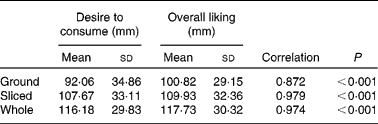
The ratings of ‘desire to consume’ were significantly positively correlated with ‘overall liking’ ratings for all forms of hazelnuts (r ≥ 0·872; P < 0·001 in all cases; Table 1).
(Mean values and standard deviations)
Exposure period – ‘desire to consume’ ratings
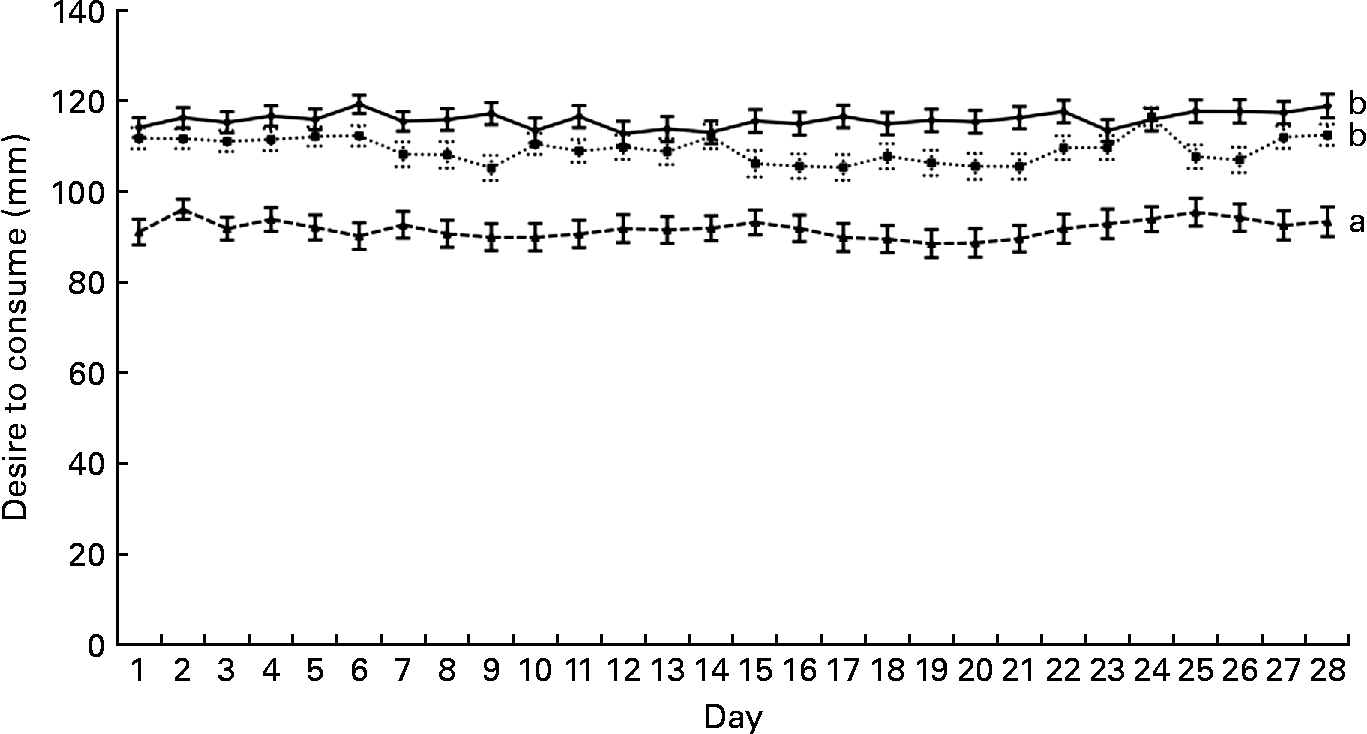
Participants consumed the hazelnuts within one eating occasion most of the time (99·2 %), and consequently only the ‘desire to consume’ ratings recorded on the first eating occasion were analysed. The ‘desire to consume’ each form of hazelnut was found to be stable over the 28 d exposure period. There was no evidence of a period-by-treatment (nut type) interaction (P = 0·675). Therefore, a linear mixed model with just two main effects (nut type, period) and a random participant effect was used. There was a significant difference in the ‘desire to consume’ the different forms of hazelnuts (P < 0·001; Fig. 1). The ‘desire to consume’ ground hazelnuts was significantly lower than sliced hazelnuts (mean difference 16·1 mm; 95 % CI 5·5, 26·6; P = 0·003) and whole hazelnuts (mean difference 23·5 mm; 95 % CI 13·0, 34·1; P < 0·001) at each dietary phase. There was no statistically significant evidence of differences in ‘desire to consume’ between sliced and whole hazelnuts (mean difference 7·4 mm; 95 % CI − 3·2, 18·0; P = 0·170).
Mean ‘desire to consume’ different forms of hazelnuts during the 28 d exposure period. Values are means, compared by using a linear mixed model, adjusted for period and nut type (P < 0·001), with standard errors represented by vertical bars. a,b Mean values with unlike letters were significantly different (P < 0·05).  , Whole hazelnuts;
  , sliced hazelnuts;
  , ground hazelnuts.
Exposure period – ‘overall liking’ ratings
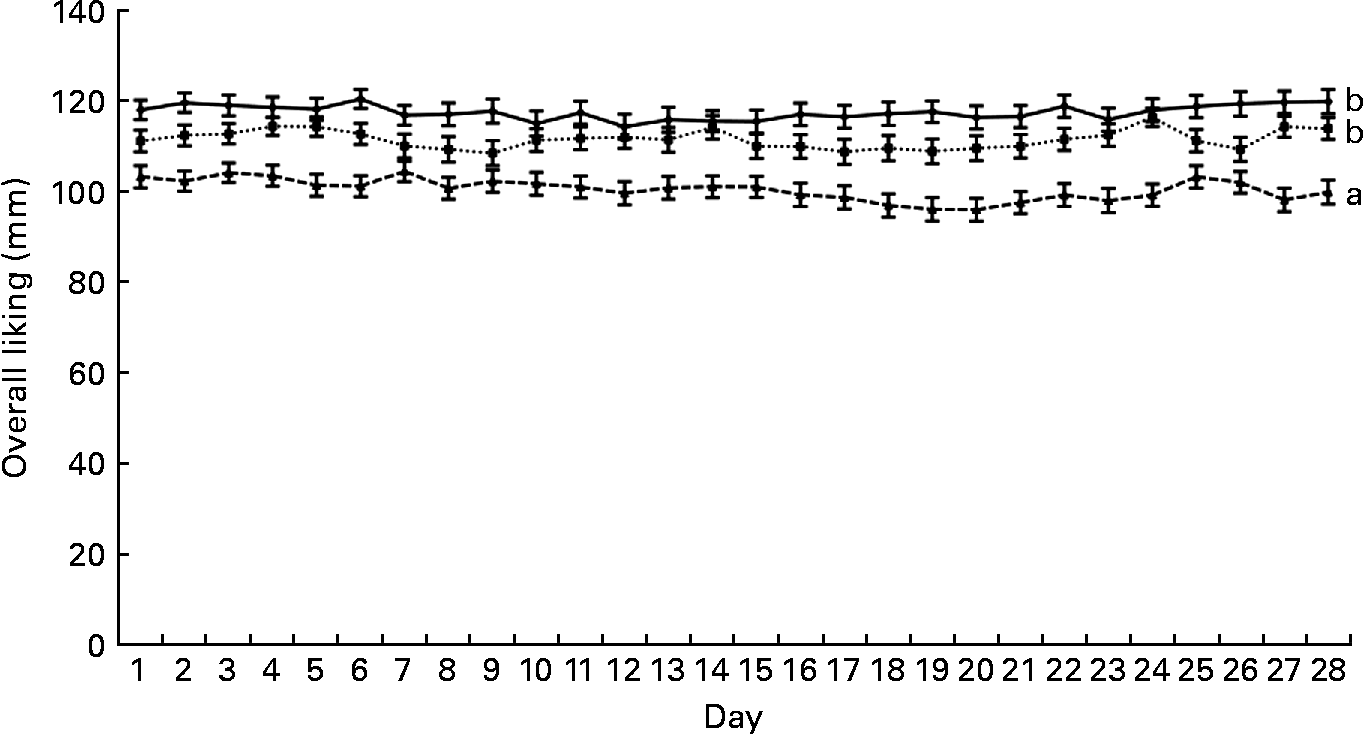
Ratings of ‘overall liking’ followed the same pattern as ratings of ‘desire to consume’ (Fig. 2). Again, the liking for these three forms of hazelnuts was stable over the study period. No evidence of a period-by-treatment (nut type) interaction was found (P = 0·426). Therefore, a linear mixed model with just two main effects (nut type, period) and a random participant effect was used. In keeping with the ‘desire to consume’ ratings, the results from the linear mixed model showed that there was a significant difference in the ‘overall liking’ for different forms of hazelnuts (P = 0·001). The liking for ground hazelnuts was lower than for sliced and whole hazelnuts by 9·6 mm (95 % CI 0·7, 18·4; P = 0·034) and 16·6 mm (95 % CI 7·7, 25·4; P < 0·001), respectively. The liking ratings for sliced and whole hazelnuts were not statistically significantly different from each other (mean difference 7·0 mm; 95 % CI − 1·9, 15·9; P = 0·125).
Mean ‘overall liking’ ratings of different forms of hazelnuts during the 28 d exposure period. Values are means, compared by using a linear mixed model, adjusted for period and nut type (P = 0·001), with standard errors represented by vertical bars. a,b Mean values with unlike letters were statistically significantly different (P < 0·05). , Whole hazelnuts; , sliced hazelnuts; , ground hazelnuts.
Differences in ‘overall liking’ ratings between pre- and post-exposure sessions
Table 2 shows a comparison of the ‘overall liking’ for the three forms of hazelnuts from the pre- to post-exposure sessions. Paired t tests showed that there was no statistically significant evidence of differences in ‘overall liking’ ratings from pre-exposure to post-exposure sessions for any form of nut (P ≥ 0·216 in all cases).
(Mean values with their 95 % confidence intervals, n 46)

a,b Mean values within a column with unlike superscript letters were significantly different in ‘overall liking’ between the forms of hazelnuts at pre-exposure (P < 0·001) and post-exposure (P = 0·002) tasting sessions (by one-way ANOVA; P < 0·05).
* For the adjustment of the multiple comparison test, Scheffe's test was used to find out which form of hazelnut had a significantly different ‘overall liking’ rating from one another.
However, one-way ANOVA found a statistically significant difference in ‘overall liking’ between nut types at both pre-exposure (P < 0·001) and post-exposure (P = 0·002) sessions. Scheffe's post hoc test showed that the ‘overall liking’ rating for ground hazelnuts was significantly lower than for sliced hazelnuts (both adjusted P ≤ 0·018) and whole hazelnuts (both adjusted P ≤ 0·006) at both time points. There was no evidence of differences in ‘overall liking’ between sliced and whole hazelnuts at either time point (both adjusted P ≥ 0·717).
Exposure period – ways to consume different forms of hazelnuts
The ways of consuming the hazelnuts depended on the form that the participants received and were significantly different for the different forms of hazelnuts (P < 0·001). The estimates for the hazelnuts being consumed alone were 31 % (95 % CI 26, 36) of ground hazelnuts, 42 % (95 % CI 37, 46) of sliced hazelnuts and 64 % (95 % CI 60, 67) of whole hazelnuts. Thus, 69 % of ground hazelnuts, 58 % of sliced hazelnuts and 36 % of whole hazelnuts were consumed as part of a meal or a snack with other foods. After adjusting for the time effect, the OR for sliced hazelnuts being consumed by themselves compared with ground hazelnuts was 1·18 (95 % CI 1·10, 1·25), whole hazelnuts compared with sliced hazelnuts was 1·61 (95 % CI 1·47, 1·75) and whole hazelnuts compared with ground hazelnuts was 1·92 (95 % CI 1·75, 2·08). All represent statistically significant differences (P < 0·001).
Discussion
This is the first study to demonstrate that the recommendation to consume nuts on a regular basis is an achievable and sustainable public health target. This was part of a larger nutrition intervention, which showed that consuming 30 g of nuts/d for 3 months significantly reduced plasma total cholesterol and increased plasma α-tocopherol concentrations(Reference Tey, Brown and Chisholm46). In addition to these health benefits, the results of the present study indicate that despite consuming nuts for 3 months, the desire to consume nuts remained unchanged. Regular consumption (i.e. 28 d each) of three forms of hazelnuts led to a sustained acceptance, suggesting that exposure has no apparent effects on participants' liking. The ‘desire to consume’ and ‘overall liking’ ratings for ground hazelnuts were statistically significantly lower than for both sliced and whole hazelnuts, whereas these measurements of the latter two did not differ statistically significantly. The absence of clear changes in ‘desire to consume’ and ‘overall liking’ in the present study could be largely attributable to three possible factors.
First, the stable ‘desire to consume’ and ‘overall liking’ ratings across the study period may be explained by the attributes of nuts as a food product. It is well documented that repeated exposure to different food products does not affect consumers' acceptance in the same way(Reference Moskowitz39). For instance, repeated consumption did not change the liking of moderately liked staple foods(Reference Hetherington, Bell and Rolls34–Reference Meiselman, de Graaf and Lesher36, Reference Siegel and Pilgrim40), whereas savoury foods such as plain biscuits(Reference Weijzen, Zandstra and Alfieri37), chicken soup(Reference Zandstra, Weegels and van Spronsen27, Reference Weijzen, Zandstra and Alfieri37), vegetables(Reference Meiselman, de Graaf and Lesher36) and meat dishes(Reference Meiselman, de Graaf and Lesher36, Reference Zandstra, de Graaf and van Trijp38) showed a decrease in liking. It seems that nuts could be a food that is resistant to monotony as a product category in general. This is in line with the findings by Alper & Mattes(Reference Alper and Mattes29), where consuming peanuts for 19 weeks did not reduce the hedonic ratings (mean rating seven out of nine) from the pre-treatment to the post-treatment session. However, this study did not measure the acceptability ratings during the intervention period. Nevertheless, this is the only study that has reported the acceptability score for nuts after repeated exposure.
Second, earlier work suggests that foods with high initial pleasantness ratings do not develop a lowered acceptance(Reference Siegel and Pilgrim40, Reference Schutz and Pilgrim48). The ‘overall liking’ of all forms of hazelnuts was generally high (above the neutral point, i.e. 75 mm on the rating scale) at both tasting sessions and during the exposure period. Thus, repeated exposure to all forms of hazelnuts with initially high acceptance ratings did not change participants' ‘desire to consume’ and ‘overall liking’ throughout the course of the study. These results are supportive of the findings of previous research in this area, where Hetherington et al. (Reference Hetherington, Pirie and Nabb35) reported that acceptability ratings of a salty high-fat snack food, french fries, with high initial pleasantness ratings remained stable over fifteen exposure periods. However, this finding is not consistent for all foods. Results of three studies have shown that ratings of pleasantness decreased with exposure to a moderately liked sweet high-fat snack food, chocolate, which was not typically consumed regularly on a daily basis(Reference Hetherington, Bell and Rolls34, Reference Hetherington, Pirie and Nabb35, Reference Weijzen, Zandstra and Alfieri37). The contradictory results could be due to the differences in taste qualities and macronutrient content, where savoury, high-fat snacks such as unsalted nuts and french fries are more resistant to monotony, while sweet, high-fat snacks such as chocolate are less resistant to monotony(Reference Alper and Mattes29).
Finally, the choices with regard to how and when a food may be consumed play a major role in determining participants' acceptance. Kramer et al. (Reference Kramer, Lesher and Meiselman49) reported that repeated consumption of the same food with or without choice might yield different results in consumers' acceptance. Studies have shown that the liking ratings for food products were higher in a choice situation than in a no-choice situation(Reference Chung and Vickers20, Reference Chung and Vickers21). Results of an in-home exposure test reported that the desire to eat and liking for meat sauce remained unchanged for those participants who were allowed to choose among three flavours of the meat sauce, compared with those who had to consume the meat sauce that was pre-assigned by the researchers(Reference Zandstra, de Graaf and van Trijp38). Other studies have also shown that lack of choice seems to be the most evident contributor to the boredom effect, and this may have affected the acceptability of the food products(Reference Stubenitsky, Aaron and Catt31, Reference Le, Joosten and van der Bijl33, Reference Hetherington, Pirie and Nabb35, Reference King, Meiselman and Hottenstein50).
In the present study, participants were allowed to consume the hazelnuts at anytime of the day and in any manner that they chose, which meant the participants could consume the hazelnuts in the way they perceived as appropriate. In addition, participants were given a recipe booklet, where suggestions to incorporate different forms of hazelnuts into dishes or daily meals were provided. It is possible that the choices given facilitated the maintenance of acceptance over time. Using logistic regression, there was evidence of differences in the odds of consuming each nut type during the morning (before 11.00 hours, P < 0·001 with ground>sliced>whole), around noon (11.00 until before 14.00 hours, P < 0·001 with whole>sliced>ground) and later in the day (14.00 hours and later, P = 0·001 with whole>ground and whole>sliced). In addition, there was evidence of a difference in consumption as a meal rather than as a snack (P < 0·001, with ground>sliced>whole) and alone rather than with another food (P < 0·001 with whole>sliced>ground). This finding could be built into public health messages, to provide a variety of ways to include nuts into snacks and meals, thus increasing the long-term acceptability of nuts.
To our knowledge, this is the first study to determine the long-term effects (28 d each) of a food product on changes in ratings of ‘desire to consume’ and ‘overall liking’ on the visual analogue scale during the exposure period. Both ratings showed similar trends. The number of exposures used to investigate the effect of exposure to a food product on acceptance during repeated consumption has ranged from 3 to 22 d in previous studies(Reference Luckow, Sheehan and Fitzgerald18, Reference Chung and Vickers20–Reference Zandstra, de Graaf and Mela23, Reference Russell and Delahunty25, Reference Zandstra, Weegels and van Spronsen27, Reference Sulmont-Rossé, Chabanet and Issanchou28, Reference Lévy and Köster30, Reference Stubenitsky, Aaron and Catt31, Reference Le, Joosten and van der Bijl33–Reference Zandstra, de Graaf and van Trijp38). On the other hand, for studies measuring the acceptance of a food product before and after exposure only, the number of exposures ranged from 2 to 7 d(Reference Stein, Nagai and Nakagawa19, Reference Bingham, Hurling and Stocks24, Reference Tuorila, Meiselman and Bell26), with the exception of one study that has measured the acceptance after consuming peanuts for 19 weeks(Reference Alper and Mattes29). It is highly unlikely that nuts require a greater number of exposures to pick up changes in ‘desire’ and ‘overall liking’ over time. Thus, a longer time period with more exposure would have been unlikely to change the observation for the present study.
In the present study, the ratings of ‘desire to consume’ and ‘overall liking’ for all forms of hazelnuts were found to follow a very similar pattern and were strongly correlated with each other (r>0·80). This indicates that not only did participants like the nuts, but also they wished to continue to eat the nuts, despite consuming each form of nuts daily for 4 weeks. The present results agree with previous findings in adults, where high correlations were found between liking and desire-to-eat meat sauce (r 0·69)(Reference Zandstra, de Graaf and van Trijp38), chocolate, bread and butter (r>0·75)(Reference Hetherington, Pirie and Nabb35), and chicken soup (r 0·67)(Reference Zandstra, Weegels and van Spronsen27). Cardello et al. (Reference Cardello, Schutz and Snow51) found a very strong association between the ratings of the expected liking/disliking of foods in different situations and the ratings of their appropriateness for these situations (r 0·98). As discussed earlier, hazelnuts were probably consumed at a time and in a context that was perceived as most appropriate by the participants, which may have lessened a monotony effect and resulted in high ratings on ‘desire to consume’ and ‘overall liking’. However, direct measurements of participants' perceived boredom or tiredness, and appropriateness to consume hazelnuts each day are required to understand the dynamics of liking and wanting hazelnuts.
The present study investigated not only whether the participants initially liked hazelnuts, but also more importantly whether the participants continued to like nuts after repeated exposure. The findings are strengthened by the fact that the intervention took place in a more naturalistic real-world (home-use) setting rather than in an artificial laboratory setting. A further strength lies in the length of the intervention. This is the first trial that has included a quantitative long-term follow-up and measured the changes in ‘desire’ and ‘liking’ of a food product during the exposure period. This has not been done in any previous studies involving nuts. It is clear from the results that a 12-week trial is a sufficient interval to assess the long-term acceptability of a food product. The findings indicate that participants' liking for hazelnuts as a healthy dietary behaviour is sustainable over time.
One unique aspect of this research is the study design. Most previous studies measuring acceptance and desire to consume have employed a parallel between-group design because of possible carry-over effects. The present study, because it was part of a larger nutritional intervention where participants acted as their own controls, was a multiple cross-over study. We found no evidence of a period-by-treatment interaction, suggesting no carry-over effects in the present study. This indicates that sensory components can be added to nutritional intervention studies where a cross-over design may be preferred due to a smaller overall sample size and high correlations between baseline and follow-up measurements.
However, a limitation of the present study was that it used a convenience sample who were provided with free hazelnuts for 3 months. It is possible that we attracted people who like nuts and may have been more health conscious and motivated than the general population. People with low initial acceptance for nuts may have a different response to acceptance after long-term repeated exposure. Furthermore, the participants in the present study were predominantly New Zealand European adults. It is not possible therefore to state whether the ‘desire to consume’ and ‘liking’ would have been similar in children or a more ethnically diverse sample who may have different levels of exposure or experience with nuts. In order to minimise sampling bias, a more representative and diverse subject group with fewer frequent nut eaters could be recruited to permit more definitive conclusions of the effect of long-term nut consumption on acceptance.
Conclusion
The acceptance for hazelnuts, a nutritionally beneficial high-unsaturated fat savoury snack, with reasonably high initial liking was not influenced by long-term consumption of this product. This suggests that hazelnuts are well tolerated on a daily basis when participants are given a choice to consume them in any manner that they wish. It would appear from a public health perspective that the recommendation to consume 30 g of nuts/d is achievable and acceptable. Whole nuts and sliced nuts were more acceptable than ground nuts, therefore recommendations should favour these forms. However, there are subgroups of the population such as elderly people or those with dentures or a partial plate who may find the nuts with larger particle sizes difficult to consume. Given that the acceptance for all forms of hazelnuts was high, it is advisable to recommend the inclusion of any form of hazelnuts, such as ground, sliced or whole hazelnuts, based on individual's personal preference. This will provide more choices for the consumers, thus enhancing compliance with the recommendation to consume nuts daily as part of a heart-healthy diet.
Acknowledgements
The funding for the present study was provided by the National Heart Foundation of New Zealand. We would like to thank the participants for their commitment and enthusiasm in participating in the present study. None of the authors had any personal or financial conflict of interest. The authors' responsibilities were as follows: S. L. T. designed the study, collected, entered and analysed the data, disseminated the findings, and prepared the manuscript; R. B., A. C. and C. D. were involved in the study design, supervision of data collection, data analysis and preparation of the manuscript; A. G., S. W. were responsible for the assistance with study design, statistical analysis and editing of the manuscript.



