



Mental illness is among the leading causes of disability worldwide, accounting for 18·9 % of years lived with a disability( Reference Whiteford, Ferrari and Degenhardt 1 ). Due to the high prevalence of common mental disorders, the social, economic and heath burden associated with these disorders is substantial, with up to $8·5 trillion in lost output attributed to mental, neurological and substance use disorders( Reference Chisholm, Sweeny and Sheehan 2 ). Pharmacotherapy, such as antidepressants, and psychotherapy, such as cognitive behavioural therapy, are cornerstones of treatment; however, they avert less than half of the disease burden, suggesting that additional strategies to prevent and treat mental disorders are needed( Reference Olfson, Druss and Marcus 3 , Reference Casacalenda, Perry and Looper 4 ). Indeed, recent evidence suggests that despite a substantial increase in the use of psychotropics and wider availability of psychotherapies, the population burden of depression has not reduced, and may be increasing( Reference Jorm, Patten and Brugha 5 ). If indeed this is the case, it suggests the presence of operative environmental risk factors for depression.
The new field of nutritional psychiatry provides evidence for diet quality as a modifiable risk factor for mental illnesses. Recent systematic reviews examining the association between diet and common mental disorders have shown healthy dietary patterns to be inversely associated with the probability of, or risk for, depression( Reference Lai, Hiles and Bisquera 6 – Reference Opie, O'Neil and Itsiopoulos 8 ). Such diets are characterised by the high intake of vegetables, fruit, wholegrains, nuts, seeds and fish, with limited processed foods. In contrast, unhealthy diets high in processed, high-fat, high-sugar foods in adolescence and adulthood are shown to be positively associated with the common mental disorders, depression and anxiety( Reference Lai, Hiles and Bisquera 6 , Reference O'Neil, Quirk and Housden 9 ). Similar evidence exists in early childhood, where poor maternal nutrition status and early-life diet is associated with childhood emotional and behavioural dysregulation( Reference O'Neil, Quirk and Housden 9 – Reference Steenweg-de Graaff, Tiemeier and Steegers-Theunissen 12 ).
Research investigating the potential biological processes involved in the diet and mental health relationship has primarily implicated inflammation, oxidative stress and neuroplasticity, with the gut microbiome as a key mediating pathway for each of these processes( Reference Berk, Williams and Jacka 13 – Reference Slyepchenko, Maes and Jacka 16 ). An understanding of these pathways has prompted research into the adjunctive use of dietary and nutraceutical (nutritional supplements) interventions that affect these pathways for both common and severe psychiatric disorders; such as n-3 fatty acids in depression and N-acetyl cysteine (NAC) in schizophrenia( Reference Sarris, Murphy and Mischoulon 17 – Reference Berk, Malhi and Gray 19 ). Critically, the first whole diet intervention studies in clinical depression are also now available( Reference Jacka, O'Neil and Opie 20 ).
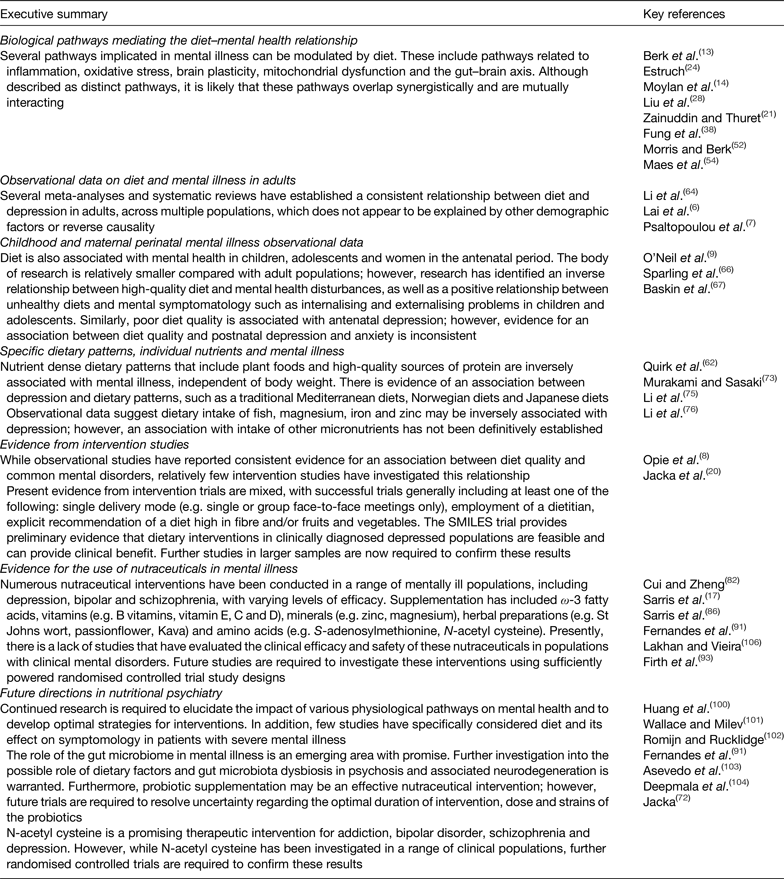
This review provides an overview of the field of nutritional psychiatry including discussion of the implicated biological mechanisms that are likely modulated by diet, the results of recent systematic reviews and meta-analyses regarding the use of dietary and nutraceutical interventions in mental disorders, and promising avenues for further research. An executive summary of each section can be found in Table 1.
Executive summary of present research areas within Nutrition Psychiatry
For this narrative review, a systematic literature review of five electronic databases (Pubmed, PsychInfo, CiNAHL, Cochrane Database and Embase) was conducted using key search terms related to diet (e.g. ‘diet*’, ‘nutrition’), nutraceuticals (e.g. ‘diet* supplement’) and mental illness (e.g. ‘depression’, ‘mental illness’, ‘mood’). Results from systematic reviews, notable clinical and observational trials, and meta-analyses were prioritised for this review.
Implicated pathways in diet and mental illness
There are several pathways implicated in mental illness and that can be modulated by diet( Reference Berk, Williams and Jacka 13 , Reference Moylan, Berk and Dean 14 , Reference Zainuddin and Thuret 21 ). This section will provide an overview of the evidence for the primary pathways that have been studied to date. Although described as distinct pathways, it is likely that these pathways overlap synergistically and are mutually interacting.
Inflammation
Chronic low-grade inflammation, characterised by an elevation in pro-inflammatory cytokines and acute phase proteins, is implicated in the development of de novo depression, schizophrenia and bipolar disorder( Reference Berk, Williams and Jacka 13 , Reference Fernandes, Steiner and Molendijk 22 , Reference Fernandes, Steiner and Bernstein 23 ). The causes of this inflammation are multifaceted and include several lifestyle factors, such as psychological stress, smoking, obesity, lack of sleep and, of particular relevance to the present discussion, poor diet( Reference Berk, Williams and Jacka 13 ). Results from large observational studies suggest that healthy dietary patterns, such as the Mediterranean diet( Reference Estruch 24 ), that are higher in PUFA, fibre, fruit and vegetables are associated with lower levels of inflammatory markers( Reference Watzl, Kulling and Moseneder 25 ). Moreover, Mediterranean dietary patterns significantly improve markers of inflammation in intervention studies( Reference Schwingshackl and Hoffmann 26 ).
Oxidative stress
Oxidative and nitrosative stress are implicated in several chronic diseases and appear to be relevant to mental illness( Reference Moylan, Berk and Dean 14 ). Schizophrenic populations have decreased brain glutathione levels, disordered glutamate metabolism and increased oxidative stress( Reference Dean, van den Buuse and Bush 27 ). Similar results are reported in depressed populations, with higher levels of oxidative stress markers observed, as well as lower levels of antioxidants, such as vitamin E, vitamin C, coenzyme Q10 and glutathione, when compared with healthy controls( Reference Moylan, Berk and Dean 14 ). Furthermore, a recent meta-analysis of 115 studies reported lower antioxidant capacity in depressed patients during acute episodes( Reference Liu, Zhong and Liao 28 ). Given the abundance of antioxidant compounds present in foods such as fruit and vegetables, this is a pathway that could be modulated through dietary means.
Brain plasticity
Neurogenesis, particularly within the hippocampus, is associated with learning, memory and mood regulation, while altered neurogenesis is implicated in mental illness( Reference Zainuddin and Thuret 21 ). Brain-derived neurotrophic factor (BDNF) as well as other neurotrophins (e.g. bcl-2 and vascular endothelial growth factor) are suggested to mediate hippocampal neurogenesis( Reference Fernandes, Berk and Turck 29 , Reference Fernandes, Molendijk and Kohler 30 ). There is presently limited clinical investigation of the effect of diet on this pathway; however, preliminary evidence supports the role of diet in improving BDNF levels. For example, a 4-week dietary intervention to increase consumption of carotenoid-rich fruit and vegetables (eight servings daily) in people with schizophrenia resulted in higher serum levels of BDNF than in the control group( Reference Guimaraes, Jacka and Gama 31 ). Moreover, an epidemiological investigation in older adults has demonstrated an association between poor diet and reduced hippocampal volume( Reference Jacka, Cherbuin and Anstey 15 ). In addition to possessing antioxidant and anti-inflammatory properties, nutrients, such as n-3 fatty acids( Reference Kawakita, Hashimoto and Shido 32 ), polyphenols( Reference Williams, El Mohsen and Vauzour 33 ), l-theanine( Reference Wakabayashi, Numakawa and Ninomiya 34 ) and vitamin E( Reference Cecchini, Ciaroni and Ferri 35 ), can also stimulate neurogenesis while energy-dense diets high in fat and sugar impair this process( Reference Zainuddin and Thuret 21 , Reference Molteni, Barnard and Ying 36 , Reference Martire, Maniam and South 37 ).
Microbiota–gut–brain axis
The role of gastrointestinal microbiota on chronic disease is now a burgeoning area of research. Compelling evidence, predominantly from animal studies, indicates the gut microbiota can affect mental health-related behaviours via multiple pathways( Reference Fung, Olson and Hsiao 38 ).
The gastrointestinal microbiota has been implicated in several neurobiological pathways related to mental illness, including the modulation of BDNF( Reference Sudo, Chida and Aiba 39 ), serotonin neurotransmission( Reference O'Mahony, Clarke and Borre 40 ), immune function( Reference Hooper, Littman and Macpherson 41 ) and the hypothalamic–pituitary–adrenal axis-mediated stress response( Reference Sudo, Chida and Aiba 39 , Reference Dinan and Cryan 42 ). For example, microbiota-deficient germ-free mice exhibit an exaggerated stress response( Reference Sudo, Chida and Aiba 39 ) and lower BDNF and serotonin receptor levels in the cortex and hippocampus of the brain( Reference Sudo, Chida and Aiba 39 , Reference Clarke, Grenham and Scully 43 ) compared with normal gut colonised mice. At least some of these pathways appear bidirectional, with stress activation of the hypothalamic–pituitary–adrenal axis found to modulate microbial composition in rats( Reference O'Mahony, Marchesi and Scully 44 ).
Clinically, differences in patterns of faecal microbiota, reflecting decreased gut microbiota richness and diversity, have been reported in depressed patients compared with healthy controls( Reference Kelly, Borre and O'Brien 45 ). Transplantation of microbes from depressed patients into rodents results in depression-related behaviours( Reference Kelly, Borre and O'Brien 45 , Reference Zheng, Zeng and Zhou 46 ) and altering gut microbiota through probiotic supplementation or food products influences depression-related behaviour in animals( Reference Bravo, Forsythe and Chew 47 ).
Dietary-induced alterations in intestinal permeability (such as via a high-fat diet( Reference Amar, Chabo and Waget 48 )) may also affect mental health. Integrity of the gut epithelial barrier by tight junctions regulates the movement of substrates from the gut into the blood stream and, when compromised, is associated with depression( Reference Dantzer, O'Connor and Freund 49 , Reference Maes, Kubera and Leunis 50 ). Increased permeability may allow bacteria-derived lipopolysaccharides to activate immune cells within the intestinal wall, promoting the production of inflammatory cytokines and activation of nitro-oxidative stress pathways, resulting in elevated systemic inflammation( Reference Maes, Kubera and Leunis 50 ).
Mitochondrial dysfunction
Impaired mitochondrial energy production, size and distribution are associated with depression, schizophrenia and may be particularly relevant to bipolar disorder( Reference Morris, Walder and McGee 51 , Reference Morris and Berk 52 ). These changes could be the result of reduced antioxidant capacity and a pro-inflammatory cytokine-mediated increase in mitochondrial-derived oxygen and nitrogen-free radicals, suggesting inflammation and oxidative stress drive mitochondrial dysfunction( Reference Morris and Berk 52 ). Dietary and nutraceutical compounds such as coenzyme Q10, α-lipoic acid, carnitine, creatine, resveratrol, NAC and some antidepressants up-regulate mitochondrial respiratory function in animal models( Reference Wright, Renoir and Smith 53 – Reference Dean, Turner and Malhi 55 ).
Observational literature on diet and mental illness
There is now consistent epidemiological evidence for an association between measures of diet quality and mental health, across multiple populations,( Reference Jacka, Kremer and Berk 56 – Reference Oellingrath, Svendsen and Hestetun 58 ) which do not appear to be explained by other demographic factors or reverse causality( Reference Jacka, Cherbuin and Anstey 59 – Reference Sanchez-Villegas, Delgado-Rodriguez and Alonso 61 ).
Adult data
Several meta-analyses and systematic reviews have established a relationship between diet and depression in adults( Reference Lai, Hiles and Bisquera 6 , Reference Psaltopoulou, Sergentanis and Panagiotakos 7 , Reference Quirk, Williams and O'Neil 62 – Reference Li, Lv and Wei 64 ). Lai et al.( Reference Lai, Hiles and Bisquera 6 ) conducted a meta-analysis of thirteen observational studies (four cohorts and nine cross-sectional) and reported that consumption of a healthy diet was associated with reduced odds of depression (OR 0·84; 95 % CI 0·76, 0·92). It was, however, unable to establish a statistically significant relationship between western diet and increased odds of depression, likely due to insufficient power from the small number of studies analysed. The second meta-analysis presented similar results, showing moderate and high adherence to a Mediterranean diet to be associated with reduced likelihood of depression( Reference Psaltopoulou, Sergentanis and Panagiotakos 7 ). A more recent systematic review and meta-analysis including data from twenty-one studies and 117 229 participants has confirmed an inverse relationship between dietary patterns characterised by higher intakes of fruit, vegetables, whole grain, fish, olive oil, low-fat dairy and the probability or risk for depression, and a positive relationship between dietary patterns characterised by a higher consumption of red and/or processed meat, refined grains, sweets, high-fat dairy products and an increased probability or risk of depression( Reference Li, Lv and Wei 64 ).
Childhood and maternal perinatal data
The association between diet and mental health has also been studied in children, adolescents and women in the perinatal period( Reference O'Neil, Quirk and Housden 9 , Reference Muhlig, Antel and Focker 65 – Reference Baskin, Hill and Jacka 67 ). A systematic review of nine cross-sectional and three prospective studies reported an inverse relationship between high-quality diet and mental health disturbances and a positive relationship between unhealthy diets and poorer mental health outcomes in children and adolescents( Reference O'Neil, Quirk and Housden 9 ). Since this systematic review, three prospective cohort studies have reported maternal nutrition and early-life nutrition to be independently associated with mental symptomatology, such as internalising and externalising problems in children aged 5–7 years, when controlling for prenatal and postnatal confounders( Reference Jacka, Ystrom and Brantsaeter 10 – Reference Steenweg-de Graaff, Tiemeier and Steegers-Theunissen 12 ).
During pregnancy, women are more susceptible to nutrient deficiencies due to increased physiological stress on the body and increased nutrient demand from a growing fetus. These deficiencies are likely exacerbated by poor quality diets. Given the potential role of dietary nutrients in the biochemical pathways of mental illnesses, generalised maternal nutrient deficiency may explain rates of perinatal depression. Baskin et al.( Reference Baskin, Hill and Jacka 67 ) found associations between poor diet quality and antenatal depression; however, evidence was inconsistent for an association between diet quality and postnatal depression and anxiety. Together this literature indicates diet is likely relevant to mental health at all stages of life.
Specific dietary patterns and individual nutrients
A healthy diet is generally characterised as a higher intake of fruit, vegetables, fish and wholegrains, while a western diet, in contrast, is characterised by higher consumption of processed foods, processed meats, refined grains, salty and sugary snacks and beverages( Reference Rahe, Unrath and Berger 63 ). However, there is still substantial heterogeneity in defining a healthy diet, as many unique cultures have diverse but still healthy dietary patterns( Reference Martinez-Gonzalez and Sanchez-Villegas 68 ). At the core of these diets are nutrient-dense plant foods and high-quality sources of protein, which are likely to be a significant contributor to the observed results( Reference Jacka, Pasco and Mykletun 69 ). Rahe et al.( Reference Rahe, Unrath and Berger 63 ) differentiated between a healthy/traditional diet and a Mediterranean diet, with a Mediterranean diet having a greater emphasis on high intake of legumes, moderate intake of meat and dairy, and olive oil as the main fat source. They reported both diets were protective against depression. Observational studies have examined the association with other diets, including the traditional Japanese diet( Reference Nanri, Kimura and Matsushita 70 ) and the Norwegian diet( Reference Jacka, Mykletun and Berk 71 ); however, evidence is limited and conflicting( Reference Quirk, Williams and O'Neil 62 ).
It is important to note that the favourable association of healthy foods and mental health outcomes is consistently independent of the association between unhealthy foods and poorer mental health outcomes( Reference Jacka 72 ), which suggests that different physiological pathways may be mediating the potential effects of these contrasting dietary patterns. These associations are also independent of body weight, suggesting dietary patterns can affect mental illness via pathways that are independent of weight status.
A 2010 review of thirty-four publications investigating a number of dietary variables, including long chain n-3 PUFA, fish, folate and B vitamins as markers of dietary intake, did not establish a definitive association between the intake of specific dietary components and depressive symptoms( Reference Murakami and Sasaki 73 ). However, more recent meta-analyses of observational studies have identified fish consumption, and dietary magnesium, iron and zinc as associated with lower rates of depression( Reference Delgado-Lista, Perez-Martinez and Garcia-Rios 74 – Reference Li, Liu and Zhang 76 ).
While most observational studies have made appropriate adjustments for potential confounding variables, such as socioeconomic status, physical activity and smoking( Reference Jacka, Cherbuin and Anstey 59 ), residual confounding by these variables is likely. Moreover, while reverse causality has been examined as an explanatory factor (e.g. ( Reference Jacka, Cherbuin and Anstey 60 )), observational studies, particularly when cross-sectional, are unable to establish causality. Therefore, observational studies using prospective and case–control cohorts and intervention randomised controlled trials (RCT) should be prioritised in future studies. Most studies to date have examined the association between diet and depression, with only a limited exploration of anxiety and more severe mental illnesses, such as schizophrenia and bipolar disorder. There is now a need to extend observational nutritional psychiatry research into these areas.
Dietary interventions for mental illness
While observational studies have reported consistent evidence for an association between diet quality and common mental disorders, there are relatively few interventions that have investigated this relationship. Our 2013 systematic review of seventeen previous intervention studies provides an overview of existing dietary intervention studies with depression, anxiety and mood disturbance endpoints( Reference Opie, O'Neil and Itsiopoulos 8 ). The results were mixed, with approximately half the studies reporting improvements in outcomes, with successful trials generally including at least one of the following: single delivery mode (e.g. single or group face-to-face meetings only), employment of a dietitian, explicit recommendation of a diet high in fibre and/or fruit and vegetables. These trials were also less likely to recommend weight loss, reduce red meat intake or follow a low-cholesterol diet.
The review also identified multiple limitations within the literature. Primarily, only one study recruited participants with a depressive/anxiety diagnosis, while others included other participant populations, such as breast cancer and obese/overweight participants, and/or excluded participants with pre-existing mental health symptoms or disorders. Some studies included only one gender or had a sample comprising primarily Caucasian adults with a high education level. Hence, the findings may not be generalisable to other clinical and general populations.
Since the publication of this review, the potential impact of a Mediterranean diet on the incidence of de novo depression has been assessed in a post hoc analysis of the PREDIMED study( Reference Sanchez-Villegas, Martinez-Gonzalez and Estruch 77 ); this was a large RCT that investigated the effect of Mediterranean diet on CVD endpoints. While underpowered for the depression endpoint, the analysis suggested a non-significant reduction in the incidence of de novo depression for those randomised to a Mediterranean diet with nuts, and significant reduction in a subset of those with type 2 diabetes.
Forsyth et al.( Reference Forsyth, Deane and Williams 78 ) conducted a 12-week RCT in 119 individuals treated for depression and/or anxiety in primary care. The intervention group received motivational interviewing, activity scheduling and an individualised lifestyle programme focusing on changes in physical activity and diet (e.g. reducing fat intake, increasing vegetable intake and variety). The control group received regular phone contact with research staff that did not include dietary advice but asked participants about changes to their diet or physical activity patterns. Both groups reported improved symptoms of depression and/or anxiety as well as dietary intake over time. However, no significant differences in symptoms were observed between the two groups.
We have recently published the results of the SMILES trial, an RCT that investigated a 12-week modified Mediterranean diet intervention in sixty-seven participants with major depression( Reference Jacka, O'Neil and Opie 20 ). Participants in the intervention group received personalised dietary and nutritional counselling based on a traditional Mediterranean diet and the Australian Dietary Guidelines. Participants in the control group received the same number of scheduled visits but received a ‘befriending’ protocol (social support) whereby research staff met with participants and discussed neutral topics of interest (e.g. sport, hobbies). At 12 weeks, there was a significantly greater improvement in depression scores in the dietary support group compared with the social support control group. Furthermore, there was a significantly greater level of remission in the dietary support group (defined as a Montgomery–Åsberg Depression Rating Scale score <10) with 32·3 % (n 10/31) of the dietary support group reporting remission compared with 8·0 % (n 2/25) in the social support control group and a number needed to treat of 4·1. Participants did not significantly change their energy intake or body weight during the trial, which suggests that these improvements were not primarily related to weight status. The results of the SMILES trial provide preliminary evidence that dietary interventions in clinically diagnosed populations are feasible and can provide clinical benefit. Further studies in larger samples are now required to confirm these results.
Nutraceutical interventions for mental illness
There is a broad array of nutraceutical interventions that target pathways implicated in mental illness, including inflammation, oxidative stress, modulation of the methylation cycle and prevention of hippocampal-associated cognitive decline, as well as mitochondrial dysfunction and neurotransmitter pathways( Reference Wu, Ying and Gomez-Pinilla 79 – Reference Lim, Kim and Kim 81 ). Due to their action on these pathways, clinical trials have investigated specific nutrients and herbal preparations for their effect on mental illness. As this area of research is expansive, this section will only provide an overview of recent systematic reviews and meta-analyses that have evaluated intervention studies in this area.
St John's Wort, a widely researched herbal nutraceutical, has been reported in a recent meta-analysis to achieve similar improvements in depression to selective serotonin reuptake inhibitor medication controls( Reference Cui and Zheng 82 ). The n-3 PUFA are another supplement that have a long history of investigation, with several meta-analyses reporting mixed findings( Reference Sarris, Murphy and Mischoulon 17 , Reference Appleton, Sallis and Perry 83 , Reference Sublette, Ellis and Geant 84 ). However, interventions that use n-3 formulations with a high EPA : DHA ratio as an adjunctive to antidepressants might be beneficial to patients with depression( Reference Sarris, Murphy and Mischoulon 17 , Reference Sublette, Ellis and Geant 84 ). S-adenosylmethionine, methylfolate and vitamin D may also have a positive effect on depression as adjunctive interventions, although there are also large negative studies( Reference Sarris, Murphy and Mischoulon 17 , Reference Sanders, Stuart and Williamson 85 ). Furthermore, some nutraceuticals, including creatine, folinic acid and an amino acid combination, have yielded positive preliminary data from single trials, while zinc, folic acid, vitamin C, inositol and tryptophan have mixed or non-significant effects for depression( Reference Sarris, Mischoulon and Schweitzer 86 ). The results of additional meta-analyses also report no benefit from folate, vitamin B12 ( Reference Almeida, Ford and Flicker 87 ) and vitamin D supplementation for depression( Reference Gowda, Mutowo and Smith 88 ).
While not as extensively studied, clinical trials have also investigated some nutraceuticals for other mental illnesses. Three meta-analyses concluded that adjunctive n-3 supplementation can be beneficial for both unipolar and bipolar depressions( Reference Sarris, Mischoulon and Schweitzer 86 , Reference Sarris, Mischoulon and Schweitzer 89 , Reference Grosso, Pajak and Marventano 90 ). The results of a recent meta-analysis suggest that NAC may be efficacious for depression and depressive symptoms regardless of the main clinical diagnosis, although again there are negative studies( Reference Fernandes, Dean and Dodd 91 ). Furthermore, l-tryptophan, magnesium, folic acid and branched-chain amino acids may be effective for bipolar disorder-related mania and chelated mineral and vitamin formulas may be effective in improving both bipolar disorder-related depression and mania( Reference Sarris, Mischoulon and Schweitzer 86 ).
The use of micronutrient combinations for mental illness has also been investigated. A systematic review by Rucklidge and Kaplan( Reference Rucklidge and Kaplan 92 ) reported limited evidence for micronutrient combinations for stress, antisocial behaviours and depressed mood in healthy people, as well as potentially for attention-deficit hyperactive disorder and autism. However, the review identified few studies in this area and most studies were conducted in healthy rather than clinically diagnosed populations.
A 2010 systematic review concluded that passionflower, kava and combinations of l-lysine and l-arginine were promising interventions for anxiety and that more research is required to make recommendations regarding magnesium supplementation due to limited published studies on this intervention. The results of a meta-analysis reported that folate and other vitamin B supplementation (including B6 and B12) may be beneficial for certain populations diagnosed with schizophrenia( Reference Firth, Stubbs and Sarris 93 ).
Nutraceuticals including n-3 fatty acids, calcium, multivitamin and B vitamins have been investigated for perinatal depression; however, a recent review concluded that there is presently limited support for nutraceutical interventions in this population with few intervention studies reporting significant improvements and several trials rated as having a medium or high risk of bias( Reference Sparling, Henschke and Nesbitt 66 ).
Overall, clinical trials have evaluated numerous nutraceutical interventions; however, there is a lack of trials that have evaluated their clinical efficacy and safety in populations with clinical mental disorders. Future studies are required to investigate these interventions using sufficiently powered RCT study designs. Importantly, likely effect modifiers, including baseline diet, inflammatory status and gut microbiome composition, are essential variables to include in future interventions.
Promising new avenues for investigation
The field of nutritional psychiatry has provided a significant body of evidence to suggest that dietary patterns are relevant to common mental illnesses. However, continued research is required to translate the evidence base into clinical and public health recommendations.
Dietary patterns may modulate numerous biological pathways involved in mental illness including inflammation, oxidative stress, the gut–brain axis and neurogenesis. Continued research is required to elucidate the impact of these as well as additional pathways, including the role of homocysteine( Reference Salagre, Vizuete and Leite 94 ), telomerase( Reference Deng, Cheung and Tsao 95 ) and epigenetics( Reference Januar, Saffery and Ryan 96 ), on mental health and to develop optimal strategies for interventions.
Most observational data to date have focused on common mental disorders and there is now a need to examine dietary patterns in those with severe mental illnesses. Numerous systematic reviews and meta-analyses have considered the effects of dietary patterns on weight loss and metabolic diseases in individuals with severe mental illnesses, namely schizophrenia and bipolar disorder, yet few have specifically considered diet and its possible effect on psychiatric symptoms in these populations. Limited evidence suggests a positive association between obesity/weight gain and impaired functioning in individuals with bipolar disorder; however, the directionality of this relationship has not been firmly established, indicating the need for further research in this area( Reference Cerimele and Katon 97 ). Schizophrenia is associated with gastrointestinal and microbial dysfunction, immune and inflammatory mechanisms( Reference Anderson, Berk and Dodd 98 , Reference Nemani, Hosseini Ghomi and McCormick 99 ). Further investigation into the possible role of dietary factors and gut microbiota dysbiosis in psychosis and associated neurodegeneration is warranted.
The microbiota–gut–brain diet axis is a promising target that could be modified via dietary and nutraceutical intervention, such as prebiotics (e.g. high-fibre foods and supplements) and probiotics (e.g. fermented foods or supplements) directly targeting microbial populations. A 2015 systematic review of ten RCT investigated probiotic supplements for stress, mood, anxiety, schizophrenic symptoms and externalising behaviours in autism spectrum disorder. It concluded that few studies reported significant improvements from probiotic supplementation. Alternatively, a more recent meta-analysis of five RCT reported that probiotic supplementation decreased measures of depression (−0·30, 95 % CI −0·51, −0·09; P = 0·005)( Reference Huang, Wang and Hu 100 ), and an additional systematic review of ten RCT also concluded that probiotics may be beneficial to cognition, mood and anxiety( Reference Wallace and Milev 101 ). However, few studies included in these reviews were conducted within populations with diagnosed mental illness and the clinical relevance to psychiatry is thus far unclear. Furthermore, all studies noted additional limitations in the literature including uncertainty regarding the optimal duration of intervention, dose and strains of the probiotics( Reference Huang, Wang and Hu 100 – Reference Romijn and Rucklidge 102 ). Future quality intervention studies are required to improve the existing evidence base for probiotic supplementation and to explore the role of dietary manipulation (e.g. pro and prebiotic foods) on mental health. Characterisation of changes in microbial signature and composition and gut permeability in response to diet, and associated changes in mental health and related behaviours are also needed.
NAC is an amino acid-derived glutathione precursor that may modulate glutamatergic and neurotrophic transmission, glutathione production for antioxidant capacity, mitochondrial function and inflammation( Reference Berk, Malhi and Gray 19 ). Recent reviews conclude that, while the present evidence is preliminary, NAC is a promising therapeutic intervention for addiction (e.g. substance dependence, gambling) and bipolar, schizophrenic and depressed populations( Reference Fernandes, Dean and Dodd 91 , Reference Asevedo, Mendes and Berk 103 , Reference Deepmala, Slattery and Kumar 104 ). However, while NAC has been investigated in a range of these clinical populations, further RCT are required to confirm these results( Reference Dean, Turner and Malhi 55 ).
Conclusion
Nutritional psychiatry is a rapidly growing field of research that has the potential to provide clinically meaningful interventions to both prevent and manage mental illness. Observational research has demonstrated a consistent relationship between diet quality and common mental illnesses, while biological pathways including inflammation, oxidative stress, gastrointestinal microbiota and neurotrophic factors provide viable mechanisms of action for this observed effect. Preliminary clinical evidence provides support for the feasibility and efficacy of dietary and some nutraceutical interventions. It is likely that changes to public policy are needed to translate these findings into population-wide changes in eating behaviour to achieve associated benefits( Reference Dash, O'Neil and Jacka 105 ). More research is now required to investigate the efficacy of intervention studies in large cohorts and within clinically relevant populations, particularly in patients with schizophrenia, bipolar and anxiety disorders, in order to build on the existing evidence base and to inform clinical practice.
Acknowledgements
M. B. is supported by an NHMRC Senior Principal Research Fellowship (1059660). F. J. is supported by an NHMRC Career Development Fellowship (2) (1108125).
Financial Support
None.
Conflicts of Interest
None.
Authorship
W. M. and G. M. contributed equally, with primary responsibility for writing this work. M. B. and F. J. contributed to planning and editing this work.



