








Hostname: page-component-89b8bd64d-x2lbr Total loading time: 0 Render date: 2026-05-07T16:49:25.018Z Has data issue: false hasContentIssue false

Instability of standing waves for fractional NLS with combined nonlinearities

Published online by Cambridge University Press:  27 November 2024

Zaizheng Li
Affiliation:
School of Mathematical Sciences, Hebei Center for Applied Mathematics, Hebei Normal University, Shijiazhuang 050024, Hebei, China (zaizhengli@hebtu.edu.cn)
Haijun Luo
Affiliation:
School of Mathematics, Hunan Provincial Key Laboratory of Intelligent Information, Processing and Applied Mathematics, Hunan University, Changsha 410082, Hunan, China (luohj@hnu.edu.cn) (corresponding author)
Zhitao Zhang
Affiliation:
HLM, Academy of Mathematics and Systems Science, The Chinese Academy of Sciences, Beijing 100190, China School of Mathematical Sciences, University of Chinese Academy of Sciences, Beijing 100049, China (zzt@math.ac.cn)

Abstract

We study the existence and strong instability of standing wave solutions for the fractional nonlinear Schrödinger equation

\begin{equation*}\begin{cases}\mathrm{i} \psi_{t}=\left(-\Delta\right)^s \psi-\left(|\psi|^{p-2}\psi+\mu|\psi|^{q-2}\psi\right), & \quad(t,x)\in(0,\infty)\times\mathbb{R}^N,\\\psi(0,x)=\psi_0(x),&\quad x\in\mathbb{R}^N,\end{cases}\end{equation*}

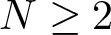
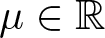
where $N\geq2$, $0 \lt s \lt 1$, $2 \lt q \lt p \lt 2_s^*=2N/(N-2s)$, and $\mu\in\mathbb{R}$. The primary challenge lies in the inhomogeneity of the nonlinearity.We deal with the following three cases: (i) for $2 \lt q \lt p \lt 2+4s/N$ and µ < 0, there exists a threshold mass a0 for the existence of the least energy normalized solution; (ii) for $2+4s/N \lt q \lt p \lt 2_s^*$ and µ > 0, we reveal the existence of the ground state solution, explore the strong instability of standing waves, and provide a blow-up criterion; (iii) for $2 \lt q\leq2+4s/N \lt p \lt 2_s^*$ and µ < 0, the strong instability of standing wave solutions is demonstrated. These findings are illuminated through variational characterizations, the profile decomposition, and the virial estimate.

Information

Type
Research Article
Copyright
© The Author(s), 2024. Published by Cambridge University Press on behalf of The Royal Society of Edinburgh

Access options

Get access to the full version of this content by using one of the access options below. (Log in options will check for institutional or personal access. Content may require purchase if you do not have access.)

Article purchase

Temporarily unavailable