



The population of the UK is recognised for its ethnic diversity. People of ‘Black British’ ethnicity are the second largest minority ethnic group, making up approximately 25 % of the non-White population in the UK, with London having the greatest representation( 1 ). When more sensitive categorisation of ethnicity is used, it is recognised that the Black Caribbean population is larger in total numbers while the Black African community is the fastest growing minority group in the UK, with migration from the countries of West Africa being dominant( 1 ). Compared with the general UK population, the burden of chronic diseases such as obesity, hypertension, type 2 diabetes and stroke is much greater for people of Black African and Caribbean ethnicity, with earlier development, higher overall incidence rates and poorer outcomes( Reference Mindell and Zaninotto 2 ).
The role of diet in the aetiology of chronic diseases has been extensively studied and a ‘Westernised diet’ with a high energy density, high fat, saturated fat, salt and sugar contents alongside a low fibre content has been recognised for its detrimental impact on risk factors for CVD and type 2 diabetes( Reference Boniface and Tefft 3 – Reference Ludwig, Pereira and Kroenke 5 ); however, ethnicity-specific effects have not been reported and few studies have had adequate representation from minority ethnic groups. Studies of food consumption and nutritional composition in Black British adults are limited and largely confined to people of Caribbean ancestry( Reference Vyas, Greenhalgh and Cade 6 – Reference Sharma, Cade and Riste 8 ). Previous studies have recognised distinct nutritional composition differences between native Caribbean and first-generation migrant Caribbean communities in the UK, suggesting that migration and the processes of acculturation( Reference Satia-Abouta, Patterson and Neuhouser 9 ) result in increasing intakes of energy, fat and saturated fat( Reference Sharma, Cade and Riste 8 ); although when compared with White Europeans, intakes of fat and saturated fat remain significantly lower in UK African-Caribbean adults( Reference Vyas, Greenhalgh and Cade 6 ). Earlier studies describing important foods in the diets of first-generation migrants in the UK demonstrate the influence of traditional foods and dishes( Reference Vyas, Greenhalgh and Cade 6 , Reference Sharma, Cade and Jackson 10 ) but it is not clear whether these dietary patterns have changed in more recent years or in subsequent generations. In a recent study of African-American adults, Sharma et al. described the main food sources for energy and fat intakes and demonstrated the importance of ‘Western’ foods such as sugar-sweetened beverages and burgers( Reference Sharma, Wilkens and Shen 11 ), indicating significant dietary acculturation in African-Americans. The Child Heart and Health Study in England (CHASE) has described the nutritional composition of the diets of children of Black African and African-Caribbean ethnicity in England and corroborated earlier data( Reference Vyas, Greenhalgh and Cade 6 ) in recognising lower total and saturated fat intakes compared with White European children( Reference Donin, Nightingale and Owen 12 ). In further exploration of the nutritional data, Donin et al.( Reference Donin, Nightingale and Owen 13 ) reported that these differences in nutritional composition are more marked for Black African than Black Caribbean children, which could be a result of traditional cultural differences, or may be an effect of changes in dietary intake, or due to greater ‘dietary acculturation’ in the latter towards the diet of the general UK population given the earlier migration of this ethnic subgroup( Reference Donin, Nightingale and Owen 13 ). Currently no data exist to describe the dietary intake or nutritional composition of the diets of adults of West African ancestry residing in the UK and the data for Black Caribbean adults lack currency and are limited to first-generation migrants. There is a clear need to better understand the dietary habits of these high-risk communities to enable health-care professionals to provide culturally tailored care and aid the development of much needed effective public health prevention strategies( Reference Lakhani 14 ). The aim of the present work was to assess the dietary intake of a sample of Black Caribbean and Black West African adults residing in the UK. Specifically we aimed to describe the nutritional composition of the diet, the main food sources and the contribution that traditional foods make to dietary intake and to explore differences according to ethnicity and duration of UK residence.
Methods
An observational assessment of dietary intake was conducted in fifty adults of African-Caribbean (ten male, forty female) and eighty-three of West African (twenty-nine male, fifty-four female) ancestry residing in the UK. The study was approved and conducted according to the standards of the King’s College London Research Ethics Committee (BDM/11/12-3). All participants provided (written) informed consent.
Participants
Participants were healthy men and women, aged 18–75 years, of African-Caribbean or West African ancestry. Ethnicity was both self-defined by the participants and confirmed from parental and grandparental origin and birthplace. African-Caribbean ethnicity was defined as an ancestry originating from the countries of the Association of Caribbean States (twenty-five in total) and West African ethnicity was defined as an ancestry originating from the countries of the Economic Community of West African States (seventeen in total).
Participants were excluded if they were of an ethnic background other than African-Caribbean or West African or had a chronic disease that would require dietary management or impact their habitual diet, for example diabetes and coeliac disease.
Study recruitment and data collection were conducted between October 2011 and December 2012. Participants were recruited via a number of strategies; a number of church and community groups throughout London and surrounding areas were approached, staff and students of King’s College London were invited via a research recruitment email, flyers were distributed in libraries and community centres in a number of London Boroughs, and snowballing was encouraged.
Procedures
Dietary intake was assessed using the standardised triple-pass 24 h recall methodology( Reference Nelson, Holmes and Roberts 15 ). Participants completed a series of two or three recall interviews, the first recall was conducted face to face and subsequent interviews were conducted over the telephone. Interviews were conducted to recall one weekend day and at least one weekday. The interviews were conducted by four trained research dietitians or assistants. Participants were asked to indicate their portion sizes using a photographic food atlas( Reference Nelson and Meyer 16 ), ethnically appropriate photographs( Reference Cheyette and Balolia 17 ) and household measures. Detailed information was collected for pre-packaged foods including brands and portion sizes, full recipes and cooking methods were recorded for home-prepared foods and dishes, and analysed using systematic methodology.
Dietary intake records were coded and analysed for food and nutrient composition using DietPlan 6 (Forestfield Software, Horsham, UK) which is based on McCance and Widdowson’s The Composition of Foods, 6th edition. Where food items were not available within the DietPlan database new entries were created, particularly for home-prepared recipes. Nutritional composition information was sought from the West African Food Composition Table ( Reference Stadlmayr, Charrondiere and Enujiugha 18 ), food labels and manufacturer websites for branded items, and West African recipe books and textbooks( Reference Teller 19 ). Macronutrient intakes were expressed as percentage of total energy intake, dietary fibre intake was expressed as NSP in g/4184 kJ and Na intake was expressed as mg/d.
Potential under-reporting was assessed using established procedures in which age- and sex-specific standard equations were used to estimate BMR based on the weight of the participant. These were multiplied by a lower cut-off physical activity level of 1·2 to provide estimates of minimum total energy expenditure and recognise probable under-reporting( Reference Rennie, Coward and Jebb 20 ).
To assess food sources of nutrients, the food items were grouped and coded according to the relevant groupings of the UK National Diet and Nutrition Survey( 21 ). These food items were then further classified as ‘traditional’ or ‘non-traditional’ foods in order to assess the contribution of traditional foods to nutrient intakes (e.g. within the ‘high-fibre breakfast cereals’ food group, porridges were classified as ‘traditional’ and Weetabix™ and Shredded Wheat™ were classified as ‘non-traditional’). Foods were defined as ‘traditional’ using the definition of The Council of the European Union (2006) which states ‘“traditional” means proven usage on the Community market for a time period showing transmission between generations; this time period should be the one generally ascribed to one human generation, at least 25 years’( 22 ). To apply this definition to the food lists a consensus opinion of four Registered Dietitians was sought. The dietitians were representative of the ethnic groups in the study or highly experienced in working with these ethnic groups. The same food group codes were used for both ethnic groups; however, the classifications of ‘traditional’ and ‘non-traditional’ were specific to each ethnic group.
Participants completed a short sociodemographic questionnaire that collected information on age, sex, highest educational attainment, employment status, place of birth and length of UK residency. Weight and height were measured and BMI (weight/height2, kg/m2) was calculated in a subset of participants who attended the research centre for the dietary assessment interview (Caribbean n 27; West African n 47). These data were not collected for participants whose interviews took place in some of the community locations due to restrictions in being able to set up the equipment.
Statistical analysis
The data were analysed using the statistical software package IBM SPSS Statistics version 21. Distributions of nutrient composition variables were examined for normality and log-transformed where necessary. The χ 2 test was used for comparison of categorical variables by ethnicity. Comparison of means was conducted using the independent-samples t test and one-way ANOVA for continuous variables having a parametric distribution, while the Mann–Whitney U test was conducted for comparing the medians of non-parametric data. Data are means and 95 % confidence intervals unless indicated otherwise.
ANCOVA was conducted to assess for differences in nutritional intakes (dependent) between ethnic groups (independent) while adjusting for age, sex and length of UK residence (covariates). Differences based on length of UK residence (independent) were assessed using age, sex and ethnicity as covariates; duration of UK residence was converted to a categorical scale by collapsing the data into tertiles. Differences based on markers of socio-economic status were assessed using both highest educational attainment and employment status as independent variables and age, sex, ethnicity and duration of UK residence as covariates. Data are adjusted means and 95 % confidence intervals. Statistical significance was indicated by P≤0·05.
Results
In total 133 participants, fifty (38 %) Caribbean (mean age 42·1 (sd 15·9) years) and eighty-three (62 %) West African (mean age 35·9 (sd 13·4) years), 71 % female overall, were included in the analysis. The Caribbean participants were significantly older (P=0·02), more likely to be born in the UK (P<0·001) and had been resident in the UK for longer than the West African participants (P<0·001; Table 1). Body weight was not significantly different between the two ethnic groups; however, the Caribbean participants had a significantly higher mean BMI than the West African participants (P=0·05). There was greater educational achievement in the West African participants, 70 % having a degree or professional qualification v. 44 % in the Caribbean group (P=0·005), although employment rates were not different between the groups (P=0·36; Table 1).
Sociodemographic and anthropometric characteristics of the whole sample and by ethnic group; adults aged 18–75 years of Caribbean or West African ancestry, London, UK, October 2011–December 2012
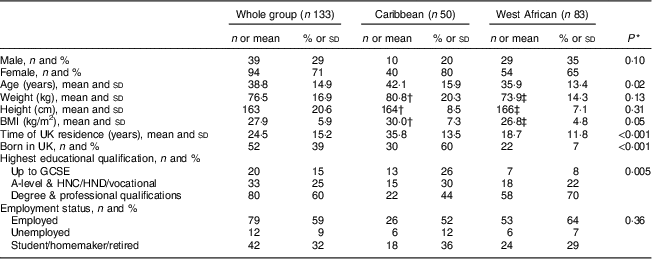
Highest educational attainment has been categorised according to the UK educational system: GCSE (General Certificate of Secondary Education) represents core secondary-school education to the age of 16 years; A-level is advanced education to the age of 18 years; HNC (Higher National Certificate) and HND (Higher National Diploma) represent vocational qualifications achieved following core secondary-school education.
* Comparisons between ethnic groups used the χ 2 test of independence for categorical variables or the independent-samples t test for continuous variables.
† Data available for twenty-seven participants.
‡ Data available for forty-seven participants.
Nutritional composition of Caribbean and West African diets
The nutrient composition of the diets of the two ethnic groups is shown in Table 2. Probable under-reporting, defined as reported energy intake less than BMR×1·2, was estimated in 37 % of Caribbean and 51 % of West African participants and was not associated with ethnicity (P=0·36). The Caribbean participants reported significantly greater energy (P=0·005) and sugar intakes (P=0·04); however, after removal of data from probable under-reporters there were no differences in nutrient composition of the diets between the two ethnic groups. ANCOVA was used to further explore the nutritional composition data, assessing for differences between ethnic groups and by length of UK residency and markers of socio-economic status (employment status and highest educational attainment) while adjusting for the effects of confounding variables.
Nutrient intakes of the whole sample and by ethnic group; adults aged 18–75 years of Caribbean or West African ancestry, London, UK, October 2011–December 2012

%TE, percentage of total energy intake.
* Comparison of means between ethnic groups used one-way ANOVA, using log-transformed data for variables with a non-normal distribution.
† Under-reporting was assessed in seventy-four participants (twenty-seven Caribbean and forty-seven West African). Using a cut-off of BMR×1·2, under-reporting was estimated in 46 % of participants (37 % of Caribbean and 51 % of West African participants were evaluated as under-reporting, P=0·36 for ethnicity relationship).
Effects of ethnicity
After adjusting for age, place of birth and length of UK residency, energy intakes were significantly greater in the Caribbean participants compared with the West African participants (9427 (95 % CI 8385, 10 468) kJ/d v. 7979 (95 % CI 7184, 8774) kJ/d, P<0·037). No other significant nutritional differences were found between ethnicities after adjustment for sociodemographic variables (data not shown).
Effects of length of time of UK residency
To assess differences in nutrient intakes according to length of UK residency the data were collapsed into tertiles of length of UK residence (up to 12 years (n 37; three Caribbean, thirty-four West African), 13–38 years (n 65; twenty-three Caribbean, forty-two West African) and more than 38 years (n 30; twenty-four Caribbean, six West African)). After adjusting for age, sex and ethnicity, intakes of energy (7368 (95 % CI 6372, 8360) kJ/d v. 10 281 (95 % CI 9389, 11 175) v. 12 267 (95 % CI 10 460, 14 079) kJ/d, P<0·001), fat (30·5 (95 % CI 28·1, 32·9) % of total energy (%TE) v. 33·3 (95 % CI 31·5, 35·1) %TE v. 38·6 (95 % CI 35·4, 41·7) %TE, P=0·002) and Na (2346 (95 % CI 1570, 3123) mg/d v. 3499 (95 % CI 3114, 3884) mg/d v. 3544 (95 % CI 2668, 4419) mg/d, P=0·03) were significantly increased in those participants who were resident in the UK the longest. No other significant nutritional differences were found after adjustment for sociodemographic variables (data not shown).
Effects of socio-economic status
To assess differences in nutrient intakes according to socio-economic status, data on employment status were used as the independent variable in one analysis and data on highest educational attainment were used in a separate analysis. After adjusting for age, gender, ethnicity and length of UK residence, Na intakes were found to be significantly higher in those with the highest educational attainment (2778 (95 % CI 2112, 3441) mg/d v. 2973 (95 % CI 2463, 3483) mg/d v. 3721 (95 % CI 3195, 4247) mg/d, P=0·047) and sugar intakes were found to be higher in those who were employed compared with those who were unemployed (22·3 (95 % CI 19·8, 24·7) %TE v. 16·8 (95 % CI 13·1, 20·5) %TE, P=0·004; data not shown).
Traditional food consumption
The contribution that traditional foods made to nutrient intakes in the Caribbean and West African participants is shown in Table 3. Overall, traditional foods contributed significantly more to energy (P=0·04), fat (P=0·02), saturated fat (P=0·02), carbohydrate (P=0·02), starch (P=0·03) and Na (P=0·001) intakes in West African participants.
Contribution of traditional foods to nutrient intakes by ethnic group; adults aged 18–75 years of Caribbean or West African ancestry, London, UK, October 2011–December 2012
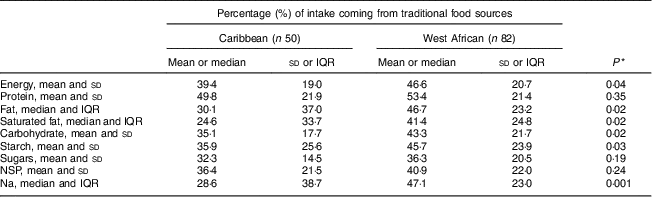
IQR, interquartile range.
* Comparison of means between ethnic groups used the independent-samples t test; comparison of medians between ethnic groups used the Mann–Whitney U test due to non-parametric distribution of the data.
Foods contributing to nutrient intakes
The ten principal dietary sources of energy, protein, fat, saturated fat, carbohydrate, sugar, dietary fibre as NSP and Na in the Caribbean diet are shown in Table 4; corresponding sources in the West African diet are shown in Table 5. The ten principal sources of energy accounted for 43 % and 41 % of total energy intake for the Caribbean and West African participants, respectively.
Ten principal food groups contributing to intakes of energy, protein, fat, saturated fat, carbohydrate (CHO), sugar, NSP and sodium in the diet of adults of Caribbean ancestry aged 18–75 years, London, UK, October 2011–December 2012
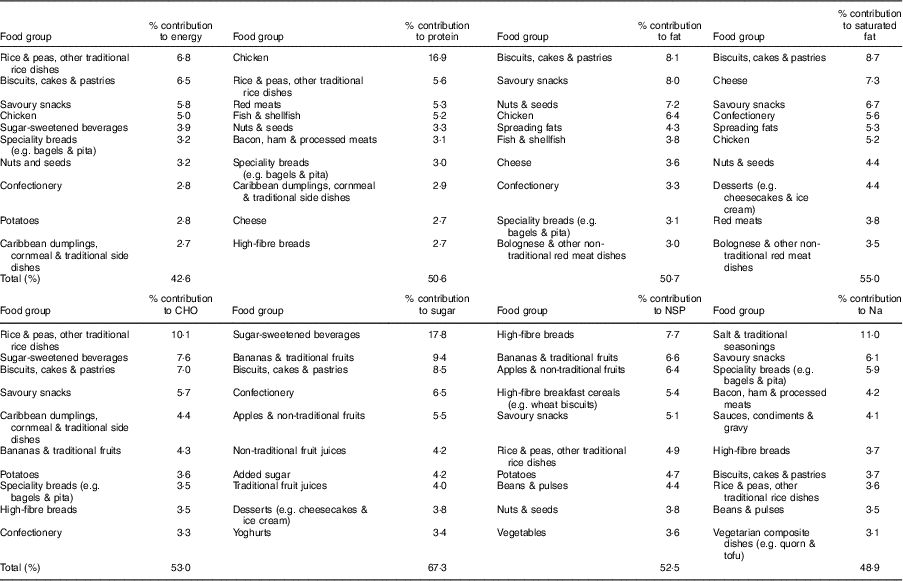
Ten principal food groups contributing to intakes of energy, protein, fat, saturated fat, carbohydrate (CHO), sugar, NSP and sodium in the diet of adults of West African ancestry aged 18–75 years, London, UK, October 2011–December 2012

In the Caribbean diet, the main source of energy intake was ‘rice & peas’ and other rice dishes. Approximately 15 % of energy intake came from Westernised foods such as biscuits, cakes, savoury snacks and confectionery, which were also principal sources of fat and saturated fat in the diet. Sugar-sweetened beverages were one of the top five sources of energy and the principal source of sugar, contributing almost 18 % of sugar intake; fruit juices were additional important sources of sugar (8·2 % of sugar intake). Dietary fibre intakes were derived principally from high-fibre breads and breakfast cereals (13·1 % of NSP intake) and fruits, both traditional and non-traditional varieties (13·0 % of NSP intake). The use of salt and traditional seasonings contributed 11·0 % of Na intake; non-traditional food sources of Na included savoury snacks (6·1 %), sauces and condiments (4·1 %), processed meats such as bacon, ham, sausages and burgers (4·2 %) and biscuits, cakes and pastries (3·7 %).
The main source of energy in the West African diet was jollof rice (rice cooked with tomatoes, onion, salt and spices to which various vegetables and meats are added) and other rice dishes. Traditional ‘one-pot’ soups and stews based on meat, fish or nuts and vegetables contributed approximately 8·5 % to energy intake and traditional starches such as yam, cassava and fufu contributed approximately 6 % to energy. Westernised foods such as biscuits, cakes and pastries (6·5 %) and savoury snacks (2·8 %) were also important sources of energy. The principal source of fat in the diet was biscuits, cakes and pastries (7·7 %) and traditional ‘one-pot’ soups and stews contributed approximately 19 % (combined) of fat intake. Processed meats such as bacon, ham, sausages and burgers featured in the top ten foods for fat and saturated fat and were one of the top five foods contributing to Na intake. Similarly to the Caribbean diets, sugar intakes in West Africans were driven by sugar-sweetened beverages (12·8 %), fruits (17·4 % combined traditional and non-traditional varieties) and fruit juices (9·0 %). Westernised foods such as biscuits, cakes, pastries (7·9 %) and confectionery (5·1 %) were also important sources of sugar. High-fibre breads and breakfast cereals were important sources of dietary fibre (8·1 % and 6·2 %, respectively), as were traditional starchy vegetables (7·1 %) and porridges (4·2 %). Salt intakes were driven by the use of salt and traditional seasonings (8·1 %), traditional ‘one-pot’ soups and stews (18·1 % combined), processed meats (5·3 %) and high-fibre breads (4·5 %).
Discussion
In the present study we have collected detailed dietary intake data from adults of Black Caribbean and West African ethnicity residing in the UK and described for the first time the influence of ethnicity and indicators of acculturation such as length of UK residence on the nutritional composition of the diets. Our results show that in adults of Caribbean and West African ancestry having a long UK residence is associated with greater dietary acculturation and increasing intakes of energy, fat and Na; a nutrient profile known to have detrimental health impacts( Reference Keys 23 ). Furthermore, we have presented detailed information for the foods that contribute to these changing nutrient profiles and described a diet rich in traditional foods in West African adults compared with a more Westernised or acculturated diet in Caribbean adults who have been resident in the UK longer.
There has been relatively little work performed to describe the dietary intake and nutritional composition of the diets of African and Caribbean communities in the UK or the effects and extent of dietary acculturation. Traditionally, African-Caribbean diets have been characterised by lower total and saturated fat contents and higher total carbohydrate content compared with that of White European adults( Reference Vyas, Greenhalgh and Cade 6 , Reference Goff, Griffin and Lovegrove 24 ) and the UK national average( Reference Gregory, Foster and Tyler 25 ), which is believed, at least in part, to contribute to the cardioprotective lipid profile( Reference Miller, Kotecha and Wilkinson 26 ) and low rates of IHD in these communities( Reference Wild and McKeigue 27 ). However, emerging evidence suggests this cardioprotection is being lost in subsequent generations; in the USA relative risk rates of myocardial infarction are now greater in young African-American adults compared with Euro-Americans( Reference Jolly, Vittinghoff and Chattopadhyay 28 ) and in the recent CHASE study of children in England the lipid profile of the children of Black Caribbean ancestry was no different from that of the White European children( Reference Donin, Nightingale and Owen 13 ). Historical work by Sharma et al.( Reference Sharma, Cade and Jackson 10 ) comparing the dietary intake of a small cohort of traditional and migrant Jamaican adults described distinct differences in fat and saturated intakes( Reference Sharma, Cade and Jackson 10 ) and in further studies comparing first-generation Caribbean migrants and second-generation UK-born migrants increases in fat and saturated fat were associated with being born in the UK( Reference Sharma, Cade and Riste 8 ) suggesting a clear impact of migration, birthplace and UK residence on dietary intake. These studies are approaching 20 years old and the importance of the African-Caribbean community to the UK population has continued to increase. Furthermore, ethnicity is an evolving concept and it is now recognised that the traditional ‘African-Caribbean’ classification of ethnicity includes many distinct cultures that newer classifications try to recognise; it is important that a more current assessment of the dietary intakes of these communities is performed.
The participants in the present study were of Black Caribbean or Black West African ethnicity which was self-defined by the participants and confirmed by parental and grandparental birth places. The demographic profile of the ethnic groups differed: the Caribbean participants were older, more likely to be born in the UK and had been resident in the UK for longer than the West African participants, which is representative of national data( 1 ) and reflects earlier large-scale migration from the Caribbean islands in the 1950s compared with the countries of West Africa in the 1980s. In our study we have shown that the acculturation related to being resident in the UK for a prolonged duration is associated with significantly greater intakes of energy, fat and Na. In a recent analysis of adults of West African origin, Anderson et al.( Reference Anderson, Younger and Heald 29 ) proposed that increasing protein, fat and saturated fat intakes were associated with increased risk of type 2 diabetes, such that for every 1 % increment in energy from fat and saturated fat, diabetes risk increased by 5 and 16 %, respectively( Reference Anderson, Younger and Heald 29 ). A further important morbidity in people of African and Caribbean origin is hypertension, which is believed to contribute to high rates of stroke, and may occur due to greater salt sensitivity( Reference Richardson, Freedman and Ellison 30 ). Our data suggest that dietary changes occur in adults born in the UK or in those with a prolonged residence that could further drive the development of type 2 diabetes and hypertension; this is particularly concerning given the already high prevalence of these diseases in these communities( Reference Mindell and Zaninotto 2 ).
The detrimental effects of an ‘urbanised’ lifestyle are recognised in driving the burden of chronic diseases and are therefore a target for both public health and health-care management programmes. Explicit inequalities in health-care provision are recognised to impact on minority ethnic groups in the UK and elsewhere, and a need to improve the cultural sensitivity of health care as well as develop targeted prevention strategies is recognised( Reference Lakhani 14 ). The present study provides a detailed analysis of the foods that are important in the diets of people of Black Caribbean and West African ethnicity, which is important for better informing health-care practitioners who work with these communities. We have shown that diets of West African adults rely significantly more on traditional foods and dishes compared with a relatively Westernised diet in Caribbean adults. The present study is the first to describe important foods consumed in the West African diet and to demonstrate the contribution they make to the nutritional profile of the diet; for example, traditional ‘one-pot’ stews and soups and traditional starches such as yam, cassava and fufu. Our data also demonstrate which non-traditional foods and dishes are prevalent in the diet of these Caribbean and West African adults; for example, biscuits, confectionery, processed meats, sugar-sweetened beverages and breakfast cereals. Similarly we have presented an analysis of the foods consumed by the Caribbean participants for whom traditional foods and dishes are important but less so than for the West African participants. Sharma et al.( Reference Sharma, Cade and Jackson 10 ) produced an FFQ specifically for populations of African-Caribbean ancestry and described the foods and dishes that were important to this community. Interestingly, many of the traditional Caribbean foods that featured heavily in the diet almost 20 years ago, such as curried mutton, homemade West Indian soup and hard dough bread, no longer feature in the lists we have produced and are replaced by Westernised foods such as confectionery, savoury snacks, biscuits and sugar-sweetened beverages. In more recent analyses of the diets of African-American adults, Sharma et al.( Reference Sharma, Wilkens and Shen 11 , Reference Sharma, Cao and Arcan 31 ) demonstrated the importance of foods such as burgers, sodas and very little reliance on traditional foods, which is in agreement with our findings. In the Caribbean diet we found that sugar-sweetened beverages were the fifth most important contributor to energy intake, which is alarming considering recent evidence from a meta-analysis demonstrating the detrimental impact that sugar-sweetened beverage consumption has on body weight( Reference Malik, Pan and Willett 32 ) and may in part explain the higher BMI of the Caribbean participants. This information assists in informing health-care practitioners of the dietary practices of these communities and enables identification of foods that may need to be targeted or encouraged in advising patients on dietary modifications, ultimately enabling care to be more culturally sensitive and individualised.
The strengths and limitations of the study warrant consideration. The study benefits from a more sensitive classification of ethnicity than has previously been used; studies from the USA use ‘African-American’ and older studies from the UK use ‘African-Caribbean’ to describe all people of African ancestry; in using these collective terms these studies describe a heterogeneous population and fail to recognise distinct cultural practices. In our study we have described ethnicity more specifically and as a result have presented data that are of direct relevance to health-care practitioners who care for members of these communities and for the development of culturally sensitive public health strategies. The dietary data were collected using a series of repeated structured 24 h recall assessments which allowed us to record detailed information on traditional foods and recipes and portion sizes; most of the studies in the literature have used a single 24 h recall( Reference Sharma, Cade and Jackson 10 , Reference Donin, Nightingale and Owen 12 ) or FFQ( Reference Vyas, Greenhalgh and Cade 6 , Reference Mennen, Jackson and Sharma 7 , Reference Sharma, Wilkens and Shen 11 , Reference Anderson, Younger and Heald 29 ) that are unlikely to have captured such detail. Our first assessment was performed in person to enable detailed information on portion size consumption to be collected; furthermore, ethnically sensitive photographic aids were used to record portion sizes accurately. Our interviews were lengthy (45–60 min) in order that we captured full details of recipes and home-prepared dishes. These were analysed as new entries in our nutritional composition database as the original database contains very few traditional Caribbean or African foods. We entered more than 420 new recipes or foodstuffs into the database and are confident that these had a significant impact on our findings, as confirmed by the contribution these foods and dishes made to the top ten food sources of nutrients. The total contribution that each of our top ten food lists made to total intake is comparable to that in previous studies( Reference Sharma, Cade and Jackson 10 , Reference Sharma, Wilkens and Shen 11 ) and gives us confidence that our food groupings, made using an adaptation of the groupings in the UK National Diet and Nutrition Survey, were appropriately sensitive.
Rates of under-reporting with the 24 h recall methodology are similar to those of other diet assessment methodologies( Reference Poslusna, Ruprich and de Vries 33 ). In our study we estimated that under-reporting may have been present in approximately 37 % and 51 % of the Caribbean and West African participants, respectively; this is slightly higher than the general average of 30 %( Reference Poslusna, Ruprich and de Vries 33 ) but not markedly different from Mennen et al.’s study of migrant and traditional African-Caribbean communities which showed that under-reporting is higher in migrant communities( Reference Mennen, Jackson and Sharma 7 ). We appreciate that our participants are not representative of the wider UK Caribbean and West African communities; however, we believe our study is the biggest study to date to collect detailed food group and nutrient data through dietary records as opposed to FFQ. Furthermore, we are aware of other limitations: our participants were recruited predominantly from London and the surrounding areas and may not therefore be nationally representative, but it is recognised from national records that London is the most important region in the UK with up to 80 % of the African and Caribbean community residing within it( 1 ). Our sample size was not sufficient to explore gender differences within and between ethnic groups, which may be an important line of investigation in future work( Reference Parackal, Smith and Parnell 34 ). All dietary assessment methodologies have limitations associated with misreporting and misinterpretation; however, we are confident that our data have not been more greatly impacted by these limitations than other studies of this type as our data are comparable to other studies( Reference Sharma, Cade and Riste 8 , Reference Mennen, Jackson and Cade 35 ). In analysing the nutritional composition of the diets of these communities we are limited to reporting the principal macronutrients, Na and fibre for which we had complete data. While other nutrients are of interest we acknowledge that, due to our nutritional composition database containing very few Caribbean or West African foods, our analysis included a significant proportion of data taken from food labels which are usually limited to macronutrients, Na and fibre. We appreciate the multidimensional nature of dietary acculturation( Reference Satia-Abouta, Patterson and Neuhouser 9 ); our quantitative methods did not enable us to explore the complexity of this phenomenon in our communities. Finally, we did not collect data on any biomedical markers of health and are not able to draw any firm conclusions on the effects of our findings on the health of our participants. It is important that further studies are performed to understand the impact of dietary acculturation on chronic disease risk in these communities.
Conclusion
In conclusion, we have presented data to demonstrate dietary acculturation in adults of Caribbean and West African ancestry in the UK. Our data show that with increasing residence in the UK the diet in these communities becomes higher in energy, fat and salt. We have provided detailed analysis of the role of traditional foods in the diets of these communities and presented dietary information that may guide health-care practitioners in individualising their care for patients from these communities.
Acknowledgements
Acknowledgements: The authors would like to thank Peter Milligan, Lecturer in Medical Statistics, for his assistance with the statistical analyses. Rebecca Weller, Hannah Dobson and Tadala Seyani contributed to the data collection. Matilda Owusu and Rachel Gibson contributed their expertise to the traditional food analysis. Financial support: This project was funded by King’s College London as an academic project. No other sources of funding were utilised in the completion of this work. King’s College London had no role in the design, analysis or writing of this article. Conflict of interest: None. Authorship: L.M.G. and A.K. formulated the research question, designed the study and supervised the collection of data. L.T. and H.S. contributed to data collection and L.T., H.S., L.M.G. and A.K. performed the dietary data analyses. L.M.G. performed the statistical analysis, drafted and revised the manuscript. All authors contributed to the intellectual content of the submitted manuscript. Ethics of human subject participation: The study was approved by the King’s College London Research Ethics Committee (BDM/11/12-3). All participants provided (written) informed consent.



