Globally, one of the main determinants of life expectancy is economic development, as demonstrated by the now well-known Preston curve(Reference Preston1). However, some countries perform somewhat better than expected and others worse. Among the latter are many of the countries of the former Soviet Union (FSU)(Reference Georgiadis, Pineda and Rodríguez2). There are many reasons for this, but the leading explanations have been identified as alcohol, smoking, diet and health-care provision failures(Reference Bobak and Marmot3–5). However, the situation is changing and, throughout this region, life expectancy has been improving during the 2000s(6). The reasons remain inadequately understood although it is likely that there has been some improvement in all of the major risk factors. Our previous research has examined changes in smoking(Reference Roberts, Gilmore and Stickley7) and access to health care(Reference Roberts, Stickley and Balabanova8, Reference Balabanova, Roberts and Richardson9), and ongoing research is examining changes in alcohol consumption. There have been a number of relatively recent studies that have looked at some aspects of nutrition although mainly secondary to other issues(Reference Hinote, Cockerham and Abbott10–Reference Abbott and Wallace15), but there has been little research specifically on changing diet in this region in the past decade outside Russia(Reference Dellava, Bulik and Popkin16–Reference Boylan, Lallukka and Lahelma18). This gap is important as the experience of countries in Central Europe following the opening of markets in the 1990s suggests that changing diets are likely to have a significant impact on health(Reference Zatonski, McMichael and Powles19, Reference Bandosz, O'Flaherty and Drygas20).
Earlier research in this region has characterised the traditional diet as high in fat and particularly low in fruit and vegetables, although differences in traditional diets in the South Caucasus and Central Asia were not explored(Reference Bobak and Marmot3). Thus, research in the three Baltic states in the late 1990s reported median intakes of under 200 g/d(Reference Pomerleau, McKee and Robertson21), compared with the WHO recommendation of at least 400 g/d(22) or five servings of fruit and vegetables(Reference Hall, Moore and Harper23). Many aspects of life in this region are, however, changing and food balance data from the FAO show substantial changes in the supply of fruit and vegetables since the late 1990s (Fig. 1)(24). However, there are known discrepancies between these data and actual consumption levels(Reference Pomerleau, Lock and McKee25). Hence, it is necessary to complement them with data from surveys. In the present paper we seek partially to address this gap by reporting on the findings from surveys in nine FSU countries. This is now a priority: determining what people eat is an essential element of formulating evidence-based nutritional policies.
Trends in the per capita supply of fruit and vegetables (g/d) from 1992 to 2007 in countries of the former Soviet Union (data source: FAO(24))

Methods
The data used in the present study are taken from two nationally representative cross-sectional household surveys conducted among adults in Armenia, Belarus, Georgia, Kazakhstan, Kyrgyzstan, Moldova, Russia and Ukraine in 2001 and again in 2010, when Azerbaijan was also included. Details of the earlier Living Conditions, Lifestyles and Health (LLH) survey conducted in October and November 2001 have been presented elsewhere(Reference Hinote, Cockerham and Abbott10, Reference Pomerleau, Gilmore and McKee26). In both the LLH and the more recent Health in Times of Transition (HITT) surveys, multistage random sampling with stratification by region and rural/urban settlement type was used. Within each primary sampling unit (about 50–200 (LLH), 100–200 (HITT) per country), households were selected by standardised random route procedures or selected by random sampling from a household list (in the case of Armenia in the earlier survey). Within each of the selected households one person (aged 18 years and over) was chosen (based on the nearest birthday). If there was no one at home after three visits (on different days and at different times), the next household on the route was selected.
The HITT survey was conducted between March and May 2010 (except in Kyrgyzstan, where political violence delayed the data collection until early 2011). Face-to-face interviews were conducted by trained fieldworkers in the respondents’ homes. Response rates varied from 71 % to 88 % in the LHH survey and from 47·3 % (Kazakhstan) to 83·0 % (Moldova) in the HITT survey. In the LHH study, approximately 2000 interviews were completed in each country with the exception of Russia (4000) and Ukraine (2400). For HITT there were 1800 respondents in each country, except in Russia (3000) and Ukraine (2000). As with the earlier study larger samples were collected in these countries to reflect their larger and more regionally diverse populations. In Georgia there was also a greater number of respondents (2200) as a result of a booster survey of 400 additional interviews that was undertaken in November 2010 to ensure a more representative sample. All participants gave informed consent prior to their inclusion in the study.
The HITT questionnaire included many of the same questions that had been used in the LLH survey to enable comparability. The draft questionnaire was forward- and back-translated into each of the languages in which it was administered, and then piloted before being finalised. Except in Russia and Belarus (where all interviews were conducted in Russian), respondents were given the choice of answering in Russian or a national language. Many of the questions used in both surveys are common survey questions. Other questions were designed specifically for use in these surveys based on our knowledge of the populations’ behaviour/lifestyles in this region(Reference Pomerleau, Gilmore and McKee26) (e.g. the question relating to garden plots). In the current study the primary outcomes of interest concern the consumption of fruit and vegetables, information about which was obtained in response to two questions: ‘How often in the past week have you eaten … fresh fruit/vegetables (except for potatoes)?’ In the LLH study interviewees were presented with the response options ‘daily’, ‘2 or 3 times per week’, ‘occasionally (1 time per week)’ and ‘extremely seldom’. In HITT the options were ‘daily/almost daily’, ‘several times per week’, ‘once a week’ and ‘less than once a week’.
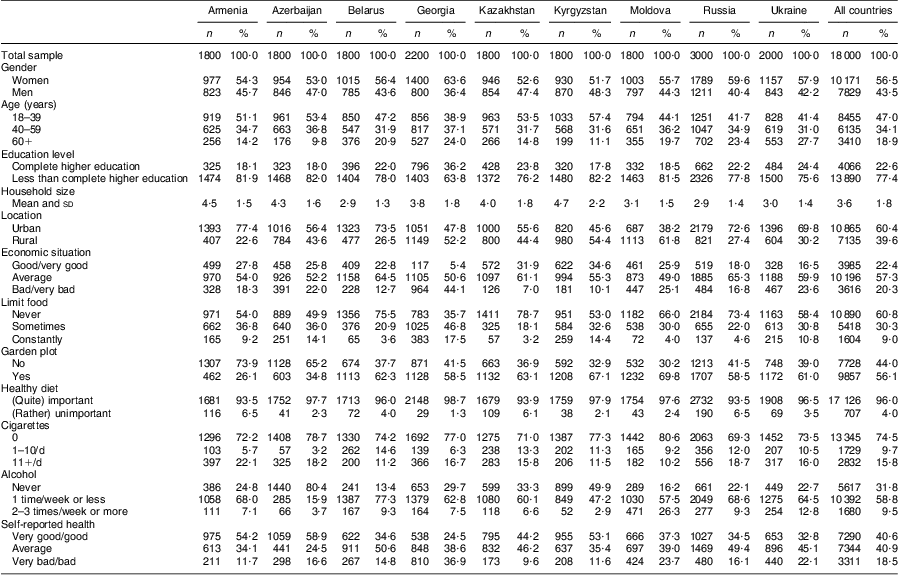
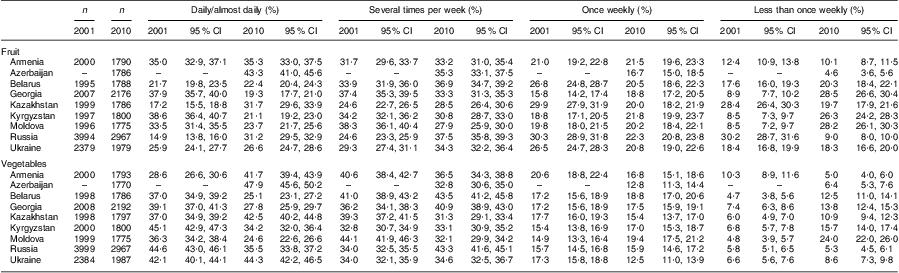
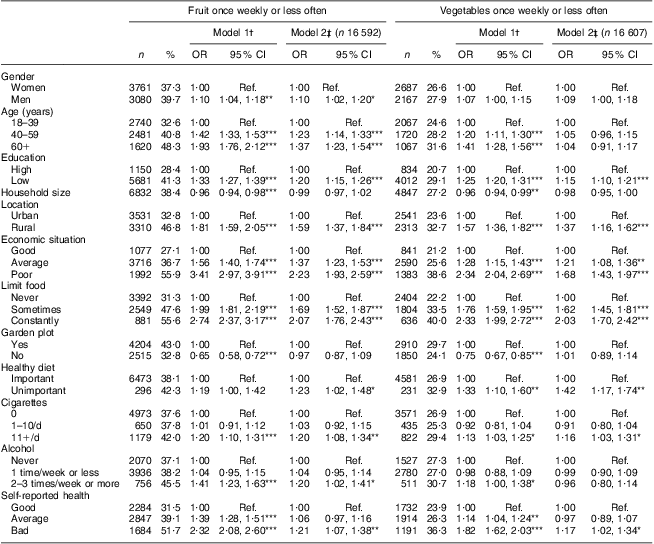
As details of the LLH study population have been presented elsewhere(Reference Pomerleau, Gilmore and McKee26), here we will focus on characteristics of the HITT sample, which are presented in Table 1. Table 2 presents details of fruit and vegetable consumption in the countries in 2001 and 2010. Table 3 presents results from a logistic regression analysis that was performed to examine which factors were associated with consuming fruit and vegetables in 2010. In the regression analysis we examined factors associated with eating fruit and vegetables once weekly or less often where those individuals with inadequate diets were coded ‘1’ (while respondents giving other answers were coded ‘0’).
Sample characteristics of HITT 2010 study (n 18 000), by countryFootnote †
HITT, Health in Times of Transition.
† Data are presented in the form of numbers and percentages unless stated otherwise.
Prevalence of fruit and vegetable consumption in 2001 and 2010, by countryFootnote †
Total samples: in 2001, fruit (n 18 367), vegetables (n 18 386); in 2010, fruit (n 17 847), vegetables (n 17 867).
† Data are presented in the form of numbers, and percentages with 95 % confidence intervals.
Factors associated with the consumption of fruit and vegetables once weekly or less often in nine former Soviet countries in 2010
Ref., referent category.
*P < 0·05; **P < 0·01; ***P < 0·001.
†Model 1: Bivariate analysis.
‡Model 2: Multivariate analysis adjusted for country and for all other variables in the model.
The independent variables examined in the analysis included demographic factors: sex; age (18–39/40–59/60+ years); educational attainment (completed higher education/less than completed higher education); household size (i.e. number of members – a continuous variable); and residential location (urban/rural). Socio-economic situation was assessed using variables relating to: economic well-being, measured through an item on self-rated household economic situation (categorised as ‘good’/‘very good’/‘average’/‘bad’/‘very bad’); information about the extent to which the respondent's household was required to limit its basic food intake in the past 12 months (‘never’/‘sometimes’/‘constantly’); and possessing a garden plot (yes/no). Health beliefs were assessed using information on attitudes towards having a healthy diet (dichotomised as ‘important’ and ‘quite important’/‘rather unimportant’ and ‘unimportant’); smoking behaviour, i.e. smoking/non-smoking and the number of cigarettes smoked each day among smokers (1–10/11+); and the frequency of alcohol consumption (‘never’/‘once per week or less’/‘2–3 times per week or more’). We also examined the relationship between self-reported health (categorised as ‘good’ and ‘very good’/‘average’/‘bad’ and ‘very bad’) and diet.
Statistical analysis
The associations between these variables and fruit and vegetable consumption were examined by conducting logistic regression analyses using the statistical software package STATA version 12·1. Two models were examined. In Model 1 we examined the association between each independent variable and the outcome variable (inadequate diet). In Model 2 we examined the association between each independent variable and having an inadequate diet using a fully adjusted analysis where each variable is controlled for the effects of all the other variables in the model and for the possible country effects. The analysis was adjusted for clustering to account for the survey's clustered design. The results are presented in the form of odds ratios with 95 % confidence intervals. The level of statistical significance was set at P < 0·05.
Results
In the 2010 HITT survey there were more female than male respondents (56·5 % v. 43·5 %) in all of the study countries (Table 1). Georgia had a particularly high ratio of females to males (64:36), although this has been found in all recent surveys and is believed to reflect large-scale labour migration in the post-Soviet period(27, 28). In most countries just under two-thirds of the population lived in urban locations. The proportion of respondents who had completed their higher education ranged from about 18 % in Armenia, Azerbaijan, Kyrgyzstan and Moldova to 36·2 % in Georgia. There was a large variation in the range of respondents who felt their households were in a bad/very bad economic situation with the figure varying from 7·0 % in Kazakhstan to 44·1 % in Georgia. Large differences were also observed in the percentage of respondents who constantly had to limit their food intake and regarding the possession of a garden plot, with figures for the former ranging from 3·2 % (Kazakhstan) to 17·5 % (Georgia) and for the latter from 26·1 % (Armenia) to 69·8 % (Moldova). In every country over 90 % of interviewees thought that having a healthy diet was important although there was a sizeable number of heavy smokers (15·8 %) and frequent drinkers (9·5 %) across the countries. In total, 18·5 % of the respondents reported their health as being bad/very bad with the figures ranging from 9·6 % (Kazakhstan) to 36·9 % (Georgia).
The prevalence of fruit and vegetable consumption varied greatly among the FSU countries between 2001 and 2010 (Table 2). In terms of daily/almost daily consumption of fruit a three-way pattern was clearly visible: in three countries (Armenia, Belarus and Ukraine) the prevalence remained essentially unchanged, in three countries (Georgia, Kyrgyzstan and Moldova) it decreased sharply while in Kazakhstan and Russia it increased significantly. This meant that by 2010 about 20 % of the population (or more) in six countries were eating fruit less than once weekly, with large increases in Georgia (8·9 % to 28·5 %), Kyrgyzstan (8·5 % to 26·3 %) and Moldova (8·5 % to 28·2 %; Table 2). In contrast, the decline in those eating fruit less than once weekly between 2001 and 2010 was marked in Kazakhstan (28·4 % to 19·7 %) and especially in Russia (30·2 % to 9·0 %; Table 2). The country with the highest level of fruit consumption in 2010 was Azerbaijan, where 43·3 % of the population was consuming fruit on a daily/almost daily basis.
In contrast to fruit consumption, most countries (five) recorded a decrease in daily/almost daily vegetable consumption (of about 10–12 %) between 2001 and 2010. The exceptions were Ukraine, Kazakhstan and especially Armenia, where this figure rose from 28·6 % in 2001 to 41·7 % in 2010. By this later date, 24·0 % of the population was eating vegetables less than once weekly in Moldova while this figure was between 5·0 % and 15·7 % in the other countries. As with fruit consumption, the country with the highest level of daily/almost daily vegetable consumption in 2010 was Azerbaijan (47·9 %). In terms of the overall pattern in daily/almost daily fruit and vegetable consumption across the period, only one country – Kazakhstan – experienced a notable increase in consumption of both types of food, while three countries (Georgia, Kyrgyzstan and Moldova) all experienced a sharp decline in both fruit and vegetable consumption.
In the regression analysis (Table 3) a number of variables were significantly associated with both inadequate fruit and vegetable consumption. Men were more likely to eat fruit once weekly or less often compared with women (OR = 1·10; 95 % CI 1·02, 1·20), as were respondents aged 40–59 years (OR = 1·23; 95 % CI 1·14, 1·33) and 60+ years (OR = 1·37; 95 % CI 1·23, 1·54) compared with those aged 18–39 years. Those individuals who had a lower level of education were also more likely to eat fruit (OR = 1·20; 95 % CI 1·15, 1·26) and vegetables (OR = 1·15; 95 % CI 1·10, 1·21) once weekly or less often. Compared with the economically advantaged, those who reported that their economic situation was average or poor were significantly more likely to have lower levels of fruit (OR = 1·37; 95 % CI 1·23, 1·53 and OR = 2·23; 95 % CI 1·93, 2·59, respectively) and vegetable consumption (OR = 1·21; 95 % CI 1·08, 1·36 and OR = 1·68; 95 % CI 1·43, 1·97, respectively). As expected, there was a linear relationship between food limitation and inadequate diet with the odds for low fruit consumption increasing by 1·7 times (OR = 1·69; 95 % CI 1·52, 1·87) among those who sometimes limited their food intake and more than doubling (OR = 2·07; 95 % CI 1·76, 2·43) among those who constantly limited food intake compared with those who never did; while an almost identical odds gradient was noted among these groups for inadequate vegetable consumption (OR = 1·62; 95 % CI 1·45, 1·81 and OR = 2·03; 95 % CI 1·70, 2·42, respectively). Living in a rural location also significantly increased the risk for both low fruit (OR = 1·59; 95 % CI 1·37, 1·84) and vegetable (OR = 1·37; 95 % CI 1·16, 1·62) consumption. In terms of the ‘health environment’, smoking heavily (eleven or more cigarettes daily) increased the likelihood of having an inadequate fruit (OR = 1·20; 95 % CI 1·08, 1·34) and vegetable intake (OR = 1·16; 95 % CI 1·03, 1·31), while not believing that diet was important increased the risk for inadequate fruit and vegetable consumption by 1·23 (95 % CI 1·02, 1·48) and 1·42 (95 % CI 1·17, 1·74) times, respectively. Respondents who assessed their own health as bad were also significantly more likely to eat fruit (OR = 1·21; 95 % CI 1·07, 1·38) and vegetables (OR = 1·17; 95 % CI 1·02, 1·34) once weekly or less often compared with those individuals whose health was good. No consumption effect was observed for household size or for possessing a garden plot. Finally, those individuals who drank alcohol more frequently had a 1·2 times increased risk of eating fruit once weekly or less often compared with non-drinkers (OR = 1·20; 95 % CI 1·02, 1·41).
Discussion
Between 2001 and 2010 there were notable changes in the consumption of fruit and vegetables in many countries of the FSU. Overall, the situation seems to have become slightly worse as only one country – Kazakhstan – recorded an increase in the daily/almost daily consumption of fruit and vegetables while three others (Georgia, Kyrgyzstan and Moldova) experienced sharp declines in both. The scale of the problem can be gauged by the fact that in 2010 in two-thirds of the countries about 40 % or more of the population was eating fruit once weekly or less often while in every country except Azerbaijan at least 20 % of the population was eating vegetables once weekly or less often, with this figure being significantly higher in Moldova. Regression analyses highlighted that a number of factors were associated with both low fruit and vegetable consumption. Specifically, living in a rural location, being economically disadvantaged and engaging in negative health behaviours were all associated with having an inadequate diet.
Before discussing the main findings of our study, there are several limitations which must be considered. First, and most obviously, neither survey was designed specifically to capture a comprehensive picture of dietary behaviour and the results can only provide an indication of the scale and nature of the situation, especially as the respective survey questions were not validated dietary measures. It would have required substantially greater resources than were available to administer food frequency or dietary recall surveys. Moreover, except in Armenia, food composition databases used in this region date from the Soviet period and, as we have previously shown in Estonia, are now obsolete(Reference Vaask, Pomerleau and Pudule29). Nevertheless, in the absence of any other published analyses of survey data we believe that the present results have some value in a region that has been the subject of remarkably little public health research. Second, as with most surveys those individuals who are socially marginalised and who may be most at risk of poor diet (e.g. homeless people) will have been missed, which may underestimate the prevalence of inadequate dietary intake. Third, although the country samples were nationally representative their size was nevertheless comparatively small when compared with the total population, which means that we may have missed important dietary variations across country (sub)populations. Moreover, as a result of the relatively small size of the country samples and a need to maximise statistical power in the regression analysis we were unable to perform male–female and country-specific analyses when examining the factors associated with inadequate fruit and vegetable consumption. Had this been possible, it might have further increased our understanding of the issue of consumption within these countries. Fourth, recall bias may also have been a possible problem. The answers came from respondents’ self-reports which may have lacked accuracy when compared with the more usual dietary data collection methods. Fifth, the question on consumption had slightly differently worded response categories in the two survey years which may have biased the comparative analyses of changes in the prevalence of fruit and vegetable consumption across the two time points. Sixth, as diet is influenced by seasonality, using information from one specific time point may have resulted in a biased picture of dietary intake for the whole year. Moreover, as the LLH and HITT data were collected at different points in the year this may have affected our across-time comparisons. Finally, it should also be noted that we were not able to examine other factors such as the role of agricultural subsidies and international trade agreements, which may have affected consumption in differing ways in the individual countries in this region.
The present findings are both surprising and alarming. Surprising, because food balance data suggest that several countries have experienced increases in supply. There is also some, albeit very limited, data from one part of Russia suggesting an increase between 1992 and 2007(Reference Paalanen, Prattala and Palosuo30). However, it is possible that more up-to-date data might show that the recent decline in food supply in some countries, shown in Fig. 1, has accelerated, possibly related to the global financial crisis, although Kazakhstan, with its oil revenues, may have seen a smaller relative decline than many of the other countries since 2008. Alarming because, as noted above, the situation was bad relative to much of the rest of the world to begin with.
The present study has highlighted the close link between socio-economic disadvantage and poor diet in the countries in this region as those in a poor economic situation were at significantly greater risk of eating fruit and vegetables less often. While not a surprising finding, it is nevertheless deeply worrying given the sharp growth in poverty that occurred in many of these countries in the early post-Soviet period(31) and continuing high levels of poverty(32). Indeed, poverty, beyond what is captured in our variables, might also partly explain the relationship we observed between rural location and inadequate diet, as some evidence suggests that there may have been a ‘ruralization’ of poverty in some of these countries(Reference Gerry, Nivorozhkin and Rigg33) and that rates of rural poverty are higher than those in urban areas in several of our study countries(34–36). The association between area of residence and diet is complex and almost certainly influenced by other contextual factors. For example, it has been shown that rural Americans living in poverty had lower-quality diets which was associated with food insecurity(Reference Champagne, Casey and Connell37), although diet among rural inhabitants of the Baltic states was better than their urban counterparts, in large part because they could grow their own food(Reference Pomerleau, McKee and Robertson38). However, in the countries included here, there are identifiable problems that may be impacting on rural diet. Financial difficulties facing rural enterprises have seen the non-payment, late payment and even ‘payment in kind’ of wages in some countries(34) which might also have impacted on the ability to consume fruit and vegetables on a regular basis.
In terms of individual risk factors, those who regarded a healthy diet as being unimportant were more likely to have an inadequate diet. This finding accords with that from a recent study in Ireland which has shown that those with poorer fruit and vegetable consumption levels also have more negative attitudes towards healthy eating(Reference Hearty, McCarthy and Kearney39). Our study revealed, however, that not only negative health attitudes but also worse health behaviours were associated with an inadequate diet – as both heavier smokers and those who consumed alcohol more frequently had lower levels of fruit and vegetable consumption. This finding is consistent with earlier research which has highlighted how negative health behaviours (smoking, drinking, poor diet and physical inactivity) ‘cluster’ in some individuals(Reference Schuit, van Loon and Tijhuis40). Alternatively, it is possible that economic factors may underlie the relationship between these health risk behaviours, with smokers and drinkers (particularly more frequent drinkers) spending money on alcohol and cigarettes rather than fresh fruit and vegetables. Some evidence also indicates that while the price of food increased throughout the transition period, alcohol seems to have become comparatively cheaper(Reference Nemtsov41). These opposing trends might not only have fuelled the exceptionally large increase in alcohol consumption in some countries like Russia in the post-Soviet period(Reference Norström42) but also resulted in an inadequate diet for some people.
The finding that men and those with a lower education have less adequate diets mirrors previous results from the region(Reference Cockerham14, Reference Cockerham, Hinote and Abbott43) and provides further support for the notion that men(Reference Cockerham44) and those with a lower level of education(Reference Boylan, Lallukka and Lahelma18, Reference Shkolnikov, Andreev and Jasilionis45) may have been particularly disadvantaged in terms of health outcomes in the transition period. Similarly, the association we observed between having poor health and an inadequate diet was not unexpected given the role of diet in physical well-being – although determining the direction of the association was not possible in our cross-sectional study. It is possible, for example, that physical incapacity could limit income and/or access to food outlets and thus result in a more inadequate diet. One unexpected finding, however, was the lack of association between owning a garden plot and diet. This seems to contradict the idea advanced previously of the importance of garden plots for food provision in this region(Reference Seeth, Chachnov and Surinov46–Reference Rose49). However, other research has highlighted the complexity of the relationship between garden plots, where they are situated and what they produce(Reference Abbott and Wallace15, Reference Pallot and Nefedova50) and the difference between subsistence food provision and the provision of a sustainably good diet(Reference Southworth51). Lack of nutritional knowledge and seasonality probably influence the relationship(Reference Abbott and Wallace15). It has also been suggested in this context that people's dietary behaviour is heavily influenced by deeply embedded practices that are taken for granted(Reference Abbott, Turmov and Wallace52). This may mean that a greater availability of fruit and vegetables might not necessarily translate into a better diet. This suggests the need for more research on this phenomenon in the countries in this region to determine exactly how garden plots are being used and the role they are playing in terms of population diet in the FSU countries.
The present paper provides the first comparable information on the way several aspects of diet have changed in the countries of the FSU in the period between 2001 and 2010. It has shown that overall the situation in these FSU countries was worse in 2010 than it was in 2001. This is a matter of considerable concern. Although life expectancy has been improving, at least on the basis of these data it seems unlikely that diet is playing a major role in this improvement. Indeed, it may be storing up further problems for the future, given the evidence of high levels of overweight and obesity in some of our study countries(Reference Watson, Roberts and Chow53). However, it is only the first step in developing agendas for research and policy that will reverse the observed trends and thus contribute to more rapidly closing the health gap with other countries at similar levels of development. Future research should therefore build upon the present study by collecting more detailed information on diet from larger population samples within the individual countries. In particular, the FFQ should be validated in the countries in this region and additional information collected using food diaries over different periods of the year so as to capture the effects of seasonality. While the present paper has provided an important overview of fruit and vegetable intake in the countries in this region, there is now an urgent need for more detailed, in-depth, country-specific portraits in order to better understand diet and its effect on population health in the FSU.
Acknowledgements
Sources of funding: The HITT Project was funded by the European Union's Seventh Framework Programme, project HEALTH-F2-2009-223344. The European Commission cannot accept any responsibility for any information provided or views expressed. Conflicts of interest: The authors have no conflicts of interest to declare. Ethics: The research was approved by the Ethics Committee of the London School of Hygiene and Tropical Medicine. Authors’ contributions: S.K.A. developed the study idea, conducted the analyses and was the principal author of the paper. A.S. provided comments on the manuscript. B.R. helped conceive the study idea, provided statistical expertise and commented on the manuscript. E.R. helped contextualise the study idea and provided comments on the manuscript. P.A. and D.R. commented on the manuscript. M.M. helped conceive the study idea, wrote sections of the manuscript and commented on the manuscript for intellectual content. Acknowledgements: The authors are grateful to all members of the HITT project study teams who participated in the coordination and organisation of data collection for this paper.