We partner with a secure submission system to handle manuscript submissions.
Please note:
You will need an account for the submission system, which is separate to your Cambridge Core account. For login and submission support, please visit the
submission and support pages.
Please review this journal's author instructions, particularly the
preparing your materials
page, before submitting your manuscript.
Click Proceed to submission system to continue to our partner's website.
To save this undefined to your undefined account, please select one or more formats and confirm that you agree to abide by our usage policies. If this is the first time you used this feature, you will be asked to authorise Cambridge Core to connect with your undefined account.
Find out more about saving content to .
To send this article to your Kindle, first ensure no-reply@cambridge.org is added to your Approved Personal Document E-mail List under your Personal Document Settings on the Manage Your Content and Devices page of your Amazon account. Then enter the ‘name’ part of your Kindle email address below. Find out more about sending to your Kindle.
Find out more about saving to your Kindle.
Note you can select to save to either the @free.kindle.com or @kindle.com variations. ‘@free.kindle.com’ emails are free but can only be saved to your device when it is connected to wi-fi. ‘@kindle.com’ emails can be delivered even when you are not connected to wi-fi, but note that service fees apply.
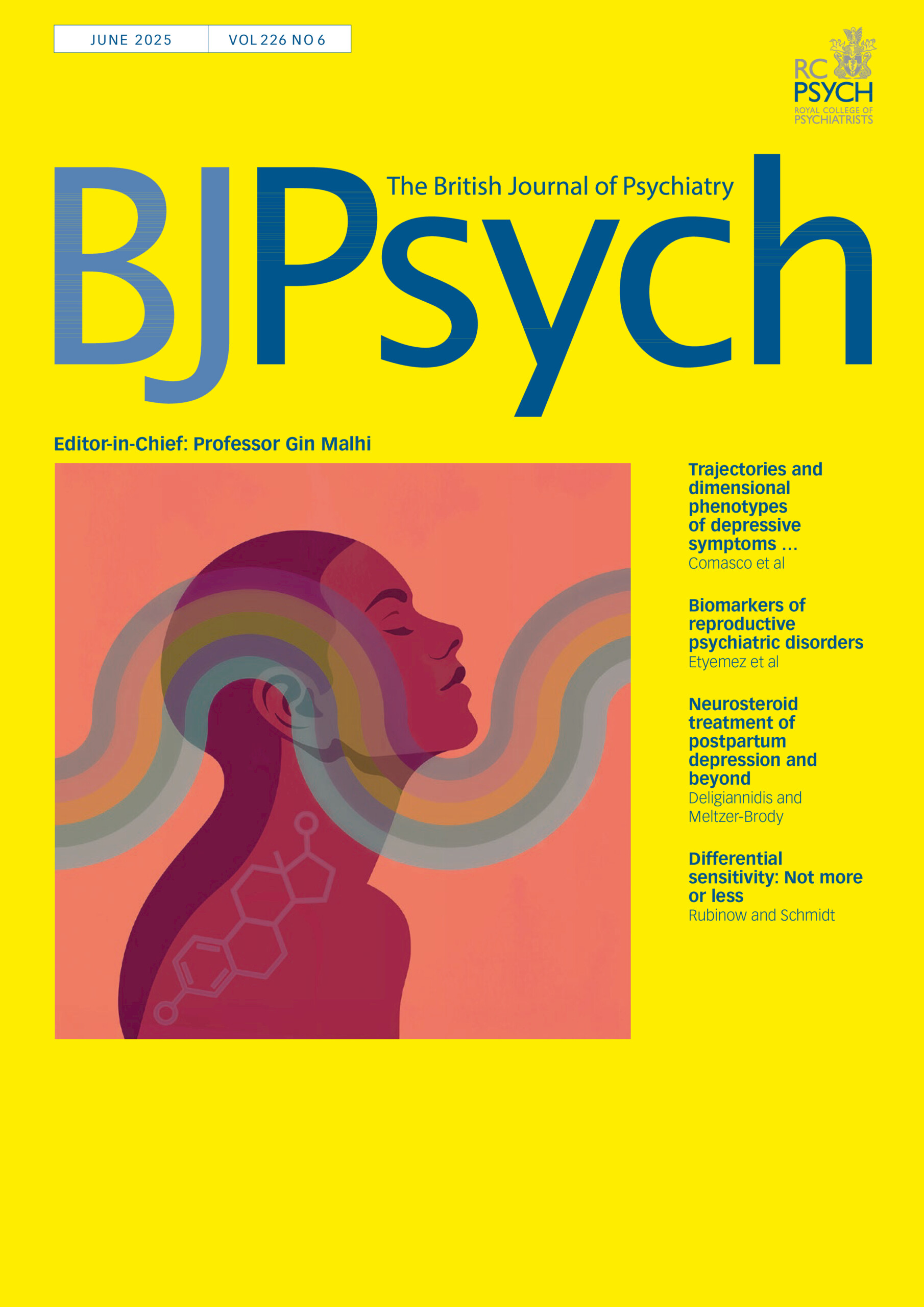
This themed issue examines the impact of ovarian hormone fluctuations on women’s mental health across the lifespan, including puberty, the menstrual cycle, pregnancy, postpartum and menopause. It highlights critical gaps and calls for sex-specific approaches in reproductive psychiatry and hormone-informed mental care.
Preclinical and clinical research have devoted limited attention to women’s health. Animal models centred on female-specific factors will improve our understanding of mental health disorders. Exploring the heterogeneity of mental health disorders, in concert with attention to female-specific factors, will accelerate the discovery of efficacious treatments for mental health disorders.
This editorial describes common methodological obstacles, including the healthy user bias, that are encountered in research studying the link between hormonal contraceptive use and depression and provides considerations for future directions.
Although posited as an explanation for reproductive endocrine-related mood disorders, differential hormone sensitivity is an elusive concept. In this editorial, we define differential sensitivity, embed it in current understanding of the generation of brain states and discuss its practical utility.
Depression occurring during pregnancy or after delivery is one of the most common complications of childbirth and is associated with maternal morbidity and mortality. Here we review the breakthrough development of the first neuroactive steroid-based antidepressants approved for postpartum depression in the USA and their potential in other psychiatric illnesses.
Interest in women’s brain health has grown rapidly. However, the terms ‘menopause’ and ‘hormone therapy’ have been used as general concepts embracing different types of menopause and treatments. In this editorial, we make a plea for accurate description of each type to generate precision evidence.
Premenstrual exacerbation of existing mental illnesses (PME) is a condition where symptoms of mental disorders worsen during the luteal phase. Unlike premenstrual syndrome or premenstrual dysphoric disorder, PME is poorly recognised, with misdiagnoses and inadequate treatment. Understanding the brain impact of gonadal hormone fluctuations in PME is crucial.
Psychotic disorders have sex-specific differences in their onset, symptoms and course. The early intervention in psychosis model represented the first step toward personalised psychosis care, recognising stage-specific care needs. Incorporating knowledge about sex-specific differences in care programmes should be the next evolution of personalised psychosis care.
While biomarkers are widely used in other medical fields, psychiatry has yet to introduce reliable biological diagnostic tools. Female reproductive transitions provide a unique window of opportunity for investigating psychiatric biomarkers. Hormonal changes across menstruation, pregnancy, parturition and perimenopause can have dramatic effects on mental health in vulnerable individuals, enabling the identification of unique biomarkers associated with these fluctuations.
Aims
This review integrates current evidence concerning potential biomarkers, with focus on recent human studies in perinatal depression, anxiety and obsessive–compulsive disorder, postpartum psychosis, premenstrual dysphoric disorder and perimenopausal depression.
Method
We identified potential articles to be included in this narrative review by using PubMed to obtain articles in English since 2010 on the six conditions listed above, with the additional keywords of ‘biomarker’, ‘epigenetics’, ‘neuroactive steroid’, ‘immune’, ‘inflammatory’ and ‘neuroimaging’.
Results
There is substantial published evidence regarding potential biomarkers of reproductive psychiatric disorders in the areas of epigenetics, neuroactive steroids, immune function and neuroimaging. This body of research holds significant potential to advance biomarker development, uncover disease mechanisms and improve diagnostic and therapeutic strategies, but there is as yet no clinically useful biomarker in commercial development for any reproductive psychiatric disorder.
Conclusion
There is an urgent need for longitudinal, large-scale and multi-modal studies to examine potential biomarkers and better understand their functions across various stages of reproduction.
Menopause is an inflection point in the ageing trajectory. Independent of chronological age, menopause is associated with the biological ageing of several body systems. In this review, we highlight the importance of considering the influence of menopause – its types, symptoms and interventions – on brain health. Supplementing the loss of ovarian hormones with menopausal hormone therapy (MHT) may be key for supporting the healthy brain ageing of females. MHT has been associated with reduced risk of several neurodegenerative diseases; however, its benefits are not always observed on brain health.
Aims
This narrative review highlights often overlooked MHT factors that influence its effects to produce positive or negative effects on brain health, cognition and neurodegenerative disease risk. These factors include the many varieties of MHT, including formulation, administration route and dosing schedule, as well as individual characteristics, particularly the presence of vasomotor symptoms and apolipoprotein ε4 (APOE4) genotype.
Method
PubMed and Scopus were used to identify articles with relevant search terms.
Results
Menopause factors, including age, abruptness and symptoms, influence brain ageing. MHT influences brain health, with transdermal MHT showing more positive effects on brain ageing, but its effectiveness may depend on individual factors such as genotype, reproductive and lifestyle factors.
Conclusions
To develop effective and individualised MHT treatments, further research is needed. Preclinical models must consider the type of human menopause and MHT. To achieve the greatest dementia prevention in females, more menopause education and care is needed that extends beyond 60 years of age, or 10 years postmenopause.
A key step toward understanding psychiatric disorders that disproportionately impact female mental health is delineating the emergence of sex-specific patterns of brain organisation at the critical transition from childhood to adolescence. Prior work suggests that individual differences in the spatial organisation of functional brain networks across the cortex are associated with psychopathology and differ systematically by sex.
Aims
We aimed to evaluate the impact of sex on the spatial organisation of person-specific functional brain networks.
Method
We leveraged person-specific atlases of functional brain networks, defined using non-negative matrix factorisation, in a sample of n = 6437 youths from the Adolescent Brain Cognitive Development Study. Across independent discovery and replication samples, we used generalised additive models to uncover associations between sex and the spatial layout (topography) of personalised functional networks (PFNs). We also trained support vector machines to classify participants’ sex from multivariate patterns of PFN topography.
Results
Sex differences in PFN topography were greatest in association networks including the frontoparietal, ventral attention and default mode networks. Machine learning models trained on participants’ PFNs were able to classify participant sex with high accuracy.
Conclusions
Sex differences in PFN topography are robust, and replicate across large-scale samples of youth. These results suggest a potential contributor to the female-biased risk in depressive and anxiety disorders that emerge at the transition from childhood to adolescence.
Stress, a major risk factor for mental health problems, is influenced by hormonal fluctuations from the menstrual cycle and hormonal oral contraceptives (OC). Despite widespread use, the impact of hormonal intrauterine devices (IUDs) on stress is limited to one study.
Aims
This study examines psychoendocrine stress responses in women using IUDs, OCs and women with a natural, regular menstrual cycle (NC) to better understand how endogenous and exogenous hormones influence stress.
Method
Using a repeated-measures design, we investigated stress responses in IUD and OC users and NC women. The Maastricht Acute Stress Task and its control task were applied twice within 4 months to assess subjective, endocrine and physiological stress correlates. Detailed endogenous and exogenous hormonal profiles were obtained, and women completed a 7-day diary (via ecological momentary assessment) after each appointment.
Results
Based on subjective, physiological and cortisol responses, stress induction was successful in all groups. IUD users reported higher subjective stress, negative affect and anxiety and lower positive affect compared to NC women. OC users exhibited a blunted cortisol response and higher heart rate but reported less acute stress and negative emotions than the other groups in the 7-day diary. Oestradiol and progesterone were suppressed in OC and IUD users compared with NC women. Progesterone, testosterone and oestradiol were differently associated with skin conductance, socio-emotional stress and negative affect.
Conclusions
IUD and OC use distinctly affect stress response, possibly because of their diverging metabolic pathways and hormone levels. IUD users showed higher emotional reactivity to stress in both lab and daily life, while OCs influenced physiological correlates. These findings highlight that exogenous hormone administration, previously thought to have limited systemic effects, affects women’s psychological well-being, underscoring the need for further research into stress-related disorders among women using hormonal contraceptives.
Sensitivity to ovarian hormone fluctuations can lead to mental distress during the luteal phase of the menstrual cycle, such as in premenstrual syndrome (PMS) and premenstrual dysphoric disorder (PMDD), and also during pregnancy and postpartum, as in perinatal depression (PND).
Aims
In two cohorts, we investigated the relationship between history of PMS/PMDD and PND symptoms. We also examined how premenstrual symptoms are associated with perinatal symptom trajectories and dimensional phenotypes of PND symptoms, which remains unidentified.
Method
From early pregnancy until 6 months postpartum, participants of two large longitudinal cohorts were followed using the Edinburgh Postnatal Depression Scale (EPDS). Premenstrual symptoms were self-reported retrospectively.
Results
Both pre-pregnancy PMS and PMDD were associated with higher EPDS scores across pregnancy and postpartum, even after adjustment for confounders. The odds of developing PND were higher among those reporting PMS and PMDD, ranging up to 1.68 (95% CI 1.25–2.29) (6–13 weeks postpartum) and 3.05 (95% CI 2.26–4.10) (late pregnancy) respectively for PMS and PMDD, throughout the perinatal period. Premenstrual symptomatology was associated more with certain PND trajectories based on the time of occurrence and persistence of symptoms. However, PND symptom severity did not differ depending on premenstrual symptomatology in any trajectory. Prior PMS/PMDD was associated with underlying dimensions of symptom constructs of PND, including severe and moderate symptoms of depressed mood, anxiety and anhedonia.
Conclusions
Women with a history of PMS/PMDD require coordinated care by psychiatrists, other mental health clinicians, midwives and gynaecologists during pregnancy as well as postpartum.
Due to historical under-recognition of attention-deficit hyperactivity disorder (ADHD) among girls and women, little is known about female-specific factors that may affect individuals with ADHD, including those related to changes in ovarian hormones (e.g. across the menstrual cycle).
Aims
We investigated whether females with a self-reported clinical diagnosis of ADHD are more likely to experience premenstrual dysphoric disorder (PMDD). We also examined associations between PMDD and ADHD defined by a symptom and impairment threshold.
Method
Participants were aged between 18 and 34 years, were assigned female at birth and were recruited via Prolific.com (n = 715). Participants self-reported clinician diagnosis of ADHD, depression and anxiety. ADHD symptoms were assessed via the Adult ADHD Self-Report Scale (ASRS), to which we applied a DSM-5-based symptom and impairment cut-off (‘ASRS-based ADHD’). PMDD symptoms were assessed via the Premenstrual Symptoms Screening Tool (PSST), which identifies provisional PMDD. Using Poisson regression models, we compared risk for provisional PMDD among females with ADHD (self-reported clinical diagnosis [n = 102] or ASRS-based [n = 229]) with a non-ADHD reference group (n = 305). We additionally compared risk for provisional PMDD among individuals with ADHD and depression/anxiety diagnoses, ADHD only and a non-ADHD reference group.
Results
The prevalence of provisional PMDD was elevated among individuals with a self-reported clinical ADHD diagnosis (31.4%), and among participants with ASRS-based ADHD (41.1%), compared with the non-ADHD reference group (9.8%). Individuals with ASRS-based ADHD and depression and/or anxiety diagnoses were at highest risk for provisional PMDD (relative risk 4.53 [3.10, 6.61]) compared with the non-ADHD reference group.
Conclusions
Clinicians should be aware that individuals with a diagnosis of ADHD, or with high ADHD symptom levels, and who have a menstrual cycle may be more likely to experience PMDD. Future research should investigate the underlying mechanisms that link ADHD and disorders associated with hormonal sensitivity, such as PMDD.