



LEARNING OBJECTIVES
After reading this article you will be able to:
• identify common features of dimensional models of personality pathology
• describe the way these models align with a sensible framework for planning and implementing treatment
• use dimensional models of personality in treatment planning.
Countless models have been designed to help clinicians traverse the terrain of personality disorders. Personality disorders have historically been defined using categorical models, with contemporary examples in the DSM-5 (American Psychiatric Association 2013) and ICD-10 (World Health Organization Reference World Health Organization2004). This categorical approach to personality disorder diagnosis is problematic and the field is shifting towards dimensional models (Clark Reference Clark2007; Widiger Reference Widiger and Trull2007). These, as was the case for preceding dimensional models, conceptualise personality on a continuum spanning from healthy, adaptive functioning to severe impairment.
Prominent dimensional models of personality disorder
Although retaining the categorical model from DSM-IV, DSM-5 also introduced a dimensional model, the alternative model of personality disorders (AMPD), comprised of two hierarchical components (American Psychiatric Association 2013). Criterion A, with strong roots in psychoanalysis, focuses on levels of personality functioning impairment that denote the overall severity of personality dysfunction (Natoli Reference Natoli2020). The style in which an individual's personality – or personality disorder – typically manifests is characterised in terms of 5 personality trait domains and 25 underlying facets, enumerated in Criterion B. The dimensional model presented in ICD-11 parallels the AMPD, with four minor but important differences: (a) a broader severity indicator; (b) optional assignment of trait specifiers; (c) absence of a psychoticism trait and inclusion of an anankastia trait; and (d) an optional specifier for ‘borderline pattern’ (World Health Organization 2022).
Another prominent dimensional framework is the five-factor model of personality, which is similar to Criterion B of the AMPD (Costa Reference Costa and McCrae1992). The five-factor model characterises personality using a hierarchically organised set of dimensional traits, with five domains, sometimes referred to as the ‘Big Five’, situated at the top. Personality disorders are understood within this framework as maladaptive variants of normal personality traits (Widiger Reference Widiger and McCabe2020). Two psychodynamically oriented dimensional models of personality have also gained attention. The model presented in the Psychodynamic Diagnostic Manual (PDM) and its revision (PDM Task Force 2006; Lingiardi Reference Lingiardi and McWilliams2015) describes personality in terms of an individual's level of personality organisation – a dimensional view of severity similar to Criterion A of the AMPD – and patterns of personality dynamics and themes (e.g. areas of preoccupation, tension and/or conflict). Similar to the PDM's model is the dimensional model included in the second edition of the Operationalized Psychodynamic Diagnosis manual (OPD Task Force 2008). The attentive reader might have noticed that each of these models defines personality disorders in terms of dimensional elements arranged hierarchically from general severity to specific features.
The evidence base for dimensional models
Proponents of categorical models for diagnosis of personality disorder have claimed that dimensional approaches are overly complicated, often referencing ease of use and simpler communication as rationales for continued use of categorical models (Spitzer Reference Spitzer, First and Shedler2008). Yet, meta-analysis shows negligible and non-significant differences between categorical and dimensional personality disorder frameworks in these domains of clinical utility (Bornstein Reference Bornstein and Natoli2019). Instead, dimensional models regularly receive more positive ratings in most areas of clinical utility, including usefulness in describing and communicating with the patient, comprehensiveness in describing the patient's personality problems and usefulness in formulating a therapeutic intervention. These results dovetail with findings demonstrating the acceptable inter-diagnostician reliability of dimensional models and their superior performance over categorical frameworks on numerous indices of construct validity and psychometric rigor (Krueger Reference Krueger and Markon2014; Hopwood Reference Hopwood, Kotov and Krueger2018b; Zimmerman Reference Zimmerman, Kerber and Rek2019). Overall, there is strong, convincing evidence advising the use of dimensional models of personality disorder over personality disorder categories.
Need for (continued) change and the benefits of dimensional models
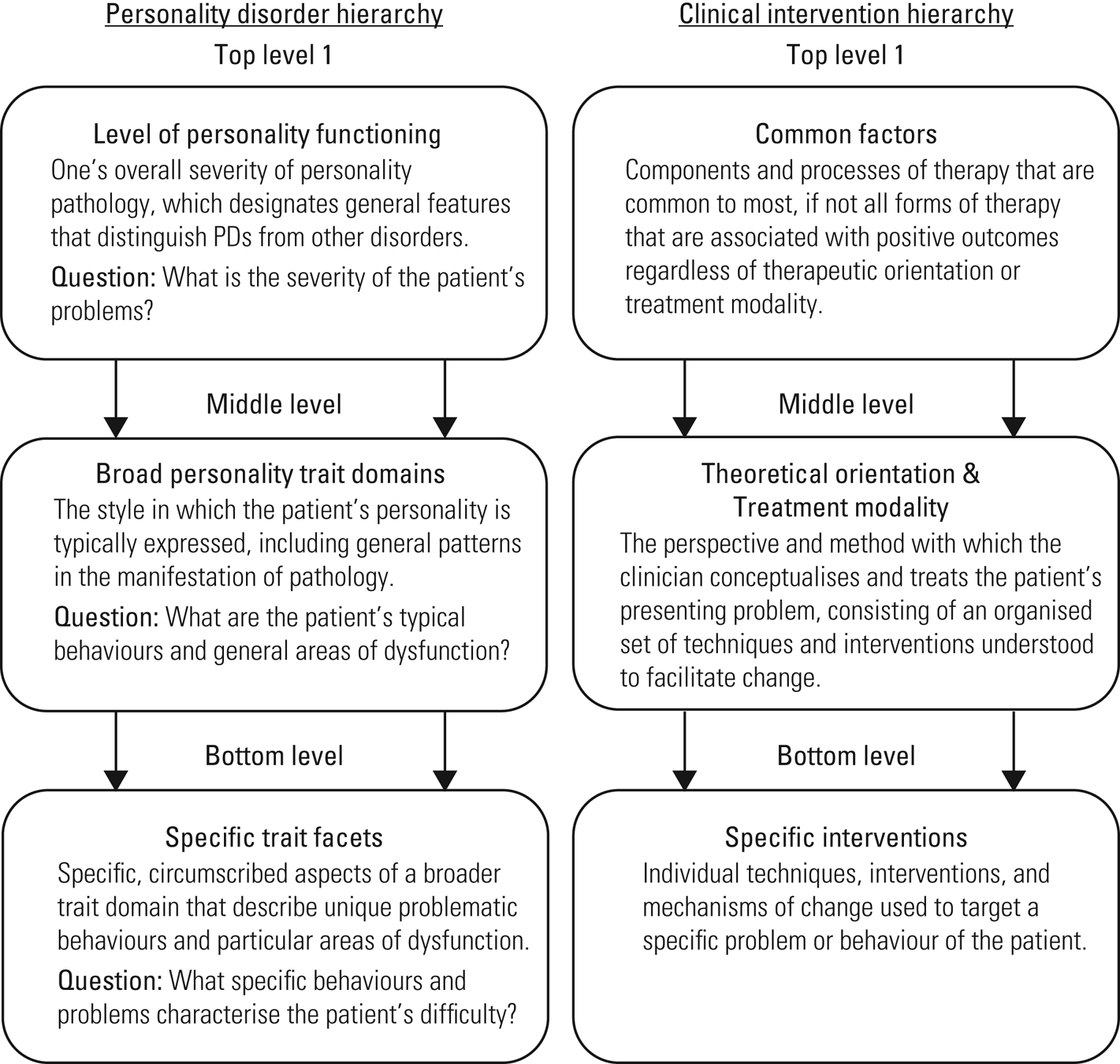
Changes to the conceptualisation of personality disorders challenge, and may ultimately improve on, old ways of thinking about how diagnosis informs treatment. From a categorical perspective, different treatments should be effective for different diagnoses. However, this ‘medical’ model has not led to significant progress in treating personality disorders (Livesley Reference Livesley2021). By and large, treatments have been developed for only one diagnostic personality disorder category – borderline personality disorder – and all treatments developed for that category and subjected to research work equally well (Levy Reference Levy, McMain and Bateman2018). Conversely, systematic investigations show that, in addition to better accounting for the underlying nature of personality disorders, dimensional models are more useful than categorical models for case formulation and treatment (Bornstein Reference Bornstein and Natoli2019). We contend that one additional advantage is the congruence between dimensional models of personality disorder and the foundational strategies of psychotherapy. That is, psychotherapeutic approaches and the components of dimensional personality disorder models can both be arranged hierarchically, from general to specific factors, and matching these hierarchies provides a sensible framework for planning and implementing treatment (Hopwood Reference Hopwood2018a). This harmony is illustrated in Fig. 1.
The congruence between dimensional models of personality and the foundational strategies of psychotherapy. PD, personality disorder.

Personality disorder hierarchy
Unlike categorical models of personality disorder, dimensional models allow for precise, comprehensive and patient-centred case formulation within a hierarchical framework. Positioned at the top of the hierarchy (level 1) are general problems that distinguish personality disorders from other disorders. Criterion A in the AMPD, level of personality organisation in the PDM and the ICD-11's general diagnostic requirements for personality disorder are examples of this first-order factor that defines impairment severity. Although some categorical models (e.g. DSM-5) advise consideration of impairment severity, dimensional models prioritise this characteristic of personality disorders. The middle level (level 2) of the hierarchy is comprised of broad traits, such as the trait domains listed under Criterion B of the AMPD that roughly correspond to maladaptive variants of the Big Five. These traits describe general distinctions in the diverse ways personality pathology can manifest, thereby depicting an individual's personality style. Within the AMPD and certain other dimensional models, maladaptive traits are treated as expressions of dysfunction, characterising the ways personality dysfunction probabilistically manifests in a person's life. Although they can be understood as a combination of normal range traits and personality functioning, they are distinct (Hopwood Reference Hopwood2024). Narrower still, at the lowest level (level 3), are the specific trait facets and dysfunctional behaviours necessary to explain the details of a particular case, such as the distinction between anxiousness and emotional lability within the domain of negative affectivity.
Clinical intervention hierarchy
Clinical treatment strategies can also be organised hierarchically. The broadest of these, common factors, refer to therapy components associated with positive outcomes regardless of therapeutic orientation or approach (Wampold Reference Wampold2015). Frequently referenced common factors include empathy, therapeutic alliance, genuineness and positive regard, patient expectations and clear boundaries. At the middle level of the intervention hierarchy are differences in theoretical orientation and treatment modality, such as the differences between behavioural, relational and psychopharmacological approaches. Finally, at the lowest level are the specific interventions and mechanisms of change that comprise those broad orientations, including exposure or skills training within cognitive–behavioural therapies, the psychodynamic practitioner's use of interpretation, or different medications within the psychopharmacological approach.
A conceptual and practical congruence between hierarchies
There is a close conceptual and practical correspondence between the levels of the personality disorder and clinical intervention hierarchies. Self-functioning and interpersonal functioning – sitting atop the personality disorder hierarchy – represent the core of personality (pathology) and will be evident in all patients. General problems in these areas of functioning distinguish personality disorders from other disorders and form a standard set of intervention targets that can be largely attended to with common factors (i.e. those factors at the top of the intervention hierarchy). This is not to say common factors should be applied indiscriminately; common factors help manage overall personality dysfunction and their application should be adjusted to match the level of severity of the patient's problems. To this end, five common factors have emerged as particularly important in managing the general problems accompanying personality pathology, operating as core requirements for all effective personality disorder treatments (Gabbard Reference Gabbard2007; Weinberg Reference Weinberg, Ronningstam and Goldblatt2011; Bateman Reference Bateman, Gunderson and Mulder2015).
Five core requirements of treatment
First, a structured therapeutic approach is essential. The more severe the individual's personality impairment, the more imperative structure, consistency and a well-defined therapeutic frame become in their treatment. A thorough case formulation based on multimethod assessment, sound theory and the framework presented herein can help ensure an appropriately structured treatment.
The second factor is encouragement of the patient's sense of agency and making known what is expected of them in their role as patient, as well as what can be expected of the clinician. Direct conversations and formal treatment contracts can help communicate each person's role within the treatment, establish clear expectations and motivate the patient to assume control of and responsibility for their actions.
The third factor explicitly addresses the systematic disconnection between self and experiences, both internal and external, dominant in personality disorders. The clinician's regular illumination of connections between the patient's sense of self, feelings, behaviours and external events is indispensable in personality disorder treatment. Myriad strategies have been described for helping the patient build psychological unity and learn skills necessary to begin making these connections themselves (e.g. mentalisation, mindfulness, reflective functioning).
Fourth, effective therapists are active rather than passive in the treatment of personality disorder. Patients with greater dysfunction need more direct therapeutic approaches with a more active therapist (Stern Reference Stern1938).
Finally, clinicians should (more) regularly seek consultation or supervision to discuss cases and their personal reactions. Not only is this a pillar of ethical practice, but discussion of cases, therapeutic strategies, treatment decisions and personal experiences with patients can foster support, introduce opportunities for reflection and feedback, help keep treatment on track and prevent interfering countertransference or frame-breaking behaviours. Like the other four factors, higher levels of personality dysfunction should prompt more frequent consultation or supervision.
These five common factors help manage the core of personality pathology; however, they are best understood as important preconditions for more specific intervention strategies.
More specific interventions
The clinician's therapeutic approach and specific interventions – levels 2 and 3 of the intervention hierarchy – can be strategically chosen to match the patient's personality style and specific areas of dysfunction – levels 2 and 3 of the personality disorder hierarchy (Fig. 1). Research shows that severity of personality disorder changes over the course of therapy, whereas personality style remains relatively stable, suggesting that ‘people tend to stay essentially who they are [i.e. stability in personality style], even if successful treatment helps them adapt who they are to their environment more effectively [i.e. improved personality functioning]’ (Bach Reference Bach and First2018) (see also Wright Reference Wright, Hopwood and Skodol2016; Hopwood Reference Hopwood2018a). Accordingly, treatment within a dimensional framework involves addressing the severity factor of personality pathology, as discussed above, while simultaneously helping the patient shift towards a more flexible and adaptive personality style without aiming to change who they are. This improvement can (partly) take the form of reducing levels of certain maladaptive traits for individual patients despite the overall goal of treatment across individuals being to improve personality functioning. Thus, the patient's rigidity and maladaptive expression of personality traits serve as targets for intervention.
Consider, for instance, a patient whose personality pathology is characterised by intense perfectionism. The clinician can target the patient's general personality dysfunction using common factors while using specific factors to move their perfectionism from the disinhibited (maladaptive) end of the spectrum towards the conscientiousness (healthy) end. This contrasts with the goal of the categorical model approach, which is to eliminate the ‘symptom’ of perfectionism. By shifting rather than eliminating this element of the patient's personality, the clinician helps them turn an interfering personality trait facet (rigid perfectionism) into a personality strength (conscientious attention to detail). A vast literature exists documenting specific interventions that can facilitate change in different personality traits: Hopwood (Reference Hopwood2018a) and Mullins-Sweatt et al (Reference Mullins-Sweatt, Hopwood and Chmielewski2020) speculated on different interventions that might be useful for different traits, and others have studied the effectiveness of specific interventions for specific features (Hopwood Reference Hopwood, Bagby and Gralnick2020).
Implementing a multidimensional framework will be easier than you think
Many clinicians may be hesitant to change their approach because of potential challenges in adopting dimensional models of personality disorder (Widiger Reference Widiger and Hines2022; Monaghan Reference Monaghan and Bizumic2023). However, much progress has been made in resolving these issues, including questions of validity and utility (Bornstein Reference Bornstein and Natoli2019; Zimmerman Reference Zimmerman, Kerber and Rek2019), debates over model structure and the value of considering personality functioning (Hopwood Reference Hopwood2024) and the need for the development of measures beyond self-reports (Natoli Reference Natoli and Rodriguez2024). Moreover, we contend that a multidimensional framework for treating personality pathology is already more similar to how clinicians tend to think in practice than the medical model wherein a diagnostic category is matched to a specific treatment.
Think back to your initial contact with a recent patient – the first question you asked yourself probably pertained to the severity of the patient's problems. The more severe the problems, the more modest the prognosis, the longer the treatment can be expected to take and the more important it will be to consider implementing strategies that increase structure, limit risks and prevent drop-out from treatment. The next questions to cross your mind probably sought to understand the patient's typical behaviours and general areas of dysfunction. Does the patient have difficulties mainly related to internalising or externalising symptoms? If their problems chiefly involved externalising symptoms, you might have wondered whether they had more to do with antagonising others (e.g. anger and violence) or disinhibited, impulsive behaviours (e.g. sexual promiscuity or substance misuse). Answers to these questions would have helped you narrow down the treatments most likely to be successful. Finally, you may have started identifying specific behavioural patterns characterising the patient's difficulties (e.g. strained relationships due to hostility towards others). Your patient's specific presentation probably did not fit neatly into an existing psychiatric category, which characterises the rule rather than an exception (Natoli Reference Natoli2020). Rather, a patient's specific presentation often reflects some combination of narrow trait facets of the sort found within most dimensional models of personality disorder. An ideal treatment would target these specific features, the change in which would be evidence of therapeutic success.
A multidimensional framework for treating personality pathology
Initiating treatment: building the therapeutic relationship and engaging the patient
A crucial first step in therapy is building the therapeutic relationship by establishing mutual trust, a working alliance and a deeper understanding of the patient (Larivière Reference Larivière, Crough and Eastwood2023). These efforts are complicated by the presence of personality pathology, with more severe impairment resulting in greater difficulty (Wright Reference Wright, Ringwald and Hopwood2022). Thus, the first session becomes a critical period for the clinician to begin employing common factors that have proven useful for building the therapeutic relationship (Ackerman Reference Ackerman and Hilsenroth2001, Reference Ackerman and Hilsenroth2003). Adjustments are made to match these transtheoretical techniques to the patient's level of personality functioning. In doing so, greater severity of personality dysfunction should be met with more structured and consistent treatment, clearer roles and responsibilities, increased activity on the part of the clinician, greater attention to helping the patient build psychological unity, and more frequent consultation/supervision. Different treatment modalities can be employed to address more specific difficulties in developing the therapeutic relationship that are associated with the patient's personality style, representing an alignment of the middle of both hierarchies in Fig. 1. An alignment of the bottom of both hierarchies can also become relevant during this early phase of treatment, such as using the specific intervention of a treatment contract with patients whose detachment is characterised by withdrawal behaviours.
Assessment, case formulation and treatment planning
Personality assessment within a dimensional framework is inherently a hierarchical, systematic and collaborative procedure (Krishnamurthy Reference Krishnamurthy, Hass and Natoli2022). Measurement instruments specifically based on dimensional models of personality and strategies for deriving personality functioning and trait scores using other instruments (e.g. Busch Reference Busch, Morey and Hopwood2017) have simplified the process of assessing personality from a dimensional perspective to guide case formulations and treatment planning. The clinician first evaluates the patient's level of personality functioning using one or more validated instruments to determine the severity of dysfunction. By beginning at the top of the personality disorder hierarchy, the clinician immediately gains valuable insights into risk, prognosis and proper treatment intensity. Greater severity will typically, but not always, be accompanied by greater risk for harm and problematic behaviours, poorer prognosis and the need for higher levels of care and multimodal intervention. Level of personality functioning is also a common sense target for tracking change over the course of treatment because it is a dimensional indicator shared by all individuals.
The personality assessment should also include one or more measures of the patient's personality traits, styles, characteristic beliefs and other general and specific factors to clarify the ways in which their personality (pathology) manifests. Findings can guide the selection of therapeutic approach and specific interventions. Concurrently or subsequently, important variability in personality expression can be gleaned by using informant-report measures and behavioural observation to investigate differences in expression and dysfunction across the contexts, settings, situations and relationships through which the patient's personality interacts.
Finally, unlike categorical models that view personality disorders in terms of symptoms that are separate from other features of the patient's personality, the dimensional framework permits a seamless exploration of the patient's personality strengths and patterns of defensive functioning and coping. Accordingly, the personality assessment should explore these characteristics. The clinician would be well-advised to consider the patient's personality strengths along with other available psychological and environmental resources in treatment planning.
The case formulation derived from a good assessment offers a detailed guide for identifying and prioritising targets of intervention, making crucial treatment decisions such as appropriate level of care, choosing specific interventions to employ, and pairing desired changes with the patient's available strengths and resources.
Several practices can maximise the clinical utility of assessment for case formulation and treatment planning when working within a dimensional personality disorder framework. First, as illustrated in the case vignette below, clinicians can use a dimensional model's hierarchical structure as a roadmap for organising assessment findings. Next, the clinician's case formulation should, ideally, be based on information derived from multiple sources and methods of measurement because this will produce a more comprehensive and valuable case formulation (Hopwood Reference Hopwood and Bornstein2014; Natoli Reference Natoli2019; Krishnamurthy Reference Krishnamurthy, Hass and Natoli2022). Third, clinicians must use validated and situationally appropriate measurement instruments.
Fortunately, dimensional models of personality disorder are ordinarily rooted in psychometric models of dysfunction, which has expedited the production of several psychometrically sound tools for measuring the severity and style of personality pathology (Zimmerman Reference Zimmerman, Kerber and Rek2019). Clinicians can take further advantage of this feature of dimensional models by ensuring their clinical inferences are informed by comparisons of a patient's standardised scores against community, clinical or other relevant norms. Access to norms also permits more intuitive interpretations of score changes on measures being used to track the progress of therapy. Indeed, repeated measurement at regular, appropriate intervals is a good method for tracking treatment progress and identifying focal points for adjusting the treatment strategy or need for new interventions.
Case vignette: Morris
Background
This case vignette is not based on any one person.
Morris is a 34-year-old mixed race, cis-gender male born in the USA. He was admitted to a psychiatric hospital for the first time after allegedly assaulting a colleague, which ostensibly occurred during a substance-induced psychosis. As his psychosis subsided with pharmacological intervention, Morris reported trauma-related symptoms, including increased anxiety, irritability, hypervigilance, exaggerated negative beliefs and avoidance of crowds. He was discharged to out-patient care with a diagnosis of substance/medication-induced psychotic disorder and a recommendation for weekly psychotherapy to address his enduring symptoms.
Morris arrived at his first out-patient session late, saying that his only motivation for attending at all was to comply with court orders. Morris elaborated that he did not trust the mental health system and doubted ‘[he] ‘can be fixed’. The clinician validated his experiences and offered empathy, and then explained the boundaries and broad structure of their court-ordered sessions. Perceiving Morris's resistance to treatment, and with consideration of his history of negative affect, the clinician elected to use motivational interviewing. The focus of the conversation was guided by level 3 of the personality disorder hierarchy, which incorporated exploring Morris's anxiousness as a source of distress and helping him see his hostility towards treatment as valid but also as a threat to his continued discharge. Over the course of three sessions, Morris embraced that his symptoms were causing distress, maintained ambiguity about change and acknowledged the potential issues stemming from his hostility towards treatment. It is important to note that the common-factor techniques employed by the clinician were modified to match the patient's high level of personality dysfunction, including increased structure with specific responsibilities and expectations made clear through the use of a treatment contract, use of a more active and direct form of motivational interviewing, and more frequent supervision.
Following Morris's first therapy session, a multimethod assessment meant to provide diagnostic clarification and inform treatment plans was conducted. In addition to a clinical interview, Morris completed the Personality Assessment Inventory (PAI) (Morey Reference Morey1991), Rorschach Performance Assessment System (RPAS) (Meyer Reference Meyer, Viglione and Mihura2011) Personality Inventory for DSM-5 (PID-5) (Krueger Reference Krueger, Derringer and Markon2012), and Level of Personality Functioning – Brief Form 2.0 (LPFS-BF 2.0) (Weekers Reference Weekers, Hutsebaut and Kamphuis2019).
Approach to testing
Morris attended to testing and provided high-quality data, albeit potentially affected by his approach. On more structured tasks, he paid attention to test content but may have been motivated to both emphasise his distress and deny certain problems. On less structured performance tasks, he did not produce many responses, but results suggested he was very involved in each response he did produce. Overall, this pattern suggested he was meaningfully engaged in the assessment and is likely able to comport himself in many situations with expectable conditions; however, he might adopt an overly strained and complex approach when the situational demand is less clear or emotionally evocative.
Assessment results
General level of dysfunction
Test data suggested Morris was functioning in the moderate to severe range of personality dysfunction. His level of severity was consistent with someone who is in acute clinical distress and suggests a personality disorder.
Major personality systems
Negative affect
Negative affect was a prominent feature of Morris's presentation and it is probably quickly noticed by others. The nature of this distress appeared to be complex, featuring both prototypical internalising symptoms such as difficulties sleeping, rumination and hopelessness, as well as symptoms with an externalising aspect, such as anger and behavioural/emotional lability.
Detachment
Morris was not detached; instead, his internal world appeared organised around interpersonal experiences. Although he feels unsupported and has difficulties relating to others, relationships are important to him, and social hardships are likely playing an important role in his distress.
Psychoticism
Test data did not indicate probable acute psychosis, but this cannot be ruled out in light of his psychiatric history. It is more likely that Morris's processing style and thoughts are unproductive and confusing, particularly under the stress of complicated social situations.
Disinhibition
Under most conditions, Morris is unlikely to display disinhibited behaviour. However, he has the capacity to become agitated, likely in emotionally stimulating interpersonal situations. This agitation can escalate to physical aggression or risky/illegal behaviours.
Antagonism
Morris appeared generally interested in developing relationships with others and can behave appropriately in most social situations. Nevertheless, he was preoccupied with how others have hurt him or let him down, and he can become violent under stress.
Diagnostic impression
The most likely diagnosis is moderately severe personality disorder with prominent features involving negative affect, inefficient cognitive processing, and disinhibited and potentially aggressive or self-harming behaviour. If this functioning had reflected a relatively sudden change due to acute stressors, a mood or anxiety disorder would be more appropriate. Post-traumatic stress, substance misuse and psychotic disorders should be ruled out through observation and further testing.
Formulation and treatment planning
Morris was in significant distress and interpersonally unsuccessful, despite the importance he placed on relationships. He valued others, but also believed that others had been hurtful and are unsupportive. He ruminated on his social stressors and losses, and he organised his distress and dysfunction around failed or strained relationships. Morris was cognitively inefficient and tended to focus on the wrong details, a problematic tendency that was exacerbated by social stress. He was prone to maladaptive coping that included agitation, anger and violence and this may have been causing others to distance themselves. Morris demonstrated limited insight into the role he played in past relationships that had not gone well.
Treatment goals
• Detailed assessment of risk for suicide, aggressive behaviour, substance misuse and psychosis, as well as the role of specific trauma and mood variability in current functioning.
• Collaborative generation of a plan that allows Morris to feel supported and hopeful about positive change. It will be important to engage with his pain about interpersonal stressors while maintaining clear, effective boundaries. A consistent stance of empathic neutrality is recommended. Morris is smart but inefficient and he tends to find unintended meanings in interpersonal situations; the treatment plan should be explained clearly, efficiently and on an ongoing basis to avoid misunderstandings.
• Strategies should be put in place to reduce the risk for treatment-interfering behaviours. With initial safeguards in place, treatment should focus on building coping skills that further reduce risk and help Morris make more productive use of his internal stress to develop insight into himself and his relationships.
• Morris lacks insight into his own contributions to his interpersonal stressors. A major treatment goal, supported by the generation of a strong alliance, should be to help him recognise his role in his interpersonal problems so that he can begin to function more adaptively. Test data suggest two main contributions:
• Morris's cognitive style likely causes him to overcomplicate situations, particularly when in a heightened emotional state. He seems to infer meaning from situations or other people's behaviour that is not there or was not intended. Given that he values relationships and can have a good sense of others' needs under normal conditions, this tendency may only develop in close attachments. This is a recipe for Morris to get hurt, because his interpersonal problems are most likely to emerge in the close relationships that he finds most important.
• Morris's coping style includes severe distress, resentment, mistrust and acting out behaviour that might include aggression, suicidal urges/gestures and other risky or impulsive acts. This can have many negative consequences, including legal or interpersonal problems, regret, shame and a diminished social support network. Perhaps most important for Morris, people generally do not like to be close to people who behave in these ways.
Prognosis and treatment
Morris's initial prognosis was determined to be poor to fair, given his moderately severe personality dysfunction. Key risks involved potentially aggressive or self-harming behaviours and substance use, with further testing clarifying that these risks were elevated in the context of heightened distress, and a safety plan was developed. Morris's inefficient cognitive processing, elevated disinhibition, resistance to therapy and limited insight indicated a need for a highly structured treatment. His level of personality dysfunction in combination with his prominent negative affect, strained relationships and proneness to maladaptive coping suggested he would frequently present in crisis, causing sessions to regularly deviate from the task at hand. Therefore, a clearly defined therapeutic frame, including discussion of session structure and mutually agreed roles and responsibilities, was developed to minimise disruptions and establish a stable therapeutic relationship with well-defined expectations. The clinician's use of weekly supervision and regular review of the treatment plan and case notes prior to sessions further guaranteed consistently structured sessions.
Morris's experiences and reactions to both real and perceived relationship problems, including ruptures of the therapeutic alliance, were frequently explored to help him gain insight into his contributions to his interpersonal problems. These instances also offered opportunities for the clinician to appropriately challenge Morris's interpretation of events, which helped Morris to reassess events more efficiently by doing so when not in a heightened emotional state and which created opportunities to explore different coping strategies.
Given the importance of structure and the centrality of social distress, an interpersonally oriented approach was taken to attend to the relational process between Morris and the clinician, and cognitive–behavioural techniques were used to directly target his inefficient cognitive processing and emotional dysfunction. Socratic questioning and other specific strategies were implemented to target Morris's tendency to focus on insubstantial details and misinterpret both internal and external phenomena.
Working within a dimensional framework, this treatment approach was used to improve Morris's global personality functioning while specific techniques were implemented to help him express and respond to emotions and interpersonal distress in more flexible and adaptive ways likely to be better received by others.
Conclusion
Dimensional models of personality disorder show superiority over categorical models in both validity and clinical utility, and their harmonious alignment with the hierarchical nature of treatment offers a promising and logical framework for therapy. However, this potential has not been thoroughly tested. Investigations into exactly how a dimensional model of personality disorder could improve practice are needed. Outlining the necessary research is beyond the scope of this article. Instead, we offer the following recommendations for researchers pursuing this line of inquiry.
First, increased attention to clinical utility is paramount. A 2019 meta-analysis found only 31 studies examining the clinical utility of dimensional models of personality disorder (Bornstein Reference Bornstein and Natoli2019), which pales in comparison to the 462 studies examining the predictive validity of specific dimensional personality disorder models (Anglim Reference Anglim, Horwood and Smillie2020).
Second, moving away from the medical model and away from using samples defined by a single categorical diagnosis or diagnostic (sub)group (e.g. cluster B personality disorders) is crucial. Investigations into the clinical application of dimensional models of personality should instead use samples inclusive of all treatment-seeking individuals, including those who do not present with a personality disorder. Use of overly inclusive samples is a more logical strategy because interventions applied within a dimensional framework should, by definition, have an effect on all patients since every individual can be located on the personality functioning continuum. Understanding the full variability of these effects, as opposed to fixating on the pathological end of the continuum, would be invaluable knowledge when planning treatments for the diverse individuals seeking mental health services. Similarly, replacing the use of arbitrary diagnostic thresholds as outcome criteria with research designs wherein treatment effectiveness is demonstrated by change both in the intervention's target (e.g. narcissism) and in theoretically relevant and meaningful domains of functioning (e.g. decreased interpersonal conflict) will advance the field.
With the above as context, we invite researchers to examine distinct mechanisms of change as they affect individuals at all levels of personality (dys)functioning and across the array of personality styles and person-specific patterns of behaviour. The fusion of broad and localised understandings of change mechanisms will eventually produce a network of tools that clinicians can use to directly target dysfunction at specific levels of impairment and for different stylistic presentations, allowing for more precise, and likely more efficient and effective, treatment.
Author contributions
All authors were involved in writing and editing. A.P.N. and C.J.H. were the leads on conceptualization. A.P.N. was lead on project administration.
Funding
This research received no specific grant from any funding agency, commercial or not-for-profit sectors.
Declaration of interest
None.
MCQs
Select the single best option for each question stem
1 Which of the following is not a dimensional model of personality (pathology)?
a the alternative model of personality disorders (AMPD) in DSM-5
b the ICD-11 chapter ‘Personality disorders and related traits’
c the DSM-5 section on personality disorders (formerly Axis II)
d the five-factor (‘Big Five’) model
e the model of personality in the Psychodynamic Diagnostic Manual.
2 The most prominent dimensional models of personality pathology are arranged:
a hierarchically, from general severity to specific features
b in classes defined by themes shared by the disorders included in the given class
c based on diagnostic prevalence
d developmentally, from disorders commonly emerging earlier in life to those emerging later
e based on domains of symptom presentation (e.g. externalising, internalising).
3 Which of the following common factors operate as a core requirement for all effective personality disorder treatments that help manage the core of personality pathology?
a clear expectations and encouragement of the patient's sense of agency
b the clinician's regular illumination of connections between the patient's sense of self, feelings, behaviours and external events
c an active rather than passive clinician
d the clinician's regular consultation and/or supervision
e all of the above.
4 The implementation of a multidimensional framework for treating personality pathology is:
a overly complicated and multifaceted
b already more similar to how clinicians tend to think in practice than the medical model
c overly simplistic and ineffective
d no different from implementing a medical model approach to treatment
e both (c) and (d).
5 After building the therapeutic relationship and engaging the patient, the next step in therapy is to:
a plan treatment
b terminate therapy
c conduct an assessment
d seek supervision
e conduct a clinical interview.
MCQ answers
1 c 2 3 e 4 b 5 c



eLetters
No eLetters have been published for this article.