


Nutrition transition is a global change in the quality and quantity of dietary patterns( Reference Drewnowski and Popkin 1 ), and is characterized by high consumption of energy, fat (especially of animal origin), added sugars and salty foods and low intakes of complex carbohydrates, dietary fibre, fruits and vegetables( Reference Madanat, Troutman and Al-Madi 2 ). Nutrition transition commonly coincides with a decrease in physical activity( Reference Popkin 3 ). Among the several factors that have contributed to the development of nutrition transition worldwide, the effects of globalization on income and lifestyle is a major contributor. Globalization also affects food availability by changing food production, providence and distribution systems( Reference Atinmo, Mirmiran and Oyewole 4 ). In addition, a rapid shift in demographic characterization, urbanization and social improvement, without steady economic growth, has resulted in food availability changes and nutrition transition( Reference Galal 5 ). These factors together with increased industrialization and mechanization that have occurred in most countries are associated with changes in dietary patterns and lifestyle practices( Reference Bermudez and Tucker 6 ).
Nutrition transition is a common modifiable cause of non-communicable diseases (NCD) through its changing of dietary patterns( Reference Hawkes 7 ). During the past two decades, several studies in the Middle East and North Africa have shown an alarming increase in the prevalence of overweight and obesity, which are associated with CVD, type 2 diabetes, IHD, hypertension and several types of cancer( Reference Atinmo, Mirmiran and Oyewole 4 , Reference Galal 5 , Reference Patel, Srinivasan and Laychock 8 – Reference Hosseinpanah, Barzin and Eskandary 10 ). Table 1 presents the increase in the burden of NCD between 1990–2003 and 2010 in the Middle East and North Africa( 11 , 12 ). The burden of NCD in developing countries is reported to be 77·9 %( Reference Reddy 13 ), despite high prevalences of malnutrition disorders (including protein–energy malnutrition, Fe-deficiency anaemia and iodine-deficiency disorders) in these countries( Reference Atinmo, Mirmiran and Oyewole 4 , 14 ). The high prevalence of NCD worldwide, especially in the Middle East and North Africa, has been attributed to rapid changes in the structure of dietary patterns( Reference Madanat, Troutman and Al-Madi 2 , Reference Atinmo, Mirmiran and Oyewole 4 , Reference Reddy 13 , Reference Hosseini-Esfahani, Jessri and Mirmiran 15 – Reference Mehio Sibai, Nasreddine and Mokdad 17 ). Findings from several studies that investigated changes in dietary patterns in the European Union, Latin American and Mediterranean countries( Reference Bermudez and Tucker 6 , Reference Noah and Truswell 18 – Reference Mazzocchi, Brasili and Sandri 20 ) have revealed similar patterns of dietary change and food availability worldwide. In all the regions mentioned, an increase in sugar, animal products and fat intakes and a decrease in the availability of vegetable products have been documented, and these dietary changes have been associated with the burden of NCD in these countries. However, in most developing countries, food policy has focused merely on food insufficiency and not on the prevention of NCD( 21 ); although the burden of malnutrition, NCD and mortality is high in the Middle East and North Africa, changes in the dietary patterns in these regions have rarely been assessed. The present ecological study aimed to evaluate changes in dietary patterns in the Middle East and North Africa regions from 1961 to 2007.

Methods
According to geographic location the Middle East region includes Bahrain, the Islamic Republic of Iran (Iran), Iraq, Jordan, Kuwait, Lebanon, Oman, Palestine, Qatar, Saudi Arabia, Syria, the United Arab Emirates and Yemen. However, data for four countries were not available in the FAOSTAT database; hence Iran, Jordan, Kuwait, Lebanon, Palestine, Saudi Arabia, Syria, the United Arab Emirates and Yemen were included in the present study. North African countries include Algeria, Egypt, Morocco, Libya, Sudan and Tunisia.
Database
In the present study, to avoid inter-country errors and variations, food availability data in the Middle East and North Africa from 1961 to 2007 were obtained from the FAO's food balance sheets documented in the FAOSTAT database( 22 ). The food balance sheet is compiled annually and is an international resource of a country's food availability during a certain period( Reference Mazzocchi, Brasili and Sandri 20 , 22 ). Food availability is derived from production, supply, different usages and wastages of food and indicates apparent consumption instead of real consumption( Reference Schmidhuber and Traill 19 , Reference Da Silva, Bach-Faig and Raidó Quintana 23 ). Assessing the trend in availability of food components is a useful tool for evaluation of changes in dietary patterns and can applied to defining dietary patterns( Reference Vareiro, Bach-Faig and Raidó Quintana 24 – Reference Petrovici 26 ). For the calculation of food availability in a country, the amount of food exported, used for animals and in agriculture or wasted is subtracted from the amount of food produced and imported; the annual amount of available energy from food items is then divided by the total population of a country in the same period. Per capita food availability data are represented as kcal/person per d in the FAOSTAT database( Reference Vareiro, Bach-Faig and Raidó Quintana 24 ).
In the present study, regional differences and trends in food supply were evaluated for fifteen staple foods including cereals, starchy roots, sugar and sweeteners, pulses, nuts, oil crops, vegetable oils, vegetables, fruits, animal fats, meat, eggs, milk, fish and seafood, and alcoholic beverages. A list of the fifteen staple foods and food items included in the different food categories is presented in the Appendix.
In terms of determination of socio-economic status (SES) in countries of the Middle East and North Africa, data on gross domestic product (GDP) per capita from The World Bank were used. According to this, countries with GDP per capita of less than $US 1005 were classified as low income, $US 1006–3975 as lower–middle income, $US 3976–12 795 as upper–middle income and over $US 12 976 as high income (Table 2). Energy and food items availability were then analysed within different SES.
Per capita gross domestic product (GDP), purchasing power parity (PPP) and socio-economic status (SES) in 2007 in the Middle East and North Africa. Data are from The World Bank( 46 )

Statistical analyses
All data were analysed using the SPSS statistical software package version 15 (SPSS Inc., Chicago, IL, USA). Food availability was reported as mean and standard deviation. Trends of food availability in the Middle East and North Africa during the period studied (1961–2007) were analysed using time series; while the independent-samples t test was used to compare means between the Middle East and North Africa in each period. One-way ANOVA was used to compare means between different SES and a two-tailed P value of <0·05 was considered statistically significant.
Results
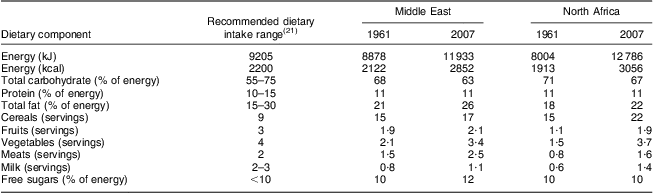
Availability of energy and main food items in the Middle East and North Africa from 1961 to 2007 is shown in Fig. 1. Availability of energy and all food items assessed (except for alcoholic beverages in the Middle East and North Africa, and animal fats in the Middle East) has increased during the 47 years. Energy availability increased by 42·2 % and 60·8 % in the Middle East and North Africa, respectively. Although total energy availability was higher in the Middle East compared with North Africa (P = 0·01) in the 1960s, it increased faster in North Africa than in the Middle East during the 47 years under study (Fig. 1). We found that the proportion of total energy derived from carbohydrates decreased in both regions (from 68 % to 63 % in the Middle East and from 71 % to 67 % in North Africa), while the proportion of energy from fat increased (from 21 % to 26 % in the Middle East and from 18 % to 22 % in North Africa) and the proportion of energy from protein remained constant (11 %; Table 3).
Daily per capita availability of energy and food groups in the Middle East (——) and North Africa (- - - -) during 1961–2007. Data are from FAO food balance sheets, FAOSTAT database( 22 )

Recommended daily dietary intakes and actual dietary intakes in the Middle East and North Africa
Cereals
Cereals were the staple food in the Middle East and North African countries between 1961 and 2007 (Table 3). At baseline, there were no significant differences in cereal availability between the two regions (P = 0·22); however, during the 47 years of the study, the availability of cereals in the Middle East and North Africa increased by 992 (sd 904) and 2201 (sd 753) kJ/person per d (237 (sd 216) and 526 (sd 180) kcal/person per d), respectively (Fig. 2). During the 47 years the proportion of total energy derived from cereals decreased significantly in the Middle East (from 57·2 % to 48·8 %) and North Africa (from 62·9 % to 56·6%; Fig. 3). Regardless of the different categories of SES in each region, a similar trend was found in all countries.
Changes in the availability of food groups during 1961–2007 in the Middle East ( ) and North Africa (
 ). Values are means with their standard deviations represented by vertical bars. Data are from FAO food balance sheets, FAOSTAT database(
22
)
). Values are means with their standard deviations represented by vertical bars. Data are from FAO food balance sheets, FAOSTAT database(
22
)

Changes in the proportion of energy from food groups during 1961–2007 ( , 1961–1966;
  , 2003–2007) in the Middle East and North Africa. Values are means with their standard deviations represented by vertical bars. Mean values within a region were significantly different from those in 1961–1966: *P < 0·05. Data are from FAO food balance sheets, FAOSTAT database(
22
)
, 2003–2007) in the Middle East and North Africa. Values are means with their standard deviations represented by vertical bars. Mean values within a region were significantly different from those in 1961–1966: *P < 0·05. Data are from FAO food balance sheets, FAOSTAT database(
22
)

Fruits and vegetables
In the 1960s, the availability of fruits and vegetables was higher in the Middle East than North Africa (P < 0·05); however, in 2007, there was no significant difference in their availability between the two regions (Fig. 1). During the 47 years of study, the availability of fruits and vegetables increased in both regions, but the increase was more dramatic in North Africa than the Middle East (fruits: 193 (sd 141) v. 80 (sd 305) kJ/person per d (46·1 (sd 33·8) v. 19·2 (sd 72·8) kcal/person/d); vegetables: 245 (sd 116) v. 133 (sd 233) kJ/person per d (58·5 (sd 27·7) v. 31·8 (sd 55·7) kcal/person/d), respectively; Fig. 2). This increase was found in all income categories except for lower–middle income countries in the Middle East where availability of fruits and vegetables decreased. Between 1961 and 2007, the total energy derived from fruits decreased in the Middle East from 5·6 % to 4·4 %, mainly due to reduced availability in lower–middle income countries, but in North Africa there was no trend (3·6 % at both time points). The proportion of energy from vegetables increased both in the Middle East and North Africa during the 47 years under study (Fig. 3); this increase was found in all countries with different SES. In both regions, fruit and vegetable consumption was lower than the minimum recommended value of 400 g/d during the study period( Reference Schmidhuber and Traill 19 ).
Meat and pulses
This food group comprises meat, eggs, fish and seafood, pulses and nuts. The availability of meat and pulses in the 1960s differed between the Middle East and North Africa (P < 0·05) but the availability of these food items has increased in both regions over the 47 years. In 2007 the availability of meat, eggs and nuts was higher in the Middle East than North Africa, while the availability of pulses, fish and seafood was the same in both regions (Fig. 1). During the period under review, the amount of energy derived from meat and pulses increased steadily and significantly in the Middle East (from 9·3 % to 11·6 %) and North Africa (from 6·5 % to 7·4 %; Fig. 3). With respect to SES, the availability of meat and pulses and the proportion of energy from this group showed a similar increasing trend in all income categories. In 2007, the Middle East, but not North Africa, consumed the minimum recommended amount of meat (Table 3)( Reference Schmidhuber and Traill 19 ).
Milk and dairy products
During the 1960s, the availability of milk was higher in the Middle East than in North Africa (P < 0·05); it increased by 386 (sd 260) and 168 (sd 308) kJ/person per d (92·3 (sd 62·1) and 40·1 (sd 73·6) kcal/person/d) in North Africa and the Middle East, respectively, with no significant difference being observed in 2007 between the two regions (Figs 1 and 2). From 1961 to 2007, the proportion of energy from milk to total energy intake increased in North Africa (from 4·4 % to 6·1 %), whereas it remained constant in the Middle East (from 4·7 % to 4·8 %; Fig. 3). The same trend was found in the different SES groups in the Middle East and North Africa. However, both regions failed to meet the minimum recommended dietary intake values for milk (Table 3)( Reference Schmidhuber and Traill 19 ).
Vegetable oils
The availability of vegetable oils showed no significant differences between the Middle East and North Africa during the study period (Fig. 1). Over the 47 years under study, the availability of vegetable oils increased steadily to 920 (sd 293) and 699 (sd 531) kJ/person per d (220 (sd 70) and 167 (sd 127) kcal/person/d) in the Middle East and North Africa, respectively (Fig. 2). The availability of oil crops also increased over the 47 years (Fig. 1), but there were no significant differences in their availability between the Middle East and North Africa during the study period (Fig. 2). From 1961 to 2007, the proportion of energy from oils (both vegetable and oil crops) increased steadily in the Middle East (from 6·5 % to 12·3 %) and North Africa (from 8·0 % to 10·8 %; Fig. 3). Increases in the availability of oils and the proportion of energy from oils were found in all income categories.
Sugar and sweeteners, animal fats and alcoholic beverages
During the 1960s, the availability of sugar and sweeteners and animal fats was higher, while that of alcoholic beverages was lower in the Middle East compared with North Africa. Between 1961 and 2007 the availability of sugar and sweeteners increased steadily in a similar pattern in both regions (Fig. 1), while in the Middle East, the availability was higher than in North Africa (542 (sd 405) v. 494 (sd 80) kJ/person per d (129·7 (sd 96·8) v. 118·0 (sd 19·1) kcal/person/d; Fig. 2); in both regions consumption of free sugars was higher than the maximum recommended value (Table 3)( Reference Schmidhuber and Traill 19 ).
On the other hand, although the availability of animal fats and alcoholic beverages decreased more in the Middle East than in North Africa over the 47 years under study (Figs 1 and 2), in 2007 the availability of alcoholic beverages was higher in North Africa and that of animal fats was higher in the Middle East. The proportion of discretionary calories in total energy intake remained steady during 1961–2007 in the Middle Eastern (13·5 %) and North African countries (11·0 %; Fig. 3). Discretionary calories are defined as the energy derived from added sugars, solid fats and alcoholic beverages( 27 ).
Discussion
In the present paper we report changes in dietary patterns in the Middle Eastern and North African countries from 1961 to 2007. Our results show that the availability of energy and all food items has increased in both regions during the last half century, a finding in agreement with previous reports( Reference Bermudez and Tucker 6 , Reference Schmidhuber and Traill 19 , Reference Balanza, García-Lorda and Pérez-Rodrigo 25 , Reference Garcia-Closas, Berenguer and González 28 ). In North Africa most of the changes were related to increases in the availability of eggs (7-fold), fish and seafood (3·5-fold), oil crops (3-fold) and nuts (3-fold), while in the Middle East most of the changes were due to increases in the availability of vegetables (4·5-fold), nuts (4-fold), eggs (4-fold) and vegetable oils (3·5-fold). During the 47 years under study, the availability of energy in the Middle East and North Africa increased by 42 % and 61 %, respectively. Over the past four decades studies have shown that per capita energy availability has increased significantly in developing countries, by approximately 2500 kJ/d (600 kcal/d)( Reference Caballero 29 ); this has more significance when considering the fact that several studies suggest the energy requirement of people from developing countries is low( Reference Scagliusi, Ferriolli and Lancha 30 ). This dramatic increase indicates a transition from undernutrition towards overnutrition in these regions, resulting in rising rates of obesity and other chronic diseases( Reference Hosseinpanah, Barzin and Eskandary 10 , Reference Reddy 13 ).
In the present study, despite the ascending trend of cereal availability, the proportion of energy from cereals decreased between 1961 and 2007 in both regions. The slowing population growth and nutrition transition are the most probable causes of reduced intakes of cereals( Reference Bermudez and Tucker 6 ). However, data from food balance sheets show only the availability of total cereals and starchy roots, not the availability of whole or refined grains; and hence changes in the availability of whole and refined grains over the 47 years are unknown. Nevertheless, Atinmo et al.( Reference Atinmo, Mirmiran and Oyewole 4 ) have reported that consumption of refined grains is increasing in the Middle East and North Africa, which could be attributed to globalization and the high availability of modern processed foods( Reference Hu 31 ).
Our findings indicate that the availability of fruits and vegetables increased in the Middle East and North Africa( Reference Schmidhuber and Traill 19 ). Da Silva et al. ( Reference Da Silva, Bach-Faig and Raidó Quintana 23 ) have indicated that adherence to the Mediterranean dietary pattern increased between the periods of 1961–1965 and 2000–2003 in North Africa and some countries of the Middle East, mainly due to increased availability of fruits and vegetables, the most common cause of which is the increased diversity of fruits and vegetables worldwide( Reference Schmidhuber and Traill 19 ). In addition, owing to the inverse association between fruit and vegetable consumption and chronic diseases( Reference Pomerleau, Lock and McKee 32 – Reference Ledoux, Hingle and Baranowski 34 ), most countries have increased their availability of fruits and vegetables to improve healthy eating and prevent chronic diseases( Reference Schmidhuber and Traill 19 ). In spite of increased availability of fruits and vegetables, however, current consumption of these food groups is low in both the Middle East and North Africa and does not meet the FAO's recommended intake value of 400 g/d. In recent years, due to land and water shortages and the low demand for agricultural products, the availability of plant-based foods has declined in some countries.
Between 1961 and 2007, the availability of meats and milk showed an increasing trend in the Middle East and North Africa. Increased demand for and production of meat, fish and milk in developing countries may have contributed to the elevated availability of these foods items in the two regions. According to the International Food Policy Research Institute, the greatest production and consumption of meats and milk takes place in developing countries, predicted to reach to 63 % and 50 %, respectively, by 2020 in these countries( Reference Popkin and Gordon-Larsen 35 ). In addition, increasing imports of these food groups also has affected their availability( Reference Madanat, Troutman and Al-Madi 2 ). However, the availability of meat in North Africa and of milk in both North Africa and the Middle East is below the minimum recommended values, which could explain the high prevalence of malnutrition disorders, particularly Fe-deficiency anaemia and protein–energy malnutrition, in these regions.
The availability of vegetable oils and their proportional contribution to total energy have both increased in the Middle East and North Africa during the 47 years of the study. In recent decades, consumption of vegetable oils has increased dramatically worldwide( Reference Hawkes 7 ), being the greatest contributor to increased total energy intake in developing countries. Globally, the low price of vegetable oils may have led to their increased consumption( Reference Caballero 29 ). In most developing countries, technological advances, increased production and the high demand and import are responsible for increased availability of vegetable oils. Global production of vegetable oils increased from 60 to 71 million tonnes between 1991 and 1997, while production of animal fats has remained constant, at approximately 12 million tonnes( Reference Vareiro, Bach-Faig and Raidó Quintana 24 ). The most commonly produced vegetable oils are soyabean, sunflower, canola and mixed groundnut( Reference Hawkes 7 ). Global availability of these oils, with the exception of mixed groundnut oil, increased threefold between 1961 and 1990( Reference Popkin and Gordon-Larsen 35 ). In addition, urbanization (particularly in Africa and Asia), shift in economic status (especially income increases and inequalities) and the globalization of media have affected the availability of vegetable oils( Reference Popkin 36 ). However, it seems that an increase in modern food consumption, including fast foods, could be the major cause of high vegetable oil intakes( Reference Schmidhuber and Traill 19 ), which increases total fat consumption and leads to obesity and chronic disease morbidity( Reference Minihane and Harland 37 ).
Availability of discretionary calories in the Middle East and North Africa was at the limit recommended by the US Department of Agriculture during the 47 years under study (12–20 % of total daily energy)( 27 ). Despite the positive correlations between intake of sugar and sweeteners and chronic diseases, consumption of caloric sweeteners shows an ascending trend in the Middle East and North Africa as well as in other countries around the world. In 2000, the availability of sugar and sweeteners was three times higher than in 1961. Urbanization and increased GDP of a country contribute to high availability of caloric sweeteners( Reference Ledoux, Hingle and Baranowski 34 ). In addition, traditions of high consumption of tea and coffee with sugar in the Middle East and North Africa can also contribute to the elevated sugar consumption( Reference Kittler and Sucher 38 ). In the 47 years studied, availability of discretionary calories has shown no significant difference. Despite the increase in sugar and sweeteners, the decrease in availability of animal fats and alcoholic beverages in the Middle East and North Africa is responsible for the lack of change in availability of discretionary calories in both regions. Lower intakes of alcoholic beverages in these regions are due to religious beliefs and traditions( Reference Vareiro, Bach-Faig and Raidó Quintana 24 ).
Overall, the traditional diet of North Africa is based on the Mediterranean diet which includes high consumption of fruits, vegetables, cereals, beans, nuts, seeds and olive oil, moderate consumption of wine, low to moderate consumption of cheese, yoghurt, fish, poultry and eggs, and low consumption of red and processed meats( Reference Willett, Sacks and Trichopoulou 39 ). Over the 47 years studied, although North Africans have sustained the basic components of their traditional diet such as fruits, vegetables and pulses consumption, their intakes of sugar and vegetable oils have increased. Middle Eastern countries have also deviated from their traditional dietary patterns which consisted mainly of cereals, pulses, vegetables, fruits and lamb. Our findings show that after 47 years, the availability of fruits and cereals has decreased, while the availability of meat, sugar and vegetable oils has increased. There is a relationship between high consumption of sugars and fats and increased consumption of fast foods, processed and high-energy foods, which has occurred as a result of nutrition transition in developing countries( Reference Dodd 40 ). High consumption of sugars and vegetable oils is the major contributor to the increased total energy intake, which may in turn account for the alarming rise in NCD prevalence in the Middle East and North Africa. Previous studies have demonstrated that nutrition transition is associated with unhealthy diets, low physical activity, high prevalence of obesity and obesity-related diseases in developing countries( Reference Willett, Sacks and Trichopoulou 39 ). The Middle East and North Africa are undergoing nutrition transition and although some shifts in their dietary patterns have been beneficial, including increased supply and availability of foods, others have been detrimental, associated with the development of chronic diseases( Reference Galal 5 ). In the developing countries, nutrition transition has predisposed higher-income groups to the risk of obesity and diet-related diseases, while low-income groups are exposed to infectious and communicable diseases, although some also suffer from overweight and obesity due to nutrition transition( Reference Satia 41 ). Deviations from healthy dietary patterns can be an adverse effect of nutrition transition. According to WHO recommendations, the Mediterranean diet represents a healthy dietary pattern( Reference Vareiro, Bach-Faig and Raidó Quintana 24 ) and several studies have demonstrated the protective effect of the Mediterranean diet against chronic diseases( Reference Proietti, del Balzo and Dernini 42 – Reference Kastorini, Milionis and Goudevenos 45 ). Therefore, nutritional education on the importance of a healthy diet at the population level and developing policies to facilitate the availability of healthy foods could reduce the rapid trend of obesity and other chronic diseases.
The FAO food balance sheet does have its limitations. First, the food balance sheet represents only the energy available for consumption, and not real consumed values( Reference Schmidhuber and Traill 19 ). It overestimates energy availability in developing countries, while underestimating it in developed countries. Second, the food balance sheet shows energy per capita and does not allow for comparisons according to age, sex, SES, seasonal and regional differences; moreover, the sheet does not calculate home-made production and food consumption by tourists. However, despite the limitations, the food balance sheet is a cost-effective tool for longitudinal comparisons; and although it is not the only source of data for consumption at population level, it is still the best available data source for analysis during a specific period a time for any given country( Reference Da Silva, Bach-Faig and Raidó Quintana 23 ).
Conclusions
It seems that dietary patterns in the Middle East and North Africa changed significantly between 1961 and 2007. Increased availabilities of energy, sugar and caloric sweeteners, meat, milk and dairy products in these regions represent the changes in dietary pattern from conventional diets to a Westernized diet that are associated with a high burden of chronic diseases. Further country-level investigations of the dietary trends in these regions are suggested.
Acknowledgements
This research received no specific grant from any funding agency in the public, commercial or not-for-profit sectors. There are no conflicts of interest to declare. P.M. and M.J. developed the project idea for the study. M.G., P.M., M.M. and F.A. designed the project. M.G., P.M., M.J. and K.T. analysed and interpreted the data. M.G., P.M., M.J., K.T. and F.A. prepared the manuscript. All authors read and approved the final submitted version of the manuscript. The authors would like to express their appreciation to Ms N. Shiva for language editing of the manuscript and Dr Bahram Rashidkhani for his assistance in statistical analyses.
Appendix
List of selected food items from food balance sheets



