


Norwegian dietary surveys from 2000 showed that the average intake of fruit and vegetables (F&V) among children and adolescents was less than half the recommended amount(Reference Øverby and Andersen1). Subsequent cross-national surveys among children and adolescents also found that the F&V intake was far from reaching population goals and food-based dietary guidelines in all the surveyed countries(Reference Yngve, Wolf and Poortvliet2). The promotion of healthy eating (including daily F&V consumption) in pre-adolescent children is important, since food habits established in childhood may to a certain extent track into adolescence and adulthood(Reference Birch3–Reference Mikkilä, Rasanen and Raitakari5). Furthermore, food habits in pre-adolescent children may be more flexible to change than food habits in adolescents and adults(Reference Birch3). According to Hanson et al.(Reference Hanson, Neumark-Sztainer and Eisenberg6), at age 11 years, parents are considered to be the most important social agent impacting upon diet. In line with this, De Bourdeaudhuij et al.(Reference De Bourdeaudhuij, Te Velde and Brug7) indicated that parental influence is important for daily F&V consumption in 11-year-old children. We believe that increased knowledge about the relationships between parental influence and eating behaviour in pre-adolescent children is needed to develop successful interventions for this group of the population.
Parents influence their children's eating behaviour in many different ways, especially through their feeding practices(Reference Birch and Davidson8). Most previous studies assessing parental feeding practices as determinants of children's eating behaviour have included just a few feeding practices, such as restrictive feeding and pressure to eat. These practices are aspects of control over child food intake, and are typically measured with the Child Feeding Questionnaire (CFQ)(Reference Birch, Fisher and Grimm-Thomas9). Although controlling feeding practices seem to be widely used by parents in an attempt to secure a well-balanced diet for their children(Reference Faith, Scanlon and Birch10), some studies have proved counterproductive effects of these practices, as parents who exert too much control over child food intake tend to have children with an increased preference for high-fat foods and higher levels of snack-food intake(Reference Birch and Fisher11). The emphasis on parental control in previous feeding practices measures has lately been accompanied by increased research on other important practices. Parental modelling of healthy eating and exposure to healthy foods are examples of other feeding practices that may be effective(Reference Hendy and Raudenbush12–Reference Blanchette and Brug15).
Traditionally, the Theory of Planned Behaviour (TPB)(Reference Ajzen16), the Attitude–Social Influence–Self-Efficacy (ASE) model(Reference Kok, Schaalma and De Vries17) and similar cognitive theories derived from social psychology are seen as comprehensive models for explaining and predicting health behaviour, including eating behaviour. In the TPB and the ASE model, attitude, subjective norm (social influence) and perceived behavioural control (self-efficacy) are the central cognitive factors. These factors are believed to influence behavioural intention, which is assumed to be the primary determinant of behaviour. More distal variables, such as the social and physical environment, are theorized to influence health behaviour through the variables of these models(Reference Ajzen16). However, some studies suggest that cognitive models such as these are unable to fully account for the more distal variables(Reference De Bruijn, Kremers and Schaalma18–Reference Courneya, Bobick and Schinke20). Moreover, some distal variables are hypothesized to have a direct effect on health behaviour, thus bypassing the proximal cognitive factors(Reference De Bruijn, Kremers and de Vries21).
In the present study we built upon the conceptual framework of Hewitt and Stephens(Reference Hewitt and Stephens22) and constructed a model based on variables from the ASE model and the Comprehensive Feeding Practices Questionnaire (CFPQ)(Reference Musher-Eizenman and Holub23) to examine the roles of child cognitions and parental feeding practices in explaining child intention to eat F&V and child self-reported F&V consumption. More specifically, we aimed to test if the inclusion of multiple parental feeding practices (not only controlling and restrictive practices) could increase the explanatory power of the ASE model, and to assess the importance of each variable in explaining the variance in child intention to eat F&V and in child self-reported consumption of F&V. The relationships under study are presented in Fig. 1.
Expansion of the Attitude–Social Influence–Self-Efficacy (ASE) model on child intention to eat fruit and vegetables (F&V) and child F&V consumption by inclusion of parent-reported feeding practices measured by the Comprehensive Feeding Practices Questionnaire (CFPQ)

Methods
Procedures and participants
Participants were recruited through primary schools in two neighbouring municipalities (Gjesdal and Sandnes) in the south-western part of Norway. All primary schools in these municipalities were asked to participate in the study, and eighteen out of twenty-five schools (72 %) agreed. In total, 1466 students in grades 5 and 6, and one of their parents, were invited. First, parents’ survey packages including information letters, consent forms and self-administered questionnaires were distributed to the children at school with instructions to take them home to be completed by one of their parents (the parent most involved in home food issues) within 3 d. Next, after receiving written consent from the parents, child questionnaires were distributed and completed by the students at school. The study was approved by the Norwegian Social Sciences Data Services.
We received 963 completed parent questionnaires (66 %). Response rate ranged from 20 to 100 % among participating classes. Of the 963 parent respondents, 85 % were mothers. The average age of the parents was 39·8 years, and 91 % of the sample was of Norwegian or other Nordic origin. Out of 865 students having written consent from their parents to participate in the study, 796 (92 %) completed the child questionnaire. Of the 796 child respondents, 51 % were girls. Average age was 10·8 (sd 0·6) years.
Measures
Both parent and child questionnaires were pre-tested for clarity and length among parents (n 6) and children (n 8) not taking part in the study.
Parent questionnaire
The parent questionnaire included an adapted, validated, Norwegian version of Musher-Eizenman and Holub's(Reference Musher-Eizenman and Holub23) CFPQ. The process of translation, adaptation and validation of the CFPQ is described in detail elsewhere(Reference Melbye, Øgaard and Øverby24).
Child questionnaire
The items constituting the child questionnaire have previously been validated and widely used among Norwegian 6th graders(Reference De Bourdeaudhuij, Te Velde and Brug7, Reference Andersen, Bere and Kolbjørnsen25–Reference Sandvik, Gjerstad and Samdal30).
The child questionnaire consisted of two parts; one part assessing child cognitions related to F&V intake, the other assessing child consumption of F&V. The cognitions part was adapted from the Pro Children study(Reference De Bourdeaudhuij, Klepp and Due27) and included variables based on the ASE model. Attitudes were measured with two items for fruit and vegetables respectively (‘To eat fruit/vegetables every day gives me more energy’ and ‘To eat fruit/vegetables every day makes me feel good’). Social influence, which in the present study was limited to parental influence, was measured by four items. Two of these items reflected parental descriptive norms or modelling (‘My mother/father eats fruit/vegetables every day’) and two items reflected active parental encouragement (‘My mother/father encourages me to eat fruit/vegetables every day’). Self-efficacy was measured with two items (‘It's easy for me to eat fruit/vegetables every day’ and ‘If I decide to eat fruit/vegetables every day, I can do it’), and intention with one item (‘I want to eat fruit/vegetables every day’). All items had five response categories (1 = ‘fully disagree’, 2 = ‘partly disagree’, 3 = ‘neither agree nor disagree’, 4 = ‘partly agree’, 5 = ‘fully agree’).
Pre-testing of the cognitions part of the questionnaire led to some small adjustments compared with the original items formulated by De Bourdeaudhuij et al.(Reference De Bourdeaudhuij, Klepp and Due27). First, the wording of one of the self-efficacy items was changed from negative (‘It's difficult for me to eat fruit/vegetables every day’) to positive (‘It's easy for me to eat fruit/vegetables every day’), as the children perceived positive wording as more natural. Furthermore, we reversed the response categories from descending numbers (5 = ‘fully disagree’ to 1 = ‘fully agree’) to ascending numbers (1 = ‘fully disagree’ to 5 = ‘fully agree’), as it seems more logical that increasing agreement with statements and increasing numbers accompany each other.
Child consumption of F&V was assessed using frequency questions adapted from the work of Andersen et al.(Reference Andersen, Bere and Kolbjørnsen25). The present study included four questions about the consumption of F&V: ‘How often do you eat vegetables for dinner’, ‘…other vegetables’, ‘…apple, orange, pear and banana’ and ‘…other fruit and berries’. All questions had ten response categories (‘never’ = 1, ‘less than once a week’ = 2, ‘once a week’ = 3, ‘twice a week’ = 4, …, ‘six times a week’ = 8, ‘every day’ = 9, ‘several times every day’ = 10), which were re-coded to reflect consumption in times per week (0, 0·5, 1, 2, …, 6, 7, 10) as suggested by Bere et al.(Reference Bere, Veierød and Klepp28).
Data analyses
The SPSS statistical software package version 18 (SPSS Inc., Chicago, IL, USA) was used for the data analyses. First, the proportion of children reporting daily F&V consumption (i.e. seven times or more per week) was calculated. This was done by: (i) making sum-scores of the re-coded fruit and vegetable items, respectively; (ii) dichotomizing the sum-scores as 0 = not eating fruit/vegetables every day (scores 0 through 6) and 1 = daily consumption of fruit/vegetables (scores 7 and above); and (iii) running frequencies to find the proportion of children reporting daily fruit and vegetable consumption, respectively. Next, the distribution of scores on each scaling variable was assessed by calculating mean, standard deviation, skewness and kurtosis values. As suggested by Kline(Reference Kline31), we chose to apply cut-off values of 3·0 and 8·0 for skewness and kurtosis, respectively. Cronbach's α coefficients were computed to measure internal consistency of the scales. Bivariate correlation analyses were run between all variables to test for multicollinearity between independent variables and to get a first impression of relationships between independent and dependent variables. As suggested by Haerens and co-workers(Reference Haerens, Craeynest and Deforche32), we applied a cut-off value of 0·80 or greater for multicollinearity.
To examine the contribution of parental feeding practices in explaining the variance in child intentions and behaviours regarding F&V consumption, taking into account the effects of child cognitions, hierarchical regression analyses were conducted with child intentions to eat F&V and child self-reported F&V consumption as dependent variables. Thus, child cognitions were entered into the first block and parental feeding practices were entered into the second block for fruit and vegetable intentions and consumption, respectively.
Since fruit consumption and vegetable consumption can be seen as different behaviours, influenced by different factors(Reference Reinaerts, De Nooijer and Candel33), analyses were run separately for these behaviours. We chose a rather puritan approach to our data, and list-wise deletion was applied for all model analyses. Thus, only dyads with complete data sets for each of the four models tested were included in these analyses (regression on child intention to eat fruit/child fruit consumption: n 643/n 628, regression on child intention to eat vegetables/child vegetable consumption: n 658/n 622). Independent-samples t tests were conducted to test for differences between dyads included in model analyses and those not included due to incomplete data.
Results
Daily fruit and vegetable consumption
Daily fruit consumption was reported by 72 % and daily vegetable consumption by 58 % of the children.
Distribution of scores
Mean scores, standard deviations and Cronbach's α for F&V consumption and child cognitions regarding F&V consumption are presented in Tables 1 and 2 for fruit and vegetables, respectively. Means, standard deviations and α coefficients for parental feeding practices are presented in Table 3. Screening for skewness and kurtosis showed that all child and parent variables had values well within the range of chosen cut-offs (skewness: −2·24 to 1·81, kurtosis: −0·80 to 5·46). Cronbach's α ranged from 0·44 to 0·84.
Mean, sd and Cronbach's α for child fruit consumption and ASE-based variables regarding fruit consumption: grade 5 and 6 students (n 796) from eighteen schools in south-west Norway

ASE, Attitude–Social Influence–Self-Efficacy model.
Mean, sd and Cronbach's α for child vegetable consumption and ASE-based variables regarding vegetable consumption: grade 5 and 6 students (n 796) from eighteen schools in south-west Norway

ASE, Attitude–Social Influence–Self-Efficacy model.
Mean, sd and Cronbach's α for parental feeding practices (CFPQ-based variables): parents (n 963) of grade 5 and 6 students from eighteen schools in south-west Norway
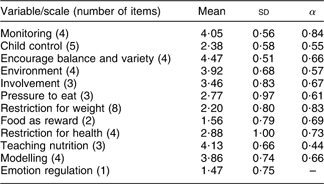
CFPQ, Comprehensive Feeding Practices Questionnaire.
Correlations between variables
No multicollinearities were found between the independent variables. Bivariate correlations between independent and dependent variables are presented in Table 4. All ASE-based variables showed moderate to high correlations with both child intention to eat F&V and child F&V consumption. Only a few CFPQ-based variables correlated (weakly) with child intentions and behaviour regarding fruit consumption, while several CFPQ-based variables correlated (weakly) with child intentions and behaviour regarding vegetable consumption.
Pearson's correlation between independent and dependent variables: parents (n 963) and grade 5 and 6 students (n 796) from eighteen schools in south-west Norway

ASE, Attitude–Social Influence–Self-Efficacy model; CFPQ, Comprehensive Feeding Practices Questionnaire.
*P < 0·05, **P < 0·01, ***P < 0·001.
Regression analyses
Intention to eat fruit and fruit consumption
Hierarchical regression analyses on child intention to eat fruit every day revealed that child cognitions accounted for 29 % of the variance explained. Including parental feeding practices in the model added another 3 % to the variance explained (Table 5). All ASE-based variables were positively related to child intention to eat fruit (in order of importance): self-efficacy (β = 0·28, P < 0·001), attitude (β = 0·25, P < 0·001) and parental influence (β = 0·18, P < 0·001). Expanding the ASE model by adding parental feeding practices revealed that the variable child control was negatively related to child intention to eat fruit (β = −0·14, P < 0·001).
Hierarchical regression analyses on child intention to eat fruit every day: grade 5 and 6 students and their parents (643 dyads) from eighteen schools in south-west Norway

ASE, Attitude–Social Influence–Self-Efficacy model; CFPQ, Comprehensive Feeding Practices Questionnaire.
*P < 0·05, ***P < 0·001.
Hierarchical regression analyses on child self-reported fruit consumption revealed that child cognitions (including intention) accounted for 25 % of the variance. The following ASE-based variables were positively related to fruit consumption (in order of importance): intention (β = 0·23, P < 0·001), self-efficacy (β = 0·22, P < 0·001) and parental influence (β = 0·14, P < 0·001). Inclusion of parental feeding practices in the model did not contribute significantly to explaining the variance in child fruit consumption (Table 6).
Hierarchial regression analyses on child fruit consumption: grade 5 and 6 students and their parents (628 dyads) from eighteen schools in south-west Norway

ASE, Attitude–Social Influence–Self-Efficacy model; CFPQ, Comprehensive Feeding Practices Questionnaire.
**P < 0·01, ***P < 0·001.
Intention to eat vegetables and vegetable consumption
Hierarchical regression analyses on child intention to eat vegetables every day revealed that child cognitions accounted for 42 % of the variance. All ASE-based variables were positively related to child intention to eat vegetables (the order of importance was the same as for child intention to eat fruit): self-efficacy (β = 0·37, P < 0·001), attitude (β = 0·25, P < 0·001) and parental influence (β = 0·19, P < 0·001). Adding parental feeding practices to the model did not increase the variance explained (Table 7).
Hierarchical regression analyses on child intention to eat vegetables every day: grade 5 and 6 students and their parents (658 dyads) from eighteen schools in south-west Norway

ASE, Attitude–Social Influence–Self-Efficacy model; CFPQ, Comprehensive Feeding Practices Questionnaire.
***P < 0·001.
Regarding child self-reported vegetable consumption, hierarchical regression analyses revealed that child cognitions (including intention) accounted for 27 % of the variance explained, and inclusion of parental feeding practices accounted for an additional 4 % (Table 8). The following variables within the ASE model were positively related to child vegetable consumption (in order of importance): self-efficacy (β = 0·27, P < 0·001), parental influence (β = 0·16, P < 0·001) and intention (β = 0·15, P < 0·001). Adding parental feeding practices to the model revealed that only the environment variable (β = 0·10, P < 0·01) was significantly, and positively, related to child vegetable consumption.
Hierarchial regression analyses on child vegetable consumption: grade 5 and 6 students and their parents (622 dyads) from eighteen schools in south-west Norway

ASE, Attitude–Social Influence–Self-Efficacy model; CFPQ, Comprehensive Feeding Practices Questionnaire.
*P < 0·05, **P < 0·01, ***P < 0·001.
Differences between dyads included and dyads not included
Independent-samples t tests were conducted to compare variable scores (model variables and sociodemographic variables) for dyads included in model analyses and those not included due to incomplete data. Of the twenty-six variables tested, we found only two variables with significantly different scores for dyads included and dyads not included. These variables were (child-reported) self-efficacy regarding fruit consumption (mean = 4·58, sd 0·70 for dyads included and mean = 4·37, sd 0·91 for dyads not included, t(142) = 2·32, P = 0·02) and (parent-reported) child control (mean = 2·41, sd 0·57 for dyads included and mean = 2·29, sd 0·59 for dyads not included, t(725) = 1·93, P = 0·05). The magnitude of the differences in means (mean difference = 0·21 for self-efficacy and mean difference = 0·12 for child control) was very small (η 2 = 0·007 for self-efficacy and η 2 = 0·005 for child control). Thus, these results suggested that the differences between dyads included and dyads not included in our model analyses were negligible.
Discussion
The aim of the present study was to explore the roles of child cognitions and parent-reported feeding practices in explaining the variance in child intentions and behaviour regarding F&V consumption. Our results showed that both child cognitions and (some) parent-reported feeding practices were associated with child intentions and behaviour regarding F&V consumption. However, child cognitions played a greater role than parent-reported feeding practices in explaining the variance in both child intentions and behaviour.
Regression analyses showed that a large portion of the variance in child intention to eat fruit and in child fruit consumption (29 % and 25 %, respectively) could be explained by child cognitions as postulated by the ASE model. This also applied to intention to eat vegetables and to consumption of vegetables (42 % and 27 %, respectively). Thus, our results support the use of the ASE model for this purpose. Among the ASE-based variables measured in our study, self-efficacy appeared as the single most important variable in explaining intentions and behaviour regarding F&V consumption. According to the ASE model, self-efficacy can be expected to have a direct effect on behaviour as opposed to other cognitions such as attitudes and perceived social influence, which effects seem to be mediated through intentions(Reference Kok, Schaalma and De Vries17, Reference Ajzen34). However, previous research is inconsistent about the relationship between self-efficacy and F&V consumption(Reference Sandvik, Gjestad and Brug29, Reference Domel, Thompson and Davis35–Reference Martens, Van Assema and Brug40). This may be due to different operationalizations of the self-efficacy construct(Reference De Bourdeaudhuij, Te Velde and Brug7). For example, positive v. negative wording of the self-efficacy items might have an impact on the results. The self-efficacy measure in the present study was derived from the Pro Children project(Reference De Bourdeaudhuij, Klepp and Due27). However, we changed the wording of one of the original self-efficacy items from negative to positive, leading to an increase of the internal consistency of the measure compared with studies using an unrevised version of the Pro Children self-efficacy measure(Reference De Bourdeaudhuij, Klepp and Due27, Reference Sandvik, De Bourdeadhuij and Due41). The α coefficients in the present study were 0·59 and 0·73 for self-efficacy regarding fruit and vegetables, respectively. The studies by De Bourdeaudhuij et al.(Reference De Bourdeaudhuij, Klepp and Due27) and Sandvik et al.(Reference Sandvik, De Bourdeadhuij and Due41) both had α levels below 0·50 (0·39–0·49) for self-efficacy regarding F&V consumption. Revision of the Pro Children self-efficacy measure was encouraged by Sandvik and co-workers(Reference Sandvik, De Bourdeadhuij and Due41), and in a later study the measure was revised by simply removing the negatively worded item. Still, no direct relationship from self-efficacy to child F&V consumption was found(Reference Sandvik, Gjestad and Brug29). Revision of the self-efficacy measure in the present study (by changing the wording from negative to positive) resulted not only in an increased internal consistency; it also resulted in a large direct effect of self-efficacy on F&V consumption as postulated by the ASE model. Thus, it seems like the wording and composition of measures may have great impact on the results.
Parental influence (as perceived by the children) also appeared as a significant correlate of both intentions and behaviour regarding F&V consumption. In a study by De Bourdeaudhuij et al.(Reference De Bourdeaudhuij, Te Velde and Brug7) both parental modelling and active parental encouragement (as perceived by the children) were found to be associated with daily consumption of F&V. Several previous studies also reported (perceived) parental modelling as a correlate of child F&V consumption(Reference Andersen, Bere and Kolbjørnsen25, Reference Young, Fors and Hayes39, Reference Cullen, Baranowski and Rittenberry42–Reference Rasmussen, Krølner and Klepp44). Attitudes, however, were strong correlates of intentions to eat F&V, but seemed to have no relationship to F&V consumption in our sample. This is in line with previous research, which found only weak associations between attitudes and F&V consumption(Reference De Bourdeaudhuij, Te Velde and Brug7, Reference Lien, Lytle and Komro38). Strong associations between attitudes and intention and weak associations between attitudes and consumption could be expected, as intention is theorized to mediate the relationship between attitudes and behaviour(Reference Ajzen16, Reference Kok, Schaalma and De Vries17).
Expanding our ASE-based model by including parents’ reports of their feeding practices indicated that some parental feeding practices do have an influence on child intentions and behaviour regarding F&V consumption: the variable child control was negatively associated with child intention to eat fruit, and the variable environment was positively associated with child vegetable consumption. However, the portion of variance explained by these feeding practices was rather small. There are many possible explanations for this. First of all, there might be a gap between the parents’ report on their own behaviour and their children's perception of it. This is supported by our finding of a highly significant positive association between parental influence (parental modelling and active parental encouragement), as perceived by the children, and child intentions and behaviour regarding F&V consumption. However, it is also possible that the child reports were more highly related to the outcomes of interest because of mono-method bias. Alternatively, the weak associations between parent-reported feeding practices and the dependent variables compared with the strong associations between child cognitions and the same dependent variables may be caused by a difference in specificity of the independent variables. That is, the parent-reported feeding practices measure (CFPQ) assesses general constructs of (un)healthy eating, while the items for the child-reported social cognitions are specific to F&V consumption. Another possible explanation for our findings might be that parental feeding practices are internalized within the child through a socialization process, which in turn is expressed via child cognitions.
As far as we know, only one previous study(Reference Hewitt and Stephens22) has used a combination of a cognitive model and a pure feeding practices measure to assess the role of child cognitions and parental influence (as reported by parents) on child healthy eating intentions and behaviour. That study by Hewitt and Stephens(Reference Hewitt and Stephens22) was very similar to ours, as it examined the roles of child cognitions measured by Ajzen's(Reference Ajzen16) TPB and parental feeding practices measured by Birch et al.'s(Reference Birch and Davidson8) CFQ in predicting healthy eating intentions and behaviour among 10–13-year-old New Zealand children. Thus, it seems worthwhile to compare these studies. An objective in both studies was to test if an expansion of the social cognition model, by including parents’ reports on feeding practices, could increase the variance explained for child healthy eating intentions and behaviour. Both studies supported the application of cognitive models for this purpose. However, the inclusion of parent-reported feeding practices did not increase the explanatory power of the social cognition model in Hewitt and Stephens’(Reference Hewitt and Stephens22) study. They concluded that the role of parental feeding practices in terms of control and restriction seemed to have no relationship to the children's reported intentions and behaviours regarding healthy eating, and they suggested that the role of parental influence should be further examined. The present study can be considered an answer to their suggestion, as we included a broader spectrum of parental feeding practices in our model (not only controlling and restrictive practices).
Strengths and limitations
Among the strengths of the present study is that we have reports from two different sources: parents and children. Thus the ‘common methods problem’ regarding parental feeding practices (reported by parents) and child intention and behaviour regarding F&V consumption (reported by children) is reduced. However, this might also be a limitation, referring back to the above mentioned possible gap between parental reports and child perceptions. Another strength of the present study is its large sample size, which allows the application of rather sophisticated statistical analyses and increases the statistical power of the results.
One obvious limitation of the study is its cross-sectional design, which does not allow for causal inferences. Another limitation is the application of a self-report FFQ for the assessment of child F&V consumption. According to a review conducted by McPherson et al.(Reference McPherson, Hoelscher and Alexander45), 24 h recalls and food records seem to work better among school-aged children than FFQ. Frequency questions asking about usual intake require abstract thinking, as well as basic reading and arithmetic skills, which may be too advanced for young children. Furthermore, children may have difficulties recalling past events(Reference Randall46). Andersen et al.(Reference Andersen, Bere and Kolbjørnsen25) found that FFQ tended to overestimate the intake of F&V compared with 7 d food records. This was also observed by Baranowski et al.(Reference Baranowski, Smith and Baranowski47) and van Assema et al.(Reference Van Assema, Brug and Ronda48). On the other hand, Andersen et al.(Reference Andersen, Bere and Kolbjørnsen25) found that the energy intake based on food records was underestimated by about 20 %.
The presence of some low α coefficients might also be a limitation, as low internal consistencies may obscure the relationship between variables(Reference Cullen, Baranowski and Owens49). In particular, the low values for α found in some of the CFPQ scales may be questioned. Some low α values were also found by Musher-Eizenman & Holub(Reference Musher-Eizenman and Holub23) and Musher-Eizenman et al.(Reference Musher-Eizenman, de Lauzon-Guillain and Holub50). However, it is important to note that all CFPQ subscales have few items. According to Cortina(Reference Cortina51), it is well known that the number of items has an effect on α, especially at low levels of average item inter-correlation. That is, if a scale has enough items (e.g. more than twenty), it can have an α of ≥0·70 even when the correlations among items are very small(Reference Cortina51). Thus, lower values of α can be expected from shorter scales like the subscales of the CFPQ. Developing survey instruments always involves a trade-off between internal consistency (using multiple items) and practicality. The CFPQ is an instrument aiming to tap many different aspects of feeding practices. Using only a few items in each subscale makes it less tiresome, and therefore more applicable. However, one may question if the brief subscales of the CFPQ sufficiently capture the different aspects of feeding practices.
Conclusions and implications
In the present study, child cognitions explained a large portion of child intentions and behaviour regarding F&V consumption. However, a few parent-reported feeding practices also contributed, although to a small extent, to the explained variance in child intentions to eat fruit and in child consumption of vegetables. We suggest that future research on this topic address possible mediating effects of child cognitions on the relationships between parent-reported feeding practices and child healthy eating intention and behaviour. Extended knowledge about the pathways of these variables is warranted to inform future parent–child intervention programmes. Additional suggestions include the development and application of: (i) a more extensive measure of perceived parental feeding practices among children, to close the possible gap between parents’ reports of their feeding practices and children's perceptions of them; and (ii) food-specific measures of parental feeding practices. Moreover, the findings of the present study need to be replicated with more valid and reliable measures of fruit and vegetable consumption.
Acknowledgements
This study was funded by the University of Stavanger. No conflicts of interest exist. E.L.M. designed the study, collected and analysed the data, and drafted the manuscript. N.C.Ø. and T.Ø. supervised the study and contributed to the analyses and writing of the article. All of the authors read and approved the final manuscript. The authors thank participating schools, students and parents. Moreover, they thank Renaa Matbaren and Kino1 for their generous donation of a free restaurant meal and free movie tickets for a lottery among participants.



