



Endurance cycling (road, mountain, gravel) is a sport characterised by prolonged periods of steady-state power output with stochastic efforts in the heavy and severe intensity domains(Reference Faria, Parker and Faria1), requiring adequate carbohydrate (CHO) consumption from exogenous and endogenous (liver and muscle glycogen) sources. Recent evidence for withholding CHO from certain sessions, that is, periodised nutrition for endurance adaptations, shows promise(Reference Impey, Hearris and Hammond2), but athletes have historically recognised the value of ‘key’ sessions within the training cycle, where high-intensity performance and/or practice of race intensities are needed. Therefore, adequate CHO consumption is suggested(Reference Burke, Hawley and Wong3,Reference Heikura, Stellingwerff and Mero4) signifying the important role of sports nutrition. In recent years, rapid improvement in ‘turbo-trainer’ technology and increased popularity in amateur cycling have led to the advent of online racing and training platforms, such as ‘Zwift’, ‘Sufferfest’ and ‘TrainerRoad’, gaining substantial subscribers in the previous 2–3 years(Reference Heil5). On-bike nutrition can be challenging due to tactical and bike-handling requirements of racing not allowing suitable feeding opportunity, and long training rides limiting the ability to carry sufficient fuel. CHO consumption during training can also enhance gut tolerance and intestinal absorption capacity(Reference Cox, Clark and Cox6,Reference Costa, Miall and Khoo7) .
To maximise performance and mitigate exercise-induced disturbances to energy balance, current nutrition guidelines for endurance exercise recommend athletes consume 1–4 g of CHO/kg of body mass (referred to as g/kg from hereon) between 1 and 4 h prior to exercise. For rides lasting between 1 and 2 h, it is recommended athletes consume up to 60 g/h CHO during exercise, but up to 90 g/h, consisting of multiple transportable CHO is advised for longer duration exercise where optimal performance is desired, rather than training where duration (<1 h) and intensity are low, or where metabolic fat adaptation is specifically sought. For optimal recovery, CHO recommendations are to aim for 1·0–1·2 g/kg CHO within the hour following exercise, with repetition of this every hour for the first 4 h in the instance of a second key session or race <8 h(Reference Steinfeldt, Anand and Murayi8). However, amateur athletes training in their usual environments do not meet nutrition recommendations pre or post-exercise, and the discrepancy between recommendations and actual CHO intake during exercise is apparent in both elite and sub-elite athletes(Reference Jeukendrup9). The unique environment created by indoor cycling presents an opportunity for athletes to successfully meet nutritional requirements due to the ability to source food and fluid at home.
The aim of this study was to determine if athletes racing and training indoors with online platforms meet current CHO recommendations for exercise performance. It was hypothesised that cyclists would not meet overall current CHO recommendations but would meet during exercise targets; planned session intensity would relate to higher CHO intake, cyclists of higher ability would achieve better pre, during and post-ride CHO intake and cyclists identifying as well-trained and identifying the session as a ‘key’ session or race would be more likely to meet CHO recommendations.
Methods
Participants and study design
This cross-sectional, observational study assessed food intake pre, during and post a cycling-based training session conducted using an indoor trainer using a mixed-methods (qualitative and quantitative) questionnaire. The study was available to cyclists of any ability who had completed an indoor training ride or online race in the preceding 24 h (to reduce recall bias). Study recruitment was through professional networks, word-of-mouth and social media platforms (Twitter/Facebook). The study was conducted in accordance with the Declaration of Helsinki and approved by the Australian Catholic University Human Research Ethics Committee (HREC-2020-125E). Participants provided informed consent, their main cycling discipline, typical duration of indoor training sessions, if they considered themselves competitive (defined by either online or traditional races), highest level of competition and years of competitive experience. Session-specific information included self-reported current body mass, functional threshold power (FTP), if the session was a race, perceived session intensity (‘moderate’, ‘high’ or ‘very high’), session duration and average power output (if using a smart trainer or power meter), and if the session was considered a ‘key’ session, defined as where training quality, high-intensity performance and/or practice of race conditions are required(Reference Heikura, Stellingwerff and Mero4). FTP was provided by participants from a known 20-min time trial test or calculated by a cycling software programme if it had been conducted within the previous 2 weeks.
Online questionnaire design
The questionnaire was in English and consisted of eighty-one questions encompassing demographics, ride details, food recall, fluid and supplements consumed in three distinct time periods around the session, hours prior (pre), during and following (post). The questionnaire was built and run using specialised software (REDCap)™. Detailed instructions were provided at the start of each sub-section to reiterate the detail required, quantities in known units, brands and specified food types to be provided. The multiple-pass method for food recall(Reference Steinfeldt, Anand and Murayi8) was used, with focused, prompting questions to enhance diet recall. Questions were also included to determine the time of the session and food and drink intake, including what meal (including ‘snack’) participants considered pre and post-ride intake. Qualitative, open-ended questions were used to allow participants to expand on ‘anything missed’ for each period of food intake as well as to qualify their decisions around food timing and composition, and also to ask if time of day affected food choice.
Data analysis and statistics
Demographic and ride detail data were checked for completeness and relative FTP calculated (reported FTP (W)/body mass (kg)). Analyses performed to differentiate effects of ‘trained cyclists’ were made using an FTP > 4·0 W/kg. Diet recall data were quantified by an Accredited Practising Dietitian using FoodWorks-10 (Xyris). Quantified data were then compared with CHO guidelines for cycling in the context of ride intensity and duration(Reference Burke, Hawley and Wong3,Reference Jeukendrup9) . If a diet recall for pre, during or post was provided without specified quantity or detail, that record was excluded from analysis for the given intake period. Responses were labelled to note food composition, fluid and supplement choices including ‘CHO’, ‘protein’, ‘high fat’, ‘supplements’, ‘sports foods’ and ‘caffeine’. Open-ended questions were analysed using thematic analysis, with coded responses combined after independent analysis by two researchers. Where applicable, responses and themes were tallied to allow both a quantitative and qualitative representation of responses.
Responses were counted for the number of participants who met pre, during or post-exercise CHO intake recommendations and are presented as a total number and percentage of the total number of responses for each sub-section. Comparisons for CHO intake between ‘key sessions’, ‘trained cyclists’ and all sessions were conducted by one-way ANOVA with Tukey post hoc adjustment where applicable (α level: 5 %). Cohen’s D effect sizes (ES) were calculated for comparisons where relevant. Box and whisker plots are presented for pre, during and post-exercise CHO intake.
Results
A total of 106 responses were collated between 26 June 2020 and 19 August 2020. Figure 1 outlines where sufficient data were present to report nutritional intake for each stage of the sessions, that is, pre-ride, during and post-ride. Seventy-six responses were identified as providing detailed information of at least pre-ride, during or post-ride session nutritional intake. Breakdown of participant information is contained in Table 1.
Flow chart of responses and data screening for pre, during and post-session data.

Participant demographics
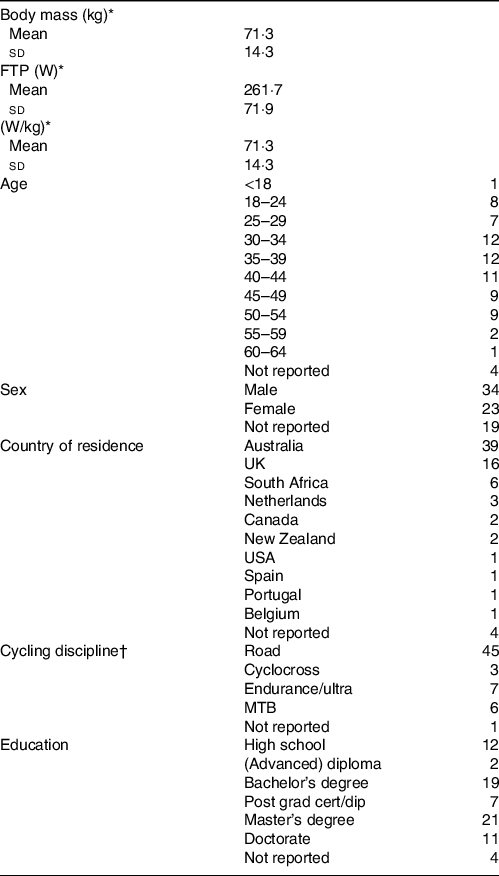
* Self-reported data.
† Participants could identify >1 category.
Training sessions
Forty sessions were reported as ‘key’ and twenty-one as races. Of these, fifteen were identified as both ‘key’ and race, with thirty-one neither of these. Nutrition data are reported for all sessions, and subgroup analyses reported with sessions removed meeting the following criteria for not being a ‘key session’. Relative session intensity was reported by fifty-seven participants and were (% FTP): >100 % = 6, 90–100 % = 11, 80–90 % = 20, 70–80 % = 8, 60–70 % = 8, 50–60 % = 3 and 40–50 % = 1. Qualitative self-reported intensity was given by seventy-four participants and included: ‘very high’ = 12, ‘high’ = 25 and ‘moderate’ = 37. Session duration was predominantly between 45 and 120 min (45–60 min = 32 and 60–120 min = 27), with eight sessions reported as being >120 min, and seven sessions <45 min. Two were not reported. The time of day sessions were completed was 0000–0600 = 5, 0600–1200 = 30, 1200–1800 = 22, 1800–2359 = 19.
Pre-ride nutrition
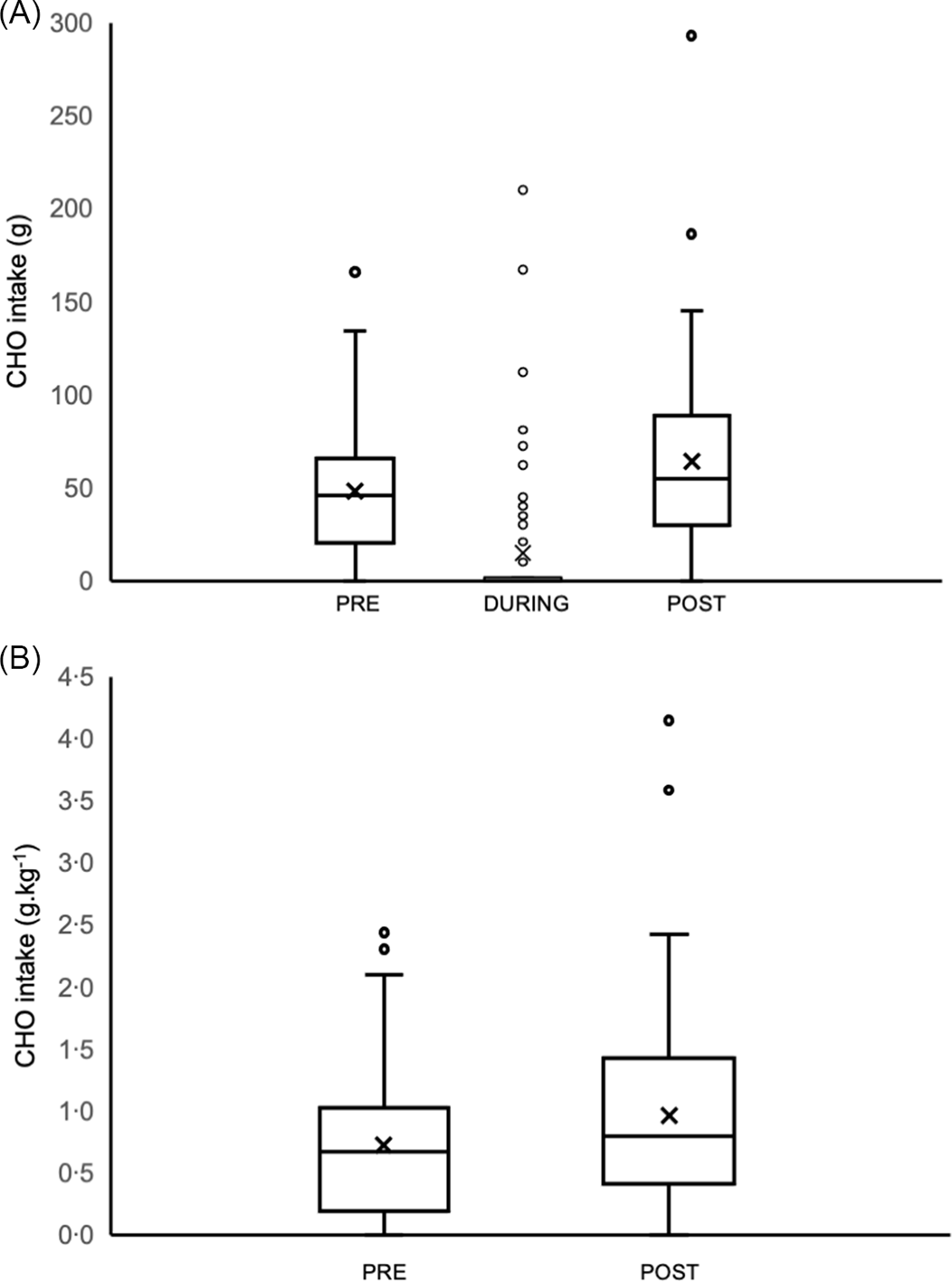
To the question ‘did you eat or drink anything in the 4 h before this ride or race (a meal and or a snack or something to drink)?’, 89 % of participants responded that they consumed something prior to their session, of which 9 % did not consume any CHO. For sessions of all duration, 73 % of all participants consumed <1 g/kg of CHO in the 4 h pre-ride (Table 2), with 20 % of these consuming zero CHO. Data for each session duration are presented in Table 2, with the highest proportion of participants meeting pre-exercise CHO intake recommendations for sessions lasting 60–120 min and sessions >120 min. Overall, 26 % of participants consumed 1–4 g/kg of CHO, which was higher among ‘trained’ cyclists (39 %) and for ‘key sessions’ (35 % of all ‘key sessions’). Figure 2 shows the distribution of intakes for all sessions; however, mean intake did not differ between all sessions, ‘key sessions’ and ‘trained cyclists’ (0·7 (sd 0·6) v. 0·8 (sd 0·6) v. 0·9 (sd 0·8) g/kg, P = 0·26). However, average CHO intake for participants who consumed some pre-exercise CHO was slightly higher in ‘trained’ cyclists at 1·2 (sd 0·7) g/kg (ES = 0·33, P = 0·06). Average CHO intakes for each session duration are in Table 2, being highest for sessions lasting >120 min. Total pre-ride CHO intake did not differ between sessions identified as races or non-races for total CHO (55·9 (sd 40·5) v. 45·3 (SD 37·4) g; ES = 0·27, P = 0·31) or relative CHO intake (0·68 (sd 0·61) v. 0·81 (sd 0·62) g/kg, ES = 0·29, P = 0·42).
Carbohydrate consumption pre-ride (Mean values and standard deviations)
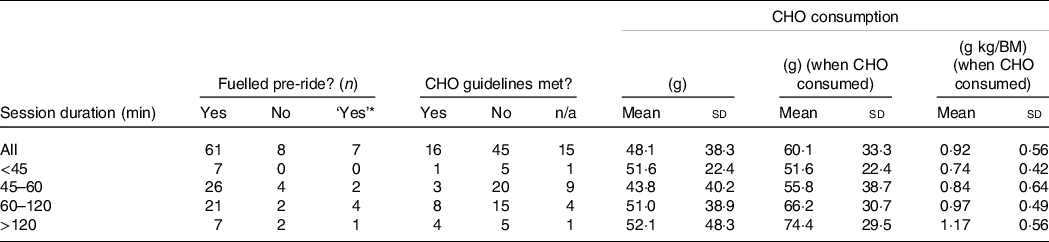
Data are total number of participants (columns 2–4) and mean values and standard deviations consumption (columns 5–7).
n/a indicates where insufficient dietary information reported to quantify CHO intake.
* Indicates participants answering YES to question ‘Did you eat or drink anything in the 4 h before this ride or race (a meal and or a snack or something to drink)?’ but who consumed zero carbohydrate.
Total CHO intake pre, during and post-ride and relative CHO intake. Absolute (panel A) and relative (per kg body mass) CHO intake (panel B). Boxes represent median with first and third quartile range, and whiskers maximum and minimum values, excluding outliers (open circles; 1·5 × IQ range). X represents mean CHO intake.
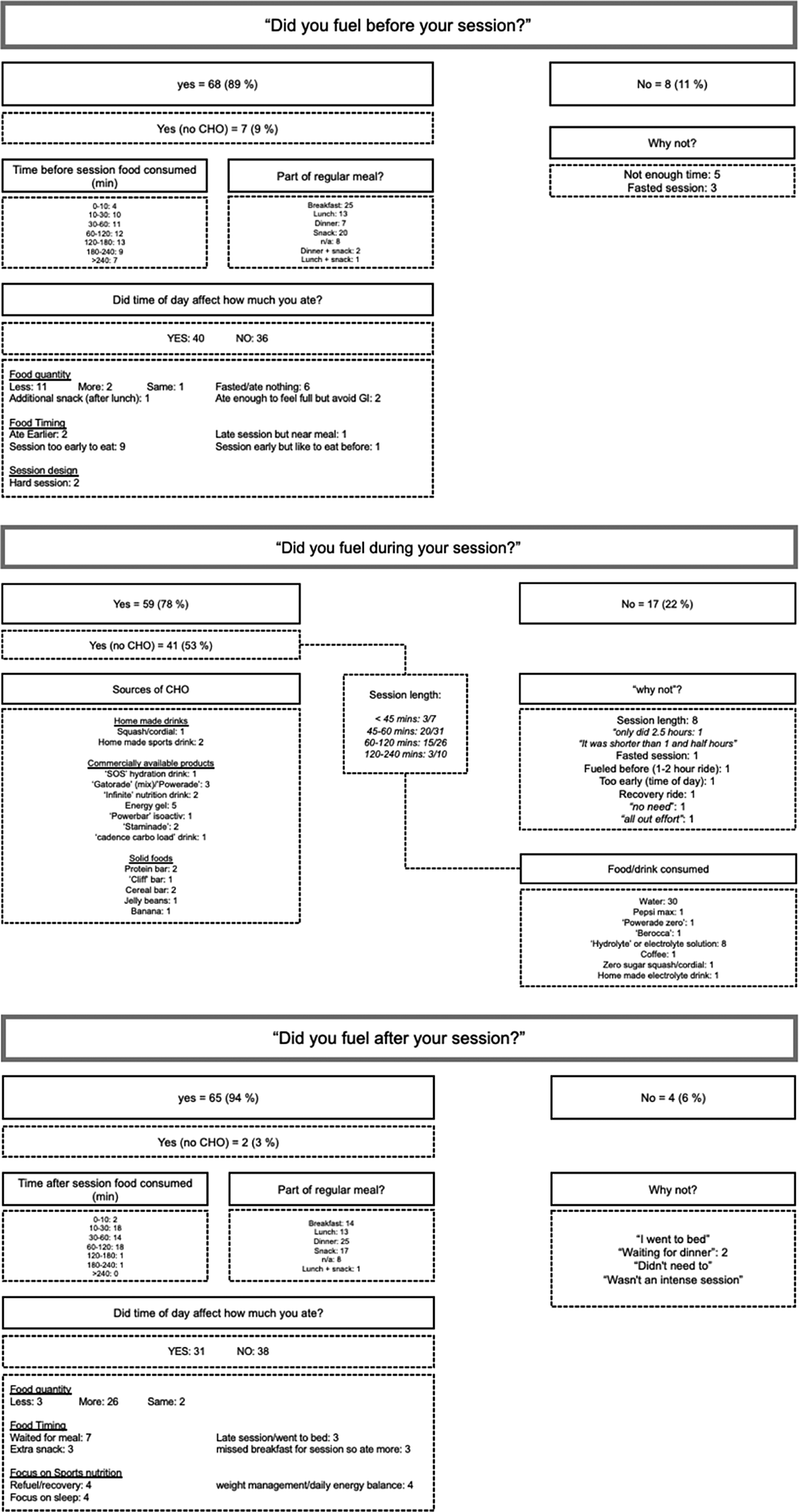
Data relating to timing and type of food intake pre-ride are presented in Fig. 3. Eighty-nine percentage of participants reported eating pre-ride food as either part of a regular meal, most commonly breakfast, or a snack. The time prior to exercise that participants consumed food or drink was between 0 (n 4) and 4 h (7, 9·2 %), with 28 % of participants consuming food or drink <1 h pre-ride, and 34 % between 1 and 3 h prior. The distribution of eating time prior to exercise was similar for all ride durations (P = 0·07). Fifty-three percent of participants stated that the time of day they ate affected the quantity of food/drink they consumed. This was qualified by asking ‘If yes, then how did it affect how much you ate?’. Accordingly, eleven participants reported eating less than usual, two reported eating more and one the same amount. Seven participants deliberately ate nothing due to the time of day, one person reported eating an ‘additional snack’ and two people ‘ate enough to feel full but avoid GI issues’. However, thirteen participants also reported food timing as a consideration; nine stating the session was too early to eat, and three adjusted food timing to account for an early training session. Two participants noted the session intensity being ‘hard’ influenced their food intake. Considering types of food and drink consumed pre-ride, 70 % of participants specifically listed fluid intake, 75 % consumed some CHO, 45 % used caffeine containing foods/drinks, 5 % took supplements (5 %), 11 % ate high-fat foods, 5 % used sports-specific foods/products and 2·5 % chose gluten-free foods.
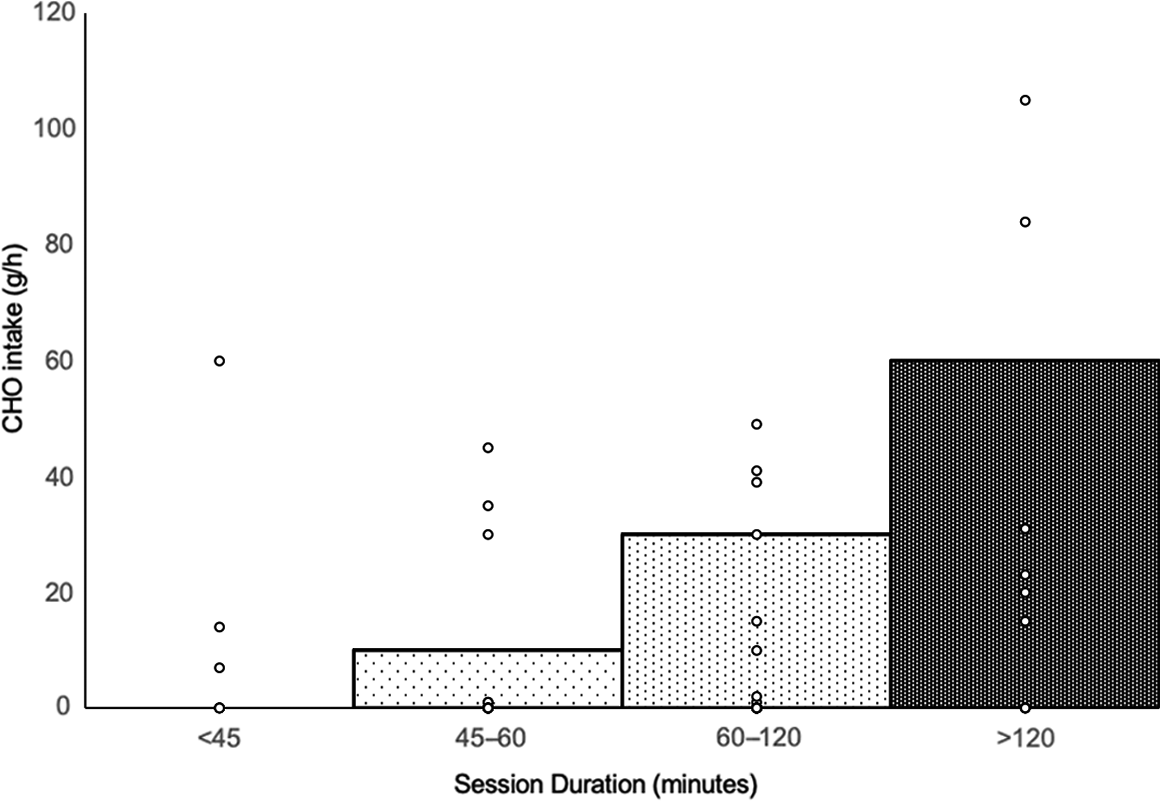
CHO intake during sessions of all durations. Circles represent individual CHO intakes; bars represent recommended CHO targets for session duration.
During-ride nutrition
A total of 78 % of participants reported consuming some food or drink during their ride. However, of these, 54 % did not consume any food/drink with energy content, recording water, zero-energy electrolyte drinks or coffee/caffeine supplements as ‘fuel’. Together with participants who reported not fuelling during their ride, 74 % did not consume any CHO during exercise. The number of participants who fuelled during ‘key’ sessions did not differ for all sessions types; 78 % of participants reported food/drink intake but 50 % did not consume any CHO. Mean CHO intake was 9·4 (sd 21·3) g/h for all sessions and was not different between non-races and races (6·5 (sd 16·5) g/h v. 13·6 (sd 23·2) g/h, ES = 0·35, P = 0·23) or to ‘key sessions’ (10·2 (sd 20·9) g/h, P = 0·84) or ‘trained cyclists’ (9·5 (sd 20·9) g/h, P = 1·00). Where participants did consume CHO during ride, the average intake was 39·3 (sd 27·5) g/h and not significantly different for ‘key sessions’ (36·9 (sd 26·3) g/h, ES = 0·08, P = 0·89) or ‘trained cyclists’ (43·6 (sd 27·7) g/h, ES = 0·15, P = 0·76). Intakes were identical between races and non-races (P = 0·95). Data for each duration are presented in Table 3 and with no differences for session time. Sources of during-ride food and drink are shown in Fig. 4, largely being comprised of commercially available drinks, gels and solid foods. Responses to the question ‘If no, please state why you did not consume or drink anything during your recent ride?’ are also presented in Fig. 4.
Carbohydrate consumption during-ride (Mean values and standard deviations)
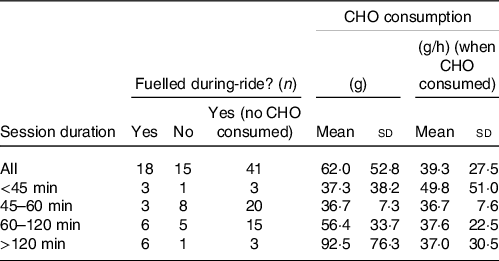
Data are total number of participants (columns 2–4) and mean values and standard deviations consumption (columns 5–7).
Response breakdown to questions ‘did you fuel’ pre, during and post-session. Qualitative responses are represented as total numbers of a response provided and grouped within themes. Qualitative responses are also presented as quotes from participants where these highlight specific individual considerations.
Post-ride nutrition
For all sessions, 49 % of participants consumed <1 g/kg of CHO post-ride (Table 4), with 13 % of these consuming no food/drink and 7 % consuming food/drink containing no CHO. In total, 70 % of participants consumed <1·0 g/kg, 13 % consumed 1–1·2 g/kg, 11 % consumed 1·2–2·0 g/kg and 6 % consumed >2 g/kg (Fig. 2). For long sessions (60–240 min), 12 % consumed 1–1·2 g/kg post-ride, 25 % consumed between 1·2 and 2·0 g/kg and 4 % consumed 2·0–4·0 g/kg. For sessions <1 h, 66 % of participants consumed <1·0 g/kg, 19 % participants consumed 1–1·2 g/kg, 6 % consumed 1·2–2·0 g/kg and 9 % consumed >2·0 g/kg. For ‘key sessions’, 50 % of participants consumed <1 g/kg, including 23 % of participants who ate no CHO. Of the ‘trained cyclists’, none reported eating zero CHO, but the 58 % consumed <1·0 g/kg and 8 % consumed 1·2–2·0 g/kg.
Carbohydrate consumption post-ride (Mean values and standard deviations)
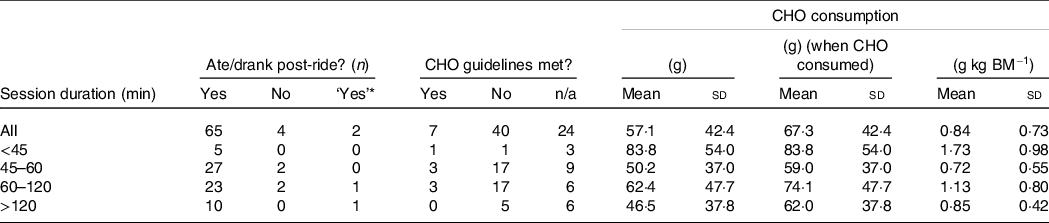
Data are total number of participants (columns 2–4) and mean values and standard deviations consumption (columns 5–7).
n/a indicates where insufficient dietary information reported to quantify CHO intake.
* Indicates participants answering YES to question ‘Did you eat a meal or snack in the hours after this ride or race?’ but who consumed zero carbohydrate.
Mean CHO consumption post-ride was 55·9 (sd 42·8) g across all sessions. Mean CHO intakes for each session duration are in Table 4 and were highest for sessions lasting <45 min, but similar to pre-ride, the smaller sample is noted. Total post-ride CHO intake did not differ between sessions identified as races or non-races for total (76·5 (sd 64·3) v. 55·9 (sd 42·8) g; ES = 0·29, P = 0·22) or relative CHO (0·9 (sd 0·7) v. 1·1 (sd 1·0) g/kg, ES = 0·18, P = 0·55, Table 4). Mean post-ride intake in ‘trained cyclists’ was not different compared with all participants (1·0 (sd 0·8) g/kg, ES = 0·20, P = 0·45).
Seventy-five percent of participants reported post-exercise food intake was part of a meal; dinner (36 %), breakfast (20 %) and 25 % reported post-ride intake as a snack (Fig. 3). Post-ride intake occurred <10 min for two participants; however, the majority (32, 46 %) consumed their post-ride intake within the recommended 1 h, with 17 (25 %) eating 1–2 h post-exercise. Ten participants consumed some food or drink in multiple sittings in the 4 h post-ride. The mean intake time in minutes post-ride for each ride duration was: <45 min; 78 (sd 70), 45–60 min; 31 (sd 15), 60–120 min; 52 (sd 32), 120–240 min; 32 (sd 30).
The number of participants who stated the time of day they ate affected the quantity of food/drink they consumed was similar (45 % ‘yes’/55 % ‘no’). As for pre-ride, this was qualitatively assessed. Responses from the four participants who did not eat anything in the 4 h post-ride included ‘I went to bed’, ‘waited for dinner/was an intense session’ and ‘didn’t need to’. Three participants reported eating less than usual, one stating ‘ate enough to fuel but not puke’, a participant who consumed their post-ride intake within 40 min and one who ‘didn’t want to overeat before going to bed’. Two participants specifically noted eating the same, based on the usual meal at that time of day, but six participants reported eating more than usual due to the session. Three of these noted ‘hunger’ driving this decision. Nine responses noted food timing was affected by the ride, the time to bedtime was noted on two occasions and the timing of the session in relation to usual meal patterns was noted by five participants. Eight participants also responded with statements to the effect of ‘watching food intake’. For example, ‘I ate because I was hungry and to refuel after the session’, ‘having milk-based snack to aid sleep’, ‘I felt like I ate a fair bit before ride so didn’t feel like I needed a huge amount after ride’, ‘I am not hungry after training and it’s difficult to eat because I am working’ and ‘ate a lot of carbs and some protein immediately after for recovery’ highlight sports nutrition considerations by participants. Of food/drink types consumed post-ride, 64 % specifically listed fluid intake, 80 % consumed some CHO, 23 % used caffeine, 65 % consumed some protein, 7 % took supplements and 7 % drank alcohol.
Discussion
This is the first study to investigate the nutrition practice of cyclists undertaking indoor, stationary training or competition. The primary outcome of this cross-sectional analysis of athletes’ food intake is that cyclists do not implement CHO recommendations for endurance performance despite the ideal environment of riding indoors. Data for pre, during and post-ride indicate significantly sub-optimal CHO intake for ‘key’ training sessions or races at all three important time points for exercise nutrition, meaning cyclists are not adequately fuelling sessions leading to likely under performance(Reference King, O’Hara and Morrison10,Reference Mata, Valenzuela and Gimenez11) . A significant proportion (75 %) of cyclists also consumed no CHO during sessions where CHO fuelling is known to be beneficial, which was not hypothesised given the advantageous scenario of practicing optimal race day nutrition compared with outdoor cycling.
Cyclists undertaking ‘key’ training sessions should consume adequate CHO around the session, to provide optimal fuel for exercise power output and to support recovery and glycogen resynthesis(Reference Burke, van Loon and Hawley12). Here cyclists did not consume sufficient CHO as measured by either the number meeting recommendations or mean intake. Critically, we observed that a high proportion of cyclists do not consume any CHO during indoor sessions, and this is not differentiated during ‘key’ sessions or races. The term fuelling is currently used in sports nutrition to refer to a food or fluid option that contributes energy to intake. Interestingly, there were a number of individuals (38) in this study who answered ‘yes’ to fuelling during their ride but subsequently only reported non-energy or very low-energy beverage consumption. The wording of the question could perhaps have been improved with a definition of fuelling, but the number of similar responses suggests this term is not well understood or appropriate when used in isolation. Due to the combination of high intensity and duration often present in ‘key’ sessions, CHO intake supports sustained power output where sessions are longer than ~45 min(Reference Jeukendrup13). Where cyclists did consume CHO during exercise, mean intakes were ~35–40 g/h which, although conferring some metabolic and performance advantage over zero CHO consumption(Reference Newell, Wallis and Hunter14,Reference Smith, Zachwieja and Peronnet15) , also suggests reasons exist preventing higher consumption. CHO intakes of 80–90 g/h may be beneficial for longer sessions with combined glucose:fructose composition(Reference King, O’Hara and Morrison10,Reference King, O’Hara and Arjomandkhah16–Reference Smith, Pascoe and Passe18) .
Consuming CHO during training can enhance gut tolerance and intestinal absorption capacity(Reference Costa, Snipe and Kitic19). Although mechanisms to this effect are not fully determined(Reference Jeukendrup20), the unique indoor environment allows athletes to have sufficient CHO within reach to achieve higher intake without the demands of carrying it on the bike. Indoor training also allows athletes to practice on-bike feeding within the relative comfort of their own home or gym, whereby immediately terminating training due to gastrointestinal distress is possible. Therefore, we hypothesised that cyclists training indoors would consume CHO during exercise in sufficient quantity to meet recommendations, which was not observed. Unfortunately, too few participants reported qualitative data on their decision making for during exercise CHO intake and firm explanations for this under fuelling are therefore not possible. However, the responses received noted the lack of need to fuel due to perceived session demands. This is despite only eight of the seventy-six total responses in the study dealing with sessions <45 min, where CHO intake is not required(Reference Thomas, Erdman and Burke21), or mouth-rinse strategies can provide ergogenic benefits during race conditions(Reference Brietzke, Franco-Alvarenga and Coelho-Junior22), especially if fasted(Reference Li, Wu and Cao23). On-bike nutrition can be met through the use of homemade solutions, or commercially available products, including hydrogels, which have anecdotal support to mitigate GI issues(Reference King, Rowe and Burke24). In light of this finding, it is suggested that cyclists consider the role of indoor training to practice and optimise individual CHO intake while heeding nutrition recommendations, with the understanding that self-made CHO supplementation is a suitable strategy if required(Reference Thomas, Erdman and Burke21,Reference Rowlands, Houltham and Musa-Veloso25) . Where cyclists consumed some CHO during exercise, consumption in the present study is in line with professional cyclists’ intake during a stage of the Vuelta A Espana(Reference Garcia-Roves, Terrados and Fernandez26), that is, notably lower than current guidelines. However, data from the 1989 Tour de France indicate professional cyclists can and do meet 90 g/h targets if required to(Reference Saris, van Erp-Baart and Brouns27). However, comparisons to elite bike racing are made with caution due to anticipated differences in habitual practice and CHO consumption knowledge to the current cohort, as well as the fact the current study assessed CHO intake in a novel environment. As such future research is required to fully elucidate if CHO intake differs between indoor racing and training and outdoor cycling.
Pre and post-ride CHO intake was also substantially below suggested ranges, further compromising performance during races or ‘key’ sessions. While shorter sessions may not benefit from pre-exercise CHO, sessions lasting >/=60 min benefit from replenishing liver glycogen stores following overnight fasts or periods between meals(Reference Burke, Jeukendrup and Jones28,Reference Gonzalez, Fuchs and Betts29) . Therefore, the target of consuming 1–4 g/kg in the 1–4 h prior to exercise is broad, and we speculate this may cause some confusion as to specific, individualised approaches needed for different athletes and sessions. However, this was not highlighted by participants, but due to constraints of questionnaire length this could be further investigated in future. Post-ride CHO intake was similarly under consumed, meaning participants were likely compromising recovery energy intake as CHO plays a significant role in exercise adaptation(Reference Hammond, Sale and Fraser30,Reference Gonzalez, Fuchs and Betts31) and immune system health(Reference Peake, Neubauer and Walsh32). Mean CHO intake post-ride was 0·84 g/kg, but was higher following sessions lasting 60–120 min (1·13 g/kg) indicating the possibility that participants were either aware of the need to replenish CHO stores, or appetite was sufficiently stimulated, leading to increased CHO consumption. We were unable to directly test these effects. Despite this, CHO intake was substantially below requirements and is in agreement with season long data from Viner et al. (Reference Viner, Harris and Berning33). The data for sessions lasting >120 min in the current study are reported with the caveat that several of the food records were insufficiently complete to determine accurate CHO intake. Similarly, memory-based food recall methods have limitations to their accuracy of actual food intake(Reference Shim, Oh and Kim34), although the multiple-pass method mitigates some reporting error(Reference Steinfeldt, Anand and Murayi8). Despite a higher prevalence of insufficient food intake data in the post-ride period, the majority of participants under consumed CHO, reflecting a possible limitation in the length of the questionnaire. Furthermore, due to the much narrower CHO intake target for immediate post-exercise intake (1–1·2 g/kg), mean intakes post-ride are less likely to be ‘on target’ despite the fact that small deviations either way, particularly with higher intakes in this cohort, are unlikely to be harmful. Considering the context of a single session in an athlete’s training programme is essential, but despite this, few athletes reported the need to recover or prepare for their next session when reflecting on their post-session food intake.
An important facet of sports nutrition is understanding athlete behaviour, beliefs and diet education(Reference Bentley, Mitchell and Backhouse35). We attempted to qualify cyclists’ practice by including open questions to determine if, and how, any factors influenced the time of day and type of food that was consumed pre and post-ride. Despite choosing to compare to the gold standard of nutrition recommendations for elite cyclists, all sports nutrition advice should, and is typically, individualised to the athlete and further periodised to their training goals. We acknowledge limitations in the study design not allowing thorough and in-depth interrogation of all elements of food intake around the sessions or the days prior and following, but the constraints of time for the quantitative element of the study questionnaire did not allow such investigation. However, cyclists reported the time of day and/or session timing significantly influenced their pre-ride food intake (timing and quantity), especially where sessions were in the early morning. Given that participants significantly under consumed CHO prior to their session, consuming on average only 0·67 g kg/BM, it would be interesting to know with those who opted for a snack whether this was additional to normal intake or a regular snack incorporated in daily meal pattern irrespective of training. In this way, snacking or consuming extra meals would present an immediate solution to increasing CHO intake, especially given only 30 % of elite endurance athletes consume CHO-based foods, gels or drinks prior to ‘key sessions’(Reference Heikura, Stellingwerff and Mero4). Future research may wish to focus on athletes’ awareness and practitioner measurement of (low) energy availability which is widely recognised to impair numerous physiological functions critical to exercise performance and adaptation(Reference Mountjoy, Sundgot-Borgen and Burke36). However, assessment of low energy availability requires access to the athlete and a laboratory, which was beyond the remit of this study. Future research would ideally explore the reasons behind this observed sub-optimal fuelling and closely examine the prospect of poor within-day energy availability.
This study has limitations, including the cross-sectional study design. However, the opportunity to capture nutritional practice of cyclists engaging in this type of training was unique during 2020. Due to this being the first study to investigate sports nutrition practice in this environment, the design provides novel and applicable data to the field in a timely manner. A prospective study in a similar cohort would not only allow further depth regarding precise food intake on a training day but also capture the nutritional context of food intake and training. It would also be interesting to investigate and qualify the behavioural and habitual practice of cyclists racing and training indoors, but this was beyond the remit of the current study. Due to the intensive nature of capturing accurate food intake, our goal was to maximise recruitment and engagement to provide a preliminary report without overly compromising session-related food intake data, where the multiple-pass method used increases food recall. The mixed-methods design provides a useful perspective of some of the decision making around CHO intake but due to concerns of questionnaire length, the study was not able to fully elucidate participant behaviour or context in relation to food intake. In terms of the qualitative component of the study, this could be enhanced and further investigated in future work, and some concerns exist as to the inferential power of the current design for the qualitative component(Reference Price, Murnan and Dimmig37). Comparisons to previous studies are also difficult as no investigations of athletes training in this environment have been conducted. However, understanding practice of athletes in their usual training environments is crucial and can be overlooked in sports nutrition, as food intake and the relation to energy expenditure are complex bio-psycho-social structures(Reference Bentley, Mitchell and Backhouse35,Reference Garthe, Raastad and Sundgot-Borgen38,Reference Nascimento, Silva and Ribeiro39) . Limitations also exist around the self-report nature of key physiological variables such as FTP and body mass, as well as food recall. ‘Digital doping’ is prevalent in online racing, whereby athletes under report body mass or modify equipment to provide higher power output values. We anticipate such effects were small, if not entirely absent due to research being anonymous and with little or no extrinsic, competitive element. However, this cannot be entirely ruled out.
Conclusion
In conclusion, cyclists conducting training sessions using indoor means do not meet sports nutrition guidelines for CHO intake pre, during or post-ride. Therefore, cyclists using indoor training to achieve training targets should be mindful of appropriately fuelling these sessions. Coaches and practitioners should also be aware that athletes may not achieve suggested CHO intakes around ‘key’ training sessions requiring high CHO availability despite good knowledge of session demands. Athletes should focus on consuming sufficient CHO before and during sessions to increase glycogen storage and exercising CHO oxidation where maximum performance outcomes involving prolonged high intensity or high quality outputs are required.
Acknowledgements
The authors thank each participant who took the time to complete the survey during a difficult year. The authors also thank Dr José Areta and Dr Gemma Sampson for their thoughts and perspective during the conception of the methodology.
There are no funders to report for this submission.
A. K. and R. H. were responsible for study conception, data collection, analysis and preparing and reviewing the manuscript.
Author A. K. declares to have no competing interests. R. H. works with VIS cycling, but no contribution was made by this body to the study.
Availability of data and materials
The datasets used and/or analysed during the current study are available from the corresponding author on reasonable request.



