


Recently, the issue of household food security has received increased attention worldwide particularly due to worsening economic conditions. Food security exists when all people, at all times, have physical, social and economic access to sufficient, safe and nutritious food to meet their dietary needs and food preferences for an active and healthy life( Reference Coates, Swindale and Blinsky 1 ). At the household level, food security is understood as access by all members at all times to enough food for an active, healthy life. The definition of household-level food security has also been extended to include related concepts of accessibility, sufficiency, security and sustainability( Reference Gittlesohn, Mookherji and Pelto 2 , Reference Maxwell and Frankenberger 3 ). Food insecurity, on the other hand, is defined as a temporary, complete lack of and/or decline in access to productive resources, deterioration of the household assets position over time, declining resource productivity as a result of environmental degradation and lack of alternative technologies( Reference Maxwell and Frankenberger 3 ). Food insecurity is simply the lack of food security that, at the extreme, is experienced as hunger( Reference Hendriks 4 , Reference Maxwell 5 ). Thus, famine and hunger are both rooted in food insecurity. While food insecurity does not capture all dimensions of poverty, it may indicate poverty and is an important indicator of well-being( 6 ).
There are multiple factors that inhibit the availability component of food security. Risk factors and predictors for food insecurity (measured by the amount of grain per capita and daily energy intake) identified in studies include low-input farming practices, inaccessibility to productive resources, diminishing land holdings( Reference Ververs 7 ), land tenure insecurity, limited education, poor storage technology, inaccessibility to transport infrastructure, heavy work load on women, poor health status, lower productivity of livestock, high level of unemployment, misuse and poorly targeted food aid, socio-cultural barriers, and lack of information for appropriate intervention( Reference Kifle and Gebrehiwot 8 ). Other at-risk subpopulation groups – composed of those who are unemployed, underemployed, physically and mentally disabled, and older – are on the margins for inadequate nutrition( Reference Kregg-Byers and Schlenk 9 ). In addition to affecting dietary intake, food insecurity and hunger ultimately impact nutritional status and physical and mental well-being( Reference Wolfe and Frongillo 10 – Reference Weaver and Hadley 12 ).
In Ethiopia, chronic and transitory (seasonal) food insecurity are severe. According to FAO( 13 ) much of Ethiopia's rural population lives in a state of chronic food insecurity. Recurrent drought, degradation of natural resources and rapid population growth are among the main causes of declining per capita food production. The country has been a food deficit country for several decades, with cereal food aid averaging 14 % of total cereal production( 14 ). As computed from reports of the Disaster Prevention and Preparedness Commission, domestic food production was able to cover only 68·8 % and 76·3 % of the total national food requirement in 2002 and 2005, respectively( Reference Workneh 15 ). The study area, Sidama Zone, is among the most food-insecure areas of the region( 16 ). Evidence suggests that food insecurity has prevailed and became more pronounced since 2002( 14 ). A study conducted in the Boricha district (lowland area located 18 km south of the regional capital) found that 58·8 % of the smallholder farmers were food insecure( Reference Mengistu, Regassa and Yusufe 17 ). Some areas of the zone are increasingly facing high population pressure resulting in fragmentation of farmlands, reduction of fallow periods, shifts in cropping patterns, reduced time spent in farming and land degradation( Reference Hailu and Regassa 18 ).
Despite the fact that rural households in these areas are affected by recurrent drought and food shortage, little is known about the actual levels of food insecurity or hunger, or their associated risk factors. The main objective of the present study was therefore to estimate the magnitude of household food insecurity and hunger in this most populous zone of southern Ethiopia. The study posed two main questions:
-
1. To what extent did smallholder farmers in the study area face food shortages during the study period (December 2010 to January 2011)?
-
2. What are the major household-level predictors of food insecurity and hunger?
Methods
Study setting
The study was conducted in Sidama, one of the most populous zones in the Southern Nations, Nationalities and Peoples Region (SNNPR), Ethiopia. Sidama Zone is bordered mostly on the south, north and east by the Oromia Region, and on the west by the Bilate River. The administrative centre for Sidama is Hawassa town. According to the recent census( 19 ), the total population of the zone was 2 954 136. With an area of 6538 km2, Sidama has a population density of 452/km2 with an average household size of 4·99 persons. Of the population, 5·51 % are urban inhabitants and 0·18 % are pastoralists( 19 ). A substantial area of the Sidama land produces coffee, which is the major cash crop in the region. Enset (Enset ventricosum) is the single most important root crop grown in the study area, and the bulk of the population depends heavily on it for survival.
Sampling
The 1094 households surveyed were randomly selected from two agro-climatic zones, highland and lowland areas of the Sidama zone of southern Ethiopia, using two-stage sampling methods. Because the two agro-climatic districts (the lowlands and highlands) were decided in advance, the first stage of the sampling started by selecting five kebeles (small administrative units) from the list of thirty-eight and thirty-six kebeles in the lowland and highland district, respectively, using simple random sampling. The two districts were of similar size and samples were not weighted. At the second stage, households with a child less than 24 months of age were randomly selected from the available list to give a total of 1094 households.
Data collection
The data for the study were generated through a structured interview. The data forming the main response variables, household food insecurity and hunger, were collected using the tools developed by the Food and Nutrition Technical Assistance (FANTA) Project. The nine-question Household Food Insecurity Access Scale (HFIAS) has been used in several countries and appears to distinguish food-secure households from food-insecure households across different cultural contexts( Reference Coates, Swindale and Blinsky 1 ). The affirmative responses for the nine HFIAS questions are followed by frequency questions from which the four levels of food insecurity are computed based on the formula provided with HFIAS version 3( Reference Coates, Swindale and Blinsky 1 ). The HFIAS very recently has been reduced to three questions to form the Household Hunger Scale (HHS) after internal and external validations in selected populations in Africa and Asia. The HHS is used to assign households along a continuum of severity in food access from no hunger to severe household hunger( Reference Deitchler, Ballard and Swindale 20 ). In the current study, both the HFIAS and the HHS were used to estimate overall household food insecurity and hunger, respectively. Because previous studies in Ethiopia used experience-based scales to measure household food security, the psychometric properties of the HFIAS and HHS were examined indirectly using responses on coping mechanisms. The study collected information on sixteen coping mechanisms, such as petty trading, seasonal migration and wage labour, used by households during chronic food shortage. Pearson's correlations were computed between the sixteen coping strategies and the HHS/HFIAS, and between the HHS and the HFIAS.
Approval of the data collection instruments and permission for data collection were given by Hawassa University Research Directorate and the regional and zonal administrations. Prior to the data collection, twenty data collectors with minimum qualification of diploma (Grade 10 + 3) were recruited and given one day's training on the theoretical and practical aspects of the field work. Then, the checklists/schedules underwent intensive review and pre-testing on a small sample of individuals from all categories of respondents. Data collection took place from 9 December 2010 to 7 January 2011. During the field work, informed consents of the husband and wife were given prior to data collection, and husbands were the principal respondents interviewed for the food security and household socio-economic information. Only six respondents (out of 1100) refused to participate in the interview.
Data processing and analysis
Two important issues were addressed in the course of data analysis: (i) estimation of the levels or depth of food insecurity/household hunger; and (ii) examination of selected household-level variables as predictors of household food insecurity status. While the first issue was addressed by using the prescribed simple synchrony of the responses given to HFIAS and HHS generic questions, the second issue was examined by applying a multivariate analysis in the form of linear ordinary least-squares regression. The twelve independent variables used in the study were selected based on literature review, model building procedures and contexts of the study area.
The collinearity effect was tested using a variance inflation factor (VIF) for all independent variables, given by:  , where Xi
denotes all independent variables (X
1, X
2,…) and Ri
refers to the partial correlation for each independent variable with other independent variables in the model (R
1, R
2,…). The multicollinearity effect computed for each independent variable ranged between 1·031 and 1·122, which is less than the cut-off value (≥4).
, where Xi
denotes all independent variables (X
1, X
2,…) and Ri
refers to the partial correlation for each independent variable with other independent variables in the model (R
1, R
2,…). The multicollinearity effect computed for each independent variable ranged between 1·031 and 1·122, which is less than the cut-off value (≥4).
The two dependent variables in the study were household food insecurity and hunger. Food insecurity was coded from 1 to 27 with increasing number representing greater food insecurity. For household hunger, the coding ranged from no household hunger (coded as 0) to severe household hunger (coded as 6). Both dependent variables were treated in the analyses as continuous endpoints. This approach assumes that a one unit change in the outcome associated with a given change in an independent variable is the same at any point in the outcome scale. Similarly, all ordinal categorical independent variables were introduced into the model as continuous variables assuming that the estimates of the differences in the outcomes by a one unit change in the given exposure have the same interpretation at any point in the exposure scale. The IBM SPSS Statistics software package version 19 (IBM Corp., Armonk, NY, USA) was used for all analyses.
Results
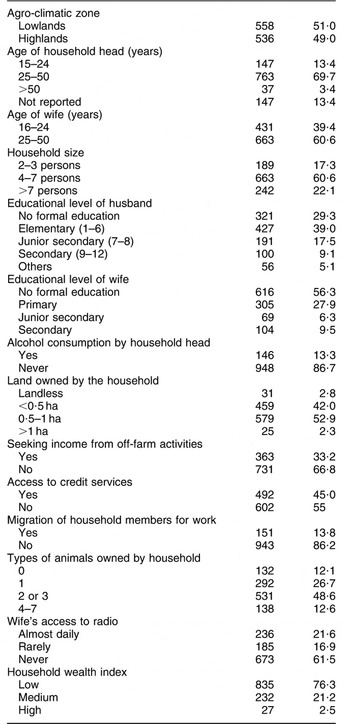
The proportion of households representing the lowland and highland areas was 51 % and 49 %, respectively (Table 1). Protestant Christians accounted for the religion of most respondents (73·5 %) followed by Catholic (10·8 %), Muslim (9·4 %) and other groups (3·8 %). The majority of the respondents (60·6 %) reported household size of four to seven but 22·1 % of them had more than seven members. The average household size was 5·87. The analysis showed that 15·3 % of the husbands were engaged in polygamous marriages, which is slightly above the national average (11 %)( 21 ). The age distribution of the household heads showed that 13·4 % were in the age group 15–24 years, 69·7 % were in the age group 25–50 years and 3·4 % were aged >50 years. For women 39·4 % and 60·6 % were aged 16–24 years and 25–50 years, respectively. Most household heads had completed elementary education (39·0 %), followed by respondents with no formal education (29·3 %), junior secondary (17·5 %) and secondary (9·1 %), while the remaining persons accounted for only a small proportion of the respondents. For women, 56·3 % had no formal education, 27·9 % had elementary education, and 6·3 % and 9·5 % completed junior secondary and secondary education, respectively. More than 60 % of women never listened to the radio while 21·6 % listened nearly every day.
Percentage distribution of respondents by selected background characteristics, Sidama Zone, southern Ethiopia, 2011 (n 1094)
| Sociodemographic characteristic | n | % |
| Agro-climatic zone | ||
| Lowlands | 558 | 51·0 |
| Highlands | 536 | 49·0 |
| Age of household head (years) | ||
| 15–24 | 147 | 13·4 |
| 25–50 | 763 | 69·7 |
| >50 | 37 | 3·4 |
| Not reported | 147 | 13·4 |
| Age of wife (years) | ||
| 16–24 | 431 | 39·4 |
| 25–50 | 663 | 60·6 |
| Household size | ||
| 2–3 persons | 189 | 17·3 |
| 4–7 persons | 663 | 60·6 |
| >7 persons | 242 | 22·1 |
| Educational level of husband | ||
| No formal education | 321 | 29·3 |
| Elementary (1–6) | 427 | 39·0 |
| Junior secondary (7–8) | 191 | 17·5 |
| Secondary (9–12) | 100 | 9·1 |
| Others | 56 | 5·1 |
| Educational level of wife | ||
| No formal education | 616 | 56·3 |
| Primary | 305 | 27·9 |
| Junior secondary | 69 | 6·3 |
| Secondary | 104 | 9·5 |
| Alcohol consumption by household head | ||
| Yes | 146 | 13·3 |
| Never | 948 | 86·7 |
| Land owned by the household | ||
| Landless | 31 | 2·8 |
| <0·5 ha | 459 | 42·0 |
| 0·5–1 ha | 579 | 52·9 |
| >1 ha | 25 | 2·3 |
| Seeking income from off-farm activities | ||
| Yes | 363 | 33·2 |
| No | 731 | 66·8 |
| Access to credit services | ||
| Yes | 492 | 45·0 |
| No | 602 | 55 |
| Migration of household members for work | ||
| Yes | 151 | 13·8 |
| No | 943 | 86·2 |
| Types of animals owned by household | ||
| 0 | 132 | 12·1 |
| 1 | 292 | 26·7 |
| 2 or 3 | 531 | 48·6 |
| 4–7 | 138 | 12·6 |
| Wife's access to radio | ||
| Almost daily | 236 | 21·6 |
| Rarely | 185 | 16·9 |
| Never | 673 | 61·5 |
| Household wealth index | ||
| Low | 835 | 76·3 |
| Medium | 232 | 21·2 |
| High | 27 | 2·5 |
Some 13·3 % of the household heads reported consuming alcohol, while the remainder reported never consuming. Although 97·2 % of households reported owning land, land ownership by households in the study area was quite small and fragmented. About 95 % of the households owned less than a hectare of land. Income generated through off-farm activities was reported by 33·2 % of households. Based on the household wealth index of nine common assets, 76·3 % of the households were classified as having low wealth status (0–3 assets).
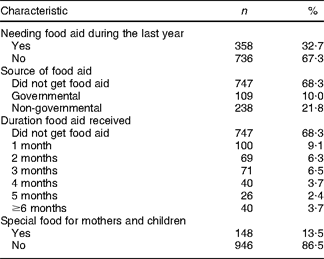
Table 2 describes the distribution of households by reported food aid. As one major survival strategy, a sizeable proportion (32·7 %) of households got food aid from either the government safety-net programme (10 %) or non-governmental organizations (21·8 %), especially in the most food-insecure months of February to August. Duration of food aid depended upon the severity and volume of the problem. Additionally, about 13·5 % of the household heads reported getting special food for mothers and children.
Percentage distribution of respondents by reported food aid received, Sidama Zone, southern Ethiopia, 2011 (n 1094)
| Characteristic | n | % |
| Needing food aid during the last year | ||
| Yes | 358 | 32·7 |
| No | 736 | 67·3 |
| Source of food aid | ||
| Did not get food aid | 747 | 68·3 |
| Governmental | 109 | 10·0 |
| Non-governmental | 238 | 21·8 |
| Duration food aid received | ||
| Did not get food aid | 747 | 68·3 |
| 1 month | 100 | 9·1 |
| 2 months | 69 | 6·3 |
| 3 months | 71 | 6·5 |
| 4 months | 40 | 3·7 |
| 5 months | 26 | 2·4 |
| ≥6 months | 40 | 3·7 |
| Special food for mothers and children | ||
| Yes | 148 | 13·5 |
| No | 946 | 86·5 |
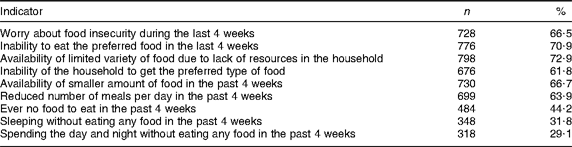
The nine food insecurity questions in the HFIAS were used to examine the distribution of the households in different categories of food access (quality and quantity). As can be seen in Table 3, the questions follow a progression that begins with anxiety about the food supply, followed by a decrease in the quality of food, a decrease in the quantity of food, and finally going to sleep hungry and going all day and night without eating any food (during the 4 weeks preceding the survey). A very high proportion of the households gave affirmative responses to worrying about food inaccessibility (66·5 %), inability to eat preferred food (70·9 %) and availability of a limited variety of food (72·9 %). The proportion of affirmative responses given for the last three items was smaller compared with the first six items. For example, during the reference period, 29·1 % reported going for a whole day and night without food; 31·8 % reported going to sleep without any food; and 44·2 % of the respondents gave affirmative responses to ‘ever no food to eat’.
Percentage distribution of affirmative responses (in December 2010/January 2011) to the HFIAS during the past 4 weeks, Sidama Zone, southern Ethiopia (n 1094)
| Indicator | n | % |
| Worry about food insecurity during the last 4 weeks | 728 | 66·5 |
| Inability to eat the preferred food in the last 4 weeks | 776 | 70·9 |
| Availability of limited variety of food due to lack of resources in the household | 798 | 72·9 |
| Inability of the household to get the preferred type of food | 676 | 61·8 |
| Availability of smaller amount of food in the past 4 weeks | 730 | 66·7 |
| Reduced number of meals per day in the past 4 weeks | 699 | 63·9 |
| Ever no food to eat in the past 4 weeks | 484 | 44·2 |
| Sleeping without eating any food in the past 4 weeks | 348 | 31·8 |
| Spending the day and night without eating any food in the past 4 weeks | 318 | 29·1 |
HFIAS, Household Food Insecurity Access Scale.
The nine items can further be summarized into three major domains: (i) feelings of uncertainty or anxiety about the household food supplies (represented by item 1); (ii) perceptions that household food is of insufficient quality and food type preference (represented by items 2–4); and (iii) insufficient food intake and its physical consequences (items 5–9). On the basis of these categories, the computed average for the second domain (food quality) was 68 % and for the third domain (food quantity) was 47 %.
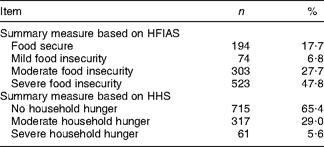
Table 4 illustrates the HHS, computed by analysing the last three questions in the HFIAS. In the HHS measure, the frequency responses for ‘sometimes’ and ‘rarely’ are combined while ‘often’ remains as it is used in HFIAS version 3. Then, by summing the categories of responses, three major household hunger categories are produced as seen in Table 4. The HHS is meant to measure more severe food shortage, be easier to administer and be more stable across cultures.
Percentage distribution of respondents by level of household food insecurity and hunger as measured by HFIAS and HHS, Sidama Zone, southern Ethiopia, 2011 (n 1094)
| Item | n | % |
| Summary measure based on HFIAS | ||
| Food secure | 194 | 17·7 |
| Mild food insecurity | 74 | 6·8 |
| Moderate food insecurity | 303 | 27·7 |
| Severe food insecurity | 523 | 47·8 |
| Summary measure based on HHS | ||
| No household hunger | 715 | 65·4 |
| Moderate household hunger | 317 | 29·0 |
| Severe household hunger | 61 | 5·6 |
HFIAS, Household Food Insecurity Access Scale; HHS, Household Hunger Scale.
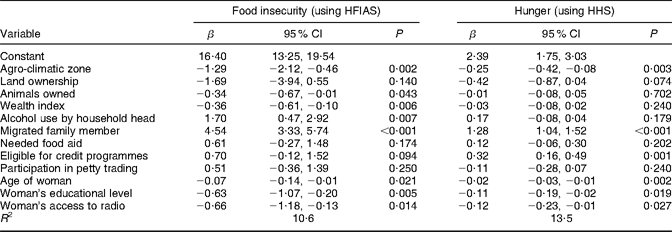
In Table 5, the results of best-fitting multiple regression models for twelve independent variables are presented. Five of the variables were significant predictors of both household food insecurity and hunger: migration of a household member, lowland agro-climatic zone, as well as younger age, less education and lower radio access for the woman. Additionally, being eligible for the safety-net credit programmes added to the prediction of hunger scores. Alcohol intake by the household head, fewer types of animals owned and a lower household wealth index also predicted household food insecurity.
Results of linear ordinary least-squares regression analysis for selected explanatory variables of household food insecurity (HFIAS) and hunger (HHS), Sidama Zone, southern Ethiopia, 2011 (n 1086)
| Food insecurity (using HFIAS) | Hunger (using HHS) | |||||
| Variable | β | 95 % CI | P | β | 95 % CI | P |
| Constant | 16·40 | 13·25, 19·54 | 2·39 | 1·75, 3·03 | ||
| Agro-climatic zone | −1·29 | −2·12, −0·46 | 0·002 | −0·25 | −0·42, −0·08 | 0·003 |
| Land ownership | −1·69 | −3·94, 0·55 | 0·140 | −0·42 | −0·87, 0·04 | 0·074 |
| Animals owned | −0·34 | −0·67, −0·01 | 0·043 | −0·01 | −0·08, 0·05 | 0·702 |
| Wealth index | −0·36 | −0·61, −0·10 | 0·006 | −0·03 | −0·08, 0·02 | 0·240 |
| Alcohol use by household head | 1·70 | 0·47, 2·92 | 0·007 | 0·17 | −0·08, 0·04 | 0·179 |
| Migrated family member | 4·54 | 3·33, 5·74 | <0·001 | 1·28 | 1·04, 1·52 | <0·001 |
| Needed food aid | 0·61 | −0·27, 1·48 | 0·174 | 0·12 | −0·06, 0·30 | 0·202 |
| Eligible for credit programmes | 0·70 | −0·12, 1·52 | 0·094 | 0·32 | 0·16, 0·49 | 0·001 |
| Participation in petty trading | 0·51 | −0·36, 1·39 | 0·250 | −0·11 | −0·28, 0·07 | 0·240 |
| Age of woman | −0.07 | −0·14, −0·01 | 0·021 | −0·02 | −0·03, −0·01 | 0·002 |
| Woman's educational level | −0·63 | −1·07, −0·20 | 0·005 | −0·11 | −0·19, −0·02 | 0·019 |
| Woman's access to radio | −0·66 | −1·18, −0·13 | 0·014 | −0·12 | −0·23, −0·01 | 0·027 |
| R 2 | 10·6 | 13·5 | ||||
HFIAS, Household Food Insecurity Access Scale; HHS, Household Hunger Scale.
Coding for independent variables: land ownership, alcohol use, migrated family member, needed food aid, eligible for credit programmes and participation in petty trading coded as yes = 1 and no = 0; education coded as no formal education = 0, elementary (1–6) = 1, junior secondary (7–8) = 2, higher than junior secondary = 3; household wealth index is coded as low = 1, medium = 2 and high = 3; woman's access to radio coded as never = 0, rarely = 1 and almost daily = 2; agro-climatic zone coded as lowland = 1 and highland = 2; woman's age (16–48 years) and types of animals owned (0–7) are continuous.
Coding for dependent variables: for household food insecurity, scores ranged from no food insecurity (coded as 0) to the most severe food insecurity (coded as 27); for household hunger, the coding ranged from no household hunger (coded as 0) to severe household hunger (coded as 6).
Migration of a household member to seek work was associated with an increased level of food insecurity and hunger by 4·54 and 1·28 units, respectively. Also, a change from lowland dry climatic zone to highland wet climatic zone resulted in a decline of 1·29 and 0·25 units in the level of food insecurity and hunger, respectively. Being a regular beneficiary of credit services targeted to the poor was associated with an increase of 0·32 units in the level of hunger. The woman being older was associated with a small but significant reduction in food insecurity and hunger (0·07 and 0·02 units per year, respectively). A higher category of education for the woman predicted decreases of 0·63 units in food insecurity and of 0·11 units in hunger score. Access to a radio with greater frequency was associated with a 0·66 unit decrease in food insecurity and a 0·12 unit reduction in hunger score. Each unit increase in the household wealth index was associated with a 0·36 unit decrease in food insecurity score but did not significantly impact the hunger scale. Change in the household head's alcohol consumption status from never to yes resulted in an increase of 1·70 units in household food insecurity. The food insecurity score decreased by 0·34 units per type of animal owned by the family (0 to 7 types) but the hunger scale was not significantly affected.
Discussion
The present study addressed two important issues related to household food insecurity and hunger: (i) measuring the extent to which households in the study area are vulnerable to food insecurity and hunger during the months of November and December; and (ii) examining some of the predictors of food insecurity and hunger at the household level in Sidama Zone, southern Ethiopia. Food security and hunger status were measured by the HFIAS and HHS, respectively, which have been developed for use across different cultures and population groups. Validation of food insecurity scales is potentially difficult because of a lack of previous studies. However, we compared results of the HFIAS and HHS with answers to sixteen coping strategies from the literature. Twelve of these coping behaviours negatively related to HHS scores and nine coping strategies likewise were negatively correlated with HFIAS scores (P < 0·05). The Pearson's correlation coefficient between HFIAS and HHS was strong (r = 0·677; P < 0·000). As evidenced by the Rasch model, there may have been some over-reporting of food insecurity, particularly on the more severe items on the scales, perhaps because of the expectation for food aid. Some over-reporting on severe hunger responses was also found in previous FANTA studies( Reference Deitchler, Ballard and Swindale 20 ).
The results showed that households in the study area were in a difficult situation with regard to their food security status, despite the fact that the survey was done prior to the months (i.e. March–July) in which hunger is usually considered to be most severe. Taking the overall figure computed from the HFIAS, about 82·3 % of the households were facing mild to severe food insecurity which is well above the figures reported by Mengistu et al. in 2009 and Hauliu and Regassa in 2006( Reference Mengistu, Regassa and Yusufe 17 , Reference Hailu and Regassa 18 ). A population-based study of 2084 adolescents living in south-western Ethiopia using experienced-based scales indicated that despite boys and girls being equally likely to live in severely food-insecure households, girls were more likely than boys to report being food insecure themselves( Reference Hadley, Lindstrom and Tessema 22 ).
A study conducted in Tanzania (February–March 2008) using the HFIAS revealed that 79·3 % were food insecure( Reference Knueppel, Demment and Kaiser 23 ). In our study the HFIAS questions elicited responses showing the extent to which food is a serious concern in the household. For instance, the responses to the simple emotional insecurity question (i.e. worrying about food) showed that 66·5 % reported worrying about the sources and amount of food their family members would have in the days to come. Results also showed that a large proportion of the respondents were not able to meet societal norms of eating, i.e. acceptability of food. The highest rates of affirmative responses were generated for items 2 and 3 of the HFIAS scale (70·9 % and 72·9 %, respectively), suggesting that a large number of households are compromising the culturally accepted ‘standard’ on quality of food due to declining food access. The pattern of responses for the quantity of food (items 5 and 6) also revealed similar compromises.
In certain countries where food insecurity is a daily reality, reductions in the quality and quantity of food have been shown to occur more often than expressed worry or anxiety about food. For example, in a sample of 600 households in Bangladesh( Reference Frongillo, Naved and Ekstrom 24 ), more households affirmed consuming lower-quality food (55·3 %) more often than worrying about their food supply (36·3 %). A study on coping strategies conducted in South Africa( Reference Oldewage-Theron, Dicks and Napier 25 ) also showed that 74 % of 357 respondents limited their variety of food, limited portion size (80 %) or skipped meals (68 %). A similar pattern was observed in a study conducted in Tanzania, suggesting that the overall severity of food insecurity may influence the patterns of response to the anxiety/worry item( Reference Knueppel, Demment and Kaiser 23 ).
The most striking result of our analysis of the HFIAS questionnaire was that a substantial proportion of households reported missing meals or going to sleep without food (last three responses of Table 3), suggesting that there are cases not only of food insecurity, but also of periodic hunger. Looking at the results based on the HHS scoring, which focused strictly on more sustained and serious household food shortage, we found that 34·6 % of households fell into either the moderate or severe household hunger category. These results conform to the following universal definition: ‘When a household is persistently unable to meet the food requirements of its members over a long period of time marked by continuous, temporary events of good and bad moments, then there is a long-term problem, which is known as chronic food insecurity’( Reference Maxwell 26 , 27 ). However, it should be noted that the reliability of assessments based on people's experience of food insecurity or hunger is always subject to intentional misreporting due to participant self-interest, and hence the figure should be interpreted cautiously.
To address the second main objective of our study, examining the main household-level predictors of food insecurity and hunger, selected explanatory variables were entered into multiple regression models. Several of these variables were significant predictors of household food insecurity and hunger in the study area.
The relationship between alcohol intake by the head of the household and food insecurity is not well documented in other studies. In the present study, about 13·3 % of the household heads reported alcohol consumption (i.e. Tej or local Areki, commonly used in the study area). Alcohol consumption by the breadwinner of a household potentially weakens the household's economic status and breeds poverty in a situation where income generation is limited and where there are many dependants. Results of the study also showed that access to credit services (which are targeted to the very poor) was associated with increased household hunger, although presumably the access to credit was due to their extreme poverty rather than being the cause of the poverty.
As expected, the likelihood of food insecurity decreased for households with a higher household wealth index, which comprised up to nine affirmative responses to ownership of selected household assets. The results indicated that households in the lowland dry climatic zone were more prone to food insecurity and hunger than those in the highland climatic zone. The five kebeles in the lowland dry climatic zone of the Boricha district usually face unpredictable and serious shortage of rainfall, and hence collect lower yields. Many of the households in these areas prefer off-farm activities and rearing of cattle. Our findings are consistent with the Tanzanian study( Reference Knueppel, Demment and Kaiser 23 ) which also documented high levels of food insecurity among 237 rural households.
In some instances poverty and food insecurity push some adult members of a household to migrate to other areas in search of income to support a better life for themselves and their families. In the current study, those households reporting one or more migrants were significantly more prone to food insecurity and hunger. Migration of household members can create lack of labour in the household or dependence on the small remittance returned to the family. However, it should be noted that migration of household members usually follows food shortage or hunger, and hence migration itself should not be viewed as a cause of the food insecurity/hunger reported herein.
Increasing age of the mother predicted lower food insecurity and hunger scores in our study. Similar to results from Tanzania( Reference Knueppel, Demment and Kaiser 23 ), increased maternal education predicted lower food insecurity and hunger scores in our sample, which supported the results from Tanzania.
Some variables which might be expected to affect food insecurity and hunger (such as education of the household head, polygamy and household size) were not significant in our models. Education is highly correlated with wealth and when used in the model in the absence of the wealth index, was one of the strongest variables associated with food insecurity and hunger. Household size was generally large (mean of 5·87) with little variation among respondents, limiting its value as a predictor.
While the explanatory variables stated above indicate risk factors for food insecurity and hunger, causal inferences cannot be made due to the cross-sectional nature of the study. Furthermore, although the HFIAS and HHS tools were developed for cross-cultural use, they are not yet well validated in the Ethiopian context to the best of our knowledge. Nevertheless, the present work contributes to our understanding of the depth and breadth of household food insecurity and hunger in Sidama Zone of southern Ethiopia.
Acknowledgements
The study was supported Hawassa University–NORAD Project. The authors have no conflicts of interest. N.R. and B.J.S. designed the questionnaire; N.R. collected the data; N.R. and B.J.S. performed the data analysis and interpretation; N.R. and B.J.S. prepared the manuscript. The authors would like to express their gratitude for the financial support. They also acknowledge the contribution of Mr Tafere GebreEgziabher, Mr Girum Zigale and Yeshewafanos Kibe for coordinating and handling the field work. Finally, their appreciation goes to those men and women respondents who shared their time during the data collection period.



