

In 1967, at the Technical Conference on the Exploration, Utilization, and Conservation of Plant Genetic Resources organized at the headquarters of the United Nations Food and Agriculture Organization (FAO) in Rome, the term “genetic erosion” was used for the first time to raise the alarm about an urgent problem: the loss of genetic diversity in agricultural crop plants. As the record of that meeting declared:
The genetic resources of the plants by which we live are dwindling rapidly and disastrously … the reserves of genetic variation, stored in the primitive crop varieties which had been cultivated over hundreds or thousands of years … have been or are being displaced by high-producing and uniform cultivars, and by forest plantations … This “erosion” of our biological resources may gravely affect future generations which will, rightly, blame ours for lack of responsibility and foresight.Footnote 1
This chapter is devoted to the genesis of plant genetic resources conservation as a scientific object and agricultural concern and its institutionalization inside FAO and the Consultative Group on International Agricultural Research (CGIAR). I present the efforts to conserve crop plant genetic resources prior to the establishment of a network of international agricultural centers, as well as the forces shaping the management of plant genetic resources inside CGIAR. I am especially interested in the imaginaries – the worldviews and expectations that produced and shaped conservation efforts – and epistemologies – the modes of knowledge creation – involved in this process.
Many people, both within and beyond CGIAR, have described the creation and operation of its centers’ gene banks. These institutions collect, store, and distribute seeds or other plant genetic materials, often described today as “plant genetic resources.” In the case of the largest CGIAR gene banks, curators aim to represent most, if not all, of the extant diversity in a crop species and its wild relatives and to make this available to breeders and other researchers on request. In 2022, there were eleven CGIAR gene banks, which together held more than 730,000 samples and had a “legal obligation to conserve and make available accessions of crops and trees on behalf of the global community.”Footnote 2 Institutional histories illustrate the activities that precipitated the creation of these gene banks and the function of their collections within CGIAR.Footnote 3 Other accounts have discussed the scientific and political tensions that shaped plant genetic resources management both in CGIAR institutions and elsewhere.Footnote 4 For example, multiple studies highlight the geopolitics of distribution and access to plant genetic resources arising from their use in agro-industrial and biotechnological development.Footnote 5
Another way to study the history of the CGIAR gene banks is to explore the ideas about genes, crop varieties, and agricultural change that underpin a common understanding of gene banks as possessors of valuable plant genetic resources. In the first half of the twentieth century, state-led agricultural modernization projects, tasked with developing more productive crop varieties, paved the way for the concept of genetic resources as “building blocks” for breeders.Footnote 6 Historians have shown how agricultural institutions in industrialized countries competed and collaborated in conducting systematic collections of these “raw materials” containing useful traits for breeding.Footnote 7 Conservation practices were therefore entangled with national programs of crop development and seed production, which typically followed a logic of “purity” and sought the standardization of varieties.Footnote 8 In short, the ever-increasing value accorded to diverse plant genetic resources was tied up with agricultural research and production systems that sought, ever more successfully, to impose uniformity across crops and farms.
Grounded in a similar approach, this chapter looks at the factors that influenced how crop diversity conservation was and is conceived and managed, especially within CGIAR, and at the “epistemic cultures” mobilized in the process. Following Karin Knorr Cetina, I understand epistemic cultures as the historically specific arrangements of individuals, institutions, and ideas that form “cultures that create and warrant knowledge.”Footnote 9 In this chapter, I ask: How was the conservation of crop diversity in CGIAR shaped by the epistemic culture of plant breeders, especially those from the Global North who dominated the early development of conservation strategies? How did their representation of crop diversity as a stock of raw material awaiting discovery in the Global South lead to the concept of genetic erosion and to the prioritization of conservation in gene banks? Rather than interpret the Green Revolution as a homogenizing force wiping out crop diversity, I embrace the need to “provincialize” or decenter the categories taken to define the Green Revolution and its impacts.Footnote 10 I explore how the concept of genetic erosion, far from being just a description of how agricultural transformations would affect local diversity, was shaped by the perspective of scientists involved in the Green Revolution programs who defined the problem and framed its operational aspects. I analyze the subsequent trajectory of plant genetic resources conservation to show how approaches to conservation were modified as a result of changes in scientific, institutional, and political contexts, including the entry of new epistemic cultures whose tools and assumptions differed from those of an earlier period. Examining these elements of crop diversity conservation as it developed within CGIAR is essential to understanding today’s debates on the management and preservation of crop diversity.
FAO’s Global Seed Coordination Campaigns
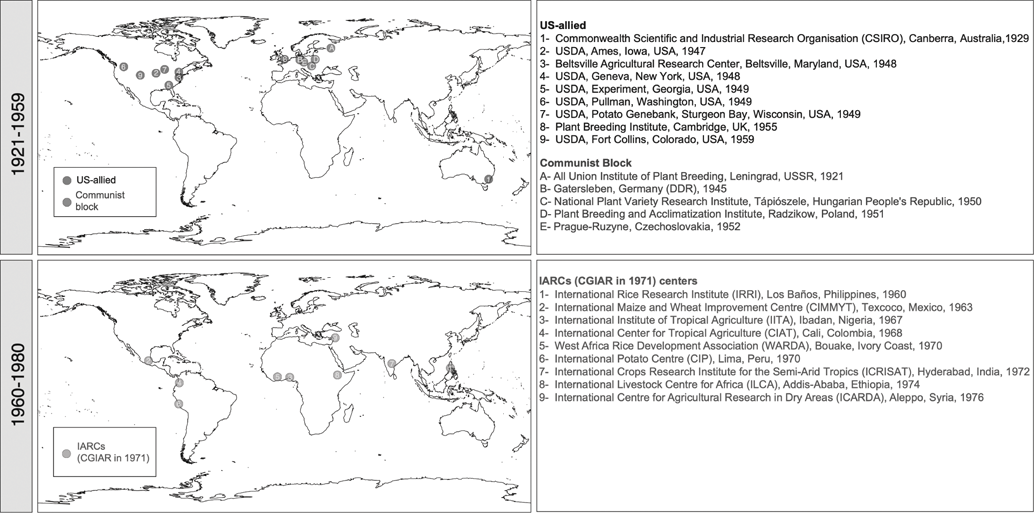
During the 1930s and 1940s, various countries established collections and catalogs of diverse cultivated varieties of rice, wheat, maize, forages, and other crops. Leading agricultural research institutes led “imperial” plant-hunting expeditions around the world to stock these national collections with seeds or other genetic materials (Figure 11.1).Footnote 11 However, with the exception of the Institute of Plant Industry in Leningrad, established by the Russian geneticist Nikolai Vavilov, there were few general collections that ranged widely across crop species.Footnote 12 Instead, collections generally targeted specific national agricultural ambitions or breeding programs.Footnote 13
Key gene banks established between 1920 and 1980. The upper panel represents the main gene banks in US-allied countries and in the communist bloc established between 1921 and 1959. The lower panel represents the gene banks of the international agricultural research centers (associated with CGIAR from 1971) founded between 1960 and 1980.
After World War II, the FAO Plant Production and Protection Division began to play an important role in plant genetic resources management in collaboration with the Commonwealth Scientific and Industrial Research Organization (CSIRO) of Australia.Footnote 14 Together they established an international network for the exchange of breeding materials, especially through the FAO Plant Introduction Newsletter launched in 1957.Footnote 15 Yet FAO’s efforts to make information about collections available took shape in a context where breeders were not very receptive to the idea of sharing materials and coordinating collection missions across borders.Footnote 16 In the late 1950s, most breeders in industrialized countries continued to rely on national collections; the FAO catalogs were either not well known or not considered a useful tool by many breeders.
Towards the end of the 1950s and into the 1960s, the establishment of new international agricultural research centers such as the International Rice Research Institute (IRRI) and the International Maize and Wheat Improvement Center (CIMMYT) was associated with what the historian Jonathan Harwood characterizes as a transition from a “local strategy” to a “cosmopolitan strategy” in plant breeding – a quest for varieties that would perform well across many locations.Footnote 17 Other contributors to this volume characterize this strategy as the search for “widely adapted varieties” (see, e.g., Derek Byerlee and Greg Edmeades, Chapter 9, and Harro Maat, Chapter 6, this volume). This cosmopolitan approach was seen both to depend on and threaten the existence of farmers’ varieties of rice, maize, wheat, and other crops that centers would seek to improve. The Rockefeller Foundation’s collection and conservation of maize varieties, initially fostered in the 1940s through its agricultural program in Mexico and associated with efforts to extend “improved” maize varieties across Latin America, provided a model for how the international agricultural research centers could manage this dilemma – namely, by building up their own collections of farmers’ varieties to ensure their future availability for breeding.Footnote 18
Experts mobilized by FAO played an important role in parallel to that of the international agricultural research centers, constituting a specific framework for crop diversity management. For example, FAO oversaw actions concerning the exchange of breeding materials, working with breeding associations such as the European Association for Research on Plant Breeding (EUCARPIA) and the International Association of Plant Breeders for the Protection of Plant Varieties (ASSINSEL), and organizing initiatives like the World Seed Campaign in 1957.Footnote 19 As part of this initiative to encourage and coordinate exchange, the first FAO Technical Meeting on Plant Exploration and Introduction was held in July 1961. In 1967 a second conference was organized jointly by the FAO Plant Production and Protection Division and the International Biological Program; this was the Technical Conference on the Exploration, Utilization, and Conservation of Plant Genetic Resources.Footnote 20 In the aftermath of the 1967 meeting a new FAO team on genetic resources was created, the FAO Crop Ecology Unit. Together with representatives of the International Biological Program, this team constituted a heterogeneous expert group that started to frame “genetic erosion” as an international concern.Footnote 21
Rising Awareness about Genetic Erosion
It was during the first Technical Meeting on Plant Exploration and Introduction in 1961 that FAO initially recorded concerns among breeders about the replacement of landraces – that is, farmers’ locally adapted varieties – through the widespread adoption of “modern” varieties generated by professional breeders.Footnote 22 Even though the collection of genetic materials from regions considered remote and “less civilized” was already underway in many countries, the sense of urgency created by the assumption that local varieties were bound to vanish globally was not yet fully established. By the 1960s, this concern was increasingly felt. At FAO, experts deployed on its programs of seed dissemination and plant exploration began reporting changes in the distribution of landraces versus “modern” varieties. The 1961 and 1967 technical conferences were the first international events to specifically address declining genetic diversity as a “side effect” of efforts to deliver “improved” or “modern” varieties to farmers. Breeders gathered at FAO expressed concern about the consequences of expected success in disseminating these varieties, especially in regions that were hotspots of diversity. “Without the primitive crop races which are the raw materials of plant breeding, the continued production of high-yielding varieties is not possible,” explained a 1969 editorial penned by staff of the FAO Crop Ecology unit.Footnote 23
The alarm sounded at FAO on this issue presupposed a particular vision of crop diversity and agricultural change wherein “primitive” varieties – that is, landraces or farmers’ varieties – would inevitably be replaced by “modern” ones. As the Australian wheat breeder and FAO consultant Otto Frankel summarized, “The crops of modern agriculture consist of varieties bred for high production and for uniformity. Over large areas of the world the same, or closely related, varieties are grown, uniformity is displacing the enormous variety of types.”Footnote 24 The reports of the first FAO conferences on this subject show that participants took it as a fact that farmers would abandon local varieties once they had noticed the superiority of “modern” varieties, and that they would benefit from this transition. From this perspective, the first victims of varietal homogenization would be breeders, who would lose access to breeding materials, not farmers, who were imagined to be fully satisfied with the new varieties.
Under this dichotomy of “primitive” versus “modern,” the complex and dynamic interplay between the circulation of new varieties and the disappearance of landraces was reduced to a clear-cut phenomenon of new replacing old. Just a decade earlier, by contrast, most breeders had been convinced that the poor economies and “backward” agricultural systems of countries that were the centers of origin of crops, and therefore hotspots of crop genetic diversity, would ensure the continuation of farmers’ varieties. Frankel later suggested that no one could have imagined that local varieties in these places would be at risk of erosion.Footnote 25 He and many of his contemporaries saw cultivated biodiversity as a “primitive” product preserved in a natural state in the cradles of agriculture. For example, in neither the 1961 nor 1967 FAO technical conferences did participants explicitly observe that farmers’ practices contribute to the conservation and evolution of crop genetic diversity. According to Frankel, “Plant breeders, searching the world for even more productive strains, must have genetic pools to provide ‘building stones.’ The plants of primitive agriculture and related wild plants are this treasury, now depleted by development.”Footnote 26 For those who shared this view, crop genetic diversity was a “raw material” or “building stone,” and not a product of human labor with nature. This perspective further suggested that it was up to professional plant scientists alone, and not farmers, to resolve the problem of conservation, given that farmers did not feature within this view as producers or managers of genetic diversity.
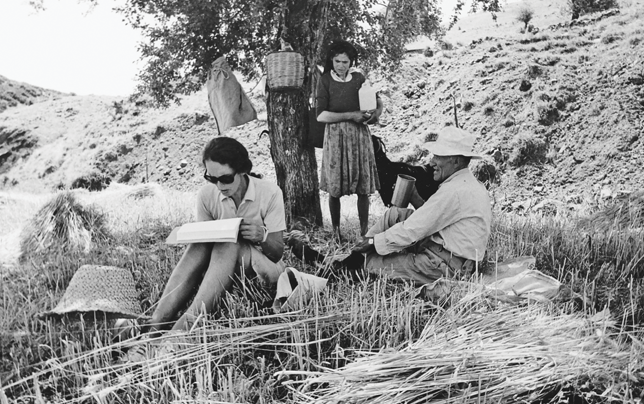
However, this was not the only perspective available. Within FAO, the issue of genetic erosion and proposals to cope with it sparked debates and divisions between two different epistemic cultures. Two figures can be taken as representative of these epistemic cultures: the breeder Otto Frankel, and the population geneticist Erna Bennett (Figure 11.2). Frankel and Bennett played fundamental but antagonistic roles in getting the conservation of crop genetic resources onto the international agenda.Footnote 27 Frankel, along with others who shared his epistemic culture, conceived conservation as the sheltering of entities – in this case, genes. He focused on the managerial and technical aspects of conservation. He was interested in the development of ex situ or off-site conservation approaches, chiefly through storage in gene banks, and the standardized exchange of breeding materials (often referred to as germplasm) to enable breeders’ activities. By contrast, within the second epistemic culture Erna Bennett and others aimed to maintain plants’ interactions with their environment and all of the processes that generate diversity in situ – that is, in agro-ecosystems – “to preserve the evolutionary potential of local population-environment complexes.”Footnote 28 Her vision was supported by scientists who were part of an evolutionary epistemic culture, including population geneticists, ecologists, and botanists.Footnote 29 Despite the support of some geneticists and ecologists for the latter approach, and thus the lack of a broad consensus across all actors interested in the conservation of crop diversity at FAO, the epistemic culture of the breeders won out. Only a system of ex situ conservation outside the plants’ environment of origin was pursued and, as I discuss below, implemented. The gene bank approach, focused on providing breeders with the materials they needed, was considered tried and tested, and seen as easier to set up than in situ conservation programs, which lacked an operational plan.
The plant geneticist Erna Bennett of the UN FAO Crop Ecology Unit in Greece, undated.
The Constitution of a Global Conservation Network
The erosion of genetic resources was included on the global environmental agenda at the United Nations Conference on the Human Environment held in Stockholm in June 1972 – a crucial turning point in advocacy on this issue. The Stockholm conference represented the high point of a period of vigorous action on environmental protection and conservation, including the invention and definition of the “global environment.”Footnote 30 The endangered future of agricultural development was illustrated at the conference by two problems: the first was genetic erosion, with purported evidence taken from FAO reports and conferences.Footnote 31 The second problem was the Helminthosporium maydis or southern corn leaf blight epidemic that caused serious losses to US hybrid maize between 1970 and 1971. An expert group assembled to investigate the disease outbreak stated that “[t]he key lesson of 1970 is that genetic uniformity is the basis of vulnerability to epidemics,” and warned that American crop varieties were “impressively uniform genetically and impressively vulnerable.”Footnote 32 The stark illustration of the dependence of industrialized agriculture of the Global North on “exotic” or foreign germplasm to shore up vulnerable crops fueled the growing sense of urgency about global coordination on genetic resources. Although strong evidence of genetic erosion was still lacking in 1972, surveys conducted by FAO and the Helminthosporium maydis epidemic’s impact helped place genetic erosion among the global environmental problems of greatest concern recognized by the United Nations. The conservation of genetic resources was the subject of 7 out of 109 recommendations established in Stockholm.Footnote 33
In the 1960s, FAO had tried to organize international management of crop genetic resources but failed, owing to a lack of interest and, crucially, resources. The Stockholm Conference created new possibilities for establishing a network of regional centers for collecting and conserving landraces and other crop varieties considered endangered, along with infrastructure “to grant all countries access to basic breeding materials.”Footnote 34 As I describe below, in the 1970s, governments were invited to participate in collection campaigns and, in cooperation with FAO, to ensure the conservation of plant genetic resources in a global network of gene banks. Inventories of threatened genetic resources were compiled and registers of existing collections updated in an effort to monitor the progress of conservation on a global scale. A new phase in the conservation of crop genetic resources was thus inaugurated. However, despite the centrality of FAO expertise in preceding decades, its role in the conservation of plant genetic resources after 1972 gradually diminished. CGIAR, which was created in 1971 to extend the Green Revolution by perpetuating scientific research for agricultural development, was instead the institution in charge of the new network. CGIAR centers became the operational hubs for conservation activities like collection, evaluation, and storage in gene banks, and CGIAR, through its Technical Advisory Committee (TAC), took charge of political, managerial, and economic matters.
In 1973, FAO hosted another technical conference on genetic resources. This conference saw FAO involved for the last time as the legitimate leading institution on international genetic resources conservation. At the end of the conference, the task of establishing an international network of genetic resources centers was assumed by CGIAR.Footnote 35 FAO staff and consulting experts had developed an action plan for this network and published two manuals on technical aspects of conserving crop diversity since 1966.Footnote 36 However, in the midst of international attention to the Green Revolution and anticipation of further agricultural transformation, CGIAR and its international research centers were able to present themselves as the institutions best positioned to guide the conservation and use of genetic resources.Footnote 37 CGIAR promoted the commitment to plant genetic resources of such emblematic figures of the Green Revolution as Norman Borlaug and Monkombu Swaminathan. Borlaug famously received the Nobel Peace Prize in 1970 for his work on wheat at CIMMYT. Swaminathan, meanwhile, was celebrated as the master of making India self-sufficient in grain and became the director of IRRI in 1982.
In 1974, CGIAR created the International Board for Plant Genetic Resources (IBPGR) as an institution independent of the United Nations but headquartered at FAO in order to benefit from FAO’s diplomatic role in the Global South. Although located within FAO, at the policy and operational levels IBPGR was centered more within the CGIAR network and operated as a CGIAR institution alongside the other international agricultural research centers. Ultimately, the conservation of genetic resources in gene banks became a branch of the centers’ research on the improvement of wheat, rice, maize, and other crops, and was guided by the imperatives of crop productivity and agricultural “modernization” associated with the Green Revolution.Footnote 38
FAO scientists and their collaborators thus succeeded in raising the issue of genetic erosion to the level of an international problem – and in generating action – within a decade. However, with the entry of CGIAR, their scientific and decision-making power disappeared. Some considered this situation a defeat, including Bennett, who resigned in 1982. Others kept a certain influence, including Frankel, who maintained a consultative role, and the young botanist Trevor Williams, who had participated in FAO collecting missions in the 1970s and became IBPGR’s executive secretary in 1978.
Just as the institutions of the Green Revolution won out over FAO, so too did the epistemic culture of the Green Revolution – namely, that of plant breeders – win out over approaches from disciplines such as population genetics and ecology. As a result, the complex dynamic between “primitive” varieties and “modern” varieties, or farmers’ varieties and professional breeders’ varieties, was reduced to the problem of genetic erosion, disregarding evolutionary processes unfolding through farmers’ practices in local environments. The mission of conserving genetic materials for breeding came to be both the dominant approach to the study of crop diversity and the organizing principle of actions to conserve it. Among other outcomes, a geographical distribution of conservation activities came to be formalized in which the “poorly equipped” South supplied crop diversity, and the North, with its techno-scientific power, managed it.Footnote 39 The scientific debate in FAO, which included the viewpoints of botanists and population geneticists, was displaced by a massive technical routine consisting of lists of collecting priorities, databases of plant materials, and jars of seeds in gene banks (Figure 11.3). In short, under IBPGR, conservation entered a “chronic alert” phase, where the problem of erosion was managed by creating new collections.
Accessions stored in the gene bank of the International Maize and Wheat Improvement Center (CIMMYT), Mexico, 2018.

Ex situ Conservation between Routine and Crisis
Unlike the other CGIAR centers, IBPGR was not a research institute. As a 1979 policy document described, “it is a service organization, whose primary purpose is to assist plant breeders.”Footnote 40 It began its activity in 1974 with a modest budget of about $250,000, an amount that gradually increased over the following years, reaching nearly $3.8 million in 1982. Funding remained at around this level over the following two decades.Footnote 41 IBPGR continued FAO’s work of collecting and making materials available for plant improvement programs. However, it abandoned the scientific discussion about how to conserve – specifically whether in situ or ex situ approaches were more appropriate – and for what purpose, topics on which FAO experts had led. As set out by its technical mission, IBPGR developed new lists of accessions, an international system of descriptors for genetic resources (as described by Helen Anne Curry and Sabina Leonelli, Chapter 10, this volume), “minimum standard” protocols for plant exploration, and information-sharing activities.Footnote 42 These actions were directed by five ad hoc committees for the crops with the greatest economic importance: wheat, maize, rice, sorghum, and a single combined committee for millets and beans.Footnote 43 As Erna Bennett later reflected, these patterns confirmed that IBPGR followed the orientation dictated by the plant breeders’ epistemic culture:
Landraces with no commercial value but that are important in local diets would not be present in these collections. Many centers, despite their strategic position in regions of great genetic diversity, deal exclusively with collecting material from a single species. Moreover, these single-species collections are also not representative of genetic variability [within each species], and there were serious lacunae in the collections. This system reflected the CGIAR’s favoured approach based on major crops.Footnote 44
In 1976, IBPGR established a first action plan to bring in species deemed insufficiently represented in its activities. This program involved various regions (the Mediterranean, southern Asia, West Africa, Ethiopia, Central America, and Brazil) and identified fifty-eight crop species assigned to three different priority levels.Footnote 45 Despite this attempt to prioritize other species, conservation policies remained linked to the agendas of the international agricultural research center system. The primary focus therefore continued to be on maize, wheat, and rice, and on the productivity goals firmly anchored in the traditional pathway to improvement, which Bennett described as “the search for major genes and homogeneity.”Footnote 46 From the mid 1980s, failures of the system of ex situ gene banks (which I describe below) reduced the money allocated for plant exploration and collection activities, especially those targeting minor crop species.
In the late 1970s, the “global network” of genetic resources conservation included eight international centers and fifty-four regional centers, of which twenty-four had long-term storage systems that conformed to IBPGR’s technical standards.Footnote 47 With the opening of more regional gene banks, the global network continued to grow. By 1983, there were forty-eight gene banks compliant with international standards for long-term storage at sites around the world. Thirty of these were officially enrolled in the IBPGR network, operating in twenty-four countries and covering the main crop species.Footnote 48 IBPGR also had regional offices, for example in Aleppo, Bangkok, Nairobi, and Cali.Footnote 49 In the 1980s, IBPGR had as many as 600 scientists, working in 100 countries. They were supplied by hundreds of collection missions in which a veritable army of collectors sought new samples of landraces and other plant genetic materials across sixty-two countries.Footnote 50 IBPGR was also able to “capture” collections produced by outside organizations and governments, which were invited to join its global conservation effort.
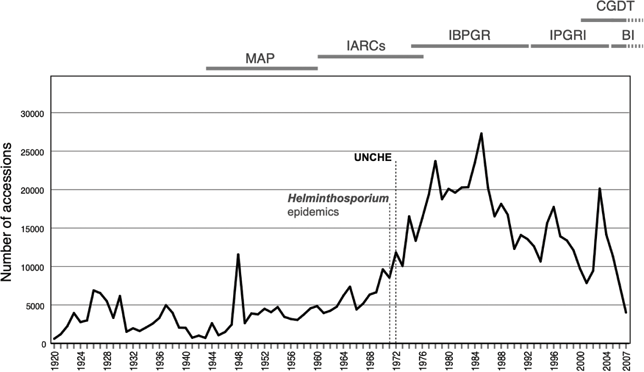
Thanks to these collection campaigns, the number of samples held in CGIAR gene banks and other key international institutions rapidly grew.Footnote 51 The annual number of samples accessioned into collections remained roughly stable from the 1920s through the 1960s (Figure 11.4), with a peak in 1948 linked to collections created through the Rockefeller Foundation’s agricultural program in Mexico (labeled MAP in the figure). It then started to rise in parallel with the creation of the first international agricultural research centers (IARCs) in the late 1960s. After the Helminthosporium maydis epidemic and the Stockholm conference (UNCHE) in the early 1970s, and the formation of IBPGR in 1974, the annual number of accessions leaped higher. Then, starting in the mid 1980s, new accessions progressively decreased, but with two exceptions: the late 1990s, in correspondence with the activities of the International Plant Genetic Resources Institute (IPGRI), and in 2004, with the establishment of the Global Crop Diversity Trust (GCDT).Footnote 52
Annual number of accessions to selected gene banks, 1920–2007, including those of CGIAR centers. Adapted from United Nations Food and Agriculture Organization (FAO), Second Report on the World’s Plant Genetic Resources for Food and Agriculture (Rome: FAO, 2010), 57.
As CGIAR’s accessions rose for more than ten years during the 1970s, new concerns emerged regarding the efficiency of ex situ conservation. In 1978 the US National Academy of Sciences published Conservation of Germplasm Resources: An Imperative, which reported the challenges faced by ex situ conservation of microorganismal, marine, plant, and animal germplasm. These challenges ranged from technical issues, such as the maintenance of the original genetic base, to organizational ones including inventories, evaluation, and quality control.Footnote 53 This report spurred CGIAR to commission the agronomist Donald Plucknett to conduct a detailed survey of the state of its collections.Footnote 54 However, it was only the beginning of a period of questioning and concern. In September 1981, an article in the New York Times described the precarious situation of the main long-term gene bank in the United States, located in Fort Collins, Colorado: “In the chilly seed storage rooms here, sacks of seeds are piled on the floors, overflowing the laboratory’s facilities.”Footnote 55 Conservation failures in one of the most important gene banks in the world prompted the IBPGR Secretariat to take a greater interest in problems affecting ex situ conservation – and therefore its entire network of gene banks.Footnote 56 A new report published in 1983 highlighted losses in gene banks resulting from lack of personnel, negligence, malfunctioning equipment, fires, and still other factors. IBPGR attributed most of the responsibility for these problems to the curators: “[gene bank] curators may well contribute more to loss of valuable material than might have occurred in the field.”Footnote 57 Despite recognition of the failure of many gene banks with respect to their core mission, no general reevaluation of ex situ approaches came to pass. IBPGR instead sought to manage the crisis by imposing more rigorous technical and procedural approaches in seed storage centers.
At the same time, the orientation of breeding programs towards the rapid release of commercial products discouraged breeders from using local varieties or their wild relatives. In the 1980s, assessments internal and external to CGIAR showed that most of the diversity in gene banks remained unused, if not totally abandoned.Footnote 58 The measures taken in response to this perceived concern indirectly affected field research and collection activities, in particular limiting the development of the collection of so-called “orphan” crops and crop wild relatives. It would be another ten years before the problems of increasing wild species and “neglected and underutilized species” accessions in gene banks would be treated as an important subject in the major conservation institutions.Footnote 59 CGIAR took the position that what was needed, more than new accessions, was to maintain what it had in good condition – and what it had in good condition were collections of the world’s key agricultural commodity crops. As a 1984 assessment confirmed, the collections that were most representative of extant diversity and kept in the best conditions were those of the most economically important species: potato at the International Potato Center (CIP); wheat in European banks, the Vavilov Institute, CIMMYT, and the International Center for Agricultural Research in the Dry Areas (ICARDA); maize at CIMMYT; rice at IRRI; barley at ICARDA; and sorghum at the International Crops Research Institute for the Semi-Arid Tropics (ICRISAT).Footnote 60
In sum, once an international system for crop genetic conservation had been established in the early 1970s, associated with the epistemic culture of plant breeders and premised on the idea of collecting endangered breeding materials before their inevitable replacement, the focus of conservation moved to technical improvements in storage. The dominant conceptual and scientific approach simplified the problem of conservation in order to make it immediately operational, and it persisted even as evidence of its shortcomings accumulated.
Genetic Resources through the Prism of Geopolitical Tensions
The geneticists who organized the system of exchanges and collections within FAO in the 1960s and 1970s contributed to the emergence of the idea that plant genetic resources are a common heritage of humanity. For example, Erna Bennett used the phrase “human heritage” and Otto Frankel spoke of a “genetic estate” comprising the “biological heritage, the genetic endowment of organisms now living.”Footnote 61 IBPGR, appropriating the notion of common heritage, strove to construct its own image as a “catalyst of genetic resources flows” between countries, applying principles of free exchange and fair distribution.Footnote 62 However, observers from the 1970s onward increasingly condemned this activity as a raiding of the genetic resources of the Global South by greedy Northern interests. Pat Mooney, a Canadian activist and author of the influential 1979 book Seeds of the Earth, observed of the global network of gene banks, “the Third World is being invited to put all its eggs in someone else’s basket.”Footnote 63 Scientists’ work on genetic resources, which was dominated by CGIAR through IBPGR, was gradually confronted with a critical discourse emerging at the international level, articulated by nongovernmental organizations (NGOs) such as the Rural Advancement Foundation International (RAFI) and the International Coalition for Development Action.Footnote 64
In the same years that FAO and CGIAR worked to establish international genebanks with a long-term conservation mission, problems had emerged that could not be contained by technical solutions. The blossoming of Third World alliances in the 1970s transformed genetic resources into a new field of tensions between Global North and South. Some tensions arose from the expansion of intellectual property rights in plant varieties, which implied limitations on the free circulation of varieties among breeders and institutions and new restrictions on farmer seed-saving. (For a detailed discussion of intellectual property concerns see David J. Jefferson, Chapter 12, this volume.) In the 1970s and 1980s, the International Union for the Protection of New Varieties of Plants (UPOV), established in 1961 to enable breeders’ intellectual property claims in plant varieties, was updated to adapt it to the patent system for commercial innovations in genetic engineering and biotechnology.Footnote 65 Facing restrictive new seed regulations, attitudes towards the sharing of genetic resources shifted in many countries in the Global South.Footnote 66 Other tensions emerged from political restrictions on access to supposedly global collections held in trust in national gene banks. For example, embargoes prevented researchers in Afghanistan, Albania, Cuba, Iran, Libya, the Soviet Union, and Nicaragua from accessing materials held in US collections.Footnote 67 Some countries of the Global South began in turn to impose restrictions on trade in species with a strategic national economic role: Ethiopia over coffee, Ecuador over cocoa, and so on.Footnote 68
The “seed wars,” in which countries struggled to assert control over plant genetic materials, reached a peak at the Twenty-First FAO Conference in November 1981. Backed by the G77, the developing-country coalition within the United Nations, the Mexican delegation proposed a “new international genetic order,” independent of CGIAR, in what was later designated Resolution 6/81.Footnote 69 The aim of Mexico’s proposed resolution was to bring global collections of crop genetic resources back under the aegis of FAO, granting it full control over a new international gene bank. Under the proposal, FAO was to ensure the conservation and circulation not only of landraces and crop wild relatives, but also the breeders’ lines produced in public and private research centers “without restrictive practices that limit their availability” to countries in the Global South.Footnote 70 This resolution struck FAO – whose staff were not prepared, and probably did not want, to take on this responsibility – like a meteorite. Resolution 6/81 was one of the most highly debated in FAO history.Footnote 71
Several industrialized countries, particularly the United States, Australia, and the United Kingdom, opposed the proposal, initially arguing that building a new gene bank would be too expensive. Other concerns proved more potent. Following the conference, ASSINSEL alerted the UPOV Council about the risks that the proposal’s provisions on the circulation of breeders’ lines posed to their activities. Maintaining established intellectual property protections became the primary focus of industrialized countries’ objections. In the wake of Resolution 6/81, IBPGR continued to defend its image as a good manager and “catalyst” of initiatives promoting the conservation of genetic resources. However, the main donors to IBPGR were countries and institutions in the Global North that strongly opposed the resolution.Footnote 72 Under pressure from IBPGR, FAO succeeded in orienting the supporters of Resolution 6/81 towards the establishment of a network of collections instead of a single gene bank under FAO management.Footnote 73 The resolution was transformed into a proposed International Undertaking on Plant Genetic Resources, which stipulated that member countries must make their genetic resources available without restriction, including lines developed by breeders, as part of a “common heritage.”
The eleven-article undertaking mandated that samples of plant genetic material “be made available free of charge, on the basis of mutual exchange or on mutually agreed terms.”Footnote 74 All existing conservation institutions were asked to adhere to new standards, implemented and overseen by FAO, as part of this global agreement.Footnote 75 Among other provisions, the undertaking called for “the equitable and unrestricted distribution of the benefits of plant breeding.” including the circulation of “special genetic stocks (including elite and current breeders’ lines and mutants).”Footnote 76 In other words, the “common heritage” framework was intended to allow the Global South to obtain access to protected lines. The undertaking thus potentially implied a substantial revision of plant breeders’ rights. Although it did not gain the support of key industrialized nations or international agricultural institutions, 103 countries signed a revised version of the agreement in November 1983.Footnote 77 The victory was more symbolic than material. In 1989, after long negotiations, FAO and IBPGR signed a “Memorandum of Understanding” that formalized a new relationship set in motion by the undertaking but also abandoned the original political project.Footnote 78 As part of these negotiations, FAO stipulated that “‘plant breeders’ rights as provided for under UPOV are not incompatible with the International Undertaking.”Footnote 79
Towards New Approaches to the Conservation of Genetic Resources
With the rising demands of Indigenous communities and peasant associations, the opening of new spaces of socioenvironmental struggle, and growing criticism of globalization, the landscape of biodiversity conservation grew more complex in the 1980s and 1990s.Footnote 80 Within the arena of crop conservation, broader confrontation with nongovernmental actors pushed established institutions towards new approaches and ultimately the incorporation of new epistemic cultures. To use a formulation from the sociology of social problems, breeders were no longer the sole “owners” of the problem of agricultural biodiversity.Footnote 81
The most important result of the negotiations first set in motion by FAO Resolution 6/81 was the 1983 creation of the Commission on Plant Genetic Resources within FAO.Footnote 82 This commission aimed, among other things, to better represent the countries of the Global South in agreements and to represent “farmers’ rights” to use and share seeds for the first time. In 1991, 127 countries participated in the Fourth Conference of the Commission on Plant Genetic Resources, which defined the distribution of responsibilities between FAO and IBPGR. FAO would focus on in situ conservation, favoring an ecological approach for species outside the sphere of CGIAR. Meanwhile IBPGR would be the main institution for ex situ conservation. However, in the 1990s both institutions increasingly confronted the emergence of alternative and more ecological approaches to conservation. A new global governance for biodiversity, inaugurated by the 1992 Convention on Biological Diversity (CBD), directly affected crop conservation.Footnote 83 Recommendations of Agenda 21, the nonbinding UN action plan on sustainable development, on the CBD implied the creation of a World Information and Early Warning System on Plant Genetic Resources for Food and Agriculture, the implementation of a Global Plan of Action for ex situ and in situ conservation, and the recognition of the farmers’ rights agenda.
Throughout the 1990s, the Commission on Plant Genetic Resources and FAO tried to implement CBD recommendations. The Commission’s fourth technical conference, held in Leipzig in 1996, represented an important moment in the advancement of those proposals. At the conference, a Global System for the Conservation and Utilization of Plant Genetic Resources was approved to combine ex situ and in situ conservation strategies for the sustainable use of plant genetic resources.Footnote 84 The conference also encouraged the production of 155 national reports, which formed the basis for the first FAO report on genetic resources published in 1998. These activities culminated in November 2001 with the International Treaty on Plant Genetic Resources for Food and Agriculture, also known as the Seed Treaty. Under the Seed Treaty, which entered into force on June 29, 2004, ex situ collections, including CGIAR gene banks, were made available through a multilateral system, and benefits generated from using genetic resources (e.g., in commercial crop varieties) were supposed to be shared through a collective funding system.Footnote 85 Based on voluntary decisions, the collective funding system struggled to materialize. However, responding to a more mutualist logic, where genetic resources were considered public goods, the Seed Treaty became the privileged space for discussing farmers’ rights, farmers’ seed systems, and alternative approaches to conservation.Footnote 86
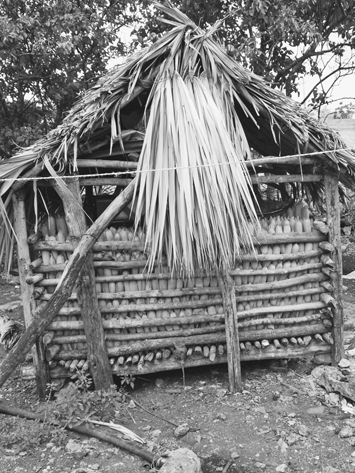
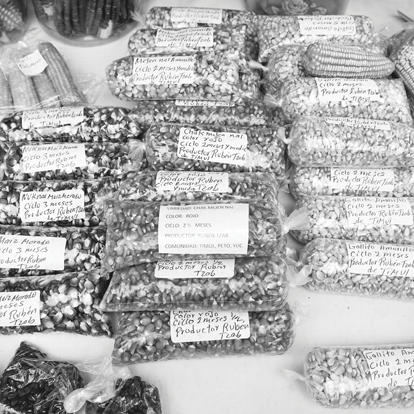
This opening of new institutional spaces and dialogues in the 1990s allowed for the assertion of new epistemologies and practices within the plant genetic conservation regimes of CGIAR. Thanks to the institutional critiques and upheavals of the 1980s, IBPGR transitioned into a new arrangement as IPGRI from 1993 to 2006, an operation later renamed Bioversity International. The changes of the 1980s and 1990s also prompted an expanded network of experts, range of knowledge, and list of collaborating agencies at IPGRI. The challenge increasingly faced by IPGRI and its successor organizations was no longer just to conserve genetic resources for breeders, but to include other actors, such as farmer organizations and NGOs, and to involve local communities through participatory approaches like participatory plant breeding and community seed banks.Footnote 87 Inside these institutions as well as in national research programs, crop diversity was increasingly reconceived in the context of agro-ecosystems and the cultures from which it had originated (Figures 11.5 and 11.6). The dynamics of crop diversity now had to be explored from multiple angles: social, ecological, and agronomic.
A maize granary in Yucatan, Yaxcaba, Mexico represents on-farm (or in situ) conservation of crop diversity, 2013.
Maize seeds from a farmers’ seed fair in Mérida, Mexico, 2014.
In the 1980s, certain branches of biology and botany, coupled with studies in anthropology, had already developed analytical tools that could be practically applied to in situ genetic resources conservation. The work of ethnobotanists, ethnobiologists, and anthropologists studying agricultural biodiversity in its centers of origin played a determining role in reframing the concept of genetic resources to integrate evolutionary processes and farmers’ practices.Footnote 88 These disciplines, together with participatory plant breeding, contributed to the development, within IPGRI/Bioversity and elsewhere, of in situ/on-farm conservation approaches that in the 1990s sought to sustain the farming practices and social contexts that create and maintain agricultural diversity.Footnote 89
Once integrated into the mainstream conservation landscape, in situ conservation was reconceived as providing services that would enable the adaptation of agriculture amid global change. It newly positioned farmers as “guardians” of globally important diversity. At the same time, in situ approaches contributed to the development of new practices and values in which crop diversity and farmers were more than service providers for industrial agriculture. In this understanding, crop diversity was also seen as fundamental for the flourishing of farmers in the Global South. This in turn suggested that the major challenge for conservation was not storing and providing genetic materials to breeding companies but providing opportunities and solutions to farmers and their farming systems. In this scenario, gene banks and breeding programs finally had a role in directly supporting farmers.Footnote 90
Conclusion
In 2018, the United Nations Declaration on the Rights of Peasants and Other People Working in Rural Areas declared that these individuals “have the right to seeds, including … the right to save, use, exchange and sell their farm-saved seed or propagating material.” It called on states to “recognize the rights of peasants to rely either on their own seeds or on other locally available seeds of their choice” and to “take appropriate measures to support peasant seed systems and promote the use of peasant seeds and agrobiodiversity.”Footnote 91 Even though these principles are hardly fully translated into national agricultural policies, their declaration signals the important institutional changes driven in part by a shifting balance of power between different epistemic cultures in crop conservation and use alongside hard-fought political struggles. Many contemporary understandings of crop diversity contradict the long-dominant view of landraces as a stock of raw materials stored in “wild” landscapes. Because scholars have recognized farmers’ practices as important to the evolution, improvement, and conservation of cultivated biodiversity, institutions now confront the need to change seed regulations, as well as conservation methods.
Despite important shifts, the concept of genetic erosion and the accompanying notion of crop diversity as a resource to be mined by breeders for value still shape scientific practices, conservation actions, and policies. As my history of the conservation of plant genetic materials in and beyond CGIAR makes clear, this early and influential perspective largely ignored the role of farmers and took for granted the spread of breeders’ innovations. In 2022 the adoption of “improved” varieties is considered as inexorable as ever, and the reversion to ex situ conservation nearly always prevails over options that integrate farmers’ practices and knowledge into plans for enhancing and improving cultivated biodiversity. Within the CGIAR system, and despite its encompassing very different scientific souls, the epistemic culture that sustained the Green Revolution’s approaches and vision is as vigorous as it ever was.Footnote 92
Meanwhile, other ways of knowing and understanding crop diversity continue to issue challenges to this predominating culture. Without denying an overall pattern in which crop diversity is diminishing over time, it is nonetheless also possible to observe that commercial varieties are often unable to fulfill the needs of heterogeneous smallholder agriculture. For this reason, many of the world’s farmers cannot completely rely on commercial varieties and still sow seeds that they produce themselves.Footnote 93 They actively work on crop diversity and, especially in the Global South, they still grow landraces, introduce “modern” varieties, make crosses, select for valued traits, and exchange seeds and knowledge. The classic framework of genetic erosion did not take into account farmers as a powerful evolutionary force that is still active and capable of participating in the search for solutions to ever-changing agricultural needs.Footnote 94 The work of many scholars over many decades has made clear that genetic resources can no longer be considered a “raw” product constantly under threat. The goal should not be to permanently conserve the same genetic configuration, as CGIAR gene banks sought to do for much of their existence, but to reconnect diversity, conservation practices, and farming systems.


 Open access