


Food cost is an accepted determinant of dietary decision making( Reference Steptoe, Pollard and Wardle 1 – Reference Nelson, Erens and Bates 5 ). Trends in the price of foods are thought to influence the selection of different types of foods, therefore having the potential to affect diet quality. For example, the falling real price of food, and in particular of energy-dense foods, is suggested to have encouraged the overconsumption of energy and could thus be implicated in global obesity trends( Reference Monsivais, McLain and Drewnowski 6 , Reference Darmon, Briend and Drewnowski 7 ).
Measuring the monetary costs of diets, however, is not straightforward. The tracking of food prices at a national level or the collection of household-level food expenditure surveys is not uncommon (e.g. reference 8); however, no studies, to the authors’ knowledge, have simultaneously collected individual-level expenditure and dietary consumption data. As a result, the cost of food actually consumed, as opposed to the cost of food purchased, has never been directly measured. Consequently, researchers must infer dietary consumption from purchasing data or, vice versa, infer costs from dietary assessment. In the field of public health nutrition, the latter method confers the advantage, making use of established dietary assessment techniques. For this reason, assigning a monetary cost to individual-level dietary data using a database of national average food prices is an increasingly popular method( Reference Monsivais, McLain and Drewnowski 6 , Reference Rehm, Monsivais and Drewnowski 9 ).
Previous publications have employed this method to report the monetary value of the diets of American( Reference Rehm, Monsivais and Drewnowski 9 , Reference Monsivais and Drewnowski 10 ), French( Reference Darmon, Briend and Drewnowski 7 , Reference Maillot, Darmon and Darmon 11 ), Dutch( Reference Waterlander, de Haas and van Amstel 12 ), Spanish( Reference Schroder, Marrugat and Covas 13 , Reference Lopez, Martinez-Gonzalez and Sanchez-Villegas 14 ), Japanese( Reference Murakami, Sasaki and Okubo 15 ) and British female( Reference Cade, Upmeier and Calvert 16 ) populations, but none have done so in a representative UK sample.
The current study describes for the first time the monetary values of adults’ diets in the National Diet and Nutrition Study (NDNS), a representative UK sample. A food price database is linked to diet diary data to characterize individual-level diet costs, expressed as a daily diet cost. In addition, due to variability in individual energy requirements, costs are adjusted to 10 MJ to enhance comparability. Furthermore, the sociodemographic data available for the sample enable the exploration of subgroup comparisons. Elucidating patterns in diet costs could have implications for the targeting of public health messages.
Experimental methods
Sample and data collection
The present cross-sectional study used data from the first two waves of the NDNS, collected in 2008–2010( 17 ). The NDNS is a rolling national dietary monitoring programme, designed to track trends in dietary intake. In each year of data collection, a nationally representative sample of individuals is selected from private residences drawn from the Postcode Address File (PAF). In waves 1 and 2, 10 % of the eligible addresses declined to take part before household selection. After selection, there was an overall response rate of 64 % of households. The original sample comprised both children and adults; however, only adult data (≥19 years; n 1031) were included in the current analyses.
The NDNS assessed dietary intake using unweighed diaries on four consecutive days. Portion size photographs were included for fifteen commonly consumed foods; all other portions were estimated using household measures or package weights. Diary data were coded and recorded using the DINO (Diet In Nutrients Out) database.
Participant characteristics were ascertained by a trained interviewer in a face-to-face setting. These included: sex, age, educational qualifications, employment (NS-SEC8 (National Statistics Socio-economic Classification, eight categories)), marital status, household income (thirteen categories), household size and cigarette-smoking status (never, ex-regular, current regular). In addition, anthropometric data were measured by the interviewer. Achievement of the UK's ‘5 a day’ recommendations for fruit and vegetable intake (‘yes’ or ‘no’) was calculated from the dietary data (including composite dishes) and was available as a variable in the NDNS data set. The ‘5 a day’ criteria stipulate five portions, of 80 g each, of fruit and vegetables, including dried fruit (30 g/portion) and up to one portion (150 ml) of fruit juice, daily( Reference Cullum 18 ). Energy intake was also presented within the NDNS data set, as calculated from diary data. Further details about recruitment, study design and data handling can be found in the survey report( Reference Bates, Lennox and Bates 19 ).
In addition to the variables provided in the NDNS data set, four variables were derived for the purposes of the present study. One newly derived variable was a consequence of collapsing categories to facilitate statistical analyses: education was collapsed from seven to four categories (degree or higher education; GCE (General Certificate of Education) A-level or equivalent; GCSE (General Certificate of Secondary Education) or still in full-time education; no qualifications). Age, a continuous variable, was categorized into six bands: 19–29 years, 30–39 years, 40–49 years, 50–59 years, 60–69 years and 70 years or over. Equivalized income was derived from the midpoint of each category of household income, using the rescaled Organisation of Economic Co-operation and Development modified scale( Reference Anyaegbu 20 ), and categorized into five bands: up to £14 999, £15 000–£24 999, £25 000–£34 999, £35 000–£49 999 and £50 000 or more per annum. Finally, alcohol consumption category was calculated from reported alcohol consumption in the diet diaries. The average daily quantity of alcohol consumed (grams) for each participant was converted to units (1 unit = 8 g). Participants were then categorized according to national UK recommendations as: non-consumers (0 units of alcohol consumed); low-risk consumers (up to an average of 3 units/d for women, 4 units/d for men); increasing-risk consumers (between 3 and 6 units/d for women, between 4 and 8 units/d for men); or higher-risk consumers (6 units and above/d for women, 8 units and above/d for men).
On examination of the data, it was evident that some participants had recorded diet for only three of the four data collection days. These individuals were excluded, reducing the available sample from 1031 to 1014.
Food cost database
To assign a cost for individuals’ diets in the NDNS, it was necessary to assign a price to each food or beverage consumed. This was achieved by linking the NDNS data to a database of national food prices. The database used for this was created at the University of Leeds in 2004 and contains price information for over 3000 foods and drinks. Prices (lowest, mean and highest) from supermarket websites were calculated per 100 g (or 100 ml) edible weight, accounting for changes in weight associated with cooking and preparation where appropriate. Promotional or sale items were disregarded. Each food item is matched by code to the in-house dietary assessment tool, DANTE (Diet and Nutrition Tool for Evaluation), which utilizes nutrient information from the McCance and Widdowson food composition tables( 21 ).
Diet cost calculation
The food codes employed by DINO differ from those of DANTE. To assign a cost to the foods listed in the NDNS, it was necessary to create a look-up file to match the codes of each food. Both databases incorporate data from the UK food composition tables( 21 ) and, as such, it was possible to match many of the food items exactly (30 % of foods). Where an exact match for a food description was not available, the closest alternative was chosen. In the majority of cases, a close match was apparent – for example, ‘peas boiled in salted water’ could be matched to ‘peas boiled in water’. If foods were coded as composite dishes in the NDNS (e.g. a ready meal lasagne), this was matched to the closest composite item in DANTE. The look-up file was created by the first author.
Once the data sets were matched, the mean database cost was applied to the quantity of food consumed by each participant and a daily average calculated:
 $$no{{\rm{Daily}}\ {\rm{diet}}\ {\rm{cost}}\ {\rm{(\pounds/d)}}\, = \cr &\ \ \,\frac{{\rSigma {\rm{[DANTE}}\ {\rm{food}}\ {\rm{price}}\ {\rm{(pence/g)}}\times {\rm{quantity}}\ {\rm{food}}\ {\rm{consumed}}\ {\rm{(g)] }}}}{{{\rm{number}}\ {\rm{of}}\ {\rm{days}}\ {\rm{(4)}}}} \div {\rm{100}}{\rm{.}}\eqno\rm$$
Uncarbonated water was excluded from the daily diet cost calculation as it was not possible to distinguish from the data whether the water consumed was free tap water or purchased bottled water. Diet costs also exclude alcoholic beverages, due to the disproportionate influence of these expensive items on the diet costs of those who consume them. In addition, the price elasticity of demand reveals alcohol to be a complex commodity, perhaps suggesting that alcohol consumption is subject to different budgeting considerations to that of food and deserving of separate enquiry.
The database was populated using 2004 prices, whereas the NDNS data were collected between 2008 and 2010. Despite this, a correction for inflation was not applied in these analyses. This decision was taken on the grounds that the combined years of the NDNS data collection would make a correction for inflation unfeasible. In addition, it was felt that it is the relative costs within the population that are of interest for the purposes of the present study, as opposed to the absolute costs.
To adjust for differing energy requirements, costs were also calculated per 10 MJ. The value of 10 MJ was selected as a midpoint between the Estimated Average Requirement for males and females (the Scientific Advisory Committee on Nutrition( 22 ) recommends an Estimated Average Requirement of 10·9 MJ/d for men and 8·7 MJ/d for women (adults aged 19 years or over)). The energy-adjusted daily diet cost was calculated using the following formula:
 $${\rm{Energy}} {\hbox{-}} {\rm{adjusted}}\ {\rm{cost}}\, = \,\frac{{{\rm{mean}}\ {\rm{daily}}\ {\rm{diet}}\ {\rm{cost}}\ {\rm{(\pounds)}}}}{{{\rm{mean}}\ {\rm{daily}}\ {\rm{energy}}\,{\rm{intake}}\ {\rm{(MJ)}}}}\times {\rm{10}}{\rm{.}}\eqno\rm$$
Outliers for both diet cost variables were identified; however, examination of the diary information did not reveal implausible dietary intakes. There were therefore no exclusions on this basis.
Statistical analyses
Both cost variables were positively skewed; therefore data were log transformed. Geometric mean and 95 % confidence intervals around the mean are presented.
Mean daily diet costs (£/d) and mean energy-adjusted costs (£/10 MJ) were calculated for the whole sample and for each category of the following variables: age, sex, employment, qualifications, equivalized household income, household size, marital status, BMI classification, smoking status, alcohol consumption and ‘5 a day’ achievement. Subgroup differences in daily and energy-adjusted diet costs were tested using univariate regression analyses.
Multivariable regression models assessed the strength of each variable's relationship to diet costs (Model 1 examined daily diet costs and Model 2 energy-adjusted diet costs), adjusting for the other variables. Cost data were skewed, but residuals were normally distributed; therefore non-logged variables were used. All variables were included in the regression model. BMI was included as a continuous variable. Household income, as an ordinal variable, was also treated linearly. In addition, energy intake from food was included in the model with daily diet costs, but not in the model for costs per 10 MJ, because energy was used in the derivation of the latter variable. The underweight (n 13) were excluded from these analyses.
The NDNS sample weights were used to account for sampling probabilities and clustering. Details of the weights can be found in Appendix B of the survey report( 23 ). In some sub-population analyses, strata occurred with singleton primary sample units. In these instances, standard errors were estimated using a centred correction.
Statistical analyses were performed using the SVY suite of commands in the statistical software package Stata IC release 12. A two-way significance level of 5 % was set.
Ethical approval
The present study contains secondary analyses of a national survey. The survey was conducted according to the guidelines laid down in the Declaration of Helsinki. Details on ethical approval can be found in the survey report( Reference Bates, Lennox and Bates 19 ).
Results
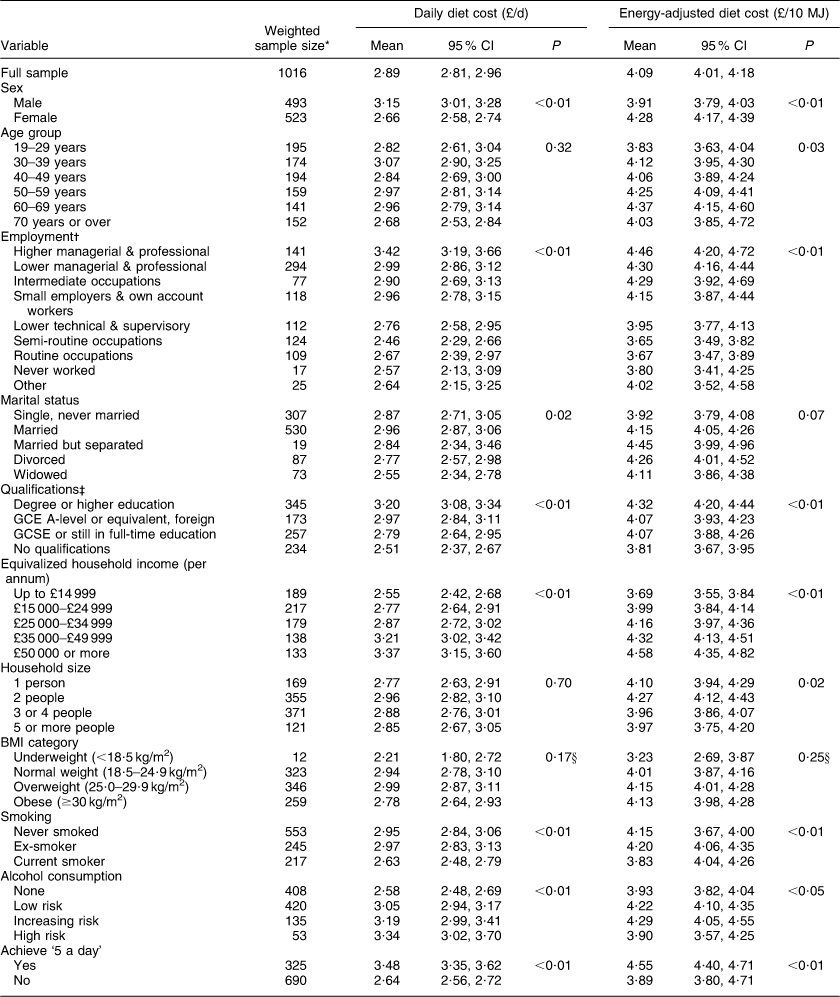
The sample was 51 % female and predominantly of white ethnic origin (91 %). Ages ranged from 19 to 94 years, with a roughly equal distribution across the age groups: 14–19 % falling into each of the six categories. An equivalized household income of between £15 000 and £24 999 per annum was most frequently reported (25 %). Mean daily energy from food was 7408 (sd 2356) kJ. The geometric mean daily diet cost and energy-adjusted diet cost of the sample can be seen in Table 1.
Geometric means and 95 % confidence intervals for daily diet costs (£/d) and costs adjusted to 10 MJ (£/10 MJ) for the weighted sample and subgroups; adults aged 19 years or over, UK National Diet and Nutrition Study, 2008–2010
*Weighted population numbers are rounded to the nearest whole unit.
†More details about the NS-SEC8 (National Statistics Socio-economic Classification, eight categories) occupation classification scheme can be found at http://www.ons.gov.uk/ons/guide-method/.classifications/current-standard-classifications/soc2010/soc2010-volume-3-ns-sec--rebased-on-soc2010--user-manual/index.html.
‡UK qualifications: GCSE (General Certificate of Secondary Education) typically taken when students are aged 14–16 years; GCE (General Certificate of Education) A-levels taken pre-university or for completion of secondary school; ‘degree or higher education’ refers to post-secondary school, or tertiary, qualifications.
§Excluding underweight.
Unadjusted univariate regression analyses revealed significant differences between the categories of several sociodemographic variables (Table 1). These included sex, employment, qualifications, marital status and household income. In addition, significant differences were apparent for the lifestyle variables: cigarette smoking; consumption of alcohol; and consumption of fruit and vegetables (five portions daily). With the exception of marital status, all of these differences remained after adjusting costs to 10 MJ. In addition, significant differences in costs per 10 MJ were apparent between categories of age and household size. Diet costs were not found to differ significantly between categories of BMI.
In the multivariable regression analyses, data were missing for 193 participants, leaving an analytical sample of 808. Missing data for income (n 137) and BMI (n 76) accounted for the majority of dropped observations. Participants with missing data were more likely to be from the oldest age category. Diet costs were similar to those in the full sample.
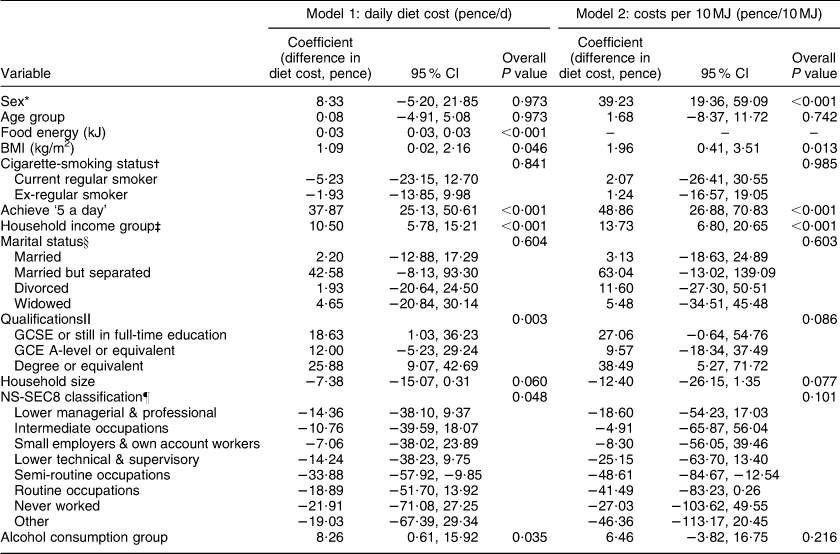
Model 1 results indicated that daily diet costs were significantly greater with higher energy intake, after adjusting for the other variables (see Table 2): each additional 400 kJ (approximately 100 kcal) was associated with an extra 12 pence. Achieving ‘5 a day’ was associated with an extra 38 pence. There was also a significant overall effect of equivalized household income category on daily diet costs, with an additional 10 pence associated with each progression up through the categories (the model-estimated cost at the lowest income category was £2·90). A significant overall effect was apparent for qualifications and employment classification. In addition, BMI was positively associated with diet costs.
Regression of sociodemographic and lifestyle variables on estimates of daily diet cost (Model 1) and costs per 10 MJ (Model 2); adults aged 19 years or over, UK National Diet and Nutrition Study, 2008–2010 (n 808)
GCSE, General Certificate of Secondary Education; GCE, General Certificate of Education; NS-SEC8, National Statistics Socio-economic Classification, eight categories.
Underweight participants (BMI<18·5 kg/m2) excluded.
*Reference category = males.
†Compared with participants who have never regularly smoked (reference category).
‡Equivalized household income categories: up to £14 999; £15 000–£24 999; £25 000–£34 999; £35 000–£49 999; £50 000 or more per annum.
§Reference category = single, never married.
||Compared with participants with no qualifications.
¶Reference category = higher managerial & professional.
Table 2 also presents the results of Model 2. This model revealed significant effects of household income and achieving ‘5 a day’, as was found in Model 1. Furthermore, in Model 2, each higher income category was associated with an additional 14 pence per 10 MJ, and those who achieved ‘5 a day’ had an energy-adjusted cost of 49 pence more per 10 MJ than those who did not. For BMI, each additional kg/m2 was associated with an additional 2 pence per 10 MJ. In contrast to the first model, however, a significant effect was observed for sex, with females showing costs of 39 pence per 10 MJ higher than males, while estimates for qualifications and employment did not achieve significance.
After adjustment, no significant effects were apparent in either model for age group or cigarette-smoking status.
Discussion
This is the first time that a monetary value has been applied to individuals’ diets in the NDNS. These costs are estimates of the inherent value of diets, as opposed to actual expenditure. For this reason, as well as the fact that the price data were collected in a different year from the dietary data, the diet costs presented here will not be directly comparable to the findings of food expenditure studies. Instead, the findings contribute to our understanding of patterns in the inherent monetary value of diets across sociodemographic variables.
The monetary value of diets was strongly associated with energy intake (r = 0·66), indicating that those with higher energy requirements face higher diet costs. Due to this relationship, adjusting diet costs to 10 MJ should allow a fairer comparison.
Univariate comparisons highlighted interesting differences between subgroups in this sample. For example, men were estimated to have higher daily diet costs than women in this sample, but lower diet costs per 10 MJ. This is a pattern similarly reported in a French( Reference Maillot, Darmon and Vieux 24 ) and a US( Reference Monsivais and Drewnowski 10 ) sample, although not apparent in all studies of this type( Reference Rehm, Monsivais and Drewnowski 9 ). The pattern likely reflects the higher energy intakes that tend to be observed in males, with diet costs and energy intakes being strongly correlated. After adjusting costs to 10 MJ, males exhibited lower costs, probably as a result of having more energy-dense diets, a sex difference similarly reported in other samples( Reference Ledikwe, Blanck and Khan 25 , Reference Marti-Henneberg, Capdevila and Arija 26 ). In the multivariable analysis, however, sex no longer had a significant effect on daily diet costs. This supports the explanation above, because the inclusion of energy intake as a covariate for daily diet costs resulted in a loss of statistical significance. However, a difference between the sexes was still apparent when diet cost per 10 MJ was the outcome.
Both diet cost variables were found to increase monotonically with income categories in this sample. The increase in cost per 10 MJ with rising income categories is particularly interesting: because the food price database uses mean values, it implies that the additional costs incurred by the higher income categories result from the selection of different foods, rather than ‘trading up’ to higher-quality, more expensive versions of the same items. In reality, higher-income participants may also have ‘traded up’ in addition to choosing different foods from lower-income subjects, which would augment the observed diet cost differences. Similar income effects have been observed in some( Reference Monsivais, McLain and Drewnowski 6 , Reference Rehm, Monsivais and Drewnowski 9 ), although not all( Reference Waterlander, de Haas and van Amstel 12 ), comparable studies. (The authors of the latter study suggest the lack of significance may be attributed to a lack of statistical power in the sample, or inappropriate income measurement.)
Those in managerial and professional positions showed higher diet costs than other occupations; as did those with higher compared with lower educational qualifications. Differences in diet cost by education have been described in other countries( Reference Monsivais, McLain and Drewnowski 6 , Reference Rehm, Monsivais and Drewnowski 9 , Reference Monsivais and Drewnowski 10 ), but previous studies have not reported occupation differences in diet costs. The influence of education and occupation on diet costs could be indirect, through links with income. Alternatively, diet selection may be influenced by education and occupation independently. In the literature, education appears to be more strongly associated with dietary habits than occupation( Reference De Irala-Estevez, Groth and Johansson 27 , Reference Giskes, Avendano and Brug 28 ), although one study implies that the effect of education may be mediated by the influence of income( Reference Lallukka, Pitkaniemi and Rahkonen 29 ).
Significant associations with daily diet cost were evident for each of these socio-economic indicators (income, qualifications and employment) after adjusting for the other variables in the regression analysis. This supports the suggestion that they are independently influential. However, only income was significantly associated with diet costs per 10 MJ.
Differences in diet costs per 10 MJ were evident between smokers and non-smokers in the current study. It could be speculated from this relationship that the monetary costs of smoking impinge upon the food budget. Conversely, the findings may reflect a clustering of behaviours (smoking and poor diet). The latter interpretation is supported by the observation that cigarette-smoking status was not found to be significantly related to diet costs after adjusting for other variables. In other populations, comparisons between smokers and non-smokers have resulted in mixed findings( Reference Lopez, Martinez-Gonzalez and Sanchez-Villegas 14 , Reference Murakami, Sasaki and Okubo 15 ).
In this sample, the observation of increasing daily diet costs with increasing alcohol consumption could also be attributed to the concomitant increasing intakes of food energy (not presented). However, those who consumed no alcohol exhibited a similar median cost to the highest alcohol consumers when adjusted to 10 MJ, suggesting that the observed differences are not solely due to energy differences and again supporting a behaviour-cluster interpretation. A previous study( Reference Breslow, Guenther and Smothers 30 ) has identified a significant pattern of lower diet quality with increasing alcohol consumption, but only a few have reported increasing food energy intake( Reference Kesse, Clavel-Chapelon and Slimani 31 ) or a tendency to over-report food intake among higher alcohol consumers( Reference Zhang, Temme and Kesteloot 32 ). On the other hand, it is also possible that drinking behaviours are linked to disposable incomes and thereby affect food budgets.
Both daily diet costs and diet costs per 10 MJ were positively associated with BMI in the multivariable regression analyses, indicating higher costs with increasing body mass. This finding contrasts with the negative association between BMI and diet cost found in a cross-sectional survey of Japanese students( Reference Murakami, Sasaki and Okubo 15 ), but is in keeping with a longitudinal study in Spain which indicated increased odds of weight gain among those who had higher diet costs at baseline( Reference Lopez, Martinez-Gonzalez and Sanchez-Villegas 14 ). The apparent positive relationship between diet costs and BMI does not lend support to the idea that food prices have contributed to obesity rates( Reference Monsivais, McLain and Drewnowski 6 , Reference Darmon, Briend and Drewnowski 7 ). However, the limitations of the current cross-sectional study (see below) do not allow a causal interpretation, and this aspect warrants further investigation.
Diets containing five portions or more of fruit and vegetables daily were found to be of higher monetary value than those that featured fewer. This supports the findings of previous research suggesting that people who score more favourably on healthy diet indicators( Reference Darmon, Briend and Drewnowski 7 , Reference Waterlander, de Haas and van Amstel 12 , Reference Schroder, Marrugat and Covas 13 , Reference Cade, Upmeier and Calvert 16 , Reference Maillot, Darmon and Vieux 24 , Reference Ryden and Hagfors 33 ), as well as those who consume more fruit and vegetables in particular( Reference Rehm, Monsivais and Drewnowski 9 ), tend to spend more money on food or consume higher-value diets. In addition, the findings presented here go further than many of the other studies in showing that the relationship between fruit and vegetable consumption and diet costs remains even after adjusting for other economic and demographic factors. While some studies report that a diet adhering to national guidelines is theoretically achievable on low incomes (e.g. in the USA( Reference Cassady, Jetter and Culp 34 )), others have found that modelling diets to be both palatable and nutritionally adequate does increase costs( Reference Darmon, Ferguson and Briend 35 ). One study in Ireland predicted that the cost of adhering to proposed guidelines, while achievable in theory, would take up to 100 % of the income from welfare for an adolescent male( Reference Flynn, O'Brien and Ross 36 ).
The current study did not investigate costs according to wider measures of diet quality nor adherence to guidelines other than fruit and vegetables. Nevertheless, the results imply that the better-quality diets, as signified by the consumption of fruit and vegetables, were of higher intrinsic monetary worth. It cannot be determined from this study design whether diet costs were influential in participants’ food selection; nevertheless, the relationships evident between diet costs and socio-economic markers are interesting, with potential policy implications, especially if fiscal interventions are being considered.
Limitations
Assigning costs to dietary data using a food price database is a potentially useful methodology. It is not without limitations, however. First, it should be noted that these diet cost estimates will inevitably echo any measurement error associated with the dietary assessment tool from which they are extrapolated. Under-reporting of food consumption, for example, will result in an underestimation of diet cost. Where under-reporting may be more prevalent among certain subgroups, as it has been suggested to be for those classified as obese for example( Reference Rennie, Coward and Jebb 37 ), the resulting bias could influence the results of subgroup comparisons. In this sample, energy intake was found to vary significantly between BMI categories, with the lowest energy intake reported in the obese (not presented). This perhaps suggests that such bias exists within the sample. Unfortunately, the NDNS does not contain physical activity data for the main sample, making it problematic to evaluate the extent of under-reporting. Other forms of measurement error associated with diet diaries could also have biased diet cost estimations, including dietary behaviour change in response to the assessment( Reference Vuckovic, Ritenbaugh and Taren 38 ).
This method of costing has limits in establishing the role of diet costs in food selection. First, because the results imply that the diets of certain subgroups are worth more, not necessarily that these populations spend more on their diets. The value of a person's diet may not reflect the prices he/she encountered in purchasing his/her foods: the food cost database does not account for restaurant or takeaway meals, for example, which are likely to be higher than those estimated; nor can it identify free, shared or foraged food. Second, as a cross-sectional study, it is impossible to gauge whether diets of a lower monetary value are selected as a result of budgetary considerations or whether the value of a diet merely reflects a preference for cheaper foods due to other factors.
Strengths
These findings add to the literature on social inequalities in diet and health. Many of the patterns revealed here appear to substantiate speculated differences in diet costs, which should impart confidence to the costing method.
The existence of diet cost differences between certain groups of people could have implications in the consideration of proposed fiscal interventions to combat public health issues such as obesity (as suggested in one recent report( 39 )), that may differentially affect socio-economic groups. This is concerning, especially given that the differences between sociodemographic groups observed here are likely to be conservative.
Individual-level diet costs will allow the investigation of diet costs in relation to health outcomes. Therefore, the present study paves the way for further investigations linking the monetary value of diets in the UK with dietary quality and ultimately health. Further investigations of this kind are planned in this sample.
Conclusions
The current study quantified individual diet costs for a representative UK sample. The findings suggest that certain subgroups in the UK consume diets of lower monetary value – those in the lower income categories and those who do not consume the recommended quantity of fruit and vegetables, for example. Costing diets in this manner is constrained by the measurement error associated with dietary assessment. Nevertheless, further research is now possible investigating the links between diet costs and health in a representative UK sample.
Acknowledgements
Sources of funding: K.A.T. is funded by an Economic and Social Research Council/Medical Research Council (ESRC/MRC) PhD studentship. ESRC and MRC had no role in the design, analysis or writing of this article. The original data creators, depositors or copyright holders of the NDNS and the UK Data Archive bear no responsibility for their further analysis or interpretation. NDNS copyright: Crown copyright is held jointly with the National Centre for Social Research. Crown copyright material is reproduced with the permission of the Controller of HMSO and the Queen's Printer for Scotland. Conflicts of interest: There are no conflicts of interest to declare. Ethical approval: This study contains secondary analyses of the NDNS. The NDNS obtained ethical approval from the Oxfordshire A Research Ethics Committee. Further details of ethical approval are described in the survey report( Reference Bates, Lennox and Bates 19 ). Authors’ contributions: K.A.T. carried out the analysis and wrote the first draft of this paper. J.E.C. and C.H. provided guidance through PhD supervision, as well as comments and edits on the paper drafts. Acknowledgements: The authors would like to acknowledge Kevin Tarbutt (funded by a Rank Prize Fund) and Edmund Parks, who created and updated the DANTE cost database, as well as the original NDNS data creators, depositors and funders: the National Centre for Social Research, the Northern Ireland Statistics and Research Agency, the Medical Research Council, University College London Medical School, the Food Standards Agency, the Department of Health and the UK Data Archive.



