


In Germany, in the early 1990s, shortly after reunification, substantial differences in diet between the eastern and western parts were reported in adults(Reference Winkler, Brasche and Heinrich1). Although food consumption patterns have since largely converged, differences still existed in 1998(Reference Mensink and Beitz2) and hence they probably do even today.
Furthermore, socio-economic inequalities in food choice and dietary intakes have been reported constantly in the past(Reference Giskes, Turrell and van Lenthe3–Reference Lopez-Azpiazu, Sanchez-Villegas and Johansson6). These studies supported the hypothesis that people from higher socio-economic classes have higher intakes of healthy foods, such as whole grains, fish, low-fat dairy products, fresh fruit and vegetables, and lower intakes of unfavourable foods, such as meat and added fat, and were thus more likely meet dietary recommendations than people from lower socio-economic classes. Although these associations have been studied mainly in adults, as reviewed recently(Reference Darmon and Drewnowski7), it is less clear how parental socio-economic position influences food intake in school-age children. In this context, it would be worth knowing whether and how dietary supplement use in children depends on parental education and household income, as this has become common in German children and adolescents over the past years(Reference Sichert-Hellert and Kersting8). According to the German Health Interview and Examination Survey for Children and Adolescents (KiGGS), 15 % of 12–13-year-old boys and 23 % of 12–13-year-old girls were taking dietary supplements in 2006(Reference Six, Richter and Rabenberg9). Educational inequalities were found; however, as most dietary supplements are quite expensive, household income is likely to further limit supplement intake in children.
Detailed knowledge of dietary differences associated with socio-economic inequalities or region of living has important implications, both for the analysis of epidemiological studies and for improving interventions to promote healthy eating. Therefore, the aim of the present study was to describe potential differences between eastern and western Germany and the effect of parental education and equivalent income on food, nutrient and supplement intake in our study population of 9–12-year-old children living in Germany.
We hypothesise that the intake of favourable foods in children, such as fruit and vegetables, as well as the intake of clearly unfavourable foods such as sweets and cakes, shows a social gradient, which is probably mainly determined by the level of parental education and equivalent income. We further hypothesise that, in addition to socio-economic differences, regional differences between eastern and western Germany exist for particular foods and food groups.
Methods
Study population
Data from two ongoing German birth cohort studies were combined for the present analysis.
The GINIplus (German Infant Nutritional Intervention) study is a prospective birth cohort study that comprises the GINI intervention study (I) and the GINI non-intervention study (NI) and was initiated to investigate the influence of nutritional intervention during infancy, as well as that of air pollution and genetics on allergy development. Details on study design, recruitment and exclusion criteria have been described elsewhere(Reference von Berg, Koletzko and Grubl10, Reference von Berg, Filipiak-Pittroff and Kramer11). In brief, between September 1995 and June 1998, a total of 5991 healthy full-term newborns were recruited from obstetric clinics in two regions of Germany (urban Munich and rural Wesel). Group I (n 2252) included infants with a family history of allergy. In this prospective, double-blind intervention trial, newborns were randomized at birth to one of three hydrolysed formulae or to a conventional cow's milk formula. The formulae were provided only if the recommended exclusive breast-feeding for the first 4 months was not feasible or wanted. Infants with no family history of allergy (n 2507) or with a positive family history but from parents who refused to participate in the intervention trial (n 1232) were allocated to the NI group. This group was sent only the yearly questionnaires and did not receive any of the additional intervention procedures.
All children (I and NI groups) were followed up with identical questionnaires at 1, 2, 3, 4, 6 and 10 years of age to collect information on health outcomes and covariates, such as children's nutrition and other lifestyle factors. A total of 3317 children (55·4 %) of the original study population participated in the 10-year follow-up. Loss to follow-up was associated with a lower level of parental education, a negative history of parental atopy, the absence of atopic diseases in the child during the first 2 years of life and residency in Wesel; the presence of older siblings was not associated with discontinuation of the study.
The LISAplus study is a population-based birth cohort investigating ‘influences of lifestyle-related factors on the immune system and the development of allergies in childhood’. Details on study design are described elsewhere(Reference Heinrich, Bolte and Holscher12, Reference Zutavern, Brockow and Schaaf13). In brief, between November 1997 and January 1999, a total of 3097 newborns were initially recruited from four German cities: Munich, Leipzig, Wesel and Bad Honnef. Questionnaires on family history of atopy, parental education and other lifestyle factors were completed by parents shortly after delivery. Data on the child's health were collected by repeated parental-completed questionnaires at regular time intervals during the first 10 years (0·5, 1, 1·5, 2, 4, 6 and 10 years of age). Since the 6-year follow-up, the influences of traffic emission and genetics on allergy development have become the focus of the study. A total of 1761 children (56·9 %) of the original study population participated in the 10-year follow-up. Loss to follow-up was strongly associated with a lower level of parental education and residency in Wesel or Leipzig, whereas the absence of older siblings, a negative history of parental atopy and absence of atopic diseases in the child during the first 2 years of life showed a weak association with discontinuation of the study.
In the 10-year follow-up of both studies, an FFQ was sent to all parents of children who completed the main questionnaire in advance and who indicated a willingness to participate in the dietary assessment. Since the FFQ was provided subsequent to the main questionnaire and only one written reminder was sent, the participation rate in the FFQ was overall 67·9 %, based on participation in the 10-year main questionnaire. Subjects were excluded because of excessive missing information in the FFQ (n 6) or because of implausible energy intake (n 6). Thus, the present analysis is based on 3435 subjects from GINIplus (n 2190) and LISAplus (n 1245).
For both studies, approval from the local ethics committees (Bavarian General Medical Council, University of Leipzig, Medical Council of North-Rhine-Westphalia) and written consent from participant's families were obtained.
FFQ
The FFQ administered to parents was designed to measure children's usual food and nutrient intake over the past year, and more specifically to estimate energy, fatty acid and antioxidant intake at 10 years of age. The development including the selection process of the food item list and validation of the FFQ has been described previously(Reference Stiegler, Sausenthaler and Buyken14).
The FFQ comprised a list of eighty-two food items accompanied by several questions about the preferred fat and energy content of products, preparation methods, diets and food preferences, buying habits and dietary supplement use. To estimate how often food was consumed by their child on average over the previous year, parents were asked to choose one of nine frequency categories, ranging from ‘never’ to ‘four times a day or more’. In addition, common portion sizes were assigned for each food item to enable an estimation of quantities. For food items that are difficult to describe in common household measures, coloured photographs from the EPIC (European Prospective Investigation into Cancer and Nutrition) study showing three different portion sizes were included(Reference Bohlscheid-Thomas, Hoting and Boeing15). The consumption frequencies and portion size estimates were converted into average consumption in g/d and this information was linked to the German Food Code and Nutrient Database (BLS) version II·3·1(Reference Hartmann, Bell and Vásquez-Caiquedo16). Where food portions were not illustrated by pictures, portion size data were obtained from a German list of portion sizes, and weighting of single foods of one FFQ item was carried out according to information obtained from the DONALD (Dortmund Nutritional and Anthropometric Longitudinally Designed) Study(Reference Kroke, Manz and Kersting17) in order to represent the common consumption frequencies among the children's age group. This has been described in more detail by Stiegler et al.(Reference Stiegler, Sausenthaler and Buyken14). Missing categorical and continuous variables were replaced by median and mean frequencies of consumption, respectively, obtained from the remaining study population.
For food items rich in fat, such as butter, margarine, sausages and dairy products, additional questions on the fat content that subjects usually choose were asked and answers were applied to the relevant items on the list. Likewise, the energy content of beverages such as soft drinks and fruit drinks was considered.
Summation questions as introduced by Block et al.(Reference Block, Woods and Potosky18) about the average consumption frequencies (per day or per week) of the food groups bread, fruit, vegetables and beverages were included at the end of the FFQ as general consumption frequencies have been assumed to be more valid than the sum of single frequencies(Reference Haraldsdottir19). They permit the adjustment of food consumption to reduce the overestimation resulting from the use of a long food item list while retaining the reported distribution of these foods. If the sum of the single food items was different from the overall estimate, individual correction factors were calculated by dividing the food group intake obtained by the summation question by the sum of intakes from the single food items belonging to this food group. Daily food intake was then multiplied by individual correction factors.
Questions on regular dietary vitamin and mineral supplement use were included at the end of the FFQ. The list of possible answers included ‘multivitamins’, ‘vitamin C’, ‘vitamin E’, ‘vitamin B’, ‘β-carotene’, ‘Ca’, ‘Mg’, ‘fluorine’ and ‘others’, allowing to specify other supplements regularly used by the participant. For the purpose of nutrient calculation, this information was linked to the supplement database of the DONALD Study, which contains detailed data on all supplement products ever recorded in the study's 3 d weighted dietary records(Reference Kroke, Manz and Kersting17). However, as the contribution of vitamin intake by supplements was not significant and as we had only rough information about the dosage and frequency of supplement use, we abstained from including vitamin intake from supplements for our analyses. Fatty acid intake by supplementation such as fish oil could anyway not be considered because this was not recorded in the DONALD supplement database.
Socio-economic status: parental education and household income
Parental education was determined on the basis of questionnaire-derived information about school education according to the German educational system, and was defined by the highest grade completed by either the mother or the father. Thus, children were assigned to the group of low (less than tenth grade), medium (tenth grade) or high (more than tenth grade) parental education.
Net household income per month was reported in the 10-year questionnaire using a 9-point scale ranging from <€500 to >€3500. The calculation of equivalent income according to the OECD (Organisation for Economic Cooperation and Development) guidelines(Reference Hauser20) was carried out by dividing the net household income by an equivalence factor, which gives a weight of 1·0 to the first adult, 0·5 to all other adults and children >14 years, and 0·3 to all children up to 14 years. As income was measured categorically, we took the mid-point of each income class to calculate the income level. For the lowest income level (<€500) we calculated two-thirds (€333) of this limit, and for the highest income level (>€3500) four-thirds (€4667), as described before(Reference Sausenthaler, Kompauer and Mielck21). Finally, the new variable was collapsed into three groups of low, medium and high household income. To enable comparing parental education with household income, a similar class size for both variables was needed. Therefore, the classification was based on quintiles so that the percentage of subjects in each group of household income equals the percentage of children in the respective group of parental education. Owing to the different income structure in the four study areas, classes were calculated separately for each study centre.
Statistical analysis
Nutrient and food intake data are presented by median and the 25th and 75th percentiles, stratified by region and gender. Food intake data are presented in g/d (Table 2) and as mean contribution to total energy intake (Table 4). For all nutrients, intake data are given in U/MJ and for macronutrients the percentage contribution to total daily energy intake (%E) is also shown (Table 3). Statistically significant differences between study centres and gender in food and nutrient intake were tested by the non-parametric Kruskal–Wallis test.
Logistic regression modelling was used to analyse the effect of parental education, equivalent income and region on food intake adjusting for potential confounders. Food intake data were dichotomised and the upper 25 % of intake for each gender- and centre-specific subgroup was used as outcome variable. Adjusted OR and the corresponding 95 % CI were computed. First, we examined the association between parental education and food intake adjusted for the covariates age and parental atopy. We then calculated a model that included equivalent income, age and parental atopy. Owing to the correlation between parental education and household income (r = 0·28; P < 0·0001), mutual adjustment for these two influencing variables was not allowed. Furthermore, a model for the effect of living in Leipzig compared with Munich on food intake was analysed. For this purpose, gender-specific cut-off points for defining high food intake were used.
Supplement use is described as a percentage of the study population for boys and girls. In addition, logistic regression models were calculated to estimate the probability of regular supplement intake dependent on parental education and equivalent income, adjusted for gender, study centre and age. All computations were carried out using the statistical software R, version 2·9·1 (R Foundation for Statistical Computing, Vienna, Austria)(22).
Results
The study population consisted of 3435 children (1683 girls and 1752 boys) aged 9–12 years (median: 10·7). Altogether, 50·3 % and 7·8 % of all children lived in the urban areas of Munich (western Germany) and Leipzig (eastern Germany), respectively, whereas 37·4 % and 4·5 % lived in the more rural areas of Wesel and Bad Honnef (both in western Germany). Table 1 shows the basic characteristics of the study population stratified for the four study centres. Children in Munich and Bad Honnef had a higher parental education than children in Leipzig and Wesel. Similarly, the highest equivalent income was reported in Munich, followed by Bad Honnef, Leipzig and Wesel. The mean body weight and height were 38·0 (sd 7·5) kg and 147·8 (sd 7·4) cm, respectively. The median (50th percentile) BMI in the whole study population was 16·8 kg/m2, 90 % of all children showed a BMI <20·7 kg/m2 and 97 % <23·2 kg/m2. Minor differences in the distribution of these anthropometric measures among the study centres could be explained by age differences. An FFQ was mostly completed in autumn (63·9 %) compared with winter (15·5 %), spring (13·3 %) and summer (7·3 %).
Basic characteristics of the study population: German children aged 9–12 years, GINIplus and LISAplus studies
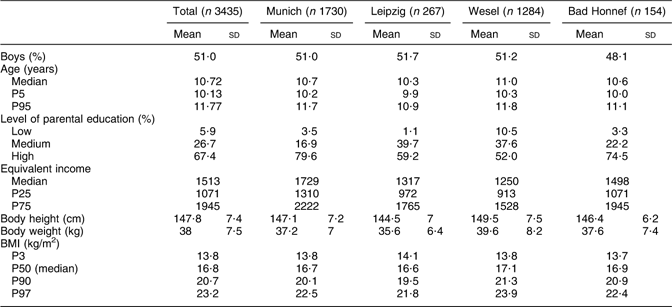
P5, 5th percentile; P95, 95th percentile; P25, 25th percentile; P75, 75th percentile; P3, 3rd percentile; P50, 50th percentile; P90, 90th percentile; P97, 97th percentile.
The food group intakes in g/d are presented in Table 2 according to study centre and gender. Children in Munich consumed less bread, margarine, dairy products and potatoes and more breakfast cereals (only boys), vegetable oil and fruit/vegetable juices than did children in the other study centres. The intakes of cheese, fruit, cake/pastry and tea were highest in children from Leipzig, whereas they had the lowest intakes of rice, pizza and vegetables/salad compared with children from the other study centres. The highest intake for meat and the lowest intake for butter were observed in Wesel.
Median intake of food groups per day in the study population by gender and region
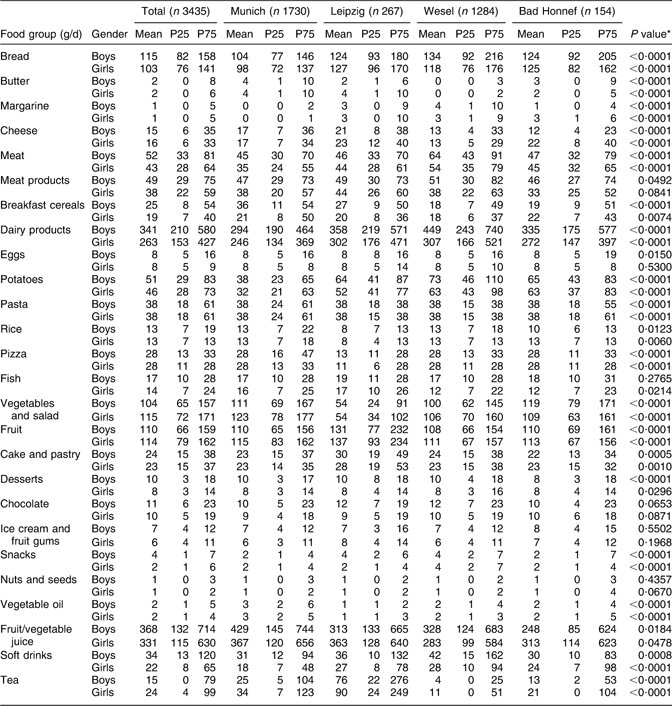
P25, 25th percentile; P75, 75th percentile.
*Kruskal–Wallis test.
The median nutrient intakes per unit energy are presented in Table 3 according to study centre and gender. For boys, total energy intake was lowest in Munich, and for girls in Bad Honnef, whereas Wesel showed the highest energy intake for boys and Leipzig for girls. The macronutrient profiles, including energy derived from protein, carbohydrates and fat, were similar between the four study centres. Relying on P values, statistically significant differences between the four study centres were observed for all nutrients, except vitamin C.
Median nutrient intakes per unit energy in the study population by gender and region
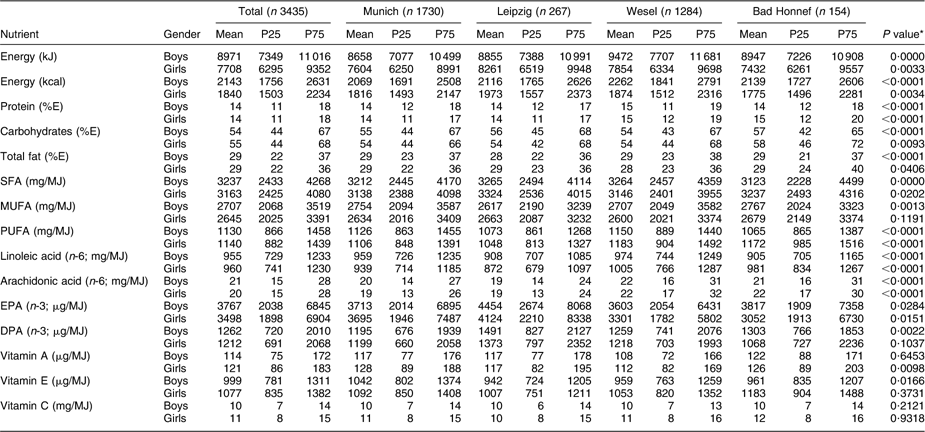
P25, 25th percentile; P75, 75th percentile.
*Kruskal–Wallis test.
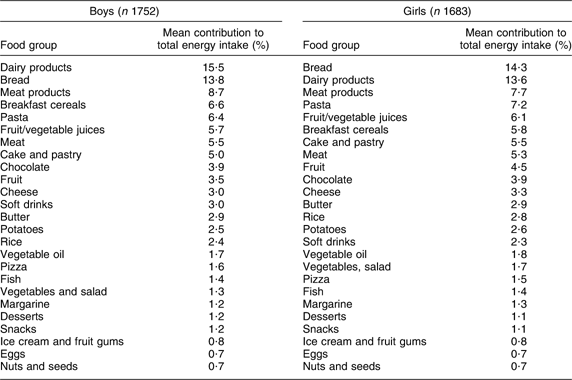
The two main sources of total daily energy intake were dairy products and bread, followed by meat products, breakfast cereals, pasta and fruit/vegetable juices (Table 4). The food groups with the smallest contribution to total energy intake (<1 %) were ice cream and fruit gums, eggs and nuts and seeds. The food group ranking in terms of %E contribution was similar although not identical between boys and girls. Regional differences between the study centres were small and derived from the differences in daily food intake described in Table 2.
Mean contribution of food groups to total energy intake in boys and girls
Parental education, household income, region and food intake
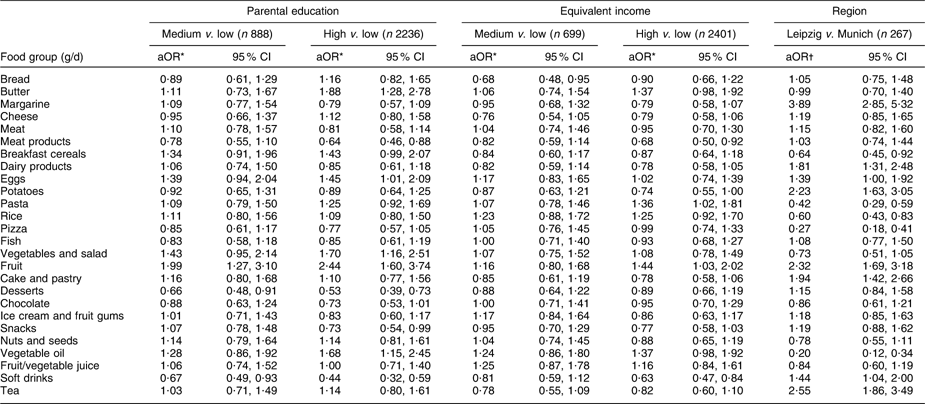
The impact of parental education, equivalent income and regional effects on children's food intake was investigated by logistic regression models (Table 5), where the upper 25 % of food intake for each gender- and centre-specific subgroup was the dependent variable. Food groups that showed a significant direct relationship with the level of parental education after adjusting for age and parental atopy were butter, eggs, vegetables/salad, fruit and vegetable oil. In turn, the intake of meat products, desserts, snacks and soft drinks was inversely associated with parental education.
Results of logistic regression models of parental education, equivalent income and region on children's food intake (defined as the upper 25 % of each gender- and center-specific subgroups)
aOR, adjusted OR.
Low parental education, low family income and the study centre in Munich formed the reference category.
*OR adjusted for age and parental atopy; centre- and gender-specific cut-off points were used to define high intake (upper 25 %).
†OR adjusted for parental education, age and parental atopy; gender-specific cut-off points were used to define high intake (upper 25 %)
In contrast, equivalent income showed a weaker influence on the child's food intake. Children with a comparatively high equivalent income had lower intakes of meat products and soft drinks and a higher pasta and fruit intake than those in the lowest income category. A model including age, parental atopy, parental education and equivalent income did not indicate that mutual adjustment would have any effect on the magnitude of OR (data not shown).
Table 5 also shows the effect estimates for the association between region (Leipzig, eastern Germany) compared with Munich (western Germany) and gender-specific high food intake controlling for parental education, age and parental atopy. Compared with Munich, children from Leipzig had statistically significant higher intakes of margarine, dairy products, eggs, potatoes, fruit, cake/pastry, soft drinks and tea and lower intakes of breakfast cereals, pasta, rice, pizza and vegetable oil.
Supplement use
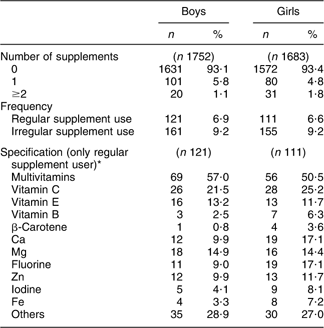
In total, the percentage of regular supplement users was 6·9 among boys and 6·6 among girls. About 9·2 % of both sexes reported adding supplements irregularly to their diet (Table 6). Multivitamins were the most common supplements, used by 57·0 % (boys) and 50·5 % (girls) of all regular supplement users. Among the single vitamin or mineral products, vitamins C and E, Ca and Mg were the most important ones. Fluorine was used by 9·0 % of the boys and 17·1 % of the girls who were taking supplements regularly. A high proportion of children (28·9 % of all boys and 27·0 % of all girls) indicated taking dietary supplements other than the ones presented here. Due to the large variety of different supplements, they have been summarised into one heterogeneous group labelled ‘other supplements’. The majority of supplement users (5·8 % and 4·8 %) reported the use of only one type of supplement; <2 % took two or more.
Prevalence of supplement use in boys and girls
*Multiple answers possible.
Regular supplement use was more common among children in Munich (7·9 %) and Bad Honnef (8·4 %) than in Leipzig (4·5 %) and Wesel (5·5 %; data not shown). The proportion of supplement types varied between study centres, but because of the small numbers significance testing is limited. In Leipzig (66·7 %) and Bad Honnef (69·2 %), the use of multivitamins was more often reported than in Munich (54·0 %) and Wesel (48·6 %; data not shown).
Supplement users were compared with non-users with respect to parental education and equivalent income in a multiple logistic regression model (Table 7). Neither parental education nor equivalent income showed a statistically significant relationship with regular supplement use in children, although more regular supplement users were found among children with medium (7·4 %) or high (6·8 %) parental education compared with children with low parental education (4·7 %).
Results of logistic regression models of parental education and equivalent income on children's supplement use

aOR, adjusted OR.
*Adjusted for gender, study centre and age.
Discussion
The results of the present study suggest an association of parental education and region with food intake in 9–12-year-old children, whereas association with the level of equivalent income was weak. No statistically significant associations were observed between parental education or equivalent income and supplement intake in children.
The descriptive food and nutrient intake data of the present study were partly in very good agreement with data from the nationally representative eating study (EsKiMo)(Reference Mensink, Heseker and Richter23) as part of the KiGGS study. The absolute intakes (in g/d) for 10–11-year-old boys in the EsKiMo study and for 9–12-year-old boys in the present study were very similar for the food groups bread (105 g and 115 g), cheese (17 g and 15 g), eggs (9 g and 8 g), potatoes (53 g and 51 g), pasta (37 g and 38 g) and fruit (112 g and 110 g). In contrast, the reported intakes of meat (52 g and 25 g), breakfast cereals (25 g and 9 g), dairy products (341 g and 244 g) and fruit/vegetable juice (368 g and 193 g) derived from our FFQ were much higher than the corresponding EsKiMo intake data and may have even overestimated the true intakes. However, absolute intake data are in general hardly comparable because of different food group definitions and aggregation levels. In any case, the main sources of total daily energy intake in our study population were comparable to those reported by the EsKiMo study. Dairy products (15·5 % and 11 %), bread (13·8 % and 14 %), fruit/vegetable juices (5·7 % and 7 %) and cake/pastry (5·0 % and 7 %) were ranked among the first eight food groups in both studies, where the first value given in brackets corresponds to all boys of the present study population and the second value to 6–11-year-old boys of the EsKiMo study. This general good agreement was also reflected on the nutrient level, as intakes of the macronutrients fat, protein and carbohydrates as well as vitamins E and C corresponded to the values reported by the EsKiMo study. Only total energy intake in boys (8971 kJ (2143 kcal) and 7586 kJ (1813 kcal)) seemed to be overestimated in the present study.
For children, the KiGGS study suggests no persisting dietary differences in intakes between children from eastern and western Germany(Reference Stahl, Vohmann and Richter24), which is in contrast to our findings. We compared food group intakes between metropolitan areas such as Leipzig in the east and Munich in the west of Germany and observed some significant differences for the food groups margarine, dairy products, eggs, potatoes, fruit, cake/pastry, soft drinks, tea, breakfast cereals, pasta, rice, pizza and vegetable oil. The study centres Wesel and Bad Honnef have been excluded from the analysis although they are located in the west of Germany. Owing to the heterogeneity of the three western study centres, rural/urban and north/west differences would be implied in the east/west comparison. Certainly, the different socio-economic structures of the two study centres might have contributed to the observed regional effects as, for example, parents in Munich (79·6 %) more likely had a high educational level than in Leipzig (59·2 %; see Table 1). Thus, the correlation between parental education and region (r = 0·17; P < 0·0001) might have led to residual confounding even after controlling for parental education. As this could also affect the association between parental education and food intake, we calculated gender- and centre-specific cut-off points for defining high food intake for analysing the association with parental education to minimise the described effect.
Comparing present findings with other studies is difficult because various measures for socio-economic position have been used, including education, income or occupation, which have been shown not to serve as adequate proxies for one another(Reference Turrell, Hewitt and Patterson25). According to the findings of the present study, the intakes of butter, eggs, vegetables/salad, fruit, vegetable oil, meat products, desserts, snacks and soft drinks in children varied by level of parental education. Our findings are thus in line with probably the most consistent evidence of dietary inequalities in adults, showing a lower consumption of fruit and vegetables among socio-economically disadvantaged groups(Reference Giskes, Avendano and Brug4). This has also been reported by a study carried out in German schoolchildren, a part of WHO's cross-sectional survey HBSC (Health Behaviour in School-Aged Children)(Reference Klocke26), showing that the impact of the social situation was particularly strong for healthy foods, such as raw vegetables, fruit and wholegrain wheat bread. A Finnish study in children aged 9–15 years also reported that children of families with higher socio-economic status used more fruit than did children of families with lower socio-economic status, where family's socio-economic status was defined according to the father's educational level, his occupation and family income(Reference Laitinen, Rasanen and Viikari27). Contrary to our findings, they reported that high socio-economic status was associated with a higher margarine intake, whereas children of low socio-economic status had a higher intake of butter. However, although the parental education level was lower in Leipzig compared with Munich, fruit intake was higher in this eastern German city. This result strongly points to the additional impact of further influencing factors on food intake.
Another study showed that among several potential predictors of fruit and vegetable consumption analysed in pre-school children, maternal education emerged to be positively associated with children's vegetable consumption whereas no effect of fruit intake was reported(Reference Cooke, Wardle and Gibson28). Although the dependence of healthy food intake, such as fruit and vegetables, on social class has been studied well, the situation is less clear for some of the foods for which significant associations have been described in the present study. Within the ALSPAC (Avon Longitudinal Study of Parents and Children) study(Reference Rogers and Emmett29), a positive association between maternal education and intake of meat products and soft drinks was shown in 18-month-old children. Compared with school age, food choice at this age is completely under the control of parents, which is why parental socio-economic position might have a different effect than later in childhood.
Several possible limitations of the study should be considered. First, it should be noticed that the present findings are based on a cross-sectional analysis within the two cohort studies – LISAplus and GINIplus. Even though study sampling was primarily population-based, the study population is, as almost every cohort study, subject to selection bias, and thus the findings are not representative for Germany. Owing to non-random loss to follow-up, both cohorts on which the present analysis is based under-represent children from lower social classes. The true social inequalities might therefore even be stronger than reported here. Furthermore, the intakes of a large number of nutrients and foods were examined, many of which are correlated with one another. As a result there is the possibility of type I errors occurring. However, the significant associations that we have found are either similar to previous findings or are in line with our previous hypothesis, which leads us to believe that they are unlikely to be the result of type I error. Certainly, it has to be considered that the FFQ was actually not designed to measure, for example, carbohydrate and protein intakes. However, since total energy intake as well as the percentage contribution to total daily energy intake of carbohydrates and protein shows plausible values, we think that this justifies the analysis of the respective macronutrients. However, it has to be considered that the food item list included only those foods that significantly contribute to the intake of total energy, fatty acids and selected antioxidants.
Unfortunately, we do not have any information on whether fortified foods were consumed. However, according to a recent publication(Reference Flynn, Hirvonen and Mensink30), the contribution of fortified foods to total nutrient intake is rather low in Germany, in particular for vitamins E and A. The authors further conclude that the base diet is the major contributor to intakes of all nutrients in Europe. When we included nutrients from supplement intake in our analyses, the numbers did not change substantially, as the rather low frequency of regular supplement use in our study population (<7 %) let assume. However, the rather vague estimation of nutrient intake from supplements and the missing information on fortified foods could have led to misclassification of nutrient intake. However, the statistical models for the association between socio-economic factors and region on food intake are not affected by this matter.
One of the major strengths of the present study was the food selection method underlying the dietary assessment method as described previously(Reference Stiegler, Sausenthaler and Buyken14). In brief, this newly developed FFQ was designed for the specific purpose of measuring diet, especially fatty acid and antioxidant intake, in school-age children. The food selection method was based on a regression approach using data from 9–11-year old children from the German DONALD Study. The FFQ has been validated against one 24 h dietary recall and has shown good practicability in the past. In summary, even if the FFQ is generally believed to overestimate dietary intakes(Reference Robinson, Godfrey and Osmond31), we believe that this FFQ is valid to rank individuals according to their dietary intakes and to detect differences between levels of socio-economic status. Furthermore, this is one of the few studies in children collecting specific information on dietary supplement use.
In conclusion, we have found that food intake in school-age children differs by the level of parental education and area of living, but the differences cannot be attributed to healthy or unhealthy dietary habits. This suggests that particular efforts should be made to adjust nutrition education programmes to the target population characterised not only in terms of education but also by considering regional particularities.
Acknowledgements
The present study has been carried out partially with financial support from the Commission of the European Communities, within the FP 6 priority 5.4.3.1 Food quality and safety (Early nutrition programming – long-term follow-up of efficacy and safety trials and integrated epidemiological, genetic, animal, consumer and economic research, EARNEST, Food-CT-2005-007036). This research was supported by ‘Kompetenznetz Adipositas (Competence Network Obesity)’ and NGFNplus funded by the Federal Ministry of Education and Research (FKZ: 01GI0826, 01GI0823, 01GS0820). Personal and financial support by the Munich Center of Health Sciences (MCHEALTH), which contributed to this research, is gratefully acknowledged. None of the authors have any conflict of interest. S.S. and M.S. were responsible for data analysis, interpretation of data and manuscript preparation and contributed equally to the manuscript; A.B., P.R., S.K., I.L. and J.H. assisted in the interpretation of results and critical revision of the manuscript; C.P.B., B.S., A.v.B., D.B., M.B., O.H., I.L., U.K., H.-E.W. and J.H. were responsible for data collection; S.S., M.S. and J.H. developed the design and analysis plan of the present study. The authors thank all the families for their participation.
Appendix
GINIplus study group
Institute of Epidemiology, Helmholtz Zentrum Muenchen, German Research Center for Environmental Health, Neuherberg (Wichmann HE, Heinrich J, Schoetzau A, Popescu M, Mosetter M, Schindler J, Franke K, Laubereau B, Sausenthaler S, Thaqi A, Zirngibl A, Zutavern A, Filipiak B, Gehring U); Department of Pediatrics, Marien-Hospital, Wesel (Berdel D, von Berg A, Albrecht B, Baumgart A, Bollrath C, Büttner S, Diekamp S, Groß I, Jakob T, Klemke K, Kurpiun S, Möllemann M, Neusüss J, Varhelyi A, Zorn C); Ludwig Maximilians University of Munich, Dr von Hauner Children's Hospital (Koletzko S, Reinhard D, Weigand H, Antonie I, Bäumler-Merl B, Tasch C, Göhlert R, Sönnichsen C); Clinic and Polyclinic for Child and Adolescent Medicine, University Hospital Rechts der Isar of the Technical University Munich (Bauer CP, Grübl A, Bartels P, Brockow I, Hoffmann U, Lötzbeyer F, Mayrl R, Negele K, Schill E-M, Wolf B); IUF-Environmental Health Research Institute, Düsseldorf (Krämer U, Link E, Sugiri D, Ranft U).
LISAplus study group
Institute of Epidemiology, Helmholtz Zentrum Muenchen, German Research Center for Environmental Health, Neuherberg (Wichmann HE, Heinrich J, Bolte G, Belcredi P, Jacob B, Schoetzau A, Mosetter M, Schindler J, Höhnke A, Franke K, Laubereau B, Sausenthaler S, Thaqi A, Zirngibl A, Zutavern A); Department of Pediatrics, University of Leipzig (Borte M, Schulz R, Sierig G, Mirow K, Gebauer C, Schulze B, Hainich J); Institute for Clinical Immunology and Transfusion Medicine (Sack U, Emmrich F); Department of Pediatrics, Marien-Hospital, Wesel (von Berg A, Schaaf B, Scholten C, Bollrath C, Groß I, Möllemann M); Department of Human Exposure-Research and Epidemiology, UFZ-Center for Environmental Research Leipzig-Halle (Herbarth O, Diez U, Rehwagen M, Schlink U, Franck U, Jorks A, Röder S); Department of Environmental Immunology, UFZ-center for Environmental Research Leipzig-Halle (Lehmann I, Herberth G, Daegelmann C); Ludwig Maximilians University Munich, Dr von Hauner Children's Hospital, Department of Infectious Diseases and Immunology (Weiss M, Albert M); Friedrich-Schiller-University Jena, Institute for Clinical Immunology (Fahlbusch B), Institute for Social, Occupational and Environmental Medicine (Bischof W, Koch A); IUF Environmental Health Research Institute, Düsseldorf (Krämer U, Link E, Ranft U, Schins R); Clinic and Polyclinic for Child and Adolescent Medicine, University Hospital Rechts der Isar of the Technical University Munich (Bauer CP, Brockow I, Grübl A); Department of Dermatology and Allergy Biederstein, Technical University Munich (Ring J, Grosch J, Weidinger S).



