




In this article, I analyse the role of local and regional contexts in understanding important conceptual and methodological disciplinary shifts in climate research happening after the Second World War. In the nineteenth century, climate knowledge was being produced in several different disciplines, such as geography, meteorology, physics, botany, forestry, agronomy, geology, medicine and history, making climatology a heterogeneous research field.Footnote 1 However, these communities were rarely connected, and circled different interests and methodologies.Footnote 2 With the rise of climate models in the second half of the twentieth century, classical climatology, with its diversity of approaches and interests, was being replaced by a new climate science built around the idea of climate as a physical–mathematical concept.Footnote 3 Since the 1960s, as the Earth has increasingly been understood as an interconnected system, other spheres, in addition to the atmosphere, were to be integrated into climate models, requiring the input of many research disciplines, ranging from oceanography and glaciology to biology and ecology. Spencer Weart identified the emergence of climate modelling as a key reason for this ‘rise of interdisciplinary research on climate’.Footnote 4 The computer models, he argued, made it ‘painfully clear that scientists in the various fields needed one another’.Footnote 5
However, the processes of such interdisciplinary collaboration have remained abstract. To understand them, we need to look more closely at the research practice and incentives influenced by organizational structure and funding. Much of the historiography of post-war climate science has focused on the role of climate models and Cold War geopolitics in US or British contexts.Footnote 6 Although computer models and US institutions undoubtedly had a fundamental impact on how climate has been researched and by whom, the exclusive focus on modelling obscures other factors in, and forms of, interdisciplinary collaboration.
To analyse the process of interdisciplinarization in climate science, I therefore turn the spotlight to another technology and another region. I explore the role of isotope dating in the development of a new climate research field between nuclear physics, glaciology and climate science. For that purpose, I focus on a specific radiocarbon dating laboratory in Switzerland, established in 1956 at the University of Bern.
Radiocarbon dating entered climate research through palaeoclimatology. Palaeoclimatological data – information about the climate of past times – have played a crucial role in the success of climate models. However, palaeoclimatology has not just served as data provider for modellers. The studies of tree rings, pollen, sediments, stalagmites or ice to reconstruct past climates have a history of their own, some going back to long before the introduction of computers. Palaeoclimatology helps in the development of hypotheses to explain the present climate situation, providing a contrast with the present and supporting understanding of climate as a system.Footnote 7 In particular, temperature curves, such as the iconic ‘hockey stick’ graph, can be used to prompt political action.Footnote 8
Another, less famous, graph presents the so-called Dansgaard–Oeschger events, first reconstructed in the 1980s through the analysis of ice cores. It shows rapid temperature changes during the last glacial period between 12,000 and 120,000 years before present (BP). Using glacial ice as temperature proxies, the graph shows several abrupt temperature changes of ten to fifteen degrees Celsius each within approximately forty years. It indicated that the ‘recent climate stability may be the exception rather than the rule’.Footnote 9
As Antonello and Carey put it, ice core data have been used to ‘create a single timeline or temporality for Earth’.Footnote 10 But obtaining access to this past and translating it into a temperature curve require a complex interplay of technology, infrastructure, theories and scientific skills. In the case of the Dansgaard–Oeschger events graph, it required expensive ice drilling and laboratory technology, physical–chemical theories, interdisciplinary cooperation and, naturally, ample funding.
A key technology was dating, because only by assigning temperature information to a specific time in the past could the ice tell a climate history. There are several ways to assess the age of an ice sample. The most common has been the counting of ice layers.Footnote 11 Another dating method was radiocarbon, or carbon-14 dating. After its introduction in the 1940s, this dating method had enormous implications for disciplines such as archaeology.Footnote 12 The consequences for glaciology and climate science are less known. In what follows, I explore the context of the establishment of the radiocarbon dating laboratory in Bern, how it shifted its objectives towards climate research and what disciplinary changes were involved in this process. I argue that, in addition to US geopolitics, also local and regional contexts in other countries, and technology besides computer modelling, have played an important role in the development of modern climate science.
By zooming in on a specific case in a specific place, it is possible to show how actors and technology travelled through disciplines. Such a smaller-scale approach offers an opportunity to study the interplay of technology and epistemic access to the past, as well as the cultural and scientific conditions that enabled the new field of ice core palaeoclimatology to thrive and eventually led to a broader understanding of climate change. A close look at this Swiss radiocarbon dating group, its origin, day-to-day work, and practical and theoretical problems, can explain why, in this case, it was possible to stretch and leave disciplinary boundaries and establish a new scientific field. I hope that, eventually, this case study will contribute to a more comprehensive understanding of why some research fields have become more interdisciplinary than others.
As a travel guide, I present the life of a carbon isotope (carbon-14) from its birth to its function as a dot on a climate graph. Following this isotope serves two purposes. First, it provides a basic understanding of the physics behind the radiocarbon dating of ice. Second, it highlights the vast range of spatial and temporal scales that post-war climate science has been dealing with, from nuclear to global, from days to millennia. In her study of climatology in the Habsburg monarchy, Deborah Coen has addressed the issue of scales in climate research.Footnote 13 What Coen calls the ‘politics of scale’, however, is not only a characteristic of late nineteenth- and early twentieth-century climatology. The effort to reconcile different scales (spatial or temporal) was also a concern of post-war climate science. The story of carbon-14 will illustrate how an object of the smallest scale from the remotest place on Earth could become a representative of global climate.
Time travelling with an isotope
Some 13,000 years ago, a carbon-14 isotope was born as a result of cosmic radiation meeting the Earth’s atmosphere. Hovering in the air, it travelled swiftly by wind almost around the world and did what it could do best: it radiated with full power. On its journey, it met a pair of oxygen atoms. It clicked immediately, and henceforth they travelled together as a carbon dioxide party. Finally, after five years of drifting, our party landed on one of the coldest spots on earth. Much later, this place would be called ‘Greenland’. The surface was covered by snow, and hand in hand with the oxygen couple, carbon-14 dove into the cold fluffy sheet. Further down they travelled, until the snow became denser, and at a hundred metres depth they were trapped. Beneath them, there was now impenetrable solid ice. And above them, the snow was freezing, too.
But they were not alone. Other carbon-14 and oxygen parties like them had also ended up there. So they stayed, sheltered from the snowstorms and endless nights on the surface, radiating in company. Winter after winter, a new snow layer increased the pressure from the top, and the small air space around the flock of isotopes became smaller and smaller. Eventually, only a tiny air bubble remained. This bubble would be the habitat of our carbon-14 and its companions for the coming thousands of years.Footnote 14 But every once in a while, one of the other carbon-14s decayed and stopped radiating. Some 5,730 years after the beginning of its journey, our isotope had lost half of its carbon-14 friends. But at least its relationship with the oxygen couple remained unimpaired.
Many thousands of years later, in 1853, thousands of kilometres away, Switzerland experienced a very dry winter. The water level of Lake Zurich dropped more and more. Switzerland had just experienced a civil war and become a federal state in 1848. In the following years, like many European cities, Zurich felt the fresh wind of modernity. The urban planners wanted to get rid of the medieval buildings and rebuilt Zurich as a modern city with large, straight street and perimeter block buildings. The exceptionally low tide in 1853 offered the opportunity to gain additional land by building new dams.Footnote 15
When removing the ground around the lake, construction workers discovered remains of a prehistoric past. They noticed a dark soil layer containing spaced piles and other remains of an ancient human population soon named Pfahlbauer (‘the pile dwellers’). It was the beginning of many excavations of such lake-dwelling settlements. Subsequently, these ‘pile dwellers’ were romanticized as the direct ancestors of the modern Swiss people, living around 1,000 to 5,000 years BP.Footnote 16 Switzerland’s heterogeneity, including several different languages, religions and cultures, with an urbanised lowland and a large alpine region, challenged the creation of a common national identity. A narrative of a shared ancestor and history was therefore most welcome. Consequently, studies in prehistory and archaeology experienced a boom. And the lake-dwelling settlements remained an important focus in Swiss archaeological science throughout the twentieth century.
In the 1930s, Greenland had also become a centre of scientific attention. Researchers such as Ernst Sorge or Hans Ahlmann recognized its ice sheet as a study object that would tell us something about past snowfalls and hence about past climatic conditions.Footnote 17 The annual snow layers, visible to the naked eye when digging a few meters into the snow, served as an ice stratigraphy indicating the age of each layer. Having been pushed down the ice sheet, while hundreds of meters of new snow and ice were piling up above, our carbon-14 remained untouched by such digging on the surface. Soon another world war interrupted polar studies, and with the nuclear bomb tests during the 1940s, the new snow layers on the top were soaked with masses of other radioactive isotopes.
Establishing a radiocarbon dating laboratory in Bern
The post-war world saw new potential in nuclear physics and geophysics in general. Feeling the need for a constructive vision of a nuclear future, US president Dwight D. Eisenhower gave his legendary ‘Atoms for Peace’ speech to the United Nations General Assembly in December 1953.Footnote 18 In August 1955, in line with Eisenhower’s objectives, the UN held their first International Conference on the Peaceful Uses of Atomic Energy in Geneva. This conference was the international launch of major investments in nuclear power plants and research beyond nuclear weapons programmes.Footnote 19 Nuclear power, it was hoped, would provide the energy necessary for a prosperous new world with its exponential growth of world population, economics and consumption. Switzerland was also caught up in the US euphoria about the infinite energy of nuclear power. Since 1945, nuclear energy had risen to the very top of the Swiss government’s agenda.Footnote 20 With Geneva as the site of the first and second UN conferences in 1955 and 1958, and as the location of the European nuclear research centre CERN (Conseil européen pour la recherche nucléaire) Switzerland was right in the middle of events.Footnote 21
Nevertheless, the Swiss scientific elite felt disadvantaged in the face of the escalating funding efforts in other countries. In the 1930s, Switzerland had been well known internationally for its nuclear research, particularly thanks to Paul Scherrer’s work at ETH Zurich.Footnote 22 After the Second World War, however, Switzerland was losing its position. The small country found itself isolated in the post-war world, while big nations such as the USA, the Soviet Union, France or the United Kingdom had been investing much more in nuclear research.Footnote 23 Swiss scientists bemoaned the backward state of nuclear research in Switzerland, as well as the lack of young academics.Footnote 24 Many researchers accepted positions in the United States.Footnote 25
To catch up with the (supposed) international standard, the Swiss government made available 50.5 million Swiss francs for research related to nuclear science.Footnote 26 The 10.5 million francs for the first (1958) funding period was more than double the grants allocated to all other disciplines put together that year.Footnote 27 The Swiss National Science Foundation even established a separate institution, the Committee for Nuclear Science (Kommission für Atomwissenschaft), chaired by the figurehead of Swiss physics Paul Scherrer. During the following years, nuclear science enjoyed priority over other scientific fields and enormous social prestige.Footnote 28 This was the heyday of basic nuclear research.
The generous government funding was meant to be ‘one-time start-up aid’ for the acquisition of the expensive apparatus, such as accelerators, mass spectrometers and reactors for teaching purposes.Footnote 29 Two of the projects that received start-up aid of this kind were a low-level counting research project and a carbon-14 dating project. Eventually, both projects turned into long-term endeavours, receiving government funding year after year.
The low-level counting project was led by Friedrich ‘Fritz’ Houtermans. Having emigrated from Germany in 1952, he had been appointed professor of physics at the University of Bern. That same year, he hired Hans Oeschger, a recent graduate and former student of Paul Scherrer, as an assistant. As a nuclear physicist, Houtermans brought radiocarbon dating to the Bernese physics department as a major focus.Footnote 30 As his first PhD student, Oeschger was supposed to develop a new radiation counter. The method of determining the age of organic material by measuring radiocarbon was introduced by Willard E. Libby in 1946.Footnote 31 Carbon-14 is an unstable isotope and decays over time. Measuring the radiation rate of these isotopes in organic but non-living (or no-longer-living) material can therefore be used to assess the age of this material. Oeschger succeeded in designing a novel counter that was more reliable and produced more accurate results than any other radiation counter of the time. It was able to measure even very low tritium and carbon radiation. In 1955, Oeschger defended his PhD and presented his instrument at the Physics Department.Footnote 32
The idea for the project on carbon-14 dating originally came from Max Welten, a palaeobotanist and professor of botany, also at the University of Bern.Footnote 33 He approached his colleague Hans-Georg Bandi, professor in the department for prehistory and palaeo-ethnography. As an archaeologist, Bandi was responsible for prehistoric excavations in the Bern region, including pile dwellings. Hitherto, to date their artefacts, both Welten and Bandi had to rely on estimates or on relative chronologies developed in geology, palaeobotany or palaeontology. Although radiocarbon dating had been already introduced, only one carbon-14 dating sample existed for the whole of Switzerland. It dated a pile dwelling settlement back to 2749 BC.Footnote 34 When, in 1955, Oeschger presented his radiation counter at the physics department of their university, Bandi and Welten scented an opportunity: what if the University of Bern had its own dating laboratory, where they could obtain precise and absolute dating of their artefacts in the immediate vicinity?
In spring 1956, Bandi and Welten submitted a proposal to the Swiss National Science Foundation for the establishment of a dating laboratory under Oeschger’s direction, which would offer dating as a service for archaeologists, palaeobotanists, quaternary geologists and geomorphologists. Coal, wood, peat, bones, leather and other materials entrapped in water, soil or ice would serve as dating examples. ‘Today, all scientific nations have one to two C-14 dating laboratories’, Bandi and Welten argued; ‘the USA have several’.Footnote 35 Switzerland should not be left behind! In their application rhetoric they overstated the situation in Europe. At that point, only five radiocarbon dating laboratories had been established in Europe, in Copenhagen (1951), Groningen (1952), Cambridge (1952), Heidelberg (1954) and Stockholm (1955).Footnote 36 But to further back up their quest, the two professors stressed their intention also to train young academics in such a laboratory. In their argumentation they thus addressed the two major official concerns of the academic elite in Switzerland: lagging behind in international nuclear research and the shortage of young academics.
The Science Foundation accepted the proposal and granted 80,000 Francs for two years for the establishment of such a carbon-14 laboratory.Footnote 37 Bandi and Welten hired Houtermans’s former PhD student Oeschger to begin the dating of fossil samples. Their goal was to produce as many new ‘temporal benchmarks’ as possible by the Fourth International Conference of Quaternary Botany in August 1957.Footnote 38 They managed to reconstruct some vegetational changes, for example the spread of spruce in the north alpine region and the Swiss midlands between 3000 and 1000 BC. Furthermore, naturally, they dated samples from lake-dwelling settlements.Footnote 39 Only in a side note did the project leaders recognize that such results could also be of interest for climate reconstructions, most notably when vegetational change or wood samples made it possible to reconstruct glacier fluctuations.Footnote 40
News of the Bernese dating service spread fast. Soon, the laboratory received requests from all over Switzerland, and already in the second year they were completely overwhelmed.Footnote 41 Thanks to Oeschger’s new radiation counter, the laboratory soon gained a reputation for offering results with one of the lowest background levels anywhere, attracting attention internationally. In 1959, Oeschger was invited to the University of California by Hans E. Suess, who asked him to equip his own laboratory with a radiation counter of Oeschger’s design. Eventually, Willard E. Libby himself ordered Oeschger’s counter.Footnote 42 With it, fossil samples could be dated up to 50,000 years. And by isotope enrichment, the timespan could be extended to 80,000 years.Footnote 43
Consequently, in 1959, Bandi and Welten applied for a three-year extension of funding. Since their first application, radiocarbon dating laboratories had mushroomed worldwide. At this point, there were thirty-six: fourteen in the US, sixteen in Europe, three in Canada, and one each in Japan, New Zealand and Australia.Footnote 44 The importance of the Swiss laboratory seemed unchallenged. After all, the demand was overwhelming. The Swiss National Science Foundation forwarded the application to the Committee for Nuclear Research, which had since been set up to allocate the vast sums of money earmarked for nuclear research.
However, with the application for extension on their desk, the nuclear scientists hesitated. They argued that its focus was on ‘historical research’, and that ‘the radioactive isotope is merely an auxiliary means for analysis’. Therefore this project should not be funded by the Committee for Nuclear Science but be transferred back to the Science Foundation.Footnote 45 The Science Foundation granted the 220,000 francs the applicants had asked for, and the laboratory continued its dating tasks. Nothing changed in Oeschger’s daily routine. Nevertheless, the rejection of the committee revealed a subtle disciplinary shift. Oeschger’s disciplinary environment changed to the extent that it was no longer recognized by his fellow nuclear scientists as their own. The scientist Oeschger and the radiation counter left (to some extent) their original disciplinary environment and diffused into the historical natural sciences, causing methodological, epistemic and practical changes.
Dating ice
The 1950s marked not only the beginning of nuclear physics’ heyday, but also a period of prosperity for the geosciences, culminating in the International Geophysical Year (IGY) 1957–8 as a preliminary peak of the boom. The IGY proclaimed the need to advance geophysical research and international scientific cooperation. Not only did it secure additional funding for nuclear science, but it also boosted glaciological and Arctic research. One IGY project was a collaboration between European countries that had glaciers and glaciologists: the Expédition glaciologique international au Groenland (EGIG, 1957–60). Swiss glaciologists wanted to join this expedition and approached the Swiss government for funding.
At this time, Switzerland could look back on a long tradition of glacier research. The Alps, with their glaciers, featured prominently in the developing of a Swiss identity, not unlike the pile dwellings. Such an identity narrative seemed crucial during the nation-building process in the nineteenth century, but also in the war-torn twentieth century.Footnote 46 Furthermore, Switzerland had several decades of experience with expeditions to Greenland. In the early twentieth century, explorers such as Alfred de Quervain travelled to the Arctic because they felt that, being Swiss, they were predestined to study such an icy landscape.Footnote 47
But after the Second World War, due to its neutrality policy – yet another important component of Swiss national identity – Switzerland was politically isolated. Science now seemed an ideal platform for international cooperation; after all, it too was understood as neutral, at least in principle.Footnote 48 This was why Swiss scientists and politicians had insisted that CERN should be a purely scientific endeavour devoid of any military or political interests.Footnote 49 Neutrality, particularly in nuclear science, turned out to be a selling point, but also a barrier for international collaboration. Scientific collaborations, however, were crucial if Switzerland was to be able to keep up with international scientific and technological standards.
Therefore, when the IGY began to take shape, Switzerland was ready to invest a considerable amount of money enabling Swiss scientists to participate. In 1955, the National Science Foundation allocated 250,000 Swiss francs.Footnote 50 Shortly thereafter, the Swiss government decided unanimously to invest another 600,000 francs.Footnote 51 Altogether, Swiss institutions were willing to provide one million francs for IGY-related projects.Footnote 52 ‘It is clear’, the Swiss government stated, ‘that Switzerland cannot absent itself from an international endeavour of such magnitude’.Footnote 53 Particularly when it concerned glaciers, Switzerland had to be involved because ‘[i]t is well known that Switzerland occupies a key position in glaciology’.Footnote 54 Referring to the Swiss tradition of glacier and polar research, the Federal Council was willing to grant 400,000 francs – almost half of the entire Swiss IGY budget – to enable Swiss scientists to participate in EGIG.Footnote 55 The preparations and contributions of the Swiss glaciologists were covered by the press nationwide, reflecting (and constructing) the national importance of this endeavour.Footnote 56
Swiss glaciologists were interested in, among other things, reconstructing annual snow accumulation rates and glacier motion. Such reconstructions required the dating of the different annual snow and ice layers by counting them.Footnote 57 But the deeper the layers had travelled over the decades and centuries of annual snowfall, this dating method had its limits. Just before departing for Greenland, the glaciologists heard about the new dating laboratory in Bern. If they can date wood and peat, why should it not be possible to date ice too? Radiation counters promised much more precise dating than counting layers, and they covered age spans of tens of thousands of years. The Swiss glaciologists wanted to take advantage of this new technology available nearby.Footnote 58 The glaciologists suggested two methods for dating the ice: by tritium measurements and by analysing the carbon isotopes contained in the CO2 content of the air trapped in tiny bubbles in the ice. Ice, however, was a new dating material for the lab, and it remained to be seen whether this would work at all.
A similar idea had been raised by Scandinavian scientists. Per Frederik Scholander, a Swedish Norwegian physiologist who had emigrated to the USA, studied gas exchanges in plants, animals, humans and, eventually, ice.Footnote 59 A fruitful collaboration with Danish physicist Willi Dansgaard and David C. Nutt, who was originally trained as a botanist but expanded his research to oceanography, hydrology and Arctic research, resulted in the Arctic Institute Greenland Expedition in 1958. Their goal was to analyse the composition of the air trapped in the tiny bubbles to determine the age and origin of Greenlandic icebergs.Footnote 60 In their own words, it was a ‘random investigation’ to find out whether it was possible at all to measure the gas in such bubbles.Footnote 61 For this purpose, they melted between six and sixteen tonnes of ice for each sample, extracting the air and collecting its CO2. But the scientists noted that although several tonnes of ice ‘may seem very big samples’, they ‘constitute in fact only an infinitesimal part of a large berg and span only a few decennia of its total life history’.Footnote 62 They sent the carbon samples to the Physical Laboratory at the University of Groningen. This was the first attempt to date icebergs. The Swiss scientists, disappointed that others had been faster off the mark, dropped their own plan to date coastal ice by radiocarbon dating. Instead, they focused on tritium dating of the inland ice.Footnote 63
When, in 1959, the Swiss glaciologists were finally ready to leave for the main EGIG expedition to Greenland, they received a message from Dansgaard.Footnote 64 Dansgaard held a position at the Biophysical Laboratory at Copenhagen University and was working on a method to measure the content of oxygen isotopes in snow and ice. Knowing the ratio of these stable isotopes, it was possible to reconstruct the surrounding temperature at the time the snow crystals were formed in the atmosphere.Footnote 65 Dansgaard asked the Swiss to send him samples from their projects in Greenland.Footnote 66 Although this request arrived at the last minute, the Swiss agreed.Footnote 67
Initially, his temperature reconstructions were just an interesting experiment for Dansgaard, who was bored at the Biophysical Laboratory.Footnote 68 But soon they appeared helpful in understanding climate history. However, the temperature information had to be linked to a specific time in the past. With the incorporation of oxygen and radioactive isotope measurements (that is, the combination of stable and instable isotope analysis) on a larger scale, EGIG represented a key moment in the translation process from ice to temperature curve. It showed the potential to create a ‘coherent conception of the stratigraphy back until the beginning of our century’.Footnote 69 In other words, by assigning temperature to time it became possible to create a continuous climate history.
Regarding the dating experiments, EGIG turned out to be a mixed success. The tritium concentrations varied too much to be useful. But at least the results could serve as a basis for analysing the velocity and mechanism of gas exchanges in the stratosphere.Footnote 70 The experiment also gave some idea of how much ice would be needed for radiocarbon dating.Footnote 71 It showed that indeed several tonnes of melted ice were required.Footnote 72 Such a procedure seemed rather inefficient and impracticable.Footnote 73
In 1962, despite this first dalliance with ice, the laboratory at the University of Bern still presented itself as a dating service primarily for archaeology and palaeobotany. Since they both used the same staff and the same technological equipment, the faculty integrated Houtermans’s low-level counting project into Oeschger’s dating programme.Footnote 74 Dating ice was just one more service. At this point, the lab employed five staff members (including Oeschger) and had five different counters for different purposes.
Since these existing counters turned out to be of little use for ice dating, Oeschger wanted to develop another one, specifically for dating glacial ice.Footnote 75 Since the early 1950s, drilling ice cores had been becoming a useful method of obtaining ice from different depths, preserving the stratigraphy that contained a continuous chronology of snow accumulation.Footnote 76 The more successfully and the more often ice cores could be drilled, the more Oeschger saw a need for exact ice dating.Footnote 77 Such cores measured approximately ten centimetres in diameter, containing little ice. Driven by the need to reduce the mass of ice necessary for this purpose, Oeschger and his team designed a new counter that could date smaller amounts of carbon.
While working on this ice-dating method, Oeschger intensified his cooperation with glaciologists, becoming more and more drawn into their field, both metaphorically and literally. He travelled to Greenland for the first time probably in spring 1964. Together with André Renaud and US geophysicist Chester Langway he went on an expedition to Greenland’s Tuto Ice Tunnel, which had been excavated for US military engineering studies six years earlier. Together they collected ice for an in-depth study of the feasibility of radiocarbon dating of ice.Footnote 78 With Oeschger’s new counter, only thirty to fifty milligrams of carbon were needed instead of several grammes.Footnote 79 This amount of carbon still corresponded to one tonne of ice, which took thirty hours to melt.Footnote 80 Despite the construction of a new counter, applying radiocarbon dating to ice cores remained unfeasible.
In the 1960s, efforts to develop isotope dating methods for ice became a major task and challenge, not only in Switzerland. While, since the 1950s, many ordinary radiocarbon dating laboratories had been established worldwide, very few could handle such small samples as was necessary to date ice. By 1967, only those in Bern, Hanover (Germany) and Groningen fit the bill.Footnote 81 In the same year, Dansgaard proposed to establish such a carbon-14 laboratory to date ice also in Copenhagen, in addition to the existing conventional dating lab there.Footnote 82 But his proposal failed, and in the following years it seemed evident that radiocarbon dating was definitively of little use to date ice cores, given that it needed much more ice than was available.
Turning the spotlight on carbon dioxide
Meanwhile, the Bernese group had shifted focus away from carbon-14 alone. They acknowledged that also other radioactive isotopes were suitable for dating.Footnote 83 The variety of isotopes with different half-lives made it possible to create a range of different dating temporalities: from several hours, to days, to years, up to thousands of years. Together with pollen analysis or dendrochronology, isotope analysis expanded the temporal scale of the historical sciences enormously. Such methods promised to lead to ‘a huge expansion and consolidation of our knowledge about the past without a history’ (geschichtslose Vergangenheit), as the Swiss National Science Foundation acknowledged.Footnote 84 Palaeoclimatology began to fill out the Earth’s past with concrete events and gave it what Matthias Dörries has called ‘texture’: ‘By becoming discrete and textured, the past took on a new quality: it started to make sense.’Footnote 85
In 1977, US scientists managed to set up instrumentation with a mass spectrometer supported by a heavy ion accelerator, which allowed carbon-14 dating with only ten to thirty kilograms of ice.Footnote 86 The Bern lab followed.Footnote 87 Furthermore, their studies showed that the measurement of another radioactive isotope could be equally promising. Using accelerator mass spectrometry, beryllium-10, too, could be used for dating, which required only one kilogram of ice for one sample. Comparing beryllium-10 variations with carbon-14 variations found in tree rings exhibited significant correlations, which enabled date calibration. By combining such different methods, dating deep time became more and more precise. Carbon-14 radiation measurement became just one of several methods. However, it was still not useful for dating ice cores.
Despite efforts to improve methods for dating ice, the Bern lab continued its dating service for archaeological and palaeobotanical purposes. However, some carbon-14 dating results conspicuously did not correspond. The scientists noticed that particularly results from samples aged approximately 10,000 years were ambiguous.Footnote 88 Since the carbon was extracted from CO2 samples it seemed likely that something must have happened with the CO2 in the atmosphere of that time.Footnote 89 In order to solve this problem, it was necessary to dedicate attention not only to carbon-14 but to CO2 for its own sake. In the following years, the laboratory not only gradually shifted its focus from dating bones and peat to dating ice. It also incorporated the study of the CO2 content of air bubbles as a distinct research programme. In other words, the lab developed a research interest that was no longer part of their original purpose as a dating service institution.
The 1960s and 1970s brought fundamental shifts in the human–environment relationship, bringing to the fore concerns about pollution and anthropogenic climate warming. The role of CO2 in climatic change had been a scientific issue since the end of the nineteenth century. But with the rise of fossil-fuel combustion the scientific and public discussion accelerated from the 1970s onwards.Footnote 90 This environmental discourse bestowed new relevance on climate and earth history. On one hand, climate models had become the most important heuristic tool for understanding the climate system, and information about past climate development was highly valuable for calibration. On the other hand, there were political demands for information about future developments, and climate models were increasingly being used also as a predictive tool.Footnote 91 In pursuit of these demands, palaeoclimatic knowledge acquired even more importance because it not only provided data for running the models, but also offered a contrast to the current climatic conditions: ‘If you want to see deviations from the [climatic] norm you first need to know the norm. Climate history provides this norm.’ Growing out of nuclear science, the Bern dating laboratory was therefore considered to have developed a kind of research ‘which can be called environmental research at its best’.Footnote 92
Providing the last glacial ‘texture’: the Dansgaard–Oeschger events
Due to rising environmental concerns and the desire for projections of future climatic changes, the demand for knowledge about past climate changes grew steadily and led to more funding. The drilling and analysis of a spectacularly deep ice core in 1966 at Camp Century in Greenland demonstrated the potential of such studies.Footnote 93 The core offered a continuous chronology of ice layers over approximately 100,000 years. However, the dating beyond 10,000 years (that is, beyond the Holocene) caused considerable problems. Obviously, the core did not provide enough material for carbon-14 dating. To date the temperature reconstructions, the palaeoclimatologists had to rely on estimates and comparisons with other chronologies, such as developed by deep-sea cores.Footnote 94
Nevertheless, the drilling of the Camp Century core and the temperature reconstructions it made possible were considered a huge success and paved the way for another drilling project: the Greenland Ice Sheet Program GISP. More than a decade after his first encounter with ice in his laboratory, Oeschger had transformed from a lab physicist into an experienced polar researcher, bringing his own equipment to Greenland for analysing ice in situ and preparing it for later laboratory studies.Footnote 95 In 1971, together with Willi Dansgaard, Chester Langway and some of his laboratory staff, he set off for their joint GISP expedition. In the end, the programme took ten years.
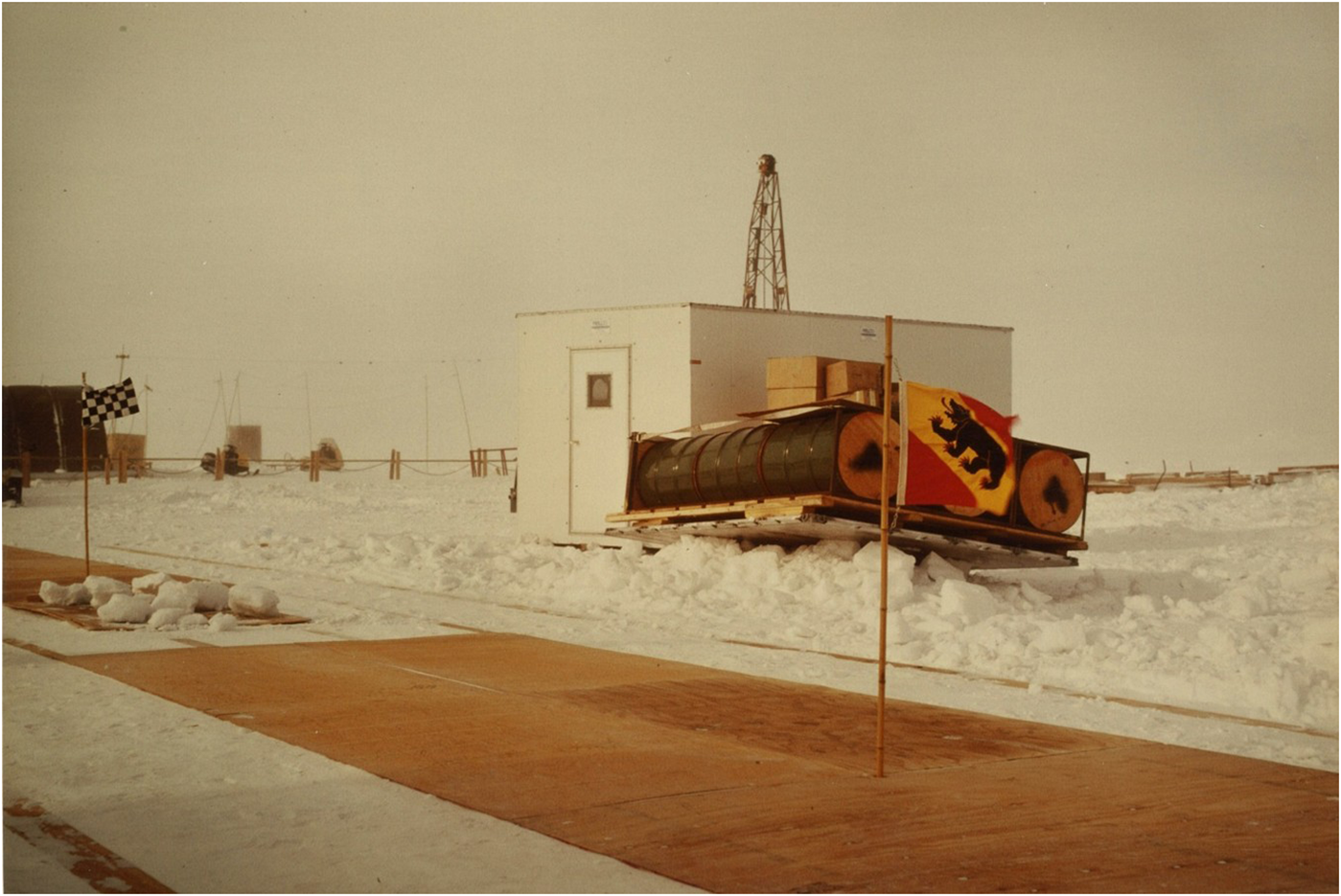
While GISP was running, the Bernese scientists had the opportunity also to take advantage of a US drilling project in the Antarctic. During the Antarctic summer in 1976–7, they joined the programme at the Ross Ice Shelf. In addition to the usual equipment, they brought the flag of the Swiss Canton Bern and hoisted it at the camp (Figure 1). Hoisting flags has a long history on polar expeditions. On post-war international scientific expeditions, it had become common to hoist the national flags of all the nations involved in a project. The Bernese flag here appears somewhat provincial as it is not internationally known. However, it emphasized the local affiliation of the Swiss group’s home institution rather than that of the home country. Within nuclear physics, the Bernese group was well known, because ‘there is no similar research center in the United States nor anywhere else in the world’, as Hans E. Suess stated in 1977.Footnote 96 Eventually, in 1981, ‘with cold fingers, cold feet … and back-breaking work’, they drilled another core in Greenland, 2,037 metres deep.Footnote 97
The Bernese flag at Camp J-9 at the Ross Ice Shelf, Antarctica, 1976–7. Reprinted with permission from the Oeschger Centre for Climate Change Research, University of Bern.
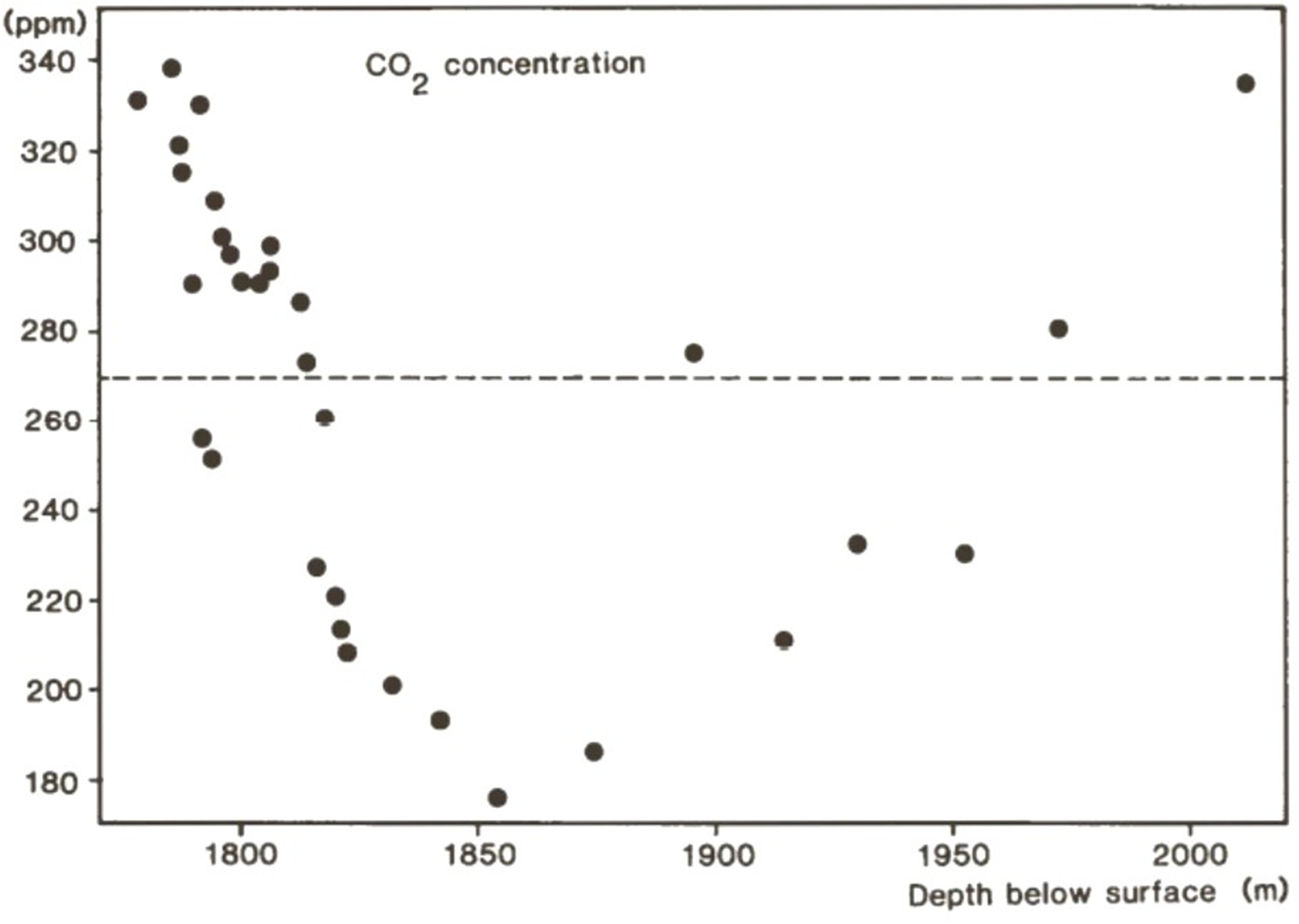
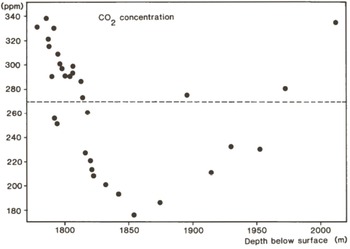
At 1,865 metres in depth, the GISP drill almost hit our carbon-14. It had been sitting there in its bubble for almost 13,000 years, enjoying its oxygen company all this time. But its long life had taken its toll: carbon-14 had suffered the loss of 80 per cent of its carbon-14 peers. The party’s bubble remained undamaged when it was pulled out of the depths. It turned out that, for all these millennia, our carbon-14 was living next door to a beryllium-10 atom, which would now get most of the attention for dating purposes. Oeschger’s interest now lay in the CO2 as a whole party, and carbon-14 turned out to play merely a side role as a member of this alliance. After their separation, the icy environment of beryllium-10 was first melted, then sent to Zurich and thrown into an accelerator mass spectrometer, whereas the ice sample containing our CO2 was sent to the Bern laboratory. In Bern, it was also melted and the CO2 escaped from its bubble in the icy prison. It was caught in a gas chromatograph, catalytically transformed into methane, then measured by an ionization detector.Footnote 98 After this ordeal, our carbon-14 contributed to a tiny dot on a graph showing the CO2 content of the ice layer 1,865 metres below the surface (Figure 2). Our beryllium-10, compared with the size of its population, was also transformed into a datum, indicating the age of their icy habitat.
CO2 concentration of air extracted from one gramme of ice from the GISP ice core. Bernhard Stauffer, Albrecht Neftel, Hans Oeschger and Jakob Schwander, ‘CO2 concentration in air extracted from Greenland ice samples’, in Chester C. Langway, Hans Oeschger and Willi Dansgaard (eds.), Greenland Ice Core: Geophysics, Geochemistry, and the Environment, Geophysical Monograph 33, Washington, DC: American Geophysical Union, 1985, p. 88. Reprinted with permission from Wiley Books.
Eventually, both carbon-14 and beryllium-10 became small pieces of information contributing to a broader picture of a long time series. It turned out that our beryllium-10 was one of the last to be born in such a large beryllium-10 population. The younger ice layers, built further up the ice sheet, showed a significantly lower beryllium-10 concentration. The opposite was the case for our CO2 party.Footnote 99 They were born into the last generation of this small population. Oeschger’s team interpreted that there was an ‘unexpectedly rapid increase of the atmospheric CO2 concentration’.Footnote 100 Once the concentrations of beryllium-10 and CO2 were plotted against the timescale developed with marine records, the scientists noticed that the time of the birth of our isotopes indeed seemed to coincide with a fundamental change of climate, namely the transition from the Pleistocene to the Holocene, or, in more colloquial terms, the end of the last Ice Age. The Bernese scientists concluded that the extreme fluctuations of carbon-14 from around this time, which had caused the frustrating problems with timescale, were linked to a drastic increase in CO2 in the atmosphere.Footnote 101 This carbon dioxide increase at the end of the last glacial period was marked by significant global warming.
But the GISP core analysis produced an even more suprising picture. Dansgaard’s temperature reconstructions showed regular and rapid fluctuations during the glacial period.Footnote 102 Comparing his CO2 reconstruction with these fluctuations, Oeschger was astonished to find that these temperature changes also correlated with a fluctuation of the CO2 content (Figure 3).Footnote 103 The analysis of a sample covering approximately thirty centimetres of the core showed four peaks of both CO2 content and oxygen isotope ratio, indicating a warmer temperature. They all followed the same pattern: ‘first, a rapid increase to a maximum value, then a slow decrease followed by a rapid decrease to the minimum value’.Footnote 104 These correlations suggested ‘a very close, direct relationship between CO2 and climate’.Footnote 105 It was (and still is) not clear whether these CO2 fluctuations during the last glacial were a cause or an effect of the temperature changes. But half a century after Guy Steward Callendar had presented his hypothesis on the connection between atmospheric CO2 and temperature change, the striking correlations from the GISP core analysis seemed to prove this connection for the long climate history. And the little dot on the graph of Figure 2 contributed to the construction of a hitherto unknown climate phenomenon, the ‘Dansgaard–Oeschger events’.
The CO2 concentration changes compared to the oxygen isotope ratio changes in the ice layers between meter 1,860 and meter 1,890 in the DYE 3 ice core. The graph exhibits four correlating peaks with the same pattern. Bernhard Stauffer, H. Hofer, Hans Oeschger, Jakob Schwander and Ulrich Siegenthaler, ‘Atmospheric CO2 concentration during the last glaciation’, Annals of Glaciology (1984) 5, Figure 2, pp. 160–4, 161. Reprinted with permission from the International Glaciological Society.
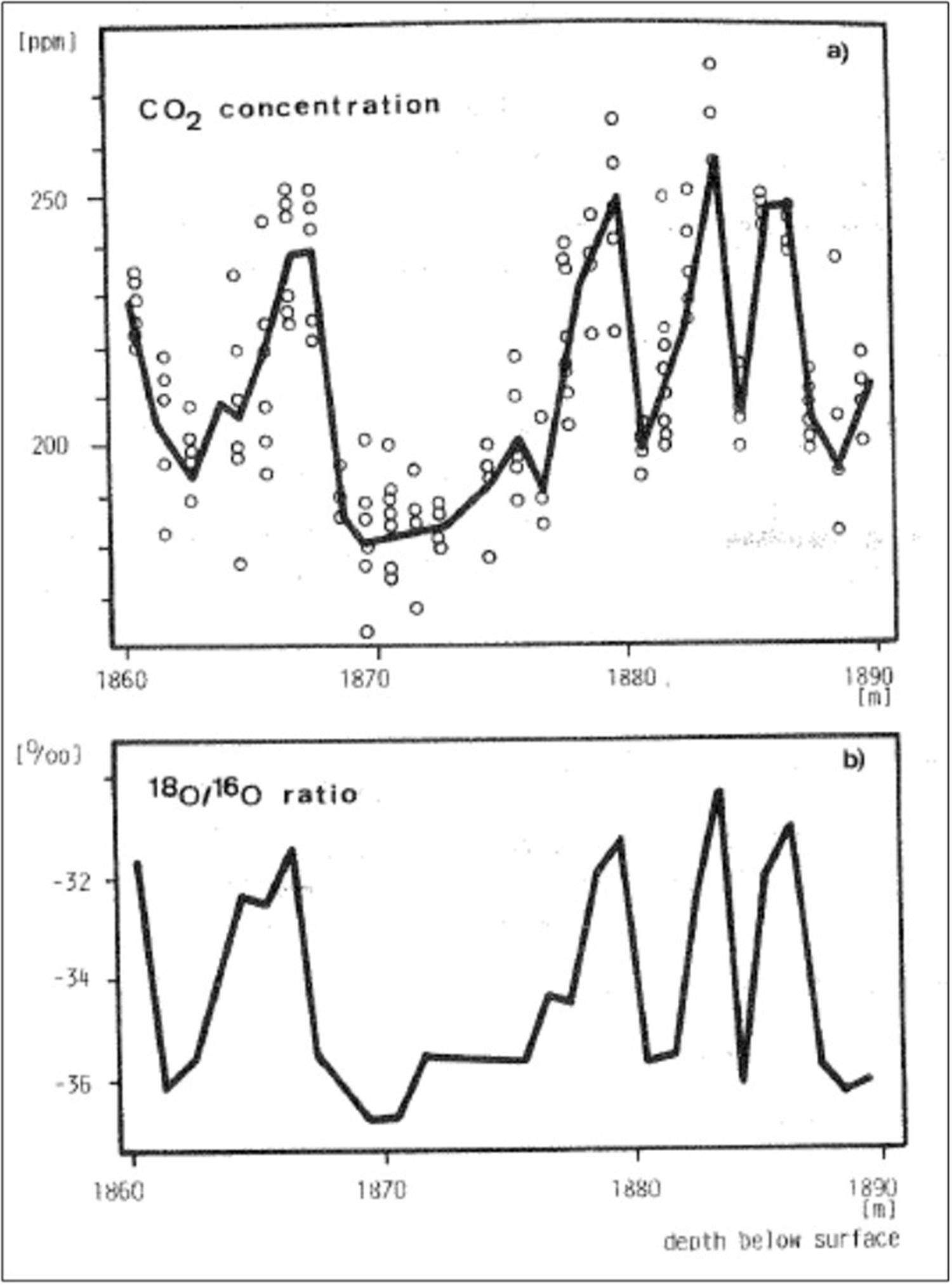
Figure 3 Long description
A) Text: CO2 concentration. Line graph with circular scatter points. Horizontal axis: 1860 to 1890, unit m. Vertical axis: [ppm], labeled ticks at 200 and 250. The line varies between below 200 and above 250. A low section occurs around the 1870 mark, with the line below the 200 tick. Higher sections occur around the 1880 to 1890 marks, with multiple peaks near the 250 tick and above it, separated by dips near the 200 tick. Scatter points are distributed around the line across the full horizontal range. b) Text: 18O/16O ratio. Line graph. Horizontal axis: 1860 to 1890, unit m. Vertical axis: [per mil], labeled ticks at minus 32, minus 34, minus 36. The line ranges from near minus 36 up to near minus 32. Lower values near minus 36 occur around the 1870 mark and at several points between the 1880 and 1890 marks. Higher values near minus 32 occur at several peaks between the 1880 and 1890 marks. Text below the lower graph: depth below surface. Across the two graphs, multiple peaks and dips appear in both series between the 1880 and 1890 marks.
Today, twenty-four of these abrupt warming events during the last glacial are known (Figure 4). Comparing these regular fluctuations with the climate of the present Holocene epoch, they present a rather unstable climate system. The dating and reconstruction of temperature and CO2 by the GISP core contributed to an understanding that the relatively stable (and warm) climate of the past 10,000 years has not been the rule but rather the exception in Earth’s long history.
Reconstruction of the oxygen isotope ratios in different layers from two Greenlandic ice cores drilled between 1990 and 1992. The peaks in the period of the last glacial (around 12,000 to 120,000 years BP) indicate abrupt temperature changes. They are here called interstadials (IS) numbered from 1 to 24. Stauffer et al., op. cit., p. 218. Reprinted with permission from Springer Nature.
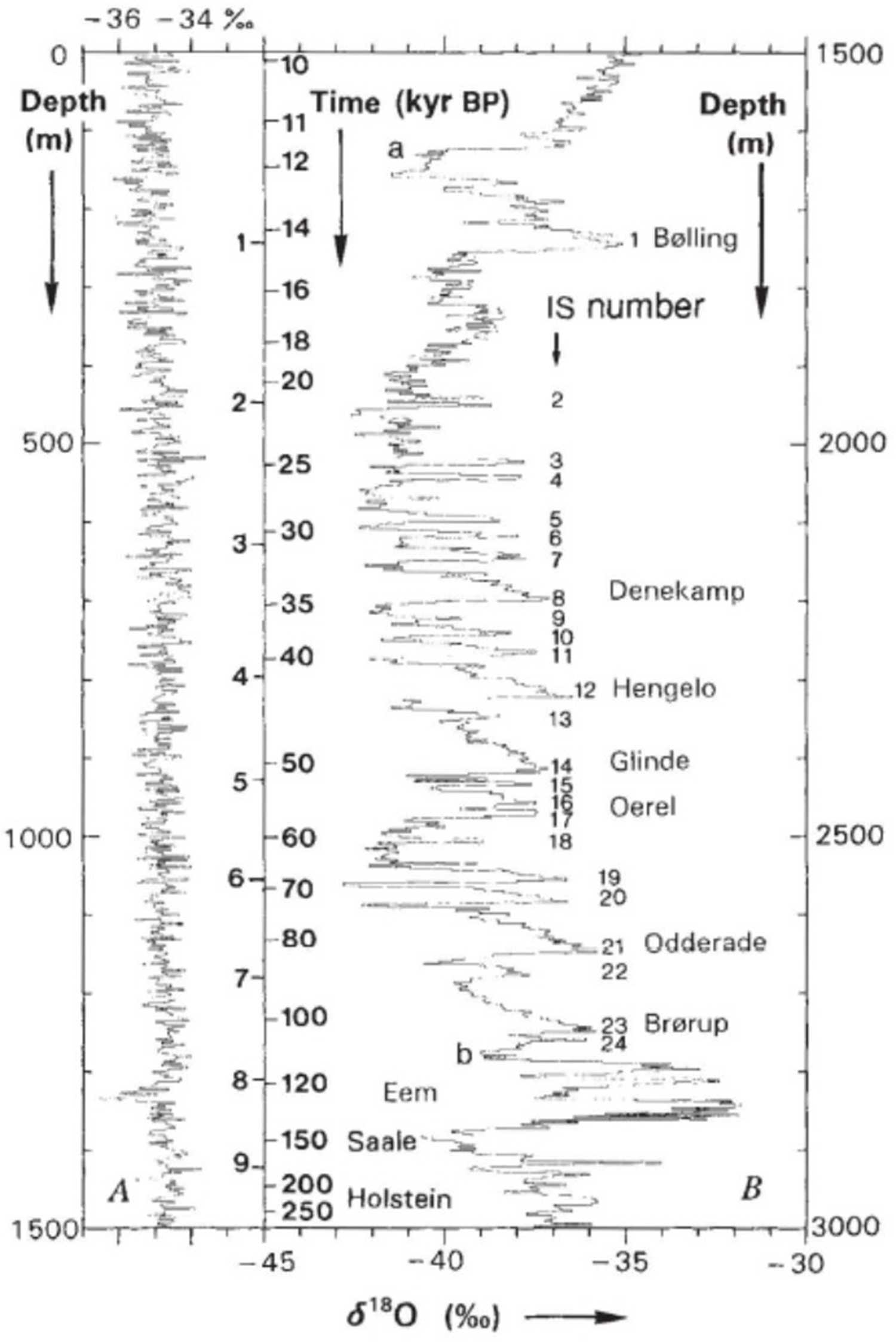
Figure 4 Long description
The figure consists of two line plots showing the variation of oxygen isotope ratios, delta 18 O, in Greenland ice cores. Panel 1 displays delta 18 O against depth in meters, ranging from 0 to 1500. Panel 2 shows delta 18 O against time in thousand years before present (kyr BP), ranging from 10 to 250, with a corresponding depth range from 1500 to 3000 meters. The x-axis for both panels is labeled delta 18 O (per mil), with values from minus 45 to minus 30. The plots illustrate oscillations representing interstadial events, numbered 1 to 24, indicating abrupt climate changes. Key intervals such as Belling, Denekamp, Hengelo and others are marked, corresponding to significant climate events. The jagged lines reflect repeated rapid warmings and coolings, with notable interstadials occurring at various depths and times, highlighting the unstable climate system during the last glacial period.
More precise dating had enabled a more detailed chronology, unearthing climatic changes in higher temporal resolution and on a smaller spatial scale. As more and more such ‘temporal benchmarks’ for the Earth’s climate history were created, the long past received a more textured history. Consequently, more climatic changes, such as the Dansgaard–Oeschger events, were noticed. By filling in previously blank spots in a long timeline, palaeoclimate studies revealed past climatic changes that could not be explained by existing astronomical theories. And a period such as the Ice Age, which had been thought to be climatically homogeneous, turned out to be climatically much more complex.Footnote 106
Some thirty years after its founding, the Bern laboratory outgrew its role as a dating service and established a profile as a climate research institution, contributing to the emergence of ice core palaeoclimatology as a new research field. But while the research interests and practices of the Bern laboratory were changing, the institutional settings moved more slowly. Indeed, in 1973, the Swiss National Science Foundation (SNSF) introduced the new funding category of ‘environmental sciences’. But the laboratory’s dating work continued somewhere between the traditional disciplines. The laboratory was located in the physics department, but its research activities in prehistory, archaeology and glaciology did not fit into the existing disciplinary categories any more. As mentioned, at the Science Foundation it had already fallen out of the strictly ‘nuclear research’ category in 1957. But it officially continued to be listed as ‘nuclear physics’ before it was moved to general ‘physics’ in 1963. In 1968, the foundation began to differentiate the ‘physics’ projects, but the lab just didn’t seem to fit anywhere. It was considered to be neither ‘theoretical’, ‘high-energy’ or ‘solid-state physics’, nor ‘glaciology’ or ‘climatology’. No adequate category seemed to exist for Oeschger’s dating work. It eventually ended up listed under ‘other/remaining fields’ (übrige Gebiete) in physics, together with research on storms, holography and statistical analysis of climate data.Footnote 107 In early 1977, Wallace S. Broecker noted that Oeschger and his colleagues ‘are considering all aspects of the glacier problem and thus have become glaciologists’.Footnote 108 But only in 1984 did it become part of ‘climatology’ under ‘environmental sciences’. This new official label only demonstrated what had already happened in the two preceding decades. With the disciplinary transformation, and the diffusion of physical methods into other disciplines, the lab’s work reflected the changes in the disciplinary landscape generally, and in climate research in particular.
Conclusion
By the 1970s, it was clear that carbon-14 dating was not of much use for dating ice in ice cores. Too much ice was needed to obtain enough carbon. The first European carbon-14 dating laboratory in Copenhagen was closed down in 1992, as it was considered to have outlived its usefulness.Footnote 109 The Bern lab initially benefited from the funding for a booming nuclear physics and was established as a carbon-14 dating service for archaeology and palaeobotany, and later for glaciology. As such it enjoyed an international reputation thanks to Oeschger’s improved counting technology. It was able to meet an international need for precise dating to create a continuous climate history, defining a ‘climatic norm’. This initial success enabled it to grow in the first years of its uncontested existence and to extend its focus to other radioisotopes. Dissatisfaction with the carbon measurements from the samples that were approximately 10,000 years old shifted the spotlight to CO2. The Bern lab began to use its technology, expertise and network to analyse the CO2 content of air bubbles in ice, thereby developing a research field not only in the service of others but for its own sake. When ice cores became the preferred research object for long climate reconstructions and carbon-14 dating lost its relevance for dating ice, the lab had existed long enough to be able to expand its expertise and meet a new (political) need: knowledge about the development of atmospheric CO2. This shift of focus helped the lab not only to survive, but to develop from a mere service for other disciplines to become a research institution of its own. Its work contributed to the establishment of ice core palaeoclimatology, a new scientific field that had previously not existed.
On this journey, the geopolitical setting of the Cold War, the rise of climate models and global concerns about climate change were important. With the UNO conferences and CERN, Switzerland found itself at the centre of international research and negotiations on the peaceful use of nuclear energy. But even as a former hub for international physicists, it feared falling behind in the field, given the enormous investments of great powers such as the USA. The Swiss government consequently decided also to invest large funds in nuclear research. The abundance of such grants made it easy to secure funding for radiocarbon dating technology and to establish the Bern lab in the first place. At the same time, the international boom in geophysics also led to strong political support for glaciology and polar research. Eventually, the computer models and the rising political relevance of climate created a new need for palaeoclimate data and hence for dating.
In addition to these international developments, local and regional conditions also mattered. On one hand, narratives of Swiss national identity helped to promote radiocarbon dating. Prehistory and archaeology enjoyed privileged status thanks to the political importance of Neolithic pile-dwelling settlements for the efforts to create a unifying Swiss identity. At the same time, glaciology was considered to be a specific Swiss tradition. Together with the political desire for international integration, these factors produced generous funding of expensive glaciological expeditions. They became a testing ground for dating experiments and technology, and allowed the physicists to broaden their perspective towards research questions beyond dating, such as the analysis of atmospheric CO2. This cultural and political context differed from the (funding) situation in other countries, such as the USA or Denmark.Footnote 110 Switzerland had neither geopolitical interests in the Arctic, like the US, nor a colonial history with Greenland, like Denmark. Supposedly Swiss traditions like glacier research or neutrality, as well as the role of archaeology in forming a national identity, were decisive conditions of the fruitful convergence of nuclear physics and glaciological research in Switzerland.
On an institutional level, the collaboration and communication between different departments and research groups mattered. Hearing of a potentially useful dating technology at his own university, a palaeobotanist developed the idea of a dating lab. Later, the glaciologists also drew on local expertise by recruiting the dating group for their own interests. Such local collaborations were as momentous for the development of ice core palaeoclimatology as was international cooperation with Danish, US or French institutions. The proximity of institutions and small size, not only of the country but also of the research groups, helped in the establishment of collaborations across institutions.
Leaving Spencer Weart’s bird’s-eye perspective and zooming in on a specific case shows that climate modelling was not the only force for interdisciplinary collaboration. Other technology and other motivations also played a key role. The radiation counter and its designer left their discipline of origin (nuclear physics) and travelled to other research fields. First they were drawn by the needs of others, such as the glaciologists, and later by their own initiative. This journey produced a gradual shift in research questions and practice from nuclear physics to palaeoclimatology. In addition to climate modelling, experimental and empirical practice as performed in the Bernese lab contributed crucially to the history of climate research.
Studying the empirical practice of isotope analysis of ice can also point to the role of scale beyond geography. Such dating practices offer an eminent case for studying different temporalities in climate research and the complexity of creating a continuous climatic timeline.Footnote 111 It also helps us to understand why an object the size of 0.07 nanometre could be understood as an indicator of global climate information, and which problems of materiality and technology were associated with this process.
I hope I have been able to show that, just like people and politics, technology too can serve as a driver of interdisciplinarity. Analysing the conditions, practicalities and consequences of such travelling across disciplinary boundaries can help us to better understand the process of interdisciplinarization in climate research. Furthermore, this small-scale approach, focusing on a specific technology and research group, shows that institutional settings, everyday practices, technological challenges, coincidences, funding policies and personal relationships were crucial for the development of interdisciplinarity in climate research.
Acknowledgements
Over the past few years, my work on this paper has greatly benefited from discussions with many esteemed colleagues during conferences, colloquia, dinners or drinks. I would like to express my deepest gratitude for their comments and inspiration. In particular, I would like to thank the anonymous reviewers for their careful reading of the manuscript and their insightful and invaluable feedback. This research was partially supported by the Swiss National Science Foundation (SNSF), grant PZ00P1_179883/1.



 Open access

