




Introduction
Archaeological discoveries in recent years related to the state of Zeng 曾 in Hubei province, China, are among the most eye-catching achievements in Chinese archaeology. Excavations of elite cemeteries and urban centers in Suizhou 隨州, Zaoyang 棗陽, and Jingshan 京山 have confirmed the existence of a large state in southern China.Footnote 1 These archaeological findings provide rich evidence of Zeng, one of the most prominent and long-standing regional states in late Bronze Age China.Footnote 2
More importantly, the discovery of Zeng invites a re-examination of the role of regional states and interstate relations in the first millennium bce. Under a traditional dynastic framework, regional states under the Zhou dynasty (1045–256) were understood to primarily support and extend the rule of the royal lineage.Footnote 3 From this perspective, the state of Zeng served to extend Zhou’s influence in the south, defend the frontier, and oversee the transport of goods to the Central Plain. However, archaeological evidence presents a picture that challenges this Zhou-centric perspective. The state of Zeng, by facilitating the movement of people, goods, and knowledge, actively engaged in political-military, economic, and cultural interactions with neighboring and distant polities, emerging as a key node in networks connecting northern and southern China.
Many studies of late Bronze Age China continue to rely on a traditional dynastic framework that is fundamentally based on a dichotomy between the royal domain and regional states, and between the Central Plain and the periphery. This binary view inevitably reinforces a center–periphery model, which emphasizes the dominance of Central Plain states over those on the periphery, even when the complexity of peripheral regions is acknowledged.Footnote 4 Economically, this framework underpins a redistributive model that assumes centralized control over production and distribution of strategic resources and prestige goods by Central Plain states.Footnote 5
Although Central Plain states played an important role in the development of Chinese civilization, the center–periphery model downplays the role of regional powers. They not only served the Zhou king but also interacted with one another, forming diverse social networks and decisively shaping Bronze Age Chinese societies. This article adopts a network approach, examining the relationships between polities, people, objects, and ideas—and the patterns that emerge from them—rather than viewing them in isolation or one direction.Footnote 6 In this approach, the state of Zeng was not merely a regional state of Zhou but a participant in networks of political interaction, ideological negotiation, and economic and cultural exchange. At the same time, Zhou was not a superstructure imposed on a greatly expanded territory that exploited the periphery, but also a participant in multilayered networks, negotiating with local polities and adapting to local interests and customs for peace and resources.
A network-based analysis, therefore, challenges the center–periphery model and the assumed supremacy of the Central Plain. This approach is also less laden with implications of hierarchical binaries embedded in a multiple center–periphery model.Footnote 7 Moreover, by situating interactions and exchanges in multiple overlapping networks, it transcends the boundaries separating the Central Plain and the borderlands, as well as individual states in traditional historiography.
In what follows, I first provide a brief review of scholarship on the state of Zeng and the related historiographical debates. I then examine archaeological and textual evidence in detail to explore how Zeng contributed to and participated in political, economic, and cultural networks that shaped both its own historical trajectory and broader interregional exchanges in late Bronze Age China.
The Discovery of Zeng: A Century of Debates
The name of Zeng was unknown until 1966, when bronzes bearing the inscription of Zenghou Zhong Zi Youfu 曾侯仲子斿父 were excavated from Sujialong 蘇家壟 Tomb M1 in Jingshan.Footnote
8
Since then, a large number of inscribed bronzes found in Hubei, Henan, and Anhui have proven the existence of a state of Zeng in Hubei. These findings have also helped confirm that the provenance of many transmitted Zeng bronzes listed in major catalogues—such as Lidai zhongding yiqi kuanzhi 歷代鐘鼎彝器款識 and Liang Zhou jinwenci daxi kaoshi 兩周金文辭大系攷釋—is in fact the Zeng in Hubei.Footnote
9
Previously, these bronzes had been mistakenly attributed to either the Zeng 鄫 in Shandong or the Zeng
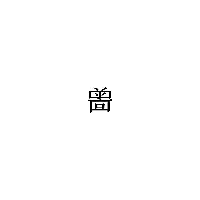 (or
(or
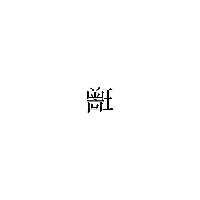 ) in Shaanxi.Footnote
10
) in Shaanxi.Footnote
10
The newly discovered inscribed bronzes have also satisfactorily resolved the long-standing debate over whether the state of Zeng is the same as the state of Sui 隨 in transmitted texts, which was also located in Suizhou.Footnote 11 The inscription on Mi Jia zhong chime-bells (嬭加鐘) from Zaoshulin 棗樹林 M169, excavated in 2019, identifies Mi Jia as the wife of Zenghou Bao 曾侯寶; the Sui Zhong Mi Jia ding cauldron 隨仲嬭加鼎 records that Mi Jia married into Sui from Chu.Footnote 12 Since Mi Jia in both inscriptions refers to the same person, the Sui into which she married must be the same as Zeng. Furthermore, both the names of Zeng and Sui appear on bronzes from Zaoshulin M191, contemporary with M169.Footnote 13
Excavations of Zeng’s elite cemeteries, particularly the Zaoshulin cemetery since 2018, have identified thirteen Zeng marquises. These include Marquis Kang 犺 and Marquis Jian 諫 from the early Western Zhou period (circa eleventh to tenth centuries); Xiangbo 絴白, Bao 寶, De 得, Ze 昃, Yu 與, and Yue
 from the Spring and Autumn period (770–481); and Yi 乙 and Bing 丙 from the Warring States period (480–221).Footnote
14
Additional unnamed Zeng marquises are mentioned in inscriptions of the Tang Mi ding 湯嬭鼎, Zenghou Zhong Zi Youfu ding, Zenghou fu 曾侯簠, Zeng Da Gongyin ge dagger-axe (曾大攻尹戈), and Zenghou zhong 曾侯鐘 from Yidigang M4.Footnote
15
Some scholars argue that Zeng rulers without the title of Marquis—such as Zenggong Qiu 曾公
from the Spring and Autumn period (770–481); and Yi 乙 and Bing 丙 from the Warring States period (480–221).Footnote
14
Additional unnamed Zeng marquises are mentioned in inscriptions of the Tang Mi ding 湯嬭鼎, Zenghou Zhong Zi Youfu ding, Zenghou fu 曾侯簠, Zeng Da Gongyin ge dagger-axe (曾大攻尹戈), and Zenghou zhong 曾侯鐘 from Yidigang M4.Footnote
15
Some scholars argue that Zeng rulers without the title of Marquis—such as Zenggong Qiu 曾公
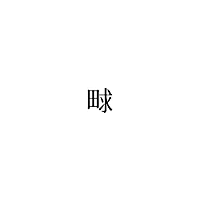 and Zengbo Qi 曾伯
 —were also marquises.Footnote
16
However, this argument contradicts the naming convention in bronze inscriptions, which consistently refer to Zeng rulers by the title of Marquis.
—were also marquises.Footnote
16
However, this argument contradicts the naming convention in bronze inscriptions, which consistently refer to Zeng rulers by the title of Marquis.
Recent discoveries have resolved century-long debates concerning the location of Zeng and the myth of Zeng and Sui, while also addressing questions that earlier scholarship left unanswered.Footnote 18 Although future archaeological work is awaited to unearth more Zeng marquises and urban centers, particularly from the middle and late Western Zhou periods (circa tenth–eighth centuries), a comprehensive study of this “forgotten” state can and should be carried out using new data and analytical frameworks. The rediscovery of Zeng does more than complement the historiography of the Zhou dynasty; it contributes to new understandings of social exchanges in late Bronze Age China.
The Sui–Zao Corridor and the Rise of Zeng
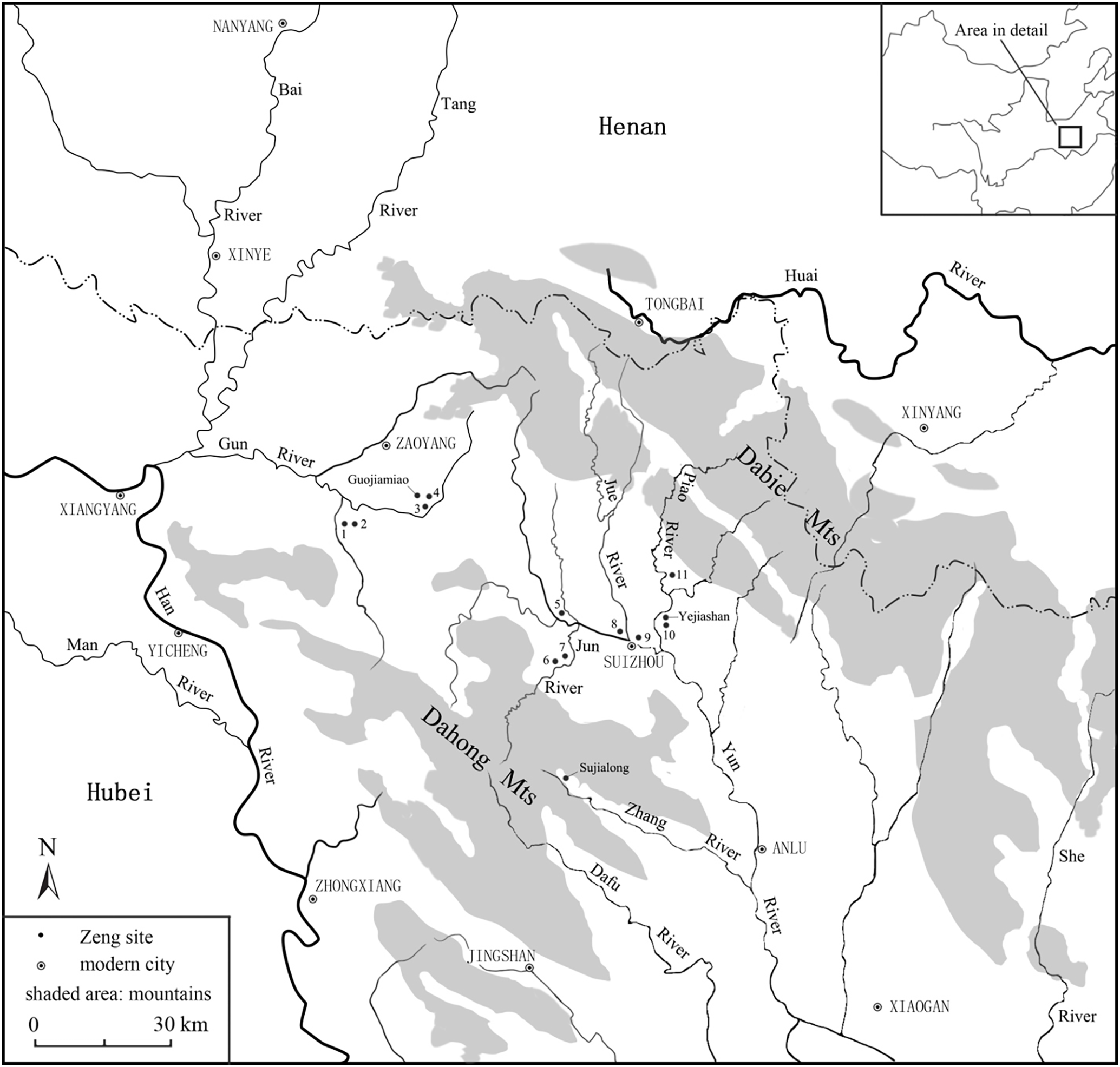
The state of Zeng was located in present-day Suizhou, at the center of the Sui–Zao Corridor, an important ancient overland route connecting northern and southern China. The Sui–Zao Corridor lies between Suizhou and Zaoyang, at the foot of the Dabie Mountains 大別山 and the Dahong Mountains 大洪山, which form part of the Qinling 秦嶺 mountain range marking both the geographical divide between northern and southern China and the watershed between the Yellow River and Yangtze River basins (Figure 1). The Corridor bordered the Nanyang 南陽 basin to the northwest, connected to the Central Plain via Dabie Mountain paths, and provided access to the Han River 漢水 region in the west and the middle Yangtze River region in the southeast by water. Situated in this strategic location, the state of Zeng stood at the crossroads between north and south.
The Sui–Zao Corridor and major Zeng sites. 1. Chaan; 2. Wudian; 3. Zhongyizhai; 4. Zhoutai; 5. Anju; 6. Xiongjialaowan; 7. Liujiaya; 8. Leigudun; 9. Yidigang; 10. Miaotaizi; 11. WandianFootnote 17 .

Figure 1 Long description
A map showing the SuiZao Corridor and major Zeng sites in Hubei, Henan, and Anhui provinces. The map highlights the geographic area with mountains shaded in gray. Key locations include modern cities and Zeng sites marked with different symbols. Major rivers and mountains such as the Dahong Mountains and Dabie Mountains are labeled. The map also shows the boundaries of Hubei, Henan, and Anhui provinces. Specific Zeng sites are numbered and labeled, including Chaan, Wudian, Zhongyizhai, Zhoutai, Anju, Xiongjialaowan, Liujiaya, Leigudun, Yidigang, Miaotaizi, and Wandian.
After Zhou overthrew Shang, the regional states of Zeng, E 鄂, Li 厲, Tang 唐, and Lu 蓼 were established in the Sui–Zao Corridor.Footnote 19 Archaeological work in Suizhou and Zaoyang has unearthed Zeng’s cemeteries and associated settlements, providing rich evidence for reconstructing the political landscape in the region.
The Yejiashan cemetery buried the first two generations of Zeng rulers. It is located approximately two kilometers east of the Piao River 漂水 and situated on elevated ground measuring around 40,000 m2. A total of 142 tombs were excavated at the site between 2011 and 2014. While several Western Zhou cemeteries have been discovered across China—some larger than Yejiashan—this is the largest extant cemetery from the early Western Zhou period. It contains undisturbed tombs ranging from those of marquises to those of commoners and is currently the only Western Zhou elite cemetery to have been discovered in southern China. Yejiashan thus provides critical evidence for better understanding not only Zeng but also a regional state in the eleventh and tenth centuries.Footnote 20
The Yejiashan cemetery was likely constructed during the reign of King Cheng 成王 (r. 1042/35–1006) and abandoned during the reign of King Mu 穆王 (r. 956–918).Footnote 21 Inscribed bronzes recovered from the cemetery have identified at least two Zeng marquises: Marquis Kang, buried in M111, and Marquis Jian, buried in M28. However, the identity of the occupant of M28 and the succession order between Marquises Kang and Jian remain debatedFootnote 22
The Yejiashan cemetery sheds light on how a newly established state integrated diverse groups to consolidate governance in the local area. At Yejiashan, most tombs are oriented west to east, with larger tombs situated on higher ground in the center of the cemetery along a northeast-southwest axis, while smaller tombs were densely arranged on lower ground along the sides.Footnote 23 The majority of tombs display Zhou-style burial practices, reflecting the presence of the Zhou people—both migrants from the Central Plain and those who had adopted Zhou material culture.Footnote 24 The tombs of the Zeng rulers, such as M111, M28, and M65, occupy the highest and most central positions, and tombs for their family members, officials, and attendants occupied the lower western area of the grounds.
Shang people were also present at Yejiashan, including both Shang descendants and those who had adopted Shang cultural traditions, as well as indigenous people with distinct burial customs. Most tombs displaying Shang or indigenous features are located on the fringe of the cemetery. However, the Shang population constituted a significant portion of the burials, as evidenced by the large number of tombs that employed Shang burial practices. Some tombs, such as M1, M2, and M50, are quite large and contain many prestige goods, suggesting that their occupants came from prominent families. Mortuary evidence further indicates intermarriage between the Zeng elite and Shang people. Tombs of the Zeng rulers and their wives were arranged side by side along a west–east axis. For example, M27 is the tomb of the wife of Marquis Jian buried in M28, and M2 buried the wife of the occupant of M65. The presence of ceramic gui tureen, hu pot, and lei pot—typically associated with Shang-style tombs—links the occupant of M2 to Shang material culture. The occupant of M3, located near M65 and M2 and named Ya Yun 亞㜏, was likely a Shang descendant, as suggested by the presence of a waist pit and animal sacrifice on the side ledge. A bronze ding made by Marquis Jian was found in M3, indicating that Ya Yun may have been a concubine of the occupant of M65, likely the son of Marquis Jian.Footnote 25
The spatial distribution of the Yejiashan cemetery indicates that the Shang people were buried in groups. For example, inscribed bronze vessels from M1, placed near the northern end of the cemetery, identify the tomb occupant as Shi 師. The presence of a waist pit in this tomb suggests his Shang identity or close association with Shang culture. Most smaller tombs near M1 also display typical Shang burial practices, such as animal sacrifice in M7, Shang-style gui in M7, M20, M21, and M22, and hu in M19 and M23. M1, situated on the central axis of the cemetery, is aligned with the tombs of the Zeng marquises, while the small tombs are positioned to its west. This arrangement suggests that these small tombs were associated with M1, much like the small tombs are aligned with the marquises’ tombs.
Several tombs, two of which have a distinctive earthen coffin beds likely reflecting an indigenous burial practice, were also excavated. These tombs are smaller than 5 m2, contain few burial goods, and are located on the fringe of the cemetery. Most of the tomb occupants are female. This suggests that the indigenous people were incorporated into the new society as low-ranking attendants or through marriage.Footnote 26
Although the differences between Zhou-style and Shang-style tombs are evident, Shang and Zhou material cultures were not mutually exclusive. Zhou-style bronzes and pottery are found in tombs that display strong Shang material culture, such as M50, while Shang bronzes are present in the tombs of the Zeng marquises. Neither were Shang and Zhou burial practices confined to specific clusters in the cemetery. For example, the occupant of M126, located near M1, may not be a Shang descendant, as the tomb contains no clear Shang cultural indicators. Tombs burying Shang people also intermixed with those of the Zeng elite, such as M116. In examining the Liulihe 琉璃河 cemetery of the state of Yan 燕, Yitzchak Jaffe argues that the Zhou and Shang peoples were not clearly segregated, despite the cemetery being divided into separate clusters.Footnote 27 This is even more evident at Yejiashan. The distribution of tombs was based on social status, with the Zeng elite occupying the highest and most central positions, lineage heads buried on lower ground but still in central positions, and lower-ranking officials and attendants buried along the sides of the large tombs. The cultural diversity at Yejiashan indicates that the Zeng marquises prioritized integrating people of different origins and customs into the new political structure rather than imposing a Zhou-centered identity through ethnic segregation and acculturation. This strategy helped stabilize the newly established state and laid the foundation for the prosperity of Zeng in the centuries that followed.
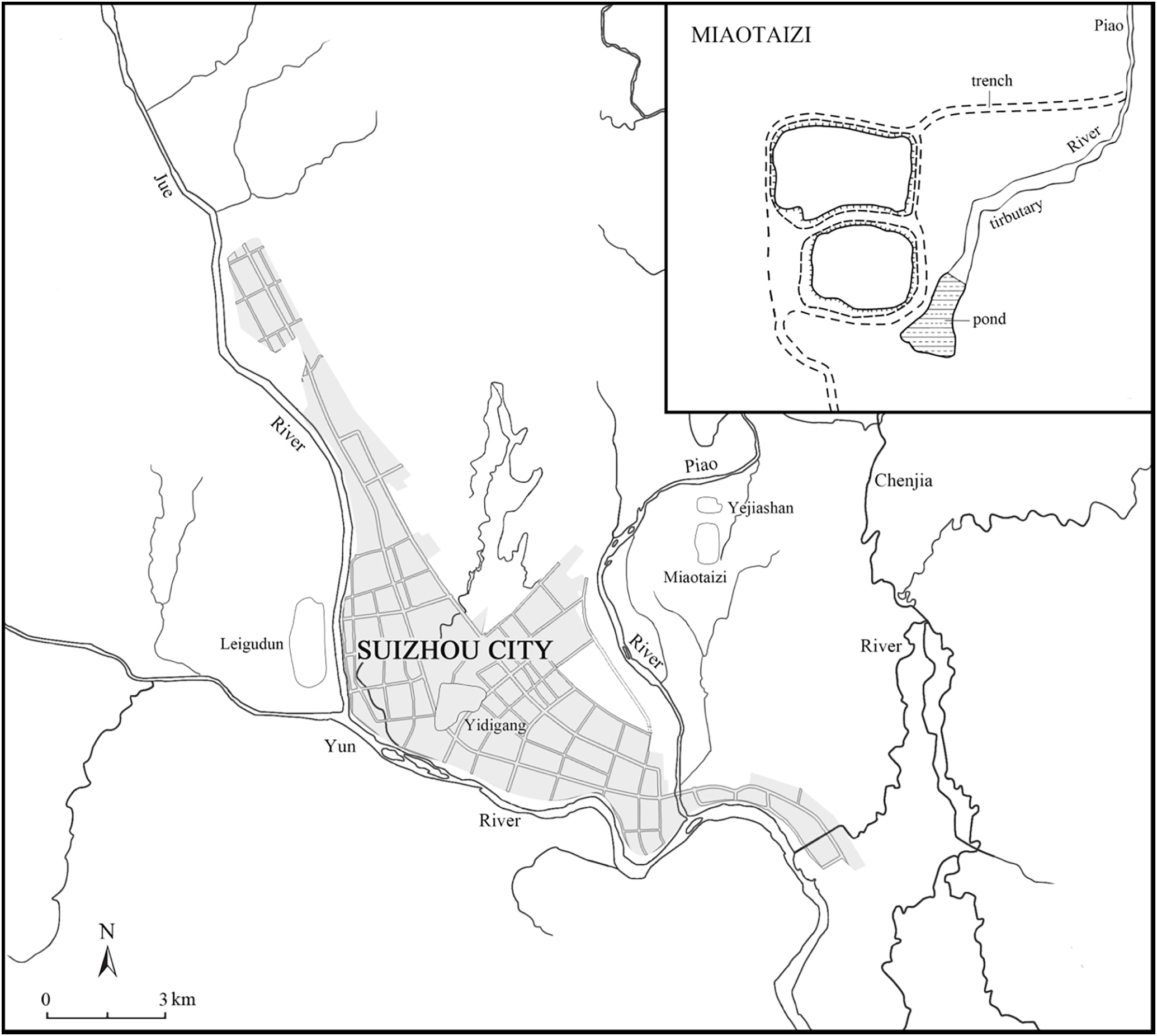
A contemporary settlement at Miaotaizi 廟臺子 is located one kilometer south of the Yejiashan cemetery. It was first discovered in the 1950s and test-excavated in 1983, but systematic surveys and excavations were not conducted until the discovery of the Yejiashan cemetery. Excavations from 2015 to 2017 yielded a settlement of approximately 140,000 m², equivalent to twenty standard football fields.Footnote 28 Excavators claim that Miaotaizi was the urban center of Zeng during this period. Although the site is not as large as many other contemporary regional state centers, the discovery of a moat, large house foundations, and workshop remains suggests the higher status of the settlement. Several smaller settlements have been found near Miaotaizi, which together may have formed the urban center of Zeng.
Miaotaizi is situated on elevated ground approximately 2.5 meters higher than the surrounding area and is divided into two platforms, separated by a moat 7–13 meters wide and 2.8–5.9 meters deep. The moat has two openings: one at the northeastern corner, where water flowed into the settlement from the tributary of the Piao River, and one at the southwestern corner, where the water flowed out (Figure 2). The southern platform measures approximately 15,000 m², with a total area of 725 m² fully excavated. Miaotaizi developed into a prosperous settlement evidenced by the construction of the moat and large houses, and large quantities of ash pits and pottery. The pottery found at Yejiashan and Miaotaizi is similar, indicating a close relationship between the two sites. The discovery of smelting tools, casting molds, and copper prills further confirms bronze production at Miaotaizi.
Zeng sites in Suizhou.

The state of Zeng declined after the tenth century, marked by the abrupt abandonment of Yejiashan and Miaotaizi at approximately the same time. The decline may have been partly due to the catastrophic failure of King Zhao’s campaign in the Han River region.Footnote 29 After the fall of the Western Zhou dynasty in 771, Zeng faced new political and military challenges but also seized opportunities to expand its territory and establish new political and economic networks. By the eighth and seventh centuries, it had become “the largest of the domains east of the Han River.”Footnote 30
Although the exact location of Zeng’s political center after Miaotaizi remains unknown, evidence suggests that it likely remained in Suizhou before being relocated to the north of the Yun River 溳水 no later than the seventh century, where a large elite cemetery of Zeng has been found at Yidigang.Footnote 31
The Yidigang cemetery cluster is situated on elevated ground and oriented along a northwest–southeast axis. Tombs associated with Zeng, dated from the eighth to the fourth century, have been sporadically discovered since the 1970s. Three systematic excavations conducted in recent decades have yielded a large elite cemetery used throughout the Eastern Zhou period.Footnote 32 Excavations indicate that the cemetery was arranged along a north–south axis and expanded southward, with earlier tombs located in the northern section.Footnote 33 Further excavations in the northern section of Yidigang may unearth tombs dating to the eighth century or earlier. Although the center of Zeng is likely buried beneath modern buildings and may never come to light, the large tombs and sumptuous mortuary goods at Yidigang point to the existence of a strong and prosperous state in Suizhou between the eighth and the fifth centuries.
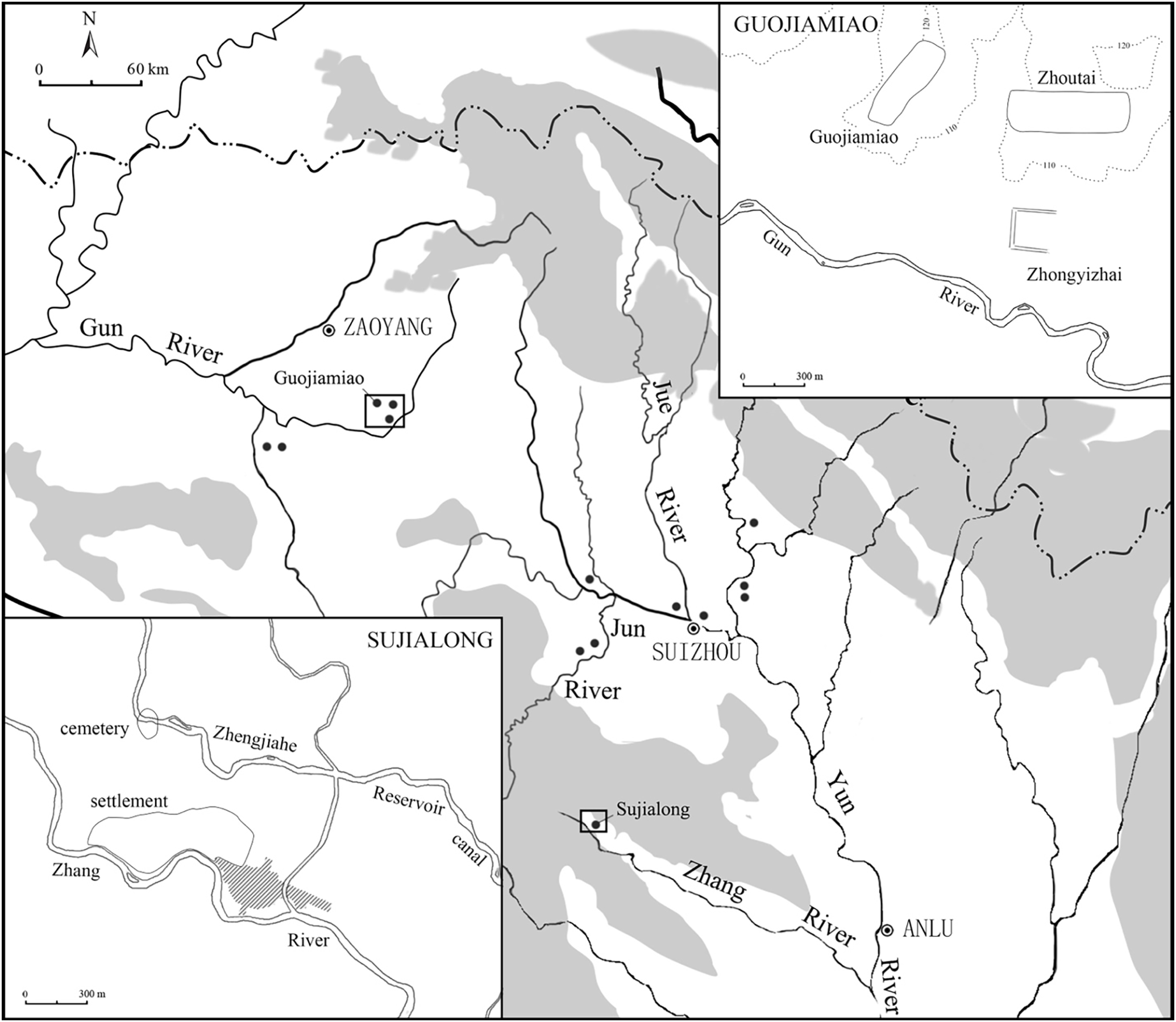
From Suizhou, the state of Zeng expanded northward and southward to control the entire Sui–Zao Corridor. To the northwest, in Zaoyang, the Guojiamiao 郭家廟 elite cemetery and Zhoutai 周臺 and Zhongyizhai 忠義寨 settlements have been found (Figure 3). The Guojiamiao cemetery is located near the Gun River 滾水. It is situated on two separate elevated areas: the northern part, known as Guojiamiao, and the southern part, Caomenwan 曹門灣.
The regional centers of Zeng at Zaoyang and Sujialong.

Approximately 1.5 kilometers east of the Guojiamiao cemetery are the Zhoutai and Zhongyizhai sites. The Zhoutai site measures approximately 1,500 meters long and 600 meters wide. Excavations conducted in 2002 yielded large quantities of material remains, indicating that this site was occupied from the eighth to the fifth century.Footnote 34 Pottery from Zhoutai closely resembles that from other contemporary sites of Zeng. Based on the similarity in material culture and its proximity to Guojiamiao, Zhoutai is regarded as being associated with Guojiamiao. The Zhongyizhai site, located one kilometer south of Zhoutai, was surveyed in 2014 during excavations at Guojiamiao. Remains of city walls contemporary with Guojiamiao were discovered, along with pottery similar to that from Guojiamiao and Zhoutai. These findings suggest that the Zhoutai-Zhongyizhai settlements and the associated Guojiamiao elite cemetery constituted a regional center of Zeng, controlled by a minor lineage of the Zeng ruling house.
To the southwest of Suizhou, across the Dahong Mountains, another regional center of Zeng was established at Sujialong. Sujialong M1 was accidentally discovered in 1966 during the construction of a dam. A total of ninety-seven bronze objects were reportedly recovered from the tomb, indicating the high status of its occupant. Bronze inscriptions identify the tomb occupant as Zenghou Zhong Zi Youfu, “the second son of a Zeng marquis.”Footnote 35 In 2008, approximately 25 meters east of M1, M2 was excavated. It had been severely disturbed and only nine bronzes were recovered.Footnote 36 The proximity of the two tombs and the presence of prestige goods pointed to the existence of an elite cemetery of Zeng. This was confirmed by systematic archaeological work conducted between 2015 and 2017, during which 106 tombs were excavated.
Like the spatial distribution of the Yejiashan cemetery, the tombs at Sujialong were arranged with large tombs on elevated ground in the center and smaller tombs on the lower sides. Two generations of rulers have been identified at Sujialong. M1, dated to the eighth century, is one of the earliest tombs in the cemetery. Situated on the highest position, it has two large chariot and horse pits, MCHK1 and CHK2. Its tomb occupant, Zenghou Zhong Zi Youfu, is therefore considered the first-generation ruler at Sujialong. Elder Qi, the occupant of M79, was also a ruler, as evidenced by the discovery in his tomb of a set of five bronze ding and four gui, along with a set of three ding and four fu, all signifying his high status. The inscription on Zengbo Qi hu 曾伯
 壶, which refers to Elder Qi as “the parent of the people,” further affirms his status. M79 and M88, the tombs of Elder Qi and his wife Mi Kemu 嬭克母, are situated near the southern end of the cemetery. The absence of large tombs farther south suggests that Elder Qi was likely the last ruler of this lineage, active in the seventh or sixth century. Given the wide spatial gap between M1 and M79, it is possible that the tomb of another ruler—chronologically between Zenghou Zhong Zi Youfu and Elder Qi—existed in the cemetery. M60, which is similar in size to M79 and located near chariot pits CHK5 and CHK6, is dated slightly earlier than M79 and M88. Inscribed bronzes from M60 identify its occupant as Zeng Ji Jun Guo 曾季君
 , “the youngest lord of Zeng, Guo.” Although M60 was not as lavishly buried as M1 or M79, it contains five bronze ding and four gui, an assemblage consistent with the status of a minor lineage head in a regional state.Footnote
37
, “the youngest lord of Zeng, Guo.” Although M60 was not as lavishly buried as M1 or M79, it contains five bronze ding and four gui, an assemblage consistent with the status of a minor lineage head in a regional state.Footnote
37
Several tombs at Sujialong date to the sixth to fifth centuries. However, many of these, such as M18, M21, and M34, are located in the northwestern corner of the cemetery and are clearly separated from its main section. They also contain far fewer burial goods than the earlier tombs. For example, M34 contains one ding, one yan steamer, one zhan lidded-bowl, one pan plate, and one yi pourer, while M18 and M58 each have only one ding and one fu. This suggests that the Zeng elite had abandoned the cemetery by the sixth century, following the death of Elder Qi. Local people—including lower-ranking Zeng officials—continued to use the cemetery into the fifth century, but their tombs no longer conformed to the original plan of the Zeng elite cemetery.
A contemporary settlement, estimated at approximately 750,000 m2, has also been discovered about 600 meters south of the cemetery.Footnote 38 The settlement was likely associated with the cemetery, though part of the site now lies beneath modern buildings, and the eastern portion of the site has been seriously disturbed by recent ground-leveling projects. Systematic surveys and excavations since 2018 have unearthed house foundations, kilns, and large quantities of pottery. Furnace remains—including one partially preserved furnace—metal tools, and large number of slags provide direct evidence of metal production at Sujialong.Footnote 39 However, excavators date most of the material remains related to metal production to the fifth century and later, after the abandonment of the elite Zeng cemetery. If this dating is accurate, it means that although the Zeng elite initially established the settlement, the development of its metal economy is unlikely to have resulted from direct orders and supervision by the Zeng elite.
During its territorial expansion during the eighth and seventh centuries, Zeng not only anchored its power in the center of the Sui–Zao Corridor but also established minor lineages to control strategic nodes along transport routes in the Dahong Mountains area. It further extended its political networks beyond the mountains through marriages and alliances. One notable example is the close marital relationship between the states of Zeng and Huang 黃. Huang was located in present-day Xinyang 信陽, Henan, in the Huai River region north of the Dabie Mountains (see Figure 1).Footnote 40 Their close relationship is confirmed by the discovery of inscribed bronzes from Huang in the tombs of the Zeng elite. A pair of li tripods made by Zhu Duo 朱㭦 of Huang was excavated from Sujialong M1, and a ding made by Huang Ji 黃季 for her daughter Ji Ying 季嬴 was discovered in Suizhou.Footnote 41 The inscription on Zenghou fu further suggests that the Marquis of Zeng married his daughter, Shu Ji Ling 叔姬霝, to Huang. The li and ding from Huang are dated to approximately the eighth to seventh centuries, while Zenghou fu dated to the seventh to sixth centuries, indicating generations of intermarriage between the two states. Through marriage, Zeng gained access to the Huai River region, opening and overseeing key routes along which “copper was transported and tin moved,” and forging political alliances against the rising power of Chu.Footnote 42
Bronzes from other states have been found at Zeng. A ding from Xian 弦 was excavated in Guojiamiao GM1, and a set of pan and yi from Fan 番 was excavated in Sujialong M99. A pair of ding and gui, cast by the Marquis of Tang for the Marquis of Sui (Zeng), were excavated from Zaoshulin M191.Footnote 43 Zeng may also have had a close relationship with the state of Yun 鄖, if Mi Kemu, the wife of Elder Qi, had remarried from Yun into the Zeng minor lineage at Sujialong.Footnote 44
Conversely, Zeng bronzes have been found in other states. Zengzi Zhongqi yan 曾子仲
 甗 was excavated from a tomb in Xinye 新野, Henan, and Zengzi Boyou pan 曾子伯
 盤 was found in Tongbai 桐柏, also in Henan (Figure 1).Footnote
45
Neither Xinye nor Tongbai was under Zeng’s control; Tongbai was likely part of the state of Chang 昶. These bronzes, either from other states and buried at Zeng or from Zeng and found elsewhere, were probably exchanged through marriage and alliance. Epigraphic evidence confirms accounts in Zuo zhuan, which record that Zeng allied with Yun, Jiao, Zhou, and Lu to attack Chu in 701, and later rebelled against Chu along with other states in the Han River region in 640.Footnote
46
By reinforcing its bonds with neighboring small states, Zeng played a central role in the political network of “the lords east of the Han River.”
盤 was found in Tongbai 桐柏, also in Henan (Figure 1).Footnote
45
Neither Xinye nor Tongbai was under Zeng’s control; Tongbai was likely part of the state of Chang 昶. These bronzes, either from other states and buried at Zeng or from Zeng and found elsewhere, were probably exchanged through marriage and alliance. Epigraphic evidence confirms accounts in Zuo zhuan, which record that Zeng allied with Yun, Jiao, Zhou, and Lu to attack Chu in 701, and later rebelled against Chu along with other states in the Han River region in 640.Footnote
46
By reinforcing its bonds with neighboring small states, Zeng played a central role in the political network of “the lords east of the Han River.”
Despite frequent conflicts between Zeng and Chu, their relationship was not always hostile and was often punctuated by short-term peace treaties. Inscriptions on Mi Jia zhong and Zengbo Qi fu suggest that Zeng intermarried with Chu. The wives of Marquis Bao, Elder Qi, and an unnamed Zeng Marquis—Mi Jia, Mi Kemu, and Yu Mi 漁嬭, respectively—were all from the prominent Mi lineage of Chu. In fact, by the fifth century, the state of Zeng had become a loyal ally of Chu. Bronzes inscribed with the name of the Chu king were found in the tomb of Marquis Yi, dated to 433 or slightly later. This tomb (Leigudun M1) is part of the Leigudun 擂鼓墩 cemetery, located in Suizhou to the west of the Jue River 㵐水. It measures 21 meters long and 16.5 meters wide at the opening, with an estimated depth of over 13 meters. The tomb contains four wooden chambers filled with large quantities of prestige goods. Sacrificial coffins were also found in the eastern and western chambers.Footnote 47 Subsequent archaeological work unearthed more tombs, including Leigudun M2, another large tomb likely occupied by the wife of Marquis Yi.Footnote 48 These tombs, all dated to the fifth to fourth centuries, indicate the existence of an elite Zeng cemetery at Leigudun.Footnote 49 No large settlement associated with the cemetery has yet been found. It is possible that the urban center of Zeng remained near the Yidigang cemetery, where Marquis Bing, son of Marquis Yi, was buried.
Archaeological evidence reveals how the state of Zeng took advantage of its strategic location to flourish in southern China. As it rose in power, Zeng reshaped the political landscape of the Sui–Zao Corridor and the Dahong Mountains, extending its influence as far as the Huai River through local and interregional networks. However, located at the crossroads between north and south, Zeng also faced the constant challenge of navigating between northern and southern powers. Its dilemma—caught between the “Zhou” states in the Central Plain and those in the south—was embedded in its history. This tension is not only reflected in archaeological record, but also in written sources, which will be the focus of the next section.
Political Opportunities, Struggles, and Discourses
Compared to the archaeological record, written sources provide more direct and detailed accounts of the history of Zeng. Among them, contemporary bronze inscriptions are particularly valuable for revealing its political opportunities, struggles, and discourses, even though these inscriptions were not intended to document historical reality.Footnote 50 Inscribed bronzes related to Zeng span its entire history. The inscription on Zhong yan 中甗 narrates how the Western Zhou state reached the south and engaged with local polities:
王令(命)中先省南或(域)貫行。埶(設)㡴(居)在曾。史兒至以王令(命)曰:令汝史(使)小大邦厥又舍(捨)汝芻量,至于汝
 , 小 (少)多 [孚?]。中省自方;登(鄧)受(授)(?)邦;在鄂師次。伯買父迺以厥人戍漢中州,曰叚,曰
 。厥人鬲(?)廿(二十)夫,厥貯粦(?)言(音?)曰貯(?)貝。中(?)對(?)揚(?)王 [顯?] 休,肆肩又(有)羞(?)。余 [□] 承(?),用作父乙寶彝。
The King commanded Zhong to lead an inspection tour of the southern territory’s route and set up a station in Zeng. Archivist Er arrived with the King’s command and said: “You are ordered to make the small and large states which have holdings relinquish to you fodder and grain supplies, and bring to your X a few of [their] many captives (?).” Zhong went on an inspection tour from Fang; Deng gave him X state; at E the army lined up by rank. The Elder, Father Mai, then took his men to defend the Middle Han River lands, calling them Jia and Ke. Of their men, there were twenty of li status, and, of their stores of X (Linyin?) goods, there were cowries of X cowries. Zhong in response extolled the King’s manifest grace. Displaying the offerings (?), I present them (?) and take this opportunity to make for Father Yi a precious sacrificial vessel.Footnote 51
The inscription describes how a station was set up at Zeng when Zhong was inspecting the southern territory and the polities in the south. In bronze inscription, the southern territory marks the extent of Zhou’s political influence. It refers loosely to the lands in the middle Han River region and even south of the Yangtze River during the early Western Zhou period, and the Dabie Mountains area during the late Western Zhou period. From a Zhou-centric perspective, the southern territory represents the periphery the Zhou king sought to protect and control.
The royal army also assembled at E before Mai conducted military operations in the middle Han River region. Similarly, in the inscription on Zhong ding 中鼎, the Zhou king ordered Zhong to carry out an inspection tour in the south before Nangong 南宮 led the royal army to attack the rebellious Hufang 虎方, likely located in present-day Jiangxi. The Sui–Zao Corridor, which lay along the routes, was an integral part of this inspection tour.
The military operations of the Western Zhou state in the south required local logistical support, and the station set up at Zeng—along with the armies of Zeng and E—played a crucial role in facilitating long-distance campaigns. The inscription on Jing ding 靜鼎 notes that when Jing was dispatched to inspect the southern territory, he was placed in command of the armies stationed at Zeng and E. The inscription on Zhong zhi pot 中觶 records that King Zhao reassembled the royal army at Tang and awarded Zhong horses from the state of Li during his return to the royal domain after a successful campaign in the south. These inscriptions document King Zhao’s first southern campaign, which Guben zhushu jinian 古本竹書紀年 dates to the sixteenth year of his reign.Footnote 52 That the royal army was stationed at Zeng, E, and Tang during these campaigns underscores Zeng’s strategic position in the Sui–Zao Corridor, the front line of Zhou’s southern expedition.
The political-military initiatives launched by the Western Zhou state aimed to incorporate the middle Yangtze River region into its sphere of influence and to extend interregional economic and cultural networks. However, despite the Zhou king’s efforts, the political situation in the region was not as stable as planned. The bonds between the Zhou king and regional rulers were insufficient to ensure their long-term loyalty. Among the regional states, only Zeng originated from the royal lineage, while other states were either old clans relocated from the Central Plain or indigenous polities that had already existed in the area.Footnote 53 Chu rebelled during King Zhao’s reign, resulting in his death during his second southern campaign. After the failed campaigns of King Zhao, the southern expansion of the Western Zhou state came to a halt, and many regional states in the south fell into decline.
The political situation deteriorated further during the late Western Zhou period. The fragile political balance and the great social transformations in southern China gave rise to new political networks, offering both opportunities and risks for the states in this region. In the Han River region, the state of Chu moved southward, likely to the area between present-day Xiangyang 襄陽 and Yicheng 宜城.Footnote 54 The Chu ruler Xiong Qu 熊渠 usurped the royal title during King Yi’s reign.Footnote 55 Meanwhile, the Marquis of E, the Yufang 御方, or “Border Protector,” rebelled and launched a large-scale attack in alliance with the Huai Yi 淮夷 and Dong Yi 東夷 during King Li’s reign. The inscription on Yu ding 禹鼎 records that this rebellion posed a major threat to the Zhou royal domain. In response, King Li summoned all royal troops, as well as the private army of Duke Wu, and ordered them to kill the rebels without mercy, including elders and youths. The rebellion was eventually crushed, and a series of campaigns against the Huai Yi were launched during the reigns of King Li and King Xuan, effectively neutralizing the threat posed by indigenous polities in the south. Xiong Qu also renounced his royal title in fear of Zhou military retaliation.
However, the Zhou’s military success was a pyrrhic victory: the campaigns further depleted the already strained resources of the Western Zhou state and exacerbated deep-rooted internal problems.Footnote 56 Fifty years after King Li’s reign, northern enemies invaded and ransacked the capital, bringing about the fall of the Western Zhou dynasty in 771.
The state of Chu expanded rapidly across southern China entering the Spring and Autumn period. To the east, it controlled metal sources in southeastern Hubei; to the north, it harassed states on both sides of the Dabie Mountains and challenged the major powers in the Central Plain. According to transmitted texts, the state of Lu was conquered, and Tang and Sui (Zeng) were subdued during the reign of King Wu of Chu (r. 740–690).Footnote 57 However, Tang and Zeng did not fully submit and frequently rebelled. Throughout the Spring and Autumn period, Zeng led coalitions of smaller states in multiple campaigns against Chu, though most of these ultimately ended in Chu’s favor. By the late Spring and Autumn period, Chu had consolidated control over the middle Yangtze River region and established dominance over the Huai River. Most polities south of the Huai River were either destroyed or incorporated into Chu as counties, and the few remaining states had submitted to its rule. Deng and Lu were eliminated in the early Spring and Autumn period; Tang submitted to Chu by the middle Spring and Autumn period but rebelled following Chu’s defeat by Wu, only to be permanently destroyed soon after Chu recovered.Footnote 58 Zeng eventually submitted to Chu in the late Spring and Autumn time, after several failed attempts to resist. However, unlike other states, Zeng was not destroyed; it retained nominal sovereignty until the middle Warring States period.
The primary reason Zeng survived into the Warring States period was its support of Chu. Zeng twice assisted in the resettlement of Chu kings, earning the state both gratitude and protection. According to Shi ji, Xiong Yun 熊惲, a Chu prince, fled to Zeng, where he received support to kill his brother and ascend the throne as King Cheng.Footnote 59 Later, during the battle between Wu and Chu, Zeng provided refuge to the Chu king, who had fled the capital in 506, and assisted in the recovery of Chu territory and the reinstatement of the king, as detailed in Zuo zhuan and the inscription on Zenghou Yu zhong.Footnote 60 Chu must have regarded Zeng’s loyalty with gratitude and favor, especially when compared to other polities such as Tang and Yun, which rebelled and turned to Wu. King Hui of Chu presented a set of zhong and bo bells to Marquis Yi of Zeng in 433. Chu may also have generously granted Zeng metal resources, as reflected in the large quantities of bronze goods excavated from the tombs of Marquis Yi and Marquis Bing.
Newly discovered bronze inscriptions shed light on how the Zeng elite articulated their esteemed ancestry and relationship with Chu, providing valuable information about the early history of Zeng. More interestingly still, the self-aggrandizing rhetoric reveals Zeng’s struggle with its dual identity as the last and largest Zhou regional state in the south and as an ally and subordinate of Chu.
Nangong gui 南公簋 from Yejiashan M111 indicates that Nangong (Duke Nan) was the father of Marquis Kang and was likely the same person as Nangong Kuo 南宮括, a prominent official in the early Western Zhou court mentioned in transmitted texts.Footnote 61 The recent discovery of three sets of bronze zhong accounts the illustrious early history of Zeng. Nangong is also mentioned in the inscription on Zenghou Yu zhong dated to the late Spring and Autumn period, excavated from Yidigang M1 in 2009. The main body of the inscription reads:
曾侯與曰:伯適上帝,佐佑文武。達殷之命,撫奠天下。王遣命南公,營宅裔土。君庀淮夷,臨有江夏。周室之既卑,吾用燮蹙楚。吳恃有眾庶,行亂,西征南伐,乃加于楚。荊邦既殄,而天命將誤。有嚴曾侯,業業厥聲。親博武功,楚命是爭。複奠楚王,曾侯之靈。穆穆曾侯,臧武畏忌,恭寅齋盟。代武之表,懷燮四方。余申固楚城,改複曾疆。
Lord Yu of Zeng said: “The Elder Kuo, (our) Ancestor on High, (ministered) on the left and on the right to (Kings) Wen and Wu to transfer the Yin’s Mandate, to console and to consolidate the Under Heaven. The King passed on the Mandate to Nangong, (commanding him) to construct a residence in (this) land at the confluence (of two rivers), to be the lord and to protect the Yi of Huai River, to overlook the Jiang and Xia (Rivers). The House of Zhou has already become humble. I use (this reason) to accommodate and to support the Chu (kingdom). The Wu (kingdom) has got hold of the multitudes (and) caused disorder. It campaigned in the west and fought in the south, thereupon attacking Chu. The realm of Jing (i.e. Chu) has been already destroyed, whereas the Heavenly Mandate was about to get erroneously transferred (to Wu). Solemn was the Lord of Zeng! Great was his wisdom (or fame)! (He) personally gained military achievements! The Mandate of Chu was secured! (He) stabilized anew the king of Chu. (All this was thanks to) the Lord of Zeng’s divine power! Dignified was Lord Mu of Zeng! Strong and militant, and awe-inspiring! Respectfully and reverently (he) purified himself for covenants! Being the example for fighting and martiality, he cherished and harmonized the Four Quarters (of the world)! I consolidate anew the accomplishments of Chu (and) adjust and recover the borders of Zeng.Footnote 62
Mi Jia zhong, dated to the middle Spring and Autumn period, was excavated from Yidigang M169 in 2019. Its inscription records a similar account:Footnote 63
曰:白(伯)舌(括)受命,帥禹之堵,有此南洍。余文王之孫子,穆之元子,之邦于曾。余非敢作聭(威),楚既為
 (式),吾徕匹之。
 臧我
臧我
 (谋),大命毋改。余虩小子加嬭曰:“呜乎,
 公早陟,余
公早陟,余
 (復) 其疆啚(鄙),行相曾邦,以长㖕(辝)夏。Footnote
64
(復) 其疆啚(鄙),行相曾邦,以长㖕(辝)夏。Footnote
64
[Marquis Bao] said: “Bo Kuo received the command to follow the land set up by Yu and have this area near the water in the south. I, the descendent of King Wen and the eldest son of Lord Mu, come to rule at Zeng. I dare not exert power but since Chu has set a model, I will emulate it. I will promote and perfect my plan [so that] the Great Mandate will not change.” I, the frightened but humble son, and Jia Mi said: “Alas, Lord Gong died early. We have recovered his territory and overseen the state of Zeng to extend our Xia.”
The inscription on Zenggong Qiu zhong 曾公
 鐘, likely dating to one generation before Zenghou Bao and excavated from Yidigang M190 also in 2019, offers yet another version of Zeng’s origin:Footnote
65
鐘, likely dating to one generation before Zenghou Bao and excavated from Yidigang M190 also in 2019, offers yet another version of Zeng’s origin:Footnote
65
曾公
 曰:昔在辝不(丕) 顯高且(祖),克逨(仇) 匹周之文(?) 武。淑(淑淑) 白(伯)旨<舌>(括) 小心有德。召事一□(帝?),遹褱(懷)多福。左右有周,□神其
 (聖)。受是不(丕)
 (䀄),不(丕) 顯其霝(令),甫(匍) 匐辰(祇) 敬。王客我于康宮,乎厥命。皇且(祖)建于南土,敝(蔽)蔡南門,質(誓) 應京社,適於漢東。【南】方無疆,涉政(征) 淮夷,至于繁湯(陽)。曰:卲王南行,豫(舍) 命于曾,咸成我事,左右有周,易(賜) 之甬(用) 鉞,用政(征) 南方。南公之剌(烈),䰻(吾) 聖有聞,陟降上下,保埶子孙。
Duke Qiu of Zeng said: “In the past it was our illustrious Gaozu who was able to accompany King Wen (?) and King Wu of Zhou. Admirable Bo Kuo, who was diligent and virtuous, served one god (?) and obtained many blessings. He assisted the Zhou and his (?) spirit was sagacious. He received this great peace and greatly illustrated his excellence; he was diligent and respectful. The king received me as a guest at Kang Temple and proclaimed his command. Huangzu established [a regional state] in the southern territory to protect the southern gate of Cai, made a vow in the temple of Ying, and arrived at the east of the Han River. There had been no boundaries in the south, so [Huangzu] forded [the Huai River] to attack the Huai Yi and arrive at Fanyang. [Duke Qiu] said: “King Zhao went to the south and gave orders at Zeng. [Nangong] fulfilled all our duties and assisted the Zhou. He was awarded the right to use the yue axe to lead campaigns in the south. These are the achievements of Nangong that I have heard, [his spirit] rises and descends to protect and cultivate sons and grandsons.”
Similar accounts of Zeng’s early history suggest that the state originated from the Zhou royal lineage and had existed since the early Western Zhou period. The unusually detailed narration of its early history also reflects Zeng’s political struggles after the fall of the Western Zhou. The glorification of the past—a common trope in Western Zhou bronze inscriptions—took on renewed significance, becoming a meaningful, if not indispensable, element of political discourse. Through such rhetoric, the Zeng elite sought to affirm their privileged identity as a way of counterbalancing the growing power of Chu, at least on an ideological level.
Mi Jia zhong was cast to commemorate the achievements of Marquis Bao. In the inscription, Marquis Bao first recalls the establishment of Zeng and its privileged origin from the royal lineage of Zhou. He then narrates his own achievements, highlighting how he promoted the recovery of Zeng’s territory and extended the influence of the Xia. The Xia, or Hua Xia, refers to an ideological network forged to strengthen the bonds among Zhou regional states after the fall of the Western Zhou in response to rising threats from “barbarians” including Qin and Chu.Footnote 66 While it is common to begin bronze inscriptions by extolling the Zhou king, Mi Jia zhong mentions Chu immediately after invoking Zeng’s ancestry. The inscription emphasizes that Zeng’s military operations were not merely displays of power but were intended to emulate and counterbalance Chu. Zeng’s territorial expansion is thus described as an effort to “extend our Xia,” legitimized by defining Chu as a non-Xia other.
If the extolment of Zhou ancestors in Western Zhou bronze inscriptions served to emphasize the prestige of the Zhou elite, expressions of identity carried stronger political implications during the Eastern Zhou period. The inscription on Zenghou Yu zhong recounts the war between Wu and Chu and how Marquis Yu of Zeng assisted Chu in the conflict and helped reinstate the Chu king. The structure of this narrative closely parallels that of Mi Jia zhong: Marquis Yu first praises his ancestors, who had assisted King Wen and King Wu in founding the Zhou dynasty and establishing the state of Zeng, then boasts about his own accomplishments in support of Chu. As discussed above, Zeng had become a loyal ally of Chu by the late Spring and Autumn period, and the inscription explicitly attributes this alliance to the decline of the Zhou royal house. The Mandate of Heaven—once exclusive to the Zhou king in the Western Zhou dynasty—is now also associated with Chu.
If the Zhou royal house had already declined, why did Marquis Yu of Zeng still emphasize his lineage by invoking King Wen and King Wu of Zhou? A conversation between the states of Wu and Zeng, recorded in Zuo zhuan, offers an interesting clue:
吳人從之,謂隨人曰:“周之子孫在漢川者,楚實盡之。天誘其衷,致罰於楚,而君又竄之,周室何罪?君若顧報周室,施及寡人,以獎天衷,君之惠也。漢陽之田,君實有之 … … 隨人卜與之,不吉,乃辭吳曰:“以隨之辟小,而密邇於楚,楚實存之。世有盟誓,至于今未改。若難而棄之,何以事君?執事之患不唯一人,若鳩楚竟,敢不聽命?”
The men of Wu pursued them and said to the people of Sui, “It is Chu in fact that took every last one of the Zhou descendants located along the Han River. Heaven’s sentiments have been swayed by this, so it has inflicted a punishment on Chu. Yet you, Marquis, give him refuge. What crime has the Zhou house committed? If you think to avenge the Zhou house, and assist me in bringing Heaven’s sentiments to fruition, that would be an act of generosity. The lands to the north of the Han River would then be yours.” … … The people of Sui divined about handing the king over to Wu, but it was not auspicious, so they declined Wu’s offer, saying, “Because Sui is small and remote, yet close to Chu, it has in fact been Chu that has preserved us. For generations we have made covenants and pledges to Chu, which to this day have not been altered. If in a time of difficulty we should abandon them, then how should we serve you, my Marquis? The concern of your men in charge should not merely be for this one man. If you bring peace within the borders of Chu, will we presume not to heed your commands?”Footnote 67
At a critical moment during the war, when the Chu king fled to Zeng, the state of Wu attempted to persuade Zeng to rebel by appealing to its ancestral ties to the Zhou royal lineage and enticing it with territorial rewards. Although Zeng ultimately rejected Wu’s proposal, the invocation of identity on this diplomatic occasion highlights its ideological power in political negotiation. Unlike its former allies and “brother” states such as Tang and Yun, Zeng did not “avenge the Zhou house” but chose to support Chu, which was crucial to Chu’s survival. Compared to the inscription on Mi Jia zhong, which presents Zeng as emulating Chu to extend the Xia, Zenghou Yu zhong’s simultaneous celebration of Zhou ancestry and alliance with Chu appear more ideologically ambiguous. This tension between political reality and ritualized discourse captures the dilemma of Zeng: a regional state struggling to maintain its independence and navigating between great powers.
The tension was eventually resolved after Zeng was fully subdued by Chu. The inscription on Zenghou zhong 曾侯鐘, likely dated later than Zenghou Yu zhong, indicates a significant narrative shift: from “assisting King Wen and King Wu,” highlighting Zhou as the source of legitimate authority in Zenghou Yu zhong, to “assisting the Chu king:”
徇喬(驕) 壯武,左右楚王,弗討是許,穆穆曾侯,畏忌溫龔。Footnote 68
[The Marquis of Zeng is] swift, proud, strong, and courageous. He assists the Chu king, and no attacks are allowed. Dignified is the Marquis of Zeng; he is cautious, gentle, and respectful.
By combining epigraphic and textual evidence, we can trace the changing political stances and discourses of the Zeng marquises during the Spring and Autumn period. Although ritual and ceremonial language should not be conflated with historical reality, it nonetheless reflects the complex interplay between political and ideological powers. Written sources reveal how Zeng adapted to new political circumstances by reconciling its Zhou heritage with its role as both ally and subordinate of Chu.
Networks of Bronze Goods
Political expeditions and the movement of people across the Sui–Zao Corridor fostered economic and cultural interactions between north and south. This area had already been exploited in the early second millennium, connecting Shang centers in the Central Plain and the Yangtze River.Footnote 69 Metal ingots from Hubei and Jiangxi, along with exotic goods such as hard pottery and proto-porcelain from the lower Yangtze, were collected at Panlongcheng in present-day Wuhan and transported to the north.Footnote 70 The state of Zeng played a pivotal role in facilitating interregional networks throughout the first millennium. Copper and tin were transported from mines in the middle Yangtze to foundries in the north via this ancient route.
Archaeometallurgical studies indicate a well-organized system of interregional metal transport in late Bronze Age China.Footnote 71 Based on lead isotopic analysis, Yu Yongbin argues that the copper used in the Yejiashan bronzes was likely from the Tonglüshan 銅綠山 mines.Footnote 72 Isotopic data from bronzes excavated at Yangzishan indicate that the state of E drew from the same source. The isotopic profiles of the Yejiashan bronzes also overlap with those from the contemporary Beiyao 北窯 and Shigushan 石鼓山 cemeteries in the Central Plain. The Beiyao elite cemetery is located near the capital of Chengzhou 成周 in present-day Luoyang 洛陽 and Shigushan is located in Baoji 寶雞. The convergence of isotopic data from Yejiashan, Beiyao, and Shigushan suggests that a significant number of bronzes in the royal domain shared the same copper source as those at Yejiashan. Furthermore, the isotopic profiles of the Yejiashan bronzes partially overlap with those from several other Western Zhou sites, including the Tianma-Qucun 天馬——曲村 cemetery of the state of Jin 晉 in Shanxi, the Liulihe cemetery of Yan in Beijing, and royal foundries at Zhougongmiao 周公廟, Kongtougou 孔頭溝, and Lijia 李家 in the royal domain.Footnote 73 These findings indicate that the copper used at Yejiashan was not confined to Zeng but was part of a broader exchange network.
This point is further supported by trace element analysis, which examines the presence or absence of the four commonly reported trace elements—arsenic, antimony, silver, and nickel—in bronze artifacts. The results indicate that Yejiashan shared copper sources with both the royal domain and the state of Jin, while also utilizing a distinct source not observed in other regions.Footnote 74
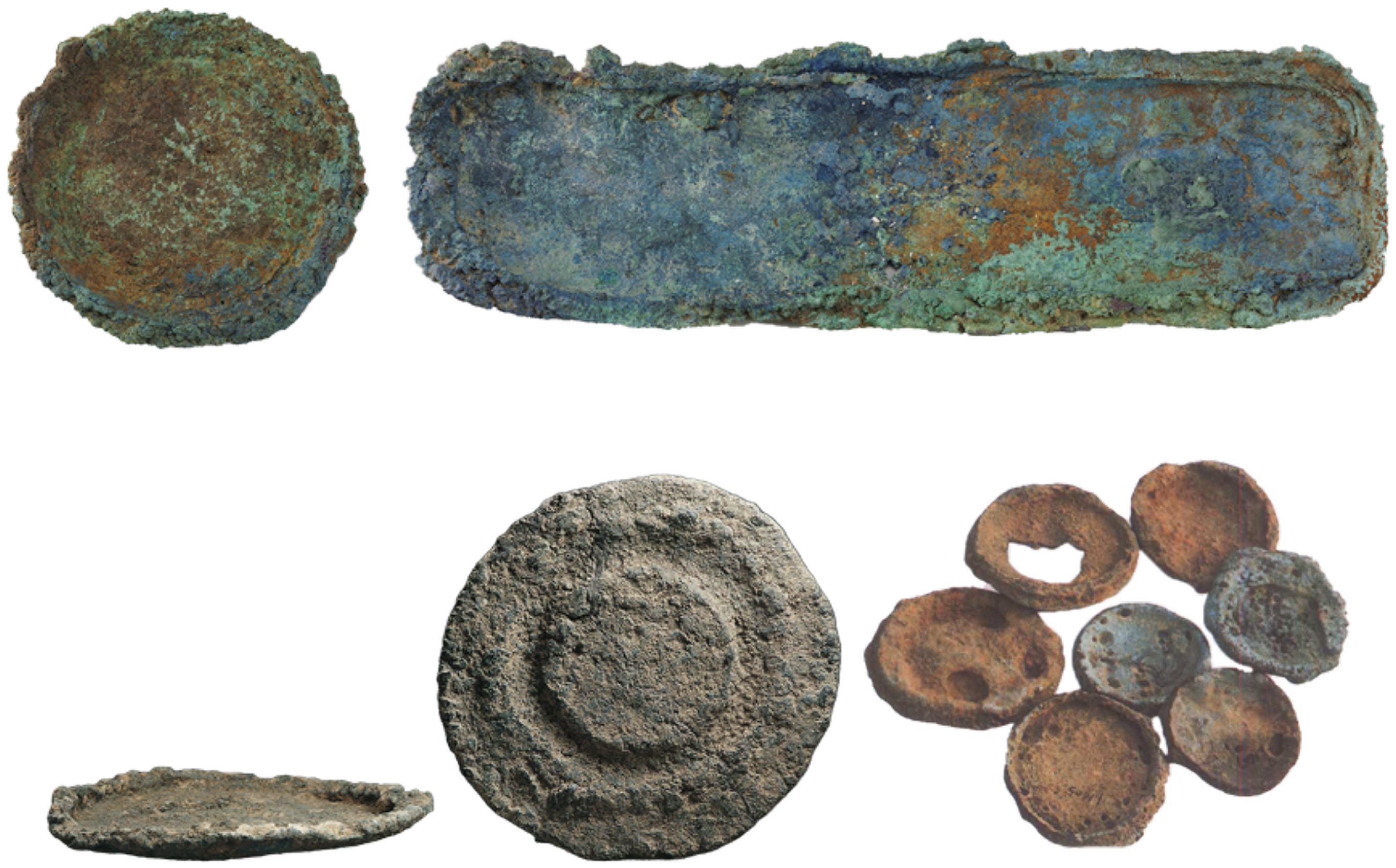
Moreover, four copper ingots excavated from Yejiashan M28 and M111 provide direct archaeological evidence for interregional transport networks. The two ingots from M28 were found on the northern ledge of the tomb, alongside bronze vessels. The round ingot measures approximately 29.5 centimeters in diameter and weighs 2.865 kilograms; the rectangular ingot measures 36.3 centimeters long and 14.1–14.6 centimeters wide, with a weight of 2.96 kilograms (Figure 4).Footnote 76 Similar round ingots have been discovered at foundries in the royal domain and near the Daye Lake (大冶湖) in southeastern Hubei.Footnote 77 Lead isotopic analysis suggests the two ingots may not originate from the middle Yangtze River region, while trace element analysis shows strong similarities with certain Yejiashan bronzes. This implies that the two ingots were part of the copper supply used to cast bronzes at Yejiashan.Footnote 78 Trace element analysis of the two ingots from Yejiashan M111 indicates overlap with certain Yejiashan bronzes but points to a different copper source than that of the ingots from M28.Footnote 79 In other words, although Zeng was geographically close to the Tonglüshan mines, a major copper source for Yejiashan, it also obtained copper ingots from other mining areas. The diversity in copper sources highlights the extensive and complex nature of interregional transport networks.
Copper ingots from Yejiashan M28 (top); copper ingots from Zhouyuan (bottom, left two) and ingots recovered near the Daye Lake (bottom, right).Footnote 75

In addition to copper, the Sui–Zao Corridor facilitated the transport of tin and lead—the other two principal components of bronze alloy. Jiujiang 九江 in northern Jiangxi has the largest tin deposits in the middle and lower Yangtze River regions. Although ancient mines have not yet been discovered in Jiujiang, the presence of ores, slags, and casting molds indicates that mining and smelting activities took place there during the second and first millennia. Chemical analysis of archaeological remains further shows that the closer a site is to tin deposits, the higher the percentage of tin in its bronze alloys, clearly identifying Jiujiang as a tin source for the middle Yangtze River region.Footnote 80
Jiujiang is located near the Tonglüshan and Tongling 銅嶺 mines and is well connected to the Yangtze River and the Huai River transport systems. Although direct archaeological evidence confirming that Jiujiang supplied tin to the Central Plain is still lacking, it is highly plausible given its rich tin resources and proximity to the mining communities of southeastern Hubei—long integral to interregional metal exchange networks.Footnote 81 Lead isotopic analysis also suggests that, beginning in the tenth century, the mines in eastern Hubei and northern Jiangxi near the Yangtze River had become major sources of lead.Footnote 82
Archaeological evidence and chemical analyses indicate that the Sui–Zao Corridor functioned as an important entrepôt for the interregional circulation of copper and its alloying metals. States in the Corridor—such as Zeng and E—acquired substantial quantities of metal resources from nearby mines in the middle Yangtze River region. Because of their strategic location, these states played a crucial role in facilitating the movement of metal ingots to foundries in the north.
It should be noted that the Western Zhou state also played an integral role in shaping and regulating the long-distance circulation of bronze goods. The inscription on Xi Jia pan 兮甲盤 records that goods from the four directions were transported to and stored in Chengzhou, the east capital of the Western Zhou state. By establishing regional states along major routes and overseeing the movement of goods, the royal court helped maintain interregional economic networks. However, central regulation of exchange did not imply monopoly over resources. Metal from mines in the south was not simply transferred passing through the Sui–Zao Corridor; a substantial portion was retained and used locally. By highlighting the role of Zeng in interregional exchanges, the above discussion reveals a more nuanced system of economic organization than the redistributive model suggests.
During the eighth through fifth centuries, the state of Zeng not only expanded its territorial and political influence but also extended its control over long-distance transport routes. The inscription on Zengbo Qi fu records that Elder Qi participated in a military campaign against the Huai Yi, suppressed the indigenous polity at Fanyang 繁陽, and facilitated the transport of copper and tin, claiming that “copper was transported and tin moved, which was all accomplished and made regular.” The inscription suggests that Zeng’s political influence reached as far as Fanyang, located in present-day Taihe 太和, Anhui. Fanyang was a key entrepôt in interregional exchange networks, linking the Central Plain to the north, the mining areas in Hubei and Jiangxi downstream the Huai River, and the Sui–Zao Corridor via the Nanyang basin and various mountain paths.Footnote 83 The importance of Fanyang is further supported by other inscriptions. Rong Sheng zhong 戎生鐘, dated to the ninth or eighth century, records that the state of Jin traded salt for copper at Fanyang. Similarly, Jin Jiang ding 晉姜鼎, slightly later in date, notes that Jin was concerned about access to Fanyang and dispatched a thousand liang of salt to exchange for copper.
It is unlikely, however, that the state of Zeng had direct control over Fanyang, given the distance from Suizhou. As implied by the inscription on Zengbo Qi fu, Zeng exercised its influence through securing the transport of metal goods and protecting trade routes from interference by the Huai Yi. The establishment of the regional center at Guojiamiao was likely intended to oversee and safeguard the transport routes connecting the Huai River and the Sui–Zao Corridor.
Archaeometallurgical studies suggest that the ancient route of the Sui–Zao Corridor remained vital to interregional networks after the fall of the Western Zhou. Zhang Ji argues that isotopic data of bronzes from the Central Plain, the Huai River region, and the middle Yangtze River display consistent changes during the eighth through fifth centuries.Footnote 84 The consistent changes in metal sources across different regions indicate that the interregional networks established during the Western Zhou period continued to operate, with shared metal sources supplying multiple states. Chemical analysis further confirms that mines in the middle Yangtze River region remained major suppliers of metal during this period. One notable change in alloy composition is the significant rise in tin content across regions, which implies an increased and steady supply of tin within interregional trade systems.Footnote 85 Moreover, many bronzes from the south contained unusually high levels of tin. For example, the ding and dou from Sujialong M46 contain approximately 70 percent and 60 percent tin, respectively, reflecting an abundance of tin in Zeng. This is not coincidental, given Zeng’s proximity to Jiujiang, one of the richest tin sources in ancient China.
Although Zeng did not directly control the mines in southeastern Hubei or the entrepôt of Fanyang, by overseeing the strategic transport route of the Sui–Zao Corridor, it secured metal transport, sustained interregional exchange networks, and tapped into the lucrative bronze economy.
Networks of Technological Knowledge and Innovation
Scholars often emphasize the cultural prominence of the Zhou royal court by pointing to the high degree of uniformity in elite bronze culture across China.Footnote 86 Chemical analysis further supports this uniformity: 97.9 percent of the bronze objects from Yejiashan are composed of either copper-tin alloy (56.8 percent) or copper-tin-lead alloy (41.1 percent), a composition consistent with bronzes from the Central Plain.Footnote 87
However, if the Zhou king never monopolized access to metal resources, it is unlikely that all bronze goods—particularly prestige vessels—were cast exclusively in royal foundries and distributed by the Zhou court. Recent archaeological discoveries suggest that states located near metal sources could retain a fair share of raw materials and produced bronzes locally.Footnote 88 In particular, the excavation of clay molds outside the royal domain provides direct evidence for bronze casting in local foundries.Footnote 89 In Zeng, a fragment of a clay mold was excavated from pit TN06E09 at Miaotaizi. The preserved section measures approximately 11.6 centimeters long, 8.6 centimeters wide, and 5 centimeters thick. Based on its shape and decorative pattern, it was likely part of a vessel mold. In pit TN06E07, a ceramic blowpipe was also recovered, measuring 6.4 centimeters in length with a handle diameter of 2 centimeters.Footnote 90 Similar blowpipes have been found at the royal foundries, suggesting shared casting technologies between royal and regional workshops.
Smelting remains found at Sujialong offer insights into technological innovation in bronze production. The partially preserved furnace resembles those from the Tonglüshan mines in material, size, and structure.Footnote 91 However, a key difference lies in construction: while Tonglüshan furnaces were built primarily above ground, the Sujialong furnace adopted a semi-subterranean design, constructed by digging a large, deep pit into the ground. In addition, the Sujialong furnace had two working platforms on a rammed and levelled surface, whereas the furnaces at Tonglüshan typically had only one. These structural differences suggest that workers at Sujialong adapted furnace design to local geographical conditions and sought to improve smelting efficiency. At Tonglüshan, smelting took place near mountain-side mining pits, where the rocky terrain made an underground base impractical. The abundance of stone enabled the construction of a T-shaped ventilation ditch supported by stone slabs, allowing both ditch and furnace to rest securely on a shallow foundation. In contrast, the softer alluvial soil at Sujialong permitted deep digging. Embedding the furnace partly underground made it easier for workers to add ore and charcoal from above, and having two working platforms improved efficiency in removing smelted copper and disposing of slag.
Tools made of copper-iron alloy and cast iron have also been excavated at Sujialong, representing some of the earliest iron objects found in southern China.Footnote 92 Although Sujialong was likely no longer under Zeng’s control by the fifth century, it continued to thrive as a center of metal production and contributed to the innovation and dissemination of technological knowledge.
The role of Zeng in technological innovation is particularly evident in bronze casting technology. Pre-cast techniques, which involved inserting pre-cast components into the mold, had been employed since the Shang and Zhou dynasties but became less common in the Central Plain after the mid-ninth century, while it remained widely practiced in Zeng.Footnote 93 Welding was also applied to a wide range of smaller bronze objects in Zeng as early as the eighth century, whereas in the Central Plain, this technique was usually reserved for larger bronze hu. By the sixth century, many bronze vessels from the south had increasingly elaborate ornamentation, with nearly all components—feet, handles, and ornaments—pre-cast and then welded onto the vessel body.
By adapting and refining existing techniques, craftsmen in Zeng contributed to the development of new techniques and styles that influenced the wider region. The pre-casting and welding technologies widely employed in Zeng may have originated in the Central Plain; however, the sudden appearance of lost-wax casting in the south no later than the fifth century is more likely a local innovation. Lost-wax casting refers to a technique in which a metal object is cast by replicating an original wax model, which is “lost” when molten metal is poured into the mold. While piece-mold casting was the mainstream method throughout Bronze Age China, the discovery of the tomb of Marquis Yi of Zeng in 1978 raised debate over the existence of lost-wax casting in ancient China.Footnote 94
The tomb of Marquis Yi yielded a large number of high-quality bronzes, including a set of zun and pan that have drawn great scholarly attention for their exquisite three-dimensional designs. Both vessels have small dragons pre-cast and welded onto the body, with ornate openwork around the rim. The openwork consists of tightly interlaced coiled strips, which requires a high level of casting skill. Similar openwork decorations have been found to appear on several other bronzes from the tomb, sparking a long debate over whether they were made using piece-mold or lost-wax casting techniques. The absence of welding marks between the openwork and the vessel body, as well as the lack of mold seams, suggests that neither welding nor piece-mold casting was used to create the openwork. Instead, traces of wrinkles on the vessel surface appear to result from the melting of a wax model, supporting the hypothesis of lost-wax casting. Although the debate remains unresolved—and recent studies have shown that some bronzes previously attributed to lost-wax casting were not—the bronzes with extraordinarily complex openwork from the tomb of Marquis Yi were more likely made using this technique.Footnote 95 Scholars propose that lost-wax casting had appeared on bronzes dated to the sixth and fifth centuries in the south, and the set of zun and pan from the tomb of Marquis Yi represents the latest extant example of lost-wax casting in Bronze Age China.
Networks of Bronze Culture
The above discussion of recent discoveries of bronzes and smelting remains from Zeng demonstrates how the state not only facilitated the interregional exchange of goods but also promoted the transmission and innovation of technological knowledge. The circulation of bronze goods further contributed to the development of localized bronze cultures.
Several bronze vessels from Yejiashan already display exaggerated three-dimensional motifs, such as the coiled dragon on the lid, and the ox heads on the body and handles, of the lei from M111:120. Similar decorations appear on the lei from M27 and M28, as well as on a set of lei, you, and zun from M4 at Yangzishan. This artistic style contrasts with the low-relief decoration popular in the Central Plain and is found only in Sichuan, Hubei, and Liaoning—regions far away from the royal domain.
Despite regional variation, a shared material culture based on the royal style existed among the elite during the Western Zhou period. This was facilitated by the close ties between the royal court and the regional states, ties maintained through frequent gift exchanges and participation in court ceremonies. The royal style continued to dominate elite culture after the fall of the Western Zhou; the shape, decoration, and assemblage of bronzes across states followed the Western Zhou tradition and displayed a high degree of consistency. At the same time, however, the localization of bronze culture accelerated, and new styles began to emerge beginning in the eighth century. For example, although the bronze assemblages from Zeng in the south and Guo 虢 in the Central Plain are similar in composition, the artistic styles of ding, li, and hu are different.
The ding from Sujialong M1 have a more flattened bottom and larger but lower feet compared to those from the Sanmenxia 三門峽 cemetery. This type of ding also appears at Guojiamiao, suggesting it was likely the mainstream type in Zeng.Footnote 96 Moreover, only 11 out of 92 ding from Sanmenxia have attached handles, indicating that this feature was rare in Guo.Footnote 97 The li from Sujialong have an everted shoulder, bag-shaped legs, and a double-ring pattern on the shoulder; some also have small flanges on the body. This type of li was popular in Zeng and appeared in neighboring states such as Fan, but was seldom seen in the Central Plain. The hu from Sujialong introduce new artistic styles, such as a lotus pattern on the lid—a feature that, although briefly present in the north, lasted into the fifth century in the elite tombs of Zeng and Chu, such as Leigudun M2 and Jiuliandun 九連墩 M1.Footnote 98 The wave pattern commonly found on the body of this hu differs from the dragon pattern popular in the Central Plain. These bronzes demonstrate that the craftsmen of Zeng did not simply inherit standardized forms but actively engaged in artistic innovation.
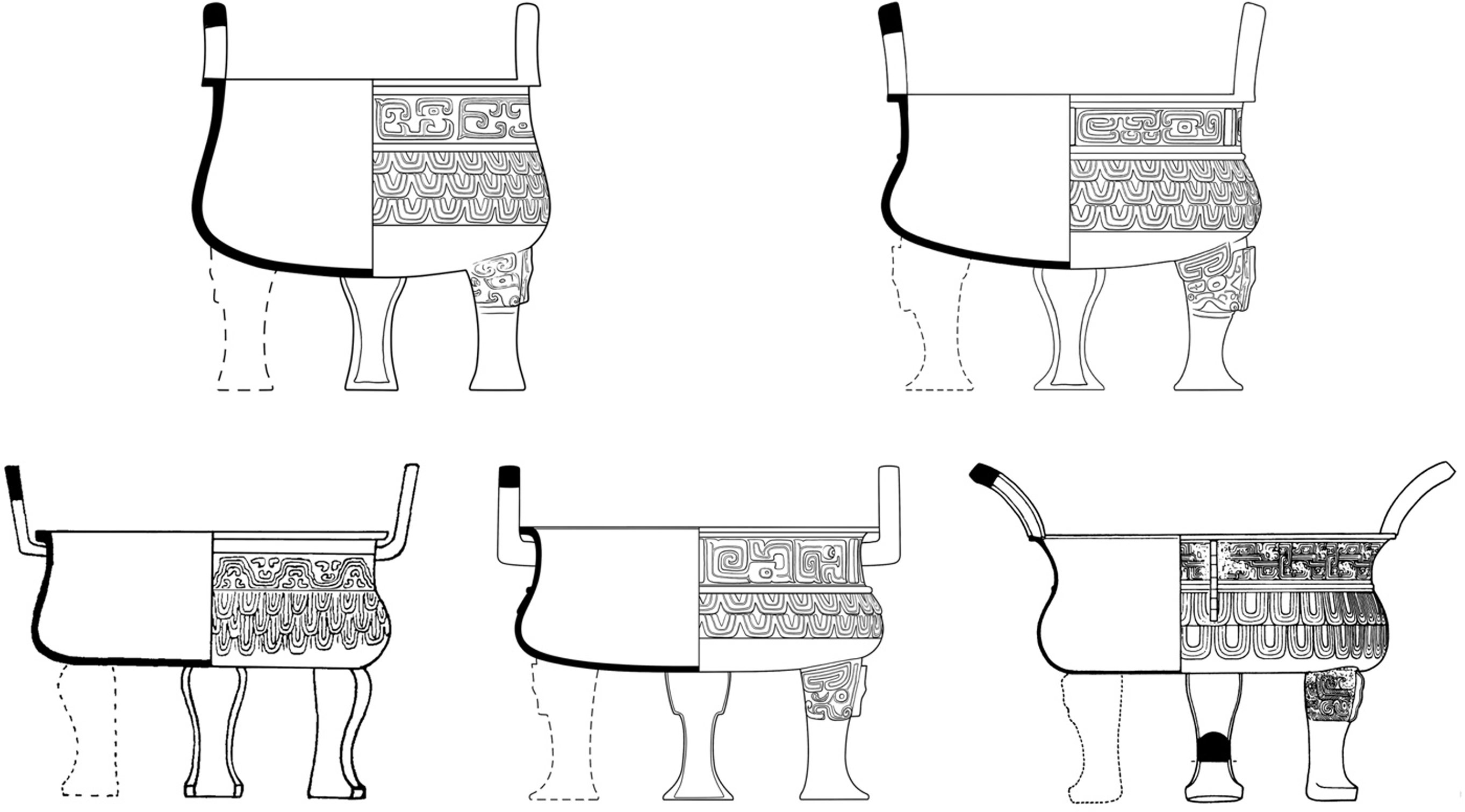
With the political and military expansion of Chu, its bronze culture increasingly influenced the states under its control from the sixth century onward. Typical Chu-style bronzes have been found in the tombs of Zeng. For example, zhan have been discovered at Sujialong and Yidigang.Footnote 99 Sheng ding were also incorporated into the bronze assemblages in the tombs of Marquis Yu and Marquis Yi of Zeng. Moreover, the coiled-serpent pattern, usually associated with Chu, became common on bronzes from Zeng after the sixth century.
During their frequent interactions, Zeng also influenced the bronze culture of Chu. Ding had always been the key component of bronze assemblages in late Bronze Age China, and Zeng may have played a role in the development of Chu-style sheng ding. Generally, Chu-style ding fall into three major categories: lidded ding, sheng ding, and huo ding.Footnote
100
Sheng ding have a narrow waist, shallow body, and flaring handles. They are only found in the tombs of the Chu elite or those affiliated with Chu, thus representative of Chu style. The earliest extant sheng ding discovered in a Chu tomb is Ke Huang ding 克黃鼎 from HXHM1 at the Heshangling 和尚嶺 cemetery, dated to the late sixth century.Footnote
101
Gao Chongwen proposes that Zhong ding 盅鼎, likewise dated to the sixth century and excavated from Liujiaya 劉家崖 in Suizhou, is a prototype for Chu sheng ding. It has a shallow body, saggy belly, and near-flat bottom, and is self-named deng ding or “ascending ding,” which has the same meaning as sheng ding.Footnote
102
Zhang Changping further notes that Bang Ji ding
 季鼎, dated to the late seventh century and excavated from Zhoujiagang 周家崗 also in Suizhou, closely resembles Zhong ding (Figure 5).Footnote
103
季鼎, dated to the late seventh century and excavated from Zhoujiagang 周家崗 also in Suizhou, closely resembles Zhong ding (Figure 5).Footnote
103
From left to right, top to bottom: Wu Hui ding; Sujialong M79:8 ding; Zhong ding; Bang Ji ding; Ke Huang ding.

Although Zhong ding and Bang Ji ding have attached handles and their bodies are saggy-bellied rather than narrow-waisted—given that their mouths are not as flared as that of Ke Huang ding—their shallow bodies, near-flat bottoms, and similar decorations indicate that they are undoubtedly early types of sheng ding. In fact, a similar style is also found in Sujialong in the assemblage of five ding and four gui in M79. The ding in the tomb resemble Zhong ding and Bang Ji ding, only distinguished by their standing handles. Zhang suggests that this type of ding can be traced back to the saggy-bellied ding of the late Western Zhou period, such as Wu Hui ding 無叀鼎, dated to the ninth to eighth centuries, which has a similar scrolling pattern under the rim and a hanging-scale pattern on the belly.Footnote 104 The presence of this ding in Zeng by the seventh and sixth centuries suggests that it likely originated in the Sui–Zao Corridor before spreading to territories under Chu.
The states of Zeng and Chu shared casting techniques and bronze styles, mutually shaping each other’s material cultures. While it is true that the production of prestige bronze vessels was sponsored and regulated by the elite, equating bronze with state risks oversimplifying the complex and dynamic nature of cultural interaction. On the one hand, it is difficult to draw a clear dichotomy between Zeng and Chu: their bronze cultures both originated in the Central Plain, developed through mutual influence, and often adopted each other’s innovations. On the other hand, stylistic variation existed even within a single state. For example, the specific type of yue found in the tomb of Elder Qi is not found in other elite cemeteries of Zeng, suggesting the existence of different groups of craftsmen and diverse sources of bronze traditions.Footnote 105 Just as metal resources continued to circulate through interregional networks, so too did casting technologies and bronze cultures transcend political borders.
Therefore, rather than searching for a distinct Zeng or Chu culture, we should examine how new techniques and styles were exchanged, adapted, and localized. The appearance of similar techniques and styles across states in the middle Yangtze River and the Huai River regions during the same period does not necessarily indicate a unified Chu bronze culture in the south. Rather, it reflects the outcome of constant social interactions, in which technological and artistic practices were selectively adopted through political, economic, and cultural exchanges. It is no coincidence that many new techniques and styles first appeared in Zeng, and that the finest examples of lost-wax casting were found in the tomb of Marquis Yi. The location of Zeng in the Sui–Zao Corridor—at the crossroads between north and south—was instrumental to the development of its bronze culture and the flow of ideas, technologies, and materials across China.
Conclusion
This article introduces and reviews archaeological and epigraphical discoveries related to the forgotten “Hereditary House of Zeng,” which has not received the international attention it deserves.Footnote 106 This is not merely a summary of new evidence or a synthesis of Chinese scholarship on Zeng, however. The rich new findings allow for an examination of its social organization and transformation over the longue durée of late Bronze Age China.
Far from being a peripheral regional state subordinate to the Zhou center, the state of Zeng pursued its own agendas in consolidating governance, exploiting resources, and developing material culture. The analysis of the political-military, economic, and cultural activities of Zeng demonstrates its involvement in interregional networks of interaction and exchange in the Sui–Zao Corridor, the middle Yangtze River region, and beyond. Politically, Zeng integrated diverse social groups and formed alliances through marriage and diplomacy. Economically, it leveraged its strategic location to control key nodes and regulate the circulation of goods and technological knowledge. Culturally, Zeng promoted elite bronze culture and ideological symbols, while simultaneously adapting and transforming them to develop new techniques, artistic styles, and expressions of identity in ritual contexts.
Understanding Zeng through the lens of networks—emphasizing interaction and exchange—does justice to new evidence, challenges the traditional Zhou-centric framework, and transcends the boundaries of states and regions. While scholars have begun to recognize the importance of examining complex social integration in the borderlands of the Central Plain, this article takes that approach a step further by situating Zeng in multiple networks. In doing so, it seeks to illuminate Zeng’s role in multilateral and interregional relationships, thereby truly rediscovering the state and reaffirming its significance in the history of Early China.



 Open access

