


The risk of obesity and other chronic conditions may be alleviated by improving diet quality(Reference Glanz, Basil, Maibach, Goldberg and Snyder1), which in turn may be influenced by the site of food preparation and consumption. The percentage of spending on foods away from home in the American diet has risen from 25 % in 1970 to 40 % in 1995(Reference French, Story and Jeffery2). Its concomitance with the rising obesity epidemic may suggest a causal association that is mediated by poorer diet quality among Americans. Indeed, parallel to the rising obesity epidemic, food consumption patterns and household expenditures both show a marked upward trend in total energy intake derived from away-from-home sources. In 2002, nearly half of Americans’ food expenditures went to an away-from-home food facility. Total away-from-home food expenditures were $US 415 billion in 2002, up 58 % (23 % in constant dollars) from $US 263 billion in 1992(Reference Hayden, Blissard, Bhuyan and Nayga3). Categorizing energy intake from food source locations separately by home, restaurants, fast-food establishments, schools/day care and other non-home locations, researchers have reported significant increases in the last few decades in the proportion of food prepared away from home with particularly high increases in fast-food consumption. The percentage of total energy intake from food prepared away from home increased from 18 % in 1977–1978 to 32 % in 1994–1996, and the percentage of energy from fast food increased threefold for adults aged 18 years and over and fivefold for children aged 2–17 years(Reference Guthrie, Lin and Frazao4). Examining similar trends, another study showed that the proportion of total energy coming from restaurant and fast-food places combined tripled among adolescents (aged 12–18) and doubled among young adults (aged 19–29) between 1977 and 1996(Reference Nielsen, Siega-Riz and Popkin5). Similar dietary behaviour changes were observed for other age groups as well(Reference Nielsen, Siega-Riz and Popkin6).
While previous studies have suggested a negative influence of fast-food and away-from-home food consumption on dietary quality, BMI and obesity among all age groups(Reference Bowman and Vinyard7–Reference Befort, Kaur, Nollen, Sullivan, Nazir, Choi, Hornberger and Ahluwalia10), to our knowledge no previous research has explored the direct effect of household away-from-home food expenditure (AFHFE) on the quality of dietary intake among individuals. The present study aimed to assess the nutritional impact of household expenditure on food bought and eaten away from home, such as at restaurants and fast-food places, and whether it is affected by people’s nutrition knowledge and beliefs (NKB).
Several hypotheses were tested using nationally representative data. We were particularly interested in the effect of expenditure on several measures of dietary quality (Fig. 1, H2). As a first analysis, we examined sociodemographic, economic and lifestyle correlates of AFHFE (Fig. 1, H1). Furthermore, knowledge and beliefs, acquired through education and other cultural and social support mechanisms, may influence food purchasing and in turn affect dietary intake (Fig. 1, H4). We hypothesized that individuals with stronger NKB (i.e. nutrition is important to them) have reduced AFHFE (Fig. 1, H3), which improves diet quality. Hence, AFHFE may act as a mediator (Fig. 1, H5). In addition, NKB may actually moderate the effect of expenditure on dietary quality, by acting as an effect modifier (Fig. 1, H6). In particular, we hypothesized that increased household AFHFE reduces individual diet quality mostly among subjects with low NKB scores. Finally, we looked at NKB as a potential confounder in the relationship between expenditure and diet quality (Fig. 1, H7).
Hypotheses tested in the present study. Notation: +, positive association; −, negative association; H1, hypothesis that covariates are associated with away-from-home food expenditure (AFHFE); H2, hypothesis that AFHFE is negatively associated with diet quality indicators and new Healthy Eating Index (HEI); H3, hypothesis that nutrition knowledge and beliefs (NKB) is negatively associated with AFHFE; H4, hypothesis that NKB is positively associated with diet quality indicators and new HEI; H5, hypothesis that the effect of NKB on diet quality indicators and new HEI is mediated by AFHFE; H6, hypothesis that the effect of AFHFE on diet quality indicators is modified by NKB; H7, hypothesis that the effect of AFHFE on diet quality indicators is confounded by NKB

Data and methods
Survey methods
Data from the US Department of Agriculture’s (USDA) Continuing Survey of Food Intakes by Individuals (CSFII) 1994–96 were used(11). This is a nationally representative, multistage, stratified sample of 16 103 non-institutionalized persons aged 0 to 90 years residing in the USA containing information about dietary intake (by one or two non-consecutive, multiple-pass, 24 h recalls that were 3 to 10 d apart), socio-economic and demographic parameters. In addition, a sample of subjects who responded to at least the first day of the two 24 h recalls in CSFII (one adult aged 20 years or older per household) completed the Diet and Health Knowledge Survey (DHKS) in which they answered questions related to knowledge and beliefs about diet and health. Demographic, socio-economic and lifestyle variables were available for all individuals who participated in the CSFII. Although this data set is 10 years old, it is the only available data set that provides comprehensive, nationally representative data on all the study variables needed in the present project, such as detailed information on participants’ nutrition knowledge, beliefs and perceptions, which are not collected in other more recent national surveys such as the National Health and Nutrition Examination Surveys(12).
Study sample
Among the 16 103 respondents who completed CSFII 1994–96, 9872 who were 20 years or older had data on day 1 of recall. Out of those, only 5765 subjects (one person per household) were sampled as respondents to the DHKS. We further excluded those over the age of 65 years (n 2127 for CSFII, n 1319 for CSFII/DHKS) and those who completed only one 24 h dietary recall (n 414 for CSFII, n 90 for CSFII/DHKS) or did not provide data on AFHFE (2 % and 4 % missing in each sample, respectively). As a result, our final sample consisted of 7148 (3625 men and 3523 women) individuals among those who completed CSFII for the time period 1994–1996 (i.e. study sample 1) and 4252 individuals (2164 men and 2088 women) who completed both surveys (CSFII and DHKS, i.e. study sample 2).
Measures
Food expenditure assessment
The CSFII 1994–96 interviews asked one respondent from each household to estimate the average weekly amount of dollars spent on food while shopping at various types of outlets for all household members. Food outlet type was broadly classified as: (i) grocery stores (including the store’s salad bar, soup bar and delicatessen); (ii) specialty stores (including bakeries, liquor stores, delicatessens, meat markets, vegetable stands, health food stores and other similar places); (iii) fast-food or carryout places (when food was consumed at home); and (iv) away-from-home foods (including food and beverages that never entered the home, i.e. eaten at restaurants, fast-food places, cafeterias at work or at school, or purchased from vending machines).
The main exposure of interest is the weekly dollars spent per capita on away-from-home food (i.e. ‘absolute expenditure’). This measure was computed by first standardizing responses to weekly expenditures as some were reported on a monthly basis. Second, we divided that standardized measure by household size to obtain per capita absolute AFHFE. However, ‘relative expenditure’ on away-from-home food was also considered in comparison with total expenditure on food (i.e. the proportion = (AFHFE/total food expenditure) × 100 %). Total food expenditure was measured by adding all four amounts ((i) to (iv) mentioned earlier) after standardizing responses to weekly expenditures and subtracting non-food expenditures as reported by a fifth question related to grocery expenses. Appendix 1 presents the household questionnaire items used to derive the two expenditure variables. Note that while away-from-home foods refer to the foods themselves (either in servings or in grams), AFHFE is the money spent by the household on foods purchased and consumed outside the home environment.
Dietary intake and diet quality indicators
Dietary intake was elicited from subjects participating in the CSFII 1994–96 survey using two 24 h dietary recalls. Based on responses which uncovered types of foods consumed during these two days along with their portion sizes, nutrient intakes were provided based on food composition tables that were designed specifically to be used for the survey. Moreover, the foods consumed were grouped into broader categories. Average dietary intakes of foods and nutrients from the two 24 h recalls were considered. Several indicators and indices were created accordingly, as measures of diet quality. These included the intake of total fat and saturated fat (both in grams and as a percentage of total energy), dietary cholesterol (mg), Na (mg), added sugars (teaspoons) and sweetened beverages (grams), the excess of which are expected to reduce diet quality. We also considered intake of fruits and vegetables (VF in servings), dairy products (servings) and fibre (grams), adequate intakes of which improve diet quality.
To assess the overall quality of the diet, we applied the USDA’s Healthy Eating Index (HEI). While this index has been used in its earlier version(Reference McCullough, Feskanich, Rimm, Giovannucci, Ascherio, Variyam, Spiegelman, Stampfer and Willett13) so far in the literature, we used the new HEI 2005 described in detail in Appendix 2(14). The HEI was revised to reflect the 2005 Dietary Guidelines for Americans and had a number of improvements(14). The new HEI includes twelve components and is measured on a scale of 0 to 100. For many of the food group criteria described in Appendix 2, serving estimates rather than grams were used as made available by the USDA.
Correlates of away-from-home food expenditure
We tested the association between several household-level and geographic-level variables with household AFHFE. These included mean age in the household, number of children under the age of 18 years in each household, percentage female, percentage non-white based on the race/ethnicity variable (non-Hispanic whites or Caucasians; non-Hispanic blacks or African Americans; Hispanics; all others such as Asians, Native Americans, Pacific Islanders and Alaskan Natives), 1990 Census geographic regions (north-east; mid-west; south; west), degree of urbanization of the geographical area in which the household is located (Metropolitan Statistical Area (MSA)–central city; MSA–suburban; rural), mean educational attainment of adults over the age of 20 years (<high school, 1–8 years; high school, 9–12 years; >high school, ≥13 years) in the household, household annual income per capita (total annual income divided by household size expressed in $US) and current employment status (employed; not employed).
In addition, we considered individual-level lifestyle factors. These included current smoking status (1 = yes; 2 = no) and physical exercise (scale of 1 to 6 on the following question: ‘How often do you exercise vigorously enough to work up a sweat?’, with 1 = daily and 6 = rarely or never). Sedentary lifestyle was operationalized as those whose response was ‘rarely or never’. Individual-level age, gender, race, education, employment status, smoking status and sedentary behaviour were considered as potential confounders in all multivariate analyses. Moreover, we considered individual-level food purchase factors as potential confounders based on the question: ‘When buying a food, what is important to you?’ and included taste, cost, convenience, safety, and how well food keeps. Each variable was on a scale of 1 = not important at all to 4 = very important.
Nutrition knowledge and beliefs
One adult survey participant from each household was asked about his diet and health-related knowledge and beliefs in the CSFII/DHKS. We examined one DHKS scale consisting of eleven questions which were initiated by the following cue: ‘To you personally, is it very important (score of 4), somewhat important (3), not too important (2), or not at all important (score of 1) to…’ (i) use salt or sodium only in moderation? (ii) Choose a diet low in saturated fat? (iii) Choose a diet with plenty of VF? (iv) Use sugars only in moderation? (v) Choose a diet with adequate fibre? (vi) Eat a variety of foods? (vii) Maintain a healthy weight? (viii) Choose a diet low in fat? (ix) Choose a diet low in cholesterol? (x) Choose a diet with plenty of breads, cereals, rice and pasta? (xi) Eat at least two servings of dairy products daily? It is worth noting that eight of the eleven NKB questions reflected the diet quality indicators considered as outcomes.
Using principal components analysis (PCA)(Reference Sharma15), we created an index by extracting a single component score by imposing an eigenvalue criterion >1·0, as well as examining the scree plot. The component explained around 40 % of the variance in the eleven items, which loaded almost equally on this component (loadings ranged from 0·23 and 0·35). The score was estimated and subdivided into tertiles in part of the analysis. Those who were in the lowest tertile were considered to have poor NKB.
Statistical analyses
Two-way frequencies and descriptive statistics were calculated for several covariates (demographic, geographic, socio-economic, lifestyle and NKB) by AFHFE (absolute and relative) quintiles; proportions (%) were calculated for categorical variables; and means with their standard errors were computed for continuous variables. For hypothesis testing regarding the equality of means between groups, we performed t tests. For testing the association between categorical variables, we conducted χ 2 tests. Furthermore, we performed a non-parametric test for trend in means of continuous variables across ordered groups (e.g. quintiles of expenditure) using a test developed by Cuzick(Reference Cuzick16), which is an extension of the Wilcoxon rank-sum test, correcting for ties. Note that these tests could not take into account effects of the complex sampling design, although it is unlikely that the conclusions would be changed if they could.
Multivariate linear regression models were used to examine the relationship between the main exposure variables (expenditure, continuous) and diet quality indicators (continuous), as listed earlier (Fig. 1, H2). We tested for effect modification by NKB through conducting stratified analysis and by including related interaction terms (NKB×AFHFE) in the model (Fig. 1, H6). In addition, we assessed confounding by looking at change in estimates between full and reduced models (control for NKB v. not) with 10 % as the cut-off used (i.e. a change in estimate >10 % suggests the existence of confounding) (Fig. 1, H5)(Reference Maldonado and Greenland17). A similar criterion was used for mediation by assessing the percentage change in regression coefficients after adjustment was done on the mediating factor (Fig. 1, H7)(Reference Ditlevsen, Christensen, Lynch, Damsgaard and Keiding18).
All analyses were conducted using survey-related commands in the STATA statistical software package release 9·0 (Stata Corporation, College Station, TX, USA), which takes complex sampling design into account (multistage stratified cluster as opposed to simple random sample) and produces nationally representative estimates of means, proportions and regression coefficients as well as correct estimates of standard errors. In all tests, P < 0·05 was considered as statistically significant.
Results
Characteristics of the study sample
The study participants in the CSFII for the years 1994–1996 (n 7148) were selected to be in the age range 20 to 65 years (mean 39·9 (se 0·24) years). Overall, 51·1 % were female, 18·6 % were non-white, mean number of children under 18 years of age was 0·79 (se 0·05), mean years of education was 13·3 (se 0·10), mean household income per capita was $US 16 921 (se $US 321), employment rate was 55·7 % and current smokers accounted for 27·5 % of the sample, whereas 32·5 % reported to rarely or never exercise. Within the CSFII/DHKS group, the proportions of subjects who reported taste, cost, convenience, nutrition and how well food keeps to be very important for them were about 83 %, 41 %, 36 %, 60 % and 53 %, respectively.
Correlates of away-from-home food expenditure
Table 1 shows the distribution of selected household-level and geographic correlates by weekly absolute and relative AFHFE quintiles. For household-level correlates, mean age of household members increased linearly with absolute AFHFE (38·43 v. 34·05 years for upper v. lowest quintile, respectively). Similarly, the percentage of females in the household was inversely related to such expenditure without a clear linear trend. On average, the proportion non-white and the mean number of children were also inversely associated with AFHFE. A higher household income per capita, better education attainment and employed status were associated with higher absolute expenditure, with a significant Wilcoxon rank-sum test for trend (P < 0·05). Relative AFHFE exhibited similar associations with these correlates. Regional differentials were noted for absolute but not relative expenditures. In addition, rural areas tended to have households that spent less on away-from-home foods while central city MSA areas and suburban areas were more likely to spend over $US 15·5 weekly per capita away from home. A proportion of total food cost spent away from home of 33·3 % or more was also more common in central cities and suburban areas, compared with rural areas.
Unadjusted means and proportions, with their standard errors, of household-level and geographic correlates by weekly away-from-home food expenditure (AFHFE) quintile (absolute and relative): US men and women (20–65 years) participating in the Continuing Survey of Food Intake by Individuals (CSFII) 1994–96
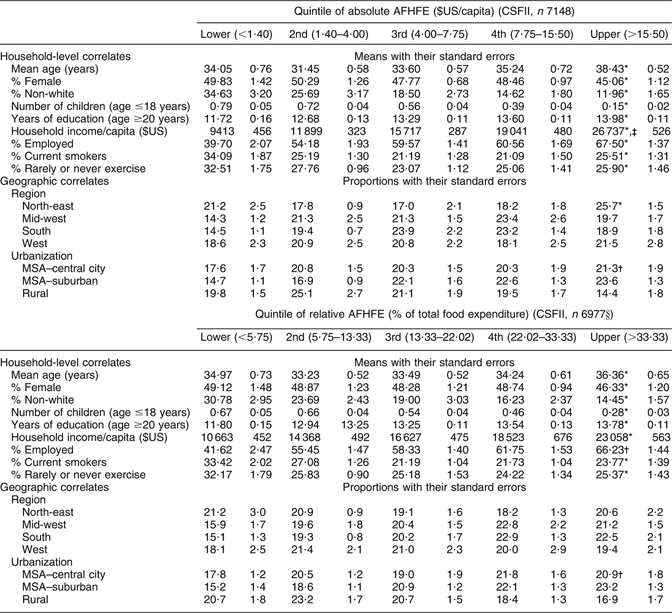
MSA, Metropolitan Statistical Area.
*Wilcoxon rank-sum test for trend: P < 0·05.
†χ 2 test of independence between two categorical variables: P < 0·05.
‡All 95 % CI did not overlap.
§Missing data in the denominator of the relative expenditure variable (total food expenditure) led to a smaller sample size compared with the absolute expenditure variable.
Expenditure in relation to nutrition knowledge and beliefs and diet quality: bivariate analysis
Table 2 shows unadjusted means of diet quality indicators as well as nutrition belief factors by quintiles of expenditure variables. In terms of dietary intake, means of the selected food groups and nutrients differed significantly by quintile of expenditure, with few exceptions. Poor dietary intake quality was shown with increased expenditure for all indicators (based on the sign and significance of the Wilcoxon rank-sum test for trend) except for servings of VF, dairy and fibre, which showed the inverse trend (Wilcoxon rank-sum test for trend for absolute expenditure: z = 7·82, 7·97 and 8·38, respectively, P < 0·001). Overall, trends in the HEI followed those of VF, dairy and fibre by increasing with higher AFHFE, although only for the absolute expenditure measure. In terms of NKB factors, there was a clear threshold effect at the fifth quintile whereby those with highest expenditure had the poorest mean NKB score, particularly for the global PCA score (absolute expenditure, mean PCA score = −0·24, P < 0·05 for Wilcoxon rank-sum test; relative expenditure, mean PCA score = −0·30, P < 0·05).
Unadjusted means with their standard errors of diet quality indicators and indices and nutrition knowledge and belief factors by weekly away-from home-food expenditure (AFHFE) quintile (absolute and relative): US men and women (20–65 years) participating in the Continuing Survey of Food Intake by Individuals (CSFII) and the CSFII/Diet and Health Knowledge Survey (DHKS) 1994–96

HEI, Healthy Eating Index; VF, vegetables and fruit; PCA, principal components analysis.
*Nutrition knowledge and belief scale consisted of eleven questions, initiated by the following cue: ‘To you personally, is it very important (score of 4), somewhat important (3), not too important (2), or not at all important (score of 1) to consume these foods or nutrients at appropriate levels?’ The nutrition knowledge and belief PCA score for each subject is a weighted average of the standardized z scores of each of the eleven responses to the eleven related questions.
†Wilcoxon rank-sum test for trend: P < 0·05.
Effect of nutrition knowledge and beliefs on diet quality
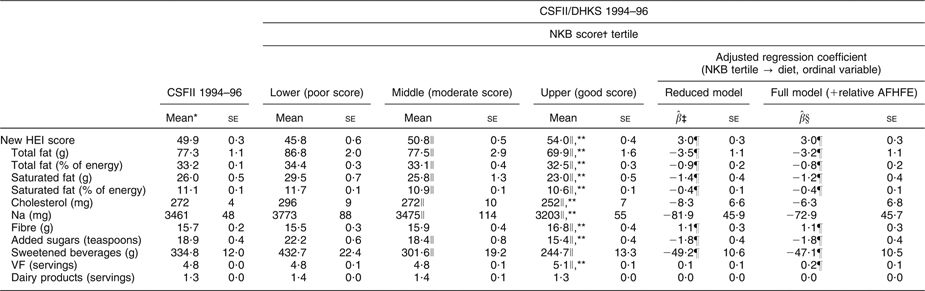
Table 3 presents unadjusted means of dietary intake variables by nutrition belief tertiles and adjusted regression coefficients between NKB and diet quality indicators and indices. t Tests indicated that all diet quality indicators, with the exception of dairy products, differed significantly between the lowest and the highest NKB score tertiles (P < 0·05), in the expected direction. In fact, the poorer the NKB score, the higher the intake of total fat, saturated fat, cholesterol, Na and added sugars and the lower the intake of VF and fibre. The test for trend (Wilcoxon rank-sum test P < 0·05) was significant for all diet quality indicators except for dairy products (servings). The same trend of improved diet quality with increased NKB score was found for HEI with a significant linear dose–response relationship (Wilcoxon rank-sum test P < 0·05).
Unadjusted means with their standard errors of diet quality indicators by tertile of nutrition knowledge and belief (NKB) score and adjusted regression coefficients of the effect of NKB tertile on diet, mediation analysis by relative away-from-home food expenditure (AFHFE): US men and women (20–65 years) participating in the Continuing Survey of Food Intake by Individuals (CSFII) and the CSFII/Diet and Health Knowledge Survey (DHKS) 1994–96
 , mean regression coefficient; HEI, Healthy Eating Index; VF, vegetables and fruit.
*Survey-based estimates of mean and se.
†Nutrition knowledge and belief scale consisted of eleven questions, initiated by the following cue: ‘To you personally, is it very important (score of 4), somewhat important (3), not too important (2), or not at all important (score of 1) to consume these foods or nutrients at appropriate levels?’ In regression models, NKB is entered as an ordinal variable (1 = lower tertile, 2 = middle tertile, 3 = upper tertile).
‡Adjusted for individual-level variables (age, gender, race, education, employment status, smoking status, sedentary behaviour and perceived importance of food safety, cost, taste, convenience and how well food keeps), household income per capita and number of children (≤18 years of age), and geographic variables (region and urbanization).
§Adjusted for all individual, household and geographic variables cited above plus relative AFHFE.
∥P < 0·05 for null hypothesis that diet quality-related components do not differ between upper and lower tertile of NKB score, using Student’s t test.
¶P < 0·05 for null hypothesis that β = 0.
**Wilcoxon rank-sum test for trend: P < 0·05.
Subsequently, NKB tertiles were entered as an ordinal variable (1 = lower tertile; 2 = middle tertile; 3 = upper tertile) into a multivariate model with diet quality indicators as outcomes. In one model (‘reduced model’), control was done on individual, household and geographic correlates, while in another model (‘full model’) relative expenditure was added in addition to the main exposure (NKB score tertile) and the control variables in the reduced model to assess mediation by AFHFE. Eight models out of twelve yielded statistically significant estimates in the expected direction, where a higher NKB tertile was associated with improved dietary quality. Models with total fat (grams and percentage of energy), saturated fat (grams), cholesterol, Na and VF suggested mediation by expenditure, with a change in regression coefficient estimate by more than 10 %. However, this finding was not replicated for HEI. Similar results in terms of change in estimates of regression coefficients between reduced and full models were obtained in a separate mediation analysis where absolute AFHFE was added to the reduced model.
Effect of expenditure on diet quality: multivariate stratified analysis
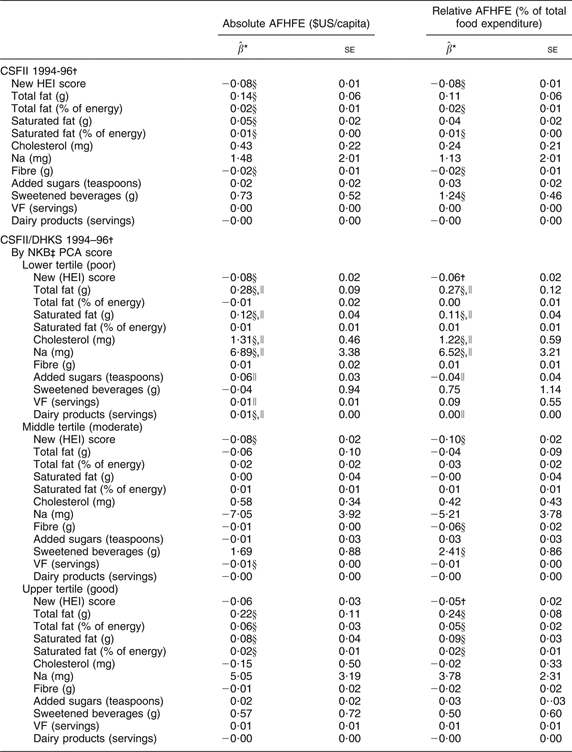
Table 4 presents the results of a multivariate linear regression analysis for association between absolute or relative AFHFE and diet quality indicators. The analysis was conducted on all available data for the CSFII sample as well as the sub-sample with data on NKB factors (CSFII/DHKS) stratified by the PCA nutrition belief score tertiles. For the total CSFII sample (n 7119), absolute AFHFE was positively related to poor diet quality profile of individuals, even after controlling for potential confounders. In particular, households that spent an additional $US 10 weekly per capita on away-from-home foods had on average an increase of 1·4 g in fat, 0·2 percentage points in percentage energy from fat, 0·5 g of saturated fat, 0·1 percentage points in percentage energy from saturated fat, had 0·2 g less fibre intake and 0·4 points fewer on the HEI (P < 0·05). Similar results were obtained for relative AFHFE.
Multivariate linear regression analysis of the effect of weekly absolute and relative away-from-home food expenditure (AFHFE) (mean adjusted regression coefficients with their standard errors) on selected diet quality indicators, stratified by nutrition knowledge and belief (NKB) score tertile: US men and women (20–65 years) participating in the Continuing Survey of Food Intake by Individuals (CSFII) and the CSFII/Diet and Health Knowledge Survey (DHKS) 1994–96
 , mean regression coefficient; HEI, Healthy Eating Index; VF, vegetables and fruit.
*Controlling for individual-level variables (age, gender, race, education, employment status, smoking status and sedentary behaviour), household income per capita and number of children (⩽18 years of age), and geographic variables (region and urbanization). Two-day average intake data were used. Additional control for food purchase factors was done in the stratified models (CSFII/DHKS).
†Survey-based estimates of  and se.
‡Nutrition knowledge and belief scale consisted of eleven questions, initiated by the following cue: ‘To you personally, is it very important (score of 4), somewhat important (3), not too important (2), or not at all important (score of 1) to consume these foods or nutrients at appropriate levels?’ PCA refers to principal components analysis.
§P < 0·05 for null hypothesis that β = 0.
∥P < 0·05 for null hypothesis that interaction term NKB tertile × expenditure or NKB × AFHFE is zero (γ = 0).
The analysis stratified by NKB score tertiles indicated that among subjects participating in the DHKS, poor (the lowest tertile) NKB score, fat and saturated fat (in grams), Na and cholesterol and dairy products were positively related to both absolute and relative AFHFE (P < 0·05). As expected, HEI was inversely related to both absolute and relative expenditures. Those with a good (the uppermost tertile) NKB score showed a significant positive association between AFHFE and fat and saturated fat expressed in grams and as percentage of total energy intake. Our additional analysis, by adding interaction terms (NKB × AFHFE) in the main models, indicated the presence of interactions between absolute AFHFE and NKB in the case of fat and saturated fat (in grams), cholesterol, Na, added sugar, VF and dairy product intake. For the interaction between relative expenditure and NKB, statistically significant results were found in models with total and saturated fat (grams), cholesterol, Na, added sugars and dairy product intakes as outcome variables. The study results show that an individual’s overall nutritional intake (as measured by the HEI) is not significantly reduced by AFHFE if nutrition is important to the individual. Absolute expenditure was inversely and significantly related to HEI in the lower and middle tertiles of NKB score, whereas the association was not significant among those with higher NKB scores (upper tertile), although the interaction between absolute expenditure and NKB did not reach statistical significance in that case.
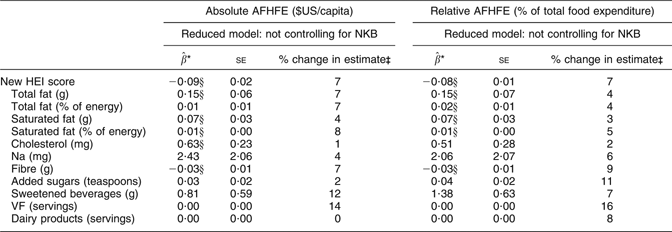
Further, we tested if NKB was a confounder in the association between expenditure and dietary intake by testing the changes in the estimate of β coefficients of the linear regression models including (full models) and excluding (reduced models) NKB tertiles in the models (Table 5). Our findings suggested appreciable changes in estimates (>10 %) for six out of twenty-four associations tested between expenditure and dietary intake, while borderline significant changes (>5 %) were observed among eight other associations, most notably those of the HEI.
Change in estimate in effect of absolute and relative away-from-home food expenditure (AFHFE) on diet quality indicators between reduced and full model (additionally controlling for nutrition knowledge and beliefs, NKB): US men and women (20–65 years) participating in the Continuing Survey of Food Intake by Individuals (CSFII)/Diet and Health Knowledge Survey (DHKS) 1994–96Footnote *, Footnote †
 , mean regression coefficient; HEI, Healthy Eating Index; VF, vegetables and fruit.
* Reduced linear regression models controlled for individual-level variables (age, gender, race, education, employment status, smoking status, sedentary behaviour and food purchase factors), household income per capita; geographic variables (region and urbanization); and food purchase factors (perceived importance of food taste, cost, convenience, safety and how well it keeps).
† n 4232 for absolute expenditure models; n 4128 for relative expenditure models.
‡ % change in estimate=∥Full|-|Reduced|/|Reduced|×100|, with full model (results not shown in the table) including NKB tertiles as additional covariates, entered as an ordinal variable (1 = lower tertile, 2 = middle tertile, 3 = upper tertile).
§ P < 0·05 for null hypothesis that β = 0.
Discussion
To our knowledge, the present study is the first to attempt to test the relationship between AFHFE and dietary quality and to examine the interplay of this association with individuals’ knowledge and belief about health and nutrition, using nationally representative data from US adults. The main finding was that greater expenditures on away-from-home foods resulted in poorer diet quality. In multivariate analysis of the total CSFII sample, this association held for many diet quality indicators such as fat, saturated fat and fibre as well as the HEI. The stratified analysis by tertile of NKB score in the CSFII/DHKS sample indicated effect modification whereby AFHFE had a greater effect among individuals with poor NKB scores, although the patterns for some dietary indicators were not consistent. Relative expenditure acted as an intermediate in the pathway between NKB and dietary intake in the case of saturated fat (grams), cholesterol, Na and VF.
Another important finding of the present study is that, in general, NKB showed a significant and graded positive association with quality of dietary intake independently of socio-economic, lifestyle and geographic factors. The overall score was also inversely related to absolute and relative AFHFE. The important public health implications include that nutrition and health education remains very important to help promote healthy eating among Americans, although some previous studies indicate that broad national nutrition education campaigns have resulted in limited improvement in Americans’ VF and dairy consumption in the past decades(Reference Casagrande, Wang, Anderson and Gary19, Reference Kant and Graubard20). One may argue that, without these campaigns, Americans’ eating patterns might be worse.
Several other smaller-scale studies have focused on actual consumption of foods by individuals in fast-food restaurants or other away-from-home outlets and how these affected energy intake, diet quality and BMI or obesity among adults(Reference Bowman and Vinyard7, Reference Satia, Galanko and Siega-Riz8). In general, they suggested that such consumption negatively affects overall diet quality and ultimately promotes weight gain.
The present study has several strengths. First, it closely examined the influence of household-level AFHFE on the diet quality of individual adults using monetary indicators that were measured on a continuous scale rather than a binary ‘away-from-home status’ indicator variable. Second, the data used were nationally representative and the analyses took into account the complex sampling design. In addition, we looked at several frequently used individual dietary intake variables as well as an overall measure of dietary quality which was revised based on recent dietary guidelines and recommendations.
The study has its limitations as well. One limitation is that the study is based on cross-sectional data, precluding ascertainment of temporality of associations and thus causality. In fact, there may be selection effects that may explain some of the findings. For instance, subjects who value taste and convenience may choose to spend more on foods away from home, while those who value nutrition may choose to eat at home and may have better nutrition beliefs. Although many of these variables were controlled for in our analysis, one cannot rule out residual confounding in such observational studies. Second, because food expenditure was based on a 3-month time frame, there is potential for measurement errors such as due to seasonality, family travel, and accuracy of recall possibly determined by respondent characteristics. However, measurement error of this household-level variable is unlikely to be dependent on dietary quality at the individual level. Therefore, the estimated effect is expected to be biased towards the null, making the true association potentially stronger if the exposure variable was more accurately measured. Finally, the CSFII/DHKS data are 10 years old and one may be concerned about the relevance of these findings for future research and interventions. To our knowledge, restaurant offerings or consumer behaviours over the past decade were not altered dramatically as indicated by the limited improvement in American adults’ VF and dairy consumption(Reference Casagrande, Wang, Anderson and Gary19–Reference Fulgoni, Nicholls, Reed, Buckley, Kafer, Huth, DiRienzo and Miller22). This supports the important pubic health implications of the association we found between the three variables (i.e. expenditure, nutrition knowledge/beliefs and diet quality).
Future studies should assess the effects of economic predictors, such as expenditure on foods and their market price locally or at the regional level, on weight change over time through their effect on diet quality, including energy, energy density and intake of VF. Other environmental and socio-economic factors, such as neighbourhood safety, employment hours and work status of individuals, must be considered as well to have a clearer idea about the mechanisms involved in this relationship.
The main policy implications of the present findings include the potential diet quality-related benefit of encouraging households to shift their dietary budget towards home-prepared foods using items purchased in grocery stores and to make desirable choices when eating out at restaurants, fast-foods outlets and cafeterias or when purchasing food and beverage items in vending machines. As many Americans may find it challenging to avoid eating out due to the nature of their occupation, it will be important to empower them to make better dietary choices by mandating nutrition labelling and promoting healthier food selections for consumers at the restaurant level. Indeed, our study results showed that among those individuals with good (upper tertile) NKB, AFHFE did not statistically significantly reduce their overall HEI score. Enhancing individuals’ beliefs regarding the importance of nutrition through population-based intervention programmes can help improve diet quality, partly by reducing AFHFE in the case of unhealthy food choices and partly by empowering people to make desirable food choices away from home whenever convenience is a major barrier. In turn, restaurants would be more likely to offer more nutritious choices as the demand for such products increases.
Acknowledgements
The study was supported in part by the US Department of Agriculture (2044-05322) and the Johns Hopkins University Center for a Livable Future and Bloomberg School of Public Health. Y.W. was also supported by the NIDDK/NIH (R01 DK63383).
Conflict of interest: None.
Contributions of each author: M.A.B. – conceptualization, plan of analysis, data management and statistical analysis, write-up of manuscript. L.M.P. – conceptualization, plan of analysis, help with statistical analysis, write-up of parts of the manuscript, revision of the manuscript. Y.W. – conceptualization, plan of analysis, help with statistical analysis, write-up of parts of the manuscript, revision of the manuscript.
Appendix 1
Household questionnaire (1994–96 Continuing Survey of Food Intake by Individuals): food-related expenditure questions
Q1: During the past three months, how much money has this household spent per week or per month at grocery stores, including the store’s salad bars, soup bars, delis, etc.? Include purchases made with food stamps.

Q2: You said this household spent (Amount in Q1) per (week/month). About how much of this amount, if any, was for non-food items, suchas cleaning or paper products, food brought for feeding a pet, or cigarettes? (IF NONE, ENTER ‘0’)

Q3: During the past three months, how much money has this household spent per week or per month at specialty stores – such as bakeries, liquor stores, delicatessens, meat markets, vegetable stands, health food stores, and other similar places – when the food was brought into your home? (IF NONE, ENTER ‘0’)

Q4: During the past three months, how much money has this household spent per week or per month at fast food or carryout places when the food was brought into your home? (IF NONE, ENTER ‘0’)

Q5: During the past three months, what has been this household’s usual amount of money spent per week or per month for food bought and eaten away from home? Include food and beverages that never entered your home, i.e. eaten at restaurants, fast food places, cafeterias at work or at school or purchased from vending machines, for all household members. (IF NONE, ENTER ‘0’)

Appendix 2
US Department of Agriculture’s new 2005 Healthy Eating Index: components and standards for scoring*
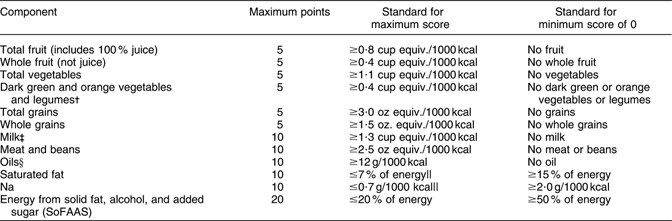
Source: reference (14).
To convert kcal to kJ, multiply kcal by 4·184.
*Intakes between the minimum and maximum levels are scored proportionately, except for saturated fat and Na (see note ||).
†Legumes counted as vegetables only after meat and beans standard is met.
‡Includes all milk products, such as fluid milk, yoghurt and cheese.
§Includes non-hydrogenated vegetable oils and oils in fish, nuts and seeds.
||Saturated fat and Na get a score of 8 for the intake levels that reflect the 2005 Dietary Guidelines, <10 % of energy from saturated fat and 1.1 g Na/1000 kcal, respectively.



