


Over the last few decades, the traditional family model of a mother involved in full-time home duties and the father as the breadwinner has changed. In Australia and many Western countries, social and economic changes since the 1980s have resulted in an increased number of mothers in the paid labour force. Between 1984 and 2009, the proportion of Australian mothers with dependant children in paid employment increased from 43 % to 63 %. Within this 25-year period, the proportion of mothers in couples with young children (0–4 years) in paid employment increased from 30 % to 52 %; the increase was smaller among lone mothers with young children, from 19 % to 27 %( Reference Hayes, Weston and Qu 1 ). While mothers’ employment or long work hours can increase family income, it may also reduce their capacity to provide adequate time for children to develop healthy eating patterns, an integral part of their development.
Mothers are usually responsible for food shopping and meal preparation( Reference Lake, Hyland and Mathers 2 ), hence it is important to investigate whether increasing maternal work hours affect the dietary quality of children. Despite a number of previous studies on maternal employment and child nutrition( Reference Soyer, Ergin and Gursoy 3 – Reference Siega-Riz, Carson and Popkin 8 ), relatively little is known about differences in robust measures of children's dietary quality by parental employment status. Extra household income generated from maternal employment allows the family to afford a wider variety of better-quality groceries and fresh produce, but working mothers may have less time or energy to plan, shop or prepare healthy meals, and as a result more meals may be purchased from restaurants or fast-food outlets( Reference Baghurst and Record 9 – Reference Fertig, Glomm and Tchernis 11 ).
Previous studies investigating parental employment and diet in children and adolescents have reported conflicting results. Some have shown positive associations between maternal employment and nutrition( Reference Soyer, Ergin and Gursoy 3 , Reference Tucker and Sanjur 4 , Reference Sweeting and West 12 ), others negative( Reference Hawkins, Cole and Law 5 , Reference Neumark-Sztainer, Hannan and Story 6 ), and others have shown none( Reference Johnson, Smiciklas-Wright and Crouter 7 , Reference Siega-Riz, Carson and Popkin 8 ). This variability may be related to differences in the age of the children under investigation (ages 2 to 18 years), how parents’ work was measured (working v. not working, part time or full time or long work hours), whether or not potential confounding variables were adjusted for (e.g. parental education and family income), the cross-sectional design( Reference Tucker and Sanjur 4 , Reference Neumark-Sztainer, Hannan and Story 6 , Reference Johnson, Smiciklas-Wright and Crouter 7 , Reference Sweeting and West 12 ) and economic environment (e.g. developed( Reference Hawkins, Cole and Law 5 – Reference Siega-Riz, Carson and Popkin 8 , Reference Sweeting and West 12 ) v. developing countries( Reference Soyer, Ergin and Gursoy 3 , Reference Tucker and Sanjur 4 )). Varying methods of assessing dietary quality or pattern may also have contributed to conflicting findings in previous studies. Some have used intake of selected individual nutrients( Reference Tucker and Sanjur 4 ), some meal patterns( Reference Siega-Riz, Carson and Popkin 8 , Reference Lindholm, Touliatos and Wenberg 13 ) and others questions investigating dietary habits such as meal skipping or intake of soft drinks( Reference Soyer, Ergin and Gursoy 3 , Reference Johansen, Rasmussen and Madsen 14 ). Using these types of assessment to measure dietary quality may be limiting as they only consider a small number of nutrients or isolated aspects of the diet. An alternative method is to use a quality index score which represents a broader picture of food and nutrient consumption and thus considers the diet as a whole( Reference Hu 15 ).
Few studies have examined the link between child dietary quality and parental work from a longitudinal perspective( Reference Hawkins, Cole and Law 5 , Reference Bauer, Larson and Nelson 16 ). It is possible that children develop healthy dietary habits in infancy and early to middle childhood and this development may continue into adolescence. Dietary pattern in adolescence is likely to reflect the early onset of the ongoing development of healthy eating in children. Most previous studies have not examined the potential influence of fathers’ work on child diet quality. While mothers often assume the responsibility of food shopping and meal preparation( Reference Lake, Hyland and Mathers 2 ) and hence have a greater influence on children's diet quality, fathers can also play a role in developing and maintaining healthy diet in the family. Fathers who work part time may be more likely than fathers who work long hours to assist with meal preparation or other housework and child care, so that mothers can devote adequate time for healthy meal provision. Fathers may also take more responsibility for preparing school lunches and after-school snacks, shopping and preparing meals when mothers work full-time hours. Bauer and co-authors( Reference Bauer, Larson and Nelson 16 ) have shown that father's employment when the child was in middle school was associated with higher odds of the adolescent consuming fast food in high school but father's concern with healthy eating was associated with lower odds of fast-food intake in high school in the USA.
To date no studies have investigated parental work and adolescent diet prospectively, using a diet quality index. The present study aimed to investigate the association between both mother's and father's involvement in the work force from age 1 year to age 14 years and a dietary quality index measured at age 14 years in a cohort of adolescents in Western Australia, independent of maternal age, race and education, family income, family structure, child gender and the number of siblings.
Methods
Participants
The Western Australian Pregnancy Cohort (Raine) Study recruited 2900 mothers between the 16th and 20th week of gestation from May 1989 to November 1991 and the initial cohort comprised 2868 live births. The study methods are reported elsewhere( Reference Newnham, Evans and Michael 17 ). The Human Ethics Committees at King Edward Memorial Hospital and/or Princess Margaret Hospital for Children in Perth approved all protocols for the study.
In brief, data were collected at ages 1 year and 2, 3, 5, 8, 10 and 14 years (overall response rate of 76 %). The 14-year follow-up commenced in 2003, as close to the participants’ 14th birthday as possible, and was completed in 2006. Data collection included anthropometry, physical activity, cardiovascular functioning and dietary intake. At 14 years 1860 participants completed all or part of the follow-up, 357 deferred their participation until the next follow-up, 207 were lost to follow-up, 412 withdrew from the Raine Study and thirty-two had died. The current sub-study was based on 1629 (87·6 % of 1860) participants who completed an FFQ at the 14-year follow-up.
Diet quality
The adolescents’ usual dietary intake over the previous 12 months was assessed with a semi-quantitative FFQ developed by the Commonwealth Scientific and Industrial Research Organisation (CSIRO) in Adelaide, Australia( Reference Baghurst and Record 9 , Reference Baghurst and Record 10 ). The FFQ was completed by the primary caregiver in consultation with the study adolescent. Respondents were asked about their usual consumption of 212 food and beverage items, excluding alcohol, and how their usual serving compared with a standard serving size given in household measurements (spoons, cups, slices, etc.). All completed FFQ were checked by a research nurse and missing or unclear responses were clarified when the adolescents attended their physical assessment. The CSIRO entered and verified the FFQ and provided estimates of daily intakes of foods and nutrients using Australian food composition data. This FFQ has been shown to correctly rank a reasonable proportion of most nutrient intakes when compared with a 3 d food record in this cohort( Reference Ambrosini, de Klerk and O'Sullivan 18 ).
Based on the international literature and Australian recommendations( Reference Smith, Kellett and Schmerlaib 19 ), we compiled an index of diet quality consisting of fifteen components including six food groups and nine nutrients. The food groups were: (i) breads, cereals, rice, pasta and noodles; (ii) vegetables; (iii) fruit; (iv) milk, yoghurt and cheese; (v) meat, fish, poultry, eggs, nuts and legumes; and (vi) extra foods (takeaway food, cakes, chips, biscuits, sweets, soft drinks)( Reference Smith, Kellett and Schmerlaib 19 ). The nutrients included key nutrients from the respective food groups: (i) vitamin C; (ii) vitamin A (retinol); (iii) dietary fibre; (iv) Fe; (v) Ca; (vi) protein; (vii) total fat as a percentage of total kilojoules; (viii) saturated fat as a percentage of total kilojoules; and (ix) the n-6:n-3 fatty acid ratio (omega-6:omega-3). We utilized a scoring system based on the Australian Guide to Healthy Eating ( Reference Smith, Kellett and Schmerlaib 19 ) and Nutrient Reference Values for Australia and New Zealand ( 20 ). The maximum score was 150 being indicative of the highest dietary quality whereas the minimum score was 20 indicative of the lowest dietary quality.
Parental work
Data on mother's working hours were collected at all follow-ups and coded as not working, working 1–15 h, 16–24 h, 25–34 h or ≥35 h (full time) weekly. Father's work hour data were collected at ages 5, 8, 10 and 14 years, and coded as not working, working 1–34 h, 35–44 h, 45–54 h or ≥55 h weekly. At ages 1, 2 and 3 years, only father's employment status was collected (employed or not). Further, joint employment in couple families was analysed from age 1 year to age 14 years and coded as: (i) neither parent working; (ii) mother working part time or full time/father not working; (iii) mother working full time/father working; (iv) mother working part time/father working; or (v) mother not working/father working. To examine the overall effects of both parents’ work hours during the entire period and at five stages of development (from age 1 year to ages 3, 5, 8, 10 and 14 years), we constructed three sets of continuous variables: (i) the average hours the mother worked per week; (ii) the number of years the mother worked full time and part time; and (iii) the average of hours and the number of years the father worked for ≥45 h weekly (from ages 5 to 14 years due to lack of data on father's working hours in the first three years).
Potential confounders
Parental education( Reference Neumark-Sztainer, Hannan and Story 6 , Reference Videon and Manning 21 ), particularly mother's education( Reference North and Emmett 22 – Reference Mullie, Clarys and Ridder 24 ), family income( Reference Milligan, Burke and Beilin 25 – Reference Kranz 27 ), maternal age( Reference North and Emmett 22 ) and ethnicity/race( Reference Bauer, Larson and Nelson 16 ) have been linked to children's diet quality and these factors are also associated with parental employment status and work patterns. To control for these potential confounders, we included in the subsequent multivariate analyses: maternal age at pregnancy (<20, 20–24, 25–29, 30–34, ≥35 years), maternal race (Caucasian or other), mother's education (primary schooling only, trade certificate/other qualification, college diploma, professional degree, university degree), family structure (couple–both biological parents, couple–step parent, lone parent) at each follow-up and combined annual family income at age 14 years (<$AUD 25 000, $AUD 25 000–35 000, $AUD 35 001–50 000, $AUD 50 0001–70 000; $AUD 70 001–140 000, >$AUD 140 000). We also adjusted the analyses for child gender and the number of siblings in the household at the time of pregnancy.
Analysis
The diet quality index in adolescence at age 14 years was examined, using cross-sectional information on parental work at age 14 years and longitudinal data on parental work prior to age 14 years (from age 1 to 3 years, ages 5, 8 and 10 years) in a series of multivariate regression models. We first analysed all types of families using only mother's work hours as the main independent variables. We then examined father's and mother's work hours simultaneously in two-parent families, including couple families with a step parent. Parents’ work hours were analysed as categorical rather than continuous variables to differentiate various part-time or full-time working hours. We conducted the F test for overall differences with four degrees of freedom, as well as tests for differences between categories of work hours in the diet quality index at age 14 years. In a further step we examined the cumulative effects of mother's and father's work hours on adolescent diet quality at age 14 years, using the average work hours across the follow-ups, the number of years the mother worked full time or part time, and the father worked extended hours, as described above. Analyses were accomplished using multivariate general linear regression models in the SPSS statistical software package version 16 (SPSS Inc., Chicago, IL, USA). A P value of ≤0·05 was considered as statistically significant.
Results
Table 1 shows the frequency distribution of the diet quality index in 1629 adolescents for whom the dietary data were collected at age 14 years. The index score has a near normal distribution, with a mean of 76·1, a standard deviation of 15·51, a minimum and a maximum score of 20 and 120 respectively (Table 1). Thus a linear regression model was appropriate for analysing the diet quality index as the outcome variable. Table 1 also shows the maternal and family socio-economic characteristics of the study population.
Maternal and family socio-economic and demographic characteristics of the study population (n 1629)Footnote *, the Western Australian Pregnancy Cohort (Raine) Study
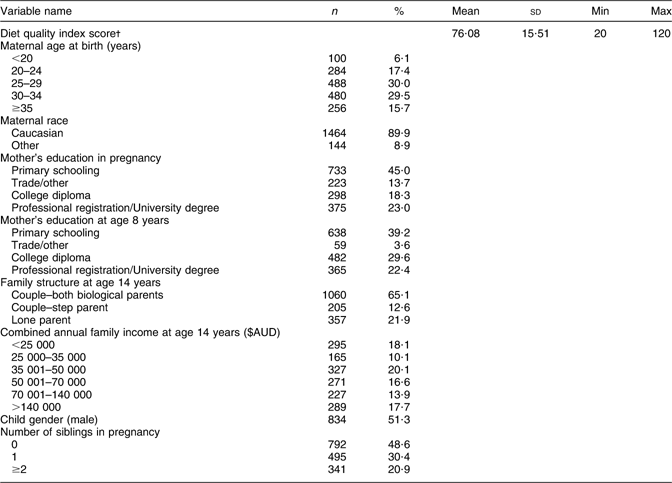
* Missing cases: maternal age and race (1·3 %), maternal education measured in pregnancy (0 %), maternal education at age 8 years (5·2 %), family structure (0·4 %), family income at age 14 years (3·4 %), child gender (0·1 %).
† A higher index score represents a better diet quality.
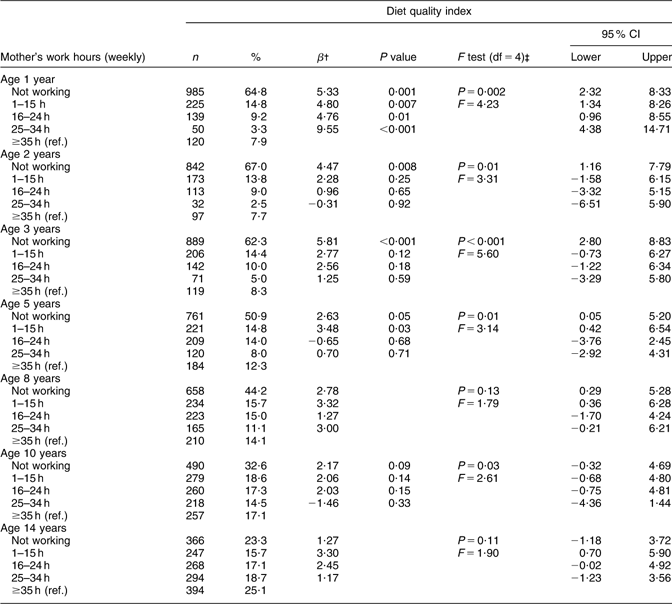
At ages 1 and 2 years, between 64·8 % and 67·0 % of mothers in all families were not working but this proportion began to decrease from age 3 years onwards, to only 23·3 % by age 14 years (Table 2). The percentage of mothers who worked full time (≥35 h weekly) increased from 7·9 % at age 1 year to 25·1 % at age 14 years. Independent of maternal age, race, education, family income, family structure, child gender and number of siblings, there was a significant overall association between mother's work hours when the child was aged 1 year and the diet quality score at age 14 years. Compared with children whose mothers worked full time, those children whose mothers either did not work or worked only part time had a higher average diet quality index score, with a difference ranging from 4·76 to 9·55 points. At ages 2, 3 and 5 years, there remained a significant global association between maternal work hours and diet quality as indicated in the F-test statistics. More specifically, having a mother not working, compared with working full time, continued to be positively associated with the diet quality score at age 14 years, with the effect size declining at age 5 years.
Independent association between maternal working hours and diet quality at 14 years of age: all families (n 1212 to 1452)Footnote *, the Western Australian Pregnancy Cohort (Raine) Study
ref., referent category.
* All models adjusted for mother's age, education and race, family income at age 14 years, age-specific family structure, child gender and number of siblings. Mother's education at age 8 years was adjusted for at ages 8, 10 and 14 years.
† Difference in the mean of diet quality score between a category of work hours and the reference group. A higher index score represents a better quality diet.
‡ The global F-test statistics for overall differences in diet quality index associated with mother's work hours.
At ages 8 and 14 years, there was no significant overall association between mother's working hours and adolescent diet quality. There was a significant global association between mother's work hours at age 10 years and adolescent diet quality at age 14 years: adolescents whose parents worked a low number of hours (< 25 h/week) had better diet quality than those whose parents worked full time. However, when mothers worked a moderate number of hours (25–34 h/week), the diet quality was worse, compared with when mothers worked full time.
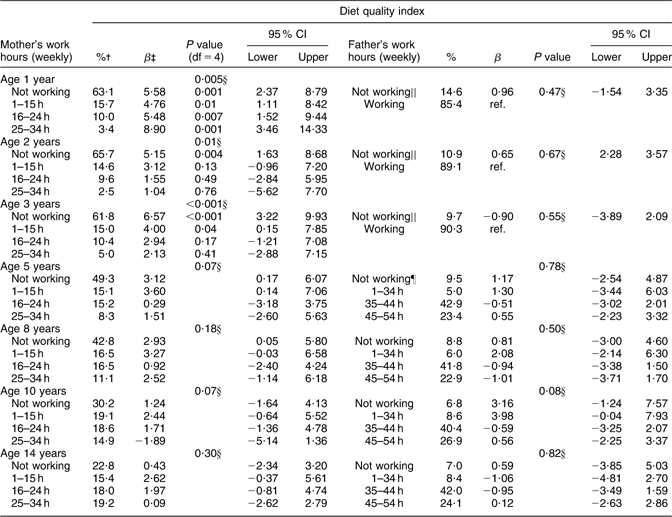
We observed a similar pattern with maternal employment when father's employment status and work hours were included in the analysis (Table 3). There was a significant global association between mother's working hours (at ages 1, 2 and 3 years) and the diet quality score at age 14 years. Adolescents whose mothers did not work in the first three years of the child's life had a higher than average diet quality score, compared with those whose mothers worked full time in these years. Mother's part-time hours when her child was aged 1 year and short working hours (1–15 h weekly) at age 3 years were also significantly associated with a higher mean diet quality score. From age 5 years onwards, there was no longer a significant global association between mother's working hours and diet quality, and the effect size for not working as indicated by the β coefficient declined steadily.
Independent association between mother's and father's work hours and diet quality at 14 years of age: both-parent families (n 1073 to 1295)Footnote *, the Western Australian Pregnancy Cohort (Raine) Study
ref., referent category.
* Separate models were run for each year and all models adjusted for mother's age, education and race, family income at age 14 years, child gender and number of siblings. Mother's and father's/partner's work hours were analysed simultaneously in each model.
† Reference group for mother's work hours: ≥35 h weekly.
‡ Difference in the mean diet quality score between a category of work hours and the reference group. A higher index score represents a better quality diet.
§ P value for the global F test for overall differences in diet quality index associated with mother's (df = 4) and father's work hours (df = 1 or 4). The F statistic for mother's work hour categories ranged from 1·23 at age 14 years to 5·27 at age 3 years, and for father's work hour categories it ranged from 0·19 at age 2 years to 2·11 at age 10 years.
∣ ∣Father's work hours were not available at ages 1, 2 and 3 years.
¶ Reference group for father's work hours: ≥55 h weekly.
In contrast, father's employment status and work hours had no significant effect on adolescent diet quality in any follow-ups, as indicated by the P values for the global F tests. The increment in the R 2 when father's work hours were added to the model was small, ranging from an increase of 1·8 % to 13·7 %.
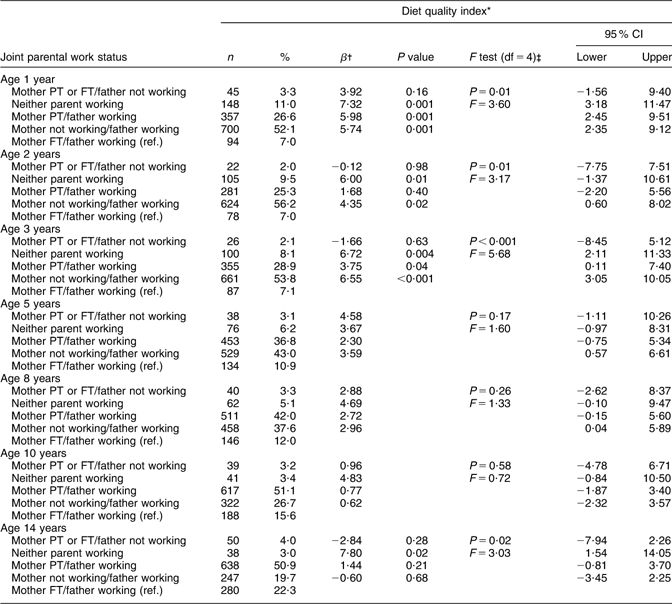
We observed significant global associations between joint parental employment status when the child was 1, 2 and 3 years old and the diet quality scores at age 14 years (Table 4). Having a mother not working with a father working was associated with a higher average diet quality score at age 14 years, compared with when the mother worked full time and the father worked. Maternal part-time work with the father working at age 1 year and age 3 years was also beneficial for diet quality at age 14 years. However, from age 5 to 10 years, there was no longer a significant overall association between joint parental employment and the diet quality score at age 14 years, and the β coefficients for the four categories of joint employment indicated a general decline in the effect size.
Independent association between joint parental work and diet quality at 14 years of age: both-parent families (n 1079 to 1294), the Western Australian Pregnancy Cohort (Raine) Study
PT, part time; FT, full time; ref., referent category.
*All models adjusted for mother's age, education and race, family income at age 14 years, child gender and number of siblings.
†Difference in the mean diet quality score between a category of work hours and the reference group. A higher index score represents a better quality diet.
‡Test statistics for overall differences in diet quality index associated with joint work status.
At age 14 years, there was a significant overall association between joint employment and the diet quality score and this was mainly reflected in a higher average diet quality score when neither parent worked, compared with the reference group. Having neither parent working in the first three years of the child's life was also associated with a better adolescent diet. However, at any age, when a mother worked but the father did not, there was no improvement in the diet quality score.
Table 5 presents the long-term association between mother's and father's working hours during the growth of the child and adolescent diet quality, independent of maternal age, race and education, family structure, family income, child gender and the number of siblings. The average working hours weekly and the number of years for which the mother worked full time were negatively associated with adolescent diet quality and this association appeared to be stronger in the first eight years of the child's life. Mother's cumulative hours spent in part-time work had no significant effect on the outcome variable. Consistent with the results from Tables 2 to 4, the number of years the father worked for ≥45 h weekly and the average hours he worked per week had no significant effect on adolescent diet quality at age 14 years.
Overall association between parental working hours since child's birth and diet quality at 14 years of age (n = 876–1016)Footnote *, the Western Australian Pregnancy Cohort (Raine) Study
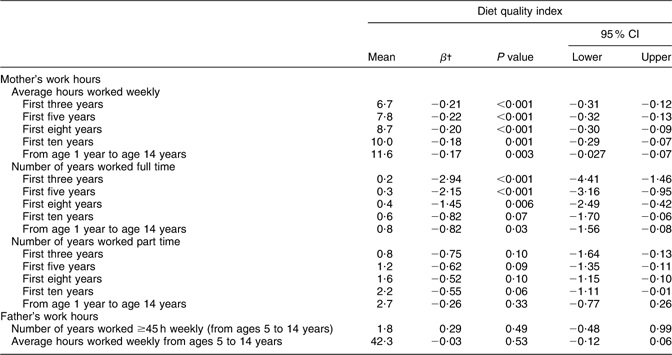
* All multivariate models were based on cases with no missing data at each respective follow-up point, included all families and adjusted for mother's age, education and race, family income and family structure at age 14 years, child gender and number of siblings. Mother's education at age 8 years was adjusted for at ages 8, 10 and 14 years.
† Change in the mean diet quality score with an increment in average hours or years worked. A higher index score represents a better quality diet.
Discussion
Our findings suggest that mother's employment status and work hours in the first three to five years of her child's life are linked with diet quality in adolescence. In all families, adolescents whose mothers did not work during the first five years of their life on average had higher diet quality at age 14 years, compared with those whose mothers worked full time during these early years. Similarly, in two-parent families, having a mother staying home at age 1 year to age 3 years, compared with full-time work, was positively associated with an increase in the mean diet quality score at age 14 years. However, this association diminished after age 5 years. This held true regardless of whether we examined the mother's and father's work hours as separate or joint employment variables. Our further analysis aimed at estimating the overall effects demonstrated that maternal full-time work and the average weekly hours a mother worked in the first eight years of her child's life were more strongly associated with a decrease in the diet quality score at age 14 years. Taking all our findings together, it was maternal work hours during early to middle childhood that may have an important impact on adolescent diet quality.
Despite that the age-specific analysis showed a positive association between mother's part-time work at some follow-ups and diet quality at age 14 years, the analysis of the overall effects of part-time employment on the outcome variable showed no statistical significance.
In contrast to the results found with the mother staying at home, father's employment status or work hours was not significantly associated with adolescent diet quality. The results from the analysis of joint employment showed no significant difference in child diet quality when the father stayed at home while the mother was working either part time or full time. This finding is consistent with previous research that mothers are mainly responsible for household work, including meal provision, even when they participate in the labour force( Reference Lake, Hyland and Mathers 2 , Reference Backman, Haddad and Lee 28 , Reference Bond and Sales 29 ).
Our study has shown that when neither the mother nor the father worked when the child was 1 to 3 years of age, the diet quality in adolescence was higher than when both parents worked during these years. It is plausible that when no parent works, the mother has more time to plan and prepare healthy meals for the family especially if the father assists with child care and other housework.
The presence of a second child in the family was found to be associated with a decrease in the average diet quality score in the age-specific analyses that included both-parent families only and also in analysis of cumulative effects of mothers working full time on adolescent diet quality at age 14 years: the magnitude of effect ranged from b = −1·92 to b = −3·14 (P = 0·052 to P = 0·006). However, the adjustment of this factor did not alter the effect of mother's and father's work hours on the outcome variable.
Previous studies, mostly cross-sectional in nature, have reported conflicting results about associations between maternal employment and adolescent diet quality( Reference Siega-Riz, Carson and Popkin 8 , Reference Fertig, Glomm and Tchernis 11 , Reference French 30 – Reference Würbach, Zellner and Kromeyer-Hauschild 34 ). By examining the relationship between parental employment status and weekly working hours prospectively, our age-specific analysis has revealed that having mothers stay home in the first three to five years of life was beneficial to their child's diet quality in adolescence. Based on our observations, healthy eating in children begins early in life and takes time to develop. This may be because children need to develop a taste early for healthy food and learn to conform to parental preferences and requirements for healthy eating habits. Once a pattern of healthy diet is established in the family, it may well continue through to adolescence and adulthood. It may require parental time and energy to develop healthy eating patterns early and to maintain them through childhood. Our study has relevance for future research on maternal work and other health-related behaviours which may also begin early in life and develop over time, including physical activity and risk-taking behaviours.
Strengths and limitations
The present study has several strengths. It is a prospective study of parental work and adolescent diet quality using longitudinal information on the predictor measured at various ages of a child's development, with a large cohort size. It systematically examined the possible effect of father's employment status and work hours on adolescent diet quality. The study adjusted for important confounders. However, the study also has some limitations. Due to the lack of information on child diet prior to age 14 years we were unable to investigate whether or not and to what extent diet quality in early and mid childhood is associated with diet quality in adolescence. This link would facilitate a better understanding of our finding that maternal work hours in early to middle childhood but not at later ages influence adolescent diet quality at age 14 years. Further, while our measure of diet quality was based on the dietary intake jointly reported by the primary caregiver and the adolescent, it would be important for future research in this field to utilize self-reported dietary intake by adolescents themselves.
Policy implications
The percentage of working women with children under 5 years of age has increased over the last two decades( Reference Hayes, Weston and Qu 1 ). Given the benefit of having a mother stay at home in early to middle childhood for later adolescent diet quality, support is needed for families where the mother returns to full-time employment before the child reaches 8 years of age. Implementation of healthy eating guidelines and provision of healthy food at child-care centres, pre-schools and schools are one way of helping children of working mothers develop healthy eating habits early. Governmental incentives for food industries to be innovative in producing healthy food products that are affordable, meet nutritional requirements but require less time to prepare would be another way of supporting working mothers, fathers and their children.
Acknowledgements
Sources of funding: The Raine Study is supported by the National Health and Medical Research Council (NH&MRC) of Australia and the Telethon Institute for Child Health Research. Funding for Core Management of the Raine Study is provided by the University of Western Australia (UWA), the Telethon Institute for Child Health Research, the Raine Medical Research Foundation, the UWA Faculty of Medicine, Dentistry and Health Sciences, and the Women and Infants Research Foundation. J.L. is supported by the Curtin University Research Fellowship Scheme and the NH&MRC Program Grant (572742). W.O. was supported by an NH&MRC Career Development Award. T.O. was supported by the Heart Foundation Beyond Blue Strategic Research Initiative. S.J. is supported by a research grant from the Foundation for Children. Conflict of interest declaration: The authors declare that they have no conflict of interest. Authors’ contributions: J.L. was responsible for the conception, analysis and the writing of the manuscript. T.O. contributed to the review of the literature and the interpretation of the findings. W.O. was responsible for developing the diet quality index and contributed to the interpretation of the results. S.J. contributed to the analysis, the review of the literature and the interpretation of the results. F.S. contributed to the study design and the interpretation of the results. All authors provided substantive comments on various drafts of the manuscript. Acknowledgements: The authors gratefully acknowledge the Raine Study participants and their families for their participation in the study; the Raine Study Team for cohort co-ordination and data collection.



