


Out-of-home eating (OHE) has increased considerably in past decades to take an important place in the habitual diet(Reference Orfanos, Naska and Trichopoulos1–Reference Nago, Lachat and Huybregts5). Although obesity and poor dietary habits are complex multifactorial problems, OHE has been identified as one likely and important contributor(Reference McCrory, Fuss and Hays6). Foods from restaurants and other food service establishments are generally high in energy and fat and low in fibre compared with home-prepared foods(Reference McCrory, Fuss and Hays6, Reference Kant and Graubard7), so that a few studies link OHE to higher energy consumption, overweight and obesity in both adults and children(Reference Bowman, Gortmaker and Ebbeling8–Reference Zoumas-Morse, Rock and Sobo10). Indeed, modern lifestyles and time scarcity have contributed to an increase in OHE and the increasing trend is likely to continue(Reference Kant and Graubard7, Reference Nielsen, Siega-Riz and Popkin11, Reference Jabs and Devine12). The energy and nutrient intakes of OHE individuals (at restaurants, canteens, cafeterias, fast-food restaurants and similar establishments) may differ from those of people who generally eat at home(Reference Roos, Sarlio-Lähteenkorva and Lallukka13). There are several studies in the USA and Australia focusing on changes in food and energy intakes related to eating locations(Reference Kant and Graubard7, Reference Nielsen, Siega-Riz and Popkin11–Reference Burns, Jackson and Gibbons14), but there is a scarcity of such studies in European countries(Reference Kearney, Hulshof and Gibney2).
Various studies have shown that OHE is associated with higher energy intake due to high nutritional density(Reference Kant and Graubard7, Reference McCrory, Fuss and Saltzman15–Reference Satia, Galanko and Siega-Riz17) or larger portion size(Reference Nielsen and Popkin18). Therefore, the catering sector is increasingly recognized as a stakeholder to promote healthy diets and lifestyle(19).
OHE presents additional nutritional challenges when compared with eating at home. Different psychosocial and environmental factors determine what is eaten and customers too often have insufficient access to nutrition information to make a conscious nutritional choice(20).
In Italian university towns like Pavia, the university cafeterias are important contributors to OHE consumption of main meals for students, university staff and other workers. It has been shown that cafeterias can contribute to create an obesogenic environment(Reference Bell and Swinburn21, Reference Utter, Scragg and Schaaf22), but could also represent a place where availability of nutrition information may offer an opportunity to improve customers’ diet(Reference López-Frías, Nestares and Iañez23, Reference Prell, Berg and Jonsson24).
The aim of the present study was to carry out an investigation on the nutritional value of the meals offered by a university cafeteria in Pavia, northern Italy, in order to develop a tool for an informed nutritional choice. The outcome of the study is expected to assist customers in planning their meals according to a healthier and more balanced diet.
Materials and methods
The study was carried out during winter 2008 and spring 2009 in a university cafeteria in Pavia, northern Italy, which is structured both as a restaurant and as a fast-food establishment. Every day about 1000–1200 meals are served during winter and 500–600 during the end of spring and early summer. The cafeteria is frequented by university students, university staff and other workers. The collaboration with the cafeteria personnel and the customers was essential for our study.
Cafeteria menu
The meals served are combination of first dishes, main dishes, pizza, ‘focaccia’, sandwiches, cooked and raw vegetables, legumes and potatoes, different types of salad, fruit, desserts and dressing components. Beverages available are mineral water, soft drinks, beer, red and white wine. The quantity of each food component served is known with a fair level of accuracy, as portion sizes are standardized. Specific receptacles are used to serve the portions, i.e. spoon, cup, number of croquettes, number of slices of ham, etc. The accuracy of the standardized portion sizes was verified during a period of 4 weeks by three trained dietitians on a daily basis by random weight measurements of meals served. A list of each food served during the whole year was obtained from the cook together with the recipes and ingredients. The contents of energy, protein, fat, carbohydrates and fibre of the standardized portion size of each meal were computed.
Pyramid figures, subdivided into three coloured levels, were used to depict the energy and nutrient content of each meal.
Customer interviews
After the depicted pyramids had been displayed in the cafeteria for 2 weeks, 400 customers, randomly selected during a week, were invited to answer a brief interview. Before they had chosen their meal, the customers were interviewed by a dietitian in order to collect the following information: age, gender, weight, height, physical activity level (for computation of BMI and energy requirement), education level, occupation and place of origin. In addition, the following eight questions were asked:
1. ‘Do you think it is useful to know the nutritional content of the meals you consume?’
2. ‘Do you think that, knowing the meals’ nutritional content, you might choose a more balanced menu and improve your diet?’
3. ‘What nutritional content do you like to know?’
4. ‘Do you think that knowing the meal energy and fat content could help overweight subjects control their diet?’
5. ‘Have you changed your food choices at all since you have been informed of the meals’ nutritional values?’
6. ‘If yes, what do you choose now?’
7. ‘Do you consider the cafeteria nutritional proposal useful?’
8. ‘Do you think that this proposal could help you to choose correct food associations for a more balanced diet?’
Before the consumption of the meal and drinks, the dietitian observed and registered the food and drink items chosen by each customer, and then the nutritional and energy content of the meal and drinks was computed.
After consumption of the meal, two more questions were asked of each customer:
1. ‘Do you know your energy requirement?’
2. ‘How many calories do you think you have ingested today with your meal?’
Each customer interview took about 8 min.
Data analysis
Energy and nutrient content (protein, fat, carbohydrates and fibre) was computed for each meal standardized portion served in the cafeteria by a web program containing the food composition tables of the European Institute of Oncology(Reference Salvini, Parpinel and Gnagnarella25) database.
BMI was computed for each customer as the self-reported weight in kilograms divided by the square of self-reported height in metres. Basal energy requirement was calculated using the equations of FAO/WHO/United Nations University(26) and then multiplied by the target physical activity level coefficient(26) as derived from the customer's answers during the interview on questions about physical activity, in order to compute the daily total energy requirement.
Data were analysed using the SPSS for PC statistical software package version 14 (SPSS Inc., Chicago, IL, USA). Descriptive statistics (means and standard deviations) were calculated. Pearson's correlation coefficients and Student t tests were used to study associations and differences between some of the variables investigated. The statistical significance level was set to P < 0·05 for all tests.
Ethical approval
The study received ethical approval from Pavia University. All participants had the purpose of the study explained to them, received an information leaflet and provided written consent before participating.
Results
Meals’ nutritional values and pyramid figures
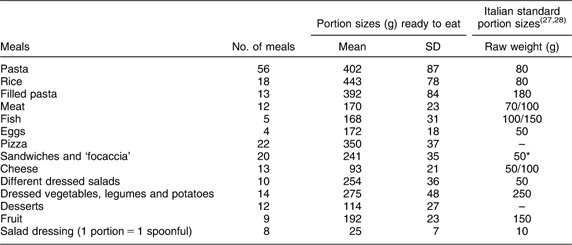
The list of foods available in the cafeteria and their portion sizes are shown in Table 1, reporting 216 meals grouped into fourteen items. The random weight measurements of the available meals, carried out during a period of 4 weeks by three trained dietitians, showed that most of the portions were large sizes as well as greater than those suggested by the Italian portion standards(27, 28).
List of meals available in the cafeteria and their portion sizes
*Bread, not filled.
The meals’ nutritional values were reported in dietary pyramids, subdivided into three coloured levels: at the bottom, the green colour, showing that the meals included here can be habitually eaten; in the middle, the orange colour, showing the meals that can be eaten with caution; and at the top, the red colour, showing the meals that must be eaten only occasionally. The energy content was the criterion according to which every meal was depicted in the different levels: at the bottom, the meals with the lowest energy content; in the middle, those with the average values; at the top, those with the highest values. The cut-off points for categorization into the three groups were derived by dividing by three the range between the lowest and the highest energy value for the meal. Each pyramid level reported the mean value and the range for energy and macronutrient content of the meals included within it.
The salads pyramid was slightly different from the others. In this green coloured pyramid, the nutritional values reported corresponded to those of a plain green mixed salad that may be enriched with other ingredients, such as cheese, sausage, meat, würstel, eggs, ham and boiled potatoes, for which only the energy content was provided.
Thirteen pyramids were depicted in total: four for first courses, two for main courses, one for pizzas, one for sandwiches and ‘focaccia’, one for cheese, one for salads, one for vegetables, one for desserts and one for salad dressings.
The meals reported in the green level represented 32·4 % of the whole meals available in the cafeteria, those in the orange level 39·8 % and those in the red level 27·8 %. The pyramids with the greatest number of meals in the red level were the sandwiches (n 11) and desserts (n 8) ones, followed by the ‘white’ dressed pasta (n 6), filled pasta (n 5) and pizzas (n 5) ones.
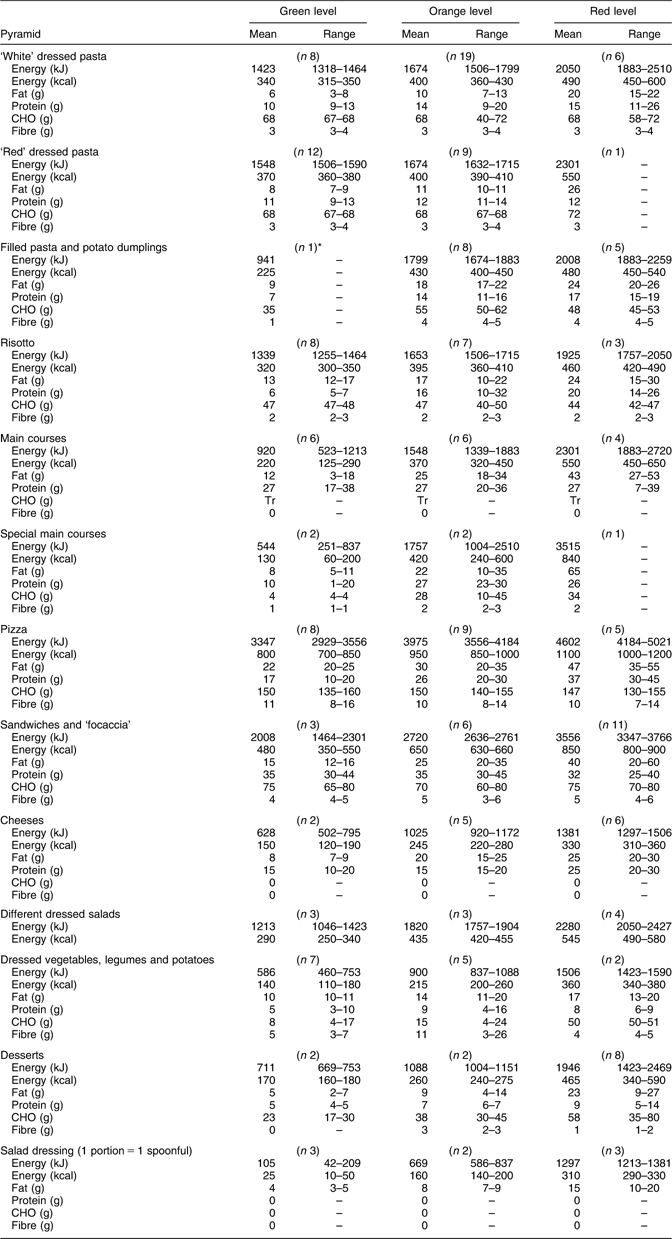
A few drafts of the pyramids are shown in Figs 1 and 2, while Table 2 reports the energy values and nutrient contents of the meal portion sizes available in the cafeteria distributed in the pyramids’ three levels.
The pyramids for ‘white’ dressed pasta, risotto, main courses and dressed salads. Each pyramid level reports the mean value and the range (in square brackets) for energy and macronutrients of the meals included within it (to convert to kJ, multiply kcal by 4·184)

The pyramids for sandwiches, pizzas, dressed vegetables and desserts. Each pyramid level reports the mean value and the range (in square brackets) for energy and macronutrients of the meals included within it (to convert to kJ, multiply kcal by 4·184)

Energy and nutrient content of the meal portion sizes available at the university cafeteria included in the pyramids’ three levels
CHO, carbohydrates; Tr, trace.
*Potato dumplings.
For the first courses, energy values ranged from 941 kJ (225 kcal) to 2510 kJ (600 kcal), for the main courses from 523 kJ (125 kcal) to 3515 kJ (840 kcal), for pizza from 2929 kJ (700 kcal) to 5021 kJ (1200 kcal), for sandwiches and ‘focaccia’ from 1464 kJ (350 kcal) to 3766 kJ (900 kcal), for cheese from 502 kJ (120 kcal) to 1506 kJ (360 kcal), for different dressed salads from 1046 (250 kcal) to 2427 kJ (580 kcal), for dressed vegetables, legumes and potatoes from 460 kJ (110 kcal) to 1590 kJ (380 kcal), and for desserts from 669 kJ (160 kcal) to 2469 kJ (590 kcal).
The fat content in each portion was ≥20 g in 36·6 % of the items overall: eight meals in the green level, twenty-nine meals in the orange level and forty-two meals in the red level (Table 2).
The depicted pyramids were displayed in the cafeteria close to meal distribution, so that each customer could choose his/her meal according to its nutritional value.
Customer interviews
Out of 400 randomly selected customers with no exclusion criterion, 374 answered the interview (86·7 % of the customers; 192 males and 182 females). Two hundred and fifty of these respondents were university students, while 124 were either university staff or other workers. Employee was the most represented. Prevalent education level was secondary school degree (53·2 %), while 29·1 % of the respondents had graduated. Both students and workers were mainly from northern Italy (79·9 %). The most physically active were male students (61·3 %), while workers (58·8 %) and female students (60·3 %) were the most sedentary. The mean age was 29·2 (sd 11·2) years (range 19–70 years) and 29·1 (sd 12·8) years (range 19–73 years) for males and females, respectively. The mean BMI based on self-reported weight and height was 23·5 (sd 2·9) kg/m2 and 21·2 (sd 3·3) kg/m2 for males and females, respectively. Of these respondents, 76·2 % were normal weight, 14·1 % were overweight (19·3 % of males and 8·8 % of females) and 2·9 % were obese. The underweight prevalence was 6·8 % (2·6 % of males and 11·0 % of females). Mean age was not significantly different between male and female respondents, while the prevalence of overweight and underweight differed significantly between genders (P < 0·01 in both cases). The estimated daily energy requirement was 12 456 (sd 1464) kJ (2977 (sd 350) kcal) and 8778 (sd 791) kJ (2098 (sd 189) kcal) for males and females, respectively, while that for lunch was about 4979 kJ (1190 kcal; males) and 3510 kJ (839 kcal; females).
Table 3 shows the respondents’ answers to the interview questions for the whole sample and by gender. Most of the respondents answered ‘a lot’ to both the first and second question (56·5 % and 55·4 %, respectively), while more than a third of them answered ‘enough’. Just under half (46·6 %) of the respondents reported that they were interested in knowing the energy and fat content of the foods they choose, while 31·6 % were interested in knowing the complete nutritional value of the meals (question 3). The majority of respondents (68·5 %), 10·3 % of whom were overweight and obese, answered ‘a lot’ and 29·1 % answered ‘enough’ to the fourth question.
Interview answers of the total sample and by gender (all values in %)
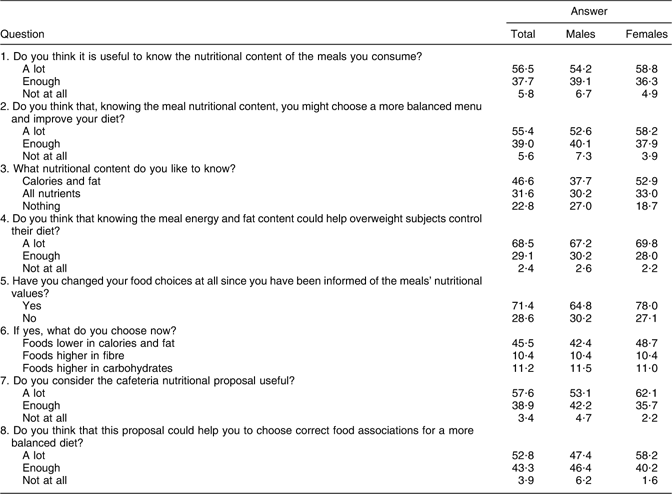
Of the respondents, 71·4 % reported they had modified their food choice for a healthier diet (question 5); while 45·5 % of them reported to choose foods lower in calories and fat (question 6). Moreover, 57·6 % and 38·9 % of the respondents answered ‘a lot’ and ‘enough’, respectively, to the seventh question and 52·8 % and 43·3 % of respondents, respectively, answered ‘a lot’ and ‘enough’ to the eighth question.
About a fifth (21·5 %) of the respondents answered ‘I don't know’ to the question ‘Do you know your energy requirement?’ Pearson's correlation coefficients between the energy requirements computed by the dietitians and those estimated by the respondents were significantly correlated both for males and females (r = 0·75; P < 0·001 and r = 0·77; P < 0·001 respectively) and independent of education and occupational levels as well as BMI.
Only 10·4 % of respondents answered ‘I don't know’ to the question ‘How many calories do you think you have ingested today with your meal?’ Those who answered yes, supposed 2962 (sd 1577) kJ (708 (sd 377) kcal; males) and 2853 (sd 1259) kJ (682 (sd 301) kcal; females). The mean energy value of the meal consumed on the interview day, computed by the dietitians, was 3038 (sd 1213) kJ (726 (sd 290) kcal) and 2887 (sd 1180) kJ (690 (sd 282) kcal) for males and females, respectively, with the following mean percentages from nutrients: 16 (sd 3) % from protein, 30 (sd 2) % from fat and 54 (sd 6) % from carbohydrates in males and 14 (sd 2) % from protein, 28 (sd 3) % from fat and 58 (sd 7) % from carbohydrates in females. Wine, beer and soft drinks were consumed by only a few customers.
The paired Student t test showed the difference between the supposed calories ingested and those really consumed was not significant; Pearson correlation coefficients between the supposed calories ingested and those really consumed were significant both for males and females (r = 0·78; P < 0·001 and r = 0·76; P < 0·001, respectively).
Discussion
The present study evaluated the menu available in a university cafeteria in order to produce a target nutritional tool for an informed nutritional choice and help customers in planning their meals according to a healthier and more balanced diet. The menu was wide and varied, containing 216 food items. The customers could choose all the foods they wanted to eat and then paid for the foods chosen.
The random weight measurements of the meals available, carried out during a period of 4 weeks, showed that most of the portion sizes were large (Table 1) and greater than those recommended by the Italian portion standards(27, 28). This is in line with recent trends reporting a continuous increase in portion sizes in industrialized countries, especially in the USA(Reference Nielsen and Popkin18) and The Netherlands(Reference Steenhuis, Leeuwis and Vermeer29). Therefore, about 40 % and 28 % of the meal portion sizes available in the cafeteria had a slightly high energy content (orange level) and a very high energy content (red level), respectively, especially ‘white’ dressed pasta, pizza, sandwiches and desserts. Moreover the fat content was often high (36·6 % of the items overall contained ≥20 g fat/portion; Table 2). This is in agreement with data in the literature(Reference McCrory, Fuss and Hays6, Reference Kant and Graubard7, Reference Roos, Sarlio-Lähteenkorva and Lallukka13) reporting that foods from restaurants, canteens, cafeterias and similar establishments are generally high in energy and fat when compared with home-prepared foods. In addition, various studies have shown that OHE is associated with higher energy intakes due to the meals’ higher energy density(Reference Kearney, Hulshof and Gibney2, Reference McCrory, Fuss and Hays6, Reference Kant and Graubard7, Reference McCrory, Fuss and Saltzman15–Reference Satia, Galanko and Siega-Riz17) or larger portion size(Reference Diliberti, Bordi and Conklin30–Reference Rolls, Morris and Roe33).
Special suggestions aimed at lowering the energy content of such meals were given to the cooks, in terms of reducing the portion size and decreasing the fat content in the recipes. Only 32·4 % of the meal portion sizes showed an acceptable energy content (green level).
Concerning the interviewed customers, their age range was wide, given that a third of them were workers and some of them were retired. Most of these respondents had normal weight (76·2 %), while all of the underweight respondents (6·8 %) were students and most of them were females. This shows the widespread behaviour of young women to pursue the desire of thinness. Overweight respondents were found especially among men (19·3 % v. 14·1 %), only a few were obese (3·6 % of males and 2·2 % of females). Prevalence rates of overweight and obesity in our sample were well below the Italian national data(34) reporting in 2005 that 42·5 % of males and 26·6 % of females were overweight and 10·5 % and 9·1 %, respectively, were obese. We cannot say if OHE is associated with the prevalence rates of overweight and obesity in our sample, as some studies have shown(Reference McCrory, Fuss and Hays6, Reference Bowman, Gortmaker and Ebbeling8–Reference Zoumas-Morse, Rock and Sobo10, Reference Prentice and Jebb16, Reference Bell and Swinburn21, Reference Utter, Scragg and Schaaf22, Reference Ledikwe, Ello-Martin and Rolls31–Reference Rolls, Morris and Roe33), since in the interview we did not ask customers how long they had been eating in the cafeteria and if their weight had increased during that period of time. This is a limitation of our study.
Knowing the nutritional content of the meals was very useful for respondents, since they thought it may be helpful in choosing a more balanced menu and thus improving their diet. Slightly more than a third would like to know the content of all nutrients. Indeed most of the respondents, 10·3 % of whom were overweight, were interested in knowing the energy and fat contents of the foods presuming this could be very useful for overweight individuals in order to control their diet. We may suppose that overweight individuals are concerned with their weight status and prone to improve it.
The supposed calories ingested and those really consumed on the interview day were not significantly different; this shows that most of the customers interviewed could compute the actual energy content of their meals by means of the depicted pyramids.
The majority (71·4 %) of respondents claimed to have changed their lunch after knowing the foods’ nutritional content, by choosing meals lower in energy and fats, but this cannot be confirmed since we have not investigated their intakes before the intervention. It would had been very interesting to assess the nutritional content of the meals consumed by the participants before the depicted pyramids had been displayed in the cafeteria and then compare it with the meals ingested after the nutrition information was available. We could not carry out this assessment and this is a limitation of our study.
The energy content of the meal eaten on the interview day computed by the dietitians, accounting for 3038 (sd 1213) kJ (726 (sd 290) kcal) in males and 2887 (sd 1180) kJ (690 (sd 282) kcal) in females, represents 25 % and 33 % of the daily energy requirement for males and females, respectively. We know that these percentages are lower than those recommended for lunch (about 40 % of the daily energy requirement); nevertheless, since lunch time during the working day is very short, it is well known that most people today habitually consume only one course with sometimes vegetables and fruit, and have a more plentiful dinner.
The energy percentage from fat of the meal eaten on the interview day amounted to 30 (sd 2) % and 28 (sd 3) % for males and females, respectively; values which are more than acceptable. We did not ask the cooks what foods were consumed less after the dietary pyramid figures had been displayed in the cafeteria, and this is a limitation of our study.
Most of the respondents (96·5 %) considered the cafeteria nutritional proposal as useful. It is interesting to note that the 55·4 % of respondents who find that the nutritional information might help them to improve their diets are more precise in estimating their intake and are less overweight.
We consider that the pyramid figure depicted in three coloured levels may be a much more effective tool than a food list aimed at helping customers to a conscious nutritional choice, in a nutrition education process.
In the USA, the number of restaurants and other food service establishments providing nutrition information has increased over the last 10 years, since the Surgeon General and the National Academies’ Institute of Medicine recommended that nutrition information should be available to customers at restaurants and since legislature and the US Congress addressed this issue(Reference Wootan and Osborn35). Of those restaurants with nutrition information, 86 % provide information also on the company website(Reference Wootan and Osborn35).
In Italy this initiative is not widespread. Nutritional and health policy and nutrition education programmes aimed at decreasing overweight and obesity rates and improving diet quality should promote availability of nutrition information on menus (on posters, pyramid figures, brochures) in chain restaurants and other food service establishments.
Conclusions
The availability of nutrition information in the cafeteria was well accepted by customers, who could use it as a simple tool to improve their diet, planning their meals according to a healthier and more balanced dietary pattern. Since the pyramid figures are immediately comprehensible we propose that this initiative should be promoted in all food service establishments, with the objective of providing customers with a simple tool for making an informed nutritional choice.
Acknowledgements
This research received no specific grant from any funding agency in the public, commercial or not-for-profit sectors. There are no financial or other contractual agreements that might cause conflicts of interest. The authors’ contributions were as follows. G.T.: study design, data analysis, interpretation of the results, preparation of manuscript, supervisor; R.B.: menu nutritional data elaboration, development of dietary pyramids, customer interviews; C.R.: study design, supervisor; H.C.: study design, data analysis, interpretation of the results, preparation of manuscript, supervisor. The authors wish to thank the cafeteria staff, university students and customers for their cooperation during data collection. Special credit goes to the dietitians of the University Graduate Course of Dietitians (Elisa Merelli, Carlotta Stanglini and Valentina Rabaglia) for their enthusiasm during the whole study.



