


Dietary patterns have been changing rapidly in recent decades and are characterised by a decreased consumption of fruit and vegetables and an increased consumption of processed foods that are high in sugar, saturated fat and Na and low in fibre( Reference Levy-Costa, Sichieri and Pontes Ndos 1 – Reference Levy, Claro and Mondini 6 ). Such dietary patterns may be partially responsible for the increased prevalence of obesity( Reference Heo, Kim and Wylie-Rosett 7 – Reference Popkin 11 ), especially for children and adolescents( Reference Rolls 12 – Reference Corvalan, Kain and Weisstaub 14 ). More important is the fact that childhood obesity tends to track into adult life, leading to an increased prevalence of chronic diseases and early mortality( Reference Singh, Mulder and Twisk 15 , Reference Gardner, Hosking and Metcalf 16 ).
Many children consume diets that do not meet current recommendations for foods or nutrients( Reference Fox, Condon and Briefel 17 – Reference Golley, Hendrie and McNaughton 19 ). In Brazil, almost 65 % of children need to improve the quality of their diet( Reference Molina Mdel, Lopez and Faria 20 ), a finding that is especially alarming, considering that dietary patterns in childhood may track into adulthood( Reference Craigie, Lake and Kelly 21 ). However, only one of these studies focused on pre-school children( Reference Mikkila, Rasanen and Raitakari 22 ).
During the first year of life, the introduction of solid foods is an important developmental milestone because it may affect the acceptance of foods in infancy and possibly food preferences in later life( Reference Skinner, Carruth and Wendy 23 – Reference Mennella and Trabulsi 25 ). Although most children can rank order their preferences during early childhood( Reference Birch 26 ), evidence suggests that the pre-school child's diet may be affected by maternal and family characteristics( Reference Fisk, Crozier and Inskip 27 , Reference Rauber, da Costa Louzada and Feldens 28 ). In the primary grades, children become more independent and influenced by outside sources, such as the school environment, peers and marketing of foods, that affect their eating behaviours( Reference Birch, Savage and Ventura 29 , Reference Story and Karen 30 ).
We aimed to determine the developmental changes in diet quality, using longitudinal data from a sample of pre-school (3–4 years) and school (7–8 years) children and to assess whether or not food group and nutrient intakes track during childhood. Previous studies of this cohort have shown a positive impact of maternal dietary counselling during the first year of life on feeding practices at infant age( Reference Vitolo, Bortolini and Feldens 31 ) and on diet quality at pre-school age, as assessed using the Healthy Eating Index (HEI)( Reference Vitolo, Rauber and Campagnolo 32 ). Therefore, we also assessed the impact of maternal dietary counselling during the first year of life on the diet quality of school-age children (long-term effect).
Methods
The present study was a data analysis of children who participated in a randomised trial of dietary counselling on breast-feeding and dietary practices during the first year of life( Reference Vitolo, Bortolini and Feldens 31 ). A total of 500 mother–child pairs were recruited between October 2001 and June 2002 in the maternity ward of a hospital that attends to a low-income population, in São Leopoldo, Brazil, and the same children have been followed since. Inclusion criteria were full-term (>37 weeks) babies with a birth weight ≥ 2500 g. Exclusion criteria were HIV-positive mothers, congenital malformations and children admitted to the intensive care unit. The present study was conducted according to the guidelines laid down in the Declaration of Helsinki, and all procedures involving human subjects were approved by the Ethics Committee of the Universidade Federal de Ciencias da Saude de Porto Alegre. Written informed consent was obtained from all mothers.
Data collection
Fieldworkers conducted face-to-face structured interviews during home visits with the mothers at 6 months, 3–4 and 7–8 years following birth. Data were authenticated at monthly intervals by randomly calling 10 % of the households and repeating several questions in the survey. Identification and data required for locating the family in the community were collected at the time of recruitment. Sex and data of birth were obtained from hospital records. Socio-economic characteristics, such as maternal education and family income, were assessed when the children reached an age of 6 months by face-to-face interviews with the mothers. At 3–4 and 7–8 years of age, two 24 h dietary recalls for each child were collected on two non-consecutive days and mean values were used in the analyses. For children aged 3–4 years, the recall was provided by the mothers or other caregivers; recalls of 7–8 years old were self-reported with assistance from the mothers or other caregivers. To quantify food portion size, pictures were used to illustrate standard household measurements, such as teaspoons, tablespoons, and cups. Dietary information was entered in the NutWin program (version 1.5; Federal University of São Paulo) to support nutrition in order to estimate energy and nutrient intake. Data collection and analyses did not include salt added during cooking and/or at the table, or the ingestion of pure water.
Diet quality assessment
Diet quality was determined using the HEI, an instrument that attributes scores to the diets of individuals based on dietary recommendations and takes into consideration the imbalance between components of humans' diets and non-isolated nutrient( Reference Kennedy, Ohls and Carlson 33 ). The HEI is the sum of ten components, each representing different aspects of a healthful diet, and the recommendations depend on the energy requirements according to age group( Reference Kennedy, Ohls and Carlson 33 ). The first five components of the index are food groups based on the Food Guide Pyramid (US Department of Agriculture): grains, fruit, vegetables, and meat and milk. Intakes at or above the recommended amounts were awarded a full score of 10 points, whereas intermediate numbers of servings were scored proportionally. For components six to nine, a full score of 10 points each was awarded for diets with up to 30 % of energy from fat, 10 % of energy from saturated fat, 300 mg/d of cholesterol and 1500 mg/d of Na. To assess the tenth component of the HEI score, dietary variety was calculated by counting the total number of different foods and food groups consumed, considering only those that contributed at least one-half of a serving from any of the food groups. A maximum score was given if eight or more different food items were consumed per d, whereas a score of zero was given if three or fewer different items were eaten. Intermediate intakes were calculated proportionally. Similar foods, such as mashed and baked potatoes, were considered as one item towards dietary variety, and mixed foods were broken down into their ingredients.
Each of the ten components ranged in score from 0 to 10. Thus, the composite HEI score can potentially range from a minimum score of 0 to a maximum score of 100. A total score of more than 80 was considered ‘good’, scores of 51–80 indicated ‘needs improvement’ and scores less than 51 were considered ‘poor’( Reference Kennedy, Ohls and Carlson 33 ).
Some modifications in the food classification according to the HEI components were carried out in order to meet the Brazilian dietary guideline recommendations( 34 , Reference Philippi, Latterza and Cruz 35 ). Potatoes and other related root vegetables were included in the grains group instead of the vegetables group, as they are considered a ‘starchy food’; beans and lentils were included in the meat group only (using lean meat ounce equivalents) and not in the vegetables group; fried food, processed meat products (e.g. sausages, ham, salami), candied foods and sweets were not included in any of the first five food groups because of their high fat and sugar content.
Statistical analyses
All statistical analyses were performed using SPSS 16.0 (SPSS, Inc.). Non-normally distributed variables were log-transformed (components: total fat, saturated fat, cholesterol and Na). Despite the use of log-transformed variables in the analyses, untransformed values were presented in tables for clinical interpretation. The effect of the intervention on the mean HEI score at 7–8 years of age was evaluated by Student's t test for independent samples (particularly the mean HEI score and its components for both the intervention and control groups). To determine dietary changes, analyses were performed by group (intervention and control) since a previous study( Reference Vitolo, Bortolini and Feldens 31 ) with this same sample of children demonstrated a positive impact on diet quality at 3–4 years of age in the intervention group. To study the changes in food groups, we computed mean servings per d for each food group and time point. To determine the changes in diet quality, we computed the HEI score (total and each component) that considers the recommendations for each age. HEI scores were similar for boys and girls, therefore analyses were carried out on both sexes together. Analyses of time effects (i.e. changes in diet intake at 3–4 and 7–8 years of age) were conducted using a paired t test. McNemar's test with the continuity correction was used to analyse the changes in prevalence. Data are expressed as mean differences and 95 % CI. Statistical significance was set at P< 0·05.
Comparisons in terms of race, sex, weight at birth, length at birth, maternal age at child's birth, maternal education level and annual family income between children who were lost to follow-up and those who remained were made using the χ2 and Student's t test or Mann–Whitney U test, as appropriate.
Results
Sample characteristics
Among the 500 initially recruited children at birth, 356 children at 3–4 years of age and 315 children at 7–8 years of age were assessed. The causes of loss to follow-up were refusal to continue (n 31), non-localised address (n 148), child or maternal death (n 3) and genetic disease (n 3). No difference was found regarding race, sex, weight at birth, length at birth, maternal age at child's birth, maternal education level and annual family income between children who were lost to follow-up and those who remained at 7–8 years of age. The number of children who presented complete dietary data was 345 children at 3–4 years of age, 307 at 7–8 years of age and 289 at both time points. No difference was found in terms of total HEI scores and HEI scores for each component between children with dietary data at both time points (n 289) and those with dietary data at just one time point (3–4 or 7–8 years).
Over half of the children were male (57·1 %) and non-white (57 %). The annual household income per capita varied from R$180·00 to R$11 100·00 (US $83·33 to $5138·88), R$2559·70 (sd 1781·50) on average (US $1185·04 (sd 824·76)), whereas the maternal education level varied from 1 to 13 years of schooling (6·9 (sd 2·7)).
No difference was found between the intervention and control groups regarding the score of the total HEI (65·2 (sd 9·5) v. 64·9 (sd 8·5), P= 0·36) and of each HEI component among children at 7–8 years of age (P>0·05).
Recommendation and intake (servings or amounts)
In both the intervention and control groups, the mean intakes (servings/d) of grains, meat and legumes, vegetables, fruit and dietary variety (different foods/d) were below the recommended level, while the mean intakes of total fat (percentage of energy), cholesterol (mg/d) and Na (mg/d) were within the recommended level at both time points. The mean intake was within and below the recommended level of milk (servings/d), at 3–4 and 7–8 years of age, respectively (Table 1).

In both the intervention and control groups, less than 10 % of the children met the recommendation for the intakes of grains and vegetables at each time point and the percentage of the children who met the recommendation for the intakes of meat and legumes, and fruit and milk was significantly lower at 7–8 years of age. Cholesterol was the only component for which more than 80 % of the children achieved the recommended level (Table 2).
Percentage of children meeting the recommendation from each component of the Healthy Eating Index†, in São Leopoldo, Brazil (Number of participants and percentages)
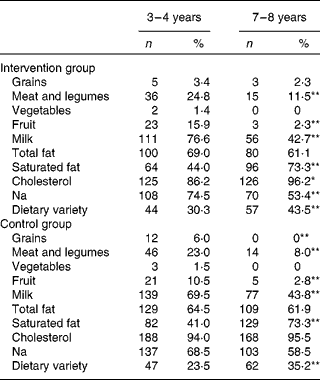
Value was significantly different from that for the same group at 3–4 years of age: *P< 0·05, **P< 0·01.
† Children who achieved the maximum score for the component (score = 10).
Trends in diet quality (Healthy Eating Index score)
In the control group, 93·5 % of the children at 3–4 years of age and 96 % of the children at 7–8 years of age had diets that were poor or needed improvement. Diet quality, as assessed using the HEI score, tracked over time. In the intervention group, 86·2 % of the children at 3–4 years of age and 94·7 % of the children at 7–8 years of age had diets that were poor or needed improvement. The changes in diet quality over time illustrate the loss of the intervention effect at 7–8 years of age (Table 3).
Dietary quality of children at 3–4 and 7–8 years of age evaluated using the Healthy Eating Index (HEI), in São Leopoldo, Brazil (Mean values and standard deviations or percentages; mean differences and 95 % confidence intervals)
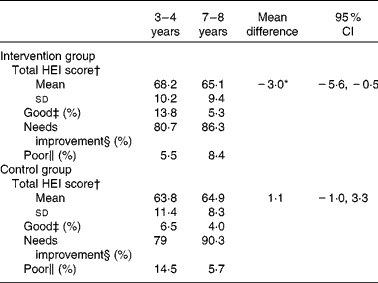
* There was a significant difference between the age groups (P< 0·05).
† The total HEI score ranges from 0 to 100.
‡ Score >80.
§ Score 51–80.
∥ Score < 51.
In both groups, the score for the intake of fruit and milk decreased over time, while the score for the intake of saturated fat and dietary variety increased. The children maintained their score for the intakes of grains, meat and legumes, and total fat over time in both groups (Table 4).
Mean difference in score from each component of the Healthy Eating Index at 3–4 and 7–8 years of age, in São Leopoldo, Brazil (Mean values and standard deviations; mean differences and 95 % confidence intervals)

* There was a significant difference between the age groups (P< 0·05).
† Each component ranges from 0 to 10.
‡ ((7–8 years) − (3–4 years))/3–4 years.
§ Variables that were log-transformed for the analysis.
Discussion
Understanding whether children's dietary quality changes or whether their eating patterns and dietary quality remain stable during middle childhood may allow for targeted intervention efforts to promote healthy diets and improve nutrient intake in early life and throughout childhood. The present results showed that the children did not meet the HEI-2000 recommendations( 36 ) for most of the food groups studied at either pre-school or school age. These results are consistent with other findings( Reference Assis, Calvo and Kupek 37 – Reference Manios, Kourlaba and Kondaki 40 ), suggesting that children's dietary intake constitutes a risk factor for nutritional deficiencies, obesity and chronic diseases in both developed and developing countries.
In the present study, we highlight two major findings. The first major finding is that the positive effect that maternal dietary counselling during the first year of life had on diet quality at 3–4 years of age( Reference Vitolo, Rauber and Campagnolo 32 ) was lost at 7–8 years of age. These data may be explained by the intervention's lack of long-term effect, which may be related to older children's increased autonomy regarding their food choices. School children have many opportunities to eat without parental supervision and can more easily access foods in their social environments( Reference Briefel, Crepinsek and Cabili 41 ). Although studies have emphasised the importance of promoting health during early childhood( Reference Birch and Ventura 42 , Reference Victora, de Onis and Hallal 43 ), training older children in self-regulatory skills regarding their food choices and conducting interventions that penetrate school settings may be of equal importance, maintaining healthy eating habits throughout one's life.
The second major finding is that diet quality tracks during childhood since the total HEI score did not change from pre-school to school age in the control group. While there is some evidence showing moderate to strong tracking for nutrient intakes among children( Reference Singer, Moore and Garrahie 44 – Reference Zive, Berry and Sallis 46 ), eating patterns may change gradually during childhood( Reference Northstone and Emmett 47 ) and children's diets tend to decline in quality as they get older( Reference Fremeaux, Hosking and Metcalf 48 , Reference Mannino, Lee and Mitchell 49 ). We found that the decrease in score for some HEI components did not affect the overall diet quality due to the increase in score for other HEI components. The decrease in the intake of fruit and milk is consistent with other studies( Reference Mannino, Lee and Mitchell 49 , Reference Feferbaum, de Abreu and Leone 50 ) and may reflect the fact that, as children get older, they have more autonomy in making food choices( Reference Birch, Savage and Ventura 29 , Reference Story and Karen 30 ) and their environment offers them more unhealthy food choices( Reference Leite, Oliveira and Cremm 51 ). Low intakes of meat, grains and vegetables at pre-school age continued during school age. Foods from these groups, which comprise part of the traditional Brazilian diet (such as rice and beans), have been replaced by processed products( Reference Levy-Costa, Sichieri and Pontes Ndos 1 , Reference Levy, Claro and Mondini 6 ). Among nutrients, the reduced saturated fat consumption can be explained by the lower milk intake observed in the present study. Although we found that fat intake was appropriate, studies have shown an increase in the consumption of processed foods, which are high in fat and very available and accessible to children( Reference Monteiro, Levy and Claro 5 , Reference Leite, Oliveira and Cremm 51 ).
Regarding Na intake, the dietary recall did not include the salt used in food preparation due to a lack of data on added salt. Although an estimate based on a Brazilian household budget survey showed that most of the Na available for family consumption was from table salt and salt-based condiments( Reference Sarno, Claro and Levy 52 ), a national survey has demonstrated a major increase in the intakes of ultra-processed foods (breads, cookies, sweets, soft drinks, sausages, cheeses, cold cuts and canned foods) by the Brazilian population in the past 30 years( Reference Monteiro, Levy and Claro 5 ). We believe that the main source of Na consumed by the children in the present study came from ultra-processed foods, which is consistent with other studies( Reference He and MacGregor 53 , Reference Magriplis, Farajian and Pounis 54 ).
Several potential limitations should be discussed to fully appreciate the present results. First, longitudinal studies are prone to subject to loss during follow-up. However, we did not observe any differences between the basic characteristics of the children who remained in the study and those who were lost to follow-up. Second, the present results cannot be generalised to large populations as we only included children from low-income families. Third, the children's dietary data were reported by the mothers and children (at 7–8 years of age) and are subject to reporting errors. However, we used the multiple-pass method to facilitate dietary recall and reduce error. Fourth, intra-individual intake variation does vary by nutrient and food group, which could attenuate the statistical significance of mean estimates. Since we used the average intake of 2 d in both dietary assessments to compare the dietary data of each child, we believed that such an error was mitigated and less likely to affect our conclusion. Finally, the HEI score was calculated using the 2000 version instead of the 2005 version. We chose not to use the 2005 version because it emphasises certain food groups (such as whole grains, nuts and seeds) that are not often consumed by children in Brazil. Despite this issue, we have confidence in the present results since the same version of the HEI was used for the two assessed age groups. In addition, studies have demonstrated associations of the original version of the HEI with plasma nutrient concentrations( Reference Weinstein, Vogt and Gerrior 55 , Reference Hann, Rock and King 56 ) and its applicability in assessing children's diets( Reference Manios, Kourlaba and Kondaki 40 ), validating it as a useful tool for overall descriptions of diet. The present study has strengths that reinforce our findings. The longitudinal design allows for the assessment of children's dietary quality changes over time as well as consumption changes among the food and nutrient groups. Also, data collection was done in the same way for the two assessed age groups, as was the recording and calculation of dietary data, enabling the data to be compared.
Conclusions/future research
The present study found that diet quality tracks from pre-school to school age in the control group, suggesting that dietary habits are established early in life and track during childhood. Intervention programmes and actions to promote healthy eating and improve nutrient intake should begin early in life and continue throughout childhood since maternal dietary counselling during the first year of life was effective in promoting better diet quality at pre-school age( Reference Vitolo, Rauber and Campagnolo 32 ), though not at school age. Childhood dietary patterns may be an important factor in the development of food habits later in life. We therefore intend to assess the diet quality of this same sample of children when they enter adolescence (12–13 years old).
Acknowledgements
The present study was supported by the Brazil CNPq (National Funding for Research) and CAPES Foundation, Ministry of Education (doctoral fellowship to F. R., process no. 9853-11-1). CNPq and CAPES had no role in the design, analysis or writing of this article.
The authors' contributions are as follows: F. R. contributed to the data analyses, the interpretation of the results, and the drafting and critical revision of the manuscript; D. J. H. contributed to the drafting and critical revision of the manuscript; M. R. V. contributed to the research proposal, the interpretation of the results, and the drafting and critical revision of the manuscript.
The authors declare that they have no conflicts of interest.



