


As part of a national nutrition policy, the 1990 Nutrition Labeling and Education Act (NLEA) established the uniform nutrition labels required for most food products in the USA(Reference Variyam1). The NLEA regulates nutrition labeling, health claims and nutrient content claims for most foods sold in the USA since 1994. The selection of nutrients listed on the food label (FL) was based upon public health concerns related to poor diet and chronic diseases such as CVD, diabetes and some types of cancer(Reference Kurtzweil2). FL is designed to help consumers choose healthier, more nutritious diets in order to improve health by providing nutrition information for people to make informed food choices(Reference Lin, Lee and Yen3, Reference Zarkin, Dean and Mauskopf4). Reading the information on FL may enable healthy dietary practices(Reference Satia, Galanko and Neuhouser5, Reference Campos, Doxey and Hammond6).
Several previous studies suggest that the use of FL can contribute to healthful dietary intakes such as lower intakes of total fat, saturated fat and cholesterol(Reference Kreuter, Brennan and Scharff7–Reference Ollberding, Wolf and Contento10), higher diet quality(Reference Variyam1, Reference Satia, Galanko and Neuhouser5, Reference Kreuter, Brennan and Scharff7, Reference Ollberding, Wolf and Contento10, Reference Perez-Escamilla and Haldeman11) and high fibre intake(Reference Variyam1, Reference Post, Mainous and Diaz9, Reference Ollberding, Wolf and Contento10), although other findings are inconsistent(Reference Satia, Galanko and Neuhouser5, Reference Kreuter, Brennan and Scharff7, Reference Neuhouser, Kristal and Patterson8). Some research has suggested that FL use may be related to demographics, nutrition knowledge and psychosocial factors in selected study populations(Reference Lin, Lee and Yen3, Reference Satia, Galanko and Neuhouser5, Reference Neuhouser, Kristal and Patterson8). For example, a telephone survey of 1450 US adult residents of Washington State reported that FL use was higher among women and residents with >high school education(Reference Neuhouser, Kristal and Patterson8), similar to the findings from a study of non-Hispanic (NH) blacks in North Carolina(Reference Satia, Galanko and Neuhouser5).
Existing findings about FL use across US ethnic groups are limited and inconsistent(Reference Post, Mainous and Diaz9, Reference Ollberding, Wolf and Contento10, Reference Blitstein and Evans12). The National Health and Nutrition Examination Survey (NHANES) 2005–2006 data indicated that more NH whites use FL than other racial/ethnic groups(Reference Ollberding, Wolf and Contento10). However, another study of NHANES 2005–2006 found no racial/ethnic difference in FL use among people with type 2 diabetes, hypertension or hyperlipidaemia(Reference Post, Mainous and Diaz9). To our knowledge, no studies have examined whether racial/ethnic differences in FL use are independent of other sociodemographic factors among the general US population, and whether weight status is related to FL use, which can have important public health implications for obesity prevention.
Based on nationally representative data, we examined how FL use varied by demographic and nutrition- and health-related psychosocial factors among US adults without main diet-related chronic diseases. We hypothesized that differences existed in FL use according to race/ethnicity and socio-economic status (SES). We also evaluated whether people who were overweight or obese and correctly perceived themselves as overweight were more likely to use FL than people who were overweight or obese but perceived their weight as ‘about right’.
Methods
Data and study participants
We analysed data from the Continuing Survey of Food Intakes by Individuals (CSFII) and the Diet and Health Knowledge Survey (DHKS) conducted by the US Department of Agriculture between 1994 and 1996(Reference Tippett and Cypel13). A nationally representative, multistage stratified sample of non-institutionalized subjects aged 0–90 years residing in the USA provided information on dietary intakes via in-person interviews and a non-consecutive follow-up 24 h recall administered by telephone approximately 10 d later. As a supplementary survey (a telephone follow-up) to the CSFII, the DHKS was designed to evaluate individuals’ nutrition knowledge, attitudes and dietary habits, as well as the use of food nutrition labels.
In the present study, we excluded people aged 65 years or older (n 1319) and 1559 people who reported having chronic diseases diagnosed by doctors (e.g. diabetes, hypertension) to obtain a relatively healthy sample of individuals who were not on special diets. A total of 2797 adults (1460 men, 1337 women) aged 20–64 years were included in our final analysis.
Sociodemographic characteristics
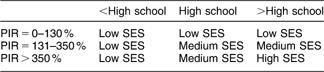
Based on self-reported race/ethnicity, study participants were categorized as NH whites, NH blacks, Hispanics or ‘Others’. Education and family income were used as proxy indicators of SES. Education was measured by years completed and further grouped into three levels: ‘<high school’, ‘high school’ (12 years) and ‘>high school’. The poverty–income ratio (PIR) was computed as the ratio of household income over the poverty line published by the Census Bureau for a certain family size in that calendar year. The PIR was categorized as: 0–130 % (low income), 131–350 % (medium income) and >350 % (high income). Participants were grouped as follows (see Table 1): (i) high SES, with >high school education and income with PIR >350 %; (ii) low SES, with <high school education or PIR <130 %; and (iii) medium SES, all others.
Categorization of socio-economic status (SES) on the basis of education level and poverty–income ratio (PIR)
Information on geographic regions (Northeast, Midwest, South and West) and the degree of urbanization of the geographical area in which households were located (metropolitan statistical area-central city, -suburban, and rural) were also collected and considered in the analyses.
Food label use
In the DHKS 1994–1996, there was a series of questions regarding FL. They covered the use of various sections of the FL, use of specific information on the nutrient panel, frequency of using FL when buying specified categories of food and ease of understanding FL information. Participants were asked twenty questions regarding their FL use behaviours (Appendix 1). Their answers were summarized into three categories.
Using food labels to check for ingredients, short phrases, nutrition panel, serving size, and health benefits of foods/nutrients
Participants were asked five questions about FL use when buying foods. For example, ‘Now think about food labels. When you buy foods, do you use: the list of ingredients – often, sometimes, rarely, or never?’ (ingredients). FL users were defined as those who answered ‘often’ or ‘sometimes’, while those with answers ‘rarely’, ‘never’ or ‘never seen’ were categorized as FL non-users. Similar questions were asked about the short phrases on the FL such as ‘low-fat’ or ‘good source of fibre’ (short phrase); ‘the nutrition panel that tells the amount of calories, protein, fat, and such in a serving of the food’ (nutrition panel); ‘size of a serving’ (serving size); ‘statements on the label that describe health benefits of nutrients or foods’ (health benefits of foods/nutrients). Participants who reported using FL information for any one of the items were categorized as ‘FL use’ group, whereas those who checked all domains of FL were categorized into ‘always FL use’ group. Those who did not use or check FL were grouped as ‘FL non-user’.
Using food labels to check levels of nutrients/food groups
Participants were asked to answer eight questions about FL use for specific food components, including calories, salt/sodium, total fat, saturated fat, cholesterol, vitamins or minerals, fibre and sugars. For example, ‘When you look for nutrition information on the food label, would you say you often, sometimes, rarely, or never look for information about: calories?’ Participants who reported that they ‘often’ or ‘sometimes’ checked at least one of the food components on the FL were categorized as ‘FL check for nutrient(s)’ group, whereas those who checked all of these FL information on nutrients were grouped as ‘always check FL for nutrients’ in the analysis. We also selected the following five items for participants who reported using FL to look for nutrition information: calories; fat; cholesterol; sodium; and fibre.
Ease of understanding of food label information
Participants were also asked whether the information on the FL was easy to understand for: (i) ingredients; (ii) short phrases on the label like ‘low-fat’ or ‘good source of fibre’; (iii) number of calories in a serving; (iv) number of calories from fat; (v) number of grams or milligrams of nutrients; (vi) % of the daily value for nutrients; and (vii) descriptions such as ‘lean’ or ‘extra lean’ on meats. For example, ‘Now think about the types of nutrition information on food labels. Do you think the list of ingredients is very easy to understand, somewhat easy, or not too easy to understand?’ Participants who answered at least one of these seven questions as ‘very easy’ or ‘somewhat easy’ to understand were categorized as ‘ease of understanding FL’ group.
Nutrition- and health-related psychosocial factors
Nutrition knowledge, perceptions and beliefs
One adult survey participant from each household was asked about his/her nutrition knowledge, perceptions and beliefs (NKPB) in the DHKS by using the following eleven questions: ‘To you personally, is it very important, somewhat important, not too important, or not at all important to: (i) use salt or sodium only in moderation? (ii) choose a diet low in saturated fat? (iii) choose a diet with plenty of fruits and vegetables? (iv) use sugars only in moderation? (v) choose a diet with adequate fibre? (vi) eat a variety of foods? (vii) maintain a healthy weight? (viii) choose a diet low in fat? (ix) choose a diet low in cholesterol? (x) choose a diet with plenty of breads, cereals, rice and pasta? (xi) eat at least two servings of dairy products daily?’ (Appendix 2). We calculated an overall NKPB score (range: 11–44) to summarize participants’ answers to these questions. Participants who answered ‘not at all important’, ‘not too important’, ‘somewhat important’ or ‘very important’ were assigned a score of 1, 2, 3 or 4, respectively. The total score was summed. Those with a total NKPB score ≥80th percentile were treated as ‘high’ v. ‘low’ NKPB group (NKPB <80th percentile). In the present study, the Cronbach's α coefficient was 0·86 for NKPB (0·86 for NH whites or blacks; 0·85 for Hispanics; 0·87 for ‘Others’), indicating that the internal consistency reliability of the NKPB measure was acceptable.
Perceived importance of nutrition
Participants were asked to identify factors they considered important when buying foods, including the importance of nutrition. The question to evaluate participants’ consideration about the importance of nutrition at food purchase was: ‘Now think about buying food. When you buy food, how important is: nutrition – very important, somewhat important, not too important, or not at all important?’ Participants who reported ‘very important’ or ‘somewhat important’ were categorized as ‘nutrition perception: important’ group, while those with answers ‘not too important’ or ‘not at all important’ were assigned to ‘nutrition perception: not important’ group.
Awareness of diet–disease relationships
Participants were asked if they heard about any health problems caused by unhealthy eating, such as eating too much fat, salt, cholesterol or sugar, but not enough fibre or calcium, by responding ‘yes’ or ‘no’. Participants were categorized into the ‘aware’ group if they were aware of all these risks v. the others, the ‘unaware’ group.
Perceived need of diet change
Participants were also asked to identify what they thought about their current diet quality, and whether they would be willing to make changes in their eating behaviour by using the question: ‘The things that I eat and drink are healthy and there is no reason for me to make changes’. Perceived need of diet change was assessed by using a 4-point Likert scale (‘strongly disagree’, ‘somewhat disagree’, ‘somewhat agree’ and ‘strongly agree’). In our analyses, participants who responded to ‘strongly disagree’ or ‘somewhat disagree’ were grouped as having ‘perceived need of diet change’ and those who answered ‘strongly agree’ or ‘somewhat agree’ were categorized into ‘no perceived need of diet change’.
Weight self-perception
Participants were asked about their perceived weight status: ‘What do you think you are: (i) about the right weight, (ii) overweight, or (iii) underweight?’ To examine whether participants who did not correctly evaluate their weight status were less likely to use FL, those who had a self-reported BMI ≥ 25 kg/m2 and correctly answered ‘overweight’ were treated as the reference group in our analyses.
Body weight status
BMI was calculated based on self-reported weight and height. Weight status was determined for overweight (BMI = 25·0–29·9 kg/m2) and obesity (BMI ≥ 30·0 kg/m2)(Reference Flegal, Carroll and Ogden14, 15).
Statistical analysis
The dependent variable was FL use. The main explanatory variables were sociodemographic and nutrition- and health-related psychosocial factors (NHPF; see above). Survey year was also adjusted for in the analyses. We created a ‘sociodemographic index’ to examine the high-risk populations who were less likely to use FL: ‘male, NH white, high SES’; ‘female, NH white, high SES’; ‘male, NH black, low SES’; ‘female, NH black, low SES’; and ‘Other’. We also created a variable by combining weight status with weight self-perception (about right/overweight/underweight).
Differences in FL use by sociodemographic characteristics and NHPF were first examined using the χ 2 test. Then multivariable logistic regression models were conducted to determine predictors of FL use, and odds ratios and 95 % confidence intervals were calculated. All analyses were conducted using survey-related commands in the SAS statistical software package version 9·2 (SAS Institute, Inc., Cary, NC, USA) to take the complex sampling design into account to produce nationally representative estimates and correct estimates of standard error. Statistical significance was set at P < 0·05.
Results
Overall and domains of FL use by sociodemographic characteristics are presented in Table 2. Most of the individuals surveyed reported using FL for the nutrition panel (65 %), ingredients (61 %), short phrase (61 %), serving size (51 %) or health benefits (50 %). Approximately 80 % of US adults used FL information for at least one of the five FL domains, and 26 % reported utilizing all aspects of the FL. The percentage of FL use was significantly lower among men and participants with lower education and income levels (P < 0·05). The highest percentage of FL use was among NH white women with high SES, whereas the lowest percentage of FL use was reported among NH black men with low SES.
FL use in US adults aged 20–64 years, by sociodemographic characteristics: the 1994–1996 CSFII/DHKSFootnote †
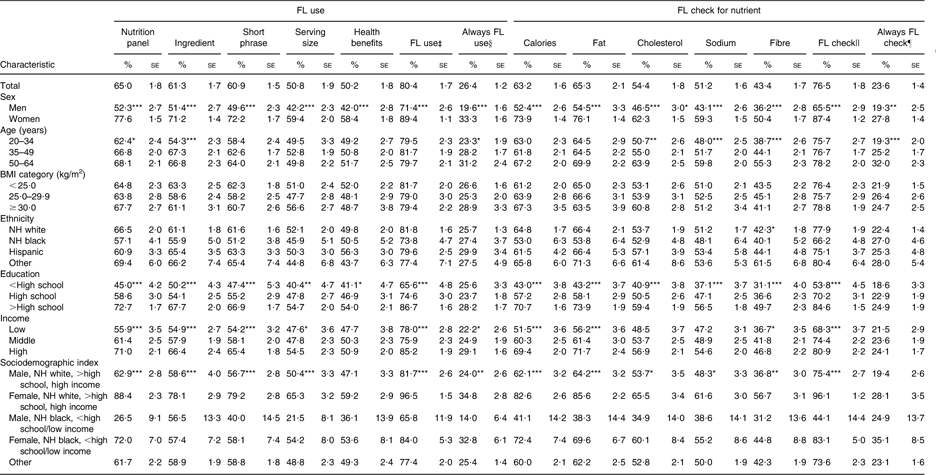
FL, food label; CSFII, Continuing Survey of Food Intakes by Individuals; DHKS, Diet and Health Knowledge Survey; NH, non-Hispanic.
P value from χ 2 test: *P < 0·05, **P < 0·01, ***P < 0·001.
† The complex survey design was taken into account. FL use was assessed by several questions. Each question was measured on a 4-point Likert scale: 4 = often/always; 3 = sometimes; 2 = rarely; 1 = never/never seen/don't know. FL users were defined as those who answered using FL ‘often/always’ or ‘sometimes’.
‡ Uses at least one of the FL information on: nutrition panel, ingredient, short phrase, serving size, or health benefits of nutrients/foods.
§ Uses all of the FL information on: nutrition panel, ingredient, short phrase, serving size, and health benefits of nutrients/foods.
∥ Checks at least one of the diet nutrients/food groups on FL: calories, salt or sodium, total fat, saturated fat, cholesterol, vitamins or minerals, fibre and sugars.
¶ Checks all of the diet nutrients/food groups on FL: calories, salt or sodium, total fat, saturated fat, cholesterol, vitamins or minerals, fibre and sugars.
Table 3 displays FL use by health- and nutrition-related psychosocial characteristics. FL use was significantly higher among those who acknowledged the diet–disease relationships or the importance of nutrition, those with higher NKPB (total score ≥80th percentile) and participants who were overweight or obese and perceived themselves as being overweight. There was no statistically significant difference in FL use between participants with and without behavioural intention.
FL use in US adults aged 20–64 years, by nutrition- and health-related psychosocial characteristics: the 1994–1996 CSFII/DHKSFootnote †
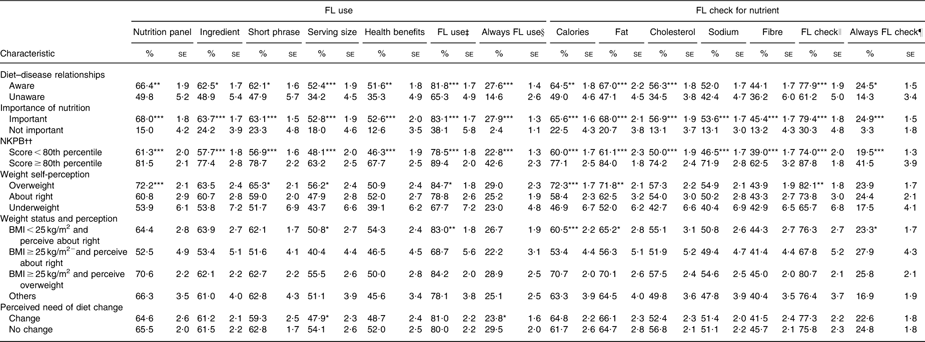
FL, food label; CSFII, Continuing Survey of Food Intakes by Individuals; DHKS, Diet and Health Knowledge Survey; NKPB, nutrition knowledge, perceptions and beliefs.
P value from χ 2 test: *P < 0·05, **P < 0·01, ***P < 0·001.
† The complex survey design was taken into account. FL use was assessed by a five-item questionnaire. Each item was measured on a 4-point Likert scale: 4 = often; 3 = sometimes; 2 = rarely; 1 = never/never seen. FL users were defined as those who answered using FL ‘often’ or ‘sometimes’.
‡ Uses at least one of the FL information on: nutrition panel, ingredient, short phrase, serving size, or health benefits of nutrients/foods.
§ Uses all of the FL information on: nutrition panel, ingredient, short phrase, serving size, and health benefits of nutrients/foods.
∥ Checks at least one of the diet nutrients/food groups on FL: calories, salt or sodium, total fat, saturated fat, cholesterol, vitamins or minerals, fibre and sugars.
¶ Checks all of the diet nutrients/food groups on FL: calories, salt or sodium, total fat, saturated fat, cholesterol, vitamins or minerals, fibre and sugars.
† †NKPB: consisting of eleven questions as ‘To you personally, is it very important (score: 4), somewhat important (score: 3), not too important (score: 2) or not at all important (score: 1) to consume the following nutrients or foods at appropriate levels: salt/sodium, saturated fat, fibre, cholesterol, fruits and vegetables, sugar, dairy products, etc.?’ The higher the total NKPB score, the better the nutrition knowledge (range: 11–44). The high total NKPB score was the upper quintile (80th percentile or higher) of NKPB score.
Table 4 shows the related factors for FL use and ease of understanding FL information from multivariable logistic regression models. Participants who were men, with lower education, lower income, NH blacks or ‘Other’ ethnic groups, living in a rural area, unaware of diet–disease relationships and underweight were significantly less likely to use FL or FL check for nutrient(s). Those with higher NKPB were twice as likely to use FL (OR = 2·00; 95 % CI 1·30, 3·07) and FL check for nutrients (OR = 2·28; 95 % CI 1·53, 3·40). Most FL use-related factors were also associated with the ease of understanding FL information and in the same direction. There was no significant association of overweight/obesity or intention for dietary change with FL use.
Predictors of FL use and ease of understanding FL information among US adults aged 20–64 years: the 1994–1996 CSFII/DHKSFootnote †
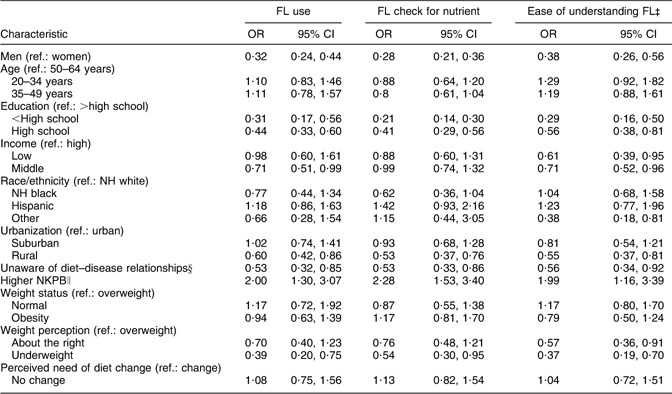
FL, food label; CSFII, Continuing Survey of Food Intakes by Individuals; DHKS, Diet and Health Knowledge Survey; ref., referent category; NH, non-Hispanics; NKPB, nutrition knowledge, perceptions and beliefs.
† All variables, as well as survey year and region, were included in each model. Separate models were fit for each FL use outcome (FL use, FL check for nutrients, ease of understanding FL).
‡ Participants were asked whether the information on the FL was easy to understand: ingredients, short phrase, number of calories in a serving, number of calories from fat, number of grams/milligrams of nutrients, % of the daily value for nutrients, and description like ‘lean’ or ‘extra lean’ on meats. Participants who thought that this information was ‘very easy’ or ‘somewhat easy’ were assigned to the ‘ease of understanding FL’ group, while those with other responses were assigned to the ‘other’ group. Participants who answered one or more of these seven items as ‘easy to understand’ were categorized as ‘ease of understanding FL’ group.
§ Participants who were aware of diet–disease relationships served as the reference.
∥ Those with total NKPB score <80th percentile served as the reference.
Further analysis by re-grouping participants based on their sociodemographic characteristics showed that NH black men and women with lower SES were 77–90 % less likely to use FL than NH white women with high SES (who had the highest rate of FL use; Table 5). NH black men with low SES were 96 % less likely to check FL for nutrients compared with NH white women with high SES.
Sociodemographic predictors of FL use/check and ease of understanding FL information among US adults aged 20–64 years: the 1994–1996 CSFII/DHKSFootnote †
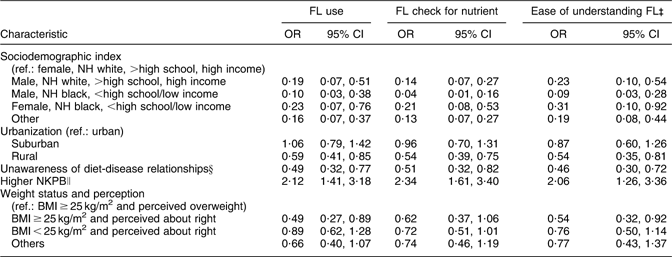
FL, food label; CSFII, Continuing Survey of Food Intakes by Individuals; DHKS, Diet and Health Knowledge Survey; NH, non-Hispanics; ref., referent category; NKPB, nutrition knowledge, perceptions and beliefs.
† All variables, as well as survey year, age, region and intention for dietary change, were included in each model.
‡ Participants were asked whether the information on the FL was easy to understand: ingredients, short phrase, number of calories in a serving, number of calories from fat, number of g/mg of nutrients, % of daily value for nutrients, and description like ‘lean’ or ‘extra lean’ on meats. Participants who thought that this information was ‘very easy’ or ‘somewhat easy’ were assigned to the ‘ease of understanding FL’ group, while those with other responses were assigned to the ‘other’ group.
§ Participants who were aware of diet–disease relationships served as the reference.
∥ Those with total NKPB score <80th percentile served as the reference.
Body weight status and related self-perceptions were associated with FL use. Among participants with BMI ≥ 25 kg/m2, compared with those who perceived themselves overweight, those perceived their weight about right were 51 % less likely to use FL. When compared with participants who had normal weight (BMI < 25 kg/m2) and perceived their weight about right, those who were overweight or obese but perceived weight about right were 45 % less likely to use FL.
Discussion
Based on nationally representative data, we found that FL use among the US general adult population varied by sociodemographic characteristics and nutrition- and health-related psychosocial factors (NHPF) including nutrition knowledge, perceptions and beliefs (NKPB). Participants who were men, black, with lower education or income, or rural residents, and those who were unaware of relationships between diet and disease were less likely to use FL. To our knowledge, the present study is the first one to show that race/ethnicity and NKPB remain associated with FL use in US adults even after SES has been controlled for based on national survey data. More efforts, through nutrition education and making FL easier to use, should be made to promote FL use among at-risk populations. It is important to educate people about the influence of dietary intakes on health risks.
Requirements for most packaged foods to bear FL have been enacted in the USA, Europe and some other countries(Reference Curran16). Mandatory nutrition labeling helps ensure consumers are provided with key nutritional information about foods, to enable them to make informed dietary choices(Reference Lin, Lee and Yen3). The appropriate use of FL allows individuals to assess energy and nutrient content of the foods purchased at the time of decision. Previous studies have suggested a robust association between FL use and some indicators of diet quality, such as high intakes of fruits and vegetables, and low intakes of fat, saturated fat and cholesterol(Reference Lin, Lee and Yen3, Reference Satia, Galanko and Neuhouser5–Reference Neuhouser, Kristal and Patterson8).
Although food labelling has been introduced since 1994 with the aim of combating obesity and diet-related chronic disease in the USA(Reference Variyam1), the rates of FL use among US adults have decreased over the past decade. As shown in ours and previous studies(Reference Satia, Galanko and Neuhouser5, Reference Neuhouser, Kristal and Patterson8), approximately 80 % of US adults reported using FL in 1994–1996, while this figure dropped to approximately 60 % in 2005–2006(Reference Post, Mainous and Diaz9, Reference Ollberding, Wolf and Contento10). We found in 1994–1996 that about half of US adults used FL for health benefits of foods/nutrients (50 %), serving size (51 %), ingredients (61 %), short phrases (61 %) or the nutrition panel (65 %), respectively. The NHANES 2005–2006 data showed that 62 % of Americans reported using the Nutrition Facts panel, 52 % looked at the list of ingredients, 47 % looked at serving size, and 44 % reviewed health claims at least sometimes(Reference Ollberding, Wolf and Contento10). Worthy of note is that the actual use of FL may be lower than what has been found based on Americans’ self-reports in the CSFII and NHANES. Self-reported FL use is common in New Zealand and Australia, but actual use and understanding are limited(Reference Mhurchu and Gorton17). A systemic review shows that reported FL use is high but actual FL use during purchasing may be low(Reference Cowburn and Stockley18).
We found that FL use varied by sex, age, SES, nutrition knowledge and other NHPF. Some of these psychosocial factors were based on social cognitive theory, which has several constructs (e.g. self-efficacy, expectancies, outcome expectations)(Reference Bandura19). Consistent with previous research that women and people with high SES are more likely to report using FL(Reference Lin, Lee and Yen3, Reference Satia, Galanko and Neuhouser5, Reference Neuhouser, Kristal and Patterson8–Reference Ollberding, Wolf and Contento10, Reference Guthrie, Fox and Cleveland20), our study confirmed that the high-risk population for not using FL included black and low-SES groups. A cross-sectional study of 658 African Americans aged 20–70 years in North Carolina showed that FL use was significantly higher among female, older, better educated and obese subjects(Reference Satia, Galanko and Neuhouser5). Women usually do most of household shopping and may therefore be more likely to use FL than men.
We found that Americans with better NKPB were more likely to utilize FL information. FL use was significantly higher among those who acknowledged diet–disease relationships, supporting social cognitive theory(Reference Bandura19). People who are aware of important nutritional information may have dietary concerns and try to use FL to limit their fat consumption and increase fibre consumption. Grunert et al. found that 27 % of UK shoppers looked for nutrition information on FL(Reference Grunert, Wills and Fernandez-Celemin21). FL use was related to UK people's interest in healthy eating, whereas understanding of information on FL was mainly related to nutrition knowledge, which was similar to our findings. Targeted education on outcome expectations such as diet–disease relationships could be effective.
Furthermore, our findings suggest that some of the racial/ethnic differences in FL use were independent of other sociodemographic factors (e.g. income) in US adults. We found that NH white women with high SES were the most likely to check FL, while NH black men with low SES were the least likely to check FL.
We also found that Americans’ body weight status and related perceptions and reported perceived need of diet change were associated with FL use. Among overweight Americans (BMI ≥ 25 kg/m2), compared with those who perceived themselves as overweight, those perceived their weight as about right were 51 % less likely to use FL. Unexpectedly, fewer Americans reporting perceived need of diet change looked at the ‘size of serving’ on the FL. Further research needs to examine whether those who perceive need of change in diet are sensitive to FL information. They and overweight Americans should be targeted to promote FL use.
Whether people understand – or at least believe that they understand – the information on FL will influence FL use. If individuals feel that the FL information is difficult to understand or interpret, the probability of looking for the FL information may be low(Reference Lin, Lee and Yen3). We found that US women, those with higher education level and better NKPB reported that they could easily understand information on FL. In contrast, men, rural residents, people who did not believe in diet–disease relationships and those in other ethnic groups (not white, black or Mexican Americans) were less likely to report that FL were easy to understand. They should be empowered to use FL. Improvements in food labelling can help make the existing point-of-purchase environment more conducive to the selection of healthy choices(Reference Cowburn and Stockley18). Interpretational aids such as verbal descriptors and recommended reference values might help consumers assess the nutrient contribution of specific foods to the overall diet.
It has been suggested that people with chronic diseases generally report better nutrition awareness and FL use than healthy counterparts(Reference Kreuter, Brennan and Scharff7, Reference Lewis, Arheart and LeBlanc22). We therefore excluded participants with main diet-related chronic diseases diagnosed by doctors, to ensure that study participants were relatively healthy without specific diet preferences. Although some studies reported no clear difference in FL use between those with and without chronic diseases(Reference Neuhouser, Kristal and Patterson8, Reference Guthrie, Fox and Cleveland20), Lewis et al. found that persons with chronic diseases checked and used nutritional label information and were more aware of national nutrition recommendations than those participants who did not report having such diseases(Reference Lewis, Arheart and LeBlanc22). Post et al. reported that patients with chronic diseases who were advised by their health professionals to change their eating habits read FL more often than patients who had not been so advised(Reference Post, Mainous and Diaz9). Those reading FL consumed less energy, saturated fat, carbohydrates and sugar, and more fibre, than those who did not(Reference Post, Mainous and Diaz9). Most previous FL studies did not exclude participants with chronic diseases(Reference Lin, Lee and Yen3, Reference Guthrie, Fox and Cleveland20). Our finding that the awareness of diet–disease relationships was associated with FL use suggests that tailored nutrition education may help promote FL use.
Our study has important strengths, including its US nationally representative data, rich data regarding nutrition- and health-related psychosocial behaviours (e.g. NKPB) and the good quality of the 24 h dietary recall data. Our study also has limitations. First, the CSFII collected self-reported weight and height, which are prone to measurement error(Reference Kuczmarski, Kuczmarski and Najjar23, Reference Venn, Thomson and Schmidt24), although some research shows that self-report is valid and it is widely used in epidemiological studies(Reference Freedman, Ron and Ballard-Barbash25). The reliance on self-report for both anthropometrics and perception about weight status is a limitation. Second, other key variables, such as FL use and dietary behaviours, were also based on self-reported information. People with greater nutrition knowledge may be more likely to respond in socially desirable ways to the questions about both nutrition knowledge/beliefs and dietary behaviours and FL use. Third, we could not test causality as cross-sectional data were used. Further, the data were over 10 years old. FL information has changed some since then. However, to our knowledge, this is the only available national survey data set that has provided all of the key specific measures needed in our study, which were not collected in other national surveys including the NHANES.
In summary, we found that approximately 80 % of US adults reported using FL when making food choices, while only a quarter used most of the information on FL. FL use varied by sociodemographic, nutrition- and health-related psychosocial factors including nutrition knowledge, perceptions and beliefs. Body weight status and related self-perceptions were also associated with FL use. Men, rural residents, NH blacks and those with lower SES were less likely to use FL. In general, NH black men with low SES were the least and NH white women with high SES were the most likely to use FL. Better nutrition knowledge, perceptions (including those regarding own overweight status) and beliefs was positively related to FL use. Our findings suggest that nutrition education may help encourage and empower people to use FL and is needed. Messages on FL should be made easily to understand by consumers and targeted to increase perceived benefits and confidence in using them.
Acknowledgements
The study was supported by the National Institutes of Health/National Institute of Diabetes and Digestive and Kidney Diseases (NIH/NIDDK, R01DK81335-01A1). The authors declare no conflict of interest. X.C. and Y.W. contributed to the conceptualization, statistical analysis, literature review, interpretation of results, and write-up of the manuscript. L.J. and J.G. interpreted the results and revised the manuscript. The authors thank Dr May Beydoun for her technical assistance in working on the data sets.
Appendix 1
Food label use (five questions)
A. Now think about food labels. When you buy foods, do you use: the list of ingredients – often, sometimes, rarely, or never?
1 = Often (always)
2 = Sometimes
3 = Rarely
4 = Never
5 = Never seen
8 = Don't know
9 = Not ascertained
B. Now think about food labels. When you buy foods, do you use: the short phrases on the label like ‘low-fat’ or ‘light’ or ‘good source of fiber’ – often, sometimes, rarely, or never?
1 = Often (always)
2 = Sometimes
3 = Rarely
4 = Never
5 = Never seen
8 = Don't know
9 = Not ascertained
C. Now think about food labels. When you buy foods, do you use: the nutrition panel that tells the amount of calories, protein, fat, and such in a serving of the food often, sometimes, rarely, or never?
1 = Often (always)
2 = Sometimes
3 = Rarely
4 = Never
5 = Never seen
8 = Don't know
9 = Not ascertained
D. Now think about food labels. When you buy foods, do you use: the information about the size of a serving – often, sometimes, rarely, or never?
1 = Often (always)
2 = Sometimes
3 = Rarely
4 = Never
5 = Never seen
8 = Don't know
9 = Not ascertained
E. Now think about food labels. When you buy foods, do you use: statements on the label that describe health benefits of nutrients or foods – often, sometimes, rarely, or never?
1 = Often (always)
2 = Sometimes
3 = Rarely
4 = Never
5 = Never seen
8 = Don't know
9 = Not ascertained
Check the diet nutrients/food groups on food label: calories/salt or sodium/total fat/saturated fat/cholesterol/vitamins or minerals/fiber/sugars (eight questions)
A. When you look for nutrition information on the food label, would you say you often, sometimes, rarely, or never look for information about: calories?
1 = Often (always)
2 = Sometimes
3 = Rarely
4 = Never
8 = Don't know
9 = Not ascertained
B. When you look for nutrition information on the food label, would you say you often, sometimes, rarely, or never look for information about: salt or sodium?
1 = Often (always)
2 = Sometimes
3 = Rarely
4 = Never
8 = Don't know
9 = Not ascertained
C. When you look for nutrition information on the food label, would you say you often, sometimes, rarely, or never look for information about: total fat?
1 = Often (always)
2 = Sometimes
3 = Rarely
4 = Never
8 = Don't know
9 = Not ascertained
D. When you look for nutrition information on the food label, would you say you often, sometimes, rarely, or never look for information about: saturated fat?
1 = Often (always)
2 = Sometimes
3 = Rarely
4 = Never
8 = Don't know
9 = Not ascertained
E. When you look for nutrition information on the food label, would you say you often, sometimes, rarely, or never look for information about: cholesterol?
1 = Often (always)
2 = Sometimes
3 = Rarely
4 = Never
8 = Don't know
9 = Not ascertained
F. When you look for nutrition information on the food label, would you say you often, sometimes, rarely, or never look for information about: vitamins or minerals?
1 = Often (always)
2 = Sometimes
3 = Rarely
4 = Never
8 = Don't know
9 = Not ascertained
G. When you look for nutrition information on the food label, would you say you often, sometimes, rarely, or never look for information about: fiber?
1 = Often (always)
2 = Sometimes
3 = Rarely
4 = Never
8 = Don't know
9 = Not ascertained
H. When you look for nutrition information on the food label, would you say you often, sometimes, rarely, or never look for information about: sugars?
1 = Often (always)
2 = Sometimes
3 = Rarely
4 = Never
8 = Don't know
9 = Not ascertained
Ease of understanding food label information about: ingredients (seven questions)
A. Now think about the types of nutrition information on food labels. Do you think the list of ingredients is very easy to understand, somewhat easy, or not too easy to understand?
1 = Very easy
2 = Somewhat easy
3 = Not too easy
4 = Never seen
8 = Don't know
9 = Not ascertained
B. Now think about the types of nutrition information on food labels. Do you think the short phrase like ‘low-fat’ or ‘light’ or ‘good sources of fiber’ easy to understand?
1 = Very easy
2 = Somewhat easy
3 = Not too easy
4 = Never seen
8 = Don't know
9 = Not ascertained
C. Now think about the types of nutrition information on food labels. Do you think the number of calories in a serving is very easy to understand, somewhat easy, or not too easy to understand?
1 = Very easy
2 = Somewhat easy
3 = Not too easy
4 = Never seen
8 = Don't know
9 = Not ascertained
D. Now think about the types of nutrition information on food labels. Do you think the number of calories from fat in a serving is very easy to understand, somewhat easy, or not too easy to understand?
1 = Very easy
2 = Somewhat easy
3 = Not too easy
4 = Never seen
8 = Don't know
9 = Not ascertained
E. Now think about the types of nutrition information on food labels. Do you think the number of grams or milligrams of nutrients like fat or sodium in a serving is very easy to understand, somewhat easy, or not too easy to understand?
1 = Very easy
2 = Somewhat easy
3 = Not too easy
4 = Never seen
8 = Don't know
9 = Not ascertained
F. Now think about the types of nutrition information on food labels. Do you think the percent of the daily value for each nutrient is very easy to understand, somewhat easy, or not too easy to understand?
1 = Very easy
2 = Somewhat easy
3 = Not too easy
4 = Never seen
8 = Don't know
9 = Not ascertained
G. Now think about the types of nutrition information on food labels. Do you think a description like ‘lean’ or ‘extra lean’ on meats is very easy to understand, somewhat easy, or not too easy to understand?
1 = Very easy
2 = Somewhat easy
3 = Not too easy
4 = Never seen
8 = Don't know
9 = Not ascertained
Appendix 2
Nutrition knowledge, perceptions and beliefs (NKPB: eleven questions)
A. To you personally, is it very important, somewhat important, not too important, or not at all important to use salt or sodium only in moderation?
1 = Not at all important
2 = Not too important
3 = Somewhat important
4 = Very important
8 = Don't know
9 = Not ascertained
B. To you personally, is it very important, somewhat important, not too important, or not at all important to choose a diet low in saturated fat?
1 = Not at all important
2 = Not too important
3 = Somewhat important
4 = Very important
8 = Don't know
9 = Not ascertained
C. To you personally, is it very important, somewhat important, not too important, or not at all important to choose a diet with plenty of fruits and vegetables?
1 = Not at all important
2 = Not too important
3 = Somewhat important
4 = Very important
8 = Don't know
9 = Not ascertained
D. To you personally, is it very important, somewhat important, not too important, or not at all important to use sugars only in moderation?
1 = Not at all important
2 = Not too important
3 = Somewhat important
4 = Very important
8 = Don't know
9 = Not ascertained
E. To you personally, is it very important, somewhat important, not too important, or not at all important to choose a diet with adequate fiber?
1 = Not at all important
2 = Not too important
3 = Somewhat important
4 = Very important
8 = Don't know
9 = Not ascertained
F. To you personally, is it very important, somewhat important, not too important, or not at all important to eat a variety of foods?
1 = Not at all important
2 = Not too important
3 = Somewhat important
4 = Very important
8 = Don't know
9 = Not ascertained
G. To you personally, is it very important, somewhat important, not too important, or not at all important to maintain a healthy weight?
1 = Not at all important
2 = Not too important
3 = Somewhat important
4 = Very important
8 = Don't know
9 = Not ascertained
H. To you personally, is it very important, somewhat important, not too important, or not at all important to choose a diet low in fat?
1 = Not at all important
2 = Not too important
3 = Somewhat important
4 = Very important
8 = Don't know
9 = Not ascertained
I. To you personally, is it very important, somewhat important, not too important, or not at all important to choose a diet low in cholesterol?
1 = Not at all important
2 = Not too important
3 = Somewhat important
4 = Very important
8 = Don't know
9 = Not ascertained
J. To you personally, is it very important, somewhat important, not too important, or not at all important to choose a diet with plenty of breads, cereals, rice, and pasta?
1 = Not at all important
2 = Not too important
3 = Somewhat important
4 = Very important
8 = Don't know
9 = Not ascertained
K. To you personally, is it very important, somewhat important, not too important, or not at all important to eat at least two servings of dairy products daily?
1 = Not at all important
2 = Not too important
3 = Somewhat important
4 = Very important
8 = Don't know
9 = Not ascertained



