


Racial and ethnic minority populations have been acutely affected by the epidemic of overweight and obesity in the USA. Hispanics, along with Black Americans and Native Americans, face a higher risk of obesity than Caucasians(Reference Flegal, Carroll and Ogden1). Multiple studies have shown that first-generation immigrants have a smaller body size compared with second- and third-generation immigrants and that the number of years since immigration is correlated with increased body size(Reference Popkin and Udry2–Reference Park, Neckerman and Quinn7). These studies have been interpreted to suggest that, over time, immigrants adapt to the ‘obesogenic’ environment of the USA, which promotes dietary and physical activity patterns favouring a positive energy balance, and thus gain weight(Reference Kaplan, Huguet and Newsom3–Reference Lauderdale and Rathouz6). Thus, acculturation, conceptualized as the process by which immigrants adopt the cultural norms of the host society (in this case dietary and physical activity patterns), has been identified as an important topic for studying body size among Hispanics(Reference Gordon-Larsen, Mullan Harris and Ward4, Reference Sundquist and Winkleby8, Reference Himmelgreen, Perez-Escamilla and Martinez9).
There is a growing volume of literature showing that, among Hispanics, increasing generation since immigration, duration of residence in the USA and other measures of increased acculturation are associated with diets that are lower in rice, beans and fruit and higher in sugar and sugar-sweetened drinks(Reference Ayala, Baquero and Klinger10). Much of the research has focused on individual-level measures of acculturation, such as the respondent's use of English or years of residence in the USA. However, a few studies have shown that residence in primarily immigrant and co-ethnic neighbourhoods, areas likely to have groceries and restaurants selling familiar home country foods(Reference Lee11), is linked to healthier diets(Reference Osypuk, Diez Roux and Hadley12–Reference Dubowitz, Subramanian and Acevedo-Garcia14). Although presented as an indicator of neighbourhood-level acculturation status, foreign-born composition is, conceptually, a less direct measure of neighbourhood-level immigrant acculturation than are measures of linguistic isolation(Reference Park, Neckerman and Quinn7). Linguistic isolation is a term used by the census to characterize households in which no person aged ≥14 years speaks English ‘very well’ (http://www.doleta.gov/reports/CensusData/Glossary.cfm). For example, neighbourhoods could have similar proportions of immigrant residents, but the neighbourhoods could differ in levels of linguistic isolation and thus the extent to which they are isolated from obesogenic dietary norms and practices prevalent in the USA. Neighbourhood linguistic isolation has been found to be a stronger predictor of BMI among Hispanics than neighbourhood foreign-born composition(Reference Park, Neckerman and Quinn7). In addition, the association between nativity and BMI was weaker among Hispanics living in neighbourhoods with higher levels of linguistic isolation than among those living in neighbourhoods with lower levels of linguistic isolation(Reference Park, Neckerman and Quinn7).
To date, the vast majority of research on immigrant acculturation and diet has focused on consumption of individual or groups of nutrients, such as fats and sugars, or on consumption of food groups, such as fruits and vegetables(Reference Ayala, Baquero and Klinger10). Referred to as ‘nutritionism’, this focus on nutrients or food items high in specific nutrients as the predominant outcome of interest has been critiqued as being overly reductionist, failing to account for how foods are eaten in combination as a part of meals and cuisines(Reference Scrinis15–Reference Hu18). Since nutrients and food items are commonly consumed as part of a dietary pattern or preference, analyses of associations between indicators of acculturation and single nutrients or food items may be confounded by the effects of acculturation on overall dietary preferences. Inter-individual variation in dietary patterns, as opposed to variation in single nutrients, may be a better indicator of the effects of individual- and neighbourhood-level acculturation on diet(Reference Lin, Bermudez and Tucker19).
Using data from FFQ, we sought to identify major dietary patterns among Hispanic women and to evaluate the extent of individual women's adherence to those patterns. We then examined the association of adherence to the dietary patterns with individual- and neighbourhood-level acculturation and the neighbourhood retail food environment.
Experimental methods
Sample
We analysed sociodemographic and FFQ data for the Hispanic female guardians (typically the mother; alternatively, a grandmother) of children participating in the Head Start Program who were enrolled in a study of risk factors for asthma. The asthma study has been described extensively elsewhere. Head Start, a federal programme that focuses on the healthy development of children between the ages of 3 and 5 years, provides education, health, nutrition and other services to low-income children and their families. In brief, 1026 children were recruited from fifty Head Start programmes conducted in northern Manhattan, Bronx and Brooklyn; their guardians responded to a questionnaire on asthma symptoms and risk factors(Reference Jacobson, Goldstein and Canfield20). Of these, 547 children were enrolled into a substudy involving a home visit during which further questionnaire data were collected and environmental samples were taken(Reference Rundle, Goldstein and Mellins21). Recruitment and data collection occurred between November 2003 and August 2006. The Columbia Presbyterian Medical Center Institutional Review Board approved the study protocol and all participants provided written informed consent.
Individual-level data
The parents of all the recruited children took part in an extensive questionnaire-based interview and provided sociodemographic information. Data from this questionnaire that were assessed as potential individual-level predictors of diet included Hispanic ethnicity (Mexican, Puerto Rican, Dominican or other/mixed), age, nativity, language used at home, whether the respondent currently attended school, years of schooling completed and whether the respondent worked outside the home. As part of the home visit protocol that the subset of the families participated in, the children's guardians were asked to complete the Block ‘Study of Women's Health Across the Nation’ (SWAN) FFQ, the Spanish language version of which includes the 103 core SWAN FFQ items, plus nine additional questions on food items common to Hispanic cuisine(Reference Block, Wakimoto and Jensen22).
Neighbourhood-level data
Home addresses were geocoded to the appropriate tax lot using Geosupport software (City of New York, Department of City Planning, New York City, NY, USA), and data on neighbourhood food and social environment characteristics were collected using aerial weighting methods for 0·5 km radial buffers around each respondent's home. US Census 2000 Summary File 3 data were used to measure neighbourhood sociodemographic characteristics, including: percentage of the population below the federal poverty line, referred to here as ‘per cent poverty’; percentage of the population reporting Hispanic ethnicity, referred to here as ‘per cent Hispanic’; and percentage of Spanish-speaking households that were linguistically isolated (defined by the Census Bureau as a household in which no person aged ≥14 years speaks English only or speaks a non-English language and speaks English ‘very well’) and referred to here as ‘per cent linguistically isolated’. Data on the locations of supermarkets, grocery stores, produce markets, convenience stores, bodegas, meat stores, fish stores, candy and nut stores, bakeries, fast-food restaurants and pizza parlours in 2005 were obtained from a commercial database purchased from Dun and Bradstreet(Reference Janevic, Borrell and Savitz23, Reference Rundle, Neckerman and Freeman24). Locations of farmers’ markets in 2006 were obtained from New York City Coalition Against Hunger, the Council on the Environment of New York City and the Farmer's Market Federation of New York.
Statistical analyses
A modified version of the principal component analysis (PCA) approach described by Hu et al.(Reference Hu, Rimm and Smith-Warner17) for the Health Professionals Follow-up Study was used to identify dietary patterns with the SWAN FFQ data. Hu et al. grouped food items from the Willett FFQ into forty food groups and totalled the servings of each food per day in each group. The food groups used by Hu et al. were used along with the SWAN FFQ with a few modifications. Because the SWAN FFQ includes more soya-based items compared with the Willett FFQ, an additional food group for soya-based products was created. In addition, because participants reported very few servings of alcohol on the FFQ, the separate beer, wine and hard liquor groups used by Hu et al. were combined into one alcoholic beverage group.
The few previously conducted studies that have used PCA with an FFQ designed for Hispanics provide little guidance on how to group Hispanic food items(Reference Nettleton, Steffen and Mayer-Davis25, Reference Tseng, DeVellis and Maurer26). We tried two approaches and compared the dietary patterns they identified. Our first approach was to distribute the Hispanic food items into the food groups devised by Hu et al. on the basis of culinary usage (e.g. we placed flour tortillas in the refined grains group that includes white breads, muffins and bagels). Our second approach was to place all the Hispanic food items in their own food group. For each approach, we used PCA with orthogonal varimax rotation, retaining components that had eigenvalue >1 and were interpretable. A factor score was calculated as a measure of adherence to each component using the observed food group servings and the component loading scores(Reference Hu, Rimm and Smith-Warner17).
As in our past studies, because of the large number of types of retail outlets considered, retail food outlets were grouped into categories considered to be ‘BMI healthy’ (supermarkets, produce markets, farmers markets and health food stores), ‘BMI unhealthy’ (fast food, pizza, convenience stores, bodegas, meat markets, candy and nut stores) and ‘BMI neutral’ (restaurants excluding fast food and pizzerias, small grocery stores, fish markets and speciality stores)(Reference Janevic, Borrell and Savitz23, Reference Rundle, Neckerman and Freeman24). The identification and classification of retail outlets and the rationale for the grouping of outlets have been explained previously in an extensive manner. For the present analyses, we calculate the density (outlets per square kilometre of land area in the 0·5 km radial buffer) of BMI-healthy, BMI-unhealthy and BMI-neutral retail outlets. The density of BMI-healthy food outlets has been found to be inversely associated with maternal obesity and BMI in adults(Reference Janevic, Borrell and Savitz23, Reference Rundle, Neckerman and Freeman24). In addition, because of the interest among the policy makers of New York City (NYC) in the role of these particular food outlets, separate analyses examined whether the presence or density of fast-food restaurants, pizza parlours, supermarkets and bodegas in the participant's neighbourhood predicted adherence to the dietary patterns.
Generalized estimating equation (GEE) analyses were used to evaluate the association between adherence to the identified dietary patterns and individual- and neighbourhood-level sociodemographic characteristics. Our GEE models used the respondent's community district to designate larger neighbourhood areas in the calculation of robust standard errors(Reference Lovasi, Quinn and Rauh27). Community districts represent named neighbourhoods in NYC such as Central Harlem or Washington Heights in which local community boards have influence over development, zoning and licensing. Analyses began with consideration of the individual-level sociodemographic characteristics; neighbourhood-level variables were subsequently added to the model. The individual-level variables, Hispanic ethnicity, USA or foreign place of birth, and use of English at home, proved to be highly inter-correlated and all three variables could not be entered into models simultaneously. Of the three variables, Hispanic ethnicity and language used at home proved to be the least inter-correlated, and analyses focused on these variables. Neighbourhood per cent Hispanic and per cent linguistically isolated were strongly correlated (r = 0·55); because linguistic isolation had greater face validity as a measure of acculturation status, analyses concentrated on this variable as a measure of neighbourhood-level acculturation status. Since neighbourhood-level socio-economic status may have an effect on diet above and beyond being just a proxy of individual-level socio-economic status and may also correlate with neighbourhood immigrant composition, we included neighbourhood per cent poverty in the model as a potential confounder. The neighbourhood retail food environment variables were added to the statistical model to evaluate whether differences in the density of retail outlets explained differences in diet by individual- and neighbourhood-level sociodemographic characteristics.
Results
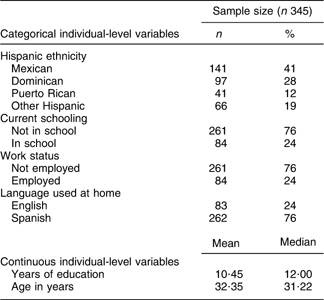
From the 547 families who took part in the home visit portion of the study, a total of 355 female guardians, who self-reported their ethnicity as Hispanic, provided FFQ data. Of them, 345 provided the complete sociodemographic data required for the present analyses. Table 1 provides descriptive statistics for the study population.
Descriptive statistics of the full study population
The PCA of the FFQ data with Hispanic food items distributed across food groups identified two major components. The first component loaded high on vegetables, legumes, potatoes and fish and seafood and explained 17·28 % of the variance in the data. This component was named the ‘Healthy diet’. The second component loaded high on processed meat, high-energy drinks, fries, poultry, pizza and red meat and explained 9·15 % of the variance in the data. This component was named the ‘Energy-dense diet’. Table 2 shows the top ten loading items for the healthy diet and the energy-dense diet. The two approaches used to group the Hispanic food items in the FFQ produced almost identical results, a 99 % correlation for adherence to the healthy diet and a 94 % correlation for adherence to the energy-dense diet. We therefore focused on the results from the PCA based on distributing the Hispanic food items among the existing food groups.
Principal components identified in the FFQ data
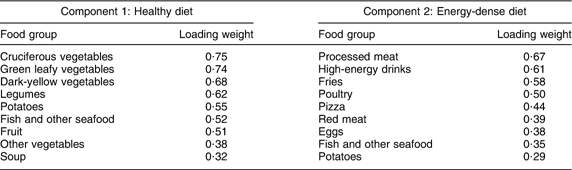
Table 3 shows the results of GEE analyses of predictors of adherence to the healthy dietary pattern. Model 1 assessed associations between individual-level sociodemographic characteristics and adherence to the healthy dietary pattern. Compared with those reporting a Mexican ethnicity, those reporting a Puerto Rican ethnicity had lower adherence to the healthy dietary pattern. Adherence was also associated with being in school, increasing age and total estimated energy consumption, but was not associated with use of English at home. Model 2 included variables for individual and neighbourhood sociodemographic characteristics. Adherence to the healthy dietary pattern was significantly negatively associated with increasing neighbourhood poverty and significantly positively associated with linguistic isolation. Model 3 included all sociodemographic characteristics as well as characteristics of the neighbourhood food environment. As the densities of the three types of food outlets (BMI healthy, unhealthy and neutral) are strongly correlated (Spearman’s rank correlations between 0·60 and 0·82), initial analyses considered each of the three types of food outlets as predictors of adherence to the healthy dietary pattern separately and then a single model was fitted to consider all three types of outlets concurrently. The results were consistent regardless of modelling approach: the densities of BMI-healthy, BMI-unhealthy and BMI-neutral retail food outlets were not associated with adherence to the healthy dietary pattern, and inclusion of these variables in the model did not alter the associations between neighbourhood sociodemographic characteristics and adherence. In separate analyses (data not shown) considering fast-food restaurants, pizzerias, supermarkets and bodegas, the only association observed for these specific food outlets was an inverse association between the density of fast-food restaurants and adherence to the healthy diet (β = −0·03, P = 0·02). In these analyses, poverty rate and the proportion of Spanish-speaking households that were linguistically isolated remained significant predictors of adherence to the healthy diet.
Predictors of adherence to the healthy dietary pattern
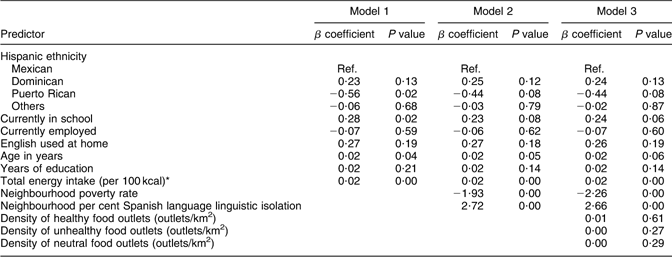
Ref., reference category.
*1 kcal = 4·184 kJ.
Table 4 shows the results of GEE analyses of predictors of adherence to the energy-dense dietary pattern. Results for model 1 show that, compared with respondents who reported Mexican ethnicity, those reporting Puerto Rican ethnicity were more adherent to the energy-dense dietary pattern. Adherence was also associated with employment outside the home and with total energy consumption and inversely associated with increasing age. Model 2 showed that adherence to the energy-dense dietary pattern was significantly positively associated with increasing neighbourhood poverty. Model 3 includes additional variables for the characteristics of the neighbourhood food environment. Of the food environment variables, adherence to the energy-dense dietary pattern was positively associated with the density of BMI-neutral retail outlets. A large component of the BMI-neutral retail outlet category consists of restaurants other than fast food or pizzerias, and the association between adherence to the energy-dense dietary pattern and the density of BMI-neutral retail outlets was driven almost entirely by the association between adherence to the energy-dense dietary pattern and the density of restaurants other than fast food or pizzerias (β = 0·006 per restaurant/km2, P = 0·03). Density of other types of specific retail food outlets was not associated with adherence to the energy-dense dietary pattern. A comparison between models 2 and 3 shows that the inverse association between linguistic isolation and adherence to the energy-dense dietary pattern increases and reaches borderline statistical significance when the food environment variables are included in analyses.
Predictors of adherence to the energy-dense dietary pattern
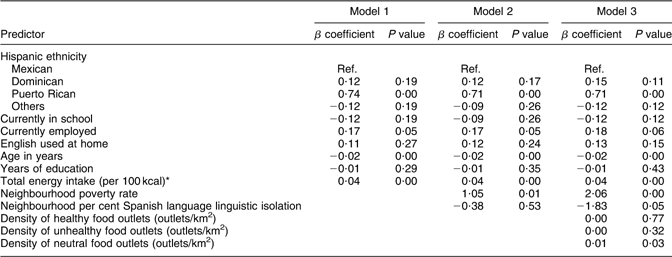
Ref., reference category.
*1 kcal = 4·184 kJ.
Discussion
In the present population of low-income Hispanic women, two major dietary patterns were identified: one that could be construed as being healthy, high in vegetables, fruit and legumes (Table 2); and a second that could be construed as being less healthy, comprised of energy-dense foods (Table 2). In our study, adherence to the healthy diet was strongly predicted by neighbourhood linguistic isolation, even after control for neighbourhood poverty. The association with neighbourhood linguistic isolation could not be accounted for by differences in the neighbourhood retail food environment. Adherence to the energy-dense dietary pattern was initially modestly inversely, but not significantly, associated with neighbourhood linguistic isolation, an association that increased after adjustment for measures of the neighbourhood retail food environment.
These results are consistent with the hypothesis that living in immigrant enclaves is associated with healthy dietary patterns among Hispanic immigrants(Reference Osypuk, Diez Roux and Hadley12, Reference Dubowitz, Subramanian and Acevedo-Garcia14). Past research among Hispanics has found associations between measures of acculturation and diet, but this work has focused mainly on specific nutrients or consumption of specific food groups such as fruits and vegetables, and individual-level measures of acculturation such as the participant's use of English. However, nutrients and food items are not consumed in isolation; analyses that focus on isolated nutrients or food groups as the measure of diet may find associations between indicators of acculturation and diet that are not observed when the overall dietary pattern is considered as the outcome of interest(Reference Hu, Rimm and Smith-Warner17). For instance, past studies among immigrants have found associations between speaking English and the consumption of food items, but we did not observe an association between the participant's use of English and overall dietary pattern(Reference Ayala, Baquero and Klinger10). In our analysis, neighbourhood-level acculturation is a major correlate of dietary patterns, appearing to promote one pattern of consumption while protecting a second pattern.
The nine additional food items included in the SWAN FFQ to reflect Hispanic cuisine did not, as a group, load highly on either the identified healthy or energy-dense dietary patterns. Since these ‘Hispanic’ FFQ items include not only foods that could be considered healthy (e.g. cassava or cooked green peppers) but also foods that could be considered energy dense (e.g. condensed milk or flan), the failure of this grouping to load highly on either pattern is not surprising. Thus, neighbourhood linguistic isolation does not appear to promote consumption of the ‘Hispanic’ food items added to the 103-item core SWAN FFQ but rather the consumption of an overall dietary pattern high in vegetables, legumes, fish, seafood and fruit, items that are part of the core FFQ. If, as literature suggests, the rise in obesity among immigrants results, at least in part, from the loss of home country diets and acquisition of obesogenic American diets, interventions that facilitate the maintenance of home country diets may make important contributions to obesity prevention(Reference Ayala, Baquero and Klinger10, Reference Pham, Harrison and Kagawa-Singer28, Reference Harrison, Kagawa-Singer and Foerster29). Our results suggest, however, that such interventions should focus on the maintenance of patterns of home country dietary practices that are healthy (e.g. patterns that maintain higher levels of consumption of fruit, rice and legumes and lower sugar consumption) rather than on the consumption of specific food items or even types of cuisines considered to be ‘traditional’(Reference Ayala, Baquero and Klinger10). Lee et al.(Reference Lee, Popkin and Kim30) suggest that, in the face of increasing market penetration of processed foods and US chain restaurants in Korea, a multi-pronged national campaign to promote retention of the vegetable-centred traditional Korean diet resulted in significant positive health effects. A similar approach that acknowledges the healthy dietary patterns and their practices that many immigrants bring from their countries of origin, and encouragement of the retention of the best elements of those practices, an approach Yeh et al. refer to as ‘selective acculturation’(Reference Harrison, Kagawa-Singer and Foerster29, Reference McArthur, Anguiano and Nocetti31, Reference Yeh, Viladrich and Bruning32), may be of use among immigrant groups in the USA.
In these analyses, our construct of ‘BMI-healthy’ retail outlets, which has previously been shown to predict lower BMI in adults and lower risk of maternal obesity(Reference Janevic, Borrell and Savitz23, Reference Rundle, Neckerman and Freeman24), did not predict adherence to either of the identified dietary patterns. Whereas adherence to the healthy dietary pattern might be expected to be associated with lower energy intake and the energy-dense dietary pattern to be associated with higher energy intake, higher energy intake was positively associated with higher adherence to both dietary patterns. Since our previous research has found an association between the density of BMI-healthy outlets and lower BMI, we considered that control for energy intake in models that include food environment variables might represent over-adjustment for a potential intervening variable. However, the results for the food environment variables were not materially different in analyses that did not control for energy intake. The only association between our previously defined food environment measures and diet was between a higher density of BMI-neutral outlets and higher adherence to the energy-dense dietary pattern, an association primarily driven by the density of restaurants other than fast food or pizza. It is likely that an abundance of restaurants is linked to higher consumption of restaurant meals and exposure to non-home country cuisines and higher levels of acculturation. In addition, meals consumed outside the home are less healthy than meals prepared at home(Reference Guthrie, Lin and Frazao33, Reference Orfanos, Naska and Trichopoulos34). In the analyses examining specific retail outlets, the only association observed was between higher density of fast-food restaurants and lower adherence to the healthy dietary pattern. Although prior work has not found strong links between the presence of fast-food outlets and diet or obesity, it is possible that in this population an abundance of fast-food restaurants is linked to more meals being consumed in these restaurants(Reference Rundle, Neckerman and Freeman24, Reference Burdette and Whitaker35–Reference Liu, Wilson and Qi37). Such restaurants are not major sources of the vegetables, legumes and fruit associated with the healthy dietary pattern. Although there were a few associations between the dietary pattern data and aspects of the retail food environment, the food environment measures did not explain the association between neighbourhood Spanish language linguistic isolation and adherence to the healthy dietary pattern.
In conclusion, these analyses suggest that measures of neighbourhood-level immigrant acculturation may predict differences in dietary patterns among Hispanic women that cannot be explained by variation in the neighbourhood retail food environment. The present study contributes to a small but growing literature that considers how neighbourhood contexts may moderate the influence of individual ethnicity or acculturation on health behaviour. Strengths of the study include the representation of several Hispanic ethnicities in the study sample, the use of objective measures of the food environment and the use of dietary pattern analysis to characterize the food intake of participants. The primary limitation is the use of a sample that includes only women. Interventions and nutritional counselling that focus on preserving and promoting the home country diets of immigrants may be effective in preventing the weight gain that is commonly seen among immigrants with longer duration of residence in the USA and among successive generations of immigrants.
Acknowledgements
The research was funded by grants from the National Institutes of Health (R01ES014229 and R01HL068236). The authors have no conflict of interest to declare. Y.P. conceptualized the research questions, directed the analyses and drafted the manuscript; K.N. helped design the neighbourhood health effects study and co-authored the manuscript; J.Q. developed the Geographic Information System measures of neighbourhood characteristics; C.W. helped design the neighbourhood health effects study, developed the statistical analytical plan and co-authored the manuscript; J.J. designed the asthma study and oversaw participant recruitment/data collection; A.R. designed the neighbourhood effects study, conducted the statistical analyses and co-authored the manuscript.



