


The pandemic of obesity in the Western world has been attributed to the lack of physical activity and availability of highly palatable, easily digestible and energy-dense food. Palatability is based on a high content of lipids and simple sugars. However, the overconsumption of lipids and simple sugars is associated with the exaggeration of postprandial blood glucose and lipid levels( Reference O'Keefe, Gheewala and O'Keefe 1 ). The protracted elevations of blood metabolites are the signs of postprandial dysmetabolism associated with so-called postprandial inflammation( Reference O'Keefe, Gheewala and O'Keefe 1 – Reference Margioris 3 ). Postprandial inflammation is manifested by increased plasma levels of inflammatory cytokines and leucocyte activation( Reference Hansen, Sickelmann and Pietrowsky 4 , Reference Burdge and Calder 5 ), although the precise contribution of blood monocytes and lymphocytes to these pro-inflammatory changes remains unknown. While in healthy people, postprandial inflammation is transient, it is prolonged in obese people and in subjects with type 2 diabetes( Reference Calder, Ahluwalia and Brouns 2 , Reference Margioris 3 , Reference Patel, Ghanim and Ravishankar 6 ). Thus, prolonged postprandial inflammation has been suggested to promote insulin resistance and atherosclerosis. The exact molecular trigger of postprandial inflammation is not fully elucidated yet. Nevertheless, it has been shown previously that exposure of cells to saturated lipids and a high concentration of glucose may cause endoplasmic reticulum stress (ERS), as documented by the increased mRNA levels of several ERS markers or by the increased activity of an ERS-responsive LacZ reporter system( Reference Hotamisligil 7 – Reference Sage, Holtby-Ottenhof and Shi 9 ). ERS leads to the activation of pathways that primarily decrease the burden of endoplasmic reticulum or eliminate the affected cell. Meanwhile, however, it leads to the stimulation of classic inflammatory regulatory molecules such as NF-κB and Jun N-terminal kinase( Reference Zhang and Kaufman 10 ). Thus, postprandial inflammation could be triggered by ERS. Notably, ERS-induced inflammation may be alleviated by chemical chaperones such as bile acids( Reference Engin and Hotamisligil 11 ). One such chemical chaperone, ursodeoxycholic acid (UDCA), currently used therapeutically for the treatment of cholestasis, has been shown to prevent chemically induced ERS in vitro ( Reference Poupon 12 , Reference Berger and Haller 13 ). Given these facts, we analysed inflammation induced by a single high-fat meal (HFM) in two subpopulations of peripheral blood mononuclear cells (PBMC) representing cells of innate and adaptive immunity, and tested whether this HFM-induced inflammation is associated with ERS. Furthermore, we investigated whether the inflammatory or ERS response may be modified or prevented by the non-toxic chemical chaperone UDCA.
Experimental methods
Subjects and study design
A total of ten healthy lean male subjects were recruited to a randomised, blind, cross-over trial consisting of two 1 d studies, separated by at least 1 week (when the subjects followed their habitual diet and level of exercise). Exclusion criteria were as follows: weight changes of >3 kg within the 3 months before the start of the study; participation in other trials; hyperbilirubinaemia; smoking; alcohol or drug abuse. The characteristics of the subjects are provided in Table 1. Subjects were given 10 mg/kg of placebo (lactose) or UDCA (Ursosan; PRO.MED.CS) in gelatin capsules with the last evening meal (20.00 hours) before the experimental day. Upon admission (08.00 hours), a catheter was placed in the antecubital vein. After baseline blood sampling, subjects were given 15 mg/kg of placebo or Ursosan. Within 15 min, they consumed a high-energy, HFM consisting of a breakfast sandwich with pork meat and egg omelette, French fries, ketchup, Nutella spread, croissant, ice tea (McDonalds; 6151 kJ; 32·8 % carbohydrates, 47·4 % lipids and 11·3 % proteins). After the meal was consumed, blood was drawn each hour up to the 4th hour. During the intervention, subjects had free access to drinking-water. The present study was conducted according to the guidelines laid down in the Declaration of Helsinki, and all procedures involving human subjects were approved by the ethical committee of the Third Faculty of Medicine of Charles University in Prague, Czech Republic. Written informed consent was obtained from all subjects before the study.
Characteristics of the subjects (Mean values with their standard errors, n 10)

HOMA-IR, homeostasis model assessment of the insulin resistance index.
Determination of plasma levels of biochemical parameters
Plasma glucose levels were determined using the glucose oxidase technique (Beckman Instruments, Inc.). Plasma insulin level was measured using an Immunotech Insulin Irma kit (Immunotech). Homeostasis model assessment of the insulin resistance (HOMA-IR) index was calculated as follows:
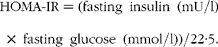 $$\begin{eqnarray} HOMA\hyphen IR = (fasting\ insulin\ (mU/l)\times \ fasting\ glucose\ (mmol/l))/22\cdot 5. \end{eqnarray}$$
Plasma levels of glycerol, NEFA and TAG were measured by colorimetric enzymatic assays using kits from Randox.
Flow cytometry analysis
To determine the absolute numbers of cells in the blood, TruCOUNT tubes containing defined numbers of beads detectable by flow cytometry were used according to the manufacturer's protocol (BD Biosciences). Subpopulations of blood cells representing lymphocytes, granulocytes and monocytes were analysed according to their size and granularity. To detect specific surface antigens, whole-blood samples were stained with fluorescence-labelled monoclonal antibodies (fluorescein isocyanate-conjugated antibodies: CD4, CD14, CD16 and CD36; phycoerythrin-conjugated antibodies: CD3, CD11c, CD14, Toll-like receptor (TLR)2 and TLR4; allophycocyanin-conjugated antibodies: CD8 and CD56) or the appropriate isotype controls (BD Biosciences) for 30 min at room temperature. After cell staining, erythrocytes were lysed by erythrocyte lysis buffer for 15 min at room temperature. The cells were then washed with PBS and analysed on a FACSCalibur flow cytometer and CellQuest Pro Software (BD Biosciences). The number of immune cells in the analysed populations was expressed as a percentage of gated events or the absolute numbers calculated from data obtained by TruCOUNT analysis. Background was set up to 5 % of positive cells of the isotype control.
Isolation of peripheral blood mononuclear cells and CD14+ cells
PBMC were isolated by gradient centrifugation. Briefly, 9 ml of uncoagulated blood were diluted in PBS to 16 ml and applied onto Leucosep tubes (Greiner Bio-One) filled with 3 ml of Histopaque-1077 separation medium (Sigma-Aldrich). After centrifugation for 15 min at 800 g , plasma was discarded and PBMC located above the frit were transferred to a tube containing endothelial cell basal medium (PromoCell). The cells were washed three times, diluted in isolation buffer (PBS supplemented with 0·1 % bovine serum albumin and 2 mm-EDTA, pH 7·4) and counted. Up to 10 million cells were mixed with 25 μl CD14 Dynabeads (Invitrogen) and incubated on a rotator for 20 min at 4°C, and then CD14+ PBMC were separated with a magnet and lysed in RLT (Qiagen). CD14− PBMC were collected by centrifugation and lysed in RLT. Both fractions of PBMC were then used for RNA isolation. Separation efficiency was confirmed by both fluorescence-activated cell sorting and quantitative RT-PCR analysis (data not shown).
Gene expression analysis
Total RNA was isolated using a miRNeasy Mini Kit (Qiagen). Genomic DNA was removed by DNase I treatment (Invitrogen). Complementary DNA was obtained by reverse transcription (High-Capacity cDNA Reverse Transcription Kit; Applied Biosystems) of 300 or 600 ng of total RNA. Complementary DNA equivalent to 5 ng of RNA was used for real-time PCR analysis using the Gene Expression Master Mix and Gene Expression Assay for heat shock 70 kDa protein 5 (glucose-regulated protein, 78 kDa) (HSPA5) (Hs99999174_m1), activating transcription factor 4 (ATF4) (Hs00909569_g1), ATF3 (Hs00231069_m1), ER degradation enhancer, mannosidase alpha-like 1 (EDEM1) (Hs00976004_m1), DnaJ (Hsp40) homolog, subfamily C, member 3 (DNAJC3) (Hs00534483_m1), regulated on activation, normal T-cell expressed and secreted (RANTES; Hs00174575_m1), IL-1β (Hs01555410_m1), IL-8 (Hs00174103_m1), monocyte chemoattractant protein 1 (MCP1; Hs00234140_m1), PPARα (Hs00947539_m1), PPARγ (Hs01115513_m1), TLR2 (Hs00152932_m1) and TLR4 (Hs01060206_m1) (Applied Biosystems). TNF-α, X-box binding protein 1 (XBP1) total and XBP1 spliced (XBP1s) were detected by specific primers (TNF-α: forward 5′-TCTCGAACCCCGAGTGACA-3′ and reverse 5′-GGCCCGGCGGTTCA-3′; XBP1 total: forward 5′-CGCTGAGGAGGAAACTGAA-3′ and reverse 5′-CACTTGCTGTTCCAGCTCACTCAT-3′; XBP1s: forward 5′-GAGTCCGCAGCAGGTGCA-3′ and reverse 5′-ACTGGGTCCAAGTTGTCCAG-3′) using a SYBR Green technology (Power SYBR® Green Master Mix; Applied Biosystems). The microRNA (miRNA) were transcribed by a miScript II RT kit (Qiagen) without prior DNase I treatment. Complementary DNA equivalent to 1 ng of RNA was used for real-time PCR analysis using the miScript SYBR Green PCR Kit and miScript Primer Assay for miR146a and miR181a (Hs_miR-146a*_1 and Hs_miR-181a*_1; Qiagen). All samples were run in duplicate on a 7500 Fast ABI PRISM instrument (Applied Biosystems). Gene expression of target genes was normalised to the expression of ribosomal protein S13 (RPS13) (mRNA, Hs01011487_g1) or RNA, U6 small nuclear 2 (RNU6-2) (miRNA, Hs_RNU6-2_1) (Qiagen), and expressed as fold changes calculated using the ΔΔC t method.
Plasma cytokine analysis
Plasma levels of leptin and adiponectin were measured by ELISA (DuoSet; R&D Systems), with a limit of detection of 62·5 pg/ml. Plasma TNF-α, IL-6, IL-1β and IL-8 levels were measured by the MILLIPLEX MAP Human High Sensitivity Cytokine Panel (Merck), with a limit of detection of 0·13 pg/ml.
Statistical analyses
Statistical analyses were performed using GraphPad Prism 6 and SPSS 12.0 for Windows (SPSS, Inc.). Data of plasma metabolites, gene expression (ΔC t) and flow cytometry-derived variables were log transformed, and normality of the data was assessed by the Shapiro–Wilk normality test. The effects of the HFM in the placebo and UDCA treatments were tested using the one-way and two-way ANOVA with Bonferroni post hoc analysis. Correlations among the relative mRNA levels were analysed using Spearman's correlation. Data are presented as means with their standard errors. Differences at the level of P< 0·05 were considered to be statistically significant.
Results
Postprandial changes in plasma metabolites
Evolution of postprandial plasma levels of glycerol, NEFA, TAG, glucose and insulin in response to the HFM challenge is shown in Fig. 1. NEFA levels declined after the consumption of the HFM and then gradually increased during the time course of the experiment but not above the fasting levels (Fig. 1(a)). Glycerol and TAG concentrations reached peak values 3 h after ingestion of the HFM (Fig. 1(b) and (c)). Glucose levels did not alter significantly during the whole intervention (Fig. 1(d)), whereas insulin levels increased 1 h after ingestion of the HFM and remained elevated above the fasting levels (Fig. 1(e)). Baseline plasma levels of NEFA and glycerol were lower in the UDCA treatment, though this difference did not reach a significant level. Thus, no differences in baseline or postprandial plasma levels of the tested metabolites between the placebo and UDCA treatments were detected.
Evolution of plasma levels of (a) NEFA, (b) glycerol, (c) TAG, (d) glucose and (e) insulin following a high-fat meal challenge. Values are means, with their standard errors represented by vertical bars. Mean value was significantly different from that of baseline levels in the placebo ( ) treatment: * P< 0·05, ** P< 0·01, *** P< 0·001. Mean value was significantly different from that of baseline levels in the ursodeoxycholic acid (
 ) treatment: † P< 0·05, †† P< 0·01, ††† P< 0·001.

Postprandial changes in blood cell populations
At the fasting state, numbers of leucocytes per μl of blood were not different between the placebo and UDCA treatments (placebo: 9821 (se 704) cells/μl; UDCA: 9380 (se 763) cells/μl). The HFM challenge significantly increased the absolute numbers of monocytes, lymphocytes and granulocytes and the total numbers of leucocytes (Fig. 2(a) and (b)). This increase was similar in the presence of UDCA. In addition, the relative distribution of two main leucocyte populations, namely lymphocytes and granulocytes, in the blood changed postprandially, i.e. the relative proportion of lymphocytes decreased, while that of granulocytes decreased reciprocally in response to the test meal in the placebo treatment (data not shown). The relative proportion of monocytes within the whole leucocyte population remained unaltered in response to the HFM challenge. Given that both the relative distribution of the leucocyte population and the absolute counts of cells were affected by the consumption of the test meal, the numbers of events representing gated cells were normalised by TruCOUNT data (the percentage of positive cells multiplied with the absolute number of events in either the monocyte, lymphocyte or granulocyte gate).
Effect of the test meal on the numbers and activation of leucocytes. The absolute numbers of leucocytes at the fasting (baseline, □) state were compared with the numbers of leucocytes 4 h after a high-fat meal (■) challenge in the (a) placebo (Plac) and (b) ursodeoxycholic acid (UDCA) treatments. The number of cells in the subpopulations of (c) monocytes and (d) lymphocytes out of 10 000 events in both Plac and UDCA treatments. (e) Mean fluorescence intensity (MFI) for CD11c in monocytes. Values are means, with their standard errors represented by vertical bars. Mean value was significantly different from that of baseline levels: * P< 0·05, ** P< 0·01, *** P< 0·001. M, monocytes; L, lymphocytes; G, granulocytes; leuco, total leucocytes; TLR, Toll-like receptor.

The HFM increased the counts of CD14+/CD11c+ and CD14+/TLR2+ monocytes in both placebo and UDCA treatments. The counts of CD14+/TLR4+ monocytes were increased after ingestion of the test meal in the placebo treatment only. However, only in the UDCA treatment, the HFM challenge increased the counts of CD4+ and CD8+ lymphocytes (Fig. 2(c) and (d)).
The evaluation of the expression levels of individual surface markers (expressed as geometric mean fluorescence intensity) revealed that the HFM enhanced the expression levels of the activation marker CD11c in monocytes. This increase was significant in both placebo and UDCA treatments (Fig. 2(e)).
Postprandial changes in plasma adipokines and inflammatory cytokines
Plasma levels of leptin, adiponectin, IL-8 and TNF-α did not alter during the HFM intervention in either the placebo or UDCA treatment (data not shown). Plasma IL-6 levels increased gradually over the 4 h period in both placebo and UDCA treatments (Fig. 3). However, in most samples, plasma levels of IL-1β were under the detection limit.
Evolution of plasma levels of IL-6 following a high-fat meal challenge. Values are means, with their standard errors represented by vertical bars. * Mean value was significantly different from that of baseline levels in the placebo () treatment (P< 0·05). † Mean value was significantly different from that of baseline levels in the ursodeoxycholic acid () treatment (P< 0·05).

Postprandial changes in the gene expression levels of cytokines in peripheral blood mononuclear cells
At baseline levels, CD14+ cells expressed substantially higher mRNA levels of IL-1β, IL-8, MCP1 and TNF-α and lower mRNA levels of RANTES compared with the CD14− cell population (Fig. 4(a)). Therefore, the effect of the HFM on the expression levels of IL-1β, IL-8, MCP1 and TNF-α was analysed in CD14+ cells, and of RANTES in CD14− cells.
Effect of the test meal on gene expression in CD14+ and CD14− peripheral blood mononuclear cells (PBMC). (a) Comparison of mRNA expression levels of selected inflammatory cytokines between the CD14+ and CD14− cells. Quantitative RT-PCR (qRT-PCR) analysis of cytokines (b–e, h) and miRNA (f, g) implicated in the regulation of inflammatory pathways in PBMC collected before and 4 h after a high-fat meal (HFM, ■) challenge. (i–l) qRT-PCR analysis of genes potentially activated by NEFA in CD14+ cells collected before and 4 h after the HFM challenge. Values are means, with their standard errors represented by vertical bars. Mean value was significantly different from that of baseline (□) levels: * P< 0·05, ** P< 0·01, *** P< 0·001. RANTES, regulated on activation, normal T-cell expressed and secreted; Plac, placebo; UDCA, ursodeoxycholic acid; MCP1, monocyte chemoattractant protein 1; miRNA, microRNA; TLR, Toll-like receptor.

In CD14+ cells, gene expression levels of all the measured cytokines were increased in response to the HFM challenge (Fig. 4(b)–(e)). This increase was similar in both treatments except for TNF-α that was not altered in response to the HFM challenge in the UDCA treatment. Subsequently, the expression levels of two miRNA (miR181a and miR146a) implicated in the negative regulation of the expression of TLR2/4 pathway members were analysed (Fig. 4(f) and (g)). The expression level of miR181a, but not miR146a, was decreased by the consumption of the test meal in both placebo and UDCA treatments. The mRNA expression level of RANTES, a cytokine produced by CD8+ lymphocytes, was decreased in CD14− cells after ingestion of the HFM in the UDCA treatment only (Fig. 4(h)). This result was also confirmed when the expression of RANTES was normalised to the pan T-lymphocyte marker CD3g (data not shown). However, the changes in the mRNA expression levels of all the measured cytokines in response to the HFM challenge were not different between the placebo and UDCA treatments as revealed by the two-way ANOVA.
The expression levels of other genes potentially activated by dietary fatty acids (i.e. TLR4, TLR2, PPARα and PPARγ) were not altered significantly in response to the HFM challenge (Fig. 4(i)–(l)).
Postprandial changes in the gene expression of endoplasmic reticulum markers in CD14+ and CD14− peripheral blood mononuclear cells
First, we compared the expression levels of ERS markers between the two subpopulations of PBMC. Compared with the CD14− cell population, CD14+ cells expressed higher mRNA levels of ATF4, HSPA5 and DNAJC3, while both cell populations expressed the levels of EDEM1 and XBP1 to the same degree (Fig. 5(a)). The expression of ATF3 was restricted to CD14+ cells. In response to the HFM challenge, PBMC did not alter the expression levels of HSPA5, ATF4, EDEM1, XBP1 (spliced v. total) and DNAJC3 in either the placebo or UDCA treatment (Fig. 5(b)–(f)). Nevertheless, the HFM challenge led to a significant increase in the mRNA levels of ATF3 in CD14+ cells in both placebo and UDCA treatments (Fig. 5(g)). The relative change in ATF3 expression induced by the test meal correlated with that in IL-8 expression (R 0·745, P= 0·017), but did not correlate with the change in the expression of the other cytokines. In addition, baseline mRNA levels of DNAJC3, EDEM1, ATF4, XBP1s and HSPA5 correlated with those of RANTES (all correlations reached R>0·7, P< 0·03; Fig. 5(h)).
Effect of the test meal on gene expression in CD14+ and CD14− peripheral blood mononuclear cells (PBMC). (a) Comparison of mRNA expression levels of selected endoplasmic reticulum stress (ERS) markers between CD14+ and CD14− cells. Quantitative RT-PCR analysis of ERS markers (b–g) in PBMC collected before and 4 h after a high-fat meal (■) challenge. Values are means, with their standard errors represented by vertical bars. *** Mean value was significantly different from that of baseline levels (□) (P< 0·001). (h) Linear regression between mRNA levels of regulated on activation, normal T-cell expressed and secreted (RANTES) and HSPA5 in CD14− cells at the fasting state (R 2 0·792, P= 0·0006). ATF, activating transcription factor; HSPA5, heat shock 70 kDa protein 5 (glucose-regulated protein, 78 kDa); DNAJC3, DnaJ (Hsp40) homolog, subfamily C, member 3; XBP1, X-box binding protein 1; EDEM1, ER degradation enhancer, mannosidase alpha-like 1; XBP1s, X-box binding protein 1 spliced; Plac, placebo; UDCA, ursodeoxycholic acid.

Discussion
The aims of the present study were to (1) examine a potential association between inflammatory and ERS responses to a HFM in two subpopulations of PBMC representing cells of innate and adaptive immunity and (2) assess the potential of UDCA, a chemical chaperone, to modify or prevent these responses. Postprandial responses to the test meal were studied in healthy lean male subjects to model the situation that precedes and could contribute to the development of obesity and the metabolic syndrome.
First, we documented the effects of the test meal, which was selected as a typical example of a Western ‘fast food’ type of diet, on postprandial plasma changes in major metabolites. The evolution of NEFA plasma concentration followed a known pattern in response to a single mixed meal, i.e. an immediate sharp decrease in NEFA levels due to the antilipolytic action of insulin, followed by increased NEFA levels dependent on the spillover fatty acids from chylomicron TAG( Reference Fielding 14 ). In contrast, glucose levels remained unaltered in response to the HFM challenge, as described previously( Reference Esser, Oosterink and op 't Roodt 15 – Reference Myhrstad, Narverud and Telle-Hansen 18 ), even though some published studies( Reference Radulescu, Hassan and Gannon 19 – Reference Murakami, Une and Nishizawa 21 ) have shown peak glucose levels after a 30 to 60 min period following a mixed meal challenge. The observed blunted hyperglycaemic response could be caused by significant absolute and relative amounts of fat and proteins in the test meal that have been shown to reduce postprandial glucose metabolism probably due to delayed gastric emptying( Reference Lan-Pidhainy and Wolever 17 , Reference Brand-Miller, Colagiuri and Gan 22 ). Thus, the complexity of the meal, despite its high absolute (not relative) carbohydrate content, may lead to the paradoxical suppression of postprandial glucose plasma concentration.
In accordance with previous studies( Reference Hansen, Sickelmann and Pietrowsky 4 , Reference Alipour, van Oostrom and Izraeljan 23 ), postprandial leucocytosis was observed in the present study. In line with the results by Hansen et al. ( Reference Hansen, Sickelmann and Pietrowsky 4 ), the test meal used in the present study increased the absolute numbers of granulocytes in the blood. These fast changes observed in granulocyte numbers are probably caused by the release of cells from the marginal pool (cells residing in the slow-flowing lining fluid of the vasculature)( Reference Klonz, Wonigeit and Pabst 24 ). We have also observed an increase in the absolute counts of lymphocytes and monocytes in the blood. It should be noted that the increase in lymphocyte counts may be associated with the circadian rhythm( Reference van Oostrom, Sijmonsma and Rabelink 25 , Reference van Oostrom, Rabelink and Verseyden 26 ). Nevertheless, the meal used in the present study had higher total energy, carbohydrate and protein contents than meals used in the previously cited studies by van Oostrom et al. ( Reference van Oostrom, Sijmonsma and Rabelink 25 , Reference van Oostrom, Rabelink and Verseyden 26 ). Thus, these metabolic variables may have a more important role in the observed activation of lymphocytes and monocytes than in the circadian rhythm.
Postprandial inflammation was previously characterised by the increased circulating levels of several inflammatory cytokines( Reference Burdge and Calder 5 ). We confirmed the postprandial elevation of IL-6 levels. Postprandial increases in plasma IL-6 levels were reported by others( Reference Gregersen, Samocha-Bonet and Heilbronn 27 , Reference Manning, Sutherland and McGrath 28 ). As mRNA levels of IL-6 were barely detectable in CD14+ or CD14− cells (data not shown), the elevation of IL-6 levels in the circulation was driven by other IL-6-producing cells or tissues.
Concerning HFM-induced changes in blood cells, we confirmed the finding by Gower et al. ( Reference Gower, Wu and Foster 29 ) showing increased CD11c expression on the surface of monocytes after ingestion of the HFM by healthy volunteers. CD11c is considered as an activation marker of monocytes because it enhances their adhesion to endothelial cells and the potential to migrate into target tissues. Importantly, high-fat diet feeding results in the infiltration of CD11c+ monocytes into adipose tissue in mice( Reference Brake, Smith and Mersmann 30 , Reference Lumeng, Bodzin and Saltiel 31 ), and these monocytes/macrophages exhibit a pro-inflammatory M1 phenotype. CD11c expression has also been found to increase in blood monocytes of obese subjects and to positively correlate with homeostasis model assessment of the insulin resistance index( Reference Wu, Perrard and Wang 32 ). Therefore, a single HFM may activate monocytes in a similar direction to long-term overfeeding or obesity. This observation is important with respect to the fact that a majority of European and North American people are in a postprandial state most of the day, and therefore they might be exposed to a potentially harmful condition long before they become obese.
We then focused on gene expression in CD14+ (monocytes) and CD14− (lymphocytes) PBMC, i.e. cells that are intimately exposed to metabolite fluctuations, but upon activation also contribute to the development of inflammation in adipose tissue in response to overfeeding. Until now, changes in gene expression induced by a meal were analysed only in the whole-PBMC population( Reference Esser, Oosterink and op 't Roodt 15 , Reference Bouwens, Grootte Bromhaar and Jansen 16 , Reference Myhrstad, Narverud and Telle-Hansen 18 ). Analysis of such a mixture of cell types could mask the possible differences between the postprandial responses of mononuclear cells of innate and adaptive immunity. Therefore, we opted to separate these two categories of PBMC before gene expression analysis. Remarkably, the expression levels of all the tested pro-inflammatory cytokines were enhanced after the HFM challenge in CD14+ monocytes. Moreover, we also detected decreased expression levels of miR181a, a negative regulator of the TLR4/NF-κB pathway( Reference Hulsmans, Sinnaeve and Van der Schueren 33 ). This decrease in miR181a expression following the HFM challenge could reinforce the synthesis of pro-inflammatory cytokines. The observed down-regulation of miR181a expression may be specific for inflammation induced postprandially, given that the expression level of another miRNA, miR146a ( Reference Balasubramanyam, Aravind and Gokulakrishnan 34 ), involved in the negative regulation of several pro-inflammatory cytokines remained unaltered. As noted already for CD11c expression, postprandial changes in the expression of miR181a and pro-inflammatory cytokines were similar to the changes in their expression associated with obesity( Reference Hulsmans, Sinnaeve and Van der Schueren 33 , Reference Ghanim, Aljada and Hofmeyer 35 ).
Interestingly, we did not detect any changes in the expression of genes potentially activated by dietary fatty acids (PPARγ and PPARα) in CD14+ cells, although these cells were postprandially exposed to high levels of lipids. Indeed, it was reported previously that a fatty meal induced an increase in the content of TAG in leucocytes( Reference Alipour, van Oostrom and Izraeljan 23 ), suggesting the uptake of NEFA by leucocytes. However, the present data suggest that several hours of exposure to dietary lipids are not sufficient to induce substantial expression changes in the regulators of lipid metabolism in CD14+ cells. The mRNA levels of TLR2 and TLR4 were not altered in CD14+ monocytes by the HFM challenge, even though we detected higher counts of CD14/TLR2- and CD14/TLR4-positive monocytes in the blood. Nevertheless, the level of fluorescence (mean fluorescence intensity) of TLR2 and TLR4 on the monocyte surface was not altered (data not shown), which confirms the results of mRNA analysis.
To determine whether postprandial inflammation could be triggered by enhanced ERS, we analysed ERS markers representing all three arms of unfolded protein response (UPR). The activation of inositol-requiring enzyme 1 (IRE) leads to XBP1 splicing, which in turn stimulates the expression of DNAJC3 and EDEM1 and partially HSPA5 ( Reference Lee, Iwakoshi and Glimcher 36 ). HSPA5 is primarily a target of the ATF6 UPR arm( Reference Yoshida, Haze and Yanagi 37 ). The activation of PRKR-like endoplasmic reticulum kinase (PERK) is associated with the up-regulation of ATF4, which in turn induces the expression of ATF3 ( Reference Jiang, Wek and McGrath 38 ). Following the HFM challenge, mRNA expression of a majority of ERS markers was not altered in PBMC. Thus, the classic activation of UPR does not seem to be the driver of the postprandial increase in the expression levels of inflammatory cytokines in CD14+ monocytes. The absence of XBP1 splicing was rather surprising as it can be stimulated by insulin( Reference Winnay, Boucher and Mori 39 ), and insulin levels were raised in response to the HFM challenge. It was also reported that higher activation of XBP1 is detectable in monocytes from obese subjects and subjects with the metabolic syndrome( Reference Sage, Holtby-Ottenhof and Shi 9 ). The finding that the HFM challenge does not initiate ERS in PBMC also explains the minor effects of UDCA on the expression levels of inflammatory cytokines. These minor effects could not be based on the low bioavailability of UDCA in the blood as pharmacokinetic data show that UDCA reaches a peak concentration at 60 min after oral administration and its half-life is more than 3 d. The ability of UDCA to modulate the expression levels of inflammatory cytokines observed in the case of TNF-α in CD14+ cells and RANTES in CD14− cells is therefore probably unrelated to its chaperone-like property. Importantly, UDCA has been shown to have an immunosuppressive potential different from its effect on ERS due to its ability to activate glucocorticoid receptors and to inhibit the TLR signalling pathway( Reference Poupon 12 ). UDCA may also influence blood cells through binding to the G-protein-coupled bile acid receptor TGR5( Reference Kawamata 40 ). However, these effects were tested mostly in vitro or in patients with primary biliary cirrhosis, and therefore they cannot be easily extrapolated to an in vivo condition in healthy men.
The only ERS marker whose expression was postprandially elevated was ATF3. It mostly acts as a transcriptional repressor and may thus be part of a counterbalance system in healthy individuals, protecting them from overactivation of pathways induced by stress( Reference Zmuda, Qi and Zhu 41 – Reference Suganami, Yuan and Shimoda 43 ). Therefore, it could be envisioned that this counterbalance system is impaired in obese and/or diabetic subjects who suffer from intensified and prolonged postprandial inflammation( Reference Calder, Ahluwalia and Brouns 2 , Reference Margioris 3 , Reference Patel, Ghanim and Ravishankar 6 ). Indeed, careful evaluation of differences in the expression levels of any putative regulator of postprandial inflammation between lean and obese subjects will be crucial for identification of mechanisms leading to pathological deregulation of this process in metabolically impaired individuals.
Interestingly, the change in ATF3 expression induced by the HFM challenge correlated specifically with a change in IL-8 expression. IL-8 has recently been described as a cytokine whose expression is altered specifically by the HFM challenge( Reference Esser, Oosterink and op 't Roodt 15 ). ATF3 is, however, activated not only by ERS but also by other various stresses( Reference Hai, Wolford and Chang 44 ), and the absence of the up-regulation of ATF4 in the analysed CD14+ cells of ATF3 in the classic UPR pathway suggests that the up-regulation of ATF3 is not associated with the activation of UPR. Moreover, the lack of an increase in blood glucose concentration after the HFM challenge suggests that hyperglycaemia-induced oxidative stress is not the trigger of ATF3 expression.
Although we did not find a relationship between HFM-induced changes in the expression levels of inflammatory cytokines and most ERS markers, the striking co-regulation of mRNA expression levels of RANTES and all ERS markers opens the question as to whether the higher ERS levels in CD14− cells (probably CD8+ T cells that are the main producers of RANTES( Reference Conti, Barbacane and Feliciani 45 )) could be a marker of their activation as was previously suggested for the conditions of acute pathogen infection( Reference Kamimura and Bevan 46 ).
In conclusion, we demonstrate the evidence that inflammation induced by the HFM challenge in CD14+ monocytes was not accompanied by an activation of a majority of the investigated ERS markers (HSPA5, XBP1, DNAJC3, EDEM1 and ATF4). Administration of UDCA before the consumption of the HFM did not alter the expression levels of these ERS markers. The putative molecular trigger of postprandial inflammation remains to be established.
Acknowledgements
The authors are indebted to Zuzana Parízková for technical expertise and Timothy Johns for manuscript editing and English proofreading.
The present study was supported by grant GACR 301/11/0748 of the Grant Agency of the Czech Republic, IGA NT 144 86 of the Ministry of Health and UNCE 204015 of Charles University. These funders had no role in the design, analysis or writing of this article.
The authors' contributions were as follows: L. R. was the guarantor of the study and, as such, had full access to all the data in the study and took responsibility for the integrity of the data and the accuracy of the data analysis, and also designed the study, performed the data analysis and wrote the manuscript; J. K., E. C., M. K. and L. M. performed the experiments and data analysis and contributed to the discussion; E. C. organised the clinical part of the study; M. S. and V. S. contributed to the discussion and the writing of the manuscript. All authors read and approved the final manuscript.
The authors declare that there are no conflicts of interest.



