


Poor diet quality is a major risk factor for obesity and non-communicable diseases, which have become increasingly prevalent in Canada over the past few decades(1). Many Canadians have low intakes of fruits and vegetables, whole grains and plant-based proteins such as legumes, nuts and seeds(2–5). In addition, approximately half of Canadians’ daily energy intake is derived from foods that are heavily processed, which are typically high in kilojoules, saturated fat, sodium and sugars(Reference Nardocci, Leclerc and Louzada6). Diet quality is particularly poor among Canadian youth and young adults. Compared with older adults in Canada, those aged 19–30 years have been shown to obtain a greater proportion of their daily energy intake from foods not recommended in Eating Well with Canada’s Food Guide(Reference Jessri, Nishi and L’Abbé7). Similarly, consumption of ultra-processed foods is higher among younger adults in Canada than in those aged 35 years or above(Reference Nardocci, Leclerc and Louzada6).
Research has also demonstrated that eating behaviours developed during the transition from adolescence to adulthood often persist into later life(Reference Poobalan, Aucott and Clarke8). It is therefore important to establish healthy dietary practices among youth and young adults(Reference Beaglehole, Bonita and Horton9).
While the importance of healthy eating is well established, less is known about how Canadians are making efforts to improve the quality of their diet. An online survey of 5494 Canadians adults aged 20–69 years indicated that nearly 65 % of Canadians had attempted to improve their eating habits within the preceding 2 months(Reference Schermel, Mendoza and Henson10). The authors also noted that of the respondents who did not express concern about the quality of their diet (40 % of the total sample), 40 % had still made an effort to alter their eating habits. These findings are in agreement with those of 2017 market research surveys which indicated that most Canadians (76 %) have been making efforts to make healthy food choices all or most of the time; 51 % of Canadian consumers claimed to be eating healthier than they have in the past and 59 % reported actively purchasing healthier foods(11,12) .
One potential way to improve diet quality is to consume plant-based protein foods more often than animal-based alternatives(5). Diets that emphasize plant-based foods typically give rise to higher intakes of dietary fibre, fruit and vegetables, nuts and soya protein, which have been associated with reduced risk of developing high LDL-cholesterol, CVD, colon cancer and/or type 2 diabetes(5,Reference Dinu, Abbate and Gensini13,Reference Appleby and Key14) . These eating patterns also have potential environmental benefits, such as reduced use of energy, water and soil in food production, which is among the greatest contributors to worldwide environmental degradation(Reference Willett, Rockström and Loken15). A global transformation to more plant-based and sustainable diets has been recommended by the UN and others as a means of helping to achieve the Sustainable Development Goals and the Paris Agreement on climate change(Reference Willett, Rockström and Loken15,16) . The importance of diets that are both healthy and environmentally sustainable is also reflected in Canada’s recently updated Food Guide, which emphasizes shifting intakes towards more plant-based foods and, when consuming animal-based foods, choosing those lower in saturated fat and sodium (e.g. lean red meat, lower-fat milk and yoghurt, cheeses containing less fat and sodium)(5). By definition, vegetarian dietary practices exclude meat, but may include seafood (pescatarian), dairy and/or egg products (ovo-vegetarian, lacto-vegetarian or ovo-lacto-vegetarian; hereafter referred to as ‘vegetarian’), or no animal products or by-products (vegan)(Reference Orlich, Singh and Sabaté17).
While many Canadians report that they are interested in improving the healthfulness of their diets(Reference Schermel, Mendoza and Henson10–12), few studies have examined what efforts are being made by Canadians to consume more or less of several nutrients, food groups or foods with particular attributes (e.g. processed, organic, locally sourced) in order to achieve this goal. Additionally, little research has examined the prevalence of vegetarian dietary practices and the sociodemographic characteristics associated with these diets in Canadians, particularly among youth and young adults. The objectives of the present study were to: (i) estimate the prevalence of self-reported vegetarian dietary practices among youth and young adults in major Canadian cities, and explore sociodemographic correlates of these dietary practices; (ii) determine whether Canadian youth and young adults report having made efforts to consume more or less of several nutrients and food components, food groups and food attributes (‘eating practices’); and (iii) examine whether these reported eating practices differed between Canadian youth and young adults with and without vegetarian dietary practices.
Methods
Procedure
Data were collected via self-completed web-based surveys between October and December of 2016 as part of the Canada Food Study. Respondents were recruited from five Canadian cities: Vancouver (BC), Edmonton (AB), Toronto (ON), Montreal (QC) and Halifax (NS). Participants were recruited using in-person intercept recruitment from selected sites in each city, using a stratified sample of sites. For each city, a sampling frame of shopping centres and public areas was constructed, stratified by region/neighbourhood and type of site (mall, transit hub, park, or other shopping district). Individuals were screened during recruitment for study eligibility; they were considered eligible if they resided in one of the five cities, were 16–30 years of age, had access to the Internet as well as a laptop, desktop computer or tablet, and had not previously enrolled in the study panel. Eligible individuals who provided their email address were sent a personalized link to complete the online survey in English or French. Respondents were discouraged from accessing the surveys via smartphone, but were not restricted from doing so.
Respondents received a CAN$ 2 cash incentive upon initial recruitment and a CAN$ 20 Interac e-transfer after completing the study. Respondents provided consent electronically prior to completing the survey. A full description of the study methods can be found in the Technical Report(Reference Hammond, White and Reid18).
Measures
Vegetarian dietary practices
Respondents were asked to indicate whether they had any vegetarian and/or religious dietary practices by selecting one or more of the following options: ‘vegetarian’; ‘vegan’; ‘pescatarian’; ‘following a religious practice for eating’; ‘none of the above’; ‘don’t know’; or ‘refuse to answer’.
Other eating practices
Respondents were asked whether they had made an effort to consume more or less of the following in the past year (by selecting ‘consume less’, ‘consume more’, ‘no effort made’, ‘don’t know’ or ‘refuse to answer’): calories; carbohydrates; fat; trans fat; protein; fibre; sugar/added sugar; salt/sodium; cholesterol; vitamin D; fruits and vegetables; whole grains; dairy products; all meats; red meat (e.g. beef, pork) only; gluten; aspartame; other low-calorie sweeteners; processed foods; genetically modified organisms (GMO); organic foods; locally produced foods; ethnically sourced, sustainably sourced or fair trade foods; or other (specified by respondent). These variables were organized into three categories: (i) nutrients or food components (e.g. calories, fat, sugar, vitamin D); (ii) food groups (e.g. fruits and vegetables, whole grains, dairy products, meats); and (iii) food attributes (e.g. gluten, aspartame, processed, organic, ethically sourced/sustainably sourced/fair trade foods).
Sociodemographic characteristics
The survey collected information about respondents’ sociodemographic variables, including age, sex at birth (male or female), city of recruitment (Vancouver, Edmonton, Toronto, Montreal or Halifax), race/ethnicity, BMI, education level and perceived income adequacy. Race/ethnicity was determined through a measure that asked respondents to identify which racial or ethnic group(s) applied to them. The responses were collapsed into six categories (‘only’ denotes identification with a single racial/ethnic group): ‘White only’; ‘South Asian only’; ‘Black only’; ‘Chinese only’; ‘Aboriginal (including mixed)’; and ‘mixed/other/not stated/missing’ which included those who selected Filipino, Latin, Southeast Asian, Arab, West Asian, Japanese, Korean, other, or more than one racial or ethnic group (except Aboriginal), or those who did not respond. BMI was calculated using self-reported height and weight, and categorized as ‘underweight’ (<18·5 kg/m2), ‘normal weight’ (18·5–24·9 kg/m2), ‘overweight’ (25·0–29·9 kg/m2), ‘obese’ (≥30 kg/m2) or ‘not stated’. For educational attainment, respondents were grouped into one of the following categories: ‘high school or less’; ‘CEGEP/trade school/college (partial or complete)’; ‘university (partial or complete)’; or ‘not stated/missing’. To assess perceived income adequacy, respondents were asked how difficult or easy it is to make ends meet based on their total monthly income (‘very difficult’; ‘difficult’; ‘neither easy nor difficult’; ‘easy’; ‘very easy’; ‘don’t know’; or ‘refuse to answer’); respondents who selected ‘don’t know’ or ‘refuse to answer’ were grouped into a ‘not stated/missing’ category.
Health literacy, nutrition knowledge and Nutrition Facts table use
The Newest Vital Sign (NVS; Pfizer, Inc.) measure was adapted for online administration in Canada and used as an objective measure of health literacy(19). Based on NVS scores, respondents were categorized as having: a ‘high likelihood of limited literacy’ (score = 0 or 1); a ‘possibility of limited literacy’ (score = 2 or 3); or ‘adequate literacy’ (score = 4–6). Respondents rated their nutrition knowledge by selecting: ‘not at all knowledgeable’; ‘a little knowledgeable’; ‘somewhat knowledgeable’; ‘very knowledgeable’; ‘extremely knowledgeable’; ‘don’t know’; or ‘refuse to answer’. Respondents were also asked how often they use the Nutrition Facts table (NFt) when deciding to buy a food product (‘never’; ‘rarely’; ‘sometimes’; ‘most of the time’; ‘always’; ‘don’t know’; or ‘refuse to answer’).
Data analysis
Post-stratification sample weights were constructed based on 2016 population estimates from Statistics Canada’s postcensal CANSIM tables(20). For each age by sex group, weights were calculated as the population proportion divided by the sample proportion, ensuring the weighted sample aligns with known population proportions. Weights were applied to the full data set of 3000 respondents. Estimates reported are weighted unless otherwise specified. The final analytic sample (n 2566) excluded respondents with missing data for the vegetarian dietary practices and other eating practices variables as well as those who selected more than one vegetarian or religious dietary practice response option or selected ‘refuse to answer’. Respondents who selected ‘don’t know’ or reported religious dietary practices were recoded into the ‘none of the above [vegetarian dietary practices]’ category.
Logistic regression models investigated sociodemographic correlates of each type of vegetarian dietary practice. Adherence to each vegetarian dietary practice (i.e. vegan, vegetarian or pescatarian) v. all other diet types (including reporting none of these dietary practices) was examined as a binary dependent variable. Covariates included age (continuous), sex at birth, city of recruitment, race/ethnicity, BMI classification, education level, self-reported income adequacy, health literacy, self-reported nutrition knowledge, frequency of NFt use, and whether the survey was completed on a smartphone v. a desktop computer, laptop or tablet. The following variables were recoded as follows to account for small numbers of observations in some categories when examined by vegetarian dietary practice: race/ethnicity (‘White only’; ‘South Asian only’; ‘Black only or Chinese only or Aboriginal’; ‘Mixed or other or not stated’); income adequacy (‘very difficult or difficult’; ‘neither easy nor difficult’; ‘easy or very easy’; ‘not stated’); nutrition knowledge (‘a little or not at all knowledgeable’; ‘somewhat knowledgeable’; ‘very or extremely knowledgeable’); and frequency of NFt use (‘never or rarely’; ‘sometimes’; ‘most of the time’; ‘always’). All contrasts within categorical variables were tested. Respondents who did not specify their educational background, nutrition knowledge and/or NFt use were excluded from the regression analyses, resulting in a sample size in the models of n 2402.
Descriptive statistics were used to examine the proportion of respondents overall and according to type of vegetarian dietary practice (i.e. vegan, vegetarian, pescatarian, none of those) that reported having made an effort to shift towards a diet generally considered more healthful, health-conscious (or sometimes perceived to be healthier by the public), or otherwise often perceived more positively, for example, in terms of the environment. This included efforts to consume more protein, fibre, vitamin D, fruits and vegetables, whole grains, and foods that are organic, locally produced and/or ethically sourced/sustainably sourced/fair trade, and efforts to consume less calories, carbohydrates, fat, trans fat, sugar, sodium, cholesterol, aspartame and/or other low-calorie sweeteners, dairy products, all meats, red meat only, gluten, processed foods and/or GMO. Binary variables were created to compare respondents who reported the eating practice of interest (e.g. effort to consume more protein) against those who selected one of the following: the opposite eating practice (e.g. effort to consume less protein); ‘no effort made’; ‘don’t know’; or ‘refuse to answer’. Separate binary logistic regression models were constructed for each eating practice variable, adjusted for the sociodemographic characteristics described above and with type of vegetarian dietary practice as the covariate of interest. Chi-square tests derived from the models were used to identify significant differences in eating practices according to type of vegetarian dietary practice. To reduce the probability of Type I error, correlates of self-reported vegetarian dietary practices and differences in eating practices between diet types (vegan, vegetarian, pescatarian or none of these) were considered statistically significant only when P < 0·01. Analyses were conducted using the statistical software package IBM SPSS Statistics version 25.
Results
Sample description
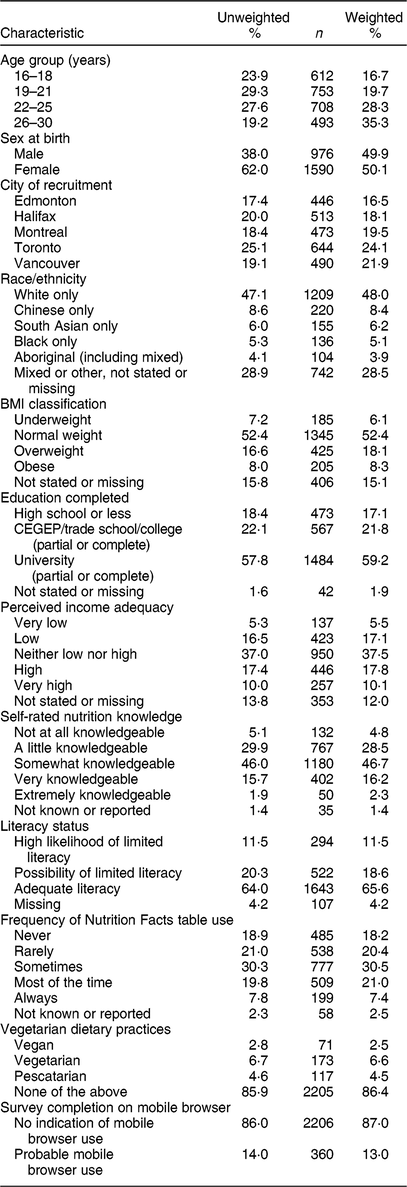
Table 1 provides a description of the analytic sample (n 2566). Nearly half of the respondents were between the ages of 19 and 25 years (48·0 %), with an average weighted age of 23·3 years. Almost half of respondents identified as White only (48·0 %) and over a quarter identified as having mixed/other or unknown race/ethnicity (28·5 %). Overall, 59·2 % of the sample had a university degree either completed or in progress, and about half reported their income adequacy as either very low or low (22·6 %), or high or very high (27·9 %).
Analytic sample characteristics of the youth and young adults aged 16–30 years in five major Canadian cities, Canada Food Study, 2016 (n 2566)
Prevalence of vegetarian dietary practices
Overall, 13·6 % of respondents reported vegetarian dietary practices. As shown in Table 1, 6·6 % identified as vegetarian, 4·5 % as pescatarian and 2·5 % as vegan.
Characteristics of respondents by type of vegetarian dietary practice
Statistically significant correlates identified in the logistic regression analyses for each type of vegetarian dietary practice are described in the following subsections. Age, city of recruitment, BMI, perceived income adequacy, education, self-reported nutrition knowledge and probable survey completion on a mobile browser were not significantly associated with any of the types of vegetarian dietary practices. Adjusted OR estimates for comparisons between categories of all statistically significant correlates are reported in Table 2.
Adjusted OR estimates for correlates of self-reported adherence to a vegan, vegetarian or pescatarian diet among youth and young adults aged 16–30 years in five major Canadian cities, Canada Food Study, 2016 (n 2566)

* χ 2 and P value for the logistic regression model with dietary practice (vegan, vegetarian or pescatarian) as the dependent variable, adjusted for the other variables in the table. Comparisons between categories of a variable are shown for statistically significant correlates only (P < 0·01).
† OR estimate (with 95 % CI) of self-reporting adherence to a vegan, vegetarian or pescatarian diet, adjusted for other covariates in the table. Bolded values indicate that the stated comparison between categories of that variable were statistically significant (P < 0·01).
‡ Reference category is listed second.
Vegan
Frequency of using the NFt when deciding to buy a food product was a correlate of following a vegan diet ( $ (\chi _{(4)}^2) = 31 \cdot 50$; P < 0·001). Respondents who reported always using the NFt were more likely to be vegan than those who reported using the NFt rarely or never (OR = 8·42; 95 % CI 3·61, 19·65; P < 0·001), sometimes (OR = 4·27; 95 % CI 2·09, 8·74; P = 0·001) or most of the time (OR = 6·22; 95 % CI 2·74, 14·14; P < 0·001).
Vegetarian
Race/ethnicity was associated with following a vegetarian diet ( $ (\chi _{(3)}^2) = 63 \cdot 12$; P < 0·001). South Asian only respondents were more likely to have a vegetarian diet than those who identified as White only (OR = 4·56; 95 % CI 2·74, 7·60; P < 0·001), Black only/Chinese only/Aboriginal (including mixed) (OR = 24·55; 95 % CI 9·40, 64·13; P < 0·001), or of mixed/other or unknown race/ethnicity (OR = 5·91; 95 % CI 3·37, 10·37; P < 0·001). White respondents and those with mixed/other or unknown race/ethnicity were both more likely to be vegetarian than respondents who identified as Black only/Chinese only/Aboriginal (including mixed) (OR = 5·38; 95 % CI 2·17, 13·35; P < 0·001 and OR = 4·16; 95 % CI 1·62, 10·65; P = 0·003, respectively). Frequency of NFt use when deciding to buy a food product was also correlated with having a vegetarian diet ( $ (\chi _{(3)}^2) = 19 \cdot 98$; P < 0·001). Respondents who reported always using the NFt were more likely to be vegetarian than those who stated that they use the NFt rarely or never (OR = 3·70; 95 % CI 2·04, 6·73; P < 0·001) or sometimes (OR = 2·53; 95 % CI 1·44, 4·45; P = 0·001). Respondents who reported using the NFt most of the time were also more likely to be vegetarian than those who rarely or never used the NFt (OR = 2·04; 95 % CI 1·24, 3·35; P = 0·005).
Pescatarian
Females were more likely to be pescatarian than males (OR = 2·45; 95 % CI 1·57, 3·81; P < 0·001). Additionally, health literacy was associated with following a pescatarian diet ( $ (\chi _{(2)}^2) = 11 \cdot 51$; P = 0·003). Respondents with a high likelihood of limited health literacy were more likely to be pescatarian than those with adequate health literacy (OR = 2·90; 95 % CI 1·55, 5·44; P = 0·001).
Other eating practices
An overview of efforts to consume more or less of each nutrient or component, food group or food attribute is provided in Table 3, presented for the overall sample and according to the type of vegetarian dietary practice. In terms of eating practices concerning nutrients or food components, in the overall sample, reported efforts to consume less sugar (61·3 %) and more protein (54·8 %) were most prevalent; efforts to reduce cholesterol consumption were the least common (30·4 %). With regard to food groups, many respondents reported trying to consume more fruits and vegetables (66·8 %) and/or whole grains (44·1 %), while efforts to consume less meat (all types) were least common (20·3 %). The most commonly reported eating practices related to food attributes were efforts to consume less processed foods (54·7 %) and more locally produced foods (42·9 %); the least common eating practice reported was efforts to consume less gluten (18·0 %). A greater proportion of respondents with self-reported vegan, vegetarian and/or pescatarian diets reported having made efforts to reduce their consumption of carbohydrates, all meats, red meat, dairy and GMO, and consume more organic, locally produced and ethically sourced/sustainably sourced/fair trade foods, compared with respondents who did not report those dietary practices (P < 0·01 for all).
Reported eating practices of youth and young adults aged 16–30 years in five major Canadian cities in terms of recent efforts to consume more or less of certain nutrients and food components, food groups and/or food attributes, overall and by diet type*, Canada Food Study, 2016 (n 2566)

a,bValues within a row with unlike superscript letters were significantly different (P < 0·01).
* Sample sizes (total and by type of dietary practice) are shown as weighted values.
† χ 2 and P value for the self-reported dietary practice (vegan, vegetarian, pescatarian or none of the above) variable in the logistic regression for each eating effort outcome variable, adjusted for city of recruitment, age, sex, race/ethnicity, BMI, highest level of education completed, perceived income adequacy, health literacy, self-reported nutrition knowledge, frequency of Nutrition Facts table use and survey completion on a mobile browser.
Discussion
Nearly 14 % of the Canadian youth and young adults in our sample reported following a vegetarian, pescatarian or vegan diet. These results are slightly higher than estimates from a 2018 survey of 1027 Canadian adults(Reference Charlebois, Somogyi and Music21), which found that 5·6 % of respondents described their dietary choices as vegetarian (3·3 %), pescatarian (1·2 %) or vegan (1·1 %). This may be a reflection of the fact that our sample consisted entirely of youth and young adults – who may be more likely to follow these eating trends(Reference Allès, Baudry and Méjean22,Reference Bedford and Barr23) – and was largely urban. The 2018 survey also found that 63 % of vegans were under 38 years of age, suggesting that diets with fewer animal-based foods are more prevalent among younger Canadians(Reference Charlebois, Somogyi and Music21). In the present study, 20 % of respondents reported having made efforts to consume less meat (all types) in the preceding year, and 29 % reported trying to reduce their intake of red meat, which is similar to the proportion in the 2018 survey that indicated 32 % of Canadians were considering reducing their meat intake in the next 6 months(Reference Charlebois, Somogyi and Music21). Overall, these results suggest that a considerable portion of this sample of youth and young adults in major Canadian cities were making efforts to reduce their consumption of animal-based foods.
Vegetarian diets are typically adopted for reasons related to health, animal welfare, environmental sustainability, food cost, and religion or culture(Reference Leitzmann24,Reference Craig and Mangels25) . Although the Canada Food Study survey did not assess respondents’ personal reasons for limiting animal product consumption, some of our results are suggestive of potential motivations. For example, frequent NFt use was strongly correlated with following a vegan or vegetarian diet. This finding is consistent with those of other studies(Reference Bedford and Barr23,Reference Hoek, Luning and Stafleu26,Reference Heiss, Coffino and Hormes27) which suggest potential health-related motives for limiting animal product consumption and that people with these diets may be more likely to be attuned to nutrition. Vegans and vegetarians may also consult the NFt when selecting foods to help ensure adequate intakes of certain nutrients that are commonly sourced from animal products (e.g. protein, calcium, iron).
The current study also found that respondents reporting a vegan, vegetarian or pescatarian diet were more likely to be concerned about food attributes that may relate to environmental sustainability, compared with respondents without these vegetarian dietary practices. In particular, a greater proportion of respondents following these diets reported making efforts to consume more organic, locally produced and ethically sourced/sustainably sourced/fair trade foods, and fewer GMO. Foods that are organic, non-GMO, locally produced and/or ethically sourced/sustainably sourced/fair trade are also commonly perceived to be healthier by the public(Reference Robinson-O’Brien, Larson and Neumark-Sztainer28,Reference Hughner, McDonagh and Prothero29) , despite no strong evidence of an association between the presence of these food attributes and the nutritional quality of that food(Reference Smith-Spangler, Brandeau and Hunter30,Reference Edwards-Jones31) . Research has found that positive attitudes towards organic, local and sustainable foods were associated with greater daily servings of fruits and vegetables, higher intakes of dietary fibre, and lower consumption of added sugars and fat among American young adults, suggesting that preferences for foods with these characteristics may be predictive of a healthier diet(Reference Pelletier, Laska and Neumark-Sztainer32). These findings provide evidence that behaviours which are (or are perceived to be) markers of a healthy and sustainable diet often co-occur among young adults. It is, however, not possible to conclude that health or environmental concerns motivated the eating practices reported in the present study, which may have also been influenced by other factors.
Vegetarian diets were more prevalent among some ethnicities than others. South Asian respondents were the most likely to follow this dietary practice. This finding is not unexpected as many South Asian faiths and cultures are known for customarily practising vegetarian diets(Reference Caplan33,Reference Jin, Kanaya and Kandula34) . Previous studies have also shown vegetarian and vegan diets to be associated with a lower BMI and lower rates of obesity among adults and children(Reference Bedford and Barr23,Reference Colombet, Allès and Si Hassen35,Reference Sabaté and Wien36) . It has therefore been proposed that some people may adopt these diets with the aim of losing or managing weight(Reference Heiss, Coffino and Hormes27,Reference Dyett, Sabaté and Haddad37) . The present study, however, did not find that BMI was associated with having vegetarian dietary practices. Research has also shown that vegetarians and vegans are more likely to report low incomes(Reference Allès, Baudry and Méjean22,Reference Bedford and Barr23,Reference Neff, Edwards and Palmer38) . The lack of association between perceived income adequacy and vegetarian dietary practices observed in our study indicates that financial constraints were less likely to be a primary reason for consuming fewer animal-based foods among this sample of Canadian youth and young adults in major cities.
Unsurprisingly, our study found that a greater proportion of respondents who reported a vegan, vegetarian or pescatarian diet also reported efforts to reduce their overall meat and/or dairy consumption, compared with respondents without these vegetarian dietary practices. Efforts to consume less meat (all types) were significantly more common among respondents with reported vegan, vegetarian or pescatarian diets than those without these dietary practices. Vegans and vegetarians were also more likely to report recent efforts to reduce their dairy consumption. These findings may indicate that some respondents had included dairy and/or meat products in their diets in the year that preceded the survey, and had perhaps only recently adopted these vegetarian dietary practices. Alternatively, some respondents may have reported an aspired dietary practice – rather than one that they had already adopted – which may explain why many respondents with self-reported vegetarian dietary practices also reported recent efforts to consume less meat and/or dairy. While efforts to consume less red meat were not significantly more prevalent among vegans and vegetarians (than among respondents without these dietary practices), some vegans and vegetarians may have reported no recent efforts to limit their intake of red meat if it had already been excluded from their diet for more than 1 year prior to the survey. These observations highlight some limitations to the scope of the survey questions in terms of assessing vegetarian dietary practices and other eating practices. Respondents were not asked to state how long they had been adhering to the reported vegetarian dietary practice. Additionally, the survey did not include an option for respondents to indicate if they were already excluding certain foods (including some or all animal products) from their diets prior to the past year and therefore may not have been making any recent efforts to further alter their consumption of these foods.
The majority of Canadian youth and young adults in this sample reported making efforts to increase or reduce their consumption of a variety of nutrients, food groups and foods with particular attributes. Reductions in sugar intake and increases in protein consumption were commonly targeted eating practices, which may reflect the attention that these nutrients have recently been receiving from public health authorities and the media(Reference Elliott-Green, Hyseni and Lloyd-Williams39–41). In addition, approximately two-thirds of the sample reported making an effort to consume more fruits and vegetables, which is encouraging given that as of 2015, nearly 70 % of Canadians (aged 12+ years) failed to consume fruits and vegetables at least five times daily(1). In terms of food attributes, the results showed that more than half of the overall sample reported having made an effort to reduce their consumption of processed foods. This result is also promising as, on average, approximately half of the daily energy intake of Canadian adults is derived from ultra-processed foods, such as pre-prepared meals, snack foods and sugar-sweetened beverages(Reference Nardocci, Leclerc and Louzada6). These reported eating practices collectively align with Canada’s recently released Food Guide, which recommends regular consumption of vegetables, fruit, whole grains and protein foods, with plant-based protein foods being consumed more often(5). Canada’s Food Guide also encourages lower intakes of processed and pre-prepared foods as they can contribute excess sodium, free sugars and saturated fats(5). The eating practices reported by most young Canadians in our sample are also consistent with global targets recently established by the EAT–Lancet Commission, which include shifting towards greater consumption of fruits and vegetables, nuts and legumes, and reducing intakes of highly processed foods, added sugars, red meat and other animal-source foods(Reference Willett, Rockström and Loken15). Future work will help to assess whether or not these efforts translate into meaningful dietary and environmental outcomes.
To our knowledge, the present study is among the first to assess eating practices among Canadian youth and young adults, including following dietary practices that limit their consumption of animal products. Strengths of the study included a large sample size and analysis that adjusted for sociodemographic characteristics and health behaviours likely to be associated with reporting vegetarian dietary practices. Despite these strengths, this work is not without limitations. First, the Canada Food Study did not recruit participants using probability-based sampling and recruited participants from five major Canadian cities only, thereby limiting the generalizability of our results. For example, youth and young adults living in rural Canada may have been under-represented in our sample, whose diet quality and eating practices may differ from those of young Canadians residing in urban areas. Compared with national estimates, the present study participants were somewhat more likely to report food insecurity and to be students; however, the prevalences of overweight and obesity in our sample were similar to national estimates(Reference Hammond, White and Reid18). In addition, because the Canada Food Study survey did not provide definitions of the different vegetarian dietary practices examined in the current study, some respondents may have inadvertently misreported their diet type; for example, if a respondent included seafood (but not meat) in their diet and identified as ‘vegetarian’ rather than ‘pescatarian’. Responses to the survey questions may have also been affected by a social desirability reporting bias, particularly in answering questions about their efforts to consume more or less of particular nutrients, food groups or food attributes that are generally perceived by the public as either healthy or less healthy; however, the use of an online survey may decrease reporting bias for health-sensitive issues compared with in-person interviews. Similarly, the accuracy of respondents’ answers to these types of survey questions may have been limited by poor recall or confusing an intent with an action.
Conclusions
Overall, nearly 14 % of Canadian youth and young adults in this sample reported dietary practices that limit their consumption of some or all forms of animal products, and many also reported other eating practices with potential positive implications for both the nutritional quality and environmental sustainability of their dietary patterns.
Acknowledgements
Financial support: This project has been made possible through funding from the Public Health Agency of Canada (PHAC). Additional funding for this project has been provided by a PHAC–Canadian Institutes of Health Research (CIHR) Chair in Applied Public Health, which supports D.H., staff and students at the University of Waterloo. L.Va. has received support as a CIHR Banting Postdoctoral Fellow. L.Ve. is supported by an Ontario Graduate Scholarship. None of these funding organizations had any role in the design, analysis or writing of this article. Conflict of interest: L.Ve. and L.Va. have conducted research examining food company policies and through this work have engaged with food industry stakeholders; the authors do not accept funding from the food industry. Authorship: D.H. designed the overall study and secured the funding. D.H. and C.M.W. coordinated data collection. C.M.W. prepared the data set. L.Ve., L.Va., V.L.R. and D.H. designed the analyses. L.Ve. conducted the analyses and drafted the manuscript. All authors critically reviewed the manuscript and approved the final version. Ethics of human subject participation: This study was conducted according to the guidelines laid down in the Declaration of Helsinki and all procedures involving research study participants were approved by a University of Waterloo Research Ethics Committee (ORE# 21631). Written informed consent was obtained from all participants.



