



Poor nutrition behaviours and excess body weight are common in Canadian adults( Reference Garriguet 1 – 3 ) and contribute to the risk of some non-communicable diseases (e.g. type 2 diabetes, heart disease)( Reference Ezzati and Riboli 4 – 8 ). Numerous strategies can be used to help individuals change nutrition behaviours( Reference Michie, Ashford and Sniehotta 9 ) and improve body weight. The setting of goals, which are targets where efforts are directed, is often suggested for this purpose( Reference Foster, Makris and Bailer 10 – Reference Contendo 14 ). Although ‘goals’ is a familiar term to the general public (e.g. from use in sports), not all goals for behaviour change are thought to be created equal. Goal Setting Theory suggests that specific and difficult, but possible goals lead to improved outcomes compared with vague or ‘do your best’ goals( Reference Locke and Latham 15 , Reference Locke and Latham 16 ). Despite this knowledge, individuals setting health-related goals without professional support have previously been found to set goals that are not conducive to promoting behaviour change. For example, concerns with choosing vague outcome goals v. specific behaviour change goals( Reference Brown, Bartholomew and Naik 17 , Reference Palmer, Bartholomew and McCurdy 18 ) have been reported. This finding suggests that assistance with this technique is needed. Traditionally, goal setting assistance for nutrition behaviour change has been administered by health professionals (e.g. dietitians) in one-on-one or group settings. However, with the high numbers of individuals needing assistance with nutrition behaviour change, health professionals may not able to provide one-on-one or group support to everyone requiring help. Moreover, in-person interventions may not be cost-effective( Reference Krukowski, Tilford and Harvey-Berino 19 ) and some individuals may prefer to access tools to support behaviour change on their own.
Website-based approaches have gained popularity to support nutrition behaviour change. These approaches are capable of providing support to individuals using numerous behaviour change techniques, including goals. Goals have been incorporated into website-based tools in different ways (e.g. education, goal setting and tracking tools) and are frequently used alongside other techniques (e.g. self-monitoring)( Reference Duncan, Vandelanotte and Kolt 20 – Reference Greene, White and Hoerr 28 ). Although website-based interventions incorporating goals have seen positive outcomes (e.g. weight loss, increased vegetable and fruit intake)( Reference Mouttapa, Robertson and McEligot 23 , Reference Greene, White and Hoerr 28 ), limited use of such features has been reported( Reference Duncan, Vandelanotte and Kolt 20 ). This is not surprising as non-usage attrition of various website features for nutrition behaviour change is common( Reference McConnon, Kirk and Cockroft 29 – Reference Binks and van Mierlo 31 ); however, this finding is concerning as higher usage of website-based interventions has been found to be associated with improved outcomes( Reference Neve, Morgan and Jones 32 ). Eysenbach’s Law of Attrition suggests that non-usage attrition is a common phenomenon with e-health interventions in general because users have the capability to choose the intervention dose( Reference Eysenbach 33 ). Further, this author suggests that developing a better understanding of this phenomenon is important to help move this area forward( Reference Eysenbach 33 ).
Qualitative research is one methodology that can help reveal what works (or does not work) and with whom, and how such tools are used in the normal lives of individuals. This method may provide useful data to explain non-usage attrition and insight into desired features to help promote adherence to use of these tools. Unfortunately, to date, few qualitative data on user experiences with websites for nutrition behaviour change exist( Reference Short, Vandelanotte and Dixon 21 , Reference Drieling, Ma and Thiyagarajan 25 , Reference Anhoj and Jensen 34 – Reference Morgan, Lubans and Collins 39 ) and those focusing on goal setting and tracking tools are almost non-existent. Frensham et al.( Reference Frensham, Zarnowiecki and Parfitt 40 ) examined perceptions of a step count goal setting and tracking website in a small sample of cancer survivors (n 8). Although that study found users can have positive experiences with these types of features, reflections based on the small sample of cancer survivors, the research setting and limited focus (step count goals only) may not apply to other circumstances. Qualitative data capturing experiences and perceptions of individuals using nutrition goal setting and tracking tools outside a research setting are even more limited; in addition, dietitian perspectives of these supports is limited.
eaTracker® (http://www.eatracker.ca/) is Dietitians of Canada’s reputable and freely available nutrition and physical activity behaviour tracking website. This website was first released in 2005 and allows users to track nutrition and physical activity behaviours and compare them with guidelines. In 2006, cognitive interviews were conducted with eaTracker users (n 31) and experts (e.g. dietitians, activity specialists; n 11) to evaluate website usability and design( Reference Royall, Haresign and Hanning 41 ). Findings from that study were then implemented to help improve the eaTracker website. In 2011, the eaTracker website underwent a major update which was guided by a nine-person advisory committee comprising dietitians and nutrition professors. This update also encompassed the addition of new features, including a goal setting and tracking feature called ‘My Goals’.
More specifically, the My Goals feature provides guidance on specific, achievable behaviour-based goals, while allowing users the flexibility to write their own goals; SMART (‘Specific’, ‘Measurable’, ‘Achievable’, ‘Realistic’ and ‘Time-related’) goals( Reference Doran 42 ) are emphasized. Sample screenshots are provided in Supplementary Material 1. My Goals allows users to: (i) set ‘ready-made’ SMART goals (e.g. ‘Eat whole grain bread instead of white bread this week’) which can be chosen from a bank of eighty-seven goals with a week-long time frequency (Supplementary Material 2) or ‘write-your-own’ goals with a user-chosen frequency (i.e. daily, weekly, monthly, once by an end date); (ii) track goals with the ‘My Goals Tracker’ as ‘Met My Goal’ or ‘Still Trying’ (available at the end of the specified time period); and (iii) view goal progress history for active goals in the ‘Manage My Goals’ and ‘My Success’ section. The My Goals Tracker is found on the eaTracker Dashboard that appears upon website entry and the goal setting and goal progress history sections are found on the My Goals web page. Instructions on SMART goal writing, accessible via a hover box, were provided to users from the province of Ontario, Canada only. Our recent work which assessed naturalistic use of this feature found that many users had set goals using My Goals; however, only a small fraction of goals had ever been tracked with the My Goals Tracker( Reference Lieffers, Haresign and Mehling 43 ). Further investigation into this finding is warranted.
Using qualitative one-on-one semi-structured interviews with volunteer My Goals users and dietitians, the objectives of the present study were to document experiences and perceptions of goal setting and the My Goals feature, and obtain suggestions for modifying the feature to better support goal achievement.
Methods
The project was guided by an expert advisory team of dietitian staff from Dietitians of Canada and EatRight Ontario (ERO) and academics from the University of Waterloo. ERO (http://www.eatrightontario.ca/) is a provincial government-sponsored service that offers free dietitian advice by telephone, email and website to Ontario, Canada residents. Leadership and engagement of ERO dietitians was important for the current project due to the relevance of goal setting to services currently offered and the potential of ERO to enhance services in response to the findings.
The Consolidated Criteria for Reporting Qualitative Research (COREQ) checklist( Reference Tong, Sainsbury and Craig 44 ) guided study reporting. Convenience sampling was used for the present study. From June to December 2013, My Goals users from two Canadian provinces (Ontario and Alberta) were invited to participate in a one-on-one semi-structured interview via a pop-up box on the eaTracker website that contained fields to leave contact information, if interested. The pop-up box was shown to Alberta and Ontario users who were: (i) ≥19 years of age; and (ii) had set ≥1 goal in the My Goals feature ≥1 month prior. All Ontario users had also signed up for ERO motivational messaging described elsewhere( Reference Lieffers, Haresign and Mehling 43 ). Interested users were then contacted by email or telephone. Front-line ERO dietitians were recruited from November to December 2013 via email or telephone; a priori, only a few dietitian participants were expected to participate as there was a small number of potentially eligible individuals to draw upon.
My Goals users and ERO dietitians were interviewed one-on-one (in-person, by telephone or online (e.g. Skype®; Microsoft Corp., Redmond, WA, USA)) using a semi-structured interview protocol (similar, but separate for the different groups) with open-ended questions designed to address the study objectives. Sample questions from the interview protocols for both My Goals users and ERO dietitians are shown in Supplementary Material 3. The interview protocols included questions such as perspectives on goal setting in general, perspectives of the My Goals feature and suggestions for improvements; interview questions were similar, but worded slightly differently for users and dietitians. As the dietitian interviews occurred following the majority of user interviews, dietitians were also asked to comment on some key findings from the user interviews. Clarifying and elaborating probes were used to gather additional data( Reference Creswell 45 ). The expert advisory team provided feedback on draft interview protocols prior to study commencement. My Goals users and dietitians were interviewed during June–December 2013 and in December 2013, respectively. The first few user participants were pilot tests; these participants were included as no changes were made to the interview protocol at this point. Interviews continued until data saturation was reached; i.e. no new information was obtained from interviewing additional participants( Reference Lincoln and Guba 46 ) that would contribute to forming new categories or sub-categories. Interviewed My Goals users were also provided with a Dietitians of Canada cookbook as a thank-you gift.
All interviews were conducted by the first author, a female MSc dietitian and PhD student with research interests in electronic tools for nutrition behaviour change, who took a graduate-level qualitative research methods course prior conducting the present work. She had not previously used eaTracker for personal reasons to avoid personal biases, nor did she have a previous relationship with participants prior to the interview. Participants knew the researcher was a dietitian and PhD student who was interested in learning about their experiences, perceptions and recommendations related to the My Goals feature and related supports; the researcher did mention to participants that she was conducting an independent evaluation of the feature. In-person interviews were conducted in public locations (e.g. coffee shops, libraries); no one else was present at interviews except unrelated individuals patronizing those locations. All interviews were audio-recorded and notes were taken during the interview on the protocol form; no repeat interviews were conducted. Descriptive and reflective field notes were taken following interviews( Reference Creswell 45 , Reference Bogdan and Biklen 47 ). Interviews were transcribed verbatim by a transcriptionist and content was verified against recordings. Transcripts were not returned to participants and they were not offered the opportunity to provide feedback, but they were advised to contact researchers if interested in obtaining study results.
Content analysis( Reference Patton 48 , Reference Hsieh and Shannon 49 ) was used to analyse interview transcripts. NVivo version 10 (QSR International, Doncaster, Australia) was used. Sections of pertinent data were coded inductively by the first author using the constant comparative method( Reference Creswell 45 ) which involves identifying relevant data sections and labelling them (i.e. coding), comparing these pieces to one another to find patterns, and sorting the codes into larger and fewer categories and sub-categories( Reference Merriam 50 ). Memos were taken during the analysis process( Reference Creswell 45 ). Codes from ~10 % of transcripts and categories were reviewed by a health informatics professor; variations were discussed and consensus was achieved( Reference Creswell 51 ).
Results
As of 18 December 2013, 348 My Goals users from Ontario and Alberta completed the recruitment pop-up box. Of those users, 207 were not interested in participating, and thirty-two were interested and provided their contact information. An additional 109 users wanted to be asked again later about their interest via the recruitment pop-up box; contact information was not obtained for these individuals. The thirty-two interested users were contacted by email and/or telephone by the first author and in total twenty-three users (eighteen from Ontario; five from Alberta) completed the interview. These interviews were on average ~49 min (range: ~27 to ~82 min). Nine female ERO dietitians were approached to participate, and five were interviewed by telephone or in-person. These interviews were on average ~83 min (range: ~59 to ~124 min). No user or dietitian participants withdrew following interview completion.
Table 1 shows My Goals user demographics and interview methods; overall, 91·3 % were female and 56·5 % were 51–70 years of age. Most of these participants had weight management (usually weight loss) goals (n 18). Some of these participants reported weight-related co-morbidities (type 2 diabetes, n 3; hypertension, n 2; pre-diabetes, n 1; knee replacements, n 1; high cholesterol, n 1), while others reported wanting to ‘shape up’ for a special event (n 1) and weight management following breast-feeding discontinuation (n 1); one participant mentioned her husband had diabetes, and another participant also mentioned participating in triathlons. In addition, other participants were interested in managing conditions notably irritable bowel syndrome (n 1) and osteoporosis (n 1). Also, three participants wanted to improve their health, nutrition and/or physical activity behaviours without mentioning weight or disease/condition management.
Interview method and demographics of eaTracker® ‘My Goals’ feature user participants (n 23)Footnote *
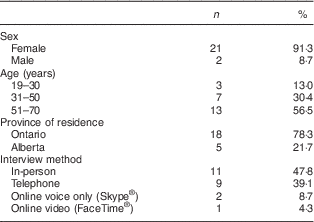
* Dietitian participants (n 5) are not included in this table.
My Goal users reported learning about eaTracker via diverse channels including health professional recommendation (e.g. dietitian, nurse practitioner), Internet searches, the Dietitians of Canada website and other websites/newsletters/materials. Others found it through school, workplace, word of mouth and a pre-diabetes/diabetes group. Participants were usually initially attracted to eaTracker for food and activity tracking.
Over 50 % of My Goals user participants reported eaTracker use for ≥1 year; others for example reported use for a few months, 2–3 months and ≤6 weeks. Most participants reported that food and activity tracking was the main reason for use. Nevertheless, motivation to use eaTracker was sometimes difficult and having the time to enter information was sometimes a barrier. Most users described using eaTracker on and off (e.g. using it to lose weight prior to a wedding and then stopping). Some participants also spoke about using the program for a specific purpose (e.g. obtain a general idea of dietary intake, special event) and then stopping. However, a few participants were diligent about recording all food and activity data for extended periods (e.g. ~2·5 months, ~2 years).
Most user participants who remembered how they found out about the My Goals feature indicated they discovered it via exploring the eaTracker website. For users, the amount of time that had passed since setting their first goal with My Goals varied: just under 50 % these participants had been using it for ~1–3 months; others had been using it for various amounts of time (i.e. 18 months, 1 year, ~9–10 months, 6 months, ~5 months and <1 month). One user did not recall having used the My Goals feature before. Of note, obtaining concrete information about when users first set goals with My Goals was difficult. Most users mentioned that they did not use the My Goals feature frequently and it appeared to be used far less often than food and activity tracking. Many users also mentioned that they wanted to use, or should be using, this feature more often.
Experiences and perceptions with goal setting and the My Goals feature
Categories describing users’ and dietitians’ experiences and perceptions with goal setting and the My Goals feature are described below and include: (i) ‘Goal setting for nutrition and physical activity behaviour change: a beneficial yet challenging process’ and (ii) ‘My Goals feature: a positive concept that needs functional improvements’, with sub-categories including goal setting and goal progress tracking. Findings from user and dietitian participants were grouped together as they were similar.
Goal setting for nutrition and physical activity behaviour change: a beneficial yet challenging process
Both users and dietitians felt that goal use was beneficial and important, yet very challenging. Some users had previous knowledge of goals and SMART goals from other settings (e.g. workplace, coaching hockey, school, professional background); however, others had less knowledge.
In terms of benefits, users mentioned that goals provided focus and targets to work towards. Dietitians also mentioned that goals provided focus, were useful for helping individuals in different situations and were evidence-based.
‘I’m a big believer in goal setting and that helps people keep on the right track and, and and helps them figure out where they’re going and um so if they start wandering, they came come back and all that, so I think it’s instrumental for any, to achieve anything.’ (Alberta user #3, female, 51–70 years of age)
Despite the benefits, several challenges were described. Difficulty sticking to goals (including dealing with roadblocks and challenges encountered along the way) was the most frequent challenge mentioned by users.
‘I know I have to be practical and goal setting is only as good as it’s applied. And my problem is I know what I want but I don’t apply it.’ (Ontario user #10, female, 51–70 years of age)
Users also identified other challenges including fear of failure, setting goals that were too big and needing to balance their goals with a family member’s needs (e.g. husband with diabetes).
Dietitians also felt goal use was challenging for clients. Some dietitians felt that many people had limited knowledge of quality goal setting (including SMART goals), and while they knew what the desired outcomes were (e.g. weight loss) they did not know how to get there.
‘… people have big, high expectations or they say, “oh I just want to lose weight” and okay well that’s great, but they don’t understand that there’s you know, what are the smaller steps to get you to that big goal.’ (Dietitian)
My Goals feature: a positive concept that needs functional improvements
Goal setting
Users generally began using the My Goals feature with some predetermined ideas about their goals of interest (e.g. weight and/or disease management, targeting problematic behaviours). For some users, this was their first time setting these types of goals. Both users and dietitians were happy that both ready-made and write-your-own goal setting options were available.
Overall, users felt positively about ready-made goals (e.g. relevant content, provided a starting point, achievable, practical, appropriate selection, goals already SMART) and found them easy to set. Users frequently browsed ready-made goals; many reported these goals provided them with ideas and were helpful for choosing goals.
‘Well, actually, reading through [the ready-made goals], the one about not skipping meals, I was really bad for that. And it didn’t even occur to me that that was really an important thing to change but it is. But when I read through the [ready-made] goals and saw it, I thought, I added it to my goals thinking that is something that I need to address.’ (Alberta user #1, female, 31–50 years of age)
Users also commented that ready-made goals were useful for helping them write their own goals. A few users also mentioned ready-made goals helped them choose smaller and manageable starting goals (e.g. avoiding second helpings), instead of setting larger weight-loss goals, and liked this focus.
‘So with the [ready]-made goals, things like um “I’ll avoid eating out of the container” vs. “I’m going to lose five pounds”. I think the approach is really good. Um. And and without behavioural goals, I don’t think people reach their end um like what they need to achieve.’ (Ontario user #3, female, 31–50 years of age)
Dietitians also felt positively about such goals. For instance, they mentioned that ready-made goals provided guidance for users who may not know where to begin, covered relevant topics and provided action-oriented goal setting guidance.
However, users reported some limitations of ready-made goals, such as being restricted to a fixed weekly goal frequency (i.e. no goals with a daily completion time frame), lack of reference to specific nutrient amounts (e.g. 1000 mg calcium/d), not being right for their situation and not including goals for specific conditions (e.g. diabetes). In addition, one user reported not looking at ready-made goals because there were too many choices available. Further, a dietitian mentioned some ready-made goals were possibly too difficult for some users. However, one user reported that the ready-made goals were not hard enough.
Although some users found the ability to write their own goals positive, they also reported technical difficulties in setting these goals (e.g. goals not registering in the feature). Dietitians also reported that the goal ‘frequency’ and ‘specific date end’ may be confusing for users. Poor-quality write-your-own goals (e.g. not healthy, such as aiming to lose 20 lb in one month; being too general; and not SMART), having too many goals and having multiple goals in one statement were also concerns reported in dietitian interviews.
Ontario users had access to SMART goal instructions via a hover box; however, they did not report direct use of this information when writing their own goals. However, in principle, users felt that having instructions was positive. Although most dietitians reported concerns about the visibility of these instructions, one dietitian felt that hiding instructions this way decreased web-page clutter. Dietitians also felt positively about the content of these instructions.
Users also reported some other concerns with goal setting using My Goals. One user expected My Goals would be able to use already entered eaTracker data (e.g. food, activity, body weight) to provide goal setting guidance; however, this function is not available. In addition, concerns with the current feature, such as not allowing users to establish a baseline value, or to set a series of smaller progressive goals to achieve a larger goal (e.g. weight loss), were reported.
‘Um, I thought maybe [My Goals] would tell me more of like uh where I, what weight I want to be at. How do I get there? Um, is that kind of realistic?’ (Alberta user #4, female, 31–50 years of age)
‘… there’s no feature on there to say, well here’s how I’m going to do it or what I’m going to do to achieve that particular goal. So, the steps aren’t there. And and that’s something I do when I’m setting a goal is: here’s my goal, here’s how, what I’m going to going to do to achieve that particular goal and here’s my little, deliverables, or milestones as I go along.’ (Alberta user #3, female, 51–70 years of age)
Goal progress tracking
Most users were not tracking their goals with the My Goals Tracker. A major reason for limited goal tracking was that users were unsure how to track goal progress and many had never previously seen the My Goals Tracker. One reason users did not see the My Goals Tracker was because a website introduction video (which can be removed by the user if desired) placed the tracker further down the Dashboard web page. Users also reported difficulties in finding goal tracking instructions, being uncertain about how the tracker works and technical glitches.
‘I had only really noticed [My Goals Tracker] when uh chatting with you today.’ (Ontario user #14, female, 31–50 years of age)
However, some users reported viewing their goals in My Goals periodically (range: every log in to every few weeks), which worked as a reminder and provided opportunities for reflection and/or accountability checking.
‘I’ve been looking at the My Goals and like reminding myself of my goals and stuff but I didn’t even notice the [My Goals Tracker] before was there.’ (Ontario user #6, female, 19–30 years of age)
Further, users expressed concerns about tracking categories, buttons and function. They felt that the current My Goals Tracker categories (‘Met My Goal,’ ‘Still Trying’) had limited usefulness as the numerical degree of goal achievement was not captured. Another concern was that goal tracking timing was limiting and difficult to use (e.g. capturing information infrequently, such as weekly; the tracker being available before the relevant time period was finished and the user not being ready to record). They also disliked that goals disappeared from the My Goals Tracker after tracking. Tracker location preferences were mixed; some users felt it was fine on the Dashboard, while others felt it should be on the My Goals web page. Dietitians also reported concerns surrounding tracking options, tracker aesthetics (e.g. goal progress tracking buttons are currently larger than the goal text itself in the tracker), goals disappearing from the My Goals Tracker after logging tracking information, and a disconnect between the My Goals web page (where users set goals and view history) and My Goals Tracker (which is located on the Dashboard web page).
Lack of feedback or interactivity provided following My Goals Tracker use (e.g. no personalized feedback, no encouragement provided for tracking data) was also a mentioned concern by users.
‘Well, I don’t know if I, personally, well I, I do see the point of it, because if you met it, I’m hoping if I clicked on Met Goal that something’s going to come up and say, “High five, [participant’s name]. uh Way to go! Look at that! You wanted to lose 40 pounds, you lost 40 pounds”.’ (Ontario user #13, female, 51–70 years of age)
The topic of data entry and tracking was also mentioned by users and dietitians. Although one dietitian and one user felt that goal tracking with the My Goals feature was easier than completing food records, challenges such as having too many places to enter data in eaTracker and difficulty/forgetting to enter data in the My Goals feature itself were reported by users.
‘Well, I, personally I find it a bit onerous to do tracking of food intake, but I think that the goals are important and [recording goal progress without having to complete an entire food record] may not be as onerous; it might be choose a breakfast that has three food groups. Well, that’s a lot easier than typing in everything that you had for breakfast.’ (Dietitian)
‘But I’m finding now it’s getting to me a lot here. You’ve got to be careful. You know we like the easy quiz, let’s go, bang, put your food in and count your calories so I’m a little concerned how, you know, how many things I have to do here as far as entering data.’ (Ontario user #7, female, 51–70 years of age)
Users reported limited use and experience with the My Success and Manage My Goals sections (note: these sections are linked to the My Goals Tracker and allow goal progress history to be viewed if tracked), although some reported liking the concept. Like the My Goals Tracker, many users had not noticed or explored this section of the website; some were finding out about it for the first time during the interview. Users also reported technical concerns and feeling confused about data presented in these sections. Some dietitians also mentioned that they thought it may be confusing for users to go to these sections to view goal progress information; however, they liked the concept. They also felt these sections could present historical data more clearly and effectively than they currently did.
Participant recommendations for future tools
Overall, both users and dietitians felt that the My Goals feature would be more helpful if revised to address the identified limitations. Findings from all participant types were grouped together due to similarities.
Some users suggested having a more prominent presence of the My Goals feature on the eaTracker website. Pop-ups or prompts (e.g. upon website entry, following food and activity data entry), less segregation of My Goals from other eaTracker components and enhanced visibility of My Goals within eaTracker were suggested.
‘Something that brings those goals to the forefront; you know remember, you know these are some of the things that you want to do, [first name of participant], you want achieve this. You know something connecting, pulling it out ah instead of keeping it in the background because you’ve got it all segregated in different categories and so on and just thinking about it that way.’ (Ontario user #7, female, 51–70 years of age)
Goal setting enhancements were also suggested by both users and dietitians. These enhancements were recommended at the time of first setting goals and later to help make goal adjustments. They suggested: (i) providing automatic goal suggestions based on user-entered data (e.g. food, activity, demographics, weight, goals); (ii) providing more information on proper goal setting (e.g. emphasize choosing realistic goals), what constitutes a healthy beverage/meal; (iii) providing goal setting guidance for different circumstances (e.g. diabetes, heart healthy, individuals already eating relatively healthily); (iv) offering more ready-made goals, including those for special circumstances, and allowing users to edit ready-made goal amounts (e.g. the target serving number to make the goal easier or harder) and frequency (e.g. choose daily, weekly, etc.); (v) making available more assistance with setting SMART goals (e.g. incorporating SMART goal detectors, fillable forms to document each individual SMART component, more visible presence of SMART goal instructions); (vi) linking proximal and distal goals; (vii) having options to revise or defer goals; and (viii) clarifying the meaning of goal frequency. Another suggestion was making the goal setting area more exciting and fun (e.g. adding pictures).
‘… if it suggested another related goal, right, so um, I’m just thinking here, you know, I ate a dark green vegetable every day this week, right, so that was my thing, that was my goal. Um, you know, maybe my next goal would be [pause] uh just if there was a suggestion of another related goal, right? Because one of the things – and I think this is part of what would happen if I was working with a dietitian coach – is that um he or she would be able to help me decide what might be a next um appropriate goal, right?’ (Ontario user #17, female, 51–70 years of age)
‘… kind of cool would be able to do a, a quick, let’s say, almost like an analyser so that you can push a button, put the, hit this button and it says, your goal’s too vague or you don’t have this on there. Is this really measurable? Um, you know, how are you going to measure this and does that make sense like?’ (Alberta user #3, female, 51–70 years of age)
Users and dietitians also suggested enhancements to goal progress tracking and reporting which included: (i) documenting the degree of goal achievement; (ii) enabling view of goal progress graphically; (iii) adding a place to log comments to explain goal progress; and (iv) allowing export of goal progress data (e.g. to spreadsheet software). Users also expressed interest in using entered food and activity data to automatically track goal progress.
‘Just maybe set it up so we can instead of just saying “in progress”, we can actually mark what our progress is. I think that would be really, really motivational for me to see that vs. just kind of arbitrarily saying, “I’m doing it”.’ (Ontario user #5, female, 31–50 years of age)
‘And, and, and then comment section. Why did you not keep yourself to your goal or why did it, did it go well, but you can make your own little mem- memos. You know, it doesn’t have to be a long, it it can be, you know. Uh just, just a sentence long even, you know. To make a comment why, why things happened.’ (Ontario user #9, female, 51–70 years of age)
In addition, goal achievement rewards were also suggested by users and a dietitian (e.g. virtual rewards such as gold and silver stars, reward coupons).
‘I mean the games that people play on computers and how that works and why they get addicted to it is these little rewards. So if there are little rewards in there. Even with the stupid star system. I mean, it’s strange but it will do something to people, you know.’ (Ontario user #9, female, 51–70 years of age)
Automated personalized feedback based on entered progress was another suggestion. Participants suggested feedback including: tips; encouragement messages; prompts to contact ERO for assistance or to re-evaluate goals when there was poor achievement; and reminders to set new goals following goal achievement.
‘Yeah, I guess because of the business of my lifestyle, um, I don’t always have time to go and look at, “Okay, what have I been doing”, um, “Where are my errors here”, um, so to be able to have that [pause] spoon-fed to me would be lovely [laughs].’ (Ontario user #18, female, 51–70 years of age)
‘Let’s say I put in five chocolate bars and so eaTracker is going to pop ... but something was automatically like, “Do you recognize what you’ve done here? Let’s really think about it for tomorrow because your goal is not con- conducive to this.” But not a not a lecture; not a ... it’s just a factual point – remember your goal. Um, you know for tomorrow this is what we recommend.’ (Ontario user #7, female, 51–70 years of age)
Finally, users and dietitians suggested that having access to goal setting and tracking tools via a mobile app would be desirable and important to consider in the future.
Discussion
The present research is timely because goal setting is commonly suggested for helping individuals improve nutrition and activity behaviours( Reference Foster, Makris and Bailer 10 – Reference Vallis, Piccinini-Vallis and Sharma 13 ); websites are increasingly used to support behaviour change; and there is a current emphasis within public health nutrition to improve these behaviours to decrease the burden of non-communicable diseases. Although dietitians and users in the present study reported some challenges and concerns with the My Goals feature, our work provides valuable information to improve use of and adherence to website-based goal setting and tracking features in the future.
In general, interviewed users were enthusiastic about goal setting and felt this was an important technique to facilitate nutrition and physical activity behaviour change. Dietitians were also enthusiastic about this behaviour change technique. Study participants also liked the flexibility to choose their own goals, a finding supported by the research of Fukuoka et al.( Reference Fukuoka, Lindgren and Jong 52 ), in which some users did not like fixed system-set goals. Despite being enthusiastic about this technique, both users and dietitians identified use of goals for nutrition and activity behaviour change as a challenging process. It is interesting to note that different emphases were placed on the challenging aspects of this process by these different participant types. More specifically, dietitians had major concerns that users set poor-quality goals which did not set them up for success. These types of concerns have also been reported elsewhere( Reference Brown, Bartholomew and Naik 17 , Reference Palmer, Bartholomew and McCurdy 18 , Reference Verwey, van der Weegen and Spreeuwenberg 53 ). Fortunately, users found the ready-made goals helpful for setting quality goals, which is promising as these goals are behaviour-based, follow the SMART criteria and help encourage appropriate goal setting that addresses concerns outlined by dietitians. Based on the results of the current work, continuing to use these types of goals in future electronic goal setting tools is recommended, as well as offering safeguards and checkpoints (e.g. SMART goal detectors) to ensure that appropriate goals are chosen by individuals who prefer to write their own. For users, although they did mention a challenge was setting goals that were too big, the most common challenge they mentioned was sticking to their goals. Further investigation into electronic features to help users stick to their goals may help to set them up for better success.
Users in the present study reported that the My Goals feature was used less often and confidently than food and activity tracking. This finding is not entirely surprising as limited and variable use of website features for nutrition behaviour change in naturalistic settings has been previously reported. For example, Binks and van Mierlo( Reference Binks and van Mierlo 31 ) found that only small fractions of users had interacted with different website weight-loss features. Verheijden et al.( Reference Verheijden, Jans and Hildebrandt 54 ) found that only ~10 % of users accessed their module-based healthy weight and lifestyle website intervention more than once. Various factors have been suggested to explain why users may use or not use websites. User characteristics (e.g. demographics, behaviours) can statistically significantly predict website use for behaviour change( Reference Verheijden, Jans and Hildebrandt 54 , Reference Neve, Collins and Morgan 55 ), but results have varied; limited time is another important barrier to use of websites for nutrition and activity behaviour change( Reference Papadaki and Scott 35 , Reference Steele, Mummery and Dwyer 56 ). Also, perceived attributes of innovations, as outlined by the Diffusion of Innovations( Reference Rogers 57 ) framework, can explain user decisions to adopt an innovation. Eysenbach( Reference Eysenbach 33 ) has suggested that these attributes can also affect an individual’s decision to continue or discontinue use of electronic health tools. Three attributes in particular, namely relative advantage (whether the innovation offers improvements over what is already available), compatibility (how well does the innovation fit into the individual’s beliefs, norms, needs, values and practices) and complexity (degree of difficulty of using the innovation), appeared to be factors affecting My Goals feature use. For relative advantage, some users mentioned that the My Goals feature provided guidance on setting behaviour-based goals, as well as ideas for goals which they had not previously considered using other approaches. For compatibility, although the My Goals feature was compatible with user beliefs that goals are important for nutrition and physical activity behaviour change, some users felt that the innovation did not provide them with adequate assistance with goals to meet their needs and this affected use. For complexity, goal tracking was something that was particularly complex for users and strongly affected use. In naturalistic settings without extensive in-person user training and support, the present study suggests that complexity may be especially important as users may not have the motivation, patience, background and support to continue attempting to use an innovation perceived to be complex compared with use of the same innovation in a supportive research or clinical setting. This information is valuable for understanding non-usage attrition in naturalistic settings and helps to move this area forward. Of note, one of the weaknesses of the Diffusion of Innovations framework is that it focuses primarily on innovation adoption and there is little information on discontinuance of innovations. This limitation has been noted before( Reference Eysenbach 33 , Reference Greenhalgh, Robert and Macfarlane 58 ) and may be especially concerning for the usefulness of this model to understand electronic health innovation usage where discontinuance is a common phenomenon. In the future, more work needs to be done to help expand the discontinuance component of the framework to help make it more useful for explaining electronic health intervention discontinuance.
To enhance website-based goal setting and tracking features for use outside a research trial setting, several suggestions were provided by participants. Of note, users frequently emphasized that these features should be more interactive by including aspects such as prompting users to set goals, providing goal choice guidance based on user information (e.g. food, activity, weight, demographics) and providing feedback based on goal progress. Automation seemed especially important to help motivate and engage individuals in naturalistic settings. Similar results have also been found in other studies. For example, Fukuoka et al.( Reference Fukuoka, Lindgren and Jong 52 ) found that users of a pedometer mobile phone-based intervention were motivated by instant feedback on step counts to keep using the program and change behaviour. These suggestions may also be helpful in addressing challenges, like sticking to goals as mentioned by users.
Participants from the present and other studies have indicated a desire for data progress presentation in a visual graphical format( Reference Fukuoka, Lindgren and Jong 52 , Reference Casey, Hayes and Glynn 59 – Reference Tang, Abraham and Stamp 61 ). As well, a few participants mentioned that rewards for goal achievement would be motivational; although in one study of mobile app users, virtual rewards (e.g. ribbons) were motivating for activity behaviour change in some users, but not others( Reference Munson and Consolvo 62 ).
Strengths and limitations
A strength of the current research was that a variety of participants from across two Canadian provinces were recruited. Another strength was recruiting individuals using the My Goals feature in a naturalistic setting since these user experiences, perspectives and feedback may differ from those of research trial participants and are more reflective of how such tools are intended to be used. In addition, rigorous qualitative methodologies were used (e.g. sampling to data saturation, review of coding and results by a second researcher, interviewing both users and dietitians). Lastly, the present study extended research on experiences with website-based tools through the focus on in-depth understanding of the goal setting and tracking component.
Limitations to the research include the use of volunteer participants who were perhaps more motivated about eaTracker compared with other users. Indeed, eaTracker users who had not used the My Goals feature were not interviewed, yet their input would help to understand reasons for not accessing this feature. In addition, user participants were primarily female and all were less than 71 years of age; males and older adults may have different needs. The study also focused on a website version of the My Goals feature which was all that was available when the study occurred. However, more recently, a free eaTracker mobile app for iOS™ (Apple Inc., Cupertino, CA, USA) and Android™ (Google Inc., Mountain View, CA, USA) encompassing a mobile version of the My Goals feature was released. Currently, this mobile app has some functionality of the website-based My Goals feature (e.g. ability to set and track goals); however, other aspects of the website-based feature are not available (e.g. ability to view goal progress history). Interviewed participants had expressed a desire for an eaTracker mobile app; evaluation should now extend to this mobile platform and understanding user experiences with these types of tools.
Conclusion
Website-based goal setting and tracking features represent important adjuncts to food and activity self-monitoring to help facilitate behaviour improvements. The present unique research captured naturalistic user and dietitian experiences, perspectives and recommendations for goal setting and tracking features within website-based tools. These findings have implications for professionals looking to develop and support individuals using these types of features. Tools incorporating the participants’ suggested enhancements obtained from the current study should be evaluated both qualitatively and quantitatively in the future to continue to advance the knowledge in this area, with the ultimate goal of helping individuals make positive nutrition and physical activity behaviour change.
Acknowledgements
Acknowledgements: The authors thank all participants, the Dietitians of Canada Information Technology team for assistance with recruitment, and ERO dietitians for acting as part of the advisory committee. Financial support: This work was funded by Dietitians of Canada and ERO. J.R.L.L. was funded as a PhD student by a Canadian Institutes of Health Research (CIHR) Canada Graduate Scholarship Doctoral Research Award (2011–14); University of Waterloo President’s Graduate Scholarship (2011–14); and a Cancer Care Ontario/CIHR Training Grant in Population Intervention for Chronic Disease Prevention: A Pan-Canadian Program (grant #53893, 2014–15). Dietitians of Canada and ERO served on an external expert advisory committee to help guide research questions for this study and were responsible for placing a pop-up box on the eaTracker website to assist with participant recruitment. The data collection, data analysis and interpretation were conducted completely at arm’s length from the funders. The funders were not able to alter the findings of the study in any way. Conflicts of interest: None. Authorship: This research was conducted by J.R.L.L. under the supervision of R.M.H. H.H. and C.M. served on the expert advisory committee. J.R.L.L., H.H., C.M. and R.M.H. contributed to study design. J.R.L.L. conducted all of the one-on-one semi-structured interviews and data analysis with the guidance of R.M.H. J.F.A. was a second coder for the qualitative data analysis. J.R.L.L. wrote the draft manuscripts and H.H., C.M., J.F.A. and R.M.H. provided intellectual input on manuscript drafts. Ethics of human subject participation: This study was conducted according to the guidelines laid down in the Declaration of Helsinki and all procedures involving human subjects/patients were approved by the University of Waterloo’s Office of Research Ethics. Written informed consent (in-person interviews) or verbal consent (telephone or online interviews) was obtained from all participants. Verbal consent was witnessed and formally recorded.
Supplementary material
To view supplementary material for this article, please visit https://doi.org/10.1017/S1368980016003220



