


The UK Food Standards Agency (FSA) convened a workshop to review the results of Agency-funded projects investigating the effects of diet and sunlight on vitamin D status. The aims of the workshop were the following:
1 To review the three vitamin D research projects from the Agency's N05 research programme (Nutritional Status and Function) commissioned in response to the research call to investigate the significance of both dietary sources and sunlight to vitamin D status and/or functional markers.
2 To discuss the research results with invited experts in order to inform any future risk assessment.
3 To discuss the public health implications of the findings with regard to balancing the risks of vitamin D deficiency and skin cancer.
4 To consider the relevance of the findings for future research priorities.
E. M. S. (FSA) presented a brief overview so that the research projects could be discussed in relation to current science and policy, particularly, to that relating to the Scientific Advisory Committee on Nutrition's (SACN) 2007 update on vitamin D(1). Vitamin D is derived from two sources: the skin, upon exposure to UVB rays in summer sunlight (endogenous), and the diet (exogenous)(2, 3). Deficiency of vitamin D results in rickets in children and in osteomalacia in children and adults; both these conditions increase the risk of fracture(3, Reference Francis4). Low vitamin D status has also been implicated in the pathogenesis of osteoporosis and a wide range of non-skeletal diseases including colon cancer, CVD, tuberculosis, multiple sclerosis and type 1 diabetes, but currently, the evidence is insufficient to ascribe causality to these associations(1).
The dietary reference values (DRV) for vitamin D, set in 1991 (see Table 1), were based on the dietary amount (expressed as the reference nutrient intake) required to maintain plasma 25-hydroxy vitamin D (25OHD) concentration above 20 nmol/l in winter(3). A subsequent review by the Committee on Medical Aspects of Food Policy examined the evidence on the relationship between bone health and vitamin D status, and endorsed the DRV(3).
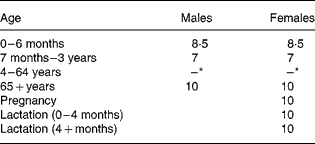
For 4–64 year olds, it was concluded that exposure to summer sunlight provides an adequate vitamin D supply, though an reference nutrient intake of 10 μg/d was set for those who do not expose their skin to the sun. Such people, as well as the majority of pregnant and lactating women, those aged 65 years or more, infants and children aged up to 3 years, can achieve the reference nutrient intake by consuming a supplement(3).
The SACN was requested by the Department of Health and the FSA to provide an ‘update on vitamin D’. Their report(1) re-iterated ‘the current Dietary Reference Values for vitamin D set by COMA for pregnant and breast-feeding women, young children, people aged 65 years and over, and individuals who are at risk of inadequate sunshine exposure including recommendations for the use of dietary supplements to achieve these’. It concluded that ‘further risk assessment and consideration of existing Dietary Reference Values will only be warranted when definitive evidence becomes available. Completion of ongoing research by the Food Standards Agency within the next 3–4 years will be contributory’(1).
The National Diet and Nutrition Surveys (4–18, 19–64 and >65 years)(Reference Gregory and Lowe5–Reference Finch, Doyle and Lowe7) and, more recently, the 1958 British Cohort study(Reference Hypponen and Power8) have shown that low vitamin D status (as indicated by plasma 25OHD of < 25 nmol/l) is prevalent in several population groups. Levels below this threshold are associated with an increased risk of clinical vitamin D deficiency (rickets and osteomalacia). In recent years, observational data have related vitamin D status to health outcomes other than rickets and osteomalacia. The threshold values associated with these are generally higher than those associated with bone disease(Reference Bischoff-Ferrari, Giovannucci and Willett9). These findings have led some to re-examine the biochemical criteria of adequate vitamin D status.
In 1997, the Institute of Medicine in USA concluded that there was insufficient scientific information to establish a RDA for vitamin D. Instead, they listed an adequate intake representing the daily vitamin D intake that should maintain bone health and normal Ca metabolism in healthy people who have limited but uncertain sun exposure and stores, and are unable to expose their skin to sunlight(10). These recommendations are currently being re-evaluated. Several other countries have chosen to set a DRV for all healthy population groups, including healthy adults, while acknowledging that this may not be necessary for individuals with adequate UVB exposure(Reference Doets, de Wit and Dhonukshe-Rutten11). In UK, it is assumed that ‘an adequate vitamin D status can be achieved from exposure of the skin to summer sunlight’(3). However, the relative contribution of diet and sunlight to vitamin D status in contemporary Britain is not known.
The allusion in the SACN Update(1) to ongoing FSA research referred to three projects funded by FSA in response to the research call in November 2004 to ‘investigate the relative significance of both dietary sources and sunlight to vitamin D status and/or functional markers’. By conducting these studies across the extremes of latitudes with differing habitual sunshine exposures in the British Isles, and across ethnic groups, the ‘worse case scenario for the contribution of diet to maintaining vitamin D status could be ascertained across a wide age range’ in adults(Reference Ashwell, Stone and Mathers12).
The SACN Update(1) also recognised an important public health dilemma: ‘Sufficient skin exposure to solar UV radiation of the appropriate wavelength is essential for maintaining adequate vitamin D status in the UK. There is a need to state clearly the length and intensity of exposure necessary to balance the maintenance of vitamin D status with the risk of developing skin cancer.’
This 2009 FSA Workshop was therefore convened to review the findings of the three FSA-funded projects in the context of the latest research and public health advice about the effect of sunlight on skin cancer. This report briefly summarises the papers that were presented at the Workshop together with the discussion generated. It also summarises answers to specific questions related to the objectives of the Workshop.
An investigation of the relative significance of dietary intake and sunlight to vitamin D status in young and elderly adults
In a collaborative project between the Universities of Cork and Ulster (N05063 – leader and presenter K. D. C.), the relative importance of diet and summer sunlight exposure for vitamin D status was determined at two locations and latitudes (51 and 55°N) in Ireland using two randomised controlled trial (RCT). The outcomes of both RCT have been published recently(Reference Cashman, Hill and Lucey13, Reference Cashman, Wallace and Horigan14), but the synopsis is as follows: they were conducted in 238 adults (men and women aged 20–40 years, and average habitual intake of vitamin D = 3·6 μg/d) and 225 elderly subjects (men and women aged 64+ years, and average habitual intake of vitamin D = 4·4 μg/d) taking supplemental levels of 0, 5, 10 and 15 μg/d vitamin D3 throughout 22 weeks in winter. The aim was to establish the distribution of dietary vitamin D required to maintain serum 25OHD during wintertime above thresholds ranging from 25 to 80 nmol/l. Serum 25OHD was measured by enzyme-linked immunoassay (EIA) at baseline and at the end of the trial. Sunlight exposure was assessed by diaries, questionnaires and polysulphone dosimeter badges.
For those aged 20–40 and 64+ years, the estimated dietary vitamin D requirements that maintained serum 25OHD above 25 nmol/l in 97·5 % of the sample were 8·7 and 8·6 μg/d, respectively. For those aged 20–40 years, the estimated dietary vitamin D requirements in those (a) who reported enjoying sunshine exposure; (b) who sometimes went out in the sun; (c) who avoided sunshine were 7·2, 8·8 and 12·3 μg, respectively. For subjects aged 64+ years who reported a minimum of 15 min/d sunshine exposure and those who reported less than this amount, the estimated dietary vitamin D requirements were 7·9 and 11·4 μg/d, respectively. Estimated dietary vitamin D requirements based on maintaining serum 25OHD above 37·5, 50 and 80 nmol/l in 97·5 % of the sample during winter were 19·9, 28·0 and 41·1 μg/d, respectively, for 20–40 year olds, and were 17·3, 24·7 and 39·7 μg/d, respectively, for 64+year olds.
The investigators concluded that between 7·2 and 41·1 μg/d of vitamin D are required to ensure that 97·5 % of 20–40 year olds and 64+ year old adults maintain their vitamin D status during winter. The range in requirements is principally explained by two factors: first, the variation in summer sun exposure (i.e. ranging from ‘sun avoiders’ to ‘sun tanners’), and secondly, the threshold level of serum 25OHD considered adequate (i.e. ranging from >25 to >80 nmol/l). These data may contribute to the scientific evidence on which to re-evaluate DRV for vitamin D in adults, particularly, in those who are over 65 years of age.
The investigators also interrogated relevant National Diet and Nutrition Survey databases(Reference Finch, Doyle and Lowe7, Reference Henderson, Irving and Gregory15) to corroborate their estimates of the effect of daily intakes of 8·7 and 8·6 μg/d on vitamin D status. These intakes were associated with a serum 25OHD concentration above 25 nmol/l in virtually everyone.
Discussion
The discussion of this paper initially focussed on the correspondence that had followed the publication of these results. Some had argued(Reference Vieth16) that the suggested dietary intakes of 39–41 μg/d were too low to maintain serum 25OHD concentration above 80 nmol/l. K. D. C. stressed that the objective of his study had been to estimate the dietary intake of vitamin D required to maintain serum 25OHD above 25 nmol/l(Reference Cashman and Kiley17). This, rather than the higher serum 25OHD threshold levels proposed(Reference Vieth16) by others (typically >75–100 nmol/l), is widely acknowledged as the threshold defining the risk of deficiency (rickets and osteomalacia). Data obtained from the two Irish RCT showed that the daily requirement for vitamin D needs to be about 9 μg/d for young and older adults to ensure that 97·5 % of the population maintain their wintertime serum 25OHD concentration above 25 nmol/l. This value of 97·5 % is the cornerstone in terms of the establishment of an reference nutrient intake and RDA. An amount of 9 μg/d can be difficult to achieve from food alone. For example, in the Irish RCT, the mean baseline dietary intake consumed by the subjects was only approximately 4 μg/d vitamin D3. The main food group contributors were fish and meat, but only the high fish consumers approximated the requirement of 9 μg/d vitamin D. In fact, the mean habitual daily intake of vitamin D from food in a representative population in the UK and several other countries is typically between 2 and 4 μg/d(Reference Henderson, Irving and Gregory15, Reference Mavroeidi, O' Neill and Lee18). Data obtained from the two RCT also showed that an estimated dietary vitamin D requirement of 3 μg/d would maintain serum 25OHD concentration above 25 nmol/l in only 90 % of the population during winter(Reference Cashman, Hill and Lucey13, Reference Cashman, Wallace and Horigan14), and that intake is not enough to keep 97·5 % of the population above the serum 25OHD concentration of 25 nmol/l. Furthermore, the distribution of vitamin D intakes within the populations is often skewed. For example, in the UK, 47 and 66 % of adult women and men, respectively, have intakes of vitamin D below 3 μg/d from food sources(Reference Henderson, Irving and Gregory15).
Longitudinal study of dietary and sunlight influences on vitamin D status in a well-characterised population of postmenopausal women at 57°N
A different approach to the question posed in the research call was taken by teams at the Universities of Aberdeen and Surrey. The study done by the University of Surrey followed the Aberdeen protocol for its longitudinal study design to allow a direct North–South comparison over a full year, and it also included British women of South Asian origin as well as Caucasians.
The study done by the University of Aberdeen (N05062 – presenter and leader H. M.) used the Aberdeen Prospective Osteoporosis Screening Study database to recruit 365 women. The aim was to determine whether diet and summer sunlight exposure maintain vitamin D status (fasting 25OHD levels measured using EIA) at northerly British latitudes (57°N), and to determine whether vitamin D status was associated with the markers of bone resorption, muscle strength and falls (H Macdonald, A Mavroeidi, WD Fraser, et al., unpublished results; A Mavroeidi, L Aucott, AJ Black, et al., unpublished results; Mavroeidi et al. (Reference Mavroeidi, O' Neill and Lee18)).
Data were collected over 15 months including two spring measurements (2006 and 2007). Complete data were obtained for 288 women (80 %). An additional measurement of 25OHD alone was made in spring 2008. A FFQ was completed at the spring 2006 visit, and 7 d food diaries were completed for each visit from summer 2006. The women wore polysulphone dosimeter badges to assess sunlight exposure for 1 week in each season, and sunlight exposure diaries were completed everyday.
Sources of dietary vitamin D were approximately 25 % from fish, 15–20 % each from fortified cereal, meat and eggs, 6–7 % from milk and 2–6 % from fat spreads accounting for about 90 % of the dietary intake.
There was a seasonal variation in serum 25OHD, with a peak in summer (mean 53·3 (sd 19·3) nmol/l, n 325) and lowest values in spring and winter (mean 40·4 (sd 19·3) nmol/l, n 290) (A Mavroeidi, L Aucott, AJ Black, et al., unpublished results). In the north of Scotland, 20–25 % of women exhibited a serum 25OHD concentration < 25 nmol/l in winter and spring, and 10 % did so in summer. Among women who reported a holiday abroad, none was deficient in the summer, and fewer than 7 % exhibited 25OHD concentration below 25 nmol/l during the rest of the year. None of the women taking cod liver oil (which provides about 5 μg vitamin D3/d) was deficient in the summer and autumn, and only 4·5 % exhibited a concentration below 25 nmol/l in winter and spring.
Between 2006 and 2008, there was no change in the measurements of mean 25OHD made during the spring. Bone mineral density was slightly lower (P < 0·05) in spring than in autumn, but it was not associated with vitamin D status. There was no seasonal variation in the markers of bone resorption (namely serum β-C-terminal telopeptide).
The combined data obtained from both the Aberdeen and Surrey longitudinal studies were analysed in Aberdeen. Serum 25OHD < 25 nmol/l was most prevalent among South Asian women in the Surrey study, but it was least prevalent among white women living in Surrey. In spring, 76 % of South Asian women in Surrey exhibited serum 25OHD concentrations below 25 nmol/l, whereas 21 % of women in Aberdeen and only 8 % of white women in Surrey did so.
Discussion
The laboratory methods used to measure 25OHD in the three FSA-funded studies were discussed. On the basis of a comparison of the control samples analysed by three different methods in experienced laboratories, EIA was the method chosen to measure 25OHD in samples from the Aberdeen, Surrey and Irish centres(Reference Clewes and Mander19). A further inter-laboratory standardisation was carried out in 2009 using aliquots of blood samples provided by the University of Liverpool and assayed by EIA. This generated a regression equation which could be used to align the values from the three studies. Although these had been measured by the same batch of EIA reagents, they had shown differences, probably due to differences in operating procedures between the assay centres.
Recalculation of the values obtained from the Aberdeen study indicated a higher prevalence of deficiency in the Aberdeen women than the 21 % reported above. All investigators agreed that it would have been better to have analysed the samples in the same laboratory using a chromatographic method, acknowledged to be preferable to EIA(Reference Wallace, Gibson and de la Hunty20). However, with or without adjustment of the values obtained from the Aberdeen study, the main conclusion emerging from all the studies was that there is considerable prevalence of low vitamin D status in healthy, free-living women, and a clear, statistically significant North–South difference.
The Workshop participants discussed about the methods of recording sunlight exposure. Subjects found the diaries burdensome and did not record the time of day at which they were exposed. Compliance with wearing dosimeter badges was good, probably because they were only worn for 1 week in each season. Combining information from diaries and badges with meteorological records would probably be the best solution in future. The lack of change in bone turnover during the study was noted. This might be explained by the narrow range of vitamin D status of the subjects, by the relatively short time period of the study or by bone turnover which is not influenced by vitamin D status except under conditions of extreme deficiency.
Further discussion focused on the finding that only 15–25 % of the variance in 25OHD levels at each season could be explained by known factors. The rest of the variance might be ascribed to measurement error or other factors (e.g. genotype). It was also noted that the model could not account for the possibility that a high dietary intake suppresses endogenous synthesis.
Effect of the interaction between diet and sunlight exposure on vitamin D status and functional markers of bone health in premenopausal and postmenopausal Caucasian and Asian women in Southern England
In the University of Surrey study (N05064 – presenter and leader S. L.-N.), four groups of British women were investigated: premenopausal (age range 19–40 years) and postmenopausal (age range 50–70 years) Caucasians and premenopausal (age range 19–40 years) and postmenopausal (age range 50–70 years) women of South Asian origin. All were studied at four time points in 2006 and 2007 during summer, autumn, winter and spring. Measurements were repeated in spring 2008(Reference Lanham-New, Darling and Berry21).
A total of 365 subjects (279 Caucasian women and 86 British South Asian women) were recruited at baseline in summer 2006. By the end of the fourth visit, four complete measurements of 25OHD (measured by EIA) were done in 166 Caucasian women and 41 South Asian women. Over 90 % of the subjects had completed 4 d estimated food diet diaries and had polysulphone dosimeter badges to measure sunlight exposure in each of the four seasons studied throughout the study. Statistical power calculation (using 25OHD levels from the 19–64 years National Diet and Nutrition Surveys and published research papers) suggested that 156 Caucasian subjects would be needed to detect with 80 % power a 0·4 sd difference in 25OHD between north and south regions in the UK (216 at 90 % power). It also suggested that thirty-eight South Asian subjects would be needed to detect with 80 % power a 0·8 sd difference in 25OHD between South Asian and Caucasian women (52 at 90 % power). These calculations were considered with caution in the context of a longitudinal study, since the variance within subjects was likely to be small and repeated measures would be used in the analysis.
The four groups were well matched for age. BMI of the two Caucasian groups (premenopausal Caucasian 25·3 (sd 4·5) v. postmenopausal Caucasian 26·6 (sd 4·9) kg/m2) and the younger South Asian women (BMI 25·9 (sd 4·6) kg/m2) were similar, but the older South Asian women had significantly higher BMI (30·3 (sd 6·2) kg/m2 (P < 0·01)). South Asian women had a much lower (P < 0·001) serum 25OHD concentration than Caucasian women throughout the year (summer 25OHD, 67·9 nmol/l in Caucasian groups v. 26·8 nmol/l in South Asians and winter 25OHD, 43·7 nmol/l in Caucasian groups v. 20·2 nmol/l in South Asians). There was little seasonal 25OHD variation among the South Asian women. About 80 % of South Asian women and 10 % of Caucasian women had serum 25OHD concentrations below 25 nmol/l in autumn, winter and spring. Thus, many of the South Asian women were not only at risk of a 25OHD concentration below 25 nmol/l in winter, but also exhibited only a small seasonal rise in 25OHD levels during summer.
Dietary vitamin D intakes were consistently in the range 2–4 μg/d, with the older South Asian women having significantly lower intakes which were not explained by underreporting of energy intake (Asian women, mean 1·85 (sd 1·5) μg/d v. Caucasian women, mean 2·7 (sd 2·2) μg/d). There was no seasonal variation in vitamin D intakes with the highest proportion coming from fish (25·8 %), meat (25·4 %) and fortified cereals (20·7 %). In South Asians, the top three dietary sources of vitamin D were meat, cereals and eggs. In Caucasians, the top sources were meat, fish and cereals. Analysis by ANOVA indicated that South Asian women obtained a significantly higher percentage of vitamin D from eggs and egg products, meat products and vegetable foods than the Caucasian women.
Weekly cumulative sunlight exposure showed variation by season within and between subjects. It was highest in the summer and lowest in the autumn/winter, starting to rise during the spring in all the groups. Caucasians were exposed to more summer sunlight than South Asians (who were partly, but not fully, veiled). Sunlight exposure was similar in the South Asian women for both unveiled and partly veiled groups. No fully veiled groups were studied.
Multi-level modelling on all the groups combined (both Caucasian and South Asian) showed that UVB exposure was associated with vitamin D status; one standard erythemal dose increment in UVB exposure a week accounted for a 1·2 nmol/l increase in 25OHD above the combined annual group mean of 56·7 nmol/l.
Results obtained from the Surrey longitudinal cohort analysis showed that habitual dietary vitamin D had no overall effect on 25OHD when the groups were combined in the multi-level modelling analysis. When the Caucasian and South Asian women were separated, habitual dietary vitamin D intake still had no overall correlation with 25OHD in the younger and older Caucasian women, and had no overall association with 25OHD in the older South Asian women. However, in the younger South Asian women, each 1 μg/d increase in the intake of vitamin D was associated with a 1·2 nmol/l greater serum 25OHD concentration.
Dietary intake of vitamin D was not significantly correlated with serum 25OHD concentration. South Asian ethnicity was independently associated with a 30 nmol/l lower mean 25OHD value, and postmenopausal status was independently associated with a 6·1 nmol/l lower mean 25OHD value. Thus, in this longitudinal cohort investigation, UVB exposure appeared to be the prominent contributor to changes in 25OHD levels. The habitual daily intake of vitamin D from food did not explain the variation in vitamin D status.
Discussion
The discussion focussed on the possible explanations for the variation in biochemical status. Multiple regression analysis showed that the combined variables of dietary vitamin D intake, sunlight exposure and other factors such as BMI, dietary Ca intake and effect of clothing used in either of the Caucasian or South Asian women could explain no more than 12–20 % of the variance in the different age and ethnic groups. No subjects were taking vitamin D-containing supplements of any kind. Skin colour and skin colour changes were not specifically assessed, but further research should focus on these as well as the amount and distribution of body fat.
General discussion 1
What conclusions can be drawn about the respective contributions that diet and sunlight make to the vitamin D status of the UK population?
The participants at the Workshop noted that the data obtained from the three FSA-funded studies showed that
1 There is a seasonal variation in circulating 25OHD in Caucasians throughout the British Isles, with concentrations falling below 25 nmol/l in winter and spring in up to 10 % and over 20 %, respectively, of the population residing in the south and north of the Britain.
2 Summer sunlight exposure allows most Caucasian women to achieve a serum concentration of 25OHD >25 nmol/l, but this is not maintained during winter and spring in all the populations. Mixed and multi-level modelling of the combined data obtained from the Surrey and Aberdeen studies showed that dietary vitamin D intake was weakly, but significantly, correlated with serum 25OHD concentration. Multi-level modelling showed that dietary vitamin D intake was a marginally significant predictor of 25OHD in younger South Asian women. The low vitamin D status of South Asian women has been acknowledged for some time, but the small seasonal variation in South Asian women studied in Surrey is a novel finding.
3 The Irish RCT suggested that vitamin D from the habitual diet has an important role in maintaining serum 25OHD concentration above 25 nmol/l during wintertime in about 90 % of subjects. However, it is not sufficient for 97·5 % of the population, which is usually the basis for establishing a dietary recommendation. The predictions suggest that achieving this would require an intake of about 9 μg/d.
Although vitamin D deficiency is found in many people in winter, there are many others who maintain adequate status. Why is this so and what can we learn from this observation?
The Workshop Chair, D. F., presented some calculations of the time it would take for 25OHD blood levels to fall from 100 to 50 nmol/l using the disappearance half-lives of 15–50 d, which are the lower and upper ranges of half-life values for 25OHD reported in the literature(Reference Clements, Davies and Fraser22). It was suggested that such a fall would take between 37 and 122 d. The Workshop participants were asked to consider what mechanisms might explain this variation, and whether they might account for the observation that some people, but not all, become deficient in winter.
Some participants thought variability in storage capacity is the most likely explanation, whereas others thought that variation in utilisation and breakdown should be considered, along with hormonal influences.
Is further research required to establish the contributions of sunlight exposure and diet to vitamin D status? If so, what should this research look like in order to be relevant to the needs of the Agency?
The participants at the Workshop discussed about the research gaps, and suggested that the data obtained from the three studies might be analysed further to answer the following questions:
1 Is there a specific variation between individuals of different age and ethnicity pertaining to the half-life of 25OHD in blood serum during autumn/winter? Such variation could be attributable to specific individual variation in the rates of utilisation and breakdown of vitamin D or 25OHD.
2 Is this variability in the rate of decline of 25OHD during autumn/winter correlated with other measurements of body composition and function made in these studies? These could include measurements of fat distribution, muscle function, bone density and markers of bone and Ca metabolism.
3 Would it be possible to calculate, from the rate of decline in vitamin D status, what the specific dietary requirement for vitamin D might be for individuals to maintain a specific plasma concentration of 25OHD?
The public health dilemmas relating to vitamin D, sunlight and cancer
S. H. from Cancer Research UK (CR-UK) reminded participants that UV radiation is well established as the major cause of non-melanoma skin cancer(23, Reference Armstrong and Kricker24) and malignant melanoma, the most dangerous form of skin cancer and the fastest rising cancer in UK(25). Various physical risk factors such as fair hair, fair skin, moles and freckles(Reference Gandini, Sera and Cattaruzza26, Reference Chang, Newton-Bishop and Bishop27) increase the risk of skin cancer, but it is now thought that 80 % of melanomas in white people are caused by excessive sun exposure.
Solar radiation, UVA (wavelength, 315–400 nm), UVB (wavelength, 280–315 nm) and UVC (which is blocked by ozone) have all been classified as group 1 carcinogens by the International Agency for Research on Cancer based on a wide range of evidence(23, Reference Armstrong and Kricker28). The details of the link between sun exposure and melanoma are complex(Reference Elwood and Jopson29), but the pattern of exposure affects risk as much as dose, and there is increasing evidence of two distinct routes towards developing melanomas:
1 Intermittent and intense exposures (e.g. holiday sunbathing) leading to sunburn have been strongly associated with an increased risk of melanoma, particularly on the trunk and limbs.
2 The role of chronic and cumulative exposures (e.g. occupational) is less clear, with studies suggesting either a null or protective effect against melanoma overall, but a higher risk of melanomas of the head and neck(Reference Chang, Newton-Bishop and Bishop27, Reference Rivers30).
The potential benefits of sunlight exposure were also considered. Ecological studies have suggested that vitamin D, synthesised on exposure to UVB, protects against a wide range of cancers. However, to date, observational studies measuring blood levels of 25OHD only provide support for a negative correlation with bowel cancer. There is ‘limited’ evidence in the case of breast cancer, and none for prostate cancer(31, Reference Waltz and Chodick32).
Discussion
Workshop participants noted that the observational studies do not prove cause and effect: for example, low vitamin D status could conceivably result from abnormal gut function. Furthermore, there are some anomalies in the observational studies: for example, ethnic minorities have low incidence of bowel cancer, but also have low vitamin D status.
A. W. (University of Manchester) focussed on the second public health dilemma, namely balancing the beneficial effect of sunlight on bone health through synthesis of vitamin D with the conflicting risk of melanoma as a consequence of erythema and sunburn. She suggested that consideration of solar action spectra and vitamin D photochemistry helps to address this. The formation of the vitamin D precursor in the skin is limited during extended exposures(Reference Webb, DeCosta and Holick33, Reference Webb, Kline and Holick34), though sunburn continues to worsen, increasing the risk of skin cancer. Shorter periods of ‘safe’ exposure therefore need to be distinguished from the more prolonged exposure associated with skin injury and melanoma.
The height of the sun in the sky, expressed as the solar zenith angle (SZA), also needs to be considered in formulating advice about sun exposure. SZA is the angle between the local vertical and the sun; it is a function of geographical latitude, season and time of day. The solar spectrum is UVB rich at small SZA (high elevations of the sun in the sky), so the greatest vitamin D synthesis occurs at midday when the sun is at its highest(Reference Webb and Engelsen35, Reference Webb and Engelsen36). On the other hand, UVA changes less rapidly with SZA. This means that the ratio between erythemal risk dose and vitamin D synthetic dose is not a constant and changes with the SZA.
It has been suggested that a UV index (a measure of the strength of the sun) of between 2 and 3 is effective for ‘safe’ vitamin D synthesis(Reference Waltz and Chodick32) in the context of sun protection policies. However, at these values (corresponding to a SZA of approximately 55° for a clear sky and to a UV index of 3), the solar spectrum is comparatively UVA rich. In the UK, this corresponds to midday in March and October, the extremes of the period when vitamin D synthesis is possible. In the middle of summer, smaller SZA and higher UV index enable more efficient vitamin D synthesis in the middle of the day, and at a lower burden of erythemal UV per unit of vitamin D synthesis.
Discussion
During the discussion, it was emphasised that these conclusions were based on idealised situations; they indicate the limits within which we can work, but they cannot be applied directly to a specific situation. For instance, snow can increase UVB exposure because it reflects, while cloud reduces exposure in most cases, but can enhance it in broken cloud conditions. It was also noted that serum 25OHD levels attain a plateau under the influence of sunlight, but this is not observed if vitamin D is consumed. It is also possible for vitamin D in the skin to be broken down by UVA(Reference Webb, DeCosta and Holick33), as its formation from precursors is reversed once the amount of vitamin produced by the skin reaches a certain level.
Participants also discussed about differences in vitamin D synthesis in summer between people of Asian and Caucasian ancestry. It was suggested that vitamin D metabolism could be different in these two populations, though even in the same radiation environment one would expect Asians to make less vitamin D since melanin pigment competes for absorption of the UV photons(Reference Webb37). However, with longer exposures, dark-skinned people can form as much vitamin D as fair-skinned people. Substantial amounts of vitamin D are normally produced at sub-erythemal doses, suggesting that it is possible to balance the need for vitamin D with the goal of avoiding sunburn and a higher risk of melanoma(Reference Webb and Engelsen35). So what is the best practice?
Avoiding erythema is the main goal in malignant melanoma prevention. Moreover, there seems to be no benefit of prolonged sun exposures, since vitamin D is then converted into inactive products. CR-UK is developing, with other stakeholders, a consensus statement intended to minimise the risk of skin cancer, while recognising the value of sunlight in promoting vitamin D synthesis (Cancer Research UK, unpublished results). The CR-UK position now emphasises the importance of individuals remaining below their personal erythemal thresholds and avoiding sunburn. Messages must be unambiguous in order to avoid misinterpretation and particularly to safeguard the target group who burn most easily because they have physical risk factors such as fair skin. This is why CR-UK is reluctant to translate personalised advice into universally applied guidance on the duration for ‘safe’ sun exposure.
General discussion 2
What are the implications of the Food Standards Agency research findings in relation to the conclusions of Scientific Advisory Committee on Nutrition's 2007 ‘Update on vitamin D’?
One of the main conclusions in the SACN Update(1) was that ‘a significant proportion of the UK population have low vitamin D status’. The three FSA-funded studies have made significant progress, and provided more data to support this concern. SACN(1) stressed the need for more data on ‘black and minority ethnic groups’, and the Surrey project has provided valuable data on the British women of South Asian origin.
The issue of setting DRV for vitamin D for all individuals aged between 4 and 64 years was discussed in relation to the new project results. The SACN Update(1) had ‘endorsed the current DRV for vitamin D’ set by Committee on Medical Aspects of Food Policy for all population groups as shown in Table 1(3). The presenters of the three FSA projects believed that their studies had provided evidence that a dietary supply of vitamin D is important in maintaining serum 25OHD above appropriate cut-offs during winter, and that the dietary requirement is dependent on summer sun exposure.
The results obtained from the Irish RCT suggest that a DRV of about 9 μg/d would maintain wintertime values of 25OHD above 25 nmol/l in almost all the members of the population. This is close to the reference value of 10 μg/d set for UK adults who have limited exposure to sunlight(3) and which some other countries have recommended for adults between 19 and 64 years on the assumption that sunlight exposure is not sufficient to ensure adequate vitamin D status in winter(Reference Doets, de Wit and Dhonukshe-Rutten11).
Further appraisal of DRV will require a full risk assessment by SACN, and the results obtained from these projects will need to be considered alongside other emerging evidence. There are also uncertainties about the metabolic fate of dietary vitamin D as opposed to that endogenously produced under the action of sunlight and unanswered questions about the long-term toxicity effects of low doses of vitamin D.
The SACN Update(1) had concluded that ‘accumulating evidence suggests that vitamin D may be important for health outcomes other than rickets and osteomalacia’. The FSA studies were not planned to provide further evidence about the effect of vitamin D on health outcomes other than bone health. However, there is potential for further analysis of stored samples, and two more FSA-funded studies are currently examining other health outcomes.
It is not yet possible to ‘state clearly the length and intensity of exposure (to solar UV radiation) necessary to balance the maintenance of vitamin D status with the risk of developing cancer’ as requested by the SACN Update(1), but the new approach involving consideration of personal erythemal risk may help to address the public health dilemma.
Finally, participants heard that another SACN concern(1) namely the ‘need to standardise laboratory methodologies for the measurement of plasma 25OHD concentrations’ was being addressed in another FSA-funded project(Reference de la Hunty, Wallace and Gibson38).
If a full review/risk assessment for vitamin D is undertaken, how should this take account of the risks posed by sunlight exposure?
Participants discussed about balancing the beneficial effect of sunlight on bone health through synthesis of vitamin D with the conflicting risk of melanoma as a consequence of erythema and sunburn. They noted that further information from solar action spectra and vitamin D photochemistry could facilitate better risk assessment than had been possible in the past. However, very fair-skinned people are a particular ‘at risk’ group even at minimal sunlight exposure. There remains uncertainty that the ‘little and often’ approach to summer sunlight exposure will maintain vitamin D status in all population groups throughout the year.
What is the wider relevance of the presented research for future Agency research priorities?
Apart from the further analysis of the three FSA-funded projects, the Workshop participants suggested that new research is needed to answer the following questions:
1 What is the optimal sunlight exposure and/or oral intake of vitamin D required to maintain 25OHD concentrations above 25 nmol/l, or other specified thresholds, in other ‘at risk’ population groups, such as pregnant or lactating women and children < 4 years of age?
2 What is the intake of vitamin D needed to maintain 25OHD concentrations above 25 nmol/l, or other specified thresholds, in other ‘at risk’ ethnic population groups (both men and women)? What is the effect of skin colour?
3 Is there a difference in the effect of vitamin D2 and vitamin D3 on 25OHD concentration in Caucasian and other ethnic groups, given the unacceptability of vitamin D3 supplements to vegans and strict vegetarians?
4 What are the biological effects of fat and muscle mass on 25OHD concentration and on the potential to contribute to year-round vitamin D supply through storage and later release? What are the influences of age and ethnicity?
Participants at the research workshop
Professor Peter Aggett (retired); M. A., Ashwell Associates Limited; Dr Jacqueline Berry, University of Manchester; K. D. C., University College, Cork; Dr Fiona Comrie, FSA Scotland Science Branch; Dr Francesca Crowe, Green College Oxford; D. F., University of Sydney (Chair); Dr Paul Haggarty, University of Aberdeen; S. H., CR-UK; Professor Alan Jackson, University of Southampton; Professor Tim Key, University of Oxford; Dr Mairead Kiely, University College Cork; Professor Christel Lamberg-Allardt, University of Helsinki; S. L.-N., University of Surrey; H. M., University of Aberdeen; Rachel Marklew, Department of Health; Dr Ann Prentice, MRC Human Nutrition Research, Cambridge; H. S., FSA Nutrition; E. M. S., FSA Nutrition; Dr Alison Tedstone, FSA Nutrition; Mamta Singh, FSA Nutrition; Dr Sian Thomas, FSA Social Science Branch; A. W., University of Manchester; and Dr Anthony Williams, St George's, University of London (Co-Chair).
Acknowledgements
M. A. was contracted by the FSA to be rapporteur of the Workshop. She therefore produced the first and subsequent versions of the manuscript, to which all the other authors contributed substantially, in terms of drafting, critical reviewing and editing. S. L.-N. is co-director of D3TEX Limited, a company which has a patent pending on materials which allow UVB transmittance. All the other authors state that they have no conflicts to declare. The FSA projects were funded under three different contracts: N05062, 5063 and 5064.



