


Childhood obesity is rising almost universally( Reference Lobstein, Baur and Uauy 1 , 2 ). Given the significant long-term health consequences of childhood obesity it is important to consider how best to manage children who are already overweight or obese. The most recent Cochrane review of interventions for childhood obesity examined the results of sixty-four randomised controlled trials and concluded that programmes that involved the whole family and included aspects around nutrition, behaviour modification and physical activity were more effective than those targeting the obese child alone( Reference Luttikhuis, Baur and Jansen 3 ). Although lifestyle interventions can reduce the level of obesity in children and adolescents, attrition rates for interventions were often high( Reference Luttikhuis, Baur and Jansen 3 ). Evidence also suggests that, while children might lose weight following a lifestyle intervention, they often remain in the obese category( Reference Dixey, Rudolf and Murtagh 4 ). It is therefore important to understand those factors associated with success on weight management programmes.
Psychological theory can be used to understand how the beliefs of young people, family members and health trainers may influence young people's weight management behaviours. Bandura's Social Cognitive Theory( Reference Bandura 5 ) (SCT) proposes that behaviour is a function of aspects of the person and the environment, and that the primary drivers of behaviour change include skills (e.g. ability to exercise more or control calorie intake), self-efficacy (belief in one's ability to perform specific actions to achieve desired goals) and outcome expectancies (belief that outcomes will come from specific behaviours). Environmental factors that contribute to behaviour change include support from others in the form of encouragement, modelling behaviour and access to resources. As such, parents and trainers can have a significant influence on behaviour change. Evidence for the effectiveness of SCT in relation to behaviour change in children and young people is mixed( Reference Baranowski, Cullen and Baranowski 6 ) but there is good evidence relating to the role of self-efficacy( Reference Quinlan, Kolotkin and Fuemmeler 7 , Reference Thunfors, Collins and Hanlon 8 ) and such models can therefore help clinicians and researchers understand barriers and facilitators to success.
The Cochrane review( Reference Luttikhuis, Baur and Jansen 3 ) concluded that there is a need for qualitative research to provide an evidence base incorporating the views of patients, families and providers to consider why interventions are more or less successful. To date, there have been a few qualitative studies examining barriers to weight loss from the perspectives of health professionals( Reference Story, Neumark-Stzainer and Sherwood 9 – Reference Jelalian, Boergers and Alday 11 ), parents( Reference Dixey, Rudolf and Murtagh 4 , Reference Hughes, Stewart and Chapple 12 , Reference Lindelof, Nielsen and Pedersen 13 ) and children( Reference Lindelof, Nielsen and Pedersen 13 , Reference Murtagh, Dixey and Rudolf 14 ). A survey of American health professionals identified lack of parental involvement, lack of patient motivation and lack of support services as key barriers to the management of childhood obesity( Reference Story, Neumark-Stzainer and Sherwood 9 ). However, parents have reported that they often find health professionals are unsympathetic and unhelpful( Reference Edmunds 15 ) and this can be a barrier to gaining help( Reference Murtagh, Dixey and Rudolf 14 , Reference Edmunds 15 ).
The aim of the present qualitative study was to explore the views of the key stakeholders involved in WATCH-IT( Reference Rudolf, Christie and McElhone 16 ), a community-based child weight management programme for overweight/obese children and young people aged 8–18 years and their families, to identify lessons learned from their involvement. The study was designed so that the findings will be applicable to those working in any weight management programme for children. WATCH-IT is a UK-based programme, embedded within the National Health Service (NHS), which aims to encourage lifestyle change by taking a motivational enhancement and solution-focused approach, along with the opportunity for physical activity( Reference Rudolf, Christie and McElhone 16 ).
Methods
Sample
We aimed to conduct fifteen to thirty interviews with families, up to the point of data saturation. Families were purposefully recruited from the WATCH-IT database to ensure an adequate distribution in terms of age (9–11 years, 12–14 years, 15–18 years), gender, success in weight management (defined for the purposes of the present study as a decrease in BMI standard deviation score (SDS) of >0·1), stage in the programme and time of enrolment (current or previous; Table 1). If participants withdrew before completion of the initial Bronze stage they were considered to have dropped out. Families were recruited via trainers (current participants) or letter (previous participants).
Characteristics of participants: twenty-three families who had previously attended (or were currently attending) WATCH-IT, a community-based child weight management programme for overweight/obese children and young people aged 8–18 years and their families, UK
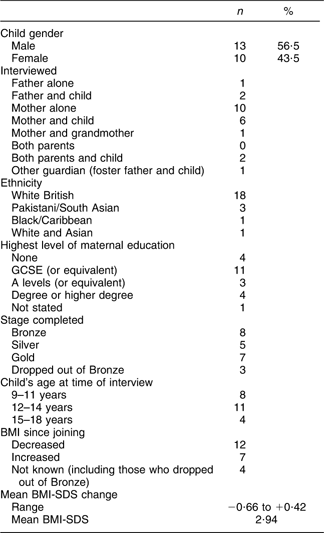
| n | % | ||
| Child gender | |||
| Male | 13 | 56·5 | |
| Female | 10 | 43·5 | |
| Interviewed | |||
| Father alone | 1 | ||
| Father and child | 2 | ||
| Mother alone | 10 | ||
| Mother and child | 6 | ||
| Mother and grandmother | 1 | ||
| Both parents | 0 | ||
| Both parents and child | 2 | ||
| Other guardian (foster father and child) | 1 | ||
| Ethnicity | |||
| White British | 18 | ||
| Pakistani/South Asian | 3 | ||
| Black/Caribbean | 1 | ||
| White and Asian | 1 | ||
| Highest level of maternal education | |||
| None | 4 | ||
| GCSE (or equivalent) | 11 | ||
| A levels (or equivalent) | 3 | ||
| Degree or higher degree | 4 | ||
| Not stated | 1 | ||
| Stage completed | |||
| Bronze | 8 | ||
| Silver | 5 | ||
| Gold | 7 | ||
| Dropped out of Bronze | 3 | ||
| Child's age at time of interview | |||
| 9–11 years | 8 | ||
| 12–14 years | 11 | ||
| 15–18 years | 4 | ||
| BMI since joining | |||
| Decreased | 12 | ||
| Increased | 7 | ||
| Not known (including those who dropped out of Bronze) | 4 | ||
| Mean BMI-SDS change | |||
| Range | −0·66 to +0·42 | ||
| Mean BMI-SDS | 2·94 | ||
SDS, standard deviation score.
Staff members at Leeds and Birmingham who were delivering the programme were invited to participate in one of two focus groups.
Participants
Interviews were conducted with twenty-three families (comprising twenty-five parents and one grandparent). In ten interviews, the child was present and contributed to the discussion.
Four trainers attended the focus group in Leeds and six attended the Birmingham focus group. In total there were eight women and two men, ranging in age from 22 to 48 years. Their time delivering the programme ranged from 2 weeks to 2 years. Trainers had a range of experience and expertise. Four reported personal or family experience managing weight issues and five had previous experience working with children. Seven of the ten trainers also had degree level (or higher) qualifications in a range of relevant subjects including counselling, teaching and health-related subjects, including sport science.
Procedure
Semi-structured interviews were conducted with parents (and the child, if present and willing to participate). Interviews ranged in length from 20 to 45 min. The interviews were conducted by a researcher independent of the programme and unknown to the interviewees prior to interview. A topic guide was devised for the study drawn from the literature( Reference Dixey, Rudolf and Murtagh 4 , Reference Murtagh, Dixey and Rudolf 14 , Reference Rudolf, Christie and McElhone 16 ). The guide included questions about the content of the programme, parents' reasons for attendance, how attendance affected their family life as well as suggestions for improvement. For families who withdrew from the study, additional questions were asked to ascertain their reasons for withdrawing.
Focus groups followed a topic guide, including questions related to trainers' views of programme content and delivery, and the impact the programme had on the families they work with. Both were facilitated by the first and second authors.
Families provided written consent prior to participating and were compensated for their time (£15 voucher). Trainers provided written informed consent before taking part in the focus group session. Ethical approval was obtained from Leeds (West) Research Ethics Committee (06/Q1205/14).
Data analysis
Interviews and focus groups were recorded and transcribed verbatim. The analytical approach adopted was template analysis, in which a list of codes is produced representing themes identified in the text( Reference King 17 ). The first four transcripts were read and coded independently by two members of the research team, resulting in the development of an initial coding frame. The transcripts and initial coding frame were discussed by the authors and modified through consensus. Each broad theme was then subjected to a more detailed analysis by the same two team members, resulting in the formation of more specific categories within themes. Development and refining of the coding frame were achieved through discussion with the team, until consensus was reached. At least half of the families discussed each of the topics presented in the current analysis but the decision to include a topic as a theme was also influenced by the salience of the topic to families, determined by the time dedicated to its discussion. The initial stages of the analysis were conducted manually. Once the initial themes were identified in the data, the qualitative analysis package NVivo version 8 (QSR International, Melbourne, Australia) was used to manage the data.
Results
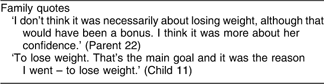
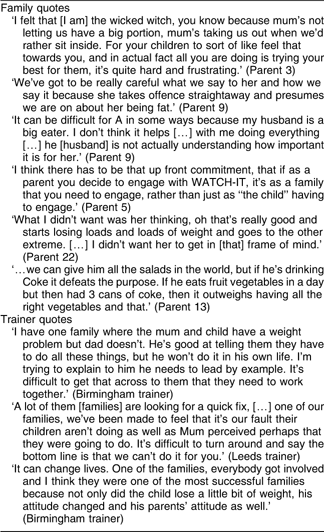
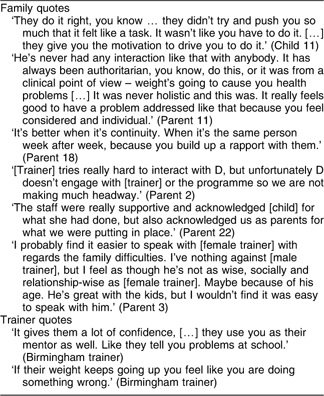
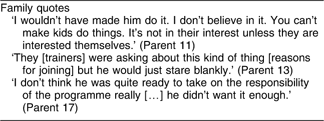
Families and staff talked candidly about their experiences and described the challenges they faced. Themes that developed were: (i) conflicting goals; (ii) parenting challenges; (iii) child's commitment to lose weight; and (iv) trainer–child dynamics. Supporting quotes for each theme are presented in Table 2 to 5.
Quotes on the theme of conflicting goals
| Family quotes |
| ‘I don't think it was necessarily about losing weight, although that would have been a bonus. I think it was more about her confidence.’ (Parent 22) |
| ‘To lose weight. That's the main goal and it was the reason I went – to lose weight.’ (Child 11) |
Quotes on the theme of parenting challenges
| Family quotes |
| ‘I felt that [I am] the wicked witch, you know because mum's not letting us have a big portion, mum's taking us out when we'd rather sit inside. For your children to sort of like feel that towards you, and in actual fact all you are doing is trying your best for them, it's quite hard and frustrating.’ (Parent 3) |
| ‘We've got to be really careful what we say to her and how we say it because she takes offence straightaway and presumes we are on about her being fat.’ (Parent 9) |
| ‘It can be difficult for A in some ways because my husband is a big eater. I don't think it helps […] with me doing everything […] he [husband] is not actually understanding how important it is for her.’ (Parent 9) |
| ‘I think there has to be that up front commitment, that if as a parent you decide to engage with WATCH-IT, it's as a family that you need to engage, rather than just as “the child” having to engage.’ (Parent 5) |
| ‘What I didn't want was her thinking, oh that's really good and starts losing loads and loads of weight and goes to the other extreme. […] I didn't want her to get in [that] frame of mind.’ (Parent 22) |
| ‘…we can give him all the salads in the world, but if he's drinking Coke it defeats the purpose. If he eats fruit vegetables in a day but then had 3 cans of coke, then it outweighs having all the right vegetables and that.’ (Parent 13) |
| Trainer quotes |
| ‘I have one family where the mum and child have a weight problem but dad doesn't. He's good at telling them they have to do all these things, but he won't do it in his own life. I'm trying to explain to him he needs to lead by example. It's difficult to get that across to them that they need to work together.’ (Birmingham trainer) |
| ‘A lot of them [families] are looking for a quick fix, […] one of our families, we've been made to feel that it's our fault their children aren't doing as well as Mum perceived perhaps that they were going to do. It's difficult to turn around and say the bottom line is that we can't do it for you.’ (Leeds trainer) |
| ‘It can change lives. One of the families, everybody got involved and I think they were one of the most successful families because not only did the child lose a little bit of weight, his attitude changed and his parents’ attitude as well.’ (Birmingham trainer) |
Quotes on the theme of trainer–child dynamics
| Family quotes |
| ‘They do it right, you know … they didn't try and push you so much that it felt like a task. It wasn't like you have to do it. […] they give you the motivation to drive you to do it.’ (Child 11) |
| ‘He's never had any interaction like that with anybody. It has always been authoritarian, you know, do this, or it was from a clinical point of view – weight's going to cause you health problems […] It was never holistic and this was. It really feels good to have a problem addressed like that because you feel considered and individual.’ (Parent 11) |
| ‘It's better when it's continuity. When it's the same person week after week, because you build up a rapport with them.’ (Parent 18) |
| ‘[Trainer] tries really hard to interact with D, but unfortunately D doesn't engage with [trainer] or the programme so we are not making much headway.’ (Parent 2) |
| ‘The staff were really supportive and acknowledged [child] for what she had done, but also acknowledged us as parents for what we were putting in place.’ (Parent 22) |
| ‘I probably find it easier to speak with [female trainer] with regards the family difficulties. I've nothing against [male trainer], but I feel as though he's not as wise, socially and relationship-wise as [female trainer]. Maybe because of his age. He's great with the kids, but I wouldn't find it was easy to speak with him.’ (Parent 3) |
| Trainer quotes |
| ‘It gives them a lot of confidence, […] they use you as their mentor as well. Like they tell you problems at school.’ (Birmingham trainer) |
| ‘If their weight keeps going up you feel like you are doing something wrong.’ (Birmingham trainer) |
Quotes on the theme of the child's commitment to losing weight
| Family quotes |
| ‘I wouldn't have made him do it. I don't believe in it. You can't make kids do things. It's not in their interest unless they are interested themselves.’ (Parent 11) |
| ‘They [trainers] were asking about this kind of thing [reasons for joining] but he would just stare blankly.’ (Parent 13) |
| ‘I don't think he was quite ready to take on the responsibility of the programme really […] he didn't want it enough.’ (Parent 17) |
Conflicting goals
Parents and children often had different goals for involvement in the programme. Half of parents explicitly stated they wanted their child to lose weight, but just as many hoped that involvement in the programme would positively impact on their child's psychological well-being, and often prioritised this over weight loss. For the majority of children, the goal was to lose weight, and none mentioned increased self-confidence as a reason for joining. Some children went further than weight loss and suggested their preferred outcome was ‘being skinny’ or ‘to get thin’. None of these children were successful in terms of reduction in BMI-SDS. Some articulated goals of improving their fitness and wanting to be ‘like everyone else’. When parents were asked about their child's goals, self-confidence and self-esteem were not mentioned. The need to identify participants’ goals and ensure that both parent and child goals are consistent with the aims of the weight-loss intervention is important if weight-loss efforts are not to be undermined.
Parenting challenges
Almost half of parents whose child did not lose weight expressed some discomfort denying their child the foods they wanted. Although parents understood the relationship between lifestyle and obesity, they struggled to be consistent in reinforcing this message through their behaviour because they feared that their actions would be interpreted negatively by their child. Parent–child relationships are often imbued with heightened emotions and for some of these families, food and physical activity were sources of ongoing tension. Parents were aware that their child had an emotional investment in food and would comfort eat and were reticent to challenge this behaviour, especially when there was a background of other family tensions, as they worried that this would only exacerbate the situation.
Five parents described in detail how family members undermined their attempts to help their child lose weight and their child received inconsistent messages from adults within their social circle. Some participants attributed blame to the other parent; others accused grandparents of undermining their efforts by feeding the child unhealthy food choices. Children who achieved greater success in weight loss had parents who understood the importance of the whole family engaging in the programme and provided a supportive environment for their child to achieve this goal.
Three parents were ambivalent about making an issue out of their child's weight. They wanted their child to lose weight and were aware of the health implications, but did not want their child to ‘have a complex’ (Parent 3) about their weight. Although they acknowledged that WATCH-IT was careful to talk about achieving a healthy weight, they were nevertheless worried about getting the balance right between being supportive and their child becoming anorexic. Over half of the parents whose children did not lose weight described how they found it difficult to restrict their child's intake of unhealthy foods. Parents of older children in particular felt that their efforts were being undermined by their child; some failed to appreciate how they could support their child by providing access to healthier options and felt let down when their child failed make appropriate choices.
Focus group discussions highlighted that trainers were aware that some families struggled to support to their child. However, it was felt that parents could do more to provide consistent messages and be better role models for their children. Trainers felt that parents often failed to make the connection between their own behaviour and the child's weight and believed some families abdicated responsibility for their child's health to the trainers and failed to engage with the lifestyle advice provided. One trainer recounted how he had experienced parents blaming him for their child's lack of success. Trainers agreed that children who do well are those who have supportive families who attend the classes with them and view engagement with the programme as a ‘family endeavour’ rather than situating the problem as within the child.
Child's commitment to lose weight
Consensus from families was that successful weight loss was predicated on the child's desire to lose weight and their ownership over their involvement. Although parents acknowledged they had a role to play, most perceived this to be a supportive, not leading role. Six of the eleven parents whose child had lost weight felt that forcing their child to attend would not have yielded benefits. Children were also aware that weight loss required motivation, but they spoke using more concrete terms such as saying they would need to ‘try harder’ (Child 1). A few parents described how they had instigated enrolment on the programme and their child had not articulated any personal goals relating to their own weight loss. Few of these children lost any weight. Six of the parents whose children had not lost weight attributed their lack of success to the child not being ‘ready’ to take control over their weight. For these parents, motivation was perceived to be something internal to an individual rather than something socially constructed and maintained.
Trainer–child dynamics
The trainer–child relationship was an important facet of the programme and viewed by almost all parents as crucial to continued attendance. Six families continued to attend even when their child failed to lose weight and identified other tangible benefits from participation including weight maintenance and increased confidence, which they attributed to the relationship the trainers had built up with their child. Many children developed close trusting relationships with their trainers who were viewed by parents as providing direction, structure and motivation to the child. Five families expressed negative views of the clinicians they had contact with prior to coming into the programme and compared the approach of trainers with that of clinicians. Occasionally trainers failed to connect with a child, making it difficult to provide the support needed. Continuity was also perceived to be vital to both parents and children and it was important that changeovers were handled sensitively.
The relative youthfulness of the trainers, while facilitating bonding with the children, deterred some parents from talking through parenting problems as they felt the trainers lacked ‘life experience’. This could potentially leave parents without the support they need to provide a home environment which encourages adherence to the programme. Trainers too acknowledged the importance of developing a positive relationship with the child, although few talked about developing a relationship with the family/parent. Trainers became close to the children they worked with and some felt personally responsible when a child they were working with failed to lose weight or gained. Trainers also highlighted motivation as key to aiding success in weight management. The trainers even suggested that the exact content of the programme is possibly less important than the readiness to change of the families involved.
Discussion
The present study provides a contribution to the evidence base by considering the differing perspectives of children, parents and trainers towards childhood weight management. We found that parents and children often had different goals for involvement and, in common with other studies( Reference Murtagh, Dixey and Rudolf 14 ), that ongoing support from the family was important( Reference Rhee, Lumeng and Appugliese 18 – Reference Braet, Jeannin and Mels 20 ). However, families often struggled to provide the consistency of support needed to facilitate success. Some parents felt they should take the lead in supporting their child's weight loss efforts; others put the onus on the child. Trainers attributed a lack of success to a lack of parental support. Families believed the trainer–child relationship was also important to maintaining commitment to the programme and thereby facilitating weight loss. Both the trainers and the parents of children who had lost weight felt management of childhood obesity was something that required dedication from both the family and child.
In common with earlier studies, the parents in our study often prioritised psychological well-being over weight loss as their goal for involvement in the programme( Reference Dixey, Rudolf and Murtagh 4 , Reference Hughes, Stewart and Chapple 12 ). These goals were often met, as increased self-confidence was a more common outcome than significant BMI-SDS reduction. In contrast children wanted to lose weight, and programmes need to help children maintain their motivation in the face of limited success( 21 ). Discrepancy in the perceptions that parents and children have about childhood weight management have been found in other studies( Reference Lindelof, Nielsen and Pedersen 13 , Reference Shrewsbury, King and Hattersley 22 , Reference Rosenkranz, Geller and Dzewaltowski 23 ) and are associated with family strain and arguments( Reference Lindelof, Nielsen and Pedersen 13 ). Although the psychological benefits of involvement are important, weight management programmes need to make their purpose explicit to parents and help them to support their child's goals as well as their own; thus moving beyond the goal of improved psychological well-being to goals which include BMI-SDS reduction. One way of enhancing their joint participation may be to identify their individual goals and facilitate supported discussions to negotiate their goals for involvement.
Parents often struggled to set and enforce boundaries, and provide consistent messages to their child. Parenting style has been identified as an important factor associated with child health( Reference Golan, Kaufman and Shahar 19 , Reference Rudolf 24 , Reference Golan and Crow 25 ) and four classic parenting styles have been described that relate to how responsive parents are to children's needs and their level of control within the relationship( Reference Baumrind 26 , Reference Maccoby and Martin 27 ). These parenting styles are: (i) authoritative (respectful of child's opinions but maintains clear boundaries); (ii) authoritarian (strict disciplinarian); (iii) permissive (indulgent, without discipline); and (iv) neglectful (emotionally uninvolved and does not set rules). In our study, parents struggled to provide consistent messages and were often permissive in their parenting style, which has been found to be associated with poorer outcomes( Reference Rhee, Lumeng and Appugliese 18 ).
The application of psychological theory can help programme developers understand how to enhance child weight management programmes. From an SCT( Reference Bandura 28 ) perspective a person must believe they are competent (high self-efficacy) to perform those behaviours they believe will result in their desired outcome (e.g. weight loss). However, in children, high self-efficacy and expectancy outcomes may not result in behaviour change if the child does not have access to resources to support this goal (e.g. healthful foods/opportunities for exercise). Conversely, providing access to appropriate resources will not ensure behaviour is initiated or maintained if the child has low self-efficacy or is not motivated to change( Reference Deci and Ryan 29 ). Parents play a pivotal role in maintaining motivation by providing an environment which promotes healthy eating and exercise habits( Reference Bandura 5 ).
Self-determination theory (SDT)( Reference Deci and Ryan 30 ) argues that parents play an important role in developing their child's self-efficacy and intrinsic motivation by exposing them to autonomy-supportive contexts which allow the child a sense of choice about their actions( Reference Deci and Ryan 29 ). SDT has been used successfully in the context of childhood weight management( Reference Gillison, Standage and Skevington 31 – Reference Markland and Ingledew 33 ), and findings from these studies suggest individuals are more likely to sustain behaviour if the intervention supports their needs for autonomy, competence and relatedness. A recent qualitative study suggests that conflicting messages from family and friends can undermine this motivation( Reference Hester, McKenna and Gateley 34 ). This suggests that behaviour change is more likely to occur if parents create opportunities that foster autonomous self-regulation rather than to control their child's behaviour (i.e. pressuring them towards certain behaviour)( Reference Ryan, Deci and Grolnick 35 ). The families in our study who achieved successful weight loss emphasised how they were working with their child, and used terms such as ‘partnership’ in their descriptions of their relationship. Parallels can be drawn between the partnership approach described by these successful families and parental autonomy support and authoritative parenting( Reference Baumrind 36 ), and thus adds to our growing body of knowledge about the usefulness of psychological theory in understanding childhood weight management.
In our study, successful families felt that the family and child were jointly responsible for making changes; in the case of adolescents, the adolescent needed to take a leading role, with parental support. Although the importance of the family to successful childhood weight management is not disputed( Reference Hughes, Stewart and Chapple 12 , Reference Epstein, Valoski and Wing 37 , Reference Owens, Sharp and Shield 38 ), some have questioned the role of the child as the target for these interventions( Reference Golan, Kaufman and Shahar 19 , Reference Golan and Crow 25 ). Golan and co-workers( Reference Golan, Kaufman and Shahar 19 , Reference Golan and Crow 25 ) found that childhood obesity could be managed by targeting parents, through the modification of their parenting skills. In our study, although trainers aligned themselves with the views of Golan, parents felt strongly that if the child was not motivated to succeed, even with their support, then weight loss would not follow. Indeed, we found some parents blamed their child for their lack of weight loss, suggesting parents fail to grasp the crucial role they play and indicating that not only parenting skills need to be addressed, but also parental beliefs about the causes and management of childhood obesity. These diverse findings show that this is a complex area worthy of further examination.
One explanation for the difficulties parents faced providing consistent messages to their child was that they felt ambivalent about making an issue of their child's weight. Parents were aware of the risks to their child's health if they did not lose weight but did not want to make an issue out of the child's weight. Our findings are consistent with others who have found parents worry that discussing issues of weight may increase the risk of eating disorders( Reference Shrewsbury, King and Hattersley 22 , Reference Eneli, Kalogiros and McDonald 39 ). Parents play an important role in helping their child to lose weight and studies suggest that ambivalence reduces the association between attitudes and behaviour( Reference Conner and Sparks 40 ). It may be useful therefore to identify and address parental beliefs about childhood obesity and consider the role of such beliefs in the management of childhood obesity.
Parents and children felt the child–trainer relationship was crucial to successful weight loss and believed that lack of development of this rapport would be detrimental to the child's weight loss efforts. Barlow and Ohlemeyer( Reference Barlow and Ohlemeyer 41 ) found the most cited reason for non-attendance at a weight management programme was dissatisfaction with the attitude of health professionals. This reflects the comments made by children in our study, who found the empathy demonstrated by trainers to be in stark contrast to other experiences they had with health professionals. Parents in the present study found the trainers to be supportive but some felt the characteristics that made it easy for trainers to bond with the child hampered the parent–trainer relationship. Our research suggests the non-medical approach has the potential to empower families to manage their child's weight, but that these relationships need to be closely monitored to ensure they thrive.
Children differed in their ability to engage with different aspects of the programme. This suggests a menu of involvement options may be appropriate, with parents and children targeted for the intervention initially followed by work with parents alone if the child is failing to engage with the programme. This would be in keeping with the conclusions of the Cochrane review of interventions( Reference Luttikhuis, Baur and Jansen 3 ). In common with other studies( Reference Story, Neumark-Stzainer and Sherwood 9 ), trainers in our study reported that some parents failed to engage with the programme. Therefore, families need to be made aware of the commitment required to achieve successful weight management and an explicit exit strategy should be in place for families failing to engage with the programme that would allow re-entry at a later stage.
Strengths and limitations
Care was taken to recruit a wide range of participants with regard to important variables, including age, gender and weight loss achievement. This provided rich data as the experiences of those who struggle or drop out of such programmes are rarely heard. However, although the parents of children who failed to lose weight agreed to be interviewed, only one child who did not lose weight agreed to be present; so the voice of children who did not do well is not well represented in the data. We interviewed families in their own home and for practical reasons we interviewed parents and children together. This may have affected what participants were willing to say in front of each other. However, in almost half of cases only parents were present, and when children were present we found parents spoke candidly about the difficulties they faced. We found parents were supportive and encouraging of the children taking part, initiating what Irwin and Johnson( Reference Irwin and Johnson 42 ) termed ‘scaffolding’ by using phrases such as ‘do you remember when’, which rather than leading the child provided them with some contextual support to allow them to provide examples of things that had happened to them.
Data were independently coded by more than one researcher and the results discussed with the team. It was not the intention to produce a generalisable account of experiences of weight-loss programmes, but to understand how we can improve such programmes; as such the study provides valuable information to researchers and clinicians developing obesity programmes.
Implications for clinical practice
-
1. The goals of both the parent and the child need to be identified at the beginning of any programme as there may be discrepancies that need to be explored.
-
2. Programmes need time dedicated to facilitating parent and child communication. Enhancement of parental communication and negotiation skills would lead to acknowledgement and better understanding of the child's views and help to address any lack of engagement.
-
3. Parents often struggled to provide consistent messages to their children. There is a need to identify ways in which families can be helped to develop authoritative parenting skills. A particular focus on increasing their child's motivation would be beneficial. Autonomy-supportive parenting and SDT provide a possible framework for this.
-
4. Programmes need to accommodate the complex home environments experienced by many children, and this presents an important challenge to researchers as well as clinicians.
-
5. Further research is needed to investigate the potential value of tailoring packages according to the needs of the parents and child. This will require incorporating strategies so that the focus can be switched to parents when the child fails to engage with the programme. Parents therefore need to better understand their role in any programme.
-
6. The relationship with trainer is a keystone of success. It is important that child–trainer relationships are monitored to ensure the therapeutic relationship is working. Continuity of staff is important to compliance and continuing involvement, so staffing changes need to be managed sensitively.
Conclusion
Identifying the active ingredients of childhood weight management packages is important as very few interventions result in the child moving from obese to normal weight( Reference Luttikhuis, Baur and Jansen 3 ). Successful weight management occurred when the family and child were engaged but strategies are needed to support families when the child is not engaged. There is a tendency for parents to provide inconsistent messages regarding weight management and there would appear to be a need for further guidance to help parents support their child. The trainer–child relationship appears important to success and its active ingredients need to be clarified to ensure that trainers have the necessary attributes to achieve a productive relationship.
Acknowledgements
This research was funded by NHS Leeds, UK. There are no conflicts of interest. M.T. conducted the interviews with I.W. and produced the first draft of the manuscript. M.B. and M.R. provided feedback on all drafts of the manuscript and contributed to the ideas presented. We would like to offer our thanks for Janet Shepherd for allowing us access to the WATCH-IT data and to all the participants and their families who kindly gave their time to talk with us.



