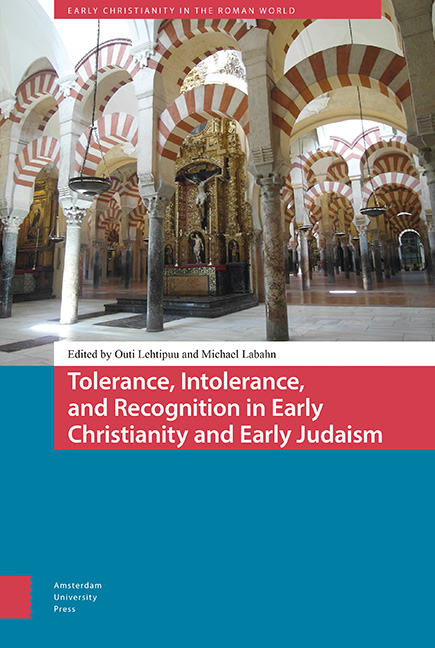

This collection of essays investigates signs of toleration, recognition, respect and other positive forms of interaction between and within religious groups of late antiquity. At the same time, it acknowledges that examples of tolerance are significantly fewer in ancient sources than examples of intolerance and are often limited to insiders, while outsiders often met with contempt, or even outright violence. The essays take both perspectives seriously by analysing the complexity pertaining to these encounters. Religious concerns, ethnicity, gender and other social factors central to identity formation were often intertwined and they yielded different ways of drawing the limits of tolerance and intolerance. This book enhances our understanding of the formative centuries of Jewish and Christian religious traditions. It also brings the results of historical inquiry into dialogue with present-day questions of religious tolerance.
Loading metrics...
* Views captured on Cambridge Core between #date#. This data will be updated every 24 hours.
Usage data cannot currently be displayed.
This section outlines the accessibility features of this content - including support for screen readers, full keyboard navigation and high-contrast display options. This may not be relevant for you.
Accessibility compliance for the PDF of this book is currently unknown and may be updated in the future.
