


Introduction
One of the current major questions of veterinary practice is whether an animal should be neutered or not. Although apparently simple, the answer is highly complex, contradictory and may have implications not only for animal behaviour but also may present risk or even protective factors for disease development(Reference Kustritz1–Reference Howe3). On this matter, veterinarians are expected to be able to advise owners on castration and make sure that caring procedures, risks and benefits based on available research are easily comprehended.
Gonadectomy is often performed to promote health. According to Bailey(Reference Bailey4), several studies evaluated longevity and health in dogs and observed that neutered animals are more likely to suffer from reproductive diseases such as pyometra and non-cancerous prostate disease, breast and reproductive tumours, pregnancy-related disorders or unwanted hormone-associated behaviour. On the other hand, numerous recent publications have identified specific complications related to gonadectomy in animals, with conflicting results between the studies, among which can be cited for example: neoplasic changes, surgical interventions, pyometra, behavioural/anxiety issues, prostate disease, urinary incontinence, obesity, dysplasia and ligament rupture(Reference Bailey4). According to Reichler(Reference Reichler5), this is mainly because gonadectomy confers a mix of benefits and adverse effects that depend on age of neutering, sex, species and breed(Reference Bailey4).
The development of recommendations for an informed case-by-case assessment requires an assessment of the risks and benefits of gonadectomy, including potential effects on neoplasia, orthopedic disease, reproductive disease, behaviour, longevity and population management, as well as anaesthetic and surgical risk complications. However, many factors other than neutered status play an important role in these outcomes, including breed, sex, genetics, lifestyle and body condition(Reference Houlihan6).
The neutering procedure in dogs and cats is predominantly performed before puberty, between 7 and 10 months of age. Large and giant dog breeds tend to reach puberty later than smaller breeds; for this reason, large and giant breeds should be neutered or spayed at a later stage of life(Reference Kustritz2).
Current prospects about the ideal age for the neutering of dogs and cats have been updated and published by Howe(Reference Howe7), and it becomes clear that there is not a preferable age for this procedure. The decision of the ideal age for neutering is influenced by several factors, which include species, breed, sex, breed size and specific diseases of each breed, among others.
There is a considerable disparity among veterinarians regarding recommendations given to pet owners, and thus the purpose of this review is to compile and present information in a clear and concise manner, addressing the indication of neutering, its possible risks, benefits, and the adequate nutritional management for neutered dogs and cats.
Population control
Dogs and cats are multiparous animals with short gestation time, with potential for producing numerous offspring that can reach sexual maturity at 6 months of age(Reference Beaver8). These factors associated with pet owners’ lack of responsibility contribute to the abandonment and uncontrolled growth of the dog and cat population.
The main social pressure to perform a gonadectomy is a continuous overpopulation of unwanted dogs and cats and a perception that routine surgery reduces this population. Researchers found that intact animals were at greater risk of abandonment and unwanted descendants and threatened to represent an important factor affecting shelter animal populations(Reference Bailey4).
Castration thus becomes one of the most viable solutions in order to alleviate this problem and to prevent these animals from reproducing and consequently reduce the stray animal population. Gonadectomy performed before a dog reaches sexual maturity or adoption may address the issue of owner compliance, improve animal overpopulation and prevent the birth of unintended litters(Reference Houlihan6).
According to the World Organization for Animal Health(9), isolated activities of collection and euthanasia are not effective for population control. It is therefore recommended to act on the cause of the problem, which is mainly the lack of responsible care of pet owners and the uncontrolled reproduction of pets. The humanitarian method of population control consists of an extensive programme of neutering stray and client-owned animals, for those who do not wish to shelter any other pets or want to simply prevent their animals from breeding; and in conducting education campaigns for responsible care(9).
There are differences in gonadectomy rates across the world, and these can be explained by differences in cultural differences and attitudes toward castration, and differences in economic status in rural and urban settings(Reference Berthoud, Nevison and Waterhouse10,Reference Trevejo, Yang and Lund11) . Improving veterinary training in paediatric anaesthetic and early gonadectomy techniques is mandatory for dog and cat gonadectomy before adoption, and further education of dog and cat owners about the reproductive physiology of small animals can only be beneficial in addressing these social issues(Reference Kustritz2).
Risks and benefits for health
Neoplasia
A common justification for early spaying of bitches is the prevention of mammary gland neoplasia. However, references in the literature date from at least 50 years ago(Reference Frye, Dorn and Taylor12–Reference Schneider, Ingram, Mitchell and Martin14), and this evidence has not been verified with the benefit of developing diagnostic methods and knowledge of potential biases such as age and breed.
A systematic review(Reference Beauvais, Cardwell and Brodbelt15) about the actual effect of spaying on the risk of developing mammary tumours in dogs, which involved screening more than 10 000 articles, has shown that there is some evidence suggesting that spaying before 2·5 years is associated with considerable reduction in the risk of malignant mammary gland tumours and this risk can be further reduced when spaying is performed before the first oestrus.
Another study has also described that mammary neoplasia is among the most common tumours observed in non-spayed bitches and about 50 % of these neoplasias are malignant(Reference Chang, Chang and Chang16) and there are differences in the risk for development and malignancy among different dog breed sizes(Reference Howe7,Reference Itoh, Uchida and Ishaikawa17) .
Older studies showed that characteristics such as abnormal oestrus cycle, false pregnancy, pregnancy, litter numbers and offspring size do not represent major factors for increased risk of tumours(Reference Brodey, Fidler and Howson18,Reference Schneider, Dorn and Taylor19) . However, the role of oestrogen in the aetiology of breast cancer in women is well established(Reference Sorenmo, Shofer and Goldschmidt20). The risk of developing breast cancer is believed to be influenced by total cumulative exposure of the breast tissue to bioavailable oestrogens and associated cumulative mitotic activity(Reference Henderson, Ross and Bernstein21,Reference Hulka, Edison and Lininger22) , and the factors determining oestrogen exposure include early menarche, late menopause, nulliparity, pregnancy, obesity and use of oestrogen replacement therapy(Reference MacMahon, Cole and Brown23,Reference Key and Pike24) .
Questionnaires completed by owners and veterinarians were used to obtain life-long medical and health information of 242 female Rottweilers, mainly assessing breast cancer and pyometra; although the risk of developing both diseases was positively correlated with ovarian hormone exposure, increased ovarian hormone exposure (≥ 4·3 years) was also associated with an overall longevity increase (a 33 % reduction in mortality, living 17 months longer than females with shorter ovarian hormone exposure)(Reference Waters, Kengerie and Maras25). According to the same authors, these findings cast doubt on the argument that elective ovariohysterectomy should be defended as an intervention that promotes longevity, based on protection against diseases that have a moderate risk of late mortality (breast carcinoma) or a low risk of mortality (pyometra)(Reference Waters, Kengerie and Maras25). However, it is important to note that the study was conducted only with Rottweiler females and, therefore, a genetic predisposition may play an important role.
Mammary gland tumours are also common in non-neutered cats, but the risk of development of this type of tumour in felines is about 50 % of that observed in dogs(Reference Rutteman and Misdorp26). However, 85 to 93 % of these tumours in cats are malignant and over 80 % of cats with malignant tumours already present metastasis at the moment of diagnosis(Reference Howe7).
Spaying cats under the age of 1 year was associated with an 86 % reduction in the risk of developing mammary gland neoplasia compared with non-spayed females(Reference Overley, Shofer and Goldschmidt27,Reference Henry, Bonagura and Twedt28) . Therefore, as in dogs, spaying in cats is extremely beneficial for the prevention of mammary neoplasia.
In male dogs, neutering can avoid testicular neoplasia(Reference Howe7). Although it has been estimated that less than 1 % of intact male dogs die of testicular cancer(Reference Johnston, Root Kustritz and Olson29), this low mortality rate is due to the high cure rate associated with the low risk of developing this type of tumour. Similarly, male cats rarely develop testicular neoplasia(Reference Towle, Tobias and Johnston30).
In general, genital tract tumours are rare in castrated dogs and cats. Most canine and feline uterine and vaginal tumours are leiomyomas. Because the occurrence of leiomyomas is mainly reported in intact bitches and queens(Reference Wolke31–Reference Kydd and Burnie34) and these tumours were not seen in ovariectomised female dogs before 2 years of age(Reference Brodey and Roszel35), hormonal influence is strongly suspected.
Vaginal and vulvar tumours account for 2·4 to 3 % of all dog tumours(Reference Thacher and Bradley33,Reference Brodey and Roszel35,Reference Saba, Lawrence, Withrow, Vail and Page36) . Leiomyomas are the most common vaginal tumours in dogs(Reference Reichler5,Reference Saba, Lawrence, Withrow, Vail and Page36,Reference Herron37) . Because they occur most commonly in intact bitches, it is suggested that vaginal leiomyomas may be hormone-dependent(Reference Saba, Lawrence, Withrow, Vail and Page36,Reference Herron37) . Although this association has not been proven, castration can have a substantial sparing effect(Reference Houlihan6).
Teske et al. (Reference Teske, Naan and Dijk38) investigated the frequency of prostate carcinoma in dogs and concluded that neutering influences the incidence of this disease. The procedure is not related to the onset of development but, instead, it favours tumour progression(Reference Al Omari, Shidaifat and Dardaka39). However, similar to testicular neoplasia, the risk of a prostate tumour is extremely low (0·6 %) in companion animals(Reference Heuter and Morgan40).
In relation to other types of tumours, such as lymphoma, recently Bennett et al. (Reference Bennett, Taylor and Williamson41) identified and quantified host risk factors for lymphoma in a large population of Australian dogs (n 6201). Neutered animals presented higher risk compared with intact animals in both male and female groups.
With the removal of the gonads, diseases such as ovarian tumours and cysts no longer occur. In addition, neutered dogs and cats are no longer susceptible to ovarian hormone-mediated disorders such as vaginal hyperplasia or uterine disease(Reference Reichler5).
However, the incidence of receding vulva, perivulvar dermatitis and vaginitis are higher in castrated than in intact bitches and the incidence may even be higher in neutered females when young(Reference Verstegen-Onclin and Verstegen42). Finally, the incidence of urinary incontinence due to castration ranges from 3 to 21 % in different studies. In most cases, the cause of urinary incontinence after castration is a reduction in urethral closure pressure(Reference Arnold43). The risk of urinary incontinence is influenced by several factors such as body weight, breed and age of castration(Reference Reichler5).
Other research conducted with veterinary surgeons found that the most common medical concern was the increased risk of lower urinary tract disease in neutered felines(Reference Spain, Scarlett and Cully44). In a large study of male and female cats, gonadectomy and obesity were risk factors for the development of feline lower urinary tract disease(Reference Lekcharoensuk, Osborne and Lulich45), but other previous studies showed no difference(Reference Stubbs, Bloomberg and Scruggs46,Reference Root, Johnston and Olson47) . Therefore, further research on the subject is needed.
In enzootic areas where reproduction is poorly controlled and there is a large number of sexually active dogs roaming free, venereal tumours are the most common tumours in dogs(Reference Rogers48–Reference Woods, Withrow, Vail and Page50). Transmissible venereal tumours usually remain located in the external genitalia(Reference Rogers48–Reference Woods, Withrow, Vail and Page50) and may become locally invasive. Metastases occur in up to 5 to 17 % of affected dogs(Reference Das and Das49,Reference Woods, Withrow, Vail and Page50) . A decrease in mating behaviour would greatly reduce the transmission of venereal tumours(Reference Houlihan6).
Even cardiac tumours have been evaluated in castrated animals, and, despite the similar frequency in male and female dogs, the relative risk of developing a cardiac tumour in castrated females was four times that of intact females(Reference Ware and Hopper51). However, as most dogs with heart tumours were older than 10 years and the age data of the control population are missing, it is not possible to exclude a possible effect of extended life expectancy of neutered dogs(Reference Reichler5).
Neutered animals may show increased rates of specific tumours, with the exception of mammary gland tumours. However, for almost all studies available in the literature, the relationship between neutering status and disease-specific risk may have been influenced by the age of animals used. In other words, if neutering increases life expectancy, neutered animals may present higher occurrences of end-of-life diseases (such as cancer) simply due to increased longevity. Hoffman et al. (Reference Hoffman, Creevy and Promislow52) compared the causes of death of more than 40 000 intact and neutered dogs and observed that neutering was associated with increased longevity, and although it reduced the risk of death from some diseases, such as infections, it increased the risk of death from others such as cancer. Thus, it should be considered that the probability of neutering as well as the likelihood of tumours increase with increasing age, so it is expected that animals that die from infectious diseases are more likely to be puppies and that animals who die of cancer are most probably older, so the exposure time of the gonads must be taken into consideration.
Still on this subject, a recently published study evaluated the association between mortality, gonadectomy and the development of cancer in golden retrievers(Reference Kent, Burton and Dank53). Whether the animal was castrated or intact, the risk of cancer-related death did not increase, but longevity did. The likelihood of being neutered increases with age; furthermore, the impact of the owner may play a role. Owner’s awareness might be reflected in part by the reproductive status. Following this discussion in different breeds, Hart et al. (Reference Hart, Hart and Thigpen54) evaluated, over a period of 14·5 years, 1170 intact and castrated German shepherd dogs for joint disorders and cancer previously associated with sterilisation. Breast cancer was diagnosed in 4 % of intact females compared with less than 1 % in castrated females before 1 year. The occurrence of other types of cancer at 8 years of age was not higher in neutered dogs than in intact dogs(Reference Hart, Hart and Thigpen54). Furthermore, while investigating associations between age at gonadectomy and estimated risk or age at diagnosis of neoplasic disorders in Vizslas, Zink et al. (Reference Zink, Farhoody and Elser55) observed that gonadectomised dogs aged ≤ 6 months, between 7 and 12 months or > 12 months old had significantly increased chances of developing cancer (i.e. mastocytoma and lymphoma) compared with the chances of sexually intact dogs. Gonadectomised females of ≤ 12 months of age and gonadectomised males and females of > 12 months of age had significantly increased chances of developing hemangiosarcoma compared with the chances of sexually intact dogs(Reference Zink, Farhoody and Elser55). Additional studies are necessary to verify the biological effects of gonadal hormone removal and the individuality and characteristics of each breed.
Immune system
A promising area of research that has not been explored in great depth is the impact of castration on the immune system and its ability to fight disease, as the reproductive and immune systems are highly interdependent(Reference Sundburg, Belanger and Bannasch56).
Immune organs and tissues, such as thymus, lymph nodes and spleen, have receptors for steroid hormones(Reference Tanriverdi, Silveira and Maccoll57). Earlier studies have shown that thymus ablation (the organ in which T lymphocytes mature) disrupted gonadal development and reduced steroid production(Reference Grossman58); correspondingly, neutered male rats at an early age presented delayed thymic involution, thymic hyperplasia and decreased immune function(Reference Ahmed, Penhale and Talal59).
In order to assess the relationship between the immune system and neutering, a recent study with dogs investigated the possible association between neutering and diseases associated with immune function compromise. The authors concluded that diseases such as hypoadrenocorticism, autoimmune haemolytic anaemia, atopic dermatitis, hypothyroidism, inflammatory bowel disease and thrombocytopenia present increased prevalence in neutered dogs; that is, castration may result in a detrimental effect on the immune functions and health of companion animals(Reference Sundburg, Belanger and Bannasch56). However, increased prevalence may be associated with other factors associated with castration, such as obesity.
The incidence of vaccine-associated adverse events has also been reported in the literature(Reference Moore, Guptill and Ward60,Reference Moore, DeSantis-Kerr and Guptill61) and the overall risk was higher for neutered v. sexually intact cats, according to the authors. One reason for these results is reduced oestrogen and testosterone, each acting in the physiological balance of protective immunity. Although oestrogens improve the humoral response, they inhibit cytokine release in human mast cells(Reference Kim, Chae and Shin62). Testosterone and its metabolites preserve the number of CD4+ and CD25+ regulatory T cells, which suppresses autoimmunity(Reference Page, Plymate and Bremner63). The total immune impact of changes in sex hormones is yet to be elucidated, as the immunomodulatory effects of oestrogen and androgens on B-cell functions may also be indirectly mediated by gonadotropin-releasing hormone(Reference Johnson and Sohrabji64).
Skeletal system
Skeletal development is regulated by gonadal hormones that signalise closure of long bone epiphyseal plates. Thus, neutering before the closure of the epiphyseal plate may result in the overgrowth of these long bones(Reference Salmeri, Bloomberg and Scruggs65), and contribute to a higher prevalence of joint disorders(Reference Kustritz2,Reference Kustritz66–Reference Hart, Hart and Thigpen68) .
Furthermore, studies have also suggested that neutering may influence the risk of cranial cruciate ligament rupture (CCLR) in pets. The CCLR in dogs is equivalent to humans rupturing their anterior cruciate ligament, a knee ligament. CCLR in dogs may occur due to trauma, but may also have genetic risk factors because some breeds appear to be predisposed, including the Labrador retriever. The definitive cause of CCLR has not been determined, but it probably has many factors(Reference Ekenstedt69).
In particular, two recent studies specifically investigated this issue and observed increased risk of injury independent of other factors (i.e. obesity)(Reference Torres De La Riva, Hart and Farver67,Reference Hart, Hart and Thigpen68) . Another recent study also showed that CCLR cases were more common in sterilised female dogs 1 year old or younger compared with sterilised female dogs older than 1 year old. For males, this finding was suggestive but not statistically significant, concluding that early sterilisation (≤1 year) may increase the risk of developing CCLR later in the life of Labradors (particularly in bitches)(Reference Ekenstedt69).
Evaluating different breed specifics, Hart et al. (Reference Hart, Hart and Thigpen54) observed that both intact male and neutered German shepherds were significantly more diagnosed with one or more joint disorders. The increased incidence of joint disorders primarily associated with early castration was the rupture of the cranial cruciate ligament(Reference Hart, Hart and Thigpen54).
Another widespread question regarding skeletal development is the relationship between neutering and hip dysplasia, and according to Hart et al. (Reference Hart, Hart and Thigpen68), the risk of development of this disease is higher in neutered dogs when compared with intact ones.
Obesity is also an important factor that may contribute to the development of cranial cruciate ligament injuries and hip dysplasia, and it is well documented that after neutering animals tend to gain excessive weight if food intake is not managed accordingly. Thus, these studies demonstrate the importance of body condition score control, especially for neutered pets.
Accordingly, there are concerns expressed by some veterinarians and owners about the increasing risk of spinal fractures in neutered adult male cats and its possible association with gonadectomy. Some studies have evaluated this(Reference McNicholas, Wilkens and Blevins70,Reference Perry, Fordham and Arthurs71) , and increased body condition score was the main risk factor for fractures, not neutering.
Animal behaviour
Another important subject approached in order to favour the neutering of dogs and cats is its influence on behaviour. Sexually dimorphic behaviours are the most commonly exhibited by a sex, with mounting and spraying of urine as prime examples(Reference Hart and Eckstein72). Aggression can be a sexually dimorphic behaviour. More commonly, only forms of aggression associated with the presence of females in oestrus (aggression between females or between males housed with these females) are considered sexually dimorphic(Reference Kustritz2). Gonadectomy and the subsequent decrease in gonadal steroid hormones were correlated with a decrease in sexually dimorphic behaviours(Reference Stubbs, Bloomberg and Scruggs46,Reference Patronek, Glickman and Beck73–Reference Hart and Barrett77) . Non-sexually dimorphic behaviours are not typically affected by gonadectomy(Reference Kustritz2).
Duffy et al. (Reference Duffy, Hsu and Serpell78) investigated canine aggression, and, against popular belief, results of the research suggest that neutered animals were more inclined to excessive aggressive behaviour instead of a gentler one. However, these behaviour effects appeared to be more specific for some breeds.
Another study assessing whether aggressive behaviour towards family members, strangers or other dogs was significantly different in gonadectomised dogs at various ages v. intact dogs was recently performed, and neither gonadectomy nor age of gonadectomy was associated with aggression against individuals or dogs. However, there was a small but significant increase in the chances of moderate or severe aggression against strangers in all gonadectomised dogs compared with intact dogs, but this effect was entirely driven by data from gonadectomised dogs at 7–12 months of age, who were 26 % more likely to show aggression to strangers. The authors concluded that given the growing evidence of significant adverse effects of gonadectomy to health, it is urgent to systematically examine other ways to prevent unwanted breeding, such as vasectomy and hysterectomy(Reference Farhoody, Mallawaarachchi and Tarwater79).
Recently Scandurra et al. (Reference Scandurra, Alterisio and Di Cosmo80) evaluated the effect of ovariectomy on the ability of females to follow human signals. A group of forty client-owned bitches (eighteen intact females and twenty-two gonadectomised females) were tested in the object selection task using the human proximal pointing gesture, and the results show a detrimental effect of ovariectomy on dogs’ socio-cognitive skills related to responsiveness to pointing human gestures.
Regarding the period of gonadectomy and its effects on animal behaviour, Valcke(Reference Valcke81) assessed whether there is a difference in long-term undesirable behaviour between prepubertal gonadectomised cats and traditional-age gonadectomised cats. The conclusion of the research was that there is no detectable difference in the total number of potentially undesirable behaviours between groups, and that the evolution of these behaviours over 5–7 years is the same between the two groups.
According to Kustritz(Reference Kustritz2), androgen deprivation has been associated with increased amyloid deposition in the brain of humans and rodents and decreased synapses in the brain of rodents and non-human primates(Reference Janowsky82). However, in a study(Reference Waters, Shen and Glickman83) in which researchers directly examined brain tissue for DNA damage, a significantly higher percentage of neurons had extensive DNA damage in sexually intact Beagles than in castrated Beagles between 9 and 10·5 years old.
In addition, studies with rats have shown that neutering after adulthood impairs spatial memory (identification of objects and location)(Reference Gibbs and Johnson84,Reference Spritzer, Gill and Weinberg85) and exogenous replacement of testosterone may re-establish these alterations(Reference Spritzer, Daviaub and Coneenya86,Reference Wagner, Braddick and Batson87) .
Investigation of spatial abilities was also conducted. A recent study in dogs evaluated the effects of sex and gonadectomy on the spatial performance of dogs(Reference Mongillo, Scandurra and D’Aniello88). This study provides the first evidence of an effect of ovariectomy on dogs’ spatial cognition, in which intact females outperformed ovariectomised females in terms of learning speed and accuracy in learning task and memory.
Cats also exhibit behavioural changes associated with neutering, but, unlike dogs, reduced fights and decreased sexual behaviour (walking around for mating) in male cats are observed after the procedure, which is also correlated with a decrease in energy expenditure and weight gain(Reference Hart and Barrett77).
A more recent study observed that neutering in cats before 5·5 months is actually associated with decreased sexual behaviour and territorial marking through urination, in addition to decreased aggression(Reference Spain, Scarlett and Houpt89). However, for the prevention of behavioural changes before 1 year of life, attention should be directed to canine and feline sociability and not just on neutering(Reference Duffy, Hsu and Serpell78).
Another study with dogs focused on the reported behaviour of 6235 castrated male dogs and calculated their percentage lifetime exposure to gonadal hormones (PLGH)(Reference McGreevy, Wilson and Starling90). A total of forty behaviours differed between whole and neutered dogs, twenty-five of which were associated with PLGH and fourteen with the age of castration. Only two behaviours, urine marking and howling when left alone, were significantly more likely in dogs with longer PLGH. On the other hand, longer PLGH was associated with significantly reduced reporting of twenty-six behaviours, most of them undesirable. Of these, eight were related to fear and seven to aggression. These results suggest that the tendency of dogs to exhibit numerous behaviours may be influenced by the age at neutering, and indicate how the dog’s behaviour matures when gonadal hormones are allowed to take effect(Reference McGreevy, Wilson and Starling90).
Regarding anaesthetic and surgical complications, the present literature review reveals that there is a minimal difference in risk of surgical complications or subsequent developmental abnormalities between paediatric gonadectomy performed on dogs between 6 and 14 weeks of age and gonadectomy performed on 6-month-old dogs, both before puberty(Reference Houlihan6). Studies(Reference Kustritz2,Reference Burrow, Batchelor and Cripps91,Reference Pollari, Bonnett and Bamsey92) regarding neutering by veterinary students found complication rates of 20 to 30 %, but the most common complications were considered minor problems and the occurrence rate was influenced by the experience of the individual performing the surgery. Thus, complications can be minimised by appropriate patient selection, use of safe and efficient anaesthesia protocols, application of minimally traumatic surgical preparation and surgical techniques, careful patient monitoring, and multimodal pain management, including preoperative analgesia(Reference Epstein, Rodan and Griffenhagen93,94) .
Risk of post-neutering obesity
Neutering has been associated with weight gain and obesity. In a recent review of the effects of diet and gonadal steroids on appetite regulation and pet food intake, de Godoy(Reference de Godoy95) mentions that, overall, studies have revealed that gonadectomy is characterised by increased food intake and body weight, accompanied by physiological and behavioural changes. The papers listed in the review showed that different sex hormones affected eating differently. Androgens (i.e. testosterone) are anabolic hormones, resulting in increased food intake and lean tissue mass, while oestrogens are catabolic, decreasing food intake and body weight. Some studies have also shown associations between gonadectomy and changes in appetite-related hormones (i.e. ghrelin, leptin, adiponectin and glucagon-like peptide-1). However, the same author mentions that, overall, most scientific evidence to date has produced conflicting results, especially related to the effect of sex hormones and dietary interventions on appetite-related hormones and blood metabolites(Reference de Godoy95).
Fettman et al. (Reference Fettman, Stanton and Banks96) observed increased body weight and deposition of adipose tissue in castrated males and females compared with intact cats. Food intake also increased 3 months after the procedure in neutered animals, with no differences in nutrient digestibility. Furthermore, other studies have shown that energy intake increased after castration(Reference Houpt, Coren and Hintz97,Reference Jeusette, Detilleux and Cuvelier98) .
However, considerations should be made regarding the interpretation and discussion of these results. For example, in the study by Houpt et al. (Reference Houpt, Coren and Hintz97), spayed bitches were fed ad libitum and perhaps, as a consequence, they presented higher food intake and weight gain, similar to the study of Fettman et al. (Reference Fettman, Stanton and Banks96) with cats.
A study performed by Jeusette et al. (Reference Jeusette, Detilleux and Cuvelier98) has also evaluated the effect of gonadectomy, and the authors observed lower ad libitum energy intake in non-spayed bitches during oestrus, indicating that the effect is mainly related to the cyclical effect of oestradiol, in modulation of the satiating and orexigenic effect of intestinal hormones(Reference Butera99).
Kanchuk et al. (Reference Kanchuk, Backus and Calvert100) have also observed weight gain after neutering as a result of increased ad libitum energy intake and decreased energy expenditure. Insulin and leptin are considered signs of adiposity of the peripheral system that indicate the status of body energy reserves to the central nervous system; since the secretion and biological effect of these hormones are modified by gonadal mediators(Reference Mystkowski and Schwartz101), neutering may result in decreased expenditure and increased consumption of energy. The increase in food intake takes place fast, beginning 3 d after gonadectomy, and this acute effect is a result of the withdrawal of gonadal hormones, although it is unclear how plasma concentrations of these hormones have an influence over this matter.
In another study, Allaway et al. (Reference Allaway, Gilham and Colyer102) aimed to determine the total energy requirement of kittens (15 to 52 weeks) by investigating the impact of castration and age on ingestion and body weight. Kittens were neutered when they were 19 or 31 weeks old and the results suggest that sterilisation in the early stages of sexual development may reduce the likelihood of acute changes in eating behaviour. From the standpoint of weight control and wellbeing, sterilisation before or at 26 weeks may be beneficial(Reference Allaway, Gilham and Colyer102).
In order to add more information to the topic of satiety after neutering, a recent study(Reference Schauf, Salas-Mani and Torre103) aimed to evaluate the effect of neutering on food intake, and especially blood concentrations of hormones related to satiety (blood ghrelin (active), cholecystokinin, total peptide YY and insulin) and activity of dogs. Neutering was not associated with inefficient control of food intake or variation in satiety hormones released in the gut, but was associated with decreased activity compared with intact dogs.
Based on current scientific literature, it can be assumed that the increased risk of obesity after neutering is not only motivated by increased energy intake but mainly by decreased energy demand and decreased activity(Reference Schauf, Salas-Mani and Torre103). Obesity is mainly related to positive energy balance, in which energy intake is higher than energy expenditure, leading to its accumulation in the form of adipose tissue. This is illustrated in Fig. 1, adapted from Michel(Reference Michel, Fascetti and Delaney104), in which a cat that consumes only 10 kcal (42 kJ) above its daily energetic requirements will accumulate, at the end of 1 year, about 450 g of adipose tissue. Depending on the size and breed of this cat, this may be equivalent to 10 % of its ideal weight, which means significant weight gain.
Energy imbalance of neutered animals (adapted from Michel(Reference Michel, Fascetti and Delaney104)).

Thus, castrated cats have a higher risk of becoming obese, and therefore have a two to nine times greater risk of developing diabetes mellitus than sexually intact cats(Reference Panciera, Thomas and Eicker105–Reference Prahl, Guptill and Glickman107). The increased likelihood of cats developing obesity and diabetes mellitus after neutering may be due to decreased insulin sensitivity(Reference Hoenig and Ferguson108,Reference Kanchuk, Backus and Calvert109) . In intact bitches, altered progesterone-induced glucose metabolism occurs during pregnancy, metoestrus and after progesterone administration. Neutering is an integral part of the treatment of diabetes mellitus in these cases(Reference Reichler5).
According to Le Roux(Reference Le Roux110), BMR is also directly related to weight gain after neutering. This author evaluated ovariectomised bitches fed with a pre-determined amount of complete commercial food, and after spaying a decrease in BMR and a tendency for energy expenditure reduction were observed.
Thus, in order to stimulate maintenance of ideal body weight, exercise, provision of an adequate amount of food and constant body condition score monitoring are necessary for proper management of neutered animals.
Nutritional management after neutering
Hormonal status and reduction of physical activity are two important factors that affect energy expenditure, leading to a decrease in energy demand and, consequently, the need to adjust nutritional management after neutering(Reference Bermingham, Thomas and Morris111–Reference Bermingham, Thomas and Cave113).
Feeding ad libitum should be avoided and any amount of food supplied should be in accordance with the energy requirement estimated with specific equations.
The National Research Council(114) recommends the use of the equation 130 kcal (544 kJ) × (kg body weight)0·75 for daily energy requirement calculation for active dogs. However, for neutered animals, due to the decreased energy demand, the equation for inactive dogs is usually necessary, and corresponds to 95 kcal (397 kJ) × (kg body weight)0·75 or even less, depending on an individual evaluation of the patient(114,115) .
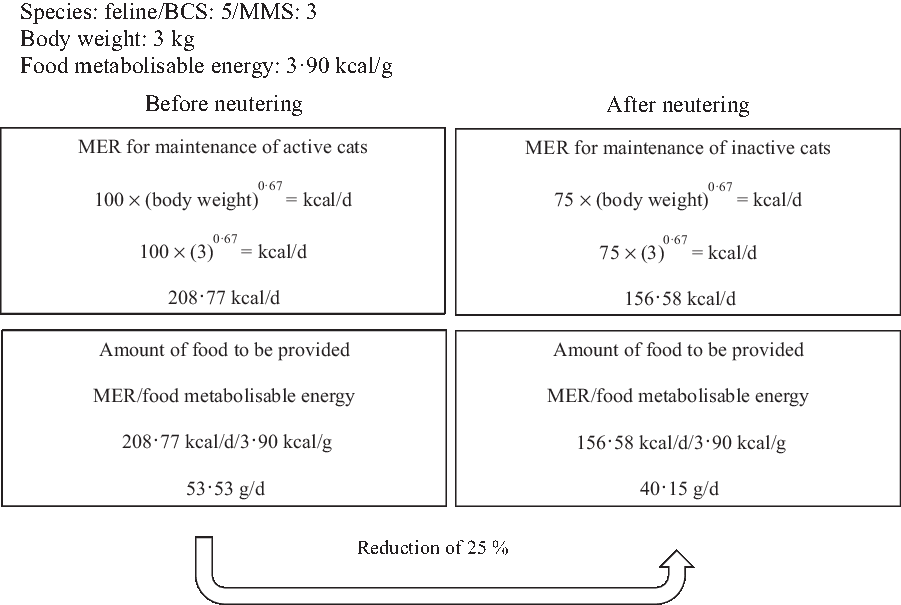
Regarding the maintenance energy requirement for cats, a specific equation for neutered animals should be applied based on information from the European Pet Food Industry Federation (FEDIAF)(115), which recommends per d 75 kcal (314 kJ) × (kg body weight)0·67. As for active cats, daily energy requirement should be estimated according to equation of 100 kcal (418 kJ) × (kg body weight)0·67.
In order to exemplify and illustrate the lower energy requirement after neutering, Fig. 2 and Fig. 3 illustrate the examples of a dog with 10 kg body weight and a cat with 3 kg body weight, in which the equations of the National Research Council(114) and FEDIAF(115) are applied, before and after neutering.
Effect of neutering on energy requirement for adult dogs. BCS, body condition score; MMS, muscle mass score; MER, metabolic energy requirement. To convert kcal to kJ, multiply by 4·184.

Effect of neutering on energy requirement for adult cats. BCS, body condition score; MMS, muscle mass score; MER, metabolic energy requirement. To convert kcal to kJ, multiply by 4·184.
Risk factors associated with the occurrence of overweight and obesity are mainly related to the owner’s lack of perception regarding true body condition of the animal, considering it normal when it is overweight(Reference Colliard, Paragon and Lemuet116). Thus, one of the key points for appropriate nutritional management after the procedure is assessment of body condition score(117). The correct evaluation of body condition score in all animals helps to identify and avoid weight gain in the early stages; however, for ideal assessment the evaluators must be trained and have experience with the technique.
Energy density is one of the main different characteristics of a diet specifically formulated for neutered animals, with low energy density being of major importance for this matter. A recent study conducted by Spofford et al. (Reference Spofford, Mougeot and Elliott118) evaluated a diet with low energy and fat content and observed that dietary energy is positively correlated with weight gain after neutering in cats. Lund et al. (Reference Lund, Armstrong and Kirk119) have also demonstrated that uncontrolled food intake contributes to weight gain in neutered male cats due to its higher energy density.
A study by Schauf et al. (Reference Schauf, Salas-Mani and Torre103) has also evaluated the effect of feeding high-carbohydrate or high-fat diets on consumption and on satiety factors of dogs before and after neutering. The authors concluded that the intake of a high-carbohydrate diet tends to increase the concentrations of mediators involved in satiety regulation (cholecystokinin and total peptide YY). Similarly, Backus et al. (Reference Backus, Cave and Keisler120) observed that replacing carbohydrates with fat does not seem to prevent weight gain in neutered cats. There is also scientific evidence that diets with high fibre and protein content improve satiety in companion animals(Reference Weber, Bissot and Servet121). In addition, as glycaemia and insulinaemia are directly related to satiety, slow-digesting starches are recommended to minimise animal appetite(Reference Carciofi, Takakura and De-Oliveira122) as they provide a prolonged postprandial response to glucose and insulin, which could improve glycaemic control.
Data available in the literature on the effect of protein on neutered dogs and cats are limited. One study has shown that neutered cats with body weight similar to intact cats may have relatively lower lean body mass(Reference Bjornvad, Nielsen and Armstrong123). For example, canine diets with high levels of protein may be a beneficial nutritional strategy to maintain body composition after neutering, with the maintenance of lean mass and not increase of fat mass(Reference Kawauchi, Jeremias and Takeara124). However, more studies are needed to verify the impact of different levels of protein intake on pets after neutering.
Based on the information described in the literature to date, Table 1 summarises the metabolic and physiological changes related to neutering and recommended nutritional management for dogs and cats.
Physiological changes of neutering and nutritional recommendations for dogs and cats

FEDIAF, European Pet Food Industry Federation.
Conclusions
Neutering dogs and cats leads to benefits such as the prevention of undesired reproduction, decreased incidence of neoplasia, and increased life expectancy in dogs and cats. In contrast, neutered animals may be more predisposed to obesity. The higher propensity for weight gain can be prevented by the implementation of adequate nutritional management in the post-neutering phase, focusing mainly on the correct calculation of energy requirement and the use of a proper diet. Based on the present review, veterinary professionals now have scientific tools to recommend or not the neutering procedure and the appropriate nutritional management for this purpose.
Acknowledgements
The authors would like to thank Grandfood Industria e Comercio LTDA (Premier Pet), for the partnership and maintenance of the Dog and Cat Nutrition Research Center (CEPEN PET), where the review was prepared.
The study had no funding.
T. H. A. V. and M. A. B. were responsible for planning the review. T. H. A. V., A. R. A., V. P., R. V. A. Z. and R. B. A. R. were responsible for writing and editing. M. A. B. was responsible for reviewing the manuscript.
There are no conflicts of interest to be declared by the authors.



