




1. Introduction
Recent advances in generative artificial intelligence (GenAI), described as technology “capable of producing novel and realistic content across a broad spectrum (e.g., texts, images, or programming code) for various domains based on basic user prompts” (Banh & Strobel, Reference Banh and Strobel2023, p. 1), have transformed language teaching and learning from one-way knowledge delivery into distributed interactive human–GenAI dialogue (Chang & Sun, Reference Chang and Sun2024; Kim et al., Reference Kim, Lee, Detrick, Wang and Li2026; Wang & Zhang, Reference Wang and Zhang2026). As GenAI becomes embedded in learners’ everyday language work, learners face greater demands to organize their goals, assess system feedback, and regulate their strategies accordingly. These activities are central to self-regulated learning (SRL) and a prerequisite to learner autonomy and continuous growth (Little et al., Reference Little, Dam and Legenhausen2017; Zhang & Zhang, Reference Zhang, Zhang and Gao2019; Zimmerman, Reference Zimmerman1989). The convergence of GenAI affordances with SRL has given rise to GenAI-supported self-regulated learning (GenAI-SRL), with learners increasingly drawing on GenAI to support their planning, monitoring, and evaluation (Banihashem et al., Reference Banihashem, Bond, Bergdahl, Khosravi and Noroozi2025; Pan et al., Reference Pan, Lai and Guo2025; Wu et al., Reference Wu, Radloff, Yeter, Wang and Chiu2025). While the technological applications of GenAI-SRL have received growing attention, its theoretical development as a construct remains limited.
This issue becomes particularly acute in out-of-class settings characterized by independent learning and limited instructional scaffolding (Lai & Gu, Reference Lai and Gu2011; Reinders et al., Reference Reinders, Lai and Sundqvist2022). Informal language learning beyond the classroom is not homogeneous but spans a wide range of contexts that differ in terms of location, formality, pedagogy, and locus of control (Benson, Reference Benson, Benson and Reinders2011; Reinders et al., Reference Reinders, Lai and Sundqvist2022); it is therefore better understood as a continuum rather than as a single category. Benson (Reference Benson, Benson and Reinders2011) proposes that self-instructed and naturalistic learning represent “two ends of a continuum” in terms of pedagogical structure (as cited in Reinders et al., Reference Reinders, Lai and Sundqvist2022, p. 3). As learners “construct their own L2 learning experiences, drawing from a wide range of resources, including materials, teachers, self-study, technology, other learners, and native speakers” (Reinders et al., Reference Reinders, Lai and Sundqvist2022, p. 2), the present study’s context sits closer to the self-instructed end of this continuum. In this setting, learners voluntarily engaged with GenAI tools outside any formal course requirements, occasionally drawing on peer and teacher support as a self-chosen resource rather than an institutionally structured one.
GenAI tools indeed offer technological support in out-of-class settings, but they also introduce challenges that require learners to filter and evaluate outputs in order to regulate their learning proactively. Such demands point to the importance of GenAI literacy, which refers to how learners engage with, evaluate, and apply GenAI technologies to support their learning (Ng et al., Reference Ng, Leung, Chu and Qiao2021; Wang et al., Reference Wang, Rau and Yuan2023). Different forms of interaction also deserve attention. Studies indicate that peer interaction, teacher support, and GenAI-mediated exchanges can deliver feedback, guidance, and individualized suggestions that benefit learner engagement and SRL behaviors (Gu & Liu, Reference Gu and Liu2025; Kim et al., Reference Kim, Lee, Detrick, Wang and Li2026; Liu & Fan, Reference Liu and Fan2025; Pan et al., Reference Pan, Lai and Guo2025). However, how these interactions function in GenAI-mediated informal learning contexts and how they relate to GenAI literacy and GenAI-SRL remains unclear.
Methodologically, previous research has been imbalanced toward linear models, such as structural equation modeling (SEM), to explore relationships among variables in informal language learning (e.g., Lai et al., Reference Lai, Chen, Wang and Qi2024). These models rest on linear assumptions and therefore struggle to capture the nonlinear patterns embedded in human–GenAI interaction. We therefore paired artificial neural networks (ANNs) with linear approaches, as ANNs employ neuron-like architectures to model complex relationships beyond linear constraints (e.g., Qasem et al., Reference Qasem, Asadi, Abdullah, Yah, Atan, Al-Sharafi and Yassin2020). This research was guided by two aims: (1) to explore relationships among multiple interactions (teacher–student, student–student, and student–GenAI), GenAI literacy, and GenAI-SRL in informal learning contexts, and (2) to apply ANNs to dig out nonlinear patterns that linear models may obscure. The findings are expected to have implications for the theoretical and pedagogical foundations of designing learning environments that foster learners’ SRL in informal language learning contexts.
2. Literature review
2.1 Self-regulated learning in GenAI-enhanced environments
Pintrich (Reference Pintrich, Boekaerts, Pintrich and Zeidner2000) articulated SRL as “an active, constructive process whereby learners set goals for their learning and then attempt to monitor, regulate, and control their cognition, motivation, and behavior, guided and constrained by their goals and the contextual features in the environment” (p. 453). According to social cognitive theory, SRL represents the strategic regulation of personal, behavioral, and environmental influences to guide learning (Zimmerman, Reference Zimmerman1989). The advancement of GenAI has motivated researchers to coin the term GenAI-SRL to explain regulatory processes in these new contexts. GenAI-SRL describes how learners use GenAI systems to plan, monitor, and evaluate their learning while also managing their interactions with these intelligent tools (Banihashem et al., Reference Banihashem, Bond, Bergdahl, Khosravi and Noroozi2025; Chang & Sun, Reference Chang and Sun2024). The reciprocal exchanges between human learners and artificial agents necessitate sociocultural co-regulation frameworks to understand this process. Hadwin et al. (Reference Hadwin, Järvelä, Miller, Zimmerman and Schunk2011, p. 74) located co-regulated learning within “Vygotskian views of higher psychological processes being socially embedded or contextualized” (Vygotsky, Reference Vygotsky1978), together with the view that these processes “are internalized through social interaction” (Wertsch & Stone, Reference Wertsch, Stone and Wertsch1985). Lantolf (Reference Lantolf2000) applied this framework to second language learning, arguing that regulatory control develops through a gradual movement from object-regulation to other-regulation and finally to self-regulation over learners’ social and cognitive activities. Building on this, Lantolf and Poehner (Reference Lantolf and Poehner2014) extended the “zone of proximal development” (ZPD) to L2 education and proposed that the ZPD structures activities that mediate learners into participation “in ways that exceed their current abilities” (p. 147), with learners “eventually attain[ing] self-regulation” through co-regulation in social environments (p. 158). The integration of GenAI into instructional contexts has breathed new life into this co-regulatory dynamic, and learners can now enjoy much more personalized and responsive feedback from intelligent tools. However, overreliance on GenAI may reduce learners’ autonomy and critical judgment (Lo et al., Reference Lo, Hew and Jong2024), most studies have addressed isolated phases of SRL rather than the full regulatory spectrum (Chang & Sun, Reference Chang and Sun2024), and the relationship between GenAI-SRL and other learning variables in informal contexts remains empirically underexplored.
2.2 Multiple types of interactions in GenAI-mediated informal language learning
Research indicates that different interaction types shape learner experience across learning contexts (Hofkens et al., Reference Hofkens, Pianta, Hamre, Maulana, Helms-Lorenz and Klassen2023; Li, Reference Li2023; Liu, Sun et al., Reference Liu, Sun, Zhang, Wang and Yang2025). Moore (Reference Moore and Keegan1993) identifies three major types: teacher–student, student–student, and student–content interaction. Student–teacher interaction is a relational process between teachers and learners that drives engagement and learning across multiple dimensions (e.g., emotional, organizational, and instructional; Hofkens et al., Reference Hofkens, Pianta, Hamre, Maulana, Helms-Lorenz and Klassen2023). This interaction supports enjoyment, engagement, and SRL strategies in foreign language learning (Dan & Bai, Reference Dan and Bai2025; Li, Reference Li2023). Student–student interaction provides a relatively equal interpersonal space in which learners work together to support language learning (Philp et al., Reference Philp, Adams and Iwashita2013), and it facilitates linguistic accuracy development through negotiated feedback and supports collaborative meaning-making and reflection (Sato & Lyster, Reference Sato and Lyster2012; Watanabe, Reference Watanabe2008). Student–content interaction focuses on how learners engage with instructional and digital materials (Moore, Reference Moore and Keegan1993; Xiao, Reference Xiao2017). With the integration of GenAI, this interaction is reconfigured as a human–GenAI interaction, since learners now engage with flexible and adaptive rather than static materials. This shift is characterized by reciprocity between humans and GenAI (Kim et al., Reference Kim, Lee, Detrick, Wang and Li2026), with GenAI functioning as an encyclopedic companion that informs, adapts to, and guides learners toward improvement (Banihashem et al., Reference Banihashem, Bond, Bergdahl, Khosravi and Noroozi2025; Gu & Liu, Reference Gu and Liu2025; Pan et al., Reference Pan, Lai and Guo2025). When learning moves outside formal contexts, however, the conditions that support interaction become less structured. Informal language learning refers to learners’ self-directed engagement in language activities beyond formal instruction and curricular structures (Lai & Gu, Reference Lai and Gu2011; Reinders et al., Reference Reinders, Lai and Sundqvist2022), which in the present study takes the specific form of the autonomous, proactive use of GenAI tools driven by personal language learning goals rather than by formal course requirements (Liu, Darvin, & Ma, 2025; Liu & Zhao, Reference Liu and Zhao2026). Teacher–student and peer exchanges typically occur as brief, problem-focused episodes (e.g., Lai et al., Reference Lai, Zhu and Gong2015), while student–GenAI interaction has become increasingly prevalent as learners adopt GenAI tools for independent language practice. How these three interaction types operate in GenAI-mediated informal foreign language learning contexts continues to be unclear.
2.3 GenAI literacy in foreign language learning
GenAI literacy represents the capacity to use, evaluate, and ethically engage with generative AI tools (Ng et al., Reference Ng, Leung, Chu and Qiao2021; Wang et al., Reference Wang, Rau and Yuan2023). However, existing frameworks struggle to reach an agreement on what GenAI literacy entails, given their differences in dimensional coverage and conceptual orientation. Ng et al. (Reference Ng, Leung, Chu and Qiao2021) derived their framework from a synthesis of previous works related to AI literacy. Their framework consists of four interconnected dimensions (i.e., know and understand AI, use and apply AI, evaluate and create AI, and AI ethics). Wang et al. (Reference Wang, Rau and Yuan2023) echoed this multidimensional view and structured AI literacy around usage, awareness, evaluation, and ethics. Drawing on Bloom’s taxonomy (Bloom, Reference Bloom1956), Ng et al. (Reference Ng, Wu, Leung, Chiu and Chu2024) carved out a validated four-component framework spanning affective, behavioral, cognitive, and ethical dimensions. Drawing on these frameworks, the present study operationalizes GenAI literacy as learners’ cognitive understanding, behavioral application, critical evaluation, ethical awareness, and affective engagement in GenAI interactions (Ng et al., Reference Ng, Leung, Chu and Qiao2021, Reference Ng, Wu, Leung, Chiu and Chu2024; Wang et al., Reference Wang, Rau and Yuan2023). Empirically, Wang and Zhang (Reference Wang and Zhang2026) found that GenAI literacy positively predicts students’ behavioral intentions and actual usage of GenAI for informal digital learning of English, and Fan and Zhang (Reference Fan and Zhang2024) indicated that AI literacy promotes learners’ continuance intention through positive attitudes and foreign language enjoyment. Further evidence from informal learning contexts shows similar patterns. Zou et al. (Reference Zou, Reinders and Amjad2026) reported that participation in GenAI-mediated informal digital learning of English activities enhanced learners’ GenAI literacy and foreign language enjoyment, which sequentially mediated the effect of this participation on their willingness to communicate in English. These findings suggest that GenAI literacy may shape how learners regulate their informal learning behaviors in GenAI-mediated environments.
2.4 Theoretical framework and hypothesis development
The present study employs transactional distance theory (TDT) as a theoretical framework to examine the relationships among GenAI literacy, learner interactions, and GenAI-SRL in informal contexts (Moore, Reference Moore and Keegan1993). TDT has been applied in technology-enhanced language learning and offers a lens for understanding how dialogue (interaction between learners and human agents), structure (the rigidity or flexibility of instructional design), and autonomy (the degree to which learners exercise control over their learning) collaborate to support language learning (e.g., Wang et al., Reference Wang, Hui and Zhang2026). The present study applies these dimensions to GenAI-powered informal foreign language learning contexts. Structure is treated as minimal in GenAI-supported out-of-class learning contexts because the learning activities were learner-initiated, non-assessed, and free from institutional prescription. For example, learners voluntarily used GenAI tools such as ChatGPT for self-directed language practice, sought real-time linguistic feedback, and engaged in personally motivated language tasks outside scheduled class time. Dialogue encompasses three interaction types (i.e., student–teacher, student–student, and student–GenAI). Autonomy is assessed through GenAI-SRL to index the extent of learner-initiated regulatory actions. Additionally, we incorporate GenAI literacy to interpret competence requirements in GenAI-mediated learning contexts.
Empirically, learners’ interaction with GenAI chatbots has been found to offer personalized scaffolding that supports self-regulated strategy use and reading engagement (Pan et al., Reference Pan, Lai and Guo2025). Wu et al. (Reference Wu, Radloff, Yeter, Wang and Chiu2025) indicate that AI chatbots offer adaptive feedback and metacognitive prompts that support learners’ monitoring and evaluation processes, while also facilitating co-regulated learning through teacher- and peer-mediated interaction. Student–student collaborative argumentation supported by ChatGPT has also been shown to significantly enhance learners’ argumentative speaking performance, critical thinking awareness, and collaboration tendency (Darmawansah et al., Reference Darmawansah, Rachman, Febiyani and Hwang2025). Furthermore, teacher-guided GenAI interventions were found to significantly improve several SRL dimensions, particularly goal setting, task strategies, and time management (Gu & Liu, Reference Gu and Liu2025). Student–GenAI, student–student, and student–teacher interactions may each contribute to distinct but complementary regulatory processes during GenAI-supported informal foreign language learning. We therefore hypothesize that:
H1: Student–GenAI, student–student, and student–teacher interactions positively predict GenAI-SRL.
Within the sociocultural framework outlined above, student–GenAI, student–student, and student–teacher interactions may each function as distinct forms of ZPD activity, providing mediational support through which learners develop new competencies. For out-of-class technology-supported language learning, Lai et al. (Reference Lai, Hu and Lyu2018) demonstrated that teacher and peer support shaped learners’ engagement with these activities, suggesting that social interaction structures how learners approach technology-mediated learning activities outside the classroom. Within GenAI-mediated informal digital learning of English, learners’ engagement with GenAI tools has been shown to directly and positively predict GenAI literacy (Zou et al., Reference Zou, Reinders and Amjad2026). Furthermore, higher-literacy learners tend to demonstrate more collaborative engagement and greater involvement in metacognitive activities such as planning and evaluation (Kim et al., Reference Kim, Lee, Detrick, Wang and Li2026). This leads to the hypothesis that:
H2: Student–GenAI, student–student, and student–teacher interactions positively predict GenAI literacy.
Kim et al. (Reference Kim, Lee, Detrick, Wang and Li2026) found that students with higher AI literacy were more willing to embrace GenAI, actively accepting its suggestions and engaging it in metacognitive activities such as planning and evaluation, whereas their lower-literacy counterparts engaged in less interaction. Huang and Derakhshan (Reference Huang and Derakhshan2025) demonstrated that AI-related digital literacy significantly predicted Chinese university EFL learners’ perceived behavioral control, which in turn shaped their AI adoption in self-regulated learning. However, their study did not specifically address GenAI literacy, nor did it examine how each literacy dimension independently contributes to SRL behaviors. It is reasonable to hypothesize that:
H3: Different dimensions of GenAI literacy contribute differentially to GenAI-SRL.
Research suggests that technology competence may mediate relationships between interactions and learning behaviors. Hashmi et al. (Reference Hashmi, Iqbal, Asghar and Siming2026) found that online learning interactions predicted SRL both directly and indirectly through technology proficiencies, while Liu and Fan (Reference Liu and Fan2025) showed that technological and pedagogical stimuli influenced willingness to communicate through AI literacy. During GenAI-supported informal language learning, repeated engagement with GenAI tools, peers, and teachers may build learners’ GenAI literacy over time, and this literacy may in turn govern how they regulate their own learning. Whether GenAI literacy functions as a mediator in such informal contexts remains unexplored. We propose that:
H4: GenAI literacy mediates the relationships between interaction types (student–GenAI, student–student, and student–teacher) and GenAI-SRL.
To test these hypotheses, this study employs a two-phase analytical strategy combining PLS-SEM and ANN. PLS-SEM is appropriate for both exploratory and hypothesis-driven research and handles complex models (Hair et al., Reference Hair, Hult, Ringle and Sarstedt2017, Reference Hair, Risher, Sarstedt and Ringle2019), but it assumes linear relationships and may not capture nonlinear patterns. To address this limitation, ANN was introduced to complement PLS-SEM by capturing nonlinear patterns and ranking predictor importance (e.g., Almufarreh, Reference Almufarreh2024; Qasem et al., Reference Qasem, Asadi, Abdullah, Yah, Atan, Al-Sharafi and Yassin2020).
3. Methodology
3.1 Research context
Foreign language learners at Chinese universities exhibit high instrumental motivation but face limited authentic language exposure (Lai & Gu, Reference Lai and Gu2011; Lai et al., Reference Lai, Zhu and Gong2015; Zhang, Reference Zhang2021), leading many to turn to informal digital learning. This study is situated in the context of GenAI-mediated informal digital language learning among Chinese university students, which refers to “the self-directed, proactive, and independent use of AI technologies by language learners to support their L2 development outside formal educational settings” (Liu & Zhao, Reference Liu and Zhao2026, p. 113). Before data collection, participants were introduced to this concept through concrete examples, such as using ChatGPT to check and revise writing outside the classroom, and were explicitly informed that the survey was not concerned with their in-class learning experiences but with their own autonomous, self-initiated language learning practices beyond formal instruction. They were then instructed to respond to all survey items based on this context. Within this informal context, student–GenAI interaction constitutes the primary mode of engagement. Student–student and student–teacher interactions refer to digitally mediated, voluntary communicative practices through which learners seek peer collaboration and teacher guidance on a self-initiated basis, such as sharing GenAI-generated feedback with peers or consulting teachers about language questions via digital communication platforms. These interactions are neither structured by course syllabi nor required by instructors but rather constitute a natural component of informal digital language learning in which learners draw on “the facilitation of others (e.g., teachers, peers)” as part of their self-directed practices beyond the classroom (Liu, Darvin, & Ma, Reference Liu, Darvin and Ma2025, p. 1658).
3.2 Participants and data collection
Data were collected through snowball sampling via an online survey platform (Wenjuanxing, https://www.wjx.com). We included a screening item asking whether participants used GenAI tools for informal language learning, and only participants who selected “yes” could continue with the survey. The study received ethical approval from the Foreign Studies College, Northeastern University, China (No. 20250310WY), and all participants provided electronic informed consent, with anonymity, voluntary participation, and the right to withdraw guaranteed. We screened the data quality for careless responding using response time thresholds (under 100 seconds, based on pilot study averages), long-string analysis, missing data, and attention check items. Of the 393 responses initially collected, 343 were deemed valid.
There were 141 males and 202 females with an average age of 21.39 years (SD = 2.25). They majored in various academic fields, including science and engineering (n = 134), humanities and social sciences (n = 109), economics and management (n = 70), and foreign languages (n = 30). The cohort comprised 33 freshmen, 31 sophomores, 37 juniors, 85 seniors, and 157 postgraduates, and had an average of 5.83 years of experience using digital technologies for informal language learning (SD = 3.27). In terms of GenAI tool adoption, the most commonly used tools were ChatGPT (94.2%), Kimi (71.7%), Doubao (67.1%), Gemini (65.3%), Claude (58.9%), DeepSeek (51.6%), Copilot (48.4%), and other GenAI-powered tools (42.6%).
3.3 Instruments
The questionnaire had three parts. Participants first read a scenario describing the use of GenAI tools for foreign language learning in informal settings (e.g., using GenAI tools outside class for writing practice) and responded to the items with this context in mind. The next part collected their demographic information (gender, academic year, major). The third part consisted of validated instruments that assessed GenAI literacy, the three interaction types, and GenAI-SRL (see Supplementary Material Appendix One). The instruments were translated and back-translated by two bilingual experts to ensure semantic equivalence with the original English versions (Brislin, Reference Brislin1970). Any discrepancies identified during this process were resolved collaboratively before the Chinese versions were finalized. Responses were recorded on a 7-point Likert scale ranging from 1 (strongly disagree) to 7 (strongly agree). A pilot study with 50 participants indicated acceptable reliability and validity of the adapted scales, and no items were removed during this stage.
3.3.1 Generative artificial intelligence literacy scale
To assess learners’ GenAI literacy, this study employed the artificial intelligence literacy scale from Wang et al. (Reference Wang, Rau and Yuan2023), which has been validated in informal language learning settings (e.g., Wang & Zhang, Reference Wang and Zhang2026). The scale conceptualizes GenAI literacy as comprising four dimensions, namely awareness, usage, evaluation, and ethics, each measured by three items adapted to the informal language learning context (e.g., “I can choose the most appropriate GenAI application or product from a variety to support my informal language learning tasks”). Internal consistency was adequate: awareness (α = .894), usage (α = .892), evaluation (α = .876), and ethics (α = .870).
3.3.2 Multiple types of interaction scale
Learners’ perceptions of interaction were assessed using a revised version of Kuo et al.’s (Reference Kuo, Walker, Schroder and Belland2014) scale, which comprises three dimensions: learner–instructor (six items), learner–learner (eight items), and learner–content (four items), corresponding in the present study to student–teacher, student–student, and student–GenAI interaction, respectively. The learner–content dimension was adapted to reflect student–GenAI interaction based on expert feedback and pilot study findings. An example item reads, “I used GenAI tools during my out-of-class language learning to obtain feedback or suggestions that supported my learning.” They demonstrated good reliability: student–student interaction (α = .956), student–teacher interaction (α = .948), and student–GenAI interaction (α = .917).
3.3.3 GenAI-supported self-regulated learning scale
To assess GenAI-SRL, we adapted items from questionnaires used by Lai and Gu (Reference Lai and Gu2011) and Lai et al. (Reference Lai, Chen, Wang and Qi2024) to reflect how learners engage in SRL with GenAI tools in out-of-class contexts. Six items were selected to measure this construct. An example item reads, “When using GenAI tools for English learning outside the classroom, I constantly monitored my learning progress.” This scale has a Cronbach’s α of .946.
3.4 Data analysis
We employed a two-stage design combining PLS-SEM (SmartPLS 4.0) and ANN (SPSS 27.0) to examine both linear and nonlinear relationships among study variables. This hybrid approach addresses the limitations of single-method designs by combining structural path analysis with nonlinear pattern detection (Qasem et al., Reference Qasem, Asadi, Abdullah, Yah, Atan, Al-Sharafi and Yassin2020). PLS-SEM was selected for its suitability for complex structural models with multiple latent constructs, robustness to non-normal data, and applicability to both exploratory and confirmatory research from a prediction perspective (Hair et al., Reference Hair, Hult, Ringle and Sarstedt2017, Reference Hair, Risher, Sarstedt and Ringle2019). Our sample size (N = 343) also satisfied the 10-times rule (minimum 70 observations for seven structural paths; Hair et al., Reference Hair, Hult, Ringle, Sarstedt, Danks and Ray2021).
We evaluated the measurement model to ensure adequate reliability and validity. For factorial validity, loadings more than 0.70 were considered acceptable (Hair et al., Reference Hair, Risher, Sarstedt and Ringle2019). Internal consistency was tested using Cronbach’s α, composite reliability (CR), and McDonald’s omega (ω), with the threshold being 0.70 (Hair et al., Reference Hair, Risher, Sarstedt and Ringle2019; Peters, Reference Peters2014). Discriminant validity was examined through the Fornell–Larcker criterion (Fornell & Larcker, Reference Fornell and Larcker1981) and supplemented with the heterotrait–monotrait ratio of correlations (HTMT), and values below 0.85 indicated sufficient discriminant validity (Henseler et al., Reference Henseler, Ringle and Sarstedt2015). Variance inflation factors (VIF) were tested to ensure that the structural estimates were not affected by multicollinearity (Hair et al., Reference Hair, Risher, Sarstedt and Ringle2019).
The structural model used bootstrapping (5,000 subsamples) to estimate path coefficients (Hair et al., Reference Hair, Risher, Sarstedt and Ringle2019). All path coefficients were standardized, and their significance was tested at p < .05. Explanatory power was assessed by R 2 (.25, .50, and .75, indicating weak, moderate, and substantial levels; Hair et al., Reference Hair, Risher, Sarstedt and Ringle2019). Effect sizes (f 2) assessed the relative impact of predictors, with values of .02, .15, and .35 representing small, medium, and large effects (Cohen, Reference Cohen1988). Out-of-sample predictive performance was further assessed using PLSpredict with 10 folds and 10 repetitions, comparing prediction errors (the root-mean-square error, RMSE, and the mean absolute error, MAE) between the PLS-SEM model and a linear regression model (LM) benchmark (Hair et al., Reference Hair, Risher, Sarstedt and Ringle2019). Lower prediction errors in PLS-SEM than in the LM benchmark offer evidence of predictive power (Hair et al., Reference Hair, Hult, Ringle, Sarstedt, Danks and Ray2021).
Next, a multilayer perceptron (MLP) ANN analysis was conducted. The input layer included four GenAI literacy dimensions and three interaction types. The output layer represented GenAI-SRL. All variables were standardized using SPSS defaults to ensure comparability and facilitate network convergence. Following Brownlee (Reference Brownlee2021), a feedforward backpropagation network with one hidden layer was implemented with a hyperbolic tangent activation function in the hidden layer and a linear function in the output layer for continuous outcome variables (Brownlee, Reference Brownlee2021). The optimal architecture was determined automatically, with the number of neurons (i.e., computational units within the network that transform weighted inputs into outputs via an activation function) in the hidden layer ranging from 1 to 50. Training process terminated automatically with the SPSS default stopping thresholds (no decrease in error for one consecutive step, minimum relative change in training error below .0001, minimum relative change in error ratio below .001, or maximum training time of 15 minutes). We retained only cases with complete responses across all measures. Tenfold cross-validation was employed to ensure the model was not overfitting by training on 90% of the sample and testing on the remaining 10%. Model performance was assessed using RMSE, with values near zero indicating optimal prediction accuracy (Almufarreh, Reference Almufarreh2024). To check the incremental value of ANN, we benchmarked ANN performance against a baseline multiple LM with standardized coefficients. We also performed a sensitivity analysis to calculate the relative importance of each input variable in determining the outcome variable. Normalized importance values were calculated by dividing the contribution score of each predictor by the largest observed value to rank variables based on their explanatory power (Qasem et al., Reference Qasem, Asadi, Abdullah, Yah, Atan, Al-Sharafi and Yassin2020).
4. Results
4.1 Descriptive and correlational results
Table S1 (see supplementary material) presents descriptive and correlational statistics. Means ranged from 5.322 to 5.553, indicating relatively high levels across GenAI literacy, interaction types, and GenAI-SRL. All variables correlated significantly and positively with one another (r = .460 to .687, p < .01).
4.2 Measurement model analysis
Supplementary Material Table S2 shows that all factor loadings ranged from .851 to .940, exceeding the .70 threshold (Hair et al., Reference Hair, Risher, Sarstedt and Ringle2019). Multiple indicators confirmed internal consistency (Table S3): Cronbach’s α (.870 to .956), CR (.875 to .957), and ω (.841 to .950) all surpassed .70. The AVE values were above .50 and ensured convergent validity. Discriminant validity was established through the Fornell–Larcker criterion, as the square root of each construct’s AVE exceeded all inter-construct correlations. HTMT values ranging from .506 to .722 (Table S4) confirmed the constructs’ distinctiveness.
4.3 Structural model analysis
4.3.1 Direct effects of interactions and GenAI literacy on GenAI-SRL
Before evaluating structural paths, multicollinearity was ruled out based on VIF values ranging from 1.676 to 2.530 (Table S5, supplementary material). The structural model explained a moderate proportion of the variance in GenAI-SRL (R 2 = .590). The three interaction types explained 40.7% of the variance in awareness, 43.0% in usage, 54.2% in evaluation, and 40.0% in ethics, representing moderate explanatory power (Hair et al., Reference Hair, Risher, Sarstedt and Ringle2019). For H1 (Table S6), student–student interaction showed the strongest effect on GenAI-SRL (f 2 = .063), followed by student–GenAI interaction (f 2 = .035) and student–teacher interaction (f 2 = .033). Regarding H2, student–student interaction showed the strongest effect on awareness (f 2 = .113), followed by student–teacher (f 2 = .059) and student–GenAI (f 2 = .014). Usage was significantly predicted by student–teacher (f 2 = .074), student–GenAI (f 2 = .068), and student–student (f 2 = .050). Evaluation was most strongly predicted by student–teacher interaction (f 2 = .144), alongside student–student (f 2 = .103) and student–GenAI (f 2 = .058). Ethics was significantly predicted by student–GenAI (f 2 = .090) and student–student (f 2 = .079) but not by student–teacher. Among the GenAI literacy dimensions, awareness (f 2 = .023) and evaluation (f 2 = .018) significantly predicted GenAI-SRL, whereas usage and ethics did not, which partially supports H3 (see Figure 1).
Visualization of the structural model.

Figure 1. Long description
The diagram visualizes the structural model linking interactions among students, teachers, GenAI tools, and GenAI-supported self-regulated learning (GenAI-SRL). It includes various labeled components such as SS, ST, SA, AW, US, EV, ET, and GenAI-SRL, each representing different aspects of interaction and GenAI literacy. Solid lines indicate significant relationships, while dashed lines indicate non-significant relationships. The diagram shows how interactions between students and students (SS), students and teachers (ST), and students and GenAI tools (SA) influence awareness (AW), usage (US), evaluation (EV), and ethics (ET). These factors collectively contribute to GenAI-supported self-regulated learning (GenAI-SRL). The relationships are quantified with coefficients and significance levels indicated by asterisks.
Table S7 shows that all Q 2predict values were positive (.264 to .473), and the PLS-SEM model outperformed the LM benchmark across all indicators, with MAE differences ranging from −.008 to −.037, confirming the model’s predictive relevance and accuracy (Hair et al., Reference Hair, Risher, Sarstedt and Ringle2019).
4.3.2 Mediating effects of GenAI literacy
The indirect effects analysis for H4 (see Supplementary Material Table S8) showed that student–student interaction held significant indirect effects on GenAI-SRL via awareness (β = .049, p = .027) and evaluation (β = .041, p = .040). Student–teacher interaction produced similar indirect effects through awareness (β = .032, p = .043) and evaluation (β= .044, p = .038). The indirect paths through usage and ethics were not significant for any interaction type. Student–GenAI interaction showed no significant indirect effects through any of the four GenAI literacy dimensions.
4.4 Relative importance and nonlinear insights from ANN
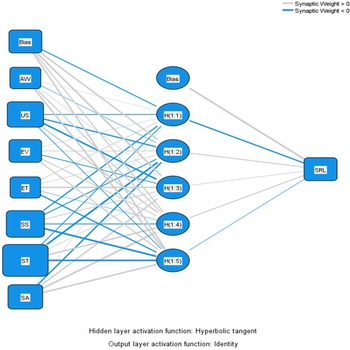
Figure 2 shows that the ANN model demonstrated stable prediction errors across training and testing datasets (see Supplementary Material Table S9). RMSE values ranged from .008 to .204 in training and from .005 to .155 in testing (M = .029, SD = .058; M = .023, SD = .044, respectively). The global sensitivity analysis averaged the relative importance of each predictor across 10 ANN models, and each variable’s importance was normalized by dividing each variable’s importance by the highest observed score. Supplementary Material Table S10 revealed that student–student interaction was the most influential predictor (normalized importance = 100%), followed by student–GenAI interaction (95.43%), awareness (64.38%), student–teacher interaction (61.19%), and evaluation (55.71%). Usage (43.84%) and ethics (36.07%) showed comparatively weaker effects on GenAI-SRL.
Artificial neural network of GenAI-SRL.

Figure 2. Long description
The diagram illustrates an artificial neural network designed for GenAI-supported self-regulated learning (GenAI-SRL). It features an input layer with nodes labeled Bias, AW, US, EV, ET, SS, ST, and SA. These nodes connect to a hidden layer with three nodes labeled H(1:1), H(1:2), H(1:3), H(1:4), and H(1:5), using both positive and negative synaptic weights indicated by gray and blue lines, respectively. The hidden layer connects to an output layer with a single node labeled SRL. The diagram also includes a bias node in the hidden layer. The activation functions for the hidden and output layers are hyperbolic tangent and identity, respectively.
Comparisons across multiple regression and ANN revealed a high degree of agreement (see Supplementary Material Table S11). Five out of seven predictors (71.4%) were ranked consistently. Student–student interaction was the strongest predictor, followed by student–GenAI interaction. Ethics received the lowest ranking, and usage (Rank 6) and evaluation (Rank 5) held the same ranking positions. Awareness ranked fourth in PLS-SEM but third in ANN, while student–teacher interaction ranked third in PLS-SEM but fourth in ANN. These differences suggest that ANN captures nonlinear relationships among predictors that extend beyond what linear approximations can detect.
5. Discussion
5.1 Roles of different interaction types and GenAI literacy in GenAI-SRL
PLS-SEM results showed that all three interaction types had significant positive effects on GenAI-SRL. Our findings extend the positive effects of interactions reported in previous research (e.g., Hashmi et al., Reference Hashmi, Iqbal, Asghar and Siming2026; Liu, Sun, et al., Reference Liu, Sun, Zhang, Wang and Yang2025) to an out-of-class digital language learning context situated toward the self-instructed end of the informal learning continuum, where learners’ engagement was self-initiated, motivated by personal language learning goals, and independent of formal course requirements (Liu, Darvin, & Ma, Reference Liu, Darvin and Ma2025; Liu & Zhao, Reference Liu and Zhao2026). Among the three interaction types, student–student interaction showed the strongest effect on GenAI-SRL. This is consistent with evidence that in technology-enhanced collaborative learning environments, social regulation, which involves collective goal setting, strategy planning, progress monitoring, and feedback provision among learners, positively predicts both academic emotions and academic performance (e.g., Qi & Derakhshan, Reference Qi and Derakhshan2025). Student–GenAI interaction also contributed to GenAI-SRL, though its effect was smaller than that of student–student interaction. This may reflect the nature of informal learning contexts, where GenAI functions primarily as an external regulatory resource that provides on-demand feedback and guidance. Student–teacher interaction also proved important in this study, as teachers may have guided learners in interpreting GenAI-generated feedback and aligning it with their learning goals, thus echoing prior findings that teacher-guided AI intervention significantly improves learners’ goal setting, task strategies, and time management in EFL learning contexts (Gu & Liu, Reference Gu and Liu2025).
With respect to GenAI literacy, awareness and evaluation predicted GenAI-SRL. Our findings extend previous research that treated GenAI literacy as a global construct by unpacking the distinct roles of its subdimensions (e.g., Liu & Fan, Reference Liu and Fan2025; Wang et al., Reference Wang, Rau and Yuan2023). Awareness enabled learners to understand GenAI capabilities and limitations, while evaluation allowed them to assess output quality and relevance. These two dimensions seemed quite important for GenAI-SRL because learners need to recognize what GenAI can offer and to assess whether its outputs are useful for their learning. In contrast, the usage and ethics dimensions showed no significant effects on GenAI-SRL. This may reflect the nature of informal learning contexts, where learners who self-initiate GenAI use are likely already proficient in basic usage, and ethical considerations tend to be less salient when the focus is on immediate personal learning goals. These findings indicate that GenAI literacy interventions should prioritize awareness and evaluation over usage and ethics when targeting informal learning contexts.
This study contributes to the evolution of TDT (Moore, Reference Moore and Keegan1993) by extending it to informal digital language learning contexts. While TDT conceptualizes dialogue as occurring between human agents in formal distance education, student–GenAI interaction introduces a new form of dialogue with distinct characteristics in informal learning contexts. The above findings suggest that human–GenAI interactions may warrant consideration as a distinct dialogue type within the framework. Additionally, the mediating role of GenAI literacy dimensions specified the learner competencies needed to reduce transactional distance through dialogue in GenAI-mediated informal language learning.
5.2 Mediating role of GenAI literacy in linking interactions to GenAI-SRL
The present findings also advance our understanding of the mediating role of GenAI literacy between interactions and GenAI-SRL. We found that peer and teacher interactions contributed more strongly to learners’ GenAI-SRL when they possessed greater awareness of how the GenAI tool functions and stronger evaluative ability to judge the quality and relevance of GenAI feedback. Awareness enabled learners to interpret GenAI outputs critically, while evaluation allowed them to decide which outputs to accept and how to apply them. This mediation pattern reflects a sociocultural perspective on L2 learning, in which learners’ regulatory capacities develop through socially mediated interaction and co-regulation with others, and are subsequently appropriated as internal psychological resources (Lantolf, Reference Lantolf2000; Lantolf & Poehner, Reference Lantolf and Poehner2014). In this study, GenAI functioned as a cultural artifact that mediated learners’ regulatory practices, while peer and teacher interactions provided the social scaffolding through which GenAI literacy was developed and internalized. However, student–GenAI interaction did not lead to GenAI-SRL via the awareness and evaluation dimensions. This finding may be attributable to the nature of self-directed GenAI use in informal digital language learning, where interactions with GenAI tools tend to be exploratory and goal-driven but lack the structured opportunities for critical reflection that are needed to develop the awareness and evaluation competencies required to foster GenAI-SRL. It is hoped that future studies will explore whether different types of student–GenAI interaction (e.g., interest-driven versus instrumental use, or task-specific applications across skills) yield different outcomes. The usage and ethics dimensions also exerted no mediating influence. The non-significant usage pathway suggests that frequent GenAI use alone did not support GenAI-SRL without thoughtful interpretation and evaluation. Learners’ engagement with GenAI may have remained at a surface level rather than developing into strategic learning. Similarly, the null mediating effect of ethics suggests that ethical considerations occupied a marginal position when learners used GenAI in informal language learning. Although ethical dimension showed no significant mediating effect in this context, it should not be disregarded, as issues related to privacy protection, algorithmic bias, and overreliance on automated systems may still compromise user safety and reduce critical evaluation of GenAI outputs (Safdar et al., Reference Safdar, Banja and Meltzer2020).
5.3 Nonlinear effects and predictor importance
The results from ANN extend beyond those from PLS-SEM and multiple linear regression, and the three methods consistently identified student–student interaction as the strongest predictor of GenAI-SRL. For example, when an English learning enthusiast encounters difficulty prompting ChatGPT to generate useful vocabulary examples during self-directed practice, they may post in a group chat seeking advice from peers, drawing on the group’s shared experience with the tool to refine their own approach. This finding aligns with Lin et al. (Reference Lin, Lai and Chang2016), who demonstrated that group awareness and peer help function as social scaffolding supporting SRL. It is also consistent with evidence from EFL contexts showing that peer relationships directly predict learners’ use of SRL strategies, including contextual regulation and evaluation (Dan & Bai, Reference Dan and Bai2025).
The two analytical approaches agreed on the significant predictors yet differed in that ANN revealed additional nonlinear dynamics among these variables. PLS-SEM identified five significant predictors (i.e., awareness, evaluation, student–student interaction, student–teacher interaction, and student–GenAI interaction). Usage and ethics, by contrast, fell short of significance. ANN, however, assigned different levels of importance to all seven GenAI-SRL predictors: student–student interaction (100%), student–GenAI interaction (95.434%), awareness (64.384%), student–teacher interaction (61.187%), evaluation (55.708%), usage (43.836%), and ethics (36.073%). Moreover, the importance rankings also shifted between the two methods. In ANN, awareness rose from fourth to third position, while student–teacher interaction declined to fourth. Statistically speaking, student–student interaction (β = .252) substantially exceeded student–GenAI interaction (β = .169) in PLS-SEM. But their gap narrowed in ANN, since student–GenAI interaction (95.434%) nearly matched student–student interaction (100%). The value of combining linear and nonlinear analytical approaches is evident here and reflects a broader methodological shift in technology-enhanced learning research toward complementary modeling techniques (e.g., Wang & Hui, Reference Wang and Hui2024).
6. Implications
Theoretically, this study advances TDT (Moore, Reference Moore and Keegan1993) by situating it within informal GenAI-assisted language learning contexts. Both the direct and indirect roles of GenAI literacy suggest that extensions of TDT in the GenAI era should take into account literacy dimensions. The nonlinear insights identified by ANN cast new light on the predictive pathways linking GenAI literacy and interactions to GenAI-SRL. These pathways are not uniformly linear, with certain predictors carrying disproportionate weight that multiple regression or PLS-SEM alone would underestimate. Practically, teachers can illustrate GenAI limitations by presenting concrete scenarios, such as showing how GenAI-generated formal emails may be grammatically correct but use inappropriate politeness strategies for specific addressees, which encourages students to develop critical awareness of when to accept or modify automated suggestions. Peer interaction in out-of-class learning contexts can be fostered, for example, through informal peer networks or shared digital spaces. This supports literacy development as learners compare multiple GenAI-generated paraphrases and justify their selections based on audience and purpose. This process helps strengthen their ability to evaluate GenAI outputs independently. Platform design may support GenAI literacy development if it offers prompt templates with preset categories for different learning activities. For example, if the templates for oral practice in informal (i.e., out-of-class) learning contexts include conversation scenarios (e.g., ordering in a restaurant, making an appointment at a hospital), participant roles, proficiency level, and target speech acts, learners would be more likely to structure their self-directed GenAI use.
7. Conclusion, limitations, and future directions
Grounded in TDT, we examined the data from 343 participants through PLS-SEM and ANN analyses. PLS-SEM showed that all three interaction types contributed to GenAI-SRL, with student–student interaction producing the strongest effect, followed by student–GenAI and student–teacher interactions. These interaction types predicted GenAI literacy dimensions, except that student–teacher interaction did not predict ethics. For GenAI literacy, awareness and evaluation directly shaped GenAI-SRL and partially mediated how student–student and student–teacher interactions influenced GenAI-SRL, while student–GenAI interaction operated only through direct pathways. ANN identified student–student interaction as the primary predictor of GenAI-SRL, followed by student–GenAI interaction. The results provide implications for research and practice on pedagogical design to support learner autonomy when engaged in informal language learning mediated by GenAI.
Several limitations need to be pointed out. The cross-sectional design captures only one moment of learners’ SRL. Given that SRL is a dynamic process (Teng & Zhang, Reference Teng and Zhang2016), longitudinal approaches would better examine how learners engage with GenAI over time. Even though PLS-SEM and ANN could identify linear and nonlinear patterns, they could not show how these patterns intersect. Configurational methods such as fsQCA could elucidate how different aspects of GenAI literacy and interaction combine to produce different levels of GenAI-SRL. Moreover, the Chinese institutional sample limited the cultural generalizability of the findings, and future research should adopt a cross-cultural design to validate them in other cultural contexts (e.g., individualist cultures, multilingual societies) and educational systems (e.g., East Asian, Western, Global South). The findings may also not generalize to learners with different demographic characteristics (e.g., proficiency levels or prior digital learning experience). In addition, data on the frequency of participants’ interactions with peers, teachers, and GenAI tools were not collected. Examining how these factors influence the observed relationships would advance understanding of when and for whom GenAI-mediated interactions effectively support GenAI-SRL.
Supplementary material
The supplementary material for this article can be found at https://doi.org/10.1017/S0958344026100524
Data availability statement
The data that support the findings of this study are available from the corresponding author upon reasonable request.
Authorship contribution statement
Xiaoqi Wang: Writing – original draft, Conceptualization, Methodology, Data curation, Formal analysis, Visualization; Lawrence Jun Zhang: Writing – original draft, Formal analysis, Investigation, Supervision, Writing – review & editing, Project administration, Resources.
Funding disclosure statement
This research is funded by a joint PhD scholarship awarded by the University of Auckland and the China Scholarship Council of the Ministry of Education of China [UOA/CSC 202506080019].
Competing interests statement
The authors declare no competing interests.
Ethical statement
Ethical approval was granted by the Ethics Review Committee of Foreign Studies College, Northeastern University, China (NO. 20250310WY). All procedures were conducted in accordance with the ethical standards of the Declaration of Helsinki and its later amendments.
GenAI use disclosure statement
During the preparation of this work, the authors used Grammarly in order to assist with grammar, spelling, and sentence-level revision of the initial draft. After using this tool, the authors reviewed and edited the content and take full responsibility for the content of the published article.
About the authors
Xiaoqi Wang is currently a full-time PhD student in the Faculty of Arts and Education, University of Auckland, New Zealand. His research interests include multilingualism, individual differences, GenAI for language education, and informal language learning. His research appears in System, Language Teaching, Interactive Learning Environments, and the Journal of Computer Assisted Learning, among others.
Lawrence Jun Zhang, PhD, is a professor of applied linguistics/TESOL at the University of Auckland. His major research interests include metacognition and self-regulated learning in reading and writing development, positive psychology in language learning and teaching, and teacher AI literacy and AI-induced emotions. His research appears in Applied Linguistics, Modern Language Journal, System, and TESOL Quarterly, among others.



 Open access

