





Perceptions and understanding of the impact of diet on the physical health of children is an important public health issue, particularly in the context of growing concerns about childhood obesity( Reference Lopez-Dicastillo, Grande and Callery 1 ), but traditionally little attention has been paid to lay views about the relationship between nutrition and a child’s mental development and performance( Reference Florence, Asbridge and Veugelers 2 ). Food and nutrition, however, have important and pervasive impacts on brain development and cognitive functioning through effects on brain cell structure, neurotransmission, brain energy supply and metabolism( Reference Schmitt, Benton and Kallus 3 ). A balanced diet is, thus, important for mental as well as physical development, with implications for school performance, achievement in adulthood and lifelong health and well-being( Reference Alderman, Behrman and Lavy 4 , 5 ). What parents and teachers believe about the relationship between nutrition and the mental development of children may affect their attitudes and behaviours regarding food provision for young people( 6 ). We explored their views in four European countries in order to identify gaps in awareness about the importance of nutrition for brain development and cognition, as well as the need for policies to improve public understanding.
Previously, we qualitatively examined the perceptions and beliefs of parents and teachers regarding the relationship between what children eat and their health and mental performance by conducting interviews in each of the four countries: England, Germany, Hungary and Spain( Reference Brands, Egan and Gyorei 7 ). The importance of developing good eating habits emerged as a concern for parents, as they perceived these habits could have long-term implications for health. Parents also identified conflict in trying to balance the provision of a healthy nutritious diet and satisfying their children’s food preferences. Participants from all the countries spoke of the effects of diet in terms of physical, mental and behavioural outcomes, with attention and concentration being the aspects of mental performance most often mentioned by parents. They defined foods as ‘good’ and ‘bad’ with good foods having positive effects and bad foods having negative effects, especially as manifested by changes in mood and behaviour( Reference Brands, Egan and Gyorei 7 ). However, they ranked food-related factors (such as regularity of meals and what a child eats) significantly lower than physical (activity, sleep) and psychological (mood, behaviour) factors and school environment as influences on cognitive development and mental performance( Reference Gage, Egan and Williams 8 ). The objective of the present study was to examine these attitudes and beliefs on a wider scale, to compare them across four different European countries and to distil messages for public health policy.
Methods
The study design and details were agreed upon between the international research teams through several face-to-face meetings and intervening email exchanges. Ethical approval was obtained in all the countries according to local procedures.
The questionnaire was developed by the members of the research team. Relevant theoretical and empirical literature on the relationship between nutrition and mental performance was accessed to identify key factors. In addition, the findings from the qualitative interviews that had been completed with parents and teachers in each country( Reference Brands, Egan and Gyorei 7 ) were consulted. A meeting involving researchers and four invited nutrition experts and psychologists was held in England, and a list of topics for the questionnaire was agreed upon. This was circulated to the other participating countries for comment. A preliminary questionnaire was then developed in English and translated into local languages. It was piloted in all four countries with a small number of local volunteer parents and teachers to ensure that the type, flow and number of questions were appropriate to the aims of the study, and to pre-test for clarity and comprehension. Results from the pilot study were evaluated and compared, and the content of the final questionnaire (comprising twenty-five items) was decided. Changes following the pilot study involved refinement of the wording to ensure consistency in meaning across the four countries.
In this study, we report results from the analysis of three items that explored respondents’ views on the following: the extent to which diet affects the mental development and physical development of children; and the effect of diet on ten selected indicators of a child’s physical (overall health, energy levels, weight, physical activity and sleep) and mental (attention, ability to learn, memory, mood and behaviour) performance (each scored on a five-point scale – extremely, very much, moderately, slightly, not at all – or don’t know). Findings from other items, including those examining factors affecting parental food choice, will be reported elsewhere. Information was collected on the socio-demographic characteristics of respondents that might influence their views: age, sex, ethnicity, whether born in the country, highest level of education attained, occupation of the main earner, number of children living at home, if respondent had ever gained a qualification relating to health or nutrition, smoking status and (for teachers only) number of years teaching. Respondents also completed the General Health Interest (GHI) scale, an eight-item instrument that measures health-related food attitudes, each scored on a seven-point scale from which an average is calculated, range 1 (least interested in healthy eating) to 7 (most interested)( Reference Roininen, Lahteenmaki and Tuorila 9 ).
Recruitment of participants
In order to access national samples, data collection was managed by a market research agency in England, which had links with partner organisations in the other three countries. Parents and teachers were recruited from established online panels in each country. Panel members were selected according to the inclusion criteria for individual studies, and were paid in the form of points for timely and full completion of instruments. Inclusion criteria were as follows: for parents, that they had a child aged 4–10 years old and, for teachers, that they were in mainstream (not private or special) education. Teachers had to teach the same age group. We focused on 4- to 10-year-old children because at that age parents are still likely to be having a significant influence over their diet and nutrition. We excluded parents and teachers of children with diagnosed pathologies, such as attention deficit hyperactivity disorder, because we reasoned that they may have researched dietary influences on development more thoroughly than the general population. The target was to recruit 400 parents and 100 teachers in each country, enabling the detection, using a two-sided test, with size of 5 % and power of 80 %, of an underlying difference in prevalence of 10 % for parents (20 % for teachers) with regard to any dichotomous outcome. The questionnaire was completed online and controls in the questionnaire prevented non-response to any item, and thus all the returns were complete.
Analysis
Data were transferred to SPSS (version 16; SPSS Inc.) for analysis. Summary statistics (numbers, percentages, means, standard deviations, medians and ranges) were calculated for all background variables and were broken down by respondent group (parent/teacher) and country (England/Germany/Hungary/Spain). Comparisons were performed using the appropriate statistical tests: χ 2 for categorical variables; the Mann–Whitney U test (parents v. teachers) or the Kruskal–Wallis test (countries) for ordinal variables; and unpaired t test (parents v. teachers) or one-way ANOVA (countries) for continuous variables.
The proportions of parents and teachers thinking that diet influences physical or mental development of a child extremely or very much (v. moderately, slightly, not at all) were compared; the four countries were also compared within the parent and teacher groups separately. Views of parents and teachers of the effect of diet on specific indicators of a child’s physical and mental performance were compared using χ 2 tests (extremely, very much v. moderately, slightly, not at all) and Mann–Whitney U tests (for a five-point ordinal scale 1=not at all to 5=extremely); comparisons across countries were analysed using Kruskal–Wallis tests. Associations were explored between GHI score and the importance (five-point ordinal scale) attributed to diet as an influence on mental or physical development (independent variables) and participant characteristics (including country) using step-wise linear regression modelling. Statistical significance was reported at the 5 % level.
Results
Sample characteristics
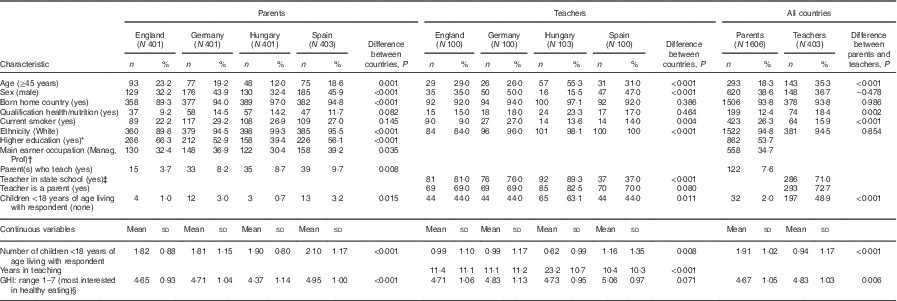
The questionnaires were returned by 1606 parents (401 in England, Germany and Hungary; 403 in Spain) and 403 teachers (100 in England, Germany and Spain; 103 in Hungary). Characteristics of the respondents are detailed in Table 1. Respondents were predominantly of white ethnicity. Higher proportions of teachers than parents were over the age of 45 years (35·3 % v. 18·3 %; P<0·001), and teachers were also less likely to smoke than parents (15·9 % v. 26·3 %, P<0·001). About one-half of the teachers reported having no children under the age of 18 years living at home. Parent responders differed significantly across countries for all the variables except for smoking rates; teachers did not differ internationally with respect to having a qualification related to health or nutrition and whether born in the home country.
Characteristics of respondents: comparison of parents and teachers, including by country

E, England; G, Germany; GHI, General Health Interest; H, Hungary; P, parents; S, Spain; T, teachers. (range 1 = least interested in healthy eating to 7 = most interested in healthy eating).
* Highest level of education is college or university.
† Managerial or professional (rather than clerical, administrative, manual, homemaker, retired, student, seeking work).
‡ Rather than independent school.
§ General Health Interest Scale χ 2 test.
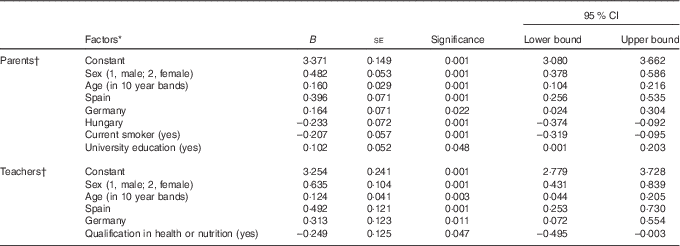
The GHI mean scores were significantly higher for teachers than parents (4·83 v. 4·67; P=0·006), and differences existed in GHI among countries for both parents and teachers (Table 1). The step-wise regression modelling showed that parent GHI scores increased with age and were significantly higher for women (than men), non-smokers and those educated up to the college/university level. The teacher GHI was also higher for older respondents and women, and for those without a qualification in health or nutrition. In both the parent and teacher models, respondents in Spain and Germany recorded higher GHI compared with those in England; parent scores in Hungary were significantly lower than in England (Table 2).
Modelling of factors associated with General Health Interest (GHI) score (B coefficient and their standard errors; 95 % confidence intervals)

* Dependent variable: GHI score, range 1 (least interest in healthy eating) – 7 (most interest).
† Independent variables: country (England as reference); age; sex; born in home country; qualification in health or nutrition; higher (college/university) education; current smoker; and ethnicity (white or other).
Views about the influence of diet on the physical and mental development of a child
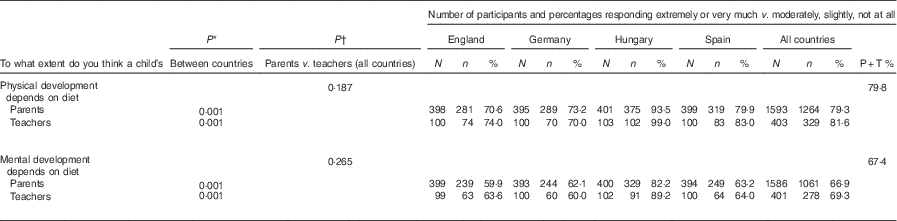
Overall, 80 % of the parents and teachers felt that a child’s physical development depends very much or extremely (v. moderately, slightly, not at all) on diet; the equivalent proportion for mental development was lower (67 %). Except for Germany, higher proportions of teachers than parents thought that diet was a very/extremely important influence on both physical and mental development (parents v. teachers overall difference (all countries together) not significant). However, significant differences existed between countries in the views of parents and teachers on the importance of diet for both physical and mental development (Table 3).
Views about the influence of diet on physical and mental development of a child: comparison of parents and teachers, including by country

P, parents; T, teachers.
* Kruskal–Wallis test, utilising raw ordinal values (extremely to not at all).
† Mann–Whitney U test, utilising raw ordinal values (extremely to not at all).
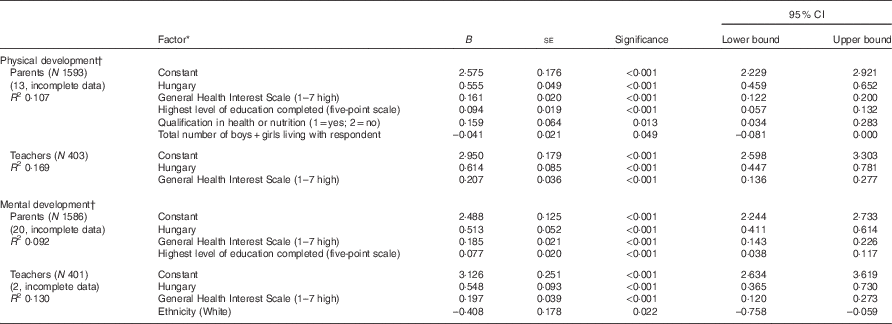
In all four regression models (parents and teachers, physical and mental development), living in Hungary and scoring higher on the GHI (more interest in healthy eating) were associated with believing that diet had a larger influence on physical and mental development. Parents with higher education also viewed diet as more important for both types of development (than those with less education); parents without a qualification in health and nutrition (compared with those with) and parents with fewer children were more likely to think that diet strongly influenced physical development (Table 4).
Modelling of factors associated with views on the importance of diet in the physical and mental development of a child (B coefficient and their standard errors; 95 % confidence intervals)

* Dependent variable: diet affects the physical/ mental development of a child (five-point scale: 1 not at all – 5 extremely; don’t know excluded).
† Independent variables: country (with England as the reference); age; sex; highest level of education attained by parents/years in teaching for teachers; total number of children under 18 living with respondent; GHI score; qualification in health or nutrition; and ethnicity. Current smokers were excluded from the analysis because of high correlation with GHI.
Views about the influence of diet on specific indicators of a child’s physical and mental performance
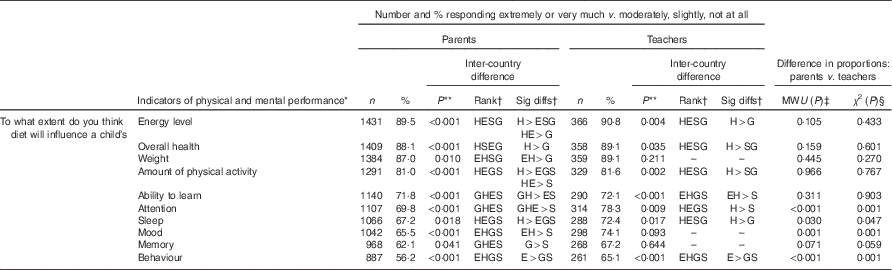
When asked about the effect of diet on specific indicators, the importance attributed to physical indicators of performance (especially overall health, energy levels, weight and physical activity) was generally greater than that for mental indicators, by both parents and teachers. In addition, there were no significant differences between teachers and parents in the proportions who felt that those physical indicators, and ability to learn, were influenced very much/extremely by diet. However, the proportions of parents and teachers differed significantly regarding their views on the impact of diet on other indications of mental performance (attention, mood, behaviour and (marginally) memory) and sleep. For each of these aspects, the proportion of teachers who felt that diet was a strong influence was higher compared with the proportion of parents. Differences existed between countries regarding the importance of all indicators for mental performance, except for teachers regarding memory and (marginally) mood (Table 5).
Views about the effect of diet on indicators of a child’s physical and mental performance (Numbers and percentages)

E, England; G, Germany; H, Hungary; S, Spain.
* The order in which indicators were presented to the respondents was rotated.
** Kruskal-Wallis tests were used, based on the five-point ordinal scale (1=not at all to 5=extremely).
† Significant differences between countries shown by > symbol.
‡ Mann–Whitney U (MWU) tests based on the five-point ordinal scale (1=not at all to 5=extremely).
§ χ 2 test based on comparing : extremely or very much v. moderately, slightly and not at all.
Discussion
Across all countries, larger proportions of parents and teachers regarded diet to be an important determinant of physical development than of mental development. When asked about specific indicators, responses from both groups continued to show that they thought that diet had a bigger influence on aspects of physical performance (especially overall health, energy levels, weight and physical activity) than on dimensions of mental performance (especially mood, memory and behaviour).
One reason why parents and teachers attributed less importance to the influence of diet on mental development of children than to their physical development may be due to the lack of attention paid to mental performance relative to concerns about obesity( Reference Florence, Asbridge and Veugelers 2 ). This in turn may have resulted from uncertainties in the scientific evidence about the relationship between dietary intake and mental performance, impeding the design and delivery of clear messages for consumers. Multiple factors affect mental functioning, and identifying the independent impact of nutrition is challenging( Reference Isaac and Oates 10 ). Cognitive processes are complex and experimental designs are confounded by a range of factors (such as the time of day the measurement is made or composition of the foods used in interventions)( Reference Bellisle, Blundell and Dye 11 – Reference Gibson and Green 14 ). Socio-economic factors (such as parenting, access to education and resources at home) influence background cognitive competence. Moreover, mood, motivation and arousal (themselves affected by nutrition) can additionally influence mental performance in various ways( Reference Isaac and Oates 10 , Reference Gibson and Green 14 ).
Another explanation for less recognition of the role of diet in mental performance may lie in the difficulties lay members of the public experience with understanding the processes of brain development and cognition. Our previous interviews with parents of primary-school children in the four countries confirmed that they believed that diet affects mental functioning of a child as well as his/her physical health and well-being, but that they encountered problems with articulating what the concept of ‘mental performance’ meant to them. Cognitive processes encompass a range of complex functions (perception, psychomotor, attention, memory, language and executive functions)( Reference Schmitt, Benton and Kallus 3 ), the details of which may be hard to comprehend. Parents tended to relate most to ‘attention’ and ‘concentration’, and many expressed the view that food affected these dimensions indirectly through its impact on mood and behaviour. Consistent with findings from other studies( Reference Russell, Flight and Leppard 15 , Reference Russell, Busson and Flight 16 ), parents also related to ‘learning’ as an element of mental performance( Reference Schmitt, Benton and Kallus 3 ). The selection of indicators of mental performance for the questionnaire in this study reflected these pragmatic considerations and the need to ensure that meaningful terminology was used. However, respondents (and parents in particular) still may have found the link between diet and mental performance less clear than that between diet and physical outcomes for children.
The lower level of awareness of the importance of diet for brain development and cognition (compared with awareness of physical outcomes) indicates potential for educating consumers. Information can be provided through a number of routes, including public health messages, health professionals and the food industry. Although the influences of nutrition on mental performance are complex, sufficient evidence has been established to allow the design of reliable information for consumers on the role of dietary factors. General messages about the need for a varied diet with good nutritional content and regular intake should highlight the advantages for cognitive functioning as well as for physical health( Reference Schmitt, Benton and Kallus 3 , Reference Bellisle 17 , Reference Tomlinson, Wilkinson and Wilkinson 18 ). In addition, specific ways in which diet and nutrition affect children’s mental development and performance can be promoted. Beyond long-term deficiencies( Reference Rausch 19 ), it appears that brain function is sensitive to short-term variations in the availability of nutrients, with stronger findings for ‘at-risk’ groups( Reference Pollitt 20 ). Eating behaviours such as skipping breakfast may contribute to poor mental performance( Reference Rausch 19 – Reference Levy 21 ). The lack of energy leads to decreased glucose and insulin levels in the body, which may be associated with impaired cognitive functioning( Reference Pollitt and Mathews 22 ). Along with alleviating hunger, breakfast provides essential nutrients to the brain( Reference Hoyland, Dye and Lawton 23 ). Potential links have also been identified between children’s behaviour and food intolerance, sucrose intake and additives in foods( Reference Benton 12 , Reference Benton 24 ), which might be incorporated in the information that is designed.
Understanding the differences in views between subgroups of the population is important to appropriately target public health messages. Respondents having a high interest in healthy eating and higher educational attainment (including teachers) were already more likely to regard diet as an important influence on mental development of their children, implying the need to address other groups in society. In this respect, the survey findings are consistent with other studies that have found socio-economic differences in parental knowledge about food, and specifically that higher income parents tend to discuss food in terms of health and medical issues, whereas lower income parents tend to consider the impact of food on their child’s outward appearance and functional capacity( Reference Coveney 25 ). Diet was regarded as more important for the physical and mental development of children in Hungary than in the other countries. Possible reasons for greater awareness in Hungary may include cultural differences or greater availability of relevant information for consumers. Exploring these reasons in greater detail may help design policies that will improve understanding in the other countries.
Although care was taken in translating and piloting the questionnaire to ensure uniformity between countries, the findings need to be interpreted in the light of a number of limitations. The study was based on four countries that provided geographical spread across Europe, but may not have been socially and politically representative of the entire European population. In order to recruit large national samples, respondents were drawn from market research panels. Members of the panels are volunteers and are typically re-imbursed for the time they spend completing online surveys. Hence, the people attracted to this role may not be representative of the general population in each country – for example, the samples recruited to this study from Germany included a higher proportion of current smokers than indicated by national data( 26 ).
Data analysis revealed significant differences between countries in some characteristics of the respondents (especially among parents) regarding views. Inclusion of individual countries in the regression modelling identified key areas of international differences – for example, respondents in Hungary attributed greater importance to diet in physical and mental development of their children than respondents in the other countries. Comparisons revealed significant differences among countries in most aspects, but it should be noted that absolute differences in some cases were not big, yet the large sample size meant that even small differences become statistically significant.
Brain development and cognition are important for learning, memory, information processing, reasoning, behaviour and many other functions that affect an individual’s life achievements and well-being. However, physical outcomes for children were viewed as important by more parents and teachers in our sample of countries than children’s mental development and performance. Benefit may arise from increasing awareness of the potential role of diet and nutrition in both brain development and cognitive functioning of children through increasing the quantity and clarity of consumer information( Reference Gage, von Rosen-von Hoewell and Laitinen 27 ), particularly targeting groups with the responsibility of caring for and educating children. Parents in particular are important gatekeepers to a child’s diet and central to the environment in which most children’s eating habits are developed( Reference Birch and Davison 28 ). As such, they constitute an important target group for communication about the nutritional properties and health effects of foods. Complex household, community and social factors interact to determine parental choice of food for their children( Reference Raats 29 ), and timely, consistent and evidence-based information, tailored to different groups, and delivered in a variety of formats, is needed to form a basis for rational decision making( Reference Jackson, Cheater and Reid 30 ).
Effective nutritional communication requires the recipient to have a certain level of nutritional knowledge; where this is lacking, the target audience cannot be reached effectively and information may be misinterpreted, as highlighted in the context of EU regulation on nutrition and health claims( Reference Van Trijp 31 ). Understanding parents’ and teachers’ views of the importance of diet in the mental development of children is essential before developing meaningful messages and dietary change interventions, but further research is needed to identify which dissemination strategies are most effective in reaching parents and teachers in different cultural settings and social, economic and ethnic groups.
Acknowledgements
The authors are grateful to the parents and teachers who participated in the study.
The research was supported by the European Communities 7th framework Programme (Nutrimenthe grant agreement no. 212652).
HG contributed to the analysis and wrote the first draft; HG, BE, MR conceived the study; PW undertook the statistical analysis; all authors contributed to the design and read and approved the final manuscript.
There are no conflicts of interest.

 Open access

