

Scholars often acknowledge the important role that culture plays in people’s work–family experiences (Haar, Suñe, & Ollier-Malaterre; Reference Haar, Russo, Suñe and Ollier-Malaterre2014; Lyness & Kropf, Reference Lyness and Kropf2005; Powell, Francesco, & Ling, Reference Powell, Francesco and Ling2009; Spector et al., Reference Spector, Cooper, Poelmans, Allen, O’Driscoll and Sanchez2004, Reference Spector, Allen, Poelmans, Lapierre, Cooper and O’Driscoll2007). For example, Powell et al. (Reference Powell, Francesco and Ling2009) called for the development and testing of culturally sensitive theories of the work–family interface, noting that the state of the empirical literature at that time was a bit sparse. Since then, more studies have emerged examining the role of the national context, particularly cultural dimensions, on work–family outcomes (see Lyness & Judiesch, Reference Lyness and Judiesch2014; Masuda et al., Reference Masuda, Poelmans, Allen, Spector, Lapierre, Cooper, Brough, Ferrero, Fraile, Lu, Lu, Siu, O’Driscoll, Simoni, Shima and Moreno-Velazquez2012; Ollier-Malaterre & Foucreault, Reference Ollier-Malaterre and Foucreault2016; Ollier-Malaterre, Reference Ollier-Malaterre, Allen and Eby2016; Ollo-Lópeza & Goñi-Legaza, Reference Ollo-Lópeza and Goñi-Legaza2015). In fact, in 2013, the European Management Journal published a special issue consisting of theoretical and empirical papers that explored the role of national context in the work–life interface (see Ollier-Malaterre et al., Reference Ollier-Malaterre, Valcour, Den Dulk and Kossek2013).
Despite the increasing number of studies on the topic, the majority of studies relating culture and the work family interface have focused on the cultural dimensions drawn from Hofstede’s (Reference Hofstede1980) theory of cultural values and the cultural dimensions defined by researchers from the Global Leadership and Organizational Behavior Effectiveness (GLOBE) project lead by Robert J. House (e.g., Spector et al., Reference Spector, Cooper, Poelmans, Allen, O’Driscoll and Sanchez2004, Reference Spector, Allen, Poelmans, Lapierre, Cooper and O’Driscoll2007; Masuda et al., Reference Masuda, Poelmans, Allen, Spector, Lapierre, Cooper, Brough, Ferrero, Fraile, Lu, Lu, Siu, O’Driscoll, Simoni, Shima and Moreno-Velazquez2012; Ollier-Malaterre, Reference Ollier-Malaterre, Allen and Eby2016; Lyness & Kroft, Reference Lyness and Kropf2005; Lyness & Judiesch, Reference Lyness and Judiesch2014; Harr, Suñe, & Ollier-Malaterre. Reference Haar, Russo, Suñe and Ollier-Malaterre2014). While these theoretical frameworks have been useful to move cross-cultural work–family research forward, I argue that value orientations, which have not been a major focus of previous work and are not isomorphic with Hofstede and House et al.’s conceptualizations, also seem highly relevant.
According to Schwartz (Reference Schwartz2006), “Value emphases express shared conceptions of what is good and desirable in the culture” (p. 139). Cultural values shape goals at the individual levels and goals, practices, and norms at the group, organizational, and the national level (Schwartz, Reference Schwartz2006). Given the importance of cultural values in predicting behaviors and attitudes, cultural value orientations can be useful in explaining individuals’ experiences related to the work–family interface.
In this chapter I encourage work–family scholars to examine Schwartz’s cultural value orientations when studying the work–family interface. In doing so, I first describe Schwartz’s (Reference Schwartz2006) cultural dimensions in contrast with others in the cross-cultural literature (e.g., Hofstede, Reference Hofstede1980; House et al., Reference House, Gupta, Hanges, Javidan and Dofman2004; Inglehart, Reference Inglehart1997). Second, I describe the research on work–family conflict (WFC) and work–family enrichment (WFE), two important constructs that capture the positive and negative side of the work–family interface. Last, based on the work–family research reviewed, and Powell, Francesco, and Ling’s (Reference Powell, Francesco and Ling2009) culture-sensitive theory of work–family interface, I propose a research agenda to test the role of each cultural value orientation and how they interact to predict WFC and WFE.
Schwartz’s Theory of Cultural Value Orientations
Theory Development
Schwartz’s theory of cultural value orientations was developed based on a priori theorizing. Specifically, Schwartz (Reference Schwartz2006) explains that cultural value orientations emerge as societies face three basic questions in regulating human activity: (1) How should people derive meaning in life? (2) How should people avoid the deterioration of the social fabric? and, (3) To what degree should people modify or adapt to the natural world to fit their needs?
Schwartz operationalizes cultural value orientations by capturing basic individual human values that are relevant across all life situations. Currently, there are two scales that measure Schwartz values. A longer version of the scale, Schwartz Value Survey (SVS: Schwartz, Reference Schwartz and Zanna1992), includes forty-five items. In this version, a list of abstract items (e.g., social justice, creativity, pleasure, and ambition) is presented along with the definition of each item. Respondents are asked to rate how important these values are as guiding principles in their lives using a Likert response scale (−1 = values opposite to the respondents’ principles, 0 = not at all important, to 6 = very important). A shorter version of the questionnaire, the Portrait Values Questionnaire (PVQ: Schwartz et al., Reference Schwartz, Melech, Lehmann, Burgess and Harris2001), includes twenty-one items. This questionnaire provides a portrait of a person and respondents need to assess how similar they are to each portrait. For instance, “Thinking up new ideas and being creative is important to her. She likes to do things in her own original way.” Respondents are asked to answer “How much like you is this person?” answered on a scale from 1 = not at all like me and 6 = very much like me.
Schwartz (Reference Schwartz2006) tested the empirical structure of the cultural values using two separate datasets. The first data set was used to validate the longer version of the questionnaire and was based on samples of school teachers and college students from sixty-seven countries (Schwartz, Reference Schwartz1994; Fontaine, Poortinga, Delbeke, & Schwartz, Reference Fontaine, Poortinga, Delbeke and Schwartz2008). The second dataset was used to validate the shorter version of the questionnaire and was based on a sample of twenty countries from the European Social Survey. To validate his theory, Schwartz (Reference Schwartz2006) first captured the responses for each item at the individual level and then computed mean ratings for each of the items at the country level. Schwartz then conducted multidimensional scaling analyses using the country level scores for each item. The obtained correlation plots of the responses for each item averaged by country empirically supported the presence of seven spaces representing each cultural value orientation (Schwartz, Reference Schwartz2006). Based on Schwartz’s (Reference Schwartz2006) theory, to test the effects of cultural value orientations on other variables, researchers compute mean ratings for each item at the country-level, and then average the items that fall into the respective cultural value domain. A single score that represents the polarity of the cultural values is then computed. Specifically, researchers subtract the mean country score of each cultural value orientation from its opposite. For example, the mean country score of autonomy is subtracted from the mean country score of embeddedness, the mean country score of harmony is subtracted from the mean country score of mastery, and the mean country score of egalitarianism is subtracted from the mean country score of hierarchy (see Vauclair & Fischer, Reference Vauclair and Fischer2011, for an example of how values are used to predict attitudes).
Previous research has demonstrated the cultural equivalence of forty-five items from the original SVS scale (Fontaine et al., Reference Fontaine, Poortinga, Delbeke and Schwartz2008). Further, multi-group confirmatory factor analyses of PVQ21 items support the near equivalence of meaning of the individual values across European Social Survey countries (Bilsky, Janik, & Schwartz, Reference Bilsky, Janik and Schwartz2011; Schwartz & Rubel, Reference Schwartz and Rubel2005). Hence, both instruments provide cross-cultural comparable data.
The Seven Cultural Value Orientations
Schwartz’s (Reference Schwartz2006) theory of cultural values identifies seven cultural value orientations, defined below:
(1) Affective autonomy describes a society where most people find meaning in life by fulfilling hedonistic and stimulation values such as variety, excitement, and pleasure.
(2) Intellectually autonomy describes a society where most people find meaning in life by pursuing self-direction values such as intellectual freedom, curiosity, and broadening of one’s mind.
(3) Embeddedness describes a society where people find meaning in life by complying with traditions and fulfilling values such as conformity, family, national security, and social order.
(4) Mastery describes a society where people believe they should try to change the natural world to accomplish their goals. Most people in this society place importance on achievement values such as ambition, competence, influence, and success.
(5) Harmony describes a society where most people believe that they should adapt to nature. In this society individuals place importance on values such as world of peace, unit with nature, and protecting the environment.
(6) Egalitarianism describes a society that avoids deterioration of social fabric by sharing values such as collaboration and caring for the welfare of others. Most people in this society share universalistic and benevolent values such as social justice, equality for all, and helping others.
(7) Hierarchy describes a society where most people avoid the deterioration of social fabric by relying on ascribed social roles to maintain social behavior. In this society people share values such as wealth and power.
The cultural value orientations described above form three bipolar cultural dimensions that represent different resolutions to each of the three fundamental problems that face all countries or cultures: (1) autonomy (affective and intellectual versus embeddedness, (2) hierarchy versus egalitarianism, and (3) mastery versus harmony. These three bipolar dimensions form a circular structure of values. In this structure compatible values are closer to each other (e.g., autonomy, harmony, and egalitarianism) while incompatible values are opposite to each other (see Figure 4.1).
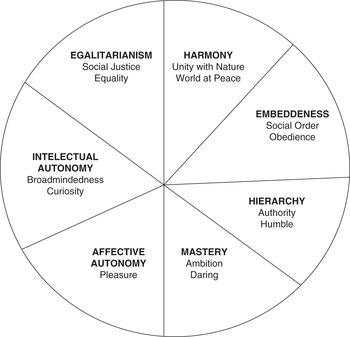
Figure 4.1 Cultural dimensions: prototypical structure from Schwartz (Reference Schwartz2006).
Specifically, the opposite pole of each value orientation shows different solutions for the same problem in society. For this reason, these values are in tension with each other. For example, seeking excitement as a guiding principle for life fulfillment (i.e., high affective autonomy) is incompatible with seeking security (i.e., high embeddedness). This is because autonomy values lead to different behaviors and norms to define life fulfillment that are in contrast with embedded values. For instance, autonomy values could lead to the acceptable social norm of seeking jobs that are novel and stimulating instead of seeking jobs simply to ensure financial security.
Further, while values opposite to each other represent incompatibility, values that are proximal to each other in Figure 4.1 indicate the sharing of some common assumptions. For example, hierarchy and embeddedness values are next to each other in the circular structure because they share the assumption that individuals are part of a group with obligations. Autonomy and mastery also share the assumptions that individuals are free to make changes in society. However, in mastery societies the changes are related to wealth and gaining competencies. Mastery is also correlated with hierarchy because being competitive implies getting ahead and, thus, promoting unequal distribution of power.
Using this circular structure, we can characterize and compare countries (see the cultural map provided by Schwartz, Reference Schwartz2006). For example, Americans are relatively higher in affective autonomy, but lower in hierarchy compared with Indians who are also lower in affective autonomy, and higher in hierarchy. Both cultures however are high in mastery value orientations.
Comparing Schwartz Cultural Values, the GLOBE Project, Hofstede, and Inglehart
Schwartz (Reference Schwartz2006) explains that the cultural value orientations overlap with cultural dimensions defined by other researchers (e.g., Hofstede, Reference Hofstede1980; House et al., Reference House, Gupta, Hanges, Javidan and Dofman2004; Inglehart, Reference Inglehart1997). For example, embeddedness values, which “emphasizes maintaining the status quo, propriety, and restraint of actions or inclinations that might disrupt the solidary group or the traditional order in which people are embedded” (Smith et al., Reference Smith, Peterson and Schwartz2002, p. 193), overlap with Hofstede’s concept of collectivism and House et al.’s concept of in-group collectivism. Specifically, similar to collectivism, embeddedness value orientation also emphasizes the importance of individual’s social ties over the individual’s own interests and goals. In fact, empirical research has shown a correlation of .64 between collectivism and embeddedness (Smith et al., Reference Smith, Peterson and Schwartz2002). Although these constructs are related, Schwartz (Reference Schwartz2006) explains that embeddedness is broader than collectivism because it also encompasses conservatism values, such as social order, national security, and the importance of following traditions and customs.
Egalitarianism, which is defined as “the belief that all people are of equal worth and should be treated equally in society¨ (Schwartz, Reference Schwartz, Melech, Lehmann, Burgess and Harris2001, p. 65), is another cultural value that overlaps the cultural dimension of gender egalitarianism described in the GLOBE Project as “the degree to which a collective minimizes gender inequality” (House et al., Reference House, Gupta, Hanges, Javidan and Dofman2004, p. 30). Specifically, both constructs pertain to individuals being treated equally in society. However, egalitarian value orientation is broader than gender egalitarianism because it does not focus only on gender equality, but it also captures the degree to which people are willing to cooperate by choice to care for the well-being of others. Specifically, egalitarianism is based on the assumption that all people should have their basic human rights fulfilled and should cooperate for the good of others. Individuals in this society primarily value equality, social justice, responsibility, and solidarity. For example, while individuals in gender egalitarian countries believe that men and women should equally contribute to care taking responsibilities, individuals in societies high in egalitarian value orientation share the belief that all citizens regardless of their socioeconomical background should have the right to have the ability to care for children, give them basic education, and basic health care.
Schwartz cultural values orientation can also be contrasted with Inglehart´s cultural dimensions of traditional versus secular-rational. The traditional/secular-rational dimension in Inglehart’s model contrasts societies that place importance on religion, nationalism, and family (i.e., traditional societies) with societies that deemphasize such values (i.e., secular-rational societies) (Inglehart & Baker, Reference Inglehart and Bakker2000). This dimension overlaps conceptually with that of embeddedness versus autonomy. Both dimensions describe the degree to which individuals in societies belief that they are submerged in a group with mutual obligations and where respecting traditions are important. According to Schwartz (Reference Schwartz2006), the main distinction between these two dimensions is the traditional dimension emphasizes religion more than the embeddedness dimension. Taken together, because there are unique aspects to the cultural values proposed by Schwartz, I believe that studying these variables could contribute to the small base of knowledge on cultural values that has relied primarily on those from other frameworks.
Linking Schwartz’s Cultural Values to the Work–Family Interface
Two constructs have dominated the empirical research in the work–family interface. Work–family conflict (WFC) describes the negative side of the work–family interface and is defined as “a form of inter-role conflict in which the role pressures from the work and family domains are mutually incompatible in some respect” (Greenhaus & Beutell, Reference Greenhaus and Beutell1985, p. 77). WFC is regarded as bidirectional, such that work can interfere with family and family can interfere with work (Frone et al., Reference Frone, Russell and Cooper1992). Role theory is frequently used to explain the causes of WFC (Greenhaus & Beutell, Reference Greenhaus and Beutell1985). One of the assumptions of role theory is that people have a finite amount of energy and time (Marks, Reference Marks1977). Hence, demand pressures from participating in work and family roles impedes the fulfillment of responsibilities of both roles involved (Katz & Kahn, Reference Katz and Kahn1978).
A large body of literature has accumulated examining predictors of WFC, which include work and family demands and resources (e.g., Michel et al., Reference Michel, Kotrba, Mitchelson, Clark and Baltes2011). One area of particular interest to cultural differences is social support. Research evidence shows that perceptions of support directly and negatively relate to WFC (see Kossek, Pichler, Bodner, & Hammer, Reference Kossek, Pichler, Bodner and Hammer2012). Further, social support has been suggested to indirectly predict WFC by helping individuals reduce work and family demands (Greenhaus & Parasuraman, Reference Greenhaus, Parasuraman, Davidson and Burke1994). Social support can come in many forms, including tangible or emotional support from family member, coworkers, or supervisors at the individual level, formal family-supportive policies at the organizational level, or and government policies at the country level (Butts, Casper, & Yang, Reference Butts, Casper and Yang2013; Greenhaus & Parasuraman, Reference Greenhaus, Parasuraman, Davidson and Burke1994; Lewis, Reference Lewis2009).
Another important construct of the work–family interface is work–family enrichment (WFE). WFE concerns the positive side of the work–family interface and describes “the extent to which experiences in one role improves the quality of life in the other role” (Greenhaus & Powell, Reference Greenhaus and Powell2006, p. 73). WFE, like WFC, is also regarded as bidirectional in nature, such that work enriches family (work-to-family enrichment) and vice versa. Greenhaus and Powell’s (Reference Greenhaus and Powell2006) WFE theory describes several resources (e.g., skills and perspectives, psychological and physical resources, social-capital resources, flexibility, and material resources) that may be acquired in one role to improve performance in the other role. This transfer can occur through two mechanisms, the direct enhancement of performance or via improved affect.
To date, there are no known studies linking Schwartz’s (Reference Schwartz2006) cultural values orientation to WFC or WFE. Powell et al. (Reference Powell, Francesco and Ling2009), in a theoretical paper, describe how certain cultural values (i.e., collectivism, specificity/diffusion, gender egalitarianism, and humane orientation) could indirectly predict WFC by influencing social support and work–family demands. They further note that cultural values could also play a role in WFE. Specifically, the relationships between resources generated in role A (work or family) with performance in role B (work or family) along instrumental and affective paths are moderated by collectivism, specificity/diffusion, and humane orientation values. Further, they argue that gender differences in work family enrichment are moderated by gender egalitarianism such that these differences are stronger in low gender egalitarian countries. In a similar vein, I expect that cultural value orientations could also influence both WFC and WFE. Below, I expand on these ideas.
Embeddedness versus autonomy. Embeddedness and autonomy cultural value orientations could indirectly relate to WFC for several reasons. First, individuals in embedded oriented societies may experience more social support compared with those in autonomous societies thus alleviating work and family demands and consequently WFC. In fact, there has been empirical research showing that countries in Asian region, which are higher in embeddedness compared with Anglo region, experience more coworker support compared with countries in the Anglo and Western European region (Glazer, Reference Glazer2006). Glazer (Reference Glazer2006) uses Schwartz cultural values to explain that “it appears logical, then, that the more one feels embedded within his or her work group, the greater he or she will perceive instrumental support from co-workers” (p. 618).
Further, individuals in embedded oriented societies may experience more social support from family members not only because they have larger families for which they can rely on for caretaking responsibilities (Schwartz, Reference Schwartz2006), but also because individuals in embeddedness oriented societies are more likely to feel a sense of obligation towards family (Schwartz, Reference Schwartz2006). For example, embeddedness is positively associated with the belief that one must respect parents irrespective of their qualities and that divorce is never justified (Schwartz, Reference Schwartz2006). In this sense, individuals in embedded oriented societies may feel obliged to care for elder family, children, and even more extended family members.
Thus, although it is possible that individuals in high embedded oriented societies experience less WFC by having more social support from family members and coworkers, it is also possible that they may experience higher WFC by reporting higher family involvement and family demands compared with individuals high in autonomous value orientation societies. Specifically, the sense of obligation for caring for their family coupled with the higher household sizes could lead to higher family involvement and higher family demands. This is consistent with research showing that people with more children living at home experience higher family demands and WFC (Byron, Reference Byron2005; Kinnunen & Mauno, Reference Kinnunen and Mauno1998; Michel, Kotrba, Mitchelson, Clark, & Baltes, Reference Michel, Kotrba, Mitchelson, Clark and Baltes2011). Hence, although the embeddedness norms of solidarity to the group coupled with the size of family households may lead to higher social support, these values can influence norms that impose more demands as individuals in these societies may feel more involved and obliged to care for their extended family members. Research is needed to test the veracity of these ideas as well as disentangle which force is stronger, or if they ultimately have a canceling out effect on WFC experiences.
Proposition 1a: People in societies higher in embeddedness versus autonomy experience less WFC than those in societies lower in embeddedness versus autonomy through an increase in social support received.
Proposition 1b: People in societies higher in embeddedness versus autonomy experience more WFC than those in societies low in embeddedness versus autonomy through an increase in family demands.
Embeddedness and autonomy could also play an integral role in predicting WFE. Specifically, individuals in high embeddedness-oriented compared with affective and intellectual autonomous oriented cultures could be more likely to experience enrichment via the instrumental path because they experience a higher sense of obligation to care for family members (Schwartz, Reference Schwartz2006). By feeling obligated to care for family members, resources acquired from work are more likely to be used to care for family responsibilities in embedded oriented societies. For example, while in high embedded oriented societies a person with a stable job may feel obliged to help family members such as a nephew by paying his college tuition; in high intellectual autonomous societies the person may not feel the pressure to pay for their own child’s college tuition let alone the college tuition of a nephew.
Proposition 2: People in societies higher in embeddedness versus autonomy will experience more WFE than people in societies high in autonomy versus embeddedness.
Mastery orientation versus harmony. Previous scholars have encouraged the exploration of mastery versus harmony cultural value orientation as a possible predictor of WFC (Powell et al., Reference Powell, Francesco and Ling2009; Ollier-Malaterre & Foucreault, Reference Ollier-Malaterre and Foucreault2016). Smith et al. (Reference Smith, Peterson and Schwartz2002) stated that individuals in mastery oriented societies are likely to focus on achievement by being more assertive. Hence, in high mastery societies, success at work is very important, and individuals in these societies may be more involved at work. Because individuals in high mastery oriented societies experience normative pressures to be more successful at work, they may experience more pressure to work longer hours, and consequently experience greater work demands and WFC. On the other hand, because individuals in harmony-oriented societies do not place much importance on achievement, they may be less involved at work, experience less pressure to work longer hours and thus experience lower WFC.
This same logic could also carry over to WFE. That is, because individuals in mastery oriented cultures value achievement, competence, and success at work, they may also experience more resource gain related to knowledge, skill development, and financial resources. By experiencing more resource gain, they may be more likely to transfer these resources from work to the family domain. In short, because this cultural value orientation captures values that are linked to work (e.g., ambition, development), it could be very useful to study its effects on both WFE and WFC.
Proposition 3: People in societies higher in mastery versus harmony orientation will experience more WFC than people in societies high in harmony versus mastery orientation.
Proposition 4: People in societies higher in mastery versus harmony orientation will experience more WFE than people in societies high in harmony versus mastery orientation
Egalitarianism versus hierarchy. There is reason to suspect that egalitarian values could be associated with WFC through social support. Egalitarianism societies typically have formal and informal institutions that support equality and fairness. Specifically, research has shown that egalitarianism is associated positively with democracy, non-corruption, and with the proportion of GDP per capita spent on social security, health, unemployment and sickness benefits, and other welfare investments (Schwartz, Reference Schwartz2006; Siegel, Licht, & Schwartz, Reference Siegel, Licht and Schwartz2011). Hence, individuals in egalitarianism societies may experience lower WFC because they experience more support from society in the forms of the adoption of more government policies that care for the welfare of its citizens.
Further, egalitarianism values such caring for the welfare of others and equality, could be translated to fair practices at home such as equal share of both family and work responsibilities by partners, or fair practices in the workplace such as higher adoption of part-time or flexitime by both care takers. Hence, it is possible that individuals in countries high in egalitarianism versus hierarchy may receive more social support necessary to cope with work and family demands and thus experience lower WFC compared with individuals in hierarchical cultural value orientations.
Individuals in countries higher in hierarchy cultural values orientation could also experience more WFC because individual in these societies, by definition, share values such as seeking power and wealth. Hence, individuals in these societies may experience high job involvement and feel pressured to earn high incomes and positions of high status in the organizational hierarchy. As such, individuals in cultures with hierarchical cultural value orientation may experience more work demands which could lead to higher WFC. Further, since these individuals by definition put less emphasis on values such as collaborating for the good of others, individuals in these societies may also receive lower support from government at the country level, and from coworkers and family members at the group level.
Proposition 5: People in societies higher in egalitarianism versus hierarchy orientation will experience less WFC than people in societies high in hierarchy versus egalitarianism orientation.
It might also be worthy to study the effects of egalitarianism versus hierarchical values orientation on WFE since this cultural value orientation may influence work demands and social support. For example, if individuals in egalitarian societies are more likely to experience social support, then they may be more likely to transfer this resource to other domains. As such, studying the role of this cultural value orientation on WFE would be fruitful.
Proposition 6: People in societies higher in egalitarianism versus hierarchy orientation will experience more WFE than people in societies high in hierarchy versus egalitarianism orientation
Interactive effects of cultural values. Although cultural value orientations are posited to predict WFC individually, scholars have acknowledged that it could be useful to examine the interactive effects of cultural dimensions on the work–family interface (Ollier-Malaterre & Foucreault, Reference Ollier-Malaterre and Foucreault2016). Below I suggest some ideas along these lines specific to Schwartz’s value framework.
In order to understand how values interact to predict work–family outcomes, we can work inductively, drawing from previous empirical studies of countries that experience lower and highest level of WFC. For example, based on a sample of thirty-one European countries, Ollo-Lópeza and Goñi-Legaza, (Reference Ollo-Lópeza and Goñi-Legaza2015) found that individuals in Scandinavian countries experience lower WFC compared with individuals in eastern European and Mediterranean countries. Similarly, Crompton and Lyonette (Reference Crompton and Lyonette2006) found that WFC was lower in Finland and Norway compared with France, Portugal, and Britain. Scandinavian countries are relatively high on autonomy, egalitarianism, and harmony compared with other European countries. Thus, it may be that the profile of these three variables relates to the most benefits in terms of reduced WFC.
To explicitly test these interaction effects, researchers could use methods such as applied polynomial regression, together with the response surface method (Edwards & Parry, Reference Edwards and Parry1993; Edwards, Reference Edwards1994) and the moderated polynomial regression (Edwards, personal website: http://public.kenan-flagler.unc.edu/faculty/edwardsj/resources.htm) to test the effects of multiple value orientations and their possible interaction on both WFC as well as enrichment. This would allow the (1) detection of more precise patterns of interaction among the value orientations and the resulting relationship between specific configurations and outcomes, (2) investigate possible curvilinear relationships, and (3) obtain a more detailed picture of the joint effect of multiple value orientations beyond only testing interaction effects (Kutner, Nachtsheim, Neter, & Li, Reference Kutner, Nachtsheim, Neter and Li2005). Specifically, by examining the shape of the surface with the help of testing the slope and curvature of special lines of interests on the surface (Edwards & Parry, Reference Edwards and Parry1993), and by comparing the level of each cultural value orientation at different corners of the response surfaces, we are able to discover the optimal levels and combination of autonomy, egalitarianism, and harmony values to predict lower levels of WFC and enrichment in a more comprehensive and specific way.
By posing these research questions and testing them, we could find that it is undesirable to have extreme levels of certain cultural values. For example, it could be undesirable to have extreme levels of embedded cultural value orientations since individuals in embedded oriented cultures could experience higher social support but, simultaneously, could also experience higher family involvement and family demand. On the other hand, the more emphasis a country places on egalitarianism and harmony orientation the better to predict lower conflict. Since the research in this area is non-existent, I encourage simply testing exploratory research questions to accumulate empirical knowledge that ultimately could help scholars to inductively build a theory of cultural values on work family conflict and enrichment inductively.
Conclusion
The purpose of this chapter was to encourage work–family scholars to use cultural value orientations when studying the work–family interface. Schwartz´s (Reference Schwartz2006) theory of cultural value orientations was reviewed and used to propose the testing of research questions linking values with WFE and WFC. Lastly, I proposed the examination of cultural value orientations profiles as predictor of WFE and conflict. I hope this chapter will encourage work–family scholars to move beyond other cultural dimensions to include cultural values configurations on the work–family interface and thus move cross-cultural work–family research and theory forward.
Introduction
As the work–family interface is often navigated through the more proximal level of the workplace, much work–family research focuses on organizational policies and practices. However, work–family support can also be provided directly through government, family, or community. Moreover, organizations operate in the context of a broader socioeconomic climate and organizational policies and practices are created and enacted in consideration of market forces (Abendroth & den Dulk, Reference Abendroth and den Dulk2011). Many socioeconomic country-level factors thus may affect the ways in which individuals form and manage work and family roles (den Dulk, Groeneveld, Ollier-Malaterre, & Valcour, Reference Den Dulk, Groeneveld, Ollier-Malaterre and Valcour2013), either directly or through organizations.
Social policy and economic characteristics are two such factors. They create opportunities and constraints for individuals to enact their work and family roles in particular ways by opening, closing, incentivizing, or deincentivizing pathways to various forms of physical and temporal work flexibility. Some of these pathways are affected explicitly, such as in the form of federal laws that grant employees the right to parental leave, while other pathways are affected less directly, such as through social policy that makes it easier for mothers to return to the workplace. These broad factors shape the work–family experience of individual employees and create broader patterns in the work–family interface in a given country context.
Organizations are also critical actors in the shaping of the work–family experience of employees through their work–family policies and practices, which are usually meant to help individuals better manage their often conflicting life roles (Kossek & Michel, Reference Kossek, Michel and Zedeck2011) by increasing control over their work–family role boundaries (Kossek, Lautsch, & Eaton, Reference Kossek, Lautsch and Eaton2006). These policies and practices must be consistent with governmental policies, and frequently organizations and their management are gateway entities through which an individual can access their legal rights. Thus, organizations frequently act as a filter of these broader institutional forces on individual work–family role boundaries, and it is difficult to discuss the role of institutional forces without consideration of their impact on organizations.
Although much research has been dedicated to understanding the effectiveness of organizational work–family policies for organizations and their employees, only recently has focus shifted to understanding the influence of the contexts in which these policies are designed and enacted. In recognition of the importance of these relationships, a growing body of research is now examining the impact of country-level contextual differences on the organizational adoption of work–family policies and their effectiveness at both individual and organizational levels (e.g., Ollier-Malaterre & Foucreault, Reference Ollier-Malaterre and Foucreault2016; Piszczek & Berg, Reference Piszczek and Berg2014). Organizations must craft their work–family policies in the presence of socioeconomic institutions which may affect the ways that human resource managers perceive, offer, and enact them. Similarly, these same institutions affect the way that employees can use and benefit from work–family policies.
Two primary perspectives for examining contextual effects on the work–family interface are the cultural and structural perspectives (Ollier-Malaterre & Foucreault, Reference Ollier-Malaterre and Foucreault2016). Culture includes collective societal beliefs, values, and norms while structure can be defined as “legal, economic, and social structures producing rules that organize and constrain human interaction” (Ollier-Malaterre & Foucreault, Reference Ollier-Malaterre and Foucreault2016, p. 5). International work–family research has largely focused on cultural rather than structural factors (Ollier-Malaterre, Reference Ollier-Malaterre, Allen and Eby2014). The goal of this chapter is to provide an overview of and recommendations for research on structural context. Specifically, the chapter reviews social policy, economic characteristics, and their interactions as they relate to the work–family interface with special attention to their interpretation and enactment through organizations.
Social Policy
Social policy broadly describes a government’s actions related to the welfare of its citizens. Most directly relevant, it includes laws that govern the type and form of family-related policies and practices workplaces must offer (or must refrain from enacting). Social policy outside workplace regulations may also prioritize or otherwise address particular perceived societal needs. This chapter thus broadly divides social policies into two categories: regulative institutions and social institutions.
Regulative institutions may directly grant benefits to employees or restrict employers from making certain demands of employees. These include laws that guarantee employees maternity or paternity leave, require organizations to provide employees occasional leave from work, and limit employee working hours. These regulative institutions may also incentivize or deincentivize particular behaviors. For example, following the financial crisis France offered partial retirement benefits to older workers (Berg, Bosch, & Charest, Reference Berg, Bosch and Charest2014). In the United States, organizations are deincentivized from requiring long work hours by overtime provisions which make such requirements more expensive. In terms of structural work–family forces, regulative institutions have received a relatively high amount of attention in work–family research.
Social institutions may promote or deter certain patterns in work–family role management. These institutions include laws and norms that affect country-level patterns in, for example, gender roles, family forms, or retirement behaviors and are generally broader than regulative institutions. These social institutions do not directly grant employees rights or opportunities through employers, but have an indirect effect on the management of the work–family interface by incentivizing or deincentivizing particular work–family role management behaviors, adjusting the organization of work, or affecting employee voice and equity in the employment relationship. Thus, rather than providing benefits to enact existing work–family role structures, they shape work–family role structures themselves. Though there is extensive research on these social institutions, these studies are not always framed around the work–family interface and thus form a less cohesive body of work–family literature. For example, though retirement is arguably one of the biggest work–family role transitions one can make in his or her lifetime, retirement is not typically framed as a work–family issue. Additionally, though social institutions are a structural force, they are arguably more richly intertwined with culture than regulative institutions and thus difficult to understand outside of a cultural context. Despite this, however, both forms of social policy similarly create opportunities and restrictions for managing the work–family interface.
Regulative Institutions
Regulative institutions are laws or other regulations that may directly affect the work–family interface by legally mandating rights and responsibilities to employers and employees. First, they may restrict organizations from requiring particular work demands that interfere with family role functioning, such as long work hours or working while sick. Second, regulative institutions compel organizations to offer specific policies or practices to their employees through legislative mandate (Piszczek & Berg, Reference Piszczek and Berg2014). Typical benefits mandated by regulative institutions in some countries include vacation, maternity leave, or medical leave. These institutions, often through organizations, create opportunities for employees to manage their work–family role boundaries in ways consistent with their own personal preferences or more generally with greater flexibility.
These institutions vary in key ways (Piszczek & Berg, Reference Piszczek and Berg2014). Some countries’ regulations compel organizations to offer more generous versions of benefits than others (e.g., Australia’s maternity leave is paid while in the United States maternity leave is not paid). Others may offer unique policies not offered at all by others (e.g., the right to request a flexible work schedule in the United Kingdom that is absent in the United States). Coverage, too, varies by country in the form of eligibility requirements. Some policies may have relatively strict requirements compared to others. For example, family and medical leave in the United States is unavailable to many newly hired and part-time workers who fail to meet eligibility thresholds regarding minimum hours worked as outlined in the Family Medical and Leave Act.
A recent review finds that research has not supported a direct relationship between regulative institutions and individual work–family role management outcomes generally for most types of policy benefits (Ollier-Malaterre, Reference Ollier-Malaterre, Allen and Eby2014). This may be in part due to the Anglo-centric conceptualization of the work–family interface popular in research (Lewis, Gambles, & Rapoport, Reference Lewis, Gambles and Rapoport2007), suggesting effects of policies are too contextually dependent to be able to generalize. Standards for work–family role management may vary across contexts, making popular measures and conceptualizations of work–family constructs difficult to apply. In other words, similar policies may have vastly different meanings to employees from one country to another. Another possible reason for this is that regulative institutions are not aligned with the needs of the public (Yerkes, Standing, Wattis, & Wain, Reference Yerkes, Standing, Wattis and Wain2010). If policy benefits are not meeting the needs of the public receiving them, then one would expect no change in work–family outcomes. Finally, this disconnect may also be due to the role of organizations in enacting regulative institutions, which varies significantly across countries as a function of public perception of the organization as a legitimate provider of work–family benefits (Ollier-Malaterre, Reference Ollier-Malaterre2009; Wood & de Menezes, Reference Wood and de Menezes2007).
As mentioned above, regulative institutions are created directly by the government and thus their benefits for employees can be attributed to government. But in most cases, organizations are responsible for managing these benefits. This raises a number of questions and an additional layer of complexity in understanding how and why organizations offer work–family policies. One issue at the organization level that has received research attention is how organizations interpret, enact, and respond to government mandates to offer particular policies. For example, many employees legally eligible for unpaid work leave under the Family and Medical Leave Act in the US report being unable to afford to take it or, despite protections from retaliation, fear the undesirable effects the leave may have on their careers (Jorgensen & Appelbaum, Reference Jorgensen and Appelbaum2014). Pay, ease of use, and policy awareness are factors under organizational control that may create variation within a single regulative context, diminishing the variation in individual outcomes attributable to regulative institutions.
A related issue of interest at a more macro theoretical level is the relationship between work–family regulative institutions and non-mandatory organizational work–family policy offerings. One study by den Dulk and colleagues (Reference Den Dulk, Groeneveld, Ollier-Malaterre and Valcour2013) highlights two opposing perspectives of this relationship based on previous research. The first argues that regulative institutions increase organizational work–family policy proliferation because they coerce organizations into offering more and more generous work–family practices in order to remain legally compliant (Piszczek & Berg, Reference Piszczek and Berg2014) and, in the face of normative pressure to be family-friendly, socially legitimate (Wood & de Menezes, Reference Wood and de Menezes2007). For example, organizations may adopt additional, non-mandatory work–family policies as a result of perceived pressure from more generous regulative institutional mandates (Poelmans & Sahibzada, Reference Poelmans and Sahibzada2004). The second perspective argues that regulative institutions create a substitution effect; organizations may decide not to offer additional benefits if they perceive that those offered through government mandate are enough. According to this perspective, when regulative institutions are weak, organizations will be more likely to adopt work–family policies because regulative institutions will be insufficient to meet public demand, creating an economic opportunity for employers to attract and retain talented or otherwise in-demand workers. Other studies suggest it is a combination of these pressures – both institutional and economic – that lead to policy adoption by organizations. For example, Ollier-Malaterre (Reference Ollier-Malaterre2009) identified several contributing factors including the legal framework and the social nature of work and non-work roles, which suggest that non-mandatory policies may be adopted by organizations both because they create economic or competitive advantages and because the organization is seen as an important actor in helping employees maintain manageable work–family roles.
The work–family literature on this subject also suggests that the baseline benefits granted to employees by regulative institutions is important in determining the strategic value of work–family offerings for organizations. Piszczek and Berg (Reference Piszczek and Berg2014) developed a theoretical model of the role of regulative institutions in organizational adoption of work–family human resource practices. They argue that in country or regional contexts offering more generous work–family mandates, it is more difficult and less cost-effective for organizations to go beyond the baseline with additional or more generous work–family policies. The ability of the organization to offer unique work–family solutions to employees is limited when social policy can provide a substitute mechanism for organizational policy. Thus in countries with weaker social work–family policy, such as the United States (Sweet, Pitt-Catsouphes, Besen, & Golden, Reference Sweet, Pitt-Catsouphes, Besen and Golden2014), there may be greater room for organizations to offer strategically valuable work–family practices.
Despite growing attention to the importance of contextual influences on the work–family interface, the potential effects of regulative institutions on organizations and individuals remains largely ignored in most work–family studies. Additionally, the sheer variety, range, and breadth in regulative work–family institutions has prevented the development of a systematic framework of regulative institutions to allow for an empirical comparison (Ollier-Malaterre & Foucreault, Reference Ollier-Malaterre and Foucreault2016). Further complicating this research is the confounding of other country-level factors with regulative institutions such as culture and economic characteristics. As a result, much of our understanding of regulative institutions is piecemeal, coming from smaller comparisons and the few single-country studies that focus on contextual differences.
One potentially fruitful avenue for research is comparative studies of region-level (as opposed to country-level) variation in regulative institutions. Lower-level comparisons may help parse out the effects of legal policy independent from culture. For example, a useful study would be one which compares the effects of paid sick leave in a city where it is legally mandated at the city-level compared to a nearby, culturally and economically similar city where it is not legally mandated. This has been done with other laws which vary substantially within-country such as protections from employment discrimination based on sexual orientation (Barron & Hebl, Reference Barron and Hebl2013). Although such a study would not capture all the complexities of international differences, by designing out large cultural and socioeconomic differences one might observe across countries, the results would help clearly determine effects of regulative institutions. This may inform expectations for international comparative research. Another potentially more challenging option is the use of comparative data with rich cultural and economic controls. The GLOBE study (House, Hanges, Javidan, Dorfman, & Gupta, Reference House, Hanges, Javidan, Dorfman and Gupta2004) includes a number of broad country-level cultural dimensions that have been used as broad proxies for culture in international work–family research (e.g., Kassinis & Stavrou, Reference Kassinis and Stavrou2013). The cultural dimensions used in GLOBE may make useful albeit broad cultural controls for better understanding the effects of regulative institutions.
Social Institutions
In addition to regulative institutions, a number of other social institutions may be important factors in individual navigation of the work–family interface. As mentioned above, these institutions indirectly shape the work–family interface. Rather than directly providing benefits through workplaces, these institutions incentivize or deincentivize work–family structures either financially or through the establishment of social norms.
A key social institution is family policy, which may include public childcare options such as subsidized private care, public daycares, or the public education system. Strong public childcare options can provide a source of work–family support that allows for greater female labor force participation. Instead of taking on the traditional childcare role, the government partially takes on this role, freeing up traditional caretakers to use that time instead for the work role. Like regulative institutions, social institutions like family policy vary by country. For example, countries vary in the extent, type, and coverage of public childcare options offered to citizens. Childcare options may be limited to school and thus school-aged children or, such as in the case of Germany, they may be available to younger children as well.
Relatedly, family policy may reaffirm pressure for individuals to manage their work–family roles in certain ways. For example, the controversial German Betruengsgeld benefit enacted in 2012 provided an allowance from the federal government for families of children aged two to three who kept the children out of public daycare. Critics claimed that this policy could have the effect of pushing new mothers out of the labor market by incentivizing extension of maternity leave and increasing social pressure on women to maintain the traditional role of caretaker. The policy was ruled unconstitutional by Germany’s high court in 2015. Even tax systems may incentivize particular family structures (Ollier-Malaterre, Reference Ollier-Malaterre, Allen and Eby2014). In the United States, married couples generally receive more favorable tax rates than single or co-habitating individuals.
Retirement policy is also important to management of the work–family interface. Retirement is a major work–life event as it usually marks a macro-level transition out of the work role. It is increasingly more important to understand the motivations behind retirement decisions and their effects on organizations and economies as the global workforce is rapidly aging and the number of retirements is expected to similarly rise (Berg, Hamman, Piszczek, & Ruhm, Reference Berg, Hamman, Piszczek and Ruhm2015). Retirement policy at the country level shapes how and when individuals make the retirement transition and the options available to organizations to help manage it.
In the face of global workforce aging, most Organization for Economic Cooperation and Development (OECD) countries have undergone policy reform regarding retirement in order to extend working lives (OECD, 2015), which is thought to ease the financial burden of an older population on public pension systems (Greller, Reference Greller, Hedge and Borman2012; Maestas & Zissimopoulos, Reference Maestas and Zissimopoulos2010). Some have simply extended the age at which state pensions can be claimed. Others have introduced more complicated forms of retirement transition. For example, for several years Germany subsidized partial retirement to allow older workers to work part-time in hopes they would choose to remain in the workforce longer at reduced hours as opposed to an abrupt retirement. Results are mixed with regard to the success of partial retirement initiatives in various countries. Studies have found that they extend working lives in Germany (Berg et al., Reference Berg, Hamman, Piszczek and Ruhm2015) and Sweden (Wadensjö, Reference Wadensjö2006), while another suggests they instead replace full-time employment in Austria (Graf, Hofer, & Winter-Ebmer, Reference Graf, Hofer and Winter-Ebmer2011).
If these policies do in fact successfully extend working lives, then organizations and employees will be challenged with the management of work–family roles in even later stages of life. There is some evidence that preferences for work–family flexibility changes over the life-span and that older workers typically have less access to flexibility (Pitt-Catsouphes, Matz-Costa, & Besen, Reference Pitt-Catsouphes, Matz-costa and Besen2009), but research has not yet discovered how or why these preferences change. Country context likely further complicates these changes and will affect the success of retirement policy initiatives. For example, many Germans were able to use the state-sponsored partial retirement initiative in a “block model.” Rather than working 50 % time during the next, for example, four years, an employee could declare a retirement date four years out and work 100 % time for the first two years and zero hours for the final two years. The use of this model arguably grew out of a combination of part-time work norms in Germany and the broad language in the partial retirement law. Thus, although it is clear that retirement policy will shape the macro transition from work to non-work and the proportion of older workers in the labor market, much work remains to be done in understanding these relationships and how they vary from context to context.
Economic Characteristics
The form and status of a country’s economy and its key industrial sectors are also important contextual factors for managing the work–family interface. However, most work–family theory is based on the assumption of a relatively developed economy rather than less-developed, more heavily regulated economies. As yet, while there are many localized studies of the work–family interface in regional journals, little is known about how macro-economic indicators are systematically related to the work–family interface of individuals (Ollier-Malaterre, Reference Ollier-Malaterre, Allen and Eby2014). Some better understood economic characteristics are welfare and working time regimes and industrial relations systems. These factors are closely related to social policy, and both reciprocally influence one another.
Welfare regimes are a commonly discussed economic characteristic and frequently used as a framework for examining country-level differences in work–family research (e.g., Abendroth & den Dulk, Reference Abendroth and den Dulk2011; Beham, Drobnič, & Präg, Reference Beham, Drobnič and Präg2014; Chung & Tijdens, Reference Chung and Tijdens2012; den Dulk, Peters, Poutsma, & Ligthart, Reference Den Dulk, Peters, Poutsma and Ligthart2010; Ollier-Malaterre, Reference Ollier-Malaterre2009; Poelmans & Sahibzada, Reference Poelmans and Sahibzada2004; Tomlinson, Reference Tomlinson2007). Welfare regimes describe the extent to which countries grant social rights to citizens (Ollier-Malaterre & Foucreault, Reference Ollier-Malaterre and Foucreault2016). Although there has been considerable discussion around and expansion of the welfare regime typology (e.g., Leon, Reference Leon2005), the framework most commonly used was created by Esping-Anderson (Reference Esping-Andersen1990, Reference Esping-Andersen1999) and describes three main types. In liberal welfare states (e.g., the United States), social benefits are largely granted by market forces rather than by government. In conservatist welfare states (e.g., France), the government provides social insurance. In social-democratic welfare states (e.g., Scandinavian countries), the government provides high levels of benefits which largely eliminates the involvement of market forces from their provision. In the context of the work–family interface, welfare regimes are generally used to explain the source of individual’s work–family benefits: either from the free market (i.e., organizations) or from the government (i.e., regulative and social institutions). In more market-driven regimes, employers are thought to be legitimate sources of work–family benefits while in less market-driven regimes, the opposite is true (Ollier-Malaterre, Reference Ollier-Malaterre2009). Thus welfare regimes are often argued to predict organizational work–family policy offerings with work–family policy being organization-driven in more liberal regimes.
However, although the welfare regime framework describes a country’s regulative institutions well, empirical evidence suggests it is less consistently predictive of organizational work–family policy offerings. A study by den Dulk and colleagues (Reference Den Dulk, Peters, Poutsma and Ligthart2010) found that state support for childcare was negatively related to organizational involvement in childcare, but generally positively related in liberal welfare regimes (albeit with higher levels of organization-level variation). Another study found that organizations in liberal welfare regimes were more likely to offer work–family practices, but that cultural norms of gender equality were also an important factor (Beham et al., Reference Beham, Drobnič and Präg2014). This research suggests that welfare regimes are a useful framework but should be examined in concert with other lower-level factors, as they cannot capture within-regime variation in organizational work–family offerings common in some types of welfare regimes. Researchers should take extra care when using a welfare regime framework to describe policy offerings in more market-driven regimes.
Another key economic characteristic in a country is its industrial relations system (Ollier-Malaterre, Reference Ollier-Malaterre2009; Parboteeah & Cullen, Reference Parboteeah and Cullen2003). Industrial relations systems are closely tied to social institutions, such as labor unions and the related process of collective bargaining, through which some employees establish terms and conditions of employment with employers. The strength and structure of labor unions vary significantly across countries due to regulative institutions, public perception, and employee-employer power structures. Many countries have social institutions that similarly collectivize labor but operate in addition to or instead of labor unions. Germany, for example, has labor unions as well as works councils and a system of codetermination which give additional voice to workers (Huebler & Jirjahn, Reference Huebler and Jirjahn2003). Many European countries have relatively centralized collective bargaining structures, with framework agreements negotiated at the industry-level between unions and employer associations. For example, a 1987 metalworking industry agreement from Denmark set a 37-hour standard work week, eventually spreading to other industries (Bishop, Reference Bishop2004). Framework agreements may also operate at the international level, such as between the Latin-American Coordination of Banana Workers Unions and the multinational enterprise Chiquita (Riisgaard, Reference Riisgaard2005).
Generally, research shows that stronger labor institutions are associated with more desirable work–family outcomes for employees. Unions can have a positive effect on access to work–family practices when wages are less of a focus in collective bargaining (Berg, Kossek, Misra, & Belman, Reference Berg, Kossek, Misra and Belman2014). Union coverage is also positively related to employee schedule control (Lyness, Gornick, Stone, & Grotto, Reference Lyness, Gornick, Stone and Grotto2012) and union and management strategies are related to employee control over working time (Berg, Appelbaum, Bailey, & Kalleberg, Reference Berg, Appelbaum, Bailey and Kalleberg2003). Labor institutions can also contribute to collective agreements that result in more negotiated working time configurations as opposed to mandated or employer-guided unilateral working time configurations (Berg, Bosch, et al., Reference Berg, Bosch and Charest2014). Union strength has also been linked to other constructs related to work–family role management such as work centrality (Parboteeah & Cullen, Reference Parboteeah and Cullen2003).
However, the extent to which unions and other labor institutions play a role in organizational work–family policy also varies across countries. Recently, researchers have expanded the equality bargaining framework, originally aimed at understanding gender-based equity in collective bargaining processes and outcomes (Williamson & Baird, Reference Williamson and Baird2014), to apply to work–family outcomes. This research has found that country-level contextual factors such as public policy support and bargaining centralization affect the ability of labor unions to bargain for work–family practices (Berg, Kossek, Baird, & Block, Reference Berg, Kossek, Baird and Block2013; Berg & Piszczek, Reference Berg and Piszczek2014). However, some research also suggests that union centralization and alternative forms of employee representation such as works councils can complicate and deter the adoption of work–family practices (Ollier-Malaterre, Reference Ollier-Malaterre2009). The industrial distribution of union power may also affect their role in negotiating work–family benefits as traditionally male-dominated unions may have a harder time investing bargaining capital in work–family practices if they are viewed by the unions as women’s issues rather than family issues (Berg & Piszczek, Reference Berg and Piszczek2014).
There are a number of other country-level economic factors that affect the work–family interface. Labor market characteristics such as diffusion of work–family benefits, slack (i.e., number of workers relative to jobs), and gender composition may create patterns of work–family practice adoption within organizations (Poelmans & Sahibzada, Reference Poelmans and Sahibzada2004). Empirical results relating labor market characteristics to organizational policy adoption are mixed. For example, in a study of nineteen European countries, den Dulk and colleagues (Reference Den Dulk, Groeneveld, Ollier-Malaterre and Valcour2013) found that low male country-level unemployment rates did not predict the number of work–family provisions offered by organizations, but an organization’s proportion of female workers was positively related to number of work–family provisions offered.
At the meso level, industry structures affect the nature of work and may create opportunities or restrictions for managing working time in particular ways (Sweet et al., Reference Sweet, Pitt-Catsouphes, Besen and Golden2014). Because of this, a country’s industrial profile may broadly shape the work–family needs of its citizens. For example, when a country’s economy is rooted in knowledge-based work, the typical employee may be able to manage work–family roles more flexibly. On the other hand, an economy with a bigger manufacturing sector may have more employees who must be physically present at the workplace, potentially at undesirable times such as nights and weekends. These factors may affect the pressure and rationale behind the adoption of work–family policies (or lack thereof) for both organizations and governments (Poelmans & Sahibzada, Reference Poelmans and Sahibzada2004). In some countries, industry associations may also be heavily involved in the negotiation of working time standards (Berg, Bosch, et al., Reference Berg, Bosch and Charest2014). This may introduce additional variation in the importance of a country’s industrial profile in determining organizational and governmental work–family policies.
Discussion
An important first point of discussion is that it is difficult to ignore the impact of culture when discussing country-level differences in the work–family interface. Cultural factors have dominated cross-national work–family research and are deeply interwoven with structural factors (Ollier-Malaterre, Reference Ollier-Malaterre, Allen and Eby2014). Perhaps a key link between cultural and structural influences on the work–family interface is that social policy is often based on the needs of both employees and the economy. For example, a country in economic turmoil cannot likely afford to offer generous social benefits like public childcare or subsidized early retirement. Additionally, the needs of the people generally inform the social policy in a country; laws are not solely top-down forces but rather are informed by people and organizations. In democratic countries these needs can be voiced by the employees themselves; in other contexts, these needs may be observed and acted on by policymakers. When regulative institutions are reflective of cultural norms or expectations, they may also function to further cement those norms in that cultural context.
Social movements are one way that culture can affect structure in the work–family context and are a promising framework for understanding how national culture and structure interact. Social movements are collective actions driven by shared group identity, often targeting the change or adoption of particular social policy. Social movements are important in the context of international work–family structures because they represent a bottom-up process for community-driven policy change that may counter the homogenizing effects of globalization (Marquis & Battilana, Reference Marquis and Battilana2009). For example, the United States is currently host to social movements related to work–family policy for paid sick leave, paid maternity leave, income equality, and guaranteed income.
In addition to pressuring policymakers, cultural forces like social movements can also affect work–family policy adoption at the organization level (Beham et al., Reference Beham, Drobnič and Präg2014; Masuda et al., Reference Masuda, Poelmans, Allen, Spector, Lapierre, Cooper and Moreno-Velazquez2012). The target of such pressure may be a function of public perceptions of governmental and organizational legitimacy in managing family role demands, which can in turn be explained by welfare regimes (Ollier-Malaterre, Reference Ollier-Malaterre2009). Though researchers have long recognized the link between social movements and work–family issues in a society (e.g., Lewis & Cooper, Reference Lewis and Cooper1996), there remains little theory or empirical research about work–family social movements. An exception is research suggesting unions may play an active role in social movements in order to effect change in social policy related to work–family roles and gender (e.g., Berg & Piszczek, Reference Berg and Piszczek2014; Briskin, Reference Briskin2006; Gerstel & Clawson, Reference Gerstel and Clawson2000). Still, social movements remain an interesting framework for understanding drivers of socio-regulative institutional change and cultural and structural interaction.
A second issue of discussion is an overall lack of systematic theory of country-level influences on the work–family interface. Due to the complexity of sociopolitical systems, theoretical frameworks that adequately capture the relationships between these various institutional forces remain elusive. Indeed, even the broad framework used in this chapter dividing structural forces into social policy and economic characteristics is tenuous given the powerful interactions between the two (Ollier-Malaterre, Reference Ollier-Malaterre, Allen and Eby2014).
Theoretical work has helped fill in some of the gaps in our understanding. One broad but useful framework for understanding the combined effects of institutional forces are working time regimes. Working time regimes are the national “set of legal, voluntary and customary regulations which influence working-time practice” (Rubery, Smith, & Fagan, Reference Rubery, Smith and Fagan1998, p. 72). Working time regimes relate to expectations and needs surrounding standard and non-standard work hours in an economy and thus affect the work–family interface through creation of norms surrounding working time. For example, the standard work week in economically developed countries is traditionally thirty-five to forty-four hours per week, with an additional overtime premium of 25–50% of normal hourly wages (Berg, Bosch, & Charest, Reference Berg, Bosch and Charest2014). Working time regimes also affect the promulgation and negotiation of part-time and undesirable work hours (Rubery et al., Reference Rubery, Smith and Fagan1998), which also affect the work–family interface for individual employees. For example, Wielers and Raven (Reference Wielers and Raven2013) argue that the explosive growth of part-time work among women in the Netherlands has corresponded with a decrease in adherence to work obligation norms (i.e., work centrality) and traditional gender norms.
Berg and colleagues (Reference Berg, Bosch and Charest2014) provide a useful framework for analyzing working time regimes by providing three ideal types of country-level working time configurations that highlight relationships between social and economic institutions and the work–family interface. These working time configurations may help explain the relative importance of different institutional forces in a given context. They argue that working time configurations can be classified into ideal types of unilateral, negotiated, or mandated (though notably most countries do not perfectly align with one of these three ideal types). Under unilateral configurations, employers control working time. Under negotiated configurations, employers and employees together agree upon working time. Under mandated configurations, the state establishes working time, generally through regulation. Another study finds similar patterns in working time regimes. Chung and Tijdens (Reference Chung and Tijdens2012) used factor analysis to show that countries can largely be classified as either flexible for employers or for employees, but that some working time practices (e.g., part-time work, phased retirement, and flexible work hours) were equally present in both types of regimes.
Considering how work hours are determined provides valuable insights into the relative importance of particular institutions. For example, regulative institutions are likely of relatively little concern under more unilateral configurations while they are likely very important to the work–family interface under a mandated configuration. Industrial relations systems are likely more important determinants of the nature of the work–family interface under negotiated configurations.
A third point of discussion is that country-level institutions are not the highest theoretical level of analysis for understanding the work–family interface. In some cases, a country’s social policy and economic characteristics may be influenced by involvement in international organizations such as the European Union (EU). Such organizations may influence social policy at the country-level role through prioritization of social issues. EU policy directives are legislated goals that EU members must achieve, but through a path determined by each individual country. These directives include minimum standards for parental leave and part-time work (Kossek, Lewis, & Hammer, Reference Kossek, Lewis and Hammer2010). This creates a baseline for country regulative institutions and social policy but still allows for country-level variation. For example, an EU policy directive currently requires the offering of four months of parental leave but individual countries can decide whether it should be paid or unpaid (Russell, O’Connell, & McGinnity, Reference Russell, O’Connell and McGinnity2009). The EU may also make non-binding recommendations related to other social institutions. For example, the EU sets a target for 90 % of children between age three and school-age and 33 % of children two and under to have formal childcare arrangements (European Commission, 2013).
Conclusion
Although the body of research on structural influences on the work–family interface has grown rapidly in recent years, there remain many unanswered questions and challenges. Though researchers have provided a handful of multilevel theoretical frameworks relating structural components to organizational and individual outcomes, these frameworks remain broad and largely empirically untested. Recent reviews have begun to organize and make sense of these frameworks, but more research is needed to understand the more nuanced relationships proposed within them. For example, a question of particular importance is how organizational leaders make sense of structural characteristics to determine work–family policy offerings. Several theoretical frameworks suggest that regulative institutions create pressure on organizations to adopt them (Piszczek & Berg, Reference Piszczek and Berg2014; Poelmans & Sahibzada, Reference Poelmans and Sahibzada2004), but there is little research to empirically explain why some organizations respond to these pressures differently than others.
Additionally, structural focus has largely been on regulative institutions and welfare regimes with less attention on other social policy and economic characteristics. For example, industrial relations systems have not typically been a structural focus of work–family research. In some contexts this system may play a major part in negotiating work–family policies and practices and thus warrants consideration in international and comparative work–family research. Similarly, social movements are also poorly understood in the organizational work–family literature despite having potentially large effects on socio-regulative institutional structures. Similarly, social movements play an important role in contributing to work–family structures but little is known about how they affect organizational adoption of work–family policies or employee needs and preferences for work–family role management. Cross-disciplinary research that examines culture and structure simultaneously may help organizational scholars better understand the formation and effects of social movements. Such research is needed to help predict the economic and societal effects of such social movements and corresponding structural changes. Overall, international work–family research must broaden beyond regulative institutions, not only because the impact of other structural factors is poorly understood, but also because the impact of regulative institutions themselves must be contextualized within additional structural (and cultural) factors.
This review highlights the importance of contextualization of work–family research as well as the need to study the work–family interface in new contexts. Though there is a large and growing body of international and comparative work–family research, much of the broader work–family literature omits contextual information about culture and structure that could be useful for developing stronger theories about macro-level influences on the work–family interface and designing more interesting comparative studies. As work–family researchers become more aware of structural and cultural influences that may affect work–family policy adoption and effectiveness within their study’s samples, it is critical that these influences are discussed in each study. Even in research from the United States, scholars should be aware of and discuss the institutional forces that may affect their results and their generalization to other contexts. Over time, this discussion can contribute to a body of work–family research that acknowledges the rich and complex cultural, legal, and economic forces that shape the work–family experiences of employees and organizations across the world.
Leave policies is an umbrella term which encompasses several types of governmental support associated with childbirth and that allow parents to temporarily interrupt their economic activity in order to be at home with their children. These different types include maternity, paternity, parental and homecare/childcare leave (see their definitions below). The origins of such policies date back more than 100 years and were introduced to protect the health of mothers and infants (Gauthier & Koops, Reference Gauthier, Koops and Rostgaardforthcoming). Today leave policies pursue broader aims related to gender equality and work–family reconciliation (Haas, Reference Haas2003). In a few countries, leave policies also pursue a pronatalist objective (i.e., to increase the country’s fertility level) but this is rather exceptional (Spiess & Wrohlich, Reference Spiess and Wrohlich2008). Instead, it is generally recognized that by helping women and men combine work and family responsibilities, leave policies may also help parents in deciding to have children even though raising fertility may not be the intention of the leave policies (Duvander et al., Reference Duvander, Andersen, Garðarsdóttir, Neyer and Viklund2016).
In this chapter, we review the literature on the impact of such leave policies on the work–family interface by focusing on four domains: employment, fertility, the gender division of unpaid work, and health. These four domains are intrinsically related but are rarely reviewed together and are instead the subject of distinct bodies of literature. Moreover, the inclusion of the health domain in our review taps into a relatively new body of literature and suggests important spillovers from the health domain onto both the work and family spheres.
Our review takes a global approach in that we did not restrict ourselves to specific countries or specific regions of the world. It remains that the literature on the impact of leave policies tends to be dominated by European and North American studies. We start the review by defining the different types of leave policies covered in this chapter and introducing some key terms. We then proceed by reviewing the empirical evidence and methodological developments regarding each of the four domains. In each sub-section of our chapter, we also examine whether the impacts of the policies were found to be the same across different segments of the population or whether there were instead significant differences. We conclude the chapter by reflecting on the broader policy implications of the findings, especially in connection with their objectives of gender equality and work–family reconciliation.
Overview of the Different Types of Leave Policies
There are four main types of leave policies that are associated with childbirth – maternity, paternity, parental, and homecare leave. Maternity leave is generally defined as a job-protective leave for female employees with the aim to protect the health of the mother and her child shortly before and after birth (Landau & Beigbeder, Reference Landau and Beigbeder2008; OECD, 2007). Such leave is usually job-protected in that the mother can return to her previous job at the end of her leave. The duration of the leave varies across countries but is generally around four to six months, while its wage-replacement rate is often equal to 100 %. The counterpart for men is paternity leave, which is usually of very short duration (i.e., a few days), is reserved for fathers after the birth of their child, and is usually job-protected (OECD, 2007). In some countries, such a right is not restricted to working fathers and is instead available to all fathers (Moss, Reference Moss2009; Rostgaard, Reference Rostgaard and Moss2009; Salmi & Lami-Taskula, Reference Salmi, Lami-Taskula and Moss2009).
In most countries, maternity and paternity leave can be followed by additional leave. The OECD distinguishes between two types of such leave – parental and homecare leave. The former is a job-protected leave aimed at employed parents, whilst homecare leave is a form of leave available to parents regardless of their economic status (OECD, 2007). In the latter case, the policy thus covers both employed and non-employed parents who are provided with the same financial support. In both cases, the leave can be of a considerable duration (one year or more) and may be paid or unpaid (with large variations in its wage-replacement rate across countries). Moreover, as its name implies, parental leave is not restricted to mothers but can usually be shared between parents. In some countries parents are free to decide how to share the leave between them (e.g., Germany) while in others a portion of the leave is reserved for each parent and is non-transferable. For example, in Norway, the individual right to parental leave for fathers (the “daddy quota”) is strictly reserved for the father and cannot be transferred to the mother if he decides not to use it.
The take-up rate of parental and homecare leave varies highly across countries and is usually quite low in the case of fathers. In particular, fathers’ use of leave entitlement is believed to be dependent primarily on whether their entitlements are transferable or non-transferable. For example, in countries where fathers are entitled to non-transferable leave, the leave take-up amongst fathers reaches about 90% (e.g., Spain: 80%, Denmark: 89%, Sweden: 90%, Iceland: 91%; Carmen Castro-García & Maria Pazos-Moran, Reference Castro-García and Pazos-Moran2016). However, when fathers are presented with leave entitlements that can be fully transferred to the mother, their take-up declines below 10% in most countries (an exception is Denmark: 24%, Iceland: 19.7%, and Sweden: 18%).
Leave Arrangements and Labor Force Participation
Leave arrangements are considered an important lever to promote gender equality in employment especially as a way of encouraging the return to work of mothers after childbirth, and in turn, as a way of reducing the motherhood pay penaltyFootnote 1 (Budig, Misra, & Boeckmann, Reference Budig, Misra and Boeckmann2016). In general, the literature has concluded that job-protected paid leave arrangements of a medium duration have a positive impact on female labor force participation (Hegewisch & Gornick, Reference Hegewisch and Gornick2011). For example, a recent cross-national analysis based on data from the European Community Household Panel revealed that job-protected leave of at least one year increased the likelihood of return to work after childbirth (Pronzato, Reference Pronzato2009). Moreover, the literature has consistently shown that a high level of wage replacement is a key factor in the take-up rate of such leaves and in the return to work after childbirth. In contrast when the leave is unpaid or when the level of wage replacement is low, the take-up rate of leave is generally low (Hegewisch & Gornick, Reference Hegewisch and Gornick2011). The United States provide a good “natural’’ experiment since – in the absence of a country-wide maternity leave for all female employees – only a fraction of mothers are entitled to paid leave.Footnote 2 Studies have demonstrated that American mothers with access to paid leave have a higher return to work after childbirth than their counterparts without access to such a leave (Berger & Waldfogel Reference Berger and Waldfogel2004). However, findings also suggest that financial constraints may actually speed up the return to work after childbirth when mothers are entitled to a leave with a low level of wage replacement (Baxter, Reference Baxter2008; Whitehouse, Hosking, & Baird, Reference Whitehouse, Hosking and Baird2008; Ziefle & Gangl, Reference Ziefle and Gangl2014).
When it comes to the duration of leave, findings are rather mixed. For example, while some studies suggest that women with access to a leave of a long duration are less likely to return to work at the end of their leave, as compared to women with access to a shorter leave (Jaumotte, Reference Jaumotte2003; Lalive & Zweimüller, Reference Lalive and Zweimüller2009), other studies instead conclude that this is not the case (Ruhm, Reference Ruhm1998).Footnote 3 Moreover, there is no unanimity in the literature as to the optimal duration of different types of leave. For instance, while Akgunduz and Plantenga (Reference Akgunduz and Plantenga2013) recently suggested that leaves between 20 and 30 weeks would maximize female labor force participation, Thévenon and Solaz (Reference Thévenon and Solaz2013) instead concluded that paid leaves up to two years had no negative influence on female employment rates or the gender ratio of employment. Findings from the literature are more consistent when it comes to the negative effects of leaves of long duration on other dimensions of female employment. More specifically, studies agree that longer leave arrangements are associated with a long-term pay penalty (Datta Gupta, Smith, & Verner, Reference Datta Gupta, Smith and Verner2008), a lower likelihood of upward occupational mobility once back on the labor market (Evertsson & Duvander, Reference Evertsson and Duvander2010), and a higher degree of gender job segregation (Akgunduz & Plantenga, Reference Akgunduz and Plantenga2013).
In the literature on the impact of leave policies on labor force participation, one dimension that has started to receive more attention is the possible differential impact of leave arrangements for different subgroups of the population, especially in terms of socioeconomic status (SES). There are several reasons why such a differential impact can be expected. On the one hand, women of higher SES or higher level of education may have a longer history of employment prior to childbirth and may therefore be more likely to be eligible for leave arrangements than women of lower SES. Women with a higher level of education may also be more likely to have access to employer-provided leave, which may offer even better terms (duration and wage replacement) than those that are nationally mandated or may be in a better position to actually negotiate such better terms with their employer. On the other hand, women of higher SES are also likely to have higher pay and may therefore be less willing to forego income, especially when the leave comes with a low-level of wage replacement. Women of higher SES may also have a higher level of labor force attachment and may therefore be unwilling to withdraw from the labor market for longer periods of time. In practice, what we know is that take-up rates of extended leaves tend to be higher among women with lower levels of education. In turn, these women tend also to have lower rates of return to work after childbirth (Hegewisch & Gornick, Reference Hegewisch and Gornick2011).
One area where contemporary literature on leave arrangements has shown particular promise is in the use of sophisticated methodological design to allow for a better measurement of the impact of policies and their variations across subpopulations. For example, the use of quasi- or natural-experiments has gained considerable popularity in order to better isolate the impact of leave arrangements from other possible confounding factors (Ang, Reference Ang2015; Asai, Reference Asai2015; Bergemann & Riphahn, Reference Bergemann and Riphahn2015; Geyer, Haan, & Wrohlich, Reference Geyer, Haan and Wrohlich2015) and to reveal the differential impact of leave arrangements on different subgroups in the population. Moreover, there has been a call for more nuanced analyses including a better discerning of the impact of different components of the leave arrangements (e.g., duration, pay) on female employment and a broadening of the analyses to other employment outcomes (e.g., occupational segregation, job-related training and wages) (Dearing, Reference Dearing2015). Finally, there is the unresolved issue of the role of contextual factors in moderating the impact of leave arrangements. For example, a specific leave arrangement may have a different impact depending on the gender norms in place in one country (Cascio, Haider, & Nielsen, Reference Cascio, Haider and Nielsen2015). Such contextual factors may matter in explaining the observed mixed findings regarding the impact of policies across and within countries.
Leave Arrangements and Fertility
Fertility in developed countries has been steadily declining over several decades and all OECD countries – with an exception of Israel, Mexico and Turkey – currently face unprecedented fertility rates below population replacement levels (in the developed world that corresponds to 2.1 children per woman) (OECD, 2016). The literature on employment and fertility behavior is densely interwoven with a belief that policies which enable a better combination of employment and care responsibilities can help prevent further decline in fertility or may even reverse the trend (Adsera, Reference Adsera2011; Esping-Andersen & Billari, Reference Esping-Andersen and Billari2015; Gauthier, Reference Gauthier2007; Hilgeman & Butts, Reference Hilgeman and Butts2009; Sleebos, Reference Sleebos2003). Amongst the policies that facilitate work–family balance are, for instance, flexible employment, subsidies for childcare providers and provisions of leave policies for parents. Some studies find a positive association between the combination of such policies and fertility (Bonoli, Reference Bonoli2008; Luci-Greulich & Thévenon, Reference Luci-Greulich and Thévenon2013) but others do not (Harknett, Billari, & Medalia, Reference Harknett, Billari and Medalia2014; Lee & Lee, Reference Lee and Lee2014).
Leave policies often have complex designs characterized by strict eligibility criteria that does not only determine the access to the policy but also the extent of financial compensation and in some cases the leave duration. Research investigating the association between leave policies and fertility rarely covers all these eligibility characteristics. A handful of studies compare the differences in the likelihood of birth between eligible and non-eligible women. For instance, Cannonier (Reference Cannonier2014) compares the timing of first and second birth amongst American women who could have benefited from the introduction of the Family and Medical Leave Act in 1993 and those women who would not be entitled to the support from this policy. His findings reveal that after the introduction of this policy, eligible women had their first child up to one year earlier than their non-eligible counterparts. Cordula Zabel (Reference Zabel2009) conducted a similar analysis using British data. She found some evidence that women who fulfilled the eligibility conditions for maternity leave following its introduction in 1976 had a higher transition rate to first birth than women who would not be able to draw on this policy. Evidence based on eligibility criteria also come from countries having in place a so-called “speed premium,” an option that allows mothers of at least one child to renew their leave entitlements if they give birth to an additional child within a certain time frame (Andersson, Hoem, & Duvander, Reference Andersson, Hoem and Duvander2006). Empirical evidence, suggests that this is the case for example, in Sweden (Hoem, Reference Hoem1993) and Austria (Lalive & Zweimüller, Reference Lalive and Zweimüller2009; Šťastná & Sobotka, Reference Šťastná and Sobotka2009).
Research that investigates the effect of leave duration on fertility behavior has so far led to inconclusive results. In Norway and Austria, where the leave for new parents exceeds one year, mothers who use their leave entitlements for an extended period of time have a smaller probability of having a second child compared to mothers who opt for a shorter leave (Duvander, Lappegård, & Andersson, Reference Duvander, Lappegård and Andersson2010; Lalive & Zweimüller, Reference Lalive and Zweimüller2009). However, it is important to note that neither of the studies was conducted on a sample of women at the end of their reproductive period (generally at the age of forty-five, but forty is sometimes used as a benchmark). It means that although the results revealed differences in the propensity to second births amongst mothers depending on the duration of leave, we do not know whether the women who opted for a longer leave with their first child eventually managed to have second child but later than women who opted for a shorter leave. In other words, we cannot be sure whether the effect of leave is affecting only the timing of the second births or whether it also has an impact on the total number of children a woman has during her life course. Moreover, the findings are not unanimous across countries. In Sweden, for example, the relationship between leave duration and second births appears to be curvilinear such that mothers who are using moderately long leave have a higher likelihood of having a second child compared to mothers who choose a short or very long leave (Duvander et al., Reference Duvander, Lappegård and Andersson2010; Duvander & Andersson, Reference Duvander and Andersson2006).
Recent analysis of maternity and parental leave policies in Europe suggests that the effect of the leave duration on fertility outcomes may be dependent on their financial compensation (Bartova, Reference Bartova2016). A study by Matysiak and Szalma (Reference Matysiak and Szalma2014) that compared parental leave benefits in Hungary and Poland found that generous universal benefits are positively associated with second births compared to poorly compensated and means-tested benefits, which are reserved only for parents with low income. In contrast, more recent research conducted in Germany revealed that parental leave benefits that reflect pre-birth earnings lead to greater postponement of second births amongst mothers with low-income (Cygan-Rehm, Reference Cygan-Rehm2016). These findings suggest that the characteristics of home-care leave may produce a difference in fertility responses amongst women with different positions in the labor market. Nonetheless, little research has been conducted to uncover the socio economic differences in leave uptake and its effects on fertility behavior.
Some studies do not distinguish between leave duration and financial benefits and instead combine the two measures. This is the case of studies that observed the contextual effects of the leave policies on fertility behavior and used macro-level indicators. Harknett, Billari, and Medalia (Reference Harknett, Billari and Medalia2014) calculated the so-called full-rate equivalent which shows how long a leave would be if it was compensated at 100% of pre-birth earnings. They applied this indicator to comparative data covering twenty European countries. However, contrary to other studies, their results show that there is no association between their indicator of childcare leave and the propensity of either first or second birth. Baizán, Arpino, and Delclos (Reference Baizan, Arpino and Delclòs2016) used the same indicator of leave policies and observed their effect on completed fertility (i.e., the number of children women had at the end of their reproductive period) amongst women from sixteen European countries and also did not find any association between the leave indicators and fertility. Luci-Greulich and Thévenon (Reference Luci-Greulich and Thévenon2013) also conducted a comparative analysis amongst European countries using macro-level policy indicators. They chose a slightly different approach using total fertility rates and included only the leave duration that is accompanied with financial compensation and decided not to include leave that is unpaid. However, their approach also found no significant effect of the child-related leave on fertility. Recent analysis of maternity and parental leave policies in Europe suggests that the effect of financial compensation on first and second births decreases with the leave duration (Bartova, Reference Bartova2016). Overall, this literature thus suggests complex relationships between various dimensions of the leave policies (e.g., duration, wage-replacement, eligibility) and fertility. These relationships may also vary at the individual-level depending on women’s characteristic (e.g., labor market history) and at the macro-level depending on the national and institutional context.
In recent years, the attention has turned also to fathers and their use of paternity and parental leave entitlements in an attempt at estimating the extent to which it also influences fertility decisions. The scope of the research is, however, limited because fathers still do not have a right to paternity leave and do not have an individual right to parental leave in all developed countries, meaning that the law does not determine a share of leave that would be available solely to fathers. Consequently, the research focuses only on those countries that ensure such a right to fathers and also have a greater number of fathers who use these entitlements. Consequently, the knowledge we have so far on this issue comes mostly from the Nordic countries. For instance, researchers in Iceland observed that introducing the opportunity of parental leave for fathers, which not only provides them with the right to the leave but also compensates them for a large share of their earnings, was associated with an increase in fertility rates (Gíslason, Reference Gíslason2007). Research conducted using Swedish and Norwegian data provides some evidence that fathers who use at least some parental leave with their first and second child have a higher propensity to have both a second and third child (Duvander et al., Reference Duvander, Lappegård and Andersson2010). Moreover, the same study found that, with the exception of very long leave, there is a positive association between the duration of leave used by fathers and the propensity to have a second and third child. In an earlier study, Oláh (Reference Oláh2003) found a positive association between leave uptake amongst fathers and the probability of second birth in Sweden.
In all of these studies, a major limitation of the data come from incomplete information on the take-up rate of the leave schemes. Currently, the most comprehensive information about leave uptake is available in Nordic countries, which may explain the large share of research into leave policies that comes from these countries. More recently new research emerged from Germany (Cygan-Rehm, Reference Cygan-Rehm2013; Tamm, Reference Tamm2013) which introduced a substantial reform into their parental leave scheme in 2007 that was inspired by the Nordic parental leave schemes. Although such case studies are very valuable and informative, it is not clear whether such leave designs are transferable to other countries and whether such transformation of leave policies could yield similar fertility outcomes in different cultural and political context. Some answers could be provided through comparative analyses that would take into consideration the variation in the maternity, paternity and parental leave designs whilst also acknowledging the cultural and socio economic differences in which these policies exist (Bartova & Emery, Reference Bartova and Emery2016).
Leave Arrangements and Gender Equality at Home
The transition to parenthood can considerably alter the division of paid and unpaid work between partners. Upon becoming mothers, women tend to shorten their time in paid work in order to invest more time in child care, whilst men tend to adjust their time schedules only marginally (Argyrous, Craig, & Rahman, Reference Argyrous, Craig and Rahman2016; Craig & Mullan, Reference Craig and Mullan2010; Frenette, Reference Frenette2010). Some authors argue that the traditional division of labor between partners is particularly persistent in countries with rigid family policies and low support for gender equality (Geist & Cohen, Reference Geist and Cohen2011; Neilson & Stanfors, Reference Neilson and Stanfors2014). Amongst policy measures that are targeted at families, the leave policies are the most obvious measures that could facilitate parents’ division of childcare responsibilities following birth (Schober, Reference Schober2014).
The character of the rights to parental leave (transferable or non-transferable to the mother) and the amount of financial support are particularly important for fathers to share the leave with the mothers. Fathers are most likely to use their entitlement to leave if they are provided with a non-transferable right to leave and when the financial compensation for their time invested in child care is very close to the earnings they forego (Castro-García & Pazos-Moran, Reference Castro-García and Pazos-Moran2015; Kaufman, Lyonette, & Crompton, Reference Kaufman, Lyonette and Crompton2010; Kotsadam & Finseraas, Reference Kotsadam and Finseraas2011; Schober, Reference Schober2014). In turn, when fathers are entitled to unpaid or poorly paid leave or their entitlements are not specifically addressed to them through paternity leave or a “daddy quota,” the uptake of leave by fathers tends to be very low (Han & Waldfogel, Reference Han and Waldfogel2003). The opportunities for fathers to provide child care to a similar degree as mothers are therefore likely to be limited in countries that do not provide paternity leave and base the parental leave solely, or its significant part, on an individual transferable right. The literature shows that when presented with a choice over the allocation of parental leave time between mothers and fathers, mothers often take the entire or vast share of this parental leave (Castro-García & Pazos-Moran, Reference Castro-García and Pazos-Moran2015).
The difficulties with the individual transferable right to parental leave do not lie only in the transferability between parents but also in their association with flat-rate benefits (i.e., benefits expressed in terms of an absolute value instead as a proportion of earnings). This is particularly true of low financial benefits. The combination of an individual transferable right to leave and low benefit level can act as a strong disincentive for fathers to use their entitlements. This is because men are still more likely to have higher earnings than their female partners and opting for a leave would, therefore, represent a sizeable reduction in family income. Recent research also suggests that fathers may prefer part-time or flexible leave arrangements over full-time leave (Brandth & Kvande, Reference Brandth and Kvande2016). The flexibility in the use of leave is another characteristic of these policies that may facilitate the higher use of leave entitlements amongst fathers but these characteristics have been often overlooked in the literature.
The characteristics of the policies that have the potential to encourage fathers to participate in child care from birth can have important implications for the subsequent gender division of childcare tasks. There is, for example, some evidence that fathers who act upon their right to take time off work to provide care for their children are more likely to provide care even after their leave entitlements expire as compared to fathers who did not take any leave (Bünning, Reference Bünning2015; Pragg & Knoester, Reference Pragg and Knoester2015; Schober & Zoch, Reference Schober and Zoch2015). However, it is yet not entirely clear whether such an outcome could be a result of a selection effect where those fathers who use their leave entitlements are also those who would be more engaged in child care regardless of their rights to leave. The effect of the leave uptake amongst fathers and their subsequent participation in child care and housework also seems to be dependent on how long a leave they take. In this case, the findings suggest that if fathers take short leave the effect on their involvement is smaller than amongst fathers who use a longer period of leave (Almqvist & Duvander, Reference Almqvist and Duvander2014; Romero-Balsas, Reference Romero-Balsas2015).
Apart from the character of the leave policies, individual characteristics of fathers and their partners matter in fathers’ motivation to use childcare leave. Fathers are more likely to use their entitlements if they have higher earnings, are employed on permanent working contacts, are employed in the public sector, in a female-dominated workplace or a larger size company (Bygren & Duvander, Reference Bygren and Duvander2006; Escot, Fernández-Cornejo, & Poza, Reference Escot, Fernández-Cornejo and Poza2013; Geisler & Kreyenfeld, Reference Geisler and Kreyenfeld2011; Lappegård, Reference Lappegård2012; Rønsen & Sundström, Reference Rønsen and Sundström2002; Whitehouse, Diamond, & Baird, Reference Whitehouse, Diamond and Baird2007). Fathers may also be more inclined to use childcare leave if they have male colleagues who have done so in the past (Bygren & Duvander, Reference Bygren and Duvander2006). If their partner is in full-time employment, has comparable earnings, or works in a male-dominated workplace, fathers are also more inclined to use their leave entitlements (Almqvist, Reference 132Almqvist2008; Escot et al., Reference Escot, Fernández-Cornejo and Poza2013; Lappegård, Reference Lappegård2012; Lundquist, Misra, & O’Meara, Reference Lundquist, Misra and O’Meara2012; Naz, Reference Naz2010). It is important to mention that lack of paternity or parental leave for fathers does not necessarily mean that men do not take any time off in order to provide care. This is especially the case in the time immediately following the birth when fathers without a right to paternity leave or with an entitlement to unpaid paternity leave seek alternative arrangements such as a use of their annual vacation time (Kaufman et al., Reference Kaufman, Lyonette and Crompton2010; Whitehouse et al., Reference Whitehouse, Diamond and Baird2007).
Paternal child care and uptake of parental leave amongst fathers is an expanding research area. The research points to the important role of parental leave targeted at fathers. Yet, it is still not entirely clear how big a role the leave policies actually play in the gender division of unpaid work. The existing research does not provide a satisfying answer to the question of whether the leave policies for fathers support the underlying tendencies towards engaged fatherhood or whether they actually encourage greater involvement in child care amongst fathers who would not otherwise be inclined to do so. The strategies fathers adopt in countries with a lack of support for paternal child care in order to provide child care or to help their female partner has also not been sufficiently investigated so far. Moreover, we have little knowledge about the potential strain new fathers may experience when taking leave and/or increasing their involvement in child care, about the consequences for their psychological and physical health, and how these may in turn affect maternal labor market outcomes, fertility behavior, health or relationship stability.
Leave Arrangements and Health
In contrast to the previous domains, there has been much less research on the possible impact of leave arrangements on the health domain. Yet, the health domain is likely a crucial element linking policies and employment as well as policies and fertility. For without good health and a satisfying sense of work–family balance, parents may be less likely to maintain a continuous employment trajectory and/or to consider having another child. Moreover, and as discussed below, the impact of leave arrangements is not restricted to parental health but also extends to child health.
Maternal and Paternal Health
The literature on the impact of leave arrangements on maternal health has mostly focused on the impact of the duration of leave as opposed to other dimensions. In particular, the literature has revealed the negative impact of leave of short durations on a wide range of health indicators including depression and overall health status (Burtle & Bezruchka, Reference Burtle and Bezruchka2016; Chatterji & Markowitz, Reference Chatterji and Markowitz2012; Dagher, McGovern, & Dowd, Reference Dagher, McGovern and Dowd2014). Several of these studies, however, are based on American data where the absence of a nation-wide paid maternity leave scheme frames the question of the impact of leave in a very specific context. In other countries, the evidence regarding the impact of leave arrangements on maternal health is rather mixed. For example, in their systematic review of seven studies from different countries, Aitken et al. (Reference Aitken, Garrett, Hewitt, Keogh, Hocking and Kavanagh2015) found evidence of a positive impact of leave arrangements on a wide-range of health indicators in four studies (based on Australian, American, and Lebanese data) but not in the other three (based on Canadian, Norwegian, and Swedish data). The key difference appears however not to be related to the countries themselves but rather to the methodology used in these studies. While a positive impact of leave arrangements on maternal health was found in studies based on individual-level experience of leave arrangement, no impact was found in studies based on country-level policy variations. Commenting on the methodological limitations of these studies, including confounding bias and the possibility of reverse causation, the authors concluded that “longitudinal studies are needed to further clarify the effects of paid maternity leave on the health of mothers in paid employment” (p. 40).
Some recent studies have also examined the very long-term impact of leave arrangements on health. The idea here stems from the cumulative inequality (or cumulative disadvantage) theory which posits that positive or detrimental health experiences that occurred early in life can have long-term consequences (Ferraro & Shippee, Reference Ferraro and Shippee2009). Evidence from women aged fifty years old and older from eight countries in the Survey of Health, Ageing and Retirement in Europe confirms the positive impact of maternity leave on mental health at older ages. More specifically, the extension of maternity leave from a limited coverage to a more comprehensive one was found to reduce depression scores later in life (Avendano, Berkman, Brugiavini, & Pasini, Reference Avendano, Berkman, Brugiavini and Pasini2014). Similarly, a Swedish study found a positive impact of having taken paternity leave on health, specifically a decreased risk of mortality at older ages (Månsdotter, Lindholm, & Winkvist, Reference Månsdotter, Lindholm and Winkvist2007). This is a relatively new body of literature and it remains somewhat unclear the extent to which these long-term effects may be explained by self-selection into maternity or paternity leave or by other confounding factors.
Child Health
The study of the impact of leave arrangements on child health forms a relatively recent body of literature but one that has grown rapidly. It follows three main research designs: studies using aggregate data and that employ a time-series cross-national pooled approach, studies based on individual-level data and which compare the health of children whose mothers have returned rapidly (or not) to the labor market after childbirth or have (or have not) taken maternity leave, and finally designs centered around the introduction of a major policy reform. Overall the literature has concluded that there is a positive impact of job-protected paid maternity and parental leave on a wide range of child health indicators. Studies have found such leave arrangements to be associated with reduced infant mortality, reduced incidence of low birth weight, reduced incidence of premature birth, increased immunization rates, and increased duration and initiation of breastfeeding (Khanam, Nghiem, & Connelly, Reference Khanam, Nghiem and Connelly2016; Shim, Reference Shim2013; Tanaka, Reference Tanaka2005). The suggested mechanism is that by being granted some time off from work, mothers can devote more time to their own health and that of their children, can better attend to their children’s needs, and generally can improve their own well-being and that of their children in a way that results in better health outcomes. However, these studies have found evidence of such a positive impact only in the case of job-protected paid maternity and parental leave. Other leaves (including unpaid leave and non-job protected leave) do not appear to have the same beneficial impact on child health.
Other Child Outcomes
Finally, some recent studies have attempted to measure the possible long-term impact of leave arrangements on children’s academic performance. Studies from Germany (Dustmann & Schönberg, Reference Dustmann and Schönberg2012), Austria (Danzer & Lavy, Reference Danzer and Lavy2013), and Denmark (Rasmussen, Reference Rasmussen2010) found no evidence of a positive impact of parental leave on children’s educational outcome. However, there is some evidence of a differential impact by socioeconomic status through which children with higher SES benefit positively from parental leave in Austria (Danzer & Lavy, Reference Danzer and Lavy2013) and Sweden (Liu & Skans, Reference Liu and Skans2010). The reverse was however found in Norway where an expansion of parental leave appears to have improved mainly the educational outcome of children of mothers with low SES (Carneiro, Løken, & Salvanes, Reference Carneiro, Løken and Salvanes2015). This longer-term impact of leave arrangements is one area that warrants further investigation.
Conclusion
The arguments for job-protected leave with high income replacement are numerous. As reviewed above, such leaves are generally associated with higher female labor force participation, higher employment continuity, greater gender pay equality, greater gender equality in unpaid work, better parental and child health, and higher fertility. Although leave policies are generally associated with positive outcomes, especially when they are paired with generous financial compensation, the findings are inconclusive regarding leave duration with respect to both maternal employment and fertility outcomes. Furthermore, the sheer eligibility for such leave arrangements is an issue that has often been overlooked in the literature. In particular, in several countries, parents on short-term contracts, working part-time, or being self-employed are not eligible to leave arrangements (see Koslowski, Blum, & Moss, Reference Koslowski, Blum and Moss2016). The eligibility rules in terms of a minimum duration of employment prior to pregnancy may further restrict the proportion of women entitled to leave arrangements, especially in the context of increasing temporary work. Moreover, the obligation of employers to honor leave arrangements may even result in job discrimination against young women of childbearing ages. In theory, such job discrimination is not allowed by law in several countries but may be happening under other pretenses. Empirical evidence appears to be lacking on this topic.
The impact of leave arrangements on the work–family interface constitutes a rapidly growing body of literature utilizing increasingly sophisticated longitudinal designs or semi-experimental designs to better isolate the impact of policies and understand population heterogeneity. In particular, the differential impact of leave arrangements on parents of different SES constitutes a very important topic with large policy implications (Keck & Saraceno, Reference Keck and Saraceno2013). It remains that our knowledge of the impact of leave arrangements is incomplete, especially when it comes to non-Western countries and/or less developed countries (see Hajizadech, Heymann, Strumpf, Harper, & Nandi, Reference Hajizadech, Heymann, Strumpf, Harper and Nandi2015). The discrepancies in the findings of studies that were conducted on an individual versus country-level have not been resolved and introduce additional questions as to what extent and for whom the leave policies actually matter in the work–family interface. Such outcomes call for a more thorough understanding of the individual-level processes and their implications for the aggregated outcomes. Moreover, a father’s perspective continues to be lacking in numerous studies and in the design of work–family reconciliation policies (Bunning & Pollmann-Schult, Reference Bunning and Pollmann-Schult2016; O’Brien, Reference O’Brien2013).
Despite the often inconclusive findings in virtually all domains of life covered in this chapter, the research shows that leave policies are not a marginal part of the work–family interface but instead play an important role in this context. They have the potential to include mothers in the labor market as well as to strengthen their position there. What is more, they are also capable of encouraging fathers in taking larger share in the childrearing role, which in turn can cement the positive effect on female employment and consequently also on women’s and child’s health. The research also suggests that the character of the leave policies matter and that the boundary between the positive and negative implications for people’s lives can be very narrow. It is therefore important not to evaluate the leave policies only in terms of their presence or absence in various cultural contexts but also take into consideration the eligibility conditions, duration, financial compensation, and flexibility, which all contribute to the final outcomes.

