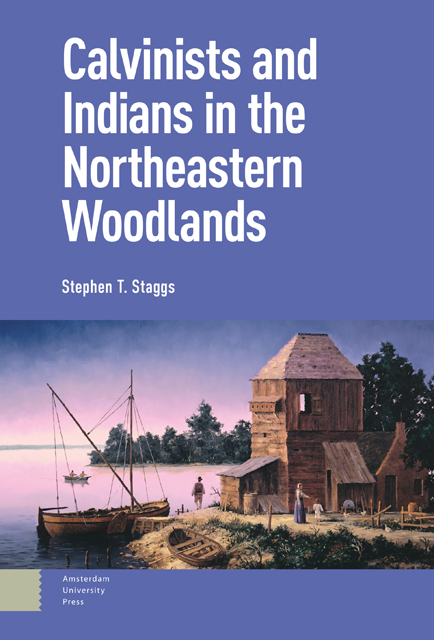
Book contents
- Frontmatter
- Contents
- Acknowledgements
- Abbreviations
- List of Figures
- Notes on Usage
- Introduction
- 1 “Gentiles by Nature,” 1566–1626
- 2 “So That the Fullness of the Gentiles Might Gradually Come In,” 1627–1642
- 3 “A Church and Community among the Christians and the Blind Gentiles,” 1642–1652
- 4 “We, with God’s Help, Hope to Bring the Barbarous Tribes to Devotion,” 1652–1660
- 5 “Who Gave Jacob for a Spoil and Israel to the Robbers?” 1660–1664
- 6 “A Gentile Woman, Karanondo, … Now Called Lidia,” 1664–1750
- Conclusion
- Appendix A Dutch References to Indians: 1609–1664
- Appendix B Indian Baptisms, Professions of Faith, and Marriages in the Dutch Reformed Churches of New York: 1690–1750
- List of Archival Sources
- Bibliography
- Index
This chapter is part of a book that is no longer available to purchase from Cambridge Core
6 - “A Gentile Woman, Karanondo, … Now Called Lidia,” 1664–1750
Book contents
- Frontmatter
- Contents
- Acknowledgements
- Abbreviations
- List of Figures
- Notes on Usage
- Introduction
- 1 “Gentiles by Nature,” 1566–1626
- 2 “So That the Fullness of the Gentiles Might Gradually Come In,” 1627–1642
- 3 “A Church and Community among the Christians and the Blind Gentiles,” 1642–1652
- 4 “We, with God’s Help, Hope to Bring the Barbarous Tribes to Devotion,” 1652–1660
- 5 “Who Gave Jacob for a Spoil and Israel to the Robbers?” 1660–1664
- 6 “A Gentile Woman, Karanondo, … Now Called Lidia,” 1664–1750
- Conclusion
- Appendix A Dutch References to Indians: 1609–1664
- Appendix B Indian Baptisms, Professions of Faith, and Marriages in the Dutch Reformed Churches of New York: 1690–1750
- List of Archival Sources
- Bibliography
- Index
Summary
Abstract
The final chapter surveys the eighty-six years following the surrender of New Netherland to the English in 1664. A close study of the records of the Dutch Reformed Church (DRC) reveals that by 1698 approximately 8% of the adult Kanien’kehá:ka (Mohawk) population had become communicant members, which was no small feat given the literate nature of Protestantism and the systematic process of conversion demanded of those making profession of faith. These professions were certainly a result of groundwork laid by the Kanien’kehá:ka and New Netherlanders like Megapolensis who established personal relationships with one another. By 1754, at least 368 Indians had been baptized; the vast majority of whom were babies born to the Indian communicant members of the DRC.
Keywords: New York, Dutch Calvinism, Mohawk Indians, Haudenosaunee, Mahican Indians, Native–Dutch Relations
Nieuw Amsterdam, 1664
Fed by trade with the Caribbean, the Dutch Republic, and the Indians, Nieuw Nederland (New Netherland) nearly flourished. With the arrival of so many small, young families who had not realized the affluence and prosperity of the Gouden Eeuw (Golden Age), the population approached 9,000 souls. Here many achieved a measure of security and status thanks, in no small part, to their Indian neighbors. In an increasingly competitive market, however, the Indians who brought furs to Nieuw Amsterdam (New Amsterdam) were frequently assaulted. When they came to the shores of Manaháhtaan (Manhattan), traders such as Tomas Lambertsz, Juriaen Blanck, Jan Dircks Meijer, Harmen Douwensz, Juriaen Blanck de Jonge, and Jan Evertsz would not allow them to exchange their furs with whomever they wished. Rather Indians were frequently grabbed by the arm, taken to the home of a trader, and forced to exchange their furs. Such actions must have reinforced the image of the savage Dutch among the Lunaapeew (Lenape). Hoping to maintain the peace Dominee (Reverend) Selijns celebrated in his letter to the Classis of Amsterdam, the Council passed an ordinance to better regulate the Indian trade on June 23.
The English, on the other hand, did not remain quiet. After his brother, King Charles II of England, granted him vast tracts of land in North America that included Nieuw Nederland, James, Duke of York, sent Colonel Richard Nicolls to seize and administer the colony on his behalf.
Information
- Type
- Chapter
- Information
- Calvinists and Indians in the Northeastern Woodlands , pp. 195 - 230Publisher: Amsterdam University PressPrint publication year: 2023
Accessibility standard: Unknown
Why this information is here
This section outlines the accessibility features of this content - including support for screen readers, full keyboard navigation and high-contrast display options. This may not be relevant for you.Accessibility Information
Accessibility compliance for the PDF of this chapter is currently unknown
and may be updated in the future.