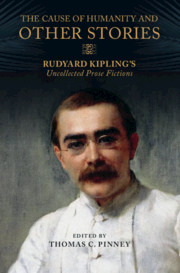
 The Cause of Humanity and Other Stories
 The Cause of Humanity and Other Stories Uncollected Prose Fictions
Book contents
- Frontmatter
- Contents
- Editorial Practice
- Abbreviations
- Introduction
- The Tragedy of Crusoe, C.S.
- Twenty Years After
- Dis Aliter Visum
- De Profundis
- The Unlimited “Draw” of “Tick” Boileau
- My Christmas Caller
- The History of a Crime
- Prisoners and Captives
- “From Olympus to Hades”
- “Les Miserables.”
- A Nightmare of Rule
- What Came of It
- An Official Secret
- Le Roi en Exil
- A Scrap of Paper
- The Mystification of Santa Claus
- “Love in Old Cloathes”
- The Case of Adamah
- A Tale of ’98
- A Rather More Fishy Case
- The House of Shadows
- The Confession of an Impostor
- The Judgment of Paris
- Five Days After Date
- The Hill of Illusion
- Le Monde ou L'On S'Amuse
- An Intercepted Letter
- The Recurring Smash
- How Liberty Came to the Bolan
- “Under Sentence”
- The Dreitarbund
- In Memoriam
- On Signatures
- The Great Strike
- “The Biggest Liar in Asia”
- Deputating a Viceroy
- A Merry Christmas
- The New Year's Sermon
- New Year's Gifts
- Mister Anthony Dawking
- “The Luck of Roaring Camp”
- The Wedding Guest
- The Tracking of Chuckerbutti
- “Bread upon the Waters”
- A Free Gift
- A Hill Homily
- The “Kingdom” of Bombay
- Bombaystes Furioso
- A Day Off
- The Unpunishable Cherub
- In Gilded Halls
- “Till the Day Break”
- The Fountain of Honour
- The Burden of Nineveh
- His Natural Destiny
- That District Log-Book
- An Unequal Match
- A Horrible Scandal
- An Exercise in Administration
- My New Purchase
- Exercises in Administration
- The Dignity of It.
- Exercises in Administration
- In Wonderland
- In the Year ’92
- “A Free Hand”
- Susannah and the Elder
- The Coming K
- What the World Said
- An Interesting Condition
- The Comet of a Season
- Gallihauk's Pup
- The Inauthorated Corpses
- One Lady at Wairakei
- The Princess in the Pickle-Bottle
- Why Snow Falls at Vernet
- The Cause of Humanity
- appendices
- Glossary
Dis Aliter Visum
Published online by Cambridge University Press: 12 November 2018
Edited by

Book contents
- Frontmatter
- Contents
- Editorial Practice
- Abbreviations
- Introduction
- The Tragedy of Crusoe, C.S.
- Twenty Years After
- Dis Aliter Visum
- De Profundis
- The Unlimited “Draw” of “Tick” Boileau
- My Christmas Caller
- The History of a Crime
- Prisoners and Captives
- “From Olympus to Hades”
- “Les Miserables.”
- A Nightmare of Rule
- What Came of It
- An Official Secret
- Le Roi en Exil
- A Scrap of Paper
- The Mystification of Santa Claus
- “Love in Old Cloathes”
- The Case of Adamah
- A Tale of ’98
- A Rather More Fishy Case
- The House of Shadows
- The Confession of an Impostor
- The Judgment of Paris
- Five Days After Date
- The Hill of Illusion
- Le Monde ou L'On S'Amuse
- An Intercepted Letter
- The Recurring Smash
- How Liberty Came to the Bolan
- “Under Sentence”
- The Dreitarbund
- In Memoriam
- On Signatures
- The Great Strike
- “The Biggest Liar in Asia”
- Deputating a Viceroy
- A Merry Christmas
- The New Year's Sermon
- New Year's Gifts
- Mister Anthony Dawking
- “The Luck of Roaring Camp”
- The Wedding Guest
- The Tracking of Chuckerbutti
- “Bread upon the Waters”
- A Free Gift
- A Hill Homily
- The “Kingdom” of Bombay
- Bombaystes Furioso
- A Day Off
- The Unpunishable Cherub
- In Gilded Halls
- “Till the Day Break”
- The Fountain of Honour
- The Burden of Nineveh
- His Natural Destiny
- That District Log-Book
- An Unequal Match
- A Horrible Scandal
- An Exercise in Administration
- My New Purchase
- Exercises in Administration
- The Dignity of It.
- Exercises in Administration
- In Wonderland
- In the Year ’92
- “A Free Hand”
- Susannah and the Elder
- The Coming K
- What the World Said
- An Interesting Condition
- The Comet of a Season
- Gallihauk's Pup
- The Inauthorated Corpses
- One Lady at Wairakei
- The Princess in the Pickle-Bottle
- Why Snow Falls at Vernet
- The Cause of Humanity
- appendices
- Glossary
Summary
Published: Pioneer, 4 July 1885.
Attribution: In ‘Summary of the Years Odd Work’ at end of Diary, 1885. In Scrapbook 2 (28/2, p. 64).
Text: Pioneer.
Notes: This is the first item in this edition from the Pioneer of Allahabad, a paper owned by the proprietors of the Civil and Military Gazette.
The actors in this scene are leading figures from the past of British India. Job Charnock (1630?–93) was head of the East India Company's affairs in India. In 1691 he founded what became Calcutta, from ‘three small villages on an inhospitable tract of riverbank’ (ODNB). Robert, Lord Clive (1725–74) was the military commander in the service of the East India Company whose victories over French and native forces established the civil authority of the Company in India; he was afterwards Governor of Bengal. Warren Hastings (1732–1818), Governor-General of India (1773–85), preserved and extended Clive's conquests in India. Both Clive and Hastings are subjects of celebrated essays by Thomas Babington Macaulay (1800–59), the historian, who served as the Legal Member of the Supreme Council of India (1834–8); in that office he wrote the Indian Penal Code and helped to establish Western learning in English as the basis for government-supported education in India.
The unstated subject of this fantasy is the annual migration of the Supreme Government from the damp heat of Calcutta (Kolkata) to the mountain air of Simla, high in the foothills of the Himalayas and far removed from Calcutta, the regular capital. The government of the Punjab also made Simla its hotweather base. Those left behind in Calcutta or on the plains of the Punjab of course resented ‘The Exodus’, as it was called, and others thought it an indefensible indulgence on the part of the administrators. Simla was imagined as ‘Capua’, all luxury and no work.
‘Dis Aliter Visum’ was reprinted in the United Services College Chronicle, 15 December 1887, and in Harbord, i, 568–75. The title, which may be translated ‘The Gods will otherwise’, is from the Aeneid, ii, 428.
Information
- Type
- Chapter
- Information
- The Cause of Humanity and Other StoriesThe Cause of Humanity and Other Stories Uncollected Prose Fictions, pp. 12 - 21Publisher: Cambridge University PressPrint publication year: 2018
Accessibility standard: Unknown
Why this information is here
This section outlines the accessibility features of this content - including support for screen readers, full keyboard navigation and high-contrast display options. This may not be relevant for you.Accessibility Information
Accessibility compliance for the PDF of this chapter is currently unknown
and may be updated in the future.