Book contents
- Frontmatter
- Contents
- List of Figures
- Notes on the Contributors
- Introduction: Filming Russian Classics—Challenges and Opportunities
- 1 Across the Russian Border
- 2 Dostoevskii's “White Nights”: The Dreamer Goes Abroad
- 3 On Not Showing Dostoevskii's Work: Robert Bresson's Pickpocket
- 4 Stealing the Scene: Crime as Confession in Robert Bresson's Pickpocket
- 5 The Eye-deology of Trauma: Killing Anna Karenina Softly
- 6 “A Vicious Circle”: Karen Shakhnazarov's Ward no. 6
- 7 A Slap in the Face of American Taste: Transporting He Who Gets Slapped to American Audiences
- 8 Against Adaptation? The Strange Case of (Pod) Poruchik Kizhe
- 9 Chasing the Wealth: The Americanization of Il'f and Petrov's The Twelve Chairs
- 10 Fassbinder's Nabokov—From Text to Action: Repressed Homosexuality, Provocative Jewishness, and Anti-German Sentiment
- 11 “The Soviet Abroad (That We Lost)”: The Fate of Vasilii Aksenov's Cult Novel A Starry Ticket on Paper and on Screen
- Conclusion: Passport Control—Departing on a Cinematic Journey
- Bibliography
- Filmography
- Index
This chapter is part of a book that is no longer available to purchase from Cambridge Core
1 - Across the Russian Border

Book contents
- Frontmatter
- Contents
- List of Figures
- Notes on the Contributors
- Introduction: Filming Russian Classics—Challenges and Opportunities
- 1 Across the Russian Border
- 2 Dostoevskii's “White Nights”: The Dreamer Goes Abroad
- 3 On Not Showing Dostoevskii's Work: Robert Bresson's Pickpocket
- 4 Stealing the Scene: Crime as Confession in Robert Bresson's Pickpocket
- 5 The Eye-deology of Trauma: Killing Anna Karenina Softly
- 6 “A Vicious Circle”: Karen Shakhnazarov's Ward no. 6
- 7 A Slap in the Face of American Taste: Transporting He Who Gets Slapped to American Audiences
- 8 Against Adaptation? The Strange Case of (Pod) Poruchik Kizhe
- 9 Chasing the Wealth: The Americanization of Il'f and Petrov's The Twelve Chairs
- 10 Fassbinder's Nabokov—From Text to Action: Repressed Homosexuality, Provocative Jewishness, and Anti-German Sentiment
- 11 “The Soviet Abroad (That We Lost)”: The Fate of Vasilii Aksenov's Cult Novel A Starry Ticket on Paper and on Screen
- Conclusion: Passport Control—Departing on a Cinematic Journey
- Bibliography
- Filmography
- Index
Summary
Adaptation, the process by which texts are transformed to suit them to new media (novels made into films) or historical periods (updated theatrical versions of The Seagull) or languages (translations from Russian to English or English to Russian), is essentially a metaphorical concept that is defined and understood, though often without acknowledgment, with reference to the biological processes whereby organisms and species survive by adapting to new environments. The metaphorical valence of the term has only been intensified by the range of synonyms commentators have offered to help understand it. Robert Stam has suggested that we can think about “adaptation as reading, rewriting, critique, translation, transmutation, metamorphosis, recreation, transvocalization, resuscitation, transfiguration, actualization, transmodalization, signifying, performance, dialogization, cannibalization, reinvisioning, incarnation, or reaccentuation.” Julie Sanders's list of ways of thinking about adaptation, published the following year, overlaps with Stam's remarkably little: “version, variation, interpretation, continuation, transformation, imitation, pastiche, parody, forgery, travesty, transposition, revaluation, revision, rewriting, echo.”
Hollywood adaptations of Russian literature suggest still another metaphor that is especially pregnant: border crossing. Some film adaptations, like Joe Wright's 2012 version of Anna Karenina, cross national borders; others cross intermedial borders between literary and cinematic modes of presentation; and all of them cross what might be called ideational borders, as adapters wrestle the actions, characters, and thematic motifs associated with one author, culture, historical period, and audience into new frames in order to suit them for a new market. “Market” may seem a crass word to drop into a discussion of adapting what are often classic novels, but a medium as capital-intensive as cinema demands consideration of the implications of this kind of border crossing as well: the crossover from the relatively personal, low-risk medium of fiction or drama to the high-stakes medium of film, where millions of rubles are routinely gambled on a single adaptation.
Basing her analysis on Hans-Georg Gadamer's account of the horizon of expectations that frames all human understanding, Cristina Della Coletta has compared the ways that audience members cross national and cultural borders when they travel geographically to the ways they cross hermeneutical borders whenever they encounter an adaptation of any sort:
Understanding a different horizon does not involve crossing over into alien worlds unconnected in any way with our own but, rather, achieving that fusion of horizons that allows us to see the world from a larger perspective.
Information
- Type
- Chapter
- Information
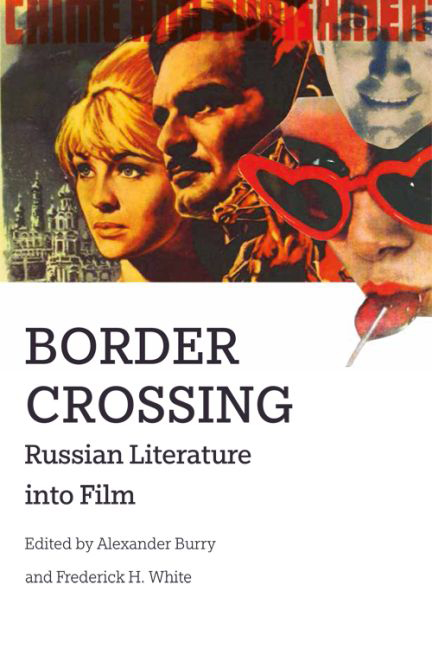
- Border CrossingRussian Literature into Film, pp. 17 - 39Publisher: Edinburgh University PressPrint publication year: 2016
Accessibility standard: Unknown
Why this information is here
This section outlines the accessibility features of this content - including support for screen readers, full keyboard navigation and high-contrast display options. This may not be relevant for you.Accessibility Information
Accessibility compliance for the PDF of this chapter is currently unknown
and may be updated in the future.