Book contents
- Frontmatter
- Contents
- List of Figures
- Notes on the Contributors
- Introduction: Filming Russian Classics—Challenges and Opportunities
- 1 Across the Russian Border
- 2 Dostoevskii's “White Nights”: The Dreamer Goes Abroad
- 3 On Not Showing Dostoevskii's Work: Robert Bresson's Pickpocket
- 4 Stealing the Scene: Crime as Confession in Robert Bresson's Pickpocket
- 5 The Eye-deology of Trauma: Killing Anna Karenina Softly
- 6 “A Vicious Circle”: Karen Shakhnazarov's Ward no. 6
- 7 A Slap in the Face of American Taste: Transporting He Who Gets Slapped to American Audiences
- 8 Against Adaptation? The Strange Case of (Pod) Poruchik Kizhe
- 9 Chasing the Wealth: The Americanization of Il'f and Petrov's The Twelve Chairs
- 10 Fassbinder's Nabokov—From Text to Action: Repressed Homosexuality, Provocative Jewishness, and Anti-German Sentiment
- 11 “The Soviet Abroad (That We Lost)”: The Fate of Vasilii Aksenov's Cult Novel A Starry Ticket on Paper and on Screen
- Conclusion: Passport Control—Departing on a Cinematic Journey
- Bibliography
- Filmography
- Index
This chapter is part of a book that is no longer available to purchase from Cambridge Core
2 - Dostoevskii's “White Nights”: The Dreamer Goes Abroad
By

Book contents
- Frontmatter
- Contents
- List of Figures
- Notes on the Contributors
- Introduction: Filming Russian Classics—Challenges and Opportunities
- 1 Across the Russian Border
- 2 Dostoevskii's “White Nights”: The Dreamer Goes Abroad
- 3 On Not Showing Dostoevskii's Work: Robert Bresson's Pickpocket
- 4 Stealing the Scene: Crime as Confession in Robert Bresson's Pickpocket
- 5 The Eye-deology of Trauma: Killing Anna Karenina Softly
- 6 “A Vicious Circle”: Karen Shakhnazarov's Ward no. 6
- 7 A Slap in the Face of American Taste: Transporting He Who Gets Slapped to American Audiences
- 8 Against Adaptation? The Strange Case of (Pod) Poruchik Kizhe
- 9 Chasing the Wealth: The Americanization of Il'f and Petrov's The Twelve Chairs
- 10 Fassbinder's Nabokov—From Text to Action: Repressed Homosexuality, Provocative Jewishness, and Anti-German Sentiment
- 11 “The Soviet Abroad (That We Lost)”: The Fate of Vasilii Aksenov's Cult Novel A Starry Ticket on Paper and on Screen
- Conclusion: Passport Control—Departing on a Cinematic Journey
- Bibliography
- Filmography
- Index
Summary
Ahista Ahista is […] yet another adaptation of Fyodor Dostoyevsky's short story “White Nights”—and honestly, I've read and reread this story and […] I wonder what it inspires in filmmakers, that so many of them want to explore it.
Fedor Dostoevskii's short story “White Nights” (1848), subtitled a “sentimental love story (from the notes of a dreamer),” has been adapted for the screen more than any other of his short works. A staggering twelve feature films have been mounted on the basis of this early short story, though only two Russian entries and Luchino Visconti's Le notti bianche (1957) carry Dostoevskii's title. Perhaps even more surprising than the sheer number of adaptations, half of which were released in the twenty-first century, is the language distribution: Russian and Hindi tie for the most with three each, followed by two in English and French, and one in Iranian and Italian. Like the reviewer of Ahista Ahista in my epigraph, one wonders why this simple story of the eternal triangle has inspired so many filmmakers.
None of the non-Russian adaptations strives to recreate the time and place of Dostoevskii's story, that is, St. Petersburg of the 1840s. How, then, are these films framed? What happens to Dostoevskii's narrator when he goes abroad and settles down in twentieth- or twenty-first-century Livorno, Paris, Mumbai, or Strasbourg? Or, to use Lawrence Venuti's terminology, how does a film adaptation decontextualize the source text and recontextualize that same text in a different setting and time? One might also begin to think about how Dostoevskii's hypotext was translated into French and Italian hypertexts. This complex process of translation into a foreign language encodes cultural meaning into the hypertext, even before the translation is used in making a film script. What happens when the Romantic idealist of Dostoevskii's fiction is transformed into a character plucked from the cinema of the French New Wave or Bollywood? Finally, how does the canon of film transpositions of “White Nights” influence subsequent versions? Visconti's film, for example, serves as an intertext, equal in significance to Dostoevskii's hypotext, not only for subsequent adaptations in the West (e.g., Two Lovers, 2009), but also in the East (e.g., Saawariya, 2007).
Information
- Type
- Chapter
- Information
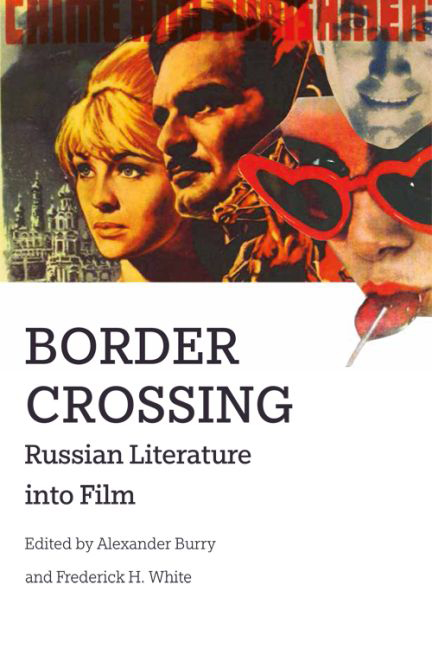
- Border CrossingRussian Literature into Film, pp. 40 - 63Publisher: Edinburgh University PressPrint publication year: 2016
Accessibility standard: Unknown
Why this information is here
This section outlines the accessibility features of this content - including support for screen readers, full keyboard navigation and high-contrast display options. This may not be relevant for you.Accessibility Information
Accessibility compliance for the PDF of this chapter is currently unknown
and may be updated in the future.