Genuinely broad in scope, each handbook in this series provides a complete state-of-the-field overview of a major sub-discipline within language study, law, education and psychological science research.
To save content items to your account,
please confirm that you agree to abide by our usage policies.
If this is the first time you use this feature, you will be asked to authorise Cambridge Core to connect with your account.
Find out more about saving content to .
To save content items to your Kindle, first ensure no-reply@cambridge.org
is added to your Approved Personal Document E-mail List under your Personal Document Settings
on the Manage Your Content and Devices page of your Amazon account. Then enter the ‘name’ part
of your Kindle email address below.
Find out more about saving to your Kindle.
Note you can select to save to either the @free.kindle.com or @kindle.com variations.
‘@free.kindle.com’ emails are free but can only be saved to your device when it is connected to wi-fi.
‘@kindle.com’ emails can be delivered even when you are not connected to wi-fi, but note that service fees apply.
Within disaster law, fostering social or community resilience is a key goal. In principle, the aim of resilience also applies to the energy supply, which should be built (or rebuilt) to enhance communities’ ability to cope with, and regroup from, disaster. However, resilience is a contested concept within energy law, where there is a vigorous – yet narrowly technocratic – debate over what attributes contribute to a resilient energy supply. This chapter synthesizes the conversations about resilience within disaster law and energy law to clarify the notion of resilience as it relates to energy. In particular, it argues that the rich literature on disaster law offers persuasive insights into what the goals and properties of a resilient energy supply should be, as well as how institutions might be reshaped to deliver on this potential.
Never has disaster planning been more important than in this time of the climate’s change. In western United States, climate change has produced a number of stark effects already evident. None, however, is more dramatic than wildfire’s growth from seasonal annoyance to nearly year-round threat to life. Climatic changes butt up against the west’s extraordinary population growth, which increasingly brings the urban edge of population centers into areas that once burned with little or no concern for loss of life or property. As suppression costs for wildfire have soared, a new emphasis on planning for wildfire in this wildland-urban interface (WUI) has taken on strategic importance. This chapter provides a basic structure for engaging wildfire planning in WUI communities, including rural communities that can be especially susceptible to wildfire but also distrustful of government action.
Cities face formidable, if not existential, challenges as they manage hurricanes, wildfires, flooding, earthquakes, severe weather, and other kinds of disasters. Between 1980 and 2020, nearly 300 major events caused almost $2 trillion in damages in the United States. And it is getting worse. The average annual number of events costing more than $1 billion in damages rose from 2.9 during the 1980s to 13.5 during the 2010s, with increases occurring between every decade. Costs are rising as well, increasing by roughly one-half to nearly double between each successive decade. Humans play a key role in triggering disasters or making them worse, especially through climate change and altering landscapes. They can also act to lessen the effects of natural disasters on cities, though not eliminate them. This requires planning and financing. This chapter begins in Part I with an overview of the two generic kinds of disasters and why I focus on just one of them – the localized form. This will lead into Part II, which primarily addresses the role of local and regional governments to plan for disasters and their mitigation. It also outlines an economic and financial strategy to implement those plans. Existing tools to finance resilience investments are summarized in Part III. They include key federal tools and what I call “conventional” tools. Innovative and emerging tools focusing on capitalizing resilience savings and value-added are the focus of Part IV. I conclude with observations about the brave new world of financing city resilience.
Disaster recovery is challenging in any geographic region. However, rural communities differ in several key ways from urban ones, which can make rural disaster recovery uniquely difficult. This chapter walks through the cycle of a rural community’s theoretical experience with natural disaster by breaking the cycle down into two phases: disaster preparedness before disaster strikes and disaster response/recovery afterward. The chapter first examines several factors contributing to under-preparedness. First, rural land use planning has historically been less regulated and more haphazard that urban land use planning. This means that rural communities may face issues with disorganization, sprawl, and physical dangers that are less common in the average city, in addition to being less likely than urban communities to have high-quality Hazard Mitigation Plans. More limited planning also contributes to less-diversified and more vulnerable economies that are less resilient in the face of stresses. Second, the related problem of limited rural floodplain management exacerbates these issues. And third, rural environmental injustice receives relatively limited attention, but is an important factor in placing low-income and minority communities in rural regions at a higher risk of vulnerability to natural disasters. The chapter then turns to two issues illustrating rural communities’ disadvantages in disaster recovery. First, approaches to disaster recovery often fail to serve rural needs effectively. In general, “[h]istory and current experience have shown that [FEMA] aid, subsidized insurance, local long-term rebuilding programs, and even charitable giving” tend to flow to those who already have more resources. Rural residents and communities have less capacity and support even to navigate application processes for relief. They also have more limited access to necessary amenities like homeless shelters in the aftermath of disasters. Second, the idea that all rural residents vote against environmental regulations that would offer better protections serves to mask rural regions’ most vulnerable populations. For example, some commentary after hurricanes in the South declares these natural disasters to reflect “hurricane karma,” or punishment for regional voting patterns. Such a stance is problematic in a variety of ways, and serves to obfuscate the needs of high-risk groups in regions represented by conservative legislators. The following discussion addresses each of these challenges in the preparedness phase and recovery phase in turn. The chapter concludes with thoughts for potential reforms.
Article 7.1 of the Paris Agreement establishes that parties should aim at enhancing adaptive capacity, strengthening resilience, and reducing vulnerability to climate change. While many climate hazards and vulnerabilities are beyond territorial control, a readiness to withstand and recover from them must be delivered locally. This chapter discusses climate-related vulnerability, adaptation, and resilience of the Greater Bay Area of China (GBA), an area that has been identified by the Chinese government as an engine of economic development but which has historically been vulnerable to flooding. After providing a contextual introduction to the GBA project, the chapter reviews key studies on past, current, and future climate trends focusing on meteorological, climatological, hydrological, and geophysical hazards. It then surveys adaptation policies and plans already implemented in GBA cities to assess what works and what does not and where the gaps are. Finally, the discussion focuses on the drivers and barriers for the uptake of technology for flood prevention and for the deployment of emergency responses. The aim of this discussion is to identify the opportunities and risks of technology in building future-ready local skills and citizen engagement for climate resilience. Given the ambitious plans for the GBA to contribute to the economic development of China, existing and projected vulnerabilities to climate hazards and their potential impact on the developed environment and physical infrastructure, business and industry, energy supply, financial services, human health, water resources, and biodiversity may not only hamper GBA plans but also put its businesses and citizens at risk. Technological innovation diminishes this vulnerability, but drivers and barriers to its uptake must be either identified and enhanced or removed accordingly.
The consequence of our free market is the failure to provide for the collective good, leaving the poor, the hungry, unhoused, and the untreated ill in the grasp of a metaphorical flood. Some manage to keep their heads above water, some drown in the flood. This chapter discusses how urban disaster plans, like the one in place before Hurricane Katrina, and the American pattern of healing: outrage, faith, hope, charity, and return to business as usual, reinforces existing distributions of wealth, power, and safety. When natural disaster comes, this second flood slams into structural inequality. Those who suffer are disproportionately those already disadvantaged by race, class, disability, or immigration status. The chapter asks the reader to organize a tide of citizen justice-seekers who will become the new flood, transforming the invisible and under-cared-for majority into a force of change. The chapter concludes that calamitous responses to disaster are less stupid mistakes than choices to let some die while others shelter safely.
Globally, more and more cities are affected by the Urban Heat Island Effect (UHI). This phenomenon describes urban areas’ increased air and surface temperatures as compared to surrounding suburban or rural areas. The UHI was first observed and analyzed in the early nineteenth century, but only in recent decades has it attracted greater attention from policymakers due to the UHI’s increasing magnitude and widely recognized environmental and health consequences. Increasing awareness among residents about the UHI has further amplified the pressure on city governments to implement mitigation strategies. This chapter explores the strategies and policy ideas emerging in cities around the world aimed at mitigating the UHI. Two major forms of interventions are distinguishable. First, there are measures that specifically and directly target the UHI. Second, there are broader climate change adaptation strategies that involve using tools that indirectly address the UHI problem. Each policy initiative described in this chapter is analyzed with a focus on regulatory strategy – specifically, what are the successful regulatory measures UHI mitigation policy strategies employ? More particularly, what is the correct balance between classical regulation, which relies on imposing obligations and sanctions, and more innovative, flexible, and less directive tools that often encourage autonomous and voluntary citizen engagement in implementing public policy objectives? This chapter will show that what some may consider unorthodox UHI mitigation policies can serve as inspirations for other public intervention strategies targeting climate change.
Disasters pose substantial risks for people with disabilities. Disabled individuals may face reduced access to needed services during the response to and recovery from a disaster. Disaster response planning often fails to consider the specific needs of people with disabilities, leaving them without the basic accommodations required by law. Additionally, disaster plans may explicitly or implicitly deprioritize access to care for disabled individuals. This chapter examines the legal challenges that arise for people with disabilities during disaster responses, describes how legal protections for people with disabilities apply during and after disasters, and outlines a series of recommendations to improve legal protections and support systems for the rights and needs of people with disabilities when disaster strikes.
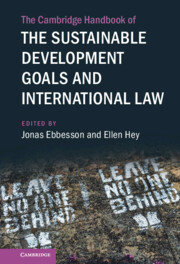
In 2015, the United Nations established seventeen Sustainable Development Goals (SDG) that aimed 'to achieve a better and more sustainable future for all' by 2030. The chapters within this collection address each of these SDGs, considering how they relate to one another and international law, and what institutions could aid their implementation. Development has been a contentious topic since the decolonization period after World War II, and issues surrounding sustainable development are necessarily impacted by the multifaceted relationship between the Global South and Global North. Confronting the context and challenge of sustainable development, this collection outlines how the international economic system problematizes the attainment of the SDGs. Introducing a novel, cosmopolitan approach, this book offers new ways of understanding sustainable development and suggests potential solutions so that we might finally achieve it.
In our paper, we survey the corporate landscape regarding shareholder engagement in Germany. We identify two main factors that constrain the possibilities of shareholders to engage in their company’s business decisions. The first factor concerns the legal design of the Aktiengesellschaft (AG) and in particular its two-tier board structure. A second factor concerns restrictions of shareholders’ involvement in the management of companies, especially when employees have a say in business affairs, due to the German co-determination rules. Empirically, shareholder opposition against management decisions plays a traditionally minor role. However, recent events like the dismissal of the managements’ discharge by the shareholders of Bayer in 2019 raise the question whether a new period of ‘shareholder activism’ is just about to begin. Recent developments rooting in the COVID-19-pandemic may well contribute to that transformation.
Legal means of shareholder engagement in Australia vary considerably, ranging from reliance on shareholder rights conferred under the Corporations Act 2001 (Cth) to reliance on class actions seeking the collective enforcement of legal rights arising from corporate conduct. This chapter offers an introduction to Australia’s corporate governance framework in the context of corporate decision making and the exercise of shareholders voting rights. The balance of power between shareholders and the board of directors, and its legal impact on shareholder engagement, is highlighted. Insights are provided into the legal means of shareholder engagement in Australia and the manner in which votes are exercised. There is growing evidence of shareholder apathy and the dominance of institutional investors and proxy advisors. The chapter charts the recent trend towards active shareholder engagement on ESG and human rights issues at Annual General Meetings, notwithstanding the limited opportunities to propose advisory or non-binding resolutions at meetings.
The Dutch corporate law framework of the public company (the NV) is characterized by an ‘institutional’ approach including a board autonomy principle and the focus on long-term value creation, which is well-established in Dutch (case) law. The Dutch shareholder meeting shares its important position with the corporate board and is not the highest power in the company. Despite that this Dutch framework follows a clear stakeholder model, shareholders have important decision-making rights that are defined in the law. These statutory decision-making rights include topics like (amongst others) say-on-pay, director (re-)elections, capital resolutions, discharging directors, and amendments to the articles of association. Further decision-making rights can be defined in the articles of association, albeit these articles can also limit shareholder voice via oligarchic provisions. Institutional investors systemically own the majority of the shares in the largest listed companies in the Netherlands, which explains the large and increasing focus on institutional stewardship.
Instead of relying on private ordering, the corporate governance in Taiwan has been developed mostly through government regulations. Starting with the brief introduction of Taiwan’s Company Act (CA) and corporate governance in practice, this chapter explores the legal means available for shareholder engagement under the CA: the right to call a shareholder meeting, proposal right, voting and information right, focusing on shareholders’ participation and voting in the shareholder meeting. Also, this chapter illustrates the current landscape of shareholder activism in Taiwan, observing that most activists pay more attention to the interaction with the management in the shareholder meeting, than to behind-the-scene engagements to achieve their goals, despite anecdotal evidence of the aforementioned engagements. Nonetheless, with the securities authority’s promotion of shareholder activism, this chapter notes the increase of shareholder activism events, demonstrating harbingers for the change of Taiwanese corporate governance in practice.
Institutional investors have traditionally dominated the ownership structure of large publicly traded companies in the United Kingdom. Attention to the role and participation of institutional investors in the corporate governance of British firms has been growing since the late 2000s following regulatory efforts to empower shareholders, for example, through say-on-pay votes, and to promulgate best practices of shareholder voting and engagement via soft law stewardship codes. This chapter presents the state of the art and recent trends in shareholder engagement and voting by institutional investors in the UK. Asset managers affiliated with large fund groups have been taking a more active approach to stewardship, although their efforts generally focus on identifying and promoting best practice corporate governance standards and dealing with global threats such as climate change and social matters. The chapter also discusses the roles of activist shareholders, proxy advisers and the COVID-19 pandemic in shareholder voting and engagement.
The chapter lays a roadmap for the Handbook on Shareholder Engagement and Voting. It defines shareholder engagement as shareholders’ involvement with their investee companies, using their shareholder rights and powers, both formal and informal (such as voting rights), to influence corporate affairs inside and outside general meetings of shareholders. The chapter further discusses the Handbook’s overall methodological considerations, that is, a sophisticated functionalist approach, with a combined use of doctrinal and empirical methods. The chapter proceeds to elaborate on the framework of research questions that guide the Handbook’s chapter contributions on 19 jurisdictions around the globe. The framework comprises three groups of questions: general jurisdictional features, legal means of shareholder voting and engagement, as well as shareholder voting and engagement in practice. The chapter concludes with a brief outline of the Handbook’s structure.