Genuinely broad in scope, each handbook in this series provides a complete state-of-the-field overview of a major sub-discipline within language study, law, education and psychological science research.
To save content items to your account,
please confirm that you agree to abide by our usage policies.
If this is the first time you use this feature, you will be asked to authorise Cambridge Core to connect with your account.
Find out more about saving content to .
To save content items to your Kindle, first ensure no-reply@cambridge.org
is added to your Approved Personal Document E-mail List under your Personal Document Settings
on the Manage Your Content and Devices page of your Amazon account. Then enter the ‘name’ part
of your Kindle email address below.
Find out more about saving to your Kindle.
Note you can select to save to either the @free.kindle.com or @kindle.com variations.
‘@free.kindle.com’ emails are free but can only be saved to your device when it is connected to wi-fi.
‘@kindle.com’ emails can be delivered even when you are not connected to wi-fi, but note that service fees apply.
Academic writers with different linguistic backgrounds communicate scientific findings following objective norms, although they do so in different ways, as is evidenced in intercultural studies. This chapter focuses on the identification of boosters and hedges used by Spanish and Chinese researchers to persuade readers about scientific findings in engineering and linguistics. The objectives were to categorize and compare the frequencies and functions of hedges and boosters used by nonnative writers of English, to study whether there are any linguistic and cultural differences, and to identify boosting and hedging features different from those used in English as a mother tongue. The material was a corpus of 120 academic papers on linguistics and engineering papers written by Spanish and Chinese researchers. Boosters and hedges were spotted and occurrences extracted and classified with METOOL, a tool designed to identify metadiscourse markers. In the results, it was shown that Chinese writers used more boosters and hedges than their Spanish peers. To conclude, it was observed that although Chinese and Spanish writers tend to be assertive in their mother tongue, mitigation was used to adopt an academic style.
This chapter analyzes how the Great Replacement conspiracy theory is exploited in far-right discursive strategies. Indeed, the common ground and/or collective narratives identified in discourses such as the Great Replacement theory have been created through re- or de-construction of current news, such as the influx of migrants. We draw on the Dynamic Model of Meaning theory, combining the theoretical concept of (emergent) common ground – fundamental to intercultural pragmatics–and the notion of proximization. Our data comprises Marine Le Pen interviews, Viktor Orbán speeches, and Matteo Salvini tweets, where we examine various aspects of their narratives as well as the specific contextualization. Our analysis reveals both common ground and cross-cultural variation in the conspiracy narratives disseminated by these far-right leaders: inferences vs. directness; national history vs. doomed future. We conclude by suggesting that such narratives work as metaphor scenarios and could, in fact, represent covert hate speech against a specific community. Moreover, these narratives function as useful political arguments, since they arouse strong emotions against the declared enemies of populists. While a rational and well-documented counter-discourse is needed to answer such strategies, it is crucial to both deconstruct and understand the beliefs underlying the emotions that lead a person to trust such beliefs.
Medical communication is characterized by an essential cultural difference, as the nature of healthcare provider–patient interactions consists of an epistemic imbalance between the expert and the layperson. This specialized knowledge gap combines with other types of cultural differences, defined by mismatched background knowledge (including values, expectations, facts, or theories) and the proficiency in the use of distinct languages or dialects. Such cultural differences define a type of communication that is essentially and primarily intercultural.
Drawing on examples from different types of medical communication, we provide an overview of these studies in linguistics, pragmatics, and health communication to describe differences and commonalities between pragmatic strategies used in interactions of different types and levels of “interculturality.”
We propose a more consistent integration of pragmatics in healthcare communication by looking at how shared understanding is obtained in language-discordant contexts through the mediation of interpreters. Based on this analysis, we design a new communicative role for healthcare providers highlighting future perspectives for clinical training and practice. In this sense, the role played by an intercultural pragmatic approach in healthcare communication leads to redefining pragmatic strategies as part of a communicative toolbox, and not only as a discipline explaining how context affects meaning.
This chapter presents a comprehensive review of vague language studies from a pragmatic perspective. An utterance is vague when it conveys unspecific meaning. For example, “Many friends attended her birthday party,” how many is many? 20, 100 or 200? Our interpretation of “many” may vary from individual to individual, from context to context. Vague language is fluid, stretchable, and strategic. It consists of various types, including approximators, vague quantifiers, placeholder words, vague category identifiers, general terms, intensifiers, softeners, and epistemic stance markers. This chapter serves as a guide for understanding the characteristics of vague language. The discussion involves the conceptual frameworks and features of vague language, which are illustrated by examples and research drawn from intercultural corpora. This chapter reviews the theorization of vague language, its linguistic categories and pragmatic functions, vague language use in intercultural communication, and includes suggestions for future research. Vague language plays a crucial role in intercultural communication and its pragmatic functions, such as mitigation, politeness, and self-protection, form an important part of the strategic moves used in effective language interactions. This chapter provides an important contribution to the field of intercultural pragmatics.
The chapter presents the socio-cognitive approach (SCA) to communication that serves as a theoretical frame for intercultural pragmatics. SCA was developed to explain the specific features of intercultural interactions and thus offers an alternative to the Gricean approaches that can be considered monolingual theories. There are two important claims that distinguish SCA from other pragmatic theories. First, SCA emphasizes that cooperation and egocentrism are not antagonistic features of communication. While (social) cooperation is an intention-directed practice that is governed by relevance, (individual) egocentrism is an attention-oriented trait dominated by salience that refers to the relative importance or prominence of information and signs. Second, SCA claims that pragmatic theories have tried to describe the relationship of the individual and social factors by putting too much emphasis on idealized language use, and focusing on cooperation, rapport, and politeness while paying less attention to the untidy, messy, poorly organized and impolite side of communication. SCA pays equal attention to both sides. The first part of the chapter explains the main tenets of SCA. The second part discusses how context, common ground and salience are intertwined in meaning creation and comprehension. The chapter closes with suggestions for future research.
Most metaphors are highly conventionalized expressions that are typically read and understood by native speakers effortlessly. For instance, while reading “the brightest child” in the classroom native speakers naturally understand that the speaker is not referring to a child who is literally shiny, but rather, a smart child.
Nonnative speakers and language learners, however, may find some metaphoric expressions difficult to understand if expressed in a language that they do not master fluently. Moreover, they may try to use conventional metaphoric expressions translated directly from their own native or first language, into another language. This can create problems in intercultural settings, where the expression may sound strange if unheard before, and possibly unclear. For instance, the arguably unclear expression “climbing up on mirrors” is actually a direct translation of a highly conventional Italian metaphoric expression, frequently used to say “finding excuses.” This chapter elaborates on the way in which metaphoric expressions are understood, and how such comprehension processes vary in relation to metaphor conventionality, aptness, and deliberateness. I then take these observations into the field of intercultural communication, explaining how the pragmatics of metaphor comprehension may be affected by intercultural settings.
This chapter reviews work on politeness and rapport management from an intercultural pragmatics perspective. After an initial introduction, the first main section considers conceptual and methodological challenges and explores three key issues: the various ways in which culture has been conceptualized within politeness theory, the challenge of integrating micro and macro perspectives on intercultural interaction, and first-order and second-order perspectives on politeness and culture. The second main section of the chapter turns to the performance of intercultural politeness. It starts by reporting on the many intercultural studies that have analyzed the impact of different speech and behavioral practices on interpersonal relations. It then reviews the much smaller number of intercultural politeness studies that have examined interlocutors’ potentially different interpretations of the context. After this, it turns to the possible impact of differing cultural values on intercultural politeness. The third main section focuses on intercultural politeness from an evaluation perspective. It presents recent theorizing on the evaluation process and considers methodological challenges in obtaining and interpreting relevant data. The chapter ends by proposing some areas for future research.
Most metaphors are highly conventionalized expressions that are typically read and understood by native speakers effortlessly. For instance, while reading the brightest child in the classroom native speakers naturally understand that the speaker is not referring to a child who is literally shiny, but rather, a smart child.
Non-native speakers and language learners, however, may find some metaphoric expressions difficult to understand, if expressed in a language that they do not master fluently. Moreover, they may try to use conventional metaphoric expressions translated directly from their own native or first language, into another language. This can create problems in intercultural settings, where the expression may sound unheard before, and possibly unclear. For instance, the arguably unclear expression climbing up on mirrors is actually a direct translation of a highly conventional Italian metaphoric expression, frequently used to say “finding excuses”. In this chapter I elaborate on the way in which metaphoric expressions are understood, and how such comprehension processes vary in relation with metaphor conventionality, aptness and deliberateness. I then take these observations into the field of intercultural communication, explaining how the pragmatics of metaphor comprehension may be affected by intercultural settings.
Political and economic globalization, together with constant technological advances, has resulted in unprecedented levels of international human mobility. As a result, societies are increasingly intercultural. Nowhere is this interculturality more pervasive than in digital discourse (traditionally known as computer-mediated communication or CMC), where interlocutors from different cultural backgrounds may interact on global platforms and social networking sites such as Twitter, Instagram, or YouTube, to name but a few. Intercultural communication, however, poses interlocutors with serious challenges to overcome, such as differences in their value systems, and diverging communication styles and behaviours. All of them can easily lead to miscommunication and conflict between cultural groups, both within and across societies, as well as the perpetuation of cultural stereotypes. Yet, most research on CMC to date has focused on monocultural studies or cross-cultural comparisons while intercultural communication in CMC is still rather under-researched. Keeping the above in mind, the present chapter aims to review the research that has been carried out so far in the field of digital discourse with a special focus on intercultural communication, as well as to provide readers with avenues for future research in this burgeoning field.
Business communication is becoming increasingly intercultural and much more complex in the face of the globalized business arena and workforce diversity (Varner, 2000; Yuan, 1997; Zaidman, 2001). This trend has highlighted the need for understanding the role of culture and language use in business communication. It deserves a close look at how people from different linguacultural backgrounds come into contact and achieve successful interaction with one another in business communication. This chapter aims to survey the research on business communication and discuss its various aspects to help us better understand business communication from an intercultural pragmatics perspective. It consists of three sections after a general introduction and before a conclusion: (1) business communication and culture; (2) major business communication genres (i.e. business meetings, call center exchanges, emails and social media platforms); (3) main research areas and topics.
The notion of common ground entails that prior to a conversation, mutually shared knowledge is available to interlocutors by virtue of the situational context or a shared cultural background. Within linguistic pragmatic theories, recipient design is a determining factor for cooperation in interaction. The socio-cognitive approach to communicative interaction acknowledges the importance of cooperation and common ground but maintains that interlocutors tend to adhere to their individual background knowledge and experience for production and comprehension. The shared knowledge base may therefore not be fully available prior to the exchange but, rather, established dynamically and interactively in the course of the conversation. Discussing internet memes, it will be shown that stable core common ground and dynamic emergent common ground are fundamental assets for the description of contemporary and future phenomena in digital communication. I will argue that internet memes represent a kind of communication where emergent common ground is aspired to rather than resorted to as an emergency solution when core common ground is lacking.
Intercultural pragmatics is a relatively new field of inquiry that is concerned with the way in which the language system is put to use in social encounters between human beings who have different first languages but communicate in a common language, and, usually, represent different cultures (see Kecskes 2004, 2013). The main focus of research in this field is on intercultural interactions. In these encounters, the communicative process is synergistic, in the sense that existing pragmatic norms and emerging co-constructed features are present to a varying degree. The innovative feature of the field is that it provides an alternative way of thinking about interaction by shifting the attention of researchers from first language (L1) communication to intercultural communication. In Gricean pragmatics everything is about native speakers (mainly native speakers of English) of a language who are members of the same, although diverse and relatively definable, speech community, who have preferred ways of saying things and preferred ways of organizing thoughts, who share core common ground, conventions, norms, and distributed collective salience. This gives them a relatively firm basis for understanding each other.
The concept of context has undergone some fundamental rethinking in the scientific community. Rather than being considered an external constraint on linguistic performance, context is analyzed as a product of language use and thus as an interactional achievement, which is negotiated and co-constructed, imported and invoked. Context and contexts are analyzed from the perspectives of interlocutors, considering contextualization, recontextualization and decontextualization, and entextualization. The complexity, multilayeredness and dynamics of context have far-reaching implications on its role in intercultural pragmatics with interlocutors from different linguistic backgrounds having diverging meaning-making processes, diverging contextualization conventions, and thus diverging constructions of context. Intercultural pragmatics thus calls for context-sensitive particularizations of the fundamental premises of cooperation, contextualization, meaning-making process, and negotiation of discourse common ground.
Intercultural interactions in English as a Lingua Franca (ELF) are increasingly becoming the norm as speakers of diverse first languages and cultures find themselves needing to communicate in both personal and professional domains for any number of reasons. The chapter provides an overview of ELF pragmatics research that is focused on how multilingual, multicultural speakers in real-world settings achieve mutual understanding through the effective use of ELF. Specifically, the chapter examines the pragmatic strategies that speakers deploy to preempt misunderstanding as they conjointly negotiate and construct shared meaning. Practices that enhance explicitness and clarity, such as repetition, rephrasing, topic negotiation, and the insertion of a parenthetical remark that provides additional information, reveal how speakers who anticipate difficulty in understanding, possibly arising from linguistic variability and cultural difference, increase efforts to minimize mis/non-understanding. Using data extracts from relevant ELF studies, the chapter illustrates how speakers in these intercultural interactions accommodate their interlocutors and the context of communication to arrive at shared understanding.
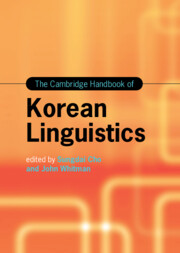
The 'Korean wave' in music and film and Korea's rise to become the twelfth economic power in the world have boosted the world-wide popularity of Korean language study. The linguistic study of Korean, with its rich syntactic and phonological structure, complex writing system, and unique socio-historical context, is now a rapidly growing research area. Contributions from internationally renowned experts on the language provide a state-of-the-art overview of key current research in Korean language and linguistics. Chapters are divided into five thematic areas: phonetics and phonology, morphology and syntax, semantics and pragmatics, sociolinguistics and psycholinguistics, and language pedagogy. The Handbook includes cross-linguistic data to illuminate the features of Korean, and examples in Korean script, making it suitable for advanced students and researchers with or without prior knowledge of Korean linguistics. It is an essential resource for students and researchers wishing to explore the exciting and rapidly moving field of Korean linguistics.
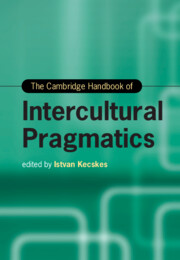
Intercultural pragmatics addresses one of the major issues of human communication in the globalized world: how do people interact with each other in a language other than their native tongue, and with native speakers of the language of interaction? Bringing together a globally-representative team of scholars, this Handbook provides an authoritative overview to this fascinating field of study, as well as a theoretical framework. Chapters are grouped into 5 thematic areas: theoretical foundation, key issues in Intercultural Pragmatics research, the interface between Intercultural Pragmatics and related disciplines, Intercultural Pragmatics in different types of communication, and language learning. It addresses key concepts and research issues in Intercultural Pragmatics, and will trigger fresh lines of enquiry and generate new research questions. Comprehensive in its scope, it is essential reading not only for scholars of pragmatics, but also of discourse analysis, cognitive linguistics, communication, sociolinguistics, linguistic anthropology, and second language teaching and learning.