Refine search
Actions for selected content:
2774 results in Flip it Open
Introduction
-
- Book:
- Precolonial Legacies in Postcolonial Politics
- Published online:
- 14 October 2022
- Print publication:
- 22 December 2022, pp 1-21
-
- Chapter
-
- You have access
- Open access
- HTML
- Export citation
7 - Mwongozo: The African Revolution, Reloaded
-
- Book:
- Revolutionary State-Making in Dar es Salaam
- Published online:
- 13 October 2022
- Print publication:
- 22 December 2022, pp 237-272
-
- Chapter
-
- You have access
- Open access
- HTML
- Export citation
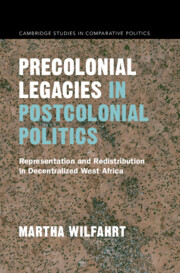
Precolonial Legacies in Postcolonial Politics
- Representation and Redistribution in Decentralized West Africa
-
- Published online:
- 14 October 2022
- Print publication:
- 22 December 2022
-
- Book
-
- You have access
- Open access
- Export citation
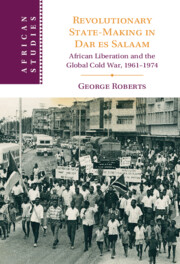
Revolutionary State-Making in Dar es Salaam
- African Liberation and the Global Cold War, 1961-1974
-
- Published online:
- 13 October 2022
- Print publication:
- 22 December 2022
-
- Book
-
- You have access
- Open access
- Export citation
Dedication
-
- Book:
- The Virgin Mary in Byzantium, <i>c</i>.400–1000
- Published online:
- 20 August 2022
- Print publication:
- 08 September 2022, pp v-vi
-
- Chapter
-
- You have access
- Open access
- HTML
- Export citation
Copyright page
-
- Book:
- Beyond Death in the <i>Oresteia</i>
- Published online:
- 01 September 2022
- Print publication:
- 08 September 2022, pp iv-iv
-
- Chapter
-
- You have access
- Open access
- HTML
- Export citation
5 - From Remittance Economy to Rentier State: The Rise and Fall of an Islamist Authoritarian Regime in Sudan
- from III - Globalization and Institutional Change in an Era of Scarcity
-
- Book:
- Black Markets and Militants
- Published online:
- 20 August 2022
- Print publication:
- 08 September 2022, pp 178-218
-
- Chapter
-
- You have access
- Open access
- HTML
- Export citation
Tables
-
- Book:
- Black Markets and Militants
- Published online:
- 20 August 2022
- Print publication:
- 08 September 2022, pp x-x
-
- Chapter
-
- You have access
- Open access
- HTML
- Export citation
4 - Economic Crisis, Informal Institutions, and the Transformation of Islamist Politics in Egypt
- from III - Globalization and Institutional Change in an Era of Scarcity
-
- Book:
- Black Markets and Militants
- Published online:
- 20 August 2022
- Print publication:
- 08 September 2022, pp 153-177
-
- Chapter
-
- You have access
- Open access
- HTML
- Export citation
Notes
-
- Book:
- Black Markets and Militants
- Published online:
- 20 August 2022
- Print publication:
- 08 September 2022, pp 327-362
-
- Chapter
-
- You have access
- Open access
- HTML
- Export citation
Chapter 5 - Heroes in the Oresteia
-
- Book:
- Beyond Death in the <i>Oresteia</i>
- Published online:
- 01 September 2022
- Print publication:
- 08 September 2022, pp 114-144
-
- Chapter
-
- You have access
- Open access
- HTML
- Export citation
Contents
-
- Book:
- Black Markets and Militants
- Published online:
- 20 August 2022
- Print publication:
- 08 September 2022, pp vii-viii
-
- Chapter
-
- You have access
- Open access
- HTML
- Export citation
A Note on Capitalisation, Spelling and Recent Publications
-
- Book:
- The Virgin Mary in Byzantium, <i>c</i>.400–1000
- Published online:
- 20 August 2022
- Print publication:
- 08 September 2022, pp xii-xii
-
- Chapter
-
- You have access
- Open access
- HTML
- Export citation
Chapter 2 - From Theotokos to Intercessor: The Early Homiletic Witness (c. 400–600)
-
- Book:
- The Virgin Mary in Byzantium, <i>c</i>.400–1000
- Published online:
- 20 August 2022
- Print publication:
- 08 September 2022, pp 67-93
-
- Chapter
-
- You have access
- Open access
- HTML
- Export citation
Introduction
- from I - The Framework
-
- Book:
- Black Markets and Militants
- Published online:
- 20 August 2022
- Print publication:
- 08 September 2022, pp 3-20
-
- Chapter
-
- You have access
- Open access
- HTML
- Export citation
Acknowledgements
-
- Book:
- The Virgin Mary in Byzantium, <i>c</i>.400–1000
- Published online:
- 20 August 2022
- Print publication:
- 08 September 2022, pp viii-x
-
- Chapter
-
- You have access
- Open access
- HTML
- Export citation
Introduction
-
- Book:
- The Virgin Mary in Byzantium, <i>c</i>.400–1000
- Published online:
- 20 August 2022
- Print publication:
- 08 September 2022, pp 1-35
-
- Chapter
-
- You have access
- Open access
- HTML
- Export citation
Conclusion
-
- Book:
- The Virgin Mary in Byzantium, <i>c</i>.400–1000
- Published online:
- 20 August 2022
- Print publication:
- 08 September 2022, pp 211-218
-
- Chapter
-
- You have access
- Open access
- HTML
- Export citation
Additional material
-
- Book:
- Beyond Death in the <i>Oresteia</i>
- Published online:
- 01 September 2022
- Print publication:
- 08 September 2022, pp ix-x
-
- Chapter
-
- You have access
- Open access
- HTML
- Export citation
7 - The Political Economy of Radicalization: Informal Networks and the Rise of an Urban Militant Islamism in Cairo
- from III - Globalization and Institutional Change in an Era of Scarcity
-
- Book:
- Black Markets and Militants
- Published online:
- 20 August 2022
- Print publication:
- 08 September 2022, pp 263-313
-
- Chapter
-
- You have access
- Open access
- HTML
- Export citation
