To save content items to your account,
please confirm that you agree to abide by our usage policies.
If this is the first time you use this feature, you will be asked to authorise Cambridge Core to connect with your account.
Find out more about saving content to .
To save content items to your Kindle, first ensure no-reply@cambridge.org
is added to your Approved Personal Document E-mail List under your Personal Document Settings
on the Manage Your Content and Devices page of your Amazon account. Then enter the ‘name’ part
of your Kindle email address below.
Find out more about saving to your Kindle.
Note you can select to save to either the @free.kindle.com or @kindle.com variations.
‘@free.kindle.com’ emails are free but can only be saved to your device when it is connected to wi-fi.
‘@kindle.com’ emails can be delivered even when you are not connected to wi-fi, but note that service fees apply.
There is no shortage of societal problems: a global AIDS epidemic, a global climate crisis, a widening gap between rich and poor, abject poverty, inaccessible healthcare, to name a few. Historically, problems such as these have fallen almost exclusively within the purview of governments and nonprofit organizations, but in recent years, corporations have been called upon to span sector boundaries and become involved with social problems that plague the globe. As such, corporate social responsibility has never been more prominent on the corporate agenda, but key questions beg for further investigation. How can companies most effectively contribute to solving social problems? How can corporate social responsibility be embedded in companies? Despite their immense resources and capabilities, companies typically have little history or expertise in dealing directly with social problems. Many argue that collaboration across sector boundaries is at least part of the solution. That is, companies must collaborate in meaningful and enduring ways with nonprofit organizations and governments as they respond to the world's ills. One way for them to do so is to form what we call ‘social alliances’, which are collaborative partnerships that span sector boundaries. Social alliances are long-term, strategic relationships between companies and nonprofits that have at least one non-economic (i.e. social) and one economic goal.
For many researchers and observers alike, it remains difficult to understand fully how organizations design their corporate social responsibility (CSR) policies and communicate them to different stakeholders. They also have trouble determining different stakeholders' complex perceptions of and attitudes towards the organization, which means managerial guidelines are virtually nonexistent in this important area. Although prior work focuses on organizational commitment to and communication with customers, employees and prospective employees, and financial investors, it often fails to consider other stakeholders, such as trade unions and non-governmental organizations (NGOs) whose influence over CSR policies continues to grow. Furthermore, previous studies generally address one type of stakeholder, which prevents them from offering an overall analysis of the value of commitment and communication in CSR. We contribute to the literature by reporting on one organization's CSR commitments and communications; we achieve this by taking into account the influences and the reactions of an organization's different stakeholders.
Specifically, we report on IKEA's CSR commitments and communications and their relation to the organization's different stakeholders, which enables us to examine stakeholders' perceptions of and attitudes towards IKEA and its CSR policies and thereby gain an understanding of how stakeholders themselves influence CSR commitments and communication. By including a variety of stakeholders, our case approach provides insight into the dynamics that occur among stakeholders. We structure the remainder of this chapter as follows. First, we review the literature. Second, we provide details of the case organization developed for this study. Third, we present and discuss the findings.
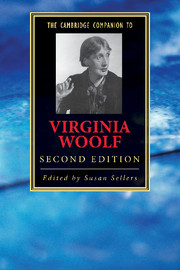
Virginia Woolf's writing has generated passion and controversy for the best part of a century. Her novels - challenging, moving, and always deeply intelligent - remain as popular with readers as they are with students and academics. The highly successful Cambridge Companion has been fully revised to take account of new departures in scholarship since it first appeared. The second edition includes new chapters on race, nation and empire, sexuality, aesthetics, visual culture and the public sphere. The remaining chapters, as well as the guide to further reading, have all been fully updated. The Cambridge Companion to Virginia Woolf remains the first port of call for students new to Woolf's work, with its informative, readable style, chronology and authoritative information about secondary sources.a
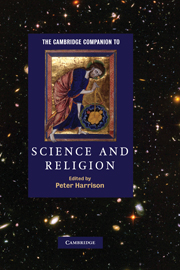
In recent years, the relations between science and religion have been the object of renewed attention. Developments in physics, biology and the neurosciences have reinvigorated discussions about the nature of life and ultimate reality. At the same time, the growth of anti-evolutionary and intelligent design movements has led many to the view that science and religion are necessarily in conflict. This book provides a comprehensive introduction to the relations between science and religion, with contributions from historians, philosophers, scientists and theologians. It explores the impact of religion on the origins and development of science, religious reactions to Darwinism, and the link between science and secularization. It also offers in-depth discussions of contemporary issues, with perspectives from cosmology, evolutionary biology, psychology, and bioethics. The volume is rounded out with philosophical reflections on the connections between atheism and science, the nature of scientific and religious knowledge, and divine action and human freedom.
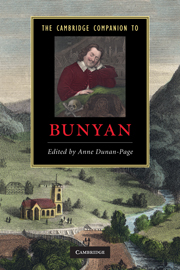
John Bunyan was a major figure in seventeenth-century Puritan literature, and one deeply embroiled in the religious upheavals of his times. This Companion considers all his major texts, including The Pilgrim's Progress and his autobiography Grace Abounding. The essays, by leading Bunyan scholars, place these and his other works in the context of seventeenth-century history and literature. They discuss such key issues as the publication of dissenting works, the history of the book, gender, the relationship between literature and religion, between literature and early modern radicalism, and the reception of seventeenth-century texts. Other chapters assess Bunyan's importance for the development of allegory, life-writing, the early novel and children's literature. This Companion provides a comprehensive and accessible introduction to an author with an assured and central place in English literature.
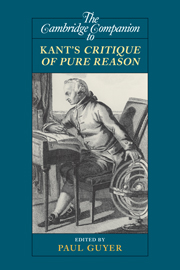
Immanuel Kant's Critique of Pure Reason, first published in 1781, is one of the landmarks of Western philosophy, a radical departure from everything that went before and an inescapable influence on all philosophy since its publication. This Companion is the first collective commentary on this work in English. The seventeen chapters have been written by an international team of scholars, including some of the best-known figures in the field as well as emerging younger talents. The first two chapters situate Kant's project against the background of continental rationalism and British empiricism, the dominant schools of early modern philosophy. Eleven chapters then expound and assess all the main arguments of the Critique. Finally, four chapters recount the enormous influence of the Critique on subsequent philosophical movements, including German Idealism and Neo-Kantianism, twentieth-century continental philosophy, and twentieth-century Anglo-American analytic philosophy. The book concludes with an extensive bibliography.
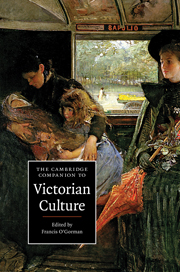
The Victorian era produced artistic achievements, technological inventions and social developments that continue to shape how we live today. This Companion offers authoritative coverage of that period's culture and its contexts in a group of specially commissioned essays reflecting the current state of research in each particular field. Covering topics from music to politics, art to technology, war to domestic arts, journalism to science, the essays address multiple aspects of the Victorian world. The book explores what 'Victorian' has come to mean and how an idea of the 'Victorian' might now be useful to historians of culture. It explores too the many different meanings of 'culture' itself in the nineteenth century and in contemporary scholarship. An invaluable resource for students of literature, history, and interdisciplinary studies, this Companion analyses the nature of nineteenth-century British cultural life and offers searching perspectives on their culture as seen from ours.
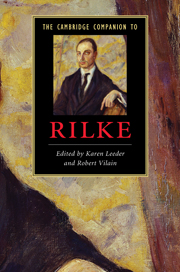
Often regarded as the greatest German poet of the twentieth century, Rainer Maria Rilke (1875–1926) remains one of the most influential figures of European modernism. In this Companion, leading scholars offer informative and thought-provoking essays on his life and social context, his correspondence, all his major collections of poetry including most famously the Duino Elegies and Sonnets to Orpheus, and his seminal novel of Modernist anxiety, The Notebooks of Malte Laurids Brigge. Rilke's critical contexts are explored in detail: his relationship with philosophy and the visual arts, his place within modernism and his relationship to European literature, and his reception in Europe and beyond. With its invaluable guide to further reading and a chronology of Rilke's life and work, this Companion will provide an accessible, engaging account of this extraordinary poet whose legacy looms so large today.
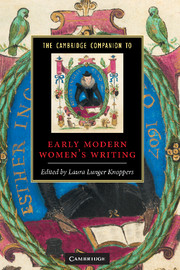
Featuring the most frequently taught female writers and texts of the early modern period, this Companion introduces the reader to the range, complexity, historical importance, and aesthetic merit of women's writing in Britain from 1500–1700. Presenting key textual, historical, and methodological information, the volume exemplifies new and diverse approaches to the study of women's writing. The book is clearly divided into three sections, covering: how women learnt to write and how their work was circulated or published; how and what women wrote in the places and spaces in which they lived, worked, and worshipped; and the different kinds of writing women produced, from poetry and fiction to letters, diaries, and political prose. This structure makes the volume readily adaptable to course usage. The Companion is enhanced by an introduction that lays out crucial framework and critical issues, and by chronologies that situate women's writings alongside political and cultural events.
Literary study focuses primarily upon literary texts, their authors, and the historical and cultural circumstances surrounding the origin, production, and assessment of those texts. The books themselves we customarily take for granted as the raw material for critical and theoretical analysis. But for their publishers, books are commodities possessing both real and virtual “value” in the public economic sphere. However authors and scholars may choose to see things, publishing has always been a “business,” and publishers necessarily have wholly mercenary interests in the fortunes of the authors they publish. Already in the eighteenth century it was apparent that “even a sound work may depend on the publisher's exertions . . . for securing a hold on the public mind.” An author's success - or failure - was tied as much to their publishers' marketing skills as to their own literary talent. Popular success required access to an interested readership, and publishers and booksellers were the gateway through which authors had to pass. Although publishers had an obvious financial stake in the books they published, the authors were no less heavily invested. The Romantic era's greatest and most popular novelist, Sir Walter Scott, provides a good example. Although Scott had been Britain's most popular living poet, when Waverley appeared on July 7, 1814, his poetic star been eclipsed by that of the Regency's new literary sensation, Lord Byron, whose Childe Harold's Pilgrimage, cantos I and II, had appeared in March 1812, catapulting their author into immediate stardom.
At the twenty-third Annual Conference of the National Association for the Advancement of Colored People in 1932, John Dewey addressed his audience on the topic of the Great Depression. He highlighted the opportunity for more expansive democratic change that the economic crisis represented: “The paradise of folly in which we have been living has broken down. That at least is some gain. It is something to become aware of the need for new ideas, new measures, new policies, new leaders, to bring about a great social reconstruction. More specifically, I think our depression has compelled us to think more fundamentally on social matters, economic matters, political matters, than we have been thinking for many years.” / As I write the introduction to this volume, the United States President Barack Obama has just reached his one-hundredth day in office. President Obama sees in this moment of global economic crisis, as Dewey did in 1932, an opportunity to push something akin to a “reset” button. In his Inaugural Address, Obama stated that the country must “begin again the work of remaking America.” The approach he offers resonates with that of Dewey.
Because he consistently rejects the enterprise of traditional moral theory in its entirety, Dewey's own ethics is difficult to characterize. On the one hand, Dewey's endorsement of apparently theoretical statements, such as “judge an act by its consequences,” seems to make him a consequentialist, although not necessarily a utilitarian. When Dewey applies this methodological adage to moral philosophy itself, he seeks to show that moral theories inherently justify social hierarchy by endorsing claims to special access to moral knowledge as a justification of class domination. On the other hand, while Dewey unmasks moral philosophy as a means to social domination, he does not simply debunk moral knowledge as such. Instead he asks us to consider moral thinking and knowledge as empirical phenomena, to be understood primarily through social psychology and history. For this reason, when James Rachels wants to show the vitality of naturalism even after the challenge of Moore's naturalistic fallacy, he cites Dewey as the last “century's most influential naturalist.” In this respect, Dewey would clearly endorse naturalism as it is formulated by C. D. Broad: that “ethics is not an autonomous science,” but rather “a department or an application of one or more of the natural or historical sciences.”
Dewey and Peirce shared a common focus on the elaboration of a model of inquiry that seeks to remove doubt concerning the answer to some question by identifying potential answers to the question, ascertaining the evidence available for evaluating the candidacy of such answers as solutions to the problem posed, conducting experiments to acquire more evidence and deciding on the basis of the available evidence which of the potential answers to add to the stock of knowledge. My own proposals concerning how to model well-conducted inquiry depart in several respects from the proposals of both Peirce and Dewey. But these two great philosophers gave classical expression to the ideas that inspired the projects I have undertaken. In this essay, I shall comment on some aspects of Dewey's vision of the logic of inquiry, pointing to important respects in which I depart from his approach. Because I shall be arguing with Dewey, I wish to emphasize here and now that I am arguing not to dismiss him or his ideas but to sharpen some of my ideas by confrontation with one of the points of view that inspired them.
““Well, Miss Elliot . . . we shall never agree I suppose upon this point. No man and woman would, probably. But let me observe that all histories are against you, all stories, prose and verse . . . I do not think I ever opened a book in my life which had not something to say upon woman's inconstancy. Songs and proverbs, all talk of woman's fickleness. But perhaps you will say, these were all written by men.” “Perhaps I shall. - Yes, yes, if you please, no reference to examples in books. Men have had every advantage of us in telling their own story. Education has been theirs in so much higher a degree; the pen has been in their hands. I will not allow books to prove any thing.”” (Persuasion, chapter 23) / Coming very near the end of Austen's last novel (1818), this sharp observation on the gender biases inherent in literary discourse has often been taken as a characteristically oblique expression of her feminism as well as a defense of her singular craft. Notwithstanding the truth that the passage reveals considerable self-reflection, the ironies (the pen is after all in Austen's hand) attending that traditional reading are manifold: it demands that we accept at face value what is, both in the novel and life, knowingly, wittily, undercut. Within the structure of the novel, this crucial exchange between Captain Harville and Anne Elliot is in some sense the turning point, as Anne, ostensibly asserting woman's constancy in the abstract, speaks over Harville's shoulder specifically to address Wentworth, who is across the room writing a letter. In essence her contrived indirect discourse allows him the objectivity needed to lay down that pen of self-centered inscription and at last “read” the truth of her love for him.
For students of English literature from the 1780s through to the mid 1830s, “Romanticism” and the “Romantic period” are not what they used to be - one good reason for a second edition of this volume. To be sure, “Romanticism” as a literary movement or a complex of beliefs and styles of art, and “Romantic” as a descriptor of that type of writing or writer, have long referred to “being like romance”: to reworking an aesthetic mode, particularly the European quest-romance of the twelfth through the sixteenth centuries, where imagination, desire, and myth-making heighten what we usually take as perceived “reality” to extend its limits with symbolic suggestions that deepen, expand, or transcend everyday human awareness. Such a relocation of “romance,” in fact, was already in progress well before 1780. By then “romantic” as a signifier had already strayed from mainly describing supernatural tales of chivalry, including their expressions of love, parodied in Cervantes's Don Quixote (1605-15), to characterize the assertively “natural,” but also mythological and idealizing, landscape paintings of Claude Lorrain and Salvator Rosa from the seventeenth century as these came to Britain from southern France and northern Italy (to many, then, the “regions of romance”) to become exemplars of grand sublimity within the late eighteenth- century culture of “sensibility” (Eichner, 'Romantic,' p. 5).
Care theorists owe much to John Dewey and his prescriptions for progressive education. Although there are problems for feminists in pragmatism, they may be remedied. As Virginia Held has said, “[w]e would . . . have to transform pragmatism.” We would have to enlarge (or at least elaborate further) the pragmatist conception of experience; in particular, we would have to include women's experience in a careful and deliberate way. As we examine Dewey's ideas on education, we find much to appreciate. But there seems to be a pervasive lack of attention to relations as they are described in care theory. Dewey has much to say about the individual and the community, but he rarely digs beneath the two to locate what care theorists take to be ontologically basic - the dyadic relation - and his discussion of thinking may be too narrowly confined to scientific thinking. In this brief and appreciative critique, I look at five important topics in his philosophy of education: the child, the curriculum, learning and inquiry, democracy, and moral education.