To save content items to your account,
please confirm that you agree to abide by our usage policies.
If this is the first time you use this feature, you will be asked to authorise Cambridge Core to connect with your account.
Find out more about saving content to .
To save content items to your Kindle, first ensure no-reply@cambridge.org
is added to your Approved Personal Document E-mail List under your Personal Document Settings
on the Manage Your Content and Devices page of your Amazon account. Then enter the ‘name’ part
of your Kindle email address below.
Find out more about saving to your Kindle.
Note you can select to save to either the @free.kindle.com or @kindle.com variations.
‘@free.kindle.com’ emails are free but can only be saved to your device when it is connected to wi-fi.
‘@kindle.com’ emails can be delivered even when you are not connected to wi-fi, but note that service fees apply.
Public memory denotes how groups recall the past and how those ideas take shape, evolve, and prompt differences or agreement about history’s events and actors. Examining first ladies through their tenures in office, memoirs, interviews, historic sites, and memorials often reveal how they wanted to be remembered. Biographies, dramatic films, documentaries, and historical fiction about them can determine how presidential wives’ legacies are preserved or morph in the public psyche over time. Siena College Research Institute’s scholar polls and Ranker online surveys rate first ladies among historians and the general public. This chapter applies such evidence to first ladies Abigail Adams, Dolley Madison, Mary Lincoln, Edith Wilson, Eleanor Roosevelt, Mamie Eisenhower, Jacqueline Kennedy, Betty Ford, Rosalynn Carter, Nancy Reagan, and Barbara Bush. Each exemplifies a variety of legacies—both positive and negative—and reflects how memorializations and public memories evolve.
US first ladies have exercised a complicated kind of activism when it comes to women’s rights. Some have acted as vocal advocates to insist that women’s equality should be a national priority. Others have used their platform more quietly to intervene on behalf of women’s rights. Still others have held and promoted views that have contradicted, undermined, or altogether avoided efforts to advance women’s rights. This chapter traces how US first ladies have addressed and influenced the prevailing women’s rights issues of their day, with a focus on two national campaigns: a federal amendment for women’s suffrage and a federal amendment for equal rights. By engaging or avoiding the debates surrounding women’s suffrage and the ERA, these women stretched the political and rhetorical boundaries of their platform and shaped public understanding about the ongoing struggle for women’s equality in the United States.
The Cambridge Companion to Biblical Narrative offers an overview and a concise introduction to an exciting field within literary interpretation of the Hebrew Scriptures and New Testament. Analysis of biblical narrative has enjoyed a resurgence in recent decades, and this volume features essays that explore many of the artistic techniques that readers encounter in an array of texts. Specially commissioned for this volume, the chapters analyze various scenes in Genesis, Exodus and the wilderness wanderings, Israel's experience in the land and royal experiment in Kings and Chronicles, along with short stories like Ruth, Jonah, Esther, and Daniel. New Testament essays examine each of the four gospels, the book of Acts, stories from the letters of Paul, and reading for the plot in the book of Revelation. Designed for use in undergraduate and graduate courses, this Companion will serve as an excellent resource for instructors and students interested in understanding and interpreting biblical narrative.
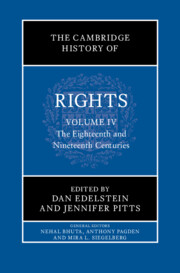
The age of Enlightenment and revolutions produced some of our best-known declarations of rights, but they did not create the idea of rights. Writers during this age did such a good job at declaring rights that many historians and politicians later believed that they invented them. The fourth volume of The Cambridge History of Rights shows that the eighteenth and nineteenth centuries are better understood as a time of transformation, extending rights-making to meet the needs of a modernizing world. Rights became a means of liberation for religious minorities, the economic downtrodden, women, slaves, and others. But rights also became a means of control, especially in European colonies around the world, as well as in liberal economic regimes that protected property rights. Through twenty-six essays from experts across the world, this volume serves as an authoritative reference for the development of rights across this period of history.
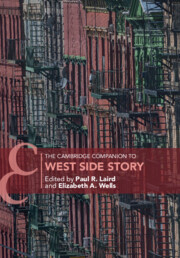
Over sixty years after its opening night, West Side Story is perhaps the most famous and beloved of twentieth-century musicals and stands as a colossus of musical and dramatic achievement. It not only helped define a generation of musical theatre lovers but is among the handful of shows that have contributed to our understanding of American musical identity at mid-century. Bringing together contemporary scholars in music, theatre, dance, literature, and performance, this Companion explores this explosive 1950s remake of Shakespeare's Romeo and Juliet and its portrayal of the raw passion, rivalries, jealousy and rage that doom the young lovers to their tragic fate. Organised thematically, chapters range from Broadway's history and precursors to West Side Story; the early careers of its creators; the show's score with emphasis on writing, production, and orchestrations; issues of class, colourism, and racism; New York's gang culture, and how the show's legacy can be found in popular culture throughout the world.
The Jewish–Arab conflict and the fighting it engenders began before the establishment of the state of Israel and has been a constant of Middle-Eastern politics for over a hundred years. The intensity of the fighting has fluctuated but the variations have been like a jazz tune that plays around a common constant central theme. Because of the continuity and longevity of the conflict, as well as various short-term issues affecting it, each strategic event is analysed by the rival decision makers according to three separate time factors: the immediate – how to achieve the best result and terminate the specific event as quickly as possible; the medium term – how the current event results from the trend of the past few years and will affect that trend favourably over the next few years; and lastly the long term – how the results of the specific current event and the current trend it belongs to fits into the overall conflict and will favourably affect its future direction. Of course, the ‘best strategic result’ and ‘favourable strategic effect’ are different for each participant. The purpose of this chapter is to explore and describe the characteristics of the conflict as a whole and the major theme of the Israeli strategic responses to them, while touching on various shifts in trends or specific events that required fundamental changes in the melodies or temporary improvisations.
All too often, the terms terrorism and insurgency are used interchangeably, just like tactics and strategy. But terrorism is indeed a tactic while insurgency is a strategy, and the two concepts are far from synonymous. This chapter details the differences between terrorism and insurgency, and hence, terrorists and insurgents, by tracing the evolution of each of these terms and placing them in the proper context, while providing numerous examples of terrorist chieftains and insurgent leaders, and how these individuals thought about strategy over time. The chapter will also investigate the considerable overlap between terrorism and insurgency. After all, militants pursuing an insurgent strategy may seek to use terrorism as a tactic toward achieving their objectives. Size can be a useful distinguishing characteristic, because terrorist groups often consist of a small number of individuals. By contrast, insurgent organisations, such as Lebanese Hizballah or the Liberation Tigers of Tamil Eelam (LTTE), number in the thousands. Indeed, many of the most important ‘terrorist’ groups in the world – including Lebanese Hizballah, LTTE, the Provisional Irish Republican Army (PIRA), and the Revolutionary Armed Forces of Colombia (FARC) – are better described as insurgencies that use terrorism than as typical terrorist movements.
This chapter offers an overview of the strategic environment and grand strategies employed by the Ming and Qing dynasties. It discusses how they built upon pre-existing strategic traditions while also incorporating new technologies and tactics to expand the empire, creating a sophisticated state capable of responding to a dazzling array of challenges. The chapter not only delineates the nature of the strategic threats faced by the last Chinese empires, but also covers the extensive primary source materials demonstrating how imperial leadership and personal networks operated alongside institutions to create an effective grand-strategy paradigm allowing the Ming and Qing to retain their superiority in east Asia for some five centuries. Finally, this overview of late imperial grand strategy offers clues into how China still perceives the world and its strategic goals in Asia.
In the nineteenth century, it is difficult to discern anything in an age-old form of warfare that was not almost instinctive reaction on the part of those opposing conquest, occupation or the legitimacy of authority. Nineteenth-century guerrilla warfare was highly diverse but always the resort of the weak in face of the strong. There could be little expectation that a guerrilla strategy of itself could result in victory in such circumstances unless guerrillas could transform themselves to meet regular forces conventionally or co-operate with regular forces in a partisan role. There are few examples where setting objectives, priorities and allocating resources can be readily identified among those who led guerrillas in the nineteenth century. Four case studies are chosen to illustrate contrasting circumstances pertaining to how far strategic analysis can be applied to nineteenth-century guerrilla warfare. These are the attempt to control Spanish resistance to Napoleon after 1808, the decision of the Southern Confederacy not to pursue a guerrilla strategy at the end of the American Civil War in 1865, Burmese resistance to British annexation between 1885 and 1895, and the decision of the Boer leadership to undertake guerrilla warfare in 1900 during the South African War.
The advent of Islam in Arabia created a new regional actor: the Rashidun Caliphate. Later caliphates inherited the vast territories of expansion accrued under the Rashidun. The ordeal of civil war was the crucible from which the Umayyad Caliphate arose. Civil crisis had a lasting influence on both the strategic setting and then environment within which successive Umayyad and Abbasid caliphs had to contend. Unity and unification of the caliphate was a necessary political objective for the duration of all caliphates. The Umayyads fused their right to political legitimacy with their military prowess and notions of divine providence. The ideological dependency of the Umayyad Caliphate to an aggressive policy of security-maximising expansionism was predicated upon a politically legitimating doctrine of perpetual war which constantly directed strategic decision making. The dependency upon war serving as the only strategic instrument subordinated to the political ends of security, the Umayyad leadership was distracted from managing growing internal dissent and covert factions brewing rebellion and eventual revolution. The Abbasid Revolution of AD 750 not only ended the Umayyad House, but effectively sheathed the doctrine of perpetual war that the Umayyad Caliphate had wielded for nearly a century. The Abbasids squandered the vast territorial and strategic inheritance within decades of wrestling power. The early course of the Rashidun, Umayyad and Abbasid caliphates, was consistently one of political and territorial expansion followed by structural fragmentation, civil strife and subsequent collapse.
The warfare of the Greek city states was limited by their means, lacking military academies, professional officers and standing forces. Small communities fought local wars with levies of citizens, often highly motivated, but precious to the polity, which could not be kept in the field for long. Fruits of victory were modest, and defeat could put the survival of the whole state at risk. Fortification as a passive defensive policy was essential. In offensive warfare, states and coalitions mostly pursued a strategy of opportunism, in which the desirable was subordinated to the attainable. Commanders typically tried to avoid decisive engagements due to the risks involved; they focused their attacks on exposed targets like farmland, small towns, isolated garrisons and unprepared enemy troops. They relied heavily on local dissenters and deserters to guide and facilitate operations. When wealthier states like Corinth, Athens and Syracuse found themselves able to invest in warfare, we clearly see their dissatisfaction with this strategic straitjacket. The rapid development of fleets, extensive fortification networks, standing corps of specialist troops and siege technology allowed these states to dominate their less fortunate neighbours. This gives the lie to old notions that the Greeks preferred their wars to be limited in scope. A state that had much more than the others could disrupt the entire system, as Macedon would eventually show.
The development of Russian strategy over a near forty-year period from 1877 to 1914 was characterised by gradual movement towards the formation of modern military forces based on a massive army and developed industry. The foundation for this path was laid out by radical military reforms in the 1860–1870s.
The Russo-Turkish War of 1877–1878 and the Russo-Japanese War of 1904–1905 were fundamentally different from each other in many respects. The first was fought in a thoroughly studied theatre and against a well-known adversary, with whom Russia had fought regularly for approximately 200 years. The second was conducted in a remote and underexplored location against an enemy whose strength was severely underestimated. The land and naval forces involved in the two wars significantly differed as well.
Preparations for a large-scale European war have always remained the basis of strategic planning. An important milestone was the formation of the Russian-French alliance. A possible coalition war against Germany required the adoption of an offensive strategy from the onset of the possible conflict. The First World War was the final test that measured the effectiveness of the efforts undertaken by the Russian government since the period of military reforms.